×
Request Free Sample ×

Kindly complete the form below to receive a free sample of this Report

* Please use a valid business email

Leading companies partner with us for data-driven Insights

clients tt-cursor
Hero Background

Transseptal Needle Market

ID: MRFR/HC/37492-HCR
128 Pages
Rahul Gotadki
October 2025

Transseptal Needle Market Research Report By Application (Electrophysiology, Cardiac Surgery, Interventional Cardiology), By End Use (Hospitals, Ambulatory Surgical Centers, Cardiovascular Clinics), By Needle Design (Single-Use Needles, Reusable Needles, Specialty Needles), By Material (Stainless Steel, Plastic, Coated Materials) and By Regional (North America, Europe, South America, Asia Pacific, Middle East and Africa) - Forecast to 2035

Share:
Download PDF ×

We do not share your information with anyone. However, we may send you emails based on your report interest from time to time. You may contact us at any time to opt-out.

Transseptal Needle Market Infographic
Purchase Options

Transseptal Needle Market Summary

As per Market Research Future analysis, the Transseptal Needle Market Size was estimated at 0.9147 USD Billion in 2024. The Transseptal Needle industry is projected to grow from 0.9817 in 2025 to 1.99 by 2035, exhibiting a compound annual growth rate (CAGR) of 7.32% during the forecast period 2025 - 2035.

Key Market Trends & Highlights

The Transseptal Needle Market is poised for substantial growth driven by technological advancements and increasing demand for minimally invasive procedures.

  • Technological innovations are reshaping the Transseptal Needle Market, enhancing procedural efficiency and safety.
  • North America remains the largest market, while the Asia-Pacific region is emerging as the fastest-growing area for transseptal needle applications.
  • Electrophysiology is the largest segment, whereas Interventional Cardiology is witnessing the fastest growth in demand.
  • The increasing prevalence of cardiac disorders and advancements in medical technology are key drivers propelling market expansion.

Market Size & Forecast

2024 Market Size 0.9147 (USD Billion)
2035 Market Size 1.99 (USD Billion)
CAGR (2025 - 2035) 7.32%

Major Players

Abbott (US), Boston Scientific (US), Medtronic (US), Biosense Webster (US), St. Jude Medical (US), Terumo (JP), Cardinal Health (US), Merit Medical Systems (US)

Transseptal Needle Market Trends

The Transseptal Needle Market is currently experiencing notable advancements driven by increasing demand for minimally invasive procedures. This trend is largely attributed to the growing prevalence of atrial fibrillation and other cardiac conditions that necessitate transseptal puncture techniques. As healthcare providers seek to enhance patient outcomes, the adoption of innovative technologies and devices is becoming more prevalent. Furthermore, the emphasis on patient safety and procedural efficiency is prompting manufacturers to invest in research and development, leading to the introduction of advanced transseptal needles that offer improved precision and reduced complication rates. In addition to technological advancements, the Transseptal Needle Market is influenced by the rising number of healthcare facilities equipped to perform these specialized procedures. The expansion of interventional cardiology departments and the increasing availability of training programs for healthcare professionals are likely to contribute to market growth. Moreover, collaborations between medical device companies and healthcare institutions may facilitate the dissemination of knowledge and best practices, further enhancing the adoption of transseptal needles. Overall, the market appears poised for growth as it adapts to the evolving landscape of cardiac care and patient management.

Technological Innovations

The Transseptal Needle Market is witnessing a surge in technological innovations aimed at enhancing procedural efficacy. Manufacturers are focusing on developing needles with advanced features that improve accuracy and reduce the risk of complications. These innovations may include ergonomic designs and materials that facilitate smoother navigation through cardiac structures.

Growing Demand for Minimally Invasive Procedures

There is a discernible shift towards minimally invasive procedures within the Transseptal Needle Market. This trend is driven by patient preferences for less traumatic interventions and shorter recovery times. As a result, healthcare providers are increasingly adopting transseptal techniques to address various cardiac conditions.

Expansion of Training and Education Programs

The expansion of training and education programs for healthcare professionals is likely to impact the Transseptal Needle Market positively. Enhanced training initiatives may lead to a more skilled workforce capable of performing complex procedures, thereby increasing the overall adoption of transseptal needles in clinical practice.

Transseptal Needle Market Drivers

Advancements in Medical Technology

Technological advancements in the medical field are significantly influencing the Transseptal Needle Market. Innovations in needle design, materials, and delivery systems enhance the safety and efficacy of transseptal procedures. For instance, the development of echogenic needles allows for better visualization during procedures, reducing complications. Furthermore, the integration of robotics and imaging technologies into transseptal procedures is likely to improve precision and patient outcomes. As hospitals and clinics invest in state-of-the-art equipment, the demand for advanced transseptal needles is expected to rise, thereby driving the market's growth. This trend indicates a shift towards more sophisticated medical interventions.

Expansion of Healthcare Infrastructure

The expansion of healthcare infrastructure, particularly in emerging markets, is a significant driver for the Transseptal Needle Market. As healthcare facilities grow and improve, there is an increased capacity to perform advanced cardiac procedures. This expansion includes the establishment of specialized cardiac centers equipped with the latest technology, which facilitates the use of transseptal needles. Data indicates that investments in healthcare infrastructure are on the rise, particularly in regions with previously limited access to advanced cardiac care. This trend suggests that as more facilities become capable of performing complex procedures, the demand for transseptal needles will likely increase, contributing to market growth.

Increasing Prevalence of Cardiac Disorders

The rising incidence of cardiac disorders, such as atrial fibrillation and other structural heart diseases, is a primary driver for the Transseptal Needle Market. As these conditions become more prevalent, the demand for effective treatment options increases. Transseptal needles are essential for various cardiac procedures, including catheter ablation and left atrial appendage closure. According to recent data, the number of patients undergoing these procedures has seen a notable rise, indicating a growing market for transseptal needles. This trend suggests that healthcare providers are increasingly adopting advanced technologies to improve patient outcomes, thereby propelling the Transseptal Needle Market forward.

Regulatory Support and Reimbursement Policies

Regulatory support and favorable reimbursement policies are crucial factors driving the Transseptal Needle Market. Governments and health organizations are increasingly recognizing the importance of advanced cardiac procedures, leading to the establishment of supportive regulatory frameworks. Additionally, favorable reimbursement policies for minimally invasive procedures encourage healthcare providers to adopt transseptal needle techniques. This financial backing is essential for hospitals and clinics, as it reduces the economic burden associated with new technologies. Market analysis indicates that regions with robust reimbursement structures are witnessing higher adoption rates of transseptal needles, suggesting that regulatory environments play a pivotal role in shaping market dynamics.

Rising Awareness and Acceptance of Minimally Invasive Techniques

There is a growing awareness and acceptance of minimally invasive techniques among both healthcare professionals and patients, which is positively impacting the Transseptal Needle Market. Patients increasingly prefer procedures that offer reduced recovery times and lower risks of complications. As a result, healthcare providers are adopting transseptal needle techniques for various cardiac interventions. Market data suggests that the minimally invasive segment is expanding rapidly, with a projected growth rate that outpaces traditional surgical methods. This shift in preference is likely to continue, further driving the demand for transseptal needles as part of a broader trend towards less invasive treatment options.

Market Segment Insights

By Application: Electrophysiology (Largest) vs. Interventional Cardiology (Fastest-Growing)

The Transseptal Needle Market shows a diverse distribution among its application segments, with Electrophysiology emerging as the largest area of application. This segment's dominance can be attributed to the increasing prevalence of atrial fibrillation and the growing utilization of advanced electrophysiological techniques. On the other hand, Interventional Cardiology is gaining traction, rapidly growing as healthcare providers adopt innovative minimally invasive procedures, enhancing patient outcomes and expanding treatment options. As healthcare technology advances, the growth trends within the Transseptal Needle Market reflect significant shifts in medical practices. Factors such as rising awareness about heart diseases, the continuous development of new therapeutic approaches, and an increase in geriatric populations are driving the expansion of these application segments. Moreover, improvements in transcatheter techniques are expected to sustain the momentum of growth for both Electrophysiology and Interventional Cardiology segments, as they adapt to meet the evolving needs of patient care.

Electrophysiology (Dominant) vs. Interventional Cardiology (Emerging)

Electrophysiology has established itself as the dominant segment in the Transseptal Needle Market, primarily due to its critical role in the treatment of arrhythmias, including atrial fibrillation. This segment benefits from technological advancements and an increasing number of specialized electrophysiology labs, which enhance procedural efficacy and safety. In contrast, Interventional Cardiology is positioned as an emerging segment, fueled by the increasing adoption of catheter-based interventions and a shift towards minimally invasive surgical techniques. This segment is characterized by its rapid innovation, with new devices and techniques continually entering the market, aiming to improve patient outcomes and reduce recovery times. As both segments evolve, they are instrumental in shaping the future landscape of cardiac procedures.

By End Use: Hospitals (Largest) vs. Ambulatory Surgical Centers (Fastest-Growing)

In the Transseptal Needle Market, hospitals account for the largest share of usage, primarily due to the higher volume of transseptal procedures occurring in these settings. As highly specialized medical facilities, hospitals are equipped with advanced technology and staffed by experienced medical professionals, making them the primary choice for patients requiring complex cardiovascular interventions. Ambulatory Surgical Centers (ASCs) are increasingly gaining ground, representing a growing segment as they offer more cost-effective options for patients and healthcare providers alike. The growth trends in this segment reflect a shift in preference towards minimally invasive procedures that are often catered to by ASCs. With advancements in medical technology, there is a rise in outpatient procedures that facilitate faster recovery times and lower healthcare costs. This trend is driving ASCs to become a favored choice for transseptal needle procedures, which positions them as a significant contributor to market expansion.

Hospitals (Dominant) vs. Ambulatory Surgical Centers (Emerging)

Hospitals remain the dominant force in the Transseptal Needle Market due to their capacity to handle complex and varied cardiovascular cases with specialized teams. These facilities boast advanced imaging and procedural technologies that enhance the safety and effectiveness of transseptal procedures. Conversely, Ambulatory Surgical Centers are emerging as a competitive and appealing option for patients seeking less invasive surgical options. These centers are designed for efficiency and cost-effectiveness, catering primarily to patients who qualify for outpatient surgery. The streamlined processes in ASCs often result in shorter waiting times and reduced costs, appealing to a growing patient base that prioritizes convenience and rapid recovery.

By Needle Design: Single-Use Needles (Largest) vs. Reusable Needles (Fastest-Growing)

The Transseptal Needle Market exhibits a diverse array of needle designs, with single-use needles commanding the largest share. This segment is preferred by many healthcare providers due to the increasing emphasis on infection control, sterility, and patient safety. Meanwhile, reusable needles are gaining traction, particularly in specialized medical settings, as they offer cost savings and sustainability options. Specialty needles also occupy a niche market but are overshadowed by the dominance of single-use designs. The growth trajectory of the needle design segment is largely driven by advancements in medical technology and a rising emphasis on minimally invasive procedures. Factors such as the growing prevalence of cardiac and structural heart diseases create increased demand for specialized needles, thereby promoting the development of innovative needle designs. Additionally, healthcare authorities and organizations are advocating for the use of single-use needles to mitigate infection risks, further propelling market growth in this direction.

Needle Type: Single-Use (Dominant) vs. Reusable (Emerging)

Single-use needles are the dominant force in the Transseptal Needle Market, primarily due to their inherent advantages in infection prevention and procedural efficiency. These needles are designed for one-time use, significantly reducing the risk of cross-contamination and ensuring optimal patient outcomes. As a result, hospitals and clinics favor their use in transseptal puncture procedures. On the other hand, reusable needles, which feature the ability to be sterilized for multiple uses, are emerging as a cost-effective alternative in certain healthcare settings. While they require diligent cleaning and maintenance, their economic benefits and reduced environmental impact cater to growing sustainability initiatives. Together, these needle types create a dynamic competitive landscape within the market.

By Material: Stainless Steel (Largest) vs. Coated Materials (Fastest-Growing)

In the Transseptal Needle Market, the material segment is primarily composed of Stainless Steel, Plastic, and Coated Materials. Currently, Stainless Steel dominates the market due to its superior strength and reliability in clinical applications. Coated Materials, while a smaller share, are gaining traction rapidly among healthcare providers looking for enhanced functionality and reduced friction during procedures. Plastic materials are also present but occupy a niche role focused on specific use cases where biocompatibility is more critical than rigidity.

Stainless Steel (Dominant) vs. Coated Materials (Emerging)

Stainless Steel remains the dominant material in the Transseptal Needle Market, prized for its robustness and resistance to corrosion, making it a preferred choice in various medical procedures. Its proven efficacy and reliability have established it as the gold standard, not only enhancing safety but also improving patient outcomes. On the other hand, Coated Materials are emerging as an innovative alternative, promoted for their ability to reduce friction and improve the maneuverability of needles within the anatomy. This shift is influenced by increasing demand for less invasive methods, driving manufacturers to invest in new technologies that incorporate advanced coatings for better performance.

Get more detailed insights about Transseptal Needle Market

Regional Insights

North America : Market Leader in Innovation

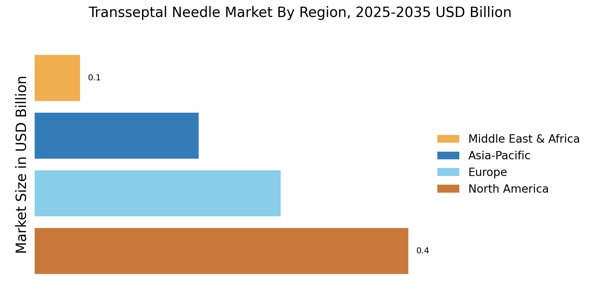
North America is the largest market for transseptal needles, accounting for approximately 45% of the global market share. The region's growth is driven by increasing prevalence of cardiovascular diseases, advancements in medical technology, and supportive regulatory frameworks. The demand for minimally invasive procedures is also on the rise, further propelling market growth. Regulatory bodies like the FDA have streamlined approval processes, enhancing market dynamics. The United States is the primary contributor to this market, with key players such as Abbott, Boston Scientific, and Medtronic leading the charge. The competitive landscape is characterized by continuous innovation and strategic partnerships among these companies. The presence of advanced healthcare infrastructure and a high rate of adoption of new technologies further solidifies North America's position as a market leader.

Europe : Emerging Market with Potential

Europe is witnessing significant growth in the transseptal needle market, holding approximately 30% of the global share. The region benefits from a robust healthcare system, increasing investments in medical technology, and a rising geriatric population susceptible to cardiovascular issues. Regulatory bodies are actively promoting the adoption of innovative medical devices, which is expected to further boost market growth. Countries like Germany and France are at the forefront of this expansion. Germany is the largest market in Europe, followed closely by France and the UK. The competitive landscape is marked by the presence of major players such as Medtronic and Terumo, who are focusing on product innovation and strategic collaborations. The European market is also characterized by stringent regulatory standards, ensuring high-quality products and patient safety, which enhances consumer trust and market stability.

Asia-Pacific : Rapidly Growing Healthcare Sector

Asia-Pacific is emerging as a significant player in the transseptal needle market, accounting for about 20% of the global share. The region's growth is fueled by increasing healthcare expenditure, a rising population, and a growing prevalence of cardiovascular diseases. Countries like China and India are investing heavily in healthcare infrastructure, which is expected to drive demand for advanced medical devices. Regulatory bodies are also becoming more supportive of new technologies, facilitating market entry for innovative products. China is the largest market in the region, with India following closely behind. The competitive landscape is evolving, with both local and international players vying for market share. Key companies such as Cardinal Health and Merit Medical Systems are expanding their presence in the region, focusing on product development and strategic partnerships to enhance their market position. The increasing adoption of minimally invasive procedures is also contributing to the market's growth.

Middle East and Africa : Untapped Market Opportunities

The Middle East and Africa region is gradually emerging in the transseptal needle market, holding approximately 5% of the global share. The growth is driven by increasing healthcare investments, a rising prevalence of cardiovascular diseases, and a growing awareness of advanced medical technologies. Governments in the region are focusing on improving healthcare infrastructure, which is expected to create new opportunities for market players. Regulatory frameworks are also evolving to support the introduction of innovative medical devices. Countries like South Africa and the UAE are leading the market in this region, with a growing number of healthcare facilities adopting advanced medical technologies. The competitive landscape is still developing, with both local and international companies exploring opportunities. Key players are focusing on establishing partnerships and collaborations to enhance their market presence and meet the rising demand for transseptal needles in the region.

Transseptal Needle Market Regional Image

Key Players and Competitive Insights

The Transseptal Needle Market has undergone significant evolution and expansion in recent years due to the increasing prevalence of heart-related conditions and the demand for advanced medical procedures.

The competitive landscape is characterized by a mix of established players and emerging companies striving to capture market share by innovating and enhancing product offerings. Key competitive insights reveal that companies are focusing on technological advancements and the integration of smart technologies into their products.

Furthermore, strategic collaborations, partnerships, and mergers are common trends as businesses seek to leverage each other's strengths, expand their geographical presence, and enhance their service portfolios. The increasing emphasis on minimally invasive procedures in cardiology is further driving competition, leading to the development of transseptal needles that offer improved accuracy and reduced procedural risks.

Medtronic has emerged as a noteworthy competitor in the Transseptal Needle Market, leveraging its extensive experience and strong presence in the medical device sector. The company's commitment to innovation allows it to offer a range of transseptal needle products designed for high precision and reliability.

Medtronic's focus on research and development has led to the introduction of advanced technologies that facilitate smoother procedures and enhance patient safety. Their established distribution networks and partnerships with healthcare institutions further strengthen their market presence.

Additionally, Medtronic's strong brand recognition and financial stability empower it to invest in marketing and educational initiatives, educating healthcare professionals about the benefits and applications of their transseptal needle technologies. This comprehensive approach ensures that the company remains at the forefront of the market while addressing the growing demand for effective cardiology solutions.

Johnson and Johnson also plays a significant role in the Transseptal Needle Market, leveraging its extensive portfolio of cardiovascular products to create a comprehensive offering. The company is recognized for its commitment to innovation and continuous improvement, which is evident in its development of transseptal needles designed for various clinical scenarios.

Johnson and Johnson's emphasis on high-quality manufacturing processes ensures that its products meet stringent safety and performance standards, bolstering its reputation among healthcare professionals. The company's strong presence in the market is complemented by robust marketing strategies that promote its products through various channels, including educational programs and partnerships with leading healthcare providers.

By focusing on customer needs and fostering a culture of innovation, Johnson and Johnson positions itself as a competitive player capable of meeting the evolving demands of the Transseptal Needle Market.

Key Companies in the Transseptal Needle Market market include

Industry Developments

The Transseptal Needle Market has witnessed significant activity recently, fueled by increasing demand for minimally invasive cardiac procedures. Companies like Medtronic and Boston Scientific are continuously innovating their product lines to enhance procedural efficiency and patient outcomes.

The shift toward outpatient procedures has further accelerated the adoption of advanced transseptal needles, attracting investments from major corporations, including Abbott Laboratories and Stryker Corporation. Notably, there has been an uptick in strategic partnerships and collaborations aimed at developing next-generation transseptal needle technology, showcasing a commitment to improving safety and accuracy in catheter-based interventions.

Furthermore, recent acquisitions, particularly by Johnson and Johnson, reflect a strategic move to consolidate market position in this specialized sector. Additionally, the growth in market valuation is prominent, with many of these companies reporting impressive financial performances, indicating robust market health and increasing competition.

Companies such as Bard Medical and Merit Medical Systems are also positioning themselves to expand their market share through innovation and enhanced distribution channels. Overall, these developments signal a dynamic and evolving market landscape driven by technological advancements and the rising prevalence of cardiology-related procedures.

Future Outlook

Transseptal Needle Market Future Outlook

The Transseptal Needle Market is projected to grow at a 7.32% CAGR from 2024 to 2035, driven by technological advancements, increasing procedural volumes, and rising cardiovascular disease prevalence.

New opportunities lie in:

  • Development of advanced transseptal needle designs for enhanced safety and efficacy.
  • Expansion into emerging markets with tailored training programs for healthcare professionals.
  • Partnerships with hospitals for exclusive supply agreements and bundled service offerings.

By 2035, the Transseptal Needle Market is expected to achieve substantial growth, reflecting evolving healthcare needs.

Market Segmentation

Transseptal Needle Market End Use Outlook

  • Hospitals
  • Ambulatory Surgical Centers
  • Cardiovascular Clinics

Transseptal Needle Market Material Outlook

  • Stainless Steel
  • Plastic
  • Coated Materials

Transseptal Needle Market Application Outlook

  • Electrophysiology
  • Cardiac Surgery
  • Interventional Cardiology

Transseptal Needle Market Needle Design Outlook

  • Single-Use Needles
  • Reusable Needles
  • Specialty Needles

Report Scope

MARKET SIZE 20240.9147(USD Billion)
MARKET SIZE 20250.9817(USD Billion)
MARKET SIZE 20351.99(USD Billion)
COMPOUND ANNUAL GROWTH RATE (CAGR)7.32% (2024 - 2035)
REPORT COVERAGERevenue Forecast, Competitive Landscape, Growth Factors, and Trends
BASE YEAR2024
Market Forecast Period2025 - 2035
Historical Data2019 - 2024
Market Forecast UnitsUSD Billion
Key Companies ProfiledMarket analysis in progress
Segments CoveredMarket segmentation analysis in progress
Key Market OpportunitiesAdvancements in minimally invasive procedures drive growth in the Transseptal Needle Market.
Key Market DynamicsRising demand for minimally invasive procedures drives innovation and competition in the transseptal needle market.
Countries CoveredNorth America, Europe, APAC, South America, MEA

Leave a Comment

FAQs

What is the projected market valuation of the Transseptal Needle Market by 2035?

The Transseptal Needle Market is projected to reach a valuation of 1.99 USD Billion by 2035.

What was the market valuation of the Transseptal Needle Market in 2024?

In 2024, the market valuation of the Transseptal Needle Market was 0.9147 USD Billion.

What is the expected CAGR for the Transseptal Needle Market during the forecast period 2025 - 2035?

The expected CAGR for the Transseptal Needle Market during the forecast period 2025 - 2035 is 7.32%.

Which companies are considered key players in the Transseptal Needle Market?

Key players in the Transseptal Needle Market include Abbott, Boston Scientific, Medtronic, and others.

What are the main application segments of the Transseptal Needle Market?

The main application segments include Electrophysiology, Cardiac Surgery, and Interventional Cardiology.

How did the Electrophysiology segment perform in 2024?

In 2024, the Electrophysiology segment was valued at 0.2745 USD Billion.

What is the projected growth for the Cardiac Surgery segment by 2035?

The Cardiac Surgery segment is expected to grow significantly, reaching 0.6175 USD Billion by 2035.

What end-use segments are included in the Transseptal Needle Market?

End-use segments include Hospitals, Ambulatory Surgical Centers, and Cardiovascular Clinics.

What was the market size for single-use needles in 2024?

In 2024, the market size for single-use needles was 0.4573 USD Billion.

What materials are primarily used in the design of transseptal needles?

The primary materials used in transseptal needle design include Stainless Steel, Plastic, and Coated Materials.

Download Free Sample

Kindly complete the form below to receive a free sample of this Report

Compare Licence

×
Features License Type
Single User Multiuser License Enterprise User
Price $4,950 $5,950 $7,250
Maximum User Access Limit 1 User Upto 10 Users Unrestricted Access Throughout the Organization
Free Customization
Direct Access to Analyst
Deliverable Format
Platform Access
Discount on Next Purchase 10% 15% 15%
Printable Versions