Seltzer Water Market

Seltzer Water Market Size, Share, Industry Trend & Analysis Research Report: By Flavor (Natural, Artificial, Fruit, Sugar-Free, Diet), By Packaging (Can, Bottle, Can with Sleeve, Bottle with Label), By Distribution Channel (Supermarkets and Hypermarkets, Convenience Stores, Online Retailers, Drug Stores, Other Retail Outlets), By Application (Consumption, Cooking, Beverage Preparation) and By Regional (North America, Europe, South America, Asia Pacific, Middle East and Africa) - Forecast to 2035.
ID: MRFR/FnB/22615-HCR 111 Pages Snehal Singh Last Updated: September 17, 2026
Seltzer Water Market
Market Size
Forecast Period2025 - 2035
CAGR (2025 - 2035)6.65%
2024 Market Size$ 35.76 Billion
2025 Market Size$ 38.14 Billion
2035 Market Size$ 72.63 Billion
Key Players
Nestle
Coca-Cola
PepsiCo
LaCroix
Spindrift
Polar Beverages
Opportunities
  • Health Consciousness
  • Sustainable Practices
  • Flavor Diversification

Seltzer Water Market Summary

As per Market Research Future analysis, the Seltzer Water Market Size was estimated at 35.76 USD Billion in 2024. The Seltzer Water industry is projected to grow from 38.14 USD Billion in 2025 to 72.63 USD Billion by 2035, exhibiting a compound annual growth rate (CAGR) of 6.65% during the forecast period 2025 - 2035

Key Market Trends & Highlights

The Seltzer Water Market is experiencing robust growth driven by health trends and innovative flavors.

  • The North American market remains the largest, fueled by a growing health and wellness focus among consumers.
  • In the Asia-Pacific region, the seltzer water market is rapidly expanding, driven by increasing demand for refreshing beverage options.
  • Natural seltzer water continues to dominate the market, while artificial flavors are emerging as the fastest-growing segment.
  • Health consciousness and flavor diversification are key drivers propelling the market forward, alongside a shift towards sustainable packaging practices.

Market Size & Forecast

2024 Market Size 35.76 (USD Billion)
2035 Market Size 72.63 (USD Billion)
CAGR (2025 - 2035) 6.65%

Major Players

Nestle (CH), Coca-Cola (US), PepsiCo (US), LaCroix (US), Spindrift (US), Polar Beverages (US), San Pellegrino (IT), AHA Sparkling Water (US), Bubly (US)
Seltzer Water Market Drivers

Health Consciousness

The increasing awareness of health and wellness among consumers appears to be a primary driver for the Seltzer Water Market. As individuals seek healthier alternatives to sugary beverages, seltzer water, often perceived as a low-calorie option, gains traction. According to recent data, the demand for low-calorie drinks has surged, with seltzer water sales reflecting this trend. This shift in consumer preferences indicates a potential growth trajectory for the industry, as more people opt for beverages that align with their health goals. Furthermore, the rise of fitness culture and the emphasis on hydration contribute to the popularity of seltzer water, suggesting that the industry may continue to expand as health-conscious consumers prioritize their choices.

Sustainable Practices

Sustainability has emerged as a pivotal concern for consumers, influencing their purchasing decisions in the Seltzer Water Market. Brands that adopt eco-friendly practices, such as using recyclable materials for packaging, are likely to resonate with environmentally conscious consumers. Recent surveys suggest that a significant portion of consumers is willing to pay a premium for products that align with their sustainability values. This trend indicates a potential shift in the industry, as companies that prioritize sustainable practices may gain a competitive edge. The integration of sustainability into brand messaging could enhance consumer loyalty and drive growth within the seltzer water sector.

Flavor Diversification

Flavor innovation plays a crucial role in the Seltzer Water Market, as brands increasingly introduce a variety of unique and appealing flavors. This diversification caters to a broader audience, attracting consumers who may not have previously considered seltzer water as a beverage option. Market data indicates that flavored seltzers have seen a notable increase in sales, with consumers gravitating towards options that offer a refreshing twist. The introduction of exotic flavors and limited-edition releases may further stimulate interest and drive sales. As competition intensifies, brands that successfully innovate their flavor offerings could potentially capture a larger market share, indicating a dynamic landscape within the industry.

Social Media Influence

The impact of social media on consumer behavior is a compelling driver for the Seltzer Water Market. Platforms such as Instagram and TikTok have become vital for brands to engage with consumers, showcasing their products in visually appealing ways. Influencer marketing has proven effective in promoting seltzer water, as influencers often highlight the beverage's health benefits and unique flavors. Recent trends indicate that products gaining traction on social media can experience rapid sales growth, suggesting that brands leveraging these platforms may see increased visibility and consumer interest. This dynamic interplay between social media and consumer preferences could shape the future landscape of the seltzer water industry.

Convenience and Accessibility

The demand for convenience is a notable driver in the Seltzer Water Market, as consumers increasingly seek easily accessible beverage options. The rise of e-commerce and the expansion of retail channels have made seltzer water more available to a wider audience. Data shows that online sales of beverages, including seltzer water, have experienced significant growth, reflecting changing shopping habits. Additionally, the convenience of single-serve packaging appeals to on-the-go consumers, further enhancing the market's appeal. As lifestyle trends continue to evolve, the industry may witness sustained growth driven by the need for convenient and readily available beverage choices.

Market Segment Insights

By Flavor: Natural (Largest) vs. Artificial (Fastest-Growing)

The Flavor segment of the Seltzer Water Market showcases diverse options, with Natural flavors leading in market share. They are preferred by health-conscious consumers seeking transparency in ingredients and the authentic taste derived from real fruit essences. In contrast, Artificial flavors are rapidly gaining traction, catering to those desiring bold, customizable options without the calories, making them particularly appealing among younger demographics. The competition between these flavor types illustrates a growing appetite for variety and innovation in the Seltzer Water category. Market growth in this segment is driven by changing consumer preferences towards healthier, minimalistic ingredients paired with changing lifestyles. Natural flavors are bolstered by trends toward wellness and clean eating, while the surge in demand for unique tastes keeps Artificial flavors relevant and fast-growing. Brands are innovating to create enticing combinations, tapping into both segments to satisfy an increasingly discerning palate.

Natural: Authentic (Dominant) vs. Artificial: Bold (Emerging)

Natural flavors in the Seltzer Water Market are characterized by real fruit extracts and botanical elements, giving these beverages their authenticity and appeal among health-minded consumers. They are often marketed as free from artificial additives, enhancing their attractiveness for wellness-seeking individuals. In contrast, Artificial flavors offer a bold and diverse taste experience, enabling brands to experiment with unique combinations that resonate with younger or adventurous drinkers. This emerging segment caters to demand for intense flavor profiles and innovative offerings, setting a foundation for growth in a vibrant, trend-driven market.

By Packaging: Can (Largest) vs. Bottle (Fastest-Growing)

In the Seltzer Water Market, packaging plays a critical role in consumer preferences and market dynamics. Currently, cans dominate the market, offering convenience and portability that appeal to on-the-go consumers. Bottles, while trailing in market share, are gaining traction due to their perceived premium appeal and sustainability aspects. Other packaging options such as cans with sleeves and bottles with labels are also present, although they represent smaller segments within the overall market.

Cans (Dominant) vs. Bottles (Emerging)

Cans are the dominant packaging choice in the Seltzer Water Market due to their lightweight nature, ease of transport, and recyclability, making them a favorite among consumers looking for convenience and eco-friendly options. They are often favored for outdoor and event consumption. On the other hand, bottles, particularly glass bottles, are emerging as a desirable option for consumers seeking premium products; they provide a more sophisticated image and are often utilized in retail settings. The growth of bottled seltzers is further driven by shifting consumer behaviors favoring premiumization and sustainability. Therefore, while cans currently hold the largest share, bottles are quickly capturing attention, suggesting a potential shift in consumer preferences.

By Distribution Channel: Supermarkets and Hypermarkets (Largest) vs. Online Retailers (Fastest-Growing)

The seltzer water market is primarily driven by key distribution channels such as supermarkets and hypermarkets, which hold a significant share of the market. These brick-and-mortar stores offer a wide variety of seltzer brands and flavors, making them a convenient choice for consumers. Following closely are convenience stores and drug stores, which also contribute to the overall distribution landscape, albeit to a lesser extent. Online retailers have shown a notable growth potential, catering to the increasing trend of online shopping among consumers looking for convenience and variety.

Supermarkets (Dominant) vs. Online Retailers (Emerging)

Supermarkets and hypermarkets remain the dominant players in the seltzer water distribution channel, offering diverse product assortments, promotional deals, and immediate accessibility. These outlets not only provide a broad range of brands but also capitalize on impulse buying behaviors, effectively drawing in consumers who may not have prior brand preferences. Conversely, online retailers are emerging rapidly, driven by changing consumer habits towards digital shopping. They offer convenience, home delivery, and often exclusive online promotions, appealing to a tech-savvy demographic that values both variety and ease of access. This shift is likely to evolve the competitive landscape as e-commerce continues to penetrate the beverage market.

By Application: Consumption (Largest) vs. Beverage Preparation (Fastest-Growing)

Within the seltzer water market, consumption holds the largest share, as a significant portion of the market is driven by consumers seeking refreshing and hydrating beverages. This segment captures a diverse audience ranging from health-conscious individuals to casual drinkers, contributing to its dominance. On the other hand, beverage preparation is emerging as a fast-growing segment, appealing to consumers who are increasingly experimenting with seltzer in cocktails, mocktails, and other beverage creations, enhancing the overall market dynamics.

Consumption (Dominant) vs. Beverage Preparation (Emerging)

The consumption segment represents the dominant force in the seltzer water market, characterized by a broad range of flavors and brands catering to everyday thirst. This segment benefits from the increasing trend towards healthy drinking alternatives and the preference for low-calorie options among consumers. In contrast, the beverage preparation segment is rapidly emerging, with mixologists and home chefs incorporating seltzer into their recipes, capitalizing on its carbonation and flavor-enhancing properties. This growing trend is fueled by social media influences and the rising popularity of DIY drink preparations, indicating a shift in consumer preferences towards versatility in beverage choices.

Get more detailed insights about Seltzer Water Market

Regional Insights

North America : Market Leader in Seltzer Water Market

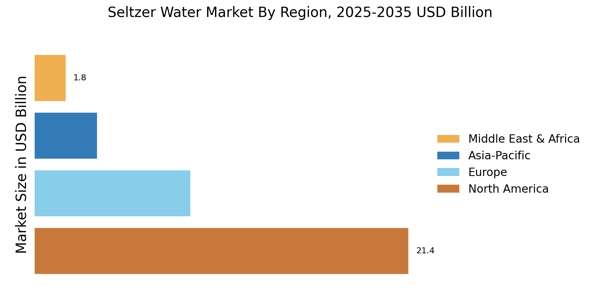
North America is the largest market for seltzer water, accounting for approximately 60% of the global market share. The region's growth is driven by increasing health consciousness among consumers, a shift towards low-calorie beverages, and innovative product offerings. Regulatory support for healthier beverage options further fuels demand, with initiatives promoting reduced sugar consumption. The U.S. is the primary contributor, followed by Canada, which holds around 15% of the market share. In North America, the competitive landscape is robust, featuring key players such as Coca-Cola, PepsiCo, and LaCroix. The presence of established brands and new entrants like Spindrift and Bubly enhances market dynamics. The region's consumers are increasingly favoring flavored and organic options, leading to a diverse product range. This competitive environment encourages innovation and marketing strategies that resonate with health-conscious consumers, solidifying North America's leadership in the seltzer water market.

Europe : Emerging Market for Seltzer

Europe is witnessing a significant rise in seltzer water consumption, driven by changing consumer preferences towards healthier beverages. The region holds approximately 25% of the global market share, with countries like Germany and the UK leading the charge. Regulatory frameworks promoting low-sugar and low-calorie products are pivotal in this growth, encouraging manufacturers to innovate and diversify their offerings. The increasing popularity of sparkling water as a mixer in cocktails also contributes to market expansion. Germany is the largest market in Europe, followed closely by the UK, where brands like San Pellegrino and AHA Sparkling Water are gaining traction. The competitive landscape is characterized by both established players and local brands, fostering a dynamic market environment. The presence of health-focused consumers is prompting brands to introduce organic and flavored variants, enhancing the appeal of seltzer water across various demographics. This trend is expected to continue as consumer awareness of health benefits grows.

Asia-Pacific : Rapidly Growing Beverage Sector

The Asia-Pacific region is emerging as a significant player in the seltzer water market, currently holding about 10% of the global share. The growth is primarily driven by urbanization, rising disposable incomes, and a growing trend towards health and wellness. Countries like Japan and Australia are leading the market, with increasing consumer interest in sparkling water as a refreshing alternative to sugary drinks. Regulatory initiatives promoting healthier beverage choices are also contributing to this trend. In Asia-Pacific, the competitive landscape is evolving, with both international and local brands vying for market share. Key players include Nestle and local brands that cater to regional tastes. The introduction of unique flavors and packaging innovations is attracting a younger demographic, further driving market growth. As awareness of health benefits associated with seltzer water increases, the region is poised for substantial growth in the coming years, making it a key area for investment and development.

Middle East and Africa : Emerging Beverage Market

The Middle East and Africa region is gradually emerging in the seltzer water market, currently holding around 5% of the global market share. The growth is driven by increasing health awareness and a shift towards non-sugary beverages among consumers. Countries like South Africa and the UAE are leading this trend, supported by regulatory frameworks that encourage healthier beverage options. The rising popularity of seltzer water as a refreshing drink is expected to boost market growth in the coming years. In this region, the competitive landscape is still developing, with a mix of local and international brands entering the market. Key players include Polar Beverages and local brands that cater to regional preferences. The introduction of flavored seltzer options is gaining traction, appealing to a diverse consumer base. As the market matures, the focus on health and wellness will likely drive further innovation and expansion in the seltzer water segment.

Seltzer Water Market Regional Image

Key Players and Competitive Insights

Being a leading industry, major players in the Seltzer Water Market industry continually attempt to capture a competitive advantage. Among the most widely adopted strategies are introducing innovative products, extending distribution channels, and investing in marketing campaigns. Speaking of the leading players operating in the market of seltzer water, they emphasize developing new flavors and packaging types to cater to the needs of the rapidly changing consumer demands. In addition, strategic partnerships and collaborations play an essential role in the development of the seltzer water market. Therefore, the competitive environment of the Seltzer Water Market is expected to be rather dynamic, and both new and experienced players will compete to gain shares in the market.One of the major players in the Seltzer Water Market is The Coca-Cola Company. This player has a vast presence in the Seltzer Water Market and a broad portfolio of Seltzer Water Market brands. Desiring to gain a competitive advantage in the industry, the company has concentrated on innovation and marketing. As a result, Coca-Cola introduced a variety of flavored seltzer waters, such as Dasani Sparkling and AHA, both of which enjoyed significant popularity among consumers. At the same time, the company invested large amounts in marketing its seltzer water products to gain connections with consumers. PepsiCo is another major player in the Seltzer Water Market, and it has invested considerable effort in the category. The company’s portfolio includes Bubly and Propel seltzer water brands, which also enjoyed significant popularity among consumers. In particular, PepsiCo focused on developing new flavors and packaging types to meet the demands of the changing market.

Key Companies in the Seltzer Water Market include

Recent Industry Developments

In September 2024, Heineken purchased a stake in Ellie Goulding's Served brand, which indicated growing interest and marketing clout behind hard seltzers. Nonetheless, according to analysts, low-alcohol and low-sugar drinks have great chances for expansion in the long term despite the challenges within the industry.

In January 2024, Bubly returned in a partnership with various sectors to broaden its reach into the health-conscious drink market when it launched Bubly Burst, this was in line with PepsiCo’s expansion strategy for the Bubly brand.

A further development worth highlighting is the announcement made in March 2024 regarding a partnership between Nestlé Waters and Amazon. This partnership has as its aim the integration of Nestlé’s sparkling water products within Amazon’s systems, making it possible for consumers to place orders by simply using their voices, which is part of the wider convenience consumer acquisition trend​.

Additionally, in February 2024, Spindrift entered into a strategic partnership with Whole Foods Market. This partnership aims to increase the market share of Spindrift in the health-oriented vertical by utilizing the loyal customers of Whole Foods, who would serve to advertise the seltzers made with real fruit and fresh ingredients​.

In January 2024, when LaCroix partnered with Equinox, it appeared in fitness events that were more focused on wellness, and this advanced its marketing strategy. This was expected since it was apparent that there was a rise in wellness and fitness trends; thus, offering consumers healthier alternatives to sugary drinks​ was paramount.

A noteworthy event took place in the seltzer market when, nine months into the year, Polar Beverages signed an agreement with Coca-Cola to distribute their seltzer and sparkling water lines. This variation enables the two businesses to benefit from Coca-Cola’s wide market by offering their products to many customers easily.

Moreover, the company which is known for coconut water, Vita Coco, partnered with a top seltzer brand to launch a new line of coconut water-infused sparkling seltzer in April 2024. All these partnerships have targeted the expanding drink sectors and increased consumer needs for multipurpose beverages.

In February 2024, Keurig Dr. Pepper has likewise done this by forming an alliance with Instacart with the hope This was intended to position its seltzer products directly to consumers using online retailing.

Future Outlook

Seltzer Water Market Future Outlook

The Seltzer Water Market is projected to grow at a 6.65% CAGR from 2025 to 2035, driven by health trends, innovative flavors, and sustainable packaging.

New opportunities lie in:

  • Expansion into e-commerce platforms for direct consumer sales. Development of premium flavored seltzers targeting health-conscious consumers. Partnerships with fitness centers for exclusive product offerings.

By 2035, the Seltzer Water Market is expected to achieve robust growth and increased market penetration.

Market Segmentation

Seltzer Water Market Flavor Outlook

  • Natural
  • Artificial
  • Fruit
  • Sugar-Free
  • Diet

Seltzer Water Market Packaging Outlook

  • Can
  • Bottle
  • Can with Sleeve
  • Bottle with Label

Seltzer Water Market Application Outlook

  • Consumption
  • Cooking
  • Beverage Preparation

Seltzer Water Market Distribution Channel Outlook

  • Supermarkets and Hypermarkets
  • Convenience Stores
  • Online Retailers
  • Drug Stores
  • Other Retail Outlets

Report Scope

MARKET SIZE 2024 35.76(USD Billion)
MARKET SIZE 2025 38.14(USD Billion)
MARKET SIZE 2035 72.63(USD Billion)
COMPOUND ANNUAL GROWTH RATE (CAGR) 6.65% (2025 - 2035)
REPORT COVERAGE Revenue Forecast, Competitive Landscape, Growth Factors, and Trends
BASE YEAR 2024
Market Forecast Period 2025 - 2035
Historical Data 2019 - 2024
Market Forecast Units USD Billion
Key Companies Profiled Nestle (CH), Coca-Cola (US), PepsiCo (US), LaCroix (US), Spindrift (US), Polar Beverages (US), San Pellegrino (IT), AHA Sparkling Water (US), Bubly (US)
Segments Covered Flavor, Packaging, Distribution Channel, Application, Regional
Key Market Opportunities Growing consumer preference for healthier beverages drives innovation in the Seltzer Water Market.
Key Market Dynamics Rising consumer preference for healthier beverages drives innovation and competition in the seltzer water market.
Countries Covered North America, Europe, APAC, South America, MEA

Frequently Asked Questions

What is the current valuation of the Seltzer Water Market as of 2024?

The Seltzer Water Market was valued at 35.76 USD Billion in 2024.

What is the projected market valuation for the Seltzer Water Market in 2035?
The market is projected to reach 72.63 USD Billion by 2035.
What is the expected CAGR for the Seltzer Water Market during the forecast period 2025 - 2035?
The expected CAGR for the Seltzer Water Market during 2025 - 2035 is 6.65%.
Which companies are considered key players in the Seltzer Water Market?
Key players in the market include Nestle, Coca-Cola, PepsiCo, LaCroix, Spindrift, Polar Beverages, San Pellegrino, AHA Sparkling Water, and Bubly.
What are the main flavor segments in the Seltzer Water Market and their valuations?
Flavor segments include Natural (5.0 - 10.0 USD Billion), Artificial (7.0 - 15.0 USD Billion), Fruit (10.0 - 20.0 USD Billion), Sugar-Free (8.0 - 15.0 USD Billion), and Diet (5.76 - 12.63 USD Billion).
How does packaging impact the Seltzer Water Market?
Packaging segments include Can (10.0 - 20.0 USD Billion), Bottle (15.0 - 30.0 USD Billion), Can with Sleeve (5.0 - 10.0 USD Billion), and Bottle with Label (5.76 - 12.63 USD Billion).
What distribution channels are prevalent in the Seltzer Water Market?
Distribution channels include Supermarkets and Hypermarkets (15.0 - 30.0 USD Billion), Convenience Stores (8.0 - 15.0 USD Billion), Online Retailers (5.0 - 10.0 USD Billion), Drug Stores (3.0 - 7.0 USD Billion), and Other Retail Outlets (4.76 - 10.63 USD Billion).
What applications are driving the Seltzer Water Market?
Applications driving the market include Consumption (20.0 - 40.0 USD Billion), Cooking (5.0 - 10.0 USD Billion), and Beverage Preparation (10.76 - 22.63 USD Billion).
How does the Seltzer Water Market compare to other beverage markets?
The Seltzer Water Market appears to be growing rapidly, with a projected valuation increase from 35.76 USD Billion in 2024 to 72.63 USD Billion by 2035.
What trends are influencing consumer preferences in the Seltzer Water Market?
Trends suggest a growing preference for healthier beverage options, with segments like Sugar-Free and Natural flavors likely gaining traction.
Author
Author Author Profile Snehal Singh LinkedIn Manager - Research
High acumen in analyzing complex macro & micro markets with more than 6 years of work experience in the field of market research. By implementing her analytical skills in forecasting and estimation into market research reports, she has expertise in Packaging, Construction, and Equipment domains. She handles a team size of 20-25 resources and ensures smooth running of the projects, associated marketing activities, and client servicing.
Download Free Sample

Kindly complete the form below to receive a free sample of this Report

Download PDF ×

We do not share your information with anyone. However, we may send you emails based on your report interest from time to time. You may contact us at any time to opt-out.