×
Request Free Sample ×

Kindly complete the form below to receive a free sample of this Report

* Please use a valid business email

Leading companies partner with us for data-driven Insights

clients tt-cursor
Hero Background
English
Chinese
French
Japanese
Korean
German
Spanish

Potato protein market Analysis

ID: MRFR/FnB/3981-HCR
110 Pages
Pradeep Nandi
October 2025

Potato Protein Market Size, Share, Industry Trend & Analysis Research Report Information by Type (Isolates and Concentrates), Application (Bakery & Confectionery, Meat Substitutes & Analogues, Sweet & Savory Snacks, Animal Feed and others) and Region (North America, Europe, Asia-Pacific and Rest of the World) - Forecast till 2035

Share:
Download PDF ×

We do not share your information with anyone. However, we may send you emails based on your report interest from time to time. You may contact us at any time to opt-out.

Potato protein market Infographic
Purchase Options

Market Analysis

In-depth Analysis of Potato protein market Industry Landscape

The market dynamics of potato protein are experiencing significant changes, driven by a combination of factors that reflect the growing demand for plant-based protein alternatives, increased awareness of health and sustainability, and advancements in food technology. Potato protein, derived from potatoes, has gained prominence as a valuable protein source in various industries, including food and beverages, animal feed, and pharmaceuticals. One key driver of the market is the rising popularity of plant-based diets and the increasing demand for alternative protein sources. As consumers seek healthier and more sustainable food options, potato protein has emerged as a versatile and nutritious choice, addressing the need for plant-based protein alternatives in various applications.

The food and beverage industry plays a central role in shaping the market dynamics of potato protein. With the surge in demand for plant-based products, food manufacturers are incorporating potato protein into a diverse range of products, including meat alternatives, dairy alternatives, and snack items. This trend is driven not only by the desire to cater to vegetarian and vegan consumers but also by the functional properties of potato protein, such as its emulsifying and binding capabilities. As a result, the market dynamics reflect a growing integration of potato protein in the formulation of a wide variety of food products.

The increasing awareness of health and sustainability influences the market dynamics of potato protein. Consumers are becoming more conscious of the nutritional content of their food and the environmental impact of their dietary choices. Potato protein, being a plant-based and sustainable protein source, aligns with these consumer preferences. The market responds to this demand by positioning potato protein as a clean-label, allergen-free, and environmentally friendly ingredient, thereby contributing to its expanding role in the broader protein market.

The animal nutrition sector also significantly contributes to the market dynamics of potato protein. As a high-quality protein source, potato protein is utilized in animal feed formulations to enhance the nutritional profile of livestock and pet food. The demand for protein-rich animal feed, coupled with the desire to reduce reliance on traditional protein sources like soy, has led to increased adoption of potato protein in the animal nutrition industry, influencing market dynamics within the agriculture and livestock sectors.

Technological advancements in extraction and processing methods contribute to the evolving market dynamics of potato protein. Innovations in protein isolation and purification techniques result in improved product quality, functionality, and cost-effectiveness. These advancements expand the application possibilities of potato protein in various industries, enhancing its market dynamics by making it more versatile and commercially viable.

Global trade and international market dynamics also impact the potato protein market, as the sourcing and availability of raw materials from different regions influence pricing and supply chains. Fluctuations in commodity markets, trade agreements, and geopolitical factors contribute to the overall market dynamics, requiring industry stakeholders to navigate and adapt to changing global conditions.

Challenges within the market dynamics of potato protein include potential competition from other plant-based protein sources and the need for increased consumer education regarding the nutritional benefits of potato protein. Additionally, addressing scalability and sustainability concerns in potato cultivation for protein extraction is crucial for long-term market growth.

Author
Pradeep Nandi
Senior Research Analyst

I have a bachelor's degree in mechanical engineering and an MBA. I have more than two years of expertise in the retail, food, and beverage, chemical, and material industries, and hence have developed a sound cross-domain expertise. A firm believer in lifelong learning and sharing of knowledge. Having a proclivity for hatching ideas and trying to absorb as much information as possible in a short amount of time. Introducing corporates to the data and insight, which enables them to move from probability to possibility, has been my key areas of interest. 

Leave a Comment

Market Summary

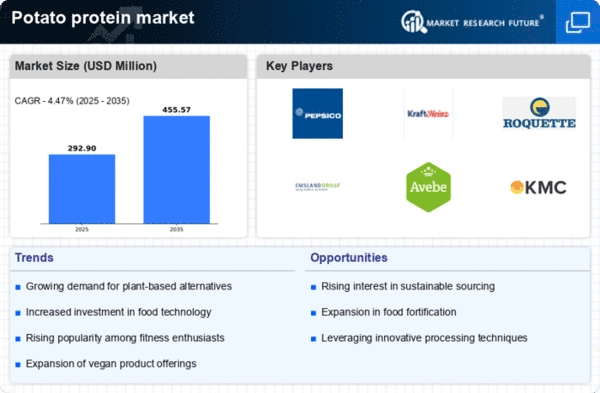
As per MRFR analysis, the Potato protein market size was estimated at 280.37 USD Million in 2024. The Potato protein industry is projected to grow from 296.12 in 2025 to 455.57 by 2035, exhibiting a compound annual growth rate (CAGR) of 4.47 during the forecast period 2025 - 2035.

Key Market Trends & Highlights

The potato protein market is experiencing robust growth driven by health trends and innovative processing technologies.

  • The demand for plant-based proteins is rising, particularly in North America, which remains the largest market for potato protein. Innovations in processing technologies are enhancing the quality and functionality of potato protein, appealing to diverse applications. The food and beverage segment dominates the market, while the nutritional supplements segment is witnessing the fastest growth. Rising health consciousness and sustainability concerns are key drivers propelling the expansion of potato protein applications.

Market Size & Forecast

2024 Market Size 280.37 (USD Million)
2035 Market Size 455.57 (USD Million)
CAGR (2025 - 2035) 4.47%
Largest Regional Market Share in 2024 North America

Major Players

PepsiCo (US), Kraft Heinz (US), Roquette Freres (FR), Emsland Group (DE), Avebe (NL), KMC (DK), Tereos (FR), Cargill (US), Ingredion (US)

Market Trends

The Potato protein market trends is currently experiencing a notable transformation, driven by increasing consumer awareness regarding health and nutrition. This shift is prompting a growing demand for plant-based protein sources, with potato protein emerging as a viable alternative to traditional animal proteins. The versatility of potato protein in various applications, including food and beverage products, nutritional supplements, and animal feed, further enhances its appeal. As consumers seek cleaner labels and sustainable options, the Potato protein market is likely to expand, reflecting broader trends in dietary preferences and environmental consciousness. Moreover, the Potato protein market appears to be influenced by advancements in processing technologies, which enhance the extraction and purification of protein from potatoes. These innovations not only improve the quality of potato protein but also reduce production costs, making it more accessible to manufacturers. Additionally, the growing trend of veganism and vegetarianism is likely to bolster the market, as more individuals opt for plant-based diets. The Potato protein market, therefore, stands at a pivotal juncture, with potential for significant growth as it aligns with evolving consumer demands and industry developments, including the emerging hydrolyzed potato protein market. 

Rising Demand for Plant-Based Proteins

The Potato protein market is witnessing a surge in demand for plant-based proteins, driven by health-conscious consumers seeking alternatives to animal-derived products. This trend reflects a broader shift towards sustainable eating habits and is one of the most important potato protein market trends.

Innovations in Processing Technologies

Advancements in processing technologies are enhancing the extraction and purification of potato protein, leading to improved product quality. These innovations may facilitate the development of new applications across various industries.

Growth of Vegan and Vegetarian Diets

The increasing popularity of vegan and vegetarian diets is influencing the Potato protein market. As more consumers adopt plant-based lifestyles, the demand for potato protein as a nutritious ingredient is likely to rise.

Potato protein market Market Drivers

Market Growth Projections

The Global Potato Protein Market Industry is poised for substantial growth, with projections indicating a market size of 88.6 USD Billion in 2024 and an anticipated increase to 127.2 USD Billion by 2035. This growth trajectory reflects a compound annual growth rate (CAGR) of 3.34% from 2025 to 2035. Such figures underscore the increasing acceptance and integration of potato protein in various sectors, including food and beverage, dietary supplements, and health products. The market's expansion is indicative of broader trends in consumer preferences towards plant-based and sustainable protein sources.

Health Benefits and Nutritional Value

The health benefits associated with potato protein significantly contribute to the growth of the Global Potato Protein Market Industry. Rich in essential amino acids, vitamins, and minerals, potato protein supports muscle recovery and overall health. As consumers become more aware of the nutritional advantages of incorporating potato protein into their diets, demand is expected to rise. This trend is particularly relevant among athletes and health-conscious individuals seeking high-quality protein sources. The Global Potato Protein Market Industry stands to benefit from this increasing awareness, potentially leading to a broader acceptance of potato protein in mainstream diets.

Rising Demand for Plant-Based Proteins

The Global Potato Protein Market Industry experiences a notable surge in demand for plant-based proteins, driven by increasing health consciousness among consumers. As individuals seek alternatives to animal-based proteins, potato protein emerges as a viable option due to its high nutritional profile and digestibility. This trend is particularly pronounced in regions with growing vegetarian and vegan populations. The market is projected to reach 88.6 USD Billion in 2024, reflecting a shift towards sustainable and health-oriented food choices. The Global Potato Protein Market Industry is thus well-positioned to capitalize on this evolving consumer preference.

Expansion of Food and Beverage Applications

The versatility of potato protein facilitates its incorporation into various food and beverage applications, enhancing the Global Potato Protein Market Industry's growth potential. It serves as an effective ingredient in protein-enriched snacks, dairy alternatives, and meat substitutes, appealing to a broad consumer base. As manufacturers increasingly recognize the benefits of potato protein, the market is expected to expand significantly. The anticipated growth trajectory suggests that by 2035, the market could reach 127.2 USD Billion, underscoring the importance of innovation in product development within the Global Potato Protein Market Industry.

Sustainability and Environmental Considerations

Sustainability concerns are increasingly influencing consumer choices, thereby impacting the Global Potato Protein Market Industry. Potato protein Market production is generally associated with a lower environmental footprint compared to animal protein sources, appealing to eco-conscious consumers. As the global population continues to grow, the need for sustainable food sources becomes more pressing. The Global Potato Protein Market Industry is likely to thrive as consumers prioritize environmentally friendly options. This shift towards sustainability may further enhance market growth, aligning with broader trends in food production and consumption.

Technological Advancements in Protein Extraction

Technological innovations in protein extraction methods are transforming the Global Potato Protein Market Industry. Enhanced extraction techniques improve yield and quality, making potato protein more accessible and appealing to manufacturers. These advancements not only optimize production efficiency but also reduce costs, potentially leading to lower prices for consumers. As the industry embraces these technologies, the market is likely to witness increased competition and product differentiation. This could further stimulate growth, with projections indicating a CAGR of 3.34% from 2025 to 2035, highlighting the dynamic nature of the Global Potato Protein Market Industry.
Innovations in processing technologies are enhancing the extraction and purification of potato protein, leading to improved product quality and reduced production costs. This development is likely to make potato protein more appealing to manufacturers and is a key driver of potato protein market trends.

Market Segment Insights

By Application: Food and Beverage (Largest) vs. Nutritional Supplements (Fastest-Growing)

In the Potato protein market, the 'Food and Beverage' segment commands the largest share, driven by the growing demand for plant-based protein sources among health-conscious consumers. This segment's stronghold is due to the versatility of potato protein in various food applications, from snacks to meat alternatives. Conversely, the 'Nutritional Supplements' segment, although smaller in market share, is experiencing rapid growth, fueled by increasing health awareness and the propensity for consumers to seek convenient and plant-based nutritional options. As consumers shift towards healthier lifestyles, both segments are witnessing significant demand trends. The rise of veganism and vegetarianism directly influences the growth of 'Food and Beverage' applications, while the 'Nutritional Supplements' sector benefits from the trend of fitness and wellness, as more individuals incorporate protein supplements into their diets. Innovation in product formulations and marketing strategies aimed at younger demographics are further expected to aid growth in these segments.

Food and Beverage (Dominant) vs. Nutritional Supplements (Emerging)

The 'Food and Beverage' segment represents a dominant force in the Potato protein market, characterized by its widespread use in various product formulations such as protein-rich snacks, meat analogs, and dairy alternatives. This segment appeals to both health-conscious consumers and the food industry due to its clean label appeal and functional properties. On the other hand, the 'Nutritional Supplements' segment is emerging rapidly, driven by an increasing focus on fitness and overall health. Potato protein offers a unique amino acid profile, making it an attractive ingredient for protein powders, bars, and other supplements targeting athletes and health enthusiasts. The shift towards natural and plant-based ingredients is driving innovation in both segments, as companies adapt to changing consumer preferences.

By End Use: Food Industry (Largest) vs. Health and Wellness (Fastest-Growing)

The potato protein market displays a diverse distribution across various end-use segments. The food industry holds the largest share, driven by the increasing demand for plant-based protein alternatives among health-conscious consumers and food manufacturers aiming to enhance nutritional profiles. Health and wellness, while smaller in comparison, is rapidly gaining traction as a result of the rising popularity of functional foods and protein supplements, thus capturing significant interest from consumers looking for healthier dietary options.

Food Industry (Dominant) vs. Health and Wellness (Emerging)

The food industry has emerged as the dominant end-use segment in the potato protein market, benefiting from the shift towards vegetarian and vegan diets. Potato protein is favored for its neutral taste and excellent solubility, making it ideal for various food products, including meat alternatives and baked goods. On the other hand, health and wellness is an emerging segment that thrives on the demand for protein-packed snacks and supplements. With consumers increasingly prioritizing health, potato protein's benefits—such as being allergen-friendly and rich in amino acids—enhance its appeal in this segment, positioning it for robust growth.

By Source: Conventional Potatoes (Largest) vs. Organic Potatoes (Fastest-Growing)

In the potato protein market, the sourcing of raw materials plays a vital role in determining the overall landscape. Conventional potatoes presently hold the largest market share due to their widespread cultivation and familiarity among processors and consumers alike. In contrast, organic potatoes are capturing increasing attention, reflecting a growing preference for health-conscious and sustainable options among consumers. With the shift towards healthier lifestyles, the demand for organic potato protein is on the rise, allowing it to carve out a significant niche.

Conventional Potatoes (Dominant) vs. Specialty Potatoes (Emerging)

Conventional potatoes remain the dominant source in the potato protein market, largely due to their extensive usage and established supply chains. However, specialty potatoes are emerging as a noteworthy alternative, attracting consumers seeking unique flavors, textures, and health benefits. Specialty varieties include colored potatoes and those with specific nutritional enhancements, catering to niche markets focused on culinary innovation. The growing interest in diverse food experiences is driving the expansion of specialty potatoes in the protein sector, indicating a shift towards broader choices that complement individual dietary needs.

By Form: Powder (Largest) vs. Liquid (Fastest-Growing)

In the Potato protein market, the 'By Form' segment reveals significant diversity in market share distribution. Powdered forms dominate the sector, catering to various applications due to their versatility and ease of use in food production. Granules and concentrates follow, with liquid forms emerging as an increasingly prominent option among manufacturers seeking alternative protein sources. This shift is largely driven by evolving consumer preferences leaning toward ready-to-use products, reflecting a growing demand for convenience in food consumption.

Powder (Dominant) vs. Liquid (Emerging)

The powdered form of potato protein continues to assert its dominance in the market due to its high protein content and versatility, making it ideal for inclusion in a range of food products, such as snacks and baked goods. Moreover, it maintains a stable shelf life and can be easily reconstituted. On the other hand, liquid potato protein is emerging as a fast-growing segment, favored for its ease of incorporation into liquid formulations like beverages and soups. This change is driven by consumer trends favoring liquid proteins for their immediate usability and nutrition without the need for additional preparation.

Get more detailed insights about Potato Protein Market Research Report - Forecast till 2035

Regional Insights

North America : Market Leader in Potato Protein

North America is poised to maintain its leadership in the potato protein market, holding a significant share of 140.15 million. The region's growth is driven by increasing consumer demand for plant-based proteins and the rising popularity of healthy food options. Regulatory support for sustainable agricultural practices further enhances market potential, encouraging innovation in potato protein applications. The United States stands out as the primary market, with key players like PepsiCo, Kraft Heinz, and Cargill leading the charge. The competitive landscape is characterized by a focus on product development and strategic partnerships, ensuring a robust supply chain. As consumer preferences shift towards healthier alternatives, the presence of established companies positions North America for continued growth in the potato protein sector.

Europe : Emerging Market for Plant Proteins

Europe is witnessing a burgeoning interest in potato protein, with a market size of 90.11 million. The region's growth is fueled by increasing health consciousness among consumers and a shift towards plant-based diets. Regulatory frameworks promoting sustainable food production are also pivotal, driving innovation and investment in the sector. Leading countries such as Germany, France, and the Netherlands are at the forefront of this market, with companies like Roquette Freres and Emsland Group playing significant roles. The competitive landscape is marked by a mix of established firms and emerging startups, all vying for market share. As the demand for alternative protein sources rises, Europe is set to become a key player in The Potato protein market.

Asia-Pacific : Growing Demand for Protein Alternatives

The Asia-Pacific region, with a market size of 40.0 million, is experiencing a notable increase in demand for potato protein. This growth is driven by rising health awareness and a shift towards vegetarian and vegan diets. Additionally, government initiatives promoting plant-based nutrition are catalyzing market expansion, making it a promising area for investment. Countries like China and India are leading the charge, with a growing number of local and international players entering the market. The competitive landscape is evolving, with companies focusing on product innovation and distribution strategies to capture the growing consumer base. As the region embraces healthier food options, the potato protein market is expected to flourish in the coming years.

Middle East and Africa : Emerging Market Opportunities

The Middle East and Africa region, with a market size of 10.11 million, is gradually recognizing the potential of potato protein. The growth is primarily driven by increasing health awareness and the rising demand for alternative protein sources. Regulatory support for food safety and quality standards is also fostering a conducive environment for market growth. Countries like South Africa and the UAE are emerging as key players in this market, with local companies beginning to explore potato protein applications. The competitive landscape is still developing, but there is a growing interest from international firms looking to establish a foothold. As consumer preferences evolve, the region is poised for gradual growth in the potato protein sector.

Key Players and Competitive Insights

The potato protein market is currently characterized by a dynamic competitive landscape, driven by increasing consumer demand for plant-based proteins and the growing trend towards healthier food options. Key players such as PepsiCo (US), Kraft Heinz (US), and Roquette Freres (FR) are strategically positioning themselves through innovation and partnerships. PepsiCo (US) has been focusing on expanding its product portfolio to include more plant-based options, while Kraft Heinz (US) is investing in research and development to enhance the nutritional profile of its offerings. Roquette Freres (FR), on the other hand, is leveraging its expertise in plant-based ingredients to cater to the rising demand for sustainable protein sources, thereby shaping the competitive environment through a focus on sustainability and health.In terms of business tactics, companies are increasingly localizing manufacturing to reduce supply chain complexities and enhance responsiveness to market demands. The competitive structure of the potato protein market appears moderately fragmented, with several key players exerting influence over their respective segments. This fragmentation allows for a diverse range of products and innovations, although it also intensifies competition among established and emerging players.
In November Emsland Group (DE) announced the launch of a new line of potato protein products aimed at the sports nutrition sector. This strategic move is significant as it not only diversifies their product range but also taps into the growing market for sports supplements, which is expected to expand rapidly in the coming years. By targeting this niche, Emsland Group (DE) positions itself as a leader in specialized applications of potato protein, potentially increasing its market share.
In October Avebe (NL) entered into a strategic partnership with a leading plant-based food manufacturer to co-develop innovative potato protein-based products. This collaboration is indicative of a broader trend towards partnerships that enhance product offerings and accelerate market entry. By aligning with a well-established player in the plant-based sector, Avebe (NL) is likely to enhance its competitive edge and expand its reach in the market.
In September Cargill (US) announced a significant investment in a new production facility dedicated to potato protein extraction. This facility is expected to utilize advanced technologies to improve yield and efficiency, reflecting Cargill's commitment to innovation and sustainability. Such investments are crucial as they not only enhance production capabilities but also align with the increasing consumer preference for sustainably sourced ingredients.
As of December the competitive trends in the potato protein market are increasingly defined by digitalization, sustainability, and the integration of AI technologies. Strategic alliances are becoming more prevalent, allowing companies to leverage each other's strengths and enhance their market positions. Looking ahead, it is likely that competitive differentiation will evolve from traditional price-based strategies to a focus on innovation, technological advancements, and supply chain reliability. This shift underscores the importance of adaptability and forward-thinking in maintaining a competitive edge in the rapidly changing landscape.

Key Companies in the Potato protein market include

Industry Developments

Feb 2022 The pioneering Danish ingredients firm KMC has created textured potato protein, which can be used as a component in plant-based meat for the first time in the world. Potato protein Market's particular features can increase the texture and nutritive quality of plant-based meat products. KMC's approach for finding new applications for potato-based foods includes this invention. The plant-based market is growing rapidly and will continue to do so in the future years. Modern customers would prefer to eat less meat, but there aren't many new options in supermarkets to help them shift to a plant-based diet.

KMC, a Danish business, has made a huge step toward a plant-based future by transforming extracted potato protein from a powder ingredient into a product with a structure that is extremely similar to meat.

Global Potato Protein Market, by Type

    • Isolates

    • Concentrates

Global Potato Protein Market, by Application

Global Potato Protein Market, By Region

    • North America

      • US

      • Canada

      • Mexico

    • Europe

      • Germany

      • France

      • Italy

      • Spain

      • UK

      • Rest of Europe

    • Asia-Pacific

      • Japan

      • China

      • India

      • Australia & New Zealand

      • Rest of Asia-Pacific

    • Rest of the World (RoW)

      • South America

      • Middle East

      • Africa

Intended Audience

    • Potato protein Market manufacturers

    • Commercial research and development institutions

    • Raw material suppliers and distributors

    • Snack manufacturers and other end users

    • Retailers, distributors, and wholesalers

    • Traders, exporters, and importers

Future Outlook

Potato protein market Future Outlook

The potato protein market is projected to grow at a 4.47% CAGR from 2025 to 2035, driven by rising demand for plant-based proteins and health-conscious consumer trends.

New opportunities lie in:

  • <p>Developing innovative potato protein-based snacks for health-conscious consumers. Expanding distribution channels in emerging markets to capture new customer segments. Investing in R&amp;D for enhanced extraction methods to improve yield and reduce costs.</p>

By 2035, the potato protein market is expected to achieve robust growth and increased market penetration.

Market Segmentation

Potato protein market Form Outlook

  • Powder
  • Granules
  • Liquid
  • Concentrate

Potato protein market Source Outlook

  • Conventional Potatoes
  • Organic Potatoes
  • Non-GMO Potatoes
  • Specialty Potatoes

Potato protein market End Use Outlook

  • Food Industry
  • Health and Wellness
  • Animal Nutrition
  • Personal Care
  • Pharmaceuticals

Potato protein market Application Outlook

  • Food and Beverage
  • Nutritional Supplements
  • Animal Feed
  • Cosmetics
  • Pharmaceuticals

Report Scope

MARKET SIZE 2024 280.37(USD Million)
MARKET SIZE 2025 296.12(USD Million)
MARKET SIZE 2035 455.57(USD Million)
COMPOUND ANNUAL GROWTH RATE (CAGR) 4.47% (2025 - 2035)
REPORT COVERAGE Revenue Forecast, Competitive Landscape, Growth Factors, and Trends
BASE YEAR 2024
Market Forecast Period 2025 - 2035
Historical Data 2019 - 2024
Market Forecast Units USD Million
Key Companies Profiled PepsiCo (US), Kraft Heinz (US), Roquette Freres (FR), Emsland Group (DE), Avebe (NL), KMC (DK), Tereos (FR), Cargill (US), Ingredion (US)
Segments Covered Application, End Use, Source, Form
Key Market Opportunities Growing demand for plant-based proteins drives innovation in the Potato protein market.
Key Market Dynamics Rising demand for plant-based proteins drives innovation and competition in the potato protein market.
Countries Covered North America, Europe, APAC, South America, MEA

FAQs

  1. SECTION I: EXECUTIVE SUMMARY AND KEY HIGHLIGHTS |
    1. EXECUTIVE SUMMARY |
      1. Market Overview |
      2. Key Findings |
      3. Market Segmentation |
      4. Competitive Landscape |
      5. Challenges and Opportunities |
      6. Future Outlook 2
  2. SECTION II: SCOPING, METHODOLOGY AND MARKET STRUCTURE |
    1. MARKET INTRODUCTION |
      1. Definition |
      2. Scope of the study |--
    2. RESEARCH METHODOLOGY |
      1. Overview |
      2. Data Mining |
      3. Secondary Research |
      4. Primary Research |--
      5. Forecasting Model |
      6. Market Size Estimation |--
      7. Data Triangulation |
      8. Validation 3
  3. SECTION III: QUALITATIVE ANALYSIS |
    1. MARKET DYNAMICS |
      1. Overview |
      2. Drivers |
      3. Restraints |
      4. Opportunities |
    2. MARKET FACTOR ANALYSIS |
      1. Value chain Analysis |
      2. Porter's Five Forces Analysis |--
      3. COVID-19 Impact Analysis |--
  4. SECTION IV: QUANTITATIVE ANALYSIS |
    1. Food, Beverages & Nutrition, BY Application (USD Million) |
      1. Food and Beverage |
      2. Nutritional Supplements |
      3. Animal Feed |
      4. Cosmetics |
      5. Pharmaceuticals |
    2. Food, Beverages & Nutrition, BY End Use (USD Million) |
      1. Food Industry |
      2. Health and Wellness |
      3. Animal Nutrition |
      4. Personal Care |
      5. Pharmaceuticals |
    3. Food, Beverages & Nutrition, BY Source (USD Million) |
      1. Conventional Potatoes |
      2. Organic Potatoes |
      3. Non-GMO Potatoes |
      4. Specialty Potatoes |
    4. Food, Beverages & Nutrition, BY Form (USD Million) |
      1. Powder |
      2. Granules |
      3. Liquid |
      4. Concentrate |
    5. Food, Beverages & Nutrition, BY Region (USD Million) |
      1. North America |--
      2. Europe |--
      3. APAC |--
      4. South America |--
      5. MEA |--
  5. SECTION V: COMPETITIVE ANALYSIS |
    1. Competitive Landscape |
      1. Overview |
      2. Competitive Analysis |
      3. Market share Analysis |
      4. Major Growth Strategy in the Food, Beverages & Nutrition |
      5. Competitive Benchmarking |
      6. Leading Players in Terms of Number of Developments in the Food, Beverages & Nutrition |
      7. Key developments and growth strategies |--
      8. Major Players Financial Matrix |--
    2. Company Profiles |
      1. PepsiCo (US) |--
      2. Kraft Heinz (US) |--
      3. Roquette Freres (FR) |--
      4. Emsland Group (DE) |--
      5. Avebe (NL) |--
      6. KMC (DK) |--
      7. Tereos (FR) |--
      8. Cargill (US) |--
      9. Ingredion (US) |--
    3. Appendix |
      1. References |
      2. Related Reports

Food, Beverages & Nutrition Market Segmentation

Food, Beverages & Nutrition By Application (USD Million, 2025-2035)

  • Food and Beverage
  • Nutritional Supplements
  • Animal Feed
  • Cosmetics
  • Pharmaceuticals

Food, Beverages & Nutrition By End Use (USD Million, 2025-2035)

  • Food Industry
  • Health and Wellness
  • Animal Nutrition
  • Personal Care
  • Pharmaceuticals

Food, Beverages & Nutrition By Source (USD Million, 2025-2035)

  • Conventional Potatoes
  • Organic Potatoes
  • Non-GMO Potatoes
  • Specialty Potatoes

Food, Beverages & Nutrition By Form (USD Million, 2025-2035)

  • Powder
  • Granules
  • Liquid
  • Concentrate
Infographic

Free Sample Request

Kindly complete the form below to receive a free sample of this Report

Get Free Sample

Customer Strories

Compare Licence

×
Features License Type
Single User Multiuser License Enterprise User
Price $4,950 $5,950 $7,250
Maximum User Access Limit 1 User Upto 10 Users Unrestricted Access Throughout the Organization
Free Customization
Direct Access to Analyst
Deliverable Format
Platform Access
Discount on Next Purchase 10% 15% 15%
Printable Versions