


Market Trends
Introduction
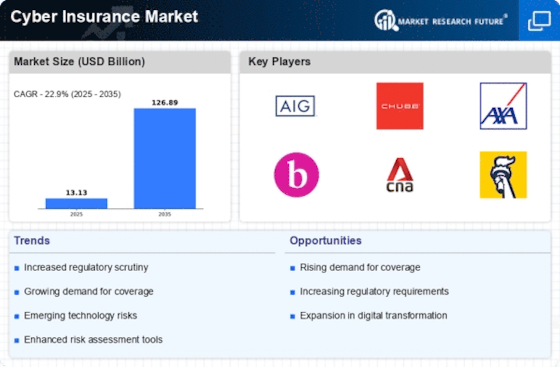
By the year 2024, the cyber insurance market is experiencing a profound transformation, triggered by a confluence of macroeconomic factors. The proliferation of cloud computing and the Internet of Things (IoT) has increased the frequency and complexity of cyber attacks, which is causing companies to review their risk management strategies. At the same time, governments are tightening their data privacy laws and demanding that companies adopt comprehensive cyber security measures, which has increased demand for cyber insurance. Also, changes in consumer behavior, including a growing awareness of cyber risks and an increasing demand for data privacy, are influencing purchasing decisions. These trends are strategically important for the industry’s stakeholders, because they are reshaping the competitive landscape and requiring them to adopt a more active approach to risk management and product development.
Top Trends
-
Increased Regulatory Scrutiny
Governments are enacting stricter data protection laws, which are influencing the cyber insurance market. GDPR has for example led to an increase in demand for compliance-related insurance. In 2023, 60% of companies reported increased scrutiny from regulators. This trend is encouraging insurers to develop more specialised products, which could lead to higher premiums and more comprehensive coverage. -
Rise of Ransomware Coverage
Ransomware attacks have become a major concern. Ransomware attacks have increased to the point where a year ago more than 70 percent of companies have been attacked. The insurance industry is responding by offering special ransomware coverage, as we see from the fact that the major players have expanded their coverage options. This trend will also lead to innovations in the field of risk assessment and the settlement of claims, as companies try to limit the financial damage caused by such attacks. -
Integration of AI in Underwriting
Artificial intelligence is increasingly used in the underwriting process, improving the accuracy of risk assessment. In some cases, a reduction of up to thirty per cent in underwriting time has been reported. This development is expected to improve efficiency and the profitability of the industry and to provide clients with a more bespoke service, based on their individual risk profiles. -
Focus on Small and Medium Enterprises (SMEs)
SMMEs are becoming a key target for cyber insurance companies, as they represent the fastest-growing segment of attack victims. In 2023, 43% of cyber attacks were directed at SMMEs, which has prompted insurance companies to develop products tailored to this market. This is likely to increase competition among insurance companies, leading to more affordable and accessible insurance for SMMEs. -
Enhanced Cyber Risk Assessment Tools
Insurers are now developing more sophisticated tools to assess cyber risks. Data analytics and machine learning are increasingly used to gauge the extent of the threat, and by 2023 half of all insurers will be using them. This is expected to increase the accuracy of underwriting and reduce claims, bringing benefits to both policyholders and insurers. -
Collaboration with Cybersecurity Firms
Insurers are forming alliances with the security specialists to provide a comprehensive service. Now, for example, a number of the large insurance companies are offering a cyber-security service as part of their package of cover. This collaboration is likely to lead to greater customer satisfaction and retention as companies seek a single point of contact for all their security needs. -
Increased Awareness and Education
There is growing emphasis on educating businesses about the dangers of cyber-risks and the importance of insurance cover. Insurers estimate that around 75% of companies now prioritise training for their employees on cyber-risks. This is expected to drive up demand for cyber-cover as businesses become aware of the need to protect themselves from evolving threats. This in turn will create a better informed customer base. -
Expansion of Coverage Options
As for the insurance companies, they are now diversifying their products to cover the risks of the new risks such as the Internet of Things and the supply chain. In 2023, forty per cent of the companies had already launched new products. This trend is likely to increase the competitiveness of the market and encourage companies to invest in cyber insurance as a preventive risk management strategy. -
Increased Claims Frequency and Severity
The frequency and severity of cyber-incident insurance claims is rising. The number of such claims is reported to have risen by 25 per cent in 2023. The resulting increase in the costs of claims is causing insurers to review their risk models and their premium strategies. Also, as the complexity of claims increases, it may be necessary to invest in more advanced claim-handling systems in order to be able to manage the growing volume of claims and ensure that they are settled quickly. -
Global Market Expansion
Cyber insurance is a growing business all over the world, especially in Asia-Pacific and Latin America. These regions show an increase of 35% in the number of policies sold in 2023. This trend will create new opportunities for insurers to enter new markets, fostering innovation and competition as they adapt to different regulatory frameworks and customer needs.
Conclusion: Navigating the Cyber Insurance Landscape
In 2024 the cyber insurance market will be highly competitive and the competition will be between the legacy and the new players. The old players will be able to draw on their historic data and customer trust, while the new players will be able to draw on their technological innovations and agile business models. The regional trends will show a growing demand for tailored solutions, especially in areas where the rate of digital transformation is high. In order to differentiate themselves from the competition, the vendors must focus on artificial intelligence, automation and sustainability. They must also offer flexible solutions, as companies seek to tailor the cyber cover to their individual needs. These trends must be understood in order to gain a strategic advantage in the market.
























Leave a Comment