
Request Free Sample ×

Kindly complete the form below to receive a free sample of this Report

* Please use a valid business email

Leading companies partner with us for data-driven Insights

clients tt-cursor
Hero Background
English
Chinese
French
Japanese
Korean
German
Spanish

CNC Controller Market Trends

ID: MRFR/SEM/2551-CR
101 Pages
Aarti Dhapte
July 2019

CNC Controller Market Report By Product (Microcontroller-Based, DSP-Based, Motion Control Chip-Based & Others), Component (Power Supply Unit, Software, Cabling, Circuitry Protection System & Others), Axis Type (2 Axis, 3 Axis, 4 Axis, 5 Axis & Multi-Axis), Application (Closed-Loop Control CNC Machine Tool, Open-Loop Control CNC Machine Tool & Semi-Closed Loop Control CNC Machine Tool), End-User (Healthcare, Automobile, Aerospace, Defense, Electronics, Other) and Region- Industry Forecast Till 2035

Share:
Download PDF ×

We do not share your information with anyone. However, we may send you emails based on your report interest from time to time. You may contact us at any time to opt-out.

CNC Controller Market Infographic
Purchase Options

Market Trends

Key Emerging Trends in the CNC Controller Market

The trends in the CNC controller market reflect the ongoing advancement of innovation and the shifting needs of global business endeavors. The increasing use of CNC controllers in conjunction with cutting edge technologies like artificial intelligence and the Internet of Things is one obvious trend. This combination aims to improve the overall skill level and productivity of assembly operations. CNC controllers powered with computer-based intelligence enable learning and self-improvement, leading to increased accuracy and less idle time. The availability of IoT enables continuous observation and information analysis, enabling producers to make well-informed decisions and proactively handle any problems. Producers are progressively searching for adaptable and versatile frameworks that can undoubtedly incorporate with existing hardware and be tweaked considering explicit application prerequisites. Private CNC controllers take into consideration more straightforward redesigns and developments, giving a smart way to deal with organizations hoping to improve their machining capacities without huge interruptions to existing work processes. An increasing focus is being placed on producing controllers with intuitive interfaces that need less setup, as projects struggle with a shortage of skilled administrators. Unconscious controls contribute to increased functional competency, lower error rates, and an overall better customer experience. The pattern of inventive assembly is being driven by Industry 4.0, the fourth major upheaval of our time, and CNC controllers are at the forefront of this development. By facilitating network and interoperability between the many components of the assembling biological system, CNC controllers play a crucial role in this shift in perspective and ultimately lead to more agile and responsive creation processes. This trend has led to the development of entry-level CNC controllers that meet the needs of cost-conscious businesses, promoting wider use among various industries. The market for CNC controllers is also changing due to the maintainability trend. As environmental concerns become more apparent, manufacturers are focusing on developing energy-efficient controllers with lower environmental impact. Energy-saving features, efficient power board structures, and compliance with environmental regulations are increasingly important considerations for both manufacturers and end users. In the market for CNC controllers, provincial trends play a crucial role, with demands and preferences varying across different topographical areas. Growing economies are experiencing a surge in demand for CNC controllers as businesses update their assembly lines, while developed markets are seeing a shift from outdated structures to more sophisticated and intricate setups.

Author
Author Profile
Aarti Dhapte
AVP - Research

A consulting professional focused on helping businesses navigate complex markets through structured research and strategic insights. I partner with clients to solve high-impact business problems across market entry strategy, competitive intelligence, and opportunity assessment. Over the course of my experience, I have led and contributed to 100+ market research and consulting engagements, delivering insights across multiple industries and geographies, and supporting strategic decisions linked to $500M+ market opportunities. My core expertise lies in building robust market sizing, forecasting, and commercial models (top-down and bottom-up), alongside deep-dive competitive and industry analysis. I have played a key role in shaping go-to-market strategies, investment cases, and growth roadmaps, enabling clients to make confident, data-backed decisions in dynamic markets.

Leave a Comment

FAQs

What is the current valuation of the CNC Controller Market as of 2024?

<p>The CNC Controller Market was valued at 3.488 USD Billion in 2024.</p>

What is the projected market size for the CNC Controller Market in 2035?

<p>The market is projected to reach 9.001 USD Billion by 2035.</p>

What is the expected CAGR for the CNC Controller Market during the forecast period 2025 - 2035?

<p>The expected CAGR for the CNC Controller Market during 2025 - 2035 is 9.0%.</p>

Which companies are considered key players in the CNC Controller Market?

<p>Key players in the market include Siemens, Fanuc, Mitsubishi Electric, Rockwell Automation, and Haas Automation.</p>

What are the main product segments in the CNC Controller Market?

<p>Main product segments include Microcontroller-Based, DSP-Based, Motion Control Chip-Based, and Others.</p>

How much is the Microcontroller-Based segment projected to grow by 2035?

<p>The Microcontroller-Based segment is projected to grow from 1.044 USD Billion in 2024 to 2.5 USD Billion by 2035.</p>

What components are included in the CNC Controller Market?

<p>Components include Power Supply Units, Software, Cabling, Circuitry Protection Systems, and Motor Drivers.</p>

What is the projected growth for the Software component by 2035?

<p>The Software component is expected to grow from 0.8 USD Billion in 2024 to 2.2 USD Billion by 2035.</p>

Which axis types are represented in the CNC Controller Market?

<p>Axis types include 2 Axis, 3 Axis, 4 Axis, 5 Axis, and Multi-Axis.</p>

What is the expected growth for the 3 Axis segment by 2035?

<p>The 3 Axis segment is projected to increase from 1.2 USD Billion in 2024 to 2.5 USD Billion by 2035.</p>

Market Summary

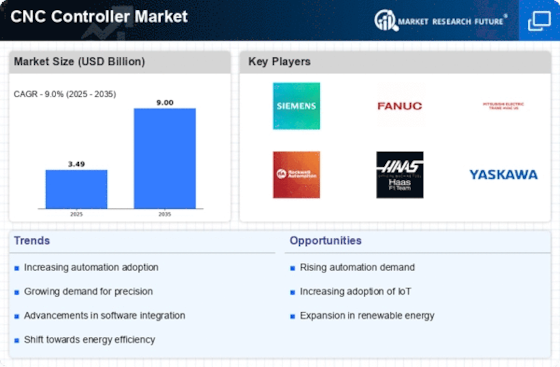
As per Market Research Future analysis, the CNC Controller Market Size was estimated at 3.488 USD Billion in 2024. The CNC Controller industry is projected to grow from 3.802 USD Billion in 2025 to 9.001 USD Billion by 2035, exhibiting a compound annual growth rate (CAGR) of 9.0% during the forecast period 2025 - 2035

Key Market Trends & Highlights

The CNC Controller Market is poised for substantial growth driven by technological advancements and increasing automation.

  • The CNC Controller Market experiences a notable shift towards increased automation in manufacturing processes, particularly in North America. User-friendly interfaces are becoming a focal point, enhancing accessibility for operators across various industries. Cloud-based solutions are gaining traction, reflecting a broader trend towards digital transformation in the Asia-Pacific region. Rising demand for precision engineering and technological advancements in CNC systems are key drivers propelling market expansion.

Market Size & Forecast

2024 Market Size 3.488 (USD Billion)
2035 Market Size 9.001 (USD Billion)
CAGR (2025 - 2035) 9.0%
Largest Regional Market Share in 2024 Asia Pacific

Major Players

Siemens (DE), Fanuc (JP), Mitsubishi Electric (JP), Rockwell Automation (US), Haas Automation (US), Yaskawa Electric (JP), Fagor Automation (ES), Kollmorgen (US), Omron (JP)

Market Trends

The CNC Controller Market is currently experiencing a transformative phase, driven by advancements in technology and increasing demand for automation across various industries. The CNC controller market is experiencing steady growth, driven by increasing adoption of automation and precision manufacturing across industries such as automotive, aerospace, and industrial machinery. As manufacturers seek to enhance precision and efficiency in their operations, the integration of sophisticated CNC controllers has become paramount. These devices not only facilitate intricate machining processes but also contribute to the overall productivity of manufacturing systems. The growing emphasis on smart manufacturing and Industry Four-point-zero initiatives further propels the adoption of CNC controllers, as companies strive to remain competitive in a rapidly evolving landscape. Moreover, the CNC Controller Market is witnessing a shift towards more user-friendly interfaces and enhanced connectivity features.

This trend appears to be influenced by the need for operators to easily interact with complex machinery. As a result, manufacturers are focusing on developing intuitive software solutions that simplify the programming and operation of CNC machines. Additionally, the rise of cloud-based technologies is likely to play a crucial role in the future of this market, enabling real-time data analysis and remote monitoring capabilities. Overall, the CNC Controller Market seems poised for substantial growth, driven by innovation and the relentless pursuit of operational excellence. Key CNC controller market trends include integration of advanced motion control, improved user interfaces, and compatibility with Industry 4.0-enabled manufacturing systems.

Increased Automation in Manufacturing

The CNC Controller Market is seeing a notable rise in automation as industries strive for greater efficiency. This trend indicates a shift towards integrating advanced CNC systems that can operate with minimal human intervention, thereby reducing errors and enhancing production rates.

Focus on User-Friendly Interfaces

There is a growing emphasis on developing CNC controllers with intuitive interfaces. This trend suggests that manufacturers are prioritizing ease of use, allowing operators to navigate complex functions without extensive training, which may lead to improved operational efficiency.

Adoption of Cloud-Based Solutions

The integration of cloud technology within the CNC Controller Market appears to be gaining traction. This trend indicates a movement towards remote monitoring and data analytics, enabling manufacturers to optimize their processes and respond swiftly to operational challenges.

CNC Controller Market Market Drivers

Rising Demand for Precision Engineering

The CNC Controller Market is experiencing a notable surge in demand for precision engineering across various sectors, including aerospace, automotive, and medical devices. As industries increasingly prioritize accuracy and efficiency, the need for advanced CNC controllers that can deliver high precision machining is paramount. According to recent data, the precision engineering sector is projected to grow at a compound annual growth rate of approximately 7.5% over the next five years. This growth is likely to drive investments in CNC technology, as manufacturers seek to enhance their production capabilities and meet stringent quality standards. Consequently, the CNC Controller Market is poised to benefit from this trend, as companies invest in sophisticated control systems that facilitate intricate machining processes.

Technological Advancements in CNC Systems

Technological advancements are significantly shaping the CNC Controller Market, with innovations such as artificial intelligence, machine learning, and IoT integration becoming increasingly prevalent. These technologies enhance the functionality and efficiency of CNC controllers, allowing for real-time monitoring and predictive maintenance. For instance, the integration of IoT enables seamless communication between machines, leading to optimized production workflows. Market data suggests that the adoption of smart CNC systems is expected to increase by over 30% in the coming years, as manufacturers recognize the potential for reduced downtime and improved operational efficiency. This trend indicates a shift towards more intelligent manufacturing processes, positioning the CNC Controller Market at the forefront of technological evolution.

Sustainability Initiatives in Manufacturing

Sustainability initiatives are becoming increasingly important within the CNC Controller Market, as manufacturers seek to reduce their environmental impact. The push for greener manufacturing practices is driving the development of energy-efficient CNC controllers that minimize waste and optimize resource usage. Market data suggests that the demand for sustainable manufacturing solutions is expected to grow by approximately 20% in the next few years. This trend is prompting manufacturers to invest in CNC technologies that not only enhance productivity but also align with environmental goals. As sustainability becomes a key consideration in production processes, the CNC Controller Market is likely to see a shift towards eco-friendly solutions that meet both operational and environmental standards.

Expansion of the Aerospace and Defense Sector

The aerospace and defense sector is a significant driver for the CNC Controller Market, as it requires high-precision components and complex machining processes. With increasing investments in aerospace manufacturing and defense technologies, the demand for advanced CNC controllers is expected to rise. Recent reports indicate that the aerospace sector is projected to grow at a CAGR of around 6% over the next decade, further fueling the need for sophisticated CNC solutions. This growth is likely to be accompanied by a heightened focus on quality and compliance with stringent industry standards, which in turn will drive the adoption of advanced CNC controllers. As a result, the CNC Controller Market stands to benefit from the expansion of this critical sector.

Growing Emphasis on Customization and Flexibility

The CNC Controller Market is witnessing a growing emphasis on customization and flexibility in manufacturing processes. As businesses strive to meet diverse customer demands, the ability to quickly adapt production lines becomes crucial. CNC controllers that offer modular designs and customizable features are increasingly sought after, enabling manufacturers to tailor their operations to specific requirements. Recent market analysis indicates that the demand for flexible manufacturing systems is projected to rise by approximately 25% over the next few years. This shift towards customization not only enhances product offerings but also improves overall efficiency, thereby driving growth within the CNC Controller Market. Manufacturers that invest in adaptable CNC technologies are likely to gain a competitive edge in an evolving marketplace.

Market Segment Insights

By Product: Microcontroller-Based (Largest) vs. DSP-Based (Fastest-Growing)

In the CNC Controller Market, the product segment is primarily dominated by Microcontroller-Based solutions, which are favored due to their affordability and flexibility. These systems have become the preferred choice for various end-use applications, thereby capturing a significant portion of the market. In contrast, DSP-Based controllers, while smaller in market share, are increasingly gaining traction thanks to their superior processing power and efficiency, particularly in high-performance machining operations. The growth trends in this segment are characterized by rapid technological advancements and the increasing demand for automation in manufacturing processes. The shift towards smart manufacturing applications and the rise in Industry 4.0 initiatives are further propelling the adoption of DSP-Based controllers, which are perceived as the next step in advancing CNC technology. Meanwhile, Microcontroller-Based systems continue to be essential for various user segments looking for cost-effective yet reliable solutions in their CNC operations.

Microcontroller-Based (Dominant) vs. DSP-Based (Emerging)

Microcontroller-Based controllers are recognized as the dominant segment within the CNC Controller Market due to their versatility and cost-effectiveness. They are widely used in various industries for basic CNC applications, offering sufficient processing power for most machining tasks. These systems are not only essential for small-scale operations but have also made their way into larger manufacturing setups where cost concerns are predominant. On the other hand, DSP-Based controllers are emerging as a significant trendsetter within the market, particularly in high-precision and intricate machining processes. Their ability to handle complex algorithms and offer real-time processing capabilities makes them ideal for advanced applications, such as aerospace and automotive. The increasing focus on high-quality workmanship and the need for increased productivity are driving the visibility and adoption of DSP-Based solutions.

By Component: Motor Drivers (Largest) vs. Software (Fastest-Growing)

In the CNC Controller Market, the component segment showcases a diverse distribution of values. Currently, Motor Drivers dominate the market, holding the largest share due to their essential function in converting electrical signals into mechanical movement. Following closely are Software solutions, which have witnessed a significant upswing in demand, especially amidst the increasing shift towards automation in manufacturing processes. Additionally, Power Supply Units, Cabling, and Circuitry Protection Systems contribute to the segmentation, each playing critical roles in enhancing the overall functionality of CNC systems. Growth trends indicate a pronounced shift towards advanced technology integration in CNC systems, with Software emerging as a critical growth driver. The rising demand for automation and data-driven manufacturing practices is propelling software solutions to the forefront, leading to their fastest growth. Motor Drivers, while still leading the market, are evolving alongside trends like IoT and Industry 4.0, necessitating the development of more sophisticated and efficient solutions, further shaping the competitive landscape of the CNC Controller Market.

Power Supply Units: Dominant vs. Circuitry Protection Systems: Emerging

Power Supply Units play a dominant role in the CNC Controller Market, known for their reliability and efficiency in providing consistent voltage and current to CNC systems. Their importance cannot be overstated as they ensure seamless machine operation, thus making them indispensable. Conversely, Circuitry Protection Systems are emerging as crucial components, designed to safeguard CNC controllers from voltage spikes and electrical faults. While still developing their market presence, these systems are gaining traction due to the increasing complexity of CNC operations. The need for robust safety measures in manufacturing is driving interest in these solutions. As such, the market is witnessing a balance between the established reliability of Power Supply Units and the innovative solutions offered by emerging Circuitry Protection Systems.

By Axis Type: 3 Axis (Largest) vs. 5 Axis (Fastest-Growing)

The CNC Controller Market showcases diverse axis types, prominently featuring 3 Axis systems which hold the largest market share. This segment is widely adopted for its versatility and efficiency in handling various machining tasks, making it a preferred choice among manufacturers. Meanwhile, the 5 Axis segment, while smaller in market share, is gaining traction due to its ability to provide intricate and complex machining processes that streamline production and enhance precision. Current growth trends indicate that the 5 Axis segment is rapidly expanding, driven by increasing demand for advanced manufacturing techniques and higher productivity in industries such as aerospace and automotive. The capabilities offered by 5 Axis CNC controllers are becoming increasingly important as companies seek to reduce operational costs and improve the accuracy of their machined parts, contributing to its status as the fastest-growing segment in the market.

3 Axis (Dominant) vs. 5 Axis (Emerging)

The 3 Axis segment stands as the dominant force in the CNC Controller Market, primarily due to its established presence and widespread application across various industries. Its simplicity and effectiveness in executing standard milling and turning operations make it the go-to choice for most machining needs. Conversely, the 5 Axis segment is emerging as a strong contender as it addresses the growing demand for complex designs and heightened precision in manufacturing. With the capacity to manipulate the workpiece from multiple angles, 5 Axis CNC controllers are becoming essential for sectors requiring intricate geometries, such as medical device production and aerospace components, positioning themselves as indispensable for modern manufacturing needs.

Get more detailed insights about CNC Controller Market Research Report - Global Forecast till 2035

Regional Insights

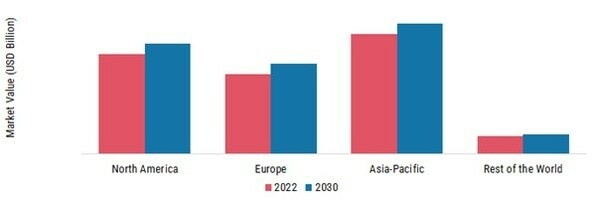
By region, the study provides market insights into North America, Europe, Asia-Pacific, and the Rest of the World. The Asia-Pacific region is a key player in the CNC Controller Market, driven by the presence of numerous manufacturing companies and the increasing investment in the business and manufacturing processes. The region has a large number of well-established and emerging companies operating in the CNC Controller Market, providing a wide range of products and services to cater to the increasing demand.

Additionally, the region is home to some of the largest manufacturing industries, such as automotive, aerospace, electronics, and machinery, which have driven the demand for advanced and high-performance CNC controllers. The increasing investment in the manufacturing sector and the growth of these industries has driven the demand for CNC controllers in the Asia-Pacific region, contributing to the growth of the market.

Further, the major countries studied in the market report are The U.S., Canada, Germany, France, the UK, Italy, Spain, China, Japan, India, Australia, South Korea, and Brazil

Figure 3: GLOBAL CNC CONTROLLER MARKET SHARE BY REGION 2022 (%)GLOBAL CNC CONTROLLER MARKET SHARE BY REGION 2022

Europe is the third-largest market for CNC Controllers. The region has a high demand for advanced and high-performance CNC controllers, driven by the increasing investment in the manufacturing sector and the growing adoption of automated technologies. The region has a well-developed infrastructure and a high level of industrialization, which has enabled the companies to manufacture and provide high-quality CNC controllers to cater to the growing demand. The presence of well-established companies and a large number of advanced technology-driven industries, such as aerospace, automotive, electronics, and machinery, is driving the demand for CNC controllers in Europe.

Further, the German CNC Controller Market held the largest market share, and the UK CNC Controller Market was the fastest-growing market in the European region.

North America is the second-largest market for CNC Controllers. The region is characterized by the presence of well-established companies and a large number of advanced technology-driven industries, such as aerospace, automotive, electronics, and machinery. The region has a high demand for advanced and high-performance CNC controllers, driven by the increasing investment in the manufacturing sector and the growing adoption of automated technologies. Additionally, the region is characterized by a high level of consumer awareness and the growing demand for advanced and high-performance CNC controllers.

The increasing investment in the manufacturing sector and the growth of the automotive and aerospace industries in the region have driven the demand for CNC controllers, contributing to the growth of the market in North America. Moreover, the U.S. CNC Controller Market held the largest market share, and the Canadian CNC Controller Market was the fastest-growing market in the North American region.

Key Players and Competitive Insights

Major market players are spending a lot of money on R&D to increase their product lines, which will help the CNC Controller Market grow even more. Market participants are also taking a range of strategic initiatives to grow their worldwide footprint, with key market developments such as new product launches, contractual agreements, mergers and acquisitions, increased investments, and collaboration with other organizations. Competitors in the CNC Controller industry must offer cost-effective items to expand and survive in an increasingly competitive and rising market environment.
The major market players are investing a lot of money in R&D to expand their product lines, which will spur further market growth for CNC Controller Market. With significant market development like new product releases, contractual agreements, mergers and acquisitions, increased investments, and collaboration with other organizations, market participants are also undertaking various strategic activities to expand their global presence. To grow and thrive in a market climate that is becoming more competitive and growing, competitors in the CNC Controller industry must offer affordable products. Evaluation of CNC control market share reflects growing demand for high-performance controllers capable of supporting multi-axis machining and complex production workflows.
Manufacturing locally to cut operating costs is one of the main business tactics manufacturers use in the global CNC Controller industry to benefit customers and expand the market sector. Major CNC Controller Market players, including Siemens AG, Mitsubishi Electric Corporation, Bosch Rexroth AG, DMG Mori Co Ltd, Hurco Companies Inc, Fagor Automation Corporation, Haas Automation, Inc., Wuhan Huazhong Numerical Control Co., Ltd., Yamazaki Mazak Corporation, FANUC Corporation, and Okuma Corporation, and others, are attempting to increase market demand by funding R&D initiatives.
Siemens AG is a German multinational conglomerate company headquartered in Munich, Germany. It operates in the fields of Industry, Energy, Healthcare, and Infrastructure & Cities. The company offers a wide range of products and services including electrification, automation, and digitalization solutions for various industries. It has a global presence with operations in over 200 countries and a workforce of over 300,000 employees. Siemens AG is one of the largest engineering companies in the world and is committed to innovation and sustainability. The CNC control systems market continues to expand as manufacturers invest in advanced machining solutions to enhance productivity, accuracy, and operational efficiency.
Mitsubishi Electric Corporation is a Japanese multinational electronics and electrical equipment manufacturing company headquartered in Tokyo, Japan. The company offers a wide range of products and services including air conditioning systems, elevators and escalators, solar panels, factory automation equipment, and high-speed trains. The company is committed to innovation and sustainability and is actively involved in research and development in the fields of energy, transportation, and information technology.

Key Companies in the CNC Controller Market include

Industry Developments

September 2022: 

Mitsubishi Electric India announced the launch of the all-new M800V & M80V series Computerized Numerical Controllers (CNCs).

Future Outlook

CNC Controller Market Future Outlook

The CNC Controller Market is projected to grow at a 9.0% CAGR from 2025 to 2035, driven by advancements in automation, increased demand for precision manufacturing, and the rise of smart factories.

New opportunities lie in:

  • <p>Integration of AI-driven predictive maintenance solutions Development of modular CNC systems for diverse applications Expansion into emerging markets with tailored product offerings</p>

By 2035, the CNC Controller Market is expected to achieve robust growth, solidifying its position as a leader in manufacturing technology. Analysis of CNC controller market share highlights competitive dynamics influenced by technological innovation, system reliability, and OEM partnerships.

Market Segmentation

CNC Controller Market Product Outlook

  • Microcontroller-Based
  • DSP-Based
  • Motion Control Chip-Based
  • Others

CNC Controller Market Axis Type Outlook

  • 2 Axis
  • 3 Axis
  • 4 Axis
  • 5 Axis
  • Multi-Axis

CNC Controller Market Component Outlook

  • Power Supply Units
  • Software
  • Cabling
  • Circuitry Protection Systems
  • Motor Drivers
  • Others

Report Scope

MARKET SIZE 2024 3.488(USD Billion)
MARKET SIZE 2025 3.802(USD Billion)
MARKET SIZE 2035 9.001(USD Billion)
COMPOUND ANNUAL GROWTH RATE (CAGR) 9.0% (2025 - 2035)
REPORT COVERAGE Revenue Forecast, Competitive Landscape, Growth Factors, and Trends
BASE YEAR 2024
Market Forecast Period 2025 - 2035
Historical Data 2019 - 2024
Market Forecast Units USD Billion
Key Companies Profiled Siemens (DE), Fanuc (JP), Mitsubishi Electric (JP), Rockwell Automation (US), Haas Automation (US), Yaskawa Electric (JP), Fagor Automation (ES), Kollmorgen (US), Omron (JP)
Segments Covered Product
Key Market Opportunities Integration of artificial intelligence in CNC Controller Market enhances automation and precision in manufacturing processes.
Key Market Dynamics Technological advancements and increasing automation drive competitive dynamics in the CNC Controller market.
Countries Covered North America, Europe, APAC, South America, MEA

FAQs

What is the current valuation of the CNC Controller Market as of 2024?

<p>The CNC Controller Market was valued at 3.488 USD Billion in 2024.</p>

What is the projected market size for the CNC Controller Market in 2035?

<p>The market is projected to reach 9.001 USD Billion by 2035.</p>

What is the expected CAGR for the CNC Controller Market during the forecast period 2025 - 2035?

<p>The expected CAGR for the CNC Controller Market during 2025 - 2035 is 9.0%.</p>

Which companies are considered key players in the CNC Controller Market?

<p>Key players in the market include Siemens, Fanuc, Mitsubishi Electric, Rockwell Automation, and Haas Automation.</p>

What are the main product segments in the CNC Controller Market?

<p>Main product segments include Microcontroller-Based, DSP-Based, Motion Control Chip-Based, and Others.</p>

How much is the Microcontroller-Based segment projected to grow by 2035?

<p>The Microcontroller-Based segment is projected to grow from 1.044 USD Billion in 2024 to 2.5 USD Billion by 2035.</p>

What components are included in the CNC Controller Market?

<p>Components include Power Supply Units, Software, Cabling, Circuitry Protection Systems, and Motor Drivers.</p>

What is the projected growth for the Software component by 2035?

<p>The Software component is expected to grow from 0.8 USD Billion in 2024 to 2.2 USD Billion by 2035.</p>

Which axis types are represented in the CNC Controller Market?

<p>Axis types include 2 Axis, 3 Axis, 4 Axis, 5 Axis, and Multi-Axis.</p>

What is the expected growth for the 3 Axis segment by 2035?

<p>The 3 Axis segment is projected to increase from 1.2 USD Billion in 2024 to 2.5 USD Billion by 2035.</p>

  1. SECTION I: EXECUTIVE SUMMARY AND KEY HIGHLIGHTS
    1. | 1.1 EXECUTIVE SUMMARY
    2. | | 1.1.1 Market Overview
    3. | | 1.1.2 Key Findings
    4. | | 1.1.3 Market Segmentation
    5. | | 1.1.4 Competitive Landscape
    6. | | 1.1.5 Challenges and Opportunities
    7. | | 1.1.6 Future Outlook
  2. SECTION II: SCOPING, METHODOLOGY AND MARKET STRUCTURE
    1. | 2.1 MARKET INTRODUCTION
    2. | | 2.1.1 Definition
    3. | | 2.1.2 Scope of the study
    4. | | | 2.1.2.1 Research Objective
    5. | | | 2.1.2.2 Assumption
    6. | | | 2.1.2.3 Limitations
    7. | 2.2 RESEARCH METHODOLOGY
    8. | | 2.2.1 Overview
    9. | | 2.2.2 Data Mining
    10. | | 2.2.3 Secondary Research
    11. | | 2.2.4 Primary Research
    12. | | | 2.2.4.1 Primary Interviews and Information Gathering Process
    13. | | | 2.2.4.2 Breakdown of Primary Respondents
    14. | | 2.2.5 Forecasting Model
    15. | | 2.2.6 Market Size Estimation
    16. | | | 2.2.6.1 Bottom-Up Approach
    17. | | | 2.2.6.2 Top-Down Approach
    18. | | 2.2.7 Data Triangulation
    19. | | 2.2.8 Validation
  3. SECTION III: QUALITATIVE ANALYSIS
    1. | 3.1 MARKET DYNAMICS
    2. | | 3.1.1 Overview
    3. | | 3.1.2 Drivers
    4. | | 3.1.3 Restraints
    5. | | 3.1.4 Opportunities
    6. | 3.2 MARKET FACTOR ANALYSIS
    7. | | 3.2.1 Value chain Analysis
    8. | | 3.2.2 Porter's Five Forces Analysis
    9. | | | 3.2.2.1 Bargaining Power of Suppliers
    10. | | | 3.2.2.2 Bargaining Power of Buyers
    11. | | | 3.2.2.3 Threat of New Entrants
    12. | | | 3.2.2.4 Threat of Substitutes
    13. | | | 3.2.2.5 Intensity of Rivalry
    14. | | 3.2.3 COVID-19 Impact Analysis
    15. | | | 3.2.3.1 Market Impact Analysis
    16. | | | 3.2.3.2 Regional Impact
    17. | | | 3.2.3.3 Opportunity and Threat Analysis
  4. SECTION IV: QUANTITATIVE ANALYSIS
    1. | 4.1 Semiconductor & Electronics, BY Product (USD Billion)
    2. | | 4.1.1 Microcontroller-Based
    3. | | 4.1.2 DSP-Based
    4. | | 4.1.3 Motion Control Chip-Based
    5. | | 4.1.4 Others
    6. | 4.2 Semiconductor & Electronics, BY Component (USD Billion)
    7. | | 4.2.1 Power Supply Units
    8. | | 4.2.2 Software
    9. | | 4.2.3 Cabling
    10. | | 4.2.4 Circuitry Protection Systems
    11. | | 4.2.5 Motor Drivers
    12. | | 4.2.6 Others
    13. | 4.3 Semiconductor & Electronics, BY Axis Type (USD Billion)
    14. | | 4.3.1 2 Axis
    15. | | 4.3.2 3 Axis
    16. | | 4.3.3 4 Axis
    17. | | 4.3.4 5 Axis
    18. | | 4.3.5 Multi-Axis
    19. | 4.4 Semiconductor & Electronics, BY Region (USD Billion)
    20. | | 4.4.1 North America
    21. | | | 4.4.1.1 US
    22. | | | 4.4.1.2 Canada
    23. | | 4.4.2 Europe
    24. | | | 4.4.2.1 Germany
    25. | | | 4.4.2.2 UK
    26. | | | 4.4.2.3 France
    27. | | | 4.4.2.4 Russia
    28. | | | 4.4.2.5 Italy
    29. | | | 4.4.2.6 Spain
    30. | | | 4.4.2.7 Rest of Europe
    31. | | 4.4.3 APAC
    32. | | | 4.4.3.1 China
    33. | | | 4.4.3.2 India
    34. | | | 4.4.3.3 Japan
    35. | | | 4.4.3.4 South Korea
    36. | | | 4.4.3.5 Malaysia
    37. | | | 4.4.3.6 Thailand
    38. | | | 4.4.3.7 Indonesia
    39. | | | 4.4.3.8 Rest of APAC
    40. | | 4.4.4 South America
    41. | | | 4.4.4.1 Brazil
    42. | | | 4.4.4.2 Mexico
    43. | | | 4.4.4.3 Argentina
    44. | | | 4.4.4.4 Rest of South America
    45. | | 4.4.5 MEA
    46. | | | 4.4.5.1 GCC Countries
    47. | | | 4.4.5.2 South Africa
    48. | | | 4.4.5.3 Rest of MEA
  5. SECTION V: COMPETITIVE ANALYSIS
    1. | 5.1 Competitive Landscape
    2. | | 5.1.1 Overview
    3. | | 5.1.2 Competitive Analysis
    4. | | 5.1.3 Market share Analysis
    5. | | 5.1.4 Major Growth Strategy in the Semiconductor & Electronics
    6. | | 5.1.5 Competitive Benchmarking
    7. | | 5.1.6 Leading Players in Terms of Number of Developments in the Semiconductor & Electronics
    8. | | 5.1.7 Key developments and growth strategies
    9. | | | 5.1.7.1 New Product Launch/Service Deployment
    10. | | | 5.1.7.2 Merger & Acquisitions
    11. | | | 5.1.7.3 Joint Ventures
    12. | | 5.1.8 Major Players Financial Matrix
    13. | | | 5.1.8.1 Sales and Operating Income
    14. | | | 5.1.8.2 Major Players R&D Expenditure. 2023
    15. | 5.2 Company Profiles
    16. | | 5.2.1 Siemens (DE)
    17. | | | 5.2.1.1 Financial Overview
    18. | | | 5.2.1.2 Products Offered
    19. | | | 5.2.1.3 Key Developments
    20. | | | 5.2.1.4 SWOT Analysis
    21. | | | 5.2.1.5 Key Strategies
    22. | | 5.2.2 Fanuc (JP)
    23. | | | 5.2.2.1 Financial Overview
    24. | | | 5.2.2.2 Products Offered
    25. | | | 5.2.2.3 Key Developments
    26. | | | 5.2.2.4 SWOT Analysis
    27. | | | 5.2.2.5 Key Strategies
    28. | | 5.2.3 Mitsubishi Electric (JP)
    29. | | | 5.2.3.1 Financial Overview
    30. | | | 5.2.3.2 Products Offered
    31. | | | 5.2.3.3 Key Developments
    32. | | | 5.2.3.4 SWOT Analysis
    33. | | | 5.2.3.5 Key Strategies
    34. | | 5.2.4 Rockwell Automation (US)
    35. | | | 5.2.4.1 Financial Overview
    36. | | | 5.2.4.2 Products Offered
    37. | | | 5.2.4.3 Key Developments
    38. | | | 5.2.4.4 SWOT Analysis
    39. | | | 5.2.4.5 Key Strategies
    40. | | 5.2.5 Haas Automation (US)
    41. | | | 5.2.5.1 Financial Overview
    42. | | | 5.2.5.2 Products Offered
    43. | | | 5.2.5.3 Key Developments
    44. | | | 5.2.5.4 SWOT Analysis
    45. | | | 5.2.5.5 Key Strategies
    46. | | 5.2.6 Yaskawa Electric (JP)
    47. | | | 5.2.6.1 Financial Overview
    48. | | | 5.2.6.2 Products Offered
    49. | | | 5.2.6.3 Key Developments
    50. | | | 5.2.6.4 SWOT Analysis
    51. | | | 5.2.6.5 Key Strategies
    52. | | 5.2.7 Fagor Automation (ES)
    53. | | | 5.2.7.1 Financial Overview
    54. | | | 5.2.7.2 Products Offered
    55. | | | 5.2.7.3 Key Developments
    56. | | | 5.2.7.4 SWOT Analysis
    57. | | | 5.2.7.5 Key Strategies
    58. | | 5.2.8 Kollmorgen (US)
    59. | | | 5.2.8.1 Financial Overview
    60. | | | 5.2.8.2 Products Offered
    61. | | | 5.2.8.3 Key Developments
    62. | | | 5.2.8.4 SWOT Analysis
    63. | | | 5.2.8.5 Key Strategies
    64. | | 5.2.9 Omron (JP)
    65. | | | 5.2.9.1 Financial Overview
    66. | | | 5.2.9.2 Products Offered
    67. | | | 5.2.9.3 Key Developments
    68. | | | 5.2.9.4 SWOT Analysis
    69. | | | 5.2.9.5 Key Strategies
    70. | 5.3 Appendix
    71. | | 5.3.1 References
    72. | | 5.3.2 Related Reports
  6. LIST OF FIGURES
    1. | 6.1 MARKET SYNOPSIS
    2. | 6.2 NORTH AMERICA MARKET ANALYSIS
    3. | 6.3 US MARKET ANALYSIS BY PRODUCT
    4. | 6.4 US MARKET ANALYSIS BY COMPONENT
    5. | 6.5 US MARKET ANALYSIS BY AXIS TYPE
    6. | 6.6 CANADA MARKET ANALYSIS BY PRODUCT
    7. | 6.7 CANADA MARKET ANALYSIS BY COMPONENT
    8. | 6.8 CANADA MARKET ANALYSIS BY AXIS TYPE
    9. | 6.9 EUROPE MARKET ANALYSIS
    10. | 6.10 GERMANY MARKET ANALYSIS BY PRODUCT
    11. | 6.11 GERMANY MARKET ANALYSIS BY COMPONENT
    12. | 6.12 GERMANY MARKET ANALYSIS BY AXIS TYPE
    13. | 6.13 UK MARKET ANALYSIS BY PRODUCT
    14. | 6.14 UK MARKET ANALYSIS BY COMPONENT
    15. | 6.15 UK MARKET ANALYSIS BY AXIS TYPE
    16. | 6.16 FRANCE MARKET ANALYSIS BY PRODUCT
    17. | 6.17 FRANCE MARKET ANALYSIS BY COMPONENT
    18. | 6.18 FRANCE MARKET ANALYSIS BY AXIS TYPE
    19. | 6.19 RUSSIA MARKET ANALYSIS BY PRODUCT
    20. | 6.20 RUSSIA MARKET ANALYSIS BY COMPONENT
    21. | 6.21 RUSSIA MARKET ANALYSIS BY AXIS TYPE
    22. | 6.22 ITALY MARKET ANALYSIS BY PRODUCT
    23. | 6.23 ITALY MARKET ANALYSIS BY COMPONENT
    24. | 6.24 ITALY MARKET ANALYSIS BY AXIS TYPE
    25. | 6.25 SPAIN MARKET ANALYSIS BY PRODUCT
    26. | 6.26 SPAIN MARKET ANALYSIS BY COMPONENT
    27. | 6.27 SPAIN MARKET ANALYSIS BY AXIS TYPE
    28. | 6.28 REST OF EUROPE MARKET ANALYSIS BY PRODUCT
    29. | 6.29 REST OF EUROPE MARKET ANALYSIS BY COMPONENT
    30. | 6.30 REST OF EUROPE MARKET ANALYSIS BY AXIS TYPE
    31. | 6.31 APAC MARKET ANALYSIS
    32. | 6.32 CHINA MARKET ANALYSIS BY PRODUCT
    33. | 6.33 CHINA MARKET ANALYSIS BY COMPONENT
    34. | 6.34 CHINA MARKET ANALYSIS BY AXIS TYPE
    35. | 6.35 INDIA MARKET ANALYSIS BY PRODUCT
    36. | 6.36 INDIA MARKET ANALYSIS BY COMPONENT
    37. | 6.37 INDIA MARKET ANALYSIS BY AXIS TYPE
    38. | 6.38 JAPAN MARKET ANALYSIS BY PRODUCT
    39. | 6.39 JAPAN MARKET ANALYSIS BY COMPONENT
    40. | 6.40 JAPAN MARKET ANALYSIS BY AXIS TYPE
    41. | 6.41 SOUTH KOREA MARKET ANALYSIS BY PRODUCT
    42. | 6.42 SOUTH KOREA MARKET ANALYSIS BY COMPONENT
    43. | 6.43 SOUTH KOREA MARKET ANALYSIS BY AXIS TYPE
    44. | 6.44 MALAYSIA MARKET ANALYSIS BY PRODUCT
    45. | 6.45 MALAYSIA MARKET ANALYSIS BY COMPONENT
    46. | 6.46 MALAYSIA MARKET ANALYSIS BY AXIS TYPE
    47. | 6.47 THAILAND MARKET ANALYSIS BY PRODUCT
    48. | 6.48 THAILAND MARKET ANALYSIS BY COMPONENT
    49. | 6.49 THAILAND MARKET ANALYSIS BY AXIS TYPE
    50. | 6.50 INDONESIA MARKET ANALYSIS BY PRODUCT
    51. | 6.51 INDONESIA MARKET ANALYSIS BY COMPONENT
    52. | 6.52 INDONESIA MARKET ANALYSIS BY AXIS TYPE
    53. | 6.53 REST OF APAC MARKET ANALYSIS BY PRODUCT
    54. | 6.54 REST OF APAC MARKET ANALYSIS BY COMPONENT
    55. | 6.55 REST OF APAC MARKET ANALYSIS BY AXIS TYPE
    56. | 6.56 SOUTH AMERICA MARKET ANALYSIS
    57. | 6.57 BRAZIL MARKET ANALYSIS BY PRODUCT
    58. | 6.58 BRAZIL MARKET ANALYSIS BY COMPONENT
    59. | 6.59 BRAZIL MARKET ANALYSIS BY AXIS TYPE
    60. | 6.60 MEXICO MARKET ANALYSIS BY PRODUCT
    61. | 6.61 MEXICO MARKET ANALYSIS BY COMPONENT
    62. | 6.62 MEXICO MARKET ANALYSIS BY AXIS TYPE
    63. | 6.63 ARGENTINA MARKET ANALYSIS BY PRODUCT
    64. | 6.64 ARGENTINA MARKET ANALYSIS BY COMPONENT
    65. | 6.65 ARGENTINA MARKET ANALYSIS BY AXIS TYPE
    66. | 6.66 REST OF SOUTH AMERICA MARKET ANALYSIS BY PRODUCT
    67. | 6.67 REST OF SOUTH AMERICA MARKET ANALYSIS BY COMPONENT
    68. | 6.68 REST OF SOUTH AMERICA MARKET ANALYSIS BY AXIS TYPE
    69. | 6.69 MEA MARKET ANALYSIS
    70. | 6.70 GCC COUNTRIES MARKET ANALYSIS BY PRODUCT
    71. | 6.71 GCC COUNTRIES MARKET ANALYSIS BY COMPONENT
    72. | 6.72 GCC COUNTRIES MARKET ANALYSIS BY AXIS TYPE
    73. | 6.73 SOUTH AFRICA MARKET ANALYSIS BY PRODUCT
    74. | 6.74 SOUTH AFRICA MARKET ANALYSIS BY COMPONENT
    75. | 6.75 SOUTH AFRICA MARKET ANALYSIS BY AXIS TYPE
    76. | 6.76 REST OF MEA MARKET ANALYSIS BY PRODUCT
    77. | 6.77 REST OF MEA MARKET ANALYSIS BY COMPONENT
    78. | 6.78 REST OF MEA MARKET ANALYSIS BY AXIS TYPE
    79. | 6.79 KEY BUYING CRITERIA OF SEMICONDUCTOR & ELECTRONICS
    80. | 6.80 RESEARCH PROCESS OF MRFR
    81. | 6.81 DRO ANALYSIS OF SEMICONDUCTOR & ELECTRONICS
    82. | 6.82 DRIVERS IMPACT ANALYSIS: SEMICONDUCTOR & ELECTRONICS
    83. | 6.83 RESTRAINTS IMPACT ANALYSIS: SEMICONDUCTOR & ELECTRONICS
    84. | 6.84 SUPPLY / VALUE CHAIN: SEMICONDUCTOR & ELECTRONICS
    85. | 6.85 SEMICONDUCTOR & ELECTRONICS, BY PRODUCT, 2024 (% SHARE)
    86. | 6.86 SEMICONDUCTOR & ELECTRONICS, BY PRODUCT, 2024 TO 2035 (USD Billion)
    87. | 6.87 SEMICONDUCTOR & ELECTRONICS, BY COMPONENT, 2024 (% SHARE)
    88. | 6.88 SEMICONDUCTOR & ELECTRONICS, BY COMPONENT, 2024 TO 2035 (USD Billion)
    89. | 6.89 SEMICONDUCTOR & ELECTRONICS, BY AXIS TYPE, 2024 (% SHARE)
    90. | 6.90 SEMICONDUCTOR & ELECTRONICS, BY AXIS TYPE, 2024 TO 2035 (USD Billion)
    91. | 6.91 BENCHMARKING OF MAJOR COMPETITORS
  7. LIST OF TABLES
    1. | 7.1 LIST OF ASSUMPTIONS
    2. | | 7.1.1
    3. | 7.2 North America MARKET SIZE ESTIMATES; FORECAST
    4. | | 7.2.1 BY PRODUCT, 2025-2035 (USD Billion)
    5. | | 7.2.2 BY COMPONENT, 2025-2035 (USD Billion)
    6. | | 7.2.3 BY AXIS TYPE, 2025-2035 (USD Billion)
    7. | 7.3 US MARKET SIZE ESTIMATES; FORECAST
    8. | | 7.3.1 BY PRODUCT, 2025-2035 (USD Billion)
    9. | | 7.3.2 BY COMPONENT, 2025-2035 (USD Billion)
    10. | | 7.3.3 BY AXIS TYPE, 2025-2035 (USD Billion)
    11. | 7.4 Canada MARKET SIZE ESTIMATES; FORECAST
    12. | | 7.4.1 BY PRODUCT, 2025-2035 (USD Billion)
    13. | | 7.4.2 BY COMPONENT, 2025-2035 (USD Billion)
    14. | | 7.4.3 BY AXIS TYPE, 2025-2035 (USD Billion)
    15. | 7.5 Europe MARKET SIZE ESTIMATES; FORECAST
    16. | | 7.5.1 BY PRODUCT, 2025-2035 (USD Billion)
    17. | | 7.5.2 BY COMPONENT, 2025-2035 (USD Billion)
    18. | | 7.5.3 BY AXIS TYPE, 2025-2035 (USD Billion)
    19. | 7.6 Germany MARKET SIZE ESTIMATES; FORECAST
    20. | | 7.6.1 BY PRODUCT, 2025-2035 (USD Billion)
    21. | | 7.6.2 BY COMPONENT, 2025-2035 (USD Billion)
    22. | | 7.6.3 BY AXIS TYPE, 2025-2035 (USD Billion)
    23. | 7.7 UK MARKET SIZE ESTIMATES; FORECAST
    24. | | 7.7.1 BY PRODUCT, 2025-2035 (USD Billion)
    25. | | 7.7.2 BY COMPONENT, 2025-2035 (USD Billion)
    26. | | 7.7.3 BY AXIS TYPE, 2025-2035 (USD Billion)
    27. | 7.8 France MARKET SIZE ESTIMATES; FORECAST
    28. | | 7.8.1 BY PRODUCT, 2025-2035 (USD Billion)
    29. | | 7.8.2 BY COMPONENT, 2025-2035 (USD Billion)
    30. | | 7.8.3 BY AXIS TYPE, 2025-2035 (USD Billion)
    31. | 7.9 Russia MARKET SIZE ESTIMATES; FORECAST
    32. | | 7.9.1 BY PRODUCT, 2025-2035 (USD Billion)
    33. | | 7.9.2 BY COMPONENT, 2025-2035 (USD Billion)
    34. | | 7.9.3 BY AXIS TYPE, 2025-2035 (USD Billion)
    35. | 7.10 Italy MARKET SIZE ESTIMATES; FORECAST
    36. | | 7.10.1 BY PRODUCT, 2025-2035 (USD Billion)
    37. | | 7.10.2 BY COMPONENT, 2025-2035 (USD Billion)
    38. | | 7.10.3 BY AXIS TYPE, 2025-2035 (USD Billion)
    39. | 7.11 Spain MARKET SIZE ESTIMATES; FORECAST
    40. | | 7.11.1 BY PRODUCT, 2025-2035 (USD Billion)
    41. | | 7.11.2 BY COMPONENT, 2025-2035 (USD Billion)
    42. | | 7.11.3 BY AXIS TYPE, 2025-2035 (USD Billion)
    43. | 7.12 Rest of Europe MARKET SIZE ESTIMATES; FORECAST
    44. | | 7.12.1 BY PRODUCT, 2025-2035 (USD Billion)
    45. | | 7.12.2 BY COMPONENT, 2025-2035 (USD Billion)
    46. | | 7.12.3 BY AXIS TYPE, 2025-2035 (USD Billion)
    47. | 7.13 APAC MARKET SIZE ESTIMATES; FORECAST
    48. | | 7.13.1 BY PRODUCT, 2025-2035 (USD Billion)
    49. | | 7.13.2 BY COMPONENT, 2025-2035 (USD Billion)
    50. | | 7.13.3 BY AXIS TYPE, 2025-2035 (USD Billion)
    51. | 7.14 China MARKET SIZE ESTIMATES; FORECAST
    52. | | 7.14.1 BY PRODUCT, 2025-2035 (USD Billion)
    53. | | 7.14.2 BY COMPONENT, 2025-2035 (USD Billion)
    54. | | 7.14.3 BY AXIS TYPE, 2025-2035 (USD Billion)
    55. | 7.15 India MARKET SIZE ESTIMATES; FORECAST
    56. | | 7.15.1 BY PRODUCT, 2025-2035 (USD Billion)
    57. | | 7.15.2 BY COMPONENT, 2025-2035 (USD Billion)
    58. | | 7.15.3 BY AXIS TYPE, 2025-2035 (USD Billion)
    59. | 7.16 Japan MARKET SIZE ESTIMATES; FORECAST
    60. | | 7.16.1 BY PRODUCT, 2025-2035 (USD Billion)
    61. | | 7.16.2 BY COMPONENT, 2025-2035 (USD Billion)
    62. | | 7.16.3 BY AXIS TYPE, 2025-2035 (USD Billion)
    63. | 7.17 South Korea MARKET SIZE ESTIMATES; FORECAST
    64. | | 7.17.1 BY PRODUCT, 2025-2035 (USD Billion)
    65. | | 7.17.2 BY COMPONENT, 2025-2035 (USD Billion)
    66. | | 7.17.3 BY AXIS TYPE, 2025-2035 (USD Billion)
    67. | 7.18 Malaysia MARKET SIZE ESTIMATES; FORECAST
    68. | | 7.18.1 BY PRODUCT, 2025-2035 (USD Billion)
    69. | | 7.18.2 BY COMPONENT, 2025-2035 (USD Billion)
    70. | | 7.18.3 BY AXIS TYPE, 2025-2035 (USD Billion)
    71. | 7.19 Thailand MARKET SIZE ESTIMATES; FORECAST
    72. | | 7.19.1 BY PRODUCT, 2025-2035 (USD Billion)
    73. | | 7.19.2 BY COMPONENT, 2025-2035 (USD Billion)
    74. | | 7.19.3 BY AXIS TYPE, 2025-2035 (USD Billion)
    75. | 7.20 Indonesia MARKET SIZE ESTIMATES; FORECAST
    76. | | 7.20.1 BY PRODUCT, 2025-2035 (USD Billion)
    77. | | 7.20.2 BY COMPONENT, 2025-2035 (USD Billion)
    78. | | 7.20.3 BY AXIS TYPE, 2025-2035 (USD Billion)
    79. | 7.21 Rest of APAC MARKET SIZE ESTIMATES; FORECAST
    80. | | 7.21.1 BY PRODUCT, 2025-2035 (USD Billion)
    81. | | 7.21.2 BY COMPONENT, 2025-2035 (USD Billion)
    82. | | 7.21.3 BY AXIS TYPE, 2025-2035 (USD Billion)
    83. | 7.22 South America MARKET SIZE ESTIMATES; FORECAST
    84. | | 7.22.1 BY PRODUCT, 2025-2035 (USD Billion)
    85. | | 7.22.2 BY COMPONENT, 2025-2035 (USD Billion)
    86. | | 7.22.3 BY AXIS TYPE, 2025-2035 (USD Billion)
    87. | 7.23 Brazil MARKET SIZE ESTIMATES; FORECAST
    88. | | 7.23.1 BY PRODUCT, 2025-2035 (USD Billion)
    89. | | 7.23.2 BY COMPONENT, 2025-2035 (USD Billion)
    90. | | 7.23.3 BY AXIS TYPE, 2025-2035 (USD Billion)
    91. | 7.24 Mexico MARKET SIZE ESTIMATES; FORECAST
    92. | | 7.24.1 BY PRODUCT, 2025-2035 (USD Billion)
    93. | | 7.24.2 BY COMPONENT, 2025-2035 (USD Billion)
    94. | | 7.24.3 BY AXIS TYPE, 2025-2035 (USD Billion)
    95. | 7.25 Argentina MARKET SIZE ESTIMATES; FORECAST
    96. | | 7.25.1 BY PRODUCT, 2025-2035 (USD Billion)
    97. | | 7.25.2 BY COMPONENT, 2025-2035 (USD Billion)
    98. | | 7.25.3 BY AXIS TYPE, 2025-2035 (USD Billion)
    99. | 7.26 Rest of South America MARKET SIZE ESTIMATES; FORECAST
    100. | | 7.26.1 BY PRODUCT, 2025-2035 (USD Billion)
    101. | | 7.26.2 BY COMPONENT, 2025-2035 (USD Billion)
    102. | | 7.26.3 BY AXIS TYPE, 2025-2035 (USD Billion)
    103. | 7.27 MEA MARKET SIZE ESTIMATES; FORECAST
    104. | | 7.27.1 BY PRODUCT, 2025-2035 (USD Billion)
    105. | | 7.27.2 BY COMPONENT, 2025-2035 (USD Billion)
    106. | | 7.27.3 BY AXIS TYPE, 2025-2035 (USD Billion)
    107. | 7.28 GCC Countries MARKET SIZE ESTIMATES; FORECAST
    108. | | 7.28.1 BY PRODUCT, 2025-2035 (USD Billion)
    109. | | 7.28.2 BY COMPONENT, 2025-2035 (USD Billion)
    110. | | 7.28.3 BY AXIS TYPE, 2025-2035 (USD Billion)
    111. | 7.29 South Africa MARKET SIZE ESTIMATES; FORECAST
    112. | | 7.29.1 BY PRODUCT, 2025-2035 (USD Billion)
    113. | | 7.29.2 BY COMPONENT, 2025-2035 (USD Billion)
    114. | | 7.29.3 BY AXIS TYPE, 2025-2035 (USD Billion)
    115. | 7.30 Rest of MEA MARKET SIZE ESTIMATES; FORECAST
    116. | | 7.30.1 BY PRODUCT, 2025-2035 (USD Billion)
    117. | | 7.30.2 BY COMPONENT, 2025-2035 (USD Billion)
    118. | | 7.30.3 BY AXIS TYPE, 2025-2035 (USD Billion)
    119. | 7.31 PRODUCT LAUNCH/PRODUCT DEVELOPMENT/APPROVAL
    120. | | 7.31.1
    121. | 7.32 ACQUISITION/PARTNERSHIP
    122. | | 7.32.1

Semiconductor & Electronics Market Segmentation

Semiconductor & Electronics By Product (USD Billion, 2025-2035)

  • Microcontroller-Based
  • DSP-Based
  • Motion Control Chip-Based
  • Others

Semiconductor & Electronics By Component (USD Billion, 2025-2035)

  • Power Supply Units
  • Software
  • Cabling
  • Circuitry Protection Systems
  • Motor Drivers
  • Others

Semiconductor & Electronics By Axis Type (USD Billion, 2025-2035)

  • 2 Axis
  • 3 Axis
  • 4 Axis
  • 5 Axis
  • Multi-Axis
Infographic

Free Sample Request

Kindly complete the form below to receive a free sample of this Report

Get Free Sample

Customer Strories

Compare Licence

×
Features License Type
Single User Multiuser License Enterprise User
Price $4,950 $5,950 $7,250
Maximum User Access Limit 1 User Upto 10 Users Unrestricted Access Throughout the Organization
Free Customization
Direct Access to Analyst
Deliverable Format
Platform Access
Discount on Next Purchase 10% 15% 15%
Printable Versions
%>