
×
  • Cat-intel
  • MedIntelliX
  • Resources
  • About Us
  • Hero Background
    English
    Chinese
    French
    Japanese
    Korean
    German
    Spanish

    Bioelectronic Sensors Market Share

    ID: MRFR/SEM/10826-HCR
    128 Pages
    Ankit Gupta
    October 2025

    Bioelectronic Sensors Market Research Report Information By Type (Bio-Electronic Devices, Bio-Electronic Medicine), By Product (Electrochemical Biosensors, Piezoelectric Biosensors, Thermal Biosensors And Optical Biosensors), By Application (Biochips, Implantable Devices, Prosthetics, Artificial organs, Molecular Motors And Others) And By Region (North America, Europe, Asia-Pacific, And Rest Of...

    Share:
    Download PDF ×

    We do not share your information with anyone. However, we may send you emails based on your report interest from time to time. You may contact us at any time to opt-out.

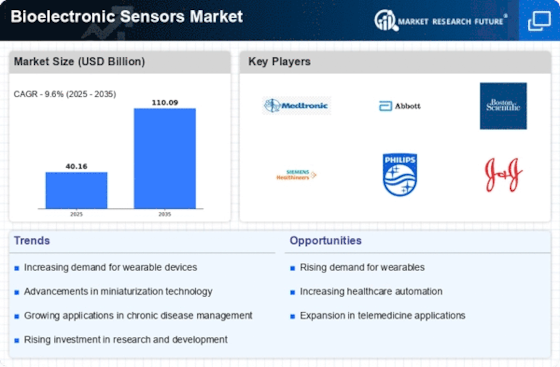
    Bioelectronic Sensors Market Infographic
    Purchase Options

    Market Share

    Bioelectronic Sensors Market Share Analysis

    In the Bioelectronic Sensors Market, effective market share positioning strategies are crucial for companies seeking to thrive in this dynamic and competitive landscape. One fundamental strategy involves differentiation through technological innovation. Companies that invest in research and development to create cutting-edge bioelectronic sensor technologies gain a competitive edge. By offering sensors with improved accuracy, sensitivity, and additional features, companies can attract a larger customer base and establish themselves as leaders in the market.

    Collaboration and strategic partnerships are also vital market share positioning strategies in the Bioelectronic Sensors Market. Forming alliances with other industry players, healthcare institutions, or research organizations allows companies to leverage complementary strengths and resources. Such collaborations can lead to the development of integrated solutions or expanded product portfolios, enhancing market presence and influencing customer preferences positively. Additionally, strategic partnerships can provide access to new markets and distribution channels, facilitating increased market penetration.

    Effective marketing and brand positioning contribute significantly to a company's market share in the Bioelectronic Sensors Market. Building a strong brand image and promoting the unique features and benefits of bioelectronic sensors can help attract and retain customers. Marketing efforts should highlight the reliability, accuracy, and real-time monitoring capabilities of the sensors, addressing the specific needs and concerns of healthcare professionals and end-users. A well-executed marketing strategy not only creates brand awareness but also establishes trust, a critical factor in the healthcare sector.

    Customer education and awareness programs are essential components of market share positioning in the Bioelectronic Sensors Market. Many potential users may not be fully aware of the capabilities and advantages of bioelectronic sensors. Companies can invest in educational initiatives to inform healthcare professionals, institutions, and end-users about the applications, benefits, and proper use of these sensors. By providing valuable information and training, companies can position themselves as industry leaders and influencers, driving market adoption and preference for their products.

    Adaptability and customization are key factors in market share positioning for bioelectronic sensor companies. The ability to tailor sensor solutions to meet the specific requirements of different healthcare applications and end-users enhances market competitiveness. Companies that offer versatile and customizable bioelectronic sensors can address a broader range of market segments, catering to diverse needs across the healthcare spectrum. This adaptability ensures that the sensors remain relevant and valuable in various medical settings, contributing to sustained market share growth.

    Cost-effective strategies and pricing models play a pivotal role in market share positioning, especially in the healthcare industry. Companies that can offer high-quality bioelectronic sensors at competitive prices are more likely to capture a larger market share. Affordability is a significant consideration for healthcare institutions and end-users, and pricing strategies that balance cost-effectiveness with product quality can be a potent tool for market dominance.

    Lastly, regulatory compliance and adherence to industry standards are critical for maintaining and expanding market share in the Bioelectronic Sensors Market. Ensuring that products meet regulatory requirements and quality standards is essential for building trust among healthcare professionals and end-users. Companies that proactively address regulatory concerns demonstrate their commitment to product safety and reliability, positively influencing market perception and positioning.


    Author
    Ankit Gupta
    Senior Research Analyst

    Ankit Gupta is an analyst in market research industry in ICT and SEMI industry. With post-graduation in "Telecom and Marketing Management" and graduation in "Electronics and Telecommunication" vertical he is well versed with recent development in ICT industry as a whole. Having worked on more than 150+ reports including consultation for fortune 500 companies such as Microsoft and Rio Tinto in identifying solutions with respect to business problems his opinions are inclined towards mixture of technical and managerial aspects.

    Leave a Comment

    FAQs

    How much is the Bioelectronic Sensors Market?

    The Bioelectronic Sensors Market size was valued at USD 40.16 billion in 2024.

    What is the growth rate of the Bioelectronic Sensors Market?

    The global market is projected to grow at a CAGR of 9.60% during the forecast period, 2025 to 2035.

    Which region held the largest market share in the Bioelectronic Sensors Market?

    North America had the largest share in the global market

    Who are the key players in the Bioelectronic Sensors Market?

    The key players in the market are Salvia Bioelectronics, LifeSensors, OmniVision Technologies Inc., AgaMatrix Inc., Sensirion AG, Broadcom Inc., Sotera Wireless, and Omnivision Technologies.

    Which type led the Bioelectronic Sensors Market?

    The Electrochemical biosensors category dominated the market in 2022.

    Which application had the largest market share in the Bioelectronic Sensors Market?

    The bioelectronic implantable device had the largest share in the global market.

    Market Summary

    The Global Bioelectronic Sensors Market is projected to grow significantly from 40.16 USD Billion in 2024 to 110.09 USD Billion by 2035.

    Key Market Trends & Highlights

    Bioelectronic Sensors Key Trends and Highlights

    • The market is expected to experience a compound annual growth rate (CAGR) of 9.6 percent from 2025 to 2035.
    • By 2035, the market valuation is anticipated to reach 110.1 USD Billion, reflecting robust growth potential.
    • in 2024, the market is valued at 40.16 USD Billion, indicating a strong foundation for future expansion.
    • Growing adoption of bioelectronic sensors due to increasing demand for advanced healthcare monitoring solutions is a major market driver.

    Market Size & Forecast

    2024 Market Size 40.16 (USD Billion)
    2035 Market Size 110.09 (USD Billion)
    CAGR (2025-2035) 9.60%
    Largest Regional Market Share in 2024 latin_america)

    Major Players

    Salvia Bioelectronics, LifeSensors, OmniVision Technologies Inc., AgaMatrix Inc., Sensirion AG, Broadcom Inc., Sotera Wireless, F. Hoffmann-La Roche AG, Medtronic plc

    Market Trends

    Wearable Gadget Adoption is Propelling Market Growth

    The adoption of wearable devices is driving the market CAGR for bioelectronic sensors. Consumers are becoming interested in wearable gadgets such as fitness trackers, smartwatches, and health monitoring devices. Bioelectronic sensors are frequently used in these devices to monitor physiological factors such as heart rate, sleep patterns, and activity levels. Wearable gadgets have become a popular alternative for people who wish to track their health and fitness in real time due to its ease of use and accessibility.

    The use of bioelectronic sensors in these gadgets enables users to collect vital data about their general well-being and make informed lifestyle and healthcare decisions.

    Furthermore, healthcare practitioners are beginning to recognize the value of wearable gadgets and bioelectronic sensors in remote patient monitoring and preventive care. Using these sensors, healthcare personnel can remotely monitor patients' health, discover early warning indications, and respond quickly if necessary. The growing demand for wearable devices, as well as the incorporation of bioelectronic sensors in these devices, is propelling the Bioelectronic Sensors Market forward. This trend is projected to continue as technology progresses, allowing wearable devices to have more precise and advanced sensor capabilities.

    Additionally, as technology advances, so does the opportunity for healthcare industry innovation. More sophisticated bioelectronic sensors have opened up new avenues for medical diagnostics, therapy, and patient care. With increased accuracy and precision, these sophisticated sensors can now gather and evaluate a wide range of physiological data. This helps healthcare practitioners to make more informed decisions and give patients with more individualized treatment. Bioelectronic sensors integrated into medical devices and equipment have substantially increased the efficiency and effectiveness of healthcare practices.

    Furthermore, the growing emphasis on preventative healthcare and early disease diagnosis has increased demand for non-invasive and continuous monitoring systems. Bioelectronic sensors, which enable real-time monitoring of vital signs, biomarkers, and other health data, are playing a critical role in addressing this demand.

    Collaborations among technology firms, healthcare providers, and research institutes have also hastened the development and commercialization of bioelectronic sensor technologies. These collaborations create creativity, drive research and development, and contribute to market growth overall.

    Bioelectronic Sensors Market Market Drivers

    Increasing Focus on Personalized Medicine

    The shift towards personalized medicine is reshaping the Global Bioelectronic Sensors Market Industry. As healthcare moves away from a one-size-fits-all approach, bioelectronic sensors are becoming integral in tailoring treatments to individual patient needs. These sensors provide critical data that can inform personalized treatment plans, enhancing efficacy and patient satisfaction. The growing emphasis on personalized healthcare solutions is expected to drive market growth, with the industry projected to reach 40.2 USD Billion by 2024. This trend reflects a broader movement towards precision medicine, where bioelectronic sensors play a crucial role in monitoring and adjusting therapies based on real-time patient data.

    Rising Demand for Wearable Health Devices

    The increasing prevalence of chronic diseases and the growing emphasis on preventive healthcare are driving the demand for wearable health devices. These devices, which often incorporate bioelectronic sensors, enable continuous monitoring of vital signs and health metrics. The Global Bioelectronic Sensors Market Industry is witnessing a surge in innovations aimed at enhancing user experience and accuracy. For instance, the integration of bioelectronic sensors in smartwatches allows for real-time health tracking, which is particularly appealing to health-conscious consumers. As the market is projected to reach 40.2 USD Billion in 2024, the trend towards wearable technology is likely to continue shaping the industry.

    Growing Investment in Healthcare Technology

    The Global Bioelectronic Sensors Market Industry is experiencing a surge in investment as stakeholders recognize the potential of bioelectronic technologies in transforming healthcare delivery. Governments and private entities are increasingly funding research and development initiatives aimed at advancing bioelectronic sensor applications. This influx of capital is likely to accelerate innovation and commercialization of new products. With a projected compound annual growth rate of 9.6% from 2025 to 2035, the market is poised for substantial growth. Investments in healthcare technology not only enhance patient outcomes but also contribute to the overall efficiency of healthcare systems, thereby driving demand for bioelectronic sensors.

    Technological Advancements in Sensor Technology

    Technological advancements in sensor technology are significantly influencing the Global Bioelectronic Sensors Market Industry. Innovations in materials science and microfabrication techniques have led to the development of more sensitive and accurate bioelectronic sensors. These advancements facilitate the miniaturization of sensors, making them suitable for a wider range of applications, including diagnostics and therapeutic monitoring. As a result, the market is expected to expand, with projections indicating a growth to 110.1 USD Billion by 2035. The continuous evolution of sensor technology not only enhances performance but also reduces costs, making bioelectronic sensors more accessible to healthcare providers and consumers alike.

    Regulatory Support for Bioelectronic Innovations

    Regulatory support is becoming increasingly vital for the advancement of the Global Bioelectronic Sensors Market Industry. Governments are recognizing the importance of bioelectronic technologies in improving healthcare outcomes and are establishing frameworks to facilitate their development and approval. This regulatory backing not only fosters innovation but also instills confidence among investors and manufacturers. As the market evolves, supportive regulations are likely to streamline the approval process for new bioelectronic sensors, thereby accelerating their entry into the market. This environment of regulatory encouragement is expected to contribute to the projected growth of the industry, with a compound annual growth rate of 9.6% anticipated from 2025 to 2035.

    Market Segment Insights

    Bioelectronic Sensors Type Insights

    The Bioelectronic Sensors Market segmentation, based on type includes bio-electronic devices, bio-electronic medicine. The market is expected to be dominated by the bio-electronic medicine category. The gradually expanding needs for personalized or adaptable medication, as well as the rapidly rising R&D efforts to build novel bioelectronics, are driving revenue growth in this market. Another element driving this market's rapid revenue growth is the advancement of implantable bioelectronics technology, which offers enormous potential for the creation of enhanced and efficient equipment for personalized electronic pharmaceuticals.

    Source: Secondary Research, Primary Research, MRFR Database and Analyst Review

    Bioelectronic Sensors Product Insights

    The Bioelectronic Sensors Market segmentation, based on Product, includes electrochemical biosensors, piezoelectric biosensors, thermal biosensors and optical biosensors. Electrochemical biosensors are expected to dominate the Global Bioelectronics Market. The cell-based electrochemical biosensor contributes significantly to biology, medicine, chemistry, pharmacology, and environmental studies. As recognition components, these biosensors utilize whole cells and electrochemical transducers, extending biosensing and life science research.

    Bioelectronic Sensors Application Insights

    The Bioelectronic Sensors Market segmentation, based on application, includes biochips, implantable devices, prosthetics, artificial organs, molecular motors and others. The implantable device category has the biggest revenue share in the market. This segment's rapid revenue development can be attributable to the exponentially expanding demand for technologically sophisticated implanted medical devices, such as ear implants, pacemakers, and even stomach implants. With improved research, substantial advancements in technology led in the development of implanted devices such as neuromodulation devices for chronic pain management, wirelessly powered devices to help organ functions, and stimulation devices for rapid bone restoration.

    These variables are accountable for this segment's domination and, as a result, the market's revenue growth.

    Get more detailed insights about Bioelectronic Sensors Market Research Report – Forecast till 2035

    Regional Insights

    By region, the study provides the market insights into North America, Europe, Asia-Pacific and Rest of the World. North America will have the world's largest bioelectronics market. The increasing usage of bioelectronics in numerous healthcare domains promotes market expansion in this region.

    Furthermore, the presence of a significant number of R&D facilities, the increased adoption of refined and advanced products by healthcare professionals, clinicians, and patients, and the rise in cases of several serious diseases (such as cardiovascular diseases, cancer, and psychological disorders) due to sedentary lifestyles are expected to drive revenue growth in the North American Bioelectronics Market during the forecast period.

    Further, the major countries studied in the market report are the US, Canada, German, France, the UK, Italy, Spain, China, Japan, India, Australia, South Korea, and Brazil.

    Figure 2: Bioelectronic Sensors Market SHARE BY REGION 2022 (USD Billion)

    Bioelectronic Sensors Market SHARE BY REGION 2022

    Source: Secondary Research, Primary Research, MRFR Database and Analyst Review

    Europe Bioelectronic Sensors Market accounts for the second-largest market share because of the presence of key industry actors, as well as the early acceptance and development of bioelectronics. Further, the German Bioelectronic Sensors Market held the largest market share, and the UK Bioelectronic Sensors Market was the fastest growing market in the European region

    The Asia-Pacific Bioelectronic Sensors Market is expected to grow at the fastest CAGR from 2023 to 2032. This is due to development in healthcare infrastructure as well as quick economic expansion throughout the course of the projection period. Moreover, China’s Bioelectronic Sensors Market held the largest market share, and the Indian Bioelectronic Sensors Market was the fastest growing market in the Asia-Pacific region.

    Key Players and Competitive Insights

    Leading market players are investing heavily in research and development in order to expand their product lines, which will help the Bioelectronic Sensors Market, grow even more. Market participants are also undertaking a variety of strategic activities to expand their global footprint, with important market developments including new product launches, contractual agreements, mergers and acquisitions, higher investments, and collaboration with other organizations. To expand and survive in a more competitive and rising market climate, Bioelectronic Sensorsindustry must offer cost-effective items.

    Manufacturing locally to minimize operational costs is one of the key business tactics used by manufacturers in the global Bioelectronic Sensors industry to benefit clients and increase the market sector. In recent years, the Bioelectronic Sensors industry has offered some of the most significant advantages to medicine. Major players in the Bioelectronic Sensors Market, including Salvia Bioelectronics, LifeSensors, OmniVision Technologies Inc., AgaMatrix Inc., Sensirion AG, Broadcom Inc., Sotera Wireless, and Omnivision Technologies and others, are attempting to increase market demand by investing in research and development operations.

    F. Hoffmann-La Roche AG, better known as Roche, is a Swiss global healthcare firm with two divisions: pharmaceuticals and diagnostics. Roche Holding AG, its holding company, has shares listed on the SIX Swiss Exchange. The company's headquarters are in Basel. Roche is the world's fifth-largest pharmaceutical firm by sales and the world's top provider of cancer therapies. In February 2019, The firm stated that it will purchase Spark Therapeutics for US$4.3 billion ($114.50 per share), adding Spark's gene therapy portfolio to its previously acquired assets. Spark already has an authorized medication for Leber's congenital amaurosis, Luxturna, which costs $850,000 per patient.

    Medtronic plc is a medical device firm based in the United States. Because of its 2015 acquisition of Irish-based Covidien, the company's operational and executive offices are in Minneapolis, Minnesota, and its legal headquarters are in Ireland. While it is headquartered in the United States, it has operations in over 150 countries and employs over 90,000 people. It creates and produces healthcare technology and therapies. In April 2022, Medtronic plc established a collaboration with GE Healthcare to meet the requirements and demands of Ambulatory Surgery Centres.

    Medtronic established a strategic alliance with CathWorks, a coronary artery disease (CAD) technology company, in July. Medtronic has the option to buy CathWorks in the future under a separate arrangement.

    Key Companies in the Bioelectronic Sensors Market market include

    Industry Developments

    In January 2022, The Alliance for Advancing Bioelectronic Medicine organized the first Bioelectronic Medicine Day, which featured a health awareness campaign. The initiative assisted efforts and breakthroughs in the field of bioelectronic medicine.

    In June 2021, The FDA has authorized Medtronic's (Ireland) Vanta spinal cord stimulator. The new device uses Medtronic's AdaptiveStim technology to give tailored pain management that responds to a patient's movement or body position through an in-built accelerometer.

    In January 2020, Medtronic plc (Ireland) has purchased Stimgenics, a pioneer in Differential Target Multiplexed, a revolutionary spinal cord stimulation therapy that is now available on the market.

    Future Outlook

    Bioelectronic Sensors Market Future Outlook

    The Global Bioelectronic Sensors Market is poised for growth at a 9.60% CAGR from 2025 to 2035, driven by advancements in healthcare technology, increasing demand for remote monitoring, and rising investments in R&D.

    New opportunities lie in:

    • Develop wearable bioelectronic sensors for chronic disease management.
    • Invest in AI-driven analytics for enhanced sensor data interpretation.
    • Create partnerships with healthcare providers for integrated sensor solutions.

    By 2035, the market is expected to achieve substantial growth, reflecting its critical role in modern healthcare.

    Market Segmentation

    Bioelectronic Sensors Regional Outlook

    • US
    • Canada

    Bioelectronic Sensors Market By Type Outlook

    • Bio-Electronic Devices
    • Bio-Electronic Medicine

    Bioelectronic Sensors Market By Product Outlook

    • Electrochemical Biosensors
    • Piezoelectric Biosensors
    • Thermal Biosensors
    • Optical Biosensors

    Bioelectronic Sensors Market By Application Outlook

    • Biochips
    • Implantable Devices
    • Prosthetics
    • Artificial organs
    • Molecular Motors
    • Others

    Report Scope

    Report Attribute/Metric Details
    Market Size 2024 USD 40.16 Billion
    Market Size 2025 USD 44.01 Billion
    Market Size 2035 110.09 (Value (USD Billion))
    Compound Annual Growth Rate (CAGR) 9.60% (2025 - 2035)
    Base Year 2024
    Market Forecast Period 2025 - 2035
    Historical Data 2020- 2023
    Market Forecast Units Value (USD Billion)
    Report Coverage Revenue Forecast, Market Competitive Landscape, Growth Factors, and Trends
    Segments Covered Type, Product, Application and Region
    Geographies Covered North America, Europe, Asia Pacific, and the Rest of the World
    Countries Covered The US, Canada, German, France, UK, Italy, Spain, China, Japan, India, Australia, South Korea, and Brazil
    Key Companies Profiled Bioelectronics Corporation, Nova Biomedical Corporation, Medtronic Plc., Sensirion AG, F. Hoffmann-La Roche Ltd., Bayer A.G., Abbott, Siemens AG, Salvia Bioelectronics, LifeSensors, OmniVision Technologies Inc., AgaMatrix Inc., Sensirion AG, Broadcom Inc., Sotera Wireless, and Omnivision Technologies.
    Key Market Opportunities Increasing uses in customized medicine.
    Key Market Dynamics Remote patient monitoring is becoming more popular.

    FAQs

    How much is the Bioelectronic Sensors Market?

    The Bioelectronic Sensors Market size was valued at USD 40.16 billion in 2024.

    What is the growth rate of the Bioelectronic Sensors Market?

    The global market is projected to grow at a CAGR of 9.60% during the forecast period, 2025 to 2035.

    Which region held the largest market share in the Bioelectronic Sensors Market?

    North America had the largest share in the global market

    Who are the key players in the Bioelectronic Sensors Market?

    The key players in the market are Salvia Bioelectronics, LifeSensors, OmniVision Technologies Inc., AgaMatrix Inc., Sensirion AG, Broadcom Inc., Sotera Wireless, and Omnivision Technologies.

    Which type led the Bioelectronic Sensors Market?

    The Electrochemical biosensors category dominated the market in 2022.

    Which application had the largest market share in the Bioelectronic Sensors Market?

    The bioelectronic implantable device had the largest share in the global market.

    1. SECTION I: EXECUTIVE SUMMARY AND KEY HIGHLIGHTS
      1. | 1.1 EXECUTIVE SUMMARY
      2. | | 1.1.1 Market Overview
      3. | | 1.1.2 Key Findings
      4. | | 1.1.3 Market Segmentation
      5. | | 1.1.4 Competitive Landscape
      6. | | 1.1.5 Challenges and Opportunities
      7. | | 1.1.6 Future Outlook
    2. SECTION II: SCOPING, METHODOLOGY AND MARKET STRUCTURE
      1. | 2.1 MARKET INTRODUCTION
      2. | | 2.1.1 Definition
      3. | | 2.1.2 Scope of the study
      4. | | | 2.1.2.1 Research Objective
      5. | | | 2.1.2.2 Assumption
      6. | | | 2.1.2.3 Limitations
      7. | 2.2 RESEARCH METHODOLOGY
      8. | | 2.2.1 Overview
      9. | | 2.2.2 Data Mining
      10. | | 2.2.3 Secondary Research
      11. | | 2.2.4 Primary Research
      12. | | | 2.2.4.1 Primary Interviews and Information Gathering Process
      13. | | | 2.2.4.2 Breakdown of Primary Respondents
      14. | | 2.2.5 Forecasting Model
      15. | | 2.2.6 Market Size Estimation
      16. | | | 2.2.6.1 Bottom-Up Approach
      17. | | | 2.2.6.2 Top-Down Approach
      18. | | 2.2.7 Data Triangulation
      19. | | 2.2.8 Validation
    3. SECTION III: QUALITATIVE ANALYSIS
      1. | 3.1 MARKET DYNAMICS
      2. | | 3.1.1 Overview
      3. | | 3.1.2 Drivers
      4. | | 3.1.3 Restraints
      5. | | 3.1.4 Opportunities
      6. | 3.2 MARKET FACTOR ANALYSIS
      7. | | 3.2.1 Value chain Analysis
      8. | | 3.2.2 Porter's Five Forces Analysis
      9. | | | 3.2.2.1 Bargaining Power of Suppliers
      10. | | | 3.2.2.2 Bargaining Power of Buyers
      11. | | | 3.2.2.3 Threat of New Entrants
      12. | | | 3.2.2.4 Threat of Substitutes
      13. | | | 3.2.2.5 Intensity of Rivalry
      14. | | 3.2.3 COVID-19 Impact Analysis
      15. | | | 3.2.3.1 Market Impact Analysis
      16. | | | 3.2.3.2 Regional Impact
      17. | | | 3.2.3.3 Opportunity and Threat Analysis
    4. SECTION IV: QUANTITATIVE ANALYSIS
      1. | 4.1 Semiconductor & Electronics, BY Type (USD Billion)
      2. | | 4.1.1 Bio-Electronic Devices
      3. | | 4.1.2 Bio-Electronic Medicine
      4. | 4.2 Semiconductor & Electronics, BY Product (USD Billion)
      5. | | 4.2.1 Electrochemical Biosensors
      6. | | 4.2.2 Piezoelectric Biosensors
      7. | | 4.2.3 Thermal Biosensors
      8. | | 4.2.4 Optical Biosensors
      9. | 4.3 Semiconductor & Electronics, BY Application (USD Billion)
      10. | | 4.3.1 Biochips
      11. | | 4.3.2 Implantable Devices
      12. | | 4.3.3 Prosthetics
      13. | | 4.3.4 Artificial organs
      14. | | 4.3.5 Molecular Motors
      15. | | 4.3.6 Others
      16. | 4.4 Semiconductor & Electronics, BY Region (USD Billion)
      17. | | 4.4.1 North America
      18. | | | 4.4.1.1 US
      19. | | | 4.4.1.2 Canada
      20. | | 4.4.2 Europe
      21. | | | 4.4.2.1 Germany
      22. | | | 4.4.2.2 UK
      23. | | | 4.4.2.3 France
      24. | | | 4.4.2.4 Russia
      25. | | | 4.4.2.5 Italy
      26. | | | 4.4.2.6 Spain
      27. | | | 4.4.2.7 Rest of Europe
      28. | | 4.4.3 APAC
      29. | | | 4.4.3.1 China
      30. | | | 4.4.3.2 India
      31. | | | 4.4.3.3 Japan
      32. | | | 4.4.3.4 South Korea
      33. | | | 4.4.3.5 Malaysia
      34. | | | 4.4.3.6 Thailand
      35. | | | 4.4.3.7 Indonesia
      36. | | | 4.4.3.8 Rest of APAC
      37. | | 4.4.4 South America
      38. | | | 4.4.4.1 Brazil
      39. | | | 4.4.4.2 Mexico
      40. | | | 4.4.4.3 Argentina
      41. | | | 4.4.4.4 Rest of South America
      42. | | 4.4.5 MEA
      43. | | | 4.4.5.1 GCC Countries
      44. | | | 4.4.5.2 South Africa
      45. | | | 4.4.5.3 Rest of MEA
    5. SECTION V: COMPETITIVE ANALYSIS
      1. | 5.1 Competitive Landscape
      2. | | 5.1.1 Overview
      3. | | 5.1.2 Competitive Analysis
      4. | | 5.1.3 Market share Analysis
      5. | | 5.1.4 Major Growth Strategy in the Semiconductor & Electronics
      6. | | 5.1.5 Competitive Benchmarking
      7. | | 5.1.6 Leading Players in Terms of Number of Developments in the Semiconductor & Electronics
      8. | | 5.1.7 Key developments and growth strategies
      9. | | | 5.1.7.1 New Product Launch/Service Deployment
      10. | | | 5.1.7.2 Merger & Acquisitions
      11. | | | 5.1.7.3 Joint Ventures
      12. | | 5.1.8 Major Players Financial Matrix
      13. | | | 5.1.8.1 Sales and Operating Income
      14. | | | 5.1.8.2 Major Players R&D Expenditure. 2023
      15. | 5.2 Company Profiles
      16. | | 5.2.1 Medtronic (US)
      17. | | | 5.2.1.1 Financial Overview
      18. | | | 5.2.1.2 Products Offered
      19. | | | 5.2.1.3 Key Developments
      20. | | | 5.2.1.4 SWOT Analysis
      21. | | | 5.2.1.5 Key Strategies
      22. | | 5.2.2 Abbott Laboratories (US)
      23. | | | 5.2.2.1 Financial Overview
      24. | | | 5.2.2.2 Products Offered
      25. | | | 5.2.2.3 Key Developments
      26. | | | 5.2.2.4 SWOT Analysis
      27. | | | 5.2.2.5 Key Strategies
      28. | | 5.2.3 Boston Scientific (US)
      29. | | | 5.2.3.1 Financial Overview
      30. | | | 5.2.3.2 Products Offered
      31. | | | 5.2.3.3 Key Developments
      32. | | | 5.2.3.4 SWOT Analysis
      33. | | | 5.2.3.5 Key Strategies
      34. | | 5.2.4 Siemens Healthineers (DE)
      35. | | | 5.2.4.1 Financial Overview
      36. | | | 5.2.4.2 Products Offered
      37. | | | 5.2.4.3 Key Developments
      38. | | | 5.2.4.4 SWOT Analysis
      39. | | | 5.2.4.5 Key Strategies
      40. | | 5.2.5 Philips (NL)
      41. | | | 5.2.5.1 Financial Overview
      42. | | | 5.2.5.2 Products Offered
      43. | | | 5.2.5.3 Key Developments
      44. | | | 5.2.5.4 SWOT Analysis
      45. | | | 5.2.5.5 Key Strategies
      46. | | 5.2.6 Johnson & Johnson (US)
      47. | | | 5.2.6.1 Financial Overview
      48. | | | 5.2.6.2 Products Offered
      49. | | | 5.2.6.3 Key Developments
      50. | | | 5.2.6.4 SWOT Analysis
      51. | | | 5.2.6.5 Key Strategies
      52. | | 5.2.7 Biosense Webster (US)
      53. | | | 5.2.7.1 Financial Overview
      54. | | | 5.2.7.2 Products Offered
      55. | | | 5.2.7.3 Key Developments
      56. | | | 5.2.7.4 SWOT Analysis
      57. | | | 5.2.7.5 Key Strategies
      58. | | 5.2.8 NeuroMetrix (US)
      59. | | | 5.2.8.1 Financial Overview
      60. | | | 5.2.8.2 Products Offered
      61. | | | 5.2.8.3 Key Developments
      62. | | | 5.2.8.4 SWOT Analysis
      63. | | | 5.2.8.5 Key Strategies
      64. | | 5.2.9 Sotera Wireless (US)
      65. | | | 5.2.9.1 Financial Overview
      66. | | | 5.2.9.2 Products Offered
      67. | | | 5.2.9.3 Key Developments
      68. | | | 5.2.9.4 SWOT Analysis
      69. | | | 5.2.9.5 Key Strategies
      70. | 5.3 Appendix
      71. | | 5.3.1 References
      72. | | 5.3.2 Related Reports
    6. LIST OF FIGURES
      1. | 6.1 MARKET SYNOPSIS
      2. | 6.2 NORTH AMERICA MARKET ANALYSIS
      3. | 6.3 US MARKET ANALYSIS BY TYPE
      4. | 6.4 US MARKET ANALYSIS BY PRODUCT
      5. | 6.5 US MARKET ANALYSIS BY APPLICATION
      6. | 6.6 CANADA MARKET ANALYSIS BY TYPE
      7. | 6.7 CANADA MARKET ANALYSIS BY PRODUCT
      8. | 6.8 CANADA MARKET ANALYSIS BY APPLICATION
      9. | 6.9 EUROPE MARKET ANALYSIS
      10. | 6.10 GERMANY MARKET ANALYSIS BY TYPE
      11. | 6.11 GERMANY MARKET ANALYSIS BY PRODUCT
      12. | 6.12 GERMANY MARKET ANALYSIS BY APPLICATION
      13. | 6.13 UK MARKET ANALYSIS BY TYPE
      14. | 6.14 UK MARKET ANALYSIS BY PRODUCT
      15. | 6.15 UK MARKET ANALYSIS BY APPLICATION
      16. | 6.16 FRANCE MARKET ANALYSIS BY TYPE
      17. | 6.17 FRANCE MARKET ANALYSIS BY PRODUCT
      18. | 6.18 FRANCE MARKET ANALYSIS BY APPLICATION
      19. | 6.19 RUSSIA MARKET ANALYSIS BY TYPE
      20. | 6.20 RUSSIA MARKET ANALYSIS BY PRODUCT
      21. | 6.21 RUSSIA MARKET ANALYSIS BY APPLICATION
      22. | 6.22 ITALY MARKET ANALYSIS BY TYPE
      23. | 6.23 ITALY MARKET ANALYSIS BY PRODUCT
      24. | 6.24 ITALY MARKET ANALYSIS BY APPLICATION
      25. | 6.25 SPAIN MARKET ANALYSIS BY TYPE
      26. | 6.26 SPAIN MARKET ANALYSIS BY PRODUCT
      27. | 6.27 SPAIN MARKET ANALYSIS BY APPLICATION
      28. | 6.28 REST OF EUROPE MARKET ANALYSIS BY TYPE
      29. | 6.29 REST OF EUROPE MARKET ANALYSIS BY PRODUCT
      30. | 6.30 REST OF EUROPE MARKET ANALYSIS BY APPLICATION
      31. | 6.31 APAC MARKET ANALYSIS
      32. | 6.32 CHINA MARKET ANALYSIS BY TYPE
      33. | 6.33 CHINA MARKET ANALYSIS BY PRODUCT
      34. | 6.34 CHINA MARKET ANALYSIS BY APPLICATION
      35. | 6.35 INDIA MARKET ANALYSIS BY TYPE
      36. | 6.36 INDIA MARKET ANALYSIS BY PRODUCT
      37. | 6.37 INDIA MARKET ANALYSIS BY APPLICATION
      38. | 6.38 JAPAN MARKET ANALYSIS BY TYPE
      39. | 6.39 JAPAN MARKET ANALYSIS BY PRODUCT
      40. | 6.40 JAPAN MARKET ANALYSIS BY APPLICATION
      41. | 6.41 SOUTH KOREA MARKET ANALYSIS BY TYPE
      42. | 6.42 SOUTH KOREA MARKET ANALYSIS BY PRODUCT
      43. | 6.43 SOUTH KOREA MARKET ANALYSIS BY APPLICATION
      44. | 6.44 MALAYSIA MARKET ANALYSIS BY TYPE
      45. | 6.45 MALAYSIA MARKET ANALYSIS BY PRODUCT
      46. | 6.46 MALAYSIA MARKET ANALYSIS BY APPLICATION
      47. | 6.47 THAILAND MARKET ANALYSIS BY TYPE
      48. | 6.48 THAILAND MARKET ANALYSIS BY PRODUCT
      49. | 6.49 THAILAND MARKET ANALYSIS BY APPLICATION
      50. | 6.50 INDONESIA MARKET ANALYSIS BY TYPE
      51. | 6.51 INDONESIA MARKET ANALYSIS BY PRODUCT
      52. | 6.52 INDONESIA MARKET ANALYSIS BY APPLICATION
      53. | 6.53 REST OF APAC MARKET ANALYSIS BY TYPE
      54. | 6.54 REST OF APAC MARKET ANALYSIS BY PRODUCT
      55. | 6.55 REST OF APAC MARKET ANALYSIS BY APPLICATION
      56. | 6.56 SOUTH AMERICA MARKET ANALYSIS
      57. | 6.57 BRAZIL MARKET ANALYSIS BY TYPE
      58. | 6.58 BRAZIL MARKET ANALYSIS BY PRODUCT
      59. | 6.59 BRAZIL MARKET ANALYSIS BY APPLICATION
      60. | 6.60 MEXICO MARKET ANALYSIS BY TYPE
      61. | 6.61 MEXICO MARKET ANALYSIS BY PRODUCT
      62. | 6.62 MEXICO MARKET ANALYSIS BY APPLICATION
      63. | 6.63 ARGENTINA MARKET ANALYSIS BY TYPE
      64. | 6.64 ARGENTINA MARKET ANALYSIS BY PRODUCT
      65. | 6.65 ARGENTINA MARKET ANALYSIS BY APPLICATION
      66. | 6.66 REST OF SOUTH AMERICA MARKET ANALYSIS BY TYPE
      67. | 6.67 REST OF SOUTH AMERICA MARKET ANALYSIS BY PRODUCT
      68. | 6.68 REST OF SOUTH AMERICA MARKET ANALYSIS BY APPLICATION
      69. | 6.69 MEA MARKET ANALYSIS
      70. | 6.70 GCC COUNTRIES MARKET ANALYSIS BY TYPE
      71. | 6.71 GCC COUNTRIES MARKET ANALYSIS BY PRODUCT
      72. | 6.72 GCC COUNTRIES MARKET ANALYSIS BY APPLICATION
      73. | 6.73 SOUTH AFRICA MARKET ANALYSIS BY TYPE
      74. | 6.74 SOUTH AFRICA MARKET ANALYSIS BY PRODUCT
      75. | 6.75 SOUTH AFRICA MARKET ANALYSIS BY APPLICATION
      76. | 6.76 REST OF MEA MARKET ANALYSIS BY TYPE
      77. | 6.77 REST OF MEA MARKET ANALYSIS BY PRODUCT
      78. | 6.78 REST OF MEA MARKET ANALYSIS BY APPLICATION
      79. | 6.79 KEY BUYING CRITERIA OF SEMICONDUCTOR & ELECTRONICS
      80. | 6.80 RESEARCH PROCESS OF MRFR
      81. | 6.81 DRO ANALYSIS OF SEMICONDUCTOR & ELECTRONICS
      82. | 6.82 DRIVERS IMPACT ANALYSIS: SEMICONDUCTOR & ELECTRONICS
      83. | 6.83 RESTRAINTS IMPACT ANALYSIS: SEMICONDUCTOR & ELECTRONICS
      84. | 6.84 SUPPLY / VALUE CHAIN: SEMICONDUCTOR & ELECTRONICS
      85. | 6.85 SEMICONDUCTOR & ELECTRONICS, BY TYPE, 2024 (% SHARE)
      86. | 6.86 SEMICONDUCTOR & ELECTRONICS, BY TYPE, 2024 TO 2035 (USD Billion)
      87. | 6.87 SEMICONDUCTOR & ELECTRONICS, BY PRODUCT, 2024 (% SHARE)
      88. | 6.88 SEMICONDUCTOR & ELECTRONICS, BY PRODUCT, 2024 TO 2035 (USD Billion)
      89. | 6.89 SEMICONDUCTOR & ELECTRONICS, BY APPLICATION, 2024 (% SHARE)
      90. | 6.90 SEMICONDUCTOR & ELECTRONICS, BY APPLICATION, 2024 TO 2035 (USD Billion)
      91. | 6.91 BENCHMARKING OF MAJOR COMPETITORS
    7. LIST OF TABLES
      1. | 7.1 LIST OF ASSUMPTIONS
      2. | | 7.1.1
      3. | 7.2 North America MARKET SIZE ESTIMATES; FORECAST
      4. | | 7.2.1 BY TYPE, 2025-2035 (USD Billion)
      5. | | 7.2.2 BY PRODUCT, 2025-2035 (USD Billion)
      6. | | 7.2.3 BY APPLICATION, 2025-2035 (USD Billion)
      7. | 7.3 US MARKET SIZE ESTIMATES; FORECAST
      8. | | 7.3.1 BY TYPE, 2025-2035 (USD Billion)
      9. | | 7.3.2 BY PRODUCT, 2025-2035 (USD Billion)
      10. | | 7.3.3 BY APPLICATION, 2025-2035 (USD Billion)
      11. | 7.4 Canada MARKET SIZE ESTIMATES; FORECAST
      12. | | 7.4.1 BY TYPE, 2025-2035 (USD Billion)
      13. | | 7.4.2 BY PRODUCT, 2025-2035 (USD Billion)
      14. | | 7.4.3 BY APPLICATION, 2025-2035 (USD Billion)
      15. | 7.5 Europe MARKET SIZE ESTIMATES; FORECAST
      16. | | 7.5.1 BY TYPE, 2025-2035 (USD Billion)
      17. | | 7.5.2 BY PRODUCT, 2025-2035 (USD Billion)
      18. | | 7.5.3 BY APPLICATION, 2025-2035 (USD Billion)
      19. | 7.6 Germany MARKET SIZE ESTIMATES; FORECAST
      20. | | 7.6.1 BY TYPE, 2025-2035 (USD Billion)
      21. | | 7.6.2 BY PRODUCT, 2025-2035 (USD Billion)
      22. | | 7.6.3 BY APPLICATION, 2025-2035 (USD Billion)
      23. | 7.7 UK MARKET SIZE ESTIMATES; FORECAST
      24. | | 7.7.1 BY TYPE, 2025-2035 (USD Billion)
      25. | | 7.7.2 BY PRODUCT, 2025-2035 (USD Billion)
      26. | | 7.7.3 BY APPLICATION, 2025-2035 (USD Billion)
      27. | 7.8 France MARKET SIZE ESTIMATES; FORECAST
      28. | | 7.8.1 BY TYPE, 2025-2035 (USD Billion)
      29. | | 7.8.2 BY PRODUCT, 2025-2035 (USD Billion)
      30. | | 7.8.3 BY APPLICATION, 2025-2035 (USD Billion)
      31. | 7.9 Russia MARKET SIZE ESTIMATES; FORECAST
      32. | | 7.9.1 BY TYPE, 2025-2035 (USD Billion)
      33. | | 7.9.2 BY PRODUCT, 2025-2035 (USD Billion)
      34. | | 7.9.3 BY APPLICATION, 2025-2035 (USD Billion)
      35. | 7.10 Italy MARKET SIZE ESTIMATES; FORECAST
      36. | | 7.10.1 BY TYPE, 2025-2035 (USD Billion)
      37. | | 7.10.2 BY PRODUCT, 2025-2035 (USD Billion)
      38. | | 7.10.3 BY APPLICATION, 2025-2035 (USD Billion)
      39. | 7.11 Spain MARKET SIZE ESTIMATES; FORECAST
      40. | | 7.11.1 BY TYPE, 2025-2035 (USD Billion)
      41. | | 7.11.2 BY PRODUCT, 2025-2035 (USD Billion)
      42. | | 7.11.3 BY APPLICATION, 2025-2035 (USD Billion)
      43. | 7.12 Rest of Europe MARKET SIZE ESTIMATES; FORECAST
      44. | | 7.12.1 BY TYPE, 2025-2035 (USD Billion)
      45. | | 7.12.2 BY PRODUCT, 2025-2035 (USD Billion)
      46. | | 7.12.3 BY APPLICATION, 2025-2035 (USD Billion)
      47. | 7.13 APAC MARKET SIZE ESTIMATES; FORECAST
      48. | | 7.13.1 BY TYPE, 2025-2035 (USD Billion)
      49. | | 7.13.2 BY PRODUCT, 2025-2035 (USD Billion)
      50. | | 7.13.3 BY APPLICATION, 2025-2035 (USD Billion)
      51. | 7.14 China MARKET SIZE ESTIMATES; FORECAST
      52. | | 7.14.1 BY TYPE, 2025-2035 (USD Billion)
      53. | | 7.14.2 BY PRODUCT, 2025-2035 (USD Billion)
      54. | | 7.14.3 BY APPLICATION, 2025-2035 (USD Billion)
      55. | 7.15 India MARKET SIZE ESTIMATES; FORECAST
      56. | | 7.15.1 BY TYPE, 2025-2035 (USD Billion)
      57. | | 7.15.2 BY PRODUCT, 2025-2035 (USD Billion)
      58. | | 7.15.3 BY APPLICATION, 2025-2035 (USD Billion)
      59. | 7.16 Japan MARKET SIZE ESTIMATES; FORECAST
      60. | | 7.16.1 BY TYPE, 2025-2035 (USD Billion)
      61. | | 7.16.2 BY PRODUCT, 2025-2035 (USD Billion)
      62. | | 7.16.3 BY APPLICATION, 2025-2035 (USD Billion)
      63. | 7.17 South Korea MARKET SIZE ESTIMATES; FORECAST
      64. | | 7.17.1 BY TYPE, 2025-2035 (USD Billion)
      65. | | 7.17.2 BY PRODUCT, 2025-2035 (USD Billion)
      66. | | 7.17.3 BY APPLICATION, 2025-2035 (USD Billion)
      67. | 7.18 Malaysia MARKET SIZE ESTIMATES; FORECAST
      68. | | 7.18.1 BY TYPE, 2025-2035 (USD Billion)
      69. | | 7.18.2 BY PRODUCT, 2025-2035 (USD Billion)
      70. | | 7.18.3 BY APPLICATION, 2025-2035 (USD Billion)
      71. | 7.19 Thailand MARKET SIZE ESTIMATES; FORECAST
      72. | | 7.19.1 BY TYPE, 2025-2035 (USD Billion)
      73. | | 7.19.2 BY PRODUCT, 2025-2035 (USD Billion)
      74. | | 7.19.3 BY APPLICATION, 2025-2035 (USD Billion)
      75. | 7.20 Indonesia MARKET SIZE ESTIMATES; FORECAST
      76. | | 7.20.1 BY TYPE, 2025-2035 (USD Billion)
      77. | | 7.20.2 BY PRODUCT, 2025-2035 (USD Billion)
      78. | | 7.20.3 BY APPLICATION, 2025-2035 (USD Billion)
      79. | 7.21 Rest of APAC MARKET SIZE ESTIMATES; FORECAST
      80. | | 7.21.1 BY TYPE, 2025-2035 (USD Billion)
      81. | | 7.21.2 BY PRODUCT, 2025-2035 (USD Billion)
      82. | | 7.21.3 BY APPLICATION, 2025-2035 (USD Billion)
      83. | 7.22 South America MARKET SIZE ESTIMATES; FORECAST
      84. | | 7.22.1 BY TYPE, 2025-2035 (USD Billion)
      85. | | 7.22.2 BY PRODUCT, 2025-2035 (USD Billion)
      86. | | 7.22.3 BY APPLICATION, 2025-2035 (USD Billion)
      87. | 7.23 Brazil MARKET SIZE ESTIMATES; FORECAST
      88. | | 7.23.1 BY TYPE, 2025-2035 (USD Billion)
      89. | | 7.23.2 BY PRODUCT, 2025-2035 (USD Billion)
      90. | | 7.23.3 BY APPLICATION, 2025-2035 (USD Billion)
      91. | 7.24 Mexico MARKET SIZE ESTIMATES; FORECAST
      92. | | 7.24.1 BY TYPE, 2025-2035 (USD Billion)
      93. | | 7.24.2 BY PRODUCT, 2025-2035 (USD Billion)
      94. | | 7.24.3 BY APPLICATION, 2025-2035 (USD Billion)
      95. | 7.25 Argentina MARKET SIZE ESTIMATES; FORECAST
      96. | | 7.25.1 BY TYPE, 2025-2035 (USD Billion)
      97. | | 7.25.2 BY PRODUCT, 2025-2035 (USD Billion)
      98. | | 7.25.3 BY APPLICATION, 2025-2035 (USD Billion)
      99. | 7.26 Rest of South America MARKET SIZE ESTIMATES; FORECAST
      100. | | 7.26.1 BY TYPE, 2025-2035 (USD Billion)
      101. | | 7.26.2 BY PRODUCT, 2025-2035 (USD Billion)
      102. | | 7.26.3 BY APPLICATION, 2025-2035 (USD Billion)
      103. | 7.27 MEA MARKET SIZE ESTIMATES; FORECAST
      104. | | 7.27.1 BY TYPE, 2025-2035 (USD Billion)
      105. | | 7.27.2 BY PRODUCT, 2025-2035 (USD Billion)
      106. | | 7.27.3 BY APPLICATION, 2025-2035 (USD Billion)
      107. | 7.28 GCC Countries MARKET SIZE ESTIMATES; FORECAST
      108. | | 7.28.1 BY TYPE, 2025-2035 (USD Billion)
      109. | | 7.28.2 BY PRODUCT, 2025-2035 (USD Billion)
      110. | | 7.28.3 BY APPLICATION, 2025-2035 (USD Billion)
      111. | 7.29 South Africa MARKET SIZE ESTIMATES; FORECAST
      112. | | 7.29.1 BY TYPE, 2025-2035 (USD Billion)
      113. | | 7.29.2 BY PRODUCT, 2025-2035 (USD Billion)
      114. | | 7.29.3 BY APPLICATION, 2025-2035 (USD Billion)
      115. | 7.30 Rest of MEA MARKET SIZE ESTIMATES; FORECAST
      116. | | 7.30.1 BY TYPE, 2025-2035 (USD Billion)
      117. | | 7.30.2 BY PRODUCT, 2025-2035 (USD Billion)
      118. | | 7.30.3 BY APPLICATION, 2025-2035 (USD Billion)
      119. | 7.31 PRODUCT LAUNCH/PRODUCT DEVELOPMENT/APPROVAL
      120. | | 7.31.1
      121. | 7.32 ACQUISITION/PARTNERSHIP
      122. | | 7.32.1

    Bioelectronic Sensors Market Segmentation

    Bioelectronic Sensors Market By Type Outlook (USD Billion, 2020-2034)

    • Bio-Electronic Devices
    • Bio-Electronic Medicine

    Bioelectronic Sensors Market By Product Outlook (USD Billion, 2020-2034)

    • Electrochemical Biosensors
    • Piezoelectric Biosensors
    • Thermal Biosensors
    • Optical Biosensors

    Bioelectronic Sensors Market By Application Outlook (USD Billion, 2020-2034)

    • Biochips
    • Implantable Devices
    • Prosthetics
    • Artificial organs
    • Molecular Motors
    • Others

    Bioelectronic Sensors Market Regional Outlook (USD Billion, 2020-2034)

    • North America Outlook (USD Billion, 2020-2034)
      • North America Bioelectronic Sensors Market by Type
    • Bio-Electronic Devices
    • Bio-Electronic Medicine
      • North America Bioelectronic Sensors Market by Product
        • Electrochemical Biosensors
        • Piezoelectric Biosensors
        • Thermal Biosensors
        • Optical Biosensors
      • North America Bioelectronic Sensors Market by Application
        • Biochips
        • Implantable Devices
        • Prosthetics
        • Artificial organs
        • Molecular Motors
        • Others
      • US Outlook (USD Billion, 2020-2034)
      • US Bioelectronic Sensors Market by Type
    • Bio-Electronic Devices
    • Bio-Electronic Medicine
      • US Bioelectronic Sensors Market by Product
        • Electrochemical Biosensors
        • Piezoelectric Biosensors
        • Thermal Biosensors
        • Optical Biosensors
      • US Bioelectronic Sensors Market by Application
        • Biochips
        • Implantable Devices
        • Prosthetics
        • Artificial organs
        • Molecular Motors
        • Others
      • CANADA Outlook (USD Billion, 2020-2034)
      • CANADA Bioelectronic Sensors Market by Type
    • Bio-Electronic Devices
    • Bio-Electronic Medicine
      • CANADA Bioelectronic Sensors Market by Product
        • Electrochemical Biosensors
        • Piezoelectric Biosensors
        • Thermal Biosensors
        • Optical Biosensors
      • CANADA Bioelectronic Sensors Market by Application
        • Biochips
        • Implantable Devices
        • Prosthetics
        • Artificial organs
        • Molecular Motors
        • Others
    • Europe Outlook (USD Billion, 2020-2034)
      • Europe Bioelectronic Sensors Market by Type
    • Bio-Electronic Devices
    • Bio-Electronic Medicine
      • Europe Bioelectronic Sensors Market by Product
        • Electrochemical Biosensors
        • Piezoelectric Biosensors
        • Thermal Biosensors
        • Optical Biosensors
      • Europe Bioelectronic Sensors Market by Application
        • Biochips
        • Implantable Devices
        • Prosthetics
        • Artificial organs
        • Molecular Motors
        • Others
      • Germany Outlook (USD Billion, 2020-2034)
      • Germany Bioelectronic Sensors Market by Type
    • Bio-Electronic Devices
    • Bio-Electronic Medicine
      • Germany Bioelectronic Sensors Market by Product
        • Electrochemical Biosensors
        • Piezoelectric Biosensors
        • Thermal Biosensors
        • Optical Biosensors
      • Germany Bioelectronic Sensors Market by Application
        • Biochips
        • Implantable Devices
        • Prosthetics
        • Artificial organs
        • Molecular Motors
        • Others
      • France Outlook (USD Billion, 2020-2034)
      • France Bioelectronic Sensors Market by Type
    • Bio-Electronic Devices
    • Bio-Electronic Medicine
      • France Bioelectronic Sensors Market by Product
        • Electrochemical Biosensors
        • Piezoelectric Biosensors
        • Thermal Biosensors
        • Optical Biosensors
      • France Bioelectronic Sensors Market by Application
        • Biochips
        • Implantable Devices
        • Prosthetics
        • Artificial organs
        • Molecular Motors
        • Others
      • UK Outlook (USD Billion, 2020-2034)
      • UK Bioelectronic Sensors Market by Type
    • Bio-Electronic Devices
    • Bio-Electronic Medicine
      • UK Bioelectronic Sensors Market by Product
        • Electrochemical Biosensors
        • Piezoelectric Biosensors
        • Thermal Biosensors
        • Optical Biosensors
      • UK Bioelectronic Sensors Market by Application
        • Biochips
        • Implantable Devices
        • Prosthetics
        • Artificial organs
        • Molecular Motors
        • Others
      • ITALY Outlook (USD Billion, 2020-2034)
      • ITALY Bioelectronic Sensors Market by Type
    • Bio-Electronic Devices
    • Bio-Electronic Medicine
      • ITALY Bioelectronic Sensors Market by Product
        • Electrochemical Biosensors
        • Piezoelectric Biosensors
        • Thermal Biosensors
        • Optical Biosensors
      • ITALY Bioelectronic Sensors Market by Application
        • Biochips
        • Implantable Devices
        • Prosthetics
        • Artificial organs
        • Molecular Motors
        • Others
      • SPAIN Outlook (USD Billion, 2020-2034)
      • Spain Bioelectronic Sensors Market by Type
    • Bio-Electronic Devices
    • Bio-Electronic Medicine
      • Spain Bioelectronic Sensors Market by Product
        • Electrochemical Biosensors
        • Piezoelectric Biosensors
        • Thermal Biosensors
        • Optical Biosensors
      • Spain Bioelectronic Sensors Market by Application
        • Biochips
        • Implantable Devices
        • Prosthetics
        • Artificial organs
        • Molecular Motors
        • Others
      • Rest Of Europe Outlook (USD Billion, 2020-2034)
      • Rest Of Europe Bioelectronic Sensors Market by Type
    • Bio-Electronic Devices
    • Bio-Electronic Medicine
      • REST OF EUROPE Bioelectronic Sensors Market by Product
        • Electrochemical Biosensors
        • Piezoelectric Biosensors
        • Thermal Biosensors
        • Optical Biosensors
      • REST OF EUROPE Bioelectronic Sensors Market by Application
        • Biochips
        • Implantable Devices
        • Prosthetics
        • Artificial organs
        • Molecular Motors
        • Others
    • Asia-Pacific Outlook (USD Billion, 2020-2034)
      • Asia-Pacific Bioelectronic Sensors Market by Type
    • Bio-Electronic Devices
    • Bio-Electronic Medicine
      • Asia-Pacific Bioelectronic Sensors Market by Product
        • Electrochemical Biosensors
        • Piezoelectric Biosensors
        • Thermal Biosensors
        • Optical Biosensors
      • Asia-Pacific Bioelectronic Sensors Market by Application
        • Biochips
        • Implantable Devices
        • Prosthetics
        • Artificial organs
        • Molecular Motors
        • Others
      • China Outlook (USD Billion, 2020-2034)
      • China Bioelectronic Sensors Market by Type
    • Bio-Electronic Devices
    • Bio-Electronic Medicine
      • China Bioelectronic Sensors Market by Product
        • Electrochemical Biosensors
        • Piezoelectric Biosensors
        • Thermal Biosensors
        • Optical Biosensors
      • China Bioelectronic Sensors Market by Application
        • Biochips
        • Implantable Devices
        • Prosthetics
        • Artificial organs
        • Molecular Motors
        • Others
      • Japan Outlook (USD Billion, 2020-2034)
      • Japan Bioelectronic Sensors Market by Type
    • Bio-Electronic Devices
    • Bio-Electronic Medicine
      • Japan Bioelectronic Sensors Market by Product
        • Electrochemical Biosensors
        • Piezoelectric Biosensors
        • Thermal Biosensors
        • Optical Biosensors
      • Japan Bioelectronic Sensors Market by Application
        • Biochips
        • Implantable Devices
        • Prosthetics
        • Artificial organs
        • Molecular Motors
        • Others
      • India Outlook (USD Billion, 2020-2034)
      • India Bioelectronic Sensors Market by Type
    • Bio-Electronic Devices
    • Bio-Electronic Medicine
      • India Bioelectronic Sensors Market by Product
        • Electrochemical Biosensors
        • Piezoelectric Biosensors
        • Thermal Biosensors
        • Optical Biosensors
      • India Bioelectronic Sensors Market by Application
        • Biochips
        • Implantable Devices
        • Prosthetics
        • Artificial organs
        • Molecular Motors
        • Others
      • Australia Outlook (USD Billion, 2020-2034)
      • Australia Bioelectronic Sensors Market by Type
    • Bio-Electronic Devices
    • Bio-Electronic Medicine
      • Australia Bioelectronic Sensors Market by Product
        • Electrochemical Biosensors
        • Piezoelectric Biosensors
        • Thermal Biosensors
        • Optical Biosensors l
      • Australia Bioelectronic Sensors Market by Application
        • Biochips
        • Implantable Devices
        • Prosthetics
        • Artificial organs
        • Molecular Motors
        • Others
      • Rest of Asia-Pacific Outlook (USD Billion, 2020-2034)
      • Rest of Asia-Pacific Bioelectronic Sensors Market by Type
    • Bio-Electronic Devices
    • Bio-Electronic Medicine
      • Rest of Asia-Pacific Bioelectronic Sensors Market by Product
        • Electrochemical Biosensors
        • Piezoelectric Biosensors
        • Thermal Biosensors
        • Optical Biosensors
      • Rest of Asia-Pacific Bioelectronic Sensors Market by Application
        • Biochips
        • Implantable Devices
        • Prosthetics
        • Artificial organs
        • Molecular Motors
        • Others
    • Rest of the World Outlook (USD Billion, 2020-2034)
      • Rest of the World Bioelectronic Sensors Market by Type
    • Bio-Electronic Devices
    • Bio-Electronic Medicine
      • Rest of the World Bioelectronic Sensors Market by Product
        • Electrochemical Biosensors
        • Piezoelectric Biosensors
        • Thermal Biosensors
        • Optical Biosensors
      • Rest of the World Bioelectronic Sensors Market by Application
        • Biochips
        • Implantable Devices
        • Prosthetics
        • Artificial organs
        • Molecular Motors
        • Others
      • Middle East Outlook (USD Billion, 2020-2034)
      • Middle East Bioelectronic Sensors Market by Type
    • Bio-Electronic Devices
    • Bio-Electronic Medicine
      • Middle East Bioelectronic Sensors Market by Product
        • Electrochemical Biosensors
        • Piezoelectric Biosensors
        • Thermal Biosensors
        • Optical Biosensors
      • Middle East Bioelectronic Sensors Market by Application
        • Biochips
        • Implantable Devices
        • Prosthetics
        • Artificial organs
        • Molecular Motors
        • Others
      • Africa Outlook (USD Billion, 2020-2034)
      • Africa Bioelectronic Sensors Market by Type
    • Bio-Electronic Devices
    • Bio-Electronic Medicine
      • Africa Bioelectronic Sensors Market by Product
        • Electrochemical Biosensors
        • Piezoelectric Biosensors
        • Thermal Biosensors
        • Optical Biosensors
      • Africa Bioelectronic Sensors Market by Application
        • Biochips
        • Implantable Devices
        • Prosthetics
        • Artificial organs
        • Molecular Motors
        • Others
      • Latin America Outlook (USD Billion, 2020-2034)
      • Latin America Bioelectronic Sensors Market by Type
    • Bio-Electronic Devices
    • Bio-Electronic Medicine
      • Latin America Bioelectronic Sensors Market by Product
        • Electrochemical Biosensors
        • Piezoelectric Biosensors
        • Thermal Biosensors
        • Optical Biosensors
      • Latin America Bioelectronic Sensors Market by Application
        • Biochips
        • Implantable Devices
        • Prosthetics
        • Artificial organs
        • Molecular Motors
        • Others
    Infographic

    Free Sample Request

    Kindly complete the form below to receive a free sample of this Report

    Get Free Sample

    Customer Strories

    “I am very pleased with how market segments have been defined in a relevant way for my purposes (such as "Portable Freezers & refrigerators" and "last-mile"). In general the report is well structured. Thanks very much for your efforts.”

    Victoria Milne

    Founder
    Case Study
    Chemicals and Materials

    Compare Licence

    ×
    Features License Type
    Single User Multiuser License Enterprise User
    Price $4,950 $5,950 $7,250
    Maximum User Access Limit 1 User Upto 10 Users Unrestricted Access Throughout the Organization
    Free Customization
    Direct Access to Analyst
    Deliverable Format
    Platform Access
    Discount on Next Purchase 10% 15% 15%
    Printable Versions