Request Free Sample ×

Kindly complete the form below to receive a free sample of this Report

* Please use a valid business email

Leading companies partner with us for data-driven Insights

clients tt-cursor
Hero Background
English
Chinese
French
Japanese
Korean
German
Spanish

Uveitis Treatment Market Share

ID: MRFR/HC/6985-HCR
125 Pages
Nidhi Mandole
Last Updated: April 06, 2026

Uveitis Treatment Market Research Report By Treatment Type (Corticosteroids, Immunosuppressants, Biologic Therapies, Antiviral Medications), By Route of Administration (Topical, Systemic, Injectable, Intravitreal), By Indication (Anterior Uveitis, Intermediate Uveitis, Posterior Uveitis, Panuveitis), By Distribution Channel (Hospitals, Clinics, Online Pharmacies, Retail Pharmacies) and By Regional (North America, Europe, South America, Asia Pacific, Middle East and Africa) - Growth & Industry Forecast 2025 To 2035

Share:
Download PDF ×

We do not share your information with anyone. However, we may send you emails based on your report interest from time to time. You may contact us at any time to opt-out.

Uveitis Treatment Market Infographic
Purchase Options

Market Share

Introduction: Navigating Competitive Dynamics in Uveitis Treatment

The Uveitis Treatment Market is undergoing a transformational phase driven by rapid technological advancements and changing regulatory policies, thereby reshaping the competition between the key players. Competition is becoming more intense as the major players, such as pharmaceutical companies, biotechnology companies, and digital health companies, strive to offer differentiated products and services. The pharmaceutical companies are focusing on the use of artificial intelligence in drug development to enhance the efficacy and patient outcomes, while the biotechnology companies are concentrating on the development of novel biologics and gene therapies. Digital health companies are disrupting the market with telemedicine and patient engagement platforms that address the increasing demand for convenient and individualized care. The regional markets, particularly in North America and Asia-Pacific, are offering significant growth opportunities. Hence, the strategic focus is shifting from the development of drugs and diagnostics to the deployment of integrated care models and real-time monitoring systems. The interplay of these factors will reshape the strategic positioning and market strategies in the coming years.

Competitive Positioning

Full-Suite Integrators

These vendors offer comprehensive solutions across multiple aspects of uveitis treatment, integrating various therapeutic approaches.

Vendor Competitive Edge Solution Focus Regional Focus
Merck Strong pipeline and research capabilities Pharmaceutical treatments Global
AbbVie Innovative immunology portfolio Biologics and small molecules North America, Europe
Regeneron Pharmaceuticals Leading in monoclonal antibody therapies Biopharmaceuticals North America, Europe
Johnson and Johnson Diverse product offerings and strong brand Pharmaceuticals and medical devices Global

Specialized Technology Vendors

These companies focus on niche technologies and innovative solutions specifically tailored for uveitis treatment.

Vendor Competitive Edge Solution Focus Regional Focus
Santen Pharmaceutical Expertise in ophthalmic pharmaceuticals Ophthalmic treatments Asia, Europe
Aerie Pharmaceuticals Focus on novel therapies for eye diseases Ocular therapeutics North America
Horizon Therapeutics Specialization in rare diseases Pharmaceuticals for uveitis North America

Infrastructure & Equipment Providers

These vendors supply essential equipment and infrastructure that support the diagnosis and treatment of uveitis.

Vendor Competitive Edge Solution Focus Regional Focus
Alcon Leader in eye care products Surgical and vision care devices Global
Otsuka Pharmaceutical Innovative drug delivery systems Pharmaceuticals and devices Asia, North America
Roche Strong focus on personalized medicine Biopharmaceuticals Global
Pfizer Extensive research and development Pharmaceuticals Global
UCB Focus on immunology and neurology Biopharmaceuticals Europe, North America
Bristol Myers Squibb Strong oncology and immunology portfolio Pharmaceuticals Global

Emerging Players & Regional Champions

  • Ocular Therapeutix, Inc., which specializes in sustained-release delivery systems for the treatment of uveitis, recently formed a partnership with a large health care provider to increase patient access to its products, and is now challenging the established vendors by offering an innovative method of reducing the frequency of dosages.
  • Santen (Japan): Specializes in the development of therapies for uveitis and other eye diseases. Its new drug has shown encouraging results in clinical trials and complements established players by filling the gaps in the treatment of certain uveitis subtypes.
  • Eyepoint Pharmaceuticals (USA): Known for its injectable drug delivery system, Eyepoint recently entered into a partnership with a leading research institution to develop new formulations for uveitis. Eyepoint is now positioned to compete with the old oral therapies with localized treatments.
  • Aerie Pharmaceuticals (USA): Its treatments for glaucoma and uveitis are unique. Recently, the company has expanded its product line to include a new uveitis treatment that could change the market by offering dual benefits to patients with two ocular diseases.

Regional Trends: North America and Asia-Pacific are the regions where uveitis treatment will experience the most notable growth in 2023, as awareness of the disease rises and the availability of health care services improves. The focus of technology development is shifting towards newer drug delivery systems and biologicals, with a focus on delivering effective, patient-tailored therapies.

Collaborations & M&A Movements

  • Novartis and Regeneron Pharmaceuticals entered into a collaboration to co-develop a novel uveitis treatment, aiming to leverage their combined expertise in ophthalmology to enhance patient outcomes and strengthen their market positions.
  • Santen Pharmaceutical acquired the rights to a promising uveitis therapy from a biotech firm, positioning itself to expand its product portfolio and increase its market share in the ophthalmic sector.
  • Bausch + Lomb partnered with a leading research institution to advance clinical trials for a new uveitis drug, focusing on innovative treatment options to address unmet needs in the market.

Competitive Summary Table

Capability Leading Players Remarks
Biologic Therapies Novartis, AbbVie Novartis has successfully developed IL-17 antagonists that have shown considerable efficacy in clinical trials for uveitis. The market penetration of Humira is high, because of its well-known safety profile and the wide range of indications it can treat.
Immunosuppressive Agents Roche, Bristol-Myers Squibb Roche's Ocrelizumab has been noted for its targeted action in autoimmune diseases, leading to improved patient outcomes in uveitis. Bristol-Myers Squibb's Orencia has gained traction due to its unique mechanism of action and favorable safety profile.
Surgical Interventions Alcon, Bausch + Lomb Alcon's innovative surgical techniques and devices for uveitis-related complications have enhanced patient recovery times. Bausch + Lomb's extensive portfolio in ocular surgery provides comprehensive solutions for managing uveitis.
Patient Monitoring Technologies Zeiss, Topcon Zeiss has integrated advanced imaging technologies that allow for real-time monitoring of uveitis progression, improving treatment outcomes. Topcon's digital health solutions facilitate better patient engagement and adherence to treatment plans.
Telemedicine Solutions Doxy.me, Amwell Doxy.me has been widely adopted for remote consultations, enhancing access to uveitis specialists. Amwell's platform supports integrated care models, allowing for seamless communication between patients and healthcare providers.

Conclusion: Navigating Uveitis Treatment Market Dynamics

The Uveitis Market is characterized by high fragmentation and intense competition. The market is divided into two groups, one of which is the consolidated market, the other of which is the new market. The regional trends show an increasing demand for new drugs, especially in North America and Europe, where the medical system is more developed and the acceptance of new drugs is faster. The new market is still in its infancy and is mainly occupied by small and medium-sized pharmaceutical companies, mainly in North America and Europe. The market is mainly occupied by the consolidated companies. The future of the market is still in development, and the ability to quickly respond to the needs of patients and diversify products will be the key to leadership. The companies that can integrate these abilities into their business models will be able to lead the industry.


Author
Author Profile
Nidhi Mandole
Senior Research Analyst

She is an extremely curious individual currently working in Healthcare and Medical Devices Domain. Nidhi is comfortably versed in data centric research backed by healthcare educational background. She leverages extensive data mining and analytics tools such as Primary and Secondary Research, Statistical Analysis, Machine Learning, Data Modelling. Her key role also involves Technical Sales Support, Client Interaction and Project management within the Healthcare team. Lastly, she showcases extensive affinity towards learning new skills and remain fascinated in implementing them.

Leave a Comment

FAQs

What is the projected market valuation of the Uveitis Treatment Market by 2035?

The market is projected to reach a valuation of 5.627 USD Billion by 2035.

What was the market valuation of the Uveitis Treatment Market in 2024?

In 2024, the market was valued at 2.468 USD Billion.

What is the expected CAGR for the Uveitis Treatment Market during the forecast period 2025 - 2035?

The expected CAGR for the market during the forecast period 2025 - 2035 is 7.78%.

Which companies are considered key players in the Uveitis Treatment Market?

Key players in the market include Novartis, Bristol-Myers Squibb, Regeneron Pharmaceuticals, and Santen Pharmaceutical.

What are the main segments of the market?

The main segments of the market include Type, Route of Administration, Indication, and Distribution Channel.

How did the market for corticosteroids in Uveitis treatment perform in 2024?

<p>In 2024, the market for corticosteroids in Uveitis treatment was valued at 0.7404 USD Billion.</p>

What is the projected market size for immunosuppressants in 2035?

<p>The market size for immunosuppressants in Uveitis treatment is projected to reach 1.1345 USD Billion by 2035.</p>

Which route of administration is expected to have the highest market value by 2035?

<p>By 2035, the topical route of administration is expected to have the highest market value at 1.7 USD Billion.</p>

What is the anticipated market value for anterior uveitis treatment by 2035?

<p>The anticipated market value for anterior uveitis treatment is projected to be 1.7 USD Billion by 2035.</p>

How does the distribution channel of online pharmacies compare to retail pharmacies in 2035?

<p>In 2035, the market value for online pharmacies is projected to be 1.2 USD Billion, while retail pharmacies are expected to reach 1.327 USD Billion.</p>

Market Summary

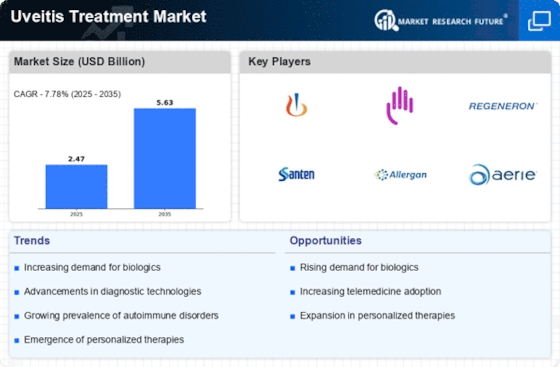
According to Market Research Future Reports analysis, the Uveitis Treatment Market size was valued at USD 2.468 Billion in 2024. The market is projected to grow from USD 2.66 Billion in 2025 to USD 5.627 Billion by 2035, registering a CAGR of 7.78% during the forecast 2025–2035. North America led the market with a 45% share, generating around USD 1.1 billion in revenue.
 
Rising prevalence of autoimmune and infectious diseases is a key growth driver in the market. Increasing adoption of advanced biologics, improved diagnostic capabilities, and growing awareness of early intervention are accelerating demand for effective and targeted uveitis therapies globally.
 
According to the World Health Organization, autoimmune diseases affect nearly 5–8% of the global population, while visual impairment impacts over 2.2 billion people worldwide, significantly increasing demand for effective ocular inflammation treatments like uveitis therapies globally.

Key Market Trends & Highlights

The Uveitis Treatment Market is poised for substantial growth driven by innovative therapies and increasing patient awareness.

  • North America leads with 45% share in 2024, supported by advanced healthcare systems and strong adoption of biologic therapies. Europe market projected to grow from USD 0.7 billion in 2023 to USD 1.5 billion by 2032. Autoimmune diseases affect 5–8% globally, significantly increasing demand for targeted uveitis treatments and advanced biologic therapies worldwide. Over 2.2 billion people experience vision impairment globally, driving need for early diagnosis and effective ocular inflammation management solutions.

Market Size & Forecast

2024 Market Size 2.468 (USD Billion)
2035 Market Size 5.627 (USD Billion)
CAGR (2025 - 2035) 7.78%
Largest Regional Market Share in 2024 North America

Major Players

Companies such as Novartis (CH), Bristol-Myers Squibb (US), Regeneron Pharmaceuticals (US), <a href="https://www.santen.com/en/news/2024/2024_1/20241107">Santen Pharmaceutical</a> (JP), Allergan (IE), Aerie Pharmaceuticals (US), Horizon Therapeutics (IE), Ocular Therapeutix (US), EyePoint Pharmaceuticals (US) are some of the major participants in the global market.

Market Trends

The uveitis treatment market trends indicate that the market is currently experiencing a notable evolution, driven by advancements in therapeutic options and a growing understanding of the underlying causes of uveitis. This condition, characterized by inflammation of the uvea, necessitates effective management strategies to mitigate symptoms and prevent vision loss. Recent developments in biologics and targeted therapies appear to enhance treatment efficacy, suggesting a shift towards more personalized approaches. Furthermore, the increasing prevalence of autoimmune diseases and infectious agents contributing to uveitis is likely to propel demand for innovative treatment modalities.

In addition, the market analysis highlights a rise in awareness among healthcare professionals and patients alike. Educational initiatives and improved diagnostic techniques may lead to earlier detection and intervention, potentially improving patient outcomes. The integration of telemedicine and digital health solutions also seems to facilitate access to specialized care, particularly in underserved regions. As the market continues to evolve, stakeholders must remain vigilant to emerging trends and adapt strategies accordingly to meet the changing landscape of uveitis management.

Emergence of Biologics

The uveitis treatment market is increasingly influenced by the introduction of biologic therapies. These agents, which target specific components of the immune system, appear to offer enhanced efficacy compared to traditional treatments. Their ability to address the underlying inflammatory processes may lead to improved patient outcomes and reduced recurrence rates.

Data from the Institute for Health Metrics and Evaluation indicates that inflammatory and autoimmune disorders contribute to over 50 million global DALYs, driving the adoption of targeted biologic therapies that improve treatment outcomes and reduce recurrence rates in chronic inflammatory conditions like uveitis.

Telemedicine Integration

The integration of telemedicine into the uveitis treatment market trends is gaining traction. This trend suggests a shift towards remote consultations and monitoring, which could enhance patient access to specialists. Such developments may prove particularly beneficial for individuals in rural or underserved areas, ensuring timely intervention.

According to the Pan American Health Organization, telehealth adoption increased by over 60% across the Americas post-pandemic, enhancing access to specialist care and enabling remote diagnosis and monitoring, which supports improved management of chronic eye conditions such as uveitis.

Focus on Personalized Medicine

There is a growing emphasis on personalized medicine within the uveitis treatment market. Tailoring treatment plans to individual patient profiles, including genetic and environmental factors, may optimize therapeutic outcomes. This trend indicates a move away from one-size-fits-all approaches, potentially leading to more effective management of uveitis.

The United Nations Population Fund highlights that global healthcare systems are increasingly focusing on precision-based care, supported by a population exceeding 8 billion, encouraging tailored treatment strategies that improve therapeutic effectiveness and patient outcomes in complex diseases like uveitis.

Uveitis Treatment Market Market Drivers

Rising Incidence of Uveitis

The increasing prevalence of uveitis is a primary driver for the Uveitis Treatment Market. Studies indicate that uveitis affects approximately 38 to 200 individuals per 100,000 people annually, with variations based on geographic and demographic factors. This rising incidence necessitates effective treatment options, thereby propelling market growth. As awareness of uveitis expands, more patients seek medical attention, leading to a higher demand for innovative therapies.
 
The market is likely to experience significant expansion as healthcare providers focus on developing targeted treatments to address this growing patient population. Furthermore, the increasing recognition of uveitis as a cause of visual impairment underscores the urgency for effective management strategies, which may further stimulate market dynamics.

Advancements in Treatment Modalities

Innovations in treatment modalities are significantly influencing the Uveitis Treatment Market. The introduction of biologics and novel immunosuppressive agents has transformed the therapeutic landscape, offering new hope for patients with refractory uveitis. Recent data suggests that biologics, such as adalimumab, have shown efficacy in treating non-infectious uveitis, leading to improved patient outcomes.
 
The market is poised for growth as pharmaceutical companies invest in research and development to create more effective and safer treatment options. Additionally, the emergence of combination therapies may enhance treatment efficacy, further driving market expansion. As these advancements continue to evolve, they are likely to reshape the treatment paradigm for uveitis, attracting both healthcare providers and patients alike.

Growing Awareness and Education Initiatives

The growing awareness and education initiatives surrounding uveitis are pivotal for the Uveitis Treatment Market. Increased efforts by healthcare organizations to educate both patients and providers about the symptoms and risks associated with uveitis are likely to lead to earlier diagnosis and treatment. This heightened awareness can result in a larger patient base seeking treatment, thereby driving market growth.
 
Additionally, educational campaigns aimed at healthcare professionals may enhance their ability to recognize and manage uveitis effectively. As more individuals become informed about the condition, the demand for effective treatment options within the market is expected to rise, further contributing to market dynamics.

Increased Investment in Ophthalmic Research

The surge in investment directed towards ophthalmic research is a notable driver for the Uveitis Treatment Market. Governments and private entities are increasingly funding research initiatives aimed at understanding the underlying mechanisms of uveitis and developing novel therapeutic approaches.
 
This financial commitment is expected to yield breakthroughs in treatment options, thereby enhancing the overall market landscape. For instance, funding for clinical trials investigating new drug candidates is on the rise, which may lead to the introduction of innovative therapies in the market. Furthermore, collaborations between academic institutions and pharmaceutical companies are likely to foster a conducive environment for research, potentially accelerating the pace of discovery and development in this field.

Regulatory Support for Innovative Therapies

Regulatory support for innovative therapies is emerging as a crucial driver for the Uveitis Treatment Market. Regulatory agencies are increasingly streamlining the approval processes for new treatments, particularly those that demonstrate significant therapeutic benefits. This supportive environment encourages pharmaceutical companies to invest in the development of novel therapies for uveitis.
 
 Recent trends indicate that expedited review pathways are being utilized for promising drug candidates, which may lead to faster market entry. As a result, the market is likely to benefit from a more diverse array of treatment options, catering to the varying needs of patients. This regulatory landscape not only fosters innovation but also enhances competition among manufacturers, potentially leading to improved patient outcomes.

Market Segment Insights

By Type: Corticosteroids (Largest) vs. Biologic Therapies (Fastest-Growing)

In the Uveitis Treatment Market, <a href="https://captainhook.onshape.com/reports/corticosteroids-market-43141" target="_blank" title="corticosteroids">corticosteroids</a> dominate with a 47% share, driven by their long-standing efficacy in controlling inflammation and providing rapid symptom relief. Immunosuppressants follow closely behind, providing essential treatment options for severe cases. On the other hand, Biologic Therapies, while smaller in share, are gaining momentum in recent years. Antiviral Medications, though critical for specific uveitis cases, comprise a lesser market segment compared to the aforementioned treatments.

Corticosteroids: Dominant vs. Biologic Therapies: Emerging

Corticosteroids remain the cornerstone of uveitis treatment, known for their rapid anti-inflammatory effects. They are widely prescribed and favored for various uveitis forms. The rising use of Biologic Therapies, on the other hand, signifies a transformative shift towards targeted treatments that modulate the immune response. These therapies are increasingly recognized for their ability to address underlying inflammatory mechanisms, making them particularly valuable for chronic uveitis cases. The preference for Biologic Therapies is driven by their safety profiles and efficacy compared to traditional treatments, marking them as the emerging force in the market.

By Route of Administration: Intravitreal (Largest) vs. Topical (Fastest-Growing)

In the Uveitis Treatment Market, the route of administration segment showcases a diverse distribution, with Intravitreal administration leading as the largest 44% share, driven by its ability to deliver drugs directly to the affected ocular tissues, ensuring higher efficacy and faster therapeutic response in uveitis management.Following Intravitreal, Systemic and Injectable routes also hold significant shares, while Topical administration emerges as the fastest-growing segment, favored for its ease of use and the increasing preference among patients for non-invasive treatment options.

Administration Method: Intravitreal (Dominant) vs. Topical (Emerging)

Intravitreal administration is recognized as the dominant method for uveitis treatment, primarily due to its direct impact on the retina and quick onset of action, making it a preferred choice for severe cases. It involves the injection of therapeutic agents into the vitreous cavity, leading to localized treatment with minimal systemic side effects. On the other hand, Topical administration is gaining traction as an emerging method, owing to its patient-friendly application and advancements in formulation technologies that increase bioavailability. This shift towards Topical methods underscores a growing trend towards minimizing invasive procedures while ensuring effective management of uveitis.

By Indication: Anterior Uveitis (Largest) vs. Posterior Uveitis (Fastest-Growing)

In the Uveitis Treatment Market, Anterior Uveitis leads the segment with a 52% share, driven by its higher prevalence and frequent diagnosis among uveitis cases. This segment typically requires prompt treatment, leading to a robust demand for effective therapeutic options. On the other hand, Posterior Uveitis has emerged as the fastest-growing segment, largely driven by increasing awareness and advancements in diagnostics and treatment options, attracting both patients and healthcare providers towards targeted therapies.

Anterior Uveitis (Dominant) vs. Intermediate Uveitis (Emerging)

Anterior Uveitis remains the dominant segment in the Uveitis Treatment Market, characterized by its acute onset and the necessity for rapid intervention. It often leads to inflammatory responses in the anterior chamber, necessitating the use of corticosteroids and immunomodulators for effective management. Meanwhile, Intermediate Uveitis is seen as an emerging segment, reflecting a growing recognition of its prevalence and the need for more specialized treatments. Patients in this category often experience longer-lasting symptoms, necessitating tailored therapeutic strategies that address both immediate relief and long-term management. As healthcare professionals become more adept at diagnosing Intermediate Uveitis, its market presence continues to expand.

By Distribution Channel: Hospitals (Largest) vs. Online Pharmacies (Fastest-Growing)

In the Uveitis Treatment Market, hospitals lead the distribution channel segment with a 49% share, supported by their role as primary centers for specialized care and advanced treatment delivery. They are equipped with advanced technology and skilled personnel, facilitating comprehensive care for Uveitis patients. Clinics also contribute significantly, offering more accessible alternatives for treatment, while retail pharmacies play a crucial role in providing medications prescribed by healthcare professionals. Online pharmacies are emerging as a significant channel, capitalizing on the increasing trend of telemedicine and home delivery services. Growth trends in the distribution channel segment showcase a shift towards more convenient treatment options, primarily driven by the rise in digital healthcare platforms. Online pharmacies are gaining traction due to the increasing comfort level among patients with online services, leading to rapid growth in this area. Moreover, hospitals are expected to maintain their dominant position, but clinics are also anticipated to grow as patients seek better access to care. This dynamic shift in distribution channels is significantly influencing the landscape of the market.

Hospitals (Dominant) vs. Online Pharmacies (Emerging)

Hospitals remain the dominant distribution channel in the Uveitis Treatment Market due to their comprehensive services and ability to provide specialized care. Their extensive infrastructure, including advanced diagnostic and therapeutic facilities, ensures patients receive thorough treatment for Uveitis. Conversely, online pharmacies are emerging as a competitive channel, catering to tech-savvy patients who prefer convenience and home delivery of medications. This shift towards online services reflects a broader trend in healthcare towards accessibility and efficiency. Online pharmacies streamline the purchasing process and offer competitive pricing, which can attract cost-conscious customers. While hospitals are critical for specialized treatments, the rise of online pharmacies indicates a shift in consumer behavior that demands adaptation from traditional healthcare providers.

Get more detailed insights about Uveitis Treatment Market Research Report- Forecast till 2035

Regional Insights

The Uveitis Treatment Market is poised for significant growth, with various regions contributing uniquely to the overall market landscape. In 2023, North America leads the market, accounting for 45% of the global revenue in 2024, expected to grow to 2.0 USD Billion by 2032, showcasing its majority holding and robust healthcare infrastructure, which drives demand for advanced treatment options.

Europe follows with a market value of 0.7 USD Billion in 2023, anticipated to reach 1.5 USD Billion by 2032, reflecting a significant interest in innovative therapeutics amidst rising incidences of uveitis. The Asia-Pacific (APAC) region shows strong potential as well, growing from 0.38 USD Billion in 2023 to 0.9 USD Billion in 2032, driven by increasing healthcare investments and awareness. South America, with a market size of 0.15 USD Billion in 2023 and an expected growth to 0.3 USD Billion by 2032, presents opportunities, although it remains the least dominant region due to varying healthcare access levels.

Finally, the Middle East and Africa (MEA) market, valued at 0.08 USD Billion in 2023, is gradually growing, reaching 0.2 USD Billion by 2032, reflecting emerging healthcare developments.Overall, the regional segmentation of the Uveitis Treatment Market offers varied growth prospects and highlights the importance of localized healthcare strategies.

Key Players and Competitive Insights

The Uveitis Treatment Market is characterized by a dynamic landscape, driven by the urgent need for effective therapies to address this complex and often debilitating eye condition. Uveitis, an inflammation of the uveal tract, can lead to serious complications, thus necessitating robust treatment regimens. The market dynamics are influenced by factors such as the prevalence of uveitis across various demographics, advancements in pharmaceutical research and development, and increasing awareness regarding ocular health.
 
Competitive insights reveal a plethora of companies vying for market share by innovating treatment options, leveraging strategic partnerships, and enhancing distribution channels.The evolving regulatory environment and the advent of personalized medicine are reshaping the strategies of stakeholders aiming to capture a larger segment of this burgeoning market.Merck stands out in the Uveitis Treatment Market due to its strong pharmaceutical portfolio and commitment to ocular health.
 
The company is widely recognized for its innovative research and development initiatives, which are critical in advancing treatment options for uveitis. Merck's established presence in the market is bolstered by its comprehensive understanding of patient needs and its ability to respond quickly with new therapies.The company's expertise in biologics and small molecule drugs gives it a competitive edge in developing effective treatments for a diverse range of uveitic conditions.
 
 Additionally, Merck benefits from a robust distribution network that allows it to deliver its products efficiently, thereby enhancing its market presence and facilitating access to treatment options for healthcare professionals and patients alike.Santen Pharmaceutical has carved out a notable position in the Uveitis Treatment Market, specializing in the research, development, and commercialization of ophthalmic products.
 
The company is recognized for its focus on unmet medical needs in the field of ocular disease, particularly in relation to inflammatory conditions like uveitis. Santen's commitment to innovation is evident in its pipeline of targeted therapies designed to improve patient outcomes. Furthermore, the company has cultivated strategic collaborations and partnerships that strengthen its market reach and foster advancements in uveitis management. With a footprint and a deep focus on ocular health, Santen Pharmaceutical continues to push the boundaries of treatment for uveitis, underscoring its role as a key player in this specialized market segment.

Key Companies in the Uveitis Treatment Market include

Industry Developments

  • Q2 2024: Novartis receives FDA approval for Cosentyx® (secukinumab) for the treatment of non-infectious uveitis in adults Novartis announced that the U.S. FDA approved Cosentyx® for adults with non-infectious uveitis, expanding its immunology portfolio and providing a new treatment option for patients with this sight-threatening condition.
  • Q1 2024: AbbVie announces positive Phase 3 results for Rinvoq® (upadacitinib) in non-infectious uveitis AbbVie reported that its JAK inhibitor Rinvoq® met primary endpoints in a Phase 3 trial for non-infectious uveitis, paving the way for regulatory submissions in the U.S. and Europe.
  • Q2 2024: Santen launches Eysuvis® (loteprednol etabonate ophthalmic suspension) in Japan for the treatment of uveitis Santen announced the commercial launch of Eysuvis® in Japan, marking its entry into the local market and expanding its ophthalmology portfolio.
  • Q3 2024: FDA approves Xipere™ (triamcinolone acetonide injectable suspension) for suprachoroidal use in uveitis The FDA granted approval to Xipere™, the first therapy delivered via suprachoroidal injection for the treatment of macular edema associated with uveitis, offering a novel delivery method for patients.
  • Q2 2024: EyePoint Pharmaceuticals secures $50 million funding to advance EYP-1901 for uveitis EyePoint Pharmaceuticals raised $50 million in a funding round to support the clinical development of EYP-1901, a sustained-release anti-inflammatory treatment for uveitis.
  • Q1 2025: Bausch + Lomb announces partnership with Clearside Biomedical to co-develop suprachoroidal therapies for uveitis Bausch + Lomb entered a strategic partnership with Clearside Biomedical to co-develop and commercialize suprachoroidal drug delivery therapies targeting uveitis and other retinal diseases.
  • Q2 2025: EMA grants marketing authorization for Humira® biosimilar for non-infectious uveitis The EMA approved a biosimilar to Humira® for the treatment of non-infectious uveitis, increasing access to biologic therapies for European patients.
  • Q3 2024: Santen opens new ophthalmic manufacturing facility in Singapore to support global uveitis treatment supply Santen inaugurated a new manufacturing facility in Singapore, aimed at increasing production capacity for its ophthalmic products, including uveitis treatments, to meet growing global demand.
  • Q2 2024: Novartis acquires exclusive rights to develop and commercialize a novel uveitis therapy from a biotech partner Novartis signed an agreement to acquire exclusive global rights to a novel small molecule therapy for uveitis, strengthening its pipeline in ophthalmology.
  • Q1 2025: FDA accepts AbbVie’s supplemental Biologics License Application for Humira® in pediatric uveitis The FDA accepted AbbVie’s sBLA for Humira® to treat pediatric patients with non-infectious uveitis, potentially expanding the drug’s label to younger populations.
  • Q2 2025: Alimera Sciences wins contract to supply Iluvien® for uveitis to major European hospital network Alimera Sciences secured a multi-year contract to supply its sustained-release implant Iluvien® for uveitis treatment to a leading European hospital group.
  • Q3 2024: Oculis SA completes IPO to fund late-stage trials of OCS-01 for uveitis Oculis SA successfully completed its initial public offering, raising capital to advance OCS-01, a topical corticosteroid, into late-stage clinical trials for uveitis.

Future Outlook

Uveitis Treatment Market Future Outlook

The Uveitis Treatment Market size is projected to reach USD 5.627 Billion by 2035, growing at a CAGR of 7.78%, driven by increasing prevalence, advancements in therapies, and rising healthcare expenditure.

New opportunities lie in:

  • <p>Development of personalized biologic therapies for targeted treatment.</p>
  • <p> </p>
  • <p>Expansion of telemedicine platforms for remote patient monitoring.</p>
  • <p>Investment in AI-driven diagnostic tools to enhance treatment accuracy.</p>

By 2035, the Uveitis Treatment Market is expected to achieve substantial growth, reflecting evolving treatment paradigms.

Market Segmentation

Uveitis Treatment Market Type Outlook

  • Corticosteroids
  • Immunosuppressants
  • Biologic Therapies
  • Antiviral Medications

Uveitis Treatment Market Indication Outlook

  • Anterior Uveitis
  • Intermediate Uveitis
  • Posterior Uveitis
  • Panuveitis

Uveitis Treatment Market Distribution Channel Outlook

  • Hospitals
  • Clinics
  • Online Pharmacies
  • Retail Pharmacies

Uveitis Treatment Market Route of Administration Outlook

  • Topical
  • Systemic
  • Injectable
  • Intravitreal

Report Scope

MARKET SIZE 2024 2.468(USD Billion)
MARKET SIZE 2025 2.66(USD Billion)
MARKET SIZE 2035 5.627(USD Billion)
COMPOUND ANNUAL GROWTH RATE (CAGR) 7.78% (2025 - 2035)
REPORT COVERAGE Revenue Forecast, Competitive Landscape, Growth Factors, and Trends
BASE YEAR 2024
Market Forecast Period 2025 - 2035
Historical Data 2019 - 2024
Market Forecast Units USD Billion
Key Companies Profiled Novartis (CH), Bristol-Myers Squibb (US), Regeneron Pharmaceuticals (US), Santen Pharmaceutical (JP), Allergan (IE), Aerie Pharmaceuticals (US), Horizon Therapeutics (IE), Ocular Therapeutix (US), EyePoint Pharmaceuticals (US)
Segments Covered Treatment Type, Route of Administration, Indication, Distribution Channel, Regional
Key Market Opportunities Advancements in biologics and personalized medicine enhance treatment options in the market.
Key Market Dynamics Rising demand for innovative therapies drives competition and regulatory scrutiny in the market.
Countries Covered North America, Europe, APAC, South America, MEA

FAQs

What is the projected market valuation of the Uveitis Treatment Market by 2035?

The market is projected to reach a valuation of 5.627 USD Billion by 2035.

What was the market valuation of the Uveitis Treatment Market in 2024?

In 2024, the market was valued at 2.468 USD Billion.

What is the expected CAGR for the Uveitis Treatment Market during the forecast period 2025 - 2035?

The expected CAGR for the market during the forecast period 2025 - 2035 is 7.78%.

Which companies are considered key players in the Uveitis Treatment Market?

Key players in the market include Novartis, Bristol-Myers Squibb, Regeneron Pharmaceuticals, and Santen Pharmaceutical.

What are the main segments of the market?

The main segments of the market include Type, Route of Administration, Indication, and Distribution Channel.

How did the market for corticosteroids in Uveitis treatment perform in 2024?

<p>In 2024, the market for corticosteroids in Uveitis treatment was valued at 0.7404 USD Billion.</p>

What is the projected market size for immunosuppressants in 2035?

<p>The market size for immunosuppressants in Uveitis treatment is projected to reach 1.1345 USD Billion by 2035.</p>

Which route of administration is expected to have the highest market value by 2035?

<p>By 2035, the topical route of administration is expected to have the highest market value at 1.7 USD Billion.</p>

What is the anticipated market value for anterior uveitis treatment by 2035?

<p>The anticipated market value for anterior uveitis treatment is projected to be 1.7 USD Billion by 2035.</p>

How does the distribution channel of online pharmacies compare to retail pharmacies in 2035?

<p>In 2035, the market value for online pharmacies is projected to be 1.2 USD Billion, while retail pharmacies are expected to reach 1.327 USD Billion.</p>

  1. SECTION I: EXECUTIVE SUMMARY AND KEY HIGHLIGHTS |
    1. EXECUTIVE SUMMARY | |
      1. Market Overview | |
      2. Key Findings | |
      3. Market Segmentation | |
      4. Competitive Landscape | |
      5. Challenges and Opportunities | |
      6. Future Outlook 2
  2. SECTION II: SCOPING, METHODOLOGY AND MARKET STRUCTURE |
    1. MARKET INTRODUCTION | |
      1. Definition | |
      2. Scope of the study | | |
    2. RESEARCH METHODOLOGY | |
      1. Overview | |
      2. Data Mining | |
      3. Secondary Research | |
      4. Primary Research | | |
      5. Forecasting Model | |
      6. Market Size Estimation | | |
      7. Data Triangulation | |
      8. Validation 3
  3. SECTION III: QUALITATIVE ANALYSIS |
    1. MARKET DYNAMICS | |
      1. Overview | |
      2. Drivers | |
      3. Restraints | |
      4. Opportunities |
    2. MARKET FACTOR ANALYSIS | |
      1. Value chain Analysis | |
      2. Porter's Five Forces Analysis | | |
      3. COVID-19 Impact Analysis | | |
  4. SECTION IV: QUANTITATIVE ANALYSIS |
    1. Healthcare, BY Type (USD Billion) | |
      1. Corticosteroids | |
      2. Immunosuppressants | |
      3. Biologic Therapies | |
      4. Antiviral Medications |
    2. Healthcare, BY Route of Administration (USD Billion) | |
      1. Topical | |
      2. Systemic | |
      3. Injectable | |
      4. Intravitreal |
    3. Healthcare, BY Indication (USD Billion) | |
      1. Anterior Uveitis | |
      2. Intermediate Uveitis | |
      3. Posterior Uveitis | |
      4. Panuveitis |
    4. Healthcare, BY Distribution Channel (USD Billion) | |
      1. Hospitals | |
      2. Clinics | |
      3. Online Pharmacies | |
      4. Retail Pharmacies |
    5. Healthcare, BY Region (USD Billion) | |
      1. North America | | |
      2. Europe | | |
      3. APAC | | |
      4. South America | | |
      5. MEA | | |
  5. SECTION V: COMPETITIVE ANALYSIS |
    1. Competitive Landscape | |
      1. Overview | |
      2. Competitive Analysis | |
      3. Market share Analysis | |
      4. Major Growth Strategy in the Healthcare | |
      5. Competitive Benchmarking | |
      6. Leading Players in Terms of Number of Developments in the Healthcare | |
      7. Key developments and growth strategies | | |
      8. Major Players Financial Matrix | | |
    2. Company Profiles | |
      1. Novartis (CH) | | |
      2. Bristol-Myers Squibb (US) | | |
      3. Regeneron Pharmaceuticals (US) | | |
      4. Santen Pharmaceutical (JP) | | |
      5. Allergan (IE) | | |
      6. Aerie Pharmaceuticals (US) | | |
      7. Horizon Therapeutics (IE) | | |
      8. Ocular Therapeutix (US) | | |
      9. EyePoint Pharmaceuticals (US) | | |
    3. Appendix | |
      1. References | |
      2. Related Reports 6 LIST OF FIGURES |
    4. MARKET SYNOPSIS |
    5. NORTH AMERICA MARKET ANALYSIS |
    6. US MARKET ANALYSIS BY TYPE |
    7. US MARKET ANALYSIS BY ROUTE OF ADMINISTRATION |
    8. US MARKET ANALYSIS BY INDICATION |
    9. US MARKET ANALYSIS BY DISTRIBUTION CHANNEL |
    10. CANADA MARKET ANALYSIS BY TYPE |
    11. CANADA MARKET ANALYSIS BY ROUTE OF ADMINISTRATION |
    12. CANADA MARKET ANALYSIS BY INDICATION |
    13. CANADA MARKET ANALYSIS BY DISTRIBUTION CHANNEL |
    14. EUROPE MARKET ANALYSIS |
    15. GERMANY MARKET ANALYSIS BY TYPE |
    16. GERMANY MARKET ANALYSIS BY ROUTE OF ADMINISTRATION |
    17. GERMANY MARKET ANALYSIS BY INDICATION |
    18. GERMANY MARKET ANALYSIS BY DISTRIBUTION CHANNEL |
    19. UK MARKET ANALYSIS BY TYPE |
    20. UK MARKET ANALYSIS BY ROUTE OF ADMINISTRATION |
    21. UK MARKET ANALYSIS BY INDICATION |
    22. UK MARKET ANALYSIS BY DISTRIBUTION CHANNEL |
    23. FRANCE MARKET ANALYSIS BY TYPE |
    24. FRANCE MARKET ANALYSIS BY ROUTE OF ADMINISTRATION |
    25. FRANCE MARKET ANALYSIS BY INDICATION |
    26. FRANCE MARKET ANALYSIS BY DISTRIBUTION CHANNEL |
    27. RUSSIA MARKET ANALYSIS BY TYPE |
    28. RUSSIA MARKET ANALYSIS BY ROUTE OF ADMINISTRATION |
    29. RUSSIA MARKET ANALYSIS BY INDICATION |
    30. RUSSIA MARKET ANALYSIS BY DISTRIBUTION CHANNEL |
    31. ITALY MARKET ANALYSIS BY TYPE |
    32. ITALY MARKET ANALYSIS BY ROUTE OF ADMINISTRATION |
    33. ITALY MARKET ANALYSIS BY INDICATION |
    34. ITALY MARKET ANALYSIS BY DISTRIBUTION CHANNEL |
    35. SPAIN MARKET ANALYSIS BY TYPE |
    36. SPAIN MARKET ANALYSIS BY ROUTE OF ADMINISTRATION |
    37. SPAIN MARKET ANALYSIS BY INDICATION |
    38. SPAIN MARKET ANALYSIS BY DISTRIBUTION CHANNEL |
    39. REST OF EUROPE MARKET ANALYSIS BY TYPE |
    40. REST OF EUROPE MARKET ANALYSIS BY ROUTE OF ADMINISTRATION |
    41. REST OF EUROPE MARKET ANALYSIS BY INDICATION |
    42. REST OF EUROPE MARKET ANALYSIS BY DISTRIBUTION CHANNEL |
    43. APAC MARKET ANALYSIS |
    44. CHINA MARKET ANALYSIS BY TYPE |
    45. CHINA MARKET ANALYSIS BY ROUTE OF ADMINISTRATION |
    46. CHINA MARKET ANALYSIS BY INDICATION |
    47. CHINA MARKET ANALYSIS BY DISTRIBUTION CHANNEL |
    48. INDIA MARKET ANALYSIS BY TYPE |
    49. INDIA MARKET ANALYSIS BY ROUTE OF ADMINISTRATION |
    50. INDIA MARKET ANALYSIS BY INDICATION |
    51. INDIA MARKET ANALYSIS BY DISTRIBUTION CHANNEL |
    52. JAPAN MARKET ANALYSIS BY TYPE |
    53. JAPAN MARKET ANALYSIS BY ROUTE OF ADMINISTRATION |
    54. JAPAN MARKET ANALYSIS BY INDICATION |
    55. JAPAN MARKET ANALYSIS BY DISTRIBUTION CHANNEL |
    56. SOUTH KOREA MARKET ANALYSIS BY TYPE |
    57. SOUTH KOREA MARKET ANALYSIS BY ROUTE OF ADMINISTRATION |
    58. SOUTH KOREA MARKET ANALYSIS BY INDICATION |
    59. SOUTH KOREA MARKET ANALYSIS BY DISTRIBUTION CHANNEL |
    60. MALAYSIA MARKET ANALYSIS BY TYPE |
    61. MALAYSIA MARKET ANALYSIS BY ROUTE OF ADMINISTRATION |
    62. MALAYSIA MARKET ANALYSIS BY INDICATION |
    63. MALAYSIA MARKET ANALYSIS BY DISTRIBUTION CHANNEL |
    64. THAILAND MARKET ANALYSIS BY TYPE |
    65. THAILAND MARKET ANALYSIS BY ROUTE OF ADMINISTRATION |
    66. THAILAND MARKET ANALYSIS BY INDICATION |
    67. THAILAND MARKET ANALYSIS BY DISTRIBUTION CHANNEL |
    68. INDONESIA MARKET ANALYSIS BY TYPE |
    69. INDONESIA MARKET ANALYSIS BY ROUTE OF ADMINISTRATION |
    70. INDONESIA MARKET ANALYSIS BY INDICATION |
    71. INDONESIA MARKET ANALYSIS BY DISTRIBUTION CHANNEL |
    72. REST OF APAC MARKET ANALYSIS BY TYPE |
    73. REST OF APAC MARKET ANALYSIS BY ROUTE OF ADMINISTRATION |
    74. REST OF APAC MARKET ANALYSIS BY INDICATION |
    75. REST OF APAC MARKET ANALYSIS BY DISTRIBUTION CHANNEL |
    76. SOUTH AMERICA MARKET ANALYSIS |
    77. BRAZIL MARKET ANALYSIS BY TYPE |
    78. BRAZIL MARKET ANALYSIS BY ROUTE OF ADMINISTRATION |
    79. BRAZIL MARKET ANALYSIS BY INDICATION |
    80. BRAZIL MARKET ANALYSIS BY DISTRIBUTION CHANNEL |
    81. MEXICO MARKET ANALYSIS BY TYPE |
    82. MEXICO MARKET ANALYSIS BY ROUTE OF ADMINISTRATION |
    83. MEXICO MARKET ANALYSIS BY INDICATION |
    84. MEXICO MARKET ANALYSIS BY DISTRIBUTION CHANNEL |
    85. ARGENTINA MARKET ANALYSIS BY TYPE |
    86. ARGENTINA MARKET ANALYSIS BY ROUTE OF ADMINISTRATION |
    87. ARGENTINA MARKET ANALYSIS BY INDICATION |
    88. ARGENTINA MARKET ANALYSIS BY DISTRIBUTION CHANNEL |
    89. REST OF SOUTH AMERICA MARKET ANALYSIS BY TYPE |
    90. REST OF SOUTH AMERICA MARKET ANALYSIS BY ROUTE OF ADMINISTRATION |
    91. REST OF SOUTH AMERICA MARKET ANALYSIS BY INDICATION |
    92. REST OF SOUTH AMERICA MARKET ANALYSIS BY DISTRIBUTION CHANNEL |
    93. MEA MARKET ANALYSIS |
    94. GCC COUNTRIES MARKET ANALYSIS BY TYPE |
    95. GCC COUNTRIES MARKET ANALYSIS BY ROUTE OF ADMINISTRATION |
    96. GCC COUNTRIES MARKET ANALYSIS BY INDICATION |
    97. GCC COUNTRIES MARKET ANALYSIS BY DISTRIBUTION CHANNEL |
    98. SOUTH AFRICA MARKET ANALYSIS BY TYPE |
    99. SOUTH AFRICA MARKET ANALYSIS BY ROUTE OF ADMINISTRATION |
    100. SOUTH AFRICA MARKET ANALYSIS BY INDICATION |
    101. SOUTH AFRICA MARKET ANALYSIS BY DISTRIBUTION CHANNEL |
    102. REST OF MEA MARKET ANALYSIS BY TYPE |
    103. REST OF MEA MARKET ANALYSIS BY ROUTE OF ADMINISTRATION |
    104. REST OF MEA MARKET ANALYSIS BY INDICATION |
    105. REST OF MEA MARKET ANALYSIS BY DISTRIBUTION CHANNEL |
    106. KEY BUYING CRITERIA OF HEALTHCARE |
    107. RESEARCH PROCESS OF MRFR |
    108. DRO ANALYSIS OF HEALTHCARE |
    109. DRIVERS IMPACT ANALYSIS: HEALTHCARE |
    110. RESTRAINTS IMPACT ANALYSIS: HEALTHCARE |
    111. SUPPLY / VALUE CHAIN: HEALTHCARE |
    112. HEALTHCARE, BY TYPE, 2024 (% SHARE) |
    113. HEALTHCARE, BY TYPE, 2024 TO 2035 (USD Billion) |
    114. HEALTHCARE, BY ROUTE OF ADMINISTRATION, 2024 (% SHARE) |
    115. HEALTHCARE, BY ROUTE OF ADMINISTRATION, 2024 TO 2035 (USD Billion) |
    116. HEALTHCARE, BY INDICATION, 2024 (% SHARE) |
    117. HEALTHCARE, BY INDICATION, 2024 TO 2035 (USD Billion) |
    118. HEALTHCARE, BY DISTRIBUTION CHANNEL, 2024 (% SHARE) |
    119. HEALTHCARE, BY DISTRIBUTION CHANNEL, 2024 TO 2035 (USD Billion) |
    120. BENCHMARKING OF MAJOR COMPETITORS 7 LIST OF TABLES |
    121. LIST OF ASSUMPTIONS | |
      1. |
    122. North America MARKET SIZE ESTIMATES; FORECAST | |
      1. BY TYPE, 2025-2035 (USD Billion) | |
      2. BY ROUTE OF ADMINISTRATION, 2025-2035 (USD Billion) | |
      3. BY INDICATION, 2025-2035 (USD Billion) | |
      4. BY DISTRIBUTION CHANNEL, 2025-2035 (USD Billion) |
    123. US MARKET SIZE ESTIMATES; FORECAST | |
      1. BY TYPE, 2025-2035 (USD Billion) | |
      2. BY ROUTE OF ADMINISTRATION, 2025-2035 (USD Billion) | |
      3. BY INDICATION, 2025-2035 (USD Billion) | |
      4. BY DISTRIBUTION CHANNEL, 2025-2035 (USD Billion) |
    124. Canada MARKET SIZE ESTIMATES; FORECAST | |
      1. BY TYPE, 2025-2035 (USD Billion) | |
      2. BY ROUTE OF ADMINISTRATION, 2025-2035 (USD Billion) | |
      3. BY INDICATION, 2025-2035 (USD Billion) | |
      4. BY DISTRIBUTION CHANNEL, 2025-2035 (USD Billion) |
    125. Europe MARKET SIZE ESTIMATES; FORECAST | |
      1. BY TYPE, 2025-2035 (USD Billion) | |
      2. BY ROUTE OF ADMINISTRATION, 2025-2035 (USD Billion) | |
      3. BY INDICATION, 2025-2035 (USD Billion) | |
      4. BY DISTRIBUTION CHANNEL, 2025-2035 (USD Billion) |
    126. Germany MARKET SIZE ESTIMATES; FORECAST | |
      1. BY TYPE, 2025-2035 (USD Billion) | |
      2. BY ROUTE OF ADMINISTRATION, 2025-2035 (USD Billion) | |
      3. BY INDICATION, 2025-2035 (USD Billion) | |
      4. BY DISTRIBUTION CHANNEL, 2025-2035 (USD Billion) |
    127. UK MARKET SIZE ESTIMATES; FORECAST | |
      1. BY TYPE, 2025-2035 (USD Billion) | |
      2. BY ROUTE OF ADMINISTRATION, 2025-2035 (USD Billion) | |
      3. BY INDICATION, 2025-2035 (USD Billion) | |
      4. BY DISTRIBUTION CHANNEL, 2025-2035 (USD Billion) |
    128. France MARKET SIZE ESTIMATES; FORECAST | |
      1. BY TYPE, 2025-2035 (USD Billion) | |
      2. BY ROUTE OF ADMINISTRATION, 2025-2035 (USD Billion) | |
      3. BY INDICATION, 2025-2035 (USD Billion) | |
      4. BY DISTRIBUTION CHANNEL, 2025-2035 (USD Billion) |
    129. Russia MARKET SIZE ESTIMATES; FORECAST | |
      1. BY TYPE, 2025-2035 (USD Billion) | |
      2. BY ROUTE OF ADMINISTRATION, 2025-2035 (USD Billion) | |
      3. BY INDICATION, 2025-2035 (USD Billion) | |
      4. BY DISTRIBUTION CHANNEL, 2025-2035 (USD Billion) |
    130. Italy MARKET SIZE ESTIMATES; FORECAST | |
      1. BY TYPE, 2025-2035 (USD Billion) | |
      2. BY ROUTE OF ADMINISTRATION, 2025-2035 (USD Billion) | |
      3. BY INDICATION, 2025-2035 (USD Billion) | |
      4. BY DISTRIBUTION CHANNEL, 2025-2035 (USD Billion) |
    131. Spain MARKET SIZE ESTIMATES; FORECAST | |
      1. BY TYPE, 2025-2035 (USD Billion) | |
      2. BY ROUTE OF ADMINISTRATION, 2025-2035 (USD Billion) | |
      3. BY INDICATION, 2025-2035 (USD Billion) | |
      4. BY DISTRIBUTION CHANNEL, 2025-2035 (USD Billion) |
    132. Rest of Europe MARKET SIZE ESTIMATES; FORECAST | |
      1. BY TYPE, 2025-2035 (USD Billion) | |
      2. BY ROUTE OF ADMINISTRATION, 2025-2035 (USD Billion) | |
      3. BY INDICATION, 2025-2035 (USD Billion) | |
      4. BY DISTRIBUTION CHANNEL, 2025-2035 (USD Billion) |
    133. APAC MARKET SIZE ESTIMATES; FORECAST | |
      1. BY TYPE, 2025-2035 (USD Billion) | |
      2. BY ROUTE OF ADMINISTRATION, 2025-2035 (USD Billion) | |
      3. BY INDICATION, 2025-2035 (USD Billion) | |
      4. BY DISTRIBUTION CHANNEL, 2025-2035 (USD Billion) |
    134. China MARKET SIZE ESTIMATES; FORECAST | |
      1. BY TYPE, 2025-2035 (USD Billion) | |
      2. BY ROUTE OF ADMINISTRATION, 2025-2035 (USD Billion) | |
      3. BY INDICATION, 2025-2035 (USD Billion) | |
      4. BY DISTRIBUTION CHANNEL, 2025-2035 (USD Billion) |
    135. India MARKET SIZE ESTIMATES; FORECAST | |
      1. BY TYPE, 2025-2035 (USD Billion) | |
      2. BY ROUTE OF ADMINISTRATION, 2025-2035 (USD Billion) | |
      3. BY INDICATION, 2025-2035 (USD Billion) | |
      4. BY DISTRIBUTION CHANNEL, 2025-2035 (USD Billion) |
    136. Japan MARKET SIZE ESTIMATES; FORECAST | |
      1. BY TYPE, 2025-2035 (USD Billion) | |
      2. BY ROUTE OF ADMINISTRATION, 2025-2035 (USD Billion) | |
      3. BY INDICATION, 2025-2035 (USD Billion) | |
      4. BY DISTRIBUTION CHANNEL, 2025-2035 (USD Billion) |
    137. South Korea MARKET SIZE ESTIMATES; FORECAST | |
      1. BY TYPE, 2025-2035 (USD Billion) | |
      2. BY ROUTE OF ADMINISTRATION, 2025-2035 (USD Billion) | |
      3. BY INDICATION, 2025-2035 (USD Billion) | |
      4. BY DISTRIBUTION CHANNEL, 2025-2035 (USD Billion) |
    138. Malaysia MARKET SIZE ESTIMATES; FORECAST | |
      1. BY TYPE, 2025-2035 (USD Billion) | |
      2. BY ROUTE OF ADMINISTRATION, 2025-2035 (USD Billion) | |
      3. BY INDICATION, 2025-2035 (USD Billion) | |
      4. BY DISTRIBUTION CHANNEL, 2025-2035 (USD Billion) |
    139. Thailand MARKET SIZE ESTIMATES; FORECAST | |
      1. BY TYPE, 2025-2035 (USD Billion) | |
      2. BY ROUTE OF ADMINISTRATION, 2025-2035 (USD Billion) | |
      3. BY INDICATION, 2025-2035 (USD Billion) | |
      4. BY DISTRIBUTION CHANNEL, 2025-2035 (USD Billion) |
    140. Indonesia MARKET SIZE ESTIMATES; FORECAST | |
      1. BY TYPE, 2025-2035 (USD Billion) | |
      2. BY ROUTE OF ADMINISTRATION, 2025-2035 (USD Billion) | |
      3. BY INDICATION, 2025-2035 (USD Billion) | |
      4. BY DISTRIBUTION CHANNEL, 2025-2035 (USD Billion) |
    141. Rest of APAC MARKET SIZE ESTIMATES; FORECAST | |
      1. BY TYPE, 2025-2035 (USD Billion) | |
      2. BY ROUTE OF ADMINISTRATION, 2025-2035 (USD Billion) | |
      3. BY INDICATION, 2025-2035 (USD Billion) | |
      4. BY DISTRIBUTION CHANNEL, 2025-2035 (USD Billion) |
    142. South America MARKET SIZE ESTIMATES; FORECAST | |
      1. BY TYPE, 2025-2035 (USD Billion) | |
      2. BY ROUTE OF ADMINISTRATION, 2025-2035 (USD Billion) | |
      3. BY INDICATION, 2025-2035 (USD Billion) | |
      4. BY DISTRIBUTION CHANNEL, 2025-2035 (USD Billion) |
    143. Brazil MARKET SIZE ESTIMATES; FORECAST | |
      1. BY TYPE, 2025-2035 (USD Billion) | |
      2. BY ROUTE OF ADMINISTRATION, 2025-2035 (USD Billion) | |
      3. BY INDICATION, 2025-2035 (USD Billion) | |
      4. BY DISTRIBUTION CHANNEL, 2025-2035 (USD Billion) |
    144. Mexico MARKET SIZE ESTIMATES; FORECAST | |
      1. BY TYPE, 2025-2035 (USD Billion) | |
      2. BY ROUTE OF ADMINISTRATION, 2025-2035 (USD Billion) | |
      3. BY INDICATION, 2025-2035 (USD Billion) | |
      4. BY DISTRIBUTION CHANNEL, 2025-2035 (USD Billion) |
    145. Argentina MARKET SIZE ESTIMATES; FORECAST | |
      1. BY TYPE, 2025-2035 (USD Billion) | |
      2. BY ROUTE OF ADMINISTRATION, 2025-2035 (USD Billion) | |
      3. BY INDICATION, 2025-2035 (USD Billion) | |
      4. BY DISTRIBUTION CHANNEL, 2025-2035 (USD Billion) |
    146. Rest of South America MARKET SIZE ESTIMATES; FORECAST | |
      1. BY TYPE, 2025-2035 (USD Billion) | |
      2. BY ROUTE OF ADMINISTRATION, 2025-2035 (USD Billion) | |
      3. BY INDICATION, 2025-2035 (USD Billion) | |
      4. BY DISTRIBUTION CHANNEL, 2025-2035 (USD Billion) |
    147. MEA MARKET SIZE ESTIMATES; FORECAST | |
      1. BY TYPE, 2025-2035 (USD Billion) | |
      2. BY ROUTE OF ADMINISTRATION, 2025-2035 (USD Billion) | |
      3. BY INDICATION, 2025-2035 (USD Billion) | |
      4. BY DISTRIBUTION CHANNEL, 2025-2035 (USD Billion) |
    148. GCC Countries MARKET SIZE ESTIMATES; FORECAST | |
      1. BY TYPE, 2025-2035 (USD Billion) | |
      2. BY ROUTE OF ADMINISTRATION, 2025-2035 (USD Billion) | |
      3. BY INDICATION, 2025-2035 (USD Billion) | |
      4. BY DISTRIBUTION CHANNEL, 2025-2035 (USD Billion) |
    149. South Africa MARKET SIZE ESTIMATES; FORECAST | |
      1. BY TYPE, 2025-2035 (USD Billion) | |
      2. BY ROUTE OF ADMINISTRATION, 2025-2035 (USD Billion) | |
      3. BY INDICATION, 2025-2035 (USD Billion) | |
      4. BY DISTRIBUTION CHANNEL, 2025-2035 (USD Billion) |
    150. Rest of MEA MARKET SIZE ESTIMATES; FORECAST | |
      1. BY TYPE, 2025-2035 (USD Billion) | |
      2. BY ROUTE OF ADMINISTRATION, 2025-2035 (USD Billion) | |
      3. BY INDICATION, 2025-2035 (USD Billion) | |
      4. BY DISTRIBUTION CHANNEL, 2025-2035 (USD Billion) |
    151. PRODUCT LAUNCH/PRODUCT DEVELOPMENT/APPROVAL | |
      1. |
    152. ACQUISITION/PARTNERSHIP | |

Healthcare Market Segmentation

Healthcare By Type (USD Billion, 2025-2035)

  • Corticosteroids
  • Immunosuppressants
  • Biologic Therapies
  • Antiviral Medications

Healthcare By Route of Administration (USD Billion, 2025-2035)

  • Topical
  • Systemic
  • Injectable
  • Intravitreal

Healthcare By Indication (USD Billion, 2025-2035)

  • Anterior Uveitis
  • Intermediate Uveitis
  • Posterior Uveitis
  • Panuveitis

Healthcare By Distribution Channel (USD Billion, 2025-2035)

  • Hospitals
  • Clinics
  • Online Pharmacies
  • Retail Pharmacies
Infographic

Free Sample Request

Kindly complete the form below to receive a free sample of this Report

Get Free Sample

Customer Strories

Compare Licence

×
Features License Type
Single User Multiuser License Enterprise User
Price $4,950 $5,950 $7,250
Maximum User Access Limit 1 User Upto 10 Users Unrestricted Access Throughout the Organization
Free Customization
Direct Access to Analyst
Deliverable Format
Platform Access
Discount on Next Purchase 10% 15% 15%
Printable Versions