×
Hero Background
English
Chinese
French
Japanese
Korean
German
Spanish

Integrated Cardiology Devices Market Trends

ID: MRFR/MED/0683-HCR
80 Pages
Rahul Gotadki
October 2025

Integrated Cardiology Devices Market Research Report, By Types (Cardiology EMR Software, EHR, FFR, Optical Coherence Tomography, others), By Applications (Sudden Cardiac Arrest, Internal Monitoring, Cardiac Resynchronization Therapy, Cardiothoracic Surgery, others), By End User (Catheterization Laboratories, Hospitals, others)-Forecast till 2035

Share:
Download PDF ×

We do not share your information with anyone. However, we may send you emails based on your report interest from time to time. You may contact us at any time to opt-out.

Integrated Cardiology Devices Market Infographic
Purchase Options

Market Trends

Key Emerging Trends in the Integrated Cardiology Devices Market

The integrated cardiology devices market has witnessed significant trends and transformations in recent years, reflecting advancements in medical technology and evolving patient needs. One prominent trend is the increasing demand for minimally invasive procedures, which has fueled the adoption of integrated cardiology devices globally. These devices offer healthcare professionals the ability to perform intricate cardiovascular procedures with greater precision and reduced risk to patients.

Moreover, there's a noticeable shift towards the integration of various cardiac diagnostic and therapeutic functionalities into single platforms. This integration streamlines workflow processes in healthcare settings, enhancing efficiency and reducing the overall procedural time. For instance, integrated catheterization laboratories combine imaging technologies, hemodynamic monitoring, and therapeutic devices into a cohesive system, allowing for seamless cardiac interventions.

The market has also seen a surge in the development of wearable and remote monitoring technologies for cardiovascular health management. These innovations enable continuous tracking of vital signs, such as heart rate, blood pressure, and ECG readings, empowering patients to actively participate in their cardiac care and allowing healthcare providers to monitor patients remotely, thereby facilitating early detection of cardiac abnormalities and prompt intervention.

Furthermore, there's a growing emphasis on the incorporation of artificial intelligence (AI) and machine learning algorithms into integrated cardiology devices. These technologies enable the analysis of complex cardiac data sets, facilitating more accurate diagnosis, personalized treatment planning, and predictive analytics for cardiovascular diseases. AI-powered image processing algorithms enhance the interpretation of cardiac imaging modalities, such as echocardiography and angiography, enabling clinicians to identify subtle abnormalities and make informed treatment decisions.

In addition to technological advancements, market trends also reflect changing demographics and healthcare economics. With an aging population and rising prevalence of cardiovascular diseases globally, there's an increased demand for innovative cardiology devices that improve patient outcomes while optimizing healthcare resource utilization. Manufacturers are responding to these demands by investing in research and development initiatives to create next-generation integrated cardiology solutions that address unmet clinical needs and enhance the quality of patient care.

Moreover, the integration of telemedicine and telecardiology platforms into integrated cardiology devices has become more prevalent, especially in remote or underserved areas where access to specialized cardiac care is limited. These platforms facilitate real-time consultation between healthcare providers and patients, enabling timely diagnosis, treatment, and follow-up care for individuals with cardiovascular conditions.

The market landscape is also shaped by regulatory policies and reimbursement frameworks governing the adoption and utilization of integrated cardiology devices. Manufacturers must navigate complex regulatory pathways and demonstrate the safety, efficacy, and cost-effectiveness of their products to gain regulatory approval and secure reimbursement from healthcare payers. Compliance with regulatory standards and alignment with evolving reimbursement policies are crucial considerations for market players seeking to commercialize integrated cardiology devices.

Looking ahead, the integrated cardiology devices market is poised for continued growth and innovation, driven by ongoing technological advancements, demographic trends, and healthcare reforms. As healthcare systems strive to improve patient outcomes, enhance clinical efficiency, and contain costs, integrated cardiology devices will play an increasingly pivotal role in cardiovascular care delivery. By harnessing the power of integration, connectivity, and advanced analytics, these devices have the potential to revolutionize the diagnosis, treatment, and management of cardiovascular diseases, ultimately improving the lives of patients worldwide.

Author
Rahul Gotadki
Assistant Manager

He holds an experience of about 7+ years in Market Research and Business Consulting, working under the spectrum of Life Sciences and Healthcare domains. Rahul conceptualizes and implements a scalable business strategy and provides strategic leadership to the clients. His expertise lies in market estimation, competitive intelligence, pipeline analysis, customer assessment, etc. In addition to the above, his other responsibility includes strategic tracking of high growth markets & advising clients on the potential areas of focus they could direct their business initiatives

Leave a Comment

FAQs

What is the CAGR of the Integrated Cardiology Devices Market?

Integrated Cardiology Devices Market is expected to exhibit a strong 8.68% CAGR over the Forecast Period from 2024 to 2032.

What is the Major Driver for the Integrated Cardiology Devices Market?

The Growing Prevalence Of Cardiovascular Diseases Is The Major Driver For The Global Integrated Cardiology Devices Market.

What is the key restraint on the Integrated Cardiology Devices Market?

Lack of Specialty Infrastructure in Emerging Regions Is the Major Restraint On the Integrated Cardiology Devices Market.

Which is the Leading Regional Integrated Cardiology Devices Market?

The Americas Accounts for the Largest Share in the Global Integrated Cardiology Devices Market.

What are the Leading Integrated Cardiology Devices Market Players?

Leading players in the Integrated Cardiology Devices Market Include Edwards Lifesciences Corporation, Jude Medical, And Medtronic, Among Others.

Market Summary

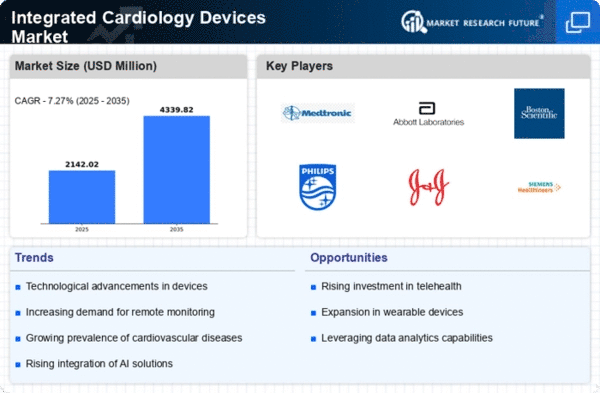
As per MRFR analysis, the Integrated Cardiology Devices Market was estimated at 1996.85 USD Million in 2024. The Integrated Cardiology Devices industry is projected to grow from 2164.9 USD Million in 2025 to 4339.82 USD Million by 2035, exhibiting a compound annual growth rate (CAGR) of 7.27 during the forecast period 2025 - 2035.

Key Market Trends & Highlights

The Integrated Cardiology Devices Market is poised for substantial growth driven by technological advancements and increasing healthcare investments.

  • Technological advancements are reshaping the Integrated Cardiology Devices Market, enhancing device capabilities and patient outcomes.
  • North America remains the largest market, while the Asia-Pacific region is emerging as the fastest-growing area for cardiology devices.
  • The cardiac monitoring segment holds the largest market share, whereas the cardiac rhythm management segment is experiencing rapid growth.
  • Rising prevalence of cardiovascular diseases and regulatory support for innovative medical devices are key drivers propelling market expansion.

Market Size & Forecast

2024 Market Size 1996.85 (USD Million)
2035 Market Size 4339.82 (USD Million)
CAGR (2025 - 2035) 7.27%
Largest Regional Market Share in 2024 North America

Major Players

<p>Medtronic (US), Abbott (US), Boston Scientific (US), Philips (NL), Johnson & Johnson (US), Siemens Healthineers (DE), B. Braun (DE), Terumo (JP), Cardinal Health (US)</p>

Market Trends

The Integrated Cardiology Devices Market is currently experiencing a transformative phase, driven by advancements in technology and an increasing emphasis on patient-centric care. Innovations in device design and functionality are enhancing the capabilities of cardiology devices, allowing for more accurate diagnostics and effective treatment options. This evolution is further supported by a growing awareness of cardiovascular diseases and the need for timely interventions. As healthcare systems worldwide adapt to these changes, the integration of digital health solutions into cardiology devices is becoming more prevalent, potentially improving patient outcomes and streamlining clinical workflows. Moreover, the market appears to be influenced by regulatory changes and the push for more personalized medicine. Manufacturers are likely focusing on developing devices that not only meet stringent safety standards but also cater to the unique needs of individual patients. This trend suggests a shift towards more customized solutions, which may enhance the overall effectiveness of treatments. As the Integrated Cardiology Devices Market continues to evolve, collaboration between technology firms and healthcare providers could play a crucial role in shaping future innovations and ensuring that devices remain aligned with clinical needs and patient expectations.

Technological Advancements

The Integrated Cardiology Devices Market is witnessing rapid technological advancements that enhance device performance and functionality. Innovations such as miniaturization, wireless connectivity, and artificial intelligence integration are becoming increasingly common. These developments not only improve diagnostic accuracy but also facilitate remote monitoring, allowing healthcare providers to manage patient care more effectively.

Patient-Centric Approaches

There is a noticeable shift towards patient-centric approaches within the Integrated Cardiology Devices Market. Manufacturers are focusing on creating devices that prioritize user experience and comfort. This trend indicates a growing recognition of the importance of patient engagement in treatment processes, which may lead to improved adherence and better health outcomes.

Regulatory and Compliance Changes

The Integrated Cardiology Devices Market is also influenced by evolving regulatory and compliance frameworks. As governments and health organizations implement stricter guidelines, manufacturers are adapting their processes to ensure compliance. This trend suggests that companies are increasingly prioritizing safety and efficacy, which could enhance consumer trust and market growth.

Integrated Cardiology Devices Market Market Drivers

Aging Population

The aging population is a critical factor influencing the Global Integrated Cardiology Devices Market Industry. As life expectancy increases, the incidence of age-related cardiovascular conditions rises correspondingly. Older adults are more susceptible to heart diseases, necessitating the use of integrated cardiology devices for effective management. In many developed nations, the proportion of individuals aged 65 and older is projected to increase significantly over the next decade. This demographic shift is expected to drive market growth, as healthcare providers seek to address the unique needs of this population through advanced cardiology solutions.

Market Growth Projections

The Global Integrated Cardiology Devices Market Industry is projected to witness substantial growth over the coming years. With a compound annual growth rate of 7.75% anticipated from 2025 to 2035, the market is expected to expand significantly. By 2035, the market is forecasted to reach 11.2 USD Billion, reflecting the increasing demand for integrated solutions in cardiology. This growth trajectory is supported by various factors, including technological advancements, rising cardiovascular diseases, and an aging population. The combination of these elements suggests a robust future for the industry.

Technological Advancements

The Global Integrated Cardiology Devices Market Industry is experiencing rapid technological advancements, which enhance the efficacy and efficiency of cardiology devices. Innovations such as remote monitoring systems and advanced imaging technologies are becoming increasingly prevalent. These advancements not only improve patient outcomes but also streamline clinical workflows. For instance, the integration of artificial intelligence in diagnostic tools allows for more accurate assessments, potentially reducing the time to diagnosis. As a result, the market is projected to grow from 4.92 USD Billion in 2024 to 11.2 USD Billion by 2035, indicating a robust demand for these advanced solutions.

Rising Cardiovascular Diseases

The prevalence of cardiovascular diseases is a significant driver for the Global Integrated Cardiology Devices Market Industry. With an increasing number of individuals diagnosed with conditions such as hypertension and coronary artery disease, there is a heightened demand for effective cardiology devices. According to recent statistics, cardiovascular diseases account for a substantial portion of global mortality rates, prompting healthcare systems to invest in integrated solutions. This trend is likely to continue, as the World Health Organization projects that by 2030, cardiovascular diseases will remain the leading cause of death globally. Consequently, this growing patient population drives the need for innovative cardiology devices.

Growing Awareness and Education

Growing awareness and education regarding cardiovascular health are vital drivers for the Global Integrated Cardiology Devices Market Industry. Public health campaigns and educational initiatives are increasingly informing individuals about the risks associated with cardiovascular diseases and the importance of early detection. This heightened awareness is leading to more individuals seeking medical advice and interventions, thereby increasing the demand for integrated cardiology devices. Healthcare providers are also emphasizing preventive measures, which further contributes to the market's expansion. As awareness continues to rise, the market is expected to experience sustained growth.

Increased Healthcare Expenditure

Increased healthcare expenditure is propelling the Global Integrated Cardiology Devices Market Industry forward. Governments and private sectors are allocating more resources to healthcare, particularly in cardiology, to improve patient care and outcomes. This trend is evident in various countries, where healthcare budgets are expanding to accommodate advanced medical technologies. For instance, countries with robust healthcare systems are investing in integrated cardiology devices to enhance diagnostic and treatment capabilities. As a result, this increase in funding is likely to facilitate the adoption of innovative cardiology solutions, further driving market growth.

Market Segment Insights

By Application: Cardiac Monitoring (Largest) vs. Cardiac Rhythm Management (Fastest-Growing)

<p>In the Integrated Cardiology Devices Market, the application segment is witnessing a diverse distribution, with Cardiac Monitoring holding the largest share. This segment includes devices used for continuous monitoring of heart activity, ensuring real-time data collection and patient safety. Close behind is Cardiac Rhythm Management, which is experiencing rapid growth due to increasing prevalence of arrhythmias and advancements in technology that enhance device efficacy. Other applications, such as Interventional Cardiology and Heart Failure Management, also contribute to the market but are growing at a slower rate.</p>

<p>Cardiac Monitoring (Dominant) vs. Heart Valve Repair (Emerging)</p>

<p>Cardiac Monitoring stands out as a dominant application within the Integrated Cardiology Devices Market, focused on real-time monitoring and data analysis, essential for managing various cardiac conditions. Devices in this category, including Holter monitors and implantable loop recorders, play a critical role in delivering patient-centered care. Conversely, Heart Valve Repair is emerging, driven by technological advancements that improve surgical techniques and device designs. As awareness of heart diseases increases, patients are seeking effective repair solutions, contributing to stronger market growth. The synergy between technological innovation and changing patient demographics is paving the way for Heart Valve Repair as a significant contender in the market.</p>

By Device Type: Implantable Devices (Largest) vs. Diagnostic Devices (Fastest-Growing)

<p>In the Integrated Cardiology Devices Market, the distribution of the market share among various device types highlights the dominance of implantable devices, which have consistently held the largest portion due to their critical role in managing chronic cardiovascular conditions. Conversely, diagnostic devices are emerging as the fastest-growing segment, driven by technological advancements and increased emphasis on early detection of cardiovascular diseases.</p>

<p>Implantable Devices (Dominant) vs. Diagnostic Devices (Emerging)</p>

<p>Implantable devices, such as pacemakers and defibrillators, play a crucial role in cardiac treatment, offering long-term management solutions for patients. Their established efficacy and the increasing prevalence of heart diseases contribute to their dominant market position. On the other hand, diagnostic devices, which include advanced imaging and testing technologies, are rapidly gaining traction. This growth is fueled by the rising demand for non-invasive diagnostic solutions and an expanding market focus on proactive health monitoring, highlighting their importance in contemporary cardiology.</p>

By End User: Hospitals (Largest) vs. Cardiology Clinics (Fastest-Growing)

<p>In the Integrated Cardiology Devices Market, the distribution of end users is characterized by a predominance of hospitals, which command a major share of the market. They are followed by cardiology clinics, ambulatory surgical centers, home care settings, and research institutions. Each segment plays a unique role in the delivery of cardiology care, with hospitals being the primary focus for advanced cardiology devices due to their larger patient throughput and comprehensive facilities. On the other hand, cardiology clinics, while smaller, are swiftly gaining traction and are expected to grow significantly as more patients seek specialized care for cardiovascular ailments outside of traditional hospital settings.</p>

<p>Hospitals (Dominant) vs. Cardiology Clinics (Emerging)</p>

<p>Hospitals act as the dominant force within the Integrated Cardiology Devices Market, providing essential services and facilities that house advanced cardiac devices. They offer a broad range of treatments, attracting a vast patient population that relies on their sophisticated technologies, including diagnostic imaging and interventional cardiology devices. In contrast, cardiology clinics represent an emerging segment, characterized by specialized services tailored to cardiology patients, often with shorter wait times and more personalized care. These clinics are increasingly integrating advanced technologies, including remote monitoring and telemedicine, making them a compelling choice for patients seeking accessible and specialized heart care, thus anticipating rapid growth in market share.</p>

Get more detailed insights about Integrated Cardiology Devices Market Research Report - Global Forecast till 2035

Regional Insights

North America : Market Leader in Innovation

North America is poised to maintain its leadership in the Integrated Cardiology Devices Market, holding a significant market share of 998.43M in 2025. Key growth drivers include an aging population, increasing prevalence of cardiovascular diseases, and advancements in technology. Regulatory support from agencies like the FDA further catalyzes innovation and market expansion, ensuring that North America remains at the forefront of medical device development. The competitive landscape is dominated by major players such as Medtronic, Abbott, and Boston Scientific, all based in the US. These companies are investing heavily in R&D to enhance product offerings and improve patient outcomes. The presence of established healthcare infrastructure and high healthcare expenditure also contribute to the region's robust market dynamics, making it a hub for integrated cardiology solutions.

Europe : Emerging Market with Growth Potential

Europe's Integrated Cardiology Devices Market is projected to reach 600.0M by 2025, driven by increasing healthcare investments and a growing elderly population. Regulatory frameworks, such as the EU Medical Device Regulation, are enhancing product safety and efficacy, thereby boosting consumer confidence. The rising incidence of heart diseases and the demand for minimally invasive procedures are also key factors propelling market growth in this region. Leading countries like Germany, France, and the UK are at the forefront of this market, supported by strong healthcare systems and innovative research initiatives. Major players, including Philips and Siemens Healthineers, are actively expanding their product portfolios to meet the evolving needs of healthcare providers. The competitive landscape is characterized by strategic partnerships and collaborations aimed at enhancing technological advancements in cardiology devices.

Asia-Pacific : Rapidly Growing Market Segment

The Asia-Pacific region is witnessing rapid growth in the Integrated Cardiology Devices Market, projected to reach 300.0M by 2025. Factors such as increasing urbanization, rising disposable incomes, and a growing awareness of cardiovascular health are driving demand. Additionally, government initiatives aimed at improving healthcare access and affordability are further catalyzing market expansion in this region. Countries like Japan, China, and India are leading the charge, with significant investments in healthcare infrastructure and technology. The competitive landscape features both global giants and local players, creating a dynamic environment for innovation. Companies like Terumo and Cardinal Health are focusing on tailored solutions to meet the specific needs of diverse patient populations, enhancing their market presence in the region.

Middle East and Africa : Emerging Market with Challenges

The Integrated Cardiology Devices Market in the Middle East and Africa is projected to reach 98.42M by 2025, driven by increasing healthcare investments and a rising prevalence of cardiovascular diseases. However, challenges such as limited healthcare infrastructure and varying regulatory environments can hinder growth. Nonetheless, government initiatives aimed at improving healthcare access are expected to support market development in the region. Countries like South Africa and the UAE are leading the market, with a growing number of healthcare facilities and investments in advanced medical technologies. The presence of key players, including B. Braun and local manufacturers, is fostering competition and innovation. As the region continues to develop, the demand for integrated cardiology solutions is anticipated to rise, creating opportunities for growth.

Key Players and Competitive Insights

The Integrated Cardiology Devices Market is currently characterized by a dynamic competitive landscape, driven by technological advancements, increasing prevalence of cardiovascular diseases, and a growing demand for minimally invasive procedures. Major players such as Medtronic (US), Abbott (US), and Boston Scientific (US) are strategically positioned to leverage innovation and expand their market presence. Medtronic (US) focuses on enhancing its product portfolio through continuous innovation, while Abbott (US) emphasizes strategic partnerships to bolster its technological capabilities. Boston Scientific (US) is actively pursuing mergers and acquisitions to diversify its offerings, thereby shaping a competitive environment that is increasingly reliant on cutting-edge technology and strategic collaborations.

The market structure appears moderately fragmented, with several key players vying for market share. Companies are adopting various business tactics, such as localizing manufacturing to reduce costs and optimize supply chains. This approach not only enhances operational efficiency but also allows for quicker responses to market demands. The collective influence of these key players fosters a competitive atmosphere where innovation and strategic positioning are paramount.

In November 2025, Medtronic (US) announced the launch of its next-generation cardiac monitoring device, which integrates advanced AI algorithms to enhance patient outcomes. This strategic move is significant as it positions Medtronic (US) at the forefront of digital health solutions, potentially improving the accuracy of diagnostics and patient management. The integration of AI into cardiology devices may redefine standard practices, offering a competitive edge in a rapidly evolving market.

In October 2025, Abbott (US) entered into a strategic partnership with a leading telehealth provider to enhance remote patient monitoring capabilities. This collaboration is likely to expand Abbott's reach in the digital health space, allowing for more comprehensive patient care solutions. By integrating telehealth services with its cardiology devices, Abbott (US) may improve patient engagement and adherence to treatment protocols, thereby strengthening its market position.

In September 2025, Boston Scientific (US) completed the acquisition of a promising startup specializing in innovative cardiac imaging technologies. This acquisition is indicative of Boston Scientific's (US) commitment to diversifying its product offerings and enhancing its technological capabilities. By integrating these advanced imaging solutions, the company could potentially improve procedural outcomes and patient safety, further solidifying its competitive stance in the market.

As of December 2025, current trends in the Integrated Cardiology Devices Market are heavily influenced by digitalization, sustainability, and the integration of AI technologies. Strategic alliances are increasingly shaping the competitive landscape, enabling companies to pool resources and expertise. Looking ahead, it is anticipated that competitive differentiation will evolve, shifting from price-based competition to a focus on innovation, technological advancements, and supply chain reliability. This transition underscores the importance of developing cutting-edge solutions that not only meet regulatory standards but also enhance patient care and operational efficiency.

Key Companies in the Integrated Cardiology Devices Market market include

Industry Developments

Future Outlook

Integrated Cardiology Devices Market Future Outlook

<p>The Integrated Cardiology Devices Market is projected to grow at a 7.27% CAGR from 2024 to 2035, driven by technological advancements, increasing cardiovascular diseases, and rising healthcare expenditure.</p>

New opportunities lie in:

  • <p>Development of AI-driven diagnostic tools for early detection.</p>
  • <p>Expansion of telehealth services for remote patient monitoring.</p>
  • <p>Integration of wearable devices with existing cardiology systems.</p>

<p>By 2035, the market is expected to achieve substantial growth, driven by innovation and increased demand.</p>

Market Segmentation

Integrated Cardiology Devices Market End User Outlook

  • Hospitals
  • Cardiology Clinics
  • Ambulatory Surgical Centers
  • Home Care Settings
  • Research Institutions

Integrated Cardiology Devices Market Application Outlook

  • Cardiac Monitoring
  • Cardiac Rhythm Management
  • Interventional Cardiology
  • Heart Valve Repair
  • Heart Failure Management

Integrated Cardiology Devices Market Device Type Outlook

  • Implantable Devices
  • Diagnostic Devices
  • Monitoring Devices
  • Therapeutic Devices
  • Surgical Devices

Report Scope

MARKET SIZE 20241996.85(USD Million)
MARKET SIZE 20252164.9(USD Million)
MARKET SIZE 20354339.82(USD Million)
COMPOUND ANNUAL GROWTH RATE (CAGR)7.27% (2024 - 2035)
REPORT COVERAGERevenue Forecast, Competitive Landscape, Growth Factors, and Trends
BASE YEAR2024
Market Forecast Period2025 - 2035
Historical Data2019 - 2024
Market Forecast UnitsUSD Million
Key Companies ProfiledMedtronic (US), Abbott (US), Boston Scientific (US), Philips (NL), Johnson & Johnson (US), Siemens Healthineers (DE), B. Braun (DE), Terumo (JP), Cardinal Health (US)
Segments CoveredApplication, Device Type, End User
Key Market OpportunitiesAdvancements in wearable technology enhance patient monitoring in the Integrated Cardiology Devices Market.
Key Market DynamicsTechnological advancements and regulatory changes drive innovation and competition in the Integrated Cardiology Devices Market.
Countries CoveredNorth America, Europe, APAC, South America, MEA

FAQs

What is the CAGR of the Integrated Cardiology Devices Market?

Integrated Cardiology Devices Market is expected to exhibit a strong 8.68% CAGR over the Forecast Period from 2024 to 2032.

What is the Major Driver for the Integrated Cardiology Devices Market?

The Growing Prevalence Of Cardiovascular Diseases Is The Major Driver For The Global Integrated Cardiology Devices Market.

What is the key restraint on the Integrated Cardiology Devices Market?

Lack of Specialty Infrastructure in Emerging Regions Is the Major Restraint On the Integrated Cardiology Devices Market.

Which is the Leading Regional Integrated Cardiology Devices Market?

The Americas Accounts for the Largest Share in the Global Integrated Cardiology Devices Market.

What are the Leading Integrated Cardiology Devices Market Players?

Leading players in the Integrated Cardiology Devices Market Include Edwards Lifesciences Corporation, Jude Medical, And Medtronic, Among Others.

  1. INTRODUCTION
    1. DEFINITION
    2. SCOPE OF STUDY
      1. RESEARCH OBJECTIVE
      2. ASSUMPTIONS & LIMITATIONS
    3. MARKET STRUCTURE:
  2. RESEARCH METHODOLOGY
    1. RESEARCH PROCESS:
    2. PRIMARY RESEARCH
    3. SECONDARY RESEARCH:
  3. MARKET DYNAMICS
    1. DRIVERS
    2. RESTRAINTS
    3. OPPORTUNITIES
    4. MACROECONOMIC INDICATORS
  4. MARKET FACTOR ANALYSIS
    1. PORTERS FIVE FORCES MODEL
    2. BARGAINING POWER OF SUPPLIERS
    3. BARGAINING POWER OF BUYERS
    4. THREAT OF NEW ENTRANTS
    5. THREAT OF SUBSTITUTES
    6. INTENSITY OF RIVALRY
  5. GLOBAL INTEGRATED CARDIOLOGY DEVICE MARKET, BY TYPE
    1. CARDIOLOGY EMR SOFTWARE
    2. EHR
    3. FFR
    4. OPTICAL COHERENCE TOMOGRAPHY
    5. GLOBAL INTEGRATED CARDIOLOGY DEVICE, BY APPLICATIONS
    6. SUDDEN CARDIAC ARREST
    7. INTERNAL MONITORING
    8. CARDIAC RESYNCHRONIZATION THERAPY
      1. CARDIAC RESYNCHRONIZATION THERAPY-PACEMAKER
      2. CARDIAC RESYNCHRONIZATION THERAPY DEFIBRILLATOR
    9. CARDIOTHORACIC SURGERY
    10. OTHERS
  6. GLOBAL INTEGRATED CARDIOLOGY DEIVES MARKET, BY END USER
    1. HOSPITAL PHARMACIES
    2. CATHETERIZATION LABORATORIES
    3. OTHER
    4. GLOBAL INTEGRATED CARDIOLOGY DEVICE, BY REGION
    5. INTRODUCTION
    6. AMERICA
      1. NORTH AMERICA
      2. SOUTH AMERICA
    7. EUROPE
      1. WESTERN EUROPE
      2. EASTERN EUROPE
    8. ASIA-PACIFIC
      1. JAPAN
      2. CHINA
      3. INDIA
      4. AUSTRALIA
      5. REPUBLIC OF KOREA
      6. REST OF ASIA-PACIFIC
    9. MIDDLE EAST & AFRICA
      1. UNITED ARAB EMIRATES
      2. SAUDI ARABIA
      3. OMAN
      4. KUWAIT
      5. QATAR
      6. REST OF MIDDLE EAST & AFRICA
  7. COMPETITIVE LANDSCAPE
    1. MAJOR STRATEGIES ADOPTED BY MARKET PLAYERS
      1. STRATEGIC PARTNERSHIP
      2. MERGER & ACQUISITION
  8. COMPANY PROFILE
    1. EDWARD LIFESCIENCES
      1. OVERVIEW
      2. PRODUCT OVERVIEW
      3. FINANCIALS
      4. KEY DEVELOPMENTS
    2. BOSTON SCIENTIFIC CORPORATION
      1. OVERVIEW
      2. PRODUCT OVERVIEW
      3. FINANCIALS
      4. KEY DEVELOPMENTS
    3. JUDE MEDICAL
      1. OVERVIEW
      2. PRODUCT OVERVIEW
      3. FINANCIALS
      4. STRATEGY
      5. KEY DEVELOPMENT
    4. MEDTRONIC
      1. OVERVIEW
      2. PRODUCT OVERVIEW
      3. FINANCIALS
      4. KEY DEVELOPMENTS
    5. GETINGE
      1. OVERVIEW
      2. PRODUCT OVERVIEW
      3. FINANCIALS
      4. KEY DEVELOPMENTS
    6. OTHERS
  9. CONCLUSION
  10. KEY FINDINGS
    1. FROM CEO’S VIEWPOINT
    2. UNMET NEEDS OF THE MARKET
    3. KEY COMPANIES TO WATCH
    4. PREDICTION OF CARDIAC CARE INDUSTRY
  11. APPENDIX
    1. List of Tables
  12. GLOBAL INTEGRATED CARDIOLOGY DEVICES MARKET, BY TYPE, 2020-2027 (USD MILLION)
  13. CARDIOLOGY EMR SOFTWARE FOR INTEGRATED CARDIOLOGY DEVICES MARKET, BY REGION, 2020-2027 (USD MILLION)
  14. EHR FOR INTEGRATED CARDIOLOGY DEVICES MARKET, BY REGION 2020-2027 (USD
    1. MILLION)
  15. FFR FOR INTEGRATED CARDIOLOGY DEVICES MARKET, BY REGION 2020-2027 (USD MILLION)
  16. OPTICAL COHERENCE TOMOGRAPHY FOR INTEGRATED CARDIOLOGY DEVICES MARKET, BY REGION 2020-2027 (USD MILLION)
  17. OTHERS FOR INTEGRATED CARDIOLOGY DEVICES MARKET, BY REGION 2020-2027 (USD MILLION)
  18. GLOBAL INTEGRATED CARDIOLOGY DEVICES MARKET, BY APPLICATIONS, 2020-2027 (USD MILLION)
  19. SUDDEN CARDIAC ARREST FOR INTEGRATED CARDIOLOGY DEVICES MARKET, BY REGION, 2020-2027 (USD MILLION)
  20. CARDIAC RESYNCHRONIZATION THERAPY FOR INTEGRATED CARDIOLOGY DEVICES MARKET, BY REGION 2020-2027 (USD MILLION)
  21. CARDIOTHORACIC SURGERY FOR INTEGRATED CARDIOLOGY DEVICES MARKET, BY REGION 2020-2027 (USD MILLION)
  22. OTHERS FOR INTEGRATED CARDIOLOGY DEVICES MARKET, BY REGION 2020-2027 (USD MILLION)
  23. GLOBAL INTEGRATED CARDIOLOGY DEVICES MARKET, BY END USER, 2020-2027 (USD MILLION)
  24. NORTH AMERICA INTEGRATED CARDIOLOGY DEVICES MARKET, BY COUNTRY 2020-2027 (USD MILLION)
  25. NORTH AMERICA INTEGRATED CARDIOLOGY DEVICES MARKET, BY TYPE 2020-2027 (USD MILLION)
  26. NORTH AMERICA INTEGRATED CARDIOLOGY DEVICES MARKET, BY APPLICATIONS 2020-2027 (USD MILLION)
  27. NORTH AMERICA INTEGRATED CARDIOLOGY DEVICES MARKET, BY END USER, 2020-2027 (USD MILLION)
  28. EUROPE INTEGRATED CARDIOLOGY DEVICES MARKET, BY COUNTRY 2020-2027 (USD MILLION)
  29. EUROPE INTEGRATED CARDIOLOGY DEVICES MARKET, BY TYPE 2020-2027 (USD MILLION)
  30. EUROPE INTEGRATED CARDIOLOGY DEVICES MARKET, BY APPLICATIONS 2020-2027 (USD MILLION)
  31. EUROPE INTEGRATED CARDIOLOGY DEVICES MARKET, BY END USER, 2020-2027 (USD MILLION)
  32. EUROPE INTEGRATED CARDIOLOGY DEVICES MARKET BY REGION 2020-2027 (USD MILLION)
  33. ASIA PACIFIC INTEGRATED CARDIOLOGY DEVICES MARKET, BY COUNTRY 2020-2027 (USD MILLION)
  34. ASIA PACIFIC INTEGRATED CARDIOLOGY DEVICES MARKET, BY TYPE 2020-2027 (USD MILLION)
  35. ASIA PACIFIC INTEGRATED CARDIOLOGY DEVICES MARKET, BY APPLICATIONS 2020-2027 (USD MILLION)
  36. ASIA PACIFIC INTEGRATED CARDIOLOGY DEVICES MARKET, BY END USER, 2020-2027 (USD MILLION)
  37. ASIA PACIFIC INTEGRATED CARDIOLOGY DEVICES MARKET BY REGION 2020-2027 (USD MILLION
  38. MIDDLE EAST & AFRICA INTEGRATED CARDIOLOGY DEVICES MARKET, BY COUNTRY 2020-2027 (USD MILLION)
  39. MIDDLE EAST & AFRICA INTEGRATED CARDIOLOGY DEVICES MARKET, BY TYPE 2020-2027 (USD MILLION)
  40. MIDDLE EAST & AFRICA INTEGRATED CARDIOLOGY DEVICES MARKET, BY APPLICATIONS 2020-2027 (USD MILLION)
  41. MIDDLE EAST & AFRICA INTEGRATED CARDIOLOGY DEVICES MARKET, BY END USER, 2020-2027 (USD MILLION)
  42. MIDDLE EAST & AFRICA INTEGRATED CARDIOLOGY DEVICES MARKET BY REGION 2020-2027 (USD MILLION
    1. List of Figures
  43. RESEARCH PROCESS
  44. MARKET DYNAMICS FOR GLOBAL INTEGRATED CARDIOLOGY DEVICES MARKET
  45. GLOBAL INTEGRATED CARDIOLOGY DEVICES MARKET, BY SEGMENT, 2020
  46. GLOBAL INTEGRATED CARDIOLOGY DEVICES SUCCESS MARKET, BY REGION
  47. GLOBAL INTEGRATED CARDIOLOGY DEVICES MARKET SHARE, BY TYPE 2020
  48. GLOBAL INTEGRATED CARDIOLOGY DEVICES MARKET SHARE, BY APPLICATIONS 2020
  49. GLOBAL INTEGRATED CARDIOLOGY DEVICES MARKET SHARE, BY END USER, 2020
  50. GLOBAL INTEGRATED CARDIOLOGY DEVICES MARKET SHARE, 2020
  51. GLOBAL INTEGRATED CARDIOLOGY DEVICES MARKET SHARE, BY REGION, 2020
  52. NORTH AMERICA INTEGRATED CARDIOLOGY DEVICES MARKET SHARE, BY COUNTRY, 2020
  53. EUROPE INTEGRATED CARDIOLOGY DEVICES MARKET SHARE, BY COUNTRY, 2020
  54. ASIA PACIFIC INTEGRATED CARDIOLOGY DEVICES MARKET SHARE, BY COUNTRY, 2020
  55. MIDDLE EAST & AFRICA INTEGRATED CARDIOLOGY DEVICES MARKET, BY REGION, 2020
  56. GLOBAL INTEGRATED CARDIOLOGY DEVICES MARKET: COMPANY SHARE ANALYSIS, 2020 (%)
  57. ACCURATE SURGICAL & SCIENTIFIC INSTRUMENTS CORPORATION.: KEY FINANCIALS
  58. ACCURATE SURGICAL & SCIENTIFIC INSTRUMENTS CORPORATION.: SEGMENTAL REVENUE
  59. ACCURATE SURGICAL & SCIENTIFIC INSTRUMENTS CORPORATION.: GEOGRAPHICAL REVENUE
  60. MEDTRONIC: KEY FINANCIALS
  61. MEDTRONIC: SEGMENTAL REVENUE
  62. MEDTRONIC: GEOGRAPHICAL REVENUE
  63. BOSTON SCIENTIFIC CORPORATION: KEY FINANCIALS
  64. BOSTON SCIENTIFIC CORPORATION: SEGMENTAL REVENUE
  65. BOSTON SCIENTIFIC CORPORATION: GEOGRAPHICAL REVENUE
  66. ABBOTT: KEY FINANCIALS
  67. ABBOTT: SEGMENTAL REVENUE
  68. ABBOTT: GEOGRAPHICAL REVENUE
  69. JUDE MEDICAL: FINANCIAL REVENUE
  70. JUDE MEDICAL: SEGMENTAL REVENUE
  71. JUDE MEDICAL: GEOGRPHICAL REVENUE

Integrated Cardiology Devices Market Segmentation

Market Segmentation Overview

  • Detailed segmentation data will be available in the full report
  • Comprehensive analysis by multiple parameters
  • Regional and country-level breakdowns
  • Market size forecasts by segment
Infographic

Free Sample Request

Kindly complete the form below to receive a free sample of this Report

Get Free Sample

Customer Strories

Compare Licence

×
Features License Type
Single User Multiuser License Enterprise User
Price $4,950 $5,950 $7,250
Maximum User Access Limit 1 User Upto 10 Users Unrestricted Access Throughout the Organization
Free Customization
Direct Access to Analyst
Deliverable Format
Platform Access
Discount on Next Purchase 10% 15% 15%
Printable Versions