Request Free Sample ×

Kindly complete the form below to receive a free sample of this Report

* Please use a valid business email

Leading companies partner with us for data-driven Insights

clients tt-cursor
Hero Background
English
Chinese
French
Japanese
Korean
German
Spanish

Industrial Solvents Market Size

ID: MRFR/CnM/6437-HCR
111 Pages
Chitranshi Jaiswal
March 2026

Industrial Solvents Market Research Report Information Type (Oxygenated [Alcohols, Glycols, Ketones, Ethers, Glycol Esters] and Hydrocarbon [Aromatic and Aliphatic]), End-Use Industry (Chemical, Paints & Coatings Textile, Pulp & Paper, Pharmaceuticals, Oil & Gas and other Industrial) and Region (Asia-Pacific, North America, Europe, Latin America, and others) - Forecast till 2035

Share:
Download PDF ×

We do not share your information with anyone. However, we may send you emails based on your report interest from time to time. You may contact us at any time to opt-out.

Industrial Solvents Market Infographic
Purchase Options

Industrial Solvents Size

Industrial Solvents Market Growth Projections and Opportunities

The industrial solvents market is influenced by several key market factors that shape its dynamics and growth trajectory. These factors encompass a range of economic, regulatory, technological, and environmental aspects, which collectively impact the demand, supply, and pricing of industrial solvents worldwide.

Certain factors drive the solvent market, including growing demand for solvents in the construction industry, increased usage of solvents in the medical area, and increased use of solvents in pharmaceuticals, sealants, adhesives, and printing inks.

One of the primary market factors driving the industrial solvents market is the industrial activities across various sectors. Solvents are integral to numerous industrial processes, including manufacturing, painting, cleaning, and chemical production. As industries expand and evolve, the demand for solvents to facilitate these processes grows correspondingly. Industries such as automotive, pharmaceuticals, electronics, and construction heavily rely on solvents, thereby influencing market trends.

Moreover, regulatory policies play a significant role in shaping the industrial solvents market. Governments around the world enforce regulations pertaining to environmental protection, occupational health, and safety standards, which directly impact the production, distribution, and usage of solvents. Stringent regulations aimed at reducing emissions of volatile organic compounds (VOCs) have prompted industries to adopt eco-friendly solvents and alternative technologies, thereby driving innovation in the market.

Furthermore, market factors such as raw material availability and pricing exert a considerable influence on the industrial solvents market. Solvents are derived from various feedstocks, including petroleum, natural gas, and bio-based sources. Fluctuations in the prices of crude oil and other raw materials directly affect the production costs of solvents, subsequently influencing their pricing in the market. Additionally, concerns regarding the sustainability and environmental impact of petroleum-based solvents have led to a growing interest in bio-based alternatives.

Technological advancements also play a crucial role in shaping the industrial solvents market landscape. Continuous research and development efforts have led to the introduction of new solvent formulations, improved manufacturing processes, and novel applications. Innovations such as green chemistry, which focuses on the development of safer and more sustainable solvents, are driving market growth and fostering greater adoption of environmentally friendly alternatives.

Moreover, market dynamics are influenced by global economic factors such as GDP growth, industrialization trends, and trade policies. Economic expansions typically lead to increased industrial activities, thereby boosting the demand for solvents. Conversely, economic downturns or trade disputes can adversely impact market growth by constraining industrial spending and disrupting supply chains.

Environmental awareness and sustainability concerns are increasingly influencing consumer preferences and industry practices. With growing awareness about the environmental impact of traditional solvents, there is a rising demand for eco-friendly and low-toxicity alternatives. This shift towards greener solvents is driving market players to invest in research and development of sustainable solutions and adopt cleaner production processes.

Additionally, market consolidation and competitive landscape significantly shape the dynamics of the industrial solvents market. Mergers, acquisitions, and strategic partnerships among key players influence market competitiveness, pricing strategies, and product offerings. Moreover, the presence of stringent entry barriers such as high capital requirements and regulatory compliance further intensifies competition within the market.
Industrial Solvents Market Size Graph
Author
Author Profile
Chitranshi Jaiswal
Team Lead - Research

Chitranshi is a Team Leader in the Chemicals & Materials (CnM) and Energy & Power (EnP) domains, with 6+ years of experience in market research. She leads and mentors teams to deliver cross-domain projects that equip clients with actionable insights and growth strategies. She is skilled in market estimation, forecasting, competitive benchmarking, and both primary & secondary research, enabling her to turn complex data into decision-ready insights. An engineer and MBA professional, she combines technical expertise with strategic acumen to solve dynamic market challenges. Chitranshi has successfully managed projects that support market entry, investment planning, and competitive positioning, while building strong client relationships. Certified in Advanced Excel & Power BI she leverages data-driven approaches to ensure accuracy, clarity, and impactful outcomes.

Leave a Comment

FAQs

What is the current valuation of the Industrial Solvents Market as of 2024?

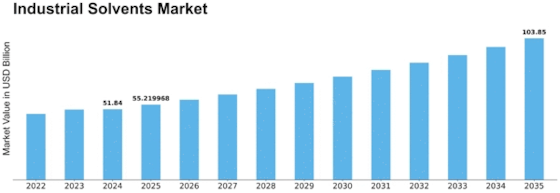
<p>The Industrial Solvents Market was valued at 51.84 USD Billion in 2024.</p>

What is the projected market valuation for the Industrial Solvents Market in 2035?

<p>The market is projected to reach 103.85 USD Billion by 2035.</p>

What is the expected CAGR for the Industrial Solvents Market during the forecast period 2025 - 2035?

<p>The expected CAGR for the Industrial Solvents Market during 2025 - 2035 is 6.52%.</p>

Which segments are included in the Industrial Solvents Market by type?

<p>The market segments by type include Oxygenated Solvents and Hydrocarbon Solvents.</p>

What were the market values for Oxygenated Solvents and Hydrocarbon Solvents in 2024?

<p>In 2024, Oxygenated Solvents were valued at 20.0 USD Billion, while Hydrocarbon Solvents were valued at 31.84 USD Billion.</p>

What are the key end-use industries for industrial solvents?

Key end-use industries include Chemical, Paints &amp; Coatings, Textile, Pulp &amp; Paper, Pharmaceuticals, Oil &amp; Gas, and Other Industrial.

What was the market value for the Paints & Coatings segment in 2024?

The Paints &amp; Coatings segment was valued at 12.0 USD Billion in 2024.

Which companies are considered key players in the Industrial Solvents Market?

Key players include BASF SE, Dow Inc., ExxonMobil Chemical Company, LyondellBasell Industries N.V., and others.

What is the projected growth for the Hydrocarbon Solvents segment by 2035?

The Hydrocarbon Solvents segment is projected to grow to 63.85 USD Billion by 2035.

How does the market valuation for the Textile segment compare to the Pharmaceuticals segment in 2024?

In 2024, the Textile segment was valued at 8.0 USD Billion, while the Pharmaceuticals segment was valued at 7.0 USD Billion.

Market Summary

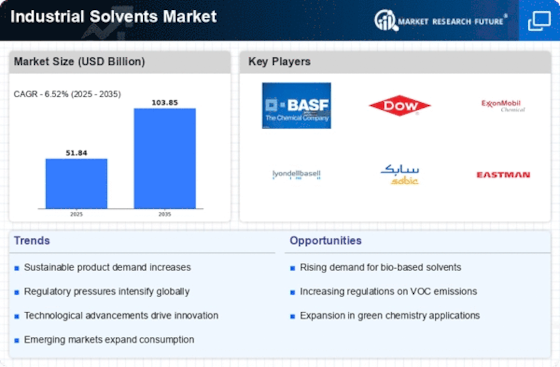
As per Market Research Future analysis, the Industrial Solvents Market Size was estimated at 51.84 USD Billion in 2024. The Industrial Solvents industry is projected to grow from 55.22 USD Billion in 2025 to 103.85 USD Billion by 2035, exhibiting a compound annual growth rate (CAGR) of 6.52% during the forecast period 2025 - 2035

Key Market Trends & Highlights

The Industrial Solvents Market is experiencing a transformative shift towards sustainability and innovation.

  • The market is witnessing a notable shift towards eco-friendly solvents, driven by increasing environmental awareness. Technological advancements in solvent formulation are enhancing product performance and safety across various applications. North America remains the largest market, while Asia-Pacific is recognized as the fastest-growing region in the industrial solvents sector. The rising demand from paints and coatings, along with regulatory compliance, serves as a significant driver for market growth.

Market Size & Forecast

2024 Market Size 51.84 (USD Billion)
2035 Market Size 103.85 (USD Billion)
CAGR (2025 - 2035) 6.52%
Largest Regional Market Share in 2024 Asia Pacific

Major Players

BASF SE (DE), Dow Inc. (US), ExxonMobil Chemical Company (US), LyondellBasell Industries N.V. (NL), SABIC (SA), Eastman Chemical Company (US), Solvay S.A. (BE), Huntsman Corporation (US), Mitsubishi Chemical Corporation (JP)

Market Trends

The Industrial Solvents Market is currently experiencing a dynamic evolution, driven by various factors including regulatory changes, technological advancements, and shifting consumer preferences. The demand for eco-friendly and sustainable solvents is on the rise, as industries increasingly seek to minimize their environmental impact. This trend is prompting manufacturers to innovate and develop greener alternatives, which may lead to a transformation in product offerings. Additionally, the growth of end-user industries such as paints and coatings, adhesives, and pharmaceuticals is likely to further bolster the market, as these sectors require solvents for diverse applications. Moreover, the Industrial Solvents Market appears to be influenced by the ongoing advancements in formulation technologies. These innovations enable the creation of high-performance solvents that meet stringent regulatory standards while maintaining efficiency. As industries adapt to these changes, the market landscape is expected to shift, with a potential increase in the adoption of bio-based solvents. This shift may not only enhance product performance but also align with global sustainability goals, indicating a promising future for the sector.

Shift Towards Eco-Friendly Solvents

There is a noticeable trend towards the adoption of environmentally friendly solvents. Industries are increasingly prioritizing sustainable practices, leading to a demand for bio-based and low-VOC solvents. This shift is likely to reshape product development and influence purchasing decisions.

Technological Advancements in Solvent Formulation

Innovations in formulation technologies are driving the creation of high-performance solvents. These advancements enable manufacturers to produce solvents that comply with stringent regulations while enhancing efficiency, potentially transforming the market landscape.

Growth in End-User Industries

The expansion of key sectors such as paints, coatings, and pharmaceuticals is contributing to the rising demand for industrial solvents. As these industries evolve, their need for diverse solvent applications is expected to further stimulate market growth.

Industrial Solvents Market Market Drivers

Expansion of the Automotive Sector

The Industrial Solvents Market is experiencing growth due to the expansion of the automotive sector. As automotive manufacturers increasingly focus on lightweight materials and advanced coatings, the demand for specialized solvents is on the rise. In 2025, the automotive industry is expected to contribute significantly to the overall market growth, driven by innovations in vehicle design and manufacturing processes. Solvents are essential in various applications, including paint formulations and cleaning agents, which are critical for maintaining production efficiency. This trend suggests that the Industrial Solvents Market will continue to adapt to the specific needs of the automotive sector, potentially leading to the development of new solvent formulations tailored for automotive applications.

Rising Demand for Adhesives and Sealants

The Industrial Solvents Market is witnessing a rising demand for adhesives and sealants, which are integral to various manufacturing processes. The growth in industries such as construction, packaging, and electronics is driving this trend, as these sectors increasingly rely on high-performance adhesives for product assembly and durability. In 2025, the adhesives and sealants segment is anticipated to represent a significant portion of the market, reflecting the ongoing need for efficient bonding solutions. Solvents are crucial in the formulation of these products, influencing their performance and application characteristics. As the Industrial Solvents Market evolves, manufacturers may focus on developing solvent-based adhesives that meet the specific requirements of diverse applications, thereby enhancing market competitiveness.

Increasing Demand from Paints and Coatings

The Industrial Solvents Market experiences a notable surge in demand from the paints and coatings sector. This growth is primarily driven by the rising construction activities and the need for high-quality finishes in residential and commercial buildings. In 2025, the paints and coatings segment is projected to account for a substantial share of the market, reflecting a trend towards enhanced aesthetic appeal and durability. Solvents play a crucial role in the formulation of these products, ensuring optimal application and performance. Furthermore, the shift towards low-VOC and eco-friendly formulations is likely to influence the types of solvents utilized, thereby shaping the market dynamics. As manufacturers adapt to these changes, the Industrial Solvents Market is expected to evolve, presenting opportunities for innovation and sustainability.

Regulatory Compliance and Safety Standards

The Industrial Solvents Market is significantly impacted by stringent regulatory compliance and safety standards. Governments and regulatory bodies are increasingly enforcing regulations aimed at reducing the environmental impact of solvents, particularly those with high VOC content. This regulatory landscape compels manufacturers to innovate and develop safer, more sustainable solvent alternatives. In 2025, the market is likely to witness a shift towards compliant products that meet these evolving standards. Companies that proactively adapt to these regulations may gain a competitive edge, as consumers and industries prioritize safety and environmental responsibility. Consequently, the Industrial Solvents Market is poised for transformation, with a focus on developing solvents that align with both regulatory requirements and market expectations.

Technological Innovations in Solvent Production

Technological innovations in solvent production are reshaping the Industrial Solvents Market. Advances in chemical engineering and formulation technologies are enabling the development of more efficient and environmentally friendly solvents. In 2025, the market is likely to benefit from these innovations, as manufacturers seek to optimize production processes and reduce waste. The introduction of bio-based solvents and advanced recycling techniques may also play a pivotal role in this transformation. As companies invest in research and development, the Industrial Solvents Market is expected to witness a shift towards more sustainable practices, aligning with global trends towards environmental stewardship and resource efficiency.

Market Segment Insights

By Type: Oxygenated Solvents (Largest) vs. Hydrocarbon Solvents (Fastest-Growing)

In the Industrial Solvents Market, Oxygenated Solvents hold the largest market share due to their wide application in coatings, adhesives, and cleaning products. Their ability to dissolve a variety of compounds and compatibility with numerous formulations make them a preferred choice among manufacturers. Conversely, Hydrocarbon Solvents, while currently less prevalent, are gaining traction owing to their low volatility and cost-effectiveness, appealing to various industries looking for efficient solutions.

Oxygenated Solvents: Dominant vs. Hydrocarbon Solvents: Emerging

Oxygenated Solvents are recognized as dominant players in the industrial solvents segment, primarily due to their effectiveness in enhancing product performance and reducing emissions. These solvents, which include alcohols, ketones, and esters, are critical in formulations requiring precise control over evaporation rates. On the other hand, Hydrocarbon Solvents are emerging as a compelling alternative, especially in sectors focused on cost efficiency and performance. With their growing acceptance in various applications, including paints and varnishes, Hydrocarbon Solvents are expected to carve out a larger market share as industries become increasingly sustainable while still prioritizing effectiveness.

By End-Use Industry: Chemical (Largest) vs. Paints & Coatings (Fastest-Growing)

The industrial solvents market is predominantly segmented by end-use industries, with the chemical industry securing the largest market share. This segment is primarily driven by the high demand for solvents in manufacturing <a href="https://www.marketresearchfuture.com/reports/global-chemical-industry-33564">chemical</a> products, which form the backbone of various industrial applications. Following closely is the paints and coatings segment, representing significant growth potential due to the increasing emphasis on eco-friendly and solvent-based products in construction and automotive sectors. In terms of growth trends, the paints and coatings segment is emerging rapidly as a result of heightened investment in infrastructure and construction projects associated with urbanization. Additionally, the pharmaceutical and oil &amp; gas industries are expected to show robust growth, driven by innovations and the ongoing demand for specialized solvents that enhance product efficiency and compliance with regulatory standards.

Chemical: Dominant vs. Paints &amp; Coatings: Emerging

The chemical industry stands as a dominant force in the industrial solvents market, largely due to its extensive use of solvents across various chemical processes. These solvents facilitate reactions, serve as extraction agents, and assist in product formulation, making them indispensable. On the other hand, the <a href="https://www.marketresearchfuture.com/reports/paints-coatings-market-854">paints and coatings</a> segment is classified as an emerging category, driven by a shift towards sustainable practices and increasing environmental regulations. This segment is innovating with water-based and low-VOC solutions that cater to consumer preferences for environmentally friendly products. As construction activities surge globally, the demand for high-performance coatings that utilize specialized industrial solvents is anticipated to grow significantly, positioning the paints and coatings sector as a key player in the market's evolution.

Get more detailed insights about Industrial Solvents Market Research Report - Global Forecast till 2035

Regional Insights

North America : Innovation and Demand Surge

North America is the largest market for industrial solvents, holding approximately 40% of the global share. The region's growth is driven by increasing demand from the automotive, construction, and pharmaceuticals sectors, alongside stringent environmental regulations promoting the use of eco-friendly solvents. The U.S. and Canada are the primary contributors, with a focus on sustainable practices and innovations in solvent formulations. The competitive landscape is characterized by major players such as Dow Inc., ExxonMobil, and BASF, which are investing in R&D to develop advanced solvent solutions. The presence of these key players, along with a robust manufacturing infrastructure, positions North America as a leader in the industrial solvents market. The region's regulatory framework further supports the growth of sustainable solvent applications, enhancing market dynamics.

Europe : Sustainability and Regulation Focus

Europe is the second-largest market for industrial solvents, accounting for approximately 30% of the global market share. The region's growth is significantly influenced by stringent regulations aimed at reducing VOC emissions and promoting sustainable practices. Countries like Germany and France are at the forefront, driving demand for eco-friendly solvents in various industries, including automotive and coatings. The competitive landscape in Europe features key players such as BASF and Solvay, which are actively engaged in developing innovative solvent solutions that comply with EU regulations. The presence of a well-established chemical industry and a strong emphasis on sustainability further enhance the market's growth potential. The European market is also witnessing increased collaboration between manufacturers and regulatory bodies to ensure compliance and promote environmentally friendly products.

Asia-Pacific : Emerging Market Potential

Asia-Pacific is an emerging powerhouse in the industrial solvents market, holding approximately 25% of the global share. The region's growth is driven by rapid industrialization, urbanization, and increasing demand from sectors such as automotive, electronics, and pharmaceuticals. Countries like China and India are leading this growth, supported by favorable government policies and investments in infrastructure development. The competitive landscape is evolving, with both local and international players like Mitsubishi Chemical and SABIC expanding their presence. The region is witnessing a surge in demand for specialty solvents, driven by the need for high-performance products in various applications. Additionally, the growing focus on sustainability is prompting manufacturers to innovate and develop eco-friendly solvent alternatives, further enhancing market dynamics.

Middle East and Africa : Resource-Rich Market Dynamics

The Middle East and Africa region is witnessing significant growth in the industrial solvents market, accounting for approximately 5% of the global share. The growth is primarily driven by industrialization and the expansion of the oil and gas sector, which increases the demand for solvents in various applications. Countries like Saudi Arabia and South Africa are key players in this market, leveraging their natural resources to boost production capabilities. The competitive landscape is characterized by a mix of local and international companies, with key players such as SABIC and Huntsman Corporation leading the market. The region's focus on diversifying its economy and investing in manufacturing infrastructure is expected to further enhance the demand for industrial solvents. Additionally, the growing emphasis on sustainability and environmental regulations is shaping the market dynamics, encouraging the adoption of greener solvent alternatives.

Key Players and Competitive Insights

The Industrial Solvents Market is currently characterized by a dynamic competitive landscape, driven by increasing demand across various sectors such as automotive, pharmaceuticals, and coatings. Key players are actively engaging in strategies that emphasize innovation, sustainability, and regional expansion to enhance their market positions. Companies like BASF SE (Germany) and Dow Inc. (US) are focusing on developing eco-friendly solvent alternatives, which not only cater to regulatory pressures but also align with the growing consumer preference for sustainable products. This collective emphasis on innovation and sustainability among major players is reshaping the competitive environment, fostering a market that is increasingly responsive to environmental concerns.
In terms of business tactics, companies are localizing manufacturing and optimizing supply chains to enhance operational efficiency and reduce costs. The market structure appears moderately fragmented, with several key players holding substantial market shares while also facing competition from smaller, specialized firms. This fragmentation allows for a diverse range of products and innovations, although the influence of major players like ExxonMobil Chemical Company (US) and LyondellBasell Industries N.V. (Netherlands) remains significant in shaping market trends and pricing strategies.
In August 2025, BASF SE (Germany) announced the launch of a new line of bio-based solvents aimed at reducing carbon emissions in industrial applications. This strategic move not only reinforces BASF's commitment to sustainability but also positions the company as a leader in the development of environmentally friendly solutions. The introduction of these bio-based solvents is likely to attract environmentally conscious customers and could potentially lead to increased market share in the growing segment of sustainable products.
In September 2025, Dow Inc. (US) revealed a partnership with a leading technology firm to integrate AI-driven analytics into its supply chain operations. This initiative aims to enhance operational efficiency and responsiveness to market demands. By leveraging advanced analytics, Dow is expected to optimize its production processes and reduce lead times, thereby improving customer satisfaction and reinforcing its competitive edge in the industrial solvents market.
In July 2025, Eastman Chemical Company (US) expanded its production capacity for specialty solvents in response to rising demand in the automotive sector. This expansion not only signifies Eastman's commitment to meeting market needs but also reflects a strategic focus on enhancing its product offerings in high-growth areas. The increased capacity is likely to strengthen Eastman's market position and enable it to better serve its customers in a rapidly evolving industry.
As of October 2025, the competitive trends in the Industrial Solvents Market are increasingly defined by digitalization, sustainability, and the integration of advanced technologies. Strategic alliances are becoming more prevalent, as companies seek to leverage complementary strengths to enhance their market offerings. The shift from price-based competition to a focus on innovation, technology, and supply chain reliability is evident, suggesting that future competitive differentiation will hinge on the ability to deliver sustainable and technologically advanced solutions.

Key Companies in the Industrial Solvents Market include

Industry Developments

Berkem group launched its new range of bio-based alkyd resins, which are all 100% based on renewable raw materials for architectural paints in March 2022 Groupe Berkem has developed a new range of alkyd resins that are made using only renewable raw materials – such as bio-based oils which would otherwise have been considered waste products from organic chemistry processes carried out using a solvent derived completely from biomass that results to at least one environment-friendly solution provided for architectural paints through oxidation process happening through air drying these films providing drying agents available within it thereby promoting even curing globally.

Berger Paints invested $39 million in developing their facility in India last year also painted; thus, increasing paint & coatings sectoral presence within themselves will fuel market demand during the projected period.

Braskem and NXT LEVEL Biochem, a Dutch company, conducted market research on renewable solvents in March 2021. Paints and coatings, agrochemicals, personal care products, and home care products are among the industrial segments whereby these bio-based products are targeted under this cooperation. In Latin America, several joint projects intend to offer greener solvent alternatives manufactured from sustainable raw materials.

BASF launched its new solutions for home care, industrial and institutional cleaning, and personal care at the SEPAWA Congress in Berlin in October 2023. BASF adds more sustainable alternatives to detergents, cleaners and personal care products with enzyme technology, biodegradable polymer, and a O/W emulsifiers.

Solvay announces the manufacture of Rhodiasolv IRIS, a solvent that is eco-friendly and forms part of the next generation. The company made this announcement from its site in Melle (France) in April 2022. The solvent does not burn easily besides being readily degradable or nonvolatile, being used in many applications, including formulating phytosanitary products, paint stripping remover & graffiti & resin clean-up industrial cleaning agrochemistry.

Intended Audience

  • Industrial solvents producers
  • Traders and distributors of industrial solvents
  • Industrial solvents associations
  • Industrial solvents potential investors
  • Raw material suppliers
  • Industrial solvents recycling

Future Outlook

Industrial Solvents Market Future Outlook

The Industrial Solvents Market is projected to grow at a 6.52% CAGR from 2025 to 2035, driven by increasing demand in various industries and advancements in solvent formulations.

New opportunities lie in:

  • Development of bio-based solvents for eco-friendly applications.
  • Expansion into emerging markets with tailored solvent solutions.
  • Investment in advanced recycling technologies for solvent recovery.

By 2035, the market is expected to achieve robust growth, positioning itself as a leader in sustainable industrial solutions.

Market Segmentation

Industrial Solvents Market Type Outlook

  • Oxygenated Solvents
  • Hydrocarbon Solvents

Industrial Solvents Market End-Use Industry Outlook

  • Chemical
  • Paints & Coatings
  • Textile
  • Pulp & Paper
  • Pharmaceuticals
  • Oil & Gas
  • Other Industrial

Report Scope

MARKET SIZE 2024 51.84(USD Billion)
MARKET SIZE 2025 55.22(USD Billion)
MARKET SIZE 2035 103.85(USD Billion)
COMPOUND ANNUAL GROWTH RATE (CAGR) 6.52% (2025 - 2035)
REPORT COVERAGE Revenue Forecast, Competitive Landscape, Growth Factors, and Trends
BASE YEAR 2024
Market Forecast Period 2025 - 2035
Historical Data 2019 - 2024
Market Forecast Units USD Billion
Key Companies Profiled BASF SE (DE), Dow Inc. (US), ExxonMobil Chemical Company (US), LyondellBasell Industries N.V. (NL), SABIC (SA), Eastman Chemical Company (US), Solvay S.A. (BE), Huntsman Corporation (US), Mitsubishi Chemical Corporation (JP)
Segments Covered Market segmentation analysis in progress
Key Market Opportunities Growing demand for bio-based solvents driven by environmental regulations and sustainability initiatives in the Industrial Solvents Market.
Key Market Dynamics Rising demand for eco-friendly solvents drives innovation and regulatory shifts in the industrial solvents market.
Countries Covered North America, Europe, APAC, South America, MEA

FAQs

What is the current valuation of the Industrial Solvents Market as of 2024?

<p>The Industrial Solvents Market was valued at 51.84 USD Billion in 2024.</p>

What is the projected market valuation for the Industrial Solvents Market in 2035?

<p>The market is projected to reach 103.85 USD Billion by 2035.</p>

What is the expected CAGR for the Industrial Solvents Market during the forecast period 2025 - 2035?

<p>The expected CAGR for the Industrial Solvents Market during 2025 - 2035 is 6.52%.</p>

Which segments are included in the Industrial Solvents Market by type?

<p>The market segments by type include Oxygenated Solvents and Hydrocarbon Solvents.</p>

What were the market values for Oxygenated Solvents and Hydrocarbon Solvents in 2024?

<p>In 2024, Oxygenated Solvents were valued at 20.0 USD Billion, while Hydrocarbon Solvents were valued at 31.84 USD Billion.</p>

What are the key end-use industries for industrial solvents?

Key end-use industries include Chemical, Paints &amp; Coatings, Textile, Pulp &amp; Paper, Pharmaceuticals, Oil &amp; Gas, and Other Industrial.

What was the market value for the Paints & Coatings segment in 2024?

The Paints &amp; Coatings segment was valued at 12.0 USD Billion in 2024.

Which companies are considered key players in the Industrial Solvents Market?

Key players include BASF SE, Dow Inc., ExxonMobil Chemical Company, LyondellBasell Industries N.V., and others.

What is the projected growth for the Hydrocarbon Solvents segment by 2035?

The Hydrocarbon Solvents segment is projected to grow to 63.85 USD Billion by 2035.

How does the market valuation for the Textile segment compare to the Pharmaceuticals segment in 2024?

In 2024, the Textile segment was valued at 8.0 USD Billion, while the Pharmaceuticals segment was valued at 7.0 USD Billion.

  1. SECTION I: EXECUTIVE SUMMARY AND KEY HIGHLIGHTS
    1. | 1.1 EXECUTIVE SUMMARY
    2. | | 1.1.1 Market Overview
    3. | | 1.1.2 Key Findings
    4. | | 1.1.3 Market Segmentation
    5. | | 1.1.4 Competitive Landscape
    6. | | 1.1.5 Challenges and Opportunities
    7. | | 1.1.6 Future Outlook
  2. SECTION II: SCOPING, METHODOLOGY AND MARKET STRUCTURE
    1. | 2.1 MARKET INTRODUCTION
    2. | | 2.1.1 Definition
    3. | | 2.1.2 Scope of the study
    4. | | | 2.1.2.1 Research Objective
    5. | | | 2.1.2.2 Assumption
    6. | | | 2.1.2.3 Limitations
    7. | 2.2 RESEARCH METHODOLOGY
    8. | | 2.2.1 Overview
    9. | | 2.2.2 Data Mining
    10. | | 2.2.3 Secondary Research
    11. | | 2.2.4 Primary Research
    12. | | | 2.2.4.1 Primary Interviews and Information Gathering Process
    13. | | | 2.2.4.2 Breakdown of Primary Respondents
    14. | | 2.2.5 Forecasting Model
    15. | | 2.2.6 Market Size Estimation
    16. | | | 2.2.6.1 Bottom-Up Approach
    17. | | | 2.2.6.2 Top-Down Approach
    18. | | 2.2.7 Data Triangulation
    19. | | 2.2.8 Validation
  3. SECTION III: QUALITATIVE ANALYSIS
    1. | 3.1 MARKET DYNAMICS
    2. | | 3.1.1 Overview
    3. | | 3.1.2 Drivers
    4. | | 3.1.3 Restraints
    5. | | 3.1.4 Opportunities
    6. | 3.2 MARKET FACTOR ANALYSIS
    7. | | 3.2.1 Value chain Analysis
    8. | | 3.2.2 Porter's Five Forces Analysis
    9. | | | 3.2.2.1 Bargaining Power of Suppliers
    10. | | | 3.2.2.2 Bargaining Power of Buyers
    11. | | | 3.2.2.3 Threat of New Entrants
    12. | | | 3.2.2.4 Threat of Substitutes
    13. | | | 3.2.2.5 Intensity of Rivalry
    14. | | 3.2.3 COVID-19 Impact Analysis
    15. | | | 3.2.3.1 Market Impact Analysis
    16. | | | 3.2.3.2 Regional Impact
    17. | | | 3.2.3.3 Opportunity and Threat Analysis
  4. SECTION IV: QUANTITATIVE ANALYSIS
    1. | 4.1 Chemicals and Materials, BY Type (USD Billion)
    2. | | 4.1.1 Oxygenated Solvents
    3. | | 4.1.2 Hydrocarbon Solvents
    4. | 4.2 Chemicals and Materials, BY End-Use Industry (USD Billion)
    5. | | 4.2.1 Chemical
    6. | | 4.2.2 Paints & Coatings
    7. | | 4.2.3 Textile
    8. | | 4.2.4 Pulp & Paper
    9. | | 4.2.5 Pharmaceuticals
    10. | | 4.2.6 Oil & Gas
    11. | | 4.2.7 Other Industrial
    12. | 4.3 Chemicals and Materials, BY Region (USD Billion)
    13. | | 4.3.1 North America
    14. | | | 4.3.1.1 US
    15. | | | 4.3.1.2 Canada
    16. | | 4.3.2 Europe
    17. | | | 4.3.2.1 Germany
    18. | | | 4.3.2.2 UK
    19. | | | 4.3.2.3 France
    20. | | | 4.3.2.4 Russia
    21. | | | 4.3.2.5 Italy
    22. | | | 4.3.2.6 Spain
    23. | | | 4.3.2.7 Rest of Europe
    24. | | 4.3.3 APAC
    25. | | | 4.3.3.1 China
    26. | | | 4.3.3.2 India
    27. | | | 4.3.3.3 Japan
    28. | | | 4.3.3.4 South Korea
    29. | | | 4.3.3.5 Malaysia
    30. | | | 4.3.3.6 Thailand
    31. | | | 4.3.3.7 Indonesia
    32. | | | 4.3.3.8 Rest of APAC
    33. | | 4.3.4 South America
    34. | | | 4.3.4.1 Brazil
    35. | | | 4.3.4.2 Mexico
    36. | | | 4.3.4.3 Argentina
    37. | | | 4.3.4.4 Rest of South America
    38. | | 4.3.5 MEA
    39. | | | 4.3.5.1 GCC Countries
    40. | | | 4.3.5.2 South Africa
    41. | | | 4.3.5.3 Rest of MEA
  5. SECTION V: COMPETITIVE ANALYSIS
    1. | 5.1 Competitive Landscape
    2. | | 5.1.1 Overview
    3. | | 5.1.2 Competitive Analysis
    4. | | 5.1.3 Market share Analysis
    5. | | 5.1.4 Major Growth Strategy in the Chemicals and Materials
    6. | | 5.1.5 Competitive Benchmarking
    7. | | 5.1.6 Leading Players in Terms of Number of Developments in the Chemicals and Materials
    8. | | 5.1.7 Key developments and growth strategies
    9. | | | 5.1.7.1 New Product Launch/Service Deployment
    10. | | | 5.1.7.2 Merger & Acquisitions
    11. | | | 5.1.7.3 Joint Ventures
    12. | | 5.1.8 Major Players Financial Matrix
    13. | | | 5.1.8.1 Sales and Operating Income
    14. | | | 5.1.8.2 Major Players R&D Expenditure. 2023
    15. | 5.2 Company Profiles
    16. | | 5.2.1 BASF SE (DE)
    17. | | | 5.2.1.1 Financial Overview
    18. | | | 5.2.1.2 Products Offered
    19. | | | 5.2.1.3 Key Developments
    20. | | | 5.2.1.4 SWOT Analysis
    21. | | | 5.2.1.5 Key Strategies
    22. | | 5.2.2 Dow Inc. (US)
    23. | | | 5.2.2.1 Financial Overview
    24. | | | 5.2.2.2 Products Offered
    25. | | | 5.2.2.3 Key Developments
    26. | | | 5.2.2.4 SWOT Analysis
    27. | | | 5.2.2.5 Key Strategies
    28. | | 5.2.3 ExxonMobil Chemical Company (US)
    29. | | | 5.2.3.1 Financial Overview
    30. | | | 5.2.3.2 Products Offered
    31. | | | 5.2.3.3 Key Developments
    32. | | | 5.2.3.4 SWOT Analysis
    33. | | | 5.2.3.5 Key Strategies
    34. | | 5.2.4 LyondellBasell Industries N.V. (NL)
    35. | | | 5.2.4.1 Financial Overview
    36. | | | 5.2.4.2 Products Offered
    37. | | | 5.2.4.3 Key Developments
    38. | | | 5.2.4.4 SWOT Analysis
    39. | | | 5.2.4.5 Key Strategies
    40. | | 5.2.5 SABIC (SA)
    41. | | | 5.2.5.1 Financial Overview
    42. | | | 5.2.5.2 Products Offered
    43. | | | 5.2.5.3 Key Developments
    44. | | | 5.2.5.4 SWOT Analysis
    45. | | | 5.2.5.5 Key Strategies
    46. | | 5.2.6 Eastman Chemical Company (US)
    47. | | | 5.2.6.1 Financial Overview
    48. | | | 5.2.6.2 Products Offered
    49. | | | 5.2.6.3 Key Developments
    50. | | | 5.2.6.4 SWOT Analysis
    51. | | | 5.2.6.5 Key Strategies
    52. | | 5.2.7 Solvay S.A. (BE)
    53. | | | 5.2.7.1 Financial Overview
    54. | | | 5.2.7.2 Products Offered
    55. | | | 5.2.7.3 Key Developments
    56. | | | 5.2.7.4 SWOT Analysis
    57. | | | 5.2.7.5 Key Strategies
    58. | | 5.2.8 Huntsman Corporation (US)
    59. | | | 5.2.8.1 Financial Overview
    60. | | | 5.2.8.2 Products Offered
    61. | | | 5.2.8.3 Key Developments
    62. | | | 5.2.8.4 SWOT Analysis
    63. | | | 5.2.8.5 Key Strategies
    64. | | 5.2.9 Mitsubishi Chemical Corporation (JP)
    65. | | | 5.2.9.1 Financial Overview
    66. | | | 5.2.9.2 Products Offered
    67. | | | 5.2.9.3 Key Developments
    68. | | | 5.2.9.4 SWOT Analysis
    69. | | | 5.2.9.5 Key Strategies
    70. | 5.3 Appendix
    71. | | 5.3.1 References
    72. | | 5.3.2 Related Reports
  6. LIST OF FIGURES
    1. | 6.1 MARKET SYNOPSIS
    2. | 6.2 NORTH AMERICA MARKET ANALYSIS
    3. | 6.3 US MARKET ANALYSIS BY TYPE
    4. | 6.4 US MARKET ANALYSIS BY END-USE INDUSTRY
    5. | 6.5 CANADA MARKET ANALYSIS BY TYPE
    6. | 6.6 CANADA MARKET ANALYSIS BY END-USE INDUSTRY
    7. | 6.7 EUROPE MARKET ANALYSIS
    8. | 6.8 GERMANY MARKET ANALYSIS BY TYPE
    9. | 6.9 GERMANY MARKET ANALYSIS BY END-USE INDUSTRY
    10. | 6.10 UK MARKET ANALYSIS BY TYPE
    11. | 6.11 UK MARKET ANALYSIS BY END-USE INDUSTRY
    12. | 6.12 FRANCE MARKET ANALYSIS BY TYPE
    13. | 6.13 FRANCE MARKET ANALYSIS BY END-USE INDUSTRY
    14. | 6.14 RUSSIA MARKET ANALYSIS BY TYPE
    15. | 6.15 RUSSIA MARKET ANALYSIS BY END-USE INDUSTRY
    16. | 6.16 ITALY MARKET ANALYSIS BY TYPE
    17. | 6.17 ITALY MARKET ANALYSIS BY END-USE INDUSTRY
    18. | 6.18 SPAIN MARKET ANALYSIS BY TYPE
    19. | 6.19 SPAIN MARKET ANALYSIS BY END-USE INDUSTRY
    20. | 6.20 REST OF EUROPE MARKET ANALYSIS BY TYPE
    21. | 6.21 REST OF EUROPE MARKET ANALYSIS BY END-USE INDUSTRY
    22. | 6.22 APAC MARKET ANALYSIS
    23. | 6.23 CHINA MARKET ANALYSIS BY TYPE
    24. | 6.24 CHINA MARKET ANALYSIS BY END-USE INDUSTRY
    25. | 6.25 INDIA MARKET ANALYSIS BY TYPE
    26. | 6.26 INDIA MARKET ANALYSIS BY END-USE INDUSTRY
    27. | 6.27 JAPAN MARKET ANALYSIS BY TYPE
    28. | 6.28 JAPAN MARKET ANALYSIS BY END-USE INDUSTRY
    29. | 6.29 SOUTH KOREA MARKET ANALYSIS BY TYPE
    30. | 6.30 SOUTH KOREA MARKET ANALYSIS BY END-USE INDUSTRY
    31. | 6.31 MALAYSIA MARKET ANALYSIS BY TYPE
    32. | 6.32 MALAYSIA MARKET ANALYSIS BY END-USE INDUSTRY
    33. | 6.33 THAILAND MARKET ANALYSIS BY TYPE
    34. | 6.34 THAILAND MARKET ANALYSIS BY END-USE INDUSTRY
    35. | 6.35 INDONESIA MARKET ANALYSIS BY TYPE
    36. | 6.36 INDONESIA MARKET ANALYSIS BY END-USE INDUSTRY
    37. | 6.37 REST OF APAC MARKET ANALYSIS BY TYPE
    38. | 6.38 REST OF APAC MARKET ANALYSIS BY END-USE INDUSTRY
    39. | 6.39 SOUTH AMERICA MARKET ANALYSIS
    40. | 6.40 BRAZIL MARKET ANALYSIS BY TYPE
    41. | 6.41 BRAZIL MARKET ANALYSIS BY END-USE INDUSTRY
    42. | 6.42 MEXICO MARKET ANALYSIS BY TYPE
    43. | 6.43 MEXICO MARKET ANALYSIS BY END-USE INDUSTRY
    44. | 6.44 ARGENTINA MARKET ANALYSIS BY TYPE
    45. | 6.45 ARGENTINA MARKET ANALYSIS BY END-USE INDUSTRY
    46. | 6.46 REST OF SOUTH AMERICA MARKET ANALYSIS BY TYPE
    47. | 6.47 REST OF SOUTH AMERICA MARKET ANALYSIS BY END-USE INDUSTRY
    48. | 6.48 MEA MARKET ANALYSIS
    49. | 6.49 GCC COUNTRIES MARKET ANALYSIS BY TYPE
    50. | 6.50 GCC COUNTRIES MARKET ANALYSIS BY END-USE INDUSTRY
    51. | 6.51 SOUTH AFRICA MARKET ANALYSIS BY TYPE
    52. | 6.52 SOUTH AFRICA MARKET ANALYSIS BY END-USE INDUSTRY
    53. | 6.53 REST OF MEA MARKET ANALYSIS BY TYPE
    54. | 6.54 REST OF MEA MARKET ANALYSIS BY END-USE INDUSTRY
    55. | 6.55 KEY BUYING CRITERIA OF CHEMICALS AND MATERIALS
    56. | 6.56 RESEARCH PROCESS OF MRFR
    57. | 6.57 DRO ANALYSIS OF CHEMICALS AND MATERIALS
    58. | 6.58 DRIVERS IMPACT ANALYSIS: CHEMICALS AND MATERIALS
    59. | 6.59 RESTRAINTS IMPACT ANALYSIS: CHEMICALS AND MATERIALS
    60. | 6.60 SUPPLY / VALUE CHAIN: CHEMICALS AND MATERIALS
    61. | 6.61 CHEMICALS AND MATERIALS, BY TYPE, 2024 (% SHARE)
    62. | 6.62 CHEMICALS AND MATERIALS, BY TYPE, 2024 TO 2035 (USD Billion)
    63. | 6.63 CHEMICALS AND MATERIALS, BY END-USE INDUSTRY, 2024 (% SHARE)
    64. | 6.64 CHEMICALS AND MATERIALS, BY END-USE INDUSTRY, 2024 TO 2035 (USD Billion)
    65. | 6.65 BENCHMARKING OF MAJOR COMPETITORS
  7. LIST OF TABLES
    1. | 7.1 LIST OF ASSUMPTIONS
    2. | | 7.1.1
    3. | 7.2 North America MARKET SIZE ESTIMATES; FORECAST
    4. | | 7.2.1 BY TYPE, 2025-2035 (USD Billion)
    5. | | 7.2.2 BY END-USE INDUSTRY, 2025-2035 (USD Billion)
    6. | 7.3 US MARKET SIZE ESTIMATES; FORECAST
    7. | | 7.3.1 BY TYPE, 2025-2035 (USD Billion)
    8. | | 7.3.2 BY END-USE INDUSTRY, 2025-2035 (USD Billion)
    9. | 7.4 Canada MARKET SIZE ESTIMATES; FORECAST
    10. | | 7.4.1 BY TYPE, 2025-2035 (USD Billion)
    11. | | 7.4.2 BY END-USE INDUSTRY, 2025-2035 (USD Billion)
    12. | 7.5 Europe MARKET SIZE ESTIMATES; FORECAST
    13. | | 7.5.1 BY TYPE, 2025-2035 (USD Billion)
    14. | | 7.5.2 BY END-USE INDUSTRY, 2025-2035 (USD Billion)
    15. | 7.6 Germany MARKET SIZE ESTIMATES; FORECAST
    16. | | 7.6.1 BY TYPE, 2025-2035 (USD Billion)
    17. | | 7.6.2 BY END-USE INDUSTRY, 2025-2035 (USD Billion)
    18. | 7.7 UK MARKET SIZE ESTIMATES; FORECAST
    19. | | 7.7.1 BY TYPE, 2025-2035 (USD Billion)
    20. | | 7.7.2 BY END-USE INDUSTRY, 2025-2035 (USD Billion)
    21. | 7.8 France MARKET SIZE ESTIMATES; FORECAST
    22. | | 7.8.1 BY TYPE, 2025-2035 (USD Billion)
    23. | | 7.8.2 BY END-USE INDUSTRY, 2025-2035 (USD Billion)
    24. | 7.9 Russia MARKET SIZE ESTIMATES; FORECAST
    25. | | 7.9.1 BY TYPE, 2025-2035 (USD Billion)
    26. | | 7.9.2 BY END-USE INDUSTRY, 2025-2035 (USD Billion)
    27. | 7.10 Italy MARKET SIZE ESTIMATES; FORECAST
    28. | | 7.10.1 BY TYPE, 2025-2035 (USD Billion)
    29. | | 7.10.2 BY END-USE INDUSTRY, 2025-2035 (USD Billion)
    30. | 7.11 Spain MARKET SIZE ESTIMATES; FORECAST
    31. | | 7.11.1 BY TYPE, 2025-2035 (USD Billion)
    32. | | 7.11.2 BY END-USE INDUSTRY, 2025-2035 (USD Billion)
    33. | 7.12 Rest of Europe MARKET SIZE ESTIMATES; FORECAST
    34. | | 7.12.1 BY TYPE, 2025-2035 (USD Billion)
    35. | | 7.12.2 BY END-USE INDUSTRY, 2025-2035 (USD Billion)
    36. | 7.13 APAC MARKET SIZE ESTIMATES; FORECAST
    37. | | 7.13.1 BY TYPE, 2025-2035 (USD Billion)
    38. | | 7.13.2 BY END-USE INDUSTRY, 2025-2035 (USD Billion)
    39. | 7.14 China MARKET SIZE ESTIMATES; FORECAST
    40. | | 7.14.1 BY TYPE, 2025-2035 (USD Billion)
    41. | | 7.14.2 BY END-USE INDUSTRY, 2025-2035 (USD Billion)
    42. | 7.15 India MARKET SIZE ESTIMATES; FORECAST
    43. | | 7.15.1 BY TYPE, 2025-2035 (USD Billion)
    44. | | 7.15.2 BY END-USE INDUSTRY, 2025-2035 (USD Billion)
    45. | 7.16 Japan MARKET SIZE ESTIMATES; FORECAST
    46. | | 7.16.1 BY TYPE, 2025-2035 (USD Billion)
    47. | | 7.16.2 BY END-USE INDUSTRY, 2025-2035 (USD Billion)
    48. | 7.17 South Korea MARKET SIZE ESTIMATES; FORECAST
    49. | | 7.17.1 BY TYPE, 2025-2035 (USD Billion)
    50. | | 7.17.2 BY END-USE INDUSTRY, 2025-2035 (USD Billion)
    51. | 7.18 Malaysia MARKET SIZE ESTIMATES; FORECAST
    52. | | 7.18.1 BY TYPE, 2025-2035 (USD Billion)
    53. | | 7.18.2 BY END-USE INDUSTRY, 2025-2035 (USD Billion)
    54. | 7.19 Thailand MARKET SIZE ESTIMATES; FORECAST
    55. | | 7.19.1 BY TYPE, 2025-2035 (USD Billion)
    56. | | 7.19.2 BY END-USE INDUSTRY, 2025-2035 (USD Billion)
    57. | 7.20 Indonesia MARKET SIZE ESTIMATES; FORECAST
    58. | | 7.20.1 BY TYPE, 2025-2035 (USD Billion)
    59. | | 7.20.2 BY END-USE INDUSTRY, 2025-2035 (USD Billion)
    60. | 7.21 Rest of APAC MARKET SIZE ESTIMATES; FORECAST
    61. | | 7.21.1 BY TYPE, 2025-2035 (USD Billion)
    62. | | 7.21.2 BY END-USE INDUSTRY, 2025-2035 (USD Billion)
    63. | 7.22 South America MARKET SIZE ESTIMATES; FORECAST
    64. | | 7.22.1 BY TYPE, 2025-2035 (USD Billion)
    65. | | 7.22.2 BY END-USE INDUSTRY, 2025-2035 (USD Billion)
    66. | 7.23 Brazil MARKET SIZE ESTIMATES; FORECAST
    67. | | 7.23.1 BY TYPE, 2025-2035 (USD Billion)
    68. | | 7.23.2 BY END-USE INDUSTRY, 2025-2035 (USD Billion)
    69. | 7.24 Mexico MARKET SIZE ESTIMATES; FORECAST
    70. | | 7.24.1 BY TYPE, 2025-2035 (USD Billion)
    71. | | 7.24.2 BY END-USE INDUSTRY, 2025-2035 (USD Billion)
    72. | 7.25 Argentina MARKET SIZE ESTIMATES; FORECAST
    73. | | 7.25.1 BY TYPE, 2025-2035 (USD Billion)
    74. | | 7.25.2 BY END-USE INDUSTRY, 2025-2035 (USD Billion)
    75. | 7.26 Rest of South America MARKET SIZE ESTIMATES; FORECAST
    76. | | 7.26.1 BY TYPE, 2025-2035 (USD Billion)
    77. | | 7.26.2 BY END-USE INDUSTRY, 2025-2035 (USD Billion)
    78. | 7.27 MEA MARKET SIZE ESTIMATES; FORECAST
    79. | | 7.27.1 BY TYPE, 2025-2035 (USD Billion)
    80. | | 7.27.2 BY END-USE INDUSTRY, 2025-2035 (USD Billion)
    81. | 7.28 GCC Countries MARKET SIZE ESTIMATES; FORECAST
    82. | | 7.28.1 BY TYPE, 2025-2035 (USD Billion)
    83. | | 7.28.2 BY END-USE INDUSTRY, 2025-2035 (USD Billion)
    84. | 7.29 South Africa MARKET SIZE ESTIMATES; FORECAST
    85. | | 7.29.1 BY TYPE, 2025-2035 (USD Billion)
    86. | | 7.29.2 BY END-USE INDUSTRY, 2025-2035 (USD Billion)
    87. | 7.30 Rest of MEA MARKET SIZE ESTIMATES; FORECAST
    88. | | 7.30.1 BY TYPE, 2025-2035 (USD Billion)
    89. | | 7.30.2 BY END-USE INDUSTRY, 2025-2035 (USD Billion)
    90. | 7.31 PRODUCT LAUNCH/PRODUCT DEVELOPMENT/APPROVAL
    91. | | 7.31.1
    92. | 7.32 ACQUISITION/PARTNERSHIP
    93. | | 7.32.1

Chemicals and Materials Market Segmentation

Chemicals and Materials By Type (USD Billion, 2025-2035)

  • Oxygenated Solvents
  • Hydrocarbon Solvents

Chemicals and Materials By End-Use Industry (USD Billion, 2025-2035)

  • Chemical
  • Paints & Coatings
  • Textile
  • Pulp & Paper
  • Pharmaceuticals
  • Oil & Gas
  • Other Industrial
Infographic

Free Sample Request

Kindly complete the form below to receive a free sample of this Report

Get Free Sample

Customer Strories

Compare Licence

×
Features License Type
Single User Multiuser License Enterprise User
Price $4,950 $5,950 $7,250
Maximum User Access Limit 1 User Upto 10 Users Unrestricted Access Throughout the Organization
Free Customization
Direct Access to Analyst
Deliverable Format
Platform Access
Discount on Next Purchase 10% 15% 15%
Printable Versions