Rising Cybersecurity Threats
The escalating frequency and sophistication of cyber threats serve as a critical driver for the Hyperautomation in Security Market. Organizations are increasingly recognizing the need for robust security measures to protect sensitive data and maintain operational integrity. Reports indicate that cyberattacks have surged, with a notable increase in ransomware incidents and data breaches. This alarming trend compels businesses to invest in hyperautomation solutions that can provide real-time monitoring and automated responses to potential threats. The market is expected to respond to this urgency, with a projected increase in investments in automated security systems. As organizations strive to safeguard their assets, the demand for hyperautomation technologies that can adapt to emerging threats is likely to grow, further propelling the market forward.
Integration of Advanced Technologies
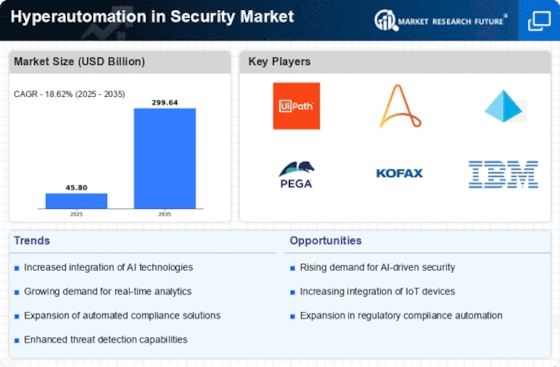
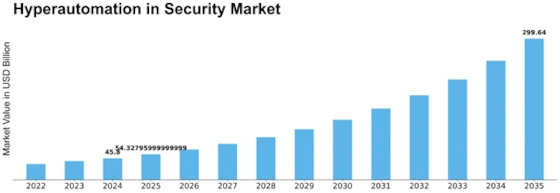
The integration of advanced technologies such as artificial intelligence and machine learning is a pivotal driver in the Hyperautomation in Security Market. These technologies enhance the ability to analyze vast amounts of data in real-time, allowing for quicker threat detection and response. As organizations increasingly adopt these technologies, the market is projected to grow significantly, with estimates suggesting a compound annual growth rate of over 25% in the coming years. This integration not only streamlines security operations but also reduces human error, thereby improving overall security posture. Furthermore, the ability to automate repetitive tasks allows security personnel to focus on more complex issues, thereby enhancing operational efficiency. The demand for such advanced solutions is likely to continue rising as cyber threats evolve and become more sophisticated.
Increased Demand for Real-Time Analytics
The growing demand for real-time analytics is a prominent driver in the Hyperautomation in Security Market. Organizations are increasingly recognizing the importance of immediate insights into security threats and vulnerabilities. Real-time analytics enable security teams to respond swiftly to incidents, thereby minimizing potential damage. The market is witnessing a surge in the adoption of hyperautomation solutions that incorporate advanced analytics capabilities, allowing for proactive threat detection and response. Industry forecasts indicate that the market for real-time analytics in security is expected to grow significantly, driven by the need for timely decision-making in an increasingly complex threat landscape. As organizations prioritize agility and responsiveness in their security operations, the demand for hyperautomation technologies that facilitate real-time insights is likely to expand.
Cost Efficiency and Resource Optimization
Cost efficiency and resource optimization are emerging as vital drivers in the Hyperautomation in Security Market. Organizations are increasingly seeking ways to reduce operational costs while enhancing security measures. Hyperautomation technologies enable businesses to automate routine security tasks, thereby freeing up valuable human resources for more strategic initiatives. This shift not only leads to cost savings but also improves the overall effectiveness of security operations. Market analyses suggest that companies implementing hyperautomation solutions can achieve up to a 30% reduction in operational costs. As organizations strive to balance budget constraints with the need for robust security, the adoption of hyperautomation technologies is likely to accelerate, driving market growth. The potential for improved resource allocation and enhanced security outcomes positions hyperautomation as a key component in modern security strategies.
Focus on Compliance and Regulatory Standards
The emphasis on compliance with regulatory standards is a significant driver in the Hyperautomation in Security Market. Organizations are under increasing pressure to adhere to various regulations, such as GDPR and HIPAA, which mandate stringent data protection measures. Non-compliance can result in severe penalties, prompting businesses to seek automated solutions that ensure compliance while minimizing operational disruptions. The market for hyperautomation in security is expected to expand as companies invest in technologies that facilitate compliance monitoring and reporting. This trend is likely to be reinforced by the growing awareness of data privacy issues among consumers, which further incentivizes organizations to adopt automated compliance solutions. As regulatory landscapes evolve, the demand for hyperautomation technologies that can adapt to these changes is anticipated to increase.























Leave a Comment