Request Free Sample ×

Kindly complete the form below to receive a free sample of this Report

* Please use a valid business email

Leading companies partner with us for data-driven Insights

clients tt-cursor
Hero Background

Endoprosthesis Market

ID: MRFR/MED/9175-CR
736 Pages
Rahul Gotadki
August 2021

Endoprosthesis Market Size, Growth Research Report By Product (Knee, Hip, Shoulder, Elbow, Finger/Hand, Ankle/Foot), By Knee (Primary, Partial, Revision Knee Replacement, Tumor, Custom Made), By Hip (Primary, Partial, Revision Hip Replacement, Tumor, Custom Made), By Shoulder (Primary, Revision Shoulder Replacement, Tumor, Custom Made), By Elbow (Total Elbow, Radial Head Replacement, Tumor, Custom Made), And By Region (North America, Europe, Asia-Pacific, And Rest Of The World) – Competitor Industry Analysis and Trends Forecast Till 2035

Share:
Download PDF ×

We do not share your information with anyone. However, we may send you emails based on your report interest from time to time. You may contact us at any time to opt-out.

Endoprosthesis Market Infographic
Purchase Options

Endoprosthesis Market Summary

As per MRFR analysis, the Endoprosthesis Market Size was estimated at 11.38 USD Billion in 2024. The Endoprosthesis industry is projected to grow from 12.65 USD Billion in 2025 to 36.58 USD Billion by 2035, exhibiting a compound annual growth rate (CAGR) of 11.2% during the forecast period 2025 - 2035.

Key Market Trends & Highlights

The Endoprosthesis Market is poised for substantial growth driven by technological advancements and increasing healthcare demands.

  • Technological advancements are enhancing the efficacy and safety of endoprostheses, particularly in the orthopedic segment.
  • Minimally invasive techniques are gaining traction, leading to quicker recovery times and reduced hospital stays in both orthopedic and cardiovascular applications.
  • North America remains the largest market, while the Asia-Pacific region is emerging as the fastest-growing area for endoprosthesis adoption.
  • The rising incidence of chronic diseases and the increasing geriatric population are key drivers propelling market expansion.

Market Size & Forecast

2024 Market Size 11.38 (USD Billion)
2035 Market Size 36.58 (USD Billion)
CAGR (2025 - 2035) 11.2%

Major Players

Stryker (US), Zimmer Biomet (US), DePuy Synthes (US), Smith & Nephew (GB), Medtronic (US), Boston Scientific (US), B. Braun (DE), NuVasive (US), Aesculap (DE)

Our Impact
Enabled $4.3B Revenue Impact for Fortune 500 and Leading Multinationals
Partnering with 2000+ Global Organizations Each Year
30K+ Citations by Top-Tier Firms in the Industry

Endoprosthesis Market Trends

The Endoprosthesis Market is currently experiencing a transformative phase characterized by advancements in technology and an increasing demand for innovative solutions. The integration of smart materials and biocompatible substances is reshaping product offerings, enhancing patient outcomes, and improving the overall effectiveness of endoprosthetic devices. Furthermore, the growing prevalence of chronic diseases and an aging population are driving the need for joint replacements and other prosthetic solutions, thereby expanding the market's reach. Regulatory bodies are also playing a crucial role in ensuring safety and efficacy, which may influence market dynamics and product development strategies. In addition, the Endoprosthesis Market appears to be witnessing a shift towards minimally invasive surgical techniques. These approaches not only reduce recovery times but also minimize complications, making them more appealing to both patients and healthcare providers. The rise of telemedicine and digital health solutions may further enhance patient monitoring and follow-up care, potentially leading to better long-term outcomes. As the market evolves, stakeholders must remain vigilant to emerging trends and adapt their strategies accordingly to maintain competitiveness and meet the changing needs of healthcare systems.

Technological Advancements

The Endoprosthesis Market is increasingly influenced by innovations in materials and design. New technologies are enabling the development of lighter, stronger, and more biocompatible prosthetic devices, which may enhance patient comfort and longevity.

Minimally Invasive Techniques

There is a noticeable trend towards minimally invasive surgical methods within the Endoprosthesis Market. These techniques are associated with reduced recovery times and lower complication rates, making them preferable for many patients.

Regulatory Influence

Regulatory frameworks are evolving to ensure the safety and efficacy of endoprosthetic devices. This regulatory scrutiny may drive manufacturers to prioritize quality and compliance, potentially reshaping product development and market strategies.

Endoprosthesis Market Drivers

Rising Incidence of Chronic Diseases

The Global Endoprosthesis Market Industry experiences a notable surge due to the increasing prevalence of chronic diseases such as osteoarthritis and cardiovascular disorders. As populations age, the demand for joint replacements and vascular implants escalates. For instance, the World Health Organization indicates that by 2024, the market is projected to reach 11.4 USD Billion, reflecting a growing need for endoprosthetic solutions. This trend suggests that healthcare systems worldwide are prioritizing advanced surgical interventions, thereby driving innovation and investment in the endoprosthesis sector.

Market Segment Insights

By Application: Orthopedic (Largest) vs. Cardiovascular (Fastest-Growing)

In the Endoprosthesis Market, the application segments exhibit a distinct distribution of market share, with Orthopedic endoprostheses commanding the largest portion, attributable to an aging global population and rising incidence of orthopedic disorders. Other segments such as Cardiovascular and Dental are also significant, reflecting the diverse applications of endoprostheses across medical fields. The Neurological and Ophthalmic segments, while smaller, showcase their specialized market presence, emphasizing advancements in technology and targeted interventions in healthcare. As the medical field continues to evolve, the focus on innovative solutions has led to impressive growth trends across these segments. Specifically, the Cardiovascular segment is recognized for its rapid expansion, largely due to advancements in minimally invasive procedures and increased prevalence of cardiovascular diseases. The Orthopedic segment remains robust; however, emerging surgical techniques and an amplified emphasis on patient-centered healthcare positively impact growth dynamics across all segments, creating an interdependent relationship driven by technological advancements.

Orthopedic (Dominant) vs. Cardiovascular (Emerging)

The Orthopedic endoprosthesis segment stands out as a dominant force in the market, driven by its extensive applications in joint replacements and fracture fixation. This segment thrives on technological advancements that enhance surgical outcomes and recovery times. Meanwhile, the Cardiovascular segment is emerging rapidly, propelled by innovations in stenting and grafting that accommodate a higher patient volume with complex heart conditions. While Orthopedic implants are traditionally favored due to their established history and reliable performance, the rapid growth in cardiovascular interventions signifies a shift in focus towards areas that require a quick response to increasing cardiovascular health challenges. Both segments exemplify vital trends: long-term effectiveness in Orthopedic solutions and cutting-edge technology in Cardiovascular care, shaping the future landscape of the Endoprosthesis Market.

By Material Type: Metal (Largest) vs. Ceramic (Fastest-Growing)

The Endoprosthesis Market showcases a distinct distribution of market share among various material types used in implants. Metal remains the largest segment, dominating the market due to its strength, durability, and established performance across numerous orthopedic applications. Following metal, ceramic has emerged as a popular option, capturing a significant share thanks to its biocompatibility and aesthetic appeal that are highly valued in hip and knee replacements.

Metal (Dominant) vs. Ceramic (Emerging)

Metal endoprostheses are known for their excellent mechanical strength and fatigue resistance, making them ideal for load-bearing applications. They are widely used in various orthopedic implants, including hip, knee, and spinal applications. Although metal currently leads the market, ceramics are gaining traction due to their advantages such as lower wear rates and enhanced biocompatibility, leading to lower rates of inflammation and improved patient outcomes. As the demand for minimally invasive procedures increases, the use of ceramic materials in endoprostheses is expected to rise, positioning them as an emerging alternative to traditional metal implants.

By End Use: Hospitals (Largest) vs. Ambulatory Surgical Centers (Fastest-Growing)

The Endoprosthesis Market is notably segmented by end use, where hospitals emerge as the largest segment, commanding a significant market share, owing to their comprehensive surgical facilities and wide patient base. Ambulatory Surgical Centers are rapidly gaining traction, reflecting a trend towards outpatient procedures and a preference for less invasive surgeries. These centers are responding to patient demands for convenience and lower healthcare costs, enhancing their market presence.

Hospitals (Dominant) vs. Ambulatory Surgical Centers (Emerging)

Hospitals are siting of choice for the significant majority of endoprosthesis procedures due to their extensive resources, experienced surgical teams, and supportive care environments. The dominant nature of this segment stems from its ability to cater to complex surgeries requiring comprehensive post-operative care. In contrast, Ambulatory Surgical Centers are emerging as popular alternatives, mainly due to their efficiency and cost-effectiveness, specifically designed for outpatient procedures. They are attracting patients seeking quicker recovery times and lower costs, positioning themselves as a competitive force in the endoprosthesis landscape.

By Product Type: Joint Replacement (Largest) vs. Stents (Fastest-Growing)

In the Endoprosthesis Market, the segmentation by product type reveals that joint replacement devices account for the largest share, primarily due to their widespread use and the rising incidence of joint-related disorders. Stents follow as a significant segment but are recognized as the fastest-growing due to increased adoption influenced by rising cardiovascular diseases. The various segments such as bone grafts and dental implants are also important, but they hold comparatively smaller shares in the market landscape.

Joint Replacement (Dominant) vs. Stents (Emerging)

Joint replacement implants have solidified their position as the dominant product type in the Endoprosthesis Market, driven by an aging population and greater awareness of joint health. They are widely used for hip and knee replacements, contributing to their substantial market presence. In contrast, stents represent an emerging field, characterized by rapid technological advancements and increased procedural adoption in cardiac and vascular interventions. While joint replacements prioritize structural stability and longevity, stents focus on minimally invasive solutions, catering to a growing demand for effective treatment of arterial blockages, thus differing significantly in their application and market dynamics.

Get more detailed insights about Endoprosthesis Market

Regional Insights

North America : Market Leader in Endoprosthesis

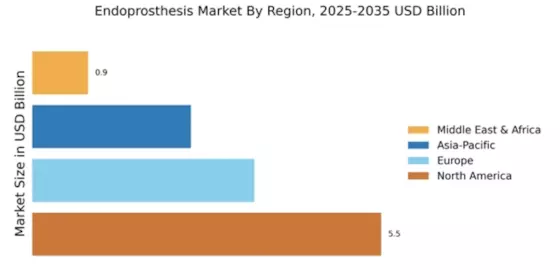
North America continues to lead the Endoprosthesis market, holding a significant share of 5.5 in 2024. The growth is driven by an aging population, increasing prevalence of chronic diseases, and advancements in medical technology. Regulatory support from agencies like the FDA has also catalyzed innovation and market entry for new products, enhancing patient outcomes and expanding treatment options. The competitive landscape is robust, with key players such as Stryker, Zimmer Biomet, and DePuy Synthes dominating the market. The U.S. remains the largest contributor, supported by a well-established healthcare infrastructure and high healthcare expenditure. The presence of leading companies fosters innovation and competition, ensuring a steady supply of advanced endoprosthetic solutions to meet rising demand.

Europe : Emerging Market Dynamics

Europe's Endoprosthesis market is valued at 3.5, reflecting a growing demand driven by an increase in orthopedic surgeries and a focus on minimally invasive procedures. Regulatory frameworks, such as the EU Medical Device Regulation, are enhancing product safety and efficacy, which is crucial for market growth. The region is witnessing a shift towards personalized medicine, further propelling the demand for innovative endoprosthetic solutions. Leading countries like Germany, France, and the UK are at the forefront of this market, supported by strong healthcare systems and significant investments in medical technology. Major players, including B. Braun and Aesculap, are expanding their product portfolios to cater to diverse patient needs. The competitive landscape is characterized by strategic partnerships and collaborations aimed at enhancing product offerings and market reach.

Asia-Pacific : Rapid Growth and Innovation

The Asia-Pacific Endoprosthesis market, valued at 2.5, is experiencing rapid growth due to increasing healthcare access and rising awareness of advanced medical treatments. Factors such as a growing elderly population and a rise in lifestyle-related diseases are driving demand. Additionally, government initiatives aimed at improving healthcare infrastructure are facilitating market expansion, making advanced endoprosthetic solutions more accessible to patients. Countries like China, India, and Japan are leading the charge, with significant investments in healthcare technology and a growing number of surgical procedures. The competitive landscape features both global players and local manufacturers, fostering innovation and affordability. Companies like Medtronic and NuVasive are actively expanding their presence in this region, ensuring a diverse range of products to meet the evolving needs of patients.

Middle East and Africa : Untapped Market Potential

The Middle East and Africa (MEA) Endoprosthesis market, valued at 0.88, presents significant growth opportunities driven by increasing healthcare investments and a rising prevalence of orthopedic conditions. The region is witnessing a gradual shift towards advanced medical technologies, supported by government initiatives aimed at improving healthcare access and quality. The demand for endoprosthetic solutions is expected to rise as healthcare systems evolve and patient awareness increases. Countries like South Africa and the UAE are emerging as key players in the market, with investments in healthcare infrastructure and medical technology. The competitive landscape is characterized by a mix of local and international companies, creating a dynamic environment for growth. As the market matures, the presence of established players will be crucial in driving innovation and meeting the growing demand for endoprosthetic solutions.

Endoprosthesis Market Regional Image

Key Players and Competitive Insights

The Endoprosthesis Market is characterized by a dynamic competitive landscape, driven by technological advancements, an aging population, and increasing incidences of orthopedic disorders. Major players such as Stryker (US), Zimmer Biomet (US), and DePuy Synthes (US) are at the forefront, each adopting distinct strategies to enhance their market positioning. Stryker (US) emphasizes innovation through substantial investments in R&D, focusing on developing advanced robotic-assisted surgical systems. Meanwhile, Zimmer Biomet (US) is pursuing strategic partnerships to expand its product offerings and enhance its global reach, particularly in emerging markets. DePuy Synthes (US) is leveraging its extensive portfolio to integrate digital solutions into its surgical processes, thereby improving operational efficiency and patient outcomes. Collectively, these strategies contribute to a competitive environment that is increasingly focused on innovation and technological integration.Key business tactics within the Endoprosthesis Market include localizing manufacturing to reduce costs and optimize supply chains. The market structure appears moderately fragmented, with several key players holding significant shares while also facing competition from smaller, specialized firms. This fragmentation allows for diverse product offerings and fosters innovation, as companies strive to differentiate themselves in a crowded marketplace.

In November Stryker (US) announced the launch of its latest robotic surgical system, which integrates AI capabilities to enhance precision in orthopedic procedures. This strategic move is likely to solidify Stryker's position as a leader in surgical technology, as it addresses the growing demand for minimally invasive procedures and improved surgical outcomes. The introduction of AI into surgical practices may also set a new standard for operational efficiency in the industry.

In October Zimmer Biomet (US) entered into a partnership with a leading telehealth provider to enhance remote patient monitoring capabilities for joint replacement surgeries. This collaboration is indicative of a broader trend towards digital health solutions, which may improve patient engagement and postoperative care. By integrating telehealth into its service offerings, Zimmer Biomet could potentially enhance patient satisfaction and outcomes, thereby reinforcing its competitive edge.

In September DePuy Synthes (US) expanded its product line with the introduction of a new biodegradable implant designed for orthopedic applications. This innovation aligns with the growing emphasis on sustainability within the medical device sector. By focusing on environmentally friendly solutions, DePuy Synthes may attract a segment of the market that prioritizes sustainability, thus differentiating itself from competitors.

As of December current competitive trends in the Endoprosthesis Market are increasingly defined by digitalization, sustainability, and the integration of AI technologies. Strategic alliances are becoming more prevalent, as companies recognize the value of collaboration in enhancing their technological capabilities and market reach. Looking ahead, competitive differentiation is likely to evolve from traditional price-based competition towards a focus on innovation, technological advancements, and supply chain reliability. This shift may redefine the competitive landscape, compelling companies to invest in cutting-edge solutions that meet the evolving needs of healthcare providers and patients.

Key Companies in the Endoprosthesis Market include

Industry Developments

April 2022:Using the M.U.S.T Pedicle Screw System in conjunction with NextAR Spine, an AR-based surgical application with intraoperative guidance in spine surgery, and receiving CE and FDA clearance, Medacta International SA announced the successful completion of the first lumbar fusion procedure in the United States.

June 2019:The Superion Indirect Decompression System, designed to enhance mobility and lessen pain in people with lumbar spinal stenosis (LSS), was created by Vertiflex, a business that Boston Scientific acquired.

Future Outlook

Endoprosthesis Market Future Outlook

The Endoprosthesis Market is projected to grow at 11.2% CAGR from 2025 to 2035, driven by technological advancements, increasing geriatric population, and rising prevalence of chronic diseases.

New opportunities lie in:

  • Development of personalized endoprosthesis solutions leveraging 3D printing technology.
  • Expansion into emerging markets with tailored product offerings.
  • Strategic partnerships with healthcare providers for integrated care solutions.

By 2035, the Endoprosthesis Market is expected to achieve substantial growth and innovation.

Market Segmentation

Endoprosthesis Market Type Outlook

  • Joint Replacement
  • Stents
  • Bone Grafts
  • Dental Implants

Endoprosthesis Market End Use Outlook

  • Hospitals
  • Ambulatory Surgical Centers
  • Specialty Clinics
  • Rehabilitation Centers

Endoprosthesis Market Material Outlook

  • Metal
  • Ceramic
  • Polymer
  • Composite
  • Biomaterial

Endoprosthesis Market Application Outlook

  • Orthopedic
  • Cardiovascular
  • Dental
  • Ophthalmic
  • Neurological

Report Scope

MARKET SIZE 2024 11.38(USD Billion)
MARKET SIZE 2025 12.65(USD Billion)
MARKET SIZE 2035 36.58(USD Billion)
COMPOUND ANNUAL GROWTH RATE (CAGR) 11.2% (2025 - 2035)
REPORT COVERAGE Revenue Forecast, Competitive Landscape, Growth Factors, and Trends
BASE YEAR 2024
Market Forecast Period 2025 - 2035
Historical Data 2019 - 2024
Market Forecast Units USD Billion
Key Companies Profiled Stryker (US), Zimmer Biomet (US), DePuy Synthes (US), Smith & Nephew (GB), Medtronic (US), Boston Scientific (US), B. Braun (DE), NuVasive (US), Aesculap (DE)
Segments Covered Application, Material, End Use, Type
Key Market Opportunities Advancements in biocompatible materials enhance patient outcomes in the Endoprosthesis Market.
Key Market Dynamics Technological advancements and regulatory changes drive innovation and competition in the Endoprosthesis Market.
Countries Covered North America, Europe, APAC, South America, MEA

Market Highlights

Author
Author
Author Profile
Rahul Gotadki LinkedIn
Research Manager
He holds an experience of about 9+ years in Market Research and Business Consulting, working under the spectrum of Life Sciences and Healthcare domains. Rahul conceptualizes and implements a scalable business strategy and provides strategic leadership to the clients. His expertise lies in market estimation, competitive intelligence, pipeline analysis, customer assessment, etc.
Leave a Comment

FAQs

What is the current valuation of the Endoprosthesis Market as of 2024?

The Endoprosthesis Market was valued at 11.38 USD Billion in 2024.

What is the projected market valuation for the Endoprosthesis Market in 2035?

The market is projected to reach a valuation of 36.58 USD Billion by 2035.

What is the expected CAGR for the Endoprosthesis Market during the forecast period 2025 - 2035?

The expected CAGR for the Endoprosthesis Market during the forecast period 2025 - 2035 is 11.2%.

Which segment is expected to dominate the Endoprosthesis Market by application?

The Orthopedic segment is anticipated to dominate, with a projected valuation of 11.2 USD Billion by 2035.

What are the key materials used in the Endoprosthesis Market?

Key materials include Metal, Ceramic, Polymer, Composite, and Biomaterials, with Metal projected to reach 11.5 USD Billion by 2035.

Which end-use segment is expected to show significant growth in the Endoprosthesis Market?

Hospitals are expected to show significant growth, with a projected valuation of 14.56 USD Billion by 2035.

What product type is anticipated to lead the Endoprosthesis Market?

Joint Replacement is anticipated to lead the market, with a projected valuation of 14.5 USD Billion by 2035.

Who are the key players in the Endoprosthesis Market?

Key players include Stryker, Zimmer Biomet, DePuy Synthes, Smith & Nephew, and Medtronic.

What is the projected growth for the Cardiovascular segment in the Endoprosthesis Market?

The Cardiovascular segment is projected to grow to 9.0 USD Billion by 2035.

How does the Endoprosthesis Market's growth compare across different product types?

Product types like Stents and Dental Implants are projected to grow to 8.0 USD Billion and 7.6 USD Billion, respectively, by 2035.

Research Approach

Research Methodology on Endoprosthesis Market

Introduction

Endoprosthesis is a type of medical device implant made of metal components, ceramic components, and polymers, inserted into the body to replace a missing joint or body part. Endoprosthesis offers an attractive alternative to traditional orthopaedic surgical methods and has recently become popular among medical practitioners due to its ability to restore function and improve quality of life. The global endoprosthesis market is set to experience healthy growth due to the large ageing population, increasing incidence of obesity-related conditions, increasing adoption of sports activities, and advances in healthcare technologies.

Research Methodology

A comprehensive research methodology for the market research report on the global endoprosthesis market has been employed to gain an in-depth understanding of the market. The primary and secondary sources of information used in the market research report include manufacturer data, industry reports, publications, news sources, government databases, and online research databases such as PubMed, LexisNexis, Google Scholar, etc.

1. Primary Research:

This includes research conducted with the help of interviews, surveys, focus groups, questionnaires, and user feedback. Primary research participants included professionals, end-users, and industry experts from the medical device industry who have an in-depth understanding of the endoprosthesis market.

In order to gain a better insight into the market, the respondents were asked questions such as:

-What are the major drivers for the growth of the global endoprosthesis market?

-What are the common challenges faced by the industry?

-What are the latest trends in the global endoprosthesis market?

-What are the emerging applications of endoprosthesis?

-What kind of new products have been developed in the past few years?

2. Secondary Research:

Secondary research was conducted to gain an in-depth understanding of the competitive landscape, regional market trends, and global economic conditions. The following sources of information were used:

-Industry reports from leading companies

-White papers from industry experts

-Government and trade association databases

-Financial reports

-Media and business journals

The secondary research was conducted to understand the past and present conditions of the market, to find out what the future trends in the market will be, and to map the market landscape of the global endoprosthesis market.

3. Market Size Estimation:

For estimating the market size of the global endoprosthesis market, two approaches were used - the top-down approach and the bottom-up approach. In the top-down approach, data from the key market players in the industry was gathered and the total market size was determined accordingly. While in the bottom-up approach, the total market size was estimated by adding up the revenues of all the segment players in the industry.

4. Data Triangulation:

Data triangulation was employed to capture the market trends and accurately represent the market size. The data collected through primary and secondary research was triangulated to obtain an accurate representation of the total global endoprosthesis market.

5. Market Breakdown & Data Verification:

In order to gain an in-depth understanding of the market, the data and information gathered through primary and secondary research were then validated through an in-depth analysis of the market trends in various regions. The report was then segmented based on the major product types, applications, technologies, end-users, and regions.

6. Modelling & Forecasting:

The report was then further modelled and forecasted to gain an understanding of the future growth prospects of the global endoprosthesis market. The market size estimations were created by using multiple sets of variables such as population growth rate, product price developments, changes in cost structure, market dynamics, technological advances, market-related risk factors, future product launches, and market share.

7. List of Participants:

The participants in the research report included end-users, medical device industry representatives, business solution providers, government and regulatory bodies, technology vendors, system integrators, technology providers, and other related players.

Conclusion

The research methodology employed in the market research report aims to provide an in-depth understanding of the global endoprosthesis market. A comprehensive primary and secondary research process was used to gather data from potential sources and verify the accuracy of the data. Market size estimation and forecasting were completed using both top-down and bottom-up approaches. Data triangulation and market breakdown were also used to obtain an accurate representation of the market.

Download Free Sample

Kindly complete the form below to receive a free sample of this Report

Compare Licence

×
Features License Type
Single User Multiuser License Enterprise User
Price $4,950 $5,950 $7,250
Maximum User Access Limit 1 User Upto 10 Users Unrestricted Access Throughout the Organization
Free Customization
Direct Access to Analyst
Deliverable Format
Platform Access
Discount on Next Purchase 10% 15% 15%
Printable Versions