×
Hero Background
English
Chinese
French
Japanese
Korean
German
Spanish

Clean Beauty Market Size

ID: MRFR/CG/10455-HCR
128 Pages
Snehal Singh
October 2025

Clean Beauty Market Research Report Information By Product Type (Face Products, Skincare, Lip Products, Fragrances, Hair Care, Nail Care and Oral Care), By Form (Powder, Liquid and Gel) By Consumer Group (Gen X, Gen Z, Millennials and Baby Boomers) By End User(Men, Women and Kids) By Distribution Channel (Supermarkets & Hypermarkets, Convenience Stores, Specialty Stores, Online and Others) And By Region (North America, Europe, Asia-Pacific, And Rest Of The World) - Forecast Till 2035

Share:
Download PDF ×

We do not share your information with anyone. However, we may send you emails based on your report interest from time to time. You may contact us at any time to opt-out.

Clean Beauty Market Infographic
Purchase Options

Clean Beauty Size

Clean Beauty Market Growth Projections and Opportunities

The clean beauty market is influenced by several dynamic factors that drive its growth, trends, and consumer preferences. One significant factor shaping the dynamics of the clean beauty market is the increasing consumer demand for safer, more transparent, and environmentally friendly beauty products. As awareness grows about the potential health risks associated with certain synthetic ingredients commonly found in cosmetics, skincare, and personal care products, consumers are seeking out cleaner alternatives made from natural, non-toxic, and ethically sourced ingredients. This heightened concern for ingredient safety and transparency has propelled the clean beauty movement, driving demand for clean beauty products that prioritize ingredient integrity, sustainability, and environmental responsibility.

Moreover, market dynamics within the clean beauty industry are influenced by changing consumer attitudes and lifestyle choices. Millennials and Gen Z consumers, in particular, are driving demand for clean beauty products, as they prioritize health, wellness, and sustainability in their purchasing decisions. These younger generations are more informed and socially conscious, seeking out brands and products that align with their values of transparency, authenticity, and ethical practices. As a result, clean beauty brands are gaining traction and market share, appealing to a diverse range of consumers who value clean, safe, and effective beauty solutions.

Furthermore, advancements in technology and innovation drive market dynamics within the clean beauty industry. Clean beauty brands leverage scientific research, natural formulations, and cutting-edge technologies to develop clean, effective, and high-performing beauty products that deliver visible results without compromising on safety or sustainability. From plant-based ingredients and biodegradable packaging to clean formulations and cruelty-free testing methods, technological advancements enable clean beauty brands to innovate and differentiate themselves in a competitive market landscape.

Supply chain dynamics and sourcing practices also impact market dynamics within the clean beauty industry. Clean beauty brands prioritize ethical sourcing, fair trade practices, and sustainable supply chains to ensure the integrity and traceability of their ingredients. This includes sourcing raw materials from reputable suppliers, supporting local communities, and investing in eco-friendly farming and production methods. Additionally, clean beauty brands often undergo third-party certifications and audits to verify ingredient purity, safety, and sustainability, providing consumers with assurance and confidence in the integrity of their products.

Additionally, marketing and branding play a crucial role in shaping market dynamics within the clean beauty industry. Clean beauty brands leverage storytelling, authenticity, and brand transparency to connect with consumers and communicate their values and mission. Brand messaging that emphasizes ingredient transparency, sustainability initiatives, and social responsibility resonates with consumers who prioritize clean beauty and environmental stewardship. Moreover, influencer partnerships, social media campaigns, and community engagement initiatives help clean beauty brands build brand awareness, foster brand loyalty, and drive consumer engagement within the clean beauty community.

Regulatory standards and industry regulations also impact market dynamics in the clean beauty industry. Clean beauty brands must comply with regulations related to product safety, labeling, and advertising to ensure the safety and integrity of their products. Additionally, clean beauty brands often adhere to third-party certifications and standards, such as the Environmental Working Group's (EWG) Verified program, the Leaping Bunny certification for cruelty-free products, and the USDA Organic certification for organic products, to validate their clean beauty claims and differentiate themselves in the marketplace.

Consumer education and awareness are also significant drivers of market dynamics within the clean beauty industry. As consumers become more informed about the potential health risks associated with certain ingredients commonly found in beauty products, they seek out clean beauty alternatives that offer safer and more sustainable options. Clean beauty brands play a crucial role in educating consumers about ingredient safety, environmental impact, and the benefits of clean beauty, empowering consumers to make informed purchasing decisions and adopt cleaner, more sustainable beauty routines.

Clean Beauty Market Size Graph
Author
Snehal Singh
Assistant Manager - Research

High acumen in analyzing complex macro & micro markets with more than 6 years of work experience in the field of market research. By implementing her analytical skills in forecasting and estimation into market research reports, she has expertise in Packaging, Construction, and Equipment domains. She handles a team size of 20-25 resources and ensures smooth running of the projects, associated marketing activities, and client servicing.

Leave a Comment

FAQs

What is the current valuation of the Clean Beauty Market as of 2024?

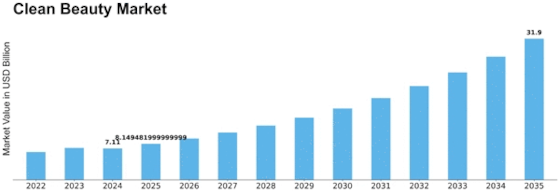
The Clean Beauty Market was valued at 7.11 USD Billion in 2024.

What is the projected market size for the Clean Beauty Market by 2035?

The Clean Beauty Market is projected to reach 31.9 USD Billion by 2035.

Market Summary

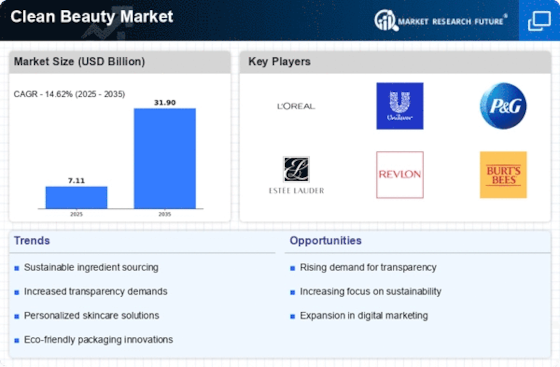
As per MRFR analysis, the Clean Beauty Market Size was estimated at 7.11 USD Billion in 2024. The Clean Beauty industry is projected to grow from 8.15 USD Billion in 2025 to 31.9 USD Billion by 2035, exhibiting a compound annual growth rate (CAGR) of 14.62 during the forecast period 2025 - 2035.

Key Market Trends & Highlights

The Clean Beauty Market is experiencing robust growth driven by consumer demand for transparency and sustainability.

  • The Clean Beauty Market is characterized by a notable rise in ingredient transparency, particularly in North America. Sustainability has emerged as a core value, influencing product development across the Asia-Pacific region. Skincare remains the largest segment, while face products are witnessing the fastest growth in consumer interest. Consumer demand for natural ingredients and the influence of social media are key drivers propelling market expansion.

Market Size & Forecast

2024 Market Size 7.11 (USD Billion)
2035 Market Size 31.9 (USD Billion)
CAGR (2025 - 2035) 14.62%
Largest Regional Market Share in 2024 North America

Major Players

<p>L'Oreal (FR), Unilever (GB), Procter &amp; Gamble (US), <a href="https://www.esteelauder.in/">Est&eacute;e Lauder (US)</a>, Revlon (US), Burt's Bees (US), Drunk Elephant (US), Herbivore Botanicals (US), Tatcha (US)</p>

Market Trends

The Clean Beauty Market is currently experiencing a notable transformation, driven by a growing consumer awareness regarding the ingredients used in personal care products. This shift reflects a broader societal trend towards sustainability and health consciousness. As individuals increasingly seek transparency from brands, the demand for products that are free from harmful chemicals and synthetic additives appears to be on the rise. This evolving landscape suggests that companies are adapting their offerings to align with consumer preferences, emphasizing natural and organic components. Furthermore, the Clean Beauty Market is likely to benefit from the increasing influence of social media, where consumers share their experiences and preferences, thereby shaping purchasing decisions. In addition, the Clean Beauty Market seems to be expanding beyond traditional skincare and cosmetics, with a noticeable increase in clean formulations for hair care and personal hygiene products. This diversification indicates a potential for growth across various segments, as consumers seek holistic approaches to beauty and wellness. Brands that prioritize ethical sourcing and environmentally friendly practices may find themselves well-positioned to capture the attention of discerning consumers. Overall, the Clean Beauty Market is poised for continued evolution, reflecting a dynamic interplay between consumer demand, brand innovation, and environmental considerations.

Rise of Ingredient Transparency

Consumers increasingly demand clarity regarding product ingredients, leading brands to disclose formulations and sourcing practices. This trend emphasizes the importance of trust and accountability in the Clean Beauty Market.

Sustainability as a Core Value

Sustainable practices are becoming integral to brand identity, with companies adopting eco-friendly packaging and responsible sourcing. This shift reflects a growing consumer preference for environmentally conscious products.

Expansion into New Categories

The Clean Beauty Market is diversifying, with an increasing number of brands offering clean formulations in hair care and personal hygiene. This expansion indicates a broader understanding of beauty that encompasses overall wellness.

Clean Beauty Market Market Drivers

Regulatory Changes and Standards

The Clean Beauty Market is also being shaped by evolving regulatory frameworks and standards concerning cosmetic safety and ingredient disclosure. Governments are increasingly implementing stricter regulations aimed at ensuring consumer safety and promoting transparency in product labeling. These changes compel brands to reformulate products and adopt cleaner ingredient lists to comply with new regulations. As a result, companies that proactively align with these standards may gain a competitive advantage in the Clean Beauty Market. Furthermore, adherence to regulatory guidelines can enhance brand credibility and consumer trust, which are essential for long-term success. The ongoing dialogue between regulatory bodies and industry stakeholders indicates a trend towards more stringent oversight, which could further influence market dynamics.

Rise of Male Grooming and Inclusivity

The Clean Beauty Market is witnessing a rise in male grooming products and a broader push for inclusivity across gender and skin types. This shift reflects changing societal norms and an increasing acceptance of beauty and personal care routines among men. Market data indicates that the male grooming segment is expanding rapidly, with brands introducing clean beauty products specifically designed for men. Additionally, there is a growing emphasis on inclusivity, with brands developing products that cater to diverse skin tones and types. This trend suggests that the Clean Beauty Market is evolving to meet the needs of a wider audience, thereby creating new opportunities for growth. Companies that embrace this inclusivity may enhance their market presence and appeal to a broader consumer base.

Consumer Demand for Natural Ingredients

The Clean Beauty Market is experiencing a notable shift in consumer preferences towards products that feature natural and organic ingredients. This trend is driven by an increasing awareness of the potential harmful effects of synthetic chemicals found in traditional beauty products. According to recent surveys, a significant percentage of consumers express a preference for products that are free from parabens, sulfates, and artificial fragrances. This demand for transparency in ingredient sourcing is reshaping product formulations and marketing strategies within the Clean Beauty Market. Brands that prioritize natural ingredients are likely to capture a larger share of the market, as consumers become more discerning about the products they choose to apply to their skin. As a result, companies are investing in research and development to create innovative formulations that align with these consumer expectations.

Sustainability and Eco-Friendly Practices

Sustainability has emerged as a pivotal driver within the Clean Beauty Market, as consumers increasingly prioritize eco-friendly practices in their purchasing decisions. Brands that adopt sustainable sourcing, packaging, and production methods are likely to resonate with environmentally conscious consumers. Research suggests that a considerable segment of the market is willing to pay a premium for products that demonstrate a commitment to sustainability. This trend is prompting companies to innovate in areas such as biodegradable packaging and carbon-neutral production processes. The Clean Beauty Market is thus witnessing a transformation where sustainability is not merely an add-on but a core value that influences brand loyalty and consumer choice. As awareness of environmental issues continues to grow, brands that fail to adopt sustainable practices may find themselves at a disadvantage.

Influence of Social Media and Digital Marketing

The Clean Beauty Market is significantly influenced by the rise of social media and digital marketing platforms. Influencers and beauty bloggers play a crucial role in shaping consumer perceptions and preferences. Their endorsements of clean beauty products often lead to increased visibility and sales for brands that prioritize ethical and sustainable practices. Data indicates that brands leveraging social media effectively can experience a substantial boost in brand loyalty and customer engagement. This trend suggests that companies within the Clean Beauty Market must adapt their marketing strategies to harness the power of digital platforms. Engaging content that highlights product benefits, ingredient transparency, and sustainability efforts can resonate with consumers, ultimately driving growth in this competitive landscape.

Market Segment Insights

By Product Type: Skincare (Largest) vs. Face Products (Fastest-Growing)

<p>In the Clean Beauty Market, Skincare products hold the largest share among various product types, reflecting a significant consumer preference for health-conscious, natural options in personal care. The trend towards clean, natural ingredients has propelled Skincare to the forefront of this market, as consumers seek products that promise safety and efficacy without harmful chemicals. Face Products, while not the largest segment, are emerging as the fastest-growing category, driven by innovative formulations and increasing awareness of skin health. Business strategies focusing on sustainability and clean labeling are elevating the importance of Face Products, leading to rapid growth in this area.</p>

<p>Skincare (Dominant) vs. Face Products (Emerging)</p>

<p>Skincare has become a dominant force in the Clean Beauty Market, representing a strong consumer demand for safe, environmentally friendly options. With an emphasis on nourishing ingredients and ethical sourcing, Skincare products appeal to a health-conscious demographic keen on holistic beauty solutions. Meanwhile, Face Products represent an emerging category that is gaining traction due to enhanced formulations and targeted marketing. These products often leverage natural and organic components to address specific skin concerns, making them increasingly popular among consumers. The rapid evolution of consumer preferences toward clean and safe beauty is driving innovations in both Skincare and Face Products, enhancing brand loyalty and market engagement.</p>

By Form: Liquid (Largest) vs. Powder (Fastest-Growing)

<p>In the Clean Beauty Market, the 'Form' segment is primarily dominated by liquid products, which hold the largest market share among various form categories. Liquids, including serums, oils, and toners, are well-established and preferred by consumers for their ease of use and quick absorption. In contrast, powder formulations are emerging as a significant segment, appealing to consumers seeking eco-friendly and minimally processed options that align with clean beauty principles.</p>

<p>Liquid (Dominant) vs. Powder (Emerging)</p>

<p>Liquid products are currently the dominant player in the Clean Beauty Market due to their versatile application and ability to deliver potent ingredients effectively. They cater to a wide audience, from moisturizers to foundations, making them integral to most beauty routines. On the other hand, powder formulations are seen as the emerging counterpart, gaining traction for their sustainable packaging and ingredient transparency. These products often feature natural, clean components appealing to health-conscious consumers and are recognized for their lightweight feel. As consumers increasingly value quality and sustainability, the powder segment is rapidly growing, indicating a shift towards innovative beauty solutions.</p>

By Consumer Group: Millennials (Largest) vs. Gen Z (Fastest-Growing)

<p>In the Clean Beauty Market, the distribution of market share across consumer groups reveals significant insights. Millennials hold the largest share, driven by their preference for sustainable and ethically sourced products. They value transparency and are willing to invest in brands that align with their values. In contrast, Gen Z, while having a smaller share currently, exhibits rapid growth potential due to their strong influence on social media and trends that favor clean and eco-conscious beauty products.</p>

<p>Millennials: (Dominant) vs. Gen Z: (Emerging)</p>

<p>Millennials have established themselves as the dominant consumer group in the Clean Beauty Market, characterized by their loyalty to brands that emphasize sustainability and ethical practices. This group is highly engaged in brand narratives and increasingly demands accountability in sourcing ingredients. On the other hand, Gen Z is emerging as a vital force in this market, their purchasing decisions being shaped heavily by digital influencers and social platforms. This demographic prioritizes authenticity and innovation, pushing brands to adopt cleaner formulations. As Gen Z continues to grow in purchasing power, their unique perspectives and preferences will reshape market trends, making them essential for any brand aiming to succeed in the clean beauty space.</p>

By End User: Women (Largest) vs. Kids (Fastest-Growing)

<p>In the Clean Beauty Market, the distribution of end users shows that women represent the largest share. Their preference for clean and chemical-free beauty products has driven significant market interest, as many brands now cater specifically to this demographic. Meanwhile, the kids' segment is capturing attention due to the increasing demand for safe and gentle products designed specifically for children, which is a rapidly expanding niche within the overall market.</p>

<p>Women: (Dominant) vs. Kids: (Emerging)</p>

<p>Women dominate the Clean Beauty Market due to their strong purchasing power and growing awareness of the benefits of clean products. They prioritize ingredients, sustainability, and cruelty-free practices when making purchasing decisions. Additionally, campaigns focused on empowerment and natural beauty have fostered a loyal customer base. In contrast, the kids' segment is considered emerging, fueled by a rise in parental concern over the ingredients used in children's grooming products. Safe, non-toxic formulas and eco-friendly packaging appeal to parents, positioning kids' clean beauty as a growing market category that brands are increasingly eager to explore.</p>

By Distribution Channel: Supermarkets & Hypermarkets (Largest) vs. Online (Fastest-Growing)

<p>In the Clean Beauty Market, Supermarkets and Hypermarkets hold a significant share as they offer consumers convenience and a variety of options. These distribution channels typically dominate in terms of shelf space, making them a preferred shopping destination for consumers seeking beauty products. On the other hand, Online channels have gained momentum recently, facilitating a direct-to-consumer approach and offering personalized shopping experiences. This shift in consumer behavior has resulted in a dynamic market landscape where online retailers are increasingly capturing market share.</p>

<p>Supermarkets &amp; Hypermarkets: Dominant vs. Online: Emerging</p>

<p>Supermarkets and Hypermarkets are dominant players in the Clean Beauty Market due to their extensive reach and ability to provide a wide array of brands under one roof. They cater to a broad customer base, enabling consumers to explore various beauty products while engaging in their regular grocery shopping. In contrast, Online distribution channels are emerging rapidly, driven by the convenience of online shopping, access to reviews, and targeted marketing strategies. They attract tech-savvy consumers looking for specific clean beauty products and brands, often enhancing user engagement through social media and influencer collaborations. This dual-market approach is crucial, as consumers value both the ease of access from supermarkets and the personalized experiences offered by online platforms.</p>

Get more detailed insights about Clean Beauty Market Research Report-Global Forecast till 2035

Regional Insights

North America : Sustainable Innovation Leader

North America is the largest market for clean beauty, holding approximately 40% of the global share. The region's growth is driven by increasing consumer awareness regarding harmful ingredients and a shift towards sustainable products. Regulatory support, such as the FDA's guidelines on cosmetic safety, further catalyzes this trend. The demand for transparency in ingredient sourcing and eco-friendly packaging is also on the rise, pushing brands to innovate and adapt to consumer preferences. The United States leads the North American market, with significant contributions from Canada. Major players like L'Oreal, Procter & Gamble, and Estée Lauder dominate the landscape, offering a wide range of clean beauty products. The competitive environment is characterized by a mix of established brands and emerging startups focusing on natural ingredients and ethical practices. This dynamic fosters innovation and enhances consumer trust in clean beauty products.

Europe : Regulatory Framework Strengthens Market

Europe is the second-largest market for clean beauty, accounting for approximately 30% of the global share. The region's growth is propelled by stringent regulations on cosmetic safety and a strong consumer preference for natural ingredients. The European Commission's Cosmetic Regulation emphasizes safety and transparency, encouraging brands to adopt clean formulations. This regulatory framework not only boosts consumer confidence but also drives innovation in product development. Leading countries in Europe include France, Germany, and the UK, where brands like Unilever and L'Oreal are at the forefront of the clean beauty movement. The competitive landscape is marked by a blend of multinational corporations and local artisans, all striving to meet the rising demand for sustainable beauty solutions. The presence of eco-conscious consumers further fuels the market, pushing brands to prioritize ethical sourcing and environmentally friendly practices.

Asia-Pacific : Emerging Market Potential

Asia-Pacific is witnessing rapid growth in the clean beauty market, holding approximately 20% of the global share. The region's expansion is driven by increasing disposable incomes, urbanization, and a growing awareness of health and wellness. Countries like China and Japan are leading the charge, with consumers increasingly seeking products that are free from harmful chemicals. Regulatory bodies are also beginning to implement stricter guidelines, which is expected to further enhance market growth in the coming years. China is the largest market in the region, followed closely by Japan and South Korea. The competitive landscape features both international brands and local players, with companies like Drunk Elephant and Herbivore Botanicals gaining traction. The rise of e-commerce platforms has also facilitated access to clean beauty products, allowing consumers to explore a wider range of options. This dynamic environment is fostering innovation and encouraging brands to cater to the unique preferences of Asian consumers.

Middle East and Africa : Untapped Market Opportunities

The Middle East and Africa represent an emerging frontier for the clean beauty market, holding approximately 10% of the global share. The region's growth is driven by a rising middle class, increasing awareness of health and wellness, and a shift towards natural products. Regulatory frameworks are gradually evolving, with countries like South Africa implementing guidelines to ensure product safety and efficacy, which is expected to boost consumer confidence in clean beauty products. Leading countries in this region include South Africa, the UAE, and Nigeria, where local and international brands are beginning to establish a presence. The competitive landscape is characterized by a mix of traditional beauty brands and new entrants focusing on clean formulations. As consumers become more discerning, the demand for transparency and ethical sourcing is likely to shape the future of the clean beauty market in this region.

Key Players and Competitive Insights

Major market participants are spending a lot of money on R&D to increase the range of their products, which will drive the clean beauty market's future expansion. Market participants are also introducing new products, signing agreements, buying businesses, raising investments, and working with other organizations to broaden their worldwide reach. To grow and survive in a more cutthroat and competitive market climate, clean beauty business competitors must provide affordable products.

One of the primary business strategies adopted by manufacturers in the global clean beauty industry to benefit clients and expand the clean beauty market sector is to manufacture locally to reduce operating costs. In recent years, clean beauty has provided enormous benefits to its consumers.

Key Companies in the Clean Beauty Market market include

Industry Developments

  • Q2 2024: Sephora Launches Clean + Planet Positive Beauty Collection Sephora announced the launch of its Clean + Planet Positive Beauty Collection, featuring new brands and products that meet stricter clean ingredient and sustainability standards. The initiative expands Sephora’s clean beauty offerings and highlights its commitment to environmental responsibility.
  • Q2 2024: Beautycounter Appoints New CEO, Marc Rey, to Accelerate Clean Beauty Market Growth Beautycounter, a leading clean beauty brand, announced the appointment of Marc Rey as Chief Executive Officer. Rey, former CEO of Shiseido Americas, is expected to drive the company’s next phase of growth and innovation in the clean beauty sector.
  • Q2 2024: ILIA Beauty Secures $55 Million Series C Funding to Expand Clean Makeup Line ILIA Beauty, a clean makeup brand, raised $55 million in Series C funding led by Sandbridge Capital. The funds will be used to expand product development, increase retail presence, and enhance sustainability initiatives.
  • Q2 2024: L’Oréal acquires clean skincare brand Youth to the People L’Oréal announced the acquisition of Youth to the People, a California-based clean skincare brand known for its vegan formulas and sustainable packaging. The deal strengthens L’Oréal’s portfolio in the fast-growing clean beauty segment.
  • Q1 2024: Unilever Launches New Clean Beauty Market Brand, Botanica Unilever introduced Botanica, a new clean beauty brand focused on plant-based ingredients and eco-friendly packaging. The launch is part of Unilever’s strategy to capture growing consumer demand for clean and sustainable beauty products.
  • Q1 2024: Credo Beauty Partners with Ulta Beauty to Expand Clean Beauty Market Access Credo Beauty, a retailer specializing in clean beauty, announced a partnership with Ulta Beauty to offer a curated selection of clean beauty products in Ulta stores nationwide. The collaboration aims to make clean beauty more accessible to mainstream consumers.
  • Q2 2024: OSEA Malibu Opens First Standalone Retail Store in Los Angeles OSEA Malibu, a clean skincare brand, opened its first standalone retail store in Los Angeles. The new location offers the full range of OSEA’s clean, vegan skincare products and in-store spa services.
  • Q1 2024: Prose Raises $40 Million in Series B Funding to Advance Personalized Clean Beauty Market Prose, a custom clean haircare brand, secured $40 million in Series B funding led by Insight Partners. The investment will support product innovation and expansion into new clean beauty categories.
  • Q2 2024: Biossance Receives Leaping Bunny Certification for Entire Clean Skincare Line Biossance, a clean skincare brand, announced that its entire product line has received Leaping Bunny certification, verifying its commitment to cruelty-free and clean beauty standards.
  • Q1 2024: Herbivore Botanicals Launches Refillable Packaging Initiative Herbivore Botanicals, a clean beauty brand, launched a new refillable packaging initiative to reduce plastic waste and promote sustainability. The program allows customers to purchase refills for select skincare products.
  • Q2 2024: True Botanicals Partners with Nordstrom to Expand Clean Beauty Market Distribution True Botanicals, a clean skincare brand, announced a partnership with Nordstrom to offer its products in select Nordstrom stores and online. The partnership aims to broaden the reach of clean beauty products to a wider audience.
  • Q1 2024: REN Clean Skincare Launches New Zero-Waste Product Line REN Clean Skincare introduced a new zero-waste product line featuring fully recyclable and reusable packaging. The launch supports the brand’s ongoing commitment to sustainability and clean beauty innovation.

Future Outlook

Clean Beauty Market Future Outlook

<p>The Clean Beauty Market is projected to grow at a 14.62% CAGR from 2024 to 2035, driven by increasing consumer awareness, regulatory support, and demand for sustainable products.</p>

New opportunities lie in:

  • <p>Expansion of e-commerce platforms for clean beauty products.</p>
  • <p>Development of subscription-based models for personalized beauty solutions.</p>
  • <p>Investment in biodegradable packaging innovations to enhance sustainability.</p>

<p>By 2035, the Clean Beauty Market is expected to achieve substantial growth, reflecting evolving consumer preferences and industry advancements.</p>

Market Segmentation

Clean Beauty Market Form Outlook

  • Powder
  • Liquid
  • Gel

Clean Beauty Market End User Outlook

  • Men
  • Women
  • Kids

Clean Beauty Market Product Type Outlook

  • Face Products
  • Skincare
  • Lip Products
  • Fragrances
  • Hair Care
  • Nail Care
  • Oral Care

Clean Beauty Market Consumer Group Outlook

  • Gen X
  • Gen Z
  • Millennials
  • Baby Boomers

Clean Beauty Market Distribution Channel Outlook

  • Supermarkets & Hypermarkets
  • Convenience Stores
  • Specialty Stores
  • Online
  • Others

Report Scope

MARKET SIZE 2024 7.11(USD Billion)
MARKET SIZE 2025 8.15(USD Billion)
MARKET SIZE 2035 31.9(USD Billion)
COMPOUND ANNUAL GROWTH RATE (CAGR) 14.62% (2024 - 2035)
REPORT COVERAGE Revenue Forecast, Competitive Landscape, Growth Factors, and Trends
BASE YEAR 2024
Market Forecast Period 2025 - 2035
Historical Data 2019 - 2024
Market Forecast Units USD Billion
Key Companies Profiled Market analysis in progress
Segments Covered Market segmentation analysis in progress
Key Market Opportunities Growing consumer demand for sustainable ingredients drives innovation in the Clean Beauty Market.
Key Market Dynamics Rising consumer demand for sustainable ingredients drives innovation and competition in the Clean Beauty Market.
Countries Covered North America, Europe, APAC, South America, MEA

FAQs

What is the current valuation of the Clean Beauty Market as of 2024?

The Clean Beauty Market was valued at 7.11 USD Billion in 2024.

What is the projected market size for the Clean Beauty Market by 2035?

The Clean Beauty Market is projected to reach 31.9 USD Billion by 2035.

  1. SECTION I: EXECUTIVE SUMMARY AND KEY HIGHLIGHTS
    1. EXECUTIVE SUMMARY
      1. Market Overview
      2. Key Findings
      3. Market Segmentation
      4. Competitive Landscape
      5. Challenges and Opportunities
      6. Future Outlook 2
  2. SECTION II: SCOPING, METHODOLOGY AND MARKET STRUCTURE
    1. MARKET INTRODUCTION
      1. Definition
      2. Scope of the study
    2. RESEARCH METHODOLOGY
      1. Overview
      2. Data Mining
      3. Secondary Research
      4. Primary Research
      5. Forecasting Model
      6. Market Size Estimation
      7. Data Triangulation
      8. Validation 3
  3. SECTION III: QUALITATIVE ANALYSIS
    1. MARKET DYNAMICS
      1. Overview
      2. Drivers
      3. Restraints
      4. Opportunities
    2. MARKET FACTOR ANALYSIS
      1. Value chain Analysis
      2. Porter's Five Forces Analysis
      3. COVID-19 Impact Analysis
  4. SECTION IV: QUANTITATIVE ANALYSIS
    1. Consumer and Retail, BY Product Type (USD Billion)
      1. Face Products
      2. Skincare
      3. Lip Products
      4. Fragrances
      5. Hair Care
      6. Nail Care
      7. Oral Care
    2. Consumer and Retail, BY Form (USD Billion)
      1. Powder
      2. Liquid
      3. Gel
    3. Consumer and Retail, BY Consumer Group (USD Billion)
      1. Gen X
      2. Gen Z
      3. Millennials
      4. Baby Boomers
    4. Consumer and Retail, BY End User (USD Billion)
      1. Men
      2. Women
      3. Kids
    5. Consumer and Retail, BY Distribution Channel (USD Billion)
      1. Supermarkets & Hypermarkets
      2. Convenience Stores
      3. Specialty Stores
      4. Online
      5. Others
    6. Consumer and Retail, BY Region (USD Billion)
      1. North America
      2. Europe
      3. APAC
      4. South America
      5. MEA
  5. SECTION V: COMPETITIVE ANALYSIS
    1. Competitive Landscape
      1. Overview
      2. Competitive Analysis
      3. Market share Analysis
      4. Major Growth Strategy in the Consumer and Retail
      5. Competitive Benchmarking
      6. Leading Players in Terms of Number of Developments in the Consumer and Retail
      7. Key developments and growth strategies
      8. Major Players Financial Matrix
    2. Company Profiles
      1. L'Oreal (FR)
      2. Unilever (GB)
      3. Procter & Gamble (US)
      4. Estée Lauder (US)
      5. Revlon (US)
      6. Burt's Bees (US)
      7. Drunk Elephant (US)
      8. Herbivore Botanicals (US)
      9. Tatcha (US)
    3. Appendix
      1. References
      2. Related Reports 6 LIST OF FIGURES
    4. MARKET SYNOPSIS
    5. NORTH AMERICA MARKET ANALYSIS
    6. US MARKET ANALYSIS BY PRODUCT TYPE
    7. US MARKET ANALYSIS BY FORM
    8. US MARKET ANALYSIS BY CONSUMER GROUP
    9. US MARKET ANALYSIS BY END USER
    10. US MARKET ANALYSIS BY DISTRIBUTION CHANNEL
    11. CANADA MARKET ANALYSIS BY PRODUCT TYPE
    12. CANADA MARKET ANALYSIS BY FORM
    13. CANADA MARKET ANALYSIS BY CONSUMER GROUP
    14. CANADA MARKET ANALYSIS BY END USER
    15. CANADA MARKET ANALYSIS BY DISTRIBUTION CHANNEL
    16. EUROPE MARKET ANALYSIS
    17. GERMANY MARKET ANALYSIS BY PRODUCT TYPE
    18. GERMANY MARKET ANALYSIS BY FORM
    19. GERMANY MARKET ANALYSIS BY CONSUMER GROUP
    20. GERMANY MARKET ANALYSIS BY END USER
    21. GERMANY MARKET ANALYSIS BY DISTRIBUTION CHANNEL
    22. UK MARKET ANALYSIS BY PRODUCT TYPE
    23. UK MARKET ANALYSIS BY FORM
    24. UK MARKET ANALYSIS BY CONSUMER GROUP
    25. UK MARKET ANALYSIS BY END USER
    26. UK MARKET ANALYSIS BY DISTRIBUTION CHANNEL
    27. FRANCE MARKET ANALYSIS BY PRODUCT TYPE
    28. FRANCE MARKET ANALYSIS BY FORM
    29. FRANCE MARKET ANALYSIS BY CONSUMER GROUP
    30. FRANCE MARKET ANALYSIS BY END USER
    31. FRANCE MARKET ANALYSIS BY DISTRIBUTION CHANNEL
    32. RUSSIA MARKET ANALYSIS BY PRODUCT TYPE
    33. RUSSIA MARKET ANALYSIS BY FORM
    34. RUSSIA MARKET ANALYSIS BY CONSUMER GROUP
    35. RUSSIA MARKET ANALYSIS BY END USER
    36. RUSSIA MARKET ANALYSIS BY DISTRIBUTION CHANNEL
    37. ITALY MARKET ANALYSIS BY PRODUCT TYPE
    38. ITALY MARKET ANALYSIS BY FORM
    39. ITALY MARKET ANALYSIS BY CONSUMER GROUP
    40. ITALY MARKET ANALYSIS BY END USER
    41. ITALY MARKET ANALYSIS BY DISTRIBUTION CHANNEL
    42. SPAIN MARKET ANALYSIS BY PRODUCT TYPE
    43. SPAIN MARKET ANALYSIS BY FORM
    44. SPAIN MARKET ANALYSIS BY CONSUMER GROUP
    45. SPAIN MARKET ANALYSIS BY END USER
    46. SPAIN MARKET ANALYSIS BY DISTRIBUTION CHANNEL
    47. REST OF EUROPE MARKET ANALYSIS BY PRODUCT TYPE
    48. REST OF EUROPE MARKET ANALYSIS BY FORM
    49. REST OF EUROPE MARKET ANALYSIS BY CONSUMER GROUP
    50. REST OF EUROPE MARKET ANALYSIS BY END USER
    51. REST OF EUROPE MARKET ANALYSIS BY DISTRIBUTION CHANNEL
    52. APAC MARKET ANALYSIS
    53. CHINA MARKET ANALYSIS BY PRODUCT TYPE
    54. CHINA MARKET ANALYSIS BY FORM
    55. CHINA MARKET ANALYSIS BY CONSUMER GROUP
    56. CHINA MARKET ANALYSIS BY END USER
    57. CHINA MARKET ANALYSIS BY DISTRIBUTION CHANNEL
    58. INDIA MARKET ANALYSIS BY PRODUCT TYPE
    59. INDIA MARKET ANALYSIS BY FORM
    60. INDIA MARKET ANALYSIS BY CONSUMER GROUP
    61. INDIA MARKET ANALYSIS BY END USER
    62. INDIA MARKET ANALYSIS BY DISTRIBUTION CHANNEL
    63. JAPAN MARKET ANALYSIS BY PRODUCT TYPE
    64. JAPAN MARKET ANALYSIS BY FORM
    65. JAPAN MARKET ANALYSIS BY CONSUMER GROUP
    66. JAPAN MARKET ANALYSIS BY END USER
    67. JAPAN MARKET ANALYSIS BY DISTRIBUTION CHANNEL
    68. SOUTH KOREA MARKET ANALYSIS BY PRODUCT TYPE
    69. SOUTH KOREA MARKET ANALYSIS BY FORM
    70. SOUTH KOREA MARKET ANALYSIS BY CONSUMER GROUP
    71. SOUTH KOREA MARKET ANALYSIS BY END USER
    72. SOUTH KOREA MARKET ANALYSIS BY DISTRIBUTION CHANNEL
    73. MALAYSIA MARKET ANALYSIS BY PRODUCT TYPE
    74. MALAYSIA MARKET ANALYSIS BY FORM
    75. MALAYSIA MARKET ANALYSIS BY CONSUMER GROUP
    76. MALAYSIA MARKET ANALYSIS BY END USER
    77. MALAYSIA MARKET ANALYSIS BY DISTRIBUTION CHANNEL
    78. THAILAND MARKET ANALYSIS BY PRODUCT TYPE
    79. THAILAND MARKET ANALYSIS BY FORM
    80. THAILAND MARKET ANALYSIS BY CONSUMER GROUP
    81. THAILAND MARKET ANALYSIS BY END USER
    82. THAILAND MARKET ANALYSIS BY DISTRIBUTION CHANNEL
    83. INDONESIA MARKET ANALYSIS BY PRODUCT TYPE
    84. INDONESIA MARKET ANALYSIS BY FORM
    85. INDONESIA MARKET ANALYSIS BY CONSUMER GROUP
    86. INDONESIA MARKET ANALYSIS BY END USER
    87. INDONESIA MARKET ANALYSIS BY DISTRIBUTION CHANNEL
    88. REST OF APAC MARKET ANALYSIS BY PRODUCT TYPE
    89. REST OF APAC MARKET ANALYSIS BY FORM
    90. REST OF APAC MARKET ANALYSIS BY CONSUMER GROUP
    91. REST OF APAC MARKET ANALYSIS BY END USER
    92. REST OF APAC MARKET ANALYSIS BY DISTRIBUTION CHANNEL
    93. SOUTH AMERICA MARKET ANALYSIS
    94. BRAZIL MARKET ANALYSIS BY PRODUCT TYPE
    95. BRAZIL MARKET ANALYSIS BY FORM
    96. BRAZIL MARKET ANALYSIS BY CONSUMER GROUP
    97. BRAZIL MARKET ANALYSIS BY END USER
    98. BRAZIL MARKET ANALYSIS BY DISTRIBUTION CHANNEL
    99. MEXICO MARKET ANALYSIS BY PRODUCT TYPE
    100. MEXICO MARKET ANALYSIS BY FORM
    101. MEXICO MARKET ANALYSIS BY CONSUMER GROUP
    102. MEXICO MARKET ANALYSIS BY END USER
    103. MEXICO MARKET ANALYSIS BY DISTRIBUTION CHANNEL
    104. ARGENTINA MARKET ANALYSIS BY PRODUCT TYPE
    105. ARGENTINA MARKET ANALYSIS BY FORM
    106. ARGENTINA MARKET ANALYSIS BY CONSUMER GROUP
    107. ARGENTINA MARKET ANALYSIS BY END USER
    108. ARGENTINA MARKET ANALYSIS BY DISTRIBUTION CHANNEL
    109. REST OF SOUTH AMERICA MARKET ANALYSIS BY PRODUCT TYPE
    110. REST OF SOUTH AMERICA MARKET ANALYSIS BY FORM
    111. REST OF SOUTH AMERICA MARKET ANALYSIS BY CONSUMER GROUP
    112. REST OF SOUTH AMERICA MARKET ANALYSIS BY END USER
    113. REST OF SOUTH AMERICA MARKET ANALYSIS BY DISTRIBUTION CHANNEL
    114. MEA MARKET ANALYSIS
    115. GCC COUNTRIES MARKET ANALYSIS BY PRODUCT TYPE
    116. GCC COUNTRIES MARKET ANALYSIS BY FORM
    117. GCC COUNTRIES MARKET ANALYSIS BY CONSUMER GROUP
    118. GCC COUNTRIES MARKET ANALYSIS BY END USER
    119. GCC COUNTRIES MARKET ANALYSIS BY DISTRIBUTION CHANNEL
    120. SOUTH AFRICA MARKET ANALYSIS BY PRODUCT TYPE
    121. SOUTH AFRICA MARKET ANALYSIS BY FORM
    122. SOUTH AFRICA MARKET ANALYSIS BY CONSUMER GROUP
    123. SOUTH AFRICA MARKET ANALYSIS BY END USER
    124. SOUTH AFRICA MARKET ANALYSIS BY DISTRIBUTION CHANNEL
    125. REST OF MEA MARKET ANALYSIS BY PRODUCT TYPE
    126. REST OF MEA MARKET ANALYSIS BY FORM
    127. REST OF MEA MARKET ANALYSIS BY CONSUMER GROUP
    128. REST OF MEA MARKET ANALYSIS BY END USER
    129. REST OF MEA MARKET ANALYSIS BY DISTRIBUTION CHANNEL
    130. KEY BUYING CRITERIA OF CONSUMER AND RETAIL
    131. RESEARCH PROCESS OF MRFR
    132. DRO ANALYSIS OF CONSUMER AND RETAIL
    133. DRIVERS IMPACT ANALYSIS: CONSUMER AND RETAIL
    134. RESTRAINTS IMPACT ANALYSIS: CONSUMER AND RETAIL
    135. SUPPLY / VALUE CHAIN: CONSUMER AND RETAIL
    136. CONSUMER AND RETAIL, BY PRODUCT TYPE, 2024 (% SHARE)
    137. CONSUMER AND RETAIL, BY PRODUCT TYPE, 2024 TO 2035 (USD Billion)
    138. CONSUMER AND RETAIL, BY FORM, 2024 (% SHARE)
    139. CONSUMER AND RETAIL, BY FORM, 2024 TO 2035 (USD Billion)
    140. CONSUMER AND RETAIL, BY CONSUMER GROUP, 2024 (% SHARE)
    141. CONSUMER AND RETAIL, BY CONSUMER GROUP, 2024 TO 2035 (USD Billion)
    142. CONSUMER AND RETAIL, BY END USER, 2024 (% SHARE)
    143. CONSUMER AND RETAIL, BY END USER, 2024 TO 2035 (USD Billion)
    144. CONSUMER AND RETAIL, BY DISTRIBUTION CHANNEL, 2024 (% SHARE)
    145. CONSUMER AND RETAIL, BY DISTRIBUTION CHANNEL, 2024 TO 2035 (USD Billion)
    146. BENCHMARKING OF MAJOR COMPETITORS 7 LIST OF TABLES
    147. LIST OF ASSUMPTIONS
    148. North America MARKET SIZE ESTIMATES; FORECAST
      1. BY PRODUCT TYPE, 2025-2035 (USD Billion)
      2. BY FORM, 2025-2035 (USD Billion)
      3. BY CONSUMER GROUP, 2025-2035 (USD Billion)
      4. BY END USER, 2025-2035 (USD Billion)
      5. BY DISTRIBUTION CHANNEL, 2025-2035 (USD Billion)
    149. US MARKET SIZE ESTIMATES; FORECAST
      1. BY PRODUCT TYPE, 2025-2035 (USD Billion)
      2. BY FORM, 2025-2035 (USD Billion)
      3. BY CONSUMER GROUP, 2025-2035 (USD Billion)
      4. BY END USER, 2025-2035 (USD Billion)
      5. BY DISTRIBUTION CHANNEL, 2025-2035 (USD Billion)
    150. Canada MARKET SIZE ESTIMATES; FORECAST
      1. BY PRODUCT TYPE, 2025-2035 (USD Billion)
      2. BY FORM, 2025-2035 (USD Billion)
      3. BY CONSUMER GROUP, 2025-2035 (USD Billion)
      4. BY END USER, 2025-2035 (USD Billion)
      5. BY DISTRIBUTION CHANNEL, 2025-2035 (USD Billion)
    151. Europe MARKET SIZE ESTIMATES; FORECAST
      1. BY PRODUCT TYPE, 2025-2035 (USD Billion)
      2. BY FORM, 2025-2035 (USD Billion)
      3. BY CONSUMER GROUP, 2025-2035 (USD Billion)
      4. BY END USER, 2025-2035 (USD Billion)
      5. BY DISTRIBUTION CHANNEL, 2025-2035 (USD Billion)
    152. Germany MARKET SIZE ESTIMATES; FORECAST
      1. BY PRODUCT TYPE, 2025-2035 (USD Billion)
      2. BY FORM, 2025-2035 (USD Billion)
      3. BY CONSUMER GROUP, 2025-2035 (USD Billion)
      4. BY END USER, 2025-2035 (USD Billion)
      5. BY DISTRIBUTION CHANNEL, 2025-2035 (USD Billion)
    153. UK MARKET SIZE ESTIMATES; FORECAST
      1. BY PRODUCT TYPE, 2025-2035 (USD Billion)
      2. BY FORM, 2025-2035 (USD Billion)
      3. BY CONSUMER GROUP, 2025-2035 (USD Billion)
      4. BY END USER, 2025-2035 (USD Billion)
      5. BY DISTRIBUTION CHANNEL, 2025-2035 (USD Billion)
    154. France MARKET SIZE ESTIMATES; FORECAST
      1. BY PRODUCT TYPE, 2025-2035 (USD Billion)
      2. BY FORM, 2025-2035 (USD Billion)
      3. BY CONSUMER GROUP, 2025-2035 (USD Billion)
      4. BY END USER, 2025-2035 (USD Billion)
      5. BY DISTRIBUTION CHANNEL, 2025-2035 (USD Billion)
    155. Russia MARKET SIZE ESTIMATES; FORECAST
      1. BY PRODUCT TYPE, 2025-2035 (USD Billion)
      2. BY FORM, 2025-2035 (USD Billion)
      3. BY CONSUMER GROUP, 2025-2035 (USD Billion)
      4. BY END USER, 2025-2035 (USD Billion)
      5. BY DISTRIBUTION CHANNEL, 2025-2035 (USD Billion)
    156. Italy MARKET SIZE ESTIMATES; FORECAST
      1. BY PRODUCT TYPE, 2025-2035 (USD Billion)
      2. BY FORM, 2025-2035 (USD Billion)
      3. BY CONSUMER GROUP, 2025-2035 (USD Billion)
      4. BY END USER, 2025-2035 (USD Billion)
      5. BY DISTRIBUTION CHANNEL, 2025-2035 (USD Billion)
    157. Spain MARKET SIZE ESTIMATES; FORECAST
      1. BY PRODUCT TYPE, 2025-2035 (USD Billion)
      2. BY FORM, 2025-2035 (USD Billion)
      3. BY CONSUMER GROUP, 2025-2035 (USD Billion)
      4. BY END USER, 2025-2035 (USD Billion)
      5. BY DISTRIBUTION CHANNEL, 2025-2035 (USD Billion)
    158. Rest of Europe MARKET SIZE ESTIMATES; FORECAST
      1. BY PRODUCT TYPE, 2025-2035 (USD Billion)
      2. BY FORM, 2025-2035 (USD Billion)
      3. BY CONSUMER GROUP, 2025-2035 (USD Billion)
      4. BY END USER, 2025-2035 (USD Billion)
      5. BY DISTRIBUTION CHANNEL, 2025-2035 (USD Billion)
    159. APAC MARKET SIZE ESTIMATES; FORECAST
      1. BY PRODUCT TYPE, 2025-2035 (USD Billion)
      2. BY FORM, 2025-2035 (USD Billion)
      3. BY CONSUMER GROUP, 2025-2035 (USD Billion)
      4. BY END USER, 2025-2035 (USD Billion)
      5. BY DISTRIBUTION CHANNEL, 2025-2035 (USD Billion)
    160. China MARKET SIZE ESTIMATES; FORECAST
      1. BY PRODUCT TYPE, 2025-2035 (USD Billion)
      2. BY FORM, 2025-2035 (USD Billion)
      3. BY CONSUMER GROUP, 2025-2035 (USD Billion)
      4. BY END USER, 2025-2035 (USD Billion)
      5. BY DISTRIBUTION CHANNEL, 2025-2035 (USD Billion)
    161. India MARKET SIZE ESTIMATES; FORECAST
      1. BY PRODUCT TYPE, 2025-2035 (USD Billion)
      2. BY FORM, 2025-2035 (USD Billion)
      3. BY CONSUMER GROUP, 2025-2035 (USD Billion)
      4. BY END USER, 2025-2035 (USD Billion)
      5. BY DISTRIBUTION CHANNEL, 2025-2035 (USD Billion)
    162. Japan MARKET SIZE ESTIMATES; FORECAST
      1. BY PRODUCT TYPE, 2025-2035 (USD Billion)
      2. BY FORM, 2025-2035 (USD Billion)
      3. BY CONSUMER GROUP, 2025-2035 (USD Billion)
      4. BY END USER, 2025-2035 (USD Billion)
      5. BY DISTRIBUTION CHANNEL, 2025-2035 (USD Billion)
    163. South Korea MARKET SIZE ESTIMATES; FORECAST
      1. BY PRODUCT TYPE, 2025-2035 (USD Billion)
      2. BY FORM, 2025-2035 (USD Billion)
      3. BY CONSUMER GROUP, 2025-2035 (USD Billion)
      4. BY END USER, 2025-2035 (USD Billion)
      5. BY DISTRIBUTION CHANNEL, 2025-2035 (USD Billion)
    164. Malaysia MARKET SIZE ESTIMATES; FORECAST
      1. BY PRODUCT TYPE, 2025-2035 (USD Billion)
      2. BY FORM, 2025-2035 (USD Billion)
      3. BY CONSUMER GROUP, 2025-2035 (USD Billion)
      4. BY END USER, 2025-2035 (USD Billion)
      5. BY DISTRIBUTION CHANNEL, 2025-2035 (USD Billion)
    165. Thailand MARKET SIZE ESTIMATES; FORECAST
      1. BY PRODUCT TYPE, 2025-2035 (USD Billion)
      2. BY FORM, 2025-2035 (USD Billion)
      3. BY CONSUMER GROUP, 2025-2035 (USD Billion)
      4. BY END USER, 2025-2035 (USD Billion)
      5. BY DISTRIBUTION CHANNEL, 2025-2035 (USD Billion)
    166. Indonesia MARKET SIZE ESTIMATES; FORECAST
      1. BY PRODUCT TYPE, 2025-2035 (USD Billion)
      2. BY FORM, 2025-2035 (USD Billion)
      3. BY CONSUMER GROUP, 2025-2035 (USD Billion)
      4. BY END USER, 2025-2035 (USD Billion)
      5. BY DISTRIBUTION CHANNEL, 2025-2035 (USD Billion)
    167. Rest of APAC MARKET SIZE ESTIMATES; FORECAST
      1. BY PRODUCT TYPE, 2025-2035 (USD Billion)
      2. BY FORM, 2025-2035 (USD Billion)
      3. BY CONSUMER GROUP, 2025-2035 (USD Billion)
      4. BY END USER, 2025-2035 (USD Billion)
      5. BY DISTRIBUTION CHANNEL, 2025-2035 (USD Billion)
    168. South America MARKET SIZE ESTIMATES; FORECAST
      1. BY PRODUCT TYPE, 2025-2035 (USD Billion)
      2. BY FORM, 2025-2035 (USD Billion)
      3. BY CONSUMER GROUP, 2025-2035 (USD Billion)
      4. BY END USER, 2025-2035 (USD Billion)
      5. BY DISTRIBUTION CHANNEL, 2025-2035 (USD Billion)
    169. Brazil MARKET SIZE ESTIMATES; FORECAST
      1. BY PRODUCT TYPE, 2025-2035 (USD Billion)
      2. BY FORM, 2025-2035 (USD Billion)
      3. BY CONSUMER GROUP, 2025-2035 (USD Billion)
      4. BY END USER, 2025-2035 (USD Billion)
      5. BY DISTRIBUTION CHANNEL, 2025-2035 (USD Billion)
    170. Mexico MARKET SIZE ESTIMATES; FORECAST
      1. BY PRODUCT TYPE, 2025-2035 (USD Billion)
      2. BY FORM, 2025-2035 (USD Billion)
      3. BY CONSUMER GROUP, 2025-2035 (USD Billion)
      4. BY END USER, 2025-2035 (USD Billion)
      5. BY DISTRIBUTION CHANNEL, 2025-2035 (USD Billion)
    171. Argentina MARKET SIZE ESTIMATES; FORECAST
      1. BY PRODUCT TYPE, 2025-2035 (USD Billion)
      2. BY FORM, 2025-2035 (USD Billion)
      3. BY CONSUMER GROUP, 2025-2035 (USD Billion)
      4. BY END USER, 2025-2035 (USD Billion)
      5. BY DISTRIBUTION CHANNEL, 2025-2035 (USD Billion)
    172. Rest of South America MARKET SIZE ESTIMATES; FORECAST
      1. BY PRODUCT TYPE, 2025-2035 (USD Billion)
      2. BY FORM, 2025-2035 (USD Billion)
      3. BY CONSUMER GROUP, 2025-2035 (USD Billion)
      4. BY END USER, 2025-2035 (USD Billion)
      5. BY DISTRIBUTION CHANNEL, 2025-2035 (USD Billion)
    173. MEA MARKET SIZE ESTIMATES; FORECAST
      1. BY PRODUCT TYPE, 2025-2035 (USD Billion)
      2. BY FORM, 2025-2035 (USD Billion)
      3. BY CONSUMER GROUP, 2025-2035 (USD Billion)
      4. BY END USER, 2025-2035 (USD Billion)
      5. BY DISTRIBUTION CHANNEL, 2025-2035 (USD Billion)
    174. GCC Countries MARKET SIZE ESTIMATES; FORECAST
      1. BY PRODUCT TYPE, 2025-2035 (USD Billion)
      2. BY FORM, 2025-2035 (USD Billion)
      3. BY CONSUMER GROUP, 2025-2035 (USD Billion)
      4. BY END USER, 2025-2035 (USD Billion)
      5. BY DISTRIBUTION CHANNEL, 2025-2035 (USD Billion)
    175. South Africa MARKET SIZE ESTIMATES; FORECAST
      1. BY PRODUCT TYPE, 2025-2035 (USD Billion)
      2. BY FORM, 2025-2035 (USD Billion)
      3. BY CONSUMER GROUP, 2025-2035 (USD Billion)
      4. BY END USER, 2025-2035 (USD Billion)
      5. BY DISTRIBUTION CHANNEL, 2025-2035 (USD Billion)
    176. Rest of MEA MARKET SIZE ESTIMATES; FORECAST
      1. BY PRODUCT TYPE, 2025-2035 (USD Billion)
      2. BY FORM, 2025-2035 (USD Billion)
      3. BY CONSUMER GROUP, 2025-2035 (USD Billion)
      4. BY END USER, 2025-2035 (USD Billion)
      5. BY DISTRIBUTION CHANNEL, 2025-2035 (USD Billion)
    177. PRODUCT LAUNCH/PRODUCT DEVELOPMENT/APPROVAL
    178. ACQUISITION/PARTNERSHIP

Clean Beauty Market Segmentation

Clean Beauty Product Type Outlook (USD Million, 2020-2032)

Face Products

Foundation

Face Powder

Others

Skincare

Cleanser

Moisturizer

Serum

Others

Lip Products

Lipstick

Lip Balm

Others

Fragrances

Hair Care

Nail Care

Oral Care

Clean Beauty Form Outlook (USD Million, 2020-2032)

Powder

Liquid

Gel

Clean Beauty Consumer Group Outlook (USD Million, 2020-2032)

Gen X

Gen Z

Millennials

Baby Boomers

Clean Beauty End User Outlook (USD Million, 2020-2032)

Men

Women

Kids

Clean Beauty Distribution Channel Outlook (USD Million, 2020-2032)

Supermarkets & Hypermarkets

Convenience Stores

Specialty Stores

Online

Others

Clean Beauty Regional Outlook (USD Million, 2020-2032)

North America Outlook (USD Million, 2020-2032)

North America Clean Beauty by Product Type

Face Products

Foundation

Face Powder

Others

Skincare

Cleanser

Moisturizer

Serum

Others

Lip Products

Lipstick

Lip Balm

Others

Fragrances

Hair Care

Nail Care

Oral Care

North America Clean Beauty by Form

Powder

Liquid

Gel

North America Clean Beauty by Consumer Group

Gen X

Gen Z

Millennials

Baby Boomers

North America Clean Beauty by End User

Men

Women

Kids

North America Clean Beauty by Distribution Channel

Supermarkets & Hypermarkets

Convenience Stores

Specialty Stores

Online

Others

US Outlook (USD Million, 2020-2032)

US Clean Beauty by Product Type

Face Products

Foundation

Face Powder

Others

Skincare

Cleanser

Moisturizer

Serum

Others

Lip Products

Lipstick

Lip Balm

Others

Fragrances

Hair Care

Nail Care

Oral Care

US Clean Beauty by Form

Powder

Liquid

Gel

US Clean Beauty by Consumer Group

Gen X

Gen Z

Millennials

Baby Boomers

US Clean Beauty by End User

Men

Women

Kids

US Clean Beauty by Distribution Channel

Supermarkets & Hypermarkets

Convenience Stores

Specialty Stores

Online

Others

CANADA Outlook (USD Million, 2020-2032)

Canada Clean Beauty by Product Type

Face Products

Foundation

Face Powder

Others

Skincare

Cleanser

Moisturizer

Serum

Others

Lip Products

Lipstick

Lip Balm

Others

Fragrances

Hair Care

Nail Care

Oral Care

Canada Clean Beauty by Form

Powder

Liquid

Gel

Canada Clean Beauty by Consumer Group

Gen X

Gen Z

Millennials

Baby Boomers

Canada Clean Beauty by End User

Men

Women

Kids

Canada Clean Beauty by Distribution Channel

Supermarkets & Hypermarkets

Convenience Stores

Specialty Stores

Online

Others

Mexico Outlook (USD Million, 2020-2032)

Mexico Clean Beauty by Product Type

Face Products

Foundation

Face Powder

Others

Skincare

Cleanser

Moisturizer

Serum

Others

Lip Products

Lipstick

Lip Balm

Others

Fragrances

Hair Care

Nail Care

Oral Care

Mexico Clean Beauty by Form

Powder

Liquid

Gel

Mexico Clean Beauty by Consumer Group

Gen X

Gen Z

Millennials

Baby Boomers

Mexico Clean Beauty by End User

Men

Women

Kids

Mexico Clean Beauty by Distribution Channel

Supermarkets & Hypermarkets

Convenience Stores

Specialty Stores

Online

Others


Europe Outlook (USD Million, 2020-2032)

Europe Clean Beauty by Product Type

Face Products

Foundation

Face Powder

Others

Skincare

Cleanser

Moisturizer

Serum

Others

Lip Products

Lipstick

Lip Balm

Others

Fragrances

Hair Care

Nail Care

Oral Care

Europe Clean Beauty by Form

Powder

Liquid

Gel

Europe Clean Beauty by Consumer Group

Gen X

Gen Z

Millennials

Baby Boomers

Europe Clean Beauty by End User

Men

Women

Kids

Europe Clean Beauty by Distribution Channel

Supermarkets & Hypermarkets

Convenience Stores

Specialty Stores

Online

Others

Germany Outlook (USD Million, 2020-2032)

Germany Clean Beauty by Product Type

Face Products

Foundation

Face Powder

Others

Skincare

Cleanser

Moisturizer

Serum

Others

Lip Products

Lipstick

Lip Balm

Others

Fragrances

Hair Care

Nail Care

Oral Care

Germany Clean Beauty by Form

Powder

Liquid

Gel

Germany Clean Beauty by Consumer Group

Gen X

Gen Z

Millennials

Baby Boomers

Germany Clean Beauty by End User

Men

Women

Kids

Germany Clean Beauty by Distribution Channel

Supermarkets & Hypermarkets

Convenience Stores

Specialty Stores

Online

Others

France Outlook (USD Million, 2020-2032)

France Clean Beauty by Product Type

Face Products

Foundation

Face Powder

Others

Skincare

Cleanser

Moisturizer

Serum

Others

Lip Products

Lipstick

Lip Balm

Others

Fragrances

Hair Care

Nail Care

Oral Care

France Clean Beauty by Form

Powder

Liquid

Gel

France Clean Beauty by Consumer Group

Gen X

Gen Z

Millennials

Baby Boomers

France Clean Beauty by End User

Men

Women

Kids

France Clean Beauty by Distribution Channel

Supermarkets & Hypermarkets

Convenience Stores

Specialty Stores

Online

Others

UK Outlook (USD Million, 2020-2032)

UK Clean Beauty by Product Type

Face Products

Foundation

Face Powder

Others

Skincare

Cleanser

Moisturizer

Serum

Others

Lip Products

Lipstick

Lip Balm

Others

Fragrances

Hair Care

Nail Care

Oral Care

UK Clean Beauty by Form

Powder

Liquid

Gel

UK Clean Beauty by Consumer Group

Gen X

Gen Z

Millennials

Baby Boomers

UK Clean Beauty by End User

Men

Women

Kids

UK Clean Beauty by Distribution Channel

Supermarkets & Hypermarkets

Convenience Stores

Specialty Stores

Online

Others

Italy Outlook (USD Million, 2020-2032)

Italy Clean Beauty by Product Type

Face Products

Foundation

Face Powder

Others

Skincare

Cleanser

Moisturizer

Serum

Others

Lip Products

Lipstick

Lip Balm

Others

Fragrances

Hair Care

Nail Care

Oral Care

Italy Clean Beauty by Form

Powder

Liquid

Gel

Italy Clean Beauty by Consumer Group

Gen X

Gen Z

Millennials

Baby Boomers

Italy Clean Beauty by End User

Men

Women

Kids

Italy Clean Beauty by Distribution Channel

Supermarkets & Hypermarkets

Convenience Stores

Specialty Stores

Online

Others

Spain Outlook (USD Million, 2020-2032)

Spain Clean Beauty by Product Type

Face Products

Foundation

Face Powder

Others

Skincare

Cleanser

Moisturizer

Serum

Others

Lip Products

Lipstick

Lip Balm

Others

Fragrances

Hair Care

Nail Care

Oral Care

Spain Clean Beauty by Form

Powder

Liquid

Gel

Spain Clean Beauty by Consumer Group

Gen X

Gen Z

Millennials

Baby Boomers

Spain Clean Beauty by End User

Men

Women

Kids

Spain Clean Beauty by Distribution Channel

Supermarkets & Hypermarkets

Convenience Stores

Specialty Stores

Online

Others

Rest of Europe Outlook (USD Million, 2020-2032)

Rest of Europe Clean Beauty by Product Type

Face Products

Foundation

Face Powder

Others

Skincare

Cleanser

Moisturizer

Serum

Others

Lip Products

Lipstick

Lip Balm

Others

Fragrances

Hair Care

Nail Care

Oral Care

Rest of Europe Clean Beauty by Form

Powder

Liquid

Gel

Rest of Europe Clean Beauty by Consumer Group

Gen X

Gen Z

Millennials

Baby Boomers

Rest of Europe Clean Beauty by End User

Men

Women

Kids

Rest of Europe Clean Beauty by Distribution Channel

Supermarkets & Hypermarkets

Convenience Stores

Specialty Stores

Online

Others

Asia-Pacific Outlook (USD Million, 2020-2032)

Asia-Pacific Clean Beauty by Product Type

Face Products

Foundation

Face Powder

Others

Skincare

Cleanser

Moisturizer

Serum

Others

Lip Products

Lipstick

Lip Balm

Others

Fragrances

Hair Care

Nail Care

Oral Care

Asia-Pacific Clean Beauty by Form

Powder

Liquid

Gel

Asia-Pacific Clean Beauty by Consumer Group

Gen X

Gen Z

Millennials

Baby Boomers

Asia-Pacific Clean Beauty by End User

Men

Women

Kids

Asia-Pacific Clean Beauty by Distribution Channel

Supermarkets & Hypermarkets

Convenience Stores

Specialty Stores

Online

Others

China Outlook (USD Million, 2020-2032)

China Clean Beauty by Product Type

Face Products

Foundation

Face Powder

Others

Skincare

Cleanser

Moisturizer

Serum

Others

Lip Products

Lipstick

Lip Balm

Others

Fragrances

Hair Care

Nail Care

Oral Care

China Clean Beauty by Form

Powder

Liquid

Gel

China Clean Beauty by Consumer Group

Gen X

Gen Z

Millennials

Baby Boomers

China Clean Beauty by End User

Men

Women

Kids

China Clean Beauty by Distribution Channel

Supermarkets & Hypermarkets

Convenience Stores

Specialty Stores

Online

Others

Japan Outlook (USD Million, 2020-2032)

Japan Clean Beauty by Product Type

Face Products

Foundation

Face Powder

Others

Skincare

Cleanser

Moisturizer

Serum

Others

Lip Products

Lipstick

Lip Balm

Others

Fragrances

Hair Care

Nail Care

Oral Care

Japan Clean Beauty by Form

Powder

Liquid

Gel

Japan Clean Beauty by Consumer Group

Gen X

Gen Z

Millennials

Baby Boomers

Japan Clean Beauty by End User

Men

Women

Kids

Japan Clean Beauty by Distribution Channel

Supermarkets & Hypermarkets

Convenience Stores

Specialty Stores

Online

Others

India Outlook (USD Million, 2020-2032)

India Clean Beauty by Product Type

Face Products

Foundation

Face Powder

Others

Skincare

Cleanser

Moisturizer

Serum

Others

Lip Products

Lipstick

Lip Balm

Others

Fragrances

Hair Care

Nail Care

Oral Care

India Clean Beauty by Form

Powder

Liquid

Gel

India Clean Beauty by Consumer Group

Gen X

Gen Z

Millennials

Baby Boomers

India Clean Beauty by End User

Men

Women

Kids

India Clean Beauty by Distribution Channel

Supermarkets & Hypermarkets

Convenience Stores

Specialty Stores

Online

Others

Australia & New Zealand Outlook (USD Million, 2020-2032)

Australia & New Zealand Clean Beauty by Product Type

Face Products

Foundation

Face Powder

Others

Skincare

Cleanser

Moisturizer

Serum

Others

Lip Products

Lipstick

Lip Balm

Others

Fragrances

Hair Care

Nail Care

Oral Care

Australia & New Zealand Clean Beauty by Form

Powder

Liquid

Gel

Australia & New Zealand Clean Beauty by Consumer Group

Gen X

Gen Z

Millennials

Baby Boomers

Australia & New Zealand Clean Beauty by End User

Men

Women

Kids

Australia & New Zealand Clean Beauty by Distribution Channel

Supermarkets & Hypermarkets

Convenience Stores

Specialty Stores

Online

Others

Rest of Asia-Pacific Outlook (USD Million, 2020-2032)

Rest of Asia-Pacific Clean Beauty by Product Type

Face Products

Foundation

Face Powder

Others

Skincare

Cleanser

Moisturizer

Serum

Others

Lip Products

Lipstick

Lip Balm

Others

Fragrances

Hair Care

Nail Care

Oral Care

Rest of Asia-Pacific Clean Beauty by Form

Powder

Liquid

Gel

Rest of Asia-Pacific Clean Beauty by Consumer Group

Gen X

Gen Z

Millennials

Baby Boomers

Rest of Asia-Pacific Clean Beauty by End User

Men

Women

Kids

Rest of Asia-Pacific Clean Beauty by Distribution Channel

Supermarkets & Hypermarkets

Convenience Stores

Specialty Stores

Online

Others

Rest of the World Outlook (USD Million, 2020-2032)

Rest of the World Clean Beauty by Product Type

Face Products

Foundation

Face Powder

Others

Skincare

Cleanser

Moisturizer

Serum

Others

Lip Products

Lipstick

Lip Balm

Others

Fragrances

Hair Care

Nail Care

Oral Care

Rest of the World Clean Beauty by Form

Powder

Liquid

Gel

Rest of the World Clean Beauty by Consumer Group

Gen X

Gen Z

Millennials

Baby Boomers

Rest of the World Clean Beauty by End User

Men

Women

Kids

Rest of the World Clean Beauty by Distribution Channel

Supermarkets & Hypermarkets

Convenience Stores

Specialty Stores

Online

Others

Middle East Outlook (USD Million, 2020-2032)

Middle East Clean Beauty by Product Type

Face Products

Foundation

Face Powder

Others

Skincare

Cleanser

Moisturizer

Serum

Others

Lip Products

Lipstick

Lip Balm

Others

Fragrances

Hair Care

Nail Care

Oral Care

Middle East Clean Beauty by Form

Powder

Liquid

Gel

Middle East Clean Beauty by Consumer Group

Gen X

Gen Z

Millennials

Baby Boomers

Middle East Clean Beauty by End User

Men

Women

Kids

Middle East Clean Beauty by Distribution Channel

Supermarkets & Hypermarkets

Convenience Stores

Specialty Stores

Online

Others

Africa Outlook (USD Million, 2020-2032)

Africa Clean Beauty by Product Type

Face Products

Foundation

Face Powder

Others

Skincare

Cleanser

Moisturizer

Serum

Others

Lip Products

Lipstick

Lip Balm

Others

Fragrances

Hair Care

Nail Care

Oral Care

Africa Clean Beauty by Form

Powder

Liquid

Gel

Africa Clean Beauty by Consumer Group

Gen X

Gen Z

Millennials

Baby Boomers

Africa Clean Beauty by End User

Men

Women

Kids

Africa Clean Beauty by Distribution Channel

Supermarkets & Hypermarkets

Convenience Stores

Specialty Stores

Online

Others

South America Outlook (USD Million, 2020-2032)

South America Clean Beauty by Product Type

Face Products

Foundation

Face Powder

Others

Skincare

Cleanser

Moisturizer

Serum

Others

Lip Products

Lipstick

Lip Balm

Others

Fragrances

Hair Care

Nail Care

Oral Care

South America Clean Beauty by Form

Powder

Liquid

Gel

South America Clean Beauty by Consumer Group

Gen X

Gen Z

Millennials

Baby Boomers

South America Clean Beauty by End User

Men

Women

Kids

South America Clean Beauty by Distribution Channel

Supermarkets & Hypermarkets

Convenience Stores

Specialty Stores

Online

Others

Infographic

Free Sample Request

Kindly complete the form below to receive a free sample of this Report

Get Free Sample

Customer Strories

Compare Licence

×
Features License Type
Single User Multiuser License Enterprise User
Price $4,950 $5,950 $7,250
Maximum User Access Limit 1 User Upto 10 Users Unrestricted Access Throughout the Organization
Free Customization
Direct Access to Analyst
Deliverable Format
Platform Access
Discount on Next Purchase 10% 15% 15%
Printable Versions