×
Request Free Sample ×

Kindly complete the form below to receive a free sample of this Report

* Please use a valid business email

Leading companies partner with us for data-driven Insights

clients tt-cursor
Hero Background
English
Chinese
French
Japanese
Korean
German
Spanish

Additive Masterbatch Market Analysis

ID: MRFR/CnM/4118-CR
110 Pages
Chitranshi Jaiswal
November 2022

Additive Masterbatch Market Research Report Information By Carrier Resin (Polyethylene (PE), Polypropylene (PP), Polystyrene (PS), Polyvinyl Chloride (PVC), Polyethylene Terephthalate (PET), Other) Type (Antimicrobial, Antioxidant, Flame Retardants, Others) Application (Packaging, Building & Construction, Automotive, Agriculture, Consumer Goods, Others) Forecast 2030

Share:
Download PDF ×

We do not share your information with anyone. However, we may send you emails based on your report interest from time to time. You may contact us at any time to opt-out.

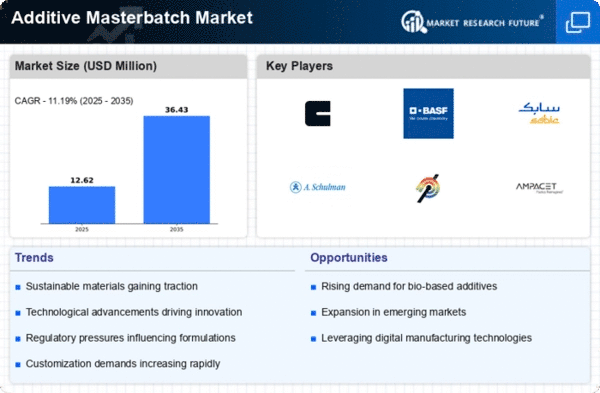
Additive Masterbatch Market Infographic
×
Additive Masterbatch Market Infographic Full View
Purchase Options

Market Analysis

In-depth Analysis of Additive Masterbatch Market Industry Landscape

Market dynamics within the Additive Masterbatch industry are being impacted by several factors that are leading to its constant shifts. Additive masterbatches are mixtures of additives and carrier resins added during compounding operations that enhance specific properties of plastic materials used across multiple industries, such as automotive packaging and consumer goods. One of the dominant forces that shape the market dynamics of this industry is an increasing demand for plastic products in different sectors, including packaging, automotive, and consumer goods. Technological advancements immensely contribute to shaping the dynamics of the Additive Masterbatch industry. These have led to the introduction of innovative additives that meet particular industrial requirements. For instance, there has been a shift towards UV stabilizers, flame retardants, and antimicrobial additives as a response to environmental safety concerns. This changing formulation not only ensures adherence to regulatory compliance but also opens up new market opportunities. Global sustainability initiatives are another factor impacting market dynamics associated with such segments. With a rising focus on minimizing environmental degradation, the demand for biodegradable plastic materials that are friendly to the environment continues to go higher. Market consolidation and strategic partnerships characterize competition within the Additive Masterbatch sector today. Their involvement in mergers or acquisitions aimed at strengthening product lines while expanding geographical coverage, among other things, indicates how companies are shaping their business structures in the future. These strategic moves foster intense rivalries between major players, leading to market consolidation. Additionally, collaborations between manufacturers and end-users result in a more efficient supply chain, thereby influencing market dynamics through collaborative innovation. The price volatility of raw materials significantly influences the Additive Masterbatch market dynamics. For example, prices of carriers, pigments, and additives are important for this market. The rise of emerging economies has made them become notable participants in the Additive Masterbatch market dynamics. In this respect, Asia-Pacific region has experienced rapid industrialization, urbanization, and increased consumer spending. Consumables for plastic products are also becoming more classified in different industries across regions. Dynamic forces drive growth in the Additive Masterbatch market, and as a result, it keeps evolving. Therefore, technological advancement, sustainability initiatives, market consolidation, raw material price volatility, and regional shifts combine to shape its dynamics. To remain relevant within an increasingly competitive landscape for additive masterbatches, these firms must navigate through these factors successfully.

Author
Chitranshi Jaiswal
Research Analyst Level I

In her 3 years of experience in the market research field, she has handled critical cross-domain projects. She has an in-depth knowledge of market estimation & analysis, problem-solving, primary as well as secondary research, and team management.She holds an engineering degree and is an MBA professional from a well-known university, capable of evaluating the market and competitive conditions. An exceptional strategist with excellent communication skills and a passion for delivering cutting-edge & practical insights for the market. Proficient in multi-tasking, and can successfully deal with competing demands, while maintaining complete confidentiality. Generated business through active client and project development, networking, and high-quality responses. Her knowledge and skills have helped in making solid business decisions, securing funding from investors, and avoiding business failures.

Leave a Comment

FAQs

What growth rate global additive masterbatch market would register in the future?

The global additive masterbatch market would register a growth of 6.35%.

Which industry will play a crucial role in taking the additive masterbatch market ahead??

Packaging Industries

What is the key restraining factor for the global additive masterbatch market?

Fluctuation in raw material prices

Market Summary

As per MRFR analysis, the Additive Masterbatch Market Size was estimated at 11.35 USD Million in 2024. The Additive Masterbatch industry is projected to grow from 12.62 USD Million in 2025 to 36.43 USD Million by 2035, exhibiting a compound annual growth rate (CAGR) of 11.19 during the forecast period 2025 - 2035.

Key Market Trends & Highlights

The Additive Masterbatch Market is poised for growth driven by sustainability and customization trends.

  • The market is increasingly influenced by sustainability initiatives, reflecting a broader environmental consciousness.
  • Customization and specialization are becoming essential as manufacturers seek to meet diverse consumer demands.
  • Technological advancements are facilitating innovative applications, particularly in the packaging and automotive sectors.
  • Rising demand in emerging markets, coupled with regulatory compliance, is propelling growth in the North American and Asia-Pacific regions.

Market Size & Forecast

2024 Market Size 11.35 (USD Million)
2035 Market Size 36.43 (USD Million)
CAGR (2025 - 2035) 11.19%
Largest Regional Market Share in 2024 Asia-Pacific

Major Players

<p>Clariant (CH), BASF (DE), SABIC (SA), A. Schulman (US), PolyOne (US), Ampacet (US), Kraton (US), Evonik (DE), M. Holland (US)</p>

Market Trends

The Additive Masterbatch Market is currently experiencing a dynamic evolution, driven by the increasing demand for enhanced performance in plastic products. This market encompasses a variety of additives that improve the properties of plastics, such as UV resistance, color, and processing efficiency. As industries seek to optimize their materials for sustainability and functionality, the role of additive masterbatches becomes increasingly pivotal. The integration of advanced technologies and innovative formulations appears to be reshaping the landscape, allowing manufacturers to meet stringent regulatory standards while catering to consumer preferences for eco-friendly solutions. Moreover, the Additive Masterbatch Market is witnessing a notable shift towards customization and specialization. Companies are focusing on developing tailored solutions that address specific application needs across diverse sectors, including packaging, automotive, and consumer goods. This trend suggests a growing recognition of the importance of performance attributes in driving market growth. As the industry continues to adapt to changing market dynamics, the emphasis on research and development is likely to intensify, fostering a competitive environment that encourages innovation and collaboration among stakeholders.

Sustainability Focus

The Additive Masterbatch Market is increasingly aligning with sustainability initiatives. Manufacturers are prioritizing eco-friendly additives that reduce environmental impact, reflecting a broader industry trend towards greener practices. This shift is likely to influence product development and consumer choices.

Customization and Specialization

There is a growing trend towards customized additive masterbatches tailored to specific applications. This specialization allows manufacturers to meet unique performance requirements across various industries, enhancing product functionality and market competitiveness.

Technological Advancements

Innovations in formulation and processing technologies are transforming the Additive Masterbatch Market. These advancements enable the development of more efficient and effective additives, which could lead to improved product performance and reduced production costs.

Additive Masterbatch Market Market Drivers

Growth of the Automotive Sector

The automotive sector significantly influences the Global Additive Masterbatch Market Industry, as manufacturers increasingly utilize additive masterbatches to enhance the performance and aesthetics of automotive components. Additives such as UV stabilizers and colorants are essential for improving the durability and visual appeal of automotive parts. With the automotive industry projected to expand, the demand for high-performance materials is likely to rise. This trend is further supported by the increasing production of electric vehicles, which often require specialized materials for lightweight and energy-efficient designs. The market's growth trajectory aligns with the overall expansion of the automotive sector, contributing to the anticipated market value of 5.16 USD Billion by 2035.

Expansion of the Construction Industry

The construction industry serves as a critical driver for the Global Additive Masterbatch Market Industry, as the demand for high-performance building materials continues to rise. Additive masterbatches are increasingly employed in the production of construction materials to enhance properties such as fire resistance, UV stability, and impact resistance. As urbanization accelerates globally, the need for innovative construction solutions becomes paramount. For example, the incorporation of additives in PVC and other polymers used in construction applications can significantly improve their longevity and performance. This trend is expected to bolster the market, as construction activities expand in emerging economies.

Rising Demand for Sustainable Packaging

The Global Additive Masterbatch Market Industry experiences a notable increase in demand for sustainable packaging solutions. As environmental concerns escalate, manufacturers are increasingly adopting biodegradable and recyclable materials. This shift is driven by consumer preferences for eco-friendly products, prompting companies to innovate with additive masterbatches that enhance the properties of sustainable polymers. For instance, the incorporation of additives can improve the mechanical strength and barrier properties of biodegradable plastics, making them more viable for packaging applications. The market is projected to reach 2.5 USD Billion in 2024, reflecting a growing commitment to sustainability in the packaging sector.

Increased Focus on Product Customization

The Global Additive Masterbatch Market Industry is witnessing a surge in demand for customized solutions tailored to specific applications. Manufacturers are increasingly seeking additive masterbatches that can meet unique performance criteria, such as specific color matching or enhanced functional properties. This trend is particularly evident in sectors like consumer goods and packaging, where differentiation is crucial. Companies are investing in research and development to create bespoke formulations that cater to diverse customer needs. As a result, the market is likely to experience robust growth, driven by the increasing emphasis on product customization across various industries.

Technological Advancements in Masterbatch Production

Technological advancements play a pivotal role in shaping the Global Additive Masterbatch Market Industry. Innovations in production techniques, such as the development of more efficient extrusion processes and the use of advanced compounding technologies, enhance the quality and performance of additive masterbatches. These advancements allow for better dispersion of additives within the polymer matrix, resulting in improved product characteristics. Furthermore, the introduction of smart additives that respond to environmental stimuli is gaining traction. As a result, the market is expected to witness a compound annual growth rate of 6.81% from 2025 to 2035, driven by these technological improvements.

Market Segment Insights

By Application: Packaging (Largest) vs. Automotive (Fastest-Growing)

<p>In the additive masterbatch market, the application segment is primarily dominated by packaging, which holds the largest share due to its extensive use in food, beverage, and consumer product packaging. This sector's demand stems from the growing need for aesthetic appeal and functional performance in packaging materials, driving significant investments in masterbatch innovations. Following packaging, the automotive sector is rapidly emerging, showcasing the fastest growth as manufacturers increasingly incorporate advanced materials for aesthetic, durability, and sustainability enhancements in vehicles. The automotive application is leveraging additive masterbatches to improve parts quality and efficiency in automotive production.</p>

<p>Packaging (Dominant) vs. Automotive (Emerging)</p>

<p>The packaging segment is inherently dominant due to its vast applications in various industries, including food and beverages, which prioritize visual and functional performance. Packaging masterbatches enhance properties such as UV resistance, color consistency, and compatibility with recycling processes. Conversely, the automotive segment is emerging, characterized by innovative applications aimed at enhancing the sustainability and aesthetic appeal of vehicles. Automotive manufacturers are utilizing additive masterbatches to create lightweight composites, reduce production costs, and satisfy stringent environmental regulations. This transition signifies a growing focus on integrating advanced materials in vehicle design, positioning the automotive application as a key growth driver in the additive masterbatch market.</p>

By End Use: Plastics (Largest) vs. Textiles (Fastest-Growing)

<p>The Additive Masterbatch Market showcases a diverse distribution across several end-use segments, with the plastics sector emerging as the largest contributor. Dominating the market, plastics are integral to various applications, including packaging and automotive, driving robust demand. The textiles segment is rapidly gaining momentum, particularly due to the growing trend of functional and sustainable fibers, setting the stage for significant shifts in market dynamics.</p>

<p>Plastics (Dominant) vs. Textiles (Emerging)</p>

<p>Plastics serve as the dominant end-use segment in the Additive Masterbatch Market, primarily due to their extensive utilization in industries like packaging, automotive, and consumer goods. Their robust characteristics, such as adaptability and durability, make them a preferred choice for a wide array of applications. In contrast, the textiles segment, while currently smaller, is regarded as an emerging field driven by innovations in functional and eco-friendly materials. The growing demand for technical textiles, influenced by the fashion sector's shift towards sustainability, positions textiles as a rapidly evolving segment with potential for exponential growth.</p>

By Type: Color Masterbatch (Largest) vs. Filler Masterbatch (Fastest-Growing)

<p>The Additive Masterbatch Market is characterized by a diverse range of products, with Color Masterbatch holding the largest share. This segment appeals to a broad spectrum of applications due to its ability to enhance aesthetic appeal and produce vibrant colors in various materials. On the other hand, Filler Masterbatch, while currently smaller in market share, is gaining momentum as industries seek cost-effective solutions to reduce material costs and enhance product performance. The growth of the Additive Masterbatch Market is driven by increasing consumer demand for customized and high-quality plastic products. Color Masterbatch continues to dominate as it aligns with trends in packaging and consumer goods, while Filler Masterbatch is on the rise thanks to advancements in production technologies and its role in enhancing the properties of base materials. As manufacturers strive to innovate, both segments are set to witness significant development in the coming years.</p>

<p>Color Masterbatch (Dominant) vs. Additive Masterbatch (Emerging)</p>

<p>Color Masterbatch is recognized for its pivotal role in the Additive Masterbatch Market, providing a wide array of colors and tones that enhance the visual appeal of end products. This dominant segment thrives on its ability to cater to various industries, including packaging, automotive, and textiles, where aesthetics play a crucial role in consumer choices. Conversely, Additive Masterbatch, while an emerging force, addresses functional enhancements such as UV stabilization, anti-static properties, and flame retardancy. As regulations regarding product safety and sustainability tighten, the demand for Additive Masterbatch is growing, targeting specific functionalities required in modern manufacturing processes. The interplay between these segments highlights a shift towards not only colored aesthetics but also the performance characteristics of plastic materials.</p>

By Material: Polyethylene (Largest) vs. Polypropylene (Fastest-Growing)

<p>In the Additive Masterbatch Market, the material segment showcases a diverse distribution among various types, with Polyethylene holding the largest market share due to its extensive applications in flexible packaging, containers, and other consumer products. Polypropylene follows closely, well-regarded for its versatility and adaptability across different industries, making it a strong contender in the additive masterbatch landscape. Growth trends indicate a bright future for both materials, propelled by the rising demand for lightweight and durable packaging solutions. Polypropylene's role as the fastest-growing segment highlights its increasing adoption in automotive and textile applications, aligning with sustainability trends as manufacturers seek eco-friendly alternatives. The growth drivers for Polyethylene remain robust, fueled by its widespread use in everyday products and market innovations enhancing its properties.</p>

<p>Polyethylene (Dominant) vs. Polyvinyl Chloride (Emerging)</p>

<p>Polyethylene, as the dominant player in the additive masterbatch market, boasts exceptional qualities such as flexibility, chemical resistance, and low-density characteristics, making it integral to a multitude of applications including films, bags, and containers. Its ability to be easily processed and modified with additives enhances its performance and broadens its use. On the other hand, Polyvinyl Chloride (PVC) is an emerging contender in this sector, known for its rigidity and strength, often used in construction and plumbing products. Although it currently holds a smaller share compared to Polyethylene, ongoing innovations in PVC formulations are driving its growth, particularly in applications seeking durable and cost-effective solutions.</p>

By Functionality: UV Stabilization (Largest) vs. Antioxidant (Fastest-Growing)

<p>In the additive masterbatch market, the functionality segment exhibits considerable diversity, with UV Stabilization being the largest market share holder. UV Stabilization is critical for enhancing the durability and longevity of plastic products in outdoor applications, thus driving its dominant position. Meanwhile, Antioxidants are emerging as the fastest-growing segment, owing to increasing awareness regarding the degradation of materials and the need for enhanced product lifetime. The growth trajectory of the Antioxidant segment reflects its vital role in protecting polymers from oxidative stress and extending their usability.</p>

<p>UV Stabilization (Dominant) vs. Antioxidants (Emerging)</p>

<p>UV Stabilization is a dominant force in the additive masterbatch market due to its essential function in protecting materials against UV degradation. This segment is widely used in applications such as packaging, automotive, and construction, where exposure to sunlight can significantly impact product quality and longevity. On the other hand, Antioxidants are rapidly gaining traction as an emerging force, driven by the growing need to improve material durability. This segment is vital in preserving the integrity of plastics by preventing oxidative deterioration, making it increasingly popular in various manufacturing sectors. Together, these functionalities address critical performance requirements, shaping consumer preference and driving technological advancements in the market.</p>

Get more detailed insights about Additive Masterbatch Market Research Report—Global Forecast till 2035

Regional Insights

North America : Innovation and Sustainability Focus

The North American additive masterbatch market is poised for growth, driven by increasing demand for sustainable and innovative materials. With a market size of $2.27 billion, the region is focusing on eco-friendly solutions and advanced manufacturing techniques. Regulatory support for sustainable practices is further catalyzing this growth, as companies seek to meet stringent environmental standards and consumer preferences for greener products. Leading the market are the United States and Canada, where major players like Clariant, BASF, and A. Schulman are investing in R&D to enhance product offerings. The competitive landscape is characterized by a mix of established firms and emerging startups, all vying for market share in a rapidly evolving industry. The presence of key players ensures a robust supply chain and innovation pipeline, positioning North America as a leader in the additive masterbatch sector.

Europe : Strong Regulatory Framework

Europe's additive masterbatch market, valued at $3.4 billion, is experiencing significant growth, driven by stringent regulations and a strong emphasis on sustainability. The region's commitment to reducing plastic waste and promoting recycling initiatives is fostering demand for innovative masterbatch solutions. Regulatory frameworks, such as the EU Plastics Strategy, are encouraging manufacturers to adopt eco-friendly practices, thus enhancing market dynamics. Germany, France, and the UK are leading countries in this market, with key players like BASF and Evonik spearheading innovation. The competitive landscape is robust, with numerous companies focusing on developing specialized products to meet diverse industry needs. The presence of established firms and a strong regulatory environment positions Europe as a critical player in The Additive Masterbatch.

Asia-Pacific : Emerging Powerhouse in Additives

Asia-Pacific is the largest market for additive masterbatch, with a market size of $5.5 billion, reflecting its rapid industrialization and growing demand for plastics across various sectors. The region's growth is fueled by increasing urbanization, rising disposable incomes, and a shift towards advanced manufacturing processes. Countries like China and India are at the forefront, supported by favorable government policies and investments in infrastructure. China leads the market, with significant contributions from local and international players like SABIC and PolyOne. The competitive landscape is marked by a mix of established companies and new entrants, all striving to capture the growing demand for innovative and sustainable solutions. The presence of key players ensures a dynamic market environment, positioning Asia-Pacific as a powerhouse in the additive masterbatch industry.

Middle East and Africa : Emerging Market Potential

The Middle East and Africa (MEA) region, with a market size of $0.18 billion, presents emerging opportunities in the additive masterbatch sector. The growth is driven by increasing industrial activities and a rising demand for plastic products in various applications. Governments in the region are investing in infrastructure and manufacturing capabilities, which is expected to boost market growth in the coming years. Countries like South Africa and the UAE are leading the way, with a growing number of local and international players entering the market. The competitive landscape is evolving, with companies focusing on innovation and sustainability to meet the unique demands of the region. As the market matures, MEA is poised to become a significant player in the global additive masterbatch industry.

Key Players and Competitive Insights

The Additive Masterbatch Market is currently characterized by a dynamic competitive landscape, driven by innovation, sustainability, and strategic partnerships. Key players such as Clariant (CH), BASF (DE), and SABIC (SA) are at the forefront, each adopting distinct strategies to enhance their market positioning. Clariant (CH) emphasizes innovation in sustainable solutions, focusing on bio-based additives that cater to the growing demand for environmentally friendly products. BASF (DE), on the other hand, leverages its extensive research capabilities to develop advanced masterbatch formulations, while SABIC (SA) is actively pursuing regional expansion to strengthen its presence in emerging markets. Collectively, these strategies contribute to a competitive environment that is increasingly focused on technological advancement and sustainability.

In terms of business tactics, companies are localizing manufacturing to reduce lead times and optimize supply chains. The market structure appears moderately fragmented, with several players vying for market share. However, the influence of major companies is significant, as they set industry standards and drive innovation. This competitive structure allows for a diverse range of products and solutions, catering to various customer needs across different sectors.

In November 2025, Clariant (CH) announced a partnership with a leading packaging manufacturer to develop a new line of biodegradable masterbatches. This strategic move underscores Clariant's commitment to sustainability and positions the company as a leader in eco-friendly solutions. The collaboration is expected to enhance Clariant's product offerings and expand its market reach, particularly in the packaging sector, which is increasingly prioritizing sustainable materials.

In October 2025, BASF (DE) launched a new digital platform aimed at streamlining the ordering process for its masterbatch products. This initiative reflects BASF's focus on digital transformation, enhancing customer experience through improved accessibility and efficiency. By integrating advanced technologies into its operations, BASF is likely to strengthen its competitive edge and respond more effectively to market demands.

In September 2025, SABIC (SA) completed the acquisition of a regional additive masterbatch producer, which is anticipated to bolster its production capabilities and expand its product portfolio. This acquisition aligns with SABIC's strategy to enhance its operational footprint in key markets, allowing for greater flexibility and responsiveness to customer needs. The integration of the acquired company is expected to yield synergies that will further enhance SABIC's competitive position.

As of December 2025, the Additive Masterbatch Market is witnessing trends such as digitalization, sustainability, and the integration of AI technologies. Strategic alliances are increasingly shaping the competitive landscape, enabling companies to pool resources and expertise. The shift from price-based competition to a focus on innovation and technology is evident, as companies strive to differentiate themselves through advanced solutions and reliable supply chains. Looking ahead, competitive differentiation is likely to evolve, with an emphasis on sustainable practices and technological advancements becoming paramount.

Key Companies in the Additive Masterbatch Market include

Industry Developments

  • Q2 2024: Clariant inaugurates new additive masterbatch production line in China Clariant announced the opening of a new production line for additive masterbatches at its facility in Zhenjiang, China, aimed at expanding capacity to meet growing demand in the Asia-Pacific region.
  • Q1 2024: Ampacet launches new range of sustainable additive masterbatches for flexible packaging Ampacet introduced a new portfolio of additive masterbatches designed to enhance recyclability and performance in flexible packaging applications, targeting the circular economy market.
  • Q2 2024: Cabot Corporation appoints new Vice President for Masterbatch Solutions Cabot Corporation announced the appointment of a new Vice President to lead its global masterbatch solutions business, focusing on innovation and market expansion.
  • Q3 2024: Penn Color opens new additive masterbatch technology center in Singapore Penn Color inaugurated a new technology center in Singapore dedicated to the development and testing of advanced additive masterbatch formulations for the Asia-Pacific market.
  • Q2 2024: Tosaf partners with European packaging firm to supply custom additive masterbatches Tosaf announced a strategic partnership with a leading European packaging manufacturer to develop and supply custom additive masterbatches for high-performance packaging solutions.
  • Q1 2024: Plastiblends commissions new additive masterbatch plant in India Plastiblends commissioned a new manufacturing facility in Maharashtra, India, increasing its production capacity for additive masterbatches to serve domestic and export markets.
  • Q2 2024: Clariant launches new UV-stabilizer additive masterbatch for agricultural films Clariant introduced a new UV-stabilizer additive masterbatch specifically designed to extend the life and performance of agricultural films in harsh environments.
  • Q3 2024: Ampacet expands additive masterbatch production in Latin America Ampacet announced the expansion of its additive masterbatch production capacity at its facility in Brazil to meet increasing demand from the Latin American packaging and automotive sectors.
  • Q2 2024: Cabot Corporation acquires specialty additive masterbatch business from local supplier Cabot Corporation completed the acquisition of a specialty additive masterbatch business in Europe, strengthening its portfolio and regional presence.
  • Q1 2024: PLASTIKA KRITIS secures major contract to supply additive masterbatches for Middle East infrastructure projects PLASTIKA KRITIS announced it has won a significant contract to supply additive masterbatches for large-scale infrastructure and construction projects in the Middle East.
  • Q2 2024: Penn Color launches antimicrobial additive masterbatch for consumer goods Penn Color introduced a new antimicrobial additive masterbatch aimed at improving hygiene and safety in consumer goods and packaging applications.
  • Q3 2024: Tosaf opens new R&D center for additive masterbatch innovation in Israel Tosaf inaugurated a new research and development center in Israel focused on the innovation of additive masterbatch technologies for global markets.

Objectives of the Study

    • To get a comprehensive overview of the global additive masterbatch market
    • To get wide-ranging information about the key factors driving the market and market opportunities
    • To gain information regarding the key players in the industry, their product portfolio, strategies, and key developments
    • To gain insights about the key country/region in which the market is growing

Intended Audience

    • Industrial sector
    • Broadcast sector
    • Enterprise sector
    • Digital communication
    • Packaging industries

Future Outlook

Additive Masterbatch Market Future Outlook

<p>The Additive Masterbatch Market is projected to grow at 11.19% CAGR from 2024 to 2035, driven by increasing demand for advanced materials and sustainable solutions.</p>

New opportunities lie in:

  • <p>Development of bio-based additive masterbatches for eco-friendly applications.</p>
  • <p>Expansion into emerging markets with tailored product offerings.</p>
  • <p>Investment in R&D for innovative additives enhancing performance and functionality.</p>

<p>By 2035, the Additive Masterbatch Market is expected to achieve substantial growth, reflecting evolving industry needs.</p>

Market Segmentation

Additive Masterbatch Market Type Outlook

  • Color Masterbatch
  • Additive Masterbatch
  • Filler Masterbatch
  • Functional Masterbatch

Additive Masterbatch Market End Use Outlook

  • Plastics
  • Textiles
  • Coatings
  • Adhesives
  • Composites

Additive Masterbatch Market Material Outlook

  • Polyethylene
  • Polypropylene
  • Polyvinyl Chloride
  • Polystyrene

Additive Masterbatch Market Application Outlook

  • Packaging
  • Automotive
  • Consumer Goods
  • Construction
  • Electronics

Additive Masterbatch Market Functionality Outlook

  • UV Stabilization
  • Antioxidant
  • Flame Retardant
  • Anti-Static

Report Scope

MARKET SIZE 202411.35(USD Million)
MARKET SIZE 202512.62(USD Million)
MARKET SIZE 203536.43(USD Million)
COMPOUND ANNUAL GROWTH RATE (CAGR)11.19% (2024 - 2035)
REPORT COVERAGERevenue Forecast, Competitive Landscape, Growth Factors, and Trends
BASE YEAR2024
Market Forecast Period2025 - 2035
Historical Data2019 - 2024
Market Forecast UnitsUSD Million
Key Companies ProfiledClariant (CH), BASF (DE), SABIC (SA), A. Schulman (US), PolyOne (US), Ampacet (US), Kraton (US), Evonik (DE), M. Holland (US)
Segments CoveredApplication, End Use, Type, Material, Functionality
Key Market OpportunitiesGrowing demand for sustainable packaging solutions drives innovation in the Additive Masterbatch Market.
Key Market DynamicsRising demand for sustainable solutions drives innovation and competition in the Additive Masterbatch Market.
Countries CoveredNorth America, Europe, APAC, South America, MEA

FAQs

What growth rate global additive masterbatch market would register in the future?

The global additive masterbatch market would register a growth of 6.35%.

Which industry will play a crucial role in taking the additive masterbatch market ahead??

Packaging Industries

What is the key restraining factor for the global additive masterbatch market?

Fluctuation in raw material prices

  1. SECTION I: EXECUTIVE SUMMARY AND KEY HIGHLIGHTS
    1. | 1.1 EXECUTIVE SUMMARY
  2. SECTION II: SCOPING, METHODOLOGY AND MARKET STRUCTURE
    1. | 2.1 MARKET INTRODUCTION
    2. | 2.2 RESEARCH METHODOLOGY
  3. SECTION III: QUALITATIVE ANALYSIS
    1. | 3.1 MARKET DYNAMICS
    2. | 3.2 MARKET FACTOR ANALYSIS
  4. SECTION IV: QUANTITATIVE ANALYSIS
    1. | 4.1 Chemicals and Materials, BY Application (USD Million)
    2. | 4.2 Chemicals and Materials, BY End Use (USD Million)
    3. | 4.3 Chemicals and Materials, BY Type (USD Million)
    4. | 4.4 Chemicals and Materials, BY Material (USD Million)
    5. | 4.5 Chemicals and Materials, BY Functionality (USD Million)
    6. | 4.6 Chemicals and Materials, BY Region (USD Million)
  5. SECTION V: COMPETITIVE ANALYSIS
    1. | 5.1 Competitive Landscape
    2. | 5.2 Company Profiles
    3. | 5.3 Appendix

Additive Masterbatch Market Segmentation

Market Segmentation Overview

  • Detailed segmentation data will be available in the full report
  • Comprehensive analysis by multiple parameters
  • Regional and country-level breakdowns
  • Market size forecasts by segment
Infographic

Free Sample Request

Kindly complete the form below to receive a free sample of this Report

Get Free Sample

Customer Strories

Compare Licence

×
Features License Type
Single User Multiuser License Enterprise User
Price $4,950 $5,950 $7,250
Maximum User Access Limit 1 User Upto 10 Users Unrestricted Access Throughout the Organization
Free Customization
Direct Access to Analyst
Deliverable Format
Platform Access
Discount on Next Purchase 10% 15% 15%
Printable Versions