Research Methodology on Ethylene Vinyl Acetate Market
INTRODUCTION
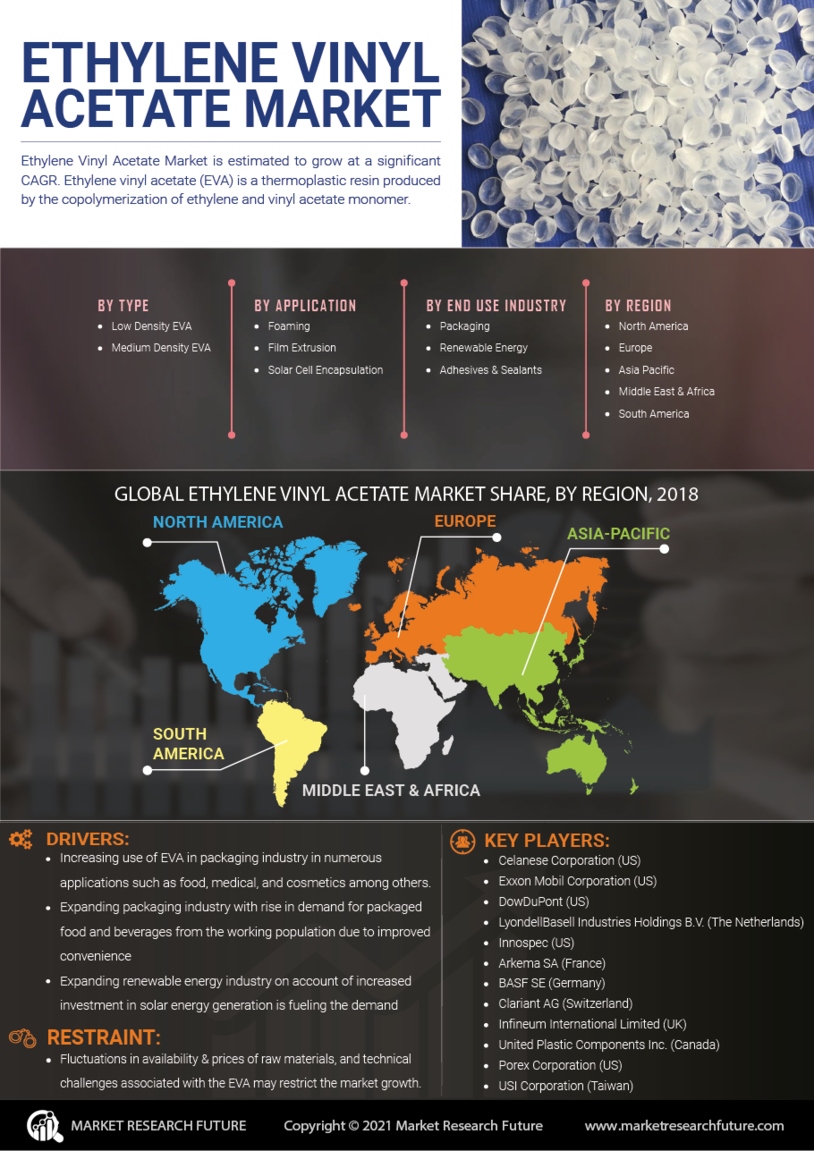
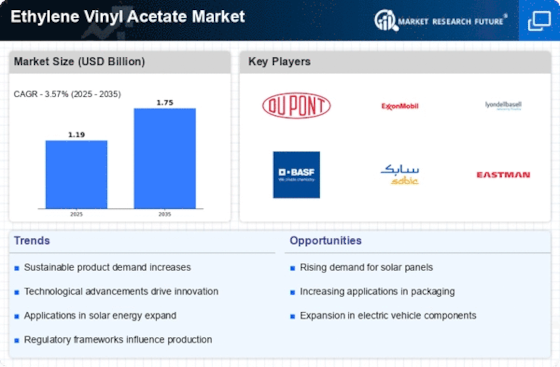
In today's world, Ethylene Vinyl Acetate (EVA) has become a widely used material for various purposes owing to its excellent combination of physical, mechanical, and thermodynamic properties. EVA has applications in automotive, packaging, sports and leisure, electrical and electronics, etc. EVA is also known for its exceptional properties such as UV protection, enhancement for a wide range of applications and end-uses, superior adhesion resistance and hot temperature bonding, bio-based plastic versatility, soft-tactile properties, good thermal insulation properties, etc. Moreover, the demand for Ethylene Vinyl Acetate is expected to grow during the forecast period. According to Market Research Future (MRFR)'s report on the global ethylene vinyl acetate market, the market is projected to register a healthy CAGR during the forecast period of 2023-2030.
RESEARCH METHODOLOGY
1.0 Objectives
The primary objective of this research is to gain comprehensive insights into the global Ethylene Vinyl Acetate (EVA) market and assess the current market trends and growth drivers for the period of 2023-2030.
2.0 Scope of the Study
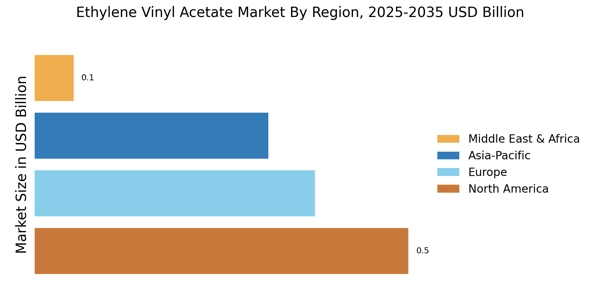
This research report provides data including revenue and production of the global Ethylene Vinyl Acetate market from 2023-2030. The geographic coverage of the study is Europe, North America, Asia-Pacific, South America, and the Middle East and Africa. Descriptive information about the market size, growth rate, and market share of each region and country is also highlighted. The report further provides in-depth information about the market dynamics, including drivers, restraints, trends, opportunities and challenges faced by the market over the forecast period.
3.0 Research Methodology
We aim to provide a comprehensive analysis of the global Ethylene Vinyl Acetate market in this study. Hence, the research is based on thorough primary and secondary research with extensive qualitative and quantitative analysis of the data obtained. The research approach employed for this report is based on Primary and secondary research methodology.
3.1 Primary Research Methodology
The primary research methodology employed in this report includes online and offline surveys, interviews and studying existing databases. Our team of researchers collected data through secondary sources, such as official publications, market research reports and other publications and our primary research methodology, which involved handpicked experts from the relevant industry. The primary research methodology involved the interviews of the industry experts, industry professionals and the multi-client subscribers of the report.
3.2 Secondary Research Methodology
A secondary research methodology has been employed in this research, which involves extensive desk research and studies of secondary sources such as whitepapers, industry/industry publications, medical publications, and journals. Moreover, Market Research Future has conducted detailed research and analysis of the data obtained through primary and secondary sources of information. The data has been analyzed and validated through various methods like SWOT analysis, Porter's five forces model and the data triangulation method.
4.0 Market Estimation Methodology
The research process included various steps for obtaining accurate market data and information. The steps involved in the research process for estimating the size of the global ethylene vinyl acetate (EVA) market include:
Collection and analysis of qualitative and quantitative data from primary and secondary sources
Triangulation of qualitative and quantitative data
Adjustment of the extracted data to arrive at a complete and consistent market size
Finally, the estimated data was validated using several sources like, interviews with industry experts, key opinion leaders and other reliable sources, to achieve the final market size
5.0 Assumptions
The research has considered certain assumptions during the forecasted period for the global Ethylene Vinyl Acetate (EVA) market. Some of the assumptions include:
- Research is based on the current market trends in the market
- Increase in the applications of Ethylene Vinyl Acetate (EVA)
- Increase in demand for more effective and efficient products
- Considerable macroeconomic and technological changes
- Expected market revenue generated by the end of the forecasted period
6.0 Data Collection and Validation Source
At Market Research Future, various research methods were used for collecting data and information on the global Ethylene Vinyl Acetate (EVA) market. The present market data analysis was conducted through extensive primary and secondary research. The primary research sources have been combined with the secondary research sources to validate the estimated market values and projected CAGR.
7.0 Check List
We have considered several factors while estimating the market size and the forecast of the global Ethylene Vinyl Acetate (EVA) market. Some of them are listed below:
- Industry Leadership: We have considered the industry leader for the Ethylene Vinyl Acetate (EVA) market to arrive at the estimated forecast.
- Regulatory Framework: We have considered the regulatory framework in each of the countries to understand the potential of the Ethylene Vinyl Acetate (EVA) market.
- Market Forecast: We have considered the historical data of the market, geopolitical developments, and future market trends to arrive at the estimated forecast 2023 to 2030.
CONCLUSION
The research concludes that the Global Ethylene Vinyl Acetate (EVA) market is expected to register a healthy CAGR during the forecast period of 2023-2030. The primary focus of this study was to gain insights into the global market and assess the market trends and growth drivers during the forecast period. Moreover, the research provides in-depth information about the market dynamics, including drivers, restraints, trends, opportunities, and challenges, faced by the market over the forecast period 2023 to 2030.