×
Request Free Sample ×

Kindly complete the form below to receive a free sample of this Report

* Please use a valid business email

Leading companies partner with us for data-driven Insights

clients tt-cursor
Hero Background

Gluten-Free Packaged Food Market

ID: MRFR/FnB/1121-HCR
110 Pages
Varsha More
October 2025

Gluten-Free Packaged Food Products Market Research Report Information by Product Type (Bakery & Confectionery, Breakfast Cereals, Sweet & Savory Snacks, RTE & RTC Meals, Others), Distribution Channel [Store-Based (Supermarkets & Hypermarkets, Convenience Stores, and Others) and Non-Store Based], and Region (North America, Europe, Asia-Pacific, and Rest of the World)& dash; Forecast till 2035

Share:
Download PDF ×

We do not share your information with anyone. However, we may send you emails based on your report interest from time to time. You may contact us at any time to opt-out.

Gluten-Free Packaged Food Market Infographic
Purchase Options

Gluten-Free Packaged Food Market Summary

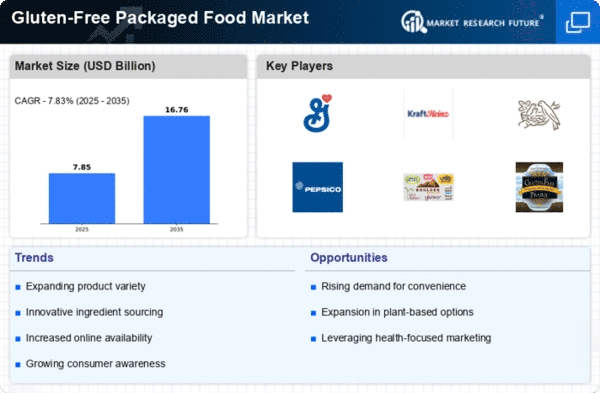
As per MRFR analysis, the Gluten-Free Packaged Food Market was estimated at 7.28 USD Billion in 2024. The gluten-free packaged food industry is projected to grow from 7.94 USD Billion in 2025 to 16.76 USD Billion by 2035, exhibiting a compound annual growth rate (CAGR) of 7.83 during the forecast period 2025 - 2035.

Key Market Trends & Highlights

The Gluten-Free Packaged Food Market is experiencing robust growth driven by health trends and consumer preferences.

  • The market is witnessing an increased demand for variety, particularly in the snacks segment, which remains the largest.
  • Health and wellness concerns are propelling consumers towards gluten-free options, especially in North America.
  • Sustainability and ethical sourcing are becoming pivotal factors influencing purchasing decisions in the Asia-Pacific region.
  • Rising prevalence of gluten sensitivity and health-conscious consumer behavior are key drivers fueling market expansion.

Market Size & Forecast

2024 Market Size 7.28 (USD Billion)
2035 Market Size 16.76 (USD Billion)
CAGR (2025 - 2035) 7.83%

Major Players

General Mills (US), Kraft Heinz (US), Nestle (CH), PepsiCo (US), Boulder Brands (US), Gluten-Free Prairie (US), Schär (IT), Canyon Bakehouse (US), Udi's (US)

Gluten-Free Packaged Food Market Trends

The Gluten-Free Packaged Food Market is currently experiencing a notable transformation, driven by a growing awareness of dietary restrictions and health consciousness among consumers. This market appears to be expanding as individuals increasingly seek alternatives to traditional gluten-containing products. The rise in celiac disease diagnoses and gluten sensitivity has prompted manufacturers to innovate and diversify their offerings, catering to a broader audience. As a result, the market landscape is evolving, with a variety of gluten-free options becoming more accessible in retail environments. Moreover, the Gluten-Free Packaged Food Market seems to be influenced by changing consumer preferences, with an emphasis on clean labels and natural ingredients. Shoppers are increasingly scrutinizing product labels, favoring items that are not only gluten-free but also free from artificial additives and preservatives. This trend indicates a shift towards healthier eating habits, where consumers prioritize quality and transparency in their food choices. As the market continues to grow, it is likely that brands will adapt to these demands, further enhancing their product lines to meet the expectations of health-conscious individuals.

Increased Demand for Variety

The Gluten-Free Packaged Food Market is witnessing a surge in demand for diverse product offerings. Consumers are no longer satisfied with a limited selection; they seek a wide range of gluten-free options, including snacks, meals, and baked goods. This trend encourages manufacturers to innovate and expand their portfolios, ensuring that gluten-free products are available in various flavors and formats.

Focus on Health and Wellness

There is a growing emphasis on health and wellness within the Gluten-Free Packaged Food Market. Consumers are increasingly aware of the nutritional content of their food, leading to a preference for products that are not only gluten-free but also rich in vitamins, minerals, and other beneficial ingredients. This trend suggests that brands may need to reformulate their products to align with health-conscious consumer demands.

Sustainability and Ethical Sourcing

Sustainability is becoming a crucial consideration in the Gluten-Free Packaged Food Market. Consumers are showing a preference for products that are sourced ethically and produced with minimal environmental impact. This trend indicates that brands may need to adopt sustainable practices in their supply chains and communicate these efforts to attract environmentally conscious shoppers.

Gluten-Free Packaged Food Market Drivers

Expanding Product Range

The diversification of gluten-free product offerings plays a crucial role in the growth of the Global Gluten-Free Packaged Food Market Products Market Industry. Manufacturers are increasingly introducing a variety of gluten-free options, including snacks, baked goods, and ready-to-eat meals, catering to a broader audience. This expansion not only meets the needs of those with dietary restrictions but also attracts health-conscious consumers seeking nutritious alternatives. As a result, the market is expected to grow significantly, reaching an estimated 6.65 USD Billion by 2035. This growth trajectory suggests that the industry is adapting to consumer preferences and enhancing its product portfolio to remain competitive.

Market Growth Projections

The Global Gluten-Free Packaged Food Market Products Market Industry is poised for substantial growth, with projections indicating a market value of 1.84 USD Billion in 2024 and an anticipated rise to 6.65 USD Billion by 2035. This trajectory suggests a compound annual growth rate (CAGR) of 12.37% from 2025 to 2035, reflecting the increasing consumer demand for gluten-free options. The market's expansion is driven by various factors, including rising health consciousness, product diversification, and enhanced retail availability. As the industry evolves, it is likely to attract new entrants and foster innovation, further solidifying its position in the global food market.

Rising Health Consciousness

The increasing awareness of health and wellness among consumers significantly drives the Global Gluten-Free Packaged Food Market Products Market Industry. As individuals become more informed about the health implications of gluten consumption, particularly those with celiac disease or gluten sensitivity, the demand for gluten-free options surges. This trend is reflected in the projected market value of 1.84 USD Billion in 2024, indicating a robust consumer shift towards healthier eating habits. Furthermore, the growing prevalence of gluten-related disorders necessitates the availability of gluten-free products, thereby expanding the market's reach and encouraging manufacturers to innovate and diversify their offerings.

Influence of Social Media and Marketing

The role of social media and targeted marketing strategies significantly impacts the Global Gluten-Free Packaged Food Market Products Market Industry. Brands leverage social media platforms to promote gluten-free lifestyles, share recipes, and engage with health-conscious consumers. This digital presence not only raises awareness but also fosters community among individuals seeking gluten-free options. Influencers and health advocates play a pivotal role in shaping consumer perceptions and preferences, driving demand for gluten-free products. As marketing efforts become more sophisticated, the industry is likely to see sustained growth, with an increasing number of consumers opting for gluten-free alternatives due to enhanced visibility and engagement.

Increased Availability in Retail Channels

The enhanced availability of gluten-free products across various retail channels significantly influences the Global Gluten-Free Packaged Food Products Market Industry. Supermarkets, health food stores, and online platforms are increasingly stocking gluten-free options, making them more accessible to consumers. This trend is particularly important as it aligns with the growing demand for convenience and variety in food shopping. The proliferation of gluten-free products in mainstream retail outlets indicates a shift in consumer behavior, where gluten-free options are no longer niche but rather integral to the food landscape. This increased accessibility is likely to contribute to the market's projected CAGR of 12.37% from 2025 to 2035.

Regulatory Support and Labeling Standards

Regulatory frameworks and labeling standards for gluten-free products are essential drivers of the Global Gluten-Free Packaged Food Market Products Market Industry. Governments worldwide are implementing stringent regulations to ensure the safety and accuracy of gluten-free claims, thereby instilling consumer confidence. These regulations not only protect consumers but also encourage manufacturers to adhere to high standards, fostering a competitive market environment. As consumers become more discerning about product labels, the demand for certified gluten-free options is likely to rise. This regulatory support is crucial in shaping market dynamics and ensuring the continued growth of gluten-free packaged food products.


Market Segment Insights

By Application: Snacks (Largest) vs. Baking (Fastest-Growing)

In the Gluten-Free Packaged Food Market, the application segment is primarily dominated by the Snacks category, which captures a significant portion of the market share. This dominance is attributed to the growing consumer demand for convenient, on-the-go snack options that cater to gluten-free diets. Following Snacks, the Baking segment is also notable, gaining traction as more consumers seek gluten-free alternatives for home baking and culinary experiments. With the rising interest in health-conscious eating, these two applications highlight evolving consumer preferences in the gluten-free sector. The market growth within the application segment is driven by several factors, including increased awareness of gluten-related health issues and a growing number of consumers adhering to gluten-free lifestyles. The Snacks category continues to lead due to its accessibility and variety, while the Baking segment is emerging rapidly as it aligns with the trend of healthier home cooking. Both segments are witnessing innovations, enhancing product offerings to meet diverse consumer needs, thus propelling growth in the gluten-free packaged food market.

Snacks (Dominant) vs. Baking (Emerging)

The Snacks segment stands out as the dominant force in the gluten-free packaged food market, meeting the increasing consumer demand for tasty, convenient snack options that fit into gluten-free diets. This category includes an array of products from chips and crackers to bars and cookies, appealing to varied tastes and preferences. The emphasis on portability and healthiness drives the popularity of gluten-free snacks. In contrast, the Baking segment is marked as an emerging player, gaining substantial attention from health-conscious consumers and avid home bakers. With more people undertaking their baking projects at home, the demand for gluten-free flours and mixes is on the rise. This segment embodies creativity and experimentation in food preparation, positioning itself as a vital component of the gluten-free packaged food market appealing to both novice and experienced bakers alike.

By Distribution Channel: Supermarkets (Largest) vs. Online Retail (Fastest-Growing)

In the Gluten-Free Packaged Food Market, the distribution channels exhibit distinct share dynamics, with supermarkets leading in market penetration. This segment captures a significant portion of sales, primarily due to their extensive reach and customer footfall. Online retail is making notable strides, capitalizing on consumer trends favoring convenience and direct access to a variety of gluten-free products. This dual-channel approach allows for cross-channel promotion, enhancing consumer awareness and access.

Supermarkets: Dominant vs. Online Retail: Emerging

Supermarkets represent the dominant distribution channel in the Gluten-Free Packaged Food Market. Their extensive networks and established customer bases render them a primary choice for consumers seeking gluten-free options in various packaged forms. In contrast, online retail is emerging rapidly, driven by changing consumer preferences and the convenience of shopping from home. Many health-conscious buyers are increasingly relying on online platforms to explore and purchase gluten-free packaged foods. This trend is further propelled by the enhanced online shopping experience, where detailed product information and reviews aid consumers in making informed choices.

By Product Type: Baked Goods (Largest) vs. Packaged Meals (Fastest-Growing)

In the Gluten-Free Packaged Food Market, baked goods account for the largest share, reflecting a robust preference among consumers for gluten-free alternatives to traditional bread and pastries. This category includes a wide array of products like gluten-free breads, muffins, and cakes, appealing to both health-conscious consumers and those with dietary restrictions. Packaged meals follow closely, gaining traction as busy consumers seek quick, convenient options without compromising on dietary needs.

Baked Goods: Dominant vs. Packaged Meals: Emerging

Baked goods are currently the dominant segment in the gluten-free packaged food market, driven by rising consumer awareness about health and wellness. This segment offers a variety of options, including breads, cakes, and snacks, which cater to diverse taste preferences. In contrast, packaged meals represent an emerging trend, fueled by the demands of on-the-go lifestyles and the increasing availability of gluten-free meal options. While baked goods maintain market leadership, packaged meals rapidly gain popularity, attracting consumers looking for convenient meal solutions that align with their gluten-free diets.

By Consumer Type: Health-Conscious Consumers (Largest) vs. Individuals with Celiac Disease (Fastest-Growing)

In the Gluten-Free Packaged Food Market, the largest consumer type segment is undoubtedly health-conscious consumers, who prioritize nutritious and gluten-free options as part of their lifestyle. This demographic has significantly expanded the market, driving a diverse range of products designed to meet their needs. Conversely, individuals with celiac disease represent the fastest-growing segment, as awareness about gluten intolerance increases and more people are diagnosed, necessitating a strict gluten-free diet. The rising trend towards healthier eating habits enhances the market visibility for gluten-free products among health-conscious consumers. Simultaneously, the growing recognition of celiac disease has led to surging demand for specialized gluten-free offerings tailored for this consumer base. This dual trend suggests a robust future for the market as brands align their strategies to cater to both segments effectively.

Health-Conscious Consumers (Dominant) vs. Dietary Restriction Adherents (Emerging)

Health-conscious consumers dominate the Gluten-Free Packaged Food Market, seeking gluten-free options as part of a broader trend toward healthier living and dietary choices. This segment values transparency in ingredient sourcing and often looks for premium products that promote overall wellness. On the other hand, dietary restriction adherents, while still an emerging segment, have been gaining traction as more people adopt gluten-free diets for various reasons, not solely related to health conditions. This segment includes individuals following specific diets for ethical or lifestyle reasons, further diversifying the market landscape. The competition between these two segments is shaping product innovation as brands strive to meet the varied demands and preferences within the gluten-free packaged food sector.

Get more detailed insights about Gluten-Free Packaged Food Market

Regional Insights

North America : Market Leader in Gluten-Free

North America continues to lead the gluten-free packaged food market, holding a significant share of 3.64 billion. The growth is driven by increasing health awareness, rising incidences of celiac disease, and a growing demand for gluten-free options among consumers. Regulatory support, including labeling laws, has further catalyzed market expansion, ensuring transparency and safety for consumers seeking gluten-free products. The United States is the primary market, with key players like General Mills, Kraft Heinz, and PepsiCo dominating the landscape. The competitive environment is characterized by innovation in product offerings, including snacks and ready-to-eat meals. The presence of established brands and a robust distribution network contribute to the region's market strength, making it a focal point for gluten-free packaged food.

Europe : Emerging Market with Growth Potential

Europe's gluten-free packaged food market is valued at 2.2 billion, reflecting a growing consumer base that prioritizes health and wellness. The rise in gluten intolerance awareness and the demand for gluten-free diets are key growth drivers. Regulatory frameworks, such as the EU's food labeling regulations, support market growth by ensuring product safety and consumer trust. Leading countries include Germany, the UK, and France, where a mix of local and international brands compete. Companies like Schär and Nestle are prominent players, focusing on innovation and quality. The competitive landscape is evolving, with an increasing number of startups entering the market, enhancing product diversity and availability.

Asia-Pacific : Rapidly Growing Market Segment

The Asia-Pacific gluten-free packaged food market is valued at 1.5 billion, driven by increasing health consciousness and dietary changes among consumers. The region is witnessing a shift towards gluten-free diets, supported by rising disposable incomes and urbanization. Regulatory initiatives promoting food safety and labeling are also contributing to market growth, ensuring consumer confidence in gluten-free products. Countries like Australia and Japan are leading the market, with a growing presence of both local and international brands. Key players such as PepsiCo and Boulder Brands are expanding their product lines to cater to the increasing demand. The competitive landscape is marked by innovation, with new product launches aimed at meeting diverse consumer preferences.

Middle East and Africa : Emerging Market with Untapped Potential

The Middle East and Africa gluten-free packaged food market is valued at 0.94 billion, representing an emerging segment with significant growth potential. The increasing prevalence of gluten intolerance and rising health awareness are driving demand for gluten-free products. Regulatory frameworks are gradually evolving to support food safety and labeling, which is crucial for market expansion. Countries like South Africa and the UAE are at the forefront of this market, with a growing number of local brands entering the space. The competitive landscape is still developing, with opportunities for both established and new players to capture market share. As consumer awareness increases, the demand for gluten-free options is expected to rise, paving the way for future growth.

Key Players and Competitive Insights

The Gluten-Free Packaged Food Market is currently characterized by a dynamic competitive landscape, driven by increasing consumer awareness regarding health and dietary preferences. Major players such as General Mills (US), Kraft Heinz (US), and Schär (IT) are actively shaping the market through strategic innovations and expansions. General Mills (US) has positioned itself as a leader by focusing on product diversification and enhancing its gluten-free offerings, while Kraft Heinz (US) emphasizes partnerships with health-focused brands to broaden its market reach. Schär (IT), known for its specialized gluten-free products, continues to innovate in product formulation, catering to the growing demand for high-quality gluten-free options. Collectively, these strategies contribute to a competitive environment that is increasingly focused on health-conscious consumers and product quality.

In terms of business tactics, companies are localizing manufacturing and optimizing supply chains to enhance efficiency and responsiveness to market demands. The market structure appears moderately fragmented, with several key players exerting influence while also allowing room for smaller, niche brands to thrive. This fragmentation fosters a competitive atmosphere where innovation and quality are paramount, as companies strive to differentiate themselves in a crowded marketplace.

In November 2025, General Mills (US) announced the launch of a new line of gluten-free snacks aimed at children, reflecting a strategic move to capture the family-oriented segment of the market. This initiative not only diversifies their product portfolio but also aligns with the growing trend of parents seeking healthier snack options for their children. The introduction of these products is likely to enhance brand loyalty and expand their consumer base.

In October 2025, Kraft Heinz (US) entered into a partnership with a leading health food retailer to co-develop a range of gluten-free meal kits. This collaboration signifies a strategic shift towards convenience and ready-to-eat solutions, catering to the busy lifestyles of modern consumers. By leveraging the retailer's distribution network, Kraft Heinz (US) is poised to increase its market penetration and visibility in the gluten-free segment.

In September 2025, Schär (IT) unveiled a new sustainability initiative aimed at reducing packaging waste across its product lines. This move not only addresses growing consumer concerns regarding environmental impact but also positions Schär (IT) as a responsible brand in the gluten-free market. The initiative is expected to resonate well with eco-conscious consumers, potentially enhancing brand perception and loyalty.

As of December 2025, the competitive trends in the Gluten-Free Packaged Food Market are increasingly defined by digitalization, sustainability, and the integration of AI technologies. Strategic alliances are becoming more prevalent, as companies recognize the value of collaboration in enhancing product offerings and market reach. Looking ahead, competitive differentiation is likely to evolve from traditional price-based competition to a focus on innovation, technology, and supply chain reliability, as companies strive to meet the sophisticated demands of health-conscious consumers.

Key Companies in the Gluten-Free Packaged Food Market market include

Industry Developments

General Mills: Introduced a new range of gluten-free breakfast cereals in 2023, catering to the growing demand for convenient and nutritious options.

Hain Celestial Group: Expanded its gluten-free snack line with innovative flavors in 2023, appealing to evolving consumer tastes.

Regional Market Summary

Europe is expected to dominate the market for gluten-free packaged food products during the forecast period. High prevalence of the celiac disease among the population, followed by their increased demand for convenience food among the working population is driving the growth of gluten-free packaged food products industry in this region. North America is also projected to hold a prominent share in the global gluten-free packaged food products market with the US holding the major market share.

The growing demand for gluten-free breakfast cereals among the health-conscious population is contributing to the increasing demand for gluten-free packaged food products in this region. Asia-Pacific is projected to register the highest CAGR during the forecast period. Rising health awareness among the consumers and increased product launches of gluten-free packaged foods is expected to boost the growth of the gluten-free packaged food products in this region.

Gluten-free Packaged Food Products Market Segmentation

Global Gluten-free Packaged Food Products Market, by Product Type

  • Bakery & Confectionery
  • Breakfast Cereals
  • Sweet & Savory Snacks
  • RTE & RTC Meals
  • Others

Global Gluten-free Packaged Food Products Market, by Distribution Channel

  • Store-Based
    • Supermarkets & Hypermarkets
    • Convenience Stores
    • Others
  • Non-Store-Based

Global Gluten-free Packaged Food Products Market, by Region

  • North America
    • US
    • Canada
    • Mexico
  • Europe
    • Germany
    • France
    • Italy
    • Spain
    • UK
    • Rest of Europe
  • Asia-Pacific
    • Japan
    • China
    • India
    • Australia and New Zealand
    • Rest of Asia-Pacific
  • Rest of the World (RoW)
    • South America
    • Middle East
    • Africa

Intended Audience

  • Gluten-free packaged food products manufacturers
  • Bakery industry
  • Breakfast cereal manufacturers
  • Snacks processors
  • Convenience food manufacturers
  • Dealers and distributors
  • Raw material suppliers and distributors
  • Traders, exporters, and importers

Future Outlook

Gluten-Free Packaged Food Market Future Outlook

The Gluten-Free Packaged Food Market is projected to grow at a 7.83% CAGR from 2024 to 2035, driven by rising health awareness, increasing gluten intolerance, and expanding product availability.

New opportunities lie in:

  • Development of gluten-free meal kits for busy consumers
  • Expansion into emerging markets with localized gluten-free products
  • Investment in innovative packaging solutions to enhance shelf life

By 2035, the market is expected to solidify its position as a leading segment in the food industry.

Market Segmentation

Gluten-Free Packaged Food Market Application Outlook

  • Snacks
  • Baking
  • Dairy Products
  • Beverages
  • Condiments

Gluten-Free Packaged Food Market Product Type Outlook

  • Packaged Meals
  • Pasta
  • Baked Goods
  • Cereals

Gluten-Free Packaged Food Market Consumer Type Outlook

  • Health-Conscious Consumers
  • Individuals with Celiac Disease
  • Dietary Restriction Adherents

Gluten-Free Packaged Food Market Distribution Channel Outlook

  • Supermarkets
  • Online Retail
  • Health Food Stores
  • Specialty Stores

Report Scope

MARKET SIZE 20247.28(USD Billion)
MARKET SIZE 20257.94(USD Billion)
MARKET SIZE 203516.76(USD Billion)
COMPOUND ANNUAL GROWTH RATE (CAGR)7.83% (2024 - 2035)
REPORT COVERAGERevenue Forecast, Competitive Landscape, Growth Factors, and Trends
BASE YEAR2024
Market Forecast Period2025 - 2035
Historical Data2019 - 2024
Market Forecast UnitsUSD Billion
Key Companies ProfiledGeneral Mills (US), Kraft Heinz (US), Nestle (CH), PepsiCo (US), Boulder Brands (US), Gluten-Free Prairie (US), Schär (IT), Canyon Bakehouse (US), Udi's (US)
Segments CoveredApplication, Distribution Channel, Product Type, Consumer Type
Key Market OpportunitiesRising consumer demand for innovative, health-oriented gluten-free packaged food options presents significant market opportunities.
Key Market DynamicsRising consumer demand for gluten-free options drives innovation and competition in the packaged food sector.
Countries CoveredNorth America, Europe, APAC, South America, MEA

Market Highlights

Author
Varsha More
Research Analyst

Experienced business professional with a demonstrated history of working in the CFnB industry. Skilled in market research, and market estimation. Strong professional with a Masters focused in marketing management.

Leave a Comment

FAQs

Gluten-Free Packaged Food Products Market Is Growing ?

Gluten-Free Packaged Food Products Market size Anticipated To Reach at a USD 5.12 billion by 2030 with 9.10% CAGR during the forecast period, 2024–2032.

who are leading Players in Gluten-Free Packaged Food Products Market ?

General Mills, Inc. (US), Hain Celestial Group (US), Freedom Nutritional Products Limited (Australia), GRUMA, S.A.B. de C.V (Mexico), The Hershey Company (US), Nestlé S.A. (Switzerland), Kellogg's Company (US), Kraft Heinz Company (US), Hero Group AG (Switzerland), Conagra Brands, Inc. (US), Carmit Candy Industries Ltd (Israel), Norside Foods Ltd. (UK), Warburtons (UK), Bob's Red Mill (US), Campbell Soup Company (US)

Which Region Gluten-Free Packaged Food Products Industry Is Dominating ?

North America is also projected to hold a prominent share in the global gluten-free packaged food products market

Download Free Sample

Kindly complete the form below to receive a free sample of this Report

Compare Licence

×
Features License Type
Single User Multiuser License Enterprise User
Price $4,950 $5,950 $7,250
Maximum User Access Limit 1 User Upto 10 Users Unrestricted Access Throughout the Organization
Free Customization
Direct Access to Analyst
Deliverable Format
Platform Access
Discount on Next Purchase 10% 15% 15%
Printable Versions