BMW Invest in Next Generation EV Assembly Lines in 2025
In 2025, BMW Group is augmenting its investments in advanced electric vehicle (EV) manufacturing facilities as part of a comprehensive strategy to establish leadership in the electric vehicle production industry. Amid increasing demand for electrified mobility and the deployment of its Neue Klasse platform, BMW's expanded manufacturing infrastructure underscores a strategic shift from conventional combustion engines to scalable electric-vehicle assembly to support global electrification initiatives through 2025.
A fundamental element of BMW's 2025 strategic plan is the expansion of its advanced electric vehicle manufacturing plant in Debrecen, Hungary. Designed for completely electric models such as the forthcoming iX3—part of the Neue Klasse family—this facility exemplifies one of the company's most sophisticated assembly lines, incorporating modular production processes that enhance operational efficiency and quality assurance. The Debrecen facility is also notable for functioning entirely without fossil fuels, in accordance with BMW's sustainability objectives for 2025.
BMW is enhancing its electric vehicle manufacturing capacity through significant investments in auxiliary production facilities. In 2025, the company is advancing the integration of Neue Klasse assembly operations across its global network, encompassing improvements at existing vehicle manufacturing facilities and specialized EV production systems. These investments are facilitated by localized high-voltage battery assembly facilities—such as those currently under development in Woodruff, South Carolina—that are essential for expanding production capacity and mitigating supply chain complexities across North America through 2025.
The primary market drivers in 2025 include the increasing adoption of electric vehicles by consumers, intensified competitive dynamics among established and emerging manufacturers in electrification, and the imperative for adaptable manufacturing facilities capable of seamlessly transitioning between electric and hybrid models to respond to shifting market demand. BMW's emphasis on next-generation assembly lines directly addresses these dynamics, facilitating scalable production of sophisticated electrified models while maintaining efficiency and cost-effectiveness.
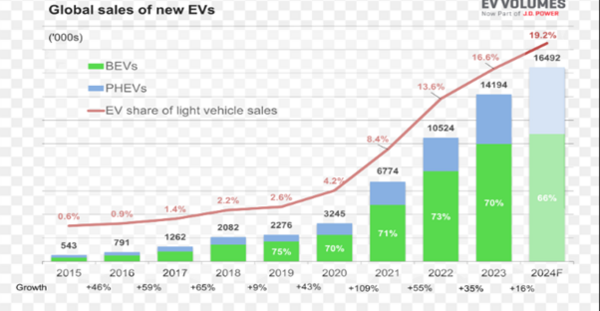
From a broader industry perspective, investments in electric vehicle assembly infrastructure in 2025 are essential as the global electric vehicle market continues to expand rapidly, with leading manufacturers focusing on battery-electric vehicles, which are increasingly representing a proportion of overall sales. BMW's strategic focus on advanced electric vehicle manufacturing facilities strengthens its competitive stance and positions the company to secure a growing market share in the EV production sector from 2025 onward.
The figure shows global sales of new the electric vehicles: