×
Hero Background
English
Chinese
French
Japanese
Korean
German
Spanish

Viral Vectors and Plasmid DNA Manufacturing Market Size

ID: MRFR/HC/9195-HCR
200 Pages
Rahul Gotadki
October 2025

Viral Vectors and Plasmid DNA Manufacturing Market Research Report By Application (Gene Therapy, Vaccine Development, Transgenic Research, Cell and Gene Editing), By Type (Viral Vectors, Plasmid DNA, RNA-based Vectors), By Technology (Viral Transduction, Electroporation, Microinjection, Liposomal Delivery), By End Use (Pharmaceutical Companies, Biotechnology Firms, Research Institutions) and By Regional (North America, Europe, South America, Asia Pacific, Middle East and Africa)-Forecast to 2035

Share:
Download PDF ×

We do not share your information with anyone. However, we may send you emails based on your report interest from time to time. You may contact us at any time to opt-out.

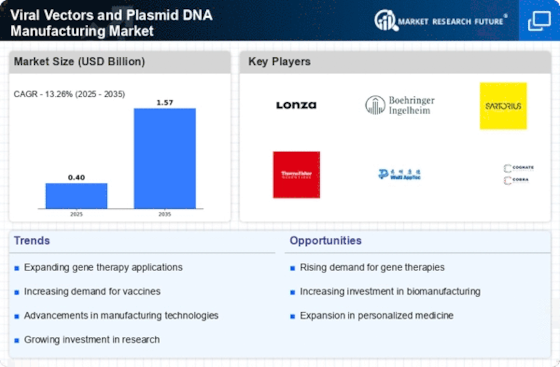
Viral Vectors and Plasmid DNA Manufacturing Market Infographic
Purchase Options

Viral Vectors And Plasmid Dna Manufacturing Size

Viral Vectors and Plasmid DNA Manufacturing Market Growth Projections and Opportunities

The viral vectors and plasmid DNA manufacturing market is motivated by improvements in gene remedy research and development. As gene therapy emerges as a promising treatment technique for diverse genetic problems and diseases, the demand for exquisite viral vectors and plasmid DNA for therapeutic purposes propels a market boom. The rising occurrence of genetic problems and uncommon sicknesses globally contributes to the demand for viral vectors and plasmid DNA manufacturing. These genetic materials function as crucial additives in gene treatment plans designed to address precise genetic abnormalities, driving the market's enlargement. Viral vectors and plasmid DNA find programs beyond gene remedy, especially in vaccine development. The use of those materials within the production of DNA vaccines and viral vector vaccines towards infectious sicknesses, inclusive of COVID-19, influences market dynamics and fosters innovation in production strategies. Ongoing technological improvements in viral vector and plasmid DNA production play a pivotal role in shaping the market. Innovations in production tactics, together with scalable and fee-effective production techniques, contribute to increased efficiency and power market adoption. Increased investments in biopharmaceutical research and development impact the viral vectors and plasmid DNA manufacturing market. Pharmaceutical and biotechnology organizations are allocating assets to explore gene therapies and novel vaccines, creating a demand for reliable production solutions for viral vectors and plasmid DNA. Regulatory help for gene remedies and increased approvals for breakthrough remedies have an impact on the market dynamics. Regulatory groups' popularity of the importance of viral vectors and plasmid DNA in modern remedies expedites their development and manufacturing, undoubtedly impacting market growth. The expansion of medical trials for cell and gene treatments fuels the demand for viral vectors and plasmid DNA manufacturing. As more treatment plans progress via clinical levels, the need for huge-scale, brilliant manufacturing of those genetic materials intensifies, contributing to market expansion. Collaboration and partnerships among biopharmaceutical agencies and production answer vendors force market increase. These collaborations regularly result in the development of advanced manufacturing systems and technologies, addressing scalability and regulatory compliance demanding situations inside the production of viral vectors and plasmid DNA. The globalization of biopharmaceutical manufacturing affects the viral vectors and plasmid DNA market. Companies seek dependable production companions with information in huge-scale manufacturing, contributing to the worldwide distribution and accessibility of gene treatment options and vaccines. The emergence of CRISPR gene-modifying generation contributes to the demand for viral vectors and plasmid DNA. The COVID-19 pandemic has highlighted concerns about delivery chain resilience inside the biopharmaceutical industry. This problem has brought about a reevaluation of manufacturing strategies, with a multiplied recognition of securing a reliable supply of viral vectors and plasmid DNA, impacting market dynamics.
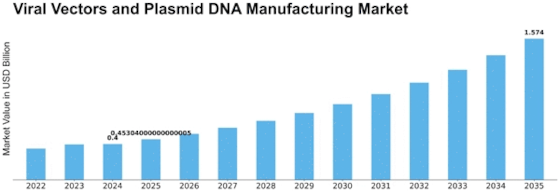
Viral Vectors and Plasmid DNA Manufacturing Market Size Graph
Author
Rahul Gotadki
Assistant Manager

He holds an experience of about 7+ years in Market Research and Business Consulting, working under the spectrum of Life Sciences and Healthcare domains. Rahul conceptualizes and implements a scalable business strategy and provides strategic leadership to the clients. His expertise lies in market estimation, competitive intelligence, pipeline analysis, customer assessment, etc. In addition to the above, his other responsibility includes strategic tracking of high growth markets & advising clients on the potential areas of focus they could direct their business initiatives

Leave a Comment

FAQs

What is the projected market valuation for the Viral Vectors and Plasmid DNA Manufacturing Market in 2035?

The projected market valuation for the Viral Vectors and Plasmid DNA Manufacturing Market in 2035 is 1.574 USD Billion.

What was the market valuation in 2024?

The overall market valuation for the Viral Vectors and Plasmid DNA Manufacturing Market was 0.4 USD Billion in 2024.

What is the expected CAGR for the market during the forecast period 2025 - 2035?

The expected CAGR for the Viral Vectors and Plasmid DNA Manufacturing Market during the forecast period 2025 - 2035 is 13.26%.

Which companies are considered key players in the Viral Vectors and Plasmid DNA Manufacturing Market?

Key players in the market include Lonza, Boehringer Ingelheim, Sartorius, Thermo Fisher Scientific, and WuXi AppTec.

What are the main applications driving the market growth?

The main applications driving market growth include Gene Therapy, Vaccine Development, Transgenic Research, and Cell and Gene Editing.

How do the valuations of different types of vectors compare in the market?

In 2024, the valuations were 0.16 USD Billion for Viral Vectors, 0.12 USD Billion for Plasmid DNA, and 0.12 USD Billion for RNA-based Vectors.

What technologies are utilized in the Viral Vectors and Plasmid DNA Manufacturing Market?

Technologies utilized in the market include Viral Transduction, Electroporation, Microinjection, and Liposomal Delivery.

What is the market share of pharmaceutical companies in the end-use segment?

Pharmaceutical companies held a market share of 0.16 USD Billion in the end-use segment in 2024.

What is the projected growth for the Vaccine Development application by 2035?

The projected growth for the Vaccine Development application is expected to reach 0.6 USD Billion by 2035.

How does the market for biotechnology firms compare to that of research institutions?

In 2024, biotechnology firms had a market valuation of 0.12 USD Billion, while research institutions had a valuation of 0.12 USD Billion.

Market Summary

As per MRFR analysis, the Viral Vectors and Plasmid DNA Manufacturing Market was estimated at 0.4 USD Billion in 2024. The market is projected to grow from 0.453 USD Billion in 2025 to 1.574 USD Billion by 2035, exhibiting a compound annual growth rate (CAGR) of 13.26 during the forecast period 2025 - 2035.

Key Market Trends & Highlights

The Viral Vectors and Plasmid DNA Manufacturing Market is experiencing robust growth driven by technological advancements and increasing demand for gene therapies.

  • The market is witnessing a rising demand for gene therapies, particularly in North America, which remains the largest market. Technological advancements in production methods are enhancing efficiency and scalability, especially in the Asia-Pacific region. Collaborative research initiatives are fostering innovation, with gene therapy being the largest segment and vaccine development emerging as the fastest-growing. Key market drivers include the increasing prevalence of genetic disorders and expanding applications in vaccine development, which are propelling market growth.

Market Size & Forecast

2024 Market Size 0.4 (USD Billion)
2035 Market Size 1.574 (USD Billion)
CAGR (2025 - 2035) 13.26%
Largest Regional Market Share in 2024 North America

Major Players

<p><a href="https://www.lonza.com/specialized-modalities/cell-and-gene/viral-vectors">Lonza</a> (CH), Boehringer Ingelheim (DE), Sartorius (DE), <a href="https://www.thermofisher.com/in/en/home/life-science/bioproduction/gibco-bioprocessing/gene-therapy/viral-vector-manufacturing.html">Thermo Fisher Scientific </a>(US), WuXi AppTec (CN), Cobra Biologics (GB), Viva Biotech (CN), Aldevron (US), MilliporeSigma (US), Celerion (US)</p>

Market Trends

The Viral Vectors and Plasmid DNA Manufacturing Market is currently experiencing a notable transformation, driven by advancements in biotechnology and increasing demand for gene therapies. This sector is characterized by a growing emphasis on the development of innovative therapeutic solutions, which are increasingly being recognized for their potential to treat a variety of genetic disorders and cancers. As research institutions and pharmaceutical companies invest heavily in this area, the market is likely to witness a surge in the production capabilities of viral vectors and plasmid DNA. Furthermore, collaborations between academic institutions and industry players appear to be fostering a conducive environment for innovation, thereby enhancing the overall landscape of this market. In addition, regulatory frameworks are evolving to accommodate the rapid advancements in gene therapy technologies. This shift may lead to streamlined approval processes, which could facilitate quicker access to novel treatments for patients. The increasing prevalence of chronic diseases and genetic disorders is also propelling the demand for effective therapeutic options, further driving growth in the Viral Vectors and Plasmid DNA Manufacturing Market. As the market continues to expand, it is essential for stakeholders to remain vigilant regarding emerging trends and technological advancements that could shape the future of this dynamic field.

Rising Demand for Gene Therapies

The growing interest in gene therapies is significantly influencing the Viral Vectors and Plasmid DNA Manufacturing Market. As more therapies receive approval, the need for efficient manufacturing processes becomes paramount. This trend suggests a shift towards scalable production methods that can meet the increasing demand.

Technological Advancements in Production

Innovations in manufacturing technologies are reshaping the landscape of the Viral Vectors and Plasmid DNA Manufacturing Market. Techniques such as continuous manufacturing and improved purification processes are enhancing efficiency and reducing costs, which may lead to broader accessibility of these therapies.

Collaborative Research Initiatives

Partnerships between academic institutions and industry leaders are becoming more prevalent in the Viral Vectors and Plasmid DNA Manufacturing Market. These collaborations are likely to accelerate research and development efforts, fostering innovation and potentially leading to groundbreaking therapeutic solutions.

Viral Vectors and Plasmid DNA Manufacturing Market Market Drivers

Rising Investment in Biotechnology

The surge in investment within the biotechnology sector is a crucial driver for the Viral Vectors and Plasmid DNA Manufacturing Market. Venture capital funding and government grants are increasingly directed towards companies specializing in gene therapy and related technologies. In recent years, the biotechnology sector has attracted billions in investments, reflecting a growing confidence in the potential of gene-based therapies. This influx of capital enables companies to enhance their research and development capabilities, thereby accelerating the production of viral vectors and plasmid DNA. As a result, the market is likely to experience robust growth, driven by the continuous innovation and expansion of therapeutic applications within the Viral Vectors and Plasmid DNA Manufacturing Market.

Growing Demand for Personalized Medicine

The increasing demand for personalized medicine is emerging as a vital driver for the Viral Vectors and Plasmid DNA Manufacturing Market. As healthcare shifts towards tailored treatment approaches, the need for specific gene therapies that cater to individual patient profiles is becoming more pronounced. This trend is supported by advancements in genomic technologies, which enable the identification of unique genetic markers associated with various diseases. The market is likely to expand as healthcare providers seek to implement personalized treatment plans, thereby increasing the utilization of viral vectors and plasmid DNA in therapeutic applications. This evolution in patient care signifies a transformative phase for the Viral Vectors and Plasmid DNA Manufacturing Market, aligning with the broader movement towards precision medicine.

Increasing Prevalence of Genetic Disorders

The rising incidence of genetic disorders is a pivotal driver for the Viral Vectors and Plasmid DNA Manufacturing Market. As more individuals are diagnosed with conditions such as cystic fibrosis, hemophilia, and muscular dystrophy, the demand for effective gene therapies is escalating. This trend is underscored by the fact that approximately 1 in 10 individuals are affected by a rare genetic disorder, which propels the need for innovative treatment solutions. Consequently, pharmaceutical companies are investing heavily in the development of viral vectors and plasmid DNA technologies to address these health challenges. The market is projected to witness substantial growth as healthcare providers seek advanced therapeutic options, thereby enhancing the overall landscape of the Viral Vectors and Plasmid DNA Manufacturing Market.

Regulatory Support for Gene Therapy Products

Regulatory bodies are increasingly providing support for the development and approval of gene therapy products, which is a significant driver for the Viral Vectors and Plasmid DNA Manufacturing Market. Initiatives aimed at streamlining the approval process for gene therapies are being implemented, thereby encouraging companies to invest in the development of viral vectors and plasmid DNA technologies. For instance, the introduction of expedited review pathways has facilitated faster access to the market for innovative therapies. This regulatory environment fosters a conducive atmosphere for research and development, potentially leading to a surge in the number of approved gene therapies. Consequently, the Viral Vectors and Plasmid DNA Manufacturing Market is poised for growth as more products gain regulatory approval.

Expanding Applications in Vaccine Development

The ongoing expansion of applications for viral vectors and plasmid DNA in vaccine development is significantly influencing the Viral Vectors and Plasmid DNA Manufacturing Market. With the increasing focus on preventive healthcare, the utilization of these technologies in creating vaccines for infectious diseases is becoming more prevalent. For instance, the use of viral vectors in the development of vaccines for diseases such as Zika and Ebola has demonstrated their potential. The market is expected to grow as more research institutions and biotech companies explore these applications, with the vaccine segment projected to account for a substantial share of the overall market. This trend indicates a promising future for the Viral Vectors and Plasmid DNA Manufacturing Market as it adapts to meet the evolving needs of public health.

Market Segment Insights

By Application: Gene Therapy (Largest) vs. Vaccine Development (Fastest-Growing)

<p>The application segment of the Viral Vectors and Plasmid DNA Manufacturing Market is dominated by Gene Therapy, which has established itself as the leading force in the industry. Following closely is Vaccine Development, gaining significant traction, particularly in light of recent global health challenges, which has propelled its relevance and urgency. Other applications such as Transgenic Research and Cell and Gene Editing also contribute to the market, but their shares are smaller compared to the robust presence of the primary two. Growth within this segment is largely driven by increasing investments in gene therapy and vaccine research, facilitated by advancements in biotechnology and a broadening understanding of genetic diseases. Moreover, the need for effective treatments and preventive measures, particularly post-pandemic, has highlighted the necessity for innovative biopharmaceutical solutions. The rise of <a href="https://www.marketresearchfuture.com/reports/personalized-medicine-market-2937">personalized medicine</a> and technology improvements in vector capabilities are also shaping the future of this segment, indicating a dynamic evolution in the market landscape.</p>

<p>Gene Therapy (Dominant) vs. Vaccine Development (Emerging)</p>

<p>Gene Therapy stands as the dominant force in the application segment of the Viral Vectors and Plasmid DNA Manufacturing Market, representing advanced treatments designed to correct or replace faulty genes responsible for disease development. Its established methodologies and significant clinical advancements make it a pivotal element in modern medicine. Conversely, Vaccine Development is emerging rapidly, spurred by the recent demands for novel vaccines that combat evolving viral threats. This sector not only leverages traditional vaccine platforms but also harnesses cutting-edge technologies such as mRNA and viral vector-based vaccines. Together, these segments exemplify a strategic partnership in futuristic healthcare, where Gene Therapy provides groundbreaking solutions for chronic conditions, and Vaccine Development addresses immediate public health needs.</p>

By Type: Viral Vectors (Largest) vs. Plasmid DNA (Fastest-Growing)

<p>In the Viral Vectors and Plasmid DNA Manufacturing Market, Viral Vectors hold the largest market share, driven by their extensive application in gene therapy and vaccine development. The demand for targeted therapies using viral vectors has led to their widespread adoption, creating a significant portion of the market. Meanwhile, Plasmid DNA is positioned as the fastest-growing segment, driven by its increasing use in DNA vaccines and gene editing, reflecting a surge in interest among biotech companies toward these innovative therapies.</p>

<p>Segment Insights: Viral Vectors (Dominant) vs. Plasmid DNA (Emerging)</p>

<p>Viral Vectors dominate the market due to their effectiveness in delivering therapeutic genes into target cells, which positions them as crucial tools in modern medicine. Their adaptability to various types of treatments, such as vaccines and cancer therapies, contributes to their strong foothold in the sector. Conversely, Plasmid DNA is emerging rapidly as it presents advantages such as ease of production and the ability to induce durable immune responses, particularly in the context of therapeutic and prophylactic vaccines. The technological advancements in manufacturing processes and the growing emphasis on personalized medicine are further propelling the growth of Plasmid DNA, making it an area of increasing interest and investment within the market.</p>

By Technology: Viral Transduction (Largest) vs. Electroporation (Fastest-Growing)

<p>In the Viral Vectors and Plasmid DNA Manufacturing Market, the technology segment displays a varied distribution with Viral Transduction leading the charge. This approach has captivated a significant portion of the market due to its effectiveness in delivering genetic material into host cells. Electroporation, while currently gaining traction, serves as the fastest-growing technology, attracting attention for its efficiency and ease of use in various applications. As the demand for advanced gene therapies and vaccines increases, the growth of these technologies is driven by escalating research activities and favorable regulatory frameworks. Innovations in electroporation techniques are making this method increasingly popular, enabling more efficient cellular transfection. Consequently, as therapeutic applications derive from these technologies expand, market leaders are poised to capitalize on both their established products and new innovations.</p>

<p>Technology: Viral Transduction (Dominant) vs. Electroporation (Emerging)</p>

<p>Viral Transduction is considered the dominant approach in the Viral Vectors and Plasmid DNA Manufacturing Market, offering high efficiency and specificity in gene delivery. It leverages viruses to transfer genetic material, making it particularly advantageous for applications in gene therapies and oncological treatments. This method enjoys significant market share due to its proven efficacy and safety profile. Conversely, Electroporation represents an emerging technique, gaining popularity for its rapid transfection capabilities and simplicity. This method applies an electric field to facilitate the uptake of DNA, presenting a versatile option for various cell types and laboratory settings. As research continues to explore its potential, Electroporation is on the cusp of becoming a significant player in the field.</p>

By End-Use: Pharmaceutical Companies (Largest) vs. Biotechnology Firms (Fastest-Growing)

<p>In the Viral Vectors and Plasmid DNA Manufacturing Market, pharmaceutical companies hold the largest market share, leveraging their established expertise and resources for product development. They are significant consumers of viral vectors and plasmid DNA for therapeutic applications, contributing substantially to the market's size. Conversely, biotechnology firms are rapidly gaining traction, finding innovative applications and opportunities to exploit these biological tools as they strive to advance personalized medicine and biologics. This shift indicates a dynamic distribution of market influence across these end-users. Growth trends reveal that while pharmaceutical companies remain the dominant players in this space, biotechnology firms are emerging as a formidable force. The increasing number of biotechnology startups focusing on gene therapies and vaccine development is driving this growth. Factors such as technological advancements in vector engineering and growing investment in R&amp;D are propelling the market forward, allowing biotechnology firms to expand their footprint and innovate at a pace that is outstripping traditional pharmaceutical approaches.</p>

<p>Pharmaceutical Companies (Dominant) vs. Biotechnology Firms (Emerging)</p>

<p>Pharmaceutical companies dominate the Viral Vectors and Plasmid DNA Manufacturing Market due to their established operational frameworks and extensive experience in drug development. These companies utilize viral vectors and plasmid DNA for a range of applications, including vaccine development and gene therapy, benefiting from their financial capabilities and infrastructure. In contrast, biotechnology firms, while emerging, are characterized by innovation and agility. These companies focus on cutting-edge research, often driven by niche applications that challenge existing paradigms. As more biotechnology firms enter the market, they are introducing novel approaches and methods, making significant contributions to scientific advancements and potentially reshaping future therapeutic landscapes.</p>

Get more detailed insights about Viral Vectors and Plasmid DNA Manufacturing Market Research Report-Forecast to 2035

Regional Insights

North America : Leading Innovation and Investment

North America is the largest market for viral vectors and plasmid DNA manufacturing, holding approximately 45% of the global market share. The region benefits from robust investment in biotechnology, advanced research facilities, and a favorable regulatory environment. The increasing demand for gene therapies and vaccines, particularly post-COVID-19, has accelerated growth. Regulatory bodies like the FDA have streamlined approval processes, further catalyzing market expansion. The United States is the primary driver of this market, with key players such as Thermo Fisher Scientific, Lonza, and Aldevron leading the charge. Canada also contributes significantly, focusing on innovative research and development. The competitive landscape is characterized by collaborations and partnerships among major firms, enhancing capabilities in viral vector production and plasmid DNA manufacturing.

Europe : Regulatory Framework and Growth

Europe is the second-largest market for viral vectors and plasmid DNA manufacturing, accounting for approximately 30% of the global market share. The region's growth is driven by increasing investments in biotechnology and a strong focus on research and development. The European Medicines Agency (EMA) has established clear guidelines for gene therapies, which has encouraged innovation and investment in this sector. The rising prevalence of genetic disorders and the demand for personalized medicine are also significant growth factors. Leading countries in Europe include Germany, France, and the United Kingdom, which host numerous biopharmaceutical companies and research institutions. Key players such as Boehringer Ingelheim and Sartorius are pivotal in advancing manufacturing capabilities. The competitive landscape is marked by strategic collaborations and mergers, enhancing the region's position in the global market.

Asia-Pacific : Rapid Growth and Investment

Asia-Pacific is witnessing rapid growth in the viral vectors and plasmid DNA manufacturing market, holding approximately 20% of the global market share. The region's expansion is fueled by increasing investments in biotechnology, a growing number of clinical trials, and rising healthcare expenditures. Countries like China and India are becoming significant players, supported by government initiatives aimed at boosting the biotech sector. The regulatory environment is evolving, with agencies working to streamline approval processes for new therapies. China is leading the charge in this region, with companies like WuXi AppTec and Viva Biotech making substantial contributions to the market. India is also emerging as a key player, focusing on affordable healthcare solutions and biomanufacturing capabilities. The competitive landscape is characterized by a mix of local and international firms, driving innovation and collaboration in the sector.

Middle East and Africa : Untapped Potential and Growth

The Middle East and Africa (MEA) region is gradually emerging in the viral vectors and plasmid DNA manufacturing market, holding about 5% of the global market share. The growth in this region is primarily driven by increasing healthcare investments, rising awareness of gene therapies, and government initiatives to enhance biomanufacturing capabilities. Countries like South Africa and the UAE are focusing on developing their biotech sectors, supported by favorable policies and funding opportunities. South Africa is leading the market in the MEA region, with a growing number of biotech firms and research institutions. The competitive landscape is still developing, with local companies collaborating with international players to enhance their capabilities. The region's potential for growth is significant, as it seeks to establish itself as a hub for biomanufacturing and innovation in the coming years.

Key Players and Competitive Insights

The Viral Vectors and Plasmid DNA Manufacturing Market is currently characterized by a dynamic competitive landscape, driven by increasing demand for gene therapies and advanced biopharmaceuticals. Key players such as Lonza (CH), Boehringer Ingelheim (DE), and Thermo Fisher Scientific (US) are strategically positioned to leverage their extensive capabilities in bioprocessing and manufacturing. Lonza (CH) has focused on expanding its production capacity, particularly in viral vector manufacturing, to meet the growing needs of its clients in the gene therapy sector. Meanwhile, Boehringer Ingelheim (DE) emphasizes innovation through its recent investments in digital technologies to enhance operational efficiency and product quality. These strategies collectively contribute to a competitive environment that is increasingly centered around technological advancement and operational excellence.

In terms of business tactics, companies are increasingly localizing manufacturing to reduce lead times and enhance supply chain resilience. The market appears moderately fragmented, with several players vying for market share while also forming strategic partnerships to bolster their capabilities. This competitive structure allows for a diverse range of offerings, catering to various segments within the biopharmaceutical industry.

In August 2025, Thermo Fisher Scientific (US) announced the opening of a new state-of-the-art facility dedicated to the production of plasmid DNA. This strategic move is expected to significantly enhance their production capacity and streamline operations, thereby positioning them as a leader in the plasmid DNA segment. The facility is designed to support the increasing demand for plasmid DNA in gene therapy applications, indicating Thermo Fisher's commitment to innovation and responsiveness to market needs.

In July 2025, Boehringer Ingelheim (DE) launched a new platform aimed at accelerating the development of viral vector-based therapies. This initiative underscores the company's focus on enhancing its service offerings and providing clients with faster turnaround times for their projects. By investing in this platform, Boehringer Ingelheim is likely to strengthen its competitive edge in the rapidly evolving gene therapy landscape.

In September 2025, Lonza (CH) entered into a strategic partnership with a leading biotech firm to co-develop a novel viral vector for a groundbreaking gene therapy. This collaboration not only highlights Lonza's commitment to innovation but also reflects a broader trend in the industry where partnerships are becoming essential for advancing complex biopharmaceutical products. Such alliances are indicative of a shift towards collaborative innovation in the market.

As of October 2025, the competitive trends in the Viral Vectors and Plasmid DNA Manufacturing Market are increasingly influenced by digitalization, sustainability, and the integration of artificial intelligence in manufacturing processes. Strategic alliances are shaping the landscape, enabling companies to pool resources and expertise to drive innovation. Looking ahead, it appears that competitive differentiation will evolve from traditional price-based competition to a focus on technological advancements, innovation, and supply chain reliability, thereby redefining the parameters of success in this burgeoning market.

Key Companies in the Viral Vectors and Plasmid DNA Manufacturing Market market include

Industry Developments

  • Q2 2024: FUJIFILM Diosynth Biotechnologies Opens New Viral Vector Manufacturing Facility in Texas FUJIFILM Diosynth Biotechnologies announced the opening of its new state-of-the-art viral vector manufacturing facility in College Station, Texas, expanding its capacity to support gene therapy and vaccine developers with commercial-scale production.
  • Q2 2024: Thermo Fisher Scientific Acquires Viral Vector Manufacturer OXGENE Thermo Fisher Scientific completed the acquisition of OXGENE, a UK-based viral vector development and manufacturing company, to strengthen its cell and gene therapy capabilities and expand its viral vector services portfolio.
  • Q3 2024: Catalent Signs Multi-Year Manufacturing Agreement with Sarepta Therapeutics for Gene Therapy Vectors Catalent entered into a multi-year agreement with Sarepta Therapeutics to manufacture adeno-associated viral (AAV) vectors for Sarepta’s gene therapy programs, enhancing Catalent’s position as a leading contract manufacturer in the sector.
  • Q2 2024: Aldevron Expands Plasmid DNA Manufacturing Facility in Fargo Aldevron, a leading plasmid DNA manufacturer, announced the expansion of its Fargo, North Dakota facility, increasing its production capacity to meet growing demand from gene therapy and vaccine developers.
  • Q1 2025: Lonza Appoints New Head of Viral Vector Manufacturing Division Lonza announced the appointment of Dr. Maria Sanchez as the new head of its viral vector manufacturing division, aiming to accelerate innovation and operational efficiency in its gene therapy manufacturing business.
  • Q2 2025: Pfizer Announces $300 Million Investment in Viral Vector Manufacturing Facility in North Carolina Pfizer revealed plans to invest $300 million in a new viral vector manufacturing facility in Sanford, North Carolina, to support its expanding gene therapy pipeline and meet increasing global demand.
  • Q1 2024: Vigene Biosciences Secures FDA Approval for Commercial-Scale Viral Vector Production Vigene Biosciences received FDA approval to begin commercial-scale manufacturing of viral vectors at its Rockville, Maryland facility, enabling the company to supply gene therapy developers with clinical and commercial-grade vectors.
  • Q3 2024: Aldevron and Moderna Announce Strategic Partnership for Plasmid DNA Supply Aldevron and Moderna entered a strategic partnership to supply high-quality plasmid DNA for Moderna’s mRNA vaccine and gene therapy programs, ensuring a reliable supply chain for critical raw materials.
  • Q2 2025: Charles River Laboratories Acquires Cognate BioServices to Expand Cell and Gene Therapy Manufacturing Charles River Laboratories completed the acquisition of Cognate BioServices, a contract development and manufacturing organization specializing in cell and gene therapy, including viral vector and plasmid DNA production.
  • Q1 2025: Oxford Biomedica Wins Major Contract to Manufacture Lentiviral Vectors for Novartis Oxford Biomedica secured a significant contract with Novartis to manufacture lentiviral vectors for use in Novartis’ CAR-T cell therapy programs, further solidifying its role as a key supplier in the gene therapy market.
  • Q2 2024: Thermo Fisher Scientific Launches New Plasmid DNA Manufacturing Platform Thermo Fisher Scientific launched a new plasmid DNA manufacturing platform designed to accelerate the development and production of gene therapies and vaccines, offering scalable solutions for clinical and commercial needs.
  • Q3 2025: Sartorius Opens Advanced Viral Vector Manufacturing Facility in Germany Sartorius inaugurated a new advanced viral vector manufacturing facility in Göttingen, Germany, to support the growing demand for gene therapy and vaccine development in Europe.

Future Outlook

Viral Vectors and Plasmid DNA Manufacturing Market Future Outlook

<p>The Viral Vectors and Plasmid DNA Manufacturing Market is projected to grow at a 13.26% CAGR from 2024 to 2035, driven by advancements in gene therapies and biopharmaceuticals.</p>

New opportunities lie in:

  • <p>Expansion of contract manufacturing organizations for viral vector production.</p>
  • <p>Development of scalable plasmid DNA production technologies.</p>
  • <p>Investment in <a href="https://www.marketresearchfuture.com/reports/next-generation-sequencing-market-6354">next-generation sequencing </a>for enhanced vector design.</p>

<p>By 2035, the market is expected to be robust, driven by innovation and increasing demand.</p>

Market Segmentation

Viral Vectors and Plasmid DNA Manufacturing Market Type Outlook

  • Viral Vectors
  • Plasmid DNA
  • RNA-based Vectors

Viral Vectors and Plasmid DNA Manufacturing Market End-Use Outlook

  • Pharmaceutical Companies
  • Biotechnology Firms
  • Research Institutions

Viral Vectors and Plasmid DNA Manufacturing Market Technology Outlook

  • Viral Transduction
  • Electroporation
  • Microinjection
  • Liposomal Delivery

Viral Vectors and Plasmid DNA Manufacturing Market Application Outlook

  • Gene Therapy
  • Vaccine Development
  • Transgenic Research
  • Cell and Gene Editing

Report Scope

MARKET SIZE 2024 0.4(USD Billion)
MARKET SIZE 2025 0.453(USD Billion)
MARKET SIZE 2035 1.574(USD Billion)
COMPOUND ANNUAL GROWTH RATE (CAGR) 13.26% (2024 - 2035)
REPORT COVERAGE Revenue Forecast, Competitive Landscape, Growth Factors, and Trends
BASE YEAR 2024
Market Forecast Period 2025 - 2035
Historical Data 2019 - 2024
Market Forecast Units USD Billion
Key Companies Profiled Market analysis in progress
Segments Covered Market segmentation analysis in progress
Key Market Opportunities Advancements in gene therapy and personalized medicine drive demand in the Viral Vectors and Plasmid DNA Manufacturing Market.
Key Market Dynamics Rising demand for gene therapies drives innovation and competition in viral vectors and plasmid DNA manufacturing.
Countries Covered North America, Europe, APAC, South America, MEA

FAQs

What is the projected market valuation for the Viral Vectors and Plasmid DNA Manufacturing Market in 2035?

The projected market valuation for the Viral Vectors and Plasmid DNA Manufacturing Market in 2035 is 1.574 USD Billion.

What was the market valuation in 2024?

The overall market valuation for the Viral Vectors and Plasmid DNA Manufacturing Market was 0.4 USD Billion in 2024.

What is the expected CAGR for the market during the forecast period 2025 - 2035?

The expected CAGR for the Viral Vectors and Plasmid DNA Manufacturing Market during the forecast period 2025 - 2035 is 13.26%.

Which companies are considered key players in the Viral Vectors and Plasmid DNA Manufacturing Market?

Key players in the market include Lonza, Boehringer Ingelheim, Sartorius, Thermo Fisher Scientific, and WuXi AppTec.

What are the main applications driving the market growth?

The main applications driving market growth include Gene Therapy, Vaccine Development, Transgenic Research, and Cell and Gene Editing.

How do the valuations of different types of vectors compare in the market?

In 2024, the valuations were 0.16 USD Billion for Viral Vectors, 0.12 USD Billion for Plasmid DNA, and 0.12 USD Billion for RNA-based Vectors.

What technologies are utilized in the Viral Vectors and Plasmid DNA Manufacturing Market?

Technologies utilized in the market include Viral Transduction, Electroporation, Microinjection, and Liposomal Delivery.

What is the market share of pharmaceutical companies in the end-use segment?

Pharmaceutical companies held a market share of 0.16 USD Billion in the end-use segment in 2024.

What is the projected growth for the Vaccine Development application by 2035?

The projected growth for the Vaccine Development application is expected to reach 0.6 USD Billion by 2035.

How does the market for biotechnology firms compare to that of research institutions?

In 2024, biotechnology firms had a market valuation of 0.12 USD Billion, while research institutions had a valuation of 0.12 USD Billion.

  1. SECTION I: EXECUTIVE SUMMARY AND KEY HIGHLIGHTS
    1. EXECUTIVE SUMMARY
      1. Market Overview
      2. Key Findings
      3. Market Segmentation
      4. Competitive Landscape
      5. Challenges and Opportunities
      6. Future Outlook 2
  2. SECTION II: SCOPING, METHODOLOGY AND MARKET STRUCTURE
    1. MARKET INTRODUCTION
      1. Definition
      2. Scope of the study
    2. RESEARCH METHODOLOGY
      1. Overview
      2. Data Mining
      3. Secondary Research
      4. Primary Research
      5. Forecasting Model
      6. Market Size Estimation
      7. Data Triangulation
      8. Validation 3
  3. SECTION III: QUALITATIVE ANALYSIS
    1. MARKET DYNAMICS
      1. Overview
      2. Drivers
      3. Restraints
      4. Opportunities
    2. MARKET FACTOR ANALYSIS
      1. Value chain Analysis
      2. Porter's Five Forces Analysis
      3. COVID-19 Impact Analysis
  4. SECTION IV: QUANTITATIVE ANALYSIS
    1. Healthcare, BY Application (USD Billion)
      1. Gene Therapy
      2. Vaccine Development
      3. Transgenic Research
      4. Cell and Gene Editing
    2. Healthcare, BY Type (USD Billion)
      1. Viral Vectors
      2. Plasmid DNA
      3. RNA-based Vectors
    3. Healthcare, BY Technology (USD Billion)
      1. Viral Transduction
      2. Electroporation
      3. Microinjection
      4. Liposomal Delivery
    4. Healthcare, BY End-Use (USD Billion)
      1. Pharmaceutical Companies
      2. Biotechnology Firms
      3. Research Institutions
    5. Healthcare, BY Region (USD Billion)
      1. North America
      2. Europe
      3. APAC
      4. South America
      5. MEA
  5. SECTION V: COMPETITIVE ANALYSIS
    1. Competitive Landscape
      1. Overview
      2. Competitive Analysis
      3. Market share Analysis
      4. Major Growth Strategy in the Healthcare
      5. Competitive Benchmarking
      6. Leading Players in Terms of Number of Developments in the Healthcare
      7. Key developments and growth strategies
      8. Major Players Financial Matrix
    2. Company Profiles
      1. Lonza (CH)
      2. Boehringer Ingelheim (DE)
      3. Sartorius (DE)
      4. Thermo Fisher Scientific (US)
      5. WuXi AppTec (CN)
      6. Cobra Biologics (GB)
      7. Viva Biotech (CN)
      8. Aldevron (US)
      9. MilliporeSigma (US)
      10. Celerion (US)
    3. Appendix
      1. References
      2. Related Reports 6 LIST OF FIGURES
    4. MARKET SYNOPSIS
    5. NORTH AMERICA MARKET ANALYSIS
    6. US MARKET ANALYSIS BY APPLICATION
    7. US MARKET ANALYSIS BY TYPE
    8. US MARKET ANALYSIS BY TECHNOLOGY
    9. US MARKET ANALYSIS BY END-USE
    10. CANADA MARKET ANALYSIS BY APPLICATION
    11. CANADA MARKET ANALYSIS BY TYPE
    12. CANADA MARKET ANALYSIS BY TECHNOLOGY
    13. CANADA MARKET ANALYSIS BY END-USE
    14. EUROPE MARKET ANALYSIS
    15. GERMANY MARKET ANALYSIS BY APPLICATION
    16. GERMANY MARKET ANALYSIS BY TYPE
    17. GERMANY MARKET ANALYSIS BY TECHNOLOGY
    18. GERMANY MARKET ANALYSIS BY END-USE
    19. UK MARKET ANALYSIS BY APPLICATION
    20. UK MARKET ANALYSIS BY TYPE
    21. UK MARKET ANALYSIS BY TECHNOLOGY
    22. UK MARKET ANALYSIS BY END-USE
    23. FRANCE MARKET ANALYSIS BY APPLICATION
    24. FRANCE MARKET ANALYSIS BY TYPE
    25. FRANCE MARKET ANALYSIS BY TECHNOLOGY
    26. FRANCE MARKET ANALYSIS BY END-USE
    27. RUSSIA MARKET ANALYSIS BY APPLICATION
    28. RUSSIA MARKET ANALYSIS BY TYPE
    29. RUSSIA MARKET ANALYSIS BY TECHNOLOGY
    30. RUSSIA MARKET ANALYSIS BY END-USE
    31. ITALY MARKET ANALYSIS BY APPLICATION
    32. ITALY MARKET ANALYSIS BY TYPE
    33. ITALY MARKET ANALYSIS BY TECHNOLOGY
    34. ITALY MARKET ANALYSIS BY END-USE
    35. SPAIN MARKET ANALYSIS BY APPLICATION
    36. SPAIN MARKET ANALYSIS BY TYPE
    37. SPAIN MARKET ANALYSIS BY TECHNOLOGY
    38. SPAIN MARKET ANALYSIS BY END-USE
    39. REST OF EUROPE MARKET ANALYSIS BY APPLICATION
    40. REST OF EUROPE MARKET ANALYSIS BY TYPE
    41. REST OF EUROPE MARKET ANALYSIS BY TECHNOLOGY
    42. REST OF EUROPE MARKET ANALYSIS BY END-USE
    43. APAC MARKET ANALYSIS
    44. CHINA MARKET ANALYSIS BY APPLICATION
    45. CHINA MARKET ANALYSIS BY TYPE
    46. CHINA MARKET ANALYSIS BY TECHNOLOGY
    47. CHINA MARKET ANALYSIS BY END-USE
    48. INDIA MARKET ANALYSIS BY APPLICATION
    49. INDIA MARKET ANALYSIS BY TYPE
    50. INDIA MARKET ANALYSIS BY TECHNOLOGY
    51. INDIA MARKET ANALYSIS BY END-USE
    52. JAPAN MARKET ANALYSIS BY APPLICATION
    53. JAPAN MARKET ANALYSIS BY TYPE
    54. JAPAN MARKET ANALYSIS BY TECHNOLOGY
    55. JAPAN MARKET ANALYSIS BY END-USE
    56. SOUTH KOREA MARKET ANALYSIS BY APPLICATION
    57. SOUTH KOREA MARKET ANALYSIS BY TYPE
    58. SOUTH KOREA MARKET ANALYSIS BY TECHNOLOGY
    59. SOUTH KOREA MARKET ANALYSIS BY END-USE
    60. MALAYSIA MARKET ANALYSIS BY APPLICATION
    61. MALAYSIA MARKET ANALYSIS BY TYPE
    62. MALAYSIA MARKET ANALYSIS BY TECHNOLOGY
    63. MALAYSIA MARKET ANALYSIS BY END-USE
    64. THAILAND MARKET ANALYSIS BY APPLICATION
    65. THAILAND MARKET ANALYSIS BY TYPE
    66. THAILAND MARKET ANALYSIS BY TECHNOLOGY
    67. THAILAND MARKET ANALYSIS BY END-USE
    68. INDONESIA MARKET ANALYSIS BY APPLICATION
    69. INDONESIA MARKET ANALYSIS BY TYPE
    70. INDONESIA MARKET ANALYSIS BY TECHNOLOGY
    71. INDONESIA MARKET ANALYSIS BY END-USE
    72. REST OF APAC MARKET ANALYSIS BY APPLICATION
    73. REST OF APAC MARKET ANALYSIS BY TYPE
    74. REST OF APAC MARKET ANALYSIS BY TECHNOLOGY
    75. REST OF APAC MARKET ANALYSIS BY END-USE
    76. SOUTH AMERICA MARKET ANALYSIS
    77. BRAZIL MARKET ANALYSIS BY APPLICATION
    78. BRAZIL MARKET ANALYSIS BY TYPE
    79. BRAZIL MARKET ANALYSIS BY TECHNOLOGY
    80. BRAZIL MARKET ANALYSIS BY END-USE
    81. MEXICO MARKET ANALYSIS BY APPLICATION
    82. MEXICO MARKET ANALYSIS BY TYPE
    83. MEXICO MARKET ANALYSIS BY TECHNOLOGY
    84. MEXICO MARKET ANALYSIS BY END-USE
    85. ARGENTINA MARKET ANALYSIS BY APPLICATION
    86. ARGENTINA MARKET ANALYSIS BY TYPE
    87. ARGENTINA MARKET ANALYSIS BY TECHNOLOGY
    88. ARGENTINA MARKET ANALYSIS BY END-USE
    89. REST OF SOUTH AMERICA MARKET ANALYSIS BY APPLICATION
    90. REST OF SOUTH AMERICA MARKET ANALYSIS BY TYPE
    91. REST OF SOUTH AMERICA MARKET ANALYSIS BY TECHNOLOGY
    92. REST OF SOUTH AMERICA MARKET ANALYSIS BY END-USE
    93. MEA MARKET ANALYSIS
    94. GCC COUNTRIES MARKET ANALYSIS BY APPLICATION
    95. GCC COUNTRIES MARKET ANALYSIS BY TYPE
    96. GCC COUNTRIES MARKET ANALYSIS BY TECHNOLOGY
    97. GCC COUNTRIES MARKET ANALYSIS BY END-USE
    98. SOUTH AFRICA MARKET ANALYSIS BY APPLICATION
    99. SOUTH AFRICA MARKET ANALYSIS BY TYPE
    100. SOUTH AFRICA MARKET ANALYSIS BY TECHNOLOGY
    101. SOUTH AFRICA MARKET ANALYSIS BY END-USE
    102. REST OF MEA MARKET ANALYSIS BY APPLICATION
    103. REST OF MEA MARKET ANALYSIS BY TYPE
    104. REST OF MEA MARKET ANALYSIS BY TECHNOLOGY
    105. REST OF MEA MARKET ANALYSIS BY END-USE
    106. KEY BUYING CRITERIA OF HEALTHCARE
    107. RESEARCH PROCESS OF MRFR
    108. DRO ANALYSIS OF HEALTHCARE
    109. DRIVERS IMPACT ANALYSIS: HEALTHCARE
    110. RESTRAINTS IMPACT ANALYSIS: HEALTHCARE
    111. SUPPLY / VALUE CHAIN: HEALTHCARE
    112. HEALTHCARE, BY APPLICATION, 2024 (% SHARE)
    113. HEALTHCARE, BY APPLICATION, 2024 TO 2035 (USD Billion)
    114. HEALTHCARE, BY TYPE, 2024 (% SHARE)
    115. HEALTHCARE, BY TYPE, 2024 TO 2035 (USD Billion)
    116. HEALTHCARE, BY TECHNOLOGY, 2024 (% SHARE)
    117. HEALTHCARE, BY TECHNOLOGY, 2024 TO 2035 (USD Billion)
    118. HEALTHCARE, BY END-USE, 2024 (% SHARE)
    119. HEALTHCARE, BY END-USE, 2024 TO 2035 (USD Billion)
    120. BENCHMARKING OF MAJOR COMPETITORS 7 LIST OF TABLES
    121. LIST OF ASSUMPTIONS
    122. North America MARKET SIZE ESTIMATES; FORECAST
      1. BY APPLICATION, 2025-2035 (USD Billion)
      2. BY TYPE, 2025-2035 (USD Billion)
      3. BY TECHNOLOGY, 2025-2035 (USD Billion)
      4. BY END-USE, 2025-2035 (USD Billion)
    123. US MARKET SIZE ESTIMATES; FORECAST
      1. BY APPLICATION, 2025-2035 (USD Billion)
      2. BY TYPE, 2025-2035 (USD Billion)
      3. BY TECHNOLOGY, 2025-2035 (USD Billion)
      4. BY END-USE, 2025-2035 (USD Billion)
    124. Canada MARKET SIZE ESTIMATES; FORECAST
      1. BY APPLICATION, 2025-2035 (USD Billion)
      2. BY TYPE, 2025-2035 (USD Billion)
      3. BY TECHNOLOGY, 2025-2035 (USD Billion)
      4. BY END-USE, 2025-2035 (USD Billion)
    125. Europe MARKET SIZE ESTIMATES; FORECAST
      1. BY APPLICATION, 2025-2035 (USD Billion)
      2. BY TYPE, 2025-2035 (USD Billion)
      3. BY TECHNOLOGY, 2025-2035 (USD Billion)
      4. BY END-USE, 2025-2035 (USD Billion)
    126. Germany MARKET SIZE ESTIMATES; FORECAST
      1. BY APPLICATION, 2025-2035 (USD Billion)
      2. BY TYPE, 2025-2035 (USD Billion)
      3. BY TECHNOLOGY, 2025-2035 (USD Billion)
      4. BY END-USE, 2025-2035 (USD Billion)
    127. UK MARKET SIZE ESTIMATES; FORECAST
      1. BY APPLICATION, 2025-2035 (USD Billion)
      2. BY TYPE, 2025-2035 (USD Billion)
      3. BY TECHNOLOGY, 2025-2035 (USD Billion)
      4. BY END-USE, 2025-2035 (USD Billion)
    128. France MARKET SIZE ESTIMATES; FORECAST
      1. BY APPLICATION, 2025-2035 (USD Billion)
      2. BY TYPE, 2025-2035 (USD Billion)
      3. BY TECHNOLOGY, 2025-2035 (USD Billion)
      4. BY END-USE, 2025-2035 (USD Billion)
    129. Russia MARKET SIZE ESTIMATES; FORECAST
      1. BY APPLICATION, 2025-2035 (USD Billion)
      2. BY TYPE, 2025-2035 (USD Billion)
      3. BY TECHNOLOGY, 2025-2035 (USD Billion)
      4. BY END-USE, 2025-2035 (USD Billion)
    130. Italy MARKET SIZE ESTIMATES; FORECAST
      1. BY APPLICATION, 2025-2035 (USD Billion)
      2. BY TYPE, 2025-2035 (USD Billion)
      3. BY TECHNOLOGY, 2025-2035 (USD Billion)
      4. BY END-USE, 2025-2035 (USD Billion)
    131. Spain MARKET SIZE ESTIMATES; FORECAST
      1. BY APPLICATION, 2025-2035 (USD Billion)
      2. BY TYPE, 2025-2035 (USD Billion)
      3. BY TECHNOLOGY, 2025-2035 (USD Billion)
      4. BY END-USE, 2025-2035 (USD Billion)
    132. Rest of Europe MARKET SIZE ESTIMATES; FORECAST
      1. BY APPLICATION, 2025-2035 (USD Billion)
      2. BY TYPE, 2025-2035 (USD Billion)
      3. BY TECHNOLOGY, 2025-2035 (USD Billion)
      4. BY END-USE, 2025-2035 (USD Billion)
    133. APAC MARKET SIZE ESTIMATES; FORECAST
      1. BY APPLICATION, 2025-2035 (USD Billion)
      2. BY TYPE, 2025-2035 (USD Billion)
      3. BY TECHNOLOGY, 2025-2035 (USD Billion)
      4. BY END-USE, 2025-2035 (USD Billion)
    134. China MARKET SIZE ESTIMATES; FORECAST
      1. BY APPLICATION, 2025-2035 (USD Billion)
      2. BY TYPE, 2025-2035 (USD Billion)
      3. BY TECHNOLOGY, 2025-2035 (USD Billion)
      4. BY END-USE, 2025-2035 (USD Billion)
    135. India MARKET SIZE ESTIMATES; FORECAST
      1. BY APPLICATION, 2025-2035 (USD Billion)
      2. BY TYPE, 2025-2035 (USD Billion)
      3. BY TECHNOLOGY, 2025-2035 (USD Billion)
      4. BY END-USE, 2025-2035 (USD Billion)
    136. Japan MARKET SIZE ESTIMATES; FORECAST
      1. BY APPLICATION, 2025-2035 (USD Billion)
      2. BY TYPE, 2025-2035 (USD Billion)
      3. BY TECHNOLOGY, 2025-2035 (USD Billion)
      4. BY END-USE, 2025-2035 (USD Billion)
    137. South Korea MARKET SIZE ESTIMATES; FORECAST
      1. BY APPLICATION, 2025-2035 (USD Billion)
      2. BY TYPE, 2025-2035 (USD Billion)
      3. BY TECHNOLOGY, 2025-2035 (USD Billion)
      4. BY END-USE, 2025-2035 (USD Billion)
    138. Malaysia MARKET SIZE ESTIMATES; FORECAST
      1. BY APPLICATION, 2025-2035 (USD Billion)
      2. BY TYPE, 2025-2035 (USD Billion)
      3. BY TECHNOLOGY, 2025-2035 (USD Billion)
      4. BY END-USE, 2025-2035 (USD Billion)
    139. Thailand MARKET SIZE ESTIMATES; FORECAST
      1. BY APPLICATION, 2025-2035 (USD Billion)
      2. BY TYPE, 2025-2035 (USD Billion)
      3. BY TECHNOLOGY, 2025-2035 (USD Billion)
      4. BY END-USE, 2025-2035 (USD Billion)
    140. Indonesia MARKET SIZE ESTIMATES; FORECAST
      1. BY APPLICATION, 2025-2035 (USD Billion)
      2. BY TYPE, 2025-2035 (USD Billion)
      3. BY TECHNOLOGY, 2025-2035 (USD Billion)
      4. BY END-USE, 2025-2035 (USD Billion)
    141. Rest of APAC MARKET SIZE ESTIMATES; FORECAST
      1. BY APPLICATION, 2025-2035 (USD Billion)
      2. BY TYPE, 2025-2035 (USD Billion)
      3. BY TECHNOLOGY, 2025-2035 (USD Billion)
      4. BY END-USE, 2025-2035 (USD Billion)
    142. South America MARKET SIZE ESTIMATES; FORECAST
      1. BY APPLICATION, 2025-2035 (USD Billion)
      2. BY TYPE, 2025-2035 (USD Billion)
      3. BY TECHNOLOGY, 2025-2035 (USD Billion)
      4. BY END-USE, 2025-2035 (USD Billion)
    143. Brazil MARKET SIZE ESTIMATES; FORECAST
      1. BY APPLICATION, 2025-2035 (USD Billion)
      2. BY TYPE, 2025-2035 (USD Billion)
      3. BY TECHNOLOGY, 2025-2035 (USD Billion)
      4. BY END-USE, 2025-2035 (USD Billion)
    144. Mexico MARKET SIZE ESTIMATES; FORECAST
      1. BY APPLICATION, 2025-2035 (USD Billion)
      2. BY TYPE, 2025-2035 (USD Billion)
      3. BY TECHNOLOGY, 2025-2035 (USD Billion)
      4. BY END-USE, 2025-2035 (USD Billion)
    145. Argentina MARKET SIZE ESTIMATES; FORECAST
      1. BY APPLICATION, 2025-2035 (USD Billion)
      2. BY TYPE, 2025-2035 (USD Billion)
      3. BY TECHNOLOGY, 2025-2035 (USD Billion)
      4. BY END-USE, 2025-2035 (USD Billion)
    146. Rest of South America MARKET SIZE ESTIMATES; FORECAST
      1. BY APPLICATION, 2025-2035 (USD Billion)
      2. BY TYPE, 2025-2035 (USD Billion)
      3. BY TECHNOLOGY, 2025-2035 (USD Billion)
      4. BY END-USE, 2025-2035 (USD Billion)
    147. MEA MARKET SIZE ESTIMATES; FORECAST
      1. BY APPLICATION, 2025-2035 (USD Billion)
      2. BY TYPE, 2025-2035 (USD Billion)
      3. BY TECHNOLOGY, 2025-2035 (USD Billion)
      4. BY END-USE, 2025-2035 (USD Billion)
    148. GCC Countries MARKET SIZE ESTIMATES; FORECAST
      1. BY APPLICATION, 2025-2035 (USD Billion)
      2. BY TYPE, 2025-2035 (USD Billion)
      3. BY TECHNOLOGY, 2025-2035 (USD Billion)
      4. BY END-USE, 2025-2035 (USD Billion)
    149. South Africa MARKET SIZE ESTIMATES; FORECAST
      1. BY APPLICATION, 2025-2035 (USD Billion)
      2. BY TYPE, 2025-2035 (USD Billion)
      3. BY TECHNOLOGY, 2025-2035 (USD Billion)
      4. BY END-USE, 2025-2035 (USD Billion)
    150. Rest of MEA MARKET SIZE ESTIMATES; FORECAST
      1. BY APPLICATION, 2025-2035 (USD Billion)
      2. BY TYPE, 2025-2035 (USD Billion)
      3. BY TECHNOLOGY, 2025-2035 (USD Billion)
      4. BY END-USE, 2025-2035 (USD Billion)
    151. PRODUCT LAUNCH/PRODUCT DEVELOPMENT/APPROVAL
    152. ACQUISITION/PARTNERSHIP

Viral Vectors and Plasmid DNA Manufacturing Market Segmentation

Viral Vectors and Plasmid DNA Manufacturing Market By Application (USD Billion, 2019-2035)

Gene Therapy

Vaccine Development

Transgenic Research

Cell and Gene Editing

Viral Vectors and Plasmid DNA Manufacturing Market By Type (USD Billion, 2019-2035)

Viral Vectors

Plasmid DNA

RNA-based Vectors

Viral Vectors and Plasmid DNA Manufacturing Market By Technology (USD Billion, 2019-2035)

Viral Transduction

Electroporation

Microinjection

Liposomal Delivery

Viral Vectors and Plasmid DNA Manufacturing Market By End Use (USD Billion, 2019-2035)

Pharmaceutical Companies

Biotechnology Firms

Research Institutions

Viral Vectors and Plasmid DNA Manufacturing Market By Regional (USD Billion, 2019-2035)

North America

Europe

South America

Asia Pacific

Middle East and Africa

Viral Vectors and Plasmid DNA Manufacturing Market Regional Outlook (USD Billion, 2019-2035)

North America Outlook (USD Billion, 2019-2035)

North America Viral Vectors and Plasmid DNA Manufacturing Market by Application Type

Gene Therapy

Vaccine Development

Transgenic Research

Cell and Gene Editing

North America Viral Vectors and Plasmid DNA Manufacturing Market by Type

Viral Vectors

Plasmid DNA

RNA-based Vectors

North America Viral Vectors and Plasmid DNA Manufacturing Market by Technology Type

Viral Transduction

Electroporation

Microinjection

Liposomal Delivery

North America Viral Vectors and Plasmid DNA Manufacturing Market by End Use Type

Pharmaceutical Companies

Biotechnology Firms

Research Institutions

North America Viral Vectors and Plasmid DNA Manufacturing Market by Regional Type

US

Canada

US Outlook (USD Billion, 2019-2035)

US Viral Vectors and Plasmid DNA Manufacturing Market by Application Type

Gene Therapy

Vaccine Development

Transgenic Research

Cell and Gene Editing

US Viral Vectors and Plasmid DNA Manufacturing Market by Type

Viral Vectors

Plasmid DNA

RNA-based Vectors

US Viral Vectors and Plasmid DNA Manufacturing Market by Technology Type

Viral Transduction

Electroporation

Microinjection

Liposomal Delivery

US Viral Vectors and Plasmid DNA Manufacturing Market by End Use Type

Pharmaceutical Companies

Biotechnology Firms

Research Institutions

CANADA Outlook (USD Billion, 2019-2035)

CANADA Viral Vectors and Plasmid DNA Manufacturing Market by Application Type

Gene Therapy

Vaccine Development

Transgenic Research

Cell and Gene Editing

CANADA Viral Vectors and Plasmid DNA Manufacturing Market by Type

Viral Vectors

Plasmid DNA

RNA-based Vectors

CANADA Viral Vectors and Plasmid DNA Manufacturing Market by Technology Type

Viral Transduction

Electroporation

Microinjection

Liposomal Delivery

CANADA Viral Vectors and Plasmid DNA Manufacturing Market by End Use Type

Pharmaceutical Companies

Biotechnology Firms

Research Institutions

Europe Outlook (USD Billion, 2019-2035)

Europe Viral Vectors and Plasmid DNA Manufacturing Market by Application Type

Gene Therapy

Vaccine Development

Transgenic Research

Cell and Gene Editing

Europe Viral Vectors and Plasmid DNA Manufacturing Market by Type

Viral Vectors

Plasmid DNA

RNA-based Vectors

Europe Viral Vectors and Plasmid DNA Manufacturing Market by Technology Type

Viral Transduction

Electroporation

Microinjection

Liposomal Delivery

Europe Viral Vectors and Plasmid DNA Manufacturing Market by End Use Type

Pharmaceutical Companies

Biotechnology Firms

Research Institutions

Europe Viral Vectors and Plasmid DNA Manufacturing Market by Regional Type

Germany

UK

France

Russia

Italy

Spain

Rest of Europe

GERMANY Outlook (USD Billion, 2019-2035)

GERMANY Viral Vectors and Plasmid DNA Manufacturing Market by Application Type

Gene Therapy

Vaccine Development

Transgenic Research

Cell and Gene Editing

GERMANY Viral Vectors and Plasmid DNA Manufacturing Market by Type

Viral Vectors

Plasmid DNA

RNA-based Vectors

GERMANY Viral Vectors and Plasmid DNA Manufacturing Market by Technology Type

Viral Transduction

Electroporation

Microinjection

Liposomal Delivery

GERMANY Viral Vectors and Plasmid DNA Manufacturing Market by End Use Type

Pharmaceutical Companies

Biotechnology Firms

Research Institutions

UK Outlook (USD Billion, 2019-2035)

UK Viral Vectors and Plasmid DNA Manufacturing Market by Application Type

Gene Therapy

Vaccine Development

Transgenic Research

Cell and Gene Editing

UK Viral Vectors and Plasmid DNA Manufacturing Market by Type

Viral Vectors

Plasmid DNA

RNA-based Vectors

UK Viral Vectors and Plasmid DNA Manufacturing Market by Technology Type

Viral Transduction

Electroporation

Microinjection

Liposomal Delivery

UK Viral Vectors and Plasmid DNA Manufacturing Market by End Use Type

Pharmaceutical Companies

Biotechnology Firms

Research Institutions

FRANCE Outlook (USD Billion, 2019-2035)

FRANCE Viral Vectors and Plasmid DNA Manufacturing Market by Application Type

Gene Therapy

Vaccine Development

Transgenic Research

Cell and Gene Editing

FRANCE Viral Vectors and Plasmid DNA Manufacturing Market by Type

Viral Vectors

Plasmid DNA

RNA-based Vectors

FRANCE Viral Vectors and Plasmid DNA Manufacturing Market by Technology Type

Viral Transduction

Electroporation

Microinjection

Liposomal Delivery

FRANCE Viral Vectors and Plasmid DNA Manufacturing Market by End Use Type

Pharmaceutical Companies

Biotechnology Firms

Research Institutions

RUSSIA Outlook (USD Billion, 2019-2035)

RUSSIA Viral Vectors and Plasmid DNA Manufacturing Market by Application Type

Gene Therapy

Vaccine Development

Transgenic Research

Cell and Gene Editing

RUSSIA Viral Vectors and Plasmid DNA Manufacturing Market by Type

Viral Vectors

Plasmid DNA

RNA-based Vectors

RUSSIA Viral Vectors and Plasmid DNA Manufacturing Market by Technology Type

Viral Transduction

Electroporation

Microinjection

Liposomal Delivery

RUSSIA Viral Vectors and Plasmid DNA Manufacturing Market by End Use Type

Pharmaceutical Companies

Biotechnology Firms

Research Institutions

ITALY Outlook (USD Billion, 2019-2035)

ITALY Viral Vectors and Plasmid DNA Manufacturing Market by Application Type

Gene Therapy

Vaccine Development

Transgenic Research

Cell and Gene Editing

ITALY Viral Vectors and Plasmid DNA Manufacturing Market by Type

Viral Vectors

Plasmid DNA

RNA-based Vectors

ITALY Viral Vectors and Plasmid DNA Manufacturing Market by Technology Type

Viral Transduction

Electroporation

Microinjection

Liposomal Delivery

ITALY Viral Vectors and Plasmid DNA Manufacturing Market by End Use Type

Pharmaceutical Companies

Biotechnology Firms

Research Institutions

SPAIN Outlook (USD Billion, 2019-2035)

SPAIN Viral Vectors and Plasmid DNA Manufacturing Market by Application Type

Gene Therapy

Vaccine Development

Transgenic Research

Cell and Gene Editing

SPAIN Viral Vectors and Plasmid DNA Manufacturing Market by Type

Viral Vectors

Plasmid DNA

RNA-based Vectors

SPAIN Viral Vectors and Plasmid DNA Manufacturing Market by Technology Type

Viral Transduction

Electroporation

Microinjection

Liposomal Delivery

SPAIN Viral Vectors and Plasmid DNA Manufacturing Market by End Use Type

Pharmaceutical Companies

Biotechnology Firms

Research Institutions

REST OF EUROPE Outlook (USD Billion, 2019-2035)

REST OF EUROPE Viral Vectors and Plasmid DNA Manufacturing Market by Application Type

Gene Therapy

Vaccine Development

Transgenic Research

Cell and Gene Editing

REST OF EUROPE Viral Vectors and Plasmid DNA Manufacturing Market by Type

Viral Vectors

Plasmid DNA

RNA-based Vectors

REST OF EUROPE Viral Vectors and Plasmid DNA Manufacturing Market by Technology Type

Viral Transduction

Electroporation

Microinjection

Liposomal Delivery

REST OF EUROPE Viral Vectors and Plasmid DNA Manufacturing Market by End Use Type

Pharmaceutical Companies

Biotechnology Firms

Research Institutions

APAC Outlook (USD Billion, 2019-2035)

APAC Viral Vectors and Plasmid DNA Manufacturing Market by Application Type

Gene Therapy

Vaccine Development

Transgenic Research

Cell and Gene Editing

APAC Viral Vectors and Plasmid DNA Manufacturing Market by Type

Viral Vectors

Plasmid DNA

RNA-based Vectors

APAC Viral Vectors and Plasmid DNA Manufacturing Market by Technology Type

Viral Transduction

Electroporation

Microinjection

Liposomal Delivery

APAC Viral Vectors and Plasmid DNA Manufacturing Market by End Use Type

Pharmaceutical Companies

Biotechnology Firms

Research Institutions

APAC Viral Vectors and Plasmid DNA Manufacturing Market by Regional Type

China

India

Japan

South Korea

Malaysia

Thailand

Indonesia

Rest of APAC

CHINA Outlook (USD Billion, 2019-2035)

CHINA Viral Vectors and Plasmid DNA Manufacturing Market by Application Type

Gene Therapy

Vaccine Development

Transgenic Research

Cell and Gene Editing

CHINA Viral Vectors and Plasmid DNA Manufacturing Market by Type

Viral Vectors

Plasmid DNA

RNA-based Vectors

CHINA Viral Vectors and Plasmid DNA Manufacturing Market by Technology Type

Viral Transduction

Electroporation

Microinjection

Liposomal Delivery

CHINA Viral Vectors and Plasmid DNA Manufacturing Market by End Use Type

Pharmaceutical Companies

Biotechnology Firms

Research Institutions

INDIA Outlook (USD Billion, 2019-2035)

INDIA Viral Vectors and Plasmid DNA Manufacturing Market by Application Type

Gene Therapy

Vaccine Development

Transgenic Research

Cell and Gene Editing

INDIA Viral Vectors and Plasmid DNA Manufacturing Market by Type

Viral Vectors

Plasmid DNA

RNA-based Vectors

INDIA Viral Vectors and Plasmid DNA Manufacturing Market by Technology Type

Viral Transduction

Electroporation

Microinjection

Liposomal Delivery

INDIA Viral Vectors and Plasmid DNA Manufacturing Market by End Use Type

Pharmaceutical Companies

Biotechnology Firms

Research Institutions

JAPAN Outlook (USD Billion, 2019-2035)

JAPAN Viral Vectors and Plasmid DNA Manufacturing Market by Application Type

Gene Therapy

Vaccine Development

Transgenic Research

Cell and Gene Editing

JAPAN Viral Vectors and Plasmid DNA Manufacturing Market by Type

Viral Vectors

Plasmid DNA

RNA-based Vectors

JAPAN Viral Vectors and Plasmid DNA Manufacturing Market by Technology Type

Viral Transduction

Electroporation

Microinjection

Liposomal Delivery

JAPAN Viral Vectors and Plasmid DNA Manufacturing Market by End Use Type

Pharmaceutical Companies

Biotechnology Firms

Research Institutions

SOUTH KOREA Outlook (USD Billion, 2019-2035)

SOUTH KOREA Viral Vectors and Plasmid DNA Manufacturing Market by Application Type

Gene Therapy

Vaccine Development

Transgenic Research

Cell and Gene Editing

SOUTH KOREA Viral Vectors and Plasmid DNA Manufacturing Market by Type

Viral Vectors

Plasmid DNA

RNA-based Vectors

SOUTH KOREA Viral Vectors and Plasmid DNA Manufacturing Market by Technology Type

Viral Transduction

Electroporation

Microinjection

Liposomal Delivery

SOUTH KOREA Viral Vectors and Plasmid DNA Manufacturing Market by End Use Type

Pharmaceutical Companies

Biotechnology Firms

Research Institutions

MALAYSIA Outlook (USD Billion, 2019-2035)

MALAYSIA Viral Vectors and Plasmid DNA Manufacturing Market by Application Type

Gene Therapy

Vaccine Development

Transgenic Research

Cell and Gene Editing

MALAYSIA Viral Vectors and Plasmid DNA Manufacturing Market by Type

Viral Vectors

Plasmid DNA

RNA-based Vectors

MALAYSIA Viral Vectors and Plasmid DNA Manufacturing Market by Technology Type

Viral Transduction

Electroporation

Microinjection

Liposomal Delivery

MALAYSIA Viral Vectors and Plasmid DNA Manufacturing Market by End Use Type

Pharmaceutical Companies

Biotechnology Firms

Research Institutions

THAILAND Outlook (USD Billion, 2019-2035)

THAILAND Viral Vectors and Plasmid DNA Manufacturing Market by Application Type

Gene Therapy

Vaccine Development

Transgenic Research

Cell and Gene Editing

THAILAND Viral Vectors and Plasmid DNA Manufacturing Market by Type

Viral Vectors

Plasmid DNA

RNA-based Vectors

THAILAND Viral Vectors and Plasmid DNA Manufacturing Market by Technology Type

Viral Transduction

Electroporation

Microinjection

Liposomal Delivery

THAILAND Viral Vectors and Plasmid DNA Manufacturing Market by End Use Type

Pharmaceutical Companies

Biotechnology Firms

Research Institutions

INDONESIA Outlook (USD Billion, 2019-2035)

INDONESIA Viral Vectors and Plasmid DNA Manufacturing Market by Application Type

Gene Therapy

Vaccine Development

Transgenic Research

Cell and Gene Editing

INDONESIA Viral Vectors and Plasmid DNA Manufacturing Market by Type

Viral Vectors

Plasmid DNA

RNA-based Vectors

INDONESIA Viral Vectors and Plasmid DNA Manufacturing Market by Technology Type

Viral Transduction

Electroporation

Microinjection

Liposomal Delivery

INDONESIA Viral Vectors and Plasmid DNA Manufacturing Market by End Use Type

Pharmaceutical Companies

Biotechnology Firms

Research Institutions

REST OF APAC Outlook (USD Billion, 2019-2035)

REST OF APAC Viral Vectors and Plasmid DNA Manufacturing Market by Application Type

Gene Therapy

Vaccine Development

Transgenic Research

Cell and Gene Editing

REST OF APAC Viral Vectors and Plasmid DNA Manufacturing Market by Type

Viral Vectors

Plasmid DNA

RNA-based Vectors

REST OF APAC Viral Vectors and Plasmid DNA Manufacturing Market by Technology Type

Viral Transduction

Electroporation

Microinjection

Liposomal Delivery

REST OF APAC Viral Vectors and Plasmid DNA Manufacturing Market by End Use Type

Pharmaceutical Companies

Biotechnology Firms

Research Institutions

South America Outlook (USD Billion, 2019-2035)

South America Viral Vectors and Plasmid DNA Manufacturing Market by Application Type

Gene Therapy

Vaccine Development

Transgenic Research

Cell and Gene Editing

South America Viral Vectors and Plasmid DNA Manufacturing Market by Type

Viral Vectors

Plasmid DNA

RNA-based Vectors

South America Viral Vectors and Plasmid DNA Manufacturing Market by Technology Type

Viral Transduction

Electroporation

Microinjection

Liposomal Delivery

South America Viral Vectors and Plasmid DNA Manufacturing Market by End Use Type

Pharmaceutical Companies

Biotechnology Firms

Research Institutions

South America Viral Vectors and Plasmid DNA Manufacturing Market by Regional Type

Brazil

Mexico

Argentina

Rest of South America

BRAZIL Outlook (USD Billion, 2019-2035)

BRAZIL Viral Vectors and Plasmid DNA Manufacturing Market by Application Type

Gene Therapy

Vaccine Development

Transgenic Research

Cell and Gene Editing

BRAZIL Viral Vectors and Plasmid DNA Manufacturing Market by Type

Viral Vectors

Plasmid DNA

RNA-based Vectors

BRAZIL Viral Vectors and Plasmid DNA Manufacturing Market by Technology Type

Viral Transduction

Electroporation

Microinjection

Liposomal Delivery

BRAZIL Viral Vectors and Plasmid DNA Manufacturing Market by End Use Type

Pharmaceutical Companies

Biotechnology Firms

Research Institutions

MEXICO Outlook (USD Billion, 2019-2035)

MEXICO Viral Vectors and Plasmid DNA Manufacturing Market by Application Type

Gene Therapy

Vaccine Development

Transgenic Research

Cell and Gene Editing

MEXICO Viral Vectors and Plasmid DNA Manufacturing Market by Type

Viral Vectors

Plasmid DNA

RNA-based Vectors

MEXICO Viral Vectors and Plasmid DNA Manufacturing Market by Technology Type

Viral Transduction

Electroporation

Microinjection

Liposomal Delivery

MEXICO Viral Vectors and Plasmid DNA Manufacturing Market by End Use Type

Pharmaceutical Companies

Biotechnology Firms

Research Institutions

ARGENTINA Outlook (USD Billion, 2019-2035)

ARGENTINA Viral Vectors and Plasmid DNA Manufacturing Market by Application Type

Gene Therapy

Vaccine Development

Transgenic Research

Cell and Gene Editing

ARGENTINA Viral Vectors and Plasmid DNA Manufacturing Market by Type

Viral Vectors

Plasmid DNA

RNA-based Vectors

ARGENTINA Viral Vectors and Plasmid DNA Manufacturing Market by Technology Type

Viral Transduction

Electroporation

Microinjection

Liposomal Delivery

ARGENTINA Viral Vectors and Plasmid DNA Manufacturing Market by End Use Type

Pharmaceutical Companies

Biotechnology Firms

Research Institutions

REST OF SOUTH AMERICA Outlook (USD Billion, 2019-2035)

REST OF SOUTH AMERICA Viral Vectors and Plasmid DNA Manufacturing Market by Application Type

Gene Therapy

Vaccine Development

Transgenic Research

Cell and Gene Editing

REST OF SOUTH AMERICA Viral Vectors and Plasmid DNA Manufacturing Market by Type

Viral Vectors

Plasmid DNA

RNA-based Vectors

REST OF SOUTH AMERICA Viral Vectors and Plasmid DNA Manufacturing Market by Technology Type

Viral Transduction

Electroporation

Microinjection

Liposomal Delivery

REST OF SOUTH AMERICA Viral Vectors and Plasmid DNA Manufacturing Market by End Use Type

Pharmaceutical Companies

Biotechnology Firms

Research Institutions

MEA Outlook (USD Billion, 2019-2035)

MEA Viral Vectors and Plasmid DNA Manufacturing Market by Application Type

Gene Therapy

Vaccine Development

Transgenic Research

Cell and Gene Editing

MEA Viral Vectors and Plasmid DNA Manufacturing Market by Type

Viral Vectors

Plasmid DNA

RNA-based Vectors

MEA Viral Vectors and Plasmid DNA Manufacturing Market by Technology Type

Viral Transduction

Electroporation

Microinjection

Liposomal Delivery

MEA Viral Vectors and Plasmid DNA Manufacturing Market by End Use Type

Pharmaceutical Companies

Biotechnology Firms

Research Institutions

MEA Viral Vectors and Plasmid DNA Manufacturing Market by Regional Type

GCC Countries

South Africa

Rest of MEA

GCC COUNTRIES Outlook (USD Billion, 2019-2035)

GCC COUNTRIES Viral Vectors and Plasmid DNA Manufacturing Market by Application Type

Gene Therapy

Vaccine Development

Transgenic Research

Cell and Gene Editing

GCC COUNTRIES Viral Vectors and Plasmid DNA Manufacturing Market by Type

Viral Vectors

Plasmid DNA

RNA-based Vectors

GCC COUNTRIES Viral Vectors and Plasmid DNA Manufacturing Market by Technology Type

Viral Transduction

Electroporation

Microinjection

Liposomal Delivery

GCC COUNTRIES Viral Vectors and Plasmid DNA Manufacturing Market by End Use Type

Pharmaceutical Companies

Biotechnology Firms

Research Institutions

SOUTH AFRICA Outlook (USD Billion, 2019-2035)

SOUTH AFRICA Viral Vectors and Plasmid DNA Manufacturing Market by Application Type

Gene Therapy

Vaccine Development

Transgenic Research

Cell and Gene Editing

SOUTH AFRICA Viral Vectors and Plasmid DNA Manufacturing Market by Type

Viral Vectors

Plasmid DNA

RNA-based Vectors

SOUTH AFRICA Viral Vectors and Plasmid DNA Manufacturing Market by Technology Type

Viral Transduction

Electroporation

Microinjection

Liposomal Delivery

SOUTH AFRICA Viral Vectors and Plasmid DNA Manufacturing Market by End Use Type

Pharmaceutical Companies

Biotechnology Firms

Research Institutions

REST OF MEA Outlook (USD Billion, 2019-2035)

REST OF MEA Viral Vectors and Plasmid DNA Manufacturing Market by Application Type

Gene Therapy

Vaccine Development

Transgenic Research

Cell and Gene Editing

REST OF MEA Viral Vectors and Plasmid DNA Manufacturing Market by Type

Viral Vectors

Plasmid DNA

RNA-based Vectors

REST OF MEA Viral Vectors and Plasmid DNA Manufacturing Market by Technology Type

Viral Transduction

Electroporation

Microinjection

Liposomal Delivery

REST OF MEA Viral Vectors and Plasmid DNA Manufacturing Market by End Use Type

Pharmaceutical Companies

Biotechnology Firms

Research Institutions

Infographic

Free Sample Request

Kindly complete the form below to receive a free sample of this Report

Get Free Sample

Customer Strories

Compare Licence

×
Features License Type
Single User Multiuser License Enterprise User
Price $4,950 $5,950 $7,250
Maximum User Access Limit 1 User Upto 10 Users Unrestricted Access Throughout the Organization
Free Customization
Direct Access to Analyst
Deliverable Format
Platform Access
Discount on Next Purchase 10% 15% 15%
Printable Versions