Request Free Sample ×

Kindly complete the form below to receive a free sample of this Report

* Please use a valid business email

Leading companies partner with us for data-driven Insights

clients tt-cursor
Hero Background

Viral Vectors & Plasmid DNA Manufacturing Market

ID: MRFR/HC/9195-HCR
200 Pages
Rahul Gotadki
April 2026

Viral Vectors and Plasmid DNA Manufacturing Market Research Report: Size, Share, Trend Analysis By Applications (Gene Therapy, Vaccine Development, Transgenic Research, Cell and Gene Editing), By Types (Viral Vectors, Plasmid DNA, RNA-based Vectors), By Technology (Viral Transduction, Electroporation, Microinjection, Liposomal Delivery), By End Use (Pharmaceutical Companies, Biotechnology Firms, Research Institutions) and By Regional (North America, Europe, South America, Asia Pacific, Middle East and Africa) - Growth Outlook & Industry Forecast 2025 To 2035

Share:
Download PDF ×

We do not share your information with anyone. However, we may send you emails based on your report interest from time to time. You may contact us at any time to opt-out.

Viral Vectors and Plasmid DNA Manufacturing Market Infographic
Purchase Options

Viral Vectors & Plasmid DNA Manufacturing Market Summary

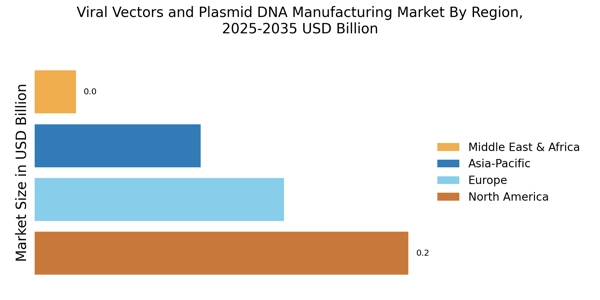
According to Market Research Future analysis, the Viral Vectors and Plasmid DNA Manufacturing Market Size was valued at USD 0.4 Billion in 2024 and the market is projected to grow from USD 0.453 Billion in 2025 to USD 1.574 Billion by 2035, registering a CAGR of 13.2% during 2025–2035. North America led the market with over 45% share, generating around USD 0.18 billion in revenue.
 
The Viral Vectors and Plasmid DNA Manufacturing Market is expanding due to rising demand for gene and cell therapies and increasing biopharmaceutical innovation. Key trends include advancements in vector engineering technologies, growing clinical trials for gene therapies, and rising investments in scalable manufacturing solutions to support precision medicine and advanced therapeutic development globally. According to the World Health Organization, noncommunicable diseases account for 74% of global deaths, driving demand for innovative treatments such as gene and cell therapies.

Key Market Trends & Highlights

The Viral Vectors and Plasmid DNA Manufacturing Market is experiencing robust growth driven by technological advancements and increasing demand for gene therapies.

  • The market is witnessing a rising demand for gene therapies, particularly in North America, which remains the largest market.
  • Technological advancements in production methods are enhancing efficiency and scalability, especially in the Asia-Pacific region.
  • Collaborative research initiatives are fostering innovation, with gene therapy being the largest segment and vaccine development emerging as the fastest-growing.
  • Key market drivers include the increasing prevalence of genetic disorders and expanding applications in vaccine development, which are propelling market growth.

Market Size & Forecast

2024 Market Size 0.4 (USD Billion)
2035 Market Size 1.574 (USD Billion)
CAGR (2025 - 2035) 13.26%

Major Players

Companies such as Lonza (CH), Boehringer Ingelheim (DE), Sartorius (DE), Thermo Fisher Scientific (US), WuXi AppTec (CN), Cobra Biologics (GB), Viva Biotech (CN), Aldevron (US), MilliporeSigma (US), Celerion (US) are some of the major participants in the global market.
Our Impact
Enabled $4.3B Revenue Impact for Fortune 500 and Leading Multinationals
Partnering with 2000+ Global Organizations Each Year
30K+ Citations by Top-Tier Firms in the Industry

Viral Vectors & Plasmid DNA Manufacturing Market Trends

The Viral Vectors and Plasmid DNA Manufacturing Market is currently experiencing a notable transformation, driven by advancements in biotechnology and increasing demand for gene therapies. This sector is characterized by a growing emphasis on the development of innovative therapeutic solutions, which are increasingly being recognized for their potential to treat a variety of genetic disorders and cancers. As research institutions and pharmaceutical companies invest heavily in this area, the market is likely to witness a surge in the production capabilities of viral vectors and plasmid DNA.

Furthermore, collaborations between academic institutions and industry players appear to be fostering a conducive environment for innovation, thereby enhancing the overall landscape of this market. In addition, regulatory frameworks are evolving to accommodate the rapid advancements in gene therapy technologies. This shift may lead to streamlined approval processes, which could facilitate quicker access to novel treatments for patients.

The increasing prevalence of chronic diseases and genetic disorders is also propelling the demand for effective therapeutic options, further driving growth in the market. As the market continues to expand, it is essential for stakeholders to remain vigilant regarding emerging trends and technological advancements that could shape the future of this dynamic field.

Rising Demand for Gene Therapies

The growing interest in gene therapies is significantly influencing the Viral Vectors and Plasmid DNA Manufacturing Market. As more therapies receive approval, the need for efficient manufacturing processes becomes paramount. This trend suggests a shift towards scalable production methods that can meet the increasing demand.

According to the World Health Organization, noncommunicable diseases account for nearly 74% of global deaths, driving demand for advanced treatments such as gene therapies.

Technological Advancements in Production

Innovations in manufacturing technologies are reshaping the landscape of the market. Techniques such as continuous manufacturing and improved purification processes are enhancing efficiency and reducing costs, which may lead to broader accessibility of these therapies.

The European Centre for Disease Prevention and Control emphasizes the growing adoption of advanced biotechnological and laboratory production systems to enhance efficiency in disease control and treatment development.

Collaborative Research Initiatives

Partnerships between academic institutions and industry leaders are becoming more prevalent in the Viral Vectors and Plasmid DNA Manufacturing Market. These collaborations are likely to accelerate research and development efforts, fostering innovation and potentially leading to groundbreaking therapeutic solutions.

According to the Global Fund, multi-stakeholder partnerships are critical for accelerating innovation and expanding access to advanced healthcare technologies globally.

Viral Vectors & Plasmid DNA Manufacturing Market Drivers

Rising Investment in Biotechnology

The surge in investment within the biotechnology sector is a crucial driver for the Viral Vectors and Plasmid DNA Manufacturing Market. Venture capital funding and government grants are increasingly directed towards companies specializing in gene therapy and related technologies. In recent years, the biotechnology sector has attracted billions in investments, reflecting a growing confidence in the potential of gene-based therapies.
 
This influx of capital enables companies to enhance their research and development capabilities, thereby accelerating the production of viral vectors and plasmid DNA. As a result, the market is likely to experience robust growth, driven by the continuous innovation and expansion of therapeutic applications within the market.

Growing Demand for Personalized Medicine

The increasing demand for personalized medicine is emerging as a vital driver for the Viral Vectors and Plasmid DNA Manufacturing Market. As healthcare shifts towards tailored treatment approaches, the need for specific gene therapies that cater to individual patient profiles is becoming more pronounced. This trend is supported by advancements in genomic technologies, which enable the identification of unique genetic markers associated with various diseases.
 
The market is likely to expand as healthcare providers seek to implement personalized treatment plans, thereby increasing the utilization of viral vectors and plasmid DNA in therapeutic applications. This evolution in patient care signifies a transformative phase for the market, aligning with the broader movement towards precision medicine.

Increasing Prevalence of Genetic Disorders

The rising incidence of genetic disorders is a pivotal driver for the Viral Vectors and Plasmid DNA Manufacturing Market. As more individuals are diagnosed with conditions such as cystic fibrosis, hemophilia, and muscular dystrophy, the demand for effective gene therapies is escalating. This trend is underscored by the fact that approximately 1 in 10 individuals are affected by a rare genetic disorder, which propels the need for innovative treatment solutions.
 
Consequently, pharmaceutical companies are investing heavily in the development of viral vectors and plasmid DNA technologies to address these health challenges. The market is projected to witness substantial growth as healthcare providers seek advanced therapeutic options, thereby enhancing the overall landscape of the market.

Regulatory Support for Gene Therapy Products

Regulatory bodies are increasingly providing support for the development and approval of gene therapy products, which is a significant driver for the Viral Vectors and Plasmid DNA Manufacturing Market. Initiatives aimed at streamlining the approval process for gene therapies are being implemented, thereby encouraging companies to invest in the development of viral vectors and plasmid DNA technologies.
 
For instance, the introduction of expedited review pathways has facilitated faster access to the market for innovative therapies. This regulatory environment fosters a conducive atmosphere for research and development, potentially leading to a surge in the number of approved gene therapies. Consequently, the market is poised for growth as more products gain regulatory approval.

Expanding Applications in Vaccine Development

The ongoing expansion of applications for viral vectors and plasmid DNA in vaccine development is significantly influencing the Viral Vectors and Plasmid DNA Manufacturing Market. With the increasing focus on preventive healthcare, the utilization of these technologies in creating vaccines for infectious diseases is becoming more prevalent.
 
For instance, the use of viral vectors in the development of vaccines for diseases such as Zika and Ebola has demonstrated their potential. The market is expected to grow as more research institutions and biotech companies explore these applications, with the vaccine segment projected to account for a substantial share of the overall market. This trend indicates a promising future for the market as it adapts to meet the evolving needs of public health.

Market Segment Insights

By Application: Gene Therapy (Largest) vs. Vaccines (Fastest-Growing)

In the viral vectors plasmid DNA manufacturing market, the 'Application' segment is predominantly led by Gene Therapy, which commands substantial market share due to its increasing adoption in clinical settings. Following closely, Vaccines are emerging as the fastest-growing segment, driven by heightened demand in the wake of public health challenges, including the COVID-19 pandemic. Other notable applications include Oncology, Infectious Diseases, and Genetic Disorders, each contributing to the diversification of the market.

Application: Gene Therapy (Dominant) vs. Vaccines (Emerging)

Gene Therapy represents the dominant application within the viral vectors plasmid DNA manufacturing market, established by its significant role in delivering therapeutic genes to treat genetic disorders. This segment benefits from ongoing advancements in genetic engineering and a growing portfolio of clinical trials. In contrast, Vaccines, particularly mRNA and viral vector vaccines, are gaining traction and are considered an emerging segment. They leverage cutting-edge technologies for rapid development and deployment, further accelerated by recent global health events. The drive for innovative vaccine solutions positions this segment for robust growth and expands its importance in public health initiatives.

By End Use: Pharmaceutical Companies (Largest) vs. Biotechnology Firms (Fastest-Growing)

The viral vectors plasmid DNA manufacturing market showcases a diverse landscape, segmented by end use into Pharmaceutical Companies, Biotechnology Firms, Research Institutions, and Academic Organizations. Among these, Pharmaceutical Companies constitute the largest segment, leveraging viral vectors for vaccine development and therapeutic interventions. Meanwhile, Biotechnology Firms are witnessing rapid growth as they harness advanced technologies to expand their R&D capabilities, positioning themselves as a competitive force in this evolving market.

Pharmaceutical Companies: Dominant vs. Biotechnology Firms: Emerging

Pharmaceutical Companies dominate the viral vectors plasmid DNA manufacturing market, primarily driven by their established infrastructure and substantial investments in novel therapies. They utilize viral vectors for gene therapies and vaccines, benefiting from their robust distribution channels and regulatory expertise. In contrast, Biotechnology Firms, while emerging, are becoming significant players through innovative approaches and collaborations with research institutions. They focus on cutting-edge technologies and niche applications, driving advancements in gene modification and personalized medicine, thus enhancing their market relevance.

By Type of Viral Vector: Adenoviral Vectors (Largest) vs. Lentiviral Vectors (Fastest-Growing)

The viral vectors plasmid DNA manufacturing market exhibits a dynamic distribution among the various types of viral vectors. Adenoviral vectors have established themselves as the dominant player, reflecting a substantial portion of the market share due to their efficiency in transducing a wide range of cell types. Following closely are lentiviral vectors, which are witnessing rapid growth, supported by their unique ability to integrate into the host genome, making them suitable for advancing gene therapies and treatments for chronic diseases.

Adenoviral Vectors (Dominant) vs. Lentiviral Vectors (Emerging)

Adenoviral vectors are recognized for their robust transduction capabilities, predominantly used in gene therapy and vaccine development, thus maintaining their dominant market position. Their capacity to infect both dividing and non-dividing cells allows for versatile applications across various therapeutic areas. In contrast, lentiviral vectors are emerging as a significant player due to their advantages in long-term expression and stable genetic modification, particularly in the treatment of genetic disorders and cancers. Their unique integration ability has accelerated research and development initiatives, contributing to their rapid growth in the market.

By Scale of Production: Large Scale (Largest) vs. Small Scale (Fastest-Growing)

In the viral vectors plasmid DNA manufacturing market, the scale of production is categorized into small, medium, and large-scale operations. Among these, large-scale production commands the largest share, favored for industrial applications due to its ability to meet substantial demand. Small-scale production, while currently lesser in market size, is gaining traction as it caters to niche applications and customized solutions, positioning itself as a fast-growing segment that appeals to research institutions and biotech startups.

Large Scale (Dominant) vs. Small Scale (Emerging)

Large scale production in the viral vectors plasmid DNA manufacturing market is characterized by its capacity to produce significant volumes required for widespread application in gene therapy and vaccine development. This segment is dominant due to the rising demand for viral vectors in major biopharmaceutical projects. In contrast, small scale production is emerging, catering to personalized medicine and early-stage research. It allows for flexibility and quicker turnaround, making it attractive for smaller biotech firms. Both segments are critical, with large scale providing the backbone of supply while small scale nurtures innovation and new product development.

By Technology Used: Transfection (Largest) vs. Electroporation (Fastest-Growing)

In the viral vectors plasmid DNA manufacturing market, transfection holds the largest market share among the various technologies used, primarily due to its wide adoption in research and biopharmaceutical applications. This method allows efficient delivery of genetic material into cells, making it a preferred choice for many researchers and companies involved in the production of viral vectors for gene therapy. Electroporation, while currently smaller in share, is rapidly gaining traction as a preferred method, credited for its efficiency and effectiveness in larger cell variants.

Technology: Transfection (Dominant) vs. Electroporation (Emerging)

Transfection technology stands out as the dominant force in the viral vectors plasmid DNA manufacturing domain, providing reliable and reproducible methods for gene delivery. Widely utilized in academic and industrial settings, it is favored for its ease of use and adaptability across various cell types. In contrast, electroporation is emerging as a significant contender, notably in applications requiring high transfection efficiencies and scalability. Its rising popularity is driven by advancements in electroporation device technology, which allow for controlled and efficient permeability of cell membranes, especially in hard-to-transfect cell lines. This evolving landscape indicates a vibrant competition between established and emerging technologies.

Get more detailed insights about Viral Vectors & Plasmid DNA Manufacturing Market

Regional Insights

North America : Leading Innovation and Investment

North America leads in the Viral Vectors and Plasmid DNA Manufacturing Market Size, accounting for over 45% of the global revenue in 2024. The region benefits from robust investment in biotechnology, advanced research facilities, and a favorable regulatory environment. The increasing demand for gene therapies and vaccines, particularly post-COVID-19, has accelerated growth.

Regulatory bodies like the FDA have streamlined approval processes, further catalyzing market expansion. The United States is the primary driver of this market, with key players such as Thermo Fisher Scientific, Lonza, and Aldevron leading the charge. Canada also contributes significantly, focusing on innovative research and development. The competitive landscape is characterized by collaborations and partnerships among major firms, enhancing capabilities in viral vector production and plasmid DNA manufacturing.

Europe : Regulatory Framework and Growth

Europe Viral Vectors and Plasmid DNA Manufacturing Market size was valued at USD 0.12 billion in 2024, making it the second-largest regional market with a 30% share. The region's growth is driven by increasing investments in biotechnology and a strong focus on research and development. The European Medicines Agency (EMA) has established clear guidelines for gene therapies, which has encouraged innovation and investment in this sector.

The rising prevalence of genetic disorders and the demand for personalized medicine are also significant growth factors. Leading countries in Europe include Germany, France, and the United Kingdom, which host numerous biopharmaceutical companies and research institutions. Key players such as Boehringer Ingelheim and Sartorius are pivotal in advancing manufacturing capabilities. The competitive landscape is marked by strategic collaborations and mergers, enhancing the region's position in the global market.

Asia-Pacific : Rapid Growth and Investment

Asia-Pacific is witnessing rapid growth in the viral vectors and plasmid DNA manufacturing market, holding approximately 20% of the global market share. The region's expansion is fueled by increasing investments in biotechnology, a growing number of clinical trials, and rising healthcare expenditures. Countries like China and India are becoming significant players, supported by government initiatives aimed at boosting the biotech sector.

The regulatory environment is evolving, with agencies working to streamline approval processes for new therapies. China is leading the charge in this region, with companies like WuXi AppTec and Viva Biotech making substantial contributions to the market. India is also emerging as a key player, focusing on affordable healthcare solutions and biomanufacturing capabilities. The competitive landscape is characterized by a mix of local and international firms, driving innovation and collaboration in the sector.

Middle East and Africa : Untapped Potential and Growth

The Middle East and Africa (MEA) region is gradually emerging in the market, holding about 5% of the global market share. The growth in this region is primarily driven by increasing healthcare investments, rising awareness of gene therapies, and government initiatives to enhance biomanufacturing capabilities. Countries like South Africa and the UAE are focusing on developing their biotech sectors, supported by favorable policies and funding opportunities.

South Africa is leading the market in the MEA region, with a growing number of biotech firms and research institutions. The competitive landscape is still developing, with local companies collaborating with international players to enhance their capabilities. The region's potential for growth is significant, as it seeks to establish itself as a hub for biomanufacturing and innovation in the coming years.

Viral Vectors & Plasmid DNA Manufacturing Market Regional Image

Key Players and Competitive Insights

The Viral Vectors and Plasmid DNA Manufacturing Market is currently characterized by a dynamic competitive landscape, driven by increasing demand for gene therapies and advanced biopharmaceuticals. Key players such as Lonza (CH), Boehringer Ingelheim (DE), and Thermo Fisher Scientific (US) are strategically positioned to leverage their extensive capabilities in bioprocessing and manufacturing.
 
Lonza (CH) has focused on expanding its production capacity, particularly in viral vector manufacturing, to meet the growing needs of its clients in the gene therapy sector. Meanwhile, Boehringer Ingelheim (DE) emphasizes innovation through its recent investments in digital technologies to enhance operational efficiency and product quality. These strategies collectively contribute to a competitive environment that is increasingly centered around technological advancement and operational excellence. 
 
In terms of business tactics, companies are increasingly localizing manufacturing to reduce lead times and enhance supply chain resilience. The market appears moderately fragmented, with several players vying for market share while also forming strategic partnerships to bolster their capabilities. This competitive structure allows for a diverse range of offerings, catering to various segments within the biopharmaceutical industry. 
 
In August 2025, Thermo Fisher Scientific (US) announced the opening of a new state-of-the-art facility dedicated to the production of plasmid DNA. This strategic move is expected to significantly enhance their production capacity and streamline operations, thereby positioning them as a leader in the plasmid DNA segment. The facility is designed to support the increasing demand for plasmid DNA in gene therapy applications, indicating Thermo Fisher's commitment to innovation and responsiveness to market needs. 
 
In July 2025, Boehringer Ingelheim (DE) launched a new platform aimed at accelerating the development of viral vector-based therapies. This initiative underscores the company's focus on enhancing its service offerings and providing clients with faster turnaround times for their projects. By investing in this platform, Boehringer Ingelheim is likely to strengthen its competitive edge in the rapidly evolving gene therapy landscape. 
 
In September 2025, Lonza (CH) entered into a strategic partnership with a leading biotech firm to co-develop a novel viral vector for a groundbreaking gene therapy. This collaboration not only highlights Lonza's commitment to innovation but also reflects a broader trend in the industry where partnerships are becoming essential for advancing complex biopharmaceutical products. Such alliances are indicative of a shift towards collaborative innovation in the market. 
 
As of October 2025, the competitive trends in the Viral Vectors and Plasmid DNA Manufacturing Market are increasingly influenced by digitalization, sustainability, and the integration of artificial intelligence in manufacturing processes. Strategic alliances are shaping the landscape, enabling companies to pool resources and expertise to drive innovation. Looking ahead, it appears that competitive differentiation will evolve from traditional price-based competition to a focus on technological advancements, innovation, and supply chain reliability, thereby redefining the parameters of success in this burgeoning market.

Key Companies in the Viral Vectors & Plasmid DNA Manufacturing Market include

Industry Developments

  • Q2 2024: FUJIFILM Diosynth Biotechnologies Opens New Viral Vector Manufacturing Facility in Texas FUJIFILM Diosynth Biotechnologies announced the opening of its new state-of-the-art viral vector manufacturing facility in College Station, Texas, expanding its capacity to support gene therapy and vaccine developers with commercial-scale production.
  • Q2 2024: Thermo Fisher Scientific Acquires Viral Vector Manufacturer OXGENE Thermo Fisher Scientific completed the acquisition of OXGENE, a UK-based viral vector development and manufacturing company, to strengthen its cell and gene therapy capabilities and expand its viral vector services portfolio.
  • Q3 2024: Catalent Signs Multi-Year Manufacturing Agreement with Sarepta Therapeutics for Gene Therapy Vectors Catalent entered into a multi-year agreement with Sarepta Therapeutics to manufacture adeno-associated viral (AAV) vectors for Sarepta’s gene therapy programs, enhancing Catalent’s position as a leading contract manufacturer in the sector.
  • Q2 2024: Aldevron Expands Plasmid DNA Manufacturing Facility in Fargo Aldevron, a leading plasmid DNA manufacturer, announced the expansion of its Fargo, North Dakota facility, increasing its production capacity to meet growing demand from gene therapy and vaccine developers.
  • Q1 2025: Lonza Appoints New Head of Viral Vector Manufacturing Division Lonza announced the appointment of Dr. Maria Sanchez as the new head of its viral vector manufacturing division, aiming to accelerate innovation and operational efficiency in its gene therapy manufacturing business.
  • Q2 2025: Pfizer Announces $300 Million Investment in Viral Vector Manufacturing Facility in North Carolina Pfizer revealed plans to invest $300 million in a new viral vector manufacturing facility in Sanford, North Carolina, to support its expanding gene therapy pipeline and meet increasing global demand.
  • Q1 2024: Vigene Biosciences Secures FDA Approval for Commercial-Scale Viral Vector Production Vigene Biosciences received FDA approval to begin commercial-scale manufacturing of viral vectors at its Rockville, Maryland facility, enabling the company to supply gene therapy developers with clinical and commercial-grade vectors.
  • Q3 2024: Aldevron and Moderna Announce Strategic Partnership for Plasmid DNA Supply Aldevron and Moderna entered a strategic partnership to supply high-quality plasmid DNA for Moderna’s mRNA vaccine and gene therapy programs, ensuring a reliable supply chain for critical raw materials.
  • Q2 2025: Charles River Laboratories Acquires Cognate BioServices to Expand Cell and Gene Therapy Manufacturing Charles River Laboratories completed the acquisition of Cognate BioServices, a contract development and manufacturing organization specializing in cell and gene therapy, including viral vector and plasmid DNA production.
  • Q1 2025: Oxford Biomedica Wins Major Contract to Manufacture Lentiviral Vectors for Novartis Oxford Biomedica secured a significant contract with Novartis to manufacture lentiviral vectors for use in Novartis’ CAR-T cell therapy programs, further solidifying its role as a key supplier in the gene therapy market.
  • Q2 2024: Thermo Fisher Scientific Launches New Plasmid DNA Manufacturing Platform Thermo Fisher Scientific launched a new plasmid DNA manufacturing platform designed to accelerate the development and production of gene therapies and vaccines, offering scalable solutions for clinical and commercial needs.
  • Q3 2025: Sartorius Opens Advanced Viral Vector Manufacturing Facility in Germany Sartorius inaugurated a new advanced viral vector manufacturing facility in Göttingen, Germany, to support the growing demand for gene therapy and vaccine development in Europe.

Future Outlook

Viral Vectors & Plasmid DNA Manufacturing Market Future Outlook

The Viral Vectors and Plasmid DNA Manufacturing Market is projected to grow at a 13.26% CAGR from 2025 to 2035, driven by advancements in gene therapies and biopharmaceuticals.

New opportunities lie in:

  • Expansion of contract manufacturing organizations for viral vector production. Development of scalable plasmid DNA production technologies. Investment in next-generation sequencing for enhanced vector design.

By 2035, the market is expected to be robust, driven by innovation and increasing demand.

Market Segmentation

Viral Vectors and Plasmid DNA Manufacturing Market Type Outlook

  • Viral Vectors
  • Plasmid DNA
  • RNA-based Vectors

Viral Vectors and Plasmid DNA Manufacturing Market End-Use Outlook

  • Pharmaceutical Companies
  • Biotechnology Firms
  • Research Institutions

Viral Vectors and Plasmid DNA Manufacturing Market Technology Outlook

  • Viral Transduction
  • Electroporation
  • Microinjection
  • Liposomal Delivery

Viral Vectors and Plasmid DNA Manufacturing Market Application Outlook

  • Gene Therapy
  • Vaccine Development
  • Transgenic Research
  • Cell and Gene Editing

Report Scope

MARKET SIZE 2024 0.4(USD Billion)
MARKET SIZE 2025 0.453(USD Billion)
MARKET SIZE 2035 1.574(USD Billion)
COMPOUND ANNUAL GROWTH RATE (CAGR) 13.26% (2025 - 2035)
REPORT COVERAGE Revenue Forecast, Competitive Landscape, Growth Factors, and Trends
BASE YEAR 2024
Market Forecast Period 2025 - 2035
Historical Data 2019 - 2024
Market Forecast Units USD Billion
Key Companies Profiled Lonza (CH), Boehringer Ingelheim (DE), Sartorius (DE), Thermo Fisher Scientific (US), WuXi AppTec (CN), Cobra Biologics (GB), Viva Biotech (CN), Aldevron (US), MilliporeSigma (US), Celerion (US)
Segments Covered Applications, Types, Technology, End Use, Regional
Key Market Opportunities Advancements in gene therapy and personalized medicine drive demand in the Viral Vectors and Plasmid DNA Manufacturing Market.
Key Market Dynamics Rising demand for gene therapies drives innovation and competition in viral vectors and plasmid DNA manufacturing.
Countries Covered North America, Europe, APAC, South America, MEA

Market Highlights

Author
Author
Author Profile
Rahul Gotadki LinkedIn
Research Manager
He holds an experience of about 9+ years in Market Research and Business Consulting, working under the spectrum of Life Sciences and Healthcare domains. Rahul conceptualizes and implements a scalable business strategy and provides strategic leadership to the clients. His expertise lies in market estimation, competitive intelligence, pipeline analysis, customer assessment, etc.
Leave a Comment

FAQs

What is the current valuation of the viral vectors plasmid DNA manufacturing market?

The market valuation reached 3.5 USD Billion in 2024.

What is the projected market size for the viral vectors plasmid DNA manufacturing market by 2035?

The market is expected to grow to 7.2 USD Billion by 2035.

What is the expected CAGR for the viral vectors plasmid DNA manufacturing market during the forecast period?

The market is projected to experience a CAGR of 6.78% from 2025 to 2035.

Which applications are driving growth in the viral vectors plasmid DNA manufacturing market?

Key applications include Gene Therapy, Vaccines, Oncology, Infectious Diseases, and Genetic Disorders, with valuations ranging from 0.1 to 2.4 USD Billion.

Who are the leading companies in the viral vectors plasmid DNA manufacturing market?

Prominent players include Lonza, Sartorius, Thermo Fisher Scientific, and Merck KGaA.

What are the different types of viral vectors utilized in the market?

The market features Adenoviral, Lentiviral, Adeno-Associated, and Retroviral vectors, with valuations from 0.6 to 2.4 USD Billion.

How is the market segmented by end use?

The market is segmented into Pharmaceutical Companies, Biotechnology Firms, Research Institutions, and Academic Organizations, with valuations from 0.3 to 2.8 USD Billion.

What production scale segments exist within the viral vectors plasmid DNA manufacturing market?

Production scales include Small, Medium, and Large Scale, with valuations ranging from 0.7 to 2.9 USD Billion.

What technologies are employed in the viral vectors plasmid DNA manufacturing process?

Technologies include Transfection, Electroporation, Viral Packaging, and Microinjection, with valuations from 0.55 to 2.25 USD Billion.

What trends are anticipated in the viral vectors plasmid DNA manufacturing market by 2035?

The market is likely to expand significantly, driven by advancements in gene therapy and vaccine development.

Download Free Sample

Kindly complete the form below to receive a free sample of this Report

Compare Licence

×
Features License Type
Single User Multiuser License Enterprise User
Price $4,950 $5,950 $7,250
Maximum User Access Limit 1 User Upto 10 Users Unrestricted Access Throughout the Organization
Free Customization
Direct Access to Analyst
Deliverable Format
Platform Access
Discount on Next Purchase 10% 15% 15%
Printable Versions