×
Request Free Sample ×

Kindly complete the form below to receive a free sample of this Report

* Please use a valid business email

Leading companies partner with us for data-driven Insights

clients tt-cursor
Hero Background

Seabed Security Market

ID: MRFR/AD/66511-CR
100 Pages
Sejal Akre
January 2026

Seabed Security Market Research Report by HUD Component (Hardware, Software, Services), By Deployment Type (Permanent Installations, Submarine Communication Cables, Oil and Gas Pipelines, Offshore Energy Infrastructure, Military and Defense Assets, Scientific and Research Infrastructure, Other Subsea Infrastructure), By Industry (Telecommunications Companies, Oil and Gas Companies, Renewable Energy Developers and Operators, Government and Defense Agencies, Marine Research and Scientific Institutions), By Depth of Operation (Shallow and Mid Water, Deep Water, Ultra-Deep Water), By Region – Forecast to 2035

Share:
Download PDF ×

We do not share your information with anyone. However, we may send you emails based on your report interest from time to time. You may contact us at any time to opt-out.

Purchase Options

Seabed Security Market Summary

As per Market Research Future analysis, the Seabed Security Market Size Was Valued at USD 7,006.0 Million in 2024. The Global Seabed Security Industry Is Projected to grow from USD 2,142.14 Million in 2025 to USD 13,977.4 Million by 2035, Exhibiting A Compound Annual Growth Rate (CAGR) of 6.7% during the Forecast Period (2025 - 2035).

Key Market Trends & Highlights

The Seabed Security Market is experiencing robust growth, propelled by escalating geopolitical tensions, environmental imperatives, and technological advancements that underscore the vulnerability of critical undersea infrastructure (CUI) such as subsea cables, pipelines, and offshore wind farms. Growing global attention toward safeguarding marine ecosystems and protecting vital subsea assets is a primary driver, with governments and private institutions channeling large-scale investments into marine research and environmental protection initiatives. These efforts recognize seabed ecosystems as biodiversity hotspots essential for energy pipelines, communication cables, and renewable energy installations.

Market Size & Forecast

2024 Market Size 7,006.0 (USD Million)
2035 Market Size 13,977.4 (USD Million)
CAGR (2025 - 2035) 6.7%

Major Players

Teledyne Technologies, Covelya Group, AP Sensing, Optics11, ATLAS ELEKTRONIK GmbH, Sintela Limited, Royal IHC, Anduril, Thales, TIM Groups, RTX Corporation, Northrop Grumman, L3harris Technologies, Inc, AXISCADES, and Elbit Systems Limited., And Others.

Our Impact
Enabled $4.3B Revenue Impact for Fortune 500 and Leading Multinationals
Partnering with 2000+ Global Organizations Each Year
30K+ Citations by Top-Tier Firms in the Industry

Seabed Security Market Trends

Expansion of Seabed Exploration Activities for Natural Resource Extraction

The seabed security market is also being provided with new opportunities by the accelerating growth of seabed exploration of natural resources to be extracted. The protection of offshore wind farms, undersea mining projects, and the establishment of transcontinental communication cables are increasing at rates never witnessed before, making the protection of these assets the priority. The seabed is the location of important resources, both in the form of hydrocarbons, minerals, and renewable energy infrastructure, which is becoming the target of both state and non-state actors.

The need to move to green energy in Europe and Asia has increased the construction of offshore wind farms, which necessitate the investment of protective mechanisms at the same time to ensure that the risk of sabotage, accidents, or the destruction of the environment is reduced. Equally, deep-sea mining initiatives that will study polymetallic nodules and uncommon earth components increase security concerns, because they demand long-term supervision in risky, remote regions. The development of subsea cable installations, through which over 95 percent of international communications traffic passes, increases the scale of infrastructure at risk of hybrid attacks. The problem of intentional sabotage in the Baltic Sea is one of the examples of exploration and extraction operations that are directly proportional to the risk. The governments and companies are forced to build resilience into exploration projects at the design stage to attract investments, providing room to sophisticated surveillance systems, autonomous drones, and AI-enabled monitoring platforms.

Moreover, the exploration of the Indo-Pacific and Indian Ocean territories is the way to new business opportunities due to the increasing geopolitical tensions and the resulting need to develop strong infrastructure. Subsea sensing, inspection, and intervention technology companies can use this growth to offer integrated solutions, which would improve both performance and security. As exploration activities are likely to increase alongside the target of energy transition, seabed security will continue to be an inseparable enabler, providing profitable opportunities to defense contractors, technology companies and offshore services.

Regional Insights

Based on region, the Seabed Security Market is segmented into North America, Europe, Asia-Pacific, South America and Middle East and Africa. North America accounted for the largest market share in 2024 and is anticipated to reach USD 4,794.2 Million by 2035. Asia-Pacific is projected to grow at the highest CAGR of 7.1% during the forecast period.

Europe: Infrastructure security emphasis.

The market of seabed security in Europe is motivated by the increased fear that concerns the security of the sub sea communication cables, offshore wind systems and the cross border energy pipelines. The rise in geopolitical uncertainty and the recent events of disruption of the underwater infrastructure have increased the pace of investment in seabed monitoring and protection systems. The high focus on renewable energy in the region, especially offshore wind farms has also created more pressure in terms of seabed security solutions. Also, the integration of efforts between the governments of the regions, naval forces, and maritime security agencies is improving surveillance and quick response. Underwater sensing, data analytics, and autonomous systems; all these technologies have continued to improve the market growth within the European waters.
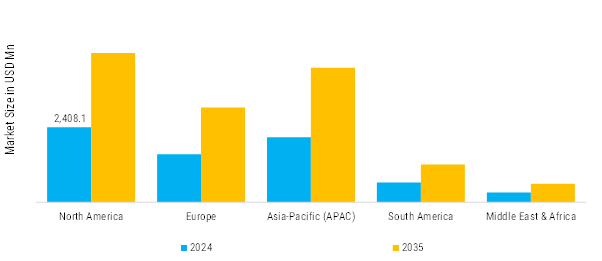
North America: Defense-based underwater security.

North America is one of the established and highly developed seabed security markets with robust defense budgets, expansive subsea cable systems and sensitive offshore energy infrastructure. Underwater communication cables, pipelines and military assets are of high strategic value to the region because of the growing geopolitical tensions and the growing risk of sabotage. The seabed surveillance is being enhanced by continuous investment in modernization of the navy, autonomous underwater vehicles and sophisticated sensor-based monitoring systems. More so, the existence of well-developed maritime security systems, strong interaction among defense, energy, and technology organizations, also contribute to the development of the market. The increasing interest in the monitoring of the deep-sea environment and protection of the infrastructure of data transmission remains to strengthen the leadership of North America in the international market of seabed security.

South America: Outsourcing energy-powered development.

The South American seabed security market is undergoing a consistent growth mainly due to offshore oil and gas exploration works and gradual development of underwater infrastructure. Nations that have high offshore reserves are paying more attention to the security of underwater pipelines and production stations against operational risks and security threats. Defense expenditure is relatively moderate, but the growth of awareness about the vulnerability of subsea assets stimulates the investment in the basic monitoring and surveillance tools. Also, enhanced regional maritime collaboration and gradual modernization of naval strengths are also driving towards the implementation of seabed security technologies, which are supporting the long-term market growth in the region.

Asia-pacific: Fast maritime growth.

Asia Pacific is becoming a booming market in seafarer security market by means of the growing offshore energy exploitation, growing undersea cable systems and growing naval modernization packages. The need to protect the seabed is being intensified by the rapid economic development, growing data usage and massive investments in undersea communication systems. A number of nations in the region are enhancing their maritime security potentials to protect strategic maritime routes and underwater resources with the escalating tension in the region. Also the increased use of unmanned underwater systems and surveillance technologies, and the increasing government-led investment in marine infrastructure are driving up the evolution of seabed security solutions throughout the region.

Middle-East & Africa: Strategic offshore asset security.

Middle East and Africa is an area that is experiencing a rising need of seabed security solutions, owing to the strategicity of the maritime routes, the extensive offshore oil and gas infrastructure, and rising geopolitical tensions. The security of underwater pipelines, ports, and underwater power facilities is one of the main concerns of the governments and energy companies in the region. Inclement weather conditions and the high-value offshore facilities also require superior monitoring and early warning systems. Also, the growth of market is facilitated by increased spending on coastal security, modernization of ports, and naval surveillance systems. The progressive introduction of autonomous underwater platforms would also enhance seabed security in the region.


Key Players and Competitive Insights

The Seabed Security market is highly competitive, and it has several well-settled giants and new entrants or startups. Some of the market players include Teledyne Technologies, Covelya Group, AP Sensing, Optics11, ATLAS ELEKTRONIK GmbH, Sintela Limited, Royal IHC, Anduril, Thales, TIM Groups, RTX Corporation, Northrop Grumman, L3harris Technologies, Inc, AXISCADES, and Elbit Systems Limited., and others. The seabed security market is experiencing accelerated innovation, with established defense and subsea technology companies expanding their portfolios through AI, robotics, autonomous systems, and multinational collaborations. Anduril, with its Seabed Sentry, has positioned itself as a frontrunner in AI-enabled undersea networks, offering scalable, modular, and cost-effective surveillance solutions. Royal IHC is reinforcing its global standing through crawler systems integrated with advanced stability, mine countermeasure capabilities, and biomimicry-based detection in partnership with Elwave, demonstrating the value of European collaboration under initiatives like E=MCM and SeaSEC25.

Industry Developments

April 2024: HARMAN has launched Ready Vision, an Augmented Reality (AR) head-up display (HUD) designed to enhance driver safety and awareness. Featuring a large field of view and wedge less design, Ready Vision integrates AR software with vehicle sensors to deliver immersive audio-visual alerts, providing critical information in real time. Key features include intuitive turn-by-turn directions, 3D object detection for collision warnings, and seamless integration with other HARMAN products. This innovative technology aims to bridge the physical and digital worlds, ensuring a safer and more informed driving experience.

June 2025: Royal IHC unveiled its 4-track seabed crawler at SeaSEC 2025, showcasing advanced stability, mobility, and sensor integration for shallow-water operations. Designed for inspection, monitoring, maintenance, and mine countermeasure missions, the crawler supports European efforts to protect subsea infrastructure. Backed by multinational collaboration, it advances seabed security within the EU-funded E=MCM program.

Future Outlook

Seabed Security Market Future Outlook

The Seabed Security Market is projected to grow at a 6.7% CAGR from 2025 to 2035, driven by advancements in underwater drone technologies enhancing seabed surveillance capabilities and increasing maritime security concerns due to rising piracy and territorial disputes.

New opportunities lie in:

  • Development of Integrated Security Solutions Combining Aerial and Underwater Systems
  • Emergence of Partnerships Between Government and Private Firms for Enhancing Seabed Security
  • Expansion of Seabed Exploration Activities for Natural Resource Extraction

Report Scope

Market Size 2024 7,006.0 (USD Million)
Market Size 2025 7,285.5 (USD Million)
Market Size 2035 13,977.4 (USD Million)
Compound Annual Growth Rate (CAGR) 6.7% (2025 - 2035)
Report Coverage Revenue Forecast, Competitive Landscape, Growth Factors, and Trends
Base Year 2024
Market Forecast Period 2025 - 2035
Historical Data 2019 - 2023
Market Forecast Units USD Million
Key Companies Profiled Teledyne Technologies, Covelya Group, AP Sensing, Optics11, ATLAS ELEKTRONIK GmbH, Sintela Limited, Royal IHC, Anduril, Thales, TIM Groups, RTX Corporation, Northrop Grumman, L3harris Technologies, Inc, AXISCADES, and Elbit Systems Limited., Others.
Segments Covered By Component, By Deployment Type, By Industry, By Depth of Operation, By End-Use
Key Market Opportunities • Development of Integrated Security Solutions Combining Aerial and Underwater Systems • Emergence of Partnerships Between Government and Private Firms for Enhancing Seabed Security • Expansion of Seabed Exploration Activities for Natural Resource Extraction
Key Market Dynamics ·         Growing Investments in Marine Research and Environmental Protection Initiatives ·         Advancements in Underwater Drone Technologies Enhancing Seabed Surveillance Capabilities ·         Increasing Maritime Security Concerns Due to Rising Piracy and Territorial Disputes
Region Covered North America, Europe, APAC, South America, MEA
Leave a Comment
Download Free Sample

Kindly complete the form below to receive a free sample of this Report

Compare Licence

×
Features License Type
Single User Multiuser License Enterprise User
Price $4,950 $5,950 $7,250
Maximum User Access Limit 1 User Upto 10 Users Unrestricted Access Throughout the Organization
Free Customization
Direct Access to Analyst
Deliverable Format
Platform Access
Discount on Next Purchase 10% 15% 15%
Printable Versions