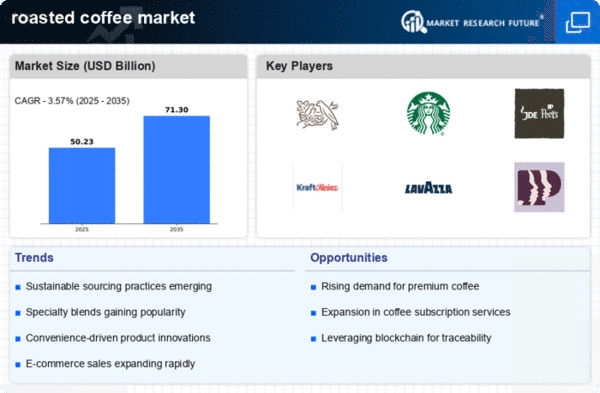
The roasted coffee market is characterized by a dynamic competitive landscape, driven by evolving consumer preferences and a growing emphasis on sustainability. Major players such as Nestlé (CH), Starbucks (US), and JDE Peet's (NL) are actively shaping the market through strategic initiatives that focus on innovation, regional expansion, and digital transformation. Nestlé (CH) has been particularly aggressive in enhancing its product portfolio with premium offerings, while Starbucks (US) continues to leverage its brand strength to expand its global footprint. JDE Peet's (NL) is also making strides in optimizing its supply chain to improve efficiency and reduce costs, which collectively influences the competitive environment by fostering a culture of continuous improvement and responsiveness to market demands.
Key business tactics employed by these companies include localizing manufacturing and optimizing supply chains to enhance operational efficiency. The market appears moderately fragmented, with a mix of large multinational corporations and smaller, niche players. This structure allows for a diverse range of products and price points, catering to various consumer segments. The collective influence of key players is significant, as they set trends that smaller companies often follow, thereby shaping the overall market dynamics.
In November 2025, Nestlé (CH) announced a partnership with a leading tech firm to integrate AI into its coffee sourcing and production processes. This strategic move is expected to enhance traceability and sustainability in its supply chain, aligning with consumer demand for ethically sourced products. The integration of AI could potentially streamline operations and reduce waste, positioning Nestlé (CH) as a leader in sustainable practices within the industry.
In October 2025, Starbucks (US) launched a new line of eco-friendly coffee pods, emphasizing its commitment to sustainability. This initiative not only caters to environmentally conscious consumers but also strengthens Starbucks' brand image as a responsible corporate entity. The introduction of these pods is likely to attract a new customer base while reinforcing loyalty among existing customers who prioritize sustainability in their purchasing decisions.
In September 2025, JDE Peet's (NL) expanded its presence in the Asian market by acquiring a local coffee brand, which is anticipated to enhance its market share in a rapidly growing region. This acquisition reflects JDE Peet's strategic focus on regional expansion and diversification of its product offerings, allowing it to tap into local consumer preferences and trends.
As of December 2025, the roasted coffee market is witnessing trends such as digitalization, sustainability, and AI integration, which are redefining competitive dynamics. Strategic alliances are increasingly shaping the landscape, enabling companies to leverage shared resources and expertise. Moving forward, competitive differentiation is likely to evolve from traditional price-based competition to a focus on innovation, technology, and supply chain reliability. This shift underscores the importance of adaptability and responsiveness in a market that is continuously evolving.




















Leave a Comment