×
Hero Background
English
Chinese
French
Japanese
Korean
German
Spanish

Pulmonary Atresia Diagnostics Treatment Market Analysis

ID: MRFR/Pharma/5025-HCR
100 Pages
Rahul Gotadki
October 2025

Pulmonary Atresia Diagnostics and Treatment Market Type (Intact Ventricular Septum, Ventricular Septum Defect), Diagnosis (Pulse Oximetry, Echocardiogram), Treatment (Medication, Surgery), End-Users (Hospitals, Clinics)–Global Forecast Till 2035

Share:
Download PDF ×

We do not share your information with anyone. However, we may send you emails based on your report interest from time to time. You may contact us at any time to opt-out.

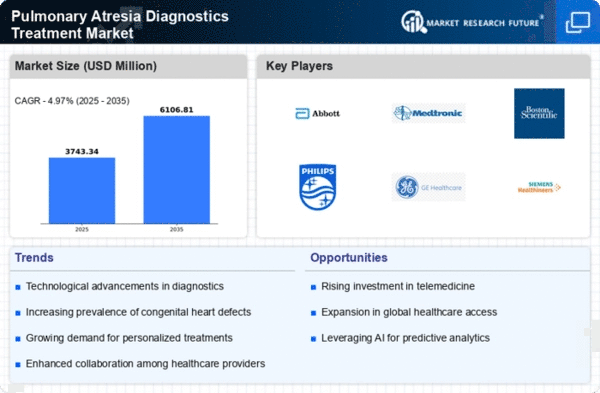
Pulmonary Atresia Diagnostics Treatment Market Infographic
Purchase Options

Market Analysis

In-depth Analysis of Pulmonary Atresia Diagnostics Treatment Market Industry Landscape

Pulmonary atresia is a congenital heart disorder characterized by the absence or closure of the pulmonary valve, affecting blood drift from the heart to the lungs. Analyzing the market dynamics of Pulmonary Atresia diagnostics and treatment entails exploring factors including prevalence, diagnostic improvements, treatment modalities, and the aggressive panorama in the healthcare quarter. Understanding market dynamics begins with an exam of the prevalence of pulmonary atresia, particularly its occurrence within the pediatric population. This congenital coronary heart disorder calls for specialized diagnostics and remedies, making it a large consideration for healthcare carriers and pharmaceutical corporations. Market dynamics are motivated by continuous advancements in diagnostic technologies for pulmonary atresia. Improved imaging techniques, together with echocardiography and cardiac MRI, play an important role in correct and early analysis. The market responds to improvements that decorate the precision and efficiency of diagnostic methods. Pharmaceutical agencies contribute to market dynamics through improvements in medications for pulmonary atresia. Drugs that improve cardiac features, control signs, and decorate standard coronary heart health are essential components of the remedy panorama. Research and improvement efforts recognize the unique, demanding situations posed by way of pulmonary atresia. The market for Pulmonary Atresia diagnostics and treatment is aggressive, with healthcare providers and pharmaceutical businesses vying for market share. Competition fosters studies and improvement, mainly in the creation of recent diagnostic tools, remedy alternatives, and healing tactics. Companies intend to establish their merchandise as trendy-of-care in the scientific network. Market dynamics are motivated by the specialization of healthcare experts in pediatric cardiology. The knowledge of pediatric cardiologists in handling congenital heart defects, inclusive of pulmonary atresia, is essential in shaping treatment protocols and influencing the adoption of specific interventions. Regulatory approvals and compliance with healthcare standards drastically affect the market dynamics of Pulmonary Atresia diagnostics and treatment. Manufacturers and healthcare companies must navigate regulatory processes to ensure the protection and efficacy of diagnostic gear and treatment modalities. The market is inspired by patient advocacy companies and help groups that play a critical role in raising awareness, imparting assets, and advocating for progressed care for individuals with pulmonary atresia. The state of global healthcare infrastructure plays a role in market dynamics, impacting the right of entry to specialized care for pulmonary atresia patients. The integration of the era in healthcare, along with telemedicine and faraway monitoring, is a growing trend that influences the market dynamics for pulmonary atresia. Remote consultations, digital fitness statistics, and telemedicine solutions contribute to progressed accessibility and continuity of care.


Author
Rahul Gotadki
Assistant Manager

He holds an experience of about 7+ years in Market Research and Business Consulting, working under the spectrum of Life Sciences and Healthcare domains. Rahul conceptualizes and implements a scalable business strategy and provides strategic leadership to the clients. His expertise lies in market estimation, competitive intelligence, pipeline analysis, customer assessment, etc. In addition to the above, his other responsibility includes strategic tracking of high growth markets & advising clients on the potential areas of focus they could direct their business initiatives

Leave a Comment

FAQs

What is Pulmonary Atresia?

Pulmonary atresia is an inherited, congenital heart defect in which the pulmonary valve between the right ventricle and the pulmonary artery doesn’t form or function properly.

What are the major diagnostic methods for Pulmonary Atresia?

Major ways of diagnosing Pulmonary Atresia are ECG, pulse oximetry, cardiac ultrasound, cardiac MRI, and cardiac catheterization.

What is the major driver for the Pulmonary Atresia Diagnostics and Treatment Market?

Growing awareness about inherited diseases is likely to be the major driver for the Pulmonary Atresia Diagnostics and Treatment Market.

Which is the leading regional for Pulmonary Atresia Diagnostics and Treatment Market?

North America is anticipated to account for the largest share in the global Pulmonary Atresia Diagnostics and Treatment Market.

What are the leading Pulmonary Atresia Diagnostics and Treatment Market players

Leading players in the market include Abbott, AZAD Partners, and C.R. Bard, among others.

Market Summary

As per MRFR analysis, the Pulmonary Atresia Diagnostics Treatment Market was estimated at 3566.1 USD Million in 2024. The Pulmonary Atresia Diagnostics Treatment industry is projected to grow from 3784.2 USD Million in 2025 to 6106.81 USD Million by 2035, exhibiting a compound annual growth rate (CAGR) of 4.97 during the forecast period 2025 - 2035.

Key Market Trends & Highlights

The Pulmonary Atresia Diagnostics Treatment Market is experiencing notable advancements driven by technological innovations and increasing awareness.

  • Advancements in diagnostic technologies are enhancing the accuracy of pulmonary atresia detection, particularly in North America.
  • Personalized treatment approaches are gaining traction, reflecting a shift towards tailored healthcare solutions in the Asia-Pacific region.
  • Collaborative healthcare initiatives are fostering partnerships between hospitals and diagnostic laboratories, promoting comprehensive care.
  • The increasing prevalence of congenital heart defects and growing investment in pediatric cardiology are key drivers propelling market growth.

Market Size & Forecast

2024 Market Size 3566.1 (USD Million)
2035 Market Size 6106.81 (USD Million)
CAGR (2025 - 2035) 4.97%
Largest Regional Market Share in 2024 North America

Major Players

<p>Abbott Laboratories (US), Medtronic (US), Boston Scientific (US), Philips (NL), GE Healthcare (US), Siemens Healthineers (DE), Johnson & Johnson (US), Bayer AG (DE), Roche Diagnostics (CH)</p>

Market Trends

The Pulmonary Atresia Diagnostics Treatment Market is currently experiencing a notable evolution, driven by advancements in medical technology and an increasing awareness of congenital heart defects. The integration of innovative diagnostic tools, such as advanced imaging techniques and genetic testing, appears to enhance the accuracy of early detection. This trend is crucial, as timely diagnosis can significantly influence treatment outcomes and overall patient prognosis. Furthermore, the growing emphasis on personalized medicine suggests a shift towards tailored therapeutic approaches, which may improve the effectiveness of interventions for individuals affected by this condition. In addition, the Pulmonary Atresia Diagnostics Treatment Market is witnessing a rise in collaborative efforts among healthcare providers, researchers, and pharmaceutical companies. These partnerships seem to foster the development of novel treatment modalities and improve access to care. Moreover, the increasing prevalence of pulmonary atresia, coupled with heightened public awareness, indicates a potential for market expansion. As stakeholders continue to prioritize research and development, the landscape of this market is likely to evolve, offering new opportunities for innovation and improved patient care.

Advancements in Diagnostic Technologies

The Pulmonary Atresia Diagnostics Treatment Market is seeing a surge in the adoption of cutting-edge diagnostic technologies. Enhanced imaging modalities and genetic testing are becoming more prevalent, facilitating earlier and more accurate detection of pulmonary atresia. This trend is pivotal, as it allows for timely interventions that can significantly improve patient outcomes.

Personalized Treatment Approaches

There is a growing inclination towards personalized treatment strategies within the Pulmonary Atresia Diagnostics Treatment Market. Tailoring therapies to individual patient profiles may enhance the effectiveness of interventions, reflecting a broader trend in healthcare towards customized care. This shift could lead to improved management of pulmonary atresia.

Collaborative Healthcare Initiatives

The Pulmonary Atresia Diagnostics Treatment Market is characterized by increasing collaboration among various stakeholders, including healthcare providers, researchers, and pharmaceutical companies. These partnerships are likely to drive innovation and improve access to treatment options, ultimately benefiting patients and enhancing the overall landscape of care.

Pulmonary Atresia Diagnostics Treatment Market Market Drivers

Increased Healthcare Expenditure

The rise in global healthcare expenditure is a crucial factor propelling the Global Pulmonary Atresia Diagnostics and Treatment Market Industry. Governments and private sectors are investing more in healthcare infrastructure and services, particularly in pediatric cardiology. This increased funding facilitates the development and availability of advanced diagnostic tools and treatment options for pulmonary atresia. As healthcare systems evolve, the focus on specialized care for congenital heart defects becomes more pronounced. This trend is likely to contribute to a compound annual growth rate (CAGR) of 6.0% from 2025 to 2035, indicating a robust market trajectory driven by enhanced healthcare investments.

Advancements in Diagnostic Technologies

Technological advancements in diagnostic imaging and genetic testing are significantly influencing the Global Pulmonary Atresia Diagnostics and Treatment Market Industry. Innovations such as 3D echocardiography and MRI have improved the accuracy of diagnosing pulmonary atresia, allowing for earlier and more precise interventions. These advancements not only enhance patient outcomes but also drive market growth as healthcare providers increasingly adopt these technologies. The integration of artificial intelligence in diagnostic processes further streamlines patient assessment and management. As a result, the market is expected to expand, with a projected value of 7.44 USD Billion by 2035, reflecting the impact of these technological improvements.

Growing Awareness and Screening Programs

The growing awareness of congenital heart diseases and the implementation of screening programs are vital drivers of the Global Pulmonary Atresia Diagnostics and Treatment Market Industry. Public health initiatives aimed at educating parents and healthcare providers about the signs and symptoms of pulmonary atresia have led to earlier diagnoses and interventions. Screening programs, particularly in newborns, have become more prevalent, resulting in timely treatment and improved patient outcomes. This increased awareness is expected to sustain market growth, with projections indicating a market value of 3.92 USD Billion in 2024. The proactive approach to identifying and managing pulmonary atresia is likely to enhance overall healthcare delivery.

Collaborations and Partnerships in Research

Collaborations between healthcare institutions, research organizations, and pharmaceutical companies are fostering innovation in the Global Pulmonary Atresia Diagnostics and Treatment Market Industry. These partnerships facilitate the development of novel therapies and diagnostic tools tailored to the needs of patients with pulmonary atresia. By pooling resources and expertise, stakeholders can accelerate research and bring new solutions to market more efficiently. Such collaborations are crucial for addressing the complexities of congenital heart defects and ensuring that advancements reach the clinical setting. This collaborative environment is expected to contribute to sustained market growth, aligning with the projected CAGR of 6.0% from 2025 to 2035.

Rising Prevalence of Congenital Heart Defects

The increasing incidence of congenital heart defects, including pulmonary atresia, is a primary driver of the Global Pulmonary Atresia Diagnostics and Treatment Market Industry. According to health statistics, congenital heart defects affect approximately 1 in 100 live births globally. This rising prevalence necessitates enhanced diagnostic and treatment options, contributing to the market's growth. As awareness and screening programs improve, more cases are identified, leading to a projected market value of 3.92 USD Billion in 2024. This trend indicates a growing demand for innovative diagnostic tools and treatment methodologies to address the needs of affected infants.

Market Segment Insights

By Application: Echocardiography (Largest) vs. Genetic Testing (Fastest-Growing)

<p>In the Pulmonary Atresia Diagnostics Treatment Market, Echocardiography holds the largest share among the application segment, significantly influencing diagnostic practices. This imaging technique offers real-time visualization of the heart’s structure and function, which is crucial in diagnosing pulmonary atresia. Following closely are diagnostic imaging techniques and cardiac catheterization, which also play pivotal roles in the diagnostic ecosystem. As these methods evolve, their adoption continues to rise, enhancing the overall market dynamics within this segment. The growth trends in the application segment are propelled by advancements in technology, increasing awareness regarding early diagnosis, and the demand for minimally invasive procedures. The adoption of genetic testing as a diagnostic tool is emerging rapidly, driven by the need for personalized medicine and tailored treatment plans. Pulmonary function tests are gaining traction but remain secondary to imaging techniques. Overall, innovation and technological advancement are key drivers influencing the market growth and reshaping the landscape of diagnoses in pulmonary atresia treatment.</p>

<p>Echocardiography (Dominant) vs. Genetic Testing (Emerging)</p>

<p>Echocardiography has established itself as the dominant application in the Pulmonary Atresia Diagnostics Treatment Market, being the first-line imaging modality due to its non-invasive nature and effectiveness in providing valuable cardiac insights. It allows for immediate assessment of heart structure abnormalities, which is critical in pulmonary atresia cases. In contrast, genetic testing is an emerging application that provides insights into hereditary conditions and risks associated with congenital heart defects, filling a vital niche by allowing for risk stratification and family counseling. Although currently not as widely adopted, the rising trend towards personalized medicine indicates that genetic testing will likely see rapid growth in the coming years, supplementing traditional imaging techniques in comprehensive diagnostic approaches.</p>

By End Use: Hospitals (Largest) vs. Diagnostic Laboratories (Fastest-Growing)

<p>In the Pulmonary Atresia Diagnostics Treatment Market, hospitals hold the largest market share due to their comprehensive facilities, advanced technology, and availability of specialized medical professionals. The integral role of hospitals in managing and diagnosing pulmonary atresia cases places them at the forefront. Conversely, diagnostic laboratories are witnessing rapid growth, driven by advancements in diagnostic technologies and an increasing demand for accurate testing methods. As the awareness and incidence of pulmonary atresia grow, the reliance on diagnostics becomes paramount, allowing laboratories to expand their offerings and services.</p>

<p>Hospitals (Dominant) vs. Research Institutions (Emerging)</p>

<p>Hospitals continue to dominate the Pulmonary Atresia Diagnostics Treatment Market due to their role as primary care centers where diagnostics, treatment, and patient management intersect. They are equipped with state-of-the-art technology and staffed by specialists, facilitating immediate diagnosis and intervention. In contrast, research institutions are emerging players focusing on innovative diagnostic techniques and therapies, impacting future treatment protocols. Their emphasis on research and development allows them to contribute to knowledge expansion in pulmonary atresia, creating educational opportunities for healthcare providers and enhancing treatment methodologies. The collaboration between hospitals and research institutions paves the way for breakthroughs in the management of this condition.</p>

By Type of Treatment: Surgical Intervention (Largest) vs. Medication Management (Fastest-Growing)

<p>In the Pulmonary Atresia Diagnostics Treatment Market, the segment values are characterized by a significant share of Surgical Intervention, which remains dominant due to its critical role in addressing the structural defect. Medication Management, while smaller in share currently, is rapidly gaining traction as advancements in pharmacotherapy provide new options for patient care. These treatment modalities cater to individual patient needs, enhancing outcomes and quality of life. Growth trends in this segment suggest an exciting shift toward a more integrated approach to treatment. Medication Management is identified as the fastest-growing segment, driven by continuous innovations and research investments. Additionally, increased awareness and early diagnosis of Pulmonary Atresia contribute to enhancing patient numbers requiring diverse treatment options, thereby impacting overall market dynamics favorably.</p>

<p>Surgical Intervention (Dominant) vs. Palliative Care (Emerging)</p>

<p>Surgical Intervention remains the dominant treatment approach within the Pulmonary Atresia Diagnostics Treatment Market, as it effectively corrects congenital heart defects and significantly improves patient outcomes. This method is commonly performed in neonates, aiming for vital anatomical corrections. In contrast, Palliative Care is emerging as a significant avenue for patients who are not candidates for surgery or require ongoing support. This segment focuses on enhancing the comfort and quality of life for patients, encompassing symptom management and emotional support. The rising recognition of holistic care is propelling Palliative Care to the forefront, catering to an essential unmet need in the healthcare continuum and fostering a collaborative approach with Surgical Intervention.</p>

By Patient Age Group: Neonates (Largest) vs. Infants (Fastest-Growing)

<p>In the Pulmonary Atresia Diagnostics Treatment Market, the patient age group segments show considerable variation in market share distribution. Neonates are recognized as the largest segment due to the higher prevalence of congenital heart defects at birth, necessitating immediate diagnosis and treatment strategies. Infants follow closely as a significant segment, reflecting the ongoing healthcare needs in the early stages of life, though they represent a smaller percentage in comparison to neonates.</p>

<p>Neonates (Dominant) vs. Infants (Emerging)</p>

<p>The segment of neonates dominates the market for pulmonary atresia diagnostics due to the urgent and critical care required during the immediate postnatal period. These patients often require advanced diagnostic techniques shortly after birth, influencing product development and healthcare strategies. In contrast, the infant segment, while emerging, showcases rapid growth. This increase is attributed to advancements in diagnostic technologies and growing awareness among healthcare providers about follow-up care for congenital heart diseases. As infant healthcare improves, the demand for sophisticated diagnostic solutions is likely to rise, making this segment increasingly vital in the market.</p>

By Severity of Condition: Moderate (Largest) vs. Critical (Fastest-Growing)

<p>In the Pulmonary Atresia Diagnostics Treatment Market, the distribution of conditions by severity reveals that the moderate segment holds the largest market share, largely attributed to its more commonly diagnosed nature. Mild cases, while prevalent, are less complex and often require less immediate intervention, resulting in a smaller market share. On the other hand, the severe and critical segments also represent significant portions of the market, reflecting the urgent need for specialized diagnostics and treatment options as these are often more severe and less frequent, pointing towards a niche but essential market.</p>

<p>Severity: Moderate (Dominant) vs. Critical (Emerging)</p>

<p>The moderate severity segment of pulmonary atresia is characterized by conditions requiring regular monitoring and management, making it the dominant segment in this market. Patients often exhibit moderate symptoms that can be effectively addressed with a variety of diagnostic tools and treatment modalities, leading to a consistent demand for healthcare services. In contrast, the critical severity segment, while currently emerging, is gaining momentum due to increasing diagnoses and advancements in treatment technologies. This segment experiences rapid growth driven by heightened awareness and improved healthcare delivery systems, leading to significant innovations in diagnostic approaches which aim to cater to these high-risk patients.</p>

Get more detailed insights about Pulmonary Atresia Diagnostics and Treatment Market Research Report – Forecast to 2035

Regional Insights

North America : Market Leader in Innovation

North America is poised to maintain its leadership in the Pulmonary Atresia Diagnostics Treatment Market, holding a significant market share of $1782.44M in 2024. The region benefits from advanced healthcare infrastructure, high R&D investments, and a growing prevalence of congenital heart diseases. Regulatory support from agencies like the FDA further catalyzes market growth, ensuring rapid approval of innovative diagnostic tools and treatments. The competitive landscape is robust, with key players such as Abbott Laboratories, Medtronic, and Boston Scientific leading the charge. The U.S. is the primary market, driven by increasing healthcare expenditure and a focus on precision medicine. The presence of major companies enhances innovation and accessibility, ensuring that patients receive cutting-edge diagnostic and treatment options.

Europe : Emerging Market with Growth Potential

Europe's Pulmonary Atresia Diagnostics Treatment Market is valued at $1071.84M, reflecting a growing demand for advanced healthcare solutions. Factors such as an aging population, increased awareness of congenital heart defects, and supportive healthcare policies are driving market growth. The European Medicines Agency (EMA) plays a crucial role in regulating and approving new treatments, fostering innovation in the sector. Leading countries like Germany, France, and the UK are at the forefront of this market, supported by a strong presence of key players such as Philips and Siemens Healthineers. The competitive landscape is characterized by collaborations and partnerships aimed at enhancing diagnostic capabilities. As healthcare systems evolve, the focus on personalized medicine and early diagnosis is expected to further boost market growth.

Asia-Pacific : Rapidly Growing Healthcare Sector

The Asia-Pacific region, with a market size of $563.66M, is experiencing rapid growth in the Pulmonary Atresia Diagnostics Treatment Market. Factors such as increasing healthcare investments, rising awareness of congenital heart diseases, and improving healthcare infrastructure are driving this expansion. Government initiatives aimed at enhancing healthcare access and affordability are also pivotal in shaping market dynamics. Countries like China, India, and Japan are leading the charge, with a growing number of healthcare facilities and a rising demand for advanced diagnostic tools. The competitive landscape includes both global players and local manufacturers, fostering innovation and affordability. As the region continues to develop, the focus on early diagnosis and treatment will be crucial for improving patient outcomes.

Middle East and Africa : Emerging Market with Challenges

The Middle East and Africa (MEA) region, valued at $148.06M, presents unique challenges and opportunities in the Pulmonary Atresia Diagnostics Treatment Market. Factors such as limited healthcare infrastructure, varying levels of awareness about congenital heart diseases, and economic disparities impact market growth. However, increasing investments in healthcare and government initiatives aimed at improving access to medical services are driving positive changes. Countries like South Africa and the UAE are making strides in enhancing healthcare services, with a focus on improving diagnostic capabilities. The presence of key players is gradually increasing, fostering competition and innovation. As healthcare systems evolve, the emphasis on early diagnosis and treatment will be essential for addressing the needs of patients in this region.

Key Players and Competitive Insights

The Pulmonary Atresia Diagnostics Treatment Market is characterized by a dynamic competitive landscape, driven by advancements in technology, increasing prevalence of congenital heart defects, and a growing emphasis on early diagnosis and intervention. Key players such as Abbott Laboratories (US), Medtronic (US), and Boston Scientific (US) are strategically positioned to leverage innovation and partnerships to enhance their market presence. Abbott Laboratories (US) focuses on developing cutting-edge diagnostic tools, while Medtronic (US) emphasizes its comprehensive treatment solutions, including minimally invasive procedures. Boston Scientific (US) is actively pursuing collaborations to expand its product offerings, thereby shaping a competitive environment that prioritizes technological advancement and patient-centric solutions.

In terms of business tactics, companies are increasingly localizing manufacturing to reduce costs and enhance supply chain efficiency. The market appears moderately fragmented, with several players vying for market share. However, the collective influence of major companies is significant, as they drive innovation and set industry standards. This competitive structure fosters an environment where smaller firms can thrive by focusing on niche markets or specialized technologies.

In November 2025, Medtronic (US) announced the launch of a new catheter-based diagnostic system designed specifically for pediatric patients with congenital heart defects. This innovative system is expected to streamline the diagnostic process, potentially reducing the time to diagnosis by up to 30%. Such advancements not only enhance patient outcomes but also position Medtronic as a leader in pediatric cardiac care, reinforcing its commitment to innovation in the Pulmonary Atresia Diagnostics Treatment Market.

In October 2025, Boston Scientific (US) entered into a strategic partnership with a leading research institution to develop next-generation imaging technologies for cardiac diagnostics. This collaboration aims to integrate artificial intelligence (AI) into imaging processes, which could significantly improve diagnostic accuracy and speed. The strategic importance of this partnership lies in its potential to revolutionize how pulmonary atresia is diagnosed, thereby enhancing Boston Scientific's competitive edge in the market.

In September 2025, Abbott Laboratories (US) expanded its product portfolio by acquiring a startup specializing in advanced biomarker testing for congenital heart diseases. This acquisition is likely to enhance Abbott's diagnostic capabilities, allowing for more precise and earlier detection of pulmonary atresia. The strategic move underscores Abbott's focus on innovation and its commitment to addressing unmet clinical needs in the market.

As of December 2025, current trends in the Pulmonary Atresia Diagnostics Treatment Market include a strong emphasis on digitalization, sustainability, and the integration of AI technologies. Strategic alliances are increasingly shaping the competitive landscape, enabling companies to pool resources and expertise to drive innovation. Looking ahead, competitive differentiation is expected to evolve, with a shift from price-based competition to a focus on technological innovation, reliability in supply chains, and enhanced patient outcomes. This transition may redefine market dynamics, as companies that prioritize these aspects are likely to gain a competitive advantage.

Key Companies in the Pulmonary Atresia Diagnostics Treatment Market market include

Industry Developments

Future Outlook

Pulmonary Atresia Diagnostics Treatment Market Future Outlook

<p>The Pulmonary Atresia Diagnostics Treatment Market is projected to grow at a 4.97% CAGR from 2024 to 2035, driven by technological advancements, increasing awareness, and rising healthcare expenditure.</p>

New opportunities lie in:

  • <p>Development of AI-driven diagnostic tools for early detection</p>
  • <p>Expansion of telemedicine services for remote patient monitoring</p>
  • <p>Partnerships with healthcare providers for integrated treatment solutions</p>

<p>By 2035, the market is expected to achieve substantial growth, reflecting enhanced treatment options and patient outcomes.</p>

Market Segmentation

Pulmonary Atresia Diagnostics Treatment Market End Use Outlook

  • Hospitals
  • Diagnostic Laboratories
  • Outpatient Clinics
  • Research Institutions

Pulmonary Atresia Diagnostics Treatment Market Application Outlook

  • Diagnostic Imaging
  • Cardiac Catheterization
  • Echocardiography
  • Genetic Testing
  • Pulmonary Function Tests

Pulmonary Atresia Diagnostics Treatment Market Patient Age Group Outlook

  • Neonates
  • Infants
  • Children
  • Adults

Pulmonary Atresia Diagnostics Treatment Market Type of Treatment Outlook

  • Surgical Intervention
  • Medication Management
  • Palliative Care
  • Monitoring and Follow-Up

Pulmonary Atresia Diagnostics Treatment Market Severity of Condition Outlook

  • Mild
  • Moderate
  • Severe
  • Critical

Report Scope

MARKET SIZE 20243566.1(USD Million)
MARKET SIZE 20253784.2(USD Million)
MARKET SIZE 20356106.81(USD Million)
COMPOUND ANNUAL GROWTH RATE (CAGR)4.97% (2024 - 2035)
REPORT COVERAGERevenue Forecast, Competitive Landscape, Growth Factors, and Trends
BASE YEAR2024
Market Forecast Period2025 - 2035
Historical Data2019 - 2024
Market Forecast UnitsUSD Million
Key Companies ProfiledAbbott Laboratories (US), Medtronic (US), Boston Scientific (US), Philips (NL), GE Healthcare (US), Siemens Healthineers (DE), Johnson & Johnson (US), Bayer AG (DE), Roche Diagnostics (CH)
Segments CoveredApplication, End Use, Type of Treatment, Patient Age Group, Severity of Condition
Key Market OpportunitiesAdvancements in minimally invasive surgical techniques enhance treatment options in the Pulmonary Atresia Diagnostics Treatment Market.
Key Market DynamicsTechnological advancements in diagnostics and treatment are reshaping the Pulmonary Atresia market landscape.
Countries CoveredNorth America, Europe, APAC, South America, MEA

FAQs

What is Pulmonary Atresia?

Pulmonary atresia is an inherited, congenital heart defect in which the pulmonary valve between the right ventricle and the pulmonary artery doesn’t form or function properly.

What are the major diagnostic methods for Pulmonary Atresia?

Major ways of diagnosing Pulmonary Atresia are ECG, pulse oximetry, cardiac ultrasound, cardiac MRI, and cardiac catheterization.

What is the major driver for the Pulmonary Atresia Diagnostics and Treatment Market?

Growing awareness about inherited diseases is likely to be the major driver for the Pulmonary Atresia Diagnostics and Treatment Market.

Which is the leading regional for Pulmonary Atresia Diagnostics and Treatment Market?

North America is anticipated to account for the largest share in the global Pulmonary Atresia Diagnostics and Treatment Market.

What are the leading Pulmonary Atresia Diagnostics and Treatment Market players

Leading players in the market include Abbott, AZAD Partners, and C.R. Bard, among others.

  1. Definition
  2. Research
  3. Assumptions
  4. Limitations
  5. Research Methodology
    1. Introduction
    2. Primary Research
    3. Secondary Research
    4. Market Size
    5. Estimation
    6. Chapter 4. Market Dynamics
    7. Drivers
    8. Restraints
    9. Opportunities
    10. Challenges
    11. Macroeconomic Indicators
    12. Technology
    13. Trends & Assessment
    14. Chapter 5. Market Factor Analysis
    15. Porter’s Five Forces Analysis
      1. Bargaining
      2. Threat of New Entrants
      3. Threat of Substitutes
      4. Intensity of Rivalry
    16. Bargaining Power of Suppliers
    17. Power of Buyers
    18. Value Chain Analysis
    19. Investment Feasibility Analysis
    20. Pricing Analysis
    21. Chapter 6. Global
  6. Pulmonary Atresia Diagnostics and Treatment Market, by Type
    1. Introduction
    2. Pulmonary atresia with intact ventricular
    3. septum
  7. Market Estimates & Forecast, by Region, 2023–2030
  8. Market Estimates & Forecast, by Country,
    1. Pulmonary atresia with
    2. ventricular septum defect
  9. Market Estimates & Forecast, by Region, 2023–2030
    1. Market Estimates & Forecast, by
    2. Country, 2023–2030
    3. Chapter 7. Global Pulmonary Atresia
  10. Diagnostics and Treatment Market, by Diagnosis
    1. Introduction
    2. Pulse oximetry
    3. Market Estimates & Forecast, by
    4. Region, 2023–2030
    5. Market Estimates
    6. & Forecast, by Country, 2023–2030
    7. Electrocardiogram
    8. (ECG)
  11. Market Estimates & Forecast, by Region, 2023–2030
  12. Market Estimates & Forecast, by Country,
    1. Echocardiogram (cardiac ultrasound)
  13. Market Estimates & Forecast, by Region, 2023–2030
  14. Market Estimates & Forecast, by Country, 2023–2030
    1. Cardiac MRI
  15. Market Estimates & Forecast, by Region,
    1. Market Estimates
    2. & Forecast, by Country, 2023–2030
    3. Cardiac catheterization
  16. Market Estimates & Forecast, by Region, 2023–2030
  17. Market Estimates & Forecast, by Country, 2023–2030
    1. Chapter 8. Global Pulmonary Atresia Diagnostics and Treatment
  18. Market, by Treatment
    1. Introduction
    2. Medication
  19. Market Estimates & Forecast, by Region, 2023–2030
    1. Market Estimates & Forecast, by
    2. Country, 2023–2030
    3. Cardiac catheterization
    4. Radiofrequency ablation
  20. Market Estimates & Forecast, by Region, 2023–2030
  21. Market Estimates & Forecast, by Country, 2023–2030
    1. Balloon valvotomy
  22. Market Estimates & Forecast, by Region, 2023–2030
  23. Market Estimates & Forecast, by Country, 2023–2030
    1. Balloon atrial septostomy
  24. Market Estimates & Forecast, by Region,
  25. Market Estimates & Forecast, by Country, 2023–2030
    1. Market Estimates & Forecast,
    2. by Region, 2023–2030
  26. Stent placement
  27. Market Estimates & Forecast, by Country, 2023–2030
    1. Surgery
      1. Right ventricular outflow
    2. reconstruction
  28. Market Estimates & Forecast, by Region, 2023–2030
  29. Market Estimates & Forecast, by Country, 2023–2030
    1. Blalock-Taussig Shunt
  30. Market Estimates & Forecast, by Region, 2023–2030
  31. Market Estimates & Forecast, by Country, 2023–2030
    1. Bi-directional Glenn procedure
  32. Market Estimates & Forecast, by Region,
  33. Market Estimates & Forecast, by Country, 2023–2030
    1. Market Estimates & Forecast,
    2. by Region, 2023–2030
  34. Fontan procedure
  35. Market Estimates & Forecast, by Country, 2023–2030
    1. Market Estimates & Forecast,
    2. by Region, 2023–2030
  36. Heart transplant
  37. Market Estimates & Forecast, by Country, 2023–2030
    1. Chapter 9. Global Pulmonary Atresia Diagnostics and Treatment
  38. Market, by End-Users
    1. Introduction
    2. Hospitals
  39. Market Estimates & Forecast, by Region, 2023–2030
    1. Market Estimates & Forecast, by
    2. Country, 2023–2030
    3. Clinics
    4. Market Estimates
    5. & Forecast, by Region, 2023–2030
  40. Market Estimates & Forecast, by Country, 2023–2030
    1. Diagnostic centers
  41. Market Estimates & Forecast, by Region, 2023–2030
    1. Market Estimates & Forecast, by
    2. Country, 2023–2030
    3. Specialty Clinics
    4. Market
    5. Estimates & Forecast, by Region, 2023–2030
  42. Market Estimates & Forecast, by Country, 2023–2030
    1. Research Institutes
  43. Market Estimates & Forecast, by Region, 2023–2030
    1. Market Estimates & Forecast, by
    2. Country, 2023–2030
    3. Others
    4. Market Estimates
    5. & Forecast, by Region, 2023–2030
  44. Market Estimates & Forecast, by Country, 2023–2030
    1. Chapter
  45. Global Pulmonary Atresia Diagnostics and Treatment Market,
    1. by Region
    2. Introduction
    3. Americas
      1. North America
      2. South America
    4. Canada
    5. Europe
      1. Western Europe
      2. Eastern Europe
      3. Japan
      4. China
      5. India
      6. Australia
      7. Rest of Asia-Pacific
      8. Middle East
    6. Spain
    7. of Western Europe
    8. Asia-Pacific
    9. South Korea
    10. Middle East & Africa
    11. Africa
    12. Chapter 11. Company Landscape
    13. Introduction
    14. Market
    15. Share Analysis
    16. Key Development &
    17. Strategies
    18. Chapter 12. Company Profiles
    19. Kyowa Pharma Chemical Co. Ltd
      1. Type Overview
      2. Financials Overview
      3. SWOT Analysis
    20. Company Overview
    21. Key Developments
    22. Abbott Laboratories
      1. Company
      2. Type Overview
      3. Financial Overview
      4. SWOT Analysis
    23. Overview
    24. Key Developments
    25. AZAD partners
      1. Company
      2. Type Overview
      3. Financial Overview
      4. SWOT Analysis
    26. Overview
    27. Key Development
    28. Dickinson and Company
      1. Technology/Business
      2. Financial Overview
      3. Key Development
    29. Company Overview
    30. Segment Overview
    31. SWOT Analysis
    32. Becton
      1. Type Overview
      2. Financial overview
      3. SWOT Analysis
    33. Company Overview
    34. Key Developments
    35. C. R. Bard, Inc.
      1. Company
      2. Type Overview
      3. Financial Overview
      4. SWOT Analysis
    36. Overview
    37. Key Developments
    38. B. Braun Melsungen AG
      1. Type Overview
      2. Financial Overview
      3. SWOT Analysis
    39. Overview
    40. Key Developments
    41. Medtronic plc.
      1. Overview
      2. Type/ Technology Overview
      3. Financials
      4. SWOT Analysis
    42. Key Developments
    43. Teleflex Incorporated
      1. Overview
      2. Type Overview
      3. Key Developments
      4. SWOT Analysis
    44. Financials
    45. JOHNSON
      1. Overview
      2. Financials
      3. Key Developments
    46. & JOHNSON
    47. Type Overview
    48. SWOT Analysis
    49. Cook Group Incorporated
      1. Type Overview
      2. Financials
      3. SWOT Analysis
    50. Overview
    51. Key Developments
    52. Boston Scientific Corporation
      1. Type Overview
      2. Financials
      3. SWOT Analysis
      4. From CEO’s
      5. Unmet Needs of the Market
    53. Overview
    54. Key Developments
    55. Chapter 13 MRFR Conclusion
    56. Key Findings
    57. Viewpoint
    58. Key Companies to Watch
    59. Predictions for the Biosurgery Industry
    60. Chapter 14.
    61. Appendix
  46. LIST OF TABLES
    1. Table 1
    2. Global Pulmonary Atresia Diagnostics and Treatment Market Synopsis,
  47. Global
    1. Pulmonary Atresia Diagnostics and Treatment Market Estimates and Forecast, 2023–2030
    2. (USD Million)
  48. Global
  49. Pulmonary Atresia Diagnostics and Treatment Market, by Region, 2023–2030 (USD
    1. Million)
  50. Global
  51. Pulmonary Atresia Diagnostics and Treatment Market, by Type, 2023–2030 (USD
    1. Million)
  52. Global
  53. Pulmonary Atresia Diagnostics and Treatment Market, by Diagnosis, 2023–2030
    1. (USD Million)
  54. Global
  55. Pulmonary Atresia Diagnostics and Treatment Market, by Treatment, 2023–2030
    1. (USD Million)
  56. Global Pulmonary Atresia
  57. Diagnostics and Treatment Market, by End-users, 2023–2030 (USD Million)
  58. North America: Pulmonary Atresia Diagnostics
  59. and Treatment Market, by Type, 2023–2030 (USD
    1. Million)
    2. Table
  60. North America: Pulmonary Atresia Diagnostics
  61. and Treatment Market, by Diagnosis, 2023–2030 (USD Million)
    1. Table 10
    2. North America: Pulmonary Atresia Diagnostics and Treatment
  62. Market, by Treatment, 2023–2030 (USD Million)
    1. Table 11
    2. North America: Pulmonary Atresia Diagnostics and Treatment Market,
    3. by End-users, 2023–2030 (USD Million)
  63. US:
  64. Pulmonary Atresia Diagnostics and Treatment Market, by Type, 2023–2030 (USD
    1. Million)
  65. US: Pulmonary Atresia Diagnostics
  66. and Treatment Market, by Diagnosis, 2023–2030 (USD Million)
    1. Table 14
    2. US: Pulmonary Atresia Diagnostics and Treatment Market,
    3. by Treatment, 2023–2030 (USD Million)
  67. US:
  68. Pulmonary Atresia Diagnostics and Treatment Market, by End-users, 2023–2030
    1. (USD Million)
  69. Canada: Pulmonary Atresia
  70. Diagnostics and Treatment Market, by Type, 2023–2030 (USD Million)
    1. Table
  71. Canada Pulmonary Atresia Diagnostics and Treatment
  72. Market, by Diagnosis, 2023–2030 (USD Million)
    1. Table 18
  73. Canada: Pulmonary Atresia Diagnostics and Treatment Market, by Treatment,
  74. Canada: Pulmonary
  75. Atresia Diagnostics and Treatment Market, by End-users, 2023–2030 (USD Million)
  76. South America: Pulmonary Atresia Diagnostics
  77. and Treatment Market, by Type, 2023–2030 (USD Million)
    1. Table 21
    2. South America: Pulmonary Atresia Diagnostics and Treatment Market,
    3. by Diagnosis, 2023–2030 (USD Million)
  78. South
  79. America: Pulmonary Atresia Diagnostics and Treatment Market, by Treatment, 2023–2030
    1. (USD Million)
  80. South America: Pulmonary Atresia
  81. Diagnostics and Treatment Market, by End-users, 2023–2030 (USD Million)
  82. Europe: Pulmonary Atresia Diagnostics and
  83. Treatment Market, by Type, 2023–2030 (USD Million)
    1. Table 25
  84. Europe Pulmonary Atresia Diagnostics and Treatment Market, by Diagnosis, 2023–2030
    1. (USD Million)
  85. Europe: Pulmonary Atresia Diagnostics
  86. and Treatment Market, by Treatment, 2023–2030 (USD Million)
    1. Table 27
    2. Europe: Pulmonary Atresia Diagnostics and Treatment Market,
    3. by End-users, 2023–2030 (USD Million)
  87. Western
  88. Europe: Pulmonary Atresia Diagnostics and Treatment Market, by Type, 2023–2030
    1. (USD Million)
  89. Western Europe: Pulmonary Atresia
  90. Diagnostics and Treatment Market, by Diagnosis, 2023–2030 (USD Million)
  91. Western Europe: Pulmonary Atresia Diagnostics and
  92. Treatment Market, by Treatment, 2023–2030 (USD Million)
    1. Table 31
    2. Western Europe: Pulmonary Atresia Diagnostics and Treatment
  93. Market, by End-users, 2023–2030 (USD Million)
  94. Eastern
  95. Europe: Pulmonary Atresia Diagnostics and Treatment Market, by Type, 2023–2030
    1. (USD Million)
  96. Eastern Europe: Pulmonary Atresia
  97. Diagnostics and Treatment Market, by Diagnosis, 2023–2030 (USD Million)
  98. Eastern Europe: Pulmonary Atresia Diagnostics and
  99. Treatment Market, by Treatment, 2023–2030 (USD Million)
    1. Table 35
    2. Eastern Europe: Pulmonary Atresia Diagnostics and Treatment
  100. Market, by End-users, 2023–2030 (USD Million)
    1. Table 36
  101. Asia-Pacific: Pulmonary Atresia Diagnostics and Treatment Market, by Type,
  102. Asia-Pacific: Pulmonary
  103. Atresia Diagnostics and Treatment Market, by Diagnosis, 2023–2030 (USD Million)
  104. Asia-Pacific: Pulmonary Atresia Diagnostics and Treatment
  105. Market, by Treatment, 2023–2030 (USD Million)
    1. Table 39
    2. Asia-Pacific: Pulmonary Atresia Diagnostics and Treatment Market, by
    3. End-users, 2023–2030 (USD Million)
  106. Middle
  107. East & Africa: Pulmonary Atresia Diagnostics and Treatment Market, by Type,
    1. Table 41
    2. Middle East & Africa: Pulmonary Atresia Diagnostics and Treatment
  108. Market, by Diagnosis, 2023–2030 (USD Million)
  109. Middle
  110. East & Africa: Pulmonary Atresia Diagnostics and Treatment Market, by Treatment,
  111. Middle East
  112. & Africa: Pulmonary Atresia Diagnostics and Treatment Market, by End-users,
  113. LIST OF FIGURES
  114. Research
    1. Process
  115. Segmentation for the Global Pulmonary Atresia
    1. Diagnostics and Treatment Market
  116. Segmentation Market
    1. Dynamics for the Global Pulmonary Atresia Diagnostics and Treatment Market
    2. Figure
  117. Global Pulmonary Atresia Diagnostics and Treatment Market Share,
    1. by Type, 2023
  118. Global Pulmonary
  119. Atresia Diagnostics and Treatment Market, by End-users, 2023–2030 (USD Million)
  120. Global Pulmonary Atresia Diagnostics and Treatment
  121. Market Share, by Region, 2023
  122. North America: Pulmonary
  123. Atresia Diagnostics and Treatment Market Share, by Country, 2023
    1. Figure 8
  124. Europe: Pulmonary Atresia Diagnostics and Treatment Market Share, by Country,
  125. Asia-Pacific: Pulmonary Atresia Diagnostics
  126. and Treatment Market Share, by Country, 2023
  127. Middle
    1. East & Africa: Pulmonary Atresia Diagnostics and Treatment Market Share, by
    2. Country, 2023
  128. Global Pulmonary Atresia Diagnostics
    1. and Treatment Market: Company Share Analysis, 2023 (%)
    2. Figure 12
    3. Kyowa Pharma Chemical Co. Ltd: Key Financials
  129. Kyowa
    1. Pharma Chemical Co. Ltd: Segmental Revenue
    2. Figure 14
    3. Kyowa Pharma Chemical Co. Ltd: Geographical Revenue
    4. Figure 15
    5. Abbott Laboratories: Key Financials
  130. Abbott
    1. Laboratories: Segmental Revenue
  131. Abbott Laboratories:
    1. Geographical Revenue
  132. AZAD partners: Key Financials
  133. AZAD partners: Segmental Revenue
    1. Figure 20
    2. AZAD partners: Geographical Revenue
  134. Dickinson
    1. and Company: Key Financials
  135. Dickinson and Company:
    1. Segmental Revenue
  136. Dickinson and Company: Geographical
    1. Revenue
  137. Becton: Key Financials
    1. Figure 25
    2. Becton: Segmental Revenue
  138. Becton: Geographical
    1. Revenue
  139. C. R. Bard, Inc.: Key Financials
    1. Figure
  140. C. R. Bard, Inc.: Segmental Revenue
    1. Figure
  141. C. R. Bard, Inc.: Geographical Revenue
  142. B. Braun Melsungen AG: Key Financials
    1. Figure
  143. B. Braun Melsungen AG: Segmental Revenue
    1. Figure 32
    2. B. Braun Melsungen AG: Geographical Revenue
  144. Medtronic
    1. plc.: Key Financials
  145. Medtronic plc.: Segmental
    1. Revenue
  146. Medtronic plc.: Geographical Revenue
  147. Teleflex Incorporated: Key Financials
    1. Figure
  148. Teleflex Incorporated: Segmental Revenue
  149. Teleflex Incorporated: Geographical Revenue
  150. JOHNSON & JOHNSON: Key Financials
    1. Figure
  151. JOHNSON & JOHNSON: Segmental Revenue
    1. Figure 41
    2. JOHNSON & JOHNSON: Geographical Revenue
  152. Cook
    1. Group Incorporated: Key Financials
  153. Cook Group Incorporated:
    1. Segmental Revenue
  154. Cook Group Incorporated: Geographical
    1. Revenue
  155. Boston Scientific Corporation: Key
    1. Financials
  156. Boston Scientific Corporation: Segmental
    1. Revenue
  157. Boston Scientific Corporation: Geographical
    1. Revenue

Pulmonary Atresia Diagnostics and Treatment Market Segmentation

Market Segmentation Overview

  • Detailed segmentation data will be available in the full report
  • Comprehensive analysis by multiple parameters
  • Regional and country-level breakdowns
  • Market size forecasts by segment
Infographic

Free Sample Request

Kindly complete the form below to receive a free sample of this Report

Get Free Sample

Customer Strories

Compare Licence

×
Features License Type
Single User Multiuser License Enterprise User
Price $4,950 $5,950 $7,250
Maximum User Access Limit 1 User Upto 10 Users Unrestricted Access Throughout the Organization
Free Customization
Direct Access to Analyst
Deliverable Format
Platform Access
Discount on Next Purchase 10% 15% 15%
Printable Versions