×
Hero Background
English
Chinese
French
Japanese
Korean
German
Spanish

Protein Chip Market Trends

ID: MRFR/HC/9548-HCR
120 Pages
Rahul Gotadki
October 2025

Protein Chip Market Research Report Information By Type (Analytical Microarrays, Functional Protein Microarrays and Reverse Phase Protein Microarrays), By Application (Protein Identification, Clinical Diagnostics, Proteomics and Others), By End User (Hospitals & Clinics, Diagnostic Laboratories, Academic & Research Institutes and Pharmaceutical & Biotechnology Companies), And By Region (North America, Europe, Asia-Pacific, And Rest Of The World) –Market Forecast Till 2035

Share:
Download PDF ×

We do not share your information with anyone. However, we may send you emails based on your report interest from time to time. You may contact us at any time to opt-out.

Protein Chip Market Infographic
Purchase Options

Market Trends

Key Emerging Trends in the Protein Chip Market

Recent advances in proteomics, personalized medicine, and diagnostics have spurred protein chip industry development and innovation. Significant market trends may reveal how protein chip technologies are evolving, which is crucial for high-throughput protein research. Protein chips are increasingly used in proteomics research. These chips allow you to analyze several proteins at once, making it simpler to investigate protein interactions, protein changes, and signal detection. We learn more about complex biological systems from this tendency. Personalized medicine is growing, and protein chips are essential to genetic testing. These chips provide patient-specific protein fingerprint profiling. This lets physicians identify therapeutic targets and tailor therapy to each patient's protein expression patterns. As protein chip technology improves, high-throughput screening becomes feasible. This approach helps uncover medication candidates and speed up drug development by evaluating protein interactions quickly. Protein chips are being utilized to detect illnesses. These chips identify and validate disease-related protein biomarkers. This helps us detect illnesses early, predict therapy response, and monitor treatment efficacy. Microfluidics is a major protein chip trend. Microfluidic-based protein chips offer precise sample quantities, faster response speeds, and compact tests, which increase sensitivity and reduce reagent consumption. Protein chips with multiplexed assays may screen numerous proteins at once, making them more helpful. This development is essential for cancer research and inflammatory disease diagnosis because protein group analysis helps us understand complex biological processes. Protein chips are being employed in Point-of-Care Testing. Small, easy-to-use protein chip devices simplify on-site examinations. They enable rapid, widespread testing for viral illnesses, cardiac biomarkers, and cancer indicators. Marketed 3D protein chip systems are appearing. These techniques improve spatial clarity and protein interaction settings to mimic live objects. By simulating complex cellular microenvironments, 3D protein chips might help scientists study cell biology and discover novel treatments. Analytics and data are becoming more crucial in the protein chip sector. Protein chip investigations provide increasingly complicated data, requiring more powerful bioinformatics tools to investigate, comprehend, and make conclusions.

Protein chip companies are offering additional systems and services. This trend makes protein chips simpler for academics and clinicians to access, leading to increasing academic, industrial, and clinical application. Protein chip companies are collaborating to become worldwide and develop their technology. Tech businesses, research institutes, and healthcare organizations collaborate to develop protein chip solutions.

Author
Rahul Gotadki
Assistant Manager

He holds an experience of about 7+ years in Market Research and Business Consulting, working under the spectrum of Life Sciences and Healthcare domains. Rahul conceptualizes and implements a scalable business strategy and provides strategic leadership to the clients. His expertise lies in market estimation, competitive intelligence, pipeline analysis, customer assessment, etc. In addition to the above, his other responsibility includes strategic tracking of high growth markets & advising clients on the potential areas of focus they could direct their business initiatives

Leave a Comment

FAQs

What is the projected growth of the Protein Chip market?

The Protein Chip market is the expected increase in total market value of 2.55 USD billion over a defined forecast period 2025–2035. It is driven by factors such as demand trends, technological advances, regulatory changes, and geographic expansion.

What is the size of the Protein Chip market?

Protein Chip market size was valued at approximately 1.25 billion USD in 2024. This figure will reach 2.55 billion USD covering all regions (America, Europe, Asia, MEA and ROW), focusing its segments / services / distribution channels till 2035.

What is the CAGR of the Protein Chip market?

Protein Chip market is expected to grow at a CAGR of 6.71% between 2025 and 2035.

How much will the Protein Chip market be worth by 2035?

Protein Chip market is expected to be worth of 2.55 billion USD, reflecting growth driven by usage, technology and global demands by the end of 2035.

How will the Protein Chip market perform over the next 10 years?

Over the next 10 years the Protein Chip market is expected to shift from usd billion 1.25 to 2.55 billion USD, led by adoption of advanced tech, demographic trends, regulatory approvals, with potential headwinds from 2025 to 2035.

Which region held the largest market share in the protein chip market?

North America had the largest share in the market.

Market Summary

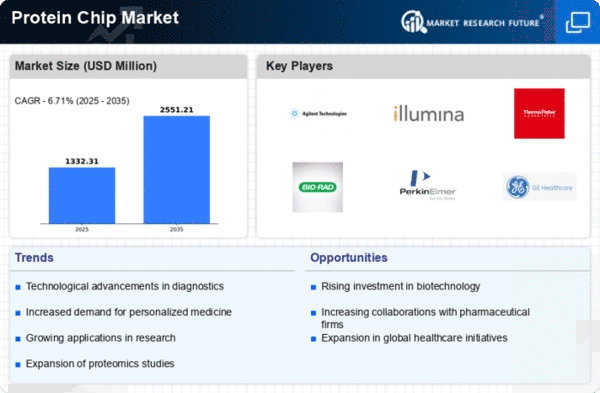
As per MRFR analysis, the Protein Chip Market Size was estimated at 1248.53 USD Million in 2024. The Protein Chip industry is projected to grow from 1332.33 in 2025 to 2551.21 by 2035, exhibiting a compound annual growth rate (CAGR) of 6.71 during the forecast period 2025 - 2035.

Key Market Trends & Highlights

The Protein Chip Market is poised for substantial growth driven by technological advancements and increasing demand for personalized healthcare solutions.

  • Technological advancements in microarray technology are enhancing the capabilities of protein chips, particularly in North America.
  • The demand for personalized medicine is rapidly increasing, making it the fastest-growing segment in the Asia-Pacific region.
  • Collaborative research initiatives are fostering innovation and driving market expansion across various applications.
  • Rising demand for biomarkers and increased investment in biotechnology are key drivers propelling the market forward.

Market Size & Forecast

2024 Market Size 1248.53 (USD Million)
2035 Market Size 2551.21 (USD Million)
CAGR (2025 - 2035) 6.71%
Largest Regional Market Share in 2024 North America

Major Players

<p>Agilent Technologies (US), Illumina (US), Thermo Fisher Scientific (US), Bio-Rad Laboratories (US), PerkinElmer (US), GE Healthcare (GB), Roche Diagnostics (CH), Merck KGaA (DE), Luminex Corporation (US)</p>

Market Trends

The Protein Chip Market is currently experiencing a dynamic evolution, driven by advancements in biotechnology and increasing demand for personalized medicine. This market encompasses a range of applications, including drug discovery, diagnostics, and biomarker identification. As research institutions and pharmaceutical companies invest heavily in innovative technologies, the landscape of protein analysis is transforming. The integration of microarray technology with high-throughput screening methods appears to enhance the efficiency and accuracy of protein profiling, thereby facilitating the development of targeted therapies. Furthermore, the growing emphasis on early disease detection and preventive healthcare is likely to propel the adoption of protein chips in clinical settings. In addition, collaborations between academic institutions and industry players seem to foster a conducive environment for innovation within the Protein Chip Market. These partnerships may lead to the development of novel applications and improved product offerings. Regulatory bodies are also playing a crucial role in shaping the market by establishing guidelines that ensure the safety and efficacy of protein chip technologies. As the market continues to mature, it is anticipated that emerging trends such as artificial intelligence integration and advancements in nanotechnology will further influence the trajectory of protein chip applications, ultimately enhancing their utility in various fields such as oncology, immunology, and infectious diseases.

Technological Advancements

Recent innovations in microarray technology and nanotechnology are reshaping the Protein Chip Market. These advancements enhance the sensitivity and specificity of protein detection, enabling more accurate diagnostics and research outcomes.

Personalized Medicine

The increasing focus on personalized medicine is driving demand for protein chips. These tools facilitate the identification of biomarkers, allowing for tailored treatment plans that cater to individual patient needs.

Collaborative Research Initiatives

Collaborations between academic institutions and industry stakeholders are fostering innovation in the Protein Chip Market. Such partnerships are likely to accelerate the development of new applications and improve existing technologies.

Protein Chip Market Market Drivers

Market Trends and Growth Projections

The Global Protein Chip Market Industry is characterized by dynamic trends and growth projections that reflect its evolving landscape. The market is anticipated to grow from 1.25 USD Billion in 2024 to 2.55 USD Billion by 2035, indicating a robust trajectory. The compound annual growth rate of 6.7% from 2025 to 2035 suggests that the industry is poised for sustained growth, driven by technological advancements, increasing applications in various fields, and heightened investment in research. These trends underscore the importance of protein chips in addressing contemporary challenges in healthcare and biotechnology.

Rising Prevalence of Chronic Diseases

The Global Protein Chip Market Industry is also being propelled by the rising prevalence of chronic diseases, which necessitate advanced diagnostic and monitoring tools. Protein chips offer a promising solution for the early detection and management of conditions such as cancer, diabetes, and cardiovascular diseases. As healthcare systems worldwide strive to improve patient outcomes, the demand for innovative diagnostic technologies is likely to increase. This trend is expected to contribute to the market's growth, with projections indicating a significant expansion in the coming years. The ability of protein chips to provide rapid and accurate results positions them as essential tools in modern healthcare.

Rising Demand for Personalized Medicine

The Global Protein Chip Market Industry is experiencing a surge in demand for personalized medicine, driven by advancements in genomics and proteomics. As healthcare shifts towards tailored treatments, protein chips play a crucial role in biomarker discovery and patient stratification. This trend is reflected in the projected market growth, with the industry expected to reach 1.25 USD Billion in 2024. Personalized medicine not only enhances treatment efficacy but also minimizes adverse effects, making it a focal point for healthcare providers and researchers alike. The integration of protein chips into clinical workflows is likely to accelerate, further propelling market expansion.

Increased Investment in Biotechnology Research

Investment in biotechnology research is a significant driver of the Global Protein Chip Market Industry. Governments and private entities are allocating substantial funds to support research initiatives that leverage protein chips for various applications, including diagnostics and therapeutic development. This influx of capital is likely to enhance research capabilities and foster innovation within the industry. As a result, the market is expected to benefit from a robust pipeline of new products and technologies. The emphasis on biotechnology research aligns with global health priorities, suggesting that the protein chip market will continue to thrive as funding and interest in this sector grow.

Technological Advancements in Protein Chip Technology

Technological innovations are significantly influencing the Global Protein Chip Market Industry. Enhanced sensitivity, specificity, and multiplexing capabilities of protein chips are enabling researchers to conduct high-throughput analyses with greater accuracy. For instance, the development of microarray technology has revolutionized protein profiling, allowing for the simultaneous detection of thousands of proteins. As these technologies evolve, they are expected to drive market growth, with projections indicating a market size of 2.55 USD Billion by 2035. The continuous improvement in chip design and manufacturing processes suggests that the industry will likely witness increased adoption across various research and clinical applications.

Growing Applications in Drug Discovery and Development

The Global Protein Chip Market Industry is witnessing increased applications in drug discovery and development, as protein chips facilitate the identification of potential drug targets and biomarkers. Pharmaceutical companies are increasingly utilizing these tools to streamline their research processes, thereby reducing time and costs associated with drug development. The integration of protein chips into high-throughput screening platforms is becoming more prevalent, which could lead to a compound annual growth rate of 6.7% from 2025 to 2035. This growth trajectory indicates that the industry is poised for substantial expansion as the demand for efficient drug discovery methods continues to rise.

Market Segment Insights

By Application: Disease Diagnosis (Largest) vs. Personalized Medicine (Fastest-Growing)

<p>The Protein Chip Market is experiencing a diverse distribution among its application segments, with Disease Diagnosis holding the largest share. This segment capitalizes on advancements in diagnostic technologies, driving high demand for protein chips that facilitate quicker and more accurate disease detection. Following closely is Personalized Medicine, which, although currently a smaller segment, is rapidly gaining momentum as healthcare shifts towards tailored therapies based on individual patient profiles. This dynamic landscape indicates a strong competitive edge for companies focusing on diagnostics and personalized approaches. Growth trends within the Protein Chip Market are primarily influenced by the increasing prevalence of chronic diseases and advancements in biotechnology. The rise of personalized medicine necessitates innovative protein chip solutions that adapt to individual health needs. Additionally, the push for early disease detection propels the development of sophisticated diagnostic tools. These factors are collectively driving investments and research in the sector, positioning it towards significant growth and evolution over the coming years.</p>

<p>Disease Diagnosis (Dominant) vs. Drug Discovery (Emerging)</p>

<p>In the Protein Chip Market, Disease Diagnosis is recognized as a dominant application, offering established methodologies for identifying various health conditions swiftly. It employs advanced chip technology to analyze complex biological samples, ensuring higher accuracy and efficiency in diagnostics. On the other hand, Drug Discovery is emerging as a pivotal area, leveraging protein chips to streamline the identification of potential drug candidates and optimize the development process. This segment is gaining traction due to its ability to enhance high-throughput screening and reduce costs associated with traditional methodologies. Overall, while Disease Diagnosis establishes a strong foundation in the market, Drug Discovery's innovative approaches are set to redefine the future landscape of biopharmaceuticals.</p>

By Technology: Microarray Technology (Largest) vs. Mass Spectrometry (Fastest-Growing)

<p>The Protein Chip Market exhibits a diverse landscape in technology segmentation, where Microarray Technology claims the largest market share, favored for its robust applications in genomics and proteomics. This segment remains integral due to its ability to analyze biomolecules on a large scale, making it a preferred choice among researchers and laboratories, driving significant demand within the overall market. In contrast, Mass Spectrometry is emerging rapidly, gaining traction as it provides precise results in protein identification and characterization. The ability to analyze complex samples with high sensitivity sets it apart in applications that require detailed molecular insights.</p>

<p>Technology: Microarray Technology (Dominant) vs. Mass Spectrometry (Emerging)</p>

<p>Microarray Technology stands out as the dominant force in the Protein Chip Market due to its widespread utility across various biological applications, enabling simultaneous analysis of thousands of genes or proteins. Its unparalleled ability to facilitate large-scale genomic studies positions it prominently among researchers. On the other hand, Mass Spectrometry is carving its niche as an emerging technology, renowned for its capacity to deliver detailed information on protein structure and interactions. The demand for high-throughput screening and personalized medicine continues to propel the growth of Mass Spectrometry, suggesting a notable shift in market preferences towards technologies that offer precise and comprehensive data regarding complex biological samples.</p>

By End User: Pharmaceutical Companies (Largest) vs. Academic Research Institutes (Fastest-Growing)

<p>The Protein Chip Market showcases a diverse distribution of market share among its end users, primarily comprising pharmaceutical companies, biotechnology firms, academic research institutes, and clinical laboratories. Currently, pharmaceutical companies hold the largest market share, driven by their investments in drug development and personalized medicine. Academic research institutes, however, are rapidly increasing their share, attributed to their focus on groundbreaking research that leverages protein chip technology for biomolecular analysis.</p>

<p>Pharmaceutical Companies (Dominant) vs. Academic Research Institutes (Emerging)</p>

<p>Pharmaceutical companies stand out as dominant players in the Protein Chip Market due to their robust financial resources and extensive R&D capabilities. They leverage protein chips to expedite drug discovery and development, leading to more efficient and targeted therapeutic solutions. Conversely, academic research institutes are emerging as significant contributors to the market. These institutions adopt protein chips to enhance their research capabilities, focusing on proteomics and diagnostics. Their innovative approaches are fostering collaborations with biotech firms, thereby further driving advancements in the field.</p>

Get more detailed insights about Protein Chip Market Research Report—Global Forecast till 2035

Regional Insights

North America : Market Leader in Innovation

North America continues to lead the Protein Chip Market, holding a significant share of 650.0M in 2024. The region's growth is driven by advanced research facilities, increasing investments in biotechnology, and a robust regulatory framework that supports innovation. Demand for personalized medicine and diagnostics is also on the rise, further propelling market expansion. The presence of major players like Agilent Technologies and Illumina enhances the competitive landscape, ensuring continuous advancements in technology and product offerings. The United States is the primary contributor to this market, with a strong focus on R&D and a favorable environment for startups and established companies alike. The competitive landscape is characterized by collaborations and partnerships among key players, including Thermo Fisher Scientific and Bio-Rad Laboratories. This synergy fosters innovation and accelerates the development of cutting-edge protein chip technologies, solidifying North America's position as a global leader in this sector.

Europe : Emerging Market with Growth Potential

Europe's Protein Chip Market is valued at 350.0M, showcasing significant growth potential driven by increasing healthcare expenditure and advancements in proteomics research. The region benefits from strong regulatory support, which encourages innovation and ensures product safety. Countries like Germany and the UK are at the forefront, with a growing emphasis on personalized medicine and diagnostics, which are key demand drivers in the market. The European market is also witnessing a rise in collaborations between academic institutions and industry players, enhancing research capabilities. Germany, the UK, and France are leading countries in this sector, hosting several key players such as Roche Diagnostics and Merck KGaA. The competitive landscape is marked by strategic partnerships and mergers, aimed at enhancing product offerings and expanding market reach. The presence of established companies alongside emerging startups fosters a dynamic environment, positioning Europe as a significant player in The Protein Chip. The European Medicines Agency emphasizes the importance of innovation in this field, stating that "the development of new technologies is crucial for advancing healthcare solutions."

Asia-Pacific : Rapid Growth in Emerging Markets

The Asia-Pacific region, valued at 200.0M, is experiencing rapid growth in the Protein Chip Market, driven by increasing investments in healthcare infrastructure and rising demand for advanced diagnostic tools. Countries like China and India are leading this growth, supported by government initiatives aimed at enhancing research and development in biotechnology. The region's expanding population and rising prevalence of chronic diseases are further fueling demand for protein chips, making it a key area for market expansion. China is emerging as a significant player, with numerous local companies entering the market and collaborating with global leaders. The competitive landscape is characterized by innovation and a focus on affordability, as companies strive to meet the diverse needs of the population. The presence of key players such as Luminex Corporation and PerkinElmer enhances the market's competitiveness, ensuring a steady flow of new technologies and products. The Asia-Pacific region is poised for substantial growth, driven by its dynamic market environment and increasing healthcare investments.

Middle East and Africa : Untapped Potential in Healthcare

The Middle East and Africa (MEA) region, with a market size of 48.53M, presents untapped potential in the Protein Chip Market. The growth is primarily driven by increasing healthcare investments and a rising focus on advanced diagnostic solutions. Countries like South Africa and the UAE are leading the charge, with government initiatives aimed at improving healthcare infrastructure and promoting research in biotechnology. The region's growing population and increasing prevalence of diseases are also contributing to the demand for protein chips, making it a promising market for future investments. The competitive landscape in MEA is still developing, with several local and international players vying for market share. The presence of key companies is gradually increasing, fostering innovation and collaboration. As the region continues to invest in healthcare and biotechnology, the Protein Chip Market is expected to grow significantly. The World Health Organization emphasizes the importance of strengthening healthcare systems, stating that "investing in health is investing in the future of nations."

Key Players and Competitive Insights

The Protein Chip Market is currently characterized by a dynamic competitive landscape, driven by advancements in biotechnology and increasing demand for personalized medicine. Key players such as Agilent Technologies (US), Illumina (US), and Thermo Fisher Scientific (US) are at the forefront, leveraging innovation and strategic partnerships to enhance their market positions. Agilent Technologies (US) focuses on expanding its product portfolio through continuous innovation, while Illumina (US) emphasizes its leadership in genomic sequencing technologies, which complements its protein chip offerings. Thermo Fisher Scientific (US) adopts a strategy of mergers and acquisitions to bolster its capabilities, thereby shaping a competitive environment that is increasingly reliant on technological advancements and collaborative efforts.

In terms of business tactics, companies are localizing manufacturing and optimizing supply chains to enhance operational efficiency. The market structure appears moderately fragmented, with several key players exerting influence over various segments. This fragmentation allows for niche players to thrive, while larger companies consolidate their positions through strategic initiatives. The collective influence of these key players fosters a competitive atmosphere where innovation and operational excellence are paramount.

In November 2025, Agilent Technologies (US) announced a partnership with a leading research institution to develop next-generation protein analysis tools. This collaboration is expected to enhance Agilent's capabilities in high-throughput screening, thereby solidifying its position in the market. The strategic importance of this partnership lies in its potential to accelerate product development cycles and improve the accuracy of protein analysis, which is crucial for advancing personalized medicine.

In October 2025, Illumina (US) launched a new protein chip platform designed to integrate seamlessly with its existing genomic technologies. This launch is significant as it positions Illumina to capture a larger share of the proteomics market, complementing its genomic sequencing services. The integration of these technologies may lead to more comprehensive insights into biological processes, thereby enhancing research and clinical applications.

In September 2025, Thermo Fisher Scientific (US) completed the acquisition of a biotechnology firm specializing in protein chip technology. This acquisition is likely to expand Thermo Fisher's product offerings and enhance its competitive edge in the market. By integrating the acquired technology, Thermo Fisher aims to provide more robust solutions for researchers, thereby reinforcing its commitment to innovation and customer satisfaction.

As of December 2025, current competitive trends in the Protein Chip Market are heavily influenced by digitalization, sustainability, and the integration of artificial intelligence (AI). Strategic alliances are increasingly shaping the landscape, allowing companies to pool resources and expertise. The shift from price-based competition to a focus on innovation, technology, and supply chain reliability is evident. Moving forward, competitive differentiation will likely hinge on the ability to deliver cutting-edge solutions that meet the evolving needs of the market.

Key Companies in the Protein Chip Market market include

Industry Developments

  • Q2 2024: Agilent Technologies Introduces ProteoAnalyzer System for Protein Quality Assessment Agilent Technologies launched the ProteoAnalyzer System, a next-generation solution designed to enhance analytical precision in proteomics and support high-throughput protein chip applications.

.webp

Future Outlook

Protein Chip Market Future Outlook

<p>The Protein Chip Market is projected to grow at a 6.71% CAGR from 2024 to 2035, driven by advancements in personalized medicine, increasing demand for rapid diagnostics, and technological innovations.</p>

New opportunities lie in:

  • <p>Development of integrated protein chip platforms for high-throughput screening.</p>
  • <p>Expansion into emerging markets with tailored protein chip solutions.</p>
  • <p>Collaboration with biotech firms for co-development of novel diagnostic applications.</p>

<p>By 2035, the Protein Chip Market is expected to achieve substantial growth, solidifying its role in diagnostics and research.</p>

Market Segmentation

Protein Chip Market End User Outlook

  • Academic Research Institutes
  • Pharmaceutical Companies
  • Biotechnology Firms
  • Clinical Laboratories

Protein Chip Market Technology Outlook

  • Microarray Technology
  • Mass Spectrometry
  • Surface Plasmon Resonance
  • Electrophoresis

Protein Chip Market Application Outlook

  • Disease Diagnosis
  • Drug Discovery
  • Genetic Research
  • Personalized Medicine

Report Scope

MARKET SIZE 20241248.53(USD Million)
MARKET SIZE 20251332.33(USD Million)
MARKET SIZE 20352551.21(USD Million)
COMPOUND ANNUAL GROWTH RATE (CAGR)6.71% (2024 - 2035)
REPORT COVERAGERevenue Forecast, Competitive Landscape, Growth Factors, and Trends
BASE YEAR2024
Market Forecast Period2025 - 2035
Historical Data2019 - 2024
Market Forecast UnitsUSD Million
Key Companies ProfiledAgilent Technologies (US), Illumina (US), Thermo Fisher Scientific (US), Bio-Rad Laboratories (US), PerkinElmer (US), GE Healthcare (GB), Roche Diagnostics (CH), Merck KGaA (DE), Luminex Corporation (US)
Segments CoveredApplication, Technology, End User
Key Market OpportunitiesAdvancements in personalized medicine drive demand for innovative solutions in the Protein Chip Market.
Key Market DynamicsTechnological advancements and regulatory changes drive innovation and competition in the Protein Chip Market.
Countries CoveredNorth America, Europe, APAC, South America, MEA

FAQs

What is the projected growth of the Protein Chip market?

The Protein Chip market is the expected increase in total market value of 2.55 USD billion over a defined forecast period 2025–2035. It is driven by factors such as demand trends, technological advances, regulatory changes, and geographic expansion.

What is the size of the Protein Chip market?

Protein Chip market size was valued at approximately 1.25 billion USD in 2024. This figure will reach 2.55 billion USD covering all regions (America, Europe, Asia, MEA and ROW), focusing its segments / services / distribution channels till 2035.

What is the CAGR of the Protein Chip market?

Protein Chip market is expected to grow at a CAGR of 6.71% between 2025 and 2035.

How much will the Protein Chip market be worth by 2035?

Protein Chip market is expected to be worth of 2.55 billion USD, reflecting growth driven by usage, technology and global demands by the end of 2035.

How will the Protein Chip market perform over the next 10 years?

Over the next 10 years the Protein Chip market is expected to shift from usd billion 1.25 to 2.55 billion USD, led by adoption of advanced tech, demographic trends, regulatory approvals, with potential headwinds from 2025 to 2035.

Which region held the largest market share in the protein chip market?

North America had the largest share in the market.

  1. EXECUTIVE SUMMARY
  2. MARKET INTRODUCTION
    1. Definition
    2. Scope of the Study
      1. Research Objective
      2. Assumptions
      3. Limitations
  3. RESEARCH METHODOLOGY
    1. Overview
    2. Data Mining
    3. Secondary Research
    4. Primary Research
      1. Primary Interviews and Information Gathering Process
      2. Breakdown of Primary Respondents
    5. Forecasting Application
    6. Market Size Estimation
      1. Bottom-Up Approach
      2. Top-Down Approach
    7. Data Triangulation
    8. Validation
  4. MARKET DYNAMICS
    1. Overview
    2. Drivers
    3. Restraints
    4. Opportunities
  5. MARKET FACTOR ANALYSIS
    1. Porter’s Five Forces Analysis
      1. Bargaining Power of Suppliers
      2. Bargaining Power of Buyers
      3. Threat of New Entrants
      4. Threat of Substitutes
      5. Intensity of Rivalry
    2. Value Chain Analysis
    3. COVID-19 Impact Analysis
      1. Market Impact Analysis
      2. Impact on Supply Chain
      3. Regional Impact
      4. Opportunity and Threat Analysis
  6. GLOBAL PROTEIN CHIP MARKET, BY TYPE
    1. Overview
    2. Analytical Microarrays
    3. Functional Protein Microarrays
    4. Reverse Phase Protein Microarrays
  7. GLOBAL PROTEIN CHIP MARKET, BY APPLICATION
    1. Overview
    2. Protein Identification
    3. Clinical Diagnostics
    4. Proteomics
    5. Others
  8. GLOBAL PROTEIN CHIP MARKET, BY END USER
    1. Overview
    2. Hospitals & Clinics
    3. Diagnostic Laboratories
    4. Academic & Research Institutes
    5. Pharmaceutical & Biotechnology Companies
    6. Others
  9. GLOBAL PROTEIN CHIP MARKET, BY REGION
    1. Overview
    2. North America
      1. US
      2. Canada
    3. Europe
      1. Germany
      2. France
      3. UK
      4. Italy
      5. Spain
      6. Rest of Europe
    4. Asia-Pacific
      1. China
      2. India
      3. Japan
      4. South Korea
      5. Australia
      6. Rest of Asia-Pacific
    5. Rest of the World
      1. Middle East
      2. Africa
      3. Latin America
  10. COMPANY LANDSCAPE
    1. Overview
    2. Competitive Analysis
    3. Market Share Analysis
    4. Major Growth Strategy in the Global Protein Chip Market
    5. Competitive Benchmarking
    6. Leading Players in Terms of Number of Developments in the Global Protein Chip Market
    7. Key developments and Growth Strategies
      1. New Product Launch/Service Deployment
      2. Merger & Acquisitions
      3. Joint Ventures
    8. Major Players Financial Matrix
      1. Sales & Operating Income, 2021
      2. Major Players R&D Expenditure. 2021
  11. COMPANY PROFILES
    1. Sengenics
      1. Company Overview
      2. Financial Overview
      3. Products Offered
      4. Key Developments
      5. SWOT Analysis
      6. Key Strategies
    2. Thermo Fisher Scientific Inc.
    3. Microarrays Inc.
    4. Agilent Technologies, Inc.
    5. Bio-Rad Laboratories, Inc.
    6. Full Moon BioSystems, Inc.
    7. CDI Laboratories Inc.
    8. OriGene Technologies, Inc.
    9. Innopsys
    10. Others
  12. APPENDIX
    1. References
    2. Related Reports
  13. LIST OF TABLES
  14. GLOBAL PROTEIN CHIP MARKET SYNOPSIS, 2023-2032
  15. GLOBAL PROTEIN CHIP MARKET ESTIMATES & FORECAST, 2023-2032 (USD MILLION)
  16. GLOBAL PROTEIN CHIP MARKET, BY TYPE, 2023-2032 (USD MILLION)
  17. GLOBAL PROTEIN CHIP MARKET, BY APPLICATION, 2023-2032 (USD MILLION)
  18. GLOBAL PROTEIN CHIP MARKET, BY END USER, 2023-2032 (USD MILLION)
  19. NORTH AMERICA: PROTEIN CHIP MARKET, BY TYPE, 2023-2032 (USD MILLION)
  20. NORTH AMERICA: PROTEIN CHIP MARKET, BY APPLICATION, 2023-2032 (USD MILLION)
  21. NORTH AMERICA: PROTEIN CHIP MARKET, BY END USER, 2023-2032 (USD MILLION)
  22. US: PROTEIN CHIP MARKET, BY TYPE, 2023-2032 (USD MILLION)
  23. US: PROTEIN CHIP MARKET, BY APPLICATION, 2023-2032 (USD MILLION)
  24. US: PROTEIN CHIP MARKET, BY END USER, 2023-2032 (USD MILLION)
  25. CANADA: PROTEIN CHIP MARKET, BY TYPE, 2023-2032 (USD MILLION)
  26. CANADA: PROTEIN CHIP MARKET, BY APPLICATION, 2023-2032 (USD MILLION)
  27. CANADA: PROTEIN CHIP MARKET, BY END USER, 2023-2032 (USD MILLION)
  28. EUROPE: PROTEIN CHIP MARKET, BY TYPE, 2023-2032 (USD MILLION)
  29. EUROPE: PROTEIN CHIP MARKET, BY APPLICATION, 2023-2032 (USD MILLION)
  30. EUROPE: PROTEIN CHIP MARKET, BY END USER, 2023-2032 (USD MILLION)
  31. GERMANY: PROTEIN CHIP MARKET, BY TYPE, 2023-2032 (USD MILLION)
  32. GERMANY: PROTEIN CHIP MARKET, BY APPLICATION, 2023-2032 (USD MILLION)
  33. GERMANY: PROTEIN CHIP MARKET, BY END USER, 2023-2032 (USD MILLION)
  34. FRANCE: PROTEIN CHIP MARKET, BY TYPE, 2023-2032 (USD MILLION)
  35. FRANCE: PROTEIN CHIP MARKET, BY APPLICATION, 2023-2032 (USD MILLION)
  36. FRANCE: PROTEIN CHIP MARKET, BY END USER, 2023-2032 (USD MILLION)
  37. ITALY: PROTEIN CHIP MARKET, BY TYPE, 2023-2032 (USD MILLION)
  38. ITALY: PROTEIN CHIP MARKET, BY APPLICATION, 2023-2032 (USD MILLION)
  39. ITALY: PROTEIN CHIP MARKET, BY END USER, 2023-2032 (USD MILLION)
  40. SPAIN: PROTEIN CHIP MARKET, BY TYPE, 2023-2032 (USD MILLION)
  41. SPAIN: PROTEIN CHIP MARKET, BY APPLICATION, 2023-2032 (USD MILLION)
  42. SPAIN: PROTEIN CHIP MARKET, BY END USER, 2023-2032 (USD MILLION)
  43. UK: PROTEIN CHIP MARKET, BY TYPE, 2023-2032 (USD MILLION)
  44. UK: PROTEIN CHIP MARKET, BY APPLICATION, 2023-2032 (USD MILLION)
  45. UK: PROTEIN CHIP MARKET, BY END USER, 2023-2032 (USD MILLION)
  46. REST OF EUROPE: PROTEIN CHIP MARKET, BY TYPE, 2023-2032 (USD MILLION)
  47. REST OF EUROPE: PROTEIN CHIP MARKET, BY APPLICATION, 2023-2032 (USD MILLION)
  48. REST OF EUROPE: PROTEIN CHIP MARKET, BY END USER, 2023-2032 (USD MILLION)
  49. ASIA-PACIFIC: PROTEIN CHIP MARKET, BY TYPE, 2023-2032 (USD MILLION)
  50. ASIA-PACIFIC: PROTEIN CHIP MARKET, BY APPLICATION, 2023-2032 (USD MILLION)
  51. ASIA-PACIFIC: PROTEIN CHIP MARKET, BY END USER, 2023-2032 (USD MILLION)
  52. JAPAN: PROTEIN CHIP MARKET, BY TYPE, 2023-2032 (USD MILLION)
  53. JAPAN: PROTEIN CHIP MARKET, BY APPLICATION, 2023-2032 (USD MILLION)
  54. JAPAN: PROTEIN CHIP MARKET, BY END USER, 2023-2032 (USD MILLION)
  55. CHINA: PROTEIN CHIP MARKET, BY TYPE, 2023-2032 (USD MILLION)
  56. CHINA: PROTEIN CHIP MARKET, BY APPLICATION, 2023-2032 (USD MILLION)
  57. CHINA: PROTEIN CHIP MARKET, BY END USER, 2023-2032 (USD MILLION)
  58. INDIA: PROTEIN CHIP MARKET, BY TYPE, 2023-2032 (USD MILLION)
  59. INDIA: PROTEIN CHIP MARKET, BY APPLICATION, 2023-2032 (USD MILLION)
  60. INDIA: PROTEIN CHIP MARKET, BY END USER, 2023-2032 (USD MILLION)
  61. AUSTRALIA: PROTEIN CHIP MARKET, BY TYPE, 2023-2032 (USD MILLION)
  62. AUSTRALIA: PROTEIN CHIP MARKET, BY APPLICATION, 2023-2032 (USD MILLION)
  63. AUSTRALIA: PROTEIN CHIP MARKET, END USER, 2023-2032 (USD MILLION)
  64. SOUTH KOREA: PROTEIN CHIP MARKET, BY TYPE, 2023-2032 (USD MILLION)
  65. SOUTH KOREA: PROTEIN CHIP MARKET, BY APPLICATION, 2023-2032 (USD MILLION)
  66. SOUTH KOREA: PROTEIN CHIP MARKET, END USER, 2023-2032 (USD MILLION)
  67. REST OF ASIA-PACIFIC: PROTEIN CHIP MARKET, BY TYPE, 2023-2032 (USD MILLION)
  68. REST OF ASIA-PACIFIC: PROTEIN CHIP MARKET, BY APPLICATION, 2023-2032 (USD MILLION)
  69. REST OF ASIA-PACIFIC: PROTEIN CHIP MARKET, BY END USER, 2023-2032 (USD MILLION)
  70. REST OF THE WORLD: PROTEIN CHIP MARKET, BY TYPE, 2023-2032 (USD MILLION)
  71. REST OF THE WORLD: PROTEIN CHIP MARKET, BY APPLICATION, 2023-2032 (USD MILLION)
  72. REST OF THE WORLD: PROTEIN CHIP MARKET, END USER, 2023-2032 (USD MILLION)
  73. MIDDLE EAST: PROTEIN CHIP MARKET, BY TYPE, 2023-2032 (USD MILLION)
  74. MIDDLE EAST: PROTEIN CHIP MARKET, BY APPLICATION, 2023-2032 (USD MILLION)
  75. MIDDLE EAST: PROTEIN CHIP MARKET, END USER, 2023-2032 (USD MILLION)
  76. AFRICA: PROTEIN CHIP MARKET, BY TYPE, 2023-2032 (USD MILLION)
  77. AFRICA: PROTEIN CHIP MARKET, BY APPLICATION, 2023-2032 (USD MILLION)
  78. AFRICA: PROTEIN CHIP MARKET, END USER, 2023-2032 (USD MILLION)
  79. LATIN AMERICA: PROTEIN CHIP MARKET, BY TYPE, 2023-2032 (USD MILLION)
  80. LATIN AMERICA: PROTEIN CHIP MARKET, BY APPLICATION, 2023-2032 (USD MILLION)
  81. LATIN AMERICA: PROTEIN CHIP MARKET, END USER, 2023-2032 (USD MILLION)
  82. LIST OF FIGURES
  83. RESEARCH PROCESS
  84. MARKET STRUCTURE FOR THE GLOBAL PROTEIN CHIP MARKET
  85. MARKET DYNAMICS FOR THE GLOBAL PROTEIN CHIP MARKET
  86. GLOBAL PROTEIN CHIP MARKET SHARE, BY TYPE, 2021 (%)
  87. GLOBAL PROTEIN CHIP MARKET SHARE, BY APPLICATION, 2021 (%)
  88. GLOBAL PROTEIN CHIP MARKET SHARE, BY END USER, 2021 (%)
  89. GLOBAL PROTEIN CHIP MARKET SHARE, BY REGION, 2021 (%)
  90. NORTH AMERICA: PROTEIN CHIP MARKET SHARE, BY REGION, 2021 (%)
  91. EUROPE: PROTEIN CHIP MARKET SHARE, BY REGION, 2021 (%)
  92. ASIA-PACIFIC: PROTEIN CHIP MARKET SHARE, BY REGION, 2021 (%)
  93. REST OF THE WORLD: PROTEIN CHIP MARKET SHARE, BY REGION, 2021 (%)
  94. GLOBAL PROTEIN CHIP MARKET: COMPANY SHARE ANALYSIS, 2021 (%)
  95. SENGENICS: FINANCIAL OVERVIEW SNAPSHOT
  96. SENGENICS: SWOT ANALYSIS
  97. THERMO FISHER SCIENTIFIC INC.: FINANCIAL OVERVIEW SNAPSHOT
  98. THERMO FISHER SCIENTIFIC INC.: SWOT ANALYSIS
  99. MICROARRAYS INC.: FINANCIAL OVERVIEW SNAPSHOT
  100. MICROARRAYS INC.: SWOT ANALYSIS
  101. AGILENT TECHNOLOGIES, INC.: FINANCIAL OVERVIEW SNAPSHOT
  102. AGILENT TECHNOLOGIES, INC.: SWOT ANALYSIS
  103. BIO-RAD LABORATORIES, INC.: FINANCIAL OVERVIEW SNAPSHOT
  104. BIO-RAD LABORATORIES, INC.: SWOT ANALYSIS
  105. FULL MOON BIOSYSTEMS, INC.: FINANCIAL OVERVIEW SNAPSHOT
  106. FULL MOON BIOSYSTEMS, INC.: SWOT ANALYSIS
  107. CDI LABORATORIES INC.: FINANCIAL OVERVIEW SNAPSHOT
  108. CDI LABORATORIES INC.: SWOT ANALYSIS
  109. ORIGENE TECHNOLOGIES, INC.: FINANCIAL OVERVIEW SNAPSHOT
  110. ORIGENE TECHNOLOGIES, INC.: SWOT ANALYSIS
  111. INNOPSYS.: FINANCIAL OVERVIEW SNAPSHOT
  112. INNOPSYS: SWOT ANALYSISS

Protein Chip Market Segmentation

Protein Chip Type Outlook (USD Billion, 2018-2032)

  • Analytical Microarrays
  • Functional Protein Microarrays
  • Reverse Phase Protein Microarrays

Protein Chip Application Outlook (USD Billion, 2018-2032)

  • Protein Identification
  • Clinical Diagnostics
  • Proteomics
  • Others

Protein Chip End User Outlook (USD Billion, 2018-2032)

  • Hospitals & Clinics
  • Diagnostic Laboratories
  • Academic & Research Institutes
  • Pharmaceutical & Biotechnology Companies
  • Others

Protein Chip Regional Outlook (USD Billion, 2018-2032)

  • North America Outlook (USD Billion, 2018-2032)

    • North America Protein Chip by Type
      • Analytical Microarrays
      • Functional Protein Microarrays
      • Reverse Phase Protein Microarrays
    • North America Protein Chip by Application
      • Protein Identification
      • Clinical Diagnostics
      • Proteomics
      • Others
    • North America Protein Chip by End User
      • Hospitals & Clinics
      • Diagnostic Laboratories
      • Academic & Research Institutes
      • Pharmaceutical & Biotechnology Companies
      • Others
    • US Outlook (USD Billion, 2018-2032)

    • US Protein Chip by Type
      • Analytical Microarrays
      • Functional Protein Microarrays
      • Reverse Phase Protein Microarrays
    • US Protein Chip by Application
      • Protein Identification
      • Clinical Diagnostics
      • Proteomics
      • Others
    • US Protein Chip by End User
      • Hospitals & Clinics
      • Diagnostic Laboratories
      • Academic & Research Institutes
      • Pharmaceutical & Biotechnology Companies
      • Others
    • Canada Outlook (USD Billion, 2018-2032)

    • Canada Protein Chip by Type
      • Analytical Microarrays
      • Functional Protein Microarrays
      • Reverse Phase Protein Microarrays
    • Canada Protein Chip by Application
      • Protein Identification
      • Clinical Diagnostics
      • Proteomics
      • Others
    • Canada Protein Chip by End User
      • Hospitals & Clinics
      • Diagnostic Laboratories
      • Academic & Research Institutes
      • Pharmaceutical & Biotechnology Companies
      • Others
  • Europe Outlook (USD Billion, 2018-2032)

    • Europe Protein Chip by Type
      • Analytical Microarrays
      • Functional Protein Microarrays
      • Reverse Phase Protein Microarrays
    • Europe Protein Chip by Application
      • Protein Identification
      • Clinical Diagnostics
      • Proteomics
      • Others
    • Europe Protein Chip by End User
      • Hospitals & Clinics
      • Diagnostic Laboratories
      • Academic & Research Institutes
      • Pharmaceutical & Biotechnology Companies
      • Others
    • Germany Outlook (USD Billion, 2018-2032)

    • Germany Protein Chip by Type
      • Analytical Microarrays
      • Functional Protein Microarrays
      • Reverse Phase Protein Microarrays
    • Germany Protein Chip by Application
      • Protein Identification
      • Clinical Diagnostics
      • Proteomics
      • Others
    • Germany Protein Chip by End User
      • Hospitals & Clinics
      • Diagnostic Laboratories
      • Academic & Research Institutes
      • Pharmaceutical & Biotechnology Companies
      • Others
    • France Outlook (USD Billion, 2018-2032)

    • France Protein Chip by Type
      • Analytical Microarrays
      • Functional Protein Microarrays
      • Reverse Phase Protein Microarrays
    • France Protein Chip by Application
      • Protein Identification
      • Clinical Diagnostics
      • Proteomics
      • Others
    • France Protein Chip by End User
      • Hospitals & Clinics
      • Diagnostic Laboratories
      • Academic & Research Institutes
      • Pharmaceutical & Biotechnology Companies
      • Others
    • UK Outlook (USD Billion, 2018-2032)

    • UK Protein Chip by Type
      • Analytical Microarrays
      • Functional Protein Microarrays
      • Reverse Phase Protein Microarrays
    • UK Protein Chip by Application
      • Protein Identification
      • Clinical Diagnostics
      • Proteomics
      • Others
    • UK Protein Chip by End User
      • Hospitals & Clinics
      • Diagnostic Laboratories
      • Academic & Research Institutes
      • Pharmaceutical & Biotechnology Companies
      • Others
    • Italy Outlook (USD Billion, 2018-2032)

    • Italy Protein Chip by Type
      • Analytical Microarrays
      • Functional Protein Microarrays
      • Reverse Phase Protein Microarrays
    • Italy Protein Chip by Application
      • Protein Identification
      • Clinical Diagnostics
      • Proteomics
      • Others
    • Italy Protein Chip by End User
      • Hospitals & Clinics
      • Diagnostic Laboratories
      • Academic & Research Institutes
      • Pharmaceutical & Biotechnology Companies
      • Others
    • Spain Outlook (USD Billion, 2018-2032)

    • Spain Protein Chip by Type
      • Analytical Microarrays
      • Functional Protein Microarrays
      • Reverse Phase Protein Microarrays
    • Spain Protein Chip by Application
      • Protein Identification
      • Clinical Diagnostics
      • Proteomics
      • Others
    • Spain Protein Chip by End User
      • Hospitals & Clinics
      • Diagnostic Laboratories
      • Academic & Research Institutes
      • Pharmaceutical & Biotechnology Companies
      • Others
    • Rest Of Europe Outlook (USD Billion, 2018-2032)

    • Rest Of Europe Protein Chip by Type
      • Analytical Microarrays
      • Functional Protein Microarrays
      • Reverse Phase Protein Microarrays
    • Rest Of Europe Protein Chip by Application
      • Protein Identification
      • Clinical Diagnostics
      • Proteomics
      • Others
    • Rest Of Europe Protein Chip by End User
      • Hospitals & Clinics
      • Diagnostic Laboratories
      • Academic & Research Institutes
      • Pharmaceutical & Biotechnology Companies
      • Others
  • Asia-Pacific Outlook (USD Billion, 2018-2032)

    • Asia-Pacific Protein Chip by Type
      • Analytical Microarrays
      • Functional Protein Microarrays
      • Reverse Phase Protein Microarrays
    • Asia-Pacific Protein Chip by Application
      • Protein Identification
      • Clinical Diagnostics
      • Proteomics
      • Others
    • Asia-Pacific Protein Chip by End User
      • Hospitals & Clinics
      • Diagnostic Laboratories
      • Academic & Research Institutes
      • Pharmaceutical & Biotechnology Companies
      • Others
    • China Outlook (USD Billion, 2018-2032)

    • China Protein Chip by Type
      • Analytical Microarrays
      • Functional Protein Microarrays
      • Reverse Phase Protein Microarrays
    • China Protein Chip by Application
      • Protein Identification
      • Clinical Diagnostics
      • Proteomics
      • Others
    • China Protein Chip by End User
      • Hospitals & Clinics
      • Diagnostic Laboratories
      • Academic & Research Institutes
      • Pharmaceutical & Biotechnology Companies
      • Others
    • Japan Outlook (USD Billion, 2018-2032)

    • Japan Protein Chip by Type
      • Analytical Microarrays
      • Functional Protein Microarrays
      • Reverse Phase Protein Microarrays
    • Japan Protein Chip by Application
      • Protein Identification
      • Clinical Diagnostics
      • Proteomics
      • Others
    • Japan Protein Chip by End User
      • Hospitals & Clinics
      • Diagnostic Laboratories
      • Academic & Research Institutes
      • Pharmaceutical & Biotechnology Companies
      • Others
    • India Outlook (USD Billion, 2018-2032)

    • India Protein Chip by Type
      • Analytical Microarrays
      • Functional Protein Microarrays
      • Reverse Phase Protein Microarrays
    • India Protein Chip by Application
      • Protein Identification
      • Clinical Diagnostics
      • Proteomics
      • Others
    • India Protein Chip by End User
      • Hospitals & Clinics
      • Diagnostic Laboratories
      • Academic & Research Institutes
      • Pharmaceutical & Biotechnology Companies
      • Others
    • Australia Outlook (USD Billion, 2018-2032)

    • Australia Protein Chip by Type
      • Analytical Microarrays
      • Functional Protein Microarrays
      • Reverse Phase Protein Microarrays
    • Australia Protein Chip by Application
      • Protein Identification
      • Clinical Diagnostics
      • Proteomics
      • Others
    • Australia Protein Chip by End User
      • Hospitals & Clinics
      • Diagnostic Laboratories
      • Academic & Research Institutes
      • Pharmaceutical & Biotechnology Companies
      • Others
    • Rest of Asia-Pacific Outlook (USD Billion, 2018-2032)

    • Rest of Asia-Pacific Protein Chip by Type
      • Analytical Microarrays
      • Functional Protein Microarrays
      • Reverse Phase Protein Microarrays
    • Rest of Asia-Pacific Protein Chip by Application
      • Protein Identification
      • Clinical Diagnostics
      • Proteomics
      • Others
    • Rest of Asia-Pacific Protein Chip by End User
      • Hospitals & Clinics
      • Diagnostic Laboratories
      • Academic & Research Institutes
      • Pharmaceutical & Biotechnology Companies
      • Others
  • Rest of the World Outlook (USD Billion, 2018-2032)

    • Rest of the World Protein Chip by Type
      • Analytical Microarrays
      • Functional Protein Microarrays
      • Reverse Phase Protein Microarrays
    • Rest of the World Protein Chip by Application
      • Protein Identification
      • Clinical Diagnostics
      • Proteomics
      • Others
    • Rest of the World Protein Chip by End User
      • Hospitals & Clinics
      • Diagnostic Laboratories
      • Academic & Research Institutes
      • Pharmaceutical & Biotechnology Companies
      • Others
    • Middle East Outlook (USD Billion, 2018-2032)

    • Middle East Protein Chip by Type
      • Analytical Microarrays
      • Functional Protein Microarrays
      • Reverse Phase Protein Microarrays
    • Middle East Protein Chip by Application
      • Protein Identification
      • Clinical Diagnostics
      • Proteomics
      • Others
    • Middle East Protein Chip by End User
      • Hospitals & Clinics
      • Diagnostic Laboratories
      • Academic & Research Institutes
      • Pharmaceutical & Biotechnology Companies
      • Others
    • Africa Outlook (USD Billion, 2018-2032)

    • Africa Protein Chip by Type
      • Analytical Microarrays
      • Functional Protein Microarrays
      • Reverse Phase Protein Microarrays
    • Africa Protein Chip by Application
      • Protein Identification
      • Clinical Diagnostics
      • Proteomics
      • Others
    • Africa Protein Chip by End User
      • Hospitals & Clinics
      • Diagnostic Laboratories
      • Academic & Research Institutes
      • Pharmaceutical & Biotechnology Companies
      • Others
    • Latin America Outlook (USD Billion, 2018-2032)

    • Latin America Protein Chip by Type
      • Analytical Microarrays
      • Functional Protein Microarrays
      • Reverse Phase Protein Microarrays
    • Latin America Protein Chip by Application
      • Protein Identification
      • Clinical Diagnostics
      • Proteomics
      • Others
    • Latin America Protein Chip by End User
      • Hospitals & Clinics
      • Diagnostic Laboratories
      • Academic & Research Institutes
      • Pharmaceutical & Biotechnology Companies
      • Others
Infographic

Free Sample Request

Kindly complete the form below to receive a free sample of this Report

Get Free Sample

Customer Strories

Compare Licence

×
Features License Type
Single User Multiuser License Enterprise User
Price $4,950 $5,950 $7,250
Maximum User Access Limit 1 User Upto 10 Users Unrestricted Access Throughout the Organization
Free Customization
Direct Access to Analyst
Deliverable Format
Platform Access
Discount on Next Purchase 10% 15% 15%
Printable Versions