Request Free Sample ×

Kindly complete the form below to receive a free sample of this Report

* Please use a valid business email

Leading companies partner with us for data-driven Insights

clients tt-cursor
Hero Background
English
Chinese
French
Japanese
Korean
German
Spanish

Preclinical CRO Market Trends

ID: MRFR/HS/5807-CR
200 Pages
Rahul Gotadki
April 2025

Preclinical CRO Market Research Report By Service Type (Biologics Testing, Small Molecule Testing, Toxicology Testing, Pharmacology Testing), By Therapeutic Area (Oncology, Neurology, Cardiology, Infectious Diseases), By Validation Type (In Vivo Studies, In Vitro Studies, Comparative Studies, Regulatory Studies), By End User (Pharmaceutical Companies, Biotechnology Companies, Academic Institutions, Research Organizations) and By Regional (North America, Europe, South America, Asia Pacific, Middle East and Africa) - Growth & Industry Forecast 2025 To 2035

Share:
Download PDF ×

We do not share your information with anyone. However, we may send you emails based on your report interest from time to time. You may contact us at any time to opt-out.

Preclinical CRO Market Infographic
Purchase Options

Market Trends

Key Emerging Trends in the Preclinical CRO Market

The market patterns of disposable nitrile gloves have encountered imperative movements, driven by different elements impacting market interest elements. The worldwide medical care area's rising accentuation on security and cleanliness has been an essential driver of the rising interest for disposable nitrile gloves. With a surge in medical care administrations around the world, the requirement for dependable and tough individual defensive hardware (PPE) has strengthened. The market has seen a continuous shift from plastic to nitrile gloves because of the last's hypoallergenic properties. As plastic sensitivities turned out to be more common, businesses and medical care suppliers progressively decided on nitrile gloves to guarantee the wellbeing of clients and patients the same. There is a developing consciousness of natural manageability in the disposable nitrile gloves market. Makers are investigating eco-accommodating materials and creation cycles to address worries about the natural effect of disposable gloves. This pattern mirrors the more extensive shift toward manageable practices in different enterprises. The market has confronted difficulties connected with the store network, with interruptions influencing the accessibility of natural substances and the creation of disposable nitrile gloves. This has, on occasion, prompted changes in evaluating and accessibility, affecting the two producers and end-clients. The disposable nitrile gloves market has seen solidification through consolidations and acquisitions as vital participants plan to reinforce their market position. This pattern is driven by the requirement for broadening, extended item portfolios, and expanded creation abilities to satisfy the developing need. Market patterns fluctuate across various districts, affected by variables like medical care foundation, industrialization, and administrative systems. Arising economies are seeing a rising interest for disposable nitrile gloves because of expanding awareness and stringent security norms. The disposable nitrile glove circulation landscape is evolving, with a growing emphasis on online stages and e-commerce channels. This trend is attributed to the convenience of web-based purchasing and the need for productive inventories across the board.


Author
Author Profile
Rahul Gotadki
Research Manager

He holds an experience of about 9+ years in Market Research and Business Consulting, working under the spectrum of Life Sciences and Healthcare domains. Rahul conceptualizes and implements a scalable business strategy and provides strategic leadership to the clients. His expertise lies in market estimation, competitive intelligence, pipeline analysis, customer assessment, etc.

Leave a Comment

FAQs

What is the current valuation of the Preclinical CRO Market as of 2024?

<p>The Preclinical CRO Market was valued at 6.57 USD Billion in 2024.</p>

What is the projected market size for the Preclinical CRO Market by 2035?

<p>The market is projected to reach 11.99 USD Billion by 2035.</p>

What is the expected CAGR for the Preclinical CRO Market during the forecast period 2025 - 2035?

<p>The expected CAGR for the Preclinical CRO Market during 2025 - 2035 is 5.62%.</p>

Which service type segment is anticipated to show the highest growth in the Preclinical CRO Market?

<p>The Toxicology Testing segment is expected to grow from 1.77 USD Billion in 2024 to 3.1 USD Billion by 2035.</p>

How does the Oncology therapeutic area perform in the Preclinical CRO Market?

<p>The Oncology therapeutic area was valued at 2.0 USD Billion in 2024 and is projected to grow to 3.5 USD Billion by 2035.</p>

What are the key players in the Preclinical CRO Market?

<p>Key players include Charles River Laboratories, Covance, PRA Health Sciences, and Envigo, among others.</p>

Which end user segment is expected to dominate the Preclinical CRO Market?

<p>Pharmaceutical Companies are projected to lead the end user segment, growing from 2.5 USD Billion in 2024 to 4.5 USD Billion by 2035.</p>

What is the growth outlook for In Vivo Studies in the Preclinical CRO Market?

<p>In Vivo Studies are expected to increase from 2.0 USD Billion in 2024 to 3.5 USD Billion by 2035.</p>

How does the market for Biotechnology Companies compare to Pharmaceutical Companies in the Preclinical CRO Market?

<p>Biotechnology Companies are projected to grow from 1.5 USD Billion in 2024 to 2.5 USD Billion by 2035, which is lower than the growth of Pharmaceutical Companies.</p>

What trends are influencing the growth of the Preclinical CRO Market?

<p>The growth appears to be influenced by increasing investments in drug development and the rising demand for outsourcing preclinical services.</p>

Market Summary

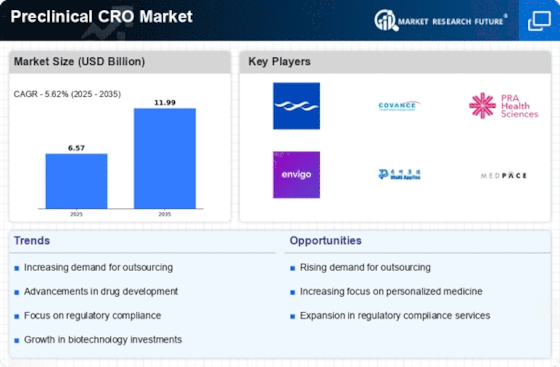
According to MRFR analysis, the Preclinical CRO Market Size was valued at USD 6.57 Billion in 2024. The market is projected to grow from USD 6.939 Billion in 2025 to USD 11.99 Billion by 2035, registering a CAGR of 5.62% during the forecast 2025–2035. North America led the market with over 45.66% share, generating around USD 3.0 billion in revenue. 
 
The Preclinical CRO Market is expanding due to rising pharmaceutical and biotechnology R&D, increasing outsourcing of early-stage drug development, and demand for cost-efficient research services. Key trends include advancements in toxicology and bioanalysis, integration of AI in preclinical studies, and growing collaborations to accelerate drug discovery timelines.  
 
According to the World Health Organization, noncommunicable diseases account for approximately 74% of global deaths, increasing the need for new drug development and preclinical research.

Key Market Trends & Highlights

The Preclinical CRO Market is experiencing robust growth driven by technological advancements and increasing demand for drug development.

  • Technological integration is reshaping the Preclinical CRO Market landscape, enhancing efficiency and accuracy in research processes. North America remains the largest market, while the Asia-Pacific region is emerging as the fastest-growing area for preclinical services. Biologics testing continues to dominate the market, whereas toxicology testing is witnessing rapid growth due to rising safety concerns. The rising demand for drug development and advancements in biotechnology are key drivers propelling market expansion.

Market Size & Forecast

2024 Market Size 6.57 (USD Billion)
2035 Market Size 11.99 (USD Billion)
CAGR (2025 - 2035) 5.62%
Largest Regional Market Share in 2024 North America

Major Players

Companies such as  <a href="https://www.criver.com/products-services/safety-assessment">Charles River Laboratories </a>(US), Covance (US), PRA Health Sciences (US), Envigo (US), WuXi AppTec (CN), <a href="https://www.medpace.com/about/full-service-cro/">Medpace </a>(US), <a href="https://www.eurofins.com/biopharma-services/early-development/our-services/preclinical/">Eurofins Scientific</a> (LU), S<a href="https://www.syneoshealth.com/">yneos Health</a> (US), KCR (PL) are some of the major participants in the Global Preclinical CRO Market.

Market Trends

The Preclinical CRO Market size is currently experiencing a dynamic evolution, driven by the increasing demand for efficient drug development processes. As pharmaceutical and biotechnology companies seek to streamline their research and development efforts, the reliance on Contract Research Organizations (CROs) has intensified. These organizations provide essential services, including toxicology studies, pharmacokinetics, and efficacy testing, which are crucial in the early stages of drug discovery. The growing complexity of regulatory requirements further propels the need for specialized expertise, making preclinical CROs indispensable partners in the drug development landscape.

Moreover, advancements in technology, such as the integration of artificial intelligence and data analytics, are reshaping the operational frameworks of preclinical CROs. These innovations enhance the accuracy and efficiency of preclinical studies, allowing for more informed decision-making. As the market continues to expand, collaboration between CROs and pharmaceutical companies is likely to deepen, fostering a more integrated approach to drug development. This trend suggests a shift towards a more collaborative ecosystem, where shared knowledge and resources can lead to accelerated timelines and improved outcomes in the quest for new therapeutics.

Technological Integration

The Preclinical CRO Market is witnessing a notable trend towards the integration of advanced technologies. Innovations such as artificial intelligence and machine learning are being adopted to enhance data analysis and streamline research processes. This technological shift not only improves the efficiency of preclinical studies but also allows for more precise predictions regarding drug efficacy and safety.

According to the World Health Organization, digital health and advanced analytics adoption is accelerating globally, with over 120 countries implementing digital health strategies, enabling the integration of AI and data-driven tools in healthcare research. Additionally, the Centers for Disease Control and Prevention is actively expanding advanced data analytics and modeling systems for disease monitoring, while insights from the Institute for Health Metrics and Evaluation highlight the increasing use of large-scale health data to improve predictive modeling and clinical research efficiency.

Regulatory Compliance Focus

There is an increasing emphasis on regulatory compliance within the Preclinical CRO Market. As drug development becomes more complex, CROs are prioritizing adherence to stringent regulatory standards. This focus ensures that studies are conducted in accordance with guidelines, thereby reducing the risk of delays in the approval process and enhancing the credibility of research outcomes.

The World Health Organization reports that over 60% of countries have established regulatory frameworks or policies for health data governance and clinical research standards, supporting safer and more standardized drug development processes. Furthermore, the European Centre for Disease Prevention and Control emphasizes strengthening regulatory and surveillance systems across Europe to ensure compliance and improve public health outcomes, reinforcing the importance of adherence in preclinical and clinical research.

Collaborative Partnerships

The trend of forming collaborative partnerships is gaining traction in the Preclinical CRO Market. Pharmaceutical companies are increasingly seeking long-term relationships with CROs to leverage their expertise and resources. Such collaborations facilitate knowledge sharing and foster innovation, ultimately leading to more efficient drug development processes.

The World Health Organization reports that over 60% of countries have established regulatory frameworks or policies for health data governance and clinical research standards, supporting safer and more standardized drug development processes. Furthermore, the European Centre for Disease Prevention and Control emphasizes strengthening regulatory and surveillance systems across Europe to ensure compliance and improve public health outcomes, reinforcing the importance of adherence in preclinical and clinical research.

Preclinical CRO Market Market Drivers

Advancements in Biotechnology

Advancements in biotechnology are playing a pivotal role in shaping the Preclinical CRO Market. The emergence of innovative biopharmaceuticals, including monoclonal antibodies and gene therapies, necessitates sophisticated preclinical testing methodologies. As biotechnology continues to evolve, preclinical CROs are adapting by incorporating cutting-edge technologies such as CRISPR and high-throughput screening into their service offerings.
 
This integration not only enhances the accuracy and efficiency of preclinical studies but also aligns with the increasing complexity of modern drug candidates. The market for biopharmaceuticals is projected to grow significantly, potentially exceeding 600 billion USD by 2025, further driving the demand for specialized preclinical services. Consequently, preclinical CROs that can effectively leverage these advancements are likely to gain a competitive edge in the industry.

Regulatory Landscape Evolution

The evolving regulatory landscape is significantly influencing the Preclinical CRO Market. Regulatory agencies are continuously updating guidelines to ensure the safety and efficacy of new drugs, which in turn affects the preclinical testing requirements. As regulations become more stringent, pharmaceutical companies are increasingly turning to preclinical CROs to ensure compliance with these evolving standards.
 
This trend is particularly evident in the areas of toxicology and pharmacology, where rigorous testing protocols are mandated. The need for expertise in navigating these complex regulatory frameworks is driving demand for preclinical services. Furthermore, as regulatory bodies emphasize the importance of data integrity and transparency, preclinical CROs that can demonstrate compliance and provide robust documentation are likely to thrive in this competitive environment.

Rising Demand for Drug Development

The Preclinical CRO Market is experiencing a notable surge in demand for drug development services. This trend is largely driven by the increasing number of pharmaceutical companies seeking to expedite their research and development processes. In recent years, the industry has seen a significant uptick in the number of new drug candidates entering the pipeline, with estimates suggesting that The Preclinical CRO Market could reach over 1.5 trillion USD by 2025.
 
As a result, preclinical contract research organizations (CROs) are becoming essential partners for these companies, providing critical services such as toxicology studies, pharmacokinetics, and efficacy testing. This growing reliance on preclinical CROs indicates a shift towards outsourcing, allowing pharmaceutical firms to focus on core competencies while leveraging specialized expertise in the preclinical phase.

Growing Focus on Personalized Medicine

The Preclinical CRO Market is also being shaped by the growing focus on personalized medicine. As the healthcare landscape shifts towards more tailored therapeutic approaches, the demand for preclinical studies that support personalized treatment strategies is increasing. This trend necessitates the development of preclinical models that accurately reflect patient variability, which can be complex and resource-intensive.
 
Preclinical CROs are responding by enhancing their capabilities in biomarker discovery and patient-derived xenograft models, which are essential for evaluating the efficacy of personalized therapies. The market for personalized medicine is projected to reach over 2 trillion USD by 2025, indicating a substantial opportunity for preclinical CROs to align their services with this burgeoning field. As the industry continues to evolve, those preclinical CROs that can effectively support personalized medicine initiatives are likely to see significant growth.

Increased Investment in Research and Development

The Preclinical CRO Market is witnessing a substantial increase in investment directed towards research and development (R&D) activities. Pharmaceutical and biotechnology companies are allocating larger portions of their budgets to R&D, with global spending expected to surpass 200 billion USD annually by 2025. This heightened investment is primarily aimed at discovering novel therapeutics and improving existing treatment modalities.
 
As companies strive to bring innovative products to market, the reliance on preclinical CROs for efficient and reliable testing becomes more pronounced. These organizations provide essential support in navigating the complexities of preclinical trials, thereby enabling sponsors to optimize their R&D expenditures. The trend of increased R&D investment is likely to bolster the growth of the preclinical CRO market, as more companies seek to outsource their preclinical activities to specialized providers.

Market Segment Insights

By Service Type: Biologics Testing (Largest) vs. Toxicology Testing (Fastest-Growing)

In the Preclinical CRO Market, the Service Type segment showcases a diverse landscape comprising Biologics Testing, Small Molecule Testing,<a href="https://www.marketresearchfuture.com/reports/adme-toxicology-testing-market-6945"> ADME Toxicology Testing</a>, and Pharmacology Testing. Among these, Biologics Testing holds the largest market share due to its increasing relevance in drug development, driven by the rising popularity of biologics therapies. Conversely, Toxicology Testing has emerged as a pivotal player, witnessing rapid adoption as regulatory bodies emphasize safety assessments, which can significantly influence drug approval processes.

Biologics Testing (Dominant) vs. Toxicology Testing (Emerging)

Biologics Testing remains the dominant service type in the Preclinical CRO Market, reflecting an industry-wide shift towards biologics and bio-similars, which have gained traction in recent years due to their targeted therapeutic properties. The growth of biologics is further fueled by advancements in gene therapy and monoclonal antibodies, establishing a robust demand for specialized testing services. On the other hand, Toxicology Testing, while emerging, shows rapid growth potential as companies increasingly recognize the importance of comprehensive safety profiling early in the drug development process. This service type is gaining traction among CROs as client needs evolve, driven by more stringent regulatory requirements.

By Therapeutic Area: Oncology (Largest) vs. Neurology (Fastest-Growing)

The Preclinical CRO Market has shown diverse distribution across therapeutic areas, with Oncology holding the largest market share, primarily due to the increasing prevalence of cancer and a surge in drug development for various oncological conditions, thereby governing preclinical oncology CROs segment. Neurology, while smaller in share, is emerging quickly as a pivotal segment, driven by rising incidences of neurological disorders such as Alzheimer's and Parkinson's disease which require innovative treatment solutions, thus creating considerable demand for preclinical research services.

Oncology (Dominant) vs. Neurology (Emerging)

Oncology is recognized as the dominant therapeutic area in the Preclinical CRO Market, characterized by robust investments in cancer research, resulting in an array of drug candidates moving into clinical development. This segment is supported by a vast pipeline of therapies targeting different cancer types, necessitating extensive studies in preclinical oncology CROs. In contrast, Neurology is marked as an emerging segment, displaying rapid growth due to heightened awareness and research funding focused on neurodegenerative diseases. This shift is propelling the need for preclinical CRO services, with the segment expected to showcase increased activity as pharmaceutical companies aspire to address the significant unmet medical needs in neurology.

By Validation Type: In Vivo Studies (Largest) vs. In Vitro Studies (Fastest-Growing)

In the Preclinical CRO Market, the validation types are majorly segmented into In Vivo Studies, In Vitro Studies, Comparative Studies, and Regulatory Studies. In Vivo Studies holds the largest market share among these segments. This dominance is attributed to its extensive applications in preclinical drug development, allowing researchers to gain insights into the safety and efficacy of new therapeutics. On the other hand, In Vitro Studies, while smaller in share, has been gaining traction due to its efficiency in <a href="https://www.marketresearchfuture.com/reports/drug-screening-market-20685">screening drug</a> candidates, which is critical for accelerated timelines in development. The ongoing advancements in biotechnology and increased investments in R&amp;D activities are propelling growth in both In Vivo and In Vitro Studies. In Vitro Studies are particularly emerging as the fastest-growing segment due to the rise of personalized medicine and the demand for more ethical testing alternatives. Greater focus on regulatory compliance and the necessity for high-throughput screening methods further enhance the growth of this segment, making it a key player in the evolving landscape of the preclinical CRO market.

In Vivo Studies (Dominant) vs. Regulatory Studies (Emerging)

In Vivo Studies are recognized as the dominant validation type in the Preclinical CRO Market, owing to their critical role in assessing the pharmacokinetics and pharmacodynamics of drug candidates. This segment benefits from established methodologies and a broad range of applications across various therapeutic areas. In contrast, Regulatory Studies are emerging as an essential segment, driven by stringent regulatory requirements and the need for comprehensive safety data before <a href="https://www.marketresearchfuture.com/reports/clinical-trials-market-7787">clinical trials.</a> Regulatory Studies involve meticulous evaluations to meet agency guidelines, ensuring that products are both safe and effective. The increasing complexity of drug development processes is positioning Regulatory Studies as a vital component in the preclinical pathway, ensuring compliance while balancing innovation.

By End User: Pharmaceutical Companies (Largest) vs. Biotechnology Companies (Fastest-Growing)

In the Preclinical CRO Market, the distribution of market share among end-users reveals that Pharmaceutical Companies hold the largest portion, driving a significant demand for outsourced research services. These companies rely heavily on CROs to streamline their drug development processes and comply with regulatory requirements, making them a dominant player in the market. Biotechnology Companies, while currently smaller in market share, are gaining traction due to their innovative approaches and novel therapies, indicating a shifting landscape in research collaboration.

End Users: Pharmaceutical Companies (Dominant) vs. Biotechnology Companies (Emerging)

Pharmaceutical Companies represent the dominant force in the Preclinical CRO Market, characterized by their established pipelines and extensive budgets for research and development. They frequently engage CROs to enhance their operational efficiency, mitigate risks, and expedite the testing of new drugs. In contrast, Biotechnology Companies are emerging as a significant force, fueled by advancements in biotechnology and tailored treatment solutions. They often partner with CROs to access specialized expertise and innovative technologies that can accelerate their research timelines, reflecting a growing trend towards collaboration in the sector.

Get more detailed insights about Preclinical CRO Market Research Report - Forecast till 2035

Regional Insights

The Global Preclinical CRO Market demonstrates significant diversity across various regions, North America leads in the Preclinical CRO Market Size, accounting for over 45.66% of the global revenue in 2024, driven by robust investment in Research and Development activities.

Europe Preclinical CRO Market was valued at USD 1.7 billion in 2024, making it the second-largest regional market with a 25.88% share, supported by an increasing emphasis on personalized medicine and regulatory support.The Asia-Pacific (APAC) region also shows promise, with a valuation of 1.5 USD Billion in 2024, growing to 2.8 USD Billion by 2035, fueled by a rise in pharmaceutical outsourcing and growing healthcare infrastructure.

South America generates a smaller share, valued at 0.37 USD Billion in 2024, with moderate growth to 0.7 USD Billion by 2035, reflecting gradual advancements in clinical research. Lastly, the Middle East and Africa (MEA) market holds the smallest share at 0.2 USD Billion in 2024, with a potential rise to 0.4 USD Billion by 2035, influenced by increasing outsourcing trends in drug development.The regional landscape highlights the importance of investment in Preclinical CRO Market services across these areas, as each region demonstrates unique opportunities and growth drivers that contribute to the overarching Global Preclinical CRO Market revenue.

Source: Primary Research, Secondary Research, Market Research Future Database and Analyst Review

Key Players and Competitive Insights

The Global Preclinical Contract Research Organization (CRO) Market is characterized by a dynamic and evolving landscape, driven by the increasing demand for efficient drug development processes and stringent regulatory standards. This market encompasses a range of services that support the early stages of pharmaceutical research, including pharmacokinetics, toxicology studies, and efficacy assessments. The competitive insights within this arena highlight a diverse array of players, each vying for a share of the growing demand from biotechnology and pharmaceutical firms.
 
Companies are continuously striving to enhance their offerings through technological advancements, strategic partnerships, and geographical expansions. This competitive atmosphere fosters innovation and agility, essential for meeting the unique needs of clients and advancing the field of preclinical research.Biorasi stands out in the Global Preclinical CRO Market due to its commitment to delivering tailored solutions and a patient-centric approach. The company's strengths lie in its extensive expertise across various therapeutic areas, enabling it to cater to a wide range of client needs. With a focus on providing innovative solutions, Biorasi leverages its deep scientific knowledge and industry experience to support sponsors in navigating the complexities of preclinical development.
 
The firm’s global presence ensures that it can effectively manage studies across different regions, staying attuned to local regulatory requirements and fostering collaborations that enhance its service delivery. This strategic positioning allows Biorasi to maintain a competitive edge, making it a preferred partner for many organizations looking to advance their drug development pipelines.Inotiv brings a robust set of capabilities to the Global Preclinical CRO Market, emphasizing its expansive portfolio of services that include toxicology, pathology, and biomarker development. The company operates with a strong emphasis on innovation and quality, which has helped it build a reputable standing in the industry.
 
Inotiv's strategic acquisitions have fortified its market position, enabling it to integrate complementary expertise and expand its service offerings significantly. The company's ability to deliver high-quality preclinical data efficiently, coupled with its expertise in specific therapeutic areas, is a critical strength that attracts clients focused on expediting their research and development timelines. Inotiv's global footprint further enhances its capacity to serve clients, ensuring comprehensive support regardless of location, which is pivotal for organizations aiming to launch effective therapeutics in a competitive market.

Key Companies in the Preclinical CRO Market include

Industry Developments

The Global Preclinical Contract Research Organization (CRO) Market has seen significant developments recently, particularly with companies such as Biorasi, Inotiv, Charles River Laboratories, and Medpace expanding their service offerings. Notably, in September 2023, PRA Health Sciences was acquired by ICON plc, marking a substantial merger that aims to enhance clinical trial capabilities. Similarly, Charles River Laboratories announced in August 2023 an acquisition of the drug development services segment of the French company, providing them with a wider operational footprint in Europe.

The growth of the market is reflected in substantial increases in valuations for many of these companies, driven by rising investments in pharmaceutical Research and Development, alongside heightened demand for biologics and personalized medicine. KCR's collaboration with Synlogic in July 2023 focused on improving the efficiency of preclinical study designs, showcasing ongoing innovation. Over the last two years, the market has experienced accelerated growth, propelled by advancements in technologies and increased focus on preclinical data quality and regulatory compliance across the globe, leading to tighter integration between stakeholders in CRO supply chains.

Future Outlook

Preclinical CRO Market Future Outlook

The Preclinical CRO Market size is projected to reach USD 11.99 Billion by 2035, growing at a CAGR of 5.62%.

New opportunities lie in:

  • <p>Integration of AI-driven data analytics for enhanced study design efficiency. Expansion of in vivo models to cater to diverse therapeutic areas. Development of specialized services for rare disease research and orphan drug applications.</p>

By 2035, the Preclinical CRO Market is expected to be robust, reflecting substantial growth and innovation.

Market Segmentation

Preclinical CRO Market End User Outlook

  • Pharmaceutical Companies
  • Biotechnology Companies
  • Academic Institutions
  • Research Organizations

Preclinical CRO Market Service Type Outlook

  • Biologics Testing
  • Small Molecule Testing
  • Toxicology Testing
  • Pharmacology Testing

Preclinical CRO Market Validation Type Outlook

  • In Vivo Studies
  • In Vitro Studies
  • Comparative Studies
  • Regulatory Studies

Preclinical CRO Market Therapeutic Area Outlook

  • Oncology
  • Neurology
  • Cardiology
  • Infectious Diseases

Report Scope

MARKET SIZE 2024 6.57(USD Billion)
MARKET SIZE 2025 6.939(USD Billion)
MARKET SIZE 2035 11.99(USD Billion)
COMPOUND ANNUAL GROWTH RATE (CAGR) 5.62% (2025 - 2035)
REPORT COVERAGE Revenue Forecast, Competitive Landscape, Growth Factors, and Trends
BASE YEAR 2024
Market Forecast Period 2025 - 2035
Historical Data 2019 - 2024
Market Forecast Units USD Billion
Key Companies Profiled Charles River Laboratories (US), Covance (US), PRA Health Sciences (US), Envigo (US), WuXi AppTec (CN), Medpace (US), Eurofins Scientific (LU), Syneos Health (US), KCR (PL)
Segments Covered Service Type, Therapeutic Area, Validation Type, End User, Regional
Key Market Opportunities Integration of advanced technologies enhances efficiency in the Preclinical CRO Market.
Key Market Dynamics Rising demand for innovative therapies drives competition among Preclinical Contract Research Organizations, influencing service offerings and pricing.
Countries Covered North America, Europe, APAC, South America, MEA

FAQs

What is the current valuation of the Preclinical CRO Market as of 2024?

<p>The Preclinical CRO Market was valued at 6.57 USD Billion in 2024.</p>

What is the projected market size for the Preclinical CRO Market by 2035?

<p>The market is projected to reach 11.99 USD Billion by 2035.</p>

What is the expected CAGR for the Preclinical CRO Market during the forecast period 2025 - 2035?

<p>The expected CAGR for the Preclinical CRO Market during 2025 - 2035 is 5.62%.</p>

Which service type segment is anticipated to show the highest growth in the Preclinical CRO Market?

<p>The Toxicology Testing segment is expected to grow from 1.77 USD Billion in 2024 to 3.1 USD Billion by 2035.</p>

How does the Oncology therapeutic area perform in the Preclinical CRO Market?

<p>The Oncology therapeutic area was valued at 2.0 USD Billion in 2024 and is projected to grow to 3.5 USD Billion by 2035.</p>

What are the key players in the Preclinical CRO Market?

<p>Key players include Charles River Laboratories, Covance, PRA Health Sciences, and Envigo, among others.</p>

Which end user segment is expected to dominate the Preclinical CRO Market?

<p>Pharmaceutical Companies are projected to lead the end user segment, growing from 2.5 USD Billion in 2024 to 4.5 USD Billion by 2035.</p>

What is the growth outlook for In Vivo Studies in the Preclinical CRO Market?

<p>In Vivo Studies are expected to increase from 2.0 USD Billion in 2024 to 3.5 USD Billion by 2035.</p>

How does the market for Biotechnology Companies compare to Pharmaceutical Companies in the Preclinical CRO Market?

<p>Biotechnology Companies are projected to grow from 1.5 USD Billion in 2024 to 2.5 USD Billion by 2035, which is lower than the growth of Pharmaceutical Companies.</p>

What trends are influencing the growth of the Preclinical CRO Market?

<p>The growth appears to be influenced by increasing investments in drug development and the rising demand for outsourcing preclinical services.</p>

  1. SECTION I: EXECUTIVE SUMMARY AND KEY HIGHLIGHTS |
    1. EXECUTIVE SUMMARY | |
      1. Market Overview | |
      2. Key Findings | |
      3. Market Segmentation | |
      4. Competitive Landscape | |
      5. Challenges and Opportunities | |
      6. Future Outlook 2
  2. SECTION II: SCOPING, METHODOLOGY AND MARKET STRUCTURE |
    1. MARKET INTRODUCTION | |
      1. Definition | |
      2. Scope of the study | | |
    2. RESEARCH METHODOLOGY | |
      1. Overview | |
      2. Data Mining | |
      3. Secondary Research | |
      4. Primary Research | | |
      5. Forecasting Model | |
      6. Market Size Estimation | | |
      7. Data Triangulation | |
      8. Validation 3
  3. SECTION III: QUALITATIVE ANALYSIS |
    1. MARKET DYNAMICS | |
      1. Overview | |
      2. Drivers | |
      3. Restraints | |
      4. Opportunities |
    2. MARKET FACTOR ANALYSIS | |
      1. Value chain Analysis | |
      2. Porter's Five Forces Analysis | | |
      3. COVID-19 Impact Analysis | | |
  4. SECTION IV: QUANTITATIVE ANALYSIS |
    1. Healthcare, BY Service Type (USD Billion) | |
      1. Biologics Testing | |
      2. Small Molecule Testing | |
      3. Toxicology Testing | |
      4. Pharmacology Testing |
    2. Healthcare, BY Therapeutic Area (USD Billion) | |
      1. Oncology | |
      2. Neurology | |
      3. Cardiology | |
      4. Infectious Diseases |
    3. Healthcare, BY Validation Type (USD Billion) | |
      1. In Vivo Studies | |
      2. In Vitro Studies | |
      3. Comparative Studies | |
      4. Regulatory Studies |
    4. Healthcare, BY End User (USD Billion) | |
      1. Pharmaceutical Companies | |
      2. Biotechnology Companies | |
      3. Academic Institutions | |
      4. Research Organizations |
    5. Healthcare, BY Region (USD Billion) | |
      1. North America | | |
      2. Europe | | |
      3. APAC | | |
      4. South America | | |
      5. MEA | | |
  5. SECTION V: COMPETITIVE ANALYSIS |
    1. Competitive Landscape | |
      1. Overview | |
      2. Competitive Analysis | |
      3. Market share Analysis | |
      4. Major Growth Strategy in the Healthcare | |
      5. Competitive Benchmarking | |
      6. Leading Players in Terms of Number of Developments in the Healthcare | |
      7. Key developments and growth strategies | | |
      8. Major Players Financial Matrix | | |
    2. Company Profiles | |
      1. Charles River Laboratories (US) | | |
      2. Covance (US) | | |
      3. PRA Health Sciences (US) | | |
      4. Envigo (US) | | |
      5. WuXi AppTec (CN) | | |
      6. Medpace (US) | | |
      7. Eurofins Scientific (LU) | | |
      8. Syneos Health (US) | | |
      9. KCR (PL) | | |
    3. Appendix | |
      1. References | |
      2. Related Reports 6 LIST OF FIGURES |
    4. MARKET SYNOPSIS |
    5. NORTH AMERICA MARKET ANALYSIS |
    6. US MARKET ANALYSIS BY SERVICE TYPE |
    7. US MARKET ANALYSIS BY THERAPEUTIC AREA |
    8. US MARKET ANALYSIS BY VALIDATION TYPE |
    9. US MARKET ANALYSIS BY END USER |
    10. CANADA MARKET ANALYSIS BY SERVICE TYPE |
    11. CANADA MARKET ANALYSIS BY THERAPEUTIC AREA |
    12. CANADA MARKET ANALYSIS BY VALIDATION TYPE |
    13. CANADA MARKET ANALYSIS BY END USER |
    14. EUROPE MARKET ANALYSIS |
    15. GERMANY MARKET ANALYSIS BY SERVICE TYPE |
    16. GERMANY MARKET ANALYSIS BY THERAPEUTIC AREA |
    17. GERMANY MARKET ANALYSIS BY VALIDATION TYPE |
    18. GERMANY MARKET ANALYSIS BY END USER |
    19. UK MARKET ANALYSIS BY SERVICE TYPE |
    20. UK MARKET ANALYSIS BY THERAPEUTIC AREA |
    21. UK MARKET ANALYSIS BY VALIDATION TYPE |
    22. UK MARKET ANALYSIS BY END USER |
    23. FRANCE MARKET ANALYSIS BY SERVICE TYPE |
    24. FRANCE MARKET ANALYSIS BY THERAPEUTIC AREA |
    25. FRANCE MARKET ANALYSIS BY VALIDATION TYPE |
    26. FRANCE MARKET ANALYSIS BY END USER |
    27. RUSSIA MARKET ANALYSIS BY SERVICE TYPE |
    28. RUSSIA MARKET ANALYSIS BY THERAPEUTIC AREA |
    29. RUSSIA MARKET ANALYSIS BY VALIDATION TYPE |
    30. RUSSIA MARKET ANALYSIS BY END USER |
    31. ITALY MARKET ANALYSIS BY SERVICE TYPE |
    32. ITALY MARKET ANALYSIS BY THERAPEUTIC AREA |
    33. ITALY MARKET ANALYSIS BY VALIDATION TYPE |
    34. ITALY MARKET ANALYSIS BY END USER |
    35. SPAIN MARKET ANALYSIS BY SERVICE TYPE |
    36. SPAIN MARKET ANALYSIS BY THERAPEUTIC AREA |
    37. SPAIN MARKET ANALYSIS BY VALIDATION TYPE |
    38. SPAIN MARKET ANALYSIS BY END USER |
    39. REST OF EUROPE MARKET ANALYSIS BY SERVICE TYPE |
    40. REST OF EUROPE MARKET ANALYSIS BY THERAPEUTIC AREA |
    41. REST OF EUROPE MARKET ANALYSIS BY VALIDATION TYPE |
    42. REST OF EUROPE MARKET ANALYSIS BY END USER |
    43. APAC MARKET ANALYSIS |
    44. CHINA MARKET ANALYSIS BY SERVICE TYPE |
    45. CHINA MARKET ANALYSIS BY THERAPEUTIC AREA |
    46. CHINA MARKET ANALYSIS BY VALIDATION TYPE |
    47. CHINA MARKET ANALYSIS BY END USER |
    48. INDIA MARKET ANALYSIS BY SERVICE TYPE |
    49. INDIA MARKET ANALYSIS BY THERAPEUTIC AREA |
    50. INDIA MARKET ANALYSIS BY VALIDATION TYPE |
    51. INDIA MARKET ANALYSIS BY END USER |
    52. JAPAN MARKET ANALYSIS BY SERVICE TYPE |
    53. JAPAN MARKET ANALYSIS BY THERAPEUTIC AREA |
    54. JAPAN MARKET ANALYSIS BY VALIDATION TYPE |
    55. JAPAN MARKET ANALYSIS BY END USER |
    56. SOUTH KOREA MARKET ANALYSIS BY SERVICE TYPE |
    57. SOUTH KOREA MARKET ANALYSIS BY THERAPEUTIC AREA |
    58. SOUTH KOREA MARKET ANALYSIS BY VALIDATION TYPE |
    59. SOUTH KOREA MARKET ANALYSIS BY END USER |
    60. MALAYSIA MARKET ANALYSIS BY SERVICE TYPE |
    61. MALAYSIA MARKET ANALYSIS BY THERAPEUTIC AREA |
    62. MALAYSIA MARKET ANALYSIS BY VALIDATION TYPE |
    63. MALAYSIA MARKET ANALYSIS BY END USER |
    64. THAILAND MARKET ANALYSIS BY SERVICE TYPE |
    65. THAILAND MARKET ANALYSIS BY THERAPEUTIC AREA |
    66. THAILAND MARKET ANALYSIS BY VALIDATION TYPE |
    67. THAILAND MARKET ANALYSIS BY END USER |
    68. INDONESIA MARKET ANALYSIS BY SERVICE TYPE |
    69. INDONESIA MARKET ANALYSIS BY THERAPEUTIC AREA |
    70. INDONESIA MARKET ANALYSIS BY VALIDATION TYPE |
    71. INDONESIA MARKET ANALYSIS BY END USER |
    72. REST OF APAC MARKET ANALYSIS BY SERVICE TYPE |
    73. REST OF APAC MARKET ANALYSIS BY THERAPEUTIC AREA |
    74. REST OF APAC MARKET ANALYSIS BY VALIDATION TYPE |
    75. REST OF APAC MARKET ANALYSIS BY END USER |
    76. SOUTH AMERICA MARKET ANALYSIS |
    77. BRAZIL MARKET ANALYSIS BY SERVICE TYPE |
    78. BRAZIL MARKET ANALYSIS BY THERAPEUTIC AREA |
    79. BRAZIL MARKET ANALYSIS BY VALIDATION TYPE |
    80. BRAZIL MARKET ANALYSIS BY END USER |
    81. MEXICO MARKET ANALYSIS BY SERVICE TYPE |
    82. MEXICO MARKET ANALYSIS BY THERAPEUTIC AREA |
    83. MEXICO MARKET ANALYSIS BY VALIDATION TYPE |
    84. MEXICO MARKET ANALYSIS BY END USER |
    85. ARGENTINA MARKET ANALYSIS BY SERVICE TYPE |
    86. ARGENTINA MARKET ANALYSIS BY THERAPEUTIC AREA |
    87. ARGENTINA MARKET ANALYSIS BY VALIDATION TYPE |
    88. ARGENTINA MARKET ANALYSIS BY END USER |
    89. REST OF SOUTH AMERICA MARKET ANALYSIS BY SERVICE TYPE |
    90. REST OF SOUTH AMERICA MARKET ANALYSIS BY THERAPEUTIC AREA |
    91. REST OF SOUTH AMERICA MARKET ANALYSIS BY VALIDATION TYPE |
    92. REST OF SOUTH AMERICA MARKET ANALYSIS BY END USER |
    93. MEA MARKET ANALYSIS |
    94. GCC COUNTRIES MARKET ANALYSIS BY SERVICE TYPE |
    95. GCC COUNTRIES MARKET ANALYSIS BY THERAPEUTIC AREA |
    96. GCC COUNTRIES MARKET ANALYSIS BY VALIDATION TYPE |
    97. GCC COUNTRIES MARKET ANALYSIS BY END USER |
    98. SOUTH AFRICA MARKET ANALYSIS BY SERVICE TYPE |
    99. SOUTH AFRICA MARKET ANALYSIS BY THERAPEUTIC AREA |
    100. SOUTH AFRICA MARKET ANALYSIS BY VALIDATION TYPE |
    101. SOUTH AFRICA MARKET ANALYSIS BY END USER |
    102. REST OF MEA MARKET ANALYSIS BY SERVICE TYPE |
    103. REST OF MEA MARKET ANALYSIS BY THERAPEUTIC AREA |
    104. REST OF MEA MARKET ANALYSIS BY VALIDATION TYPE |
    105. REST OF MEA MARKET ANALYSIS BY END USER |
    106. KEY BUYING CRITERIA OF HEALTHCARE |
    107. RESEARCH PROCESS OF MRFR |
    108. DRO ANALYSIS OF HEALTHCARE |
    109. DRIVERS IMPACT ANALYSIS: HEALTHCARE |
    110. RESTRAINTS IMPACT ANALYSIS: HEALTHCARE |
    111. SUPPLY / VALUE CHAIN: HEALTHCARE |
    112. HEALTHCARE, BY SERVICE TYPE, 2024 (% SHARE) |
    113. HEALTHCARE, BY SERVICE TYPE, 2024 TO 2035 (USD Billion) |
    114. HEALTHCARE, BY THERAPEUTIC AREA, 2024 (% SHARE) |
    115. HEALTHCARE, BY THERAPEUTIC AREA, 2024 TO 2035 (USD Billion) |
    116. HEALTHCARE, BY VALIDATION TYPE, 2024 (% SHARE) |
    117. HEALTHCARE, BY VALIDATION TYPE, 2024 TO 2035 (USD Billion) |
    118. HEALTHCARE, BY END USER, 2024 (% SHARE) |
    119. HEALTHCARE, BY END USER, 2024 TO 2035 (USD Billion) |
    120. BENCHMARKING OF MAJOR COMPETITORS 7 LIST OF TABLES |
    121. LIST OF ASSUMPTIONS | |
      1. |
    122. North America MARKET SIZE ESTIMATES; FORECAST | |
      1. BY SERVICE TYPE, 2025-2035 (USD Billion) | |
      2. BY THERAPEUTIC AREA, 2025-2035 (USD Billion) | |
      3. BY VALIDATION TYPE, 2025-2035 (USD Billion) | |
      4. BY END USER, 2025-2035 (USD Billion) |
    123. US MARKET SIZE ESTIMATES; FORECAST | |
      1. BY SERVICE TYPE, 2025-2035 (USD Billion) | |
      2. BY THERAPEUTIC AREA, 2025-2035 (USD Billion) | |
      3. BY VALIDATION TYPE, 2025-2035 (USD Billion) | |
      4. BY END USER, 2025-2035 (USD Billion) |
    124. Canada MARKET SIZE ESTIMATES; FORECAST | |
      1. BY SERVICE TYPE, 2025-2035 (USD Billion) | |
      2. BY THERAPEUTIC AREA, 2025-2035 (USD Billion) | |
      3. BY VALIDATION TYPE, 2025-2035 (USD Billion) | |
      4. BY END USER, 2025-2035 (USD Billion) |
    125. Europe MARKET SIZE ESTIMATES; FORECAST | |
      1. BY SERVICE TYPE, 2025-2035 (USD Billion) | |
      2. BY THERAPEUTIC AREA, 2025-2035 (USD Billion) | |
      3. BY VALIDATION TYPE, 2025-2035 (USD Billion) | |
      4. BY END USER, 2025-2035 (USD Billion) |
    126. Germany MARKET SIZE ESTIMATES; FORECAST | |
      1. BY SERVICE TYPE, 2025-2035 (USD Billion) | |
      2. BY THERAPEUTIC AREA, 2025-2035 (USD Billion) | |
      3. BY VALIDATION TYPE, 2025-2035 (USD Billion) | |
      4. BY END USER, 2025-2035 (USD Billion) |
    127. UK MARKET SIZE ESTIMATES; FORECAST | |
      1. BY SERVICE TYPE, 2025-2035 (USD Billion) | |
      2. BY THERAPEUTIC AREA, 2025-2035 (USD Billion) | |
      3. BY VALIDATION TYPE, 2025-2035 (USD Billion) | |
      4. BY END USER, 2025-2035 (USD Billion) |
    128. France MARKET SIZE ESTIMATES; FORECAST | |
      1. BY SERVICE TYPE, 2025-2035 (USD Billion) | |
      2. BY THERAPEUTIC AREA, 2025-2035 (USD Billion) | |
      3. BY VALIDATION TYPE, 2025-2035 (USD Billion) | |
      4. BY END USER, 2025-2035 (USD Billion) |
    129. Russia MARKET SIZE ESTIMATES; FORECAST | |
      1. BY SERVICE TYPE, 2025-2035 (USD Billion) | |
      2. BY THERAPEUTIC AREA, 2025-2035 (USD Billion) | |
      3. BY VALIDATION TYPE, 2025-2035 (USD Billion) | |
      4. BY END USER, 2025-2035 (USD Billion) |
    130. Italy MARKET SIZE ESTIMATES; FORECAST | |
      1. BY SERVICE TYPE, 2025-2035 (USD Billion) | |
      2. BY THERAPEUTIC AREA, 2025-2035 (USD Billion) | |
      3. BY VALIDATION TYPE, 2025-2035 (USD Billion) | |
      4. BY END USER, 2025-2035 (USD Billion) |
    131. Spain MARKET SIZE ESTIMATES; FORECAST | |
      1. BY SERVICE TYPE, 2025-2035 (USD Billion) | |
      2. BY THERAPEUTIC AREA, 2025-2035 (USD Billion) | |
      3. BY VALIDATION TYPE, 2025-2035 (USD Billion) | |
      4. BY END USER, 2025-2035 (USD Billion) |
    132. Rest of Europe MARKET SIZE ESTIMATES; FORECAST | |
      1. BY SERVICE TYPE, 2025-2035 (USD Billion) | |
      2. BY THERAPEUTIC AREA, 2025-2035 (USD Billion) | |
      3. BY VALIDATION TYPE, 2025-2035 (USD Billion) | |
      4. BY END USER, 2025-2035 (USD Billion) |
    133. APAC MARKET SIZE ESTIMATES; FORECAST | |
      1. BY SERVICE TYPE, 2025-2035 (USD Billion) | |
      2. BY THERAPEUTIC AREA, 2025-2035 (USD Billion) | |
      3. BY VALIDATION TYPE, 2025-2035 (USD Billion) | |
      4. BY END USER, 2025-2035 (USD Billion) |
    134. China MARKET SIZE ESTIMATES; FORECAST | |
      1. BY SERVICE TYPE, 2025-2035 (USD Billion) | |
      2. BY THERAPEUTIC AREA, 2025-2035 (USD Billion) | |
      3. BY VALIDATION TYPE, 2025-2035 (USD Billion) | |
      4. BY END USER, 2025-2035 (USD Billion) |
    135. India MARKET SIZE ESTIMATES; FORECAST | |
      1. BY SERVICE TYPE, 2025-2035 (USD Billion) | |
      2. BY THERAPEUTIC AREA, 2025-2035 (USD Billion) | |
      3. BY VALIDATION TYPE, 2025-2035 (USD Billion) | |
      4. BY END USER, 2025-2035 (USD Billion) |
    136. Japan MARKET SIZE ESTIMATES; FORECAST | |
      1. BY SERVICE TYPE, 2025-2035 (USD Billion) | |
      2. BY THERAPEUTIC AREA, 2025-2035 (USD Billion) | |
      3. BY VALIDATION TYPE, 2025-2035 (USD Billion) | |
      4. BY END USER, 2025-2035 (USD Billion) |
    137. South Korea MARKET SIZE ESTIMATES; FORECAST | |
      1. BY SERVICE TYPE, 2025-2035 (USD Billion) | |
      2. BY THERAPEUTIC AREA, 2025-2035 (USD Billion) | |
      3. BY VALIDATION TYPE, 2025-2035 (USD Billion) | |
      4. BY END USER, 2025-2035 (USD Billion) |
    138. Malaysia MARKET SIZE ESTIMATES; FORECAST | |
      1. BY SERVICE TYPE, 2025-2035 (USD Billion) | |
      2. BY THERAPEUTIC AREA, 2025-2035 (USD Billion) | |
      3. BY VALIDATION TYPE, 2025-2035 (USD Billion) | |
      4. BY END USER, 2025-2035 (USD Billion) |
    139. Thailand MARKET SIZE ESTIMATES; FORECAST | |
      1. BY SERVICE TYPE, 2025-2035 (USD Billion) | |
      2. BY THERAPEUTIC AREA, 2025-2035 (USD Billion) | |
      3. BY VALIDATION TYPE, 2025-2035 (USD Billion) | |
      4. BY END USER, 2025-2035 (USD Billion) |
    140. Indonesia MARKET SIZE ESTIMATES; FORECAST | |
      1. BY SERVICE TYPE, 2025-2035 (USD Billion) | |
      2. BY THERAPEUTIC AREA, 2025-2035 (USD Billion) | |
      3. BY VALIDATION TYPE, 2025-2035 (USD Billion) | |
      4. BY END USER, 2025-2035 (USD Billion) |
    141. Rest of APAC MARKET SIZE ESTIMATES; FORECAST | |
      1. BY SERVICE TYPE, 2025-2035 (USD Billion) | |
      2. BY THERAPEUTIC AREA, 2025-2035 (USD Billion) | |
      3. BY VALIDATION TYPE, 2025-2035 (USD Billion) | |
      4. BY END USER, 2025-2035 (USD Billion) |
    142. South America MARKET SIZE ESTIMATES; FORECAST | |
      1. BY SERVICE TYPE, 2025-2035 (USD Billion) | |
      2. BY THERAPEUTIC AREA, 2025-2035 (USD Billion) | |
      3. BY VALIDATION TYPE, 2025-2035 (USD Billion) | |
      4. BY END USER, 2025-2035 (USD Billion) |
    143. Brazil MARKET SIZE ESTIMATES; FORECAST | |
      1. BY SERVICE TYPE, 2025-2035 (USD Billion) | |
      2. BY THERAPEUTIC AREA, 2025-2035 (USD Billion) | |
      3. BY VALIDATION TYPE, 2025-2035 (USD Billion) | |
      4. BY END USER, 2025-2035 (USD Billion) |
    144. Mexico MARKET SIZE ESTIMATES; FORECAST | |
      1. BY SERVICE TYPE, 2025-2035 (USD Billion) | |
      2. BY THERAPEUTIC AREA, 2025-2035 (USD Billion) | |
      3. BY VALIDATION TYPE, 2025-2035 (USD Billion) | |
      4. BY END USER, 2025-2035 (USD Billion) |
    145. Argentina MARKET SIZE ESTIMATES; FORECAST | |
      1. BY SERVICE TYPE, 2025-2035 (USD Billion) | |
      2. BY THERAPEUTIC AREA, 2025-2035 (USD Billion) | |
      3. BY VALIDATION TYPE, 2025-2035 (USD Billion) | |
      4. BY END USER, 2025-2035 (USD Billion) |
    146. Rest of South America MARKET SIZE ESTIMATES; FORECAST | |
      1. BY SERVICE TYPE, 2025-2035 (USD Billion) | |
      2. BY THERAPEUTIC AREA, 2025-2035 (USD Billion) | |
      3. BY VALIDATION TYPE, 2025-2035 (USD Billion) | |
      4. BY END USER, 2025-2035 (USD Billion) |
    147. MEA MARKET SIZE ESTIMATES; FORECAST | |
      1. BY SERVICE TYPE, 2025-2035 (USD Billion) | |
      2. BY THERAPEUTIC AREA, 2025-2035 (USD Billion) | |
      3. BY VALIDATION TYPE, 2025-2035 (USD Billion) | |
      4. BY END USER, 2025-2035 (USD Billion) |
    148. GCC Countries MARKET SIZE ESTIMATES; FORECAST | |
      1. BY SERVICE TYPE, 2025-2035 (USD Billion) | |
      2. BY THERAPEUTIC AREA, 2025-2035 (USD Billion) | |
      3. BY VALIDATION TYPE, 2025-2035 (USD Billion) | |
      4. BY END USER, 2025-2035 (USD Billion) |
    149. South Africa MARKET SIZE ESTIMATES; FORECAST | |
      1. BY SERVICE TYPE, 2025-2035 (USD Billion) | |
      2. BY THERAPEUTIC AREA, 2025-2035 (USD Billion) | |
      3. BY VALIDATION TYPE, 2025-2035 (USD Billion) | |
      4. BY END USER, 2025-2035 (USD Billion) |
    150. Rest of MEA MARKET SIZE ESTIMATES; FORECAST | |
      1. BY SERVICE TYPE, 2025-2035 (USD Billion) | |
      2. BY THERAPEUTIC AREA, 2025-2035 (USD Billion) | |
      3. BY VALIDATION TYPE, 2025-2035 (USD Billion) | |
      4. BY END USER, 2025-2035 (USD Billion) |
    151. PRODUCT LAUNCH/PRODUCT DEVELOPMENT/APPROVAL | |
      1. |
    152. ACQUISITION/PARTNERSHIP | |

Healthcare Market Segmentation

Healthcare By Service Type (USD Billion, 2025-2035)

  • Biologics Testing
  • Small Molecule Testing
  • Toxicology Testing
  • Pharmacology Testing

Healthcare By Therapeutic Area (USD Billion, 2025-2035)

  • Oncology
  • Neurology
  • Cardiology
  • Infectious Diseases

Healthcare By Validation Type (USD Billion, 2025-2035)

  • In Vivo Studies
  • In Vitro Studies
  • Comparative Studies
  • Regulatory Studies

Healthcare By End User (USD Billion, 2025-2035)

  • Pharmaceutical Companies
  • Biotechnology Companies
  • Academic Institutions
  • Research Organizations
Infographic

Free Sample Request

Kindly complete the form below to receive a free sample of this Report

Get Free Sample

Customer Strories

Compare Licence

×
Features License Type
Single User Multiuser License Enterprise User
Price $4,950 $5,950 $7,250
Maximum User Access Limit 1 User Upto 10 Users Unrestricted Access Throughout the Organization
Free Customization
Direct Access to Analyst
Deliverable Format
Platform Access
Discount on Next Purchase 10% 15% 15%
Printable Versions
%>