
Request Free Sample ×

Kindly complete the form below to receive a free sample of this Report

* Please use a valid business email

Leading companies partner with us for data-driven Insights

clients tt-cursor
Hero Background
English
Chinese
French
Japanese
Korean
German
Spanish

Power Monitoring System Market Share

ID: MRFR/EnP/7545-CR
111 Pages
Anshula Mandaokar
January 2026

Power Monitoring System Market Research Report by Application (Energy Management, Industrial Automation, Building Automation, Transportation), By Component (Software, Hardware, Services), By End User (Utilities, Manufacturing, Commercial, Residential, Healthcare), By Deployment Type (On-Premise, Cloud-Based), By Region - Forecast to 2035

Share:
Download PDF ×

We do not share your information with anyone. However, we may send you emails based on your report interest from time to time. You may contact us at any time to opt-out.

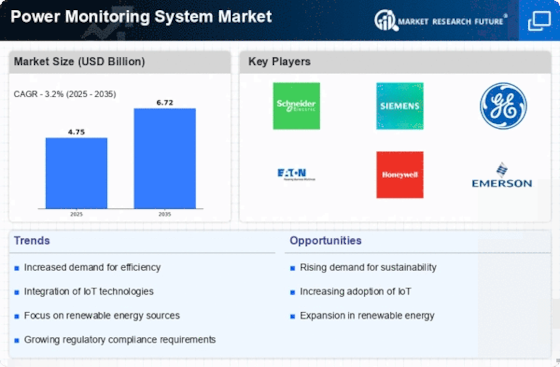
Power Monitoring System Market Infographic
Purchase Options

Market Share

Power Monitoring System Market Share Analysis

The main driver behind the growth of global power monitoring systems is an increased focus on reducing energy costs while maximizing the reliability of electrical infrastructure worldwide. An example is when a home utility power monitor ensures efficient utilization of energy sources in the residential end use sector (Consumers Energy Company 2016). One major trend is smart/IoT-enabled power monitoring systems that have come up in this regard. These employ advanced sensors as well as connectivity features and cloud-based analytics for real-time tracking and analysis of factors such as electricity consumption, quality, and performance indicators. Smart metering thus supports remote analysis alongside proactive maintenance, whose decisions are all data-driven, resulting in low-cost operations arising from the optimization of energy usage within organizations. Additionally, a shift is being witnessed towards more sophisticated and comprehensive power monitoring systems. The current designs offer multi-dimensional approaches to the task of monitoring that cover not only electrical aspects like voltage, current, and power factors but also environmental ones such as temperature, humidity, and air quality at the same time. Also, there is an increasing demand for cloud-based power monitoring solutions in the market. As such, they support remote real-time data access and can be used to store information centrally, which enables users to have access to historical data as well as get immediate insights wherever they are located. Furthermore, the power monitoring system market is changing due to the incorporation of artificial intelligence (AI) and machine learning (ML) technologies into their operations. With these types of analytics, businesses can predict when maintenance will be required when abnormal behavior will be spotted early, when prompt action will be enabled, or when energy use patterns will be optimized. Moreover, sustainability and energy conservation practices have necessitated the adoption of power monitoring systems across various industries. Firms are now focusing more on their carbon footprints by using less electricity. They are increasingly looking for means through which they can monitor and control their energy use to achieve environmental compliance standards with reduced cost implications resulting from CO2 emissions over time. For instance, having real-time data visualization capabilities in addition to user-friendly interfaces is a key trend in this type of technology right now. Some manufacturers are creating instinctive GUIs while others are devouring mobile apps that communicate plainly about any electric energy issue. Additionally, regulatory compliance requirements have a significant impact on the power monitoring system market today. The smart solutions driving transformations within the power monitoring system market include IoT-enabled options that enhance comprehensive capability in terms of capabilities around sensing technologies, Cloud-based platforms, AI & ML integration, Sustainability initiatives, User-Friendly Interfaces, Regulatory Compliance, and Energy Storage Integration.

Author
Author Profile
Anshula Mandaokar
Team Lead - Research

Anshula Mandaokar holds an academic degree in Chemical Engineering and has been contributing to the field for more than 5 years. She has expertise in Market Research and Business Consulting and serves as a Team Lead for a reputed Market Research firm under the Chemicals and Materials domain spectrum. She has worked on multiple projects, generating explicit results in a quick turnaround time. Her understanding of data interpretation justifies her role as a leader.

Leave a Comment

FAQs

What is the projected market valuation of the Power Monitoring System Market by 2035?

<p>The projected market valuation for the Power Monitoring System Market is expected to reach 6.717 USD Billion by 2035.</p>

What was the overall market valuation of the Power Monitoring System Market in 2024?

<p>The overall market valuation of the Power Monitoring System Market was 4.75 USD Billion in 2024.</p>

What is the expected CAGR for the Power Monitoring System Market during the forecast period 2025 - 2035?

<p>The expected CAGR for the Power Monitoring System Market during the forecast period 2025 - 2035 is 3.2%.</p>

Which application segment is projected to experience the highest growth in the Power Monitoring System Market?

<p>The Industrial Automation application segment is projected to grow from 1.5 USD Billion in 2024 to 2.1 USD Billion by 2035.</p>

What are the key components of the Power Monitoring System Market?

<p>The key components include Software, Hardware, and Services, with Software projected to grow from 1.425 USD Billion in 2024 to 2.1 USD Billion by 2035.</p>

Which end-user segment is expected to show notable growth in the Power Monitoring System Market?

<p>The Utilities end-user segment is expected to grow from 1.2 USD Billion in 2024 to 1.7 USD Billion by 2035.</p>

What are the leading companies in the Power Monitoring System Market?

<p>Key players in the Power Monitoring System Market include Schneider Electric, Siemens, General Electric, Eaton, and Honeywell.</p>

How is the deployment type of Power Monitoring Systems expected to evolve by 2035?

<p>Both On-Premise and Cloud-Based deployment types are projected to grow from 2.375 USD Billion in 2024 to 3.3585 USD Billion by 2035.</p>

What is the growth outlook for the Building Automation application segment?

<p>The Building Automation application segment is expected to increase from 0.9 USD Billion in 2024 to 1.3 USD Billion by 2035.</p>

How does the performance of the Renewable Energy Management segment compare to other segments?

<p>The Renewable Energy Management segment is projected to grow from 0.5 USD Billion in 2024 to 0.7 USD Billion by 2035, indicating steady growth relative to other segments.</p>

Market Summary

As per Market Research Future analysis, the Power Monitoring System Market Size was estimated at 5,715.38 USD Million in 2024. The Power Monitoring System industry is projected to grow from 6,092.60 USD Million in 2025 to 12,200.22 USD Million by 2035, exhibiting a compound annual growth rate (CAGR) of 7.2 % during the forecast period 2025 - 2035. 

Key Market Trends & Highlights

The Power Monitoring System Market is experiencing strong growth driven by expanding demand for energy efficiency, grid reliability, digital technologies, and renewable integration across utilities, industrial, commercial, and residential sectors.

  • Rising adoption of solar PV, wind power, energy storage systems, and distributed energy resources (DERs) is increasing the need for power monitoring to manage variability, balance supply and demand, and enable stable grid operation. This drives demand for advanced monitoring systems that support real time tracking of generation and load across diverse sources. Utilities and enterprises are increasingly deploying IoT‑enabled sensors, cloud platforms, and AI/analytics tools to enable predictive maintenance, optimize energy usage, and improve fault detection. Projects leveraging digital twins and cloud‑based monitoring enhance operational efficiency and reduce downtime. Growing regulatory emphasis on energy efficiency, carbon reduction, and sustainable infrastructure is prompting investments in sophisticated power monitoring solutions. These systems help stakeholders achieve energy optimization goals, reduce losses, and maintain compliance with evolving environmental standards.

Market Size & Forecast

2024 Market Size 21,975.3 (USD Million)
2035 Market Size 46,364.1 (USD Million)
CAGR (2025 - 2035) 7.2 %

Major Players

GE Vernova, Siemens, Hitachi, Eaton, <a href="https://www.se.com/in/en/product-category/4100-power-monitoring-and-control/">Schneider Electric</a>, Honeywell, Mitsubishi Electric, Fuji Electric FA, <a href="https://www.emerson.com/es-bo/commercial-residential/controls-and-monitoring-systems/facility-controls-and-electronics/power-monitoring">Emerson</a>, Rockwell Automation, Rishabh Instruments, Megger, Fluke, Yokogawa, OMRON

Market Trends

The Power Monitoring System Market is currently experiencing a transformative phase, driven by the increasing demand for energy efficiency and sustainability. Organizations across various sectors are recognizing the necessity of monitoring energy consumption to optimize performance and reduce operational costs. This trend is further fueled by the growing emphasis on renewable energy sources and the integration of smart technologies. As a result, companies are investing in advanced power monitoring solutions that provide real-time data analytics, enabling them to make informed decisions regarding energy usage and management.

Moreover, the rise of the Internet of Things (IoT) is reshaping the landscape of the Power Monitoring System Market. IoT-enabled devices facilitate seamless communication and data exchange, allowing for enhanced monitoring capabilities. This technological advancement not only improves operational efficiency but also supports compliance with regulatory standards aimed at reducing carbon footprints. Consequently, Power Monitoring System Market analysis reveals that  is poised for substantial growth as stakeholders seek innovative solutions to meet evolving energy demands and environmental regulations.

Integration of IoT Technologies

Power Monitoring System Market trends highlight that the incorporation of Internet of Things technologies into  power monitoring systems is becoming increasingly prevalent. This integration allows for enhanced connectivity and data sharing, leading to improved monitoring and management of energy consumption.

Focus on Energy Efficiency

There is a growing emphasis on energy efficiency across various industries. Organizations are actively seeking power monitoring solutions that enable them to track and optimize energy usage, thereby reducing costs and environmental impact.

Adoption of Renewable Energy Sources

The shift towards renewable energy sources is influencing the Power Monitoring System Market trends. As more companies invest in solar, wind, and other sustainable energy solutions, the demand for effective monitoring systems to manage these resources is likely to increase.

Power Monitoring System Market Market Drivers

Growing Emphasis on Regulatory Compliance and Energy Standards

A key driver accelerating the adoption of power monitoring systems globally is the tightening regulatory landscape surrounding energy efficiency, power quality, and electrical safety. Across numerous jurisdictions, governments, environmental agencies, and energy regulators are implementing more rigorous policies and standards aimed at improving grid reliability, reducing emissions, and promoting transparent energy reporting. These evolving regulations are placing increasing responsibility on utilities, industrial operators, and commercial energy users to actively monitor, document, and improve their electrical performance. Power monitoring systems have become indispensable tools for achieving compliance with these complex and often technically demanding requirements. They provide the detailed, real-time data necessary to track energy consumption, identify power quality deviations, conduct load profiling, and verify performance improvements over time. Compliance with international standards—such as ISO 50001, which governs energy management systems, and IEEE 519, which sets guidelines for harmonic distortion control—often hinges on having reliable monitoring infrastructure in place.

Without such systems, organizations may struggle to meet reporting obligations or demonstrate adherence to quality thresholds, which could result in financial penalties or disqualification from government incentives. In many regions, especially those with deregulated electricity markets, the emphasis on individual accountability for energy performance is even greater. In such markets, power quality and reliability may vary significantly, and end-users are expected to take proactive measures to ensure their internal power systems remain stable and compliant. 

Commercial buildings, manufacturers, and utility-scale operators are increasingly required to prove continuous improvement in energy performance, whether to qualify for green building certifications, reduce their carbon footprint under ESG mandates, or secure rebates and tax credits linked to energy efficiency upgrades. Moreover, the regulatory landscape is evolving beyond just technical compliance to encompass reputational and sustainability expectations. Many companies now face pressure from stakeholders, investors, and customers to publicly disclose energy usage and environmental impact. Power monitoring systems support these efforts by providing verifiable data that can be used for sustainability audits, corporate social responsibility reporting, and adherence to net-zero or carbon neutrality goals. As energy regulations grow more complex and enforcement becomes stricter, the integration of power monitoring technologies is shifting from an optional enhancement to a strategic imperative. For organizations aiming to stay ahead of compliance requirements, secure regulatory incentives, and avoid operational or reputational risks, robust monitoring infrastructure is no longer a luxury—it is a necessity. This regulatory momentum is expected to drive sustained demand for both hardware and software solutions within the power monitoring market, especially in sectors that are highly regulated or energy-intensive.

Rising Demand for Power Reliability and Quality in Critical Sectors

One of the most influential factors driving growth in the Power Monitoring System Market is the escalating demand for reliable, high-quality electrical supply across mission-critical sectors such as data centres, healthcare facilities, high-tech manufacturing, telecommunications, and financial institutions. These industries operate in environments where even brief power disturbances—such as voltage sags, surges, or harmonic distortions—can have severe consequences, including system failures, equipment degradation, operational downtime, and irreversible data loss. As digital transformation continues to accelerate across all sectors, fuelled by trends like cloud computing, artificial intelligence (AI), the Internet of Things (IoT), and Industry 4.0, the dependency on uninterrupted, clean, and stable power has become more pronounced than ever. Power monitoring systems play a pivotal role in addressing this need by offering continuous, real-time visibility into key electrical parameters across facilities and networks. These systems help identify anomalies in power quality, allowing organizations to detect and address issues before they escalate into critical failures. They also enable performance benchmarking, preventive maintenance, and regulatory compliance, which are increasingly vital in highly digitized and regulated environments.

Moreover, as the economic and operational impact of unplanned outages rises, businesses are increasingly viewing power monitoring not merely as a means of improving energy efficiency, but as a core element of risk mitigation and business continuity planning. The growing reliance on sensitive and high-value electronic infrastructure demands proactive investments in monitoring technologies that can help avoid costly disruptions. This demand is especially strong in advanced economies, where customer expectations for consistent service levels are high and infrastructure is heavily digitalized. 

However, emerging markets are also experiencing rapid growth in critical sectors such as telecommunications and cloud services, which is expanding the need for reliable power supply and, consequently, robust monitoring capabilities. In both cases, the imperative to maintain operational continuity and protect mission-critical assets is making power monitoring systems an essential component of modern energy management strategies—driving sustained growth across the global market.

Market Segment Insights

By Application: Energy Management (Largest) vs. Industrial Automation (Fastest-Growing)

<p>The Power Monitoring System Market showcases a diverse application spectrum, with Energy Management holding the largest share. This segment is significantly driven by the increasing need for energy efficiency and the desire to reduce operational costs across various industries. On the other hand, Industrial Automation is rapidly gaining traction, reflecting the broader trend of digital transformation in manufacturing processes. This shift emphasizes the importance of real-time data monitoring and integration of IoT technologies to optimize performance and reduce downtime.</p>

<p>Energy Management (Dominant) vs. Industrial Automation (Emerging)</p>

<p>Energy Management solutions are crucial for organizations looking to streamline energy usage and lower costs, positioning this segment as a dominant force in the market. These systems enable real-time monitoring and management of energy consumption, providing insights that lead to significant efficiency improvements. Conversely, Industrial Automation is emerging as a pivotal segment driven by advancements in technology and the push for smarter manufacturing. Automation systems enhance operational efficiency and reduce human error, appealing to industries seeking enhanced performance and productivity. As awareness of automation benefits continues to spread, the Industrial Automation segment is expected to grow remarkably, driven by innovations in machine learning and AI integration.</p>

By Component: Software (Largest) vs. Hardware (Fastest-Growing)

<p>The Power Monitoring System Market is segmented into Software, Hardware, and Services. Among these, Software holds the largest market share, primarily due to its critical role in facilitating real-time monitoring and management of power systems. Hardware, while traditionally considered a substantial part of this market, is now rapidly expanding, driven by innovations in sensor and control technologies that enhance operational efficiencies.</p>

<p>Software (Dominant) vs. Hardware (Emerging)</p>

<p>In the Power Monitoring System Market, Software is the dominant segment, known for its ability to provide robust analytics, user interfaces, and integration capabilities that enhance decision-making processes. It empowers businesses to optimize their energy consumption and improve system reliability. Conversely, Hardware is the emerging segment, gaining traction through advancements in smart metering and IoT technology, which provide more accurate and insightful data collection. This convergence of hardware capabilities with software solutions is expected to drive the market further, showcasing the importance of both components in achieving comprehensive power management.</p>

By End User: Utilities (Largest) vs. Healthcare (Fastest-Growing)

<p>The Power Monitoring System Market is significantly influenced by its end users, with utilities taking the largest market share among all segments. This is primarily due to the increasing demand for efficient energy management and regulatory compliance, allowing utilities to optimize their operations and reduce wastage. Following utilities, manufacturing and commercial sectors also hold notable shares, leveraging power monitoring systems to enhance productivity and reduce costs as they navigate energy transitions in this competitive landscape.</p>

<p>Utilities (Dominant) vs. Healthcare (Emerging)</p>

<p>In the Power Monitoring System Market, utilities represent the dominant end user segment due to their essential role in energy production and distribution. These organizations utilize power monitoring systems to ensure reliable service delivery while minimizing energy losses. On the other hand, the healthcare sector is emerging as a significant player, adopting power monitoring to enhance energy efficiency and ensure the safety of medical equipment. As healthcare facilities embrace technological innovations, their demand for advanced power monitoring solutions is rapidly growing, driven by the need for operational reliability and compliance with health regulations.</p>

By Deployment Type: Cloud-Based (Largest) vs. On-Premise (Fastest-Growing)

<p>In the Power Monitoring System Market, the distribution of deployment types showcases a notable preference for cloud-based solutions, which have become the largest segment in terms of market share. Cloud-based systems offer significant advantages, including scalability and remote access, making them highly attractive to a wide range of users. This trend reflects a broader shift towards digital transformation and the adoption of IoT technologies across various industries, further cementing cloud-based systems as a dominant force in the market. Conversely, on-premise solutions are emerging as the fastest-growing segment within the power monitoring landscape. This growth can be attributed to businesses seeking more control over their data and infrastructure, alongside increasing concerns around data security. Companies in heavily regulated sectors are particularly inclined towards on-premise deployments, which allow for tailored systems that meet stringent compliance requirements. These contrasting trends highlight the dynamic nature of the Power Monitoring System Market, shaped by varying organizational needs and technological advancements.</p>

<p>Cloud-Based (Dominant) vs. On-Premise (Emerging)</p>

<p>Cloud-based power monitoring systems are characterized by their flexibility, ease of integration, and capability to leverage big data for enhanced analytics. As organizations increasingly opt for remote management capabilities, cloud-based solutions have emerged as the dominant deployment type, granting users access to their systems from virtually anywhere. This is particularly advantageous for large enterprises with multiple locations, allowing centralized monitoring and management. In parallel, on-premise systems, while growing rapidly, maintain a loyal customer base among industries that require stringent data control and security measures. These systems often involve high initial investment and maintenance costs, positioning them as an emerging choice for businesses prioritizing customization and regulatory compliance.</p>

Get more detailed insights about Power Monitoring System Market Research Report - Forecast till 2035

Regional Insights

North America: Largest Market with Stable Demand

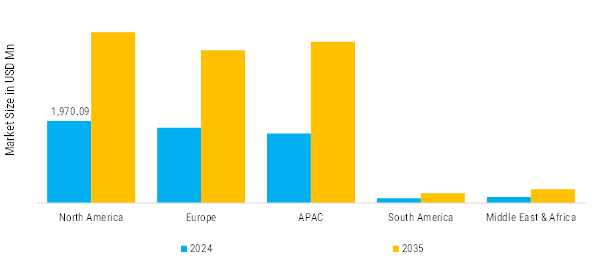
North America region drove the Power Monitoring System Market by holding a substantial market share during the assessment period. North America, particularly the United States and Canada, is a mature market for power monitoring systems, driven by advanced industrialization, a focus on energy efficiency, and stringent government regulations. The region has a strong presence of leading manufacturers and technology providers, making adoption easier across sectors such as manufacturing, utilities, commercial infrastructure, and data centers. Growing concerns about grid stability, sustainability initiatives, and rising investments in smart grid technologies further support the demand for intelligent power monitoring solutions.

 Power Monitoring System Market Regional Insights

Europe: Second-Largest Market with Strong Regulatory Influence

Europe is characterized by its strong commitment to renewable energy and strict energy management policies, which contribute to a robust demand for power monitoring systems. Countries like Germany, France, and the UK are leading the way with smart energy initiatives and regulations around carbon emissions and energy auditing. The region is also witnessing significant upgrades to aging electrical infrastructure, with digital technologies playing a key role. Power monitoring is increasingly integrated into building automation systems, manufacturing plants, and energy management platforms to improve efficiency and meet environmental standards.

Asia-Pacific: Fastest-Growing Market with High Potential

The Asia Pacific region is witnessing rapid industrialization and urbanization, especially in emerging economies such as China, India, and Southeast Asia. This growth fuels the need for reliable and efficient power infrastructure, positioning power monitoring systems as a crucial technology. The region’s increasing demand for electricity, combined with frequent power quality issues and grid instability, drives the adoption of monitoring solutions across industries. Additionally, government initiatives promoting smart cities and energy conservation are propelling investment in intelligent power systems and grid modernization.

South America: Emerging Market with Gradual Adoption

South America's power monitoring market is developing steadily, with countries like Brazil, Chile, and Argentina showing increasing interest in energy efficiency and infrastructure modernization. Economic development and the expansion of industrial and commercial sectors are key drivers, though challenges such as inconsistent policy implementation and budget constraints may limit faster adoption. However, the growing demand for reliable power supply, especially in urban areas, and the rising use of renewable energy sources create opportunities for the integration of power monitoring solutions.

Middle East & Africa: Small but High-Potential Market

The Middle East & Africa region presents a mix of advanced infrastructure projects and emerging energy challenges. In the Middle East, particularly in the Gulf Cooperation Council (GCC) countries, large-scale investments in smart cities, real estate, and industrial automation are driving the adoption of advanced power monitoring technologies. In contrast, many parts of Africa face issues such as unreliable electricity and limited grid coverage, but there is growing interest in decentralized energy systems and solar power. This opens opportunities for power monitoring systems to play a vital role in optimizing energy use, ensuring stability, and supporting the transition to renewable energy.

Key Players and Competitive Insights

The Power Monitoring System Market is expanding rapidly, driven by the shift toward smart energy management, decarbonization, and automation. As industries and utilities prioritize real-time energy visibility and grid efficiency, power monitoring systems are becoming essential for optimizing operations and ensuring regulatory compliance. Key players—including GE Vernova, Siemens, Hitachi, Eaton, Schneider Electric, Honeywell, Mitsubishi Electric, Fuji Electric FA, Emerson, Rockwell Automation, Rishabh Instruments, Megger, Fluke, Yokogawa, and OMRON are deploying IoT-enabled meters, cloud-based analytics, and predictive diagnostics for power quality and energy intelligence.

Tier-one companies like GE Vernova, Siemens, and Hitachi lead with AI-integrated SCADA platforms, ensuring compliance with standards like IEC 61000 and ISO 50001. Eaton, Schneider, and Mitsubishi offer modular, DERMS-compatible solutions for EV infrastructure and smart facilities. Honeywell, Emerson, and Rockwell integrate monitoring into industrial control systems for sectors like oil & gas and data centers, while Rishabh, Megger, and Fluke focus on portable, audit-ready tools for diagnostics and benchmarking. Asia-based players like Fuji Electric FA, Yokogawa, and OMRON provide compact, automation-friendly solutions for energy-intensive industries in Japan, China, and Southeast Asia. The market is further fueled by electrification, renewable integration, and policy pushes for energy efficiency. While challenges include cybersecurity risks and integration costs, manufacturers are responding with edge computing, ML analytics, and eco-friendly designs. Success will depend on delivering real-time, secure, and sustainable monitoring solutions for both advanced and emerging power networks.

Key Companies in the Power Monitoring System Market include

Industry Developments

In 2024, Eaton acquired Exertherm, a UK-based specialist in continuous thermal monitoring for electrical infrastructure like switchgear, busways, and motor control centers. This acquisition enhances Eaton’s Brightlayer software platform by adding real-time temperature monitoring, helping to detect hot spots before failures occur.

In 2025, Honeywell announced the acquisition of Sundyne, a leader in the design, manufacturing, and aftermarket support of highly engineered pumps and gas compressors used in process industries. This acquisition enhances Honeywell's Energy and Sustainability Solutions (ESS) business segment, integrating critical equipment with automation and control systems powered by Honeywell Forge.

In 2025, Emerson finalized its takeover of the remaining 43% of AspenTech, valuing the deal at approximately $16.8 billion. AspenTech now operates as a wholly‑owned subsidiary, further strengthening Emerson’s industrial software and automation capabilities.

Future Outlook

Power Monitoring System Market Future Outlook

The power monitoring system market is projected to grow at a 7.2 % CAGR from 2024 to 2035, driven by rising demand for power reliability and quality in critical sectors; growing emphasis on regulatory compliance and energy standards. The future of the Power Monitoring System Market is anchored in the dual pillars of sustainability and digital transformation. As global industries strive for carbon neutrality, the integration of distributed <a href="https://www.marketresearchfuture.com/reports/renewable-energy-market-1515" target="_blank" title="renewable energy">renewable energy</a> and the expansion of <a href="https://www.marketresearchfuture.com/reports/smart-grid-market-1110" target="_blank" title="smart grid">smart grids</a> necessitate advanced tracking solutions. Growth is further accelerated by the rise of AI-driven predictive analytics and IoT connectivity, which enable real-time efficiency optimizations and fault detection across critical infrastructure.

New opportunities lie in:

  • <p>Large-scale deployment of advanced power monitoring systems across aging and new power infrastructure, including substations, transmission and distribution networks, industrial plants, and <a href="https://www.marketresearchfuture.com/reports/commercial-building-market-66256" target="_blank" title="commercial building">commercial buildings</a>, to enhance real-time visibility, power quality management, and operational efficiency.</p>
  • <p>Increasing integration of renewable energy sources and distributed energy resources (DERs)—such as solar, wind, battery energy storage systems (BESS), and EV charging infrastructure—driving demand for continuous monitoring, load profiling, harmonic analysis, and fault detection to ensure grid stability.</p>
  • <p>Rapid adoption of digital technologies, including IoT-enabled power meters, AI-driven energy analytics, cloud-based monitoring platforms, and cybersecurity-enabled systems, supporting predictive maintenance, energy optimization, regulatory compliance, and reduced downtime.</p>

By 2035, the Power Monitoring System Market is expected to emerge as a critical enabler of intelligent and sustainable power networks, helping utilities, industries, and commercial facilities manage increasingly complex, data-driven, and decentralized electricity systems. Power monitoring solutions will be essential in improving energy efficiency, maintaining power quality, supporting renewable integration, and achieving long-term decarbonization and reliability objectives.

Market Segmentation

Power Monitoring System End User Outlook

  • Utilities
  • Manufacturing
  • Commercial
  • Residential
  • Healthcare

Power Monitoring System Component Outlook

  • Software
  • Hardware
  • Services

Power Monitoring System Application Outlook

  • Energy Management
  • Industrial Automation
  • Building Automation
  • Transportation

Power Monitoring System Market Region Outlook

  • North America
  • Europe
  • Asia Pacific
  • South America
  • Middle East & Africa

Power Monitoring System Deployment Type Outlook

  • On-Premise
  • Cloud-Based

Report Scope

Market Size 2024 5,715.38 (USD Million)
Market Size 2025 6,092.60 (USD Million)
Market Size 2035 12,200.22 (USD Million)
Compound Annual Growth Rate (CAGR) 7.2 % (2025 - 2035)
Report Coverage Revenue Forecast, Competitive Landscape, Growth Factors, and Trends
Base Year 2024
Market Forecast Period 2025 - 2035
Historical Data 2019 - 2023
Market Forecast Units USD Million
Key Companies Profiled GE Vernova, Siemens, Hitachi, Eaton, Schneider Electric, Honeywell, Mitsubishi Electric, Fuji Electric FA, Emerson, Rockwell Automation, Rishabh Instruments, Megger, Fluke, Yokogawa, OMRON
Segments Covered By Application, By Component, By End User, By Deployment Type, 
Key Market Opportunities Grid Modernization and Smart Infrastructure Development; Integration of Renewable Energy and Distributed Energy Resources (DERs)
Key Market Dynamics Rising Demand for Power Reliability and Quality in Critical Sectors; Growing Emphasis on Regulatory Compliance and Energy Standards
Region Covered North America, Europe, APAC, South America, MEA

FAQs

What is the projected market valuation of the Power Monitoring System Market by 2035?

<p>The projected market valuation for the Power Monitoring System Market is expected to reach 6.717 USD Billion by 2035.</p>

What was the overall market valuation of the Power Monitoring System Market in 2024?

<p>The overall market valuation of the Power Monitoring System Market was 4.75 USD Billion in 2024.</p>

What is the expected CAGR for the Power Monitoring System Market during the forecast period 2025 - 2035?

<p>The expected CAGR for the Power Monitoring System Market during the forecast period 2025 - 2035 is 3.2%.</p>

Which application segment is projected to experience the highest growth in the Power Monitoring System Market?

<p>The Industrial Automation application segment is projected to grow from 1.5 USD Billion in 2024 to 2.1 USD Billion by 2035.</p>

What are the key components of the Power Monitoring System Market?

<p>The key components include Software, Hardware, and Services, with Software projected to grow from 1.425 USD Billion in 2024 to 2.1 USD Billion by 2035.</p>

Which end-user segment is expected to show notable growth in the Power Monitoring System Market?

<p>The Utilities end-user segment is expected to grow from 1.2 USD Billion in 2024 to 1.7 USD Billion by 2035.</p>

What are the leading companies in the Power Monitoring System Market?

<p>Key players in the Power Monitoring System Market include Schneider Electric, Siemens, General Electric, Eaton, and Honeywell.</p>

How is the deployment type of Power Monitoring Systems expected to evolve by 2035?

<p>Both On-Premise and Cloud-Based deployment types are projected to grow from 2.375 USD Billion in 2024 to 3.3585 USD Billion by 2035.</p>

What is the growth outlook for the Building Automation application segment?

<p>The Building Automation application segment is expected to increase from 0.9 USD Billion in 2024 to 1.3 USD Billion by 2035.</p>

How does the performance of the Renewable Energy Management segment compare to other segments?

<p>The Renewable Energy Management segment is projected to grow from 0.5 USD Billion in 2024 to 0.7 USD Billion by 2035, indicating steady growth relative to other segments.</p>

  1. SECTION I: EXECUTIVE SUMMARY AND KEY HIGHLIGHTS
    1. | 1.1 EXECUTIVE SUMMARY
    2. | | 1.1.1 Market Overview
    3. | | 1.1.2 Key Findings
    4. | | 1.1.3 Market Segmentation
    5. | | 1.1.4 Competitive Landscape
    6. | | 1.1.5 Challenges and Opportunities
    7. | | 1.1.6 Future Outlook
  2. SECTION II: SCOPING, METHODOLOGY AND MARKET STRUCTURE
    1. | 2.1 MARKET INTRODUCTION
    2. | | 2.1.1 Definition
    3. | | 2.1.2 Scope of the study
    4. | | | 2.1.2.1 Research Objective
    5. | | | 2.1.2.2 Assumption
    6. | | | 2.1.2.3 Limitations
    7. | 2.2 RESEARCH METHODOLOGY
    8. | | 2.2.1 Overview
    9. | | 2.2.2 Data Mining
    10. | | 2.2.3 Secondary Research
    11. | | 2.2.4 Primary Research
    12. | | | 2.2.4.1 Primary Interviews and Information Gathering Process
    13. | | | 2.2.4.2 Breakdown of Primary Respondents
    14. | | 2.2.5 Forecasting Model
    15. | | 2.2.6 Market Size Estimation
    16. | | | 2.2.6.1 Bottom-Up Approach
    17. | | | 2.2.6.2 Top-Down Approach
    18. | | 2.2.7 Data Triangulation
    19. | | 2.2.8 Validation
  3. SECTION III: QUALITATIVE ANALYSIS
    1. | 3.1 MARKET DYNAMICS
    2. | | 3.1.1 Overview
    3. | | 3.1.2 Drivers
    4. | | 3.1.3 Restraints
    5. | | 3.1.4 Opportunities
    6. | 3.2 MARKET FACTOR ANALYSIS
    7. | | 3.2.1 Value chain Analysis
    8. | | 3.2.2 Porter's Five Forces Analysis
    9. | | | 3.2.2.1 Bargaining Power of Suppliers
    10. | | | 3.2.2.2 Bargaining Power of Buyers
    11. | | | 3.2.2.3 Threat of New Entrants
    12. | | | 3.2.2.4 Threat of Substitutes
    13. | | | 3.2.2.5 Intensity of Rivalry
    14. | | 3.2.3 COVID-19 Impact Analysis
    15. | | | 3.2.3.1 Market Impact Analysis
    16. | | | 3.2.3.2 Regional Impact
    17. | | | 3.2.3.3 Opportunity and Threat Analysis
  4. SECTION IV: QUANTITATIVE ANALYSIS
    1. | 4.1 Energy & Power, BY Application (USD Billion)
    2. | | 4.1.1 Energy Management
    3. | | 4.1.2 Industrial Automation
    4. | | 4.1.3 Building Automation
    5. | | 4.1.4 Transportation
    6. | | 4.1.5 Renewable Energy Management
    7. | 4.2 Energy & Power, BY Component (USD Billion)
    8. | | 4.2.1 Software
    9. | | 4.2.2 Hardware
    10. | | 4.2.3 Services
    11. | 4.3 Energy & Power, BY End User (USD Billion)
    12. | | 4.3.1 Utilities
    13. | | 4.3.2 Manufacturing
    14. | | 4.3.3 Commercial
    15. | | 4.3.4 Residential
    16. | | 4.3.5 Healthcare
    17. | 4.4 Energy & Power, BY Deployment Type (USD Billion)
    18. | | 4.4.1 On-Premise
    19. | | 4.4.2 Cloud-Based
    20. | 4.5 Energy & Power, BY Region (USD Billion)
    21. | | 4.5.1 North America
    22. | | | 4.5.1.1 US
    23. | | | 4.5.1.2 Canada
    24. | | 4.5.2 Europe
    25. | | | 4.5.2.1 Germany
    26. | | | 4.5.2.2 UK
    27. | | | 4.5.2.3 France
    28. | | | 4.5.2.4 Russia
    29. | | | 4.5.2.5 Italy
    30. | | | 4.5.2.6 Spain
    31. | | | 4.5.2.7 Rest of Europe
    32. | | 4.5.3 APAC
    33. | | | 4.5.3.1 China
    34. | | | 4.5.3.2 India
    35. | | | 4.5.3.3 Japan
    36. | | | 4.5.3.4 South Korea
    37. | | | 4.5.3.5 Malaysia
    38. | | | 4.5.3.6 Thailand
    39. | | | 4.5.3.7 Indonesia
    40. | | | 4.5.3.8 Rest of APAC
    41. | | 4.5.4 South America
    42. | | | 4.5.4.1 Brazil
    43. | | | 4.5.4.2 Mexico
    44. | | | 4.5.4.3 Argentina
    45. | | | 4.5.4.4 Rest of South America
    46. | | 4.5.5 MEA
    47. | | | 4.5.5.1 GCC Countries
    48. | | | 4.5.5.2 South Africa
    49. | | | 4.5.5.3 Rest of MEA
  5. SECTION V: COMPETITIVE ANALYSIS
    1. | 5.1 Competitive Landscape
    2. | | 5.1.1 Overview
    3. | | 5.1.2 Competitive Analysis
    4. | | 5.1.3 Market share Analysis
    5. | | 5.1.4 Major Growth Strategy in the Energy & Power
    6. | | 5.1.5 Competitive Benchmarking
    7. | | 5.1.6 Leading Players in Terms of Number of Developments in the Energy & Power
    8. | | 5.1.7 Key developments and growth strategies
    9. | | | 5.1.7.1 New Product Launch/Service Deployment
    10. | | | 5.1.7.2 Merger & Acquisitions
    11. | | | 5.1.7.3 Joint Ventures
    12. | | 5.1.8 Major Players Financial Matrix
    13. | | | 5.1.8.1 Sales and Operating Income
    14. | | | 5.1.8.2 Major Players R&D Expenditure. 2023
    15. | 5.2 Company Profiles
    16. | | 5.2.1 Schneider Electric (FR)
    17. | | | 5.2.1.1 Financial Overview
    18. | | | 5.2.1.2 Products Offered
    19. | | | 5.2.1.3 Key Developments
    20. | | | 5.2.1.4 SWOT Analysis
    21. | | | 5.2.1.5 Key Strategies
    22. | | 5.2.2 Siemens (DE)
    23. | | | 5.2.2.1 Financial Overview
    24. | | | 5.2.2.2 Products Offered
    25. | | | 5.2.2.3 Key Developments
    26. | | | 5.2.2.4 SWOT Analysis
    27. | | | 5.2.2.5 Key Strategies
    28. | | 5.2.3 General Electric (US)
    29. | | | 5.2.3.1 Financial Overview
    30. | | | 5.2.3.2 Products Offered
    31. | | | 5.2.3.3 Key Developments
    32. | | | 5.2.3.4 SWOT Analysis
    33. | | | 5.2.3.5 Key Strategies
    34. | | 5.2.4 Eaton (US)
    35. | | | 5.2.4.1 Financial Overview
    36. | | | 5.2.4.2 Products Offered
    37. | | | 5.2.4.3 Key Developments
    38. | | | 5.2.4.4 SWOT Analysis
    39. | | | 5.2.4.5 Key Strategies
    40. | | 5.2.5 Honeywell (US)
    41. | | | 5.2.5.1 Financial Overview
    42. | | | 5.2.5.2 Products Offered
    43. | | | 5.2.5.3 Key Developments
    44. | | | 5.2.5.4 SWOT Analysis
    45. | | | 5.2.5.5 Key Strategies
    46. | | 5.2.6 Emerson Electric (US)
    47. | | | 5.2.6.1 Financial Overview
    48. | | | 5.2.6.2 Products Offered
    49. | | | 5.2.6.3 Key Developments
    50. | | | 5.2.6.4 SWOT Analysis
    51. | | | 5.2.6.5 Key Strategies
    52. | | 5.2.7 Rockwell Automation (US)
    53. | | | 5.2.7.1 Financial Overview
    54. | | | 5.2.7.2 Products Offered
    55. | | | 5.2.7.3 Key Developments
    56. | | | 5.2.7.4 SWOT Analysis
    57. | | | 5.2.7.5 Key Strategies
    58. | | 5.2.8 ABB (CH)
    59. | | | 5.2.8.1 Financial Overview
    60. | | | 5.2.8.2 Products Offered
    61. | | | 5.2.8.3 Key Developments
    62. | | | 5.2.8.4 SWOT Analysis
    63. | | | 5.2.8.5 Key Strategies
    64. | | 5.2.9 Mitsubishi Electric (JP)
    65. | | | 5.2.9.1 Financial Overview
    66. | | | 5.2.9.2 Products Offered
    67. | | | 5.2.9.3 Key Developments
    68. | | | 5.2.9.4 SWOT Analysis
    69. | | | 5.2.9.5 Key Strategies
    70. | 5.3 Appendix
    71. | | 5.3.1 References
    72. | | 5.3.2 Related Reports
  6. LIST OF FIGURES
    1. | 6.1 MARKET SYNOPSIS
    2. | 6.2 NORTH AMERICA MARKET ANALYSIS
    3. | 6.3 US MARKET ANALYSIS BY APPLICATION
    4. | 6.4 US MARKET ANALYSIS BY COMPONENT
    5. | 6.5 US MARKET ANALYSIS BY END USER
    6. | 6.6 US MARKET ANALYSIS BY DEPLOYMENT TYPE
    7. | 6.7 CANADA MARKET ANALYSIS BY APPLICATION
    8. | 6.8 CANADA MARKET ANALYSIS BY COMPONENT
    9. | 6.9 CANADA MARKET ANALYSIS BY END USER
    10. | 6.10 CANADA MARKET ANALYSIS BY DEPLOYMENT TYPE
    11. | 6.11 EUROPE MARKET ANALYSIS
    12. | 6.12 GERMANY MARKET ANALYSIS BY APPLICATION
    13. | 6.13 GERMANY MARKET ANALYSIS BY COMPONENT
    14. | 6.14 GERMANY MARKET ANALYSIS BY END USER
    15. | 6.15 GERMANY MARKET ANALYSIS BY DEPLOYMENT TYPE
    16. | 6.16 UK MARKET ANALYSIS BY APPLICATION
    17. | 6.17 UK MARKET ANALYSIS BY COMPONENT
    18. | 6.18 UK MARKET ANALYSIS BY END USER
    19. | 6.19 UK MARKET ANALYSIS BY DEPLOYMENT TYPE
    20. | 6.20 FRANCE MARKET ANALYSIS BY APPLICATION
    21. | 6.21 FRANCE MARKET ANALYSIS BY COMPONENT
    22. | 6.22 FRANCE MARKET ANALYSIS BY END USER
    23. | 6.23 FRANCE MARKET ANALYSIS BY DEPLOYMENT TYPE
    24. | 6.24 RUSSIA MARKET ANALYSIS BY APPLICATION
    25. | 6.25 RUSSIA MARKET ANALYSIS BY COMPONENT
    26. | 6.26 RUSSIA MARKET ANALYSIS BY END USER
    27. | 6.27 RUSSIA MARKET ANALYSIS BY DEPLOYMENT TYPE
    28. | 6.28 ITALY MARKET ANALYSIS BY APPLICATION
    29. | 6.29 ITALY MARKET ANALYSIS BY COMPONENT
    30. | 6.30 ITALY MARKET ANALYSIS BY END USER
    31. | 6.31 ITALY MARKET ANALYSIS BY DEPLOYMENT TYPE
    32. | 6.32 SPAIN MARKET ANALYSIS BY APPLICATION
    33. | 6.33 SPAIN MARKET ANALYSIS BY COMPONENT
    34. | 6.34 SPAIN MARKET ANALYSIS BY END USER
    35. | 6.35 SPAIN MARKET ANALYSIS BY DEPLOYMENT TYPE
    36. | 6.36 REST OF EUROPE MARKET ANALYSIS BY APPLICATION
    37. | 6.37 REST OF EUROPE MARKET ANALYSIS BY COMPONENT
    38. | 6.38 REST OF EUROPE MARKET ANALYSIS BY END USER
    39. | 6.39 REST OF EUROPE MARKET ANALYSIS BY DEPLOYMENT TYPE
    40. | 6.40 APAC MARKET ANALYSIS
    41. | 6.41 CHINA MARKET ANALYSIS BY APPLICATION
    42. | 6.42 CHINA MARKET ANALYSIS BY COMPONENT
    43. | 6.43 CHINA MARKET ANALYSIS BY END USER
    44. | 6.44 CHINA MARKET ANALYSIS BY DEPLOYMENT TYPE
    45. | 6.45 INDIA MARKET ANALYSIS BY APPLICATION
    46. | 6.46 INDIA MARKET ANALYSIS BY COMPONENT
    47. | 6.47 INDIA MARKET ANALYSIS BY END USER
    48. | 6.48 INDIA MARKET ANALYSIS BY DEPLOYMENT TYPE
    49. | 6.49 JAPAN MARKET ANALYSIS BY APPLICATION
    50. | 6.50 JAPAN MARKET ANALYSIS BY COMPONENT
    51. | 6.51 JAPAN MARKET ANALYSIS BY END USER
    52. | 6.52 JAPAN MARKET ANALYSIS BY DEPLOYMENT TYPE
    53. | 6.53 SOUTH KOREA MARKET ANALYSIS BY APPLICATION
    54. | 6.54 SOUTH KOREA MARKET ANALYSIS BY COMPONENT
    55. | 6.55 SOUTH KOREA MARKET ANALYSIS BY END USER
    56. | 6.56 SOUTH KOREA MARKET ANALYSIS BY DEPLOYMENT TYPE
    57. | 6.57 MALAYSIA MARKET ANALYSIS BY APPLICATION
    58. | 6.58 MALAYSIA MARKET ANALYSIS BY COMPONENT
    59. | 6.59 MALAYSIA MARKET ANALYSIS BY END USER
    60. | 6.60 MALAYSIA MARKET ANALYSIS BY DEPLOYMENT TYPE
    61. | 6.61 THAILAND MARKET ANALYSIS BY APPLICATION
    62. | 6.62 THAILAND MARKET ANALYSIS BY COMPONENT
    63. | 6.63 THAILAND MARKET ANALYSIS BY END USER
    64. | 6.64 THAILAND MARKET ANALYSIS BY DEPLOYMENT TYPE
    65. | 6.65 INDONESIA MARKET ANALYSIS BY APPLICATION
    66. | 6.66 INDONESIA MARKET ANALYSIS BY COMPONENT
    67. | 6.67 INDONESIA MARKET ANALYSIS BY END USER
    68. | 6.68 INDONESIA MARKET ANALYSIS BY DEPLOYMENT TYPE
    69. | 6.69 REST OF APAC MARKET ANALYSIS BY APPLICATION
    70. | 6.70 REST OF APAC MARKET ANALYSIS BY COMPONENT
    71. | 6.71 REST OF APAC MARKET ANALYSIS BY END USER
    72. | 6.72 REST OF APAC MARKET ANALYSIS BY DEPLOYMENT TYPE
    73. | 6.73 SOUTH AMERICA MARKET ANALYSIS
    74. | 6.74 BRAZIL MARKET ANALYSIS BY APPLICATION
    75. | 6.75 BRAZIL MARKET ANALYSIS BY COMPONENT
    76. | 6.76 BRAZIL MARKET ANALYSIS BY END USER
    77. | 6.77 BRAZIL MARKET ANALYSIS BY DEPLOYMENT TYPE
    78. | 6.78 MEXICO MARKET ANALYSIS BY APPLICATION
    79. | 6.79 MEXICO MARKET ANALYSIS BY COMPONENT
    80. | 6.80 MEXICO MARKET ANALYSIS BY END USER
    81. | 6.81 MEXICO MARKET ANALYSIS BY DEPLOYMENT TYPE
    82. | 6.82 ARGENTINA MARKET ANALYSIS BY APPLICATION
    83. | 6.83 ARGENTINA MARKET ANALYSIS BY COMPONENT
    84. | 6.84 ARGENTINA MARKET ANALYSIS BY END USER
    85. | 6.85 ARGENTINA MARKET ANALYSIS BY DEPLOYMENT TYPE
    86. | 6.86 REST OF SOUTH AMERICA MARKET ANALYSIS BY APPLICATION
    87. | 6.87 REST OF SOUTH AMERICA MARKET ANALYSIS BY COMPONENT
    88. | 6.88 REST OF SOUTH AMERICA MARKET ANALYSIS BY END USER
    89. | 6.89 REST OF SOUTH AMERICA MARKET ANALYSIS BY DEPLOYMENT TYPE
    90. | 6.90 MEA MARKET ANALYSIS
    91. | 6.91 GCC COUNTRIES MARKET ANALYSIS BY APPLICATION
    92. | 6.92 GCC COUNTRIES MARKET ANALYSIS BY COMPONENT
    93. | 6.93 GCC COUNTRIES MARKET ANALYSIS BY END USER
    94. | 6.94 GCC COUNTRIES MARKET ANALYSIS BY DEPLOYMENT TYPE
    95. | 6.95 SOUTH AFRICA MARKET ANALYSIS BY APPLICATION
    96. | 6.96 SOUTH AFRICA MARKET ANALYSIS BY COMPONENT
    97. | 6.97 SOUTH AFRICA MARKET ANALYSIS BY END USER
    98. | 6.98 SOUTH AFRICA MARKET ANALYSIS BY DEPLOYMENT TYPE
    99. | 6.99 REST OF MEA MARKET ANALYSIS BY APPLICATION
    100. | 6.100 REST OF MEA MARKET ANALYSIS BY COMPONENT
    101. | 6.101 REST OF MEA MARKET ANALYSIS BY END USER
    102. | 6.102 REST OF MEA MARKET ANALYSIS BY DEPLOYMENT TYPE
    103. | 6.103 KEY BUYING CRITERIA OF ENERGY & POWER
    104. | 6.104 RESEARCH PROCESS OF MRFR
    105. | 6.105 DRO ANALYSIS OF ENERGY & POWER
    106. | 6.106 DRIVERS IMPACT ANALYSIS: ENERGY & POWER
    107. | 6.107 RESTRAINTS IMPACT ANALYSIS: ENERGY & POWER
    108. | 6.108 SUPPLY / VALUE CHAIN: ENERGY & POWER
    109. | 6.109 ENERGY & POWER, BY APPLICATION, 2024 (% SHARE)
    110. | 6.110 ENERGY & POWER, BY APPLICATION, 2024 TO 2035 (USD Billion)
    111. | 6.111 ENERGY & POWER, BY COMPONENT, 2024 (% SHARE)
    112. | 6.112 ENERGY & POWER, BY COMPONENT, 2024 TO 2035 (USD Billion)
    113. | 6.113 ENERGY & POWER, BY END USER, 2024 (% SHARE)
    114. | 6.114 ENERGY & POWER, BY END USER, 2024 TO 2035 (USD Billion)
    115. | 6.115 ENERGY & POWER, BY DEPLOYMENT TYPE, 2024 (% SHARE)
    116. | 6.116 ENERGY & POWER, BY DEPLOYMENT TYPE, 2024 TO 2035 (USD Billion)
    117. | 6.117 BENCHMARKING OF MAJOR COMPETITORS
  7. LIST OF TABLES
    1. | 7.1 LIST OF ASSUMPTIONS
    2. | | 7.1.1
    3. | 7.2 North America MARKET SIZE ESTIMATES; FORECAST
    4. | | 7.2.1 BY APPLICATION, 2025-2035 (USD Billion)
    5. | | 7.2.2 BY COMPONENT, 2025-2035 (USD Billion)
    6. | | 7.2.3 BY END USER, 2025-2035 (USD Billion)
    7. | | 7.2.4 BY DEPLOYMENT TYPE, 2025-2035 (USD Billion)
    8. | 7.3 US MARKET SIZE ESTIMATES; FORECAST
    9. | | 7.3.1 BY APPLICATION, 2025-2035 (USD Billion)
    10. | | 7.3.2 BY COMPONENT, 2025-2035 (USD Billion)
    11. | | 7.3.3 BY END USER, 2025-2035 (USD Billion)
    12. | | 7.3.4 BY DEPLOYMENT TYPE, 2025-2035 (USD Billion)
    13. | 7.4 Canada MARKET SIZE ESTIMATES; FORECAST
    14. | | 7.4.1 BY APPLICATION, 2025-2035 (USD Billion)
    15. | | 7.4.2 BY COMPONENT, 2025-2035 (USD Billion)
    16. | | 7.4.3 BY END USER, 2025-2035 (USD Billion)
    17. | | 7.4.4 BY DEPLOYMENT TYPE, 2025-2035 (USD Billion)
    18. | 7.5 Europe MARKET SIZE ESTIMATES; FORECAST
    19. | | 7.5.1 BY APPLICATION, 2025-2035 (USD Billion)
    20. | | 7.5.2 BY COMPONENT, 2025-2035 (USD Billion)
    21. | | 7.5.3 BY END USER, 2025-2035 (USD Billion)
    22. | | 7.5.4 BY DEPLOYMENT TYPE, 2025-2035 (USD Billion)
    23. | 7.6 Germany MARKET SIZE ESTIMATES; FORECAST
    24. | | 7.6.1 BY APPLICATION, 2025-2035 (USD Billion)
    25. | | 7.6.2 BY COMPONENT, 2025-2035 (USD Billion)
    26. | | 7.6.3 BY END USER, 2025-2035 (USD Billion)
    27. | | 7.6.4 BY DEPLOYMENT TYPE, 2025-2035 (USD Billion)
    28. | 7.7 UK MARKET SIZE ESTIMATES; FORECAST
    29. | | 7.7.1 BY APPLICATION, 2025-2035 (USD Billion)
    30. | | 7.7.2 BY COMPONENT, 2025-2035 (USD Billion)
    31. | | 7.7.3 BY END USER, 2025-2035 (USD Billion)
    32. | | 7.7.4 BY DEPLOYMENT TYPE, 2025-2035 (USD Billion)
    33. | 7.8 France MARKET SIZE ESTIMATES; FORECAST
    34. | | 7.8.1 BY APPLICATION, 2025-2035 (USD Billion)
    35. | | 7.8.2 BY COMPONENT, 2025-2035 (USD Billion)
    36. | | 7.8.3 BY END USER, 2025-2035 (USD Billion)
    37. | | 7.8.4 BY DEPLOYMENT TYPE, 2025-2035 (USD Billion)
    38. | 7.9 Russia MARKET SIZE ESTIMATES; FORECAST
    39. | | 7.9.1 BY APPLICATION, 2025-2035 (USD Billion)
    40. | | 7.9.2 BY COMPONENT, 2025-2035 (USD Billion)
    41. | | 7.9.3 BY END USER, 2025-2035 (USD Billion)
    42. | | 7.9.4 BY DEPLOYMENT TYPE, 2025-2035 (USD Billion)
    43. | 7.10 Italy MARKET SIZE ESTIMATES; FORECAST
    44. | | 7.10.1 BY APPLICATION, 2025-2035 (USD Billion)
    45. | | 7.10.2 BY COMPONENT, 2025-2035 (USD Billion)
    46. | | 7.10.3 BY END USER, 2025-2035 (USD Billion)
    47. | | 7.10.4 BY DEPLOYMENT TYPE, 2025-2035 (USD Billion)
    48. | 7.11 Spain MARKET SIZE ESTIMATES; FORECAST
    49. | | 7.11.1 BY APPLICATION, 2025-2035 (USD Billion)
    50. | | 7.11.2 BY COMPONENT, 2025-2035 (USD Billion)
    51. | | 7.11.3 BY END USER, 2025-2035 (USD Billion)
    52. | | 7.11.4 BY DEPLOYMENT TYPE, 2025-2035 (USD Billion)
    53. | 7.12 Rest of Europe MARKET SIZE ESTIMATES; FORECAST
    54. | | 7.12.1 BY APPLICATION, 2025-2035 (USD Billion)
    55. | | 7.12.2 BY COMPONENT, 2025-2035 (USD Billion)
    56. | | 7.12.3 BY END USER, 2025-2035 (USD Billion)
    57. | | 7.12.4 BY DEPLOYMENT TYPE, 2025-2035 (USD Billion)
    58. | 7.13 APAC MARKET SIZE ESTIMATES; FORECAST
    59. | | 7.13.1 BY APPLICATION, 2025-2035 (USD Billion)
    60. | | 7.13.2 BY COMPONENT, 2025-2035 (USD Billion)
    61. | | 7.13.3 BY END USER, 2025-2035 (USD Billion)
    62. | | 7.13.4 BY DEPLOYMENT TYPE, 2025-2035 (USD Billion)
    63. | 7.14 China MARKET SIZE ESTIMATES; FORECAST
    64. | | 7.14.1 BY APPLICATION, 2025-2035 (USD Billion)
    65. | | 7.14.2 BY COMPONENT, 2025-2035 (USD Billion)
    66. | | 7.14.3 BY END USER, 2025-2035 (USD Billion)
    67. | | 7.14.4 BY DEPLOYMENT TYPE, 2025-2035 (USD Billion)
    68. | 7.15 India MARKET SIZE ESTIMATES; FORECAST
    69. | | 7.15.1 BY APPLICATION, 2025-2035 (USD Billion)
    70. | | 7.15.2 BY COMPONENT, 2025-2035 (USD Billion)
    71. | | 7.15.3 BY END USER, 2025-2035 (USD Billion)
    72. | | 7.15.4 BY DEPLOYMENT TYPE, 2025-2035 (USD Billion)
    73. | 7.16 Japan MARKET SIZE ESTIMATES; FORECAST
    74. | | 7.16.1 BY APPLICATION, 2025-2035 (USD Billion)
    75. | | 7.16.2 BY COMPONENT, 2025-2035 (USD Billion)
    76. | | 7.16.3 BY END USER, 2025-2035 (USD Billion)
    77. | | 7.16.4 BY DEPLOYMENT TYPE, 2025-2035 (USD Billion)
    78. | 7.17 South Korea MARKET SIZE ESTIMATES; FORECAST
    79. | | 7.17.1 BY APPLICATION, 2025-2035 (USD Billion)
    80. | | 7.17.2 BY COMPONENT, 2025-2035 (USD Billion)
    81. | | 7.17.3 BY END USER, 2025-2035 (USD Billion)
    82. | | 7.17.4 BY DEPLOYMENT TYPE, 2025-2035 (USD Billion)
    83. | 7.18 Malaysia MARKET SIZE ESTIMATES; FORECAST
    84. | | 7.18.1 BY APPLICATION, 2025-2035 (USD Billion)
    85. | | 7.18.2 BY COMPONENT, 2025-2035 (USD Billion)
    86. | | 7.18.3 BY END USER, 2025-2035 (USD Billion)
    87. | | 7.18.4 BY DEPLOYMENT TYPE, 2025-2035 (USD Billion)
    88. | 7.19 Thailand MARKET SIZE ESTIMATES; FORECAST
    89. | | 7.19.1 BY APPLICATION, 2025-2035 (USD Billion)
    90. | | 7.19.2 BY COMPONENT, 2025-2035 (USD Billion)
    91. | | 7.19.3 BY END USER, 2025-2035 (USD Billion)
    92. | | 7.19.4 BY DEPLOYMENT TYPE, 2025-2035 (USD Billion)
    93. | 7.20 Indonesia MARKET SIZE ESTIMATES; FORECAST
    94. | | 7.20.1 BY APPLICATION, 2025-2035 (USD Billion)
    95. | | 7.20.2 BY COMPONENT, 2025-2035 (USD Billion)
    96. | | 7.20.3 BY END USER, 2025-2035 (USD Billion)
    97. | | 7.20.4 BY DEPLOYMENT TYPE, 2025-2035 (USD Billion)
    98. | 7.21 Rest of APAC MARKET SIZE ESTIMATES; FORECAST
    99. | | 7.21.1 BY APPLICATION, 2025-2035 (USD Billion)
    100. | | 7.21.2 BY COMPONENT, 2025-2035 (USD Billion)
    101. | | 7.21.3 BY END USER, 2025-2035 (USD Billion)
    102. | | 7.21.4 BY DEPLOYMENT TYPE, 2025-2035 (USD Billion)
    103. | 7.22 South America MARKET SIZE ESTIMATES; FORECAST
    104. | | 7.22.1 BY APPLICATION, 2025-2035 (USD Billion)
    105. | | 7.22.2 BY COMPONENT, 2025-2035 (USD Billion)
    106. | | 7.22.3 BY END USER, 2025-2035 (USD Billion)
    107. | | 7.22.4 BY DEPLOYMENT TYPE, 2025-2035 (USD Billion)
    108. | 7.23 Brazil MARKET SIZE ESTIMATES; FORECAST
    109. | | 7.23.1 BY APPLICATION, 2025-2035 (USD Billion)
    110. | | 7.23.2 BY COMPONENT, 2025-2035 (USD Billion)
    111. | | 7.23.3 BY END USER, 2025-2035 (USD Billion)
    112. | | 7.23.4 BY DEPLOYMENT TYPE, 2025-2035 (USD Billion)
    113. | 7.24 Mexico MARKET SIZE ESTIMATES; FORECAST
    114. | | 7.24.1 BY APPLICATION, 2025-2035 (USD Billion)
    115. | | 7.24.2 BY COMPONENT, 2025-2035 (USD Billion)
    116. | | 7.24.3 BY END USER, 2025-2035 (USD Billion)
    117. | | 7.24.4 BY DEPLOYMENT TYPE, 2025-2035 (USD Billion)
    118. | 7.25 Argentina MARKET SIZE ESTIMATES; FORECAST
    119. | | 7.25.1 BY APPLICATION, 2025-2035 (USD Billion)
    120. | | 7.25.2 BY COMPONENT, 2025-2035 (USD Billion)
    121. | | 7.25.3 BY END USER, 2025-2035 (USD Billion)
    122. | | 7.25.4 BY DEPLOYMENT TYPE, 2025-2035 (USD Billion)
    123. | 7.26 Rest of South America MARKET SIZE ESTIMATES; FORECAST
    124. | | 7.26.1 BY APPLICATION, 2025-2035 (USD Billion)
    125. | | 7.26.2 BY COMPONENT, 2025-2035 (USD Billion)
    126. | | 7.26.3 BY END USER, 2025-2035 (USD Billion)
    127. | | 7.26.4 BY DEPLOYMENT TYPE, 2025-2035 (USD Billion)
    128. | 7.27 MEA MARKET SIZE ESTIMATES; FORECAST
    129. | | 7.27.1 BY APPLICATION, 2025-2035 (USD Billion)
    130. | | 7.27.2 BY COMPONENT, 2025-2035 (USD Billion)
    131. | | 7.27.3 BY END USER, 2025-2035 (USD Billion)
    132. | | 7.27.4 BY DEPLOYMENT TYPE, 2025-2035 (USD Billion)
    133. | 7.28 GCC Countries MARKET SIZE ESTIMATES; FORECAST
    134. | | 7.28.1 BY APPLICATION, 2025-2035 (USD Billion)
    135. | | 7.28.2 BY COMPONENT, 2025-2035 (USD Billion)
    136. | | 7.28.3 BY END USER, 2025-2035 (USD Billion)
    137. | | 7.28.4 BY DEPLOYMENT TYPE, 2025-2035 (USD Billion)
    138. | 7.29 South Africa MARKET SIZE ESTIMATES; FORECAST
    139. | | 7.29.1 BY APPLICATION, 2025-2035 (USD Billion)
    140. | | 7.29.2 BY COMPONENT, 2025-2035 (USD Billion)
    141. | | 7.29.3 BY END USER, 2025-2035 (USD Billion)
    142. | | 7.29.4 BY DEPLOYMENT TYPE, 2025-2035 (USD Billion)
    143. | 7.30 Rest of MEA MARKET SIZE ESTIMATES; FORECAST
    144. | | 7.30.1 BY APPLICATION, 2025-2035 (USD Billion)
    145. | | 7.30.2 BY COMPONENT, 2025-2035 (USD Billion)
    146. | | 7.30.3 BY END USER, 2025-2035 (USD Billion)
    147. | | 7.30.4 BY DEPLOYMENT TYPE, 2025-2035 (USD Billion)
    148. | 7.31 PRODUCT LAUNCH/PRODUCT DEVELOPMENT/APPROVAL
    149. | | 7.31.1
    150. | 7.32 ACQUISITION/PARTNERSHIP
    151. | | 7.32.1

Energy & Power Market Segmentation

Energy & Power By Application (USD Billion, 2025-2035)

  • Energy Management
  • Industrial Automation
  • Building Automation
  • Transportation
  • Renewable Energy Management

Energy & Power By Component (USD Billion, 2025-2035)

  • Software
  • Hardware
  • Services

Energy & Power By End User (USD Billion, 2025-2035)

  • Utilities
  • Manufacturing
  • Commercial
  • Residential
  • Healthcare

Energy & Power By Deployment Type (USD Billion, 2025-2035)

  • On-Premise
  • Cloud-Based
Infographic

Free Sample Request

Kindly complete the form below to receive a free sample of this Report

Get Free Sample

Customer Strories

Compare Licence

×
Features License Type
Single User Multiuser License Enterprise User
Price $4,950 $5,950 $7,250
Maximum User Access Limit 1 User Upto 10 Users Unrestricted Access Throughout the Organization
Free Customization
Direct Access to Analyst
Deliverable Format
Platform Access
Discount on Next Purchase 10% 15% 15%
Printable Versions
%>