×
Request Free Sample ×

Kindly complete the form below to receive a free sample of this Report

* Please use a valid business email

Leading companies partner with us for data-driven Insights

clients tt-cursor
Hero Background
English
Chinese
French
Japanese
Korean
German
Spanish

Orphan Drugs Market Analysis

ID: MRFR/Pharma/1697-CR
200 Pages
Rahul Gotadki
July 2025

Orphan Drugs Market Research Report: Size, Share, Trend Analysis By Indication (Neurological Disorders, Genetic Disorders, Oncological Disorders, Metabolic Disorders, Infectious Diseases), By Drug Type (Approved Drugs, Pipeline Drugs, Generic Drugs), By Route of Administration (Oral, Injectable, Intravenous, Topical), By Distribution Channel (Hospital Pharmacy, Retail Pharmacy, Online Pharmacy, Specialty Pharmacy) and By Regional (North America, Europe, South America, Asia Pacific, Middle East and Africa) - Growth Outlook & Industry Fore... read more

Share:
Download PDF ×

We do not share your information with anyone. However, we may send you emails based on your report interest from time to time. You may contact us at any time to opt-out.

Orphan Drugs Market Infographic
Purchase Options

Market Analysis

In-depth Analysis of Orphan Drugs Market Industry Landscape

In recent times, there has been remarkable progress in the development of new technologies, including DNA recombinant, hybridoma, and gene mapping. This advancement is primarily attributed to the increasing prevalence of rare diseases and the growing acceptance of DNA recombinant technology among healthcare professionals. The adoption of these technologies has been swift, facilitated by their low marketing costs and the allure of extensive exclusivity.

One significant factor contributing to this technological surge is the rising approval rate for advanced gene mapping devices by the US Food and Drug Administration (FDA). The FDA plays a crucial role in evaluating and approving medical technologies, and its positive stance on advanced gene mapping devices is expected to significantly boost market growth.

For many years, scientists have been diligently researching gene therapies aimed at treating rare disorders. The breakthrough came in 2017 when the US FDA approved the first gene therapy designed specifically for patients with rare disorders. This marks a significant milestone in the medical field, as it opens new avenues for treating conditions that were previously deemed untreatable. Gene therapy, as a novel treatment modality, presents unique technical challenges, particularly when dealing with rare diseases.

A notable example highlighting the potential of gene therapy is the approval of two therapies developed by Sangamo Therapeutics for treating hemophilia A and B. These therapies received special regulatory designations from the US FDA, underscoring their importance in addressing rare disorders.

In conclusion, the ongoing development of new technologies tailored for orphan drugs, such as DNA recombinant, hybridoma, and gene mapping, is poised to provide substantial opportunities for market growth in the coming years. The increasing prevalence of rare diseases, coupled with the endorsement of DNA recombinant technology within the healthcare community, sets the stage for significant advancements. Moreover, the FDA's positive outlook on advanced gene therapies further solidifies the potential for breakthroughs in treating rare diseases. The continuous evolution of these technologies reflects a promising outlook for the landscape of rare disease treatment.

Author
Rahul Gotadki
Assistant Manager

He holds an experience of about 7+ years in Market Research and Business Consulting, working under the spectrum of Life Sciences and Healthcare domains. Rahul conceptualizes and implements a scalable business strategy and provides strategic leadership to the clients. His expertise lies in market estimation, competitive intelligence, pipeline analysis, customer assessment, etc. In addition to the above, his other responsibility includes strategic tracking of high growth markets & advising clients on the potential areas of focus they could direct their business initiatives

Leave a Comment

FAQs

What is the projected growth of the Orphan Drugs market?

The Orphan Drugs market is the expected increase in total market value of 663.94 USD billion over a defined forecast period 2025–2035. It is driven by factors such as demand trends, technological advances, regulatory changes, and geographic expansion.

What is the size of the Orphan Drugs market?

Orphan Drugs market size was valued at approximately 255.18 billion USD in 2024. This figure will reach 663.94 billion USD covering all regions (America, Europe, Asia, MEA and ROW), focusing its segments / services / distribution channels till 2035.

What is the CAGR of the Orphan Drugs market?

Orphan Drugs market is expected to grow at a CAGR of 9.08% between 2025 and 2035.

How much will the Orphan Drugs market be worth by 2035?

Orphan Drugs market is expected to be worth of 663.94 billion USD, reflecting growth driven by usage, technology and global demands by the end of 2035.

How will the Orphan Drugs market perform over the next 10 years?

Over the next 10 years the Orphan Drugs market is expected to shift from usd billion 255.18 to 663.94 billion USD, led by adoption of advanced tech, demographic trends, regulatory approvals, with potential headwinds from 2025 to 2035.

What will be the market size of the Orphan Drugs Market by 2035?

By 2035, the Orphan Drugs Market is anticipated to reach a value of 400.0 USD billion.

Which region will dominate the Orphan Drugs Market in 2024?

North America is projected to dominate the Orphan Drugs Market with a value of 85.0 USD Billion in 2024.

What is the estimated market value for Neurodegenerative Disorders in the Orphan Drugs Market by 2035?

The market value for Neurological Disorders in the Orphan Drugs Market is expected to reach 85.0 USD billion by 2035.

What market share do major players hold in the Orphan Drugs Market?

Key players like Novartis, Vertex Pharmaceuticals, and Gilead Sciences contribute significantly to the market, collectively commanding a substantial market presence.

What is the expected size of the Orphan Drugs Market for Genetic Disorders in 2024?

The estimated market size for Genetic Disorders in the Orphan Drugs Market is valued at 35.0 USD Billion in 2024.

Market Summary

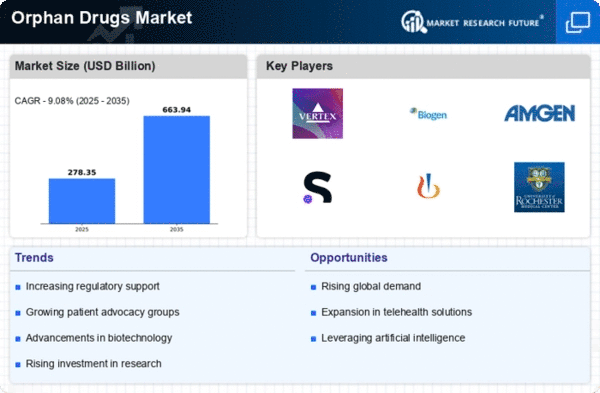
As per MRFR analysis, the Orphan Drugs Market Size was estimated at 255.18 USD Billion in 2024. The Orphan Drugs industry is projected to grow from 278.35 USD Billion in 2025 to 663.94 USD Billion by 2035, exhibiting a compound annual growth rate (CAGR) of 9.08 during the forecast period 2025 - 2035.

Key Market Trends & Highlights

The Orphan Drugs Market is experiencing robust growth driven by regulatory support and technological advancements.

  • North America remains the largest market for orphan drugs, fueled by strong regulatory incentives and patient advocacy. The Asia-Pacific region is emerging as the fastest-growing market, driven by increasing investments in rare disease research. Oncology continues to dominate the orphan drugs segment, while genetic disorders are witnessing the fastest growth due to heightened awareness. Rising prevalence of rare diseases and advancements in biotechnology are key drivers propelling the orphan drugs market forward.

Market Size & Forecast

2024 Market Size 255.18 (USD Billion)
2035 Market Size 663.94 (USD Billion)
CAGR (2025 - 2035) 9.08%
Largest Regional Market Share in 2024 North America

Major Players

Vertex Pharmaceuticals (US), Biogen (US), Amgen (US), Sanofi (FR), Novartis (CH), Roche (CH), Regeneron Pharmaceuticals (US), Eisai (JP), Shire (IE), Alexion Pharmaceuticals (US)

Market Trends

The Orphan Drugs Market is currently experiencing notable growth, driven by an increasing prevalence of rare diseases and a rising demand for innovative therapies. Regulatory incentives, such as extended market exclusivity and tax credits, appear to encourage pharmaceutical companies to invest in the development of treatments for conditions that affect small patient populations. This trend suggests a shift in focus towards niche markets, where the potential for high returns on investment may outweigh the challenges associated with smaller patient bases. Furthermore, advancements in biotechnology and personalized medicine are likely to enhance the efficacy of orphan drugs, thereby attracting more stakeholders to this sector. In addition, the Orphan Drugs Market is characterized by a growing collaboration between public and private entities. Partnerships between biopharmaceutical companies and research institutions seem to facilitate the sharing of knowledge and resources, which could accelerate the development of new therapies. Moreover, patient advocacy groups are increasingly playing a pivotal role in raising awareness and funding for rare diseases, which may further stimulate orphan drug market growth. As the landscape evolves, it is essential for stakeholders to remain adaptable and responsive to the changing dynamics of the Orphan Drugs Market, ensuring that they can effectively meet the needs of patients and healthcare providers alike.

Regulatory Support and Incentives

The Orphan Drugs Market benefits from various regulatory frameworks that provide incentives for the development of treatments for rare diseases. These include extended market exclusivity, tax credits, and grants, which encourage pharmaceutical companies to invest in research and development. Such support is crucial in fostering innovation and ensuring that patients with rare conditions have access to necessary therapies.

Technological Advancements

Recent technological advancements, particularly in biotechnology, are significantly impacting the Orphan Drugs Market. Innovations such as gene therapy and personalized medicine are enabling the creation of targeted treatments that address specific genetic disorders. This trend is likely to enhance the efficacy of therapies and improve patient outcomes, thereby driving market growth.

Increased Patient Advocacy

There is a growing movement among patient advocacy groups that is raising awareness about rare diseases and the need for effective treatments. These organizations are playing a vital role in influencing policy decisions and encouraging pharmaceutical companies to prioritize the development of orphan drugs. This heightened advocacy is expected to further propel the Orphan Drugs Market forward.

Orphan Drugs Market Market Drivers

Market Growth Projections

The Global Orphan Drugs Market Industry is poised for substantial growth, with projections indicating a market value of 195.3 USD Billion in 2024 and an anticipated increase to 400 USD Billion by 2035. This growth trajectory suggests a compound annual growth rate (CAGR) of 6.74% from 2025 to 2035. Such figures reflect the increasing focus on rare diseases and the corresponding demand for effective treatments. The market's expansion is likely to be driven by various factors, including advancements in biotechnology, regulatory support, and rising patient advocacy.

Advancements in Biotechnology

Technological innovations in biotechnology are significantly influencing the Global Orphan Drugs Market Industry. The emergence of novel therapeutic modalities, such as gene therapy and monoclonal antibodies, has expanded treatment options for rare diseases. These advancements enable the development of targeted therapies that can address the underlying causes of conditions previously deemed untreatable. As a result, the market is expected to experience robust growth, with a projected CAGR of 6.74% from 2025 to 2035. This growth trajectory indicates a strong commitment to research and development in the orphan drug sector.

Favorable Regulatory Environment

A supportive regulatory framework is fostering growth within the Global Orphan Drugs Market Industry. Governments worldwide are implementing policies that incentivize the development of orphan drugs, such as extended market exclusivity and tax credits. For example, the Orphan Drug Act in the United States provides significant benefits to companies developing treatments for rare diseases. This regulatory support encourages pharmaceutical companies to invest in research and development, ultimately leading to an increase in the number of approved orphan drugs. As the market evolves, it is anticipated that the Global Orphan Drugs Market will continue to expand, potentially reaching 400 USD Billion by 2035.

Rising Prevalence of Rare Diseases

The increasing incidence of rare diseases is a primary driver of the Global Orphan Drugs Market Industry. As awareness grows, more patients are diagnosed, leading to a heightened demand for specialized treatments. For instance, it is estimated that approximately 7,000 rare diseases affect around 30 million people in the United States alone. This growing patient population necessitates the development of orphan drugs, which are specifically designed to treat these conditions. Consequently, the Global Orphan Drugs Market is projected to reach 195.3 USD Billion in 2024, reflecting the urgent need for effective therapies.

Growing Patient Advocacy and Awareness

The role of patient advocacy groups in raising awareness about rare diseases is increasingly impacting the Global Orphan Drugs Market Industry. These organizations are instrumental in educating the public and policymakers about the challenges faced by patients with rare conditions. Their efforts have led to increased visibility and urgency for the development of orphan drugs. As more individuals become informed about available treatments, the demand for orphan drugs is likely to rise. This heightened awareness is expected to contribute to the overall growth of the market, aligning with the projected expansion of the industry in the coming years.

Increased Investment in Rare Disease Research

Investment in research and development for rare diseases is a crucial driver of the Global Orphan Drugs Market Industry. Pharmaceutical companies and biotech firms are allocating substantial resources to discover and develop new therapies. This trend is evident in the growing number of clinical trials targeting rare diseases, which has surged in recent years. The influx of funding from both public and private sectors is likely to accelerate the pace of innovation, resulting in a broader array of treatment options. This commitment to research is expected to sustain market growth, with projections indicating a significant rise in market value over the next decade.

Market Segment Insights

By Therapeutic Area: Oncology (Largest) vs. Genetic Disorders (Fastest-Growing)

In the Orphan Drugs Market, the distribution of market share among the therapeutic areas reveals Oncology as the largest segment, reflecting a significant focus on treating rare cancers. Meanwhile, Neurology is gaining momentum, characterized by an increasing investment in developing treatments for orphan neurological disorders, positioning it as the fastest-growing area within the orphan drug market. This distribution showcases the critical need for targeted therapies in these serious and often under-researched conditions. The growth trends in the orphan drugs market highlight a shift towards more innovative therapies, particularly in the Neurology segment, where advancements in genetic and molecular research are driving the development of new treatments. Factors such as rising prevalence of neurological disorders, improvements in diagnostic methods, and increased regulatory support for orphan drugs are further propelling this segment’s growth, making it an attractive area for pharmaceutical investments and research initiatives.

Oncology (Dominant) vs. Genetic Disorders (Emerging)

Oncology, as the dominant therapeutic area in the Orphan Drugs Market, benefits from a combination of robust regulatory support and innovative treatments tailored for rare cancer types. The growing incidence of these rare cancers coupled with a favorable reimbursement landscape encourages pharmaceutical companies to invest in oncology drugs. In contrast, genetic disorders represent an emerging area that is rapidly gaining traction, fueled by breakthroughs in gene editing technologies and heightened support for orphan drug development. This segment attracts substantial interest due to its potential for high-impact solutions, leading to faster adoption of innovative therapies. Both segments are critical in addressing unmet medical needs and improving patient outcomes.

By Drug Type: Biologics (Largest) vs. Gene Therapies (Fastest-Growing)

In the orphan drug market, biologics account for a significant portion of the total market share due to their effectiveness in treating rare diseases. Small molecules and combination therapies also hold notable shares, but biologics remain the dominant form of treatment, largely due to their innovative nature and ability to target specific pathways associated with rare conditions. Meanwhile, gene therapies are emerging rapidly, capturing increasing attention and investment as they offer potential cures by directly addressing genetic disorders at the source.

Biologics (Dominant) vs. Gene Therapies (Emerging)

Biologics represent the dominant segment within the orphan drugs market, characterized by complex biological entities derived from living organisms, which offer targeted treatment options for various rare conditions. These therapies often include monoclonal antibodies, recombinant proteins, and vaccines, benefiting from extensive research and development investments. Meanwhile, gene therapies stand out as an emerging segment, utilizing advanced techniques to modify genetic material within a patient's cells to treat or prevent disease. Their rapid technological evolution is driven by increased regulatory approvals and growing healthcare provider adoption, positioning them as crucial players in addressing unmet medical needs in rare disorders.

By Route of Administration: Oral (Largest) vs. Injectable (Fastest-Growing)

In the orphan drug market, the route of administration plays a crucial role in defining treatment options for rare diseases. Among the various routes, oral administration holds the largest share due to its convenience and patient compliance. Patients often prefer oral medications, leading to a significant market presence for these drugs. Additionally, injectable products are gaining traction, especially for diseases that require rapid or controlled delivery, thereby marking their growing influence in the market.

Oral (Dominant) vs. Injectable (Emerging)

The oral route of administration remains a dominant force in the Orphan Drugs Market, primarily due to its simplicity and the ability to enhance patient compliance. Liquid and tablet forms are widely preferred by patients and caregivers alike. In contrast, the injectable segment is positioned as an emerging player, spurred by the need for targeted therapies that can quickly deliver active ingredients directly into the bloodstream. This segment has seen a surge in novel drug delivery systems, including biologics and biosimilars tailored for rare diseases. As the drug development landscape continues to evolve, both segments are expected to maintain their significance in providing effective treatment options for patients with rare conditions.

By Patient Population: Pediatric (Largest) vs. Geriatric (Fastest-Growing)

The global orphan drugs market is predominantly driven by the pediatric segment, encompassing a significant share of the patient population affected by rare diseases. Pediatric patients are often the focus of orphan drug development due to the high unmet medical needs in this demographic. Conversely, the adult segment is emerging rapidly as more treatments are developed, responding to the growing recognition of rare diseases in adult populations. Growth trends in the orphan drugs market are influenced by several factors, including increased research and development activities focusing on adult rare diseases and a greater awareness among healthcare providers. The rise in adult patients being diagnosed with rare conditions has led to a surge in demand for orphan drugs, making this segment one of the fastest-growing in the market.

Pediatric (Dominant) vs. Geriatric (Emerging)

In the orphan drugs market, the pediatric segment is characterized by its significant demand, largely due to a high prevalence of genetic disorders and other rare diseases in children. These factors drive substantial investments in research and development tailored to pediatric needs. On the other hand, the adult segment, while currently smaller, is considered emerging due to evolving regulatory environments and increased awareness of rare diseases among adults. This growing focus on adult orphan diseases has prompted pharmaceutical companies to expand their pipelines in the orphan disease market, catering to this previously underrepresented population. The engagement of both healthcare providers and patients in advocating for treatments further highlights the potential growth and importance of these segments.

By Distribution Channel: Hospital Pharmacies (Largest) vs. Specialty Pharmacies (Fastest-Growing)

In the global orphan drugs market, distribution channels play a crucial role in ensuring patient access to essential medicines. Hospital pharmacies dominate this segment, as they provide critical care settings where orphan drugs are prescribed and administered. Their extensive networks and professional knowledge facilitate the effective distribution of these drugs to patients in need. Specialty pharmacies, while not as widely utilized, are emerging quickly due to their focused services tailored for complex treatment regimens associated with orphan diseases.

Hospital Pharmacies (Dominant) vs. Specialty Pharmacies (Emerging)

Hospital Pharmacies hold a dominant position in the Orphan Drugs Market by offering comprehensive medication management and tailored services for patients with rare diseases. They are equipped with extensive inventory systems and qualified healthcare professionals who specialize in rare disease therapies. Conversely, Specialty Pharmacies are emerging as crucial players, providing access to unique medications and personalized care that cater specifically to the orphan drug category. They are rapidly expanding their reach and capabilities due to technological advancement and an increasing focus on patient-centric services, which enables them to manage complex therapies and improve patient adherence.

Get more detailed insights about Orphan Drugs Market Research Report - Forecast to 2035

Regional Insights

North America : Market Leader in Orphan Drugs

North America continues to lead the orphan drugs market, holding a significant share of 128.0 million in 2024. The region benefits from robust regulatory frameworks, including the Orphan Drug Act, which incentivizes the development of treatments for rare diseases. Increasing prevalence of orphan diseases and advancements in biotechnology are driving demand, alongside a growing focus on personalized medicine. The competitive landscape is characterized by major players such as Vertex Pharmaceuticals, Biogen, and Amgen, which are at the forefront of innovation. The U.S. remains the largest market, supported by substantial investments in research and development. The presence of leading pharmaceutical companies ensures a steady pipeline of new therapies, further solidifying North America's position in the orphan drugs sector.

Europe : Emerging Market for Orphan Drugs

Europe is witnessing significant growth in the orphan drugs market, valued at 85.0 million in 2024. The European Medicines Agency (EMA) has established a favorable regulatory environment, promoting the development of orphan drugs through incentives such as market exclusivity and reduced fees. This has led to increased investment in research and development, addressing the unmet needs of patients with rare diseases. Leading countries in this region include Germany, France, and the UK, which are home to several key players like Sanofi and Novartis. The competitive landscape is evolving, with a focus on collaboration between pharmaceutical companies and research institutions. The presence of innovative therapies is expected to enhance patient access and improve health outcomes across Europe.

Asia-Pacific : Growing Demand for Rare Disease Treatments

The Asia-Pacific region is emerging as a significant player in the orphan drugs market, valued at 35.0 million in 2024. Factors such as increasing healthcare expenditure, rising awareness of rare diseases, and supportive government policies are driving market growth. Countries like Japan and Australia are leading the charge, with regulatory frameworks that encourage the development of orphan drugs. The competitive landscape is becoming more dynamic, with both local and international companies vying for market share. Key players such as Eisai and Shire are actively involved in developing innovative therapies. As the region continues to invest in healthcare infrastructure, the demand for orphan drugs is expected to rise, providing new opportunities for growth.

Middle East and Africa : Untapped Potential in Orphan Drugs

The Middle East and Africa (MEA) region represents an untapped market for orphan drugs, with a market size of 7.18 million in 2024. The region faces challenges such as limited healthcare infrastructure and awareness of rare diseases, but there is a growing recognition of the need for effective treatments. Government initiatives aimed at improving healthcare access are expected to drive market growth. Countries like South Africa and the UAE are beginning to invest in orphan drug development, creating opportunities for both local and international players. The competitive landscape is still developing, with a focus on partnerships and collaborations to enhance access to therapies. As awareness increases, the MEA region is poised for growth in the orphan drugs market.

Key Players and Competitive Insights

The Orphan Drugs Market is characterized by a dynamic competitive landscape, driven by the increasing prevalence of rare diseases and the growing demand for specialized therapies. Key players such as Vertex Pharmaceuticals (US), Biogen (US), and Novartis (CH) are strategically positioned to leverage innovation and partnerships to enhance their market presence. Vertex Pharmaceuticals (US) focuses on developing transformative therapies for cystic fibrosis, while Biogen (US) emphasizes its commitment to neurological disorders, showcasing a strong pipeline of orphan drugs. Novartis (CH), on the other hand, is actively pursuing mergers and acquisitions to bolster its portfolio, indicating a trend towards consolidation in the market. Collectively, these strategies shape a competitive environment that is increasingly focused on specialized treatment solutions.In terms of business tactics, companies are localizing manufacturing and optimizing supply chains to enhance efficiency and responsiveness to market demands. The competitive structure of the Orphan Drugs Market appears moderately fragmented, with a mix of established players and emerging biotech firms. This fragmentation allows for diverse approaches to addressing rare diseases, although the influence of key players remains substantial, often dictating market trends and pricing strategies.
In November Vertex Pharmaceuticals (US) announced a strategic partnership with a leading gene therapy company to enhance its capabilities in developing next-generation treatments for rare genetic disorders. This collaboration is likely to accelerate Vertex's innovation pipeline, positioning it favorably against competitors. The strategic importance of this partnership lies in its potential to expand Vertex's therapeutic offerings and reinforce its leadership in the orphan drug sector.
In October Biogen (US) launched a new initiative aimed at increasing access to its orphan drugs in underserved regions, reflecting a commitment to addressing health disparities. This initiative not only enhances Biogen's corporate social responsibility profile but also opens new markets for its products, potentially increasing revenue streams. The strategic significance of this move is underscored by the growing emphasis on equitable healthcare access, which is becoming a critical factor in market competitiveness.
In September Novartis (CH) completed the acquisition of a biotech firm specializing in rare disease therapies, further solidifying its position in the orphan drugs landscape. This acquisition is indicative of a broader trend towards consolidation, as larger firms seek to enhance their portfolios through strategic buyouts. The implications of this acquisition are profound, as it not only expands Novartis's therapeutic offerings but also enhances its research capabilities in the orphan drug space.
As of December current competitive trends in the Orphan Drugs Market are increasingly defined by digitalization, sustainability, and the integration of artificial intelligence (AI) in drug development processes. Strategic alliances are shaping the landscape, enabling companies to pool resources and expertise to accelerate innovation. Looking ahead, competitive differentiation is likely to evolve from traditional price-based competition to a focus on technological advancements, innovative therapies, and reliable supply chains. This shift underscores the importance of agility and responsiveness in a market that is rapidly changing.

Key Companies in the Orphan Drugs Market include

Industry Developments

The Orphan Drugs Market is still growing quickly as of July 2025. This is because of new ideas, government incentives, and a greater focus on rare diseases. In June 2024, the European Union gave Novartis the green light to sell Leqembi (lecanemab), an important orphan drug therapy. Vertex Pharmaceuticals has also continued to grow with FDA-approved treatments for cystic fibrosis and other rare genetic disorders. 

In May 2022, Eisai's ultrahigh-dose mecobalamin for amyotrophic lateral sclerosis (ALS) was given orphan drug status in Japan. Regulatory submissions will continue through 2023. It was said that Jazz Pharmaceuticals made smart purchases to grow its pipeline of rare diseases. The most important one was the purchase of Chimerix in March 2025, which was mostly for an oncology asset and not a typical orphan drug.

As of mid-2025, there is still no proof that Mylan made a lot more investments in orphan drug candidates. Reports that Biogen bought a gene therapy company in June 2022 are also not true. However, the company did work with AGTC to make gene therapies for eye diseases during that time. There is also no public evidence of a collaboration between Roche and Sarepta Therapeutics. 

That being said, Gilead Sciences has seen its market value go up because its orphan-designated antivirals have done well. The whole industry has also benefited from clearer regulations and more incentives. Overall, the market outlook is still good, thanks to ongoing scientific progress and a growing commitment to helping patients who don't get enough care.

Future Outlook

Orphan Drugs Market Future Outlook

The Orphan Drugs Market is projected to grow at a 9.08% CAGR from 2025 to 2035, driven by increasing R&D investments, regulatory incentives, and rising patient awareness.

New opportunities lie in:

  • <p>Development of personalized gene therapies for rare diseases. Expansion of telehealth services for remote patient monitoring. Strategic partnerships with biotech firms for innovative drug development.</p>

By 2035, the Orphan Drugs Market is expected to achieve substantial growth, reflecting its critical role in addressing unmet medical needs.

Market Segmentation

Orphan Drugs Market Drug Type Outlook

  • Biologics
  • Small Molecules
  • Gene Therapies
  • Cell Therapies
  • Combination Therapies

Orphan Drugs Market Therapeutic Area Outlook

  • Oncology
  • Neurology
  • Genetic Disorders
  • Infectious Diseases
  • Metabolic Disorders

Orphan Drugs Market Patient Population Outlook

  • Pediatric
  • Adult
  • Geriatric
  • Gender-Specific
  • Rare Disease Specific

Orphan Drugs Market Distribution Channel Outlook

  • Hospital Pharmacies
  • Retail Pharmacies
  • Online Pharmacies
  • Specialty Pharmacies
  • Direct Sales

Orphan Drugs Market Route of Administration Outlook

  • Oral
  • Injectable
  • Intravenous
  • Topical
  • Inhalation

Report Scope

MARKET SIZE 2024 255.18(USD Billion)
MARKET SIZE 2025 278.35(USD Billion)
MARKET SIZE 2035 663.94(USD Billion)
COMPOUND ANNUAL GROWTH RATE (CAGR) 9.08% (2025 - 2035)
REPORT COVERAGE Revenue Forecast, Competitive Landscape, Growth Factors, and Trends
BASE YEAR 2024
Market Forecast Period 2025 - 2035
Historical Data 2019 - 2024
Market Forecast Units USD Billion
Key Companies Profiled Vertex Pharmaceuticals (US), Biogen (US), Amgen (US), Sanofi (FR), Novartis (CH), Roche (CH), Regeneron Pharmaceuticals (US), Eisai (JP), Shire (IE), Alexion Pharmaceuticals (US)
Segments Covered Therapeutic Area, Drug Type, Route of Administration, Patient Population, Distribution Channel
Key Market Opportunities Advancements in gene therapy and personalized medicine drive growth in the Orphan Drugs Market.
Key Market Dynamics Rising regulatory support and innovation drive growth in the orphan drugs market, enhancing treatment options for rare diseases.
Countries Covered North America, Europe, APAC, South America, MEA

FAQs

What is the projected growth of the Orphan Drugs market?

The Orphan Drugs market is the expected increase in total market value of 663.94 USD billion over a defined forecast period 2025–2035. It is driven by factors such as demand trends, technological advances, regulatory changes, and geographic expansion.

What is the size of the Orphan Drugs market?

Orphan Drugs market size was valued at approximately 255.18 billion USD in 2024. This figure will reach 663.94 billion USD covering all regions (America, Europe, Asia, MEA and ROW), focusing its segments / services / distribution channels till 2035.

What is the CAGR of the Orphan Drugs market?

Orphan Drugs market is expected to grow at a CAGR of 9.08% between 2025 and 2035.

How much will the Orphan Drugs market be worth by 2035?

Orphan Drugs market is expected to be worth of 663.94 billion USD, reflecting growth driven by usage, technology and global demands by the end of 2035.

How will the Orphan Drugs market perform over the next 10 years?

Over the next 10 years the Orphan Drugs market is expected to shift from usd billion 255.18 to 663.94 billion USD, led by adoption of advanced tech, demographic trends, regulatory approvals, with potential headwinds from 2025 to 2035.

What will be the market size of the Orphan Drugs Market by 2035?

By 2035, the Orphan Drugs Market is anticipated to reach a value of 400.0 USD billion.

Which region will dominate the Orphan Drugs Market in 2024?

North America is projected to dominate the Orphan Drugs Market with a value of 85.0 USD Billion in 2024.

What is the estimated market value for Neurodegenerative Disorders in the Orphan Drugs Market by 2035?

The market value for Neurological Disorders in the Orphan Drugs Market is expected to reach 85.0 USD billion by 2035.

What market share do major players hold in the Orphan Drugs Market?

Key players like Novartis, Vertex Pharmaceuticals, and Gilead Sciences contribute significantly to the market, collectively commanding a substantial market presence.

What is the expected size of the Orphan Drugs Market for Genetic Disorders in 2024?

The estimated market size for Genetic Disorders in the Orphan Drugs Market is valued at 35.0 USD Billion in 2024.

  1. SECTION I: EXECUTIVE SUMMARY AND KEY HIGHLIGHTS |
    1. EXECUTIVE SUMMARY |
      1. Market Overview |
      2. Key Findings |
      3. Market Segmentation |
      4. Competitive Landscape |
      5. Challenges and Opportunities |
      6. Future Outlook 2
  2. SECTION II: SCOPING, METHODOLOGY AND MARKET STRUCTURE |
    1. MARKET INTRODUCTION |
      1. Definition |
      2. Scope of the study |--
    2. RESEARCH METHODOLOGY |
      1. Overview |
      2. Data Mining |
      3. Secondary Research |
      4. Primary Research |--
      5. Forecasting Model |
      6. Market Size Estimation |--
      7. Data Triangulation |
      8. Validation 3
  3. SECTION III: QUALITATIVE ANALYSIS |
    1. MARKET DYNAMICS |
      1. Overview |
      2. Drivers |
      3. Restraints |
      4. Opportunities |
    2. MARKET FACTOR ANALYSIS |
      1. Value chain Analysis |
      2. Porter's Five Forces Analysis |--
      3. COVID-19 Impact Analysis |--
  4. SECTION IV: QUANTITATIVE ANALYSIS |
    1. Healthcare, BY Therapeutic Area (USD Billion) |
      1. Oncology |
      2. Neurology |
      3. Genetic Disorders |
      4. Infectious Diseases |
      5. Metabolic Disorders |
    2. Healthcare, BY Drug Type (USD Billion) |
      1. Biologics |
      2. Small Molecules |
      3. Gene Therapies |
      4. Cell Therapies |
      5. Combination Therapies |
    3. Healthcare, BY Route of Administration (USD Billion) |
      1. Oral |
      2. Injectable |
      3. Intravenous |
      4. Topical |
      5. Inhalation |
    4. Healthcare, BY Patient Population (USD Billion) |
      1. Pediatric |
      2. Adult |
      3. Geriatric |
      4. Gender-Specific |
      5. Rare Disease Specific |
    5. Healthcare, BY Distribution Channel (USD Billion) |
      1. Hospital Pharmacies |
      2. Retail Pharmacies |
      3. Online Pharmacies |
      4. Specialty Pharmacies |
      5. Direct Sales |
    6. Healthcare, BY Region (USD Billion) |
      1. North America |--
      2. Europe |--
      3. APAC |--
      4. South America |--
      5. MEA |--
  5. SECTION V: COMPETITIVE ANALYSIS |
    1. Competitive Landscape |
      1. Overview |
      2. Competitive Analysis |
      3. Market share Analysis |
      4. Major Growth Strategy in the Healthcare |
      5. Competitive Benchmarking |
      6. Leading Players in Terms of Number of Developments in the Healthcare |
      7. Key developments and growth strategies |--
      8. Major Players Financial Matrix |--
    2. Company Profiles |
      1. Vertex Pharmaceuticals (US) |--
      2. Biogen (US) |--
      3. Amgen (US) |--
      4. Sanofi (FR) |--
      5. Novartis (CH) |--
      6. Roche (CH) |--
      7. Regeneron Pharmaceuticals (US) |--
      8. Eisai (JP) |--
      9. Shire (IE) |--
      10. Alexion Pharmaceuticals (US) |--
    3. Appendix |
      1. References |
      2. Related Reports

Healthcare Market Segmentation

Healthcare By Therapeutic Area (USD Billion, 2025-2035)

  • Oncology
  • Neurology
  • Genetic Disorders
  • Infectious Diseases
  • Metabolic Disorders

Healthcare By Drug Type (USD Billion, 2025-2035)

  • Biologics
  • Small Molecules
  • Gene Therapies
  • Cell Therapies
  • Combination Therapies

Healthcare By Route of Administration (USD Billion, 2025-2035)

  • Oral
  • Injectable
  • Intravenous
  • Topical
  • Inhalation

Healthcare By Patient Population (USD Billion, 2025-2035)

  • Pediatric
  • Adult
  • Geriatric
  • Gender-Specific
  • Rare Disease Specific

Healthcare By Distribution Channel (USD Billion, 2025-2035)

  • Hospital Pharmacies
  • Retail Pharmacies
  • Online Pharmacies
  • Specialty Pharmacies
  • Direct Sales
Infographic

Free Sample Request

Kindly complete the form below to receive a free sample of this Report

Get Free Sample

Customer Strories

Compare Licence

×
Features License Type
Single User Multiuser License Enterprise User
Price $4,950 $5,950 $7,250
Maximum User Access Limit 1 User Upto 10 Users Unrestricted Access Throughout the Organization
Free Customization
Direct Access to Analyst
Deliverable Format
Platform Access
Discount on Next Purchase 10% 15% 15%
Printable Versions