Request Free Sample ×

Kindly complete the form below to receive a free sample of this Report

* Please use a valid business email

Leading companies partner with us for data-driven Insights

clients tt-cursor
Hero Background
English
Chinese
French
Japanese
Korean
German
Spanish

Neuropathic Pain Market Size

ID: MRFR/HC/0881-CR
200 Pages
Nidhi Mandole
Last Updated: April 02, 2026

Neuropathic Pain Market Research Report By Type of Neuropathic Pain (Diabetic Neuropathy, Postherpetic Neuralgia, Trigeminal Neuralgia, Chemotherapy-Induced Peripheral Neuropathy), By Treatment Type (Medications, Physical Therapy, Surgical Procedures, Electrical Stimulation), By Route of Administration (Oral, Topical, Injectable), By End User (Hospitals, Clinics, Home Care) and By Regional (North America, Europe, South America, Asia Pacific, Middle East and Africa) - Growth & Industry Forecast 2025 To 2035

Share:
Download PDF ×

We do not share your information with anyone. However, we may send you emails based on your report interest from time to time. You may contact us at any time to opt-out.

Neuropathic Pain Market Infographic
Purchase Options

Neuropathic Pain Size

Neuropathic Pain Market Growth Projections and Opportunities

The marketplace for neuropathic pain is extensively stimulated via the superiority and incidence prices of neuropathic conditions. As the range of people who have developed diabetes, publish-herpetic neuralgia, and different neuropathic issues keeps an upward thrust, the demand for powerful pain control answers additionally will increase. Ongoing advancements in clinical studies and technology play a pivotal function in shaping the neuropathic pain marketplace. The improvement of novel tablets, scientific devices, and remedy modalities complements the alternatives available for sufferers, leading to a dynamic and aggressive market landscape. The consciousness and diagnosis of neuropathic pain have witnessed a surge in recent years. As healthcare specialists emerge as extra adept at spotting and diagnosing neuropathic situations, sufferers have the advantage of access to timely and centered treatments. This heightened cognizance contributes to the enlargement of the neuropathic pain marketplace. The regulatory environment appreciably affects the neuropathic pain market. Approval processes for new tablets and healing procedures, together with regulatory compliance, shape the accessibility and adoption of modern answers. Stringent regulatory standards can pose challenges, even as streamlined strategies can expedite marketplace entry. The financial aspects of healthcare, which include expenditure and coverage insurance, affect the neuropathic pain marketplace. Accessibility to treatments is inspired by using the financial abilities of sufferers and the extent of coverage furnished by way of healthcare insurance plans, thereby affecting market dynamics. Patient preferences and compliance with prescribed treatments are vital elements shaping the neuropathic pain market. The efficacy and tolerability of therapies, coupled with patient options for precise management techniques, affect the market demand for unique merchandise or treatment modalities. Normal monetary conditions throughout the globe contribute to the increase and sustainability of the neuropathic pain market. Economic stability, disposable profit tiers, and healthcare budget allocations via governments affect the affordability and adoption of neuropathic pain management solutions. The presence of an aggressive landscape comprising pharmaceutical companies, clinical tool producers, and healthcare carrier companies drives innovation and market growth. Strategic partnerships, mergers, and acquisitions inside the enterprise have an impact on the marketplace's typical competitiveness. Investments in research and improvement (R&D) initiatives by pharmaceutical corporations and different stakeholders notably affect the neuropathic pain market.

Neuropathic Pain Market Size Graph
Author
Author Profile
Nidhi Mandole
Senior Research Analyst

She is an extremely curious individual currently working in Healthcare and Medical Devices Domain. Nidhi is comfortably versed in data centric research backed by healthcare educational background. She leverages extensive data mining and analytics tools such as Primary and Secondary Research, Statistical Analysis, Machine Learning, Data Modelling. Her key role also involves Technical Sales Support, Client Interaction and Project management within the Healthcare team. Lastly, she showcases extensive affinity towards learning new skills and remain fascinated in implementing them.

Leave a Comment

FAQs

What is the projected market valuation of the Neuropathic Pain Market by 2035?

<p>The Neuropathic Pain Market is projected to reach a valuation of 16.62 USD Billion by 2035.</p>

What was the market valuation of the Neuropathic Pain Market in 2024?

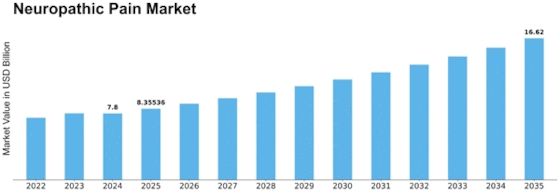
In 2024, the market was valued at 7.8 USD Billion.

What is the expected CAGR for the Neuropathic Pain Market during the forecast period 2025 - 2035?

The expected CAGR during the forecast period 2025 - 2035 is 7.12%.

Which companies are considered key players in the Neuropathic Pain Market?

Key players in the market include Pfizer, Eli Lilly, Bristol-Myers Squibb, Astellas Pharma, Teva Pharmaceutical Industries, Novartis, Johnson &amp; Johnson, AbbVie, and GSK.

What segment of neuropathic pain had the highest valuation in 2024?

<p>Diabetic Neuropathy had the highest valuation in 2024, amounting to 2.5 USD Billion.</p>

What is the projected market size for medications used in treating neuropathic pain by 2035?

<p>The market size for medications used in treating neuropathic pain is projected to reach 6.75 USD Billion by 2035.</p>

How does the market for electrical stimulation compare to other treatment types in 2024?

<p>In 2024, the market for electrical stimulation was valued at 2.08 USD Billion, indicating a competitive position among treatment types.</p>

What is the projected valuation for injectable routes of administration by 2035?

The projected valuation for injectable routes of administration in the market is 8.05 USD Billion by 2035.

Which end user segment is expected to grow the most by 2035?

The Home Care segment is expected to grow the most, with a projected valuation of 6.38 USD Billion by 2035.

What was the market size for chemotherapy-induced peripheral neuropathy in 2024?

The market size for chemotherapy-induced peripheral neuropathy in 2024 was 2.8 USD Billion.

Market Summary

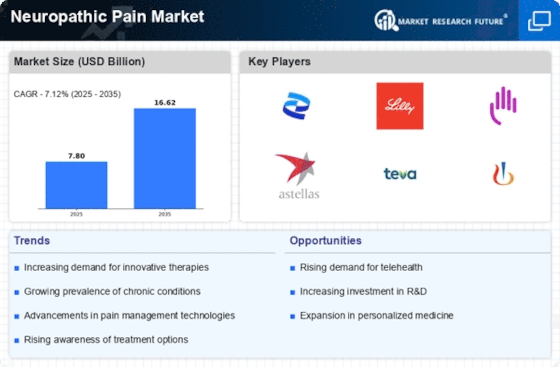
As per Market Research Future analysis, the Neuropathic Pain Market Size was estimated at 7.8 USD Billion in 2024. The Neuropathic Pain industry is projected to grow from 8.355 USD Billion in 2025 to 16.62 USD Billion by 2035, exhibiting a compound annual growth rate (CAGR) of 7.12% during the forecast period 2025 - 2035. North America led the market with over 31.41% share, generating around USD 2.45 billion in revenue.
 
The Neuropathic Pain Market is primarily driven by the rising prevalence of chronic diseases such as diabetes and neurological disorders, increasing demand for effective pain management therapies, and growing awareness of advanced treatment options improving patient outcomes and quality of life globally.
 
According to the World Health Organization (WHO), diabetes affects over 422 million people globally, a major cause of neuropathy. This rising burden significantly increases demand for neuropathic pain treatments, driving innovation in therapies and expanding market growth across both developed and emerging healthcare systems.

Key Market Trends & Highlights

The Neuropathic Pain Market is experiencing a transformative shift towards personalized and integrated treatment solutions.

  • Oral administration holds 66% share, reflecting high patient compliance and convenience in chronic pain management. North America holds 31.41% share, while Europe accounts for 23.08% share valued at USD 1.8 billion in 2024. Medications dominate with 63% share, driven by widespread use as first-line neuropathic pain treatment globally. Diabetic neuropathy leads with 54% share, supported by rising global diabetes prevalence exceeding 422 million cases.

Market Size & Forecast

2024 Market Size 7.8 (USD Billion)
2035 Market Size 16.62 (USD Billion)
CAGR (2025 - 2035) 7.12%
Largest Regional Market Share in 2024 North America

Major Players

Companies such as Pfizer (US), Eli Lilly (US), Bristol-Myers Squibb (US), Astellas Pharma (JP), Teva Pharmaceutical Industries (IL), Novartis (CH), Johnson &amp; Johnson (US), AbbVie (US), GSK (GB) are some of the major participants in the global market.

Market Trends

The Neuropathic Pain Market is currently experiencing a notable evolution, driven by advancements in treatment modalities and a growing understanding of the underlying mechanisms of neuropathic pain. This market encompasses a range of therapies, including pharmacological options, interventional procedures, and emerging technologies. The increasing prevalence of conditions such as diabetes and multiple sclerosis, which are often associated with neuropathic pain, further fuels demand for effective management strategies. Additionally, the rising awareness among healthcare professionals and patients regarding the complexities of neuropathic pain is likely to enhance treatment adherence and improve patient outcomes. Moreover, the Neuropathic Pain Market is witnessing a shift towards personalized medicine, where treatment plans are tailored to individual patient profiles. This trend is supported by ongoing research into genetic and biomarker studies that aim to identify specific patient characteristics influencing treatment response. Furthermore, the integration of digital health solutions, such as telemedicine and mobile health applications, appears to facilitate better access to care and enhance patient engagement. As the market continues to evolve, stakeholders must remain vigilant to emerging trends and adapt their strategies accordingly to meet the diverse needs of patients suffering from neuropathic pain.

Personalized Treatment Approaches

The Neuropathic Pain Market is increasingly leaning towards personalized treatment strategies. This trend is characterized by the customization of therapies based on individual patient profiles, which may include genetic factors and specific pain characteristics. Such tailored approaches are anticipated to enhance treatment efficacy and patient satisfaction.

The Institute for Health Metrics and Evaluation (IHME) reports a growing global burden of neurological disorders contributing significantly to disability-adjusted life years. This trend supports adoption of personalized treatment strategies, enabling targeted neuropathic pain management and improving clinical outcomes through patient-specific therapeutic approaches.

Integration of Digital Health Solutions

The incorporation of digital health technologies is transforming the Neuropathic Pain Market. Telemedicine and mobile health applications are becoming more prevalent, providing patients with improved access to care and facilitating ongoing communication with healthcare providers. This trend may lead to better management of neuropathic pain and increased patient engagement.

The Pan American Health Organization (PAHO) highlights expanding digital health adoption across healthcare systems, improving access to care and chronic disease management. Telemedicine and mobile health tools enhance neuropathic pain monitoring, enabling timely interventions, better adherence, and improved patient engagement across diverse populations.

Focus on Non-Pharmacological Therapies

There is a growing emphasis on non-pharmacological interventions within the Neuropathic Pain Market. Techniques such as cognitive behavioral therapy, physical therapy, and acupuncture are gaining recognition as effective complementary treatments. This shift reflects a broader understanding of pain management that extends beyond traditional pharmacological options.

According to the Centers for Disease Control and Prevention (CDC), chronic pain affects approximately 20% of adults in the U.S., encouraging alternative treatment approaches. Non-pharmacological therapies such as physical therapy and behavioral interventions are gaining traction, improving pain outcomes while reducing reliance on medications.

Neuropathic Pain Market Market Drivers

Regulatory Support for New Therapies

Regulatory support for the approval of new therapies is enhancing the landscape of the Neuropathic Pain Market Industry. Regulatory agencies are increasingly recognizing the need for effective pain management solutions, leading to streamlined approval processes for innovative treatments. This supportive environment encourages pharmaceutical companies to invest in the development of new drugs and therapies. Recent initiatives aimed at expediting the review of pain management products indicate a commitment to addressing the unmet needs of patients suffering from neuropathic pain. As a result, the market Industry is likely to benefit from a surge in new product launches, further driving market expansion.

Rising Prevalence of Neuropathic Disorders

The increasing incidence of neuropathic disorders is a primary driver of the market Industry. Conditions such as diabetic neuropathy, postherpetic neuralgia, and trigeminal neuralgia are becoming more prevalent due to factors like aging populations and lifestyle changes. According to recent estimates, neuropathic pain affects approximately 7-10% of the population, indicating a substantial market potential. This rising prevalence necessitates the development of effective treatment options, thereby propelling growth in the Neuropathic Pain Market Industry. As healthcare systems strive to address this growing burden, investments in research and development are likely to increase, fostering innovation in therapeutic solutions.

Advancements in Pain Management Technologies

Technological advancements in pain management are significantly influencing the Neuropathic Pain Market Industry. Innovations such as neuromodulation devices, transcranial magnetic stimulation, and advanced drug delivery systems are enhancing treatment efficacy. The introduction of these technologies is expected to improve patient outcomes and satisfaction, which may lead to increased adoption rates. Furthermore, the market for neuromodulation devices alone is projected to reach several billion dollars by the end of the decade. As healthcare providers seek to incorporate these advanced solutions into their practices, the market Industry is poised for substantial growth, driven by the demand for more effective and less invasive treatment options.

Increased Investment in Research and Development

Investment in research and development is a crucial driver for the Neuropathic Pain Market Industry. Pharmaceutical companies and research institutions are allocating significant resources to discover novel therapies and improve existing treatment modalities. This trend is underscored by the increasing number of clinical trials focused on neuropathic pain, with hundreds of studies currently underway. The potential for breakthrough therapies, particularly in the realm of biologics and gene therapy, suggests a promising future for the market. As these investments yield new treatment options, the Neuropathic Pain Market Industry is likely to experience accelerated growth, driven by the demand for innovative solutions.

Growing Awareness and Education on Neuropathic Pain

There is a notable increase in awareness and education regarding neuropathic pain, which is positively impacting the Neuropathic Pain Market Industry. Healthcare professionals are becoming more knowledgeable about the complexities of neuropathic pain, leading to improved diagnosis and treatment strategies. Campaigns aimed at educating both patients and providers about the symptoms and management of neuropathic pain are gaining traction. This heightened awareness is likely to result in more patients seeking treatment, thereby expanding the market. Additionally, as educational initiatives continue to evolve, they may contribute to the development of new therapeutic approaches, further stimulating growth in the Neuropathic Pain Market Industry.

Market Segment Insights

By Type of Neuropathic Pain: Diabetic Neuropathy (Largest) vs. Postherpetic Neuralgia (Fastest-Growing)

Among the various types of neuropathic pain, diabetic neuropathy holds the largest market share of 54% due to the rising prevalence of diabetes and the growing aging population. This condition primarily affects individuals with diabetes and leads to significant discomfort and complications. In contrast, postherpetic neuralgia represents the fastest-growing segment driven by an increasing incidence of shingles, particularly in older adults. The awareness and diagnosis of these conditions are also improving, contributing further to this market distribution.

Diabetic Neuropathy (Dominant) vs. Postherpetic Neuralgia (Emerging)

Diabetic neuropathy is characterized by nerve damage due to chronic high blood sugar levels and presents as pain, tingling, and loss of sensation in extremities. It remains a dominant force in the neuropathic pain market due to the substantial number of patients managing diabetes globally. Conversely, postherpetic neuralgia is an emerging concern arising from the complications of shingles, significantly impacting quality of life in the affected individuals. As healthcare shifts its focus on post-viral complications and patient awareness grows, this segment is seeing rapid development. Treatments are evolving, making it a hotbed for new therapies and innovations, particularly in pain management.

By Treatment Type: Medications (Largest) vs. Physical Therapy (Fastest-Growing)

In the Neuropathic Pain Market, Medications hold the largest share of 63% among treatment types, representing a significant portion of the overall market. This segment benefits from the widespread adoption of prescription drugs, including anticonvulsants and opioids, which are often first-line treatments for neuropathic pain. Physical Therapy, on the other hand, has been gaining traction in recent years, offering a non-invasive alternative that addresses underlying issues in muscle and nerve function, thus contributing to its burgeoning market share.

Medications (Dominant) vs. Physical Therapy (Emerging)

Medications, predominantly consisting of pharmacological treatments such as antidepressants and anti-seizure medications, are at the forefront of the Neuropathic Pain Market, showcasing their established role in effective pain management. These treatments are widely prescribed due to their clinical efficacy and robust support from healthcare practitioners. Conversely, Physical Therapy is emerging as a compelling option, addressing neuropathic pain through tailored exercise regimens, which enhances mobility and reduces pain without pharmacological side effects. The growing emphasis on holistic and patient-centered approaches to pain management has positioned Physical Therapy as a vital emerging player, complementing traditional medication options.

By Route of Administration: Oral (Largest) vs. Injectable (Fastest-Growing)

In the Neuropathic Pain Market, the Route of Administration segment displays a diverse distribution among oral, topical, and injectable routes. Oral administration leads as the largest segment, capturing the majority share of 66% due to its convenience and patient compliance. Topical solutions, while essential, hold a smaller segment within the market. Injectable routes have gained attention for their targeted approach and effectiveness in managing severe pain associated with neuropathic conditions, contributing to their growth.

Oral (Dominant) vs. Injectable (Emerging)

Oral administration is recognized as the dominant route in the Neuropathic Pain Market, highly favored for its ease of use and adherence among patients. This route is characterized by a variety of available formulations, including capsules and tablets, making it accessible for broad patient demographics. On the other hand, injectable administration is emerging as a significant player in this segment, driven by its ability to provide rapid relief and targeted treatment. Advances in injectable therapies are being developed to enhance efficacy and minimize invasive procedures, attracting attention from both patients and healthcare providers. This duo showcases a dynamic balance between traditional and innovative treatment approaches in neuropathic pain management.

By End User: Hospitals (Largest) vs. Home Care (Fastest-Growing)

In the Neuropathic Pain Market, the distribution of end users reflects a diverse landscape. Hospitals dominate the market holding the share of 61% due to their comprehensive facilities and access to specialized care. They cater to a large patient population seeking advanced pain management solutions. Meanwhile, clinics serve as a significant portion of the market, providing tailored outpatient care for neuropathic pain patients. Home care is emerging as a vital segment, catering to the needs of patients requiring convenient and accessible treatment options without frequent visits to healthcare facilities.

Hospitals (Dominant) vs. Home Care (Emerging)

Hospitals play a crucial role in the Neuropathic Pain Market, equipped with specialized departments and advanced technologies for diagnosing and treating complex pain disorders. Their ability to provide multidisciplinary care enhances patient outcomes and drives consistent demand. In contrast, Home Care is carving out its space as an emerging segment, driven by the increasing preference for at-home treatments and advancements in telehealth. This shift is primarily fueled by an aging population and the necessity for ongoing management of chronic pain conditions, allowing patients to receive effective therapies in the comfort of their homes.

Get more detailed insights about Neuropathic Pain Market Research Report - Global Forecast till 2035

Regional Insights

The Neuropathic Pain Market is witnessing considerable growth across various regional segments, with North America leads in Neuropathic Pain Market Size, accounting for over 31.41% of the global revenue in 2024, holding a significant majority share. Growth is driven by high prevalence of chronic diseases, advanced healthcare infrastructure, and strong adoption of innovative pain management therapies. 

The Centers for Disease Control and Prevention (CDC) reports that 6 in 10 adults in the U.S. have a chronic disease, many linked to neuropathic pain. This drives demand for advanced therapies and supports strong market expansion across the region.

Europe Neuropathic Pain Market size was valued at USD 1.8 billion in 2024, making it the second-largest regional market with 23.08% share, reflecting a strong demand for neuropathic pain management solutions. This region continues to be a major contributor to market revenue. Growth is driven by increasing aging population, rising neurological disorders, and strong healthcare systems supporting pain management. According to the World Health Organization (WHO), Europe has a rapidly aging population, with a significant proportion over 60 years. This demographic shift increases prevalence of neuropathic conditions, driving demand for advanced pain management solutions across the region.

South America shows potential with a valuation of 0.45 USD Billion in 2024, rising to 0.8 USD Billion in 2035. This highlights emerging opportunities in pain therapy, as healthcare infrastructure and awareness improve.

The Asia Pacific region, valued at 0.9 USD Billion in 2024, is expected to grow to 1.5 USD Billion by 2035. This indicates a rapid increase in awareness and treatment options for neuropathic pain in this dynamic region.

Meanwhile, the Middle East and Africa segment remains relatively smaller, holding a value of 0.19 USD Billion in 2024 and increasing to 0.3 USD Billion in 2035. While smaller, this region also shows incremental growth.

This regional differentiation supports the understanding of the Neuropathic Pain Market revenue, with North America's dominance showcasing robust healthcare infrastructure and consistent investment in pain management technologies.

In contrast, the growth potential in Asia Pacific and South America is propelled by rising incidences of neuropathic disorders and increased healthcare accessibility. These factors mark significant opportunities for market expansion in these developing regions.

Key Players and Competitive Insights

The Neuropathic Pain Market is characterized by intense competition among key industry players. These companies are continually innovating and expanding their portfolios to gain a competitive advantage. With an increasing prevalence of neuropathic pain conditions, driven largely by factors such as diabetes, cancer treatments, and neurological disorders, the demand for effective therapies is rising. Companies are investing heavily in new treatment discovery. They are also improving existing ones to address the unmet needs of patients suffering from neuropathic pain. The market landscape is marked by the introduction of novel drugs, strategic partnerships, and collaborations. These initiatives are aimed at enhancing therapeutic effectiveness and reaching a broader patient base. Competitive dynamics are influenced by various factors, such as pricing strategies, regulatory approvals, and market penetration efforts. This makes it crucial for companies to closely monitor their competition and adapt to the evolving market trends. A proactive approach is essential for sustained success in this competitive environment.

Astellas Pharma


Astellas Pharma has established a notable presence in the Neuropathic Pain Market. The company's strengths lie in its robust research and development capabilities, which enable the discovery and development of innovative solutions for neuropathic pain management. Astellas Pharma focuses on harnessing cutting-edge technology to enhance therapeutic efficacy and patient outcomes. This positions itself as a trusted player in the marketplace. The company has successfully launched several products that target neuropathic pain, gaining traction among healthcare providers and patients alike. Astellas Pharma's strategic initiatives to collaborate with clinical researchers and institutions further enhance its competitive edge. This allows for the exploration of novel approaches to pain management and solidifying its reputation in the field. Their commitment to partnerships drives further innovation.

Novartis


Novartis has made significant strides in the Neuropathic Pain Market, leveraging its extensive research and development pipeline to deliver robust therapeutic options. The company is known for its core portfolio of medications that address various aspects of neuropathic pain. These medications provide effective alternatives that resonate well with healthcare providers. Novartis's presence in the market is reinforced by its commitment to innovation and patient-centered solutions, which includes a focus on emerging biologic therapies. The company's strengths are further showcased through mergers and acquisitions that have expanded its capabilities and reinforced its position in neuropathic pain management. This proactive approach allows Novartis to adapt to changing market conditions. They also continue meeting the growing demand for effective pain relief strategies on a global scale. Their diverse strategies ensure a strong and adaptive market presence.

Key Companies in the Neuropathic Pain Market include

Industry Developments

Recent developments in the Neuropathic Pain Market have been noteworthy, particularly in the area of drug approvals and research initiatives. The market valuation for key players, including Novartis and AbbVie, has shown robust growth over the past few years.

This growth is due to rising incidences of neuropathic pain conditions globally, which demand effective treatment solutions. In March 2024, Astellas Pharma announced the advancement of its investigational candidate ASP1807, which received Fast Track designation from the U.S. FDA for the treatment of neuropathic pain.

This demonstrates the company’s commitment to innovative non-opioid therapies. Similarly, in July 2023, Novartis strengthened its presence in neurological research through the acquisition of DTx Pharma. This acquisition enhanced its pipeline of RNA-based therapies aimed at treating chronic neurological conditions, including neuropathic pain.

Moreover, advancements in biologics and targeted therapies have prompted significant interest from major pharmaceutical companies. The continued investment in Research and Development reflects the urgent need for effective management of neuropathic pain, thereby stimulating market dynamics on a global scale.

Future Outlook

Neuropathic Pain Market Future Outlook

The Neuropathic Pain Market size is projected to reach USD 8.355 Billion by 2035, growing at a CAGR of 7.12%, driven by increasing prevalence, advancements in treatment options, and rising awareness.

New opportunities lie in:

  • <p>Development of personalized pain management solutions Expansion of telehealth services for remote patient monitoring Investment in AI-driven drug discovery platforms</p>

By 2035, the Neuropathic Pain Market is expected to achieve substantial growth and innovation.

Market Segmentation

Neuropathic Pain Market End User Outlook

  • Hospitals
  • Clinics
  • Home Care

Neuropathic Pain Market Treatment Type Outlook

  • Medications
  • Physical Therapy
  • Surgical Procedures
  • Electrical Stimulation

Neuropathic Pain Market Route of Administration Outlook

  • Oral
  • Topical
  • Injectable

Neuropathic Pain Market Type of Neuropathic Pain Outlook

  • Diabetic Neuropathy
  • Postherpetic Neuralgia
  • Trigeminal Neuralgia
  • Chemotherapy-Induced Peripheral Neuropathy

Report Scope

MARKET SIZE 2024 7.8(USD Billion)
MARKET SIZE 2025 8.355(USD Billion)
MARKET SIZE 2035 16.62(USD Billion)
COMPOUND ANNUAL GROWTH RATE (CAGR) 7.12% (2025 - 2035)
REPORT COVERAGE Revenue Forecast, Competitive Landscape, Growth Factors, and Trends
BASE YEAR 2024
Market Forecast Period 2025 - 2035
Historical Data 2019 - 2024
Market Forecast Units USD Billion
Key Companies Profiled Pfizer (US), Eli Lilly (US), Bristol-Myers Squibb (US), Astellas Pharma (JP), Teva Pharmaceutical Industries (IL), Novartis (CH), Johnson & Johnson (US), AbbVie (US), GSK (GB)
Segments Covered Type of Neuropathic Pain, Treatment Type, Route of Administration, End User, Regional
Key Market Opportunities Advancements in digital therapeutics and personalized medicine enhance treatment options in the Neuropathic Pain Market.
Key Market Dynamics Rising demand for innovative therapies drives competition and regulatory scrutiny in the neuropathic pain market.

Countries Covered North America, Europe, APAC, South America, MEA

FAQs

What is the projected market valuation of the Neuropathic Pain Market by 2035?

<p>The Neuropathic Pain Market is projected to reach a valuation of 16.62 USD Billion by 2035.</p>

What was the market valuation of the Neuropathic Pain Market in 2024?

In 2024, the market was valued at 7.8 USD Billion.

What is the expected CAGR for the Neuropathic Pain Market during the forecast period 2025 - 2035?

The expected CAGR during the forecast period 2025 - 2035 is 7.12%.

Which companies are considered key players in the Neuropathic Pain Market?

Key players in the market include Pfizer, Eli Lilly, Bristol-Myers Squibb, Astellas Pharma, Teva Pharmaceutical Industries, Novartis, Johnson &amp; Johnson, AbbVie, and GSK.

What segment of neuropathic pain had the highest valuation in 2024?

<p>Diabetic Neuropathy had the highest valuation in 2024, amounting to 2.5 USD Billion.</p>

What is the projected market size for medications used in treating neuropathic pain by 2035?

<p>The market size for medications used in treating neuropathic pain is projected to reach 6.75 USD Billion by 2035.</p>

How does the market for electrical stimulation compare to other treatment types in 2024?

<p>In 2024, the market for electrical stimulation was valued at 2.08 USD Billion, indicating a competitive position among treatment types.</p>

What is the projected valuation for injectable routes of administration by 2035?

The projected valuation for injectable routes of administration in the market is 8.05 USD Billion by 2035.

Which end user segment is expected to grow the most by 2035?

The Home Care segment is expected to grow the most, with a projected valuation of 6.38 USD Billion by 2035.

What was the market size for chemotherapy-induced peripheral neuropathy in 2024?

The market size for chemotherapy-induced peripheral neuropathy in 2024 was 2.8 USD Billion.

  1. SECTION I: EXECUTIVE SUMMARY AND KEY HIGHLIGHTS |
    1. EXECUTIVE SUMMARY | |
      1. Market Overview | |
      2. Key Findings | |
      3. Market Segmentation | |
      4. Competitive Landscape | |
      5. Challenges and Opportunities | |
      6. Future Outlook 2
  2. SECTION II: SCOPING, METHODOLOGY AND MARKET STRUCTURE |
    1. MARKET INTRODUCTION | |
      1. Definition | |
      2. Scope of the study | | |
    2. RESEARCH METHODOLOGY | |
      1. Overview | |
      2. Data Mining | |
      3. Secondary Research | |
      4. Primary Research | | |
      5. Forecasting Model | |
      6. Market Size Estimation | | |
      7. Data Triangulation | |
      8. Validation 3
  3. SECTION III: QUALITATIVE ANALYSIS |
    1. MARKET DYNAMICS | |
      1. Overview | |
      2. Drivers | |
      3. Restraints | |
      4. Opportunities |
    2. MARKET FACTOR ANALYSIS | |
      1. Value chain Analysis | |
      2. Porter's Five Forces Analysis | | |
      3. COVID-19 Impact Analysis | | |
  4. SECTION IV: QUANTITATIVE ANALYSIS |
    1. Healthcare, BY Type of Neuropathic Pain (USD Billion) | |
      1. Diabetic Neuropathy | |
      2. Postherpetic Neuralgia | |
      3. Trigeminal Neuralgia | |
      4. Chemotherapy-Induced Peripheral Neuropathy |
    2. Healthcare, BY Treatment Type (USD Billion) | |
      1. Medications | |
      2. Physical Therapy | |
      3. Surgical Procedures | |
      4. Electrical Stimulation |
    3. Healthcare, BY Route of Administration (USD Billion) | |
      1. Oral | |
      2. Topical | |
      3. Injectable |
    4. Healthcare, BY End User (USD Billion) | |
      1. Hospitals | |
      2. Clinics | |
      3. Home Care |
    5. Healthcare, BY Region (USD Billion) | |
      1. North America | | |
      2. Europe | | |
      3. APAC | | |
      4. South America | | |
      5. MEA | | |
  5. SECTION V: COMPETITIVE ANALYSIS |
    1. Competitive Landscape | |
      1. Overview | |
      2. Competitive Analysis | |
      3. Market share Analysis | |
      4. Major Growth Strategy in the Healthcare | |
      5. Competitive Benchmarking | |
      6. Leading Players in Terms of Number of Developments in the Healthcare | |
      7. Key developments and growth strategies | | |
      8. Major Players Financial Matrix | | |
    2. Company Profiles | |
      1. Pfizer (US) | | |
      2. Eli Lilly (US) | | |
      3. Bristol-Myers Squibb (US) | | |
      4. Astellas Pharma (JP) | | |
      5. Teva Pharmaceutical Industries (IL) | | |
      6. Novartis (CH) | | |
      7. Johnson & Johnson (US) | | |
      8. AbbVie (US) | | |
      9. GSK (GB) | | |
    3. Appendix | |
      1. References | |
      2. Related Reports 6 LIST OF FIGURES |
    4. MARKET SYNOPSIS |
    5. NORTH AMERICA MARKET ANALYSIS |
    6. US MARKET ANALYSIS BY TYPE OF NEUROPATHIC PAIN |
    7. US MARKET ANALYSIS BY TREATMENT TYPE |
    8. US MARKET ANALYSIS BY ROUTE OF ADMINISTRATION |
    9. US MARKET ANALYSIS BY END USER |
    10. CANADA MARKET ANALYSIS BY TYPE OF NEUROPATHIC PAIN |
    11. CANADA MARKET ANALYSIS BY TREATMENT TYPE |
    12. CANADA MARKET ANALYSIS BY ROUTE OF ADMINISTRATION |
    13. CANADA MARKET ANALYSIS BY END USER |
    14. EUROPE MARKET ANALYSIS |
    15. GERMANY MARKET ANALYSIS BY TYPE OF NEUROPATHIC PAIN |
    16. GERMANY MARKET ANALYSIS BY TREATMENT TYPE |
    17. GERMANY MARKET ANALYSIS BY ROUTE OF ADMINISTRATION |
    18. GERMANY MARKET ANALYSIS BY END USER |
    19. UK MARKET ANALYSIS BY TYPE OF NEUROPATHIC PAIN |
    20. UK MARKET ANALYSIS BY TREATMENT TYPE |
    21. UK MARKET ANALYSIS BY ROUTE OF ADMINISTRATION |
    22. UK MARKET ANALYSIS BY END USER |
    23. FRANCE MARKET ANALYSIS BY TYPE OF NEUROPATHIC PAIN |
    24. FRANCE MARKET ANALYSIS BY TREATMENT TYPE |
    25. FRANCE MARKET ANALYSIS BY ROUTE OF ADMINISTRATION |
    26. FRANCE MARKET ANALYSIS BY END USER |
    27. RUSSIA MARKET ANALYSIS BY TYPE OF NEUROPATHIC PAIN |
    28. RUSSIA MARKET ANALYSIS BY TREATMENT TYPE |
    29. RUSSIA MARKET ANALYSIS BY ROUTE OF ADMINISTRATION |
    30. RUSSIA MARKET ANALYSIS BY END USER |
    31. ITALY MARKET ANALYSIS BY TYPE OF NEUROPATHIC PAIN |
    32. ITALY MARKET ANALYSIS BY TREATMENT TYPE |
    33. ITALY MARKET ANALYSIS BY ROUTE OF ADMINISTRATION |
    34. ITALY MARKET ANALYSIS BY END USER |
    35. SPAIN MARKET ANALYSIS BY TYPE OF NEUROPATHIC PAIN |
    36. SPAIN MARKET ANALYSIS BY TREATMENT TYPE |
    37. SPAIN MARKET ANALYSIS BY ROUTE OF ADMINISTRATION |
    38. SPAIN MARKET ANALYSIS BY END USER |
    39. REST OF EUROPE MARKET ANALYSIS BY TYPE OF NEUROPATHIC PAIN |
    40. REST OF EUROPE MARKET ANALYSIS BY TREATMENT TYPE |
    41. REST OF EUROPE MARKET ANALYSIS BY ROUTE OF ADMINISTRATION |
    42. REST OF EUROPE MARKET ANALYSIS BY END USER |
    43. APAC MARKET ANALYSIS |
    44. CHINA MARKET ANALYSIS BY TYPE OF NEUROPATHIC PAIN |
    45. CHINA MARKET ANALYSIS BY TREATMENT TYPE |
    46. CHINA MARKET ANALYSIS BY ROUTE OF ADMINISTRATION |
    47. CHINA MARKET ANALYSIS BY END USER |
    48. INDIA MARKET ANALYSIS BY TYPE OF NEUROPATHIC PAIN |
    49. INDIA MARKET ANALYSIS BY TREATMENT TYPE |
    50. INDIA MARKET ANALYSIS BY ROUTE OF ADMINISTRATION |
    51. INDIA MARKET ANALYSIS BY END USER |
    52. JAPAN MARKET ANALYSIS BY TYPE OF NEUROPATHIC PAIN |
    53. JAPAN MARKET ANALYSIS BY TREATMENT TYPE |
    54. JAPAN MARKET ANALYSIS BY ROUTE OF ADMINISTRATION |
    55. JAPAN MARKET ANALYSIS BY END USER |
    56. SOUTH KOREA MARKET ANALYSIS BY TYPE OF NEUROPATHIC PAIN |
    57. SOUTH KOREA MARKET ANALYSIS BY TREATMENT TYPE |
    58. SOUTH KOREA MARKET ANALYSIS BY ROUTE OF ADMINISTRATION |
    59. SOUTH KOREA MARKET ANALYSIS BY END USER |
    60. MALAYSIA MARKET ANALYSIS BY TYPE OF NEUROPATHIC PAIN |
    61. MALAYSIA MARKET ANALYSIS BY TREATMENT TYPE |
    62. MALAYSIA MARKET ANALYSIS BY ROUTE OF ADMINISTRATION |
    63. MALAYSIA MARKET ANALYSIS BY END USER |
    64. THAILAND MARKET ANALYSIS BY TYPE OF NEUROPATHIC PAIN |
    65. THAILAND MARKET ANALYSIS BY TREATMENT TYPE |
    66. THAILAND MARKET ANALYSIS BY ROUTE OF ADMINISTRATION |
    67. THAILAND MARKET ANALYSIS BY END USER |
    68. INDONESIA MARKET ANALYSIS BY TYPE OF NEUROPATHIC PAIN |
    69. INDONESIA MARKET ANALYSIS BY TREATMENT TYPE |
    70. INDONESIA MARKET ANALYSIS BY ROUTE OF ADMINISTRATION |
    71. INDONESIA MARKET ANALYSIS BY END USER |
    72. REST OF APAC MARKET ANALYSIS BY TYPE OF NEUROPATHIC PAIN |
    73. REST OF APAC MARKET ANALYSIS BY TREATMENT TYPE |
    74. REST OF APAC MARKET ANALYSIS BY ROUTE OF ADMINISTRATION |
    75. REST OF APAC MARKET ANALYSIS BY END USER |
    76. SOUTH AMERICA MARKET ANALYSIS |
    77. BRAZIL MARKET ANALYSIS BY TYPE OF NEUROPATHIC PAIN |
    78. BRAZIL MARKET ANALYSIS BY TREATMENT TYPE |
    79. BRAZIL MARKET ANALYSIS BY ROUTE OF ADMINISTRATION |
    80. BRAZIL MARKET ANALYSIS BY END USER |
    81. MEXICO MARKET ANALYSIS BY TYPE OF NEUROPATHIC PAIN |
    82. MEXICO MARKET ANALYSIS BY TREATMENT TYPE |
    83. MEXICO MARKET ANALYSIS BY ROUTE OF ADMINISTRATION |
    84. MEXICO MARKET ANALYSIS BY END USER |
    85. ARGENTINA MARKET ANALYSIS BY TYPE OF NEUROPATHIC PAIN |
    86. ARGENTINA MARKET ANALYSIS BY TREATMENT TYPE |
    87. ARGENTINA MARKET ANALYSIS BY ROUTE OF ADMINISTRATION |
    88. ARGENTINA MARKET ANALYSIS BY END USER |
    89. REST OF SOUTH AMERICA MARKET ANALYSIS BY TYPE OF NEUROPATHIC PAIN |
    90. REST OF SOUTH AMERICA MARKET ANALYSIS BY TREATMENT TYPE |
    91. REST OF SOUTH AMERICA MARKET ANALYSIS BY ROUTE OF ADMINISTRATION |
    92. REST OF SOUTH AMERICA MARKET ANALYSIS BY END USER |
    93. MEA MARKET ANALYSIS |
    94. GCC COUNTRIES MARKET ANALYSIS BY TYPE OF NEUROPATHIC PAIN |
    95. GCC COUNTRIES MARKET ANALYSIS BY TREATMENT TYPE |
    96. GCC COUNTRIES MARKET ANALYSIS BY ROUTE OF ADMINISTRATION |
    97. GCC COUNTRIES MARKET ANALYSIS BY END USER |
    98. SOUTH AFRICA MARKET ANALYSIS BY TYPE OF NEUROPATHIC PAIN |
    99. SOUTH AFRICA MARKET ANALYSIS BY TREATMENT TYPE |
    100. SOUTH AFRICA MARKET ANALYSIS BY ROUTE OF ADMINISTRATION |
    101. SOUTH AFRICA MARKET ANALYSIS BY END USER |
    102. REST OF MEA MARKET ANALYSIS BY TYPE OF NEUROPATHIC PAIN |
    103. REST OF MEA MARKET ANALYSIS BY TREATMENT TYPE |
    104. REST OF MEA MARKET ANALYSIS BY ROUTE OF ADMINISTRATION |
    105. REST OF MEA MARKET ANALYSIS BY END USER |
    106. KEY BUYING CRITERIA OF HEALTHCARE |
    107. RESEARCH PROCESS OF MRFR |
    108. DRO ANALYSIS OF HEALTHCARE |
    109. DRIVERS IMPACT ANALYSIS: HEALTHCARE |
    110. RESTRAINTS IMPACT ANALYSIS: HEALTHCARE |
    111. SUPPLY / VALUE CHAIN: HEALTHCARE |
    112. HEALTHCARE, BY TYPE OF NEUROPATHIC PAIN, 2024 (% SHARE) |
    113. HEALTHCARE, BY TYPE OF NEUROPATHIC PAIN, 2024 TO 2035 (USD Billion) |
    114. HEALTHCARE, BY TREATMENT TYPE, 2024 (% SHARE) |
    115. HEALTHCARE, BY TREATMENT TYPE, 2024 TO 2035 (USD Billion) |
    116. HEALTHCARE, BY ROUTE OF ADMINISTRATION, 2024 (% SHARE) |
    117. HEALTHCARE, BY ROUTE OF ADMINISTRATION, 2024 TO 2035 (USD Billion) |
    118. HEALTHCARE, BY END USER, 2024 (% SHARE) |
    119. HEALTHCARE, BY END USER, 2024 TO 2035 (USD Billion) |
    120. BENCHMARKING OF MAJOR COMPETITORS 7 LIST OF TABLES |
    121. LIST OF ASSUMPTIONS | |
      1. |
    122. North America MARKET SIZE ESTIMATES; FORECAST | |
      1. BY TYPE OF NEUROPATHIC PAIN, 2025-2035 (USD Billion) | |
      2. BY TREATMENT TYPE, 2025-2035 (USD Billion) | |
      3. BY ROUTE OF ADMINISTRATION, 2025-2035 (USD Billion) | |
      4. BY END USER, 2025-2035 (USD Billion) |
    123. US MARKET SIZE ESTIMATES; FORECAST | |
      1. BY TYPE OF NEUROPATHIC PAIN, 2025-2035 (USD Billion) | |
      2. BY TREATMENT TYPE, 2025-2035 (USD Billion) | |
      3. BY ROUTE OF ADMINISTRATION, 2025-2035 (USD Billion) | |
      4. BY END USER, 2025-2035 (USD Billion) |
    124. Canada MARKET SIZE ESTIMATES; FORECAST | |
      1. BY TYPE OF NEUROPATHIC PAIN, 2025-2035 (USD Billion) | |
      2. BY TREATMENT TYPE, 2025-2035 (USD Billion) | |
      3. BY ROUTE OF ADMINISTRATION, 2025-2035 (USD Billion) | |
      4. BY END USER, 2025-2035 (USD Billion) |
    125. Europe MARKET SIZE ESTIMATES; FORECAST | |
      1. BY TYPE OF NEUROPATHIC PAIN, 2025-2035 (USD Billion) | |
      2. BY TREATMENT TYPE, 2025-2035 (USD Billion) | |
      3. BY ROUTE OF ADMINISTRATION, 2025-2035 (USD Billion) | |
      4. BY END USER, 2025-2035 (USD Billion) |
    126. Germany MARKET SIZE ESTIMATES; FORECAST | |
      1. BY TYPE OF NEUROPATHIC PAIN, 2025-2035 (USD Billion) | |
      2. BY TREATMENT TYPE, 2025-2035 (USD Billion) | |
      3. BY ROUTE OF ADMINISTRATION, 2025-2035 (USD Billion) | |
      4. BY END USER, 2025-2035 (USD Billion) |
    127. UK MARKET SIZE ESTIMATES; FORECAST | |
      1. BY TYPE OF NEUROPATHIC PAIN, 2025-2035 (USD Billion) | |
      2. BY TREATMENT TYPE, 2025-2035 (USD Billion) | |
      3. BY ROUTE OF ADMINISTRATION, 2025-2035 (USD Billion) | |
      4. BY END USER, 2025-2035 (USD Billion) |
    128. France MARKET SIZE ESTIMATES; FORECAST | |
      1. BY TYPE OF NEUROPATHIC PAIN, 2025-2035 (USD Billion) | |
      2. BY TREATMENT TYPE, 2025-2035 (USD Billion) | |
      3. BY ROUTE OF ADMINISTRATION, 2025-2035 (USD Billion) | |
      4. BY END USER, 2025-2035 (USD Billion) |
    129. Russia MARKET SIZE ESTIMATES; FORECAST | |
      1. BY TYPE OF NEUROPATHIC PAIN, 2025-2035 (USD Billion) | |
      2. BY TREATMENT TYPE, 2025-2035 (USD Billion) | |
      3. BY ROUTE OF ADMINISTRATION, 2025-2035 (USD Billion) | |
      4. BY END USER, 2025-2035 (USD Billion) |
    130. Italy MARKET SIZE ESTIMATES; FORECAST | |
      1. BY TYPE OF NEUROPATHIC PAIN, 2025-2035 (USD Billion) | |
      2. BY TREATMENT TYPE, 2025-2035 (USD Billion) | |
      3. BY ROUTE OF ADMINISTRATION, 2025-2035 (USD Billion) | |
      4. BY END USER, 2025-2035 (USD Billion) |
    131. Spain MARKET SIZE ESTIMATES; FORECAST | |
      1. BY TYPE OF NEUROPATHIC PAIN, 2025-2035 (USD Billion) | |
      2. BY TREATMENT TYPE, 2025-2035 (USD Billion) | |
      3. BY ROUTE OF ADMINISTRATION, 2025-2035 (USD Billion) | |
      4. BY END USER, 2025-2035 (USD Billion) |
    132. Rest of Europe MARKET SIZE ESTIMATES; FORECAST | |
      1. BY TYPE OF NEUROPATHIC PAIN, 2025-2035 (USD Billion) | |
      2. BY TREATMENT TYPE, 2025-2035 (USD Billion) | |
      3. BY ROUTE OF ADMINISTRATION, 2025-2035 (USD Billion) | |
      4. BY END USER, 2025-2035 (USD Billion) |
    133. APAC MARKET SIZE ESTIMATES; FORECAST | |
      1. BY TYPE OF NEUROPATHIC PAIN, 2025-2035 (USD Billion) | |
      2. BY TREATMENT TYPE, 2025-2035 (USD Billion) | |
      3. BY ROUTE OF ADMINISTRATION, 2025-2035 (USD Billion) | |
      4. BY END USER, 2025-2035 (USD Billion) |
    134. China MARKET SIZE ESTIMATES; FORECAST | |
      1. BY TYPE OF NEUROPATHIC PAIN, 2025-2035 (USD Billion) | |
      2. BY TREATMENT TYPE, 2025-2035 (USD Billion) | |
      3. BY ROUTE OF ADMINISTRATION, 2025-2035 (USD Billion) | |
      4. BY END USER, 2025-2035 (USD Billion) |
    135. India MARKET SIZE ESTIMATES; FORECAST | |
      1. BY TYPE OF NEUROPATHIC PAIN, 2025-2035 (USD Billion) | |
      2. BY TREATMENT TYPE, 2025-2035 (USD Billion) | |
      3. BY ROUTE OF ADMINISTRATION, 2025-2035 (USD Billion) | |
      4. BY END USER, 2025-2035 (USD Billion) |
    136. Japan MARKET SIZE ESTIMATES; FORECAST | |
      1. BY TYPE OF NEUROPATHIC PAIN, 2025-2035 (USD Billion) | |
      2. BY TREATMENT TYPE, 2025-2035 (USD Billion) | |
      3. BY ROUTE OF ADMINISTRATION, 2025-2035 (USD Billion) | |
      4. BY END USER, 2025-2035 (USD Billion) |
    137. South Korea MARKET SIZE ESTIMATES; FORECAST | |
      1. BY TYPE OF NEUROPATHIC PAIN, 2025-2035 (USD Billion) | |
      2. BY TREATMENT TYPE, 2025-2035 (USD Billion) | |
      3. BY ROUTE OF ADMINISTRATION, 2025-2035 (USD Billion) | |
      4. BY END USER, 2025-2035 (USD Billion) |
    138. Malaysia MARKET SIZE ESTIMATES; FORECAST | |
      1. BY TYPE OF NEUROPATHIC PAIN, 2025-2035 (USD Billion) | |
      2. BY TREATMENT TYPE, 2025-2035 (USD Billion) | |
      3. BY ROUTE OF ADMINISTRATION, 2025-2035 (USD Billion) | |
      4. BY END USER, 2025-2035 (USD Billion) |
    139. Thailand MARKET SIZE ESTIMATES; FORECAST | |
      1. BY TYPE OF NEUROPATHIC PAIN, 2025-2035 (USD Billion) | |
      2. BY TREATMENT TYPE, 2025-2035 (USD Billion) | |
      3. BY ROUTE OF ADMINISTRATION, 2025-2035 (USD Billion) | |
      4. BY END USER, 2025-2035 (USD Billion) |
    140. Indonesia MARKET SIZE ESTIMATES; FORECAST | |
      1. BY TYPE OF NEUROPATHIC PAIN, 2025-2035 (USD Billion) | |
      2. BY TREATMENT TYPE, 2025-2035 (USD Billion) | |
      3. BY ROUTE OF ADMINISTRATION, 2025-2035 (USD Billion) | |
      4. BY END USER, 2025-2035 (USD Billion) |
    141. Rest of APAC MARKET SIZE ESTIMATES; FORECAST | |
      1. BY TYPE OF NEUROPATHIC PAIN, 2025-2035 (USD Billion) | |
      2. BY TREATMENT TYPE, 2025-2035 (USD Billion) | |
      3. BY ROUTE OF ADMINISTRATION, 2025-2035 (USD Billion) | |
      4. BY END USER, 2025-2035 (USD Billion) |
    142. South America MARKET SIZE ESTIMATES; FORECAST | |
      1. BY TYPE OF NEUROPATHIC PAIN, 2025-2035 (USD Billion) | |
      2. BY TREATMENT TYPE, 2025-2035 (USD Billion) | |
      3. BY ROUTE OF ADMINISTRATION, 2025-2035 (USD Billion) | |
      4. BY END USER, 2025-2035 (USD Billion) |
    143. Brazil MARKET SIZE ESTIMATES; FORECAST | |
      1. BY TYPE OF NEUROPATHIC PAIN, 2025-2035 (USD Billion) | |
      2. BY TREATMENT TYPE, 2025-2035 (USD Billion) | |
      3. BY ROUTE OF ADMINISTRATION, 2025-2035 (USD Billion) | |
      4. BY END USER, 2025-2035 (USD Billion) |
    144. Mexico MARKET SIZE ESTIMATES; FORECAST | |
      1. BY TYPE OF NEUROPATHIC PAIN, 2025-2035 (USD Billion) | |
      2. BY TREATMENT TYPE, 2025-2035 (USD Billion) | |
      3. BY ROUTE OF ADMINISTRATION, 2025-2035 (USD Billion) | |
      4. BY END USER, 2025-2035 (USD Billion) |
    145. Argentina MARKET SIZE ESTIMATES; FORECAST | |
      1. BY TYPE OF NEUROPATHIC PAIN, 2025-2035 (USD Billion) | |
      2. BY TREATMENT TYPE, 2025-2035 (USD Billion) | |
      3. BY ROUTE OF ADMINISTRATION, 2025-2035 (USD Billion) | |
      4. BY END USER, 2025-2035 (USD Billion) |
    146. Rest of South America MARKET SIZE ESTIMATES; FORECAST | |
      1. BY TYPE OF NEUROPATHIC PAIN, 2025-2035 (USD Billion) | |
      2. BY TREATMENT TYPE, 2025-2035 (USD Billion) | |
      3. BY ROUTE OF ADMINISTRATION, 2025-2035 (USD Billion) | |
      4. BY END USER, 2025-2035 (USD Billion) |
    147. MEA MARKET SIZE ESTIMATES; FORECAST | |
      1. BY TYPE OF NEUROPATHIC PAIN, 2025-2035 (USD Billion) | |
      2. BY TREATMENT TYPE, 2025-2035 (USD Billion) | |
      3. BY ROUTE OF ADMINISTRATION, 2025-2035 (USD Billion) | |
      4. BY END USER, 2025-2035 (USD Billion) |
    148. GCC Countries MARKET SIZE ESTIMATES; FORECAST | |
      1. BY TYPE OF NEUROPATHIC PAIN, 2025-2035 (USD Billion) | |
      2. BY TREATMENT TYPE, 2025-2035 (USD Billion) | |
      3. BY ROUTE OF ADMINISTRATION, 2025-2035 (USD Billion) | |
      4. BY END USER, 2025-2035 (USD Billion) |
    149. South Africa MARKET SIZE ESTIMATES; FORECAST | |
      1. BY TYPE OF NEUROPATHIC PAIN, 2025-2035 (USD Billion) | |
      2. BY TREATMENT TYPE, 2025-2035 (USD Billion) | |
      3. BY ROUTE OF ADMINISTRATION, 2025-2035 (USD Billion) | |
      4. BY END USER, 2025-2035 (USD Billion) |
    150. Rest of MEA MARKET SIZE ESTIMATES; FORECAST | |
      1. BY TYPE OF NEUROPATHIC PAIN, 2025-2035 (USD Billion) | |
      2. BY TREATMENT TYPE, 2025-2035 (USD Billion) | |
      3. BY ROUTE OF ADMINISTRATION, 2025-2035 (USD Billion) | |
      4. BY END USER, 2025-2035 (USD Billion) |
    151. PRODUCT LAUNCH/PRODUCT DEVELOPMENT/APPROVAL | |
      1. |
    152. ACQUISITION/PARTNERSHIP | |

Healthcare Market Segmentation

Healthcare By Type of Neuropathic Pain (USD Billion, 2025-2035)

  • Diabetic Neuropathy
  • Postherpetic Neuralgia
  • Trigeminal Neuralgia
  • Chemotherapy-Induced Peripheral Neuropathy

Healthcare By Treatment Type (USD Billion, 2025-2035)

  • Medications
  • Physical Therapy
  • Surgical Procedures
  • Electrical Stimulation

Healthcare By Route of Administration (USD Billion, 2025-2035)

  • Oral
  • Topical
  • Injectable

Healthcare By End User (USD Billion, 2025-2035)

  • Hospitals
  • Clinics
  • Home Care
Infographic

Free Sample Request

Kindly complete the form below to receive a free sample of this Report

Get Free Sample

Customer Strories

Compare Licence

×
Features License Type
Single User Multiuser License Enterprise User
Price $4,950 $5,950 $7,250
Maximum User Access Limit 1 User Upto 10 Users Unrestricted Access Throughout the Organization
Free Customization
Direct Access to Analyst
Deliverable Format
Platform Access
Discount on Next Purchase 10% 15% 15%
Printable Versions