×
Request Free Sample ×

Kindly complete the form below to receive a free sample of this Report

* Please use a valid business email

Leading companies partner with us for data-driven Insights

clients tt-cursor
Hero Background
English
Chinese
French
Japanese
Korean
German
Spanish

Natural Immune Booster Market Analysis

ID: MRFR/FnB/1891-HCR
100 Pages
Pradeep Nandi
October 2025

Natural Immune Booster Market Size, Share, Industry Trend & Analysis Research Report Information- by type (yeast extract, yeast beta and others), by application (beverages, dairy products, pharmaceuticals, bakery and processed foods and others) and by Region Forecast to 2035

Share:
Download PDF ×

We do not share your information with anyone. However, we may send you emails based on your report interest from time to time. You may contact us at any time to opt-out.

Natural Immune Booster Market Infographic
×
Natural Immune Booster Market Infographic Full View
Purchase Options

Market Analysis

In-depth Analysis of Natural Immune Booster Market Industry Landscape

Market dynamics of natural immune boosters are significantly affected by changing lifestyles and diets. Immune functions may be compromised by contemporary life styles filled with stress, insufficient sleep time as well as eating processed foods. Aware of how lifestyle choices can affect their health status; customers opt for natural immune boosters to fortify their immunity defense mechanism. Adhering to healthier ways such as physical fitness and balanced dieting also conforms with demand for products that enhance general wellness including immunity support.

However, the potential for market growth and overall improvement in performance comes from the fact that there are a lot of opportunities in the promising natural immune boosters’ market. One of such opportunity lies in research and development (R&D), where companies can strategically channel resources towards generating innovative and improved natural immune enhancers. In this way, these firms will be able to introduce new products that meet consumer needs, thus facilitating expansion of the market.

Moreover, key players in this sector have an opportunity to make full use of the latest digital technologies. The incorporation of advanced digital technologies could help automate production processes thereby enhancing operational efficiency. Businesses can optimize their activities by utilizing state-of-the-art technology thus streamlining production processes and helping them to stay ahead of competition in the marketplace. One of such opportunities is part of a larger trend toward digitization which allows companies to enhance their capabilities aimed at achieving sustainable growth for the natural immune booster market.

In essence, it creates conditions that will enable people play on increase through innovation as well as adoption of modern technology thus giving rise to growth and performance improvement within a rapidly changing environment like dynamic natural immune booster market is possible. By pursuing these opportunities deliberately, businesses may improve their presence in the markets while making better efforts to satisfy customer demands hence promoting further refinements on this sector’s operation bases.

E-commerce has revolutionized distribution channels for natural immune boosters by making it possible for consumers to buy them online at any time they want. This means prospective buyers can search for or buy immunity-boosting supplements without having to leave their homes through such platforms as online shops. The emergence of e-commerce has made it easier for producers of natural immunity boosters who resorted direct-to-consumer marketing strategies so as for them not only interact with customers but also build brand loyalty through internet.

Author
Pradeep Nandi
Senior Research Analyst

I have a bachelor's degree in mechanical engineering and an MBA. I have more than two years of expertise in the retail, food, and beverage, chemical, and material industries, and hence have developed a sound cross-domain expertise. A firm believer in lifelong learning and sharing of knowledge. Having a proclivity for hatching ideas and trying to absorb as much information as possible in a short amount of time. Introducing corporates to the data and insight, which enables them to move from probability to possibility, has been my key areas of interest. 

Leave a Comment

FAQs

How Natural Immune Booster Market Is Growing ?

Natural immune booster market size is expected to reach USD 19.67 billion at a CAGR 6.86% during the forecast period 2024-2032.

Which is Natural Immune Booster Market Driving Factor ?

A broad range of market drivers exists in the natural immune booster market that could influence its growth in the future

Who are the key players in natural immune booster market?

Specialty Biotech Co. Ltd., Royal DSM N. V., AB Mauri, Angel Yeast Co. Ltd, Lallemand Inc., BiotecPharmacon ASA, and Hansen A/S are the major companies operating in natural immune booster market.

Which region has highest growth rate in natural immune booster market?

Europe is expected register the highest CAGR during 2022 to 2032.

Market Summary

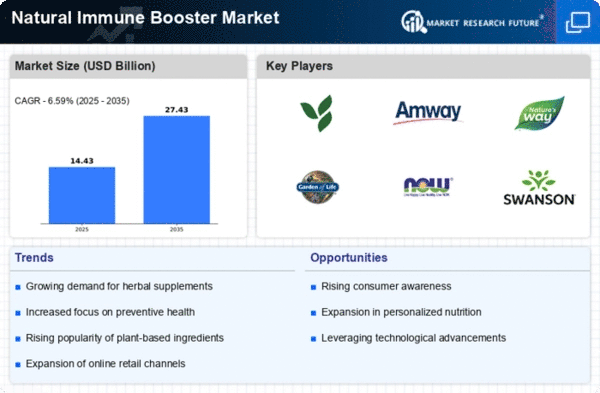
As per MRFR analysis, the Natural Immune Booster Market Size was estimated at 13.54 USD Billion in 2024. The Natural Immune Booster industry is projected to grow from 14.58 USD Billion in 2025 to 27.43 USD Billion by 2035, exhibiting a compound annual growth rate (CAGR) of 6.59 during the forecast period 2025 - 2035.

Key Market Trends & Highlights

The Natural Immune Booster Market is experiencing robust growth driven by consumer trends and innovative product offerings.

  • Consumer awareness regarding health and wellness is on the rise, significantly influencing purchasing decisions in the Natural Immune Booster Market.
  • North America remains the largest market, while the Asia-Pacific region is emerging as the fastest-growing area for natural immune boosters.
  • Nutritional supplements dominate the market, whereas herbal products are witnessing the fastest growth due to changing consumer preferences.
  • Key market drivers include rising health consciousness and a focus on preventive healthcare, which are shaping product development and consumer choices.

Market Size & Forecast

2024 Market Size 13.54 (USD Billion)
2035 Market Size 27.43 (USD Billion)
CAGR (2025 - 2035) 6.59%
Largest Regional Market Share in 2024 North America

Major Players

Herbalife (US), Amway (US), Nature's Way (US), Garden of Life (US), NOW Foods (US), Swanson Health Products (US), Solgar (US), NutraBlast (US), BioCare Copenhagen (DK)

Market Trends

The Natural Immune Booster Market is currently experiencing a notable evolution, driven by a growing awareness of health and wellness among consumers. Individuals are increasingly seeking natural alternatives to enhance their immune systems, leading to a surge in demand for products derived from herbs, vitamins, and other natural sources. This shift appears to be influenced by a broader trend towards holistic health, where consumers prioritize preventive measures over reactive treatments. As a result, manufacturers are innovating to create formulations that appeal to health-conscious individuals, emphasizing transparency and sustainability in their sourcing and production processes. Moreover, the market landscape is characterized by a diverse range of products, including supplements, functional foods, and beverages, all designed to support immune health. The rise of e-commerce platforms has further facilitated access to these products, allowing consumers to explore various options conveniently. This trend suggests that the Natural Immune Booster Market is not only expanding but also diversifying, as companies strive to meet the evolving preferences of their target audiences. The emphasis on quality, efficacy, and natural ingredients is likely to shape the future trajectory of this market, as consumers continue to seek reliable solutions for maintaining their health and well-being.

Increased Consumer Awareness

There is a growing recognition among consumers regarding the importance of immune health. This heightened awareness is prompting individuals to actively seek out natural products that can bolster their immune systems, leading to a shift in purchasing behavior.

Diverse Product Offerings

The Natural Immune Booster Market is witnessing an expansion in the variety of products available. From herbal supplements to fortified foods and beverages, consumers now have access to a wide array of options tailored to support immune function.

Sustainability and Ethical Sourcing

A notable trend within the market is the increasing emphasis on sustainability and ethical sourcing. Consumers are becoming more discerning about the origins of ingredients, favoring brands that prioritize environmentally friendly practices and transparent supply chains.

Natural Immune Booster Market Market Drivers

Market Growth Projections

The Global Natural Immune Booster Market Industry is projected to experience substantial growth over the coming years. With an estimated market value of 19.7 USD Billion in 2024, the industry is expected to reach 40.8 USD Billion by 2035. This growth trajectory indicates a compound annual growth rate of 6.86% from 2025 to 2035. Such projections highlight the increasing consumer demand for natural products that support immune health, driven by factors such as rising health consciousness and the prevalence of chronic diseases.

Growing Health Consciousness

The increasing awareness regarding health and wellness among consumers is a primary driver of the Global Natural Immune Booster Market Industry. Individuals are increasingly seeking natural alternatives to enhance their immune systems, leading to a surge in demand for products such as herbal supplements and functional foods. This trend is reflected in the market's projected growth, with an estimated value of 19.7 USD Billion in 2024. As consumers prioritize preventive health measures, the industry is likely to expand, catering to a demographic that values holistic health solutions.

Advancements in Nutritional Science

Recent advancements in nutritional science are shaping the Global Natural Immune Booster Market Industry by providing a deeper understanding of how various nutrients affect immune health. Research indicates that specific vitamins and minerals, such as vitamin C, vitamin D, and zinc, play crucial roles in immune function. This knowledge is driving the formulation of new products designed to enhance immune response. As a result, the market is poised for growth, with a projected compound annual growth rate of 6.86% from 2025 to 2035, reflecting the increasing consumer interest in scientifically-backed natural solutions.

E-commerce Growth and Accessibility

The rapid expansion of e-commerce platforms is transforming the Global Natural Immune Booster Market Industry by enhancing product accessibility for consumers. Online shopping allows individuals to explore a wide range of natural immune-boosting products from the comfort of their homes. This trend is particularly significant in regions where traditional retail options may be limited. As e-commerce continues to grow, it is expected to contribute to the market's overall expansion, facilitating a broader reach for manufacturers and increasing consumer engagement with natural health products.

Rising Incidence of Chronic Diseases

The escalating prevalence of chronic diseases globally is significantly influencing the Global Natural Immune Booster Market Industry. Conditions such as diabetes, cardiovascular diseases, and autoimmune disorders are prompting consumers to seek natural immune-boosting solutions. This shift towards preventive healthcare is expected to drive market growth, with projections indicating a market value of 40.8 USD Billion by 2035. As individuals become more proactive about their health, the demand for natural products that support immune function is likely to increase, fostering innovation and diversification within the industry.

Increased Focus on Preventive Healthcare

The shift towards preventive healthcare is a notable driver of the Global Natural Immune Booster Market Industry. Consumers are increasingly recognizing the importance of maintaining a robust immune system to prevent illness rather than solely relying on treatments. This proactive approach is reflected in the growing demand for natural immune boosters, which are perceived as safer and more holistic options. As this trend continues, the market is likely to experience sustained growth, aligning with the broader healthcare paradigm that emphasizes wellness and prevention.

Market Segment Insights

By Application: Nutritional Supplements (Largest) vs. Herbal Products (Fastest-Growing)

The Natural Immune Booster Market exhibits a diverse application range, where Nutritional Supplements dominate the market share significantly, drawing in a large consumer base seeking enhanced health benefits. Meanwhile, Functional Foods and Beverages also contribute to the overall market landscape, though they hold smaller shares compared to Nutritional Supplements. Herbal Products are gradually gaining traction, reflecting a notable shift in consumer preferences towards natural sources of immunity support. Growth trends in this segment are propelled by increasing consumer awareness of health and wellness, particularly post-pandemic. As individuals embrace preventive healthcare measures, the demand for Nutritional Supplements remains robust. Additionally, the trend of fortifying foods and beverages with natural immune-boosting ingredients is on the rise, while Herbal Products are gaining momentum, fueled by a rising preference for plant-based remedies.

Nutritional Supplements (Dominant) vs. Herbal Products (Emerging)

Nutritional Supplements stand out as the dominant segment within the Natural Immune Booster Market, offering a wide range of products including vitamins, minerals, and probiotics that cater to health-conscious consumers. These supplements are often backed by scientific research, enhancing their market credibility and trust. Conversely, Herbal Products are emerging as a significant force, appealing to consumers seeking natural, holistic approaches to health. This segment is characterized by its diverse offerings, including herbal teas, extracts, and traditional formulations that are becoming increasingly popular as consumers look for alternative health solutions. The growing trend towards organic and natural products positions Herbal Products as a promising area for growth in the coming years.

By Formulation: Powder (Largest) vs. Liquid (Fastest-Growing)

In the Natural Immune Booster Market, formulation options are diverse, with powders having the largest market share. This popularity is attributed to their ease of use and versatility, appealing to various consumer preferences. In contrast, liquid formulations are becoming increasingly popular, reflecting a shift towards more convenient options for consumers looking to enhance their immune health without the need for additional preparation. The growth of the formulation segment is driven by evolving consumer preferences, with a significant tilt towards liquid products that offer quicker absorption and portability. Additionally, the rising trend of health consciousness is encouraging consumers to opt for formulations that are easy to consume, such as liquids, leading to their rapid growth in the market. As consumers become more informed about health benefits, the demand for both powders and liquids is expected to rise significantly, catering to diverse lifestyle needs.

Powder (Dominant) vs. Liquid (Emerging)

The powder formulation in the Natural Immune Booster Market remains dominant due to its long-standing reputation for efficacy and convenience. Powders are often perceived as highly concentrated, allowing users to customize their dosages according to individual health needs. They are versatile and can be easily integrated into smoothies, shakes, or other food items, which enhances adherence to immune-boosting regimens. Meanwhile, liquid formulations are emerging rapidly, driven by their ease of use and quicker absorption rates. Many consumers, particularly the younger demographic, prefer liquids for their portability and straightforward consumption methods. Liquid immune boosters are often blended with appealing flavors, making them increasingly attractive to a wider audience, thus positioning them as a significant competitor within the segment.

By Source: Plant-based (Largest) vs. Microbial (Fastest-Growing)

In the Natural Immune Booster Market, the source segment showcases a diverse landscape with plant-based options dominating the market share. These products appeal to a health-conscious demographic, driven by the rising consumer preference for natural and organic solutions. Animal-based products hold a notable share, but their appeal is consistently challenged by plant-based alternatives. Meanwhile, microbial sources are emerging as a significant player, capitalizing on innovative research and development, thus gaining traction in the market.

Plant-based (Dominant) vs. Microbial (Emerging)

The plant-based segment of the Natural Immune Booster Market stands as the dominant player, characterized by its extensive range of herbal supplements, adaptogens, and superfoods. This segment benefits from a cultural shift towards vegetarian and vegan lifestyles, alongside a growing awareness of sustainable living. In contrast, the microbial segment, encompassing probiotics and other microbes, is marked as an emerging force, propelled by scientific advancements highlighting the gut-immune connection. The rapid growth of this segment reflects a broader trend toward gut health and holistic wellness, making it an exciting frontier for innovation.

By Distribution Channel: Online Retail (Largest) vs. Pharmacy (Fastest-Growing)

In the Natural Immune Booster Market, the distribution channels exhibit diverse dynamics. Online retail stands as the largest channel, leveraging the surge in e-commerce preferences among consumers seeking convenience and accessibility for their health products. Pharmacies follow closely, maintaining a solid market presence due to their integral role in health management and the growing awareness of immune health.

Online Retail (Dominant) vs. Pharmacy (Emerging)

Online retail serves as the dominant distribution channel in the Natural Immune Booster Market, driven by the increasing digital penetration and a shift among consumers towards purchasing health supplements online. This channel offers convenience and a wider selection, appealing to tech-savvy consumers. In contrast, pharmacies are emerging as a critical channel, rapidly adapting to trends in immune health due to their trusted status among consumers. They are focusing on stocking products that cater to heightened immune support awareness, thus quickly gaining traction in this niche.

By Consumer Age Group: Adults (Largest) vs. Children (Fastest-Growing)

The Natural Immune Booster Market demonstrates a diverse consumer age group segmentation, with adults commanding the largest share of the market. This demographic typically includes a wide range of individuals focused on enhancing their immune health through natural products. Children, while a smaller market segment, are now gaining attention as parents increasingly seek natural immune boosters for their younger ones, establishing a growing trend in this area. In recent years, the interest in natural immune boosters among children has surged, leading to the segment being identified as the fastest-growing. Factors such as rising health awareness, increased emphasis on preventive healthcare, and the growing availability of child-friendly formulations are driving this growth. As awareness of natural health products increases, the demand from this age group is likely to continue accelerating.

Adults (Dominant) vs. Children (Emerging)

Adults represent the dominant segment in the Natural Immune Booster Market, characterized by a proactive approach to health and wellness. This demographic typically includes health-conscious individuals who prioritize preventive measures against illnesses, particularly in the context of increasing health concerns. Adults are more likely to invest in comprehensive wellness regimes, including the use of natural immune boosters, driving their prominent market position. On the other hand, children are emerging as an increasingly significant segment. The drivers of this growth include parental concerns over childhood illnesses and a desire for natural solutions, fostering a favorable environment for products targeting this age group. Consequently, companies are focusing on creating appealing formulations specifically designed for children, such as gummies or flavored liquids, to drive sales growth.

Get more detailed insights about Natural Immune Booster Market Research Report - Forecast to 2035

Regional Insights

North America : Market Leader in Immune Boosters

North America leads the Natural Immune Booster market with a share of $6.77B in 2024, driven by increasing health awareness and a growing preference for natural products. Regulatory support for dietary supplements and a rise in preventive healthcare are key growth catalysts. The region's robust distribution channels and e-commerce platforms further enhance market accessibility, catering to a health-conscious consumer base. The U.S. is the primary market, hosting major players like Herbalife, Amway, and NOW Foods. The competitive landscape is characterized by innovation in product formulations and marketing strategies. Companies are increasingly focusing on organic and plant-based ingredients to meet consumer demand. The presence of established brands and a strong retail network solidify North America's position as a market leader.

Europe : Emerging Market with Growth Potential

Europe's Natural Immune Booster market is valued at $3.85B, reflecting a growing trend towards holistic health solutions. Factors such as an aging population, rising healthcare costs, and increased consumer awareness about immunity are driving demand. Regulatory frameworks in the EU support the use of natural ingredients, fostering innovation and product development in this sector. Leading countries include Germany, the UK, and France, where consumer preferences are shifting towards organic and sustainably sourced products. Key players like BioCare Copenhagen are capitalizing on this trend, enhancing their market presence through strategic partnerships and product diversification. The competitive landscape is vibrant, with a mix of established brands and emerging startups focusing on unique formulations.

Asia-Pacific : Rapid Growth in Health Awareness

The Asia-Pacific Natural Immune Booster market, valued at $2.9B, is experiencing rapid growth due to increasing health consciousness and rising disposable incomes. The region's diverse dietary habits and cultural practices are also contributing to the demand for natural health products. Regulatory bodies are gradually implementing guidelines to ensure product safety and efficacy, which is expected to further boost market growth. Countries like China, India, and Japan are leading the market, with a significant presence of local and international brands. Companies are focusing on traditional herbal ingredients and innovative formulations to cater to local preferences. The competitive landscape is evolving, with both established players and new entrants vying for market share, driven by the growing trend of preventive healthcare.

Middle East and Africa : Niche Market with Growth Opportunities

The Middle East & Africa Natural Immune Booster market is valued at $0.02B, representing a niche segment with significant growth opportunities. Factors such as increasing health awareness, rising lifestyle diseases, and a shift towards preventive healthcare are driving demand for natural immune boosters. Regulatory frameworks are gradually evolving to support the market, although challenges remain in terms of product availability and consumer education. Countries like South Africa and the UAE are at the forefront of this market, with a growing number of local and international brands entering the space. The competitive landscape is characterized by a mix of traditional remedies and modern formulations. Companies are focusing on educating consumers about the benefits of natural products, which is crucial for market expansion.

Key Players and Competitive Insights

The Natural Immune Booster Market is currently characterized by a dynamic competitive landscape, driven by increasing consumer awareness regarding health and wellness. Key players are actively engaging in strategies that emphasize innovation, product diversification, and regional expansion. For instance, Herbalife (US) has been focusing on enhancing its product line with natural ingredients, while Amway (US) is leveraging its extensive distribution network to penetrate emerging markets. These strategies collectively contribute to a moderately fragmented market structure, where the influence of major players is significant but not overwhelming, allowing for smaller entities to carve out niches.In terms of business tactics, companies are increasingly localizing manufacturing to reduce supply chain vulnerabilities and optimize costs. This approach not only enhances responsiveness to local market demands but also aligns with sustainability goals. The competitive structure remains moderately fragmented, with several key players like Nature's Way (US) and Garden of Life (US) contributing to a diverse array of offerings. Their collective influence shapes market dynamics, as they compete not only on product efficacy but also on brand loyalty and consumer trust.

In November Nature's Way (US) launched a new line of immune-boosting supplements that incorporate adaptogenic herbs, reflecting a growing trend towards holistic health solutions. This strategic move is significant as it positions the company to attract health-conscious consumers seeking natural alternatives. The introduction of these products may enhance Nature's Way's market share and reinforce its reputation as a leader in the natural supplement sector.Similarly, in October 2025, Garden of Life (US) announced a partnership with a leading organic farm to source high-quality ingredients for its immune support products. This collaboration underscores the importance of ingredient transparency and sustainability in consumer purchasing decisions. By ensuring that its products are made from organic, responsibly sourced materials, Garden of Life is likely to strengthen its brand loyalty and appeal to environmentally conscious consumers.Moreover, in September 2025, NOW Foods (US) expanded its product range by introducing a new line of vegan immune boosters, catering to the growing demand for plant-based supplements. This strategic expansion not only diversifies NOW Foods' offerings but also aligns with the increasing consumer shift towards veganism and plant-based diets. Such initiatives may enhance the company's competitive edge in a market that is progressively leaning towards natural and ethical consumption.

As of December the competitive trends in the Natural Immune Booster Market are increasingly defined by digitalization, sustainability, and the integration of AI technologies. Strategic alliances are becoming more prevalent, as companies recognize the value of collaboration in enhancing product offerings and market reach. Looking ahead, competitive differentiation is likely to evolve, with a pronounced shift from price-based competition to a focus on innovation, technological advancements, and supply chain reliability. This evolution suggests that companies that prioritize these aspects will be better positioned to thrive in an increasingly competitive environment.

Key Companies in the Natural Immune Booster Market include

Industry Developments

Several prominent businesses operating in the market have been conducting clinical trials to improve new and improved immune health products in the market setting.

AB Mauri, a well-known yeast maker from the United Kingdom, has made plans to establish a 1,100-crore unit in UP, India, to expand its business operations in the country.

Report Outlook

A detailed natural immune booster market forecast has been presented in the report to ascertain its future growth potential. Several strategic tools have been used to evaluate the market, including the variables that exist in it. The PESTLE analysis has helped to identify and examine the core elements that exist in the political, economic, social, technological, legal, and environmental settings of the natural immune booster Industry. An exhaustive SWOT analysis has been carried out, which has helped to identify factors such as strengths, weaknesses, opportunities, and threats.

The intensity of competition in the market has been assessed with the help of Porter’s Five Force model. Each of the market trends that have been taken into consideration in the report has the potential to mold the market performance and profitability.

Key Industrial Segments

By Type

Yeast extract

Yeast beta

Others

By Application

Beverages

Dairy products

Pharmaceuticals

Bakery and Processed food

Others

Future Outlook

Natural Immune Booster Market Future Outlook

The Natural Immune Booster Market is projected to grow at a 6.59% CAGR from 2025 to 2035, driven by increasing health awareness, demand for natural products, and technological advancements.

New opportunities lie in:

  • Development of personalized immune booster supplements
  • Expansion into emerging markets with tailored products
  • Integration of digital health platforms for consumer engagement

By 2035, the market is expected to be robust, reflecting strong growth and innovation.

Market Segmentation

Natural Immune Booster Market Source Outlook

  • Plant-based
  • Animal-based
  • Microbial
  • Synthetic

Natural Immune Booster Market Application Outlook

  • Nutritional Supplements
  • Functional Foods
  • Beverages
  • Herbal Products

Natural Immune Booster Market Formulation Outlook

  • Powder
  • Liquid
  • Capsule
  • Tablet

Natural Immune Booster Market Consumer Age Group Outlook

  • Children
  • Adults
  • Elderly

Natural Immune Booster Market Distribution Channel Outlook

  • Online Retail
  • Pharmacy
  • Supermarket
  • Health Food Store

Report Scope

MARKET SIZE 202413.54(USD Billion)
MARKET SIZE 202514.58(USD Billion)
MARKET SIZE 203527.43(USD Billion)
COMPOUND ANNUAL GROWTH RATE (CAGR)6.59% (2025 - 2035)
REPORT COVERAGERevenue Forecast, Competitive Landscape, Growth Factors, and Trends
BASE YEAR2024
Market Forecast Period2025 - 2035
Historical Data2019 - 2024
Market Forecast UnitsUSD Billion
Key Companies ProfiledHerbalife (US), Amway (US), Nature's Way (US), Garden of Life (US), NOW Foods (US), Swanson Health Products (US), Solgar (US), NutraBlast (US), BioCare Copenhagen (DK)
Segments CoveredApplication, Formulation, Source, Distribution Channel, Consumer Age Group
Key Market OpportunitiesGrowing consumer preference for plant-based supplements drives innovation in the Natural Immune Booster Market.
Key Market DynamicsRising consumer preference for plant-based ingredients drives innovation and competition in the Natural Immune Booster Market.
Countries CoveredNorth America, Europe, APAC, South America, MEA

FAQs

How Natural Immune Booster Market Is Growing ?

Natural immune booster market size is expected to reach USD 19.67 billion at a CAGR 6.86% during the forecast period 2024-2032.

Which is Natural Immune Booster Market Driving Factor ?

A broad range of market drivers exists in the natural immune booster market that could influence its growth in the future

Who are the key players in natural immune booster market?

Specialty Biotech Co. Ltd., Royal DSM N. V., AB Mauri, Angel Yeast Co. Ltd, Lallemand Inc., BiotecPharmacon ASA, and Hansen A/S are the major companies operating in natural immune booster market.

Which region has highest growth rate in natural immune booster market?

Europe is expected register the highest CAGR during 2022 to 2032.

  1. SECTION I: EXECUTIVE SUMMARY AND KEY HIGHLIGHTS
    1. | 1.1 EXECUTIVE SUMMARY
    2. | 1.1.1 Market Overview
    3. | 1.1.2 Key Findings
    4. | 1.1.3 Market Segmentation
    5. | 1.1.4 Competitive Landscape
    6. | 1.1.5 Challenges and Opportunities
    7. | 1.1.6 Future Outlook
  2. SECTION II: SCOPING, METHODOLOGY AND MARKET STRUCTURE
    1. | 2.1 MARKET INTRODUCTION
    2. | 2.1.1 Definition
    3. | 2.1.2 Scope of the study
    4. |-- 2.1.2.1 Research Objective
    5. |-- 2.1.2.2 Assumption
    6. |-- 2.1.2.3 Limitations
    7. | 2.2 RESEARCH METHODOLOGY
    8. | 2.2.1 Overview
    9. | 2.2.2 Data Mining
    10. | 2.2.3 Secondary Research
    11. | 2.2.4 Primary Research
    12. |-- 2.2.4.1 Primary Interviews and Information Gathering Process
    13. |-- 2.2.4.2 Breakdown of Primary Respondents
    14. | 2.2.5 Forecasting Model
    15. | 2.2.6 Market Size Estimation
    16. |-- 2.2.6.1 Bottom-Up Approach
    17. |-- 2.2.6.2 Top-Down Approach
    18. | 2.2.7 Data Triangulation
    19. | 2.2.8 Validation
  3. SECTION III: QUALITATIVE ANALYSIS
    1. | 3.1 MARKET DYNAMICS
    2. | 3.1.1 Overview
    3. | 3.1.2 Drivers
    4. | 3.1.3 Restraints
    5. | 3.1.4 Opportunities
    6. | 3.2 MARKET FACTOR ANALYSIS
    7. | 3.2.1 Value chain Analysis
    8. | 3.2.2 Porter's Five Forces Analysis
    9. |-- 3.2.2.1 Bargaining Power of Suppliers
    10. |-- 3.2.2.2 Bargaining Power of Buyers
    11. |-- 3.2.2.3 Threat of New Entrants
    12. |-- 3.2.2.4 Threat of Substitutes
    13. |-- 3.2.2.5 Intensity of Rivalry
    14. | 3.2.3 COVID-19 Impact Analysis
    15. |-- 3.2.3.1 Market Impact Analysis
    16. |-- 3.2.3.2 Regional Impact
    17. |-- 3.2.3.3 Opportunity and Threat Analysis
  4. SECTION IV: QUANTITATIVE ANALYSIS
    1. | 4.1 Food, Beverages & Nutrition, BY Application (USD Billion)
    2. | 4.1.1 Nutritional Supplements
    3. | 4.1.2 Functional Foods
    4. | 4.1.3 Beverages
    5. | 4.1.4 Herbal Products
    6. | 4.2 Food, Beverages & Nutrition, BY Formulation (USD Billion)
    7. | 4.2.1 Powder
    8. | 4.2.2 Liquid
    9. | 4.2.3 Capsule
    10. | 4.2.4 Tablet
    11. | 4.3 Food, Beverages & Nutrition, BY Source (USD Billion)
    12. | 4.3.1 Plant-based
    13. | 4.3.2 Animal-based
    14. | 4.3.3 Microbial
    15. | 4.3.4 Synthetic
    16. | 4.4 Food, Beverages & Nutrition, BY Distribution Channel (USD Billion)
    17. | 4.4.1 Online Retail
    18. | 4.4.2 Pharmacy
    19. | 4.4.3 Supermarket
    20. | 4.4.4 Health Food Store
    21. | 4.5 Food, Beverages & Nutrition, BY Consumer Age Group (USD Billion)
    22. | 4.5.1 Children
    23. | 4.5.2 Adults
    24. | 4.5.3 Elderly
    25. | 4.6 Food, Beverages & Nutrition, BY Region (USD Billion)
    26. | 4.6.1 North America
    27. |-- 4.6.1.1 US
    28. |-- 4.6.1.2 Canada
    29. | 4.6.2 Europe
    30. |-- 4.6.2.1 Germany
    31. |-- 4.6.2.2 UK
    32. |-- 4.6.2.3 France
    33. |-- 4.6.2.4 Russia
    34. |-- 4.6.2.5 Italy
    35. |-- 4.6.2.6 Spain
    36. |-- 4.6.2.7 Rest of Europe
    37. | 4.6.3 APAC
    38. |-- 4.6.3.1 China
    39. |-- 4.6.3.2 India
    40. |-- 4.6.3.3 Japan
    41. |-- 4.6.3.4 South Korea
    42. |-- 4.6.3.5 Malaysia
    43. |-- 4.6.3.6 Thailand
    44. |-- 4.6.3.7 Indonesia
    45. |-- 4.6.3.8 Rest of APAC
    46. | 4.6.4 South America
    47. |-- 4.6.4.1 Brazil
    48. |-- 4.6.4.2 Mexico
    49. |-- 4.6.4.3 Argentina
    50. |-- 4.6.4.4 Rest of South America
    51. | 4.6.5 MEA
    52. |-- 4.6.5.1 GCC Countries
    53. |-- 4.6.5.2 South Africa
    54. |-- 4.6.5.3 Rest of MEA
  5. SECTION V: COMPETITIVE ANALYSIS
    1. | 5.1 Competitive Landscape
    2. | 5.1.1 Overview
    3. | 5.1.2 Competitive Analysis
    4. | 5.1.3 Market share Analysis
    5. | 5.1.4 Major Growth Strategy in the Food, Beverages & Nutrition
    6. | 5.1.5 Competitive Benchmarking
    7. | 5.1.6 Leading Players in Terms of Number of Developments in the Food, Beverages & Nutrition
    8. | 5.1.7 Key developments and growth strategies
    9. |-- 5.1.7.1 New Product Launch/Service Deployment
    10. |-- 5.1.7.2 Merger & Acquisitions
    11. |-- 5.1.7.3 Joint Ventures
    12. | 5.1.8 Major Players Financial Matrix
    13. |-- 5.1.8.1 Sales and Operating Income
    14. |-- 5.1.8.2 Major Players R&D Expenditure. 2023
    15. | 5.2 Company Profiles
    16. | 5.2.1 Herbalife (US)
    17. |-- 5.2.1.1 Financial Overview
    18. |-- 5.2.1.2 Products Offered
    19. |-- 5.2.1.3 Key Developments
    20. |-- 5.2.1.4 SWOT Analysis
    21. |-- 5.2.1.5 Key Strategies
    22. | 5.2.2 Amway (US)
    23. |-- 5.2.2.1 Financial Overview
    24. |-- 5.2.2.2 Products Offered
    25. |-- 5.2.2.3 Key Developments
    26. |-- 5.2.2.4 SWOT Analysis
    27. |-- 5.2.2.5 Key Strategies
    28. | 5.2.3 Nature's Way (US)
    29. |-- 5.2.3.1 Financial Overview
    30. |-- 5.2.3.2 Products Offered
    31. |-- 5.2.3.3 Key Developments
    32. |-- 5.2.3.4 SWOT Analysis
    33. |-- 5.2.3.5 Key Strategies
    34. | 5.2.4 Garden of Life (US)
    35. |-- 5.2.4.1 Financial Overview
    36. |-- 5.2.4.2 Products Offered
    37. |-- 5.2.4.3 Key Developments
    38. |-- 5.2.4.4 SWOT Analysis
    39. |-- 5.2.4.5 Key Strategies
    40. | 5.2.5 NOW Foods (US)
    41. |-- 5.2.5.1 Financial Overview
    42. |-- 5.2.5.2 Products Offered
    43. |-- 5.2.5.3 Key Developments
    44. |-- 5.2.5.4 SWOT Analysis
    45. |-- 5.2.5.5 Key Strategies
    46. | 5.2.6 Swanson Health Products (US)
    47. |-- 5.2.6.1 Financial Overview
    48. |-- 5.2.6.2 Products Offered
    49. |-- 5.2.6.3 Key Developments
    50. |-- 5.2.6.4 SWOT Analysis
    51. |-- 5.2.6.5 Key Strategies
    52. | 5.2.7 Solgar (US)
    53. |-- 5.2.7.1 Financial Overview
    54. |-- 5.2.7.2 Products Offered
    55. |-- 5.2.7.3 Key Developments
    56. |-- 5.2.7.4 SWOT Analysis
    57. |-- 5.2.7.5 Key Strategies
    58. | 5.2.8 NutraBlast (US)
    59. |-- 5.2.8.1 Financial Overview
    60. |-- 5.2.8.2 Products Offered
    61. |-- 5.2.8.3 Key Developments
    62. |-- 5.2.8.4 SWOT Analysis
    63. |-- 5.2.8.5 Key Strategies
    64. | 5.2.9 BioCare Copenhagen (DK)
    65. |-- 5.2.9.1 Financial Overview
    66. |-- 5.2.9.2 Products Offered
    67. |-- 5.2.9.3 Key Developments
    68. |-- 5.2.9.4 SWOT Analysis
    69. |-- 5.2.9.5 Key Strategies
    70. | 5.3 Appendix
    71. | 5.3.1 References
    72. | 5.3.2 Related Reports

Food, Beverages & Nutrition Market Segmentation

Food, Beverages & Nutrition By Application (USD Billion, 2025-2035)

  • Nutritional Supplements
  • Functional Foods
  • Beverages
  • Herbal Products

Food, Beverages & Nutrition By Formulation (USD Billion, 2025-2035)

  • Powder
  • Liquid
  • Capsule
  • Tablet

Food, Beverages & Nutrition By Source (USD Billion, 2025-2035)

  • Plant-based
  • Animal-based
  • Microbial
  • Synthetic

Food, Beverages & Nutrition By Distribution Channel (USD Billion, 2025-2035)

  • Online Retail
  • Pharmacy
  • Supermarket
  • Health Food Store

Food, Beverages & Nutrition By Consumer Age Group (USD Billion, 2025-2035)

  • Children
  • Adults
  • Elderly
Infographic

Free Sample Request

Kindly complete the form below to receive a free sample of this Report

Get Free Sample

Customer Strories

Compare Licence

×
Features License Type
Single User Multiuser License Enterprise User
Price $4,950 $5,950 $7,250
Maximum User Access Limit 1 User Upto 10 Users Unrestricted Access Throughout the Organization
Free Customization
Direct Access to Analyst
Deliverable Format
Platform Access
Discount on Next Purchase 10% 15% 15%
Printable Versions