Request Free Sample ×

Kindly complete the form below to receive a free sample of this Report

* Please use a valid business email

Leading companies partner with us for data-driven Insights

clients tt-cursor
Hero Background
English
Chinese
French
Japanese
Korean
German
Spanish

Liquid Biopsy Market Trends

ID: MRFR/HC/0239-CR
171 Pages
Rahul Gotadki
February 2023

Liquid Biopsy Market Research Report: Size, Share, Trend Analysis By Applications (Cancer Diagnosis, Treatment Monitoring, Recurrence Monitoring, Clinical Trials, Research Applications), By Sample Type (Blood, Urine, Saliva, Pleural Fluid, Cerebrospinal Fluid), By Technology (Next Generation Sequencing, Digital PCR, Microfluidics, Exosome Isolation, Circulating Tumor Cells), By End Use (Hospitals, Diagnostic Laboratories, Research Institutes, Pharmaceutical Companies) and By Regional (North America, Europe, South America, Asia Pacific, Middle East and Africa) - Growth Outlook & Industry Forecast 2025 To 2035

Share:
Download PDF ×

We do not share your information with anyone. However, we may send you emails based on your report interest from time to time. You may contact us at any time to opt-out.

Liquid Biopsy Market Infographic
Purchase Options

Market Trends

Key Emerging Trends in the Liquid Biopsy Market

Liquid biopsies present a revolutionary approach to medical diagnostics by sidestepping the need for painful tissue extractions, thereby alleviating patient discomfort associated with the procedure. The primary sources of liquid samples used in this non-invasive method are blood and urine, making the collection process relatively painless. Although some liquid biopsy samples involve more invasive procedures, like spinal fluid extraction, the overall reduction in pain compared to traditional tissue biopsies is a significant advantage, easing patient apprehension. Moreover, liquid biopsy offers a safe and effective alternative for individuals who may be deemed unsuitable candidates for tissue biopsies due to associated risks, such as lung cancer patients with tumors located perilously close to the heart. This reduction in pain and associated risks is a crucial driver in the market, especially for patients willing to invest a premium amount to enhance their quality of life. Traditional tissue biopsies encounter challenges stemming from a low detection rate due to the heterogeneous nature of tissues. Conducting consecutive biopsies to capture the spatial and temporal heterogeneity of tumors is not only expensive but also logistically challenging. In contrast, liquid biopsy involves the detection of free circulating DNA fragments, which are not secreted by healthy cells. Recent technological breakthroughs, such as circulating tumor DNA (ctDNA) genome mapping, and the development of biomarkers with increased sensitivity, have enabled real-time profiling and monitoring of diseases, particularly cancer. This allows for the early detection of minimal residual disease, significantly improving survival rates in life-threatening cases. Additionally, liquid biopsy has demonstrated the ability to cut down result turnaround times. Traditional tissue biopsy procedures typically take an average of 30 days to yield results, whereas liquid biopsy delivers results in approximately 12 days. With the ongoing trend of increasing automation in liquid biopsy processes, this timeframe is expected to further decrease.

The advantages offered by liquid biopsy in terms of reduced pain, lowered risks, and enhanced diagnostic efficiency have positioned it as a transformative technology in the medical field. The ability to detect diseases earlier and more accurately not only contributes to improved patient outcomes but also streamlines the diagnostic process. As automation continues to play a more significant role in liquid biopsy procedures, the technology is likely to become even more accessible and efficient, further solidifying its place as a game-changer in the realm of medical diagnostics.

Author
Author Profile
Rahul Gotadki
Research Manager

He holds an experience of about 9+ years in Market Research and Business Consulting, working under the spectrum of Life Sciences and Healthcare domains. Rahul conceptualizes and implements a scalable business strategy and provides strategic leadership to the clients. His expertise lies in market estimation, competitive intelligence, pipeline analysis, customer assessment, etc.

Leave a Comment

FAQs

What is the current valuation of the Liquid Biopsy Market as of 2024?

It was valued at 9.1 USD Billion in 2024.

What is the projected market size for the Liquid Biopsy Market by 2035?

<p>The market is projected to reach 27.34 USD Billion by 2035.</p>

What is the expected CAGR for the Liquid Biopsy Market during the forecast period 2025 - 2035?

The expected CAGR for during 2025 - 2035 is 10.52%.

Which application segment is anticipated to dominate the Liquid Biopsy Market?

<p>The Oncology application segment is expected to grow from 4.5 USD Billion to 13.5 USD Billion by 2035.</p>

How does the market for Non-Oncology applications compare to Prenatal Testing?

<p>The Non-Oncology segment is projected to expand from 2.0 USD Billion to 6.0 USD Billion, while Prenatal Testing is expected to grow from 1.0 USD Billion to 3.0 USD Billion.</p>

What are the leading sample types utilized in the Liquid Biopsy Market?

<p>Blood is anticipated to be the leading sample type, growing from 3.5 USD Billion to 10.5 USD Billion by 2035.</p>

Which technology segment is likely to see the most growth in the Liquid Biopsy Market?

<p>Next Generation Sequencing is projected to increase from 2.73 USD Billion to 8.12 USD Billion during the forecast period.</p>

What role do hospitals play in the Liquid Biopsy Market?

<p>Hospitals are expected to grow from 2.73 USD Billion to 8.12 USD Billion, indicating their significant role as end users.</p>

Who are the key players in the Liquid Biopsy Market?

<p>Key players include Guardant Health, Exact Sciences, GRAIL, Freenome, and Roche Diagnostics.</p>

What is the anticipated growth for the Diagnostic Laboratories segment?

<p>The Diagnostic Laboratories segment is expected to grow from 2.27 USD Billion to 6.81 USD Billion by 2035.</p>

Market Summary

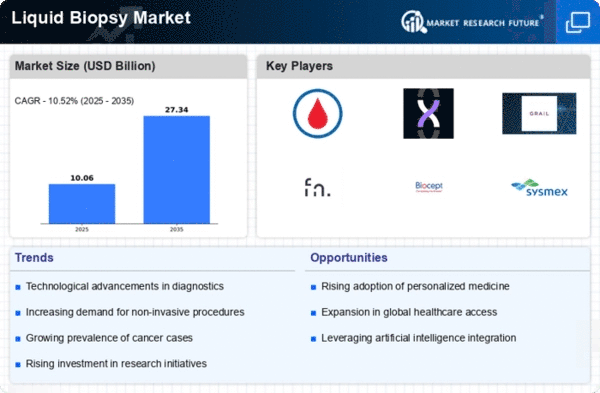
As per Market Research Future Reports analysis, the Liquid Biopsy Market size was valued at USD 9.1 Billion in 2024. The market is projected to grow from USD 10.06 Billion in 2025 to USD 27.34 Billion by 2035, exhibiting a CAGR of 10.52% during the forecast period 2025–2035. North America led the market with over 49.45% share, generating around USD 4.5 Billion in revenue.
 
The Liquid Biopsy Market is primarily driven by increasing demand for non-invasive cancer diagnostics and rising adoption of precision medicine, enabling early detection, real-time monitoring, and personalized treatment approaches, thereby improving patient outcomes and accelerating adoption across oncology care globally.
 
According to the World Health Organization (WHO), cancer causes nearly 10 million deaths annually, making early detection critical for survival. This rising burden is accelerating demand for non-invasive diagnostic solutions like liquid biopsy, enabling timely diagnosis and improved treatment outcomes across global healthcare systems.

Key Market Trends & Highlights

The Liquid Biopsy Market is experiencing robust growth driven by technological advancements and increasing clinical adoption.

  • North America holds 49.45% share in 2024, driven by strong oncology diagnostics infrastructure. Europe accounts for 30% share, valued at USD 2.73 billion in 2024. Oncology dominates with 66% share, driven by increasing demand for early cancer detection and personalized treatment solutions. Blood-based testing leads with 69% share, supported by widespread clinical adoption and diagnostic efficiency.

Market Size & Forecast

2024 Market Size 9.1 (USD Billion)
2035 Market Size 27.34 (USD Billion)
CAGR (2025 - 2035) 10.52%
Largest Regional Market Share in 2024 North America

Major Players

Companies such as Guardant Health (US), Exact Sciences (US), GRAIL (US), Freenome (US), Biocept (US), Sysmex Corporation (JP), Roche Diagnostics (CH), Qiagen (DE), Thermo Fisher Scientific (US), Illumina (US) are some of the major participants in the global market.

Market Trends

The liquid biopsy market size is currently experiencing a transformative phase, characterized by advancements in technology and increasing acceptance among healthcare professionals. This innovative approach to cancer diagnostics and monitoring offers a non-invasive alternative to traditional tissue biopsies, which often involve surgical procedures. The growing prevalence of cancer globally has heightened the demand for effective diagnostic tools, and liquid biopsies appear to provide a promising solution. Furthermore, the integration of artificial intelligence and machine learning into liquid biopsy analysis is likely to enhance accuracy and efficiency, potentially revolutionizing patient care.

In addition to technological advancements, regulatory support is becoming more pronounced, as governing bodies recognize the potential of liquid biopsies in clinical settings. This support may facilitate faster approvals and encourage research and development in this field. Moreover, the increasing focus on personalized medicine suggests that liquid biopsies could play a crucial role in tailoring treatment plans to individual patients. As the market continues to evolve, it seems poised for substantial growth, driven by innovation, regulatory backing, and a shift towards more patient-centric healthcare solutions.

Technological Advancements

Liquid biopsy current technology and clinical applications are enhancing the sensitivity and specificity of cancer detection. Techniques such as next-generation sequencing and digital droplet PCR are becoming more prevalent, allowing for the identification of genetic mutations and circulating tumor DNA with greater precision. This trend indicates a shift towards more reliable diagnostic methods that could improve patient outcomes.

The Institute for Health Metrics and Evaluation (IHME) reports that cancer incidence continues to rise globally, increasing demand for advanced diagnostic technologies. Innovations such as next-generation sequencing enhance detection accuracy of circulating tumor DNA, enabling early diagnosis and improving treatment monitoring, thereby supporting widespread adoption of liquid biopsy technologies.

Regulatory Support

There is an increasing trend of regulatory bodies providing favorable guidelines for the approval of liquid biopsy tests. This support may lead to a more efficient pathway for bringing new diagnostic tools to market, thereby encouraging investment and research in this field. As regulations evolve, the market could see a surge in novel products.

The European Centre for Disease Prevention and Control (ECDC) emphasizes strengthening healthcare innovation and regulatory frameworks across Europe. Supportive regulatory pathways are accelerating approval of advanced diagnostic technologies, including liquid biopsies, enabling faster clinical adoption and improving access to innovative cancer diagnostic solutions.

Growing Clinical Adoption

Healthcare providers are gradually embracing liquid biopsy technologies due to their non-invasive nature and potential for real-time monitoring. This growing acceptance among clinicians suggests a shift in diagnostic practices, which may lead to broader implementation in routine cancer care. As more studies validate the efficacy of liquid biopsies, their use is expected to expand significantly.

Liquid Biopsy Market Market Drivers

Rising Incidence of Cancer

The increasing prevalence of cancer globally serves as a primary driver for the Global Liquid Biopsy Market Industry. As cancer cases rise, the demand for early detection and monitoring solutions intensifies. Liquid biopsies offer a non-invasive alternative to traditional tissue biopsies, allowing for the analysis of circulating tumor DNA. For instance, the World Health Organization indicates that cancer cases are expected to reach 30 million by 2040. This growing patient population is likely to propel the market, with projections estimating the Global Liquid Biopsy Market to reach 8.9 USD Billion in 2024 and potentially 22.9 USD Billion by 2035.

Market Segment Insights

By Application: Oncology (Largest) vs. Prenatal Testing (Fastest-Growing)

In the Liquid Biopsy Market, Oncology leads as the predominant application segment, significantly contributing to overall market dynamics. Its strong market share of 66% reflects the rising prevalence of cancer, alongside increasing emphasis on early detection and personalized treatment approaches. Conversely, Prenatal Testing is emerging as the fastest-growing segment, spurred by advancements in technology that enhance accuracy and the growing demand for non-invasive prenatal testing options amongst expectant parents. The growth trends in the market are primarily driven by the increasing adoption of liquid biopsies over traditional tissue biopsies, due to their minimally invasive nature and ability to provide real-time insights. Furthermore, factors such as technological advancements, regulatory support, and rising healthcare expenditure are fueling the market's expansion. Additionally, an increase in the awareness of liquid biopsy benefits is fostering a favorable environment for prenatal testing and infectious disease applications as well.

Oncology: Dominant vs. Prenatal Testing: Emerging

Oncology, as the dominant application segment in the liquid biopsy market, is characterized by its extensive utilization in cancer diagnosis and monitoring, aiding in precise treatment strategies. The segment benefits from robust technological innovations that enhance the sensitivity and specificity of cancer detection methodologies. In contrast, Prenatal Testing is an emerging segment that is gaining traction due to its non-invasive nature, making it appealing for expectant parents. Its growth is supported by advancements in NIPT (non-invasive prenatal testing) technologies, which improve the accuracy of detecting genetic anomalies and provide peace of mind to parents. Together, these segments illustrate the evolving landscape of liquid biopsies, positioning them at the forefront of <a title="precision medicine" href="https://www.marketresearchfuture.com/reports/precision-medicine-market-925" target="_blank" rel="noopener">precision medicine</a> applications.

By Sample Type: Blood (Largest) vs. Urine (Fastest-Growing)

Among the sample types analyzed in the liquid biopsy market, blood accounts for the largest share of 69% due to its widespread acceptance and utility in clinical settings for a variety of cancers. It serves as the primary medium for detecting circulating tumor DNA, making it an essential tool for non-invasive diagnostics. Following blood, urine is emerging rapidly, fueled by its minimally invasive collection methods and increasing adoption in early cancer detection systems.

Blood (Dominant) vs. Urine (Emerging)

The blood sample type remains dominant in the liquid biopsy market as it facilitates comprehensive analysis of tumor dynamics through circulating tumor cells and cell-free DNA. Its established role in oncology and compatibility with various technologies has solidified its position. On the other hand, urine is an emerging sample type, gaining traction due to innovations in detection techniques. Its ease of collection makes it attractive for patient compliance and large-scale screenings, particularly for bladder cancer and other urological malignancies. As research progresses, urine-based liquid biopsies are expected to carve out a significant niche alongside blood-based methods.

By Technology: Next Generation Sequencing (Largest) vs. Digital PCR (Fastest-Growing)

In the Liquid Biopsy Market, the segmentation by technology reveals that Next Generation Sequencing (NGS) holds the largest market share of 61%, driven by its advanced capabilities in genomic analysis and high-throughput screening. Digital PCR follows closely, emerging as a significant contender and catering to precise quantification of DNA, making it vital for monitoring treatment responses effectively. Meanwhile, other technologies such as Microfluidics, Mass Spectrometry, and Circulating Tumor Cell Technology also play essential roles but command smaller portions of the overall market.

Next Generation Sequencing (Dominant) vs. Digital PCR (Emerging)

Next Generation Sequencing (NGS) leads the Liquid Biopsy Market due to its ability to analyze vast genomic information rapidly, enabling early cancer detection and personalized medicine. Its technological advancements have established it as a preferred choice for researchers and clinicians alike. In contrast, Digital PCR is gaining momentum as an emerging technology favored for its sensitivity and specificity in quantifying rare mutations, which is crucial in treatment monitoring and progression assessment. As healthcare emphasizes precision medicine, the traction of Digital PCR is anticipated to grow significantly due to its superior performance in detecting low-abundance targets.

By End User: Hospitals (Largest) vs. Diagnostic Laboratories (Fastest-Growing)

In the Liquid Biopsy Market, hospitals hold the largest share among end users with 58%, driven by their comprehensive capabilities in patient care and advanced diagnostic technologies. They serve as central hubs for conducting liquid biopsy procedures, resulting in the highest volume of tests performed. In contrast, diagnostic laboratories are witnessing rapid growth, spurred by the increasing demand for timely and accurate cancer diagnostics, leading to a significant uptick in service offerings and technological advancements in laboratory settings.

Hospitals (Dominant) vs. Diagnostic Laboratories (Emerging)

Hospitals play a dominant role in the Liquid Biopsy Market due to their integrated healthcare services and ability to provide immediate patient care, which enhances the adoption of liquid biopsy tests. Their established infrastructure for complex diagnostics supports a thriving environment for innovative cancer detection solutions. On the other hand, diagnostic laboratories are emerging as crucial players, benefiting from their specialized focus on testing and analysis. This sector is rapidly evolving to incorporate advanced technologies that cater to the growing need for precise and efficient diagnostic services. As more laboratories invest in the capabilities to perform liquid biopsies, they position themselves as vital contributors to the market's expansion.

Get more detailed insights about Liquid Biopsy Market Research Report - Global Forecast to 2035

Regional Insights

North America : Market Leader in Innovation

North America leads in Liquid Biopsy Market Size, accounting for over 49.45% of the global revenue in 2024. The region's growth is driven by increasing cancer prevalence, advancements in technology, and supportive regulatory frameworks. The FDA's focus on expediting the approval of liquid biopsy tests has further catalyzed market expansion, making it a hub for innovation and research in oncology diagnostics.

The United States is the primary contributor to this market, with key players like Guardant Health, Exact Sciences, and GRAIL leading the charge. The competitive landscape is characterized by continuous innovation and strategic partnerships among companies. The presence of established firms and a robust healthcare infrastructure positions North America as a formidable force in the liquid biopsy sector.

Growth is driven by high cancer prevalence, advanced healthcare infrastructure, and strong regulatory support for innovative diagnostic technologies. The Centers for Disease Control and Prevention (CDC) reports that cancer is the second leading cause of death in the U.S., with millions of new cases diagnosed annually. This significant burden is driving adoption of advanced diagnostics like liquid biopsy for early detection and personalized treatment.

Europe : Emerging Market with Growth Potential

Europe Liquid Biopsy Market size was valued at USD 2.73 billion in 2024, making it the second-largest regional market with 30% share. The growth is fueled by increasing awareness of early cancer detection and the adoption of personalized medicine. Regulatory bodies are also playing a crucial role, with the European Medicines Agency (EMA) actively promoting the development of innovative diagnostic solutions, which is expected to enhance market dynamics significantly.

Leading countries in this region include Germany, the UK, and France, where significant investments in healthcare technology are being made. The competitive landscape features key players like Roche Diagnostics and Qiagen, who are focusing on expanding their product offerings. The collaboration between public and private sectors is fostering innovation, making Europe a promising market for liquid biopsy advancements.

Growth is driven by increasing awareness of early cancer detection, adoption of personalized medicine, and supportive regulatory frameworks. According to the World Health Organization (WHO), cancer remains a leading cause of mortality across Europe, accounting for millions of cases annually. Increasing healthcare investments and adoption of advanced diagnostic technologies are enhancing early detection capabilities and driving market growth.

Asia-Pacific : Rapidly Growing Market Landscape

The Asia-Pacific region is witnessing a burgeoning liquid biopsy market, valued at 1.82 in 2024. This growth is driven by rising healthcare expenditures, increasing cancer incidences, and a growing emphasis on early diagnosis. Governments in countries like China and India are investing heavily in healthcare infrastructure, which is expected to further propel market growth and accessibility of liquid biopsy tests.

China and Japan are leading the charge in this region, with significant contributions from companies like Sysmex Corporation. The competitive landscape is evolving, with both local and international players vying for market share. The increasing collaboration between research institutions and biotech firms is fostering innovation, making Asia-Pacific a key player in The Liquid Biopsy.

Middle East and Africa : Emerging Market with Challenges

The Middle East and Africa (MEA) region represents a nascent liquid biopsy market, with a size of 0.1 in 2024. The growth potential is significant, driven by increasing cancer awareness and the need for advanced diagnostic solutions. However, challenges such as limited healthcare infrastructure and regulatory hurdles may impede rapid market development.

Governments are beginning to recognize the importance of early cancer detection, which could catalyze future growth. Countries like South Africa and the UAE are at the forefront of adopting innovative healthcare solutions. The competitive landscape is still developing, with a few key players beginning to establish a presence. As investments in healthcare technology increase, the MEA region is poised for gradual growth in the liquid biopsy market, albeit at a slower pace compared to other regions.

Key Players and Competitive Insights

The Liquid Biopsy Market is currently characterized by a dynamic competitive landscape, driven by advancements in technology and increasing demand for non-invasive diagnostic solutions. Key players such as Guardant Health (US), Exact Sciences (US), and Roche Diagnostics (CH) are at the forefront, each adopting distinct strategies to enhance their market presence. Guardant Health (US) focuses on innovation in genomic profiling, aiming to provide comprehensive insights into cancer treatment.
 
Meanwhile, Exact Sciences (US) emphasizes partnerships with healthcare providers to expand its testing capabilities, thereby enhancing patient access to liquid biopsy solutions. Roche Diagnostics (CH) leverages its extensive research and development resources to integrate liquid biopsy technologies into its existing diagnostic portfolio, thereby reinforcing its competitive edge.The business tactics employed by these companies reflect a concerted effort to optimize operations and enhance market penetration. The Liquid Biopsy Market appears moderately fragmented, with a mix of established players and emerging startups. This structure allows for a diverse range of offerings, although the influence of major companies is substantial. Localizing manufacturing and optimizing supply chains are common strategies among these firms, aimed at reducing costs and improving service delivery.
 

In November Guardant Health (US) announced a strategic partnership with a leading healthcare provider to enhance its liquid biopsy testing services. This collaboration is expected to facilitate broader access to its innovative genomic tests, potentially increasing its market share and reinforcing its position as a leader in the field. The strategic importance of this partnership lies in its ability to streamline patient access to advanced diagnostics, thereby improving clinical outcomes.
 

In October Exact Sciences (US) launched a new liquid biopsy test designed to detect multiple cancer types at earlier stages. This introduction not only showcases the company's commitment to innovation but also positions it to capture a larger segment of the market focused on early detection. The significance of this launch is underscored by the growing emphasis on preventive healthcare, which is likely to drive demand for such diagnostic solutions.
In September Roche Diagnostics (CH) expanded its liquid biopsy product line by acquiring a startup specializing in next-generation sequencing technologies.
 
This acquisition is indicative of Roche's strategy to enhance its technological capabilities and diversify its offerings. The integration of advanced sequencing technologies is expected to bolster Roche's competitive position by providing more accurate and comprehensive diagnostic solutions.
As of December the market is witnessing trends such as digitalization, sustainability, and the integration of artificial intelligence (AI) into diagnostic processes. Strategic alliances among key players are shaping the competitive landscape, fostering innovation and enhancing operational efficiencies. The shift from price-based competition to a focus on technological advancement and supply chain reliability is becoming increasingly evident. Moving forward, competitive differentiation is likely to hinge on the ability to innovate and deliver reliable, high-quality diagnostic solutions.

Key Companies in the Liquid Biopsy Market include

Industry Developments

Recent developments in the Global Liquid Biopsy Market have seen significant advancements, with liquid biopsy companies like GRAIL and Exact Sciences pushing innovative technologies and applications. Major players are expanding their portfolios and improving diagnostic capabilities for early cancer detection.

In September 2023, Natera Incorporated announced the successful launch of a new assay aimed at enhancing non-invasive prenatal testing, showcasing a potential overlap in liquid biopsy technology. Meanwhile, in August 2023, a collaboration between Foundation Medicine and Roche focused on integrating liquid biopsies into their existing genomic profiling services, emphasizing the increased relevance of these tests in personalized medicine. This also aims to reduce the liquid biopsy cost.

On the mergers and acquisitions front, Thermo Fisher Scientific acquired Brammer Bio in December 2022, with implications for its liquid biopsy capabilities. Growth in market valuation continues to accelerate, attributed to rising collaborations across liquid biopsy companies, including Guardant Health and Illumina, as they enhance product offerings and expand their reach in the oncology segment.

Significant happenings over the last few years include the establishment of regulatory frameworks facilitating liquid biopsy integration into clinical practices, further confirming their positioning in oncology diagnostics on a global scale.

Future Outlook

Liquid Biopsy Market Future Outlook

The Liquid Biopsy Market size is projected to reach USD 27.34 Billion by 2035, growing at a CAGR of 10.52%, driven by technological advancements, increasing cancer prevalence, and demand for non-invasive diagnostics.

New opportunities lie in:

  • <p>Development of advanced liquid biopsy platforms for early cancer detection. Partnerships with healthcare providers for integrated diagnostic solutions. Expansion into emerging markets with tailored liquid biopsy services.</p>

By 2035, the Liquid Biopsy Market is expected to be a pivotal component of cancer diagnostics.

Market Segmentation

Liquid Biopsy Market End Use Outlook

  • Hospitals
  • Diagnostic Laboratories
  • Research Institutions
  • Pharmaceutical Companies
  • Biotechnology Companies

Liquid Biopsy Market Technology Outlook

  • Circulating Tumor Cells
  • Circulating Tumor DNA
  • Exosomes
  • Proteomics
  • Metabolomics

Liquid Biopsy Market Application Outlook

  • Oncology
  • Non-Oncology
  • Prenatal Testing
  • Infectious Disease
  • Transplantation

Report Scope

MARKET SIZE 2024 9.1(USD Billion)
MARKET SIZE 2025 10.06(USD Billion)
MARKET SIZE 2035 27.34(USD Billion)
COMPOUND ANNUAL GROWTH RATE (CAGR) 10.52% (2025 - 2035)
REPORT COVERAGE Revenue Forecast, Competitive Landscape, Growth Factors, and Trends
BASE YEAR 2024
Market Forecast Period 2025 - 2035
Historical Data 2019 - 2024
Market Forecast Units USD Billion
Key Companies Profiled Guardant Health (US), Exact Sciences (US), GRAIL (US), Freenome (US), Biocept (US), Sysmex Corporation (JP), Roche Diagnostics (CH), Qiagen (DE), Thermo Fisher Scientific (US), Illumina (US)
Segments Covered Application, Technology, End Use
Key Market Opportunities Advancements in non-invasive cancer diagnostics drive growth in the Liquid Biopsy Market.
Key Market Dynamics Technological advancements and regulatory changes drive innovation and competition in the liquid biopsy market.
Countries Covered North America, Europe, APAC, South America, MEA

FAQs

What is the current valuation of the Liquid Biopsy Market as of 2024?

It was valued at 9.1 USD Billion in 2024.

What is the projected market size for the Liquid Biopsy Market by 2035?

<p>The market is projected to reach 27.34 USD Billion by 2035.</p>

What is the expected CAGR for the Liquid Biopsy Market during the forecast period 2025 - 2035?

The expected CAGR for during 2025 - 2035 is 10.52%.

Which application segment is anticipated to dominate the Liquid Biopsy Market?

<p>The Oncology application segment is expected to grow from 4.5 USD Billion to 13.5 USD Billion by 2035.</p>

How does the market for Non-Oncology applications compare to Prenatal Testing?

<p>The Non-Oncology segment is projected to expand from 2.0 USD Billion to 6.0 USD Billion, while Prenatal Testing is expected to grow from 1.0 USD Billion to 3.0 USD Billion.</p>

What are the leading sample types utilized in the Liquid Biopsy Market?

<p>Blood is anticipated to be the leading sample type, growing from 3.5 USD Billion to 10.5 USD Billion by 2035.</p>

Which technology segment is likely to see the most growth in the Liquid Biopsy Market?

<p>Next Generation Sequencing is projected to increase from 2.73 USD Billion to 8.12 USD Billion during the forecast period.</p>

What role do hospitals play in the Liquid Biopsy Market?

<p>Hospitals are expected to grow from 2.73 USD Billion to 8.12 USD Billion, indicating their significant role as end users.</p>

Who are the key players in the Liquid Biopsy Market?

<p>Key players include Guardant Health, Exact Sciences, GRAIL, Freenome, and Roche Diagnostics.</p>

What is the anticipated growth for the Diagnostic Laboratories segment?

<p>The Diagnostic Laboratories segment is expected to grow from 2.27 USD Billion to 6.81 USD Billion by 2035.</p>

  1. SECTION I: EXECUTIVE SUMMARY AND KEY HIGHLIGHTS |
    1. EXECUTIVE SUMMARY | |
      1. Market Overview | |
      2. Key Findings | |
      3. Market Segmentation | |
      4. Competitive Landscape | |
      5. Challenges and Opportunities | |
      6. Future Outlook 2
  2. SECTION II: SCOPING, METHODOLOGY AND MARKET STRUCTURE |
    1. MARKET INTRODUCTION | |
      1. Definition | |
      2. Scope of the study | | |
    2. RESEARCH METHODOLOGY | |
      1. Overview | |
      2. Data Mining | |
      3. Secondary Research | |
      4. Primary Research | | |
      5. Forecasting Model | |
      6. Market Size Estimation | | |
      7. Data Triangulation | |
      8. Validation 3
  3. SECTION III: QUALITATIVE ANALYSIS |
    1. MARKET DYNAMICS | |
      1. Overview | |
      2. Drivers | |
      3. Restraints | |
      4. Opportunities |
    2. MARKET FACTOR ANALYSIS | |
      1. Value chain Analysis | |
      2. Porter's Five Forces Analysis | | |
      3. COVID-19 Impact Analysis | | |
  4. SECTION IV: QUANTITATIVE ANALYSIS |
    1. Healthcare, BY Application (USD Billion) | |
      1. Oncology | |
      2. Non-Oncology | |
      3. Prenatal Testing | |
      4. Transplantation | |
      5. Infectious Disease |
    2. Healthcare, BY Sample Type (USD Billion) | |
      1. Blood | |
      2. Urine | |
      3. Saliva | |
      4. Tissue | |
      5. Bone Marrow |
    3. Healthcare, BY Technology (USD Billion) | |
      1. Next Generation Sequencing | |
      2. Digital PCR | |
      3. Microfluidics | |
      4. Mass Spectrometry | |
      5. Circulating Tumor Cell Technology |
    4. Healthcare, BY End User (USD Billion) | |
      1. Hospitals | |
      2. Diagnostic Laboratories | |
      3. Research Institutions | |
      4. Pharmaceutical Companies | |
      5. Academic Institutions |
    5. Healthcare, BY Region (USD Billion) | |
      1. North America | | |
      2. Europe | | |
      3. APAC | | |
      4. South America | | |
      5. MEA | | |
  5. SECTION V: COMPETITIVE ANALYSIS |
    1. Competitive Landscape | |
      1. Overview | |
      2. Competitive Analysis | |
      3. Market share Analysis | |
      4. Major Growth Strategy in the Healthcare | |
      5. Competitive Benchmarking | |
      6. Leading Players in Terms of Number of Developments in the Healthcare | |
      7. Key developments and growth strategies | | |
      8. Major Players Financial Matrix | | |
    2. Company Profiles | |
      1. Guardant Health (US) | | |
      2. Exact Sciences (US) | | |
      3. GRAIL (US) | | |
      4. Freenome (US) | | |
      5. Biocept (US) | | |
      6. Sysmex Corporation (JP) | | |
      7. Roche Diagnostics (CH) | | |
      8. Qiagen (DE) | | |
      9. Thermo Fisher Scientific (US) | | |
    3. Appendix | |
      1. References | |
      2. Related Reports 6 LIST OF FIGURES |
    4. MARKET SYNOPSIS |
    5. NORTH AMERICA MARKET ANALYSIS |
    6. US MARKET ANALYSIS BY APPLICATION |
    7. US MARKET ANALYSIS BY SAMPLE TYPE |
    8. US MARKET ANALYSIS BY TECHNOLOGY |
    9. US MARKET ANALYSIS BY END USER |
    10. CANADA MARKET ANALYSIS BY APPLICATION |
    11. CANADA MARKET ANALYSIS BY SAMPLE TYPE |
    12. CANADA MARKET ANALYSIS BY TECHNOLOGY |
    13. CANADA MARKET ANALYSIS BY END USER |
    14. EUROPE MARKET ANALYSIS |
    15. GERMANY MARKET ANALYSIS BY APPLICATION |
    16. GERMANY MARKET ANALYSIS BY SAMPLE TYPE |
    17. GERMANY MARKET ANALYSIS BY TECHNOLOGY |
    18. GERMANY MARKET ANALYSIS BY END USER |
    19. UK MARKET ANALYSIS BY APPLICATION |
    20. UK MARKET ANALYSIS BY SAMPLE TYPE |
    21. UK MARKET ANALYSIS BY TECHNOLOGY |
    22. UK MARKET ANALYSIS BY END USER |
    23. FRANCE MARKET ANALYSIS BY APPLICATION |
    24. FRANCE MARKET ANALYSIS BY SAMPLE TYPE |
    25. FRANCE MARKET ANALYSIS BY TECHNOLOGY |
    26. FRANCE MARKET ANALYSIS BY END USER |
    27. RUSSIA MARKET ANALYSIS BY APPLICATION |
    28. RUSSIA MARKET ANALYSIS BY SAMPLE TYPE |
    29. RUSSIA MARKET ANALYSIS BY TECHNOLOGY |
    30. RUSSIA MARKET ANALYSIS BY END USER |
    31. ITALY MARKET ANALYSIS BY APPLICATION |
    32. ITALY MARKET ANALYSIS BY SAMPLE TYPE |
    33. ITALY MARKET ANALYSIS BY TECHNOLOGY |
    34. ITALY MARKET ANALYSIS BY END USER |
    35. SPAIN MARKET ANALYSIS BY APPLICATION |
    36. SPAIN MARKET ANALYSIS BY SAMPLE TYPE |
    37. SPAIN MARKET ANALYSIS BY TECHNOLOGY |
    38. SPAIN MARKET ANALYSIS BY END USER |
    39. REST OF EUROPE MARKET ANALYSIS BY APPLICATION |
    40. REST OF EUROPE MARKET ANALYSIS BY SAMPLE TYPE |
    41. REST OF EUROPE MARKET ANALYSIS BY TECHNOLOGY |
    42. REST OF EUROPE MARKET ANALYSIS BY END USER |
    43. APAC MARKET ANALYSIS |
    44. CHINA MARKET ANALYSIS BY APPLICATION |
    45. CHINA MARKET ANALYSIS BY SAMPLE TYPE |
    46. CHINA MARKET ANALYSIS BY TECHNOLOGY |
    47. CHINA MARKET ANALYSIS BY END USER |
    48. INDIA MARKET ANALYSIS BY APPLICATION |
    49. INDIA MARKET ANALYSIS BY SAMPLE TYPE |
    50. INDIA MARKET ANALYSIS BY TECHNOLOGY |
    51. INDIA MARKET ANALYSIS BY END USER |
    52. JAPAN MARKET ANALYSIS BY APPLICATION |
    53. JAPAN MARKET ANALYSIS BY SAMPLE TYPE |
    54. JAPAN MARKET ANALYSIS BY TECHNOLOGY |
    55. JAPAN MARKET ANALYSIS BY END USER |
    56. SOUTH KOREA MARKET ANALYSIS BY APPLICATION |
    57. SOUTH KOREA MARKET ANALYSIS BY SAMPLE TYPE |
    58. SOUTH KOREA MARKET ANALYSIS BY TECHNOLOGY |
    59. SOUTH KOREA MARKET ANALYSIS BY END USER |
    60. MALAYSIA MARKET ANALYSIS BY APPLICATION |
    61. MALAYSIA MARKET ANALYSIS BY SAMPLE TYPE |
    62. MALAYSIA MARKET ANALYSIS BY TECHNOLOGY |
    63. MALAYSIA MARKET ANALYSIS BY END USER |
    64. THAILAND MARKET ANALYSIS BY APPLICATION |
    65. THAILAND MARKET ANALYSIS BY SAMPLE TYPE |
    66. THAILAND MARKET ANALYSIS BY TECHNOLOGY |
    67. THAILAND MARKET ANALYSIS BY END USER |
    68. INDONESIA MARKET ANALYSIS BY APPLICATION |
    69. INDONESIA MARKET ANALYSIS BY SAMPLE TYPE |
    70. INDONESIA MARKET ANALYSIS BY TECHNOLOGY |
    71. INDONESIA MARKET ANALYSIS BY END USER |
    72. REST OF APAC MARKET ANALYSIS BY APPLICATION |
    73. REST OF APAC MARKET ANALYSIS BY SAMPLE TYPE |
    74. REST OF APAC MARKET ANALYSIS BY TECHNOLOGY |
    75. REST OF APAC MARKET ANALYSIS BY END USER |
    76. SOUTH AMERICA MARKET ANALYSIS |
    77. BRAZIL MARKET ANALYSIS BY APPLICATION |
    78. BRAZIL MARKET ANALYSIS BY SAMPLE TYPE |
    79. BRAZIL MARKET ANALYSIS BY TECHNOLOGY |
    80. BRAZIL MARKET ANALYSIS BY END USER |
    81. MEXICO MARKET ANALYSIS BY APPLICATION |
    82. MEXICO MARKET ANALYSIS BY SAMPLE TYPE |
    83. MEXICO MARKET ANALYSIS BY TECHNOLOGY |
    84. MEXICO MARKET ANALYSIS BY END USER |
    85. ARGENTINA MARKET ANALYSIS BY APPLICATION |
    86. ARGENTINA MARKET ANALYSIS BY SAMPLE TYPE |
    87. ARGENTINA MARKET ANALYSIS BY TECHNOLOGY |
    88. ARGENTINA MARKET ANALYSIS BY END USER |
    89. REST OF SOUTH AMERICA MARKET ANALYSIS BY APPLICATION |
    90. REST OF SOUTH AMERICA MARKET ANALYSIS BY SAMPLE TYPE |
    91. REST OF SOUTH AMERICA MARKET ANALYSIS BY TECHNOLOGY |
    92. REST OF SOUTH AMERICA MARKET ANALYSIS BY END USER |
    93. MEA MARKET ANALYSIS |
    94. GCC COUNTRIES MARKET ANALYSIS BY APPLICATION |
    95. GCC COUNTRIES MARKET ANALYSIS BY SAMPLE TYPE |
    96. GCC COUNTRIES MARKET ANALYSIS BY TECHNOLOGY |
    97. GCC COUNTRIES MARKET ANALYSIS BY END USER |
    98. SOUTH AFRICA MARKET ANALYSIS BY APPLICATION |
    99. SOUTH AFRICA MARKET ANALYSIS BY SAMPLE TYPE |
    100. SOUTH AFRICA MARKET ANALYSIS BY TECHNOLOGY |
    101. SOUTH AFRICA MARKET ANALYSIS BY END USER |
    102. REST OF MEA MARKET ANALYSIS BY APPLICATION |
    103. REST OF MEA MARKET ANALYSIS BY SAMPLE TYPE |
    104. REST OF MEA MARKET ANALYSIS BY TECHNOLOGY |
    105. REST OF MEA MARKET ANALYSIS BY END USER |
    106. KEY BUYING CRITERIA OF HEALTHCARE |
    107. RESEARCH PROCESS OF MRFR |
    108. DRO ANALYSIS OF HEALTHCARE |
    109. DRIVERS IMPACT ANALYSIS: HEALTHCARE |
    110. RESTRAINTS IMPACT ANALYSIS: HEALTHCARE |
    111. SUPPLY / VALUE CHAIN: HEALTHCARE |
    112. HEALTHCARE, BY APPLICATION, 2024 (% SHARE) |
    113. HEALTHCARE, BY APPLICATION, 2024 TO 2035 (USD Billion) |
    114. HEALTHCARE, BY SAMPLE TYPE, 2024 (% SHARE) |
    115. HEALTHCARE, BY SAMPLE TYPE, 2024 TO 2035 (USD Billion) |
    116. HEALTHCARE, BY TECHNOLOGY, 2024 (% SHARE) |
    117. HEALTHCARE, BY TECHNOLOGY, 2024 TO 2035 (USD Billion) |
    118. HEALTHCARE, BY END USER, 2024 (% SHARE) |
    119. HEALTHCARE, BY END USER, 2024 TO 2035 (USD Billion) |
    120. BENCHMARKING OF MAJOR COMPETITORS 7 LIST OF TABLES |
    121. LIST OF ASSUMPTIONS | |
      1. |
    122. North America MARKET SIZE ESTIMATES; FORECAST | |
      1. BY APPLICATION, 2025-2035 (USD Billion) | |
      2. BY SAMPLE TYPE, 2025-2035 (USD Billion) | |
      3. BY TECHNOLOGY, 2025-2035 (USD Billion) | |
      4. BY END USER, 2025-2035 (USD Billion) |
    123. US MARKET SIZE ESTIMATES; FORECAST | |
      1. BY APPLICATION, 2025-2035 (USD Billion) | |
      2. BY SAMPLE TYPE, 2025-2035 (USD Billion) | |
      3. BY TECHNOLOGY, 2025-2035 (USD Billion) | |
      4. BY END USER, 2025-2035 (USD Billion) |
    124. Canada MARKET SIZE ESTIMATES; FORECAST | |
      1. BY APPLICATION, 2025-2035 (USD Billion) | |
      2. BY SAMPLE TYPE, 2025-2035 (USD Billion) | |
      3. BY TECHNOLOGY, 2025-2035 (USD Billion) | |
      4. BY END USER, 2025-2035 (USD Billion) |
    125. Europe MARKET SIZE ESTIMATES; FORECAST | |
      1. BY APPLICATION, 2025-2035 (USD Billion) | |
      2. BY SAMPLE TYPE, 2025-2035 (USD Billion) | |
      3. BY TECHNOLOGY, 2025-2035 (USD Billion) | |
      4. BY END USER, 2025-2035 (USD Billion) |
    126. Germany MARKET SIZE ESTIMATES; FORECAST | |
      1. BY APPLICATION, 2025-2035 (USD Billion) | |
      2. BY SAMPLE TYPE, 2025-2035 (USD Billion) | |
      3. BY TECHNOLOGY, 2025-2035 (USD Billion) | |
      4. BY END USER, 2025-2035 (USD Billion) |
    127. UK MARKET SIZE ESTIMATES; FORECAST | |
      1. BY APPLICATION, 2025-2035 (USD Billion) | |
      2. BY SAMPLE TYPE, 2025-2035 (USD Billion) | |
      3. BY TECHNOLOGY, 2025-2035 (USD Billion) | |
      4. BY END USER, 2025-2035 (USD Billion) |
    128. France MARKET SIZE ESTIMATES; FORECAST | |
      1. BY APPLICATION, 2025-2035 (USD Billion) | |
      2. BY SAMPLE TYPE, 2025-2035 (USD Billion) | |
      3. BY TECHNOLOGY, 2025-2035 (USD Billion) | |
      4. BY END USER, 2025-2035 (USD Billion) |
    129. Russia MARKET SIZE ESTIMATES; FORECAST | |
      1. BY APPLICATION, 2025-2035 (USD Billion) | |
      2. BY SAMPLE TYPE, 2025-2035 (USD Billion) | |
      3. BY TECHNOLOGY, 2025-2035 (USD Billion) | |
      4. BY END USER, 2025-2035 (USD Billion) |
    130. Italy MARKET SIZE ESTIMATES; FORECAST | |
      1. BY APPLICATION, 2025-2035 (USD Billion) | |
      2. BY SAMPLE TYPE, 2025-2035 (USD Billion) | |
      3. BY TECHNOLOGY, 2025-2035 (USD Billion) | |
      4. BY END USER, 2025-2035 (USD Billion) |
    131. Spain MARKET SIZE ESTIMATES; FORECAST | |
      1. BY APPLICATION, 2025-2035 (USD Billion) | |
      2. BY SAMPLE TYPE, 2025-2035 (USD Billion) | |
      3. BY TECHNOLOGY, 2025-2035 (USD Billion) | |
      4. BY END USER, 2025-2035 (USD Billion) |
    132. Rest of Europe MARKET SIZE ESTIMATES; FORECAST | |
      1. BY APPLICATION, 2025-2035 (USD Billion) | |
      2. BY SAMPLE TYPE, 2025-2035 (USD Billion) | |
      3. BY TECHNOLOGY, 2025-2035 (USD Billion) | |
      4. BY END USER, 2025-2035 (USD Billion) |
    133. APAC MARKET SIZE ESTIMATES; FORECAST | |
      1. BY APPLICATION, 2025-2035 (USD Billion) | |
      2. BY SAMPLE TYPE, 2025-2035 (USD Billion) | |
      3. BY TECHNOLOGY, 2025-2035 (USD Billion) | |
      4. BY END USER, 2025-2035 (USD Billion) |
    134. China MARKET SIZE ESTIMATES; FORECAST | |
      1. BY APPLICATION, 2025-2035 (USD Billion) | |
      2. BY SAMPLE TYPE, 2025-2035 (USD Billion) | |
      3. BY TECHNOLOGY, 2025-2035 (USD Billion) | |
      4. BY END USER, 2025-2035 (USD Billion) |
    135. India MARKET SIZE ESTIMATES; FORECAST | |
      1. BY APPLICATION, 2025-2035 (USD Billion) | |
      2. BY SAMPLE TYPE, 2025-2035 (USD Billion) | |
      3. BY TECHNOLOGY, 2025-2035 (USD Billion) | |
      4. BY END USER, 2025-2035 (USD Billion) |
    136. Japan MARKET SIZE ESTIMATES; FORECAST | |
      1. BY APPLICATION, 2025-2035 (USD Billion) | |
      2. BY SAMPLE TYPE, 2025-2035 (USD Billion) | |
      3. BY TECHNOLOGY, 2025-2035 (USD Billion) | |
      4. BY END USER, 2025-2035 (USD Billion) |
    137. South Korea MARKET SIZE ESTIMATES; FORECAST | |
      1. BY APPLICATION, 2025-2035 (USD Billion) | |
      2. BY SAMPLE TYPE, 2025-2035 (USD Billion) | |
      3. BY TECHNOLOGY, 2025-2035 (USD Billion) | |
      4. BY END USER, 2025-2035 (USD Billion) |
    138. Malaysia MARKET SIZE ESTIMATES; FORECAST | |
      1. BY APPLICATION, 2025-2035 (USD Billion) | |
      2. BY SAMPLE TYPE, 2025-2035 (USD Billion) | |
      3. BY TECHNOLOGY, 2025-2035 (USD Billion) | |
      4. BY END USER, 2025-2035 (USD Billion) |
    139. Thailand MARKET SIZE ESTIMATES; FORECAST | |
      1. BY APPLICATION, 2025-2035 (USD Billion) | |
      2. BY SAMPLE TYPE, 2025-2035 (USD Billion) | |
      3. BY TECHNOLOGY, 2025-2035 (USD Billion) | |
      4. BY END USER, 2025-2035 (USD Billion) |
    140. Indonesia MARKET SIZE ESTIMATES; FORECAST | |
      1. BY APPLICATION, 2025-2035 (USD Billion) | |
      2. BY SAMPLE TYPE, 2025-2035 (USD Billion) | |
      3. BY TECHNOLOGY, 2025-2035 (USD Billion) | |
      4. BY END USER, 2025-2035 (USD Billion) |
    141. Rest of APAC MARKET SIZE ESTIMATES; FORECAST | |
      1. BY APPLICATION, 2025-2035 (USD Billion) | |
      2. BY SAMPLE TYPE, 2025-2035 (USD Billion) | |
      3. BY TECHNOLOGY, 2025-2035 (USD Billion) | |
      4. BY END USER, 2025-2035 (USD Billion) |
    142. South America MARKET SIZE ESTIMATES; FORECAST | |
      1. BY APPLICATION, 2025-2035 (USD Billion) | |
      2. BY SAMPLE TYPE, 2025-2035 (USD Billion) | |
      3. BY TECHNOLOGY, 2025-2035 (USD Billion) | |
      4. BY END USER, 2025-2035 (USD Billion) |
    143. Brazil MARKET SIZE ESTIMATES; FORECAST | |
      1. BY APPLICATION, 2025-2035 (USD Billion) | |
      2. BY SAMPLE TYPE, 2025-2035 (USD Billion) | |
      3. BY TECHNOLOGY, 2025-2035 (USD Billion) | |
      4. BY END USER, 2025-2035 (USD Billion) |
    144. Mexico MARKET SIZE ESTIMATES; FORECAST | |
      1. BY APPLICATION, 2025-2035 (USD Billion) | |
      2. BY SAMPLE TYPE, 2025-2035 (USD Billion) | |
      3. BY TECHNOLOGY, 2025-2035 (USD Billion) | |
      4. BY END USER, 2025-2035 (USD Billion) |
    145. Argentina MARKET SIZE ESTIMATES; FORECAST | |
      1. BY APPLICATION, 2025-2035 (USD Billion) | |
      2. BY SAMPLE TYPE, 2025-2035 (USD Billion) | |
      3. BY TECHNOLOGY, 2025-2035 (USD Billion) | |
      4. BY END USER, 2025-2035 (USD Billion) |
    146. Rest of South America MARKET SIZE ESTIMATES; FORECAST | |
      1. BY APPLICATION, 2025-2035 (USD Billion) | |
      2. BY SAMPLE TYPE, 2025-2035 (USD Billion) | |
      3. BY TECHNOLOGY, 2025-2035 (USD Billion) | |
      4. BY END USER, 2025-2035 (USD Billion) |
    147. MEA MARKET SIZE ESTIMATES; FORECAST | |
      1. BY APPLICATION, 2025-2035 (USD Billion) | |
      2. BY SAMPLE TYPE, 2025-2035 (USD Billion) | |
      3. BY TECHNOLOGY, 2025-2035 (USD Billion) | |
      4. BY END USER, 2025-2035 (USD Billion) |
    148. GCC Countries MARKET SIZE ESTIMATES; FORECAST | |
      1. BY APPLICATION, 2025-2035 (USD Billion) | |
      2. BY SAMPLE TYPE, 2025-2035 (USD Billion) | |
      3. BY TECHNOLOGY, 2025-2035 (USD Billion) | |
      4. BY END USER, 2025-2035 (USD Billion) |
    149. South Africa MARKET SIZE ESTIMATES; FORECAST | |
      1. BY APPLICATION, 2025-2035 (USD Billion) | |
      2. BY SAMPLE TYPE, 2025-2035 (USD Billion) | |
      3. BY TECHNOLOGY, 2025-2035 (USD Billion) | |
      4. BY END USER, 2025-2035 (USD Billion) |
    150. Rest of MEA MARKET SIZE ESTIMATES; FORECAST | |
      1. BY APPLICATION, 2025-2035 (USD Billion) | |
      2. BY SAMPLE TYPE, 2025-2035 (USD Billion) | |
      3. BY TECHNOLOGY, 2025-2035 (USD Billion) | |
      4. BY END USER, 2025-2035 (USD Billion) |
    151. PRODUCT LAUNCH/PRODUCT DEVELOPMENT/APPROVAL | |
      1. |
    152. ACQUISITION/PARTNERSHIP | |

Healthcare Market Segmentation

Healthcare By Application (USD Billion, 2025-2035)

  • Oncology
  • Non-Oncology
  • Prenatal Testing
  • Transplantation
  • Infectious Disease

Healthcare By Sample Type (USD Billion, 2025-2035)

  • Blood
  • Urine
  • Saliva
  • Tissue
  • Bone Marrow

Healthcare By Technology (USD Billion, 2025-2035)

  • Next Generation Sequencing
  • Digital PCR
  • Microfluidics
  • Mass Spectrometry
  • Circulating Tumor Cell Technology

Healthcare By End User (USD Billion, 2025-2035)

  • Hospitals
  • Diagnostic Laboratories
  • Research Institutions
  • Pharmaceutical Companies
  • Academic Institutions
Infographic

Free Sample Request

Kindly complete the form below to receive a free sample of this Report

Get Free Sample

Customer Strories

Compare Licence

×
Features License Type
Single User Multiuser License Enterprise User
Price $4,950 $5,950 $7,250
Maximum User Access Limit 1 User Upto 10 Users Unrestricted Access Throughout the Organization
Free Customization
Direct Access to Analyst
Deliverable Format
Platform Access
Discount on Next Purchase 10% 15% 15%
Printable Versions
%>