×
Request Free Sample ×

Kindly complete the form below to receive a free sample of this Report

* Please use a valid business email

Leading companies partner with us for data-driven Insights

clients tt-cursor
Hero Background
English
Chinese
French
Japanese
Korean
German
Spanish

Herbal Medicine Market Trends

ID: MRFR/Pharma/2358-CR
163 Pages
Rahul Gotadki
February 2021

Herbal Medicine Market Size, Growth Research Report By Form (Extracts, Powders, Capsules & Tablets and Syrups), By Distribution Channel (Hospital & Retail Pharmacies and E-Commerce), By Category (Herbal Pharmaceuticals, Herbal Functional Foods, Herbal Beauty Products and Herbal Dietary Supplements), By Type of Medicinal Plants (Marrubium Vulgare,  Vaccinium Macrocarpon, Echinacea, Curcuma Longa, Camellia Sinensis, Actaea Racemose, Aloe Vera, Zingiber Officinale, Cocos Nucifera, Cinnamomum Spp and Allium Sativum) – Competitor Industry... read more

Share:
Download PDF ×

We do not share your information with anyone. However, we may send you emails based on your report interest from time to time. You may contact us at any time to opt-out.

Herbal Medicine Market Infographic
×
Herbal Medicine Market Infographic Full View
Purchase Options

Market Trends

Key Emerging Trends in the Herbal Medicine Market

The use of herbal medicines has been a tradition since ancient times to address various health conditions. In today's world, herbal medicine stands as the oldest and most widely used form of medical treatment. People all over the globe rely on various types of herbal medicines and supplements. In fact, the World Health Organization reported that a significant 70% to 80% of people globally depend on herbal sources for their healthcare, emphasizing the widespread use of herbal remedies.

According to information from the American Botanical Council in September 2017, the demand for herbal supplements is on the rise. In 2016 alone, the sale of herbal supplements in the United States increased by 7.7%. This surge in popularity resulted in consumers spending a substantial USD 7.452 billion on herbal supplements. This upward trend in demand for herbal products for healthcare purposes is expected to continue and contribute to the growth of the herbal medicine market in the foreseeable future.

One of the driving factors behind the increasing demand for herbal medicines is the rising interest in chemical-free remedies with minimal side effects. Many plants possess medicinal properties that make them valuable in the field of herbal medicine. Recognizing the need for alternative treatments, various government organizations, such as the National Institutes of Health (NIH), have significantly boosted their funding for research and development in the herbal medicine sector.

The NIH, as an example, has allocated substantial funds towards investigating the medicinal applications of various plants. This research is particularly focused on finding treatments for chronic diseases like cancer, arthritis, and more. In 2015, the NIH spent a noteworthy USD 111,275,219 on all cannabinoid research, indicating a commitment to exploring the potential of herbal remedies. The increasing acceptance of herbal medicines on a global scale, coupled with the growing financial support for their development, is expected to play a crucial role in driving the growth of the herbal medicine market. This support not only enhances the credibility of herbal remedies but also encourages further exploration and development in this field.

Author
Rahul Gotadki
Assistant Manager

He holds an experience of about 7+ years in Market Research and Business Consulting, working under the spectrum of Life Sciences and Healthcare domains. Rahul conceptualizes and implements a scalable business strategy and provides strategic leadership to the clients. His expertise lies in market estimation, competitive intelligence, pipeline analysis, customer assessment, etc. In addition to the above, his other responsibility includes strategic tracking of high growth markets & advising clients on the potential areas of focus they could direct their business initiatives

Leave a Comment

FAQs

What is the projected growth of the Herbal Medicine market?

The Herbal Medicine market is the expected increase in total market value of 396.18 USD billion over a defined forecast period 2025–2035. It is driven by factors such as demand trends, technological advances, regulatory changes, and geographic expansion.

What is the size of the Herbal Medicine market?

Herbal Medicine market size was valued at approximately 100.12 billion USD in 2024. This figure will reach 396.18 billion USD covering all regions (America, Europe, Asia, MEA and ROW), focusing its segments / services / distribution channels till 2035.

What is the CAGR of the Herbal Medicine market?

Herbal Medicine market is expected to grow at a CAGR of 13.32% between 2025 and 2035.

How much will the Herbal Medicine market be worth by 2035?

Herbal Medicine market is expected to be worth of 396.18 billion USD, reflecting growth driven by usage, technology and global demands by the end of 2035.

How will the Herbal Medicine market perform over the next 10 years?

Over the next 10 years the Herbal Medicine market is expected to shift from usd billion 100.12 to 396.18 billion USD, led by adoption of advanced tech, demographic trends, regulatory approvals, with potential headwinds from 2025 to 2035.

Which region held the largest market share in the herbal medicine market?

North America had the largest share in the market.

Market Summary

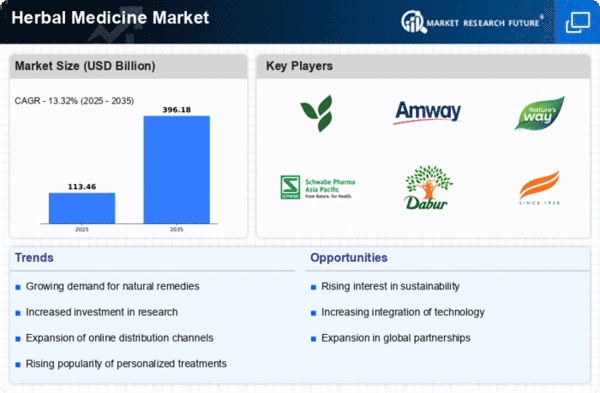
As per MRFR analysis, the Herbal Medicine Market Size was estimated at 100.12 USD Billion in 2024. The Herbal Medicine industry is projected to grow from 113.45 USD Billion in 2025 to 396.18 USD Billion by 2035, exhibiting a compound annual growth rate (CAGR) of 13.32 during the forecast period 2025 - 2035.

Key Market Trends & Highlights

The Herbal Medicine Market is experiencing robust growth driven by increasing consumer preferences for natural remedies and holistic health approaches.

  • The demand for natural remedies continues to rise, particularly in North America, which remains the largest market for herbal products.
  • E-commerce platforms are expanding rapidly, facilitating greater access to herbal medicines across diverse consumer demographics.
  • Preventive healthcare is gaining traction, with consumers increasingly seeking herbal solutions to enhance their well-being.
  • Key market drivers include rising consumer awareness and the integration of herbal products into conventional medicine, particularly in the Asia-Pacific region.

Market Size & Forecast

2024 Market Size 100.12 (USD Billion)
2035 Market Size 396.18 (USD Billion)
CAGR (2025 - 2035) 13.32%
Largest Regional Market Share in 2024 Asia-Pacific

Major Players

<p>Herbalife (US), Amway (US), Nature's Way (US), Schwabe Pharmaceuticals (DE), Dabur (IN), Himalaya Wellness (IN), Traditional Medicinals (US), Bioforce (CH), Natures Aid (GB)</p>

Market Trends

The Herbal Medicine Market is currently experiencing a notable transformation, driven by a growing consumer inclination towards natural remedies and holistic health solutions. This shift appears to stem from an increasing awareness of the potential side effects associated with synthetic pharmaceuticals, prompting individuals to seek alternatives that align with their wellness philosophies. Furthermore, the rise of e-commerce platforms has facilitated easier access to herbal products, allowing consumers to explore a diverse range of options from the comfort of their homes. As a result, the market is witnessing a surge in demand for herbal supplements, teas, and extracts, which are perceived as safer and more sustainable choices. In addition, the Herbal Medicine Market seems to be influenced by a broader cultural shift towards preventive healthcare. Individuals are increasingly prioritizing wellness and self-care, which has led to a heightened interest in herbal solutions that promote overall health and vitality. This trend is further supported by ongoing research into the efficacy of various herbs, which may bolster consumer confidence in these products. As the market evolves, it is likely to see innovations in product formulations and delivery methods, catering to the diverse preferences of health-conscious consumers. Overall, the Herbal Medicine Market is poised for continued growth, reflecting a significant change in consumer attitudes towards health and wellness.

Rising Demand for Natural Remedies

There is an increasing consumer preference for natural remedies over synthetic alternatives. This trend suggests that individuals are becoming more health-conscious and are actively seeking products that align with their values of sustainability and wellness.

Growth of E-commerce Platforms

The expansion of e-commerce platforms is transforming how consumers access herbal products. This development indicates that individuals are more inclined to purchase herbal remedies online, enhancing convenience and broadening product availability.

Focus on Preventive Healthcare

A shift towards preventive healthcare is evident, with consumers prioritizing wellness and self-care. This trend implies that herbal solutions are being recognized for their potential to support overall health, leading to increased interest in these products.

Herbal Medicine Market Market Drivers

Rising Consumer Demand for Natural Remedies

The Global Herbal Medicine Market Industry experiences a notable surge in consumer demand for natural remedies, driven by a growing awareness of the potential side effects associated with synthetic pharmaceuticals. As individuals increasingly seek holistic and preventive healthcare solutions, the market is projected to reach 100.1 USD Billion in 2024. This shift towards herbal alternatives reflects a broader trend towards wellness and self-care, with consumers favoring products perceived as safer and more effective. The inclination towards natural ingredients is further supported by the increasing availability of herbal products in mainstream retail channels, enhancing accessibility and consumer confidence.

Expansion of E-commerce Platforms for Herbal Products

The Global Herbal Medicine Market Industry is significantly influenced by the expansion of e-commerce platforms dedicated to herbal products. The convenience of online shopping, coupled with the increasing penetration of the internet, allows consumers to access a wider range of herbal remedies than ever before. This trend is particularly relevant in regions where traditional retail options may be limited. E-commerce platforms often provide detailed product information and customer reviews, which can enhance consumer trust and facilitate informed purchasing decisions. As a result, the market is poised for substantial growth, reflecting the changing dynamics of consumer behavior in the digital age.

Growing Interest in Preventive Healthcare and Wellness

The Global Herbal Medicine Market Industry is experiencing a shift towards preventive healthcare and wellness, as consumers become more proactive about their health. This trend is characterized by an increasing preference for herbal remedies that promote overall well-being rather than merely treating ailments. The rise of wellness culture, coupled with the influence of social media and health influencers, has contributed to the popularity of herbal products. This growing interest is likely to drive market expansion, with projections indicating a potential market size of 396.2 USD Billion by 2035. The focus on preventive health aligns with the broader movement towards sustainable and holistic living.

Increased Investment in Herbal Research and Development

The Global Herbal Medicine Market Industry benefits from increased investment in research and development aimed at exploring the therapeutic potential of herbal products. Governments and private entities are allocating resources to study the pharmacological properties of various herbs, which may lead to the discovery of new applications and formulations. This focus on scientific validation is crucial for enhancing the credibility of herbal medicine. As a result, the market is expected to experience a compound annual growth rate of 13.32% from 2025 to 2035. Such investments not only promote innovation but also contribute to the overall growth and sustainability of the herbal sector.

Growing Acceptance of Herbal Medicine in Mainstream Healthcare

The Global Herbal Medicine Market Industry is witnessing a gradual acceptance of herbal medicine within mainstream healthcare systems. Healthcare professionals are increasingly recognizing the potential benefits of integrating herbal remedies into conventional treatment protocols. This trend is evidenced by the establishment of collaborative practices between herbalists and medical practitioners, which may enhance patient outcomes. As a result, the market is anticipated to grow significantly, with projections indicating a rise to 396.2 USD Billion by 2035. This acceptance is likely to be bolstered by ongoing research validating the efficacy of various herbal treatments, thereby fostering trust among both practitioners and patients.

Market Segment Insights

By Application: Traditional Medicine (Largest) vs. Nutraceuticals (Fastest-Growing)

<p>In the Herbal Medicine Market, the application segment is diversified into Traditional Medicine, Nutraceuticals, Cosmetics, and Food and Beverages. Traditional Medicine holds the largest market share, reflecting a long-standing reliance on herbal remedies across various cultures. By contrast, Nutraceuticals, representing a modern fusion of nutrition and pharmaceuticals, are gaining traction, indicating a shift towards preventive health measures and wellness-oriented products. This significant distribution highlights robust consumer preferences for both market segments and the importance of catering to traditional and modern health perspectives. The growth trends in the Herbal Medicine Market are primarily driven by increasing consumer awareness regarding health benefits, the rising popularity of natural products, and the demand for organic and sustainable solutions. Nutraceuticals are witnessing rapid growth as consumers incorporate them into their daily diets for enhanced health and wellness, effectively driving the trend towards preventive healthcare. The expansion of e-commerce and innovation in product development are also significant factors augmenting the growth of both Traditional Medicine and Nutraceuticals within this segment.</p>

<p>Traditional Medicine (Dominant) vs. Nutraceuticals (Emerging)</p>

<p>Traditional Medicine has a deep-rooted history and cultural significance, which enhances its dominance in the Herbal Medicine Market. Regarded as a reliable source for health remedies, it is widely adopted in various regions, especially in Asia. The loyal consumer base and established practices contribute to its sustained position. Conversely, Nutraceuticals are emerging rapidly due to the modern consumer’s shift towards preventive healthcare solutions, typified by health supplements and functional foods. This segment thrives on innovation and is characterized by products designed for health optimization, clinching a vital position among health-conscious individuals. The growing trend reflects a broader acceptance of integrative health approaches, positioning Nutraceuticals as a key player in shaping the future of herbal applications.</p>

By Formulation Type: Liquid (Largest) vs. Capsules (Fastest-Growing)

<p>In the Herbal Medicine Market, the formulation type segment showcases a diverse distribution among liquid, powder, capsules, and tablets. Liquid formulations dominate the market landscape, appealing to consumers seeking immediate absorption and ease of use. Capsules, while traditionally less favored, have seen a substantial rise in preference, reflecting a shift towards convenience and portability in herbal supplements. Growth trends in this segment are driven by increasing consumer awareness of herbal benefits and the rising demand for natural remedies. The liquid formulation remains the market leader due to its palatable nature and rapid effectiveness, whereas capsules have surged in popularity, particularly among health-conscious millennials seeking discreet and travel-friendly options for herbal intake.</p>

<p>Liquid (Dominant) vs. Capsules (Emerging)</p>

<p>Liquid formulations in the Herbal Medicine Market are characterized by their ease of administration and rapid absorption, making them particularly popular among users seeking swift relief. Their versatility in combining multiple herbs into a single dosage also enhances their appeal. On the other hand, capsules are emerging as a favored choice due to their convenience and the ability to mask unpleasant flavors associated with many herbs. This segment is gaining traction, especially among younger consumers and those leading busy lifestyles, as they seek effective yet discreet options for herbal supplements.</p>

By Source: Plant-based (Largest) vs. Animal-based (Fastest-Growing)

<p>The Herbal Medicine Market showcases a significant distribution of value across three major sources: plant-based, animal-based, and mineral-based. The plant-based segment continues to dominate, benefiting from a traditional reliance on botanical ingredients for medicinal purposes. In contrast, the animal-based segment, although smaller in overall share, is rapidly gaining traction as consumers show increasing interest in unique formulations derived from animal sources. Meanwhile, mineral-based remedies maintain a steady though less prominent position, appealing primarily to niche markets seeking specific therapeutic benefits. Growth trends in the Herbal Medicine Market indicate a robust shift towards the plant-based segment, propelled by rising consumer awareness of natural and organic products. Conversely, the animal-based segment is emerging as the fastest-growing due to a surge in interest in traditional medicine practices and a greater emphasis on biodiversity. The mineral-based segment is also witnessing incremental growth, driven by a niche, health-conscious consumer base looking for specialized treatments.</p>

<p>Plant-based (Dominant) vs. Animal-based (Emerging)</p>

<p>The plant-based segment remains dominant in the Herbal Medicine Market, characterized by a wide range of products that leverage various herbs, fruits, and roots traditionally used in holistic health practices. This category appeals to a broad demographic, facilitated by a strong trend towards natural and organic ingredients. In contrast, the animal-based segment, while emerging, emphasizes unique formulations that include animal-derived ingredients such as honey, royal jelly, and other bioproducts. Its growth is fueled by increasing consumer interest in synergistic formulations that merge animal and plant benefits. Both segments share a commitment to sustainable sourcing and ethical considerations, though the plant-based remains more widespread while animal-based remedies increasingly carve out their niche.</p>

By Distribution Channel: Online (Largest) vs. Pharmacy (Fastest-Growing)

<p>In the Herbal Medicine Market, distribution channels reveal a diverse landscape, where online platforms emerge as the largest channel, capturing significant consumer interest. This shift towards digital purchasing is driven by increasing consumer reliance on e-commerce for product access and convenience. Conversely, pharmacies stand out as the fastest-growing distribution channel, appealing to health-conscious consumers seeking advice from trusted professionals as they navigate their herbal medicine choices.</p>

<p>Herbal Medicine: Online (Dominant) vs. Pharmacy (Emerging)</p>

<p>The online distribution channel is established as the dominant player in the herbal medicine market, characterized by its extensive reach and convenience. With a growing number of consumers turning to online platforms for their herbal products, e-commerce enables brands to cater to a wider audience. On the other hand, pharmacies represent an emerging segment, increasingly recognized for their credibility and personalized customer service. As consumers become more informed and cautious about their health decisions, pharmacy channels are likely to play a crucial role in offering tailored product recommendations and fostering consumer confidence.</p>

By Consumer Type: Adults (Largest) vs. Elderly (Fastest-Growing)

<p>In the Herbal Medicine Market, adults represent the largest consumer group, commanding a significant portion of overall market share. This segment is characterized by an increasing awareness of health and wellness among adults, leading to a higher inclination towards alternative therapies such as herbal medicine. Adults tend to gravitate towards products that promote general wellness, immune support, and chronic illness management, reflecting a shift in consumer behavior towards more natural solutions. The elderly segment, on the other hand, is rapidly gaining traction as the fastest-growing demographic in the herbal medicine market. Factors contributing to this trend include a rising aging population seeking natural remedies for age-related ailments, as well as an increasing acceptance of herbal products among older consumers. This demographic shift emphasizes the need for accessible and safe herbal solutions tailored to the unique health concerns of the elderly, positioning them as a vital component of market expansion.</p>

<p>Adults: Dominant vs. Elderly: Emerging</p>

<p>The adults segment of the Herbal Medicine Market serves as the dominant force, driven by a proactive approach towards health maintenance and prevention. This demographic tends to prioritize their well-being, leading to a robust demand for various herbal products that target lifestyle-related health issues. In contrast, the elderly segment is emerging, primarily fueled by their pursuit of effective and gentle alternatives to manage chronic conditions. This group often seeks herbal solutions for mobility, cognitive health, and chronic pain management, pushing brands to innovate and adapt their offerings to meet the specific needs of older consumers. The interplay between these two segments illustrates the evolving landscape of consumer preferences in the herbal medicine sector.</p>

Get more detailed insights about Herbal Medicine Market Research Report - Global Forecast till 2035

Regional Insights

North America : Health-Conscious Consumer Base

The North American herbal medicine market is projected to reach $25.03 billion by December 2025, driven by a growing health-conscious consumer base and increasing awareness of natural remedies. Regulatory support for herbal products, along with rising disposable incomes, is fueling demand. The trend towards preventive healthcare and wellness is also a significant driver, as consumers seek alternatives to conventional pharmaceuticals. Leading the market are the United States and Canada, where companies like Herbalife, Amway, and Traditional Medicinals dominate. The competitive landscape is characterized by a mix of established players and emerging brands, all vying for market share. The presence of key players ensures a diverse range of products, catering to various consumer preferences and health needs. The market is expected to continue evolving, with innovations in product formulations and delivery methods.

Europe : Regulatory Framework and Innovation

Europe's herbal medicine market is anticipated to grow significantly, reaching €20.12 billion by December 2025. The region benefits from a robust regulatory framework that supports the use of herbal products, ensuring safety and efficacy. Increasing consumer interest in natural health solutions and the rise of integrative medicine are key growth drivers. Additionally, the aging population is contributing to a higher demand for herbal remedies as preventive healthcare becomes a priority. Germany, the UK, and France are leading countries in this market, with companies like Schwabe Pharmaceuticals and Bioforce playing pivotal roles. The competitive landscape is marked by a blend of traditional herbalists and modern health brands, creating a dynamic environment. The presence of established players alongside innovative startups fosters a rich ecosystem for herbal medicine, enhancing product availability and consumer choice.

Asia-Pacific : Emerging Powerhouse in Herbal Medicine

The Asia-Pacific region is the largest market for herbal medicine, with a projected size of $52.0 billion by December 2025. This growth is fueled by a rich tradition of herbal practices, increasing health awareness, and a shift towards natural remedies. The region's diverse population and varying health needs create a robust demand for herbal products. Additionally, supportive government policies and initiatives to promote traditional medicine are significant catalysts for market expansion. Countries like India and China are at the forefront, with major players such as Dabur and Himalaya Wellness leading the charge. The competitive landscape is vibrant, with numerous local and international brands vying for market share. The presence of traditional medicine practices alongside modern healthcare solutions creates a unique market dynamic, fostering innovation and product diversification.

Middle East and Africa : Untapped Market Potential

The Middle East and Africa herbal medicine market is projected to reach $3.97 billion by December 2025, showcasing significant growth potential. The increasing interest in natural health solutions and traditional remedies is driving demand in this region. Additionally, rising disposable incomes and a growing awareness of the benefits of herbal products are contributing to market expansion. Regulatory frameworks are gradually evolving to support the herbal sector, enhancing consumer confidence. Countries like South Africa and the UAE are leading the market, with a mix of local and international players. The competitive landscape is characterized by emerging brands and traditional herbalists, creating a diverse offering for consumers. The presence of key players and the integration of herbal products into mainstream healthcare are expected to drive further growth in the coming years.

Key Players and Competitive Insights

The Herbal Medicine Market is currently characterized by a dynamic competitive landscape, driven by increasing consumer interest in natural remedies and holistic health solutions. Key players such as Herbalife (US), Dabur (IN), and Schwabe Pharmaceuticals (DE) are strategically positioning themselves through innovation and regional expansion. Herbalife (US) has focused on enhancing its product portfolio with herbal supplements that cater to health-conscious consumers, while Dabur (IN) emphasizes traditional Ayurvedic formulations, leveraging its heritage to appeal to both domestic and international markets. Schwabe Pharmaceuticals (DE) is investing in research and development to create evidence-based herbal products, thereby enhancing its credibility and market share. Collectively, these strategies contribute to a competitive environment that is increasingly focused on quality, efficacy, and consumer trust.

In terms of business tactics, companies are localizing manufacturing and optimizing supply chains to enhance efficiency and responsiveness to market demands. The market structure appears moderately fragmented, with a mix of established players and emerging brands vying for consumer attention. This fragmentation allows for diverse product offerings, yet the influence of key players remains substantial, as they set quality standards and consumer expectations.

In November 2025, Herbalife (US) announced a partnership with a leading technology firm to develop a digital platform aimed at personalized health solutions. This strategic move is likely to enhance customer engagement and provide tailored recommendations, thereby positioning Herbalife as a frontrunner in the digital transformation of the herbal sector. The integration of technology into their offerings may also facilitate better data collection and consumer insights, which are crucial for future product development.

In October 2025, Dabur (IN) launched a new line of herbal supplements specifically targeting immunity enhancement, reflecting a growing consumer demand for health products that support overall wellness. This initiative not only aligns with current health trends but also reinforces Dabur's commitment to leveraging its Ayurvedic expertise. The launch is expected to strengthen Dabur's market presence and attract a broader consumer base seeking natural health solutions.

In September 2025, Schwabe Pharmaceuticals (DE) expanded its distribution network in Asia by entering into a joint venture with a local herbal product manufacturer. This strategic alliance is anticipated to enhance Schwabe's market penetration in the region, allowing for greater accessibility of its products. The collaboration may also facilitate knowledge exchange and innovation, further solidifying Schwabe's position in the competitive landscape.

As of December 2025, current trends in the Herbal Medicine Market indicate a pronounced shift towards digitalization, sustainability, and the integration of artificial intelligence in product development and consumer engagement. Strategic alliances are increasingly shaping the landscape, enabling companies to pool resources and expertise. Looking ahead, competitive differentiation is likely to evolve from traditional price-based competition to a focus on innovation, technological advancements, and supply chain reliability. This shift underscores the importance of adaptability and responsiveness in meeting the evolving needs of health-conscious consumers.

Key Companies in the Herbal Medicine Market include

Industry Developments

  • Q1 2025: Himalaya Wellness Company Expands Distribution Network in the United States Himalaya Wellness Company, a global herbal health and personal care brand, expanded its U.S. distribution network in January 2025 through new retail partnerships to increase accessibility of its herbal products.
  • Q1 2025: Bioforce AG Acquires UK Herbal Supplement Brand A. Vogel Bioforce AG, a Swiss herbal medicine company, acquired the UK-based herbal supplement brand A. Vogel in February 2025, strengthening its position in the European herbal medicine market.
  • Q2 2025: Traditional Medicinals Raises $50 Million in Growth Funding Traditional Medicinals, a U.S. herbal tea and supplement company, raised $50 million in a growth funding round in April 2025 to support product innovation and international expansion.
  • Q2 2025: Yunnan Baiyao Receives Chinese Regulatory Approval for New Herbal Pain Relief Patch Yunnan Baiyao Group, a major Chinese herbal medicine producer, received regulatory approval in May 2025 for a new herbal pain relief patch, expanding its product offerings in the domestic market.
  • Q2 2024: Gaia Herbs Appoints New CEO to Drive Next Phase of Growth Gaia Herbs, a leading U.S. herbal supplement brand, announced the appointment of a new Chief Executive Officer in April 2024 to accelerate its expansion and innovation in the herbal medicine sector.
  • Q2 2024: Traditional Medicinals Announces Opening of New Manufacturing Facility in Oregon Traditional Medicinals, a prominent herbal tea and supplement company, opened a new state-of-the-art manufacturing facility in Oregon in May 2024 to increase production capacity and meet rising demand for herbal products.
  • Q2 2024: India’s Dabur Acquires Stake in Herbal Supplement Startup Kapiva Dabur India Ltd., a major player in herbal and Ayurvedic products, acquired a minority stake in Kapiva, an Indian herbal supplement startup, in June 2024 to strengthen its presence in the fast-growing herbal wellness market.
  • Q3 2024: Schwabe Pharma Launches New Herbal Cognitive Health Supplement in Europe Schwabe Pharmaceuticals, a global leader in herbal medicines, launched a new herbal supplement targeting cognitive health in several European markets in July 2024, expanding its product portfolio.
  • Q3 2024: Nature’s Way Partners with Amazon to Launch Exclusive Herbal Immunity Line Nature’s Way, a leading herbal supplement brand, announced a partnership with Amazon in August 2024 to launch an exclusive line of herbal immunity products available only on the e-commerce platform.
  • Q3 2024: Herbalife Receives Regulatory Approval for New Plant-Based Product in China Herbalife, a global nutrition company, received regulatory approval in September 2024 to market a new plant-based herbal supplement in China, marking a significant step in its Asia-Pacific expansion.
  • Q4 2024: Blackmores Launches Herbal Sleep Aid in Southeast Asia Blackmores, an Australian natural health company, launched a new herbal sleep aid product in Southeast Asian markets in October 2024, aiming to address growing consumer demand for natural sleep solutions.
  • Q4 2024: Jiangzhong Pharmaceutical Announces $100 Million Investment in Herbal R&D Center Jiangzhong Pharmaceutical, a leading Chinese herbal medicine manufacturer, announced a $100 million investment in a new research and development center focused on herbal medicine innovation in November 2024.

Future Outlook

Herbal Medicine Market Future Outlook

<p>The Herbal Medicine Market is projected to grow at a 13.32% CAGR from 2024 to 2035, driven by increasing consumer demand for natural remedies and wellness products.</p>

New opportunities lie in:

  • <p>Expansion of e-commerce platforms for herbal products</p>
  • <p>Development of personalized herbal medicine solutions</p>
  • <p>Strategic partnerships with wellness and fitness brands</p>

<p>By 2035, the Herbal Medicine Market is expected to be robust, reflecting substantial growth and innovation.</p>

Market Segmentation

Herbal Medicine Market Source Outlook

  • Plant-based
  • Animal-based
  • Mineral-based

Herbal Medicine Market Application Outlook

  • Traditional Medicine
  • Nutraceuticals
  • Cosmetics
  • Food and Beverages

Herbal Medicine Market Consumer Type Outlook

  • Adults
  • Children
  • Elderly
  • Pregnant Women

Herbal Medicine Market Formulation Type Outlook

  • Liquid
  • Powder
  • Capsules
  • Tablets

Herbal Medicine Market Distribution Channel Outlook

  • Online
  • Pharmacy
  • Health Stores
  • Supermarkets

Report Scope

MARKET SIZE 2024100.12(USD Billion)
MARKET SIZE 2025113.45(USD Billion)
MARKET SIZE 2035396.18(USD Billion)
COMPOUND ANNUAL GROWTH RATE (CAGR)13.32% (2024 - 2035)
REPORT COVERAGERevenue Forecast, Competitive Landscape, Growth Factors, and Trends
BASE YEAR2024
Market Forecast Period2025 - 2035
Historical Data2019 - 2024
Market Forecast UnitsUSD Billion
Key Companies ProfiledHerbalife (US), Amway (US), Nature's Way (US), Schwabe Pharmaceuticals (DE), Dabur (IN), Himalaya Wellness (IN), Traditional Medicinals (US), Bioforce (CH), Natures Aid (GB)
Segments CoveredApplication, Formulation Type, Source, Distribution Channel, Consumer Type
Key Market OpportunitiesGrowing consumer preference for natural remedies drives innovation in the Herbal Medicine Market.
Key Market DynamicsRising consumer preference for natural remedies drives innovation and competition in the herbal medicine sector.
Countries CoveredNorth America, Europe, APAC, South America, MEA

FAQs

What is the projected growth of the Herbal Medicine market?

The Herbal Medicine market is the expected increase in total market value of 396.18 USD billion over a defined forecast period 2025–2035. It is driven by factors such as demand trends, technological advances, regulatory changes, and geographic expansion.

What is the size of the Herbal Medicine market?

Herbal Medicine market size was valued at approximately 100.12 billion USD in 2024. This figure will reach 396.18 billion USD covering all regions (America, Europe, Asia, MEA and ROW), focusing its segments / services / distribution channels till 2035.

What is the CAGR of the Herbal Medicine market?

Herbal Medicine market is expected to grow at a CAGR of 13.32% between 2025 and 2035.

How much will the Herbal Medicine market be worth by 2035?

Herbal Medicine market is expected to be worth of 396.18 billion USD, reflecting growth driven by usage, technology and global demands by the end of 2035.

How will the Herbal Medicine market perform over the next 10 years?

Over the next 10 years the Herbal Medicine market is expected to shift from usd billion 100.12 to 396.18 billion USD, led by adoption of advanced tech, demographic trends, regulatory approvals, with potential headwinds from 2025 to 2035.

Which region held the largest market share in the herbal medicine market?

North America had the largest share in the market.

  1. SECTION I: EXECUTIVE SUMMARY AND KEY HIGHLIGHTS
    1. | 1.1 EXECUTIVE SUMMARY
  2. SECTION II: SCOPING, METHODOLOGY AND MARKET STRUCTURE
    1. | 2.1 MARKET INTRODUCTION
    2. | 2.2 RESEARCH METHODOLOGY
  3. SECTION III: QUALITATIVE ANALYSIS
    1. | 3.1 MARKET DYNAMICS
    2. | 3.2 MARKET FACTOR ANALYSIS
  4. SECTION IV: QUANTITATIVE ANALYSIS
    1. | 4.1 Healthcare, BY Application (USD Billion)
    2. | 4.2 Healthcare, BY Formulation Type (USD Billion)
    3. | 4.3 Healthcare, BY Source (USD Billion)
    4. | 4.4 Healthcare, BY Distribution Channel (USD Billion)
    5. | 4.5 Healthcare, BY Consumer Type (USD Billion)
    6. | 4.6 Healthcare, BY Region (USD Billion)
  5. SECTION V: COMPETITIVE ANALYSIS
    1. | 5.1 Competitive Landscape
    2. | 5.2 Company Profiles
    3. | 5.3 Appendix

Herbal Medicine Market Segmentation

Market Segmentation Overview

  • Detailed segmentation data will be available in the full report
  • Comprehensive analysis by multiple parameters
  • Regional and country-level breakdowns
  • Market size forecasts by segment
Infographic

Free Sample Request

Kindly complete the form below to receive a free sample of this Report

Get Free Sample

Customer Strories

Compare Licence

×
Features License Type
Single User Multiuser License Enterprise User
Price $4,950 $5,950 $7,250
Maximum User Access Limit 1 User Upto 10 Users Unrestricted Access Throughout the Organization
Free Customization
Direct Access to Analyst
Deliverable Format
Platform Access
Discount on Next Purchase 10% 15% 15%
Printable Versions