×
Request Free Sample ×

Kindly complete the form below to receive a free sample of this Report

* Please use a valid business email

Leading companies partner with us for data-driven Insights

clients tt-cursor
Hero Background
English
Chinese
French
Japanese
Korean
German
Spanish

Flat Roofing Systems Market Trends

ID: MRFR/PCM/11044-CR
172 Pages
Pradeep Nandi
May 2024

Flat Roofing Systems Market Research Report Information by Application (Commercial, Residential, Industrial), by Material Type (Bitumen, Thermoplastic Olefin (TPO), EPDM Rubber, PVC Membrane, Metals, Others), by Construction Type (New Construction & Reconstruction/Remodeling),–Market Forecast Till 2035

Share:
Download PDF ×

We do not share your information with anyone. However, we may send you emails based on your report interest from time to time. You may contact us at any time to opt-out.

Flat Roofing Systems Market Infographic
×
Flat Roofing Systems Market Infographic Full View
Purchase Options

Market Trends

Key Emerging Trends in the Flat Roofing Systems Market

The market trends of flat roofing systems have been experiencing significant shifts in recent years, reflecting advancements in technology, changing consumer preferences, and a growing emphasis on sustainability. One noteworthy trend is the increasing popularity of cool roofing solutions. As environmental concerns take center stage, cool roofing systems, designed to reflect sunlight and absorb less heat, are gaining traction. These systems not only contribute to energy efficiency by reducing cooling costs but also align with the global push towards sustainable building practices.

Moreover, there is a noticeable surge in the adoption of green roofing systems. With an increasing awareness of environmental issues, property owners are turning to flat roofing solutions that integrate vegetation and greenery. Green roofs provide numerous benefits, including improved insulation, reduced urban heat island effects, and enhanced stormwater management. As cities grapple with the challenges of climate change, the demand for environmentally friendly roofing options is likely to continue its upward trajectory.

Technological innovations are playing a pivotal role in reshaping the flat roofing market. The integration of smart roofing technologies, such as sensors and monitoring systems, is becoming more prevalent. These technologies enable real-time monitoring of roof conditions, allowing for proactive maintenance and early detection of potential issues. The shift towards smart roofing aligns with the broader trend of digitalization in the construction industry, where data-driven solutions are increasingly embraced for improved efficiency and cost-effectiveness.

Additionally, the market for sustainable roofing materials is expanding. Traditional roofing materials like asphalt are facing competition from more eco-friendly alternatives such as single-ply membranes and cool roof coatings. Single-ply membranes, often made from materials like PVC or TPO, offer durability and ease of installation while minimizing environmental impact. Cool roof coatings, formulated to reflect sunlight and release absorbed heat, contribute to energy savings and are gaining popularity in regions with warmer climates.

Flat roofing systems are also witnessing a surge in demand for solar roofing solutions. As the drive towards renewable energy sources intensifies, integrating solar panels into flat roofs provides an additional functional dimension. Solar roofing not only generates clean energy but also contributes to reducing overall energy costs for property owners. The decreasing costs of solar technology further enhance the attractiveness of this trend, making it a viable option for both residential and commercial flat roofing applications.

In terms of market dynamics, the flat roofing sector is experiencing increased competition among manufacturers. Companies are striving to differentiate themselves by offering innovative products, enhanced durability, and improved environmental performance. This competitive landscape is fostering a climate of continuous improvement, pushing the industry towards more sustainable and efficient solutions.
Author
Pradeep Nandi
Senior Research Analyst

I have a bachelor's degree in mechanical engineering and an MBA. I have more than two years of expertise in the retail, food, and beverage, chemical, and material industries, and hence have developed a sound cross-domain expertise. A firm believer in lifelong learning and sharing of knowledge. Having a proclivity for hatching ideas and trying to absorb as much information as possible in a short amount of time. Introducing corporates to the data and insight, which enables them to move from probability to possibility, has been my key areas of interest. 

Leave a Comment

FAQs

What is the growth rate of the Flat Roofing Systems Market?

Flat Roofing Systems Market is projected to register a CAGR of 5.92% from 2025-2035

Which region held the largest market share in the Flat Roofing Systems Market?

Asia- Pacific had the largest share of the global market.

Who are the key players in the Flat Roofing Systems Market?

The key players in the market include GAF Materials Corporation, DuPont, Saint-Gobain, Sika AG, and Beijing Oriental YuhongWaterproof Technology Co., Ltd.

Which application dominates the Flat Roofing Systems Market?

The residential application category dominated the market in 2024.

Which material type had the largest market share in the Flat Roofing Systems Market?

The bitumen material has the largest revenue share of the global market in the year 2024.

Market Summary

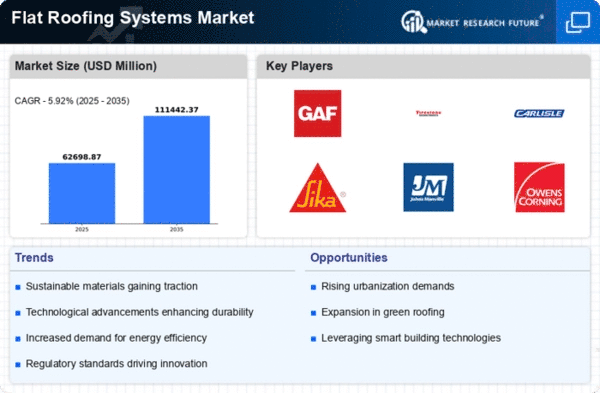
As per MRFR analysis, the Flat Roofing Systems Market Size was estimated at 59194.55 USD Million in 2024. The Flat Roofing Systems industry is projected to grow from 62699.01 USD Million in 2025 to 111442.37 USD Million by 2035, exhibiting a compound annual growth rate (CAGR) of 5.92 during the forecast period 2025 - 2035.

Key Market Trends & Highlights

The Flat Roofing Systems Market is experiencing a dynamic shift towards sustainability and technological integration.

  • North America remains the largest market for flat roofing systems, driven by robust commercial construction activities.
  • Asia-Pacific is emerging as the fastest-growing region, fueled by rapid urbanization and infrastructure development.
  • The commercial roofing segment dominates the market, while the residential roofing segment is witnessing the fastest growth due to increasing housing demands.
  • Sustainability initiatives and technological advancements are key drivers propelling the market forward.

Market Size & Forecast

2024 Market Size 59194.55 (USD Million)
2035 Market Size 111442.37 (USD Million)
CAGR (2025 - 2035) 5.92%
Largest Regional Market Share in 2024 North America

Major Players

<p>GAF (US), Firestone Building Products (US), Carlisle Companies (US), Sika AG (CH), Johns Manville (US), Owens Corning (US), BASF SE (DE), CertainTeed (US), IKO Industries (CA)</p>

Market Trends

The Flat Roofing Systems Market is currently experiencing a dynamic evolution, driven by various factors including technological advancements and changing consumer preferences. The demand for energy-efficient and sustainable roofing solutions appears to be on the rise, as stakeholders increasingly prioritize environmental considerations in their construction projects. This shift is likely influencing manufacturers to innovate and develop products that not only meet regulatory standards but also enhance the overall performance and longevity of roofing systems. Furthermore, the integration of smart technologies into flat roofing systems may provide additional benefits, such as improved insulation and real-time monitoring of roof conditions, which could appeal to both commercial and residential sectors. In addition, the Flat Roofing Systems Market seems to be benefiting from a growing trend towards urbanization and infrastructure development. As cities expand and the need for durable roofing solutions increases, the market is likely to witness a surge in demand for flat roofing systems that can withstand various environmental challenges. This trend may also be supported by government initiatives aimed at promoting sustainable building practices. Overall, the Flat Roofing Systems Market is poised for growth, with a focus on innovation, sustainability, and adaptability to meet the evolving needs of consumers and the construction industry.

Sustainability Focus

The emphasis on eco-friendly materials and practices is becoming increasingly prevalent in the Flat Roofing Systems Market. Manufacturers are exploring options that reduce environmental impact, such as recyclable materials and energy-efficient designs.

Technological Integration

The incorporation of advanced technologies into flat roofing systems is gaining traction. Features like smart sensors and automated monitoring systems are being integrated to enhance performance and maintenance efficiency.

Urbanization and Infrastructure Growth

The ongoing trend of urbanization is driving demand for flat roofing solutions. As cities expand, the need for reliable and durable roofing systems that can accommodate various climatic conditions is becoming more pronounced.

Flat Roofing Systems Market Market Drivers

Market Growth Projections

The Global Flat Roofing Systems Market Industry is projected to experience substantial growth over the next decade. With a market value of 59.2 USD Billion in 2024, it is expected to reach 111.0 USD Billion by 2035. This growth is indicative of the increasing adoption of flat roofing systems across various sectors, including residential, commercial, and industrial applications. The anticipated CAGR of 5.88% from 2025 to 2035 suggests a robust expansion driven by factors such as urbanization, technological advancements, and sustainability trends. These projections highlight the market's potential and the evolving landscape of flat roofing solutions.

Technological Advancements

The Global Flat Roofing Systems Market Industry is benefiting from ongoing technological advancements that enhance the performance and longevity of roofing materials. Innovations such as advanced insulation techniques, waterproofing membranes, and sustainable materials are becoming increasingly prevalent. These developments not only improve the durability of flat roofs but also address environmental concerns, appealing to eco-conscious consumers. As the market evolves, manufacturers are likely to invest in research and development to create more efficient and sustainable products. This focus on innovation is expected to drive market growth, contributing to the projected increase in market value to 111.0 USD Billion by 2035.

Energy Efficiency Regulations

The Global Flat Roofing Systems Market Industry is influenced by stringent energy efficiency regulations being implemented across various regions. Governments are increasingly mandating the use of energy-efficient materials and systems in construction to reduce carbon footprints. Flat roofing systems, particularly those with reflective coatings, contribute to energy savings by minimizing heat absorption. This regulatory push is likely to enhance the market's growth as builders and property owners seek compliant solutions. The anticipated growth in the market, projected at a CAGR of 5.88% from 2025 to 2035, underscores the importance of energy efficiency in shaping future roofing choices.

Growing Construction Activities

The Global Flat Roofing Systems Market Industry is experiencing a surge in demand due to increasing construction activities worldwide. Urbanization and population growth are driving the need for residential and commercial buildings, which in turn boosts the demand for flat roofing systems. In 2024, the market is valued at 59.2 USD Billion, reflecting the industry's response to these construction trends. As cities expand, flat roofs are favored for their space efficiency and modern aesthetics. This trend is particularly evident in emerging economies where infrastructure development is prioritized, indicating a robust growth trajectory for the flat roofing sector.

Rising Demand for Sustainable Solutions

The Global Flat Roofing Systems Market Industry is witnessing a growing demand for sustainable roofing solutions. As environmental awareness increases, consumers and businesses are seeking roofing options that minimize ecological impact. Flat roofing systems made from recycled materials or designed for green roofs are gaining traction. This shift towards sustainability is not only driven by consumer preferences but also by regulatory incentives promoting eco-friendly construction practices. The market's growth trajectory is likely to be influenced by this trend, as more stakeholders recognize the long-term benefits of sustainable roofing solutions in reducing energy costs and enhancing building performance.

Market Diversification and Customization

The Global Flat Roofing Systems Market Industry is characterized by increasing diversification and customization of roofing solutions. Manufacturers are expanding their product lines to cater to various customer needs, including aesthetic preferences, durability requirements, and climate considerations. This trend allows for tailored solutions that enhance customer satisfaction and market competitiveness. As the industry evolves, the ability to offer customized flat roofing systems is likely to become a key differentiator among manufacturers. This adaptability may contribute to the overall growth of the market, as clients increasingly seek solutions that align with their specific project demands.

Market Segment Insights

By Application: Commercial Roofing (Largest) vs. Residential Roofing (Fastest-Growing)

<p>In the Flat Roofing Systems Market, the application segment demonstrates distinct characteristics among its diverse categories. Commercial roofing holds the largest share, significantly contributing to market stability and demand. Its widespread adoption in business structures across industries plays a crucial role in its dominance. In contrast, the residential roofing segment, while smaller, is on a rapid ascent. This growth is propelled by increasing homeowner awareness regarding energy efficiency and sustainability. The growth trends in the Flat Roofing Systems Market are largely driven by innovations in material technology and increased investment in infrastructure. Residential roofing, particularly, is emerging as the fastest-growing segment, aligning with trends aiming at enhancing energy efficiency in homes. Additionally, the institutional roofing market is experiencing steady growth, driven by the need for durable and energy-efficient roofing solutions in schools and hospitals. Overall, these segments each play a critical role in shaping the market dynamics.</p>

<p>Commercial Roofing (Dominant) vs. Industrial Roofing (Emerging)</p>

<p>Commercial roofing systems are characterized by their robust performance and longevity, making them ideal for various business applications. They are often designed to withstand diverse weather conditions, which is crucial for their effectiveness in urban environments. This segment remains dominant due to the consistent demand from commercial property developers and managers. On the other hand, industrial roofing is viewed as an emerging segment, spurred by the growing manufacturing and logistics sectors. These roofs are engineered for specific functionalities, such as improved insulation and durability against heavy machinery impacts. The segment is gaining attention as more industries recognize the importance of energy-efficient and sustainable roofing solutions to optimize operational costs.</p>

By Material Type: Thermoplastic Polyolefin (Largest) vs. Ethylene Propylene Diene Monomer (Fastest-Growing)

<p>In the Flat Roofing Systems Market, Thermoplastic Polyolefin (TPO) leads the material segment, commanding the largest market share. Its popularity stems from factors like cost-effectiveness, ease of installation, and energy efficiency. In contrast, Ethylene Propylene Diene Monomer (EPDM) is rapidly gaining traction and is recognized as the fastest-growing segment due to its exceptional durability and weather resistance, making it a preferred choice for various applications in diverse climates.</p>

<p>Ethylene Propylene Diene Monomer (Dominant) vs. Polyurethane (Emerging)</p>

<p>Ethylene Propylene Diene Monomer (EPDM) is characterized by its superior performance in various environmental conditions, providing distinct advantages in flexibility and UV resistance, especially in flat roofing systems. Its dominant market position is bolstered by a wide range of applications, from residential to commercial sectors. In contrast, Polyurethane is emerging as a potent alternative, known for its high insulation properties and ability to form seamless roofs. Its adaptability to different roof shapes and complexities opens new opportunities in the market, making it an appealing choice for energy-efficient construction.</p>

By Installation Method: Fully Adhered (Largest) vs. Mechanically Attached (Fastest-Growing)

<p>In the Flat Roofing Systems Market, the installation methods are diverse, with Fully Adhered systems holding the largest market share due to their robust performance and superior sealing capabilities. This method is favored for its ability to create a waterproof barrier, contributing to its popularity among various commercial buildings. Mechanically Attached systems, while holding a smaller share, are gaining traction thanks to their faster installation processes and adaptability in different weather conditions. The growth trends within this segment are significantly influenced by advancements in materials and increasing demand for energy-efficient building solutions. Fully Adhered systems are recognized for their durability and effectiveness, which keeps them as a top choice. Meanwhile, Mechanically Attached systems are experiencing the fastest growth, driven by an increase in construction activities and a shift towards lightweight roofing options that require less labor-intensive installation methods.</p>

<p>Fully Adhered (Dominant) vs. Mechanically Attached (Emerging)</p>

<p>The Fully Adhered installation method is recognized as the dominant choice in the Flat Roofing Systems Market due to its strong sealing properties and exceptional longevity. Its use of adhesives to bond the roofing membrane directly to the substrate results in a seamless roof surface that minimizes the risk of leaks and weather-related damage. Fully Adhered systems are particularly suitable for various climates, offering significant performance advantages. On the other hand, Mechanically Attached systems are emerging as a flexible alternative, appealing to contractors due to their quicker installation times and reduced labor costs. This method uses mechanical fasteners to secure the roofing membrane, making it easier to replace and repair. As environmental concerns grow, the adaptability and efficiency of Mechanically Attached systems position them well for future market gains, catering to the increasing preference for sustainable construction practices.</p>

By End Use: New Construction (Largest) vs. Renovation (Fastest-Growing)

<p>In the Flat Roofing Systems Market, the distribution of end-use segments showcases a clear dominance of New Construction, which stands as the largest segment. This category accounts for a significant portion of the overall market share, driven by ongoing infrastructure development and urban expansion. On the other hand, Renovation is emerging as a fast-growing segment, fueled by an increase in the demand for roof replacements and upgrades in aging buildings. As property owners seek to improve energy efficiency and aesthetics, this segment is rapidly gaining traction. The growth trends within these end-use segments indicate a strong shift towards Renovation activities, particularly in urban areas where older structures are prevalent. Factors such as government incentives for energy-efficient retrofitting and rising awareness regarding sustainability are propelling the Renovation segment forward. Additionally, advancements in roofing technologies and materials are making renovations more appealing to property owners, thus accelerating market expansion in this area.</p>

<p>New Construction (Dominant) vs. Maintenance (Emerging)</p>

<p>The New Construction segment in the Flat Roofing Systems Market holds a dominant position, driven primarily by the continuous rise in commercial and residential building projects. This segment benefits from trends such as modernization and urbanization, where new developments foster the need for innovative roofing solutions. In contrast, the Maintenance segment is emerging as an essential aspect of the market, reflecting a growing recognition of the importance of maintaining existing roofing systems to extend their lifespan and enhance performance. As property owners become increasingly aware of the long-term benefits of regular maintenance, this segment is gaining momentum. This focus on upkeep is influencing manufacturers to develop products that cater specifically to maintenance needs, highlighting both the New Construction's established role and Maintenance's rising significance.</p>

Get more detailed insights about Flat Roofing Systems Market - Global Forecast by 2035

Regional Insights

North America : Market Leader in Flat Roofing

North America is poised to maintain its leadership in the flat roofing systems market, holding a significant share of 29500.0. The growth is driven by increasing construction activities, a shift towards energy-efficient roofing solutions, and stringent building regulations promoting sustainable practices. The demand for flat roofing systems is further fueled by the rise in commercial and industrial infrastructure, which necessitates durable and cost-effective roofing solutions. The United States stands as the primary market, with key players like GAF, Firestone Building Products, and Owens Corning leading the competitive landscape. The presence of established manufacturers and a robust distribution network enhances market accessibility. Additionally, innovations in roofing materials and technologies are expected to bolster market growth, ensuring North America's continued dominance in the sector.

Europe : Emerging Market with Growth Potential

Europe's flat roofing systems market is projected to grow significantly, with a market size of 18000.0. The growth is driven by increasing urbanization, renovation projects, and a focus on energy efficiency in building designs. Regulatory frameworks across various European nations are encouraging the adoption of sustainable roofing solutions, which is expected to further boost market demand. The European market is also witnessing a shift towards eco-friendly materials, aligning with the EU's green initiatives. Leading countries in this region include Germany, France, and the UK, where major players like Sika AG and BASF SE are actively contributing to market growth. The competitive landscape is characterized by a mix of established companies and innovative startups, fostering a dynamic environment. As the demand for flat roofing systems rises, collaboration among manufacturers and regulatory bodies will be crucial for meeting evolving market needs.

Asia-Pacific : Rapid Growth in Emerging Markets

The Asia-Pacific region is witnessing rapid growth in the flat roofing systems market, with a market size of 9500.0. This growth is primarily driven by urbanization, increasing disposable incomes, and a surge in construction activities across countries like China and India. The demand for flat roofing systems is also supported by government initiatives aimed at improving infrastructure and promoting energy-efficient building practices. Regulatory support for sustainable construction is further enhancing market prospects in this region. China and India are the leading countries in this market, with significant investments in commercial and residential construction. Key players such as IKO Industries and other local manufacturers are expanding their presence to cater to the growing demand. The competitive landscape is evolving, with a focus on innovation and sustainability, positioning the Asia-Pacific region as a vital player in The Flat Roofing Systems.

Middle East and Africa : Niche Market with Growth Opportunities

The Middle East and Africa region represents a niche market for flat roofing systems, with a market size of 694.55. The growth in this region is driven by increasing urbanization, infrastructure development, and a rising demand for durable roofing solutions in extreme weather conditions. Government initiatives aimed at enhancing building standards and promoting sustainable practices are also contributing to market growth. The region's unique climatic challenges necessitate innovative roofing solutions, further driving demand. Countries like the UAE and South Africa are leading the market, with key players exploring opportunities to expand their footprint. The competitive landscape is characterized by a mix of international and local manufacturers, focusing on tailored solutions for the region's specific needs. As the market evolves, collaboration between stakeholders will be essential to address the unique challenges and opportunities present in the Middle East and Africa.

Key Players and Competitive Insights

The Flat Roofing Systems Market is currently characterized by a dynamic competitive landscape, driven by factors such as increasing urbanization, the demand for energy-efficient building solutions, and advancements in roofing technologies. Key players like GAF (US), Firestone Building Products (US), and Sika AG (CH) are strategically positioned to leverage these trends. GAF (US) focuses on innovation in roofing materials, particularly in sustainable options, while Firestone Building Products (US) emphasizes its extensive distribution network and customer service excellence. Sika AG (CH) is known for its commitment to research and development, which enhances its product offerings and market reach. Collectively, these strategies contribute to a competitive environment that is increasingly focused on sustainability and technological advancement.

In terms of business tactics, companies are localizing manufacturing to reduce costs and improve supply chain efficiency. This approach is particularly relevant in a moderately fragmented market where regional players also exert influence. The competitive structure is shaped by the presence of both large multinational corporations and smaller, specialized firms, creating a diverse landscape that encourages innovation and responsiveness to local market needs.

In November 2025, GAF (US) announced the launch of a new line of eco-friendly roofing materials designed to reduce energy consumption in commercial buildings. This strategic move not only aligns with global sustainability goals but also positions GAF (US) as a leader in the green roofing segment, potentially attracting environmentally conscious consumers and businesses.

In October 2025, Firestone Building Products (US) expanded its manufacturing capabilities by investing in a new facility in the Midwest. This expansion is significant as it enhances the company’s production capacity and allows for quicker delivery times, thereby improving customer satisfaction and solidifying its market position amidst growing demand for flat roofing solutions.

In September 2025, Sika AG (CH) entered into a strategic partnership with a leading technology firm to integrate AI-driven analytics into its product development processes. This collaboration is poised to enhance Sika AG's ability to innovate and respond to market trends more effectively, thereby reinforcing its competitive edge in the Flat Roofing Systems Market.

As of December 2025, the competitive trends in the Flat Roofing Systems Market are increasingly defined by digitalization, sustainability, and the integration of advanced technologies such as AI. Strategic alliances are becoming more prevalent, enabling companies to pool resources and expertise to address complex market demands. Looking ahead, competitive differentiation is likely to evolve from traditional price-based competition to a focus on innovation, technological advancements, and supply chain reliability, reflecting a broader shift in industry priorities.

Key Companies in the Flat Roofing Systems Market include

Industry Developments

In February 2023, GAF unveils E Timberline® ltra HDZ™ Shin les In addition to GAF’s patent-pending Dual Shadow Line, which creates beautiful sunset shadows all day long, all Timberline UHDZ shingles. In December 2021, 3M announced that it would merge its food-safety business with food testing and animal healthcare products maker Neogen. The deal, with an enterprise value of about $5.3 billion, closed in September 2022. In May 2023, Sika acquired MBCC (formerly a BASF subsidiary). It is active in the field of construction and admixture systems.

In December 2023, PVcase launched a software for designing rooftop solar systems. This software helps to speed up the design process and includes all the necessary features for planning commercial and industrial photovoltaic installations. PVcase has created a booklet to assist individuals engaged in PV roof mount in the C&I sector. This ebook aims to enhance their comprehension of how to optimize the design process by providing insider insights and best practices. PVcase Roof Mount is a specialized design tool specifically developed for commercial and industrial rooftop solar projects.

It is based on AutoCAD, a professional software widely used in the industry. Expanding upon the achievements of PVcase Ground Mount, this latest offering is poised to elevate the rooftop solar industry. The rooftop solar industry is experiencing significant expansion due to the backing of legislative reforms worldwide.

Future Outlook

Flat Roofing Systems Market Future Outlook

<p>The Flat Roofing Systems Market is projected to grow at a 5.92% CAGR from 2024 to 2035, driven by urbanization, sustainability trends, and technological advancements.</p>

New opportunities lie in:

  • <p>Expansion into eco-friendly roofing materials</p>
  • <p>Development of smart roofing technologies</p>
  • <p>Partnerships with construction firms for integrated solutions</p>

<p>By 2035, the market is poised for robust growth, reflecting evolving industry demands and innovations.</p>

Market Segmentation

Flat Roofing Systems Market End Use Outlook

  • New Construction
  • Renovation
  • Maintenance

Flat Roofing Systems Market Application Outlook

  • Residential Roofing
  • Commercial Roofing
  • Industrial Roofing
  • Institutional Roofing

Flat Roofing Systems Market Material Type Outlook

  • Thermoplastic Polyolefin
  • Ethylene Propylene Diene Monomer
  • Polyurethane
  • Modified Bitumen

Flat Roofing Systems Market Installation Method Outlook

  • Fully Adhered
  • Mechanically Attached
  • Ballasted

Report Scope

MARKET SIZE 202459194.55(USD Million)
MARKET SIZE 202562699.01(USD Million)
MARKET SIZE 2035111442.37(USD Million)
COMPOUND ANNUAL GROWTH RATE (CAGR)5.92% (2024 - 2035)
REPORT COVERAGERevenue Forecast, Competitive Landscape, Growth Factors, and Trends
BASE YEAR2024
Market Forecast Period2025 - 2035
Historical Data2019 - 2024
Market Forecast UnitsUSD Million
Key Companies ProfiledGAF (US), Firestone Building Products (US), Carlisle Companies (US), Sika AG (CH), Johns Manville (US), Owens Corning (US), BASF SE (DE), CertainTeed (US), IKO Industries (CA)
Segments CoveredApplication, Material Type, Installation Method, End Use
Key Market OpportunitiesIntegration of sustainable materials and smart technologies in the Flat Roofing Systems Market.
Key Market DynamicsRising demand for energy-efficient materials drives innovation and competition in the flat roofing systems market.
Countries CoveredNorth America, Europe, APAC, South America, MEA

FAQs

What is the growth rate of the Flat Roofing Systems Market?

Flat Roofing Systems Market is projected to register a CAGR of 5.92% from 2025-2035

Which region held the largest market share in the Flat Roofing Systems Market?

Asia- Pacific had the largest share of the global market.

Who are the key players in the Flat Roofing Systems Market?

The key players in the market include GAF Materials Corporation, DuPont, Saint-Gobain, Sika AG, and Beijing Oriental YuhongWaterproof Technology Co., Ltd.

Which application dominates the Flat Roofing Systems Market?

The residential application category dominated the market in 2024.

Which material type had the largest market share in the Flat Roofing Systems Market?

The bitumen material has the largest revenue share of the global market in the year 2024.

  1. SECTION I: EXECUTIVE SUMMARY AND KEY HIGHLIGHTS
    1. | 1.1 EXECUTIVE SUMMARY
  2. SECTION II: SCOPING, METHODOLOGY AND MARKET STRUCTURE
    1. | 2.1 MARKET INTRODUCTION
    2. | 2.2 RESEARCH METHODOLOGY
  3. SECTION III: QUALITATIVE ANALYSIS
    1. | 3.1 MARKET DYNAMICS
    2. | 3.2 MARKET FACTOR ANALYSIS
  4. SECTION IV: QUANTITATIVE ANALYSIS
    1. | 4.1 Packaging & Transport, BY Application (USD Million)
    2. | 4.2 Packaging & Transport, BY Material Type (USD Million)
    3. | 4.3 Packaging & Transport, BY Installation Method (USD Million)
    4. | 4.4 Packaging & Transport, BY End Use (USD Million)
    5. | 4.5 Packaging & Transport, BY Region (USD Million)
  5. SECTION V: COMPETITIVE ANALYSIS
    1. | 5.1 Competitive Landscape
    2. | 5.2 Company Profiles
    3. | 5.3 Appendix

Flat Roofing Systems Market Segmentation

Market Segmentation Overview

  • Detailed segmentation data will be available in the full report
  • Comprehensive analysis by multiple parameters
  • Regional and country-level breakdowns
  • Market size forecasts by segment
Infographic

Free Sample Request

Kindly complete the form below to receive a free sample of this Report

Get Free Sample

Customer Strories

Compare Licence

×
Features License Type
Single User Multiuser License Enterprise User
Price $4,950 $5,950 $7,250
Maximum User Access Limit 1 User Upto 10 Users Unrestricted Access Throughout the Organization
Free Customization
Direct Access to Analyst
Deliverable Format
Platform Access
Discount on Next Purchase 10% 15% 15%
Printable Versions