×
Request Free Sample ×

Kindly complete the form below to receive a free sample of this Report

* Please use a valid business email

Leading companies partner with us for data-driven Insights

clients tt-cursor
Hero Background
English
Chinese
French
Japanese
Korean
German
Spanish

Disinfectant Chemicals Market Analysis

ID: MRFR/CnM/8161-CR
449 Pages
Anshula Mandaokar
June 2023

Disinfectant Chemicals Market Research Report Information By Composition (Alcohols, Chlorine Compounds, Formalin, Peracetic Acid, and Others), By Type (Pesticides, Air Disinfectants, Water Disinfectants, Surface Disinfectant, and Others), By End User (Commercial & Residential, Medical & Healthcare, and Other Industrial), and By Region (North America, Europe, Asia-Pacific, and Rest Of The World) – Market Forecast Till 2035.

Share:
Download PDF ×

We do not share your information with anyone. However, we may send you emails based on your report interest from time to time. You may contact us at any time to opt-out.

Disinfectant Chemicals Market Infographic
×
Disinfectant Chemicals Market Infographic Full View
Purchase Options

Market Analysis

In-depth Analysis of Disinfectant Chemicals Market Industry Landscape

The market of disinfectant chemicals is experiencing a dynamic process, mainly with regard to the global realization of hygiene and public health. Infectious diseases prevention, the disinfection of surfaces, water and air, is made possible with the help of disinfectant chemicals that play a crucial role. The awareness and anti-hygiene, especially in the era of the global health concerns like Covid-19, makes a great impact on what is taking place in the market dynamics. The epidemic has resulted in an increased demand for disinfectant chemicals leading to businesses, individuals, and healthcare facilities seeking to maintain organisms free and safe, this has continued to drive the market for disinfectant products across various sectors.

The rise in security hazards to a human being resulted in many start-ups coming up with an array of alternatives alongside traditional chemical-based detergents which were the sole providers of the cleaning industries in the past. Regarding this, Aerosol and vaporized hydrogen peroxide, lamps that generates continuing ultraviolet (UV-C), a pulsed-xenon UV light system, and the use of high-intensity narrow-spectrum (405 nm) light are the most recent such techniques which is a ""no-touch"" system. These ""no-touch mechanisms toughen the level of bacterial contamination on the surface. Presumably, a Mumbai based Start-Up Company for Indra water featured in handling highly contaminated wastewater, the Indra Water company updated their technology to build and create the VAJRA system for disinfecting spaces and equipment to ward off COVID 19 pollution.

The disinfectant chemicals market dynamics are very affected by health care industry where the cleanliness is considered as the critical tool for preventing hospital-acquired infection. Disinfectant chemicals have a widely range of use in hospitals, clinics, laboratories, as well as other healthcare facilities to ensure sterilization of various surfaces, medical equipment and instruments. The focus on more effective infection control which continues in the health care setting remains the main driver of disinfectant chemicals demand and hence the market keeps growing.

Furthermore, the food and beverage is an important determinant in the structure of the disinfectant chemicals market. One of the most common disinfection measures is the use of sanitizers in food processing facilities, restaurants, and catering services for the purpose of maintaining hygiene both for food preparation points as well as equipment. One of the most prominent concerns for the industry is food safety, which is critical in order to remove potentially harmful microorganisms, making the production of safe and uncontaminated food products possible. Control measures and eco-consciousness of consumers additionally stimulate demand for disinfection chemicals in the food and beverage market.
Author
Anshula Mandaokar
Team Lead - Research

Anshula Mandaokar holds an academic degree in Chemical Engineering and has been contributing to the field for more than 5 years. She has expertise in Market Research and Business Consulting and serves as a Team Lead for a reputed Market Research firm under the Chemicals and Materials domain spectrum. She has worked on multiple projects, generating explicit results in a quick turnaround time. Her understanding of data interpretation justifies her role as a leader.

Leave a Comment

FAQs

How much is the Disinfectant Chemicals market?

The Disinfectant Chemicals market End User was valued at USD 2.9 Billion in 2022

What is the growth rate of the Disinfectant Chemicals market?

The market is projected to grow at a CAGR of 8.89% during the forecast period, 2025-2035

Which region held the largest market share in the Disinfectant Chemicals market?

North America had the largest share in the market

Who are the key players in the Disinfectant Chemicals market?

The key players in the market Johnson & Johnson Services, Inc., 3M, Reckitt Benckiser Group plc, Ecolab Inc., The Clorox Company, Kemin Industries, Inc., Diversey Holdings, Ltd., STERIS plc, ABC, Compounding Co., Inc., Medline Industries, and LP

Which Composition led the Disinfectant Chemicals market?

The Peracetic Acid Composition dominated the market in 2022

Which Type had the largest market share in the Disinfectant Chemicals market?

The Surface Disinfectant Type had the largest share in the market

Market Summary

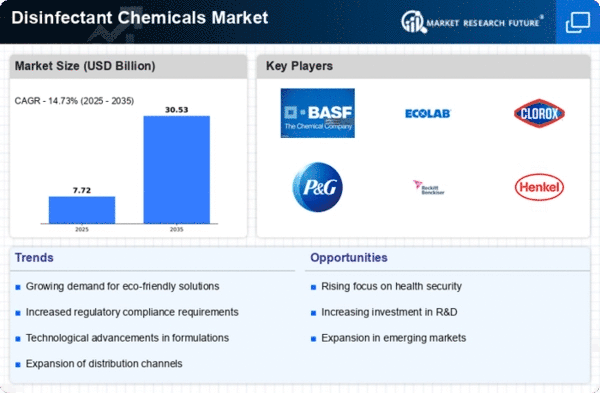
As per MRFR analysis, the Disinfectant Chemicals Market Size was estimated at 6.73 USD Billion in 2024. The disinfectant chemicals industry is projected to grow from 7.73 USD Billion in 2025 to 30.53 USD Billion by 2035, exhibiting a compound annual growth rate (CAGR) of 14.73 during the forecast period 2025 - 2035.

Key Market Trends & Highlights

The Disinfectant Chemicals Market is currently experiencing a robust growth trajectory driven by evolving consumer preferences and regulatory landscapes.

  • North America remains the largest market for disinfectant chemicals, driven by heightened health awareness and stringent regulations.
  • The Asia-Pacific region is emerging as the fastest-growing market, fueled by rapid urbanization and increasing demand for hygiene products.
  • Surface disinfection continues to dominate the market, while hand sanitization is witnessing the fastest growth due to changing consumer habits.
  • Key market drivers include rising health awareness and the expansion of end-user industries, particularly in healthcare and household segments.

Market Size & Forecast

2024 Market Size 6.73 (USD Billion)
2035 Market Size 30.53 (USD Billion)
CAGR (2025 - 2035) 14.73%
Largest Regional Market Share in 2024 North America

Major Players

BASF SE (DE), Ecolab Inc. (US), Clorox Company (US), Procter & Gamble Co. (US), Reckitt Benckiser Group plc (GB), Henkel AG & Co. KGaA (DE), SC Johnson Professional (US), Diversey Holdings, Ltd. (US)

Market Trends

The Disinfectant Chemicals Market is currently experiencing a notable transformation, driven by evolving consumer preferences and heightened awareness regarding hygiene and sanitation. This market encompasses a diverse range of products, including quaternary ammonium compounds, alcohols, and chlorine-based disinfectants, which are utilized across various sectors such as healthcare, food processing, and residential cleaning. The increasing demand for effective disinfecting solutions is likely influenced by a growing emphasis on public health and safety, prompting manufacturers to innovate and enhance their product offerings. Furthermore, regulatory frameworks are becoming more stringent, compelling companies to adhere to higher standards of efficacy and safety in their formulations. In addition to regulatory pressures, the Disinfectant Chemicals Market is witnessing a shift towards eco-friendly and sustainable products. Consumers are increasingly inclined to choose environmentally responsible options, which has led to the development of biodegradable and plant-based disinfectants. This trend not only aligns with global sustainability goals but also reflects a broader societal movement towards reducing chemical footprints. As the market continues to evolve, it appears that companies that prioritize sustainability and innovation may be better positioned to capture market share and meet the changing demands of consumers and regulatory bodies alike.

Sustainability Focus

The Disinfectant Chemicals Market is increasingly leaning towards sustainable practices. Manufacturers are developing eco-friendly products that minimize environmental impact, responding to consumer demand for greener alternatives. This trend reflects a broader societal shift towards sustainability, influencing product formulations and marketing strategies.

Technological Advancements

Innovations in formulation and application technologies are reshaping the Disinfectant Chemicals Market. Enhanced delivery systems and improved efficacy of active ingredients are becoming prevalent. These advancements not only boost product performance but also cater to the growing need for efficient and effective disinfection solutions.

Regulatory Compliance

The landscape of the Disinfectant Chemicals Market is heavily influenced by evolving regulatory standards. Companies are compelled to comply with stricter guidelines regarding safety and efficacy. This trend necessitates ongoing research and development efforts to ensure products meet the required benchmarks, thereby impacting market dynamics.

Disinfectant Chemicals Market Market Drivers

Regulatory Support

Government regulations play a pivotal role in shaping the Global Disinfectant Chemicals Market Industry. Regulatory bodies are increasingly mandating the use of effective disinfectants in various sectors, including healthcare, food processing, and public spaces. These regulations aim to enhance public health and safety standards, thereby driving demand for compliant disinfectant products. For example, the Environmental Protection Agency (EPA) in the United States has established guidelines for disinfectant efficacy, which encourages manufacturers to innovate and improve their offerings. This regulatory support is expected to contribute to the market's expansion, as businesses seek to adhere to these standards.

Rising Health Awareness

The Global Disinfectant Chemicals Market Industry is experiencing growth driven by increasing health awareness among consumers and businesses. As individuals become more conscious of hygiene practices, the demand for disinfectant products rises. This trend is particularly evident in healthcare settings, where stringent sanitation protocols are essential. For instance, hospitals and clinics are investing in advanced disinfectant solutions to ensure patient safety. The market is projected to reach 3.58 USD Billion in 2024, reflecting a significant shift in consumer behavior towards cleanliness and safety. This heightened awareness is likely to sustain the industry's growth trajectory in the coming years.

Technological Advancements

Technological innovations are significantly influencing the Global Disinfectant Chemicals Market Industry. The development of novel disinfectant formulations and delivery systems enhances the efficacy and convenience of these products. For instance, advancements in nanotechnology have led to the creation of disinfectants that provide longer-lasting protection against pathogens. Additionally, the integration of smart technologies, such as automated dispensing systems, is streamlining the application of disinfectants in various settings. These advancements not only improve product performance but also cater to the evolving needs of consumers, thereby propelling market growth. As the industry adapts to these technological changes, it is likely to witness sustained demand.

Expanding End-User Industries

The Global Disinfectant Chemicals Market Industry is bolstered by the expansion of end-user industries, including healthcare, hospitality, and food service. As these sectors grow, so does the need for effective disinfectant solutions to maintain hygiene standards. For example, the hospitality industry is increasingly adopting disinfectants to ensure guest safety and satisfaction, particularly in high-touch areas. The food service sector is also prioritizing sanitation to comply with health regulations and consumer expectations. This diversification across various industries is expected to drive the market's growth, with projections indicating a rise to 8.0 USD Billion by 2035, reflecting the increasing reliance on disinfectant chemicals.

Consumer Preference for Eco-Friendly Products

There is a noticeable shift in consumer preference towards eco-friendly disinfectant products within the Global Disinfectant Chemicals Market Industry. As environmental concerns gain prominence, consumers are seeking sustainable alternatives that minimize ecological impact. This trend is prompting manufacturers to develop biodegradable and non-toxic disinfectants that align with consumer values. For instance, products derived from natural ingredients are gaining traction in both residential and commercial markets. This growing demand for environmentally responsible options is likely to influence product development strategies, encouraging companies to innovate and expand their eco-friendly offerings, thereby contributing to the overall market growth.

Market Segment Insights

By Application: Surface Disinfection (Largest) vs. Hand Sanitization (Fastest-Growing)

In the Disinfectant Chemicals Market, surface disinfection emerged as the largest segment, largely driven by increasing hygiene awareness and stringent regulations in commercial spaces such as restaurants, hospitals, and schools. Following closely, hand sanitization has gained prominence, especially with recent public health crises pushing consumers and organizations to prioritize personal sanitization. The focus on cleanliness and infection control drives demand across both categories, ensuring substantial market share for surface disinfectants while hand sanitizers endure rapid growth.

Surface Disinfection (Dominant) vs. Hand Sanitization (Emerging)

Surface disinfection remains the dominant application in the disinfectant chemicals sector, representing a broad spectrum of products designed for various surfaces in commercial and residential settings. This segment focuses on formulations aimed at killing pathogens on high-touch areas like doorknobs and countertops. Conversely, hand sanitization is emerging as a critical player in the market, propelled by the heightened awareness of personal hygiene. Innovations in formulation and packaging, alongside increased consumer demand for convenience, position hand sanitizers as a rapidly growing segment, competing effectively against traditional disinfectants as public health consciousness remains a priority.

By End Use: Healthcare (Largest) vs. Household (Fastest-Growing)

In the Disinfectant Chemicals Market, the end-use segments reveal significant variations in market share. The healthcare segment occupies the largest share due to heightened awareness of hygiene and infection control in medical settings. This demand has been further amplified by global health events that have increased the usage of disinfectants in hospitals and clinics. The household segment is also gaining traction, driven by rising consumer awareness of cleanliness, particularly in the wake of the pandemic, as households seek effective disinfectant solutions for everyday use.

Healthcare: (Dominant) vs. Household (Emerging)

The healthcare sector is considered the dominant force in the Disinfectant Chemicals Market, representing the largest share due to strict sanitation standards in hospitals, clinics, and other medical facilities. This segment employs a wide range of disinfectant chemicals, including surface cleaners, hand sanitizers, and specialized sterilization products aimed at maintaining hygiene and preventing infections. In contrast, the household segment, although currently smaller in market share, is emerging rapidly as an essential category fueled by increasing consumer consciousness around health and cleanliness. Households are now opting for versatile disinfectant products that effectively eliminate pathogens, driving innovation in formulations that cater specifically to consumer preferences for convenience, effectiveness, and safety.

By Chemical Type: Alcohols (Largest) vs. Quaternary Ammonium Compounds (Fastest-Growing)

In the Disinfectant Chemicals Market, Alcohols hold the largest market share, owing to their potent efficacy against microbes and viruses. This segment is widely used in hand sanitizers and surface disinfectants, appealing to both consumer and industrial sectors. Following closely, Quaternary Ammonium Compounds are emerging as a significant player, valued for their broad-spectrum antimicrobial properties and long-lasting effectiveness which make them suitable for various applications including healthcare settings and household cleaning agents. The market dynamics indicate a compelling demand for Chlorine Compounds and Hydrogen Peroxide as well, largely driven by their effectiveness in large-scale disinfection processes. The growth in these segments is propelled by heightened awareness of hygiene and sanitation, particularly spurred by recent global health crises that have emphasized the need for effective disinfectant solutions.

Alcohols: Dominant vs. Quaternary Ammonium Compounds: Emerging

Alcohols are a dominant force in the Disinfectant Chemicals Market, **known for their quick action against pathogens** and broad applicability across various sectors. Their versatility allows for usage in gels, wipes, and sprays, making them highly popular among consumers and professionals alike. In contrast, Quaternary Ammonium Compounds, while emerging, are gaining rapid traction due to their strong surface-acting properties that provide effective disinfection with a residual effect. This characteristic makes them extraordinarily useful in settings that require prolonged antimicrobial protection. As consumers and industries shift towards more robust cleaning solutions, both segments are likely to flourish, albeit with Alcohols currently leading in market presence.

By Formulation Type: Liquid (Largest) vs. Wipes (Fastest-Growing)

The Disinfectant Chemicals Market is segmented by formulation type into five major categories: Liquid, Wipes, Spray, Foam, and Gel. Among these, Liquid formulations hold the largest market share due to their versatility and effectiveness in a wide range of applications, from household cleaning to industrial sanitation. Wipes, on the other hand, are rapidly gaining traction, catering to the increasing consumer demand for convenience and ease of use in disinfecting surfaces, especially in the post-pandemic era.

Liquid (Dominant) vs. Wipes (Emerging)

Liquid disinfectants are currently the dominant formulation in the Disinfectant Chemicals Market, widely preferred for their efficacy and ability to cover large surfaces. They offer flexibility in application, whether through manual spray or automated systems, making them suitable for both residential and commercial use. In contrast, wipes represent an emerging segment, driven by consumer preferences for quick and convenient cleaning solutions. Ideal for consumer households and busy environments, disinfectant wipes have seen exponential growth, fueled by pandemic awareness and a shift in cleaning habits towards more immediate and portable options.

By Distribution Channel: Retail (Largest) vs. Online (Fastest-Growing)

The disinfectant chemicals market is witnessing a dynamic distribution landscape, with retail channels accounting for a significant share due to their accessibility and wide reach to consumers. Retail outlets remain a top choice for both households and businesses looking to purchase disinfectant products for immediate use, benefiting from established brand trust and shelf presence. Meanwhile, the online distribution channel is rapidly gaining traction, appealing to a tech-savvy demographic that values convenience, home delivery, and the comparison of various products from the comfort of their homes.

Retail (Dominant) vs. Online (Emerging)

Retail distribution of disinfectant chemicals stands out as the dominant channel due to its physical presence and the ability to connect with consumers directly. Major supermarket chains and drugstores establish strong customer relationships through promotions and product availability. Conversely, the online channel is on the rise, particularly post-pandemic, catering to changing shopping behaviors. E-commerce platforms provide convenience and a wider range of products, enabling brands to reach diverse customer segments, including those in remote areas. This shift highlights the importance of adapting marketing strategies to leverage both retail and online opportunities.

Get more detailed insights about Disinfectant Chemicals Market Research Report—Global Forecast till 2035

Regional Insights

North America : Market Leader in Disinfectants

North America continues to lead the disinfectant chemicals market, holding a significant share of 3.5 billion. The growth is driven by heightened awareness of hygiene, especially post-pandemic, and stringent regulations promoting sanitation in various sectors. The demand for effective disinfectants in healthcare, food service, and residential applications is on the rise, supported by government initiatives aimed at improving public health standards. The United States is the primary market in this region, with key players like Ecolab Inc., Clorox Company, and Procter & Gamble Co. dominating the landscape. These companies are investing in innovative solutions and expanding their product lines to meet the increasing demand. The competitive environment is characterized by a focus on sustainability and eco-friendly products, aligning with consumer preferences for safer alternatives.

Europe : Regulatory-Driven Market Growth

Europe's disinfectant chemicals market is valued at €2.0 billion, driven by stringent regulations and a growing emphasis on hygiene across various sectors. The European Union's regulations on biocidal products have catalyzed innovation and compliance, ensuring that products meet high safety and efficacy standards. The increasing incidence of infectious diseases has further propelled demand for disinfectants in healthcare and public spaces, making regulatory compliance a key growth driver. Germany and the UK are leading markets within Europe, with major players like BASF SE and Reckitt Benckiser Group plc actively participating in the market. The competitive landscape is marked by a focus on research and development, with companies striving to create more effective and environmentally friendly disinfectants. The presence of established brands and a robust distribution network enhances market accessibility and consumer trust.

Asia-Pacific : Emerging Market Potential

The Asia-Pacific disinfectant chemicals market is valued at $1.8 billion, showcasing significant growth potential driven by urbanization and increasing health awareness. The region has witnessed a surge in demand for disinfectants in both residential and commercial sectors, particularly in countries like China and India. Government initiatives promoting sanitation and hygiene practices are further fueling market expansion, making it a key area for investment and development. China is the largest market in the region, with a growing number of local and international players entering the space. Companies like Diversey Holdings and SC Johnson Professional are focusing on expanding their product offerings to cater to diverse consumer needs. The competitive landscape is evolving, with an emphasis on innovation and affordability, as consumers seek effective yet cost-efficient disinfectant solutions.

Middle East and Africa : Developing Market Landscape

The Middle East and Africa disinfectant chemicals market is valued at $0.43 billion, reflecting a developing landscape with increasing demand for hygiene products. The growth is driven by rising health concerns and the need for effective sanitation in both urban and rural areas. Government initiatives aimed at improving public health standards are also contributing to the market's expansion, particularly in response to recent health crises. South Africa and the UAE are leading markets in this region, with a growing presence of international players. Companies are focusing on enhancing product availability and affordability to meet the needs of diverse consumer segments. The competitive environment is characterized by a mix of local and global brands, each striving to capture market share through innovative solutions and effective marketing strategies.

Key Players and Competitive Insights

The Disinfectant Chemicals Market is currently characterized by a dynamic competitive landscape, driven by increasing demand for hygiene products across various sectors, including healthcare, food service, and residential applications. Key players such as BASF SE (DE), Ecolab Inc. (US), and Reckitt Benckiser Group plc (GB) are strategically positioned to leverage innovation and sustainability in their product offerings. BASF SE (DE) focuses on developing eco-friendly formulations, while Ecolab Inc. (US) emphasizes digital solutions for enhanced cleaning efficiency. Reckitt Benckiser Group plc (GB) is actively pursuing mergers and acquisitions to expand its portfolio, indicating a trend towards consolidation in the market. Collectively, these strategies shape a competitive environment that prioritizes sustainability and technological advancement.In terms of business tactics, companies are increasingly localizing manufacturing to reduce supply chain vulnerabilities and optimize logistics. The market structure appears moderately fragmented, with several key players holding substantial market shares. This fragmentation allows for niche players to thrive, yet the collective influence of major companies like Procter & Gamble Co. (US) and Clorox Company (US) remains significant, as they set industry standards and drive innovation.In November 2025, Ecolab Inc. (US) announced a partnership with a leading technology firm to integrate AI-driven analytics into its cleaning solutions. This strategic move is likely to enhance operational efficiency and provide clients with data-driven insights, thereby reinforcing Ecolab's position as a leader in the disinfectant chemicals sector. The integration of AI not only streamlines processes but also aligns with the growing trend of digital transformation in the industry.In October 2025, Reckitt Benckiser Group plc (GB) completed the acquisition of a regional disinfectant manufacturer, which is expected to bolster its market presence in emerging economies. This acquisition reflects Reckitt's strategy to diversify its product range and tap into new customer segments, particularly in regions where demand for disinfectant products is surging. Such strategic expansions are indicative of a broader trend towards geographic diversification among major players.In September 2025, BASF SE (DE) launched a new line of biodegradable disinfectants, showcasing its commitment to sustainability. This product line not only meets the increasing consumer demand for environmentally friendly options but also positions BASF as a forward-thinking player in the market. The emphasis on sustainable products is becoming a critical differentiator in the competitive landscape, as consumers and businesses alike prioritize eco-conscious choices.As of December 2025, the competitive trends in the Disinfectant Chemicals Market are increasingly defined by digitalization, sustainability, and the integration of advanced technologies. Strategic alliances are becoming more prevalent, as companies seek to enhance their capabilities and market reach. Looking ahead, competitive differentiation is likely to evolve from traditional price-based competition to a focus on innovation, technological advancements, and supply chain reliability. This shift underscores the importance of adaptability and forward-thinking strategies in maintaining a competitive edge.

Key Companies in the Disinfectant Chemicals Market include

Industry Developments

June 2023, an EPA-approved air sanitizer spray has been unveiled in the U.S.A. by Lysol Air Sanitizer. The brand's initial introduction was the EPA-approved air sanitizer spray.

In March 2022, PDI launched Sani-24® Germicidal Disposable Wipe, Sani-HyPerCide® Germicidal Disposable Wipe, and Sani-HyPerCide® Germicidal Spray as a way of combating healthcare infections (HAIs) that were growing in number and addressing Covid-19 challenges in health care settings.

In March 2022, PDI will launch new products like Sani-24 Germicidal Disposable Wipe, Sani-HyPerCide Germicidal Disposable Wipe, and Sani-HyPerCide Germicidal Spray. These highly advanced disinfectants will thus help infection control staff tackle the increasing prevalence of healthcare-associated infections (HAIs).

Future Outlook

Disinfectant Chemicals Market Future Outlook

The Disinfectant Chemicals Market is projected to grow at a 14.73% CAGR from 2024 to 2035, driven by increasing health awareness, regulatory standards, and technological advancements.

New opportunities lie in:

  • Development of eco-friendly disinfectant formulations
  • Expansion into emerging markets with tailored products
  • Integration of smart dispensing technologies for efficiency

By 2035, the market is expected to achieve robust growth, positioning itself as a leader in hygiene solutions.

Market Segmentation

Disinfectant Chemicals Market End Use Outlook

  • Healthcare
  • Household
  • Industrial
  • Food Service
  • Institutional

Disinfectant Chemicals Market Application Outlook

  • Surface Disinfection
  • Hand Sanitization
  • Air Disinfection
  • Water Treatment
  • Food Processing

Disinfectant Chemicals Market Chemical Type Outlook

  • Alcohols
  • Chlorine Compounds
  • Quaternary Ammonium Compounds
  • Phenolic Compounds
  • Hydrogen Peroxide

Disinfectant Chemicals Market Formulation Type Outlook

  • Liquid
  • Wipes
  • Spray
  • Foam
  • Gel

Disinfectant Chemicals Market Distribution Channel Outlook

  • Online
  • Retail
  • Direct Sales
  • Wholesale
  • Institutional Supply

Report Scope

MARKET SIZE 20246.73(USD Billion)
MARKET SIZE 20257.73(USD Billion)
MARKET SIZE 203530.53(USD Billion)
COMPOUND ANNUAL GROWTH RATE (CAGR)14.73% (2025 - 2035)
REPORT COVERAGERevenue Forecast, Competitive Landscape, Growth Factors, and Trends
BASE YEAR2024
Market Forecast Period2025 - 2035
Historical Data2019 - 2024
Market Forecast UnitsUSD Billion
Key Companies ProfiledBASF SE (DE), Ecolab Inc. (US), Clorox Company (US), Procter & Gamble Co. (US), Reckitt Benckiser Group plc (GB), Henkel AG & Co. KGaA (DE), SC Johnson Professional (US), Diversey Holdings, Ltd. (US)
Segments CoveredApplication, End Use, Chemical Type, Formulation Type, Distribution Channel
Key Market OpportunitiesGrowing demand for eco-friendly disinfectant solutions drives innovation in the Disinfectant Chemicals Market.
Key Market DynamicsRising regulatory scrutiny and consumer demand drive innovation in disinfectant chemicals and sustainable formulations.
Countries CoveredNorth America, Europe, APAC, South America, MEA

FAQs

How much is the Disinfectant Chemicals market?

The Disinfectant Chemicals market End User was valued at USD 2.9 Billion in 2022

What is the growth rate of the Disinfectant Chemicals market?

The market is projected to grow at a CAGR of 8.89% during the forecast period, 2025-2035

Which region held the largest market share in the Disinfectant Chemicals market?

North America had the largest share in the market

Who are the key players in the Disinfectant Chemicals market?

The key players in the market Johnson & Johnson Services, Inc., 3M, Reckitt Benckiser Group plc, Ecolab Inc., The Clorox Company, Kemin Industries, Inc., Diversey Holdings, Ltd., STERIS plc, ABC, Compounding Co., Inc., Medline Industries, and LP

Which Composition led the Disinfectant Chemicals market?

The Peracetic Acid Composition dominated the market in 2022

Which Type had the largest market share in the Disinfectant Chemicals market?

The Surface Disinfectant Type had the largest share in the market

  1. SECTION I: EXECUTIVE SUMMARY AND KEY HIGHLIGHTS
    1. | 1.1 EXECUTIVE SUMMARY
  2. SECTION II: SCOPING, METHODOLOGY AND MARKET STRUCTURE
    1. | 2.1 MARKET INTRODUCTION
    2. | 2.2 RESEARCH METHODOLOGY
  3. SECTION III: QUALITATIVE ANALYSIS
    1. | 3.1 MARKET DYNAMICS
    2. | 3.2 MARKET FACTOR ANALYSIS
  4. SECTION IV: QUANTITATIVE ANALYSIS
    1. | 4.1 Chemicals and Materials, BY Application (USD Billion)
    2. | 4.2 Chemicals and Materials, BY End Use (USD Billion)
    3. | 4.3 Chemicals and Materials, BY Chemical Type (USD Billion)
    4. | 4.4 Chemicals and Materials, BY Formulation Type (USD Billion)
    5. | 4.5 Chemicals and Materials, BY Distribution Channel (USD Billion)
    6. | 4.6 Chemicals and Materials, BY Region (USD Billion)
  5. SECTION V: COMPETITIVE ANALYSIS
    1. | 5.1 Competitive Landscape
    2. | 5.2 Company Profiles
    3. | 5.3 Appendix

Disinfectant Chemicals Market Segmentation

Market Segmentation Overview

  • Detailed segmentation data will be available in the full report
  • Comprehensive analysis by multiple parameters
  • Regional and country-level breakdowns
  • Market size forecasts by segment
Infographic

Free Sample Request

Kindly complete the form below to receive a free sample of this Report

Get Free Sample

Customer Strories

Compare Licence

×
Features License Type
Single User Multiuser License Enterprise User
Price $4,950 $5,950 $7,250
Maximum User Access Limit 1 User Upto 10 Users Unrestricted Access Throughout the Organization
Free Customization
Direct Access to Analyst
Deliverable Format
Platform Access
Discount on Next Purchase 10% 15% 15%
Printable Versions