×
Request Free Sample ×

Kindly complete the form below to receive a free sample of this Report

* Please use a valid business email

Leading companies partner with us for data-driven Insights

clients tt-cursor
Hero Background
English
Chinese
French
Japanese
Korean
German
Spanish

Diethylene Glycol (DEG) Market Size

ID: MRFR/CnM/1181-HCR
116 Pages
Priya Nagrale
October 2025

Diethylene Glycol Market Research Report Information by Application (Plasticizer, Personal Care, Chemical Intermediates, & Polyester Resins), End-Use Industries (Building and Construction, Plastics, Paints and Coatings, & Polymers), and Region—Forecast till 2035

Share:
Download PDF ×

We do not share your information with anyone. However, we may send you emails based on your report interest from time to time. You may contact us at any time to opt-out.

Diethylene Glycol (DEG) Market Infographic
×
Diethylene Glycol (DEG) Market Infographic Full View
Purchase Options

Diethylene Glycol Deg Size

Diethylene Glycol (DEG) Market Growth Projections and Opportunities

The Diethylene Glycol (DEG) market is subject to a variety of factors that collectively shape its dynamics. Understanding these elements is crucial for industry participants to make informed decisions and navigate the market effectively.

End-Use Industries:

Diethylene Glycol serves as a versatile chemical with applications in various industries, including textiles, plastics, and pharmaceuticals. The health and growth of these end-use industries significantly influence the demand for DEG, making it essential for manufacturers to monitor industry trends. Polyester Fiber and Resin Production:

A significant portion of Diethylene Glycol is used in the production of polyester fibers and resins. Market dynamics are closely tied to the demand for polyester-based products, such as textiles and packaging materials, with fluctuations in this sector affecting DEG consumption. Plasticizers and Solvents:

DEG is utilized as a plasticizer in the manufacturing of plastics and as a solvent in various applications. Trends in the plastics and solvents industries directly impact DEG demand, with changes in manufacturing practices influencing market dynamics. Pharmaceuticals and Personal Care Products:

Diethylene Glycol is employed in the pharmaceutical and personal care industries for applications such as antifreeze solutions and humectants. The demand for pharmaceutical and personal care products contributes to the overall market for DEG, with growth in these sectors positively impacting market dynamics. Global Economic Conditions:

Economic stability and growth rates in major economies influence industrial activities and consumer spending, directly impacting the demand for DEG. Economic downturns may lead to reduced production and consumption of DEG-related products, affecting the overall market. Raw Material Prices:

DEG production relies on raw materials such as ethylene oxide, and fluctuations in the prices of these raw materials impact production costs. Changes in global ethylene oxide prices, influenced by factors such as supply and demand dynamics, geopolitical events, and trade policies, contribute to DEG market volatility. Environmental and Regulatory Considerations:

Stringent environmental regulations impact the DEG industry, particularly in terms of emissions control and waste management. Compliance with environmental standards is crucial for DEG manufacturers to ensure sustainable operations and meet regulatory requirements. Emerging Applications:

Ongoing research and development lead to emerging applications for DEG, such as in the production of fuel cells and energy storage devices. Companies that invest in exploring and capitalizing on new applications contribute to the evolution of the DEG market. Technological Advances:

Advancements in DEG production technologies can enhance efficiency, reduce costs, and improve the quality of the final product. Companies investing in innovative production processes and technologies gain a competitive edge in the market by offering superior products and cost-effective solutions. Global Trade Dynamics:

DEG is a globally traded commodity, and changes in trade policies, tariffs, and geopolitical tensions can impact international trade and pricing. Market participants need to stay informed about global trade dynamics to anticipate potential disruptions and adapt their strategies accordingly. Consumer Preferences for Sustainable Products:

Growing consumer awareness of sustainability influences the choice of raw materials and production processes in various industries. DEG manufacturers incorporating sustainable practices and promoting eco-friendly applications of their products can gain a competitive advantage. Supply Chain Resilience:

The resilience of the DEG supply chain is crucial for market stability, considering potential disruptions due to events such as natural disasters or geopolitical issues. Diversifying supply chain sources and implementing robust risk management strategies become essential for market participants.
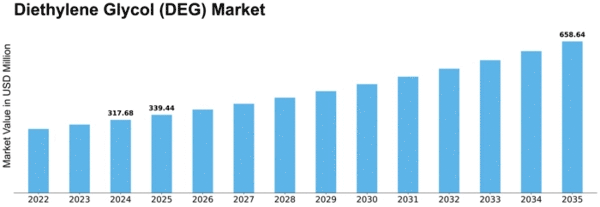
Diethylene Glycol (DEG) Market Size Graph
Author
Priya Nagrale
Senior Research Analyst

With an experience of over five years in market research industry (Chemicals & Materials domain), I gather and analyze market data from diverse sources to produce results, which are then presented back to a client. Also, provide recommendations based on the findings. As a Senior Research Analyst, I perform quality checks (QC) for market estimations, QC for reports, and handle queries and work extensively on client customizations. Also, handle the responsibilities of client proposals, report planning, report finalization, and execution

Leave a Comment

FAQs

At what CAGR is the Diethylene Glycol (DEG) Market predicted to grow during the forecast period?

Diethylene Glycol (DEG) Market is predicted to grow at 4.8% through forecast period of 2025-2035.

What is the forecast period of Diethylene Glycol (DEG) Market research report?

The forecast period for Diethylene Glycol (DEG) Market research report is 2025-2035.

Which region will lead the Diethylene Glycol (DEG) Market?

Diethylene Glycol (DEG) Market is dominated by APAC region.

Who are the key players in the Diethylene Glycol (DEG) Market?

The major players are India Glycols Limited (India), Crystal India (India), Pon Pure Chemicals (India), Merck KGaA (Germany), Mitsubishi Chemical Corporation (Japan),Tokyo Chemical Industry Co. Ltd (Japan), SABIC (Saudi Arabia), Reliance Industries Limited (India), LyondellBasell Industries NV (Netherlands), DowDuPont Inc. (US), Royal Dutch Shell PLC (Netherlands), Huntsman International LLC (US)

Market Summary

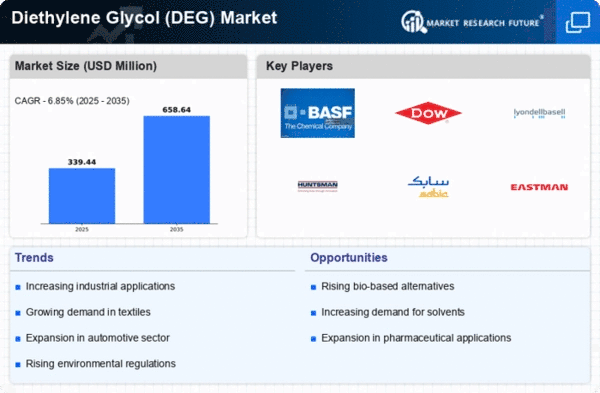
As per MRFR analysis, the Diethylene Glycol (DEG) Market Size was estimated at 317.68 USD Million in 2024. The DEG industry is projected to grow from 339.45 in 2025 to 658.64 by 2035, exhibiting a compound annual growth rate (CAGR) of 6.85 during the forecast period 2025 - 2035.

Key Market Trends & Highlights

The Diethylene Glycol (DEG) market is poised for growth driven by sustainability and technological advancements.

  • The North American region remains the largest market for Diethylene Glycol, reflecting robust demand across various applications.
  • Asia-Pacific is emerging as the fastest-growing region, fueled by increasing industrialization and urbanization.
  • The solvent segment continues to dominate the market, while the plasticizer segment is experiencing rapid growth due to diverse applications.
  • Key market drivers include rising demand from the automotive sector and the expansion of the textile industry, which are significantly influencing DEG consumption.

Market Size & Forecast

2024 Market Size 317.68 (USD Million)
2035 Market Size 658.64 (USD Million)
CAGR (2025 - 2035) 6.85%
Largest Regional Market Share in 2024 Asia-Pacific

Major Players

<p>BASF SE (DE), Dow Inc. (US), LyondellBasell Industries N.V. (NL), Huntsman Corporation (US), SABIC (SA), Eastman Chemical Company (US), Ineos Group Limited (GB), Oxea GmbH (DE), Formosa Plastics Corporation (TW)</p>

Market Trends

The Diethylene Glycol (DEG) Market is currently experiencing a phase of dynamic evolution, driven by various factors that influence its demand and supply. The versatility of diethylene glycol, utilized in applications ranging from antifreeze formulations to the production of plastics and resins, underscores its significance in multiple industries. As environmental regulations become more stringent, there is a noticeable shift towards sustainable practices, prompting manufacturers to explore eco-friendly alternatives and production methods. This transition may reshape the competitive landscape, as companies strive to align with consumer preferences for greener products. Moreover, the ongoing advancements in chemical processing technologies appear to enhance the efficiency of DEG production, potentially leading to cost reductions and improved product quality. The increasing focus on research and development initiatives suggests that innovation will play a crucial role in shaping the future of the Diethylene Glycol (DEG) Market. As industries continue to evolve, the demand for high-purity DEG is likely to rise, particularly in sectors such as pharmaceuticals and cosmetics, where quality standards are paramount. Overall, the market seems poised for growth, driven by both technological advancements and changing consumer expectations.

Sustainability Initiatives

The Diethylene Glycol (DEG) Market is witnessing a growing emphasis on sustainability, as manufacturers seek to reduce their environmental footprint. This trend is characterized by the adoption of greener production methods and the exploration of bio-based alternatives. Companies are increasingly investing in research to develop eco-friendly DEG, which aligns with global efforts to promote sustainable practices across various industries.

Technological Advancements

Innovations in chemical processing technologies are significantly impacting the Diethylene Glycol (DEG) Market. Enhanced production techniques are likely to improve efficiency and reduce costs, thereby making DEG more accessible to a broader range of applications. These advancements may also lead to higher purity levels, catering to the stringent requirements of sectors such as pharmaceuticals and cosmetics.

Rising Demand in Specialty Applications

There is a noticeable increase in the demand for diethylene glycol in specialty applications, particularly in the pharmaceutical and cosmetic industries. As these sectors prioritize high-quality ingredients, the need for high-purity DEG is expected to grow. This trend indicates a shift towards more specialized uses of DEG, which may drive market expansion and diversification.

Diethylene Glycol (DEG) Market Market Drivers

Growth in Textile Industry

The textile industry plays a pivotal role in driving the Global Diethylene Glycol Market Industry. Diethylene glycol is extensively used as a solvent in the production of polyester fibers, which are integral to modern textiles. As global fashion trends evolve and the demand for synthetic fibers rises, the textile sector's consumption of diethylene glycol is likely to increase. This growth is further supported by the expanding middle class in developing regions, which fuels demand for apparel. The Global Diethylene Glycol Market is projected to witness a compound annual growth rate of 9.21% from 2025 to 2035, reflecting the textile industry's significant contribution to market dynamics.

Rising Demand from Automotive Sector

The Global Diethylene Glycol Market Industry experiences a notable surge in demand driven by the automotive sector. Diethylene glycol is utilized in the production of antifreeze and coolant formulations, which are essential for vehicle performance and longevity. As the automotive industry continues to expand, particularly in emerging markets, the need for high-quality cooling agents increases. This trend is expected to contribute significantly to the market's growth, with projections indicating that the Global Diethylene Glycol Market could reach 192.1 USD Billion in 2024. The automotive sector's reliance on diethylene glycol underscores its critical role in ensuring efficient vehicle operation.

Surge in Demand for Personal Care Products

The personal care industry significantly influences the Global Diethylene Glycol Market Industry. Diethylene glycol is utilized in various formulations, including skin care and hair care products, due to its properties as a humectant and solvent. As consumer preferences shift towards high-quality personal care products, the demand for diethylene glycol is likely to rise. The increasing awareness of personal grooming and hygiene, particularly in urban areas, further propels this trend. The market's expansion in this sector suggests a robust growth potential, contributing to the overall market dynamics of diethylene glycol.

Increasing Applications in Chemical Manufacturing

The Global Diethylene Glycol Market Industry benefits from its diverse applications in chemical manufacturing. Diethylene glycol serves as a key intermediate in the production of various chemicals, including plasticizers and resins. The ongoing expansion of the chemical manufacturing sector, particularly in Asia-Pacific, is likely to enhance the demand for diethylene glycol. As industries seek to optimize production processes and improve product quality, the reliance on diethylene glycol as a versatile chemical building block is expected to grow. This trend aligns with the market's projected growth trajectory, potentially reaching 506.2 USD Billion by 2035.

Environmental Regulations and Sustainability Initiatives

The Global Diethylene Glycol Market Industry is also shaped by the increasing emphasis on environmental regulations and sustainability initiatives. As industries strive to reduce their carbon footprint, there is a growing interest in bio-based alternatives to traditional petrochemical products. Diethylene glycol, being a versatile compound, is at the forefront of this transition. Companies are exploring sustainable production methods and eco-friendly applications, which may enhance the market's appeal. This shift towards sustainability is likely to influence consumer preferences and regulatory frameworks, potentially reshaping the landscape of the diethylene glycol market.

Market Segment Insights

By Application: Solvent (Largest) vs. Plasticizer (Fastest-Growing)

<p>In the Diethylene Glycol (DEG) market, the application segment is primarily dominated by solvents, which hold the largest market share due to their extensive use in various industrial applications such as paints, coatings, and adhesives. The plasticizer segment is quickly emerging as a fast-growing application area, driven by increasing demand for flexible and durable materials in the construction and automotive industries. Other notable applications include humectants, intermediates, and dehydrating agents, which contribute significantly to market dynamics.</p>

<p>Solvent (Dominant) vs. Plasticizer (Emerging)</p>

<p>The solvent application for Diethylene Glycol (DEG) is recognized as the dominant segment in the market, primarily due to its capabilities in dissolving a wide array of compounds, making it essential in manufacturing processes across chemical, pharmaceutical, and cosmetic industries. This segment is followed closely by the plasticizer application, which is emerging rapidly as industries seek to improve the flexibility and performance of plastics and synthetic materials. As regulations evolve and environmental concerns grow, the demand for bio-based plasticizers enhances this segment's growth trajectory, highlighting a shift towards more sustainable manufacturing practices.</p>

By End Use: Automotive (Largest) vs. Textiles (Fastest-Growing)

<p>In the Diethylene Glycol (DEG) market, the automotive sector holds the largest share, owing to its extensive application in antifreeze and cooling agents. The demand for DEG in automotive applications continues to rise as manufacturers seek to improve vehicle performance and efficiency. Conversely, the textile industry is emerging as the fastest-growing segment, driven by increased demand for polyester fibers and other synthetic materials. As environmental concerns rise, textile manufacturers are increasingly adopting DEG as a sustainable alternative, further fueling market growth.</p>

<p>Automotive (Dominant) vs. Pharmaceuticals (Emerging)</p>

<p>The automotive segment is the dominant player in the DEG market, primarily due to its critical role in producing antifreeze products and coolant formulations essential for vehicle maintenance and performance. This segment benefits from a steady demand linked to the global automotive industry's expansion. On the other hand, the pharmaceutical sector is emerging as a notable player, leveraging DEG's properties for drug formulations and as a solvent. The growing focus on research and development in healthcare is driving increased utilization of DEG, making it an essential component for developing various pharmaceutical products.</p>

By Formulation Type: Liquid (Largest) vs. Solid (Fastest-Growing)

<p>In the Diethylene Glycol (DEG) Market, the formulation types exhibit distinct market share distributions. Liquid DEG holds the largest share, primarily due to its versatility and wide range of applications in industries such as automotive, textiles, and pharmaceuticals. Conversely, solid DEG is gradually gaining traction as manufacturers seek alternatives that offer more stability and efficiency in specific applications, contributing to its growth in the sector.</p>

<p>Solid (Dominant) vs. Concentrated (Emerging)</p>

<p>Solid formulation type is currently positioned as a dominant player within the DEG market, primarily due to its increasing incorporation in the production of plastics and resins, which require high-performance materials. This formulation offers improved handling and storage capabilities compared to liquids, allowing for increased efficiency in manufacturing processes. On the other hand, concentrated DEG is emerging as a vital option for specialized applications requiring high purity and fewer impurities. As industries prioritize sustainability and performance, concentrated formulations are witnessing a surge in interest, promising potential growth as manufacturers adapt to evolving regulatory requirements and seek performance enhancements.</p>

By Distribution Channel: Distributors (Largest) vs. Online Sales (Fastest-Growing)

<p>In the Diethylene Glycol (DEG) Market, the distribution channels are diverse, with Distributors holding the largest market share. These intermediaries play a crucial role in facilitating the widespread availability of DEG across various industries, including automotive and textiles. Following closely are Direct Sales, which cater to specific consumer needs, while Online Sales have emerged as a significant channel due to the increasing convenience offered to customers. Retail channels, on the other hand, remain a smaller segment but contribute to the overall market dynamics.</p>

<p>Direct Sales (Dominant) vs. Retail (Emerging)</p>

<p>Direct Sales in the Diethylene Glycol (DEG) Market stand out as a dominant channel, effectively catering to bulk buyers and industries requiring specific formulations. This channel allows manufacturers to build strong relationships with customers, ensuring tailored solutions and efficient service. In contrast, the Retail segment is emerging, focusing on smaller consumers and businesses. Although it currently holds a minimal share, the growth in retail channels is driven by an increasing demand for smaller quantities of DEG for specialized applications. Retail's adaptability and the rise of e-commerce platforms are enhancing its market position.</p>

By Grade: Industrial Grade (Largest) vs. Pharmaceutical Grade (Fastest-Growing)

<p>In the Diethylene Glycol (DEG) market, the distribution of market share among the grade segments reveals that Industrial Grade holds the largest portion, primarily due to its extensive use across multiple applications including polyester production and antifreeze formulations. Food Grade and Pharmaceutical Grade follow, with the former gaining traction in food processing industries and the latter serving critical roles in drug formulation and healthcare products. As industries refine their quality standards and regulatory compliance, these segments are also poised for growth.</p>

<p>Industrial Grade (Dominant) vs. Pharmaceutical Grade (Emerging)</p>

<p>Industrial Grade DEG is well-established as the dominant segment in the market, owing to its widespread utility in various industrial applications. It is characterized by its high purity and versatility, facilitating its use in manufacturing processes ranging from resin production to as a solvent. On the other hand, Pharmaceutical Grade, while currently emerging, is quickly gaining ground due to a rising demand for high-quality solvents in drug formulation and biocompatibility. As regulatory frameworks tighten, the increasing emphasis on safety and product quality positions Pharmaceutical Grade for rapid expansion, catering to evolving industry standards.</p>

Get more detailed insights about Diethylene Glycol (DEG) Market Research Report - Forecast to 2035

Regional Insights

North America : Established Market with Growth Potential

The North American DEG market is projected to reach $60.0 million by 2025, driven by increasing demand in automotive and construction sectors. Regulatory support for sustainable practices and the shift towards eco-friendly products are key growth catalysts. The region's focus on innovation and technology further enhances market dynamics, with a growing emphasis on reducing environmental impact. Leading countries like the US and Canada dominate the market, with major players such as Dow Inc. and Huntsman Corporation driving competition. The presence of established chemical manufacturers ensures a robust supply chain, while ongoing investments in R&D are expected to foster new applications for DEG. This competitive landscape positions North America as a significant player in The Diethylene Glycol (DEG).

Europe : Innovation and Sustainability Focus

Europe's DEG market is anticipated to grow significantly, reaching $80.0 million by 2025. The region benefits from stringent environmental regulations that promote the use of sustainable chemicals. Increasing demand from the automotive and textile industries, coupled with a shift towards bio-based products, drives market growth. Regulatory frameworks are encouraging innovation, making Europe a leader in sustainable chemical production. Germany, the UK, and France are key players in this market, with companies like BASF SE and LyondellBasell Industries N.V. leading the charge. The competitive landscape is characterized by a mix of established firms and emerging startups focused on sustainable solutions. This dynamic environment fosters collaboration and innovation, positioning Europe as a pivotal region in The Diethylene Glycol (DEG).

Asia-Pacific : Emerging Powerhouse in Chemical Production

The Asia-Pacific region is the largest market for DEG, projected to reach $150.0 million by 2025. Rapid industrialization, urbanization, and increasing demand from end-use industries such as automotive and textiles are driving this growth. The region's favorable regulatory environment and investments in infrastructure further enhance market dynamics, making it a key player in the global chemical landscape. China, India, and Japan are leading countries in this market, with major companies like SABIC and Eastman Chemical Company establishing a strong presence. The competitive landscape is marked by significant investments in production capacity and technological advancements. This focus on innovation and efficiency positions Asia-Pacific as a dominant force in The Diethylene Glycol (DEG).

Middle East and Africa : Resource-Rich Frontier for Chemicals

The Middle East and Africa DEG market is expected to reach $27.68 million by 2025, driven by the region's abundant natural resources and growing industrial base. Increasing investments in petrochemical projects and a rising demand for DEG in various applications, including antifreeze and solvents, are key growth drivers. The region's strategic location also facilitates trade and export opportunities. Countries like Saudi Arabia and South Africa are at the forefront of this market, with companies such as Ineos Group Limited and Oxea GmbH playing significant roles. The competitive landscape is evolving, with new entrants and partnerships emerging to capitalize on growth opportunities. This dynamic environment positions the Middle East and Africa as a promising market for DEG.

Key Players and Competitive Insights

The Diethylene Glycol (DEG) Market is characterized by a competitive landscape that is increasingly shaped by innovation, sustainability, and strategic partnerships. Key players such as BASF SE (DE), Dow Inc. (US), and Huntsman Corporation (US) are actively pursuing strategies that enhance their market positioning. BASF SE (DE) focuses on sustainable production methods, aiming to reduce its carbon footprint while maintaining high-quality output. Dow Inc. (US) emphasizes digital transformation, leveraging advanced technologies to optimize its manufacturing processes and supply chain efficiency. Huntsman Corporation (US) is exploring strategic acquisitions to expand its product portfolio and market reach, thereby enhancing its competitive edge. Collectively, these strategies contribute to a dynamic environment where innovation and sustainability are paramount.

In terms of business tactics, companies are increasingly localizing manufacturing to reduce logistics costs and improve supply chain resilience. This approach is particularly relevant in a moderately fragmented market where regional players also exert influence. The competitive structure is shaped by the collective actions of these key players, who are not only vying for market share but also striving to set industry standards through their operational practices.

In November 2025, BASF SE (DE) announced the launch of a new DEG production facility in Asia, which is expected to enhance its capacity and reduce lead times for customers in the region. This strategic move underscores BASF's commitment to meeting growing demand while also aligning with its sustainability goals by utilizing advanced, eco-friendly technologies in the production process. The facility is anticipated to significantly bolster BASF's market presence in Asia, a region that is witnessing rapid industrial growth.

In October 2025, Dow Inc. (US) unveiled a partnership with a leading technology firm to develop AI-driven solutions for optimizing DEG production. This collaboration aims to enhance operational efficiency and reduce waste, reflecting Dow's focus on integrating digital technologies into its manufacturing processes. The strategic importance of this partnership lies in its potential to position Dow as a leader in the digital transformation of the chemical industry, thereby attracting environmentally conscious customers.

In September 2025, Huntsman Corporation (US) completed the acquisition of a specialty chemicals company, which included a portfolio of DEG-related products. This acquisition is expected to diversify Huntsman's offerings and strengthen its competitive position in the market. By integrating these new products, Huntsman can cater to a broader customer base and enhance its innovation capabilities, which are crucial in a market that increasingly values product differentiation.

As of December 2025, the competitive trends in the DEG market are heavily influenced by digitalization, sustainability initiatives, and the integration of AI technologies. Strategic alliances are becoming more prevalent, as companies recognize the need to collaborate in order to innovate and meet evolving customer demands. Looking ahead, the competitive landscape is likely to shift from traditional price-based competition to a focus on technological advancements, supply chain reliability, and sustainable practices. This evolution suggests that companies that prioritize innovation and strategic partnerships will be better positioned to thrive in the future.

Key Companies in the Diethylene Glycol (DEG) Market include

Industry Developments

  • December 2021- Reliance Industries Ltd. (RIL), a prominent player in the diethylene glycol production, in association with a partner, are the ones among those bidding to take over bankrupt textile firm Sintex Industries Ltd. RIL is set to collaborate with Assets Care & Reconstruction Enterprises Ltd. to bid for Sintex Industries as per the court-designated bankruptcy resolution procedure. Other bidders include Himatsingka Ventures Pvt. and GHCL Ltd. Easygo Textiles Pvt. that is operating with Dinesh Kumar and Shrikant Himatsingka. Sintex Industries said in the filing that the Resolutions Plans received will be examined by the Interim Resolution Professional and then will be brought before the Committee of Creditors for its future approval. This stance by the RIL is only the second time it has shown interest in an insolvent company. Sintex offers fabric to global fashion brands, including Hugo Boss, Burberry, Armani, and Diesel. Aside from the acquisition of marquee Bollywood brand assets abroad lately, RIL has also signed collaborations with numerous luxury international names, including
  • The largest market share in the diethylene glycol market is held by the Asia-Pacific region, as this region is the fastest-growing region. Increasing demand for various end-user industries like automotive, building and construction industry, and many others drives the market growth.
  • Royal Dutch Shell PLC. (Netherlands) is spending a huge sum of money on research and development to get an upper edge over its competitors. This will help the company by increasing the sales revenue.
  • Increasing demand for the automotive industry and textile dyes industry provides various growth opportunities in the European region.
  • All the major market key players are highly investing in new product launches, mergers, and acquisitions, joint ventures.


Future Outlook

Diethylene Glycol (DEG) Market Future Outlook

<p>The Diethylene Glycol (DEG) market is projected to grow at a 6.85% CAGR from 2024 to 2035, driven by increasing demand in automotive and chemical industries.</p>

New opportunities lie in:

  • <p>Expansion into bio-based DEG production methods</p>
  • <p>Development of high-performance DEG formulations for specialty applications</p>
  • <p>Strategic partnerships with automotive manufacturers for integrated supply solutions</p>

<p>By 2035, the DEG market is expected to achieve robust growth, solidifying its position in key industrial sectors.</p>

Market Segmentation

Diethylene Glycol (DEG) Market Grade Outlook

  • Industrial Grade
  • Food Grade
  • Pharmaceutical Grade

Diethylene Glycol (DEG) Market End Use Outlook

  • Automotive
  • Textiles
  • Construction
  • Pharmaceuticals
  • Food and Beverage

Diethylene Glycol (DEG) Market Application Outlook

  • Solvent
  • Plasticizer
  • Humectant
  • Intermediate
  • Dehydrating Agent

Diethylene Glycol (DEG) Market Formulation Type Outlook

  • Liquid
  • Solid
  • Aqueous
  • Concentrated

Diethylene Glycol (DEG) Market Distribution Channel Outlook

  • Direct Sales
  • Distributors
  • Online Sales
  • Retail

Report Scope

MARKET SIZE 2024317.68(USD Million)
MARKET SIZE 2025339.45(USD Million)
MARKET SIZE 2035658.64(USD Million)
COMPOUND ANNUAL GROWTH RATE (CAGR)6.85% (2024 - 2035)
REPORT COVERAGERevenue Forecast, Competitive Landscape, Growth Factors, and Trends
BASE YEAR2024
Market Forecast Period2025 - 2035
Historical Data2019 - 2024
Market Forecast UnitsUSD Million
Key Companies ProfiledBASF SE (DE), Dow Inc. (US), LyondellBasell Industries N.V. (NL), Huntsman Corporation (US), SABIC (SA), Eastman Chemical Company (US), Ineos Group Limited (GB), Oxea GmbH (DE), Formosa Plastics Corporation (TW)
Segments CoveredApplication, End Use, Formulation Type, Distribution Channel, Grade
Key Market OpportunitiesGrowing demand for sustainable solvents in various industrial applications enhances opportunities in the Diethylene Glycol (DEG) Market.
Key Market DynamicsRising demand for eco-friendly solvents drives innovation and competition in the Diethylene Glycol market.
Countries CoveredNorth America, Europe, APAC, South America, MEA

FAQs

At what CAGR is the Diethylene Glycol (DEG) Market predicted to grow during the forecast period?

Diethylene Glycol (DEG) Market is predicted to grow at 4.8% through forecast period of 2025-2035.

What is the forecast period of Diethylene Glycol (DEG) Market research report?

The forecast period for Diethylene Glycol (DEG) Market research report is 2025-2035.

Which region will lead the Diethylene Glycol (DEG) Market?

Diethylene Glycol (DEG) Market is dominated by APAC region.

Who are the key players in the Diethylene Glycol (DEG) Market?

The major players are India Glycols Limited (India), Crystal India (India), Pon Pure Chemicals (India), Merck KGaA (Germany), Mitsubishi Chemical Corporation (Japan),Tokyo Chemical Industry Co. Ltd (Japan), SABIC (Saudi Arabia), Reliance Industries Limited (India), LyondellBasell Industries NV (Netherlands), DowDuPont Inc. (US), Royal Dutch Shell PLC (Netherlands), Huntsman International LLC (US)

  1. SECTION I: EXECUTIVE SUMMARY AND KEY HIGHLIGHTS
    1. | 1.1 EXECUTIVE SUMMARY
  2. SECTION II: SCOPING, METHODOLOGY AND MARKET STRUCTURE
    1. | 2.1 MARKET INTRODUCTION
    2. | 2.2 RESEARCH METHODOLOGY
  3. SECTION III: QUALITATIVE ANALYSIS
    1. | 3.1 MARKET DYNAMICS
    2. | 3.2 MARKET FACTOR ANALYSIS
  4. SECTION IV: QUANTITATIVE ANALYSIS
    1. | 4.1 Chemicals and Materials, BY Application (USD Million)
    2. | 4.2 Chemicals and Materials, BY End Use (USD Million)
    3. | 4.3 Chemicals and Materials, BY Formulation Type (USD Million)
    4. | 4.4 Chemicals and Materials, BY Distribution Channel (USD Million)
    5. | 4.5 Chemicals and Materials, BY Grade (USD Million)
    6. | 4.6 Chemicals and Materials, BY Region (USD Million)
  5. SECTION V: COMPETITIVE ANALYSIS
    1. | 5.1 Competitive Landscape
    2. | 5.2 Company Profiles
    3. | 5.3 Appendix

Diethylene Glycol (DEG) Market Segmentation

Market Segmentation Overview

  • Detailed segmentation data will be available in the full report
  • Comprehensive analysis by multiple parameters
  • Regional and country-level breakdowns
  • Market size forecasts by segment
Infographic

Free Sample Request

Kindly complete the form below to receive a free sample of this Report

Get Free Sample

Customer Strories

Compare Licence

×
Features License Type
Single User Multiuser License Enterprise User
Price $4,950 $5,950 $7,250
Maximum User Access Limit 1 User Upto 10 Users Unrestricted Access Throughout the Organization
Free Customization
Direct Access to Analyst
Deliverable Format
Platform Access
Discount on Next Purchase 10% 15% 15%
Printable Versions