×
Hero Background
English
Chinese
French
Japanese
Korean
German
Spanish

Costochondritis Market Trends

ID: MRFR/Pharma/5038-HCR
90 Pages
Rahul Gotadki
October 2025

Costochondritis Market Research Report, by Diagnosis (Cardiac MRI Tests, CT scan), Treatment (Medications and Surgery), End-User (Hospitals and Clinics, Ambulatory Surgical Centers, Diagnostic Centers, Research Centers) – Forecast Till 2035

Share:
Download PDF ×

We do not share your information with anyone. However, we may send you emails based on your report interest from time to time. You may contact us at any time to opt-out.

Costochondritis Market Infographic
Purchase Options

Market Trends

Key Emerging Trends in the Costochondritis Market

Costochondritis’s cost dynamics demonstrate the distinctiveness inherent in this condition, which involves swellings in the cartilages connecting ribs to sternum, otherwise referred to as costosternal junction. The health care industry is faced with a lot regarding costochondritis being considered as harmless and self-limiting medical problem; thus, its prevalence rates, diagnostic methods, therapeutic options and patient care determine the way it is classified.

The market has been greatly shaped by prevalence rate on costochondritis. It is topmost among causes of chest pain in adults aged 20-40 years and contributes significantly to huge numbers of people who are seeking medical help for such pains. As such, there are different prevalence rates that govern the market requiring accurate diagnosis techniques and personalized intervention mechanisms for each particular case hence enhancing quality healthcare delivery.

Prevalence rates affect market dynamics due to diagnostic methods since myocardial infarction or pleuritis have similar symptoms like those of costochondritis. These possible etiologies can be ruled out through clinical evaluation imaging studies while ruling out other potential candidates constitutes an integral part of arriving at a proper diagnosis. Moreover, improved diagnostic tools like X-rays or MRI analysis help confirm if there is costochondritis or not vis-à-vis other serious conditions thereby affecting the market demand.

Treatment options for costochondritis primarily revolve around symptom control and enhancing quality life among patients. Most doctors often recommend nonsteroidal anti-inflammatory drugs (NSAIDs), analgesics, physical therapy etc as their preferred means for alleviating pain and reducing inflammation. Research efforts aiming at finding better therapies including new drugs and alternative modes suitable for unique needs of individuals affected by this disease get support from players within the sector.

Among others economic factors such as heathcare spending as well insurance coverage may influence prevailing market dynamics over patients’ choices about this disease condition. This will limit access of individual clients who cannot afford high costs associated with diagnostic procedures, medications, and possible interventions to treatment options. Economic factors influence the development and delivery of health services or products for managing costochondritis by healthcare providers including pharmaceutical manufacturers.

Market dynamics can be influenced by patient awareness campaigns as they help people identify these signs early enough and go for medical advice. This has facilitated quicker diagnosis and treatment of such cases hence reduces unwarranted healthcare utilization due to non-cardiac chest pain. Market response is through supporting initiatives that are aimed at sensitizing patients about costochondritis being self-limiting.

Costochondritis’s market dynamics are shaped by joint efforts of both practitioners in medicine industry as well as researchers. Collaboration with drug companies has therefore brought understanding in this area leading to improved diagnostics and therapeutics for it. Market environment on collaborative interventions that result into optimal patient outcomes, efficient diagnosis processing and innovative therapy options have been influenced.


Author
Rahul Gotadki
Assistant Manager

He holds an experience of about 7+ years in Market Research and Business Consulting, working under the spectrum of Life Sciences and Healthcare domains. Rahul conceptualizes and implements a scalable business strategy and provides strategic leadership to the clients. His expertise lies in market estimation, competitive intelligence, pipeline analysis, customer assessment, etc. In addition to the above, his other responsibility includes strategic tracking of high growth markets & advising clients on the potential areas of focus they could direct their business initiatives

Leave a Comment

FAQs

What is the current valuation of the Costochondritis Market as of 2024?

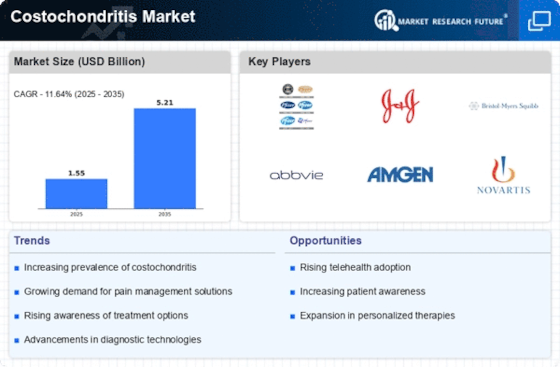
The Costochondritis Market was valued at 1.552 USD Billion in 2024.

What is the projected market valuation for the Costochondritis Market in 2035?

The projected valuation for the Costochondritis Market in 2035 is 5.21 USD Billion.

What is the expected CAGR for the Costochondritis Market during the forecast period 2025 - 2035?

The expected CAGR for the Costochondritis Market during the forecast period 2025 - 2035 is 11.64%.

Which companies are considered key players in the Costochondritis Market?

Key players in the Costochondritis Market include Pfizer Inc, Johnson & Johnson, and Bristol-Myers Squibb Company.

What are the primary treatment segments in the Costochondritis Market?

Primary treatment segments include Nonsteroidal Anti-inflammatory Drugs (NSAIDs) and Narcotics, with valuations ranging from 0.155 to 1.99 USD Billion.

Market Summary

As per MRFR analysis, the Costochondritis Market Size was estimated at 1.552 USD Billion in 2024. The Costochondritis industry is projected to grow from 1.732 in 2025 to 5.21 by 2035, exhibiting a compound annual growth rate (CAGR) of 11.64 during the forecast period 2025 - 2035.

Key Market Trends & Highlights

The Costochondritis Market is experiencing notable growth driven by increased awareness and technological advancements.

  • Rising awareness and education about costochondritis is fostering a more informed patient population in North America. Technological integration in treatment options is enhancing patient outcomes, particularly in the Asia-Pacific region. Research and development initiatives are propelling innovations in diagnostic techniques, especially in echocardiography. The increasing incidence of costochondritis and the growing demand for non-invasive treatment options are key drivers of market expansion.

Market Size & Forecast

2024 Market Size 1.552 (USD Billion)
2035 Market Size 5.21 (USD Billion)
CAGR (2025 - 2035) 11.64%
Largest Regional Market Share in 2024 North America

Major Players

<p>Pfizer Inc (US), Johnson &amp; Johnson (US), Bristol-Myers Squibb Company (US), AbbVie Inc (US), Amgen Inc (US), Novartis AG (CH), GlaxoSmithKline plc (GB), Sanofi S.A. (FR), AstraZeneca PLC (GB)</p>

Market Trends

The Costochondritis Market is currently experiencing a notable evolution, driven by a combination of increasing awareness regarding musculoskeletal disorders and advancements in treatment methodologies. As healthcare professionals and patients alike become more informed about the condition, there is a growing demand for effective management strategies. This shift is likely to enhance the availability of therapeutic options, including both pharmacological and non-pharmacological interventions. Furthermore, the integration of technology in healthcare, such as telemedicine and digital health platforms, appears to facilitate better patient engagement and monitoring, potentially leading to improved outcomes. In addition, the Costochondritis Market is influenced by ongoing research efforts aimed at understanding the underlying mechanisms of the condition. This research may pave the way for innovative treatment modalities, which could address the needs of patients more effectively. The market landscape is also shaped by the collaboration between pharmaceutical companies and healthcare providers, fostering the development of tailored therapies. Overall, the Costochondritis Market seems poised for growth, with a focus on enhancing patient care and expanding treatment options.

Rising Awareness and Education

There is an increasing emphasis on educating both healthcare providers and patients about costochondritis. This trend is likely to lead to earlier diagnosis and more effective management strategies, ultimately improving patient outcomes.

Technological Integration in Treatment

The incorporation of technology into treatment protocols is becoming more prevalent. Telehealth services and mobile health applications may enhance patient monitoring and adherence to treatment plans, thereby potentially improving overall management.

Research and Development Initiatives

Ongoing research initiatives are focused on uncovering the pathophysiology of costochondritis. This could result in the development of novel therapeutic approaches, addressing the condition more comprehensively.

Costochondritis Market Market Drivers

Rising Healthcare Expenditure

Rising healthcare expenditure is another significant driver of the Costochondritis Market. As countries allocate more resources to healthcare, there is an increased focus on the management of chronic conditions, including costochondritis. Higher healthcare spending often translates to improved access to medical services, including diagnostic tests and treatment options. This trend is particularly evident in regions where healthcare reforms are underway, leading to enhanced patient access to specialized care. Consequently, as more individuals seek treatment for costochondritis, the demand for healthcare services and products related to this condition is expected to rise. This increase in expenditure may also encourage pharmaceutical companies to invest in research and development, potentially leading to the introduction of new therapies in the Costochondritis Market.

Advancements in Diagnostic Techniques

Advancements in diagnostic techniques are significantly impacting the Costochondritis Market. Enhanced imaging technologies, such as MRI and ultrasound, allow for more accurate identification of costochondritis, distinguishing it from other potential causes of chest pain. This improved diagnostic capability is crucial, as misdiagnosis can lead to unnecessary treatments and patient anxiety. As healthcare providers adopt these advanced diagnostic tools, the rate of confirmed costochondritis cases is likely to rise, leading to increased treatment demand. Moreover, the integration of artificial intelligence in diagnostic processes may further streamline patient evaluation, potentially increasing the efficiency of care delivery in the Costochondritis Market. This trend suggests a promising future for both patients and healthcare providers, as accurate diagnosis is fundamental to effective treatment.

Increasing Incidence of Costochondritis

The rising incidence of costochondritis is a notable driver in the Costochondritis Market. Recent studies indicate that the prevalence of this condition has been increasing, particularly among individuals aged 30 to 50. This trend may be attributed to various factors, including lifestyle changes and increased physical activity, which can lead to chest pain and inflammation of the costal cartilage. As more individuals seek medical attention for chest pain, healthcare providers are likely to diagnose costochondritis more frequently. Consequently, this growing patient population is expected to drive demand for treatment options, thereby expanding the Costochondritis Market. Furthermore, the increased awareness of musculoskeletal disorders among healthcare professionals may contribute to more accurate diagnoses, further influencing market growth.

Enhanced Patient Education and Support Programs

Enhanced patient education and support programs are emerging as a vital driver in the Costochondritis Market. As awareness of costochondritis grows, healthcare providers are increasingly implementing educational initiatives aimed at informing patients about the condition, its symptoms, and available treatment options. These programs not only empower patients to seek timely medical attention but also promote adherence to prescribed therapies. Furthermore, support groups and online resources are becoming more prevalent, providing patients with a platform to share experiences and coping strategies. This increased focus on patient education is likely to lead to earlier diagnoses and improved treatment outcomes, thereby driving growth in the Costochondritis Market. As patients become more informed, they may also advocate for better healthcare services, further influencing market dynamics.

Growing Demand for Non-Invasive Treatment Options

The growing demand for non-invasive treatment options is a key driver in the Costochondritis Market. Patients increasingly prefer treatments that minimize surgical intervention and associated risks. Non-invasive therapies, such as physical therapy, corticosteroid injections, and over-the-counter pain relievers, are gaining popularity due to their effectiveness and lower risk profiles. This shift in patient preference is likely to influence the development of new treatment modalities and the marketing strategies of pharmaceutical companies. Additionally, the increasing focus on patient-centered care is prompting healthcare providers to explore and recommend non-invasive options, further driving the Costochondritis Market. As a result, the market may witness a rise in innovative non-invasive therapies tailored to meet patient needs.

Market Segment Insights

By Application: Echocardiography (Largest) vs. Cardiac Magnetic Resonance Imaging (MRI) (Fastest-Growing)

<p>In the Costochondritis Market, Echocardiography stands out as the largest segment, capturing a significant share due to its wide application in diagnosing cardiac-related issues. This imaging technique is favored for its non-invasive nature, safety, and ability to provide real-time images of the heart. Following closely is Cardiac Magnetic Resonance Imaging (MRI), which, although representing a smaller share currently, is the fastest-growing segment, driven by advancements in imaging technology and increasing adoption for detailed heart structure evaluation. Growth trends in this segment highlight a rising preference for non-invasive diagnostic methods among healthcare providers. Echocardiography continues to benefit from its established role in routine assessments, while the rapid technological advancements in Cardiac MRI are attracting clinicians towards this method. Consequently, as more practitioners acknowledge the efficacy of these diagnostic tools, the overall segment is expected to witness substantial growth in the coming years.</p>

<p>Echocardiography (Dominant) vs. Cardiac Catheterization (Emerging)</p>

<p>Echocardiography is recognized as the dominant technique in the Costochondritis Market, primarily due to its ability to assess heart function effectively and its non-invasive nature. This technique allows for comprehensive evaluations of cardiac structures and dynamics, making it invaluable in clinical practice. In contrast, Cardiac Catheterization is an emerging application that, while invasive, plays a critical role in specific diagnostic scenarios. The emergence of Cardiac Catheterization can be attributed to its detailed anatomical insights and capability in managing complex cardiac diagnostics. As practitioners increasingly seek versatile diagnostic solutions, the juxtaposition of these two techniques illustrates the balance between traditional methods and innovative approaches in the Costochondritis Market landscape.</p>

By Treatment: NSAIDs (Largest) vs. Therapy (Fastest-Growing)

<p>In the Costochondritis Market, Nonsteroidal Anti-inflammatory Drugs (NSAIDs) hold a significant portion of the treatment landscape, largely due to their efficacy in alleviating pain and inflammation associated with the condition. Following closely are therapy options, which are gaining traction among patients seeking non-pharmacological interventions. The inclusion of narcotics, antidepressants, and anti-seizure drugs adds diversity to treatment options, yet their share remains comparatively lower as NSAIDs and therapy take precedence.</p>

<p>NSAIDs (Dominant) vs. Therapy (Emerging)</p>

<p>NSAIDs are firmly established as the dominant treatment option within the Costochondritis Market, owing to their quick action and effectiveness in reducing pain and inflammation. Patients often receive NSAIDs as first-line therapy, leading to their widespread acceptance among healthcare professionals. In contrast, therapy options, including physical or psychological interventions, represent an emerging approach for managing Costochondritis Market. With growing recognition of the benefits of holistic treatment options, it is expected that therapy will increasingly be integrated into patient care, appealing particularly to those seeking alternatives to medication and desiring long-term relief from symptoms.</p>

By End-Users: Hospitals and Clinics (Largest) vs. Ambulatory Surgical Centers (Fastest-Growing)

<p>The Costochondritis Market exhibits a varied distribution of market share among its end-user segments. Hospitals and clinics dominate the landscape, accounting for a significant proportion of treatments and patient visits related to Costochondritis Market. Their established infrastructure and comprehensive care capabilities make them the first choice for many patients seeking relief from this painful condition. In contrast, ambulatory surgical centers are increasingly gaining traction due to their focus on outpatient procedures and enhanced accessibility, thus capturing a growing share of the market.</p>

<p>Hospitals and Clinics (Dominant) vs. Ambulatory Surgical Centers (Emerging)</p>

<p>Hospitals and clinics play a crucial role in the Costochondritis Market treatment continuum, offering comprehensive diagnostic and therapeutic services. Their extensive resources and multidisciplinary approach allow for effective pain <a href="https://www.marketresearchfuture.com/reports/temperature-management-market-42427">management</a> and patient support. In comparison, ambulatory surgical centers have emerged as a significant alternative for patients seeking less invasive treatment options. These centers are designed for efficiency and cost-effectiveness, attracting patients with the need for rapid care and shorter wait times. Together, these segments reflect the evolving landscape of healthcare, balancing traditional inpatient care with innovative outpatient solutions.</p>

Get more detailed insights about Costochondritis Market Research Report – Forecast to 2035

Regional Insights

Key Companies in the Costochondritis Market market include

Industry Developments

  • In 2017, the worldwide costochondritis market was predicted to develop at the quickest rate in Asia-Pacific. Heart disease, vehicle accidents, and living standards are all contributing factors to the market's development.

Future Outlook

Costochondritis Market Future Outlook

<p>The Costochondritis Market is projected to grow at 11.64% CAGR from 2024 to 2035, driven by increasing prevalence, enhanced diagnostics, and innovative treatment options.</p>

New opportunities lie in:

  • <p>Development of targeted biologic therapies for chronic cases.</p><p>Expansion of telehealth services for remote patient management.</p><p>Investment in AI-driven diagnostic tools for early detection.</p>

<p>By 2035, the Costochondritis Market is expected to achieve substantial growth, reflecting evolving treatment paradigms and patient needs.</p>

Market Segmentation

Costochondritis Market End-Users Outlook

  • Hospitals and Clinics
  • Ambulatory Surgical Centers
  • Diagnostic Centers
  • Research Centers
  • Others

Costochondritis Market Treatment Outlook

  • Nonsteroidal Anti-inflammatory Drugs (NSAIDs)
  • Narcotics
  • Antidepressants
  • Anti-seizure Drugs
  • Therapy
  • Surgery

Costochondritis Market Application Outlook

  • Cardiac Magnetic Resonance Imaging (MRI)
  • Cardiac Catheterization
  • Chest X-ray
  • Echocardiography
  • EKG
  • Stress Tests
  • CT Scan

Report Scope

MARKET SIZE 20241.552(USD Billion)
MARKET SIZE 20251.732(USD Billion)
MARKET SIZE 20355.21(USD Billion)
COMPOUND ANNUAL GROWTH RATE (CAGR)11.64% (2024 - 2035)
REPORT COVERAGERevenue Forecast, Competitive Landscape, Growth Factors, and Trends
BASE YEAR2024
Market Forecast Period2025 - 2035
Historical Data2019 - 2024
Market Forecast UnitsUSD Billion
Key Companies ProfiledMarket analysis in progress
Segments CoveredMarket segmentation analysis in progress
Key Market OpportunitiesEmerging therapies and digital health solutions enhance management options in the Costochondritis Market.
Key Market DynamicsRising demand for effective pain management solutions drives innovation and competition in the Costochondritis Market.
Countries CoveredNorth America, Europe, APAC, South America, MEA

FAQs

What is the current valuation of the Costochondritis Market as of 2024?

The Costochondritis Market was valued at 1.552 USD Billion in 2024.

What is the projected market valuation for the Costochondritis Market in 2035?

The projected valuation for the Costochondritis Market in 2035 is 5.21 USD Billion.

What is the expected CAGR for the Costochondritis Market during the forecast period 2025 - 2035?

The expected CAGR for the Costochondritis Market during the forecast period 2025 - 2035 is 11.64%.

Which companies are considered key players in the Costochondritis Market?

Key players in the Costochondritis Market include Pfizer Inc, Johnson & Johnson, and Bristol-Myers Squibb Company.

What are the primary treatment segments in the Costochondritis Market?

Primary treatment segments include Nonsteroidal Anti-inflammatory Drugs (NSAIDs) and Narcotics, with valuations ranging from 0.155 to 1.99 USD Billion.

  1. SECTION I: EXECUTIVE SUMMARY AND KEY HIGHLIGHTS
    1. EXECUTIVE SUMMARY
      1. Market Overview
      2. Key Findings
      3. Market Segmentation
      4. Competitive Landscape
      5. Challenges and Opportunities
      6. Future Outlook 2 SECTION II: SCOPING, METHODOLOGY AND MARKET STRUCTURE
    2. MARKET INTRODUCTION
      1. Definition
      2. Scope of the study
    3. RESEARCH METHODOLOGY
      1. Overview
      2. Data Mining
      3. Secondary Research
      4. Primary Research
      5. Forecasting Model
      6. Market Size Estimation
      7. Data Triangulation
      8. Validation 3 SECTION III: QUALITATIVE ANALYSIS
    4. MARKET DYNAMICS
      1. Overview
      2. Drivers
      3. Restraints
      4. Opportunities
    5. MARKET FACTOR ANALYSIS
      1. Value chain Analysis
      2. Porter's Five Forces Analysis
      3. COVID-19 Impact Analysis
    6. Healthcare, BY Application (USD Billion)
      1. Cardiac Magnetic Resonance Imaging (MRI)
      2. Cardiac Catheterization
      3. Chest X-ray
      4. Echocardiography
      5. EKG
      6. Stress Tests
      7. CT Scan
    7. Healthcare, BY Treatment (USD Billion)
      1. Nonsteroidal Anti-inflammatory Drugs (NSAIDs)
      2. Narcotics
      3. Antidepressants
      4. Anti-seizure Drugs
      5. Therapy
      6. Surgery
    8. Healthcare, BY End-Users (USD Billion)
      1. Hospitals and Clinics
      2. Ambulatory Surgical Centers
      3. Diagnostic Centers
      4. Research Centers
      5. Others
    9. Healthcare, BY Region (USD Billion)
      1. North America
      2. Europe
      3. APAC
      4. South America
      5. MEA
    10. Competitive Landscape
      1. Overview
      2. Competitive Analysis
      3. Market share Analysis
      4. Major Growth Strategy in the Healthcare
      5. Competitive Benchmarking
      6. Leading Players in Terms of Number of Developments in the Healthcare
      7. Key developments and growth strategies
      8. Major Players Financial Matrix
    11. Company Profiles
      1. Pfizer Inc (US)
      2. Johnson & Johnson (US)
      3. Bristol-Myers Squibb Company (US)
      4. AbbVie Inc (US)
      5. Amgen Inc (US)
      6. Novartis AG (CH)
      7. GlaxoSmithKline plc (GB)
      8. Sanofi S.A. (FR)
      9. AstraZeneca PLC (GB)
    12. Appendix
      1. References
      2. Related Reports 6 LIST OF FIGURES
    13. MARKET SYNOPSIS
    14. NORTH AMERICA MARKET ANALYSIS
    15. US MARKET ANALYSIS BY APPLICATION
    16. US MARKET ANALYSIS BY TREATMENT
    17. US MARKET ANALYSIS BY END-USERS
    18. CANADA MARKET ANALYSIS BY APPLICATION
    19. CANADA MARKET ANALYSIS BY TREATMENT
    20. CANADA MARKET ANALYSIS BY END-USERS
    21. EUROPE MARKET ANALYSIS
    22. GERMANY MARKET ANALYSIS BY APPLICATION
    23. GERMANY MARKET ANALYSIS BY TREATMENT
    24. GERMANY MARKET ANALYSIS BY END-USERS
    25. UK MARKET ANALYSIS BY APPLICATION
    26. UK MARKET ANALYSIS BY TREATMENT
    27. UK MARKET ANALYSIS BY END-USERS
    28. FRANCE MARKET ANALYSIS BY APPLICATION
    29. FRANCE MARKET ANALYSIS BY TREATMENT
    30. FRANCE MARKET ANALYSIS BY END-USERS
    31. RUSSIA MARKET ANALYSIS BY APPLICATION
    32. RUSSIA MARKET ANALYSIS BY TREATMENT
    33. RUSSIA MARKET ANALYSIS BY END-USERS
    34. ITALY MARKET ANALYSIS BY APPLICATION
    35. ITALY MARKET ANALYSIS BY TREATMENT
    36. ITALY MARKET ANALYSIS BY END-USERS
    37. SPAIN MARKET ANALYSIS BY APPLICATION
    38. SPAIN MARKET ANALYSIS BY TREATMENT
    39. SPAIN MARKET ANALYSIS BY END-USERS
    40. REST OF EUROPE MARKET ANALYSIS BY APPLICATION
    41. REST OF EUROPE MARKET ANALYSIS BY TREATMENT
    42. REST OF EUROPE MARKET ANALYSIS BY END-USERS
    43. APAC MARKET ANALYSIS
    44. CHINA MARKET ANALYSIS BY APPLICATION
    45. CHINA MARKET ANALYSIS BY TREATMENT
    46. CHINA MARKET ANALYSIS BY END-USERS
    47. INDIA MARKET ANALYSIS BY APPLICATION
    48. INDIA MARKET ANALYSIS BY TREATMENT
    49. INDIA MARKET ANALYSIS BY END-USERS
    50. JAPAN MARKET ANALYSIS BY APPLICATION
    51. JAPAN MARKET ANALYSIS BY TREATMENT
    52. JAPAN MARKET ANALYSIS BY END-USERS
    53. SOUTH KOREA MARKET ANALYSIS BY APPLICATION
    54. SOUTH KOREA MARKET ANALYSIS BY TREATMENT
    55. SOUTH KOREA MARKET ANALYSIS BY END-USERS
    56. MALAYSIA MARKET ANALYSIS BY APPLICATION
    57. MALAYSIA MARKET ANALYSIS BY TREATMENT
    58. MALAYSIA MARKET ANALYSIS BY END-USERS
    59. THAILAND MARKET ANALYSIS BY APPLICATION
    60. THAILAND MARKET ANALYSIS BY TREATMENT
    61. THAILAND MARKET ANALYSIS BY END-USERS
    62. INDONESIA MARKET ANALYSIS BY APPLICATION
    63. INDONESIA MARKET ANALYSIS BY TREATMENT
    64. INDONESIA MARKET ANALYSIS BY END-USERS
    65. REST OF APAC MARKET ANALYSIS BY APPLICATION
    66. REST OF APAC MARKET ANALYSIS BY TREATMENT
    67. REST OF APAC MARKET ANALYSIS BY END-USERS
    68. SOUTH AMERICA MARKET ANALYSIS
    69. BRAZIL MARKET ANALYSIS BY APPLICATION
    70. BRAZIL MARKET ANALYSIS BY TREATMENT
    71. BRAZIL MARKET ANALYSIS BY END-USERS
    72. MEXICO MARKET ANALYSIS BY APPLICATION
    73. MEXICO MARKET ANALYSIS BY TREATMENT
    74. MEXICO MARKET ANALYSIS BY END-USERS
    75. ARGENTINA MARKET ANALYSIS BY APPLICATION
    76. ARGENTINA MARKET ANALYSIS BY TREATMENT
    77. ARGENTINA MARKET ANALYSIS BY END-USERS
    78. REST OF SOUTH AMERICA MARKET ANALYSIS BY APPLICATION
    79. REST OF SOUTH AMERICA MARKET ANALYSIS BY TREATMENT
    80. REST OF SOUTH AMERICA MARKET ANALYSIS BY END-USERS
    81. MEA MARKET ANALYSIS
    82. GCC COUNTRIES MARKET ANALYSIS BY APPLICATION
    83. GCC COUNTRIES MARKET ANALYSIS BY TREATMENT
    84. GCC COUNTRIES MARKET ANALYSIS BY END-USERS
    85. SOUTH AFRICA MARKET ANALYSIS BY APPLICATION
    86. SOUTH AFRICA MARKET ANALYSIS BY TREATMENT
    87. SOUTH AFRICA MARKET ANALYSIS BY END-USERS
    88. REST OF MEA MARKET ANALYSIS BY APPLICATION
    89. REST OF MEA MARKET ANALYSIS BY TREATMENT
    90. REST OF MEA MARKET ANALYSIS BY END-USERS
    91. KEY BUYING CRITERIA OF HEALTHCARE
    92. RESEARCH PROCESS OF MRFR
    93. DRO ANALYSIS OF HEALTHCARE
    94. DRIVERS IMPACT ANALYSIS: HEALTHCARE
    95. RESTRAINTS IMPACT ANALYSIS: HEALTHCARE
    96. SUPPLY / VALUE CHAIN: HEALTHCARE
    97. HEALTHCARE, BY APPLICATION, 2024 (% SHARE)
    98. HEALTHCARE, BY APPLICATION, 2024 TO 2035 (USD Billion)
    99. HEALTHCARE, BY TREATMENT, 2024 (% SHARE)
    100. HEALTHCARE, BY TREATMENT, 2024 TO 2035 (USD Billion)
    101. HEALTHCARE, BY END-USERS, 2024 (% SHARE)
    102. HEALTHCARE, BY END-USERS, 2024 TO 2035 (USD Billion)
    103. BENCHMARKING OF MAJOR COMPETITORS 7 LIST OF TABLES
    104. LIST OF ASSUMPTIONS
    105. North America MARKET SIZE ESTIMATES; FORECAST
      1. BY APPLICATION, 2025-2035 (USD Billion)
      2. BY TREATMENT, 2025-2035 (USD Billion)
      3. BY END-USERS, 2025-2035 (USD Billion)
    106. US MARKET SIZE ESTIMATES; FORECAST
      1. BY APPLICATION, 2025-2035 (USD Billion)
      2. BY TREATMENT, 2025-2035 (USD Billion)
      3. BY END-USERS, 2025-2035 (USD Billion)
    107. Canada MARKET SIZE ESTIMATES; FORECAST
      1. BY APPLICATION, 2025-2035 (USD Billion)
      2. BY TREATMENT, 2025-2035 (USD Billion)
      3. BY END-USERS, 2025-2035 (USD Billion)
    108. Europe MARKET SIZE ESTIMATES; FORECAST
      1. BY APPLICATION, 2025-2035 (USD Billion)
      2. BY TREATMENT, 2025-2035 (USD Billion)
      3. BY END-USERS, 2025-2035 (USD Billion)
    109. Germany MARKET SIZE ESTIMATES; FORECAST
      1. BY APPLICATION, 2025-2035 (USD Billion)
      2. BY TREATMENT, 2025-2035 (USD Billion)
      3. BY END-USERS, 2025-2035 (USD Billion)
    110. UK MARKET SIZE ESTIMATES; FORECAST
      1. BY APPLICATION, 2025-2035 (USD Billion)
      2. BY TREATMENT, 2025-2035 (USD Billion)
      3. BY END-USERS, 2025-2035 (USD Billion)
    111. France MARKET SIZE ESTIMATES; FORECAST
      1. BY APPLICATION, 2025-2035 (USD Billion)
      2. BY TREATMENT, 2025-2035 (USD Billion)
      3. BY END-USERS, 2025-2035 (USD Billion)
    112. Russia MARKET SIZE ESTIMATES; FORECAST
      1. BY APPLICATION, 2025-2035 (USD Billion)
      2. BY TREATMENT, 2025-2035 (USD Billion)
      3. BY END-USERS, 2025-2035 (USD Billion)
    113. Italy MARKET SIZE ESTIMATES; FORECAST
      1. BY APPLICATION, 2025-2035 (USD Billion)
      2. BY TREATMENT, 2025-2035 (USD Billion)
      3. BY END-USERS, 2025-2035 (USD Billion)
    114. Spain MARKET SIZE ESTIMATES; FORECAST
      1. BY APPLICATION, 2025-2035 (USD Billion)
      2. BY TREATMENT, 2025-2035 (USD Billion)
      3. BY END-USERS, 2025-2035 (USD Billion)
    115. Rest of Europe MARKET SIZE ESTIMATES; FORECAST
      1. BY APPLICATION, 2025-2035 (USD Billion)
      2. BY TREATMENT, 2025-2035 (USD Billion)
      3. BY END-USERS, 2025-2035 (USD Billion)
    116. APAC MARKET SIZE ESTIMATES; FORECAST
      1. BY APPLICATION, 2025-2035 (USD Billion)
      2. BY TREATMENT, 2025-2035 (USD Billion)
      3. BY END-USERS, 2025-2035 (USD Billion)
    117. China MARKET SIZE ESTIMATES; FORECAST
      1. BY APPLICATION, 2025-2035 (USD Billion)
      2. BY TREATMENT, 2025-2035 (USD Billion)
      3. BY END-USERS, 2025-2035 (USD Billion)
    118. India MARKET SIZE ESTIMATES; FORECAST
      1. BY APPLICATION, 2025-2035 (USD Billion)
      2. BY TREATMENT, 2025-2035 (USD Billion)
      3. BY END-USERS, 2025-2035 (USD Billion)
    119. Japan MARKET SIZE ESTIMATES; FORECAST
      1. BY APPLICATION, 2025-2035 (USD Billion)
      2. BY TREATMENT, 2025-2035 (USD Billion)
      3. BY END-USERS, 2025-2035 (USD Billion)
    120. South Korea MARKET SIZE ESTIMATES; FORECAST
      1. BY APPLICATION, 2025-2035 (USD Billion)
      2. BY TREATMENT, 2025-2035 (USD Billion)
      3. BY END-USERS, 2025-2035 (USD Billion)
    121. Malaysia MARKET SIZE ESTIMATES; FORECAST
      1. BY APPLICATION, 2025-2035 (USD Billion)
      2. BY TREATMENT, 2025-2035 (USD Billion)
      3. BY END-USERS, 2025-2035 (USD Billion)
    122. Thailand MARKET SIZE ESTIMATES; FORECAST
      1. BY APPLICATION, 2025-2035 (USD Billion)
      2. BY TREATMENT, 2025-2035 (USD Billion)
      3. BY END-USERS, 2025-2035 (USD Billion)
    123. Indonesia MARKET SIZE ESTIMATES; FORECAST
      1. BY APPLICATION, 2025-2035 (USD Billion)
      2. BY TREATMENT, 2025-2035 (USD Billion)
      3. BY END-USERS, 2025-2035 (USD Billion)
    124. Rest of APAC MARKET SIZE ESTIMATES; FORECAST
      1. BY APPLICATION, 2025-2035 (USD Billion)
      2. BY TREATMENT, 2025-2035 (USD Billion)
      3. BY END-USERS, 2025-2035 (USD Billion)
    125. South America MARKET SIZE ESTIMATES; FORECAST
      1. BY APPLICATION, 2025-2035 (USD Billion)
      2. BY TREATMENT, 2025-2035 (USD Billion)
      3. BY END-USERS, 2025-2035 (USD Billion)
    126. Brazil MARKET SIZE ESTIMATES; FORECAST
      1. BY APPLICATION, 2025-2035 (USD Billion)
      2. BY TREATMENT, 2025-2035 (USD Billion)
      3. BY END-USERS, 2025-2035 (USD Billion)
    127. Mexico MARKET SIZE ESTIMATES; FORECAST
      1. BY APPLICATION, 2025-2035 (USD Billion)
      2. BY TREATMENT, 2025-2035 (USD Billion)
      3. BY END-USERS, 2025-2035 (USD Billion)
    128. Argentina MARKET SIZE ESTIMATES; FORECAST
      1. BY APPLICATION, 2025-2035 (USD Billion)
      2. BY TREATMENT, 2025-2035 (USD Billion)
      3. BY END-USERS, 2025-2035 (USD Billion)
    129. Rest of South America MARKET SIZE ESTIMATES; FORECAST
      1. BY APPLICATION, 2025-2035 (USD Billion)
      2. BY TREATMENT, 2025-2035 (USD Billion)
      3. BY END-USERS, 2025-2035 (USD Billion)
    130. MEA MARKET SIZE ESTIMATES; FORECAST
      1. BY APPLICATION, 2025-2035 (USD Billion)
      2. BY TREATMENT, 2025-2035 (USD Billion)
      3. BY END-USERS, 2025-2035 (USD Billion)
    131. GCC Countries MARKET SIZE ESTIMATES; FORECAST
      1. BY APPLICATION, 2025-2035 (USD Billion)
      2. BY TREATMENT, 2025-2035 (USD Billion)
      3. BY END-USERS, 2025-2035 (USD Billion)
    132. South Africa MARKET SIZE ESTIMATES; FORECAST
      1. BY APPLICATION, 2025-2035 (USD Billion)
      2. BY TREATMENT, 2025-2035 (USD Billion)
      3. BY END-USERS, 2025-2035 (USD Billion)
    133. Rest of MEA MARKET SIZE ESTIMATES; FORECAST
      1. BY APPLICATION, 2025-2035 (USD Billion)
      2. BY TREATMENT, 2025-2035 (USD Billion)
      3. BY END-USERS, 2025-2035 (USD Billion)
    134. PRODUCT LAUNCH/PRODUCT DEVELOPMENT/APPROVAL
    135. ACQUISITION/PARTNERSHIP

Costochondritis Market Segmentation

Market Segmentation Overview

  • Detailed segmentation data will be available in the full report
  • Comprehensive analysis by multiple parameters
  • Regional and country-level breakdowns
  • Market size forecasts by segment
Infographic

Free Sample Request

Kindly complete the form below to receive a free sample of this Report

Get Free Sample

Customer Strories

Compare Licence

×
Features License Type
Single User Multiuser License Enterprise User
Price $4,950 $5,950 $7,250
Maximum User Access Limit 1 User Upto 10 Users Unrestricted Access Throughout the Organization
Free Customization
Direct Access to Analyst
Deliverable Format
Platform Access
Discount on Next Purchase 10% 15% 15%
Printable Versions