×
Request Free Sample ×

Kindly complete the form below to receive a free sample of this Report

* Please use a valid business email

Leading companies partner with us for data-driven Insights

clients tt-cursor
Hero Background
English
Chinese
French
Japanese
Korean
German
Spanish

Circulating Tumor Cell Market Size

ID: MRFR/Pharma/0854-CR
110 Pages
Kinjoll Dey
August 2018

Circulating Tumor Cell Market Research Report Information By Technology (Research and Drug Development), By Technology (CTC Enrichment, And CTC Detection), By End Users (Hospital & Clinics, Research & Academic Institutes, and Diagnostic Centers), And By Region (North America, Europe, Asia-Pacific, And Rest Of The World) - Growth & Industry Forecast 2025 To 2035

Share:
Download PDF ×

We do not share your information with anyone. However, we may send you emails based on your report interest from time to time. You may contact us at any time to opt-out.

Circulating Tumor Cell Market Infographic
Purchase Options

Circulating Tumor Cell Size

Circulating Tumor Cell Market Growth Projections and Opportunities

The Circulating Tumor Cell (CTC) market has emerged as a dynamic and transformative sector in the field of cancer diagnostics and treatment. The market research report provides a comprehensive analysis of the market size, trends, and factors influencing the growth trajectory of the Circulating Tumor Cell market.

The global Circulating Tumor Cell market has experienced significant expansion, driven by advancements in cancer research, diagnostic technologies, and a growing emphasis on personalized medicine. The market size is a reflection of the increasing recognition of the clinical utility of CTCs in monitoring disease progression, predicting treatment responses, and aiding in the development of targeted therapies.

One of the key drivers of the market size is the rising incidence of cancer worldwide. With cancer being a leading cause of morbidity and mortality, the demand for advanced diagnostic tools that provide real-time information about cancer status is on the rise. CTCs, as tumor cells that have detached from the primary tumor and circulate in the bloodstream, offer a unique and non-invasive method for monitoring cancer dynamics.

The market size is also influenced by the increasing adoption of liquid biopsy techniques. Liquid biopsies, which involve the analysis of CTCs and cell-free DNA (cfDNA) from blood samples, provide a minimally invasive alternative to traditional tissue biopsies. As liquid biopsies gain prominence in cancer diagnostics, the demand for CTC analysis is expected to surge, contributing to the overall market growth.

Technological advancements play a crucial role in shaping the market size of Circulating Tumor Cells. With continuous innovation in CTC isolation and detection technologies, the sensitivity and specificity of CTC assays have improved significantly. These advancements enhance the reliability of CTC-based diagnostics and contribute to the market's expansion.

The market size is further bolstered by the increasing focus on precision medicine and the development of targeted therapies. CTCs serve as a valuable tool in identifying specific genetic mutations and biomarkers, aiding in the personalization of cancer treatment plans. As the field of oncology evolves towards more targeted and individualized approaches, the relevance of CTCs in guiding treatment decisions continues to grow.

Geographically, the market size varies, with North America and Europe being prominent regions due to their robust healthcare infrastructures, extensive research activities, and early adoption of advanced medical technologies. However, the market is witnessing significant growth in Asia-Pacific and other regions, driven by the increasing prevalence of cancer and rising investments in healthcare infrastructure.

In conclusion, the Circulating Tumor Cell market is expanding steadily, driven by the growing global burden of cancer, advancements in diagnostic technologies, and the shift towards personalized medicine. The market size reflects the increasing recognition of the clinical significance of CTCs in cancer management. As research and development efforts continue to enhance the capabilities of CTC-based diagnostics, the market is poised for continued growth, with the potential to revolutionize cancer diagnostics and treatment strategies.

Circulating Tumor Cell Market Size Graph
Author
Kinjoll Dey
Research Analyst Level I

He is an extremely curious individual currently working in Healthcare and Medical Devices Domain. Kinjoll is comfortably versed in data centric research backed by healthcare educational background. He leverages extensive data mining and analytics tools such as Primary and Secondary Research, Statistical Analysis, Machine Learning, Data Modelling. His key role also involves Technical Sales Support, Client Interaction and Project management within the Healthcare team. Lastly, he showcases extensive affinity towards learning new skills and remain fascinated in implementing them.

Leave a Comment

FAQs

What is the projected growth of the Circulating Tumor Cell market?

The Circulating Tumor Cell market is the expected increase in total market value of 19.46 USD billion over a defined forecast period 2025–2035. It is driven by factors such as demand trends, technological advances, regulatory changes, and geographic expansion.

What is the size of the Circulating Tumor Cell market?

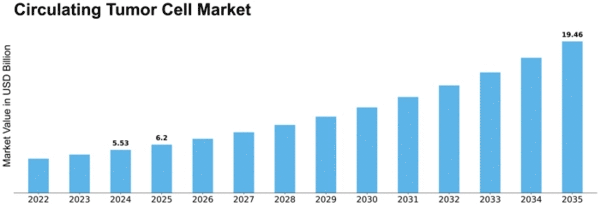
Circulating Tumor Cell market size was valued at approximately 5.53 billion USD in 2024. This figure will reach 19.46 billion USD covering all regions (America, Europe, Asia, MEA and ROW), focusing its segments / services / distribution channels till 2035.

What is the CAGR of the Circulating Tumor Cell market?

Circulating Tumor Cell market is expected to grow at a CAGR of 12.12% between 2025 and 2035.

How much will the Circulating Tumor Cell market be worth by 2035?

Circulating Tumor Cell market is expected to be worth of 19.46 billion USD, reflecting growth driven by usage, technology and global demands by the end of 2035.

How will the Circulating Tumor Cell market perform over the next 10 years?

Over the next 10 years the Circulating Tumor Cell market is expected to shift from usd billion 5.53 to 19.46 billion USD, led by adoption of advanced tech, demographic trends, regulatory approvals, with potential headwinds from 2025 to 2035.

Which region held the largest market share in the Circulating Tumor Cell market?

North America had the largest share in the global market

Market Summary

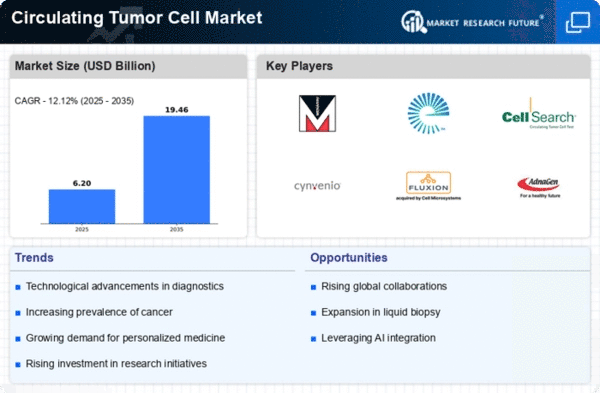
As per MRFR analysis, the Circulating Tumor Cell Market Size was estimated at 5.53 USD Billion in 2024. The Circulating Tumor Cell industry is projected to grow from 6.2 in 2025 to 19.46 by 2035, exhibiting a compound annual growth rate (CAGR) of 12.12 during the forecast period 2025 - 2035.

Key Market Trends & Highlights

The Circulating Tumor Cell Market is poised for substantial growth driven by technological advancements and increasing demand for non-invasive testing.

  • Technological advancements in isolation techniques are enhancing the efficiency of circulating tumor cell detection.
  • The demand for non-invasive testing is growing, particularly in North America, where cancer diagnosis remains a priority.
  • Collaborative research initiatives are fostering innovation in the Asia-Pacific region, contributing to rapid market expansion.
  • Rising incidence of cancer and advancements in liquid biopsy technologies are key drivers propelling market growth.

Market Size & Forecast

2024 Market Size 5.53 (USD Billion)
2035 Market Size 19.46 (USD Billion)
CAGR (2025 - 2035) 12.12%
Largest Regional Market Share in 2024 North America

Major Players

Menarini Silicon Biosystems (IT), Epic Sciences (US), CellSearch (US), Cynvenio Biosystems (US), Fluxion Biosciences (US), AdnaGen AG (DE), OncoOne (CH), GRAIL (US)

Market Trends

The Circulating Tumor Cell Market is currently experiencing a notable evolution, driven by advancements in technology and increasing awareness regarding early cancer detection. The integration of innovative methodologies for isolating and analyzing circulating tumor cells is enhancing diagnostic capabilities, thereby facilitating personalized treatment approaches. This market appears to be expanding as healthcare providers recognize the potential of these cells in monitoring disease progression and treatment response. Furthermore, the growing emphasis on non-invasive testing methods is likely to propel demand, as patients and clinicians alike seek alternatives to traditional biopsy procedures. In addition, the Circulating Tumor Cell Market is influenced by a surge in research initiatives aimed at understanding the biology of cancer metastasis. Collaborative efforts among academic institutions, biotechnology firms, and pharmaceutical companies are fostering the development of novel therapeutic strategies. This collaborative environment may lead to breakthroughs that enhance the efficacy of existing treatments and introduce new options for patients. As the landscape continues to evolve, stakeholders in the Circulating Tumor Cell Market must remain vigilant to emerging trends and technological advancements that could reshape the future of cancer diagnostics and treatment.

Technological Advancements in Isolation Techniques

Recent innovations in isolation techniques for circulating tumor cells are transforming the landscape of cancer diagnostics. These advancements enhance the sensitivity and specificity of detection methods, allowing for more accurate identification of tumor cells in the bloodstream. As a result, healthcare professionals are better equipped to monitor disease progression and tailor treatment plans accordingly.

Growing Demand for Non-Invasive Testing

The increasing preference for non-invasive testing methods is shaping the Circulating Tumor Cell Market. Patients and clinicians are gravitating towards alternatives that minimize discomfort and risk associated with traditional biopsies. This trend is likely to drive the development of new technologies that facilitate the collection and analysis of circulating tumor cells.

Collaborative Research Initiatives

Collaborative research initiatives among various stakeholders are fostering innovation within the Circulating Tumor Cell Market. Partnerships between academic institutions, biotechnology companies, and pharmaceutical firms are accelerating the discovery of novel therapeutic approaches. This collaborative spirit may lead to significant advancements in understanding cancer biology and improving treatment outcomes.

Circulating Tumor Cell Market Market Drivers

Market Growth Projections

The Global Circulating Tumor Cell Market Industry is projected to experience substantial growth over the next decade. With an estimated market value of 5.53 USD Billion in 2024, it is expected to reach 19.5 USD Billion by 2035. This growth trajectory reflects a compound annual growth rate of 12.11% from 2025 to 2035. Such projections indicate a robust demand for circulating tumor cell technologies, driven by factors such as increasing cancer incidence, advancements in detection methods, and the rising emphasis on personalized medicine. These metrics highlight the market's potential and the importance of ongoing innovation in the field.

Rising Incidence of Cancer

The increasing prevalence of cancer globally serves as a primary driver for the Global Circulating Tumor Cell Market Industry. As cancer cases rise, the demand for advanced diagnostic tools, including circulating tumor cell technologies, escalates. In 2024, the market is projected to reach 5.53 USD Billion, reflecting a growing recognition of the need for early detection and personalized treatment strategies. This trend is particularly evident in regions with aging populations, where cancer incidence rates are higher. Consequently, the Global Circulating Tumor Cell Market Industry is poised for substantial growth as healthcare systems adapt to these challenges.

Regulatory Support and Guidelines

Regulatory bodies are increasingly recognizing the importance of circulating tumor cell technologies in cancer management, which positively impacts the Global Circulating Tumor Cell Market Industry. Supportive regulatory frameworks facilitate the approval and commercialization of innovative diagnostic Dental Hand Tools, ensuring that they meet safety and efficacy standards. This regulatory backing encourages investment in research and development, further propelling market growth. As the industry evolves, clear guidelines from regulatory authorities will likely enhance the adoption of circulating tumor cell technologies, contributing to the overall expansion of the market.

Growing Demand for Personalized Medicine

The shift towards personalized medicine is reshaping the landscape of the Global Circulating Tumor Cell Market Industry. As healthcare increasingly focuses on tailored treatment approaches, circulating tumor cells play a crucial role in understanding individual patient responses to therapies. This trend is supported by the rising number of clinical trials aimed at integrating circulating tumor cell analysis into treatment protocols. The market's compound annual growth rate of 12.11% from 2025 to 2035 indicates a robust demand for personalized diagnostics and therapeutics, positioning the Global Circulating Tumor Cell Market Industry as a pivotal component of modern oncology.

Increased Research Funding and Collaborations

The Global Circulating Tumor Cell Market Industry benefits from heightened research funding and collaborative efforts among academic institutions, government agencies, and private sectors. This influx of resources fosters innovation and accelerates the development of new technologies and methodologies for circulating tumor cell analysis. For instance, government initiatives aimed at cancer research are likely to enhance the capabilities of circulating tumor cell technologies, leading to improved diagnostic and therapeutic options. As a result, the market is expected to thrive, driven by a collaborative ecosystem that supports advancements in cancer care.

Technological Advancements in Detection Methods

Innovations in detection technologies significantly enhance the capabilities of the Global Circulating Tumor Cell Market Industry. Advanced methodologies, such as microfluidics and next-generation sequencing, improve the sensitivity and specificity of circulating tumor cell detection. These advancements facilitate earlier diagnosis and better monitoring of treatment responses. As a result, healthcare providers are increasingly adopting these technologies, contributing to the market's expansion. The anticipated growth from 2024 to 2035, with a projected market value of 19.5 USD Billion, underscores the importance of continuous innovation in driving the Global Circulating Tumor Cell Market Industry forward.

Market Segment Insights

By Application: Cancer Diagnosis (Largest) vs. Therapeutic Response Evaluation (Fastest-Growing)

In the Circulating Tumor Cell Market, the application segment showcases a diverse distribution of market share among its various categories. Cancer Diagnosis emerges as the largest segment, capturing a substantial portion of the market due to its critical role in early cancer detection and treatment planning. Conversely, Treatment Monitoring and Prognostic Assessment also hold significant shares, contributing to the overall growth of the market. Therapeutic Response Evaluation, while currently smaller, is gaining traction as more emphasis is placed on personalized treatment approaches. The growth trends within this segment are driven by technological advancements and an increasing understanding of the role of circulating tumor cells in cancer biology. Innovations in liquid biopsy techniques and integration with digital health technologies are propelling the adoption of these applications. Furthermore, healthcare providers are increasingly recognizing the importance of monitoring treatment responses and prognostic assessments, leading to a rising demand for reliable and efficient diagnostic solutions in oncology.

Cancer Diagnosis (Dominant) vs. Therapeutic Response Evaluation (Emerging)

Cancer Diagnosis is the dominant application within the Circulating Tumor Cell Market, primarily due to its foundational role in cancer screening and management. This application benefits from the rising incidence of various cancer types and the growing emphasis on early detection. Healthcare professionals prioritize accurate diagnostic tools to guide treatment decisions. In contrast, Therapeutic Response Evaluation is emerging as an increasingly vital application, particularly with the shift towards personalized medicine. As healthcare systems seek to optimize treatment efficacy and minimize toxicities, the demand for innovative solutions to assess patient responses to therapies is on the rise. Both applications serve critical functions, yet their market positions reflect differing levels of maturity and growth potential.

By Technology: Microfluidics (Largest) vs. Immunoaffinity (Fastest-Growing)

The circulating tumor cell (CTC) market is seeing a diverse distribution of technologies, with microfluidics holding the largest market share due to its efficiency in isolating and analyzing circulating tumor cells. Immunoaffinity techniques, however, are rapidly gaining traction and are considered the fastest-growing segment, driven by increasing research into specific cellular markers. The filtration and centrifugation techniques follow, contributing to the overall growth of CTC technology with distinct operational advantages.

Technology: Microfluidics (Dominant) vs. Immunoaffinity (Emerging)

Microfluidics technology has become a dominant force in the circulating tumor cell market, offering precise control over fluid dynamics and enabling high-throughput processing of samples. Its ability to integrate multiple functions into a single platform allows for efficient and reliable cell capture and analysis. On the other hand, immunoaffinity approaches are emerging rapidly, leveraging the specificity of antibodies to bind and isolate tumor cells. This segment is gaining momentum due to rising demand for targeted therapies and personalized medicine, making immunoaffinity an attractive avenue for future research and product development.

By End Use: Hospitals (Largest) vs. Diagnostic Laboratories (Fastest-Growing)

The Circulating Tumor Cell Market showcases a diversified landscape across various end-use segments, with hospitals leading in market share. Hospitals are increasingly recognizing the importance of liquid biopsy technologies for early cancer detection and patient management. This segment's dominance can be attributed to the vast number of inpatient and outpatient services it encompasses, combined with growing patient volume seeking innovative cancer treatments. In contrast, diagnostic laboratories are emerging rapidly, benefiting from technological advancements that enhance detection methods. Their swift growth is driven by the burgeoning demand for accurate and timely diagnostic tools, as well as the increasing prevalence of cancer globally. This trend is further supported by rising investments in laboratory infrastructure and R&D initiatives aimed at improving test efficacy and throughput.

Hospitals: Dominant vs. Diagnostic Laboratories: Emerging

Hospitals represent the dominant force within the Circulating Tumor Cell Market, primarily due to their comprehensive infrastructure and ability to offer a wide range of diagnostic and therapeutic services. This segment is well-positioned to leverage the advancements in precision medicine, allowing for tailored treatment plans based on individual tumor profiles. On the other hand, diagnostic laboratories are emerging as critical players, capitalizing on innovations in liquid biopsy technology. They focus on refining testing protocols and enhancing turnaround times, which is essential for oncologists in making timely decisions. Both segments are interlinked, as hospitals often rely on laboratories for advanced testing services, highlighting a symbiotic relationship essential for advancing cancer care.

Get more detailed insights about Circulating Tumor Cell Market Research Report- Forecast to 2035

Regional Insights

North America : Market Leader in Innovation

North America is poised to maintain its leadership in the Circulating Tumor Cell (CTC) market, holding a significant market share of $2.76B in 2025. The region's growth is driven by advanced healthcare infrastructure, increasing cancer prevalence, and robust R&D investments. Regulatory support from agencies like the FDA further catalyzes innovation, ensuring rapid adoption of new technologies and therapies. The United States stands as the primary market, with key players such as Epic Sciences, CellSearch, and GRAIL leading the charge. The competitive landscape is characterized by continuous advancements in CTC detection technologies and personalized medicine approaches. Collaborations between biotech firms and research institutions are fostering a dynamic environment, enhancing the region's market position.

Europe : Emerging Market with Potential

Europe's Circulating Tumor Cell market is projected to reach $1.65B by 2025, driven by increasing awareness of early cancer detection and advancements in diagnostic technologies. The region benefits from supportive regulatory frameworks and funding initiatives aimed at cancer research, which are crucial for market expansion. Countries like Germany and the UK are at the forefront, with a growing emphasis on personalized medicine and targeted therapies. Germany leads the European market, hosting key players such as AdnaGen AG and Menarini Silicon Biosystems. The competitive landscape is evolving, with a focus on innovative CTC detection methods and collaborations among industry stakeholders. The European market is characterized by a strong emphasis on research and development, positioning it as a significant player in the global CTC landscape.

Asia-Pacific : Rapidly Growing Market

The Asia-Pacific region is witnessing rapid growth in the Circulating Tumor Cell market, projected to reach $1.0B by 2025. Factors such as increasing cancer incidence, rising healthcare expenditure, and advancements in diagnostic technologies are driving demand. Regulatory bodies are also becoming more supportive, facilitating the introduction of innovative CTC solutions to meet the growing healthcare needs of the population. China and Japan are leading the market, with significant investments in cancer research and diagnostics. The competitive landscape is marked by the entry of both local and international players, enhancing the availability of advanced CTC technologies. Collaborations between healthcare providers and research institutions are fostering innovation, making the Asia-Pacific region a key area for future growth in the CTC market.

Middle East and Africa : Untapped Market Potential

The Middle East and Africa (MEA) region represents an emerging market for Circulating Tumor Cells, with a market size of $0.12B projected for 2025. The growth is hindered by limited healthcare infrastructure and awareness regarding CTC technologies. However, increasing cancer rates and a growing focus on improving healthcare systems are expected to drive future demand. Regulatory frameworks are gradually evolving to support innovative diagnostic solutions. Countries like South Africa and the UAE are beginning to invest in cancer diagnostics, but the market remains fragmented. The presence of key players is limited, with opportunities for growth through partnerships and collaborations. As awareness increases and healthcare systems improve, the MEA region is poised for gradual expansion in the CTC market.

Key Players and Competitive Insights

The Circulating Tumor Cell Market is currently characterized by a dynamic competitive landscape, driven by advancements in technology and increasing demand for early cancer detection methods. Key players such as Menarini Silicon Biosystems (IT), Epic Sciences (US), and Cynvenio Biosystems (US) are at the forefront, each adopting distinct strategies to enhance their market presence. Menarini Silicon Biosystems (IT) focuses on innovation through the development of advanced liquid biopsy technologies, while Epic Sciences (US) emphasizes partnerships with research institutions to bolster its diagnostic capabilities. Cynvenio Biosystems (US) is leveraging digital transformation to streamline its operations and improve patient outcomes, collectively shaping a competitive environment that prioritizes technological advancement and strategic collaborations.The market structure appears moderately fragmented, with several players vying for market share through various business tactics. Localizing manufacturing and optimizing supply chains are prevalent strategies among these companies, allowing them to respond swiftly to market demands and enhance operational efficiency. The collective influence of these key players fosters a competitive atmosphere where innovation and strategic positioning are paramount for success.

In November Menarini Silicon Biosystems (IT) announced a strategic partnership with a leading oncology research center to develop next-generation liquid biopsy solutions. This collaboration is expected to enhance the company's research capabilities and accelerate the introduction of innovative diagnostic tools, thereby solidifying its position in the market. The strategic importance of this partnership lies in its potential to drive technological advancements and improve patient outcomes through more accurate cancer detection methods.

In October Epic Sciences (US) launched a new platform that integrates artificial intelligence (AI) to analyze circulating tumor cells more effectively. This initiative is indicative of the company's commitment to harnessing cutting-edge technology to enhance diagnostic accuracy. The integration of AI not only streamlines the analysis process but also positions Epic Sciences (US) as a leader in the application of technology within the Circulating Tumor Cell Market, potentially setting new standards for diagnostic practices.

In September Cynvenio Biosystems (US) expanded its product line by introducing a novel liquid biopsy test aimed at early-stage cancer detection. This strategic move reflects the company's focus on addressing unmet clinical needs and expanding its market reach. By diversifying its offerings, Cynvenio Biosystems (US) enhances its competitive edge and responds to the growing demand for early cancer diagnostics, which is crucial for improving patient survival rates.

As of December current competitive trends in the Circulating Tumor Cell Market are increasingly defined by digitalization, sustainability, and the integration of AI technologies. Strategic alliances among key players are shaping the landscape, fostering innovation and enhancing operational efficiencies. The shift from price-based competition to a focus on technological innovation and supply chain reliability is evident, suggesting that future competitive differentiation will hinge on the ability to deliver advanced, reliable, and efficient diagnostic solutions.

Key Companies in the Circulating Tumor Cell Market include

Industry Developments

July 2021 

Datar Cancer Genetics announced the release of a MedTech Innovation Briefing (MIB) from the National Institute for Health and Care Excellence of the United Kingdom on the CE-marked "Trueblood-Prostate" test to be utilized for accurate patient triage and preventative invasive biopsies.

November 2019 

A contract was struck by Biolidics Ltd and Sysmex Corporation to create a cancer diagnosis test in a lab.

Future Outlook

Circulating Tumor Cell Market Future Outlook

The Circulating Tumor Cell Market is projected to grow at a 12.12% CAGR from 2025 to 2035, driven by advancements in liquid biopsy technologies and increasing cancer prevalence.

New opportunities lie in:

  • Development of integrated liquid biopsy platforms for early cancer detection.
  • Expansion into emerging markets with tailored diagnostic solutions.
  • Partnerships with pharmaceutical companies for companion diagnostics.

By 2035, the market is expected to achieve substantial growth, solidifying its role in oncology diagnostics.

Market Segmentation

Circulating Tumor Cell Market End Use Outlook

  • Hospitals
  • Diagnostic Laboratories
  • Research Institutions
  • Pharmaceutical Companies

Circulating Tumor Cell Market Technology Outlook

  • Microfluidics
  • Immunoaffinity
  • Filtration
  • Centrifugation

Circulating Tumor Cell Market Application Outlook

  • Cancer Diagnosis
  • Treatment Monitoring
  • Prognostic Assessment
  • Therapeutic Response Evaluation

Report Scope

MARKET SIZE 20245.53(USD Billion)
MARKET SIZE 20256.2(USD Billion)
MARKET SIZE 203519.46(USD Billion)
COMPOUND ANNUAL GROWTH RATE (CAGR)12.12% (2025 - 2035)
REPORT COVERAGERevenue Forecast, Competitive Landscape, Growth Factors, and Trends
BASE YEAR2024
Market Forecast Period2025 - 2035
Historical Data2019 - 2024
Market Forecast UnitsUSD Billion
Key Companies ProfiledMenarini Silicon Biosystems (IT), Epic Sciences (US), CellSearch (US), Cynvenio Biosystems (US), Fluxion Biosciences (US), AdnaGen AG (DE), OncoOne (CH), GRAIL (US)
Segments CoveredApplication, Technology, End Use
Key Market OpportunitiesAdvancements in liquid biopsy technologies enhance early cancer detection in the Circulating Tumor Cell Market.
Key Market DynamicsTechnological advancements in detection methods drive competitive dynamics in the Circulating Tumor Cell Market.
Countries CoveredNorth America, Europe, APAC, South America, MEA

FAQs

What is the projected growth of the Circulating Tumor Cell market?

The Circulating Tumor Cell market is the expected increase in total market value of 19.46 USD billion over a defined forecast period 2025–2035. It is driven by factors such as demand trends, technological advances, regulatory changes, and geographic expansion.

What is the size of the Circulating Tumor Cell market?

Circulating Tumor Cell market size was valued at approximately 5.53 billion USD in 2024. This figure will reach 19.46 billion USD covering all regions (America, Europe, Asia, MEA and ROW), focusing its segments / services / distribution channels till 2035.

What is the CAGR of the Circulating Tumor Cell market?

Circulating Tumor Cell market is expected to grow at a CAGR of 12.12% between 2025 and 2035.

How much will the Circulating Tumor Cell market be worth by 2035?

Circulating Tumor Cell market is expected to be worth of 19.46 billion USD, reflecting growth driven by usage, technology and global demands by the end of 2035.

How will the Circulating Tumor Cell market perform over the next 10 years?

Over the next 10 years the Circulating Tumor Cell market is expected to shift from usd billion 5.53 to 19.46 billion USD, led by adoption of advanced tech, demographic trends, regulatory approvals, with potential headwinds from 2025 to 2035.

Which region held the largest market share in the Circulating Tumor Cell market?

North America had the largest share in the global market

  1. SECTION I: EXECUTIVE SUMMARY AND KEY HIGHLIGHTS
    1. | 1.1 EXECUTIVE SUMMARY
    2. | 1.1.1 Market Overview
    3. | 1.1.2 Key Findings
    4. | 1.1.3 Market Segmentation
    5. | 1.1.4 Competitive Landscape
    6. | 1.1.5 Challenges and Opportunities
    7. | 1.1.6 Future Outlook
  2. SECTION II: SCOPING, METHODOLOGY AND MARKET STRUCTURE
    1. | 2.1 MARKET INTRODUCTION
    2. | 2.1.1 Definition
    3. | 2.1.2 Scope of the study
    4. |-- 2.1.2.1 Research Objective
    5. |-- 2.1.2.2 Assumption
    6. |-- 2.1.2.3 Limitations
    7. | 2.2 RESEARCH METHODOLOGY
    8. | 2.2.1 Overview
    9. | 2.2.2 Data Mining
    10. | 2.2.3 Secondary Research
    11. | 2.2.4 Primary Research
    12. |-- 2.2.4.1 Primary Interviews and Information Gathering Process
    13. |-- 2.2.4.2 Breakdown of Primary Respondents
    14. | 2.2.5 Forecasting Model
    15. | 2.2.6 Market Size Estimation
    16. |-- 2.2.6.1 Bottom-Up Approach
    17. |-- 2.2.6.2 Top-Down Approach
    18. | 2.2.7 Data Triangulation
    19. | 2.2.8 Validation
  3. SECTION III: QUALITATIVE ANALYSIS
    1. | 3.1 MARKET DYNAMICS
    2. | 3.1.1 Overview
    3. | 3.1.2 Drivers
    4. | 3.1.3 Restraints
    5. | 3.1.4 Opportunities
    6. | 3.2 MARKET FACTOR ANALYSIS
    7. | 3.2.1 Value chain Analysis
    8. | 3.2.2 Porter's Five Forces Analysis
    9. |-- 3.2.2.1 Bargaining Power of Suppliers
    10. |-- 3.2.2.2 Bargaining Power of Buyers
    11. |-- 3.2.2.3 Threat of New Entrants
    12. |-- 3.2.2.4 Threat of Substitutes
    13. |-- 3.2.2.5 Intensity of Rivalry
    14. | 3.2.3 COVID-19 Impact Analysis
    15. |-- 3.2.3.1 Market Impact Analysis
    16. |-- 3.2.3.2 Regional Impact
    17. |-- 3.2.3.3 Opportunity and Threat Analysis
  4. SECTION IV: QUANTITATIVE ANALYSIS
    1. | 4.1 Healthcare, BY Application (USD Billion)
    2. | 4.1.1 Cancer Diagnosis
    3. | 4.1.2 Treatment Monitoring
    4. | 4.1.3 Prognostic Assessment
    5. | 4.1.4 Therapeutic Response Evaluation
    6. | 4.2 Healthcare, BY Technology (USD Billion)
    7. | 4.2.1 Microfluidics
    8. | 4.2.2 Immunoaffinity
    9. | 4.2.3 Filtration
    10. | 4.2.4 Centrifugation
    11. | 4.3 Healthcare, BY End Use (USD Billion)
    12. | 4.3.1 Hospitals
    13. | 4.3.2 Diagnostic Laboratories
    14. | 4.3.3 Research Institutions
    15. | 4.3.4 Pharmaceutical Companies
    16. | 4.4 Healthcare, BY Region (USD Billion)
    17. | 4.4.1 North America
    18. |-- 4.4.1.1 US
    19. |-- 4.4.1.2 Canada
    20. | 4.4.2 Europe
    21. |-- 4.4.2.1 Germany
    22. |-- 4.4.2.2 UK
    23. |-- 4.4.2.3 France
    24. |-- 4.4.2.4 Russia
    25. |-- 4.4.2.5 Italy
    26. |-- 4.4.2.6 Spain
    27. |-- 4.4.2.7 Rest of Europe
    28. | 4.4.3 APAC
    29. |-- 4.4.3.1 China
    30. |-- 4.4.3.2 India
    31. |-- 4.4.3.3 Japan
    32. |-- 4.4.3.4 South Korea
    33. |-- 4.4.3.5 Malaysia
    34. |-- 4.4.3.6 Thailand
    35. |-- 4.4.3.7 Indonesia
    36. |-- 4.4.3.8 Rest of APAC
    37. | 4.4.4 South America
    38. |-- 4.4.4.1 Brazil
    39. |-- 4.4.4.2 Mexico
    40. |-- 4.4.4.3 Argentina
    41. |-- 4.4.4.4 Rest of South America
    42. | 4.4.5 MEA
    43. |-- 4.4.5.1 GCC Countries
    44. |-- 4.4.5.2 South Africa
    45. |-- 4.4.5.3 Rest of MEA
  5. SECTION V: COMPETITIVE ANALYSIS
    1. | 5.1 Competitive Landscape
    2. | 5.1.1 Overview
    3. | 5.1.2 Competitive Analysis
    4. | 5.1.3 Market share Analysis
    5. | 5.1.4 Major Growth Strategy in the Healthcare
    6. | 5.1.5 Competitive Benchmarking
    7. | 5.1.6 Leading Players in Terms of Number of Developments in the Healthcare
    8. | 5.1.7 Key developments and growth strategies
    9. |-- 5.1.7.1 New Product Launch/Service Deployment
    10. |-- 5.1.7.2 Merger & Acquisitions
    11. |-- 5.1.7.3 Joint Ventures
    12. | 5.1.8 Major Players Financial Matrix
    13. |-- 5.1.8.1 Sales and Operating Income
    14. |-- 5.1.8.2 Major Players R&D Expenditure. 2023
    15. | 5.2 Company Profiles
    16. | 5.2.1 Menarini Silicon Biosystems (IT)
    17. |-- 5.2.1.1 Financial Overview
    18. |-- 5.2.1.2 Products Offered
    19. |-- 5.2.1.3 Key Developments
    20. |-- 5.2.1.4 SWOT Analysis
    21. |-- 5.2.1.5 Key Strategies
    22. | 5.2.2 Epic Sciences (US)
    23. |-- 5.2.2.1 Financial Overview
    24. |-- 5.2.2.2 Products Offered
    25. |-- 5.2.2.3 Key Developments
    26. |-- 5.2.2.4 SWOT Analysis
    27. |-- 5.2.2.5 Key Strategies
    28. | 5.2.3 CellSearch (US)
    29. |-- 5.2.3.1 Financial Overview
    30. |-- 5.2.3.2 Products Offered
    31. |-- 5.2.3.3 Key Developments
    32. |-- 5.2.3.4 SWOT Analysis
    33. |-- 5.2.3.5 Key Strategies
    34. | 5.2.4 Cynvenio Biosystems (US)
    35. |-- 5.2.4.1 Financial Overview
    36. |-- 5.2.4.2 Products Offered
    37. |-- 5.2.4.3 Key Developments
    38. |-- 5.2.4.4 SWOT Analysis
    39. |-- 5.2.4.5 Key Strategies
    40. | 5.2.5 Fluxion Biosciences (US)
    41. |-- 5.2.5.1 Financial Overview
    42. |-- 5.2.5.2 Products Offered
    43. |-- 5.2.5.3 Key Developments
    44. |-- 5.2.5.4 SWOT Analysis
    45. |-- 5.2.5.5 Key Strategies
    46. | 5.2.6 AdnaGen AG (DE)
    47. |-- 5.2.6.1 Financial Overview
    48. |-- 5.2.6.2 Products Offered
    49. |-- 5.2.6.3 Key Developments
    50. |-- 5.2.6.4 SWOT Analysis
    51. |-- 5.2.6.5 Key Strategies
    52. | 5.2.7 OncoOne (CH)
    53. |-- 5.2.7.1 Financial Overview
    54. |-- 5.2.7.2 Products Offered
    55. |-- 5.2.7.3 Key Developments
    56. |-- 5.2.7.4 SWOT Analysis
    57. |-- 5.2.7.5 Key Strategies
    58. | 5.2.8 GRAIL (US)
    59. |-- 5.2.8.1 Financial Overview
    60. |-- 5.2.8.2 Products Offered
    61. |-- 5.2.8.3 Key Developments
    62. |-- 5.2.8.4 SWOT Analysis
    63. |-- 5.2.8.5 Key Strategies
    64. | 5.3 Appendix
    65. | 5.3.1 References
    66. | 5.3.2 Related Reports

Healthcare Market Segmentation

Healthcare By Application (USD Billion, 2025-2035)

  • Cancer Diagnosis
  • Treatment Monitoring
  • Prognostic Assessment
  • Therapeutic Response Evaluation

Healthcare By Technology (USD Billion, 2025-2035)

  • Microfluidics
  • Immunoaffinity
  • Filtration
  • Centrifugation

Healthcare By End Use (USD Billion, 2025-2035)

  • Hospitals
  • Diagnostic Laboratories
  • Research Institutions
  • Pharmaceutical Companies
Infographic

Free Sample Request

Kindly complete the form below to receive a free sample of this Report

Get Free Sample

Customer Strories

Compare Licence

×
Features License Type
Single User Multiuser License Enterprise User
Price $4,950 $5,950 $7,250
Maximum User Access Limit 1 User Upto 10 Users Unrestricted Access Throughout the Organization
Free Customization
Direct Access to Analyst
Deliverable Format
Platform Access
Discount on Next Purchase 10% 15% 15%
Printable Versions