Request Free Sample ×

Kindly complete the form below to receive a free sample of this Report

* Please use a valid business email

Leading companies partner with us for data-driven Insights

clients tt-cursor
Hero Background
English
Chinese
French
Japanese
Korean
German
Spanish

Cell Therapy Market Analysis

ID: MRFR/LS/3630-CR
95 Pages
Vikita Thakur
February 2021

Cell Therapy Market Research Report: Size, Share, Trend Analysis By Applications (Oncology, Cardiovascular Disease, Neurological Disorders, Orthopedic Disorders), By Types (Autologous Cell Therapy, Allogeneic Cell Therapy, Stem Cell Therapy), By Delivery Method (Intravenous Injection, Subcutaneous Injection, Intradermal Injection, Intramuscular Injection), By End Users (Hospitals, Research Institutions, Ambulatory Surgical Centers) and By Regional (North America, Europe, South America, Asia Pacific, Middle East and Africa) - Growth Outlook & Industry Forecast 2025 To 2035

Share:
Download PDF ×

We do not share your information with anyone. However, we may send you emails based on your report interest from time to time. You may contact us at any time to opt-out.

Cell Therapy Market Infographic
Purchase Options

Market Analysis

In-depth Analysis of Cell Therapy Market Industry Landscape

The cell therapy market is witnessing a surge because of a rising requirement for innovative treatments for different illnesses, including cancer, autoimmune difficulties, and degenerative conditions. Patients and healthcare suppliers are looking for alternatives that deal targeted and customized therapeutic methodologies. Cell therapy is expanding its applications, moving past traditional oncology treatments. The market is growing to incorporate therapies for cardiovascular diseases, neurological problems, and orthopedic conditions. This diversification widens the extent of the market, attracting investment and examination interest. Propels in cell therapy technologies are a vital driver of market elements. Innovations like CRISPR gene editing, CAR-T (Chimeric Antigen Receptor T-cell) therapies, and induced pluripotent stem cells (iPSCs) are reshaping the scene. These technologies upgrade the accuracy and adequacy of cell-based treatments. The cell therapy market has attracted significant investments from both public and private sectors. Financing supports innovative work efforts, clinical trials, and the commercialization of novel therapies. This flood of finances is indicative of the market's potential and fosters a competitive scene among biotech organizations. As cell therapies move from experimental to monetarily available treatments, guaranteeing patient access and affordability turns into a critical consideration. The market elements incorporate efforts to address reimbursement challenges, valuing strategies, and the development of more cost-effective manufacturing processes. The cell therapy market is witnessing growth in arising economies as these areas progressively contribute to research, development, and clinical trials. Admittance to assorted patient populations, lower operational costs, and supportive government approaches are driving the extension of cell therapy activities in these markets. Despite advancements, challenges in manufacturing cycles and scale-up persist. Guaranteeing consistent quality, scalability, and cost-effectiveness in the production of cell therapies remains an obstacle that the industry is actively addressing.

Author
Author Profile
Vikita Thakur
Senior Research Analyst

She holds an experience of about 5+ years in market research and business consulting projects for sectors such as life sciences, medical devices, and healthcare IT. She possesses a robust background in data analysis, market estimation, competitive intelligence, pipeline analysis market trend identification, and consumer behavior insights. Her expertise lies in technical Sales support, client interaction and project management, designing and implementing market research studies, conducting competitive analysis, and synthesizing complex data into actionable recommendations that drive business growth.

Leave a Comment

FAQs

What is the current valuation of the market as of 2024?

The Cell Therapy Market was valued at 16.14 USD Billion in 2024.

What is the projected market size for the market in 2035?

The market is projected to reach 39.92 USD Billion by 2035.

What is the expected CAGR for the Cell Therapy Market from 2025 to 2035?

<p>The expected CAGR for the Cell Therapy Market during the forecast period 2025 - 2035 is 8.58%.</p>

Which application segment is anticipated to have the highest growth in the market?

The Oncology application segment is expected to grow from 6.43 USD Billion in 2024 to 15.25 USD Billion by 2035.

How does the market for Autologous Cell Therapy compare to Allogeneic Cell Therapy?

<p>Autologous Cell Therapy was valued at 6.43 USD Billion in 2024 and is projected to reach 15.45 USD Billion by 2035, surpassing Allogeneic Cell Therapy.</p>

What delivery method is expected to dominate the Cell Therapy Market?

<p>Intravenous Injection is anticipated to lead the market, growing from 6.43 USD Billion in 2024 to 15.45 USD Billion by 2035.</p>

Which end user segment is likely to experience the most growth in the market?

Hospitals are projected to grow from 6.43 USD Billion in 2024 to 15.45 USD Billion by 2035, indicating strong demand.

Who are the key players in the Cell Therapy Market?

<p>Key players include Novartis, Gilead Sciences, Bristol-Myers Squibb, and Amgen, among others.</p>

What is the projected growth for the Neurological Disorders segment in the Cell Therapy Market?

<p>The Neurological Disorders segment is expected to grow from 4.85 USD Billion in 2024 to 10.5 USD Billion by 2035.</p>

How does the market for Stem Cell Therapy compare to other types of cell therapy?

<p>Stem Cell Therapy was valued at 4.57 USD Billion in 2024 and is projected to reach 12.22 USD Billion by 2035, indicating robust growth.</p>

Market Summary

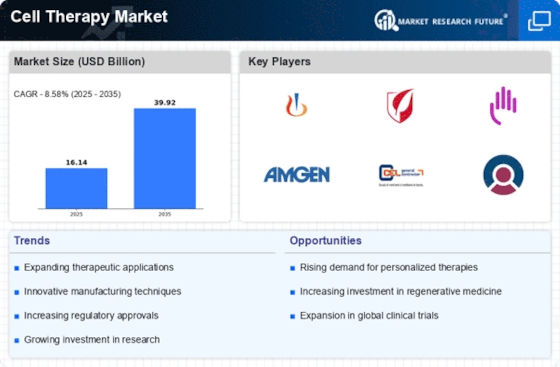
As per Market Research Future analysis, the Cell Therapy Market size was valued at USD 16.14 Billion in 2024. The market is projected to grow from USD 17.53 Billion in 2025 to USD 39.92 Billion by 2035, exhibiting a CAGR of 8.58% during the forecast period 2025-2035. North America led the market with over 45.23% share, generating around USD 7.3 billion in revenue.
 
Increasing global cell therapy adoption is driven by rising cancer prevalence, particularly advanced and treatment‑resistant forms that require innovative cell‑based solutions, expanding clinical research, and personalized treatment pathways that improve outcomes and address unmet needs in oncology and chronic disease care.
 
Globally, an estimated 20 million new cancer cases occurred in 2022 with 9.7 million deaths, and incidence is projected to rise by 77 % to 35 million cases by 2050, amplifying demand for advanced therapies like cell therapy.

Key Market Trends & Highlights

The Cell Therapy Market is experiencing robust growth driven by technological advancements and increasing acceptance of therapies.

  • North America led cell therapy revenue in 2024, representing 45.23 % of global market share driven by oncology and innovation. Europe cell therapy market was valued at USD 4.84 B in 2024, securing the second‑largest global position with 30 % share. Oncology application dominated cell therapy, capturing 38.2 % of market revenue in 2024, fueled by growing cancer treatments. Autologous therapies held 90 % market share in 2024, maintaining leadership through personalized cellular interventions. Neurological disorder cell therapy segment achieved 14 % share in 2024, expanding rapidly with regenerative and neural cell innovations.

Market Size & Forecast

2024 Market Size 16.14 (USD Billion)
2035 Market Size 39.92 (USD Billion)
CAGR (2025 - 2035) 8.58%
Largest Regional Market Share in 2024 North America

Major Players

Companies such as <a href="https://www.novartis.com/about/products">Novartis </a>(CH), Gilead Sciences (US), <a href="https://www.bms.com/be/patients-and-caregivers/cell-therapy.html">Bristol-Myers Squibb</a> (US), Amgen (US), Celgene (US), Sangamo Therapeutics (US), Bluebird Bio (US), Celyad (BE), Kite Pharma (US), Fate Therapeutics (US) are some of the major participants in the global market.

Market Trends

The Cell Therapy Market size expansion is currently experiencing a transformative phase characterized by rapid advancements in technology and an increasing understanding of cellular mechanisms, to cater to which advanced cellular therapy products have been launched. This evolution is largely driven by the growing prevalence of chronic diseases and genetic disorders, which necessitate innovative treatment modalities in cell therapeutics. As researchers delve deeper into the potential of stem cells and other cellular therapies, the market appears poised for substantial growth.

Furthermore, the market analysis suggests that regulatory bodies are adapting to these changes, streamlining approval processes to facilitate the introduction of novel cell therapeutics. This responsiveness from regulatory agencies may enhance the overall landscape of the market, fostering an environment conducive to innovation.

In addition to technological advancements, collaboration among academic institutions, biotechnology firms, and pharmaceutical companies is becoming increasingly prevalent. Such partnerships are likely to accelerate research and development efforts, leading to the emergence of new therapies that could address unmet medical needs. 

Moreover, the rising investment in cell-based therapies suggests a robust interest from stakeholders, which may further stimulate cell therapy industry dynamics. As the market continues to evolve, it is essential to monitor these trends closely, as they could significantly influence future developments in the field.

Technological Advancements

The market is witnessing remarkable technological innovations that enhance the efficacy and safety of treatments. Techniques such as gene editing and personalized medicine are becoming more prevalent, allowing for tailored cell therapeutics that address specific patient needs. This trend indicates a shift towards more precise and effective treatment options.

According to WHO, noncommunicable diseases such as cancer cause ~10 million deaths yearly and are increasing globally. Innovations like gene editing, CAR‑T, and personalized cell therapeutics directly address these high‑impact conditions, improving targeted intervention and treatment efficacy.

Collaborative Research Initiatives

There is a noticeable increase in collaborative efforts among various stakeholders in the market. Partnerships between academic institutions and industry players are fostering an environment of shared knowledge and resources, which may lead to accelerated development of new cell therapeutics. This collaboration appears to be crucial for overcoming existing challenges in the field.

WHO data show an aging global population, with those aged 60+ projected to increase from 1.1 billion in 2023 to 1.4 billion by 2030, expanding the focus of collaborative clinical research networks to improve therapies for age‑related diseases, encouraging shared innovation.

Regulatory Evolution

The regulatory landscape surrounding the market is evolving to keep pace with rapid advancements in technology. Regulatory agencies are streamlining approval processes, which could facilitate quicker access to innovative therapies. This evolution suggests a growing recognition of the importance of cell-based treatments in modern medicine.

WHO’s focus on noncommunicable diseases highlights the link between chronic disease burden and therapy innovation; regulatory evolution aims to accelerate safe access to advanced treatments for conditions responsible for 43 million deaths annually, balancing safety with rapid dissemination.

Cell Therapy Market Market Drivers

Rising Prevalence of Chronic Diseases

The increasing incidence of chronic diseases such as cancer, diabetes, and cardiovascular disorders is a primary driver of the Cell Therapy Market. As these conditions become more prevalent, the demand for innovative treatment options rises. Cell therapies, which offer the potential for regenerative healing and targeted treatment, are gaining traction among healthcare providers and patients alike.
 
According to recent estimates, the global burden of chronic diseases is expected to reach unprecedented levels, necessitating advanced therapeutic solutions. This trend is likely to propel investments in research and development within the market, as stakeholders seek to address the growing healthcare challenges associated with chronic illnesses.

Advancements in Cell Processing Technologies

Technological innovations in cell processing and manufacturing are significantly influencing the Cell Therapy Market. Enhanced techniques for cell isolation, expansion, and modification are improving the efficiency and efficacy of cell therapies. For instance, automated cell processing systems are streamlining production, reducing costs, and minimizing contamination risks.
 
The market for cell processing technologies is projected to grow substantially, with estimates suggesting a compound annual growth rate of over 20% in the coming years. These advancements not only facilitate the development of new therapies but also enhance the scalability of existing treatments, thereby expanding the reach of the market.

Increased Investment in Regenerative Medicine

The surge in investment directed towards regenerative medicine is a notable driver of the Cell Therapy Market. Venture capital firms and pharmaceutical companies are increasingly recognizing the potential of cell therapies to revolutionize treatment paradigms. Reports indicate that funding for regenerative medicine startups has reached billions of dollars, reflecting a robust interest in innovative therapeutic solutions.
 
This influx of capital is likely to accelerate research initiatives, clinical trials, and product development within the market. As more therapies receive regulatory approval, the market is expected to expand, offering new opportunities for stakeholders across the healthcare spectrum.

Growing Awareness and Acceptance of Cell Therapies

Public awareness and acceptance of cell therapies are steadily increasing, contributing to the growth of the Cell Therapy Market. Educational campaigns and successful case studies are helping to demystify these advanced treatments, fostering a more informed patient population. As patients become more aware of the potential benefits of cell therapies, demand is likely to rise.
 
Furthermore, healthcare providers are increasingly advocating for these innovative solutions, recognizing their potential to improve patient outcomes. This shift in perception is expected to drive market growth, as more individuals seek out cell therapy options for their medical conditions.

Regulatory Support and Streamlined Approval Processes

Regulatory bodies are increasingly providing support for the development and commercialization of cell therapies, which is a crucial driver of the Cell Therapy Market. Initiatives aimed at streamlining approval processes for innovative therapies are being implemented, allowing for faster access to life-saving treatments.
 
For example, the introduction of expedited pathways for regenerative medicine products is encouraging companies to invest in cell therapy research. This regulatory environment not only fosters innovation but also enhances market confidence, as stakeholders perceive a more favorable landscape for bringing new therapies to market. As regulatory frameworks continue to evolve, the market is poised for significant growth.

Market Segment Insights

By Application: Oncology (Largest) vs. Neurological Disorders (Fastest-Growing)

The Oncology segment holds the largest share of the Cell Therapy Market at 38.2%, driven by the increasing global incidence of cancer and the growing adoption of innovative cell-based therapeutic approaches. Oncology therapies, including CAR-T and tumor-infiltrating lymphocyte therapies, have established themselves as crucial players in the treatment landscape, thus driving substantial investments and advancements within this area. On the other hand, Neurological Disorders are gaining prominence as an emerging segment, showcasing rapid growth as research uncovers the potential of cell therapeutics in treating conditions like Alzheimer's and Parkinson's disease. This shift is evident as <a href="https://www.marketresearchfuture.com/reports/biopharmaceuticals-market-8439">biopharmaceutical </a>companies increasingly focus on developing novel interventions for these chronic and debilitating conditions, providing new hope for patients.

Oncology (Dominant) vs. Cardiovascular Disease (Emerging)

Oncology cell therapies have secured their dominance and are at the forefront of market innovations, as various treatment modalities, such as CAR-T and stem cell transplants, demonstrate substantial clinical efficacy. These therapies are often personalized, providing tailored treatment options that resonate with oncologists and patients alike. Conversely, Cardiovascular Disease is an emerging segment where regenerative approaches are becoming prominent. With a rising interest in harnessing stem cells and engineered heart tissues to repair damaged tissues post-myocardial infarction or treat heart failure, this segment is gaining traction. As clinical trials progress and success stories emerge, the Cardiovascular Disease segment is set to become a compelling area of growth in the Cell Therapy Market.

By Type: Autologous Cell Therapy (Largest) vs. Allogeneic Cell Therapy (Fastest-Growing)

The market is characterized by three primary segments: Autologous Cell Therapy, Allogeneic Cell Therapy, and Stem Cell Therapy. Among these, Autologous Cell Therapy dominates the Cell Therapy Market with a 90% share, driven by its personalized approach using the patient’s own cells. Allogeneic Cell Therapy follows closely, presenting itself as a rapidly expanding segment due to its potential for off-the-shelf solutions, making treatments more accessible to a broader patient population. Stem Cell Therapy, while influential, currently occupies a smaller segment of the market but plays a critical role in various innovative treatments.

Autologous Cell Therapy (Dominant) vs. Allogeneic Cell Therapy (Emerging)

Autologous Cell Therapy is distinguished by its patient-specific methodology, where cells are extracted from the individual and manipulated before reintroduction, leading to personalized treatment plans. This segment enjoys a stable market position due to strong regulatory support and well-established protocols, fostering confidence among providers and patients alike. In contrast, Allogeneic Cell Therapy has emerged as a key player in the industry, providing off-the-shelf treatments that enhance accessibility and reduce the waiting time for patients. The shift towards more convenient, ready-to-use therapeutic products is driving investment and growth in this segment, making it an appealing area for innovation in cell therapy.

By Delivery Method: Intravenous Injection (Largest) vs. Subcutaneous Injection (Fastest-Growing)

The Delivery Method segment is largely dominated by Intravenous Injection, accounting for the largest 70% share of the Cell Therapy Market, owing to its proven effectiveness in administering cell-based therapies directly into the bloodstream. Subcutaneous Injection, while currently smaller in share, exhibits significant potential and is projected to capture an increasing market segment as advancements in injection technologies are made. Intramuscular and intradermal injections share a smaller market footprint but present unique advantages in specific cell therapeutics applications, contributing to a diverse delivery methodology in the industry. Growth trends within the Delivery Method segment are favorable, particularly for Subcutaneous Injection, which is receiving increased attention due to its ease of administration and reduced adverse effects for patients. Innovations in needle technologies and formulations are expected to drive growth for both Subcutaneous and Intradermal Injections, while Intravenous Injection remains a staple due to its reliability. The ongoing evolution in patient-centric treatment approaches is further emphasizing the need for more accessible delivery methods, thus propelling the market forward.

Intravenous Injection (Dominant) vs. Subcutaneous Injection (Emerging)

Intravenous Injection remains the dominant delivery method within the market share, owing to its effectiveness in administering high concentrations of therapeutic agents rapidly into systemic circulation. This method is preferred for its predictable pharmacokinetics and established safety profile, making it suitable for complex therapies. On the contrary, Subcutaneous Injection is emerging as a preferred alternative due to its amenability to self-administration and favorable patient compliance. With ongoing advancements in formulation technology, Subcutaneous Injection is set to offer advantages such as reduced healthcare costs and increased convenience for patients. The comparison between these two methods illustrates the industry's shift toward accommodating various patient needs while maintaining <a href="https://www.marketresearchfuture.com/reports/therapeutic-robot-market-36811">therapeutic</a> efficacy.

By End User: Hospitals (Largest) vs. Research Institutions (Fastest-Growing)

Hospitals account for the largest segment of the Cell Therapy Market, holding an 80% share, as they extensively utilize these advanced therapies for patient treatment. Their dominant position is supported by the growing prevalence of chronic diseases and the increasing acceptance of cell-based therapies. Research institutions, while smaller in market share, are rapidly gaining traction as they are critical to innovation and development within this space, thus becoming the fastest-growing segment of the market.

Hospitals (Dominant) vs. Research Institutions (Emerging)

Hospitals play a pivotal role in the market share as the primary delivery point for these therapies, providing both inpatient and outpatient services. They are equipped with cutting-edge technology and specialized teams to administer complex treatments, making them the dominant segment due to their established infrastructure and patient reach. Conversely, research institutions, recognized for their commitment to scientific discovery, serve as hotbeds for innovation in cell therapies. They contribute significantly by developing novel therapies and conducting clinical trials, leading to emerging opportunities within the market as they attract funding and partnerships to advance their research efforts.

Get more detailed insights about Cell Therapy Market Research Report - Global Forecast till 2035

Regional Insights

North America : Leading Innovation and Investment

North America dominated the global Cell Therapy Market in 2024, reaching a market size of USD 7.3 billion. The region benefits from robust investment in research and development, a strong regulatory framework, and increasing demand for advanced therapies. The FDA approved cell therapies has catalyzed innovation, leading to rapid advancements in treatment options. The growing prevalence of chronic diseases and the aging population further drive market growth. 

The United States is the primary contributor to this market, with key players like Novartis, Gilead Sciences, and Bristol-Myers Squibb leading the charge. The competitive landscape is characterized by significant mergers and acquisitions, as companies seek to enhance their portfolios. Canada also plays a vital role, with increasing investments in biotech and a focus on developing innovative therapies, making North America a hub for cell therapy advancements.

In 2022, cancer caused ~9.3 million deaths worldwide and remains a leading cause of mortality, while neurological disorders affect over 3.4 billion people (43 % of global population), increasing need for advanced therapies — positive for innovative immuno‑ and cell‑based interventions.

Europe : Emerging Regulatory Frameworks

Europe is the second-largest market for cell therapy, holding approximately 30% of the global market share. The region is witnessing a surge in demand for innovative therapies, driven by increasing investments in healthcare and advancements in biotechnology. Regulatory bodies like the European Medicines Agency (EMA) are actively working to streamline approval processes, which is expected to further boost market growth. The rising prevalence of genetic disorders and cancers is also a significant driver of demand.

Leading countries in this region include Germany, the UK, and France, which are home to several key players such as Celyad and Kite Pharma. The competitive landscape is evolving, with a focus on collaboration between biotech firms and research institutions. The presence of strong academic research and a favorable regulatory environment are enhancing the region's attractiveness for cell therapy development. The EMA states that "the development of advanced therapies is crucial for addressing unmet medical needs in Europe.

Noncommunicable diseases including cancer collectively caused >9.3 million deaths globally (2022), with Europe heavily impacted by rising chronic disease prevalence, reinforcing investment and adoption in cell and personalized therapies.

Asia-Pacific : Rapidly Growing Market Potential

Asia-Pacific is rapidly emerging as a significant player in the market, accounting for approximately 20% of the global market share. The region is characterized by increasing investments in healthcare infrastructure, a growing patient population, and rising awareness of advanced therapies. Countries like China and Japan are leading the charge, supported by favorable government policies and a focus on biotechnology innovation. The demand for personalized medicine is also driving market growth in this region.

China is at the forefront, with substantial investments in research and development, while Japan is known for its advanced healthcare system. The competitive landscape is becoming increasingly dynamic, with local companies and international players vying for market share. Key players such as Amgen and Fate Therapeutics are expanding their presence, contributing to the region's growth in cell therapy solutions. The Asia-Pacific cell market is poised for significant expansion in the coming years, driven by technological advancements and increasing healthcare spending.

Middle East and Africa : Untapped Market Opportunities

The Middle East and Africa region is currently the smallest market for cell therapy, holding approximately 5% of the global market share. However, it presents significant growth potential due to increasing investments in healthcare and biotechnology. The rising prevalence of chronic diseases and the need for advanced treatment options are driving demand. Governments in the region are beginning to recognize the importance of biotechnology, leading to supportive policies and funding initiatives.

Countries like South Africa and the UAE are emerging as key players in the cell therapy landscape, with growing interest from both local and international companies. The competitive environment is still developing, but there is a noticeable increase in collaborations and partnerships aimed at advancing cell therapy research. As the region continues to invest in healthcare infrastructure, the potential for cell therapy growth is substantial, making it an area of interest for investors and innovators alike.


Key Players and Competitive Insights

The Cell Therapy Market is currently characterized by a dynamic competitive landscape, driven by rapid advancements in technology and increasing demand for innovative treatment options. Key players such as Novartis (CH), Gilead Sciences (US), and Bristol-Myers Squibb (US) are at the forefront, each adopting distinct strategies to enhance their market positioning. Novartis (CH) focuses on expanding its portfolio through strategic partnerships and collaborations, particularly in the realm of CAR-T cell therapies. Gilead Sciences (US) emphasizes innovation in its product therapy offerings, particularly in the development of next-generation therapies for hematological malignancies. Bristol-Myers Squibb (US) is actively pursuing mergers and acquisitions to bolster its capabilities in cell therapy, thereby enhancing its competitive edge. Collectively, these strategies contribute to a robust competitive environment, fostering innovation and driving cell market growth.
 
In terms of business tactics, companies are increasingly localizing manufacturing to enhance supply chain efficiency and reduce costs. This approach not only streamlines operations but also allows for quicker responses to market demands. The market appears moderately fragmented, with several key players exerting significant influence. The collective actions of these companies shape the cell analysis market structure, as they vie for leadership through innovation and strategic positioning.
 
In August 2025, Novartis (CH) announced a groundbreaking partnership with a leading biotechnology firm to co-develop a novel CAR-T therapy aimed at treating solid tumors. This collaboration is poised to enhance Novartis's capabilities in addressing a challenging area of oncology, potentially positioning the company as a leader in this niche. The strategic importance of this partnership lies in its potential to accelerate the development timeline and broaden the therapeutic applications of CAR-T technology. In September 2025, Gilead Sciences (US) unveiled a new manufacturing facility dedicated to the production of cell therapies, which is expected to significantly increase its production capacity. This investment underscores Gilead's commitment to meeting the growing demand for its innovative therapies and reflects a strategic move to enhance supply chain reliability. By bolstering its manufacturing capabilities, Gilead aims to ensure timely delivery of its products to healthcare providers and patients, thereby strengthening its market position.
 
In October 2025, Bristol-Myers Squibb (US) completed the acquisition of a smaller biotech firm specializing in gene editing technologies. This acquisition is likely to enhance Bristol-Myers Squibb's research and development capabilities, particularly in the realm of cell and gene therapies. The strategic significance of this move lies in its potential to diversify the company’s product therapy pipeline and accelerate the development of next-generation therapies, thereby reinforcing its competitive stance in the cell analysis market.
 
As of October 2025, the market is witnessing trends that emphasize digitalization, sustainability, and the integration of artificial intelligence in therapeutic development. Strategic alliances are increasingly shaping the competitive landscape, as companies recognize the value of collaboration in driving innovation. Looking ahead, competitive differentiation is expected to evolve, with a pronounced shift from price-based competition to a focus on innovation, technological advancements, and supply chain reliability. This transition may redefine how companies position themselves in the cell analysis market, ultimately benefiting patients through enhanced treatment options.

Key Companies in the Cell Therapy Market include

Industry Developments

Recent developments in the Cell Therapy Market indicate a growing emphasis on innovative treatments for chronic diseases and cancers. Notable companies such as Bluebird Bio, Adaptimmune, and Gilead Sciences have been focusing on expanding their Research and Development efforts to harness advanced cellular therapy products.

In October 2023, Adaptimmune reported promising early results from its T-cell therapy trials, which were an outcome of Gilead clinical trials, targeted at solid tumors, enhancing investor interest in the sector. In terms of mergers and acquisitions, Kite Pharma, a subsidiary of Gilead Sciences, announced an acquisition of TCR2 Therapeutics in September 2023, aimed at bolstering its cell therapy portfolio.

The market valuation for cell therapies is projected to reach new heights, driven by increasing approval rates from regulatory agencies and the growing acceptance of personalized medicine. AstraZeneca’s advancements in CAR-T therapies have also contributed to shifting the dynamics of the cell market.

Over the past years, the continued integration of technology in cell therapies has seen significant progress, with Novartis leading novel T-cell therapies towards commercialization. Collectively, these developments demonstrate a robust upward trajectory tailored to meet the increasing demand for effective therapeutic solutions in the healthcare landscape.

Future Outlook

Cell Therapy Market Future Outlook

The Cell Therapy Market size is projected to reach USD 39.92 billion by 2035, growing at a CAGR of 8.58%, driven by advancements in technology, increasing investments, and rising demand for personalized medicine.

New opportunities lie in:

  • <p>Development of automated cell processing systems for enhanced efficiency. Expansion into emerging markets with tailored cell therapy solutions. Strategic partnerships with biotech firms for innovative product pipelines.</p>

By 2035, the Cell Therapy Market is expected to be robust, reflecting substantial growth and innovation.

Market Segmentation

Cell Therapy Market Type Outlook

  • Autologous Cell Therapy
  • Allogeneic Cell Therapy
  • Stem Cell Therapy

Cell Therapy Market End User Outlook

  • Hospitals
  • Research Institutions
  • Ambulatory Surgical Centers

Cell Therapy Market Application Outlook

  • Oncology
  • Cardiovascular Disease
  • Neurological Disorders
  • Orthopedic Disorders

Cell Therapy Market Delivery Method Outlook

  • Intravenous Injection
  • Subcutaneous Injection
  • Intradermal Injection
  • Intramuscular Injection

Report Scope

MARKET SIZE 2024 16.14(USD Billion)
MARKET SIZE 2025 17.53(USD Billion)
MARKET SIZE 2035 39.92(USD Billion)
COMPOUND ANNUAL GROWTH RATE (CAGR) 8.58% (2025 - 2035)
REPORT COVERAGE Revenue Forecast, Competitive Landscape, Growth Factors, and Trends
BASE YEAR 2024
Market Forecast Period 2025 - 2035
Historical Data 2019 - 2024
Market Forecast Units USD Billion
Key Companies Profiled Novartis (CH), Gilead Sciences (US), Bristol-Myers Squibb (US), Amgen (US), Celgene (US), Sangamo Therapeutics (US), Bluebird Bio (US), Celyad (BE), Kite Pharma (US), Fate Therapeutics (US)
Segments Covered Applications, Types, Delivery Method, End Users, Regional
Key Market Opportunities Advancements in personalized medicine drive growth in the market.
Key Market Dynamics Rising demand for innovative therapies drives competitive forces and regulatory adaptations in the cell therapy landscape.
Countries Covered North America, Europe, APAC, South America, MEA

FAQs

What is the current valuation of the market as of 2024?

The Cell Therapy Market was valued at 16.14 USD Billion in 2024.

What is the projected market size for the market in 2035?

The market is projected to reach 39.92 USD Billion by 2035.

What is the expected CAGR for the Cell Therapy Market from 2025 to 2035?

<p>The expected CAGR for the Cell Therapy Market during the forecast period 2025 - 2035 is 8.58%.</p>

Which application segment is anticipated to have the highest growth in the market?

The Oncology application segment is expected to grow from 6.43 USD Billion in 2024 to 15.25 USD Billion by 2035.

How does the market for Autologous Cell Therapy compare to Allogeneic Cell Therapy?

<p>Autologous Cell Therapy was valued at 6.43 USD Billion in 2024 and is projected to reach 15.45 USD Billion by 2035, surpassing Allogeneic Cell Therapy.</p>

What delivery method is expected to dominate the Cell Therapy Market?

<p>Intravenous Injection is anticipated to lead the market, growing from 6.43 USD Billion in 2024 to 15.45 USD Billion by 2035.</p>

Which end user segment is likely to experience the most growth in the market?

Hospitals are projected to grow from 6.43 USD Billion in 2024 to 15.45 USD Billion by 2035, indicating strong demand.

Who are the key players in the Cell Therapy Market?

<p>Key players include Novartis, Gilead Sciences, Bristol-Myers Squibb, and Amgen, among others.</p>

What is the projected growth for the Neurological Disorders segment in the Cell Therapy Market?

<p>The Neurological Disorders segment is expected to grow from 4.85 USD Billion in 2024 to 10.5 USD Billion by 2035.</p>

How does the market for Stem Cell Therapy compare to other types of cell therapy?

<p>Stem Cell Therapy was valued at 4.57 USD Billion in 2024 and is projected to reach 12.22 USD Billion by 2035, indicating robust growth.</p>

  1. SECTION I: EXECUTIVE SUMMARY AND KEY HIGHLIGHTS |
    1. EXECUTIVE SUMMARY | |
      1. Market Overview | |
      2. Key Findings | |
      3. Market Segmentation | |
      4. Competitive Landscape | |
      5. Challenges and Opportunities | |
      6. Future Outlook 2
  2. SECTION II: SCOPING, METHODOLOGY AND MARKET STRUCTURE |
    1. MARKET INTRODUCTION | |
      1. Definition | |
      2. Scope of the study | | |
    2. RESEARCH METHODOLOGY | |
      1. Overview | |
      2. Data Mining | |
      3. Secondary Research | |
      4. Primary Research | | |
      5. Forecasting Model | |
      6. Market Size Estimation | | |
      7. Data Triangulation | |
      8. Validation 3
  3. SECTION III: QUALITATIVE ANALYSIS |
    1. MARKET DYNAMICS | |
      1. Overview | |
      2. Drivers | |
      3. Restraints | |
      4. Opportunities |
    2. MARKET FACTOR ANALYSIS | |
      1. Value chain Analysis | |
      2. Porter's Five Forces Analysis | | |
      3. COVID-19 Impact Analysis | | |
  4. SECTION IV: QUANTITATIVE ANALYSIS |
    1. Healthcare, BY Application (USD Billion) | |
      1. Oncology | |
      2. Cardiovascular Disease | |
      3. Neurological Disorders | |
      4. Orthopedic Disorders |
    2. Healthcare, BY Type (USD Billion) | |
      1. Autologous Cell Therapy | |
      2. Allogeneic Cell Therapy | |
      3. Stem Cell Therapy |
    3. Healthcare, BY Delivery Method (USD Billion) | |
      1. Intravenous Injection | |
      2. Subcutaneous Injection | |
      3. Intradermal Injection | |
      4. Intramuscular Injection |
    4. Healthcare, BY End User (USD Billion) | |
      1. Hospitals | |
      2. Research Institutions | |
      3. Ambulatory Surgical Centers |
    5. Healthcare, BY Region (USD Billion) | |
      1. North America | | |
      2. Europe | | |
      3. APAC | | |
      4. South America | | |
      5. MEA | | |
  5. SECTION V: COMPETITIVE ANALYSIS |
    1. Competitive Landscape | |
      1. Overview | |
      2. Competitive Analysis | |
      3. Market share Analysis | |
      4. Major Growth Strategy in the Healthcare | |
      5. Competitive Benchmarking | |
      6. Leading Players in Terms of Number of Developments in the Healthcare | |
      7. Key developments and growth strategies | | |
      8. Major Players Financial Matrix | | |
    2. Company Profiles | |
      1. Novartis (CH) | | |
      2. Gilead Sciences (US) | | |
      3. Bristol-Myers Squibb (US) | | |
      4. Amgen (US) | | |
      5. Celgene (US) | | |
      6. Sangamo Therapeutics (US) | | |
      7. Bluebird Bio (US) | | |
      8. Celyad (BE) | | |
      9. Kite Pharma (US) | | |
      10. Fate Therapeutics (US) | | |
    3. Appendix | |
      1. References | |
      2. Related Reports 6 LIST OF FIGURES |
    4. MARKET SYNOPSIS |
    5. NORTH AMERICA MARKET ANALYSIS |
    6. US MARKET ANALYSIS BY APPLICATION |
    7. US MARKET ANALYSIS BY TYPE |
    8. US MARKET ANALYSIS BY DELIVERY METHOD |
    9. US MARKET ANALYSIS BY END USER |
    10. CANADA MARKET ANALYSIS BY APPLICATION |
    11. CANADA MARKET ANALYSIS BY TYPE |
    12. CANADA MARKET ANALYSIS BY DELIVERY METHOD |
    13. CANADA MARKET ANALYSIS BY END USER |
    14. EUROPE MARKET ANALYSIS |
    15. GERMANY MARKET ANALYSIS BY APPLICATION |
    16. GERMANY MARKET ANALYSIS BY TYPE |
    17. GERMANY MARKET ANALYSIS BY DELIVERY METHOD |
    18. GERMANY MARKET ANALYSIS BY END USER |
    19. UK MARKET ANALYSIS BY APPLICATION |
    20. UK MARKET ANALYSIS BY TYPE |
    21. UK MARKET ANALYSIS BY DELIVERY METHOD |
    22. UK MARKET ANALYSIS BY END USER |
    23. FRANCE MARKET ANALYSIS BY APPLICATION |
    24. FRANCE MARKET ANALYSIS BY TYPE |
    25. FRANCE MARKET ANALYSIS BY DELIVERY METHOD |
    26. FRANCE MARKET ANALYSIS BY END USER |
    27. RUSSIA MARKET ANALYSIS BY APPLICATION |
    28. RUSSIA MARKET ANALYSIS BY TYPE |
    29. RUSSIA MARKET ANALYSIS BY DELIVERY METHOD |
    30. RUSSIA MARKET ANALYSIS BY END USER |
    31. ITALY MARKET ANALYSIS BY APPLICATION |
    32. ITALY MARKET ANALYSIS BY TYPE |
    33. ITALY MARKET ANALYSIS BY DELIVERY METHOD |
    34. ITALY MARKET ANALYSIS BY END USER |
    35. SPAIN MARKET ANALYSIS BY APPLICATION |
    36. SPAIN MARKET ANALYSIS BY TYPE |
    37. SPAIN MARKET ANALYSIS BY DELIVERY METHOD |
    38. SPAIN MARKET ANALYSIS BY END USER |
    39. REST OF EUROPE MARKET ANALYSIS BY APPLICATION |
    40. REST OF EUROPE MARKET ANALYSIS BY TYPE |
    41. REST OF EUROPE MARKET ANALYSIS BY DELIVERY METHOD |
    42. REST OF EUROPE MARKET ANALYSIS BY END USER |
    43. APAC MARKET ANALYSIS |
    44. CHINA MARKET ANALYSIS BY APPLICATION |
    45. CHINA MARKET ANALYSIS BY TYPE |
    46. CHINA MARKET ANALYSIS BY DELIVERY METHOD |
    47. CHINA MARKET ANALYSIS BY END USER |
    48. INDIA MARKET ANALYSIS BY APPLICATION |
    49. INDIA MARKET ANALYSIS BY TYPE |
    50. INDIA MARKET ANALYSIS BY DELIVERY METHOD |
    51. INDIA MARKET ANALYSIS BY END USER |
    52. JAPAN MARKET ANALYSIS BY APPLICATION |
    53. JAPAN MARKET ANALYSIS BY TYPE |
    54. JAPAN MARKET ANALYSIS BY DELIVERY METHOD |
    55. JAPAN MARKET ANALYSIS BY END USER |
    56. SOUTH KOREA MARKET ANALYSIS BY APPLICATION |
    57. SOUTH KOREA MARKET ANALYSIS BY TYPE |
    58. SOUTH KOREA MARKET ANALYSIS BY DELIVERY METHOD |
    59. SOUTH KOREA MARKET ANALYSIS BY END USER |
    60. MALAYSIA MARKET ANALYSIS BY APPLICATION |
    61. MALAYSIA MARKET ANALYSIS BY TYPE |
    62. MALAYSIA MARKET ANALYSIS BY DELIVERY METHOD |
    63. MALAYSIA MARKET ANALYSIS BY END USER |
    64. THAILAND MARKET ANALYSIS BY APPLICATION |
    65. THAILAND MARKET ANALYSIS BY TYPE |
    66. THAILAND MARKET ANALYSIS BY DELIVERY METHOD |
    67. THAILAND MARKET ANALYSIS BY END USER |
    68. INDONESIA MARKET ANALYSIS BY APPLICATION |
    69. INDONESIA MARKET ANALYSIS BY TYPE |
    70. INDONESIA MARKET ANALYSIS BY DELIVERY METHOD |
    71. INDONESIA MARKET ANALYSIS BY END USER |
    72. REST OF APAC MARKET ANALYSIS BY APPLICATION |
    73. REST OF APAC MARKET ANALYSIS BY TYPE |
    74. REST OF APAC MARKET ANALYSIS BY DELIVERY METHOD |
    75. REST OF APAC MARKET ANALYSIS BY END USER |
    76. SOUTH AMERICA MARKET ANALYSIS |
    77. BRAZIL MARKET ANALYSIS BY APPLICATION |
    78. BRAZIL MARKET ANALYSIS BY TYPE |
    79. BRAZIL MARKET ANALYSIS BY DELIVERY METHOD |
    80. BRAZIL MARKET ANALYSIS BY END USER |
    81. MEXICO MARKET ANALYSIS BY APPLICATION |
    82. MEXICO MARKET ANALYSIS BY TYPE |
    83. MEXICO MARKET ANALYSIS BY DELIVERY METHOD |
    84. MEXICO MARKET ANALYSIS BY END USER |
    85. ARGENTINA MARKET ANALYSIS BY APPLICATION |
    86. ARGENTINA MARKET ANALYSIS BY TYPE |
    87. ARGENTINA MARKET ANALYSIS BY DELIVERY METHOD |
    88. ARGENTINA MARKET ANALYSIS BY END USER |
    89. REST OF SOUTH AMERICA MARKET ANALYSIS BY APPLICATION |
    90. REST OF SOUTH AMERICA MARKET ANALYSIS BY TYPE |
    91. REST OF SOUTH AMERICA MARKET ANALYSIS BY DELIVERY METHOD |
    92. REST OF SOUTH AMERICA MARKET ANALYSIS BY END USER |
    93. MEA MARKET ANALYSIS |
    94. GCC COUNTRIES MARKET ANALYSIS BY APPLICATION |
    95. GCC COUNTRIES MARKET ANALYSIS BY TYPE |
    96. GCC COUNTRIES MARKET ANALYSIS BY DELIVERY METHOD |
    97. GCC COUNTRIES MARKET ANALYSIS BY END USER |
    98. SOUTH AFRICA MARKET ANALYSIS BY APPLICATION |
    99. SOUTH AFRICA MARKET ANALYSIS BY TYPE |
    100. SOUTH AFRICA MARKET ANALYSIS BY DELIVERY METHOD |
    101. SOUTH AFRICA MARKET ANALYSIS BY END USER |
    102. REST OF MEA MARKET ANALYSIS BY APPLICATION |
    103. REST OF MEA MARKET ANALYSIS BY TYPE |
    104. REST OF MEA MARKET ANALYSIS BY DELIVERY METHOD |
    105. REST OF MEA MARKET ANALYSIS BY END USER |
    106. KEY BUYING CRITERIA OF HEALTHCARE |
    107. RESEARCH PROCESS OF MRFR |
    108. DRO ANALYSIS OF HEALTHCARE |
    109. DRIVERS IMPACT ANALYSIS: HEALTHCARE |
    110. RESTRAINTS IMPACT ANALYSIS: HEALTHCARE |
    111. SUPPLY / VALUE CHAIN: HEALTHCARE |
    112. HEALTHCARE, BY APPLICATION, 2024 (% SHARE) |
    113. HEALTHCARE, BY APPLICATION, 2024 TO 2035 (USD Billion) |
    114. HEALTHCARE, BY TYPE, 2024 (% SHARE) |
    115. HEALTHCARE, BY TYPE, 2024 TO 2035 (USD Billion) |
    116. HEALTHCARE, BY DELIVERY METHOD, 2024 (% SHARE) |
    117. HEALTHCARE, BY DELIVERY METHOD, 2024 TO 2035 (USD Billion) |
    118. HEALTHCARE, BY END USER, 2024 (% SHARE) |
    119. HEALTHCARE, BY END USER, 2024 TO 2035 (USD Billion) |
    120. BENCHMARKING OF MAJOR COMPETITORS 7 LIST OF TABLES |
    121. LIST OF ASSUMPTIONS | |
      1. |
    122. North America MARKET SIZE ESTIMATES; FORECAST | |
      1. BY APPLICATION, 2025-2035 (USD Billion) | |
      2. BY TYPE, 2025-2035 (USD Billion) | |
      3. BY DELIVERY METHOD, 2025-2035 (USD Billion) | |
      4. BY END USER, 2025-2035 (USD Billion) |
    123. US MARKET SIZE ESTIMATES; FORECAST | |
      1. BY APPLICATION, 2025-2035 (USD Billion) | |
      2. BY TYPE, 2025-2035 (USD Billion) | |
      3. BY DELIVERY METHOD, 2025-2035 (USD Billion) | |
      4. BY END USER, 2025-2035 (USD Billion) |
    124. Canada MARKET SIZE ESTIMATES; FORECAST | |
      1. BY APPLICATION, 2025-2035 (USD Billion) | |
      2. BY TYPE, 2025-2035 (USD Billion) | |
      3. BY DELIVERY METHOD, 2025-2035 (USD Billion) | |
      4. BY END USER, 2025-2035 (USD Billion) |
    125. Europe MARKET SIZE ESTIMATES; FORECAST | |
      1. BY APPLICATION, 2025-2035 (USD Billion) | |
      2. BY TYPE, 2025-2035 (USD Billion) | |
      3. BY DELIVERY METHOD, 2025-2035 (USD Billion) | |
      4. BY END USER, 2025-2035 (USD Billion) |
    126. Germany MARKET SIZE ESTIMATES; FORECAST | |
      1. BY APPLICATION, 2025-2035 (USD Billion) | |
      2. BY TYPE, 2025-2035 (USD Billion) | |
      3. BY DELIVERY METHOD, 2025-2035 (USD Billion) | |
      4. BY END USER, 2025-2035 (USD Billion) |
    127. UK MARKET SIZE ESTIMATES; FORECAST | |
      1. BY APPLICATION, 2025-2035 (USD Billion) | |
      2. BY TYPE, 2025-2035 (USD Billion) | |
      3. BY DELIVERY METHOD, 2025-2035 (USD Billion) | |
      4. BY END USER, 2025-2035 (USD Billion) |
    128. France MARKET SIZE ESTIMATES; FORECAST | |
      1. BY APPLICATION, 2025-2035 (USD Billion) | |
      2. BY TYPE, 2025-2035 (USD Billion) | |
      3. BY DELIVERY METHOD, 2025-2035 (USD Billion) | |
      4. BY END USER, 2025-2035 (USD Billion) |
    129. Russia MARKET SIZE ESTIMATES; FORECAST | |
      1. BY APPLICATION, 2025-2035 (USD Billion) | |
      2. BY TYPE, 2025-2035 (USD Billion) | |
      3. BY DELIVERY METHOD, 2025-2035 (USD Billion) | |
      4. BY END USER, 2025-2035 (USD Billion) |
    130. Italy MARKET SIZE ESTIMATES; FORECAST | |
      1. BY APPLICATION, 2025-2035 (USD Billion) | |
      2. BY TYPE, 2025-2035 (USD Billion) | |
      3. BY DELIVERY METHOD, 2025-2035 (USD Billion) | |
      4. BY END USER, 2025-2035 (USD Billion) |
    131. Spain MARKET SIZE ESTIMATES; FORECAST | |
      1. BY APPLICATION, 2025-2035 (USD Billion) | |
      2. BY TYPE, 2025-2035 (USD Billion) | |
      3. BY DELIVERY METHOD, 2025-2035 (USD Billion) | |
      4. BY END USER, 2025-2035 (USD Billion) |
    132. Rest of Europe MARKET SIZE ESTIMATES; FORECAST | |
      1. BY APPLICATION, 2025-2035 (USD Billion) | |
      2. BY TYPE, 2025-2035 (USD Billion) | |
      3. BY DELIVERY METHOD, 2025-2035 (USD Billion) | |
      4. BY END USER, 2025-2035 (USD Billion) |
    133. APAC MARKET SIZE ESTIMATES; FORECAST | |
      1. BY APPLICATION, 2025-2035 (USD Billion) | |
      2. BY TYPE, 2025-2035 (USD Billion) | |
      3. BY DELIVERY METHOD, 2025-2035 (USD Billion) | |
      4. BY END USER, 2025-2035 (USD Billion) |
    134. China MARKET SIZE ESTIMATES; FORECAST | |
      1. BY APPLICATION, 2025-2035 (USD Billion) | |
      2. BY TYPE, 2025-2035 (USD Billion) | |
      3. BY DELIVERY METHOD, 2025-2035 (USD Billion) | |
      4. BY END USER, 2025-2035 (USD Billion) |
    135. India MARKET SIZE ESTIMATES; FORECAST | |
      1. BY APPLICATION, 2025-2035 (USD Billion) | |
      2. BY TYPE, 2025-2035 (USD Billion) | |
      3. BY DELIVERY METHOD, 2025-2035 (USD Billion) | |
      4. BY END USER, 2025-2035 (USD Billion) |
    136. Japan MARKET SIZE ESTIMATES; FORECAST | |
      1. BY APPLICATION, 2025-2035 (USD Billion) | |
      2. BY TYPE, 2025-2035 (USD Billion) | |
      3. BY DELIVERY METHOD, 2025-2035 (USD Billion) | |
      4. BY END USER, 2025-2035 (USD Billion) |
    137. South Korea MARKET SIZE ESTIMATES; FORECAST | |
      1. BY APPLICATION, 2025-2035 (USD Billion) | |
      2. BY TYPE, 2025-2035 (USD Billion) | |
      3. BY DELIVERY METHOD, 2025-2035 (USD Billion) | |
      4. BY END USER, 2025-2035 (USD Billion) |
    138. Malaysia MARKET SIZE ESTIMATES; FORECAST | |
      1. BY APPLICATION, 2025-2035 (USD Billion) | |
      2. BY TYPE, 2025-2035 (USD Billion) | |
      3. BY DELIVERY METHOD, 2025-2035 (USD Billion) | |
      4. BY END USER, 2025-2035 (USD Billion) |
    139. Thailand MARKET SIZE ESTIMATES; FORECAST | |
      1. BY APPLICATION, 2025-2035 (USD Billion) | |
      2. BY TYPE, 2025-2035 (USD Billion) | |
      3. BY DELIVERY METHOD, 2025-2035 (USD Billion) | |
      4. BY END USER, 2025-2035 (USD Billion) |
    140. Indonesia MARKET SIZE ESTIMATES; FORECAST | |
      1. BY APPLICATION, 2025-2035 (USD Billion) | |
      2. BY TYPE, 2025-2035 (USD Billion) | |
      3. BY DELIVERY METHOD, 2025-2035 (USD Billion) | |
      4. BY END USER, 2025-2035 (USD Billion) |
    141. Rest of APAC MARKET SIZE ESTIMATES; FORECAST | |
      1. BY APPLICATION, 2025-2035 (USD Billion) | |
      2. BY TYPE, 2025-2035 (USD Billion) | |
      3. BY DELIVERY METHOD, 2025-2035 (USD Billion) | |
      4. BY END USER, 2025-2035 (USD Billion) |
    142. South America MARKET SIZE ESTIMATES; FORECAST | |
      1. BY APPLICATION, 2025-2035 (USD Billion) | |
      2. BY TYPE, 2025-2035 (USD Billion) | |
      3. BY DELIVERY METHOD, 2025-2035 (USD Billion) | |
      4. BY END USER, 2025-2035 (USD Billion) |
    143. Brazil MARKET SIZE ESTIMATES; FORECAST | |
      1. BY APPLICATION, 2025-2035 (USD Billion) | |
      2. BY TYPE, 2025-2035 (USD Billion) | |
      3. BY DELIVERY METHOD, 2025-2035 (USD Billion) | |
      4. BY END USER, 2025-2035 (USD Billion) |
    144. Mexico MARKET SIZE ESTIMATES; FORECAST | |
      1. BY APPLICATION, 2025-2035 (USD Billion) | |
      2. BY TYPE, 2025-2035 (USD Billion) | |
      3. BY DELIVERY METHOD, 2025-2035 (USD Billion) | |
      4. BY END USER, 2025-2035 (USD Billion) |
    145. Argentina MARKET SIZE ESTIMATES; FORECAST | |
      1. BY APPLICATION, 2025-2035 (USD Billion) | |
      2. BY TYPE, 2025-2035 (USD Billion) | |
      3. BY DELIVERY METHOD, 2025-2035 (USD Billion) | |
      4. BY END USER, 2025-2035 (USD Billion) |
    146. Rest of South America MARKET SIZE ESTIMATES; FORECAST | |
      1. BY APPLICATION, 2025-2035 (USD Billion) | |
      2. BY TYPE, 2025-2035 (USD Billion) | |
      3. BY DELIVERY METHOD, 2025-2035 (USD Billion) | |
      4. BY END USER, 2025-2035 (USD Billion) |
    147. MEA MARKET SIZE ESTIMATES; FORECAST | |
      1. BY APPLICATION, 2025-2035 (USD Billion) | |
      2. BY TYPE, 2025-2035 (USD Billion) | |
      3. BY DELIVERY METHOD, 2025-2035 (USD Billion) | |
      4. BY END USER, 2025-2035 (USD Billion) |
    148. GCC Countries MARKET SIZE ESTIMATES; FORECAST | |
      1. BY APPLICATION, 2025-2035 (USD Billion) | |
      2. BY TYPE, 2025-2035 (USD Billion) | |
      3. BY DELIVERY METHOD, 2025-2035 (USD Billion) | |
      4. BY END USER, 2025-2035 (USD Billion) |
    149. South Africa MARKET SIZE ESTIMATES; FORECAST | |
      1. BY APPLICATION, 2025-2035 (USD Billion) | |
      2. BY TYPE, 2025-2035 (USD Billion) | |
      3. BY DELIVERY METHOD, 2025-2035 (USD Billion) | |
      4. BY END USER, 2025-2035 (USD Billion) |
    150. Rest of MEA MARKET SIZE ESTIMATES; FORECAST | |
      1. BY APPLICATION, 2025-2035 (USD Billion) | |
      2. BY TYPE, 2025-2035 (USD Billion) | |
      3. BY DELIVERY METHOD, 2025-2035 (USD Billion) | |
      4. BY END USER, 2025-2035 (USD Billion) |
    151. PRODUCT LAUNCH/PRODUCT DEVELOPMENT/APPROVAL | |
      1. |
    152. ACQUISITION/PARTNERSHIP | |

Healthcare Market Segmentation

Healthcare By Application (USD Billion, 2025-2035)

  • Oncology
  • Cardiovascular Disease
  • Neurological Disorders
  • Orthopedic Disorders

Healthcare By Type (USD Billion, 2025-2035)

  • Autologous Cell Therapy
  • Allogeneic Cell Therapy
  • Stem Cell Therapy

Healthcare By Delivery Method (USD Billion, 2025-2035)

  • Intravenous Injection
  • Subcutaneous Injection
  • Intradermal Injection
  • Intramuscular Injection

Healthcare By End User (USD Billion, 2025-2035)

  • Hospitals
  • Research Institutions
  • Ambulatory Surgical Centers
Infographic

Free Sample Request

Kindly complete the form below to receive a free sample of this Report

Get Free Sample

Customer Strories

Compare Licence

×
Features License Type
Single User Multiuser License Enterprise User
Price $4,950 $5,950 $7,250
Maximum User Access Limit 1 User Upto 10 Users Unrestricted Access Throughout the Organization
Free Customization
Direct Access to Analyst
Deliverable Format
Platform Access
Discount on Next Purchase 10% 15% 15%
Printable Versions
%>