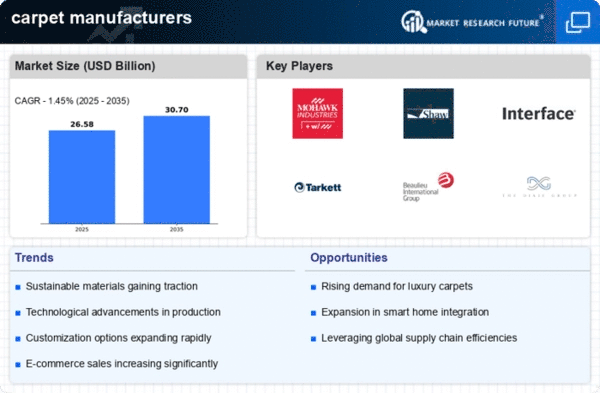
The carpet manufacturers market is currently characterized by a dynamic competitive landscape, driven by innovation, sustainability, and digital transformation. Key players such as Mohawk Industries (US), Shaw Industries (US), and Interface (US) are at the forefront, each adopting distinct strategies to enhance their market positioning. Mohawk Industries (US) emphasizes innovation through the development of eco-friendly products, while Shaw Industries (US) focuses on expanding its digital capabilities to improve customer engagement and streamline operations. Interface (US) is notable for its commitment to sustainability, aiming to achieve carbon neutrality across its operations. Collectively, these strategies not only enhance individual company profiles but also contribute to a more competitive and environmentally conscious market environment.
In terms of business tactics, companies are increasingly localizing manufacturing to reduce lead times and optimize supply chains. The market structure appears moderately fragmented, with several key players exerting influence while allowing room for smaller manufacturers to thrive. This fragmentation fosters competition, as companies strive to differentiate themselves through unique product offerings and customer service enhancements.
In November 2025, Mohawk Industries (US) announced a partnership with a leading technology firm to integrate AI-driven analytics into its production processes. This strategic move is expected to enhance operational efficiency and reduce waste, aligning with the company's sustainability goals. By leveraging advanced analytics, Mohawk aims to optimize inventory management and improve product quality, thereby reinforcing its competitive edge in the market.
In October 2025, Shaw Industries (US) launched a new line of carpets made from recycled materials, reflecting its commitment to sustainability and innovation. This initiative not only caters to the growing consumer demand for eco-friendly products but also positions Shaw as a leader in sustainable manufacturing practices. The introduction of this product line is likely to attract environmentally conscious consumers and strengthen brand loyalty.
In September 2025, Interface (US) unveiled a new digital platform designed to enhance customer interaction and streamline the purchasing process. This platform allows customers to visualize carpet designs in their spaces using augmented reality, thereby improving the overall customer experience. By embracing digital transformation, Interface is likely to capture a larger market share and respond more effectively to evolving consumer preferences.
As of December 2025, the competitive trends in the carpet manufacturers market are increasingly defined by digitalization, sustainability, and technological integration. Strategic alliances are becoming more prevalent, enabling companies to pool resources and expertise to drive innovation. The shift from price-based competition to a focus on technology, supply chain reliability, and product differentiation is evident. Moving forward, companies that prioritize innovation and sustainability are likely to emerge as leaders in this evolving landscape.























Leave a Comment