×
Hero Background
English
Chinese
French
Japanese
Korean
German
Spanish

Butyl Adhesive Market Size

ID: MRFR/CnM/2820-HCR
134 Pages
Chitranshi Jaiswal
October 2025

Butyl Adhesive Market Research Report Information by End Use Industry (Paper & Packaging, Building & Construction, Woodworking, Automotive, and Others) and by Region- Forecast till 2035

Share:
Download PDF ×

We do not share your information with anyone. However, we may send you emails based on your report interest from time to time. You may contact us at any time to opt-out.

Butyl Adhesive Market Infographic
Purchase Options

Butyl Adhesive Size

Butyl Adhesive Market Growth Projections and Opportunities

The Butyl Adhesive market is exposed to many factors that are interacting and mostly impacting the market in a way that the different applications of these adhesives makes them needed in the industries like automotive products, construction and packaging. Among prime focuses are growing demand for the product, where Butyl Adhesives manifest advantages over other products because of producing good adhesion, flexibility and resistance to environmental effects. Though the markets for these industries are heterogeneous, the demand for Butyl Adhesives is very significant impacting its performance and place as an important component of various manufacturing processes. Among the high values for environmental sustainability and regulatory measures, regulative tendencies and environmental awareness are the main points in the Butyl Adhesive market profile. Besides, Butyl Adhesives are basic ingredients in adhesives and sealants and therefore are deployed in both their safety, as well as the responsibility standards. Manufacturers have to take the rules of regulations into account, in order to satisfy the demands of their consumers who expect/seek environmentally-friendly products from the seller. It is worth noting that the adhesive industry gives due consideration to the development of low-VOC (volatile organic compound) formulations and eco-friendly alternatives, which demonstrate the trend towards sustainable approaches. As far as the components of global economy are concerned, the fairly essential factor in making the Butyl Adhesive market is economy.

The economical situation, especially, in such fields as building, automotive at the same time and lamination, directly influences the amount of consumption of these adhesives. Very often the business cycles include the phase of economic growth, which is accompanied by the intense interest from potential users for fast and secure bonding approach, that results in the significant increase in demand for Butyl Adhesives. While this truth may be reversed, economic crises are known to especially affect some industries thus a negative impact of trade on their market growth is also noted. Technology developments in adhesives do the most to market change. Genetic innovations in the research of polymers chemistry, how of curing, and functional modifications can expand the possibilities, diversity, and applicability of Butyl Adhesives. Technology-driven enterprises focusing more on research and development are the ones that will be able to be in touch with the current requirements and have more competitive edge in the market of Butyl Adhesive. Supply chain dynamics in which raw materials supply and price are the key issues play a crucial role in the Butyl Adhesive industry sector. These adhesives are the primary raw materials for the industry that include butyl rubber, fillers, and curing agents. The volatility of the prices of these raw materials may also be transmitted to the manufacturing costs, then the market may achieve price fluctuation as well. A well-organized and reliable supply chain considerably facilitates the process of delivering Butyl Adhesives to the final users, which prevents interruptions and remedies unsettled market.
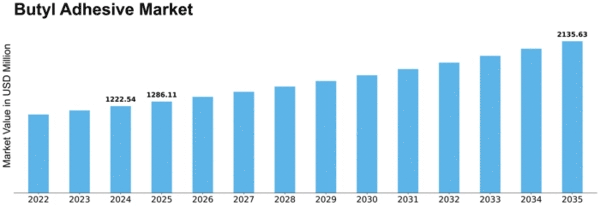
Butyl Adhesive Market Size Graph
Author
Chitranshi Jaiswal
Research Analyst Level I

In her 3 years of experience in the market research field, she has handled critical cross-domain projects. She has an in-depth knowledge of market estimation & analysis, problem-solving, primary as well as secondary research, and team management.She holds an engineering degree and is an MBA professional from a well-known university, capable of evaluating the market and competitive conditions. An exceptional strategist with excellent communication skills and a passion for delivering cutting-edge & practical insights for the market. Proficient in multi-tasking, and can successfully deal with competing demands, while maintaining complete confidentiality. Generated business through active client and project development, networking, and high-quality responses. Her knowledge and skills have helped in making solid business decisions, securing funding from investors, and avoiding business failures.

Leave a Comment

FAQs

What is the forecast period of Butyl Adhesive Market research report?

The forecast period for Butyl Adhesive Market research report is 2025-2034

Which region will lead the Butyl Adhesive Market?

Butyl Adhesive Market is dominated by APAC region.

Who are the key players in the Butyl Adhesive Market?

The main players in the Market are Vinati Organics Ltd., ADCO Global, Bostik SA, Royal Adhesives & Sealants, General Sealants, Anabond and others.

Market Summary

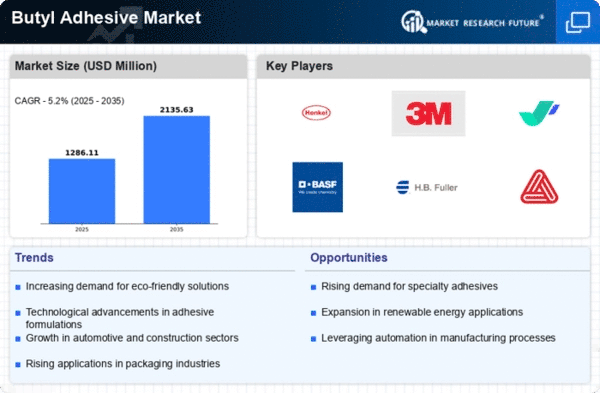
As per MRFR analysis, the Butyl Adhesive Market Size was estimated at 1222.54 USD Million in 2024. The Butyl Adhesive industry is projected to grow from 1286.13 in 2025 to 2135.63 by 2035, exhibiting a compound annual growth rate (CAGR) of 5.2 during the forecast period 2025 - 2035.

Key Market Trends & Highlights

The Butyl Adhesive Market is poised for growth driven by sustainability and technological advancements.

  • The North American region remains the largest market for butyl adhesives, reflecting robust demand across various sectors.
  • Asia-Pacific is emerging as the fastest-growing region, fueled by increasing industrial activities and urbanization.
  • The automotive segment dominates the market, while the packaging segment is witnessing rapid growth due to evolving consumer preferences.
  • Key market drivers include rising demand in the automotive sector and a growing focus on sustainable solutions.

Market Size & Forecast

2024 Market Size 1222.54 (USD Million)
2035 Market Size 2135.63 (USD Million)
CAGR (2025 - 2035) 5.2%
Largest Regional Market Share in 2024 North America

Major Players

<p>Henkel (DE), 3M (US), Sika (CH), Bostik (FR), H.B. Fuller (US), Avery Dennison (US), Dow (US), ITW (US), Momentive (US)</p>

Market Trends

The Butyl Adhesive Market is currently experiencing a dynamic phase characterized by evolving consumer preferences and technological advancements. The demand for butyl adhesives is driven by their versatility and effectiveness in various applications, including automotive, construction, and packaging. As industries increasingly prioritize sustainability, there is a noticeable shift towards eco-friendly formulations, which may influence product development strategies. Furthermore, the rise of innovative bonding solutions appears to enhance the market's growth potential, as manufacturers seek to meet the diverse needs of end-users. In addition, the Butyl Adhesive Market is likely to witness increased competition among key players, as they strive to differentiate their offerings through enhanced performance and unique properties. This competitive landscape may lead to strategic partnerships and collaborations aimed at expanding product portfolios and improving market reach. Overall, the Butyl Adhesive Market seems poised for continued expansion, driven by technological innovations and a growing emphasis on sustainable practices in various sectors.

Sustainability Focus

There is a growing emphasis on eco-friendly products within the Butyl Adhesive Market. Manufacturers are increasingly developing adhesives that minimize environmental impact, aligning with global sustainability goals. This trend reflects a broader consumer demand for greener alternatives.

Technological Advancements

Innovations in adhesive formulations and application techniques are shaping the Butyl Adhesive Market. Enhanced bonding capabilities and improved performance characteristics are being introduced, which may lead to broader adoption across various industries.

Diverse Applications

The versatility of butyl adhesives is driving their use in multiple sectors, including automotive, construction, and packaging. This trend indicates a potential for market growth as industries recognize the benefits of these adhesives in diverse applications.

Butyl Adhesive Market Market Drivers

Rising Demand in Automotive Sector

The Global Butyl Adhesive Market Industry experiences a notable surge in demand from the automotive sector, driven by the need for lightweight materials and enhanced fuel efficiency. Butyl adhesives are increasingly utilized in vehicle assembly, particularly for bonding windshields and sealing components. This trend is expected to contribute significantly to the market, with projections indicating a market value of 1.22 USD Billion in 2024. As automotive manufacturers prioritize sustainability and performance, the adoption of butyl adhesives is likely to grow, reflecting a broader shift towards innovative bonding solutions in vehicle production.

Market Segment Insights

By Application: Automotive (Largest) vs. Packaging (Fastest-Growing)

<p>In the Butyl Adhesive Market, the application segments show diverse dynamics, with the Automotive sector holding the largest market share. This dominance is attributed to the increasing demand for lightweight materials in vehicles, thus making butyl adhesives an integral part of automotive manufacturing processes. Additionally, other segments like Construction and Electronics are also substantial contributors, although their market shares are comparatively lower. Packaging, while less traditional in its utilization of butyl adhesives, displays a growing contribution to the market due to the rise in demand for flexible and moisture-resistant packaging solutions.</p>

<p>Automotive: Adhesives (Dominant) vs. Packaging (Emerging)</p>

<p>The Automotive sector plays a dominant role in the Butyl Adhesive Market, characterized by its reliance on high-performance adhesives that ensure durability and safety in vehicle assembly. Automotive manufacturers leverage butyl adhesives for bonding, sealing, and gasketing applications, driven by trends toward lightweight automotive designs. On the other hand, the Packaging segment is considered an emerging player, experiencing rapid growth as industries pivot toward more sustainable and versatile materials. With the rise of e-commerce and consumer preference for eco-friendly packaging options, the potential for butyl adhesives in this sector is significant, making it a key area to watch as companies innovate to meet customer demands.</p>

By End Use: Adhesives (Largest) vs. Sealants (Fastest-Growing)

<p>In the Butyl Adhesive Market, the segment distribution reveals that adhesives represent the largest share among various end-use applications. This dominance is driven by their extensive use in automotive, construction, and manufacturing industries. Sealants, while smaller in market share, are emerging rapidly due to their increasing application in construction and automotive sealing processes, indicating a dynamic shift towards more specialized end-use products. As a whole, the segment shows a promising diversity in applications and growth potential. Growth trends in the Butyl Adhesive segment are favorable, with sealants projected to experience the most significant growth rates in the coming years. Factors such as rising construction activities, heightened demand for energy-efficient solutions, and technological advancements in adhesive formulations are propelling both the adhesives and sealants segments forward. The focus on sustainability and environmentally friendly products is also fueling innovations and expansions within the market, enhancing the appeal of butyl-based products in multiple applications.</p>

<p>Adhesives: Dominant vs. Sealants: Emerging</p>

<p>The adhesives segment holds a dominant position in the Butyl Adhesive Market due to its versatility and widespread applicability across numerous industries, including automotive and construction. These adhesives are known for their strong bonding properties, durability, and resistance to environmental factors, making them ideal for demanding applications. On the other hand, sealants are identified as an emerging segment with rapid growth prospects, fueled by increasing construction activities and the need for efficient sealing solutions in various installations. Sealants provide significant advantages in moisture resistance and air infiltration, essential for energy-efficient buildings. As environmental regulations tighten, the demand for high-performance sealants is expected to surge, positioning them as a critical growth area alongside traditional adhesives.</p>

By Formulation Type: Solvent-Based (Largest) vs. Water-Based (Fastest-Growing)

<p>In the Butyl Adhesive Market, the segmentation by formulation type shows that Solvent-Based adhesives command the largest market share due to their versatility and superior bonding capabilities across various applications. In contrast, Water-Based adhesives have emerged as the fastest-growing segment, primarily driven by increasing environmental regulations and a shift towards eco-friendly products. Hot Melt, Reactive, and Pressure Sensitive formulations also hold significant portions of the market, each catering to different industrial needs and preferences.</p>

<p>Solvent-Based (Dominant) vs. Water-Based (Emerging)</p>

<p>Solvent-Based adhesives are characterized by their high performance and strong adhesive properties, making them widely used in industries such as construction and automotive. Their ability to bond effectively to various substrates while offering durability positions them as the dominant formulation type in the market. On the other hand, Water-Based adhesives are gaining traction due to their low volatile organic compound (VOC) emissions, aligning with the growing consumer preference for sustainable options. This segment is particularly appealing to sectors focusing on health and safety, showcasing versatility in applications such as packaging and woodworking. The shift from solvent-based formulations to water-based alternatives reflects a broader trend towards sustainability in the adhesive market.</p>

By Chemical Composition: Polyisobutylene (Largest) vs. Polyurethane (Fastest-Growing)

<p>In the Butyl Adhesive Market, the distribution of market share among the chemical compositions exhibits interesting dynamics. Polyisobutylene stands out as the largest segment, attributed to its exceptional adhesive properties and versatility, widely used in various applications such as automotive and construction. Following closely are Polybutylene and Styrene-Butadiene, which also play significant roles in the market but do not overshadow the dominance of Polyisobutylene. Acrylic and Polyurethane are gaining traction, marking their presence in niche applications.</p>

<p>Polyisobutylene (Dominant) vs. Polyurethane (Emerging)</p>

<p>Polyisobutylene dominates the Butyl Adhesive Market due to its superior flexibility, adherence, and resistance to aging and UV radiation, making it ideal for demanding applications in various industries. With its extensive use in the automotive sector for bonding and sealing applications, it continues to lead the market. On the other hand, Polyurethane is emerging as a significant player, driven by increasing demand in construction and furniture applications. Its adaptability and durability make it a preferred choice for adhesive formulations. While Polyisobutylene remains established, Polyurethane's growth is propelled by trends toward sustainable and high-performance adhesives.</p>

Get more detailed insights about Butyl Adhesive Market Research Report- Forecast to 2035

Regional Insights

North America : Market Leader in Butyl Adhesives

North America is poised to maintain its leadership in the butyl adhesive market, holding a significant share of 610.0 million in 2024. The region's growth is driven by robust demand in automotive, construction, and packaging sectors, alongside stringent regulations promoting the use of eco-friendly adhesives. The increasing focus on sustainable materials is further catalyzing market expansion, as manufacturers adapt to evolving consumer preferences and regulatory frameworks. The United States stands as the largest market, with key players like Henkel, 3M, and H.B. Fuller leading the competitive landscape. The presence of advanced manufacturing facilities and a strong distribution network enhances market accessibility. Additionally, ongoing innovations in adhesive formulations are expected to bolster market growth, ensuring that North America remains at the forefront of the butyl adhesive industry.

Europe : Emerging Market with Growth Potential

Europe's butyl adhesive market is valued at 350.0 million, reflecting a growing demand driven by the automotive and construction industries. Regulatory initiatives aimed at reducing VOC emissions are propelling the shift towards high-performance, low-emission adhesives. The region's commitment to sustainability and innovation is fostering a favorable environment for market growth, as manufacturers invest in R&D to meet stringent regulations and consumer expectations. Germany and France are leading contributors to the market, with companies like Sika and Bostik playing pivotal roles. The competitive landscape is characterized by a mix of established players and emerging startups, all vying for market share. The presence of key players, coupled with a strong focus on technological advancements, positions Europe as a dynamic hub for butyl adhesive development.

Asia-Pacific : Rapid Growth in Emerging Economies

The Asia-Pacific region, with a market size of 220.0 million, is witnessing rapid growth in the butyl adhesive sector, fueled by industrialization and urbanization. Countries like China and India are experiencing significant demand from construction and automotive sectors, which are key drivers of market expansion. The region's increasing focus on infrastructure development and manufacturing capabilities is further enhancing the growth prospects for butyl adhesives. China is the largest market in the region, with major players like Dow and ITW establishing a strong foothold. The competitive landscape is evolving, with both local and international companies striving to innovate and capture market share. As the region continues to develop, the demand for high-performance adhesives is expected to rise, positioning Asia-Pacific as a critical player in The Butyl Adhesive.

Middle East and Africa : Niche Market with Growth Opportunities

The Middle East and Africa region, valued at 42.54 million, presents a niche market for butyl adhesives, driven by increasing construction activities and automotive production. The region's growth is supported by government initiatives aimed at enhancing infrastructure and promoting local manufacturing. As industries evolve, the demand for high-quality adhesives is expected to rise, creating opportunities for market players to expand their presence. Countries like South Africa and the UAE are emerging as key markets, with local manufacturers and international players like Avery Dennison seeking to capitalize on growth opportunities. The competitive landscape is characterized by a mix of established companies and new entrants, all aiming to meet the rising demand for butyl adhesives in various applications. As the region develops, the potential for market growth remains significant.

Key Players and Competitive Insights

The Butyl Adhesive Market is currently characterized by a dynamic competitive landscape, driven by increasing demand across various sectors such as automotive, construction, and electronics. Key players are actively engaging in strategies that emphasize innovation, sustainability, and regional expansion. For instance, Henkel (DE) has positioned itself as a leader in sustainable adhesive solutions, focusing on eco-friendly formulations that cater to the growing consumer preference for environmentally responsible products. Similarly, 3M (US) continues to leverage its extensive R&D capabilities to introduce advanced adhesive technologies, thereby enhancing its competitive edge in the market.

In terms of business tactics, companies are increasingly localizing manufacturing to reduce lead times and optimize supply chains. This approach appears to be particularly effective in a moderately fragmented market, where the collective influence of key players like Sika (CH) and Bostik (FR) is shaping competitive dynamics. The emphasis on supply chain optimization not only enhances operational efficiency but also allows for greater responsiveness to market demands.

In November 2025, H.B. Fuller (US) announced the opening of a new manufacturing facility in Mexico, aimed at increasing production capacity for its butyl adhesive products. This strategic move is likely to enhance H.B. Fuller’s ability to serve the North American market more effectively, reducing shipping times and costs while meeting the rising demand for high-performance adhesives in the region. The establishment of this facility underscores the company's commitment to regional expansion and operational efficiency.

In October 2025, Dow (US) launched a new line of butyl adhesives designed specifically for the automotive sector, focusing on lightweight applications that contribute to fuel efficiency. This innovation not only aligns with the automotive industry's shift towards sustainability but also positions Dow as a key player in a niche market segment. The introduction of these products reflects a strategic focus on meeting evolving customer needs while enhancing Dow's product portfolio.

In September 2025, Avery Dennison (US) entered into a partnership with a leading technology firm to integrate AI-driven analytics into its adhesive manufacturing processes. This collaboration is expected to streamline production and improve product quality, thereby enhancing Avery Dennison's competitive positioning. The integration of AI signifies a broader trend within the industry towards digital transformation, which is becoming increasingly vital for maintaining competitiveness.

As of December 2025, the Butyl Adhesive Market is witnessing trends that emphasize digitalization, sustainability, and technological integration. Strategic alliances are playing a crucial role in shaping the competitive landscape, enabling companies to leverage shared resources and expertise. Moving forward, competitive differentiation is likely to evolve from traditional price-based competition to a focus on innovation, technology, and supply chain reliability. This shift suggests that companies that prioritize R&D and sustainable practices will be better positioned to thrive in an increasingly competitive environment.

Key Companies in the Butyl Adhesive Market market include

Industry Developments

Future Outlook

Butyl Adhesive Market Future Outlook

<p>The Butyl Adhesive Market is poised for growth at 5.2% CAGR from 2024 to 2035, driven by increasing demand in automotive, construction, and packaging sectors.</p>

New opportunities lie in:

  • <p>Development of eco-friendly butyl adhesive formulations</p>
  • <p>Expansion into emerging markets with tailored products</p>
  • <p>Integration of smart adhesive technologies for enhanced performance</p>

<p>By 2035, the Butyl Adhesive Market is expected to achieve robust growth and increased market share.</p>

Market Segmentation

Butyl Adhesive Market End Use Outlook

  • Adhesives
  • Sealants
  • Coatings
  • Insulation
  • Sound Dampening

Butyl Adhesive Market Application Outlook

  • Automotive
  • Construction
  • Electronics
  • Packaging
  • Medical

Butyl Adhesive Market Formulation Type Outlook

  • Solvent-Based
  • Water-Based
  • Hot Melt
  • Reactive
  • Pressure Sensitive

Butyl Adhesive Market Chemical Composition Outlook

  • Polyisobutylene
  • Polybutylene
  • Styrene-Butadiene
  • Acrylic
  • Polyurethane

Report Scope

MARKET SIZE 20241222.54(USD Million)
MARKET SIZE 20251286.13(USD Million)
MARKET SIZE 20352135.63(USD Million)
COMPOUND ANNUAL GROWTH RATE (CAGR)5.2% (2024 - 2035)
REPORT COVERAGERevenue Forecast, Competitive Landscape, Growth Factors, and Trends
BASE YEAR2024
Market Forecast Period2025 - 2035
Historical Data2019 - 2024
Market Forecast UnitsUSD Million
Key Companies ProfiledHenkel (DE), 3M (US), Sika (CH), Bostik (FR), H.B. Fuller (US), Avery Dennison (US), Dow (US), ITW (US), Momentive (US)
Segments CoveredApplication, End Use, Formulation Type, Chemical Composition
Key Market OpportunitiesGrowing demand for eco-friendly butyl adhesives in automotive and construction sectors presents significant market opportunities.
Key Market DynamicsRising demand for eco-friendly butyl adhesives drives innovation and regulatory compliance in manufacturing processes.
Countries CoveredNorth America, Europe, APAC, South America, MEA

FAQs

What is the forecast period of Butyl Adhesive Market research report?

The forecast period for Butyl Adhesive Market research report is 2025-2034

Which region will lead the Butyl Adhesive Market?

Butyl Adhesive Market is dominated by APAC region.

Who are the key players in the Butyl Adhesive Market?

The main players in the Market are Vinati Organics Ltd., ADCO Global, Bostik SA, Royal Adhesives &amp; Sealants, General Sealants, Anabond and others.

  1. Executive Summary
    1. Scope of The Report
    2. Market
    3. Definition
    4. Scope of The Study
      1. Research Objectives
    5. Assumptions & Limitations
    6. Markets Structure
  2. Market Research Methodology
    1. Research Process
    2. Secondary Research
    3. Primary
    4. Research
    5. Forecast Model
    6. Market Landscape
    7. Five Forces
      1. Threat of New Entrants
      2. Bargaining power of buyers
      3. Segment
    8. Analysis
    9. Threat of substitutes
    10. rivalry
    11. Value Chain/Supply Chain of
    12. Global Butyl Adhesive Market
  3. Industry
    1. Overview of Global Butyl Adhesive Market
    2. Introduction
    3. Growth Drivers
    4. Impact analysis
    5. Market Challenges
    6. Impact analysis
  4. Market Trends
    1. Introduction
    2. Growth Trends
    3. Impact analysis
    4. Global Butyl Adhesive Market by End Use Industry
    5. Introduction
    6. Paper & Packaging
    7. Building & Construction
    8. Woodworking
    9. Automotive
    10. Others
    11. Global Butyl Adhesive Market by Region
    12. Introduction
    13. North America
      1. Canada
    14. US
    15. Europe
      1. France
      2. Spain
      3. UK
      4. China
      5. Japan
      6. Australia
      7. Rest of Asia Pacific
      8. Turkey
      9. North Africa
      10. Rest of Middle East & Africa
      11. Brazil
      12. Rest of Latin America
    16. Germany
    17. Italy
    18. Asia Pacific
    19. India
    20. New Zealand
    21. Middle East & Africa
    22. Israel
    23. GCC
    24. Latin America
    25. Argentina
    26. Company Landscape
  5. Company Profiles
    1. BASF SE
      1. Company
      2. Product/Business Segment Overview
      3. Key Developments
      4. Company Overview
      5. Financial
      6. Key Developments
      7. Company Overview
      8. Financial
      9. Key Developments
      10. Company Overview
      11. Financial
      12. Key Developments
      13. Company Overview
      14. Financial
      15. Key Developments
      16. Company Overview
      17. Financial
      18. Key Developments
      19. Company Overview
      20. Financial Updates
    2. Overview
    3. Financial Updates
    4. ADCO Global
    5. Product/Business Segment Overview
    6. Updates
    7. Vinati Organic Ltd.
    8. Product/Business Segment Overview
    9. Updates
    10. Royal Adhesives & Sealants
    11. Product/Business Segment Overview
    12. Updates
    13. General Sealants
    14. Product/Business Segment Overview
    15. Updates
    16. Bostik SA
    17. Product/Business Segment Overview
    18. Updates
    19. Anabond
    20. Product/Business Segment Overview
    21. Key Developments
  6. Conclusion
    1. LIST
    2. OF TABLES:
  7. World Population by Major Regions (2025−2034)
    1. Table
  8. Global Butyl Adhesive Market: By Region, 2025−2034
    1. Table
  9. North America Butyl Adhesive Market: By Country, 2025−2034
    1. Table
  10. Europe Butyl Adhesive Market: By Country, 2025−2034
    1. Table
  11. Asia-Pacific Butyl Adhesive Market: By Country, 2025−2034
    1. Table
  12. Middle East & Africa Butyl Adhesive Market: By Country, 2025−2034
    1. Table
  13. Latin America Butyl Adhesive Market: By Country, 2025−2034
    1. Table
  14. North America Butyl Adhesive for End use Industry: By Country, 2025−2034
    1. Table
  15. Europe Butyl Adhesive for End use Industry: By Country, 2025−2034
    1. Table
  16. Asia-Pacific Butyl Adhesive for End use Industry: By Country, 2025−2034
    1. Table
  17. Middle East & Africa Butyl Adhesive for End-use Industry: By Country, 2025−2034
    1. Table
  18. Latin America Butyl Adhesive for End-use Industry: By Country, 2025−2034
    1. Table
  19. Global End Use Industry Market: By Region, 2025−2034
    1. Table
  20. North America Butyl Adhesive Market, By Country
    1. Table 15
  21. North America Butyl Adhesive Market, By End Use Industry
  22. Europe:
  23. Butyl Adhesive Market, By Country
  24. Europe: Butyl Adhesive
  25. Market, By End use Industry
  26. Asia-Pacific: Butyl Adhesive
  27. Market, By Country
  28. Asia-Pacific: Butyl Adhesive Market,
    1. By End use Industry
  29. Middle East & Africa: Butyl
  30. Adhesive Market, By Country
  31. Middle East & Africa:
  32. Butyl Adhesive Market, By End use Industry
  33. Latin
  34. America: Butyl Adhesive Market, By Country
  35. Latin
  36. America: Butyl Adhesive Market, By End use Industry
    1. LIST OF FIGURES:
  37. Global Butyl Adhesive
    1. Market segmentation
  38. Forecast Methodology
    1. FIGURE
  39. Five Forces Analysis of Global Butyl Adhesive Market
    1. FIGURE 4
    2. Value Chain of Global Butyl Adhesive Market
  40. Share
  41. of Global Butyl Adhesive Market in 2020, by country (in %)
    1. FIGURE 6
    2. Global Butyl Adhesive Market, 2025−2034,
  42. Sub
    1. segments of End Use Industry
  43. Global Butyl Adhesive
    1. Market size by End Use Industry, 2020
  44. Share of Global
    1. Butyl Adhesive Market by End Use Industry, 2025−2034

Butyl Adhesive Market Segmentation

Market Segmentation Overview

  • Detailed segmentation data will be available in the full report
  • Comprehensive analysis by multiple parameters
  • Regional and country-level breakdowns
  • Market size forecasts by segment
Infographic

Free Sample Request

Kindly complete the form below to receive a free sample of this Report

Get Free Sample

Customer Strories

Compare Licence

×
Features License Type
Single User Multiuser License Enterprise User
Price $4,950 $5,950 $7,250
Maximum User Access Limit 1 User Upto 10 Users Unrestricted Access Throughout the Organization
Free Customization
Direct Access to Analyst
Deliverable Format
Platform Access
Discount on Next Purchase 10% 15% 15%
Printable Versions