×
Hero Background
English
Chinese
French
Japanese
Korean
German
Spanish

Antimicrobial Therapeutics Market Analysis

ID: MRFR/HC/10234-HCR
128 Pages
Rahul Gotadki
October 2025

Antimicrobial Therapeutics Market Research Report Information By Application (Antiviral, Antibacterial, Antifungal, and Antiparasitic), By End User (Pharmacies, Hospitals and Clinics, and Research and Academic Institutes), and By Region (North America, Europe, Asia-Pacific, and Rest of The World) – Market Forecast Till 2035

Share:
Download PDF ×

We do not share your information with anyone. However, we may send you emails based on your report interest from time to time. You may contact us at any time to opt-out.

Antimicrobial Therapeutics Market Infographic
Purchase Options

Market Analysis

In-depth Analysis of Antimicrobial Therapeutics Market Industry Landscape

The development and growth of the Antimicrobial Therapeutics market are determined by numerous factors. In other words, antimicrobial therapeutics help in curing bacterial, viral, fungal and parasitic infections. These include various drivers, challenges, trends and opportunities that shape its overall trajectory.

One of the biggest influences on the Antimicrobial Therapeutics market is the burden of infectious diseases globally. This highlights the need for effective treatment methods against microbes as new ones keep emerging and there is a rise in drug resistance strains. Public health interventions necessitate availability of antimicrobial therapeutics due to an increasing number of cases suffering from infectious diseases and an expanding global human population.

Therefore, developments in technology and drug innovations predominantly dictate these dynamics. The novel classes drugs alongside combination therapies which reduce disease progression rates result to better outcomes after therapy administration. Hence molecular approaches using DNA/RNA sequencing have been applied to identify new targets for antibiotics in order to provide greater accuracy in diagnosis for doctors. Consequently, steady research by pharmaceutical companies including academic institutions leads to different forms of antimicrobial therapeutics.

Nevertheless, there are some difficulties associated with it such as increased microbial resistance (AMR). Over time certain treatments become invalid as resistant strains emerge because of overuse /misuse misuse AMR threat has led several countries towards promoting responsible use for this group of drugs as well as facilitate identification of novel drugs while focusing on infection prevention/control policies.

Moreover, one novel trend within Antimicrobial Therapeutics Market is personalized medicine combined with use more than one medicine at a time. Multiple medications administered together usually improve chance save life at risk while minimizing occurrence possibility AMR risks Moreover these approaches create patient-specific therapeutic programs based on genetic make-up or immune responses among others which can be further optimized through personalization

Market dynamics also reflect the importance of collaborations and partnerships within the pharmaceuticals and biotechnology industry sectors., Thus collaborative efforts help combine resources from across different organizations and research units thereby building antimicrobial drugs. The other initiative includes public-private partnerships as well as international organizations initiatives all geared towards fighting infectious diseases plus antibiotic resistance.

Lastly, at a geographical level the Antimicrobial Therapeutics market has diverse dynamics. Developed regions such as North America and Europe lead in terms of market share, driven by robust healthcare infrastructure, research capabilities, and high awareness levels. On the other hand, Asia-Pacific is experiencing fast growth because of increasing health expenditure, prevalence of infectious diseases and access to medical care.


Author
Rahul Gotadki
Assistant Manager

He holds an experience of about 7+ years in Market Research and Business Consulting, working under the spectrum of Life Sciences and Healthcare domains. Rahul conceptualizes and implements a scalable business strategy and provides strategic leadership to the clients. His expertise lies in market estimation, competitive intelligence, pipeline analysis, customer assessment, etc. In addition to the above, his other responsibility includes strategic tracking of high growth markets & advising clients on the potential areas of focus they could direct their business initiatives

Leave a Comment

FAQs

What is the projected market valuation of the Antimicrobial Therapeutics Market by 2035?

The Antimicrobial Therapeutics Market is projected to reach a valuation of 197.05 USD Billion by 2035.

What was the market valuation of the Antimicrobial Therapeutics Market in 2024?

In 2024, the market valuation of the Antimicrobial Therapeutics Market was 111.63 USD Billion.

What is the expected CAGR for the Antimicrobial Therapeutics Market during the forecast period 2025 - 2035?

The expected CAGR for the Antimicrobial Therapeutics Market during the forecast period 2025 - 2035 is 5.3%.

Which companies are considered key players in the Antimicrobial Therapeutics Market?

Key players in the Antimicrobial Therapeutics Market include Pfizer Inc, Merck & Co Inc, Johnson & Johnson, Novartis AG, Bayer AG, GlaxoSmithKline plc, AstraZeneca plc, AbbVie Inc, and Sanofi S.A.

What are the projected values for the antibacterial segment by 2035?

The antibacterial segment is projected to grow from 50.0 USD Billion to 90.0 USD Billion by 2035.

How much is the antiviral segment expected to be valued by 2035?

The antiviral segment is expected to increase from 15.0 USD Billion to 27.0 USD Billion by 2035.

Market Summary

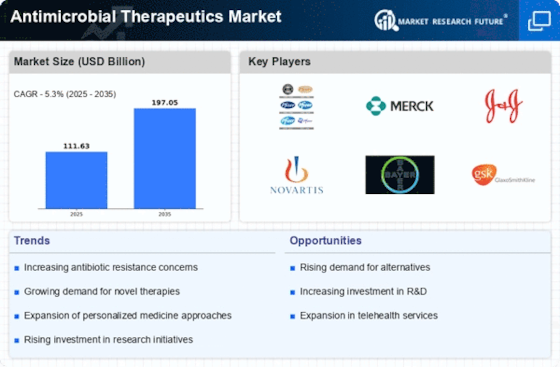
As per MRFR analysis, the Antimicrobial Therapeutics Market Size was estimated at 111.63 USD Billion in 2024. The Antimicrobial Therapeutics industry is projected to grow from 117.55 USD Billion in 2025 to 197.05 USD Billion by 2035, exhibiting a compound annual growth rate (CAGR) of 5.3 during the forecast period 2025 - 2035.

Key Market Trends & Highlights

The Antimicrobial Therapeutics Market is poised for substantial growth driven by innovative approaches and increasing healthcare demands.

  • The rise of personalized medicine is reshaping treatment protocols in the Antimicrobial Therapeutics Market.
  • North America remains the largest market, while Asia-Pacific is emerging as the fastest-growing region in this sector.
  • Antibacterial therapies dominate the market, yet antifungal treatments are witnessing rapid growth.
  • Key drivers include the growing incidence of infectious diseases and rising awareness of antimicrobial resistance.

Market Size & Forecast

2024 Market Size 111.63 (USD Billion)
2035 Market Size 197.05 (USD Billion)
CAGR (2025 - 2035) 5.3%
Largest Regional Market Share in 2024 North America

Major Players

<p>Pfizer Inc (US), Merck & Co Inc (US), Johnson & Johnson (US), Novartis AG (CH), Bayer AG (DE), GlaxoSmithKline plc (GB), AstraZeneca plc (GB), AbbVie Inc (US), Sanofi S.A. (FR)</p>

Market Trends

The Antimicrobial Therapeutics Market is currently experiencing a dynamic evolution, driven by a confluence of factors including rising antimicrobial resistance and an increasing demand for innovative treatment options. The landscape appears to be shifting towards more targeted therapies, as healthcare providers seek to address the limitations of traditional antibiotics. This shift is likely influenced by a growing awareness of the consequences of overuse and misuse of existing antimicrobial agents, prompting a search for alternatives that can effectively combat resistant pathogens. Furthermore, advancements in biotechnology and genomics are paving the way for the development of novel antimicrobial agents, which may offer enhanced efficacy and safety profiles compared to their predecessors. In addition, the regulatory environment surrounding antimicrobial therapeutics is evolving, with agencies emphasizing the need for expedited approval processes for breakthrough therapies. This regulatory shift could potentially accelerate the introduction of new products into the market, thereby addressing urgent public health needs. Collaboration between pharmaceutical companies, academic institutions, and government entities appears to be fostering innovation in this sector. As the Antimicrobial Therapeutics Market continues to adapt to these challenges and opportunities, stakeholders must remain vigilant in monitoring trends and developments that could shape the future of antimicrobial treatment strategies.

Rise of Personalized Medicine

The Antimicrobial Therapeutics Market is witnessing a trend towards personalized medicine, where treatments are tailored to individual patient profiles. This approach may enhance treatment efficacy and minimize adverse effects, as therapies are designed based on specific genetic and microbiological factors.

Increased Investment in Research and Development

There is a noticeable uptick in investment directed towards research and development within the Antimicrobial Therapeutics Market. This trend suggests a commitment to discovering new compounds and improving existing therapies, which could lead to breakthroughs in combating resistant infections.

Focus on Combination Therapies

The market is increasingly leaning towards combination therapies as a strategy to enhance the effectiveness of antimicrobial agents. This approach may help in overcoming resistance mechanisms and improving patient outcomes, indicating a shift in treatment paradigms.

Antimicrobial Therapeutics Market Market Drivers

Advancements in Biotechnology

Advancements in biotechnology are significantly influencing the Antimicrobial Therapeutics Market. Innovations such as genetic engineering and synthetic biology are paving the way for the development of new antimicrobial agents that are more effective and targeted. For instance, the emergence of bacteriophage therapy, which utilizes viruses to combat bacterial infections, represents a novel approach that could revolutionize treatment paradigms. The market is projected to witness substantial growth, with estimates suggesting a compound annual growth rate of over 5% in the coming years. These technological advancements not only enhance the efficacy of treatments but also reduce the risk of resistance, thereby fostering a more sustainable approach to antimicrobial therapy.

Regulatory Support and Initiatives

Regulatory support and initiatives play a crucial role in shaping the Antimicrobial Therapeutics Market. Governments and health organizations are increasingly recognizing the urgent need to combat antimicrobial resistance and are implementing policies to encourage research and development. For example, the establishment of fast-track approval processes for novel antimicrobial agents aims to expedite their availability in the market. Additionally, funding programs and grants are being allocated to support innovative research projects. This favorable regulatory environment is likely to stimulate investment in the Antimicrobial Therapeutics Market, facilitating the introduction of new therapies that address unmet medical needs.

Growing Incidence of Infectious Diseases

The rising incidence of infectious diseases is a primary driver for the Antimicrobial Therapeutics Market. As pathogens evolve and become resistant to existing treatments, the demand for new and effective antimicrobial agents increases. According to recent data, the prevalence of antibiotic-resistant infections has surged, leading to an estimated 700,000 deaths annually. This alarming trend necessitates the development of novel therapeutics, thereby propelling market growth. Furthermore, the increasing global population and urbanization contribute to the spread of infectious diseases, further amplifying the need for innovative antimicrobial solutions. The Antimicrobial Therapeutics Market is thus positioned to expand as healthcare systems seek to address these pressing challenges.

Rising Awareness of Antimicrobial Resistance

Rising awareness of antimicrobial resistance (AMR) among healthcare professionals and the general public is driving the Antimicrobial Therapeutics Market. Educational campaigns and initiatives aimed at promoting responsible antibiotic use are gaining traction, leading to a more informed patient population. This heightened awareness is likely to influence prescribing practices, encouraging the development of new therapies that are effective against resistant strains. Furthermore, as healthcare systems prioritize AMR as a critical public health issue, there is an increasing push for innovative solutions within the Antimicrobial Therapeutics Market. This trend may lead to a more proactive approach in addressing the challenges posed by resistant infections.

Emerging Markets and Increased Healthcare Access

Emerging markets are becoming increasingly important for the Antimicrobial Therapeutics Market. As economies develop, there is a corresponding rise in healthcare access and expenditure, leading to greater demand for effective antimicrobial treatments. Countries in Asia and Africa, in particular, are witnessing a surge in healthcare investments, which is likely to enhance the availability of antimicrobial therapies. Additionally, the growing middle class in these regions is driving demand for better healthcare services, including access to advanced therapeutics. This trend presents significant opportunities for companies operating within the Antimicrobial Therapeutics Market, as they seek to expand their reach and cater to the evolving needs of these burgeoning markets.

Market Segment Insights

By Application: Antibacterial (Largest) vs. Antifungal (Fastest-Growing)

<p>The Antimicrobial Therapeutics Market is distinctly segmented by its applications, with antibacterial therapeutics holding the largest market share. This segment has been bolstered by a significant increase in antibiotic-resistant infections, prompting both healthcare providers and pharmaceutical companies to focus on innovative antibacterial solutions. In contrast, the antifungal segment is witnessing rapid growth, driven by the rising prevalence of fungal infections, particularly in immunocompromised populations, and the expanding global awareness regarding mycoses. Furthermore, antiviral and antiparasitic applications also contribute to the market, albeit at a lower scale. Antivirals are critical in managing viral outbreaks, while antiparasitic treatments remain essential in endemic regions. The increasing focus on infectious diseases, supported by government initiatives and funding, drives the overall growth of the antimicrobial therapeutics sector further bolstering demand for these applications.</p>

<p>Antibacterial (Dominant) vs. Antifungal (Emerging)</p>

<p>The antibacterial sector is characterized by established therapies that have been the mainstay of infection treatment for decades, positioning it as the dominant application in the antimicrobial therapeutics market. The rise of antibiotic resistance has sparked an urgent need for new antibacterial agents, which invigorates research and development projects. In contrast, the antifungal segment represents an emerging opportunity, spurred by an increase in fungal infection prevalence and an urgency to address the limitations of existing antifungal agents. The trend towards drug innovation in antifungal medications, as well as improved diagnostic techniques, propels this sector forward. The confluence of challenges in both segments underscores the need for ongoing investment and collaboration to meet the evolving demands of the healthcare landscape.</p>

By End User: Hospitals and Clinics (Largest) vs. Pharmacies (Fastest-Growing)

<p>In the Antimicrobial Therapeutics Market, the distribution of market share among end users reveals that hospitals and clinics dominate the landscape. These institutions are critical in prescribing and dispensing antimicrobial therapeutics, as they are the primary settings for treating infections. Pharmacies, while currently smaller in share, are rapidly gaining traction as patients increasingly seek outpatient solutions and preventive care. As the demand for accessible treatment options rises, pharmacies are becoming significant players in the antimicrobial therapeutics realm.</p>

<p>Hospitals and Clinics: Dominant vs. Pharmacies: Emerging</p>

<p>Hospitals and clinics are the backbone of the Antimicrobial Therapeutics Market, accounting for a significant portion of the total market share. They provide comprehensive treatment options and have direct access to patients requiring immediate antimicrobial intervention. Their established networks with healthcare professionals and ability to implement evidence-based protocols further solidify their dominant position. On the other hand, pharmacies represent an emerging segment characterized by a shift towards outpatient services and preventive care. Their role is evolving with increased patient engagement and educational initiatives that empower consumers to manage their health effectively, thus driving demand for antimicrobial therapeutics in community settings.</p>

Get more detailed insights about Antimicrobial Therapeutics Market Research Report—Global Forecast till 2035

Regional Insights

North America : Leading Market Innovators

North America is the largest market for antimicrobial therapeutics, holding approximately 45% of the global market share. The region benefits from advanced healthcare infrastructure, significant R&D investments, and a strong regulatory framework that encourages innovation. The increasing prevalence of antibiotic-resistant infections and rising healthcare expenditures are key growth drivers. Regulatory bodies like the FDA are actively promoting the development of new antimicrobial agents to combat resistance. The United States is the primary contributor to this market, with major players such as Pfizer Inc, Merck & Co, and Johnson & Johnson leading the charge. The competitive landscape is characterized by a mix of established pharmaceutical giants and emerging biotech firms. The presence of these key players, along with their ongoing research initiatives, positions North America as a hub for antimicrobial therapeutic advancements.

Europe : Regulatory Framework and Innovation

Europe is the second-largest market for antimicrobial therapeutics, accounting for approximately 30% of the global market share. The region is witnessing a surge in demand driven by increasing awareness of antibiotic resistance and the need for innovative treatment options. Regulatory bodies, including the European Medicines Agency (EMA), are implementing stringent guidelines to ensure the safety and efficacy of new antimicrobial agents, fostering a conducive environment for market growth. Leading countries in this region include Germany, France, and the United Kingdom, which are home to several key players like Bayer AG and GlaxoSmithKline. The competitive landscape is marked by collaborations between pharmaceutical companies and research institutions to develop novel therapies. The focus on personalized medicine and targeted therapies is expected to shape the future of the antimicrobial therapeutics market in Europe.

Asia-Pacific : Rapid Growth and Demand

Asia-Pacific is rapidly emerging as a significant player in the antimicrobial therapeutics market, holding approximately 20% of the global market share. The region's growth is fueled by increasing healthcare investments, rising awareness of infectious diseases, and a growing population. Countries like China and India are witnessing a surge in demand for effective antimicrobial treatments, driven by urbanization and changing lifestyles. Regulatory bodies are also enhancing their frameworks to support the development of new therapies. China and India are the leading countries in this market, with a mix of local and international players vying for market share. The competitive landscape is characterized by a focus on affordable and accessible healthcare solutions. Key players such as Novartis AG and AstraZeneca are actively involved in research and development initiatives to address the rising threat of antimicrobial resistance in the region.

Middle East and Africa : Untapped Potential and Challenges

The Middle East and Africa (MEA) region represents an emerging market for antimicrobial therapeutics, holding approximately 5% of the global market share. The growth in this region is driven by increasing healthcare access, rising awareness of infectious diseases, and government initiatives aimed at improving healthcare infrastructure. However, challenges such as limited access to advanced therapies and regulatory hurdles remain significant barriers to market expansion. Leading countries in this region include South Africa and the UAE, where there is a growing presence of both local and international pharmaceutical companies. The competitive landscape is evolving, with key players like AbbVie Inc and Sanofi S.A. making strides in addressing the unique healthcare needs of the region. Collaborative efforts between governments and private sectors are essential to unlock the full potential of the antimicrobial therapeutics market in MEA.

Key Players and Competitive Insights

Leading market players are investing heavily in research and development in order to expand their product lines, which will help the Antimicrobial Therapeutics Market, grow even more. Market participants are also undertaking a variety of strategic activities to expand their global footprint, with important market developments including new product launches, contractual agreements, mergers and acquisitions, higher investments, and collaboration with other organizations. To expand and survive in a more competitive and rising market climate, Antimicrobial Therapeutics industry must offer cost-effective items.

Manufacturing locally to minimize operational costs is one of the key business tactics used by manufacturers in the global Antimicrobial Therapeutics industry to benefit clients and increase the market sector. In recent years, the Antimicrobial Therapeutics industry has offered some of the most significant advantages to medicine. Major players in the Antimicrobial Therapeutics Market, including AbbVie Inc., Astellas Pharma Inc., Bavarian Nordic AS, Biocidium Biopharmaceuticals Inc., Bristol Myers Squibb Co., Cadila Pharmaceuticals Ltd., CSL Ltd., Emergent BioSolutions Inc., F. Hoffmann La Roche Ltd., Gilead Sciences Inc., GlaxoSmithKline Plc, Inovio, Pharmaceuticals Inc., Johnson and Johnson Services Inc., Merck and Co.

Inc., Mitsubishi Tanabe Pharma Corp., Novartis AG, Novavax Inc., Pfizer Inc., Sanofi SA, and Wockhardt Ltd., are attempting to increase market demand by investing in research and development operations.

Sandoz Inc, a division of Novartis AG, is a global generic pharmaceutical company involved in the development, manufacturing, distribution, and sale of a wide range of prescription medicines, protein products, and biosimilars. Additionally, Sandoz offers intermediary products like active pharmaceutical ingredients (APIs) and biotechnology manufacturing services to other companies. The company supplies active ingredients and finished dosage forms for various therapeutic areas, including dermatology, cancer, cardiovascular, respiratory, metabolism, central nervous system, pain management, ophthalmic, gastrointestinal, and hormonal therapies. Sandoz distributes its products to wholesalers, pharmacies, hospitals, and other healthcare facilities.

Headquartered in Princeton, New Jersey, USA, Sandoz has further strengthened its position in the global market by acquiring GSK's cephalosporin business in February 2021.

Pfizer Inc is a biopharmaceutical company involved in the discovery, development, manufacturing, and commercialization of healthcare products. Pfizer's product portfolio encompasses treatments for various conditions, including cardiovascular diseases, metabolic disorders, pain management, women's health, cancer, inflammation, immune disorders, and rare diseases. The company also offers sterile injectable pharmaceuticals, biosimilars, active pharmaceutical ingredients (APIs), and contract manufacturing services. In July 2019, Pfizer entered into a definitive agreement with Mylan, resulting in the establishment of a new company named Viatris. This merger has enabled Pfizer to expand its global presence.

Key Companies in the Antimicrobial Therapeutics Market market include

Industry Developments

September 2021 The U.S. Food and Drug Administration (FDA) has accepted for review a supplemental New Drug Application (sNDA) for MYFEMBREER (relugolix 40 mg, estradiol 1 mg, and norethindrone acetate 0.5 mg) for the treatment of moderate to severe pain brought on by endometriosis, according to a statement from Myovant Sciences and Pfizer Inc.

July 2021 In order to conduct research, develop, and market small molecule medicines aimed against the GPR75 target with the potential to treat obesity and associated co-morbidities, AstraZeneca announced that it had partnered with Regeneron.

Future Outlook

Antimicrobial Therapeutics Market Future Outlook

<p>The Antimicrobial Therapeutics Market is projected to grow at a 5.3% CAGR from 2024 to 2035, driven by rising antibiotic resistance, increased healthcare expenditure, and technological advancements.</p>

New opportunities lie in:

  • <p>Development of personalized antimicrobial therapies for targeted treatments.</p>
  • <p>Expansion of telehealth services for remote antimicrobial consultations.</p>
  • <p>Investment in AI-driven drug discovery platforms for rapid antimicrobial development.</p>

<p>By 2035, the market is expected to achieve substantial growth, reflecting evolving healthcare needs and innovative solutions.</p>

Market Segmentation

Antimicrobial Therapeutics Market End User Outlook

  • pharmacies
  • hospitals and clinics
  • research and academic institutes

Antimicrobial Therapeutics Market Application Outlook

  • antiviral
  • antibacterial
  • antifungal
  • antiparasitic

Report Scope

MARKET SIZE 2024111.63(USD Billion)
MARKET SIZE 2025117.55(USD Billion)
MARKET SIZE 2035197.05(USD Billion)
COMPOUND ANNUAL GROWTH RATE (CAGR)5.3% (2024 - 2035)
REPORT COVERAGERevenue Forecast, Competitive Landscape, Growth Factors, and Trends
BASE YEAR2024
Market Forecast Period2025 - 2035
Historical Data2019 - 2024
Market Forecast UnitsUSD Billion
Key Companies ProfiledMarket analysis in progress
Segments CoveredMarket segmentation analysis in progress
Key Market OpportunitiesAdvancements in personalized medicine and biotechnology enhance efficacy in the Antimicrobial Therapeutics Market.
Key Market DynamicsRising antibiotic resistance drives innovation in antimicrobial therapeutics, prompting regulatory adaptations and competitive market shifts.
Countries CoveredNorth America, Europe, APAC, South America, MEA

FAQs

What is the projected market valuation of the Antimicrobial Therapeutics Market by 2035?

The Antimicrobial Therapeutics Market is projected to reach a valuation of 197.05 USD Billion by 2035.

What was the market valuation of the Antimicrobial Therapeutics Market in 2024?

In 2024, the market valuation of the Antimicrobial Therapeutics Market was 111.63 USD Billion.

What is the expected CAGR for the Antimicrobial Therapeutics Market during the forecast period 2025 - 2035?

The expected CAGR for the Antimicrobial Therapeutics Market during the forecast period 2025 - 2035 is 5.3%.

Which companies are considered key players in the Antimicrobial Therapeutics Market?

Key players in the Antimicrobial Therapeutics Market include Pfizer Inc, Merck & Co Inc, Johnson & Johnson, Novartis AG, Bayer AG, GlaxoSmithKline plc, AstraZeneca plc, AbbVie Inc, and Sanofi S.A.

What are the projected values for the antibacterial segment by 2035?

The antibacterial segment is projected to grow from 50.0 USD Billion to 90.0 USD Billion by 2035.

How much is the antiviral segment expected to be valued by 2035?

The antiviral segment is expected to increase from 15.0 USD Billion to 27.0 USD Billion by 2035.

  1. SECTION I: EXECUTIVE SUMMARY AND KEY HIGHLIGHTS
    1. EXECUTIVE SUMMARY
      1. Market Overview
      2. Key Findings
      3. Market Segmentation
      4. Competitive Landscape
      5. Challenges and Opportunities
      6. Future Outlook
  2. SECTION II: SCOPING, METHODOLOGY AND MARKET STRUCTURE
    1. MARKET INTRODUCTION
      1. Definition
      2. Scope of the study
    2. RESEARCH METHODOLOGY
      1. Overview
      2. Data Mining
      3. Secondary Research
      4. Primary Research
      5. Forecasting Model
      6. Market Size Estimation
      7. Data Triangulation
      8. Validation
  3. SECTION III: QUALITATIVE ANALYSIS
    1. MARKET DYNAMICS
      1. Overview
      2. Drivers
      3. Restraints
      4. Opportunities
    2. MARKET FACTOR ANALYSIS
      1. Value chain Analysis
      2. Porter's Five Forces Analysis
      3. COVID-19 Impact Analysis
  4. SECTION IV: QUANTITATIVE ANALYSIS
    1. Healthcare, BY Application (USD Billion)
      1. antiviral
      2. antibacterial
      3. antifungal
      4. antiparasitic
    2. Healthcare, BY End User (USD Billion)
      1. pharmacies
      2. hospitals and clinics
      3. research and academic institutes
    3. Healthcare, BY Region (USD Billion)
      1. North America
      2. Europe
      3. APAC
      4. South America
      5. MEA
  5. SECTION V: COMPETITIVE ANALYSIS
    1. Competitive Landscape
      1. Overview
      2. Competitive Analysis
      3. Market share Analysis
      4. Major Growth Strategy in the Healthcare
      5. Competitive Benchmarking
      6. Leading Players in Terms of Number of Developments in the Healthcare
      7. Key developments and growth strategies
      8. Major Players Financial Matrix
    2. Company Profiles
      1. Pfizer Inc (US)
      2. Merck & Co Inc (US)
      3. Johnson & Johnson (US)
      4. Novartis AG (CH)
      5. Bayer AG (DE)
      6. GlaxoSmithKline plc (GB)
      7. AstraZeneca plc (GB)
      8. AbbVie Inc (US)
      9. Sanofi S.A. (FR)
    3. Appendix
      1. References
      2. Related Reports
  6. LIST OF FIGURES
    1. MARKET SYNOPSIS
    2. NORTH AMERICA MARKET ANALYSIS
    3. US MARKET ANALYSIS BY APPLICATION
    4. US MARKET ANALYSIS BY END USER
    5. CANADA MARKET ANALYSIS BY APPLICATION
    6. CANADA MARKET ANALYSIS BY END USER
    7. EUROPE MARKET ANALYSIS
    8. GERMANY MARKET ANALYSIS BY APPLICATION
    9. GERMANY MARKET ANALYSIS BY END USER
    10. UK MARKET ANALYSIS BY APPLICATION
    11. UK MARKET ANALYSIS BY END USER
    12. FRANCE MARKET ANALYSIS BY APPLICATION
    13. FRANCE MARKET ANALYSIS BY END USER
    14. RUSSIA MARKET ANALYSIS BY APPLICATION
    15. RUSSIA MARKET ANALYSIS BY END USER
    16. ITALY MARKET ANALYSIS BY APPLICATION
    17. ITALY MARKET ANALYSIS BY END USER
    18. SPAIN MARKET ANALYSIS BY APPLICATION
    19. SPAIN MARKET ANALYSIS BY END USER
    20. REST OF EUROPE MARKET ANALYSIS BY APPLICATION
    21. REST OF EUROPE MARKET ANALYSIS BY END USER
    22. APAC MARKET ANALYSIS
    23. CHINA MARKET ANALYSIS BY APPLICATION
    24. CHINA MARKET ANALYSIS BY END USER
    25. INDIA MARKET ANALYSIS BY APPLICATION
    26. INDIA MARKET ANALYSIS BY END USER
    27. JAPAN MARKET ANALYSIS BY APPLICATION
    28. JAPAN MARKET ANALYSIS BY END USER
    29. SOUTH KOREA MARKET ANALYSIS BY APPLICATION
    30. SOUTH KOREA MARKET ANALYSIS BY END USER
    31. MALAYSIA MARKET ANALYSIS BY APPLICATION
    32. MALAYSIA MARKET ANALYSIS BY END USER
    33. THAILAND MARKET ANALYSIS BY APPLICATION
    34. THAILAND MARKET ANALYSIS BY END USER
    35. INDONESIA MARKET ANALYSIS BY APPLICATION
    36. INDONESIA MARKET ANALYSIS BY END USER
    37. REST OF APAC MARKET ANALYSIS BY APPLICATION
    38. REST OF APAC MARKET ANALYSIS BY END USER
    39. SOUTH AMERICA MARKET ANALYSIS
    40. BRAZIL MARKET ANALYSIS BY APPLICATION
    41. BRAZIL MARKET ANALYSIS BY END USER
    42. MEXICO MARKET ANALYSIS BY APPLICATION
    43. MEXICO MARKET ANALYSIS BY END USER
    44. ARGENTINA MARKET ANALYSIS BY APPLICATION
    45. ARGENTINA MARKET ANALYSIS BY END USER
    46. REST OF SOUTH AMERICA MARKET ANALYSIS BY APPLICATION
    47. REST OF SOUTH AMERICA MARKET ANALYSIS BY END USER
    48. MEA MARKET ANALYSIS
    49. GCC COUNTRIES MARKET ANALYSIS BY APPLICATION
    50. GCC COUNTRIES MARKET ANALYSIS BY END USER
    51. SOUTH AFRICA MARKET ANALYSIS BY APPLICATION
    52. SOUTH AFRICA MARKET ANALYSIS BY END USER
    53. REST OF MEA MARKET ANALYSIS BY APPLICATION
    54. REST OF MEA MARKET ANALYSIS BY END USER
    55. KEY BUYING CRITERIA OF HEALTHCARE
    56. RESEARCH PROCESS OF MRFR
    57. DRO ANALYSIS OF HEALTHCARE
    58. DRIVERS IMPACT ANALYSIS: HEALTHCARE
    59. RESTRAINTS IMPACT ANALYSIS: HEALTHCARE
    60. SUPPLY / VALUE CHAIN: HEALTHCARE
    61. HEALTHCARE, BY APPLICATION, 2024 (% SHARE)
    62. HEALTHCARE, BY APPLICATION, 2024 TO 2035 (USD Billion)
    63. HEALTHCARE, BY END USER, 2024 (% SHARE)
    64. HEALTHCARE, BY END USER, 2024 TO 2035 (USD Billion)
    65. BENCHMARKING OF MAJOR COMPETITORS
  7. LIST OF TABLES
    1. LIST OF ASSUMPTIONS
    2. North America MARKET SIZE ESTIMATES; FORECAST
      1. BY APPLICATION, 2025-2035 (USD Billion)
      2. BY END USER, 2025-2035 (USD Billion)
    3. US MARKET SIZE ESTIMATES; FORECAST
      1. BY APPLICATION, 2025-2035 (USD Billion)
      2. BY END USER, 2025-2035 (USD Billion)
    4. Canada MARKET SIZE ESTIMATES; FORECAST
      1. BY APPLICATION, 2025-2035 (USD Billion)
      2. BY END USER, 2025-2035 (USD Billion)
    5. Europe MARKET SIZE ESTIMATES; FORECAST
      1. BY APPLICATION, 2025-2035 (USD Billion)
      2. BY END USER, 2025-2035 (USD Billion)
    6. Germany MARKET SIZE ESTIMATES; FORECAST
      1. BY APPLICATION, 2025-2035 (USD Billion)
      2. BY END USER, 2025-2035 (USD Billion)
    7. UK MARKET SIZE ESTIMATES; FORECAST
      1. BY APPLICATION, 2025-2035 (USD Billion)
      2. BY END USER, 2025-2035 (USD Billion)
    8. France MARKET SIZE ESTIMATES; FORECAST
      1. BY APPLICATION, 2025-2035 (USD Billion)
      2. BY END USER, 2025-2035 (USD Billion)
    9. Russia MARKET SIZE ESTIMATES; FORECAST
      1. BY APPLICATION, 2025-2035 (USD Billion)
      2. BY END USER, 2025-2035 (USD Billion)
    10. Italy MARKET SIZE ESTIMATES; FORECAST
      1. BY APPLICATION, 2025-2035 (USD Billion)
      2. BY END USER, 2025-2035 (USD Billion)
    11. Spain MARKET SIZE ESTIMATES; FORECAST
      1. BY APPLICATION, 2025-2035 (USD Billion)
      2. BY END USER, 2025-2035 (USD Billion)
    12. Rest of Europe MARKET SIZE ESTIMATES; FORECAST
      1. BY APPLICATION, 2025-2035 (USD Billion)
      2. BY END USER, 2025-2035 (USD Billion)
    13. APAC MARKET SIZE ESTIMATES; FORECAST
      1. BY APPLICATION, 2025-2035 (USD Billion)
      2. BY END USER, 2025-2035 (USD Billion)
    14. China MARKET SIZE ESTIMATES; FORECAST
      1. BY APPLICATION, 2025-2035 (USD Billion)
      2. BY END USER, 2025-2035 (USD Billion)
    15. India MARKET SIZE ESTIMATES; FORECAST
      1. BY APPLICATION, 2025-2035 (USD Billion)
      2. BY END USER, 2025-2035 (USD Billion)
    16. Japan MARKET SIZE ESTIMATES; FORECAST
      1. BY APPLICATION, 2025-2035 (USD Billion)
      2. BY END USER, 2025-2035 (USD Billion)
    17. South Korea MARKET SIZE ESTIMATES; FORECAST
      1. BY APPLICATION, 2025-2035 (USD Billion)
      2. BY END USER, 2025-2035 (USD Billion)
    18. Malaysia MARKET SIZE ESTIMATES; FORECAST
      1. BY APPLICATION, 2025-2035 (USD Billion)
      2. BY END USER, 2025-2035 (USD Billion)
    19. Thailand MARKET SIZE ESTIMATES; FORECAST
      1. BY APPLICATION, 2025-2035 (USD Billion)
      2. BY END USER, 2025-2035 (USD Billion)
    20. Indonesia MARKET SIZE ESTIMATES; FORECAST
      1. BY APPLICATION, 2025-2035 (USD Billion)
      2. BY END USER, 2025-2035 (USD Billion)
    21. Rest of APAC MARKET SIZE ESTIMATES; FORECAST
      1. BY APPLICATION, 2025-2035 (USD Billion)
      2. BY END USER, 2025-2035 (USD Billion)
    22. South America MARKET SIZE ESTIMATES; FORECAST
      1. BY APPLICATION, 2025-2035 (USD Billion)
      2. BY END USER, 2025-2035 (USD Billion)
    23. Brazil MARKET SIZE ESTIMATES; FORECAST
      1. BY APPLICATION, 2025-2035 (USD Billion)
      2. BY END USER, 2025-2035 (USD Billion)
    24. Mexico MARKET SIZE ESTIMATES; FORECAST
      1. BY APPLICATION, 2025-2035 (USD Billion)
      2. BY END USER, 2025-2035 (USD Billion)
    25. Argentina MARKET SIZE ESTIMATES; FORECAST
      1. BY APPLICATION, 2025-2035 (USD Billion)
      2. BY END USER, 2025-2035 (USD Billion)
    26. Rest of South America MARKET SIZE ESTIMATES; FORECAST
      1. BY APPLICATION, 2025-2035 (USD Billion)
      2. BY END USER, 2025-2035 (USD Billion)
    27. MEA MARKET SIZE ESTIMATES; FORECAST
      1. BY APPLICATION, 2025-2035 (USD Billion)
      2. BY END USER, 2025-2035 (USD Billion)
    28. GCC Countries MARKET SIZE ESTIMATES; FORECAST
      1. BY APPLICATION, 2025-2035 (USD Billion)
      2. BY END USER, 2025-2035 (USD Billion)
    29. South Africa MARKET SIZE ESTIMATES; FORECAST
      1. BY APPLICATION, 2025-2035 (USD Billion)
      2. BY END USER, 2025-2035 (USD Billion)
    30. Rest of MEA MARKET SIZE ESTIMATES; FORECAST
      1. BY APPLICATION, 2025-2035 (USD Billion)
      2. BY END USER, 2025-2035 (USD Billion)
    31. PRODUCT LAUNCH/PRODUCT DEVELOPMENT/APPROVAL
    32. ACQUISITION/PARTNERSHIP

Antimicrobial Therapeutics Market Segmentation

Antimicrobial Therapeutics Application Outlook (USD Billion, 2018-2032)

  • Antiviral
  • Antibacterial
  • Antifungal
  • Antiparasitic

Antimicrobial Therapeutics End User Outlook (USD Billion, 2018-2032)

  • Pharmacies
  • Hospitals and clinics
  • Research and academic institutes

Antimicrobial Therapeutics Regional Outlook (USD Billion, 2018-2032)

  • North America Outlook (USD Billion, 2018-2032)

    • Antimicrobial Therapeutics by Application
      • Antiviral
      • Antibacterial
      • Antifungal
      • Antiparasitic
    • Antimicrobial Therapeutics by End User
      • Pharmacies
      • Hospitals and clinics
      • Research and academic institutes
    • US Outlook (USD Billion, 2018-2032)

    • Antimicrobial Therapeutics by Application
      • Antiviral
      • Antibacterial
      • Antifungal
      • Antiparasitic
    • Antimicrobial Therapeutics by End User
      • Pharmacies
      • Hospitals and clinics
      • Research and academic institutes
    • Canada Outlook (USD Billion, 2018-2032)

    • Antimicrobial Therapeutics by Application
      • Antiviral
      • Antibacterial
      • Antifungal
      • Antiparasitic
    • Antimicrobial Therapeutics by End User
      • Pharmacies
      • Hospitals and clinics
      • Research and academic institutes
  • Europe Outlook (USD Billion, 2018-2032)

    • Antimicrobial Therapeutics by Application
      • Antiviral
      • Antibacterial
      • Antifungal
      • Antiparasitic
    • Antimicrobial Therapeutics by End User
      • Pharmacies
      • Hospitals and clinics
      • Research and academic institutes
    • Germany Outlook (USD Billion, 2018-2032)

    • Antimicrobial Therapeutics by Application
      • Antiviral
      • Antibacterial
      • Antifungal
      • Antiparasitic
    • Antimicrobial Therapeutics by End User
      • Pharmacies
      • Hospitals and clinics
      • Research and academic institutes
    • France Outlook (USD Billion, 2018-2032)

    • Antimicrobial Therapeutics by Application
      • Antiviral
      • Antibacterial
      • Antifungal
      • Antiparasitic
    • Antimicrobial Therapeutics by End User
      • Pharmacies
      • Hospitals and clinics
      • Research and academic institutes
    • UK Outlook (USD Billion, 2018-2032)

    • Antimicrobial Therapeutics by Application
      • Antiviral
      • Antibacterial
      • Antifungal
      • Antiparasitic
    • Antimicrobial Therapeutics by End User
      • Pharmacies
      • Hospitals and clinics
      • Research and academic institutes
    • Italy Outlook (USD Billion, 2018-2032)

    • Antimicrobial Therapeutics by Application
      • Antiviral
      • Antibacterial
      • Antifungal
      • Antiparasitic
    • Antimicrobial Therapeutics by End User
      • Pharmacies
      • Hospitals and clinics
      • Research and academic institutes
    • Spain Outlook (USD Billion, 2018-2032)

    • Antimicrobial Therapeutics by Application
      • Antiviral
      • Antibacterial
      • Antifungal
      • Antiparasitic
    • Antimicrobial Therapeutics by End User
      • Pharmacies
      • Hospitals and clinics
      • Research and academic institutes
    • Rest Of Europe Outlook (USD Billion, 2018-2032)

    • Antimicrobial Therapeutics by Application
      • Antiviral
      • Antibacterial
      • Antifungal
      • Antiparasitic
    • Antimicrobial Therapeutics by End User
      • Pharmacies
      • Hospitals and clinics
      • Research and academic institutes
  • Asia-Pacific Outlook (USD Billion, 2018-2032)

    • Antimicrobial Therapeutics by Application
      • Antiviral
      • Antibacterial
      • Antifungal
      • Antiparasitic
    • Antimicrobial Therapeutics by End User
      • Pharmacies
      • Hospitals and clinics
      • Research and academic institutes
    • China Outlook (USD Billion, 2018-2032)

    • Antimicrobial Therapeutics by Application
      • Antiviral
      • Antibacterial
      • Antifungal
      • Antiparasitic
    • Antimicrobial Therapeutics by End User
      • Pharmacies
      • Hospitals and clinics
      • Research and academic institutes
    • Japan Outlook (USD Billion, 2018-2032)

    • Antimicrobial Therapeutics by Application
      • Antiviral
      • Antibacterial
      • Antifungal
      • Antiparasitic
    • Antimicrobial Therapeutics by End User
      • Pharmacies
      • Hospitals and clinics
      • Research and academic institutes
    • India Outlook (USD Billion, 2018-2032)

    • Antimicrobial Therapeutics by Application
      • Antiviral
      • Antibacterial
      • Antifungal
      • Antiparasitic
    • Antimicrobial Therapeutics by End User
      • Pharmacies
      • Hospitals and clinics
      • Research and academic institutes
    • Australia Outlook (USD Billion, 2018-2032)

    • Antimicrobial Therapeutics by Application
      • Antiviral
      • Antibacterial
      • Antifungal
      • Antiparasitic
    • Antimicrobial Therapeutics by End User
      • Pharmacies
      • Hospitals and clinics
      • Research and academic institutes
    • Rest of Asia-Pacific Outlook (USD Billion, 2018-2032)

    • Antimicrobial Therapeutics by Application
      • Antiviral
      • Antibacterial
      • Antifungal
      • Antiparasitic
    • Antimicrobial Therapeutics by End User
      • Pharmacies
      • Hospitals and clinics
      • Research and academic institutes
  • Rest of the World Outlook (USD Billion, 2018-2032)

    • Antimicrobial Therapeutics by Application
      • Antiviral
      • Antibacterial
      • Antifungal
      • Antiparasitic
    • Antimicrobial Therapeutics by End User
      • Pharmacies
      • Hospitals and clinics
      • Research and academic institutes
    • Middle East Outlook (USD Billion, 2018-2032)

    • Antimicrobial Therapeutics by Application
      • Antiviral
      • Antibacterial
      • Antifungal
      • Antiparasitic
    • Antimicrobial Therapeutics by End User
      • Pharmacies
      • Hospitals and clinics
      • Research and academic institutes
    • Africa Outlook (USD Billion, 2018-2032)

    • Antimicrobial Therapeutics by Application
      • Antiviral
      • Antibacterial
      • Antifungal
      • Antiparasitic
    • Antimicrobial Therapeutics by End User
      • Pharmacies
      • Hospitals and clinics
      • Research and academic institutes
    • Latin America Outlook (USD Billion, 2018-2032)

    • Antimicrobial Therapeutics by Application
      • Antiviral
      • Antibacterial
      • Antifungal
      • Antiparasitic
    • Antimicrobial Therapeutics by End User
      • Pharmacies
      • Hospitals and clinics
      • Research and academic institutes
Infographic

Free Sample Request

Kindly complete the form below to receive a free sample of this Report

Get Free Sample

Customer Strories

Compare Licence

×
Features License Type
Single User Multiuser License Enterprise User
Price $4,950 $5,950 $7,250
Maximum User Access Limit 1 User Upto 10 Users Unrestricted Access Throughout the Organization
Free Customization
Direct Access to Analyst
Deliverable Format
Platform Access
Discount on Next Purchase 10% 15% 15%
Printable Versions