×
Request Free Sample ×

Kindly complete the form below to receive a free sample of this Report

* Please use a valid business email

Leading companies partner with us for data-driven Insights

clients tt-cursor
Hero Background
English
Chinese
French
Japanese
Korean
German
Spanish

Amniotic Membrane Market Analysis

ID: MRFR/HC/4190-CR
200 Pages
Rahul Gotadki
July 2025

Amniotic Membrane Market Research Report: Size, Share, Trend Analysis By Applications (Ophthalmology, Wound Healing, Plastic Surgery, Orthopedic Surgery), By Types (Cryopreserved Amniotic Membrane, Dehydrated Amniotic Membrane, Amniotic Membrane Patch), By Form (Sheet, Suspension, Gel), By End Use (Hospitals, Ambulatory Surgical Centers, Specialty Clinics) and By Regional (North America, Europe, South America, Asia Pacific, Middle East and Africa) - Growth Outlook & Industry Forecast 2025 To 2035

Share:
Download PDF ×

We do not share your information with anyone. However, we may send you emails based on your report interest from time to time. You may contact us at any time to opt-out.

Amniotic Membrane Market Infographic
Purchase Options

Market Analysis

Amniotic Membrane Market (Global, 2024)

Introduction

The amniotic membrane market is set to evolve considerably, driven by the rapid development of regenerative medicine and an increased understanding of the therapeutic potential of amniotic tissues. The natural scaffold of the amnion is being increasingly used in a number of medical applications, including ophthalmology, wound healing and orthopedic surgery. The unique properties of the amniotic membrane, such as its anti-inflammatory and anti-scarring properties, are attracting the attention of clinicians and scientists, driving a proliferation of clinical trials and product developments. Furthermore, the increasing prevalence of chronic wounds and the increasing demand for minimally invasive surgical procedures are expected to increase the uptake of amniotic membrane products. The amniotic membrane market is expected to diversify further, with the introduction of new products and applications.

PESTLE Analysis

Political
In 2024, the regulatory environment for the amniotic membranes market will be strongly influenced by government policies aimed at improving the quality of health care. The Food and Drug Administration (FDA) has established new regulations for all amniotic membrane products, requiring all of them to undergo stringent clinical trials. It is estimated that up to 30 percent of the existing products will need to reapply for approval. The manufacturers are likely to be faced with higher costs for compliance. It is estimated that the average cost of clinical trials will be $2,6 million per product. The new international trade agreements, however, will help to open up access to the growing wound care markets in Europe and Asia.
Economic
In 2024, the economy was characterized by an increased demand for high-tech medical treatments, including those involving amniotic membranes. The global health budget was expected to reach about ten billion dollars, with a considerable share going to regenerative medicine. The average cost of an amniotic membrane graft was between a thousand and three thousand dollars, which made it a profitable option for hospitals seeking to improve the outcome of their patients. In the United States alone, it was estimated that over six million patients were affected by chronic wounds, which entailed considerable health costs.
Social
Social factors are expected to play a significant role in the amniotic membrane market in 2024, especially the increasing awareness of regenerative medicine among patients and medical practitioners. In the survey, about 70% of the doctors know the benefits of amniotic membrane therapy, which reflects the growing acceptance of advanced treatment methods. Patients also showed an increase of 25 percent in the demand for wound healing products. Awareness of these products has also led to the preference of patients for new treatment methods with better recovery outcomes.
Technological
The evolution of the amniotic membrane market in 2024 will be marked by technological innovations. Cryopreservation and lyophilization have improved the shelf life and effectiveness of amniotic membranes. Studies have shown that these methods can increase the viability of cells by up to 50%. Furthermore, the integration of digital health technology, telemedicine and electronic health records, is expected to facilitate the distribution and use of amniotic membranes, with an estimated 40% of hospitals adopting these systems to improve the follow-up of patients and the tracking of treatments.
Legal
In 2024 the regulatory framework governing the amniotic membranes trade tightens considerably. The new legislation provides for a more thorough labeling and tracing of all biological products. This is expected to affect more than 200 manufacturers in the United States alone. Intellectual property rights are also enforced more strictly. Over the past year, an estimated 150 patents have been filed for products based on amniotic membranes. This reflects the growing competition in the field and the need to protect innovation.
Environmental
In 2024, the amniotic membrane market is influenced more and more by the environment, especially regarding sustainable production and the disposal of waste. About 60% of the manufacturers already use biodegradable packaging and reduce the amount of waste in their production processes. Moreover, with the growing trend towards sustainability, guidelines have been developed that require companies to report on their impact on the environment. To meet these regulations, an estimated 30% of the companies in this industry have already invested in green technology. This is not only a matter of concern for the environment, but also a way to attract a growing number of consumers who are interested in the environment.

Porter's Five Forces

Threat of New Entrants
The market for amniotic membranes is moderately closed to new entrants due to the specialized knowledge and technology involved in the production and use of amniotic membranes. The market is growing, but new entrants may find it difficult to establish credibility and access distribution channels. However, as technology improves and the market grows, new players may enter the market.
Bargaining Power of Suppliers
Suppliers in the amniotic membrane market have low bargaining power because there are many sources for the raw materials and the technology needed for production. The presence of many suppliers reduces the dependence of the manufacturers on any one of them and enables them to obtain better prices and terms.
Bargaining Power of Buyers
High: Buyers in the amniotic membrane market, including hospitals and clinics, have a high degree of bargaining power because of the availability of alternative products and the increasing competition among suppliers. Since they are looking for cost-effective solutions, buyers can influence the price and the quality of the products they demand, thus putting pressure on the manufacturers.
Threat of Substitutes
The threat of substitutes to the amniotic membrane market is moderate, since there are alternative treatments and materials available for similar applications. However, the unique properties of amniotic membranes, such as their regenerative properties, limit the degree to which substitutes can be introduced. In the long run, however, constant developments in alternative treatments may increase this threat.
Competitive Rivalry
Competition in the Amniotic Membrane Market is High, with a number of established and new entrants vying for market share. Companies are focusing on promoting their products through aggressive marketing, product development, and strategic alliances. Competition in the market is driving the innovation, but it may also lead to price wars, affecting the overall profitability.

SWOT Analysis

Strengths

  • High biocompatibility and effectiveness in wound healing.
  • Growing acceptance in surgical procedures and ophthalmology.
  • Advancements in processing techniques enhancing product quality.

Weaknesses

  • Limited availability of donor tissues may restrict supply.
  • High costs associated with processing and storage.
  • Regulatory challenges and lengthy approval processes.

Opportunities

  • Increasing prevalence of chronic wounds and eye disorders.
  • Expansion of applications in regenerative medicine.
  • Rising investments in research and development for innovative products.

Threats

  • Competition from synthetic alternatives and other biological materials.
  • Potential ethical concerns regarding tissue sourcing.
  • Economic downturns affecting healthcare budgets and spending.

Summary

The amniotic membranes are characterized by a high biocompatibility and growing acceptance in medical applications, especially in wound healing and ophthalmology. However, the lack of availability of donors and the high cost of processing may hamper market growth. Opportunities are created by the increasing prevalence of chronic diseases and the advancement of regenerative medicine, while synthetic alternatives and ethical concerns may impact the market's evolution. Strategically, a focus on innovation and overcoming regulatory barriers will be essential for the market's players.

Author
Rahul Gotadki
Assistant Manager

He holds an experience of about 7+ years in Market Research and Business Consulting, working under the spectrum of Life Sciences and Healthcare domains. Rahul conceptualizes and implements a scalable business strategy and provides strategic leadership to the clients. His expertise lies in market estimation, competitive intelligence, pipeline analysis, customer assessment, etc. In addition to the above, his other responsibility includes strategic tracking of high growth markets & advising clients on the potential areas of focus they could direct their business initiatives

Leave a Comment

FAQs

What is the projected growth of the Amniotic Membrane market?

The Amniotic Membrane market is the expected increase in total market value of 7.62 USD billion over a defined forecast period 2025–2035. It is driven by factors such as demand trends, technological advances, regulatory changes, and geographic expansion.

What is the size of the Amniotic Membrane market?

Amniotic Membrane market size was valued at approximately 1.45 billion USD in 2024. This figure will reach 7.62 billion USD covering all regions (America, Europe, Asia, MEA and ROW), focusing its segments / services / distribution channels till 2035.

What is the CAGR of the Amniotic Membrane market?

Amniotic Membrane market is expected to grow at a CAGR of 16.26% between 2025 and 2035.

How much will the Amniotic Membrane market be worth by 2035?

Amniotic Membrane market is expected to be worth of 7.62 billion USD, reflecting growth driven by usage, technology and global demands by the end of 2035.

How will the Amniotic Membrane market perform over the next 10 years?

Over the next 10 years the Amniotic Membrane market is expected to shift from usd billion 1.45 to 7.62 billion USD, led by adoption of advanced tech, demographic trends, regulatory approvals, with potential headwinds from 2025 to 2035.

Which application is anticipated to have the highest market value in 2035?

The Wound Healing application is anticipated to have the highest market value at 1.7 USD Billion in 2035.

What are the expected market values for the North America region by 2035?

North America is expected to be valued at 1.92 USD Billion by 2035.

Who are some of the key players in the Amniotic Membrane Market?

Key players in the market include Allergan, Human Regenerative Technologies, and Kerecis.

What is the projected market value for the Ophthalmology application in 2024?

The projected market value for the Ophthalmology application in 2024 is 0.65 USD Billion.

What is the anticipated market value for the Asia Pacific region by 2035?

The Asia Pacific region is anticipated to be valued at 0.36 USD Billion by 2035.

Market Summary

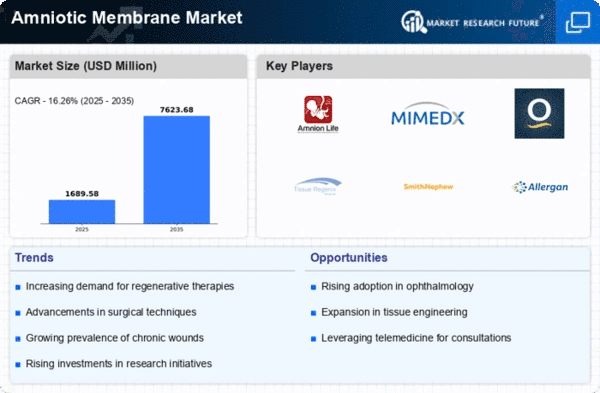
As per MRFR analysis, the Amniotic Membrane Market Size was estimated at 1453.28 USD Million in 2024. The Amniotic Membrane industry is projected to grow from 1689.61 USD Million in 2025 to 7623.68 USD Million by 2035, exhibiting a compound annual growth rate (CAGR) of 16.26 during the forecast period 2025 - 2035.

Key Market Trends & Highlights

The Amniotic Membrane Market is experiencing robust growth driven by diverse applications and technological advancements.

  • The market is witnessing rising applications in regenerative medicine, particularly in North America, which remains the largest market. Technological advancements in processing techniques are enhancing the quality and availability of amniotic membranes. Increased focus on chronic wound management is propelling growth in the wound healing segment, which is currently the fastest-growing. Key market drivers include the rising demand for surgical procedures and growing awareness of tissue engineering, particularly in the Asia-Pacific region.

Market Size & Forecast

2024 Market Size 1453.28 (USD Million)
2035 Market Size 7623.68 (USD Million)
CAGR (2025 - 2035) 16.26%
Largest Regional Market Share in 2024 North America

Major Players

<p>Amnion Life (US), MiMedx Group (US), Organogenesis (US), Tissue Regenix (GB), Smith &amp; Nephew (GB), Allergan (US), Stryker Corporation (US), Acelity (US), Vericel Corporation (US)</p>

Market Trends

The Amniotic Membrane Market is currently experiencing a notable evolution, driven by advancements in medical technology and an increasing understanding of the therapeutic potential of amniotic membranes. These membranes, derived from the innermost layer of the placenta, are recognized for their unique properties, including anti-inflammatory and anti-scarring effects. As healthcare professionals continue to explore their applications in various fields, such as ophthalmology, orthopedics, and wound healing, the demand for amniotic membranes is likely to rise. Furthermore, the growing prevalence of chronic wounds and the need for effective treatment options appear to be propelling market growth. In addition to the rising demand, the Amniotic Membrane Market is witnessing a surge in research and development activities. This trend suggests that companies are increasingly investing in innovative techniques for processing and preserving amniotic membranes, which may enhance their efficacy and shelf life. Collaborations between research institutions and healthcare providers are also becoming more common, potentially leading to the introduction of new products and applications. As the market continues to expand, regulatory frameworks are expected to evolve, ensuring the safety and efficacy of amniotic membrane products, which could further bolster consumer confidence and market acceptance.

Rising Applications in Regenerative Medicine

The Amniotic Membrane Market is seeing a growing interest in regenerative medicine applications. These membranes are being utilized for their healing properties in various medical fields, including dermatology and orthopedics. Their ability to promote tissue regeneration and reduce scarring is driving their adoption in clinical settings.

Technological Advancements in Processing Techniques

Innovations in processing techniques for amniotic membranes are emerging as a key trend. Enhanced preservation methods and improved sterilization processes are likely to increase the viability and effectiveness of these membranes, making them more appealing to healthcare providers.

Increased Focus on Chronic Wound Management

The rising incidence of chronic wounds is prompting a heightened focus on effective management solutions. Amniotic membranes are being recognized for their potential to accelerate healing and reduce complications, which may lead to increased utilization in wound care.

Amniotic Membrane Market Market Drivers

Market Growth Projections

The Global Amniotic Membrane Market Industry is projected to experience robust growth in the coming years. With a market value estimated at 2.11 USD Billion in 2024, it is expected to reach 4.5 USD Billion by 2035. This growth trajectory indicates a compound annual growth rate of 7.13% from 2025 to 2035. Such projections reflect the increasing adoption of amniotic membranes across various medical applications, driven by their unique healing properties and the rising demand for advanced therapeutic solutions. The market's expansion is indicative of a broader trend towards regenerative medicine and innovative healthcare practices.

Growing Geriatric Population

The Global Amniotic Membrane Market Industry is also influenced by the growing geriatric population, which is more susceptible to chronic wounds and age-related conditions. As the global population ages, the demand for effective wound healing solutions is expected to rise significantly. Amniotic membranes offer a viable option for treating various ailments associated with aging, such as pressure ulcers and diabetic foot ulcers. This demographic shift is anticipated to drive market growth, as healthcare systems adapt to the needs of older patients. The increasing prevalence of age-related health issues underscores the relevance of amniotic membranes in contemporary medical care.

Supportive Regulatory Framework

A supportive regulatory framework is playing a pivotal role in the Global Amniotic Membrane Market Industry. Regulatory bodies are increasingly recognizing the therapeutic benefits of amniotic membranes, leading to streamlined approval processes for new products. This regulatory support encourages manufacturers to invest in research and development, fostering innovation within the industry. Furthermore, the establishment of guidelines for the safe and effective use of amniotic membranes enhances their credibility among healthcare providers. As a result, the market is likely to expand, driven by the introduction of new and improved amniotic membrane products that meet regulatory standards.

Increasing Awareness of Regenerative Medicine

The Global Amniotic Membrane Market Industry is benefiting from a growing awareness of regenerative medicine among healthcare professionals and patients. This awareness is fostering interest in the therapeutic potential of amniotic membranes for treating various conditions, including burns, ulcers, and ocular diseases. Educational initiatives and clinical studies highlighting the benefits of amniotic membranes are contributing to this trend. As more practitioners adopt these innovative treatments, the market is expected to witness a compound annual growth rate of 7.13% from 2025 to 2035. This shift towards regenerative therapies underscores the importance of amniotic membranes in modern medical practice.

Rising Demand for Advanced Wound Care Solutions

The Global Amniotic Membrane Market Industry is experiencing a surge in demand for advanced wound care solutions. This trend is largely driven by the increasing prevalence of chronic wounds and surgical procedures requiring effective healing methods. Amniotic membranes are recognized for their unique properties, such as anti-inflammatory effects and promotion of tissue regeneration. As healthcare providers seek innovative treatments, the market is projected to reach 2.11 USD Billion in 2024. This growth reflects a broader shift towards regenerative medicine, where amniotic membranes play a crucial role in enhancing patient outcomes and reducing healing times.

Technological Advancements in Amniotic Membrane Processing

Technological advancements in the processing of amniotic membranes are significantly influencing the Global Amniotic Membrane Market Industry. Innovations in preservation techniques and sterilization methods have improved the safety and efficacy of these products. For instance, the development of cryopreservation and lyophilization techniques allows for longer shelf life and better handling during surgical procedures. These advancements not only enhance the quality of amniotic membranes but also expand their applications in various medical fields, including ophthalmology and orthopedics. As a result, the market is poised for substantial growth, potentially reaching 4.5 USD Billion by 2035.

Market Segment Insights

By Application: Surgical Procedures (Largest) vs. Wound Healing (Fastest-Growing)

<p>In the Amniotic Membrane Market, the application segment is diverse, with surgical procedures holding the largest market share due to its established use in various surgical applications across specialties. Wound healing, on the other hand, is rapidly gaining traction as an emerging segment, appealing to healthcare providers due to its efficacy in treating chronic and acute wounds. Other segments like ophthalmology, dental applications, and regenerative medicine also contribute significantly to the overall landscape, but they lag behind the primary two in terms of market share.</p>

<p>Surgical Procedures (Dominant) vs. Wound Healing (Emerging)</p>

<p>Surgical procedures are positioned as the dominant segment in the Amniotic Membrane Market, supported by a wide array of applications including orthopedic, plastic, and general surgeries where the regenerative properties of amniotic membrane facilitate healing and reduce scarring. Conversely, wound healing is characterized as an emerging segment, reflecting a shift towards innovative treatments for complex wounds and ulcers, driven by an increase in surgical interventions and an aging population. The versatility of amniotic membrane in these applications underscores its importance in modern medical practice, offering promising outcomes for patients.</p>

By Type: Cryopreserved Amniotic Membrane (Largest) vs. Dehydrated Amniotic Membrane (Fastest-Growing)

<p>The Amniotic Membrane Market exhibits significant diversity in amniotic grafts, namely Cryopreserved Amniotic Membrane, Dehydrated Amniotic Membrane, Amniotic Membrane Graft, and Amniotic Membrane Patch. Among these, Cryopreserved Amniotic Membrane graft price is the highest, owing to its higher demand, driven by its superior preservation capabilities that extend the viability for various medical applications. Dehydrated Amniotic Membrane, however, has emerged as a strong contender, rapidly gaining traction due to its ease of storage and transport, positioning it as a vital player in the evolving market landscape.</p>

<p>Amniotic Membrane Graft (Dominant) vs. Amniotic Membrane Patch (Emerging)</p>

<p>Cryopreserved Amniotic Membrane, out of other amniotic grafts, has established itself as a dominant force in the market, attributed to its extensive applications in surgical procedures and wound healing. It offers enhanced cellular viability and retains biological properties, which are pivotal in regenerative medicine. On the other hand, Dehydrated Amniotic Membrane is emerging rapidly, characterized by its lightweight and convenient handling attributes. This type is gaining popularity for its applicability in outpatient settings and minor surgeries. This segment's growth is propelled by increasing acceptance among healthcare professionals, due to its versatility and lower storage requirements.</p>

By End Use: Hospitals (Largest) vs. Ambulatory Surgical Centers (Fastest-Growing)

<p>In the Amniotic Membrane Market, hospitals constitute the largest segment, reflecting their significant need for advanced wound care and surgical applications. This is due to the increasing number of surgical procedures and the rising demand for innovative treatment options. Ambulatory surgical centers, on the other hand, are rapidly emerging due to their ability to provide specialized services with lower operational costs, catering to a broader patient base and enhancing accessibility to minimally invasive treatments. In contrast to hospitals, ambulatory surgical centers are witnessing the fastest growth in the adoption of amniotic membranes, driven by their focus on outpatient procedures. Factors such as advancements in surgical techniques and an emphasis on quicker recovery times have propelled these centers into the forefront. Additionally, the increasing preference among patients for outpatient services and their efforts to streamline surgical processes contribute to the significant expansion in this area of the market.</p>

<p>Hospitals (Dominant) vs. Specialty Clinics (Emerging)</p>

<p>Hospitals maintain a dominant position in the Amniotic Membrane Market due to their comprehensive facilities and diverse patient populations, applying amniotic membranes across various departments such as orthopedics, dermatology, and ophthalmology. They benefit from established protocols and a high volume of surgical cases, allowing for consistent utilization of these advanced biological materials. On the flip side, specialty clinics represent an emerging segment where targeted applications of amniotic membranes are utilized for specific conditions, such as chronic wounds and burn treatments. These clinics are adapting rapidly to the advancements in regenerative medicine, focusing on personalized treatment options that enhance healing processes. While their market presence is growing, they face the challenge of scaling their operations and competing with hospitals that offer a wider range of services.</p>

By Source: Human Donor (Largest) vs. Animal Donor (Fastest-Growing)

<p>In the Amniotic Membrane Market, the 'Human Donor' segment holds a dominating share, attributed to the growing acceptance and effectiveness of human-derived products in regenerative medicine. This segment has been pivotal in clinical applications, particularly in ophthalmology and wound healing. Conversely, the 'Animal Donor' segment, while smaller, is experiencing rapid growth, driven by increasing research and development activities aimed at exploring alternative sources that can complement human-derived amniotic membranes.</p>

<p>Source: Human Donor (Dominant) vs. Animal Donor (Emerging)</p>

<p>The 'Human Donor' segment is characterized by its reliability and efficacy in therapeutic applications, making it the dominant player in the Amniotic Membrane Market. It is favored for its high-quality grafts and is extensively used in surgical procedures, especially in treating ocular surface diseases. On the other hand, the 'Animal Donor' segment is emerging as a viable alternative, driven by advancements in veterinary medicine and tissue engineering. These products are being explored for their potential to provide solutions where human tissues are limited, and they offer unique properties that could align with specific patient needs.</p>

By Form: Sheet (Largest) vs. Gel (Fastest-Growing)

<p>In the Amniotic Membrane Market, the form segment is categorized into sheets, suspensions, and gels. Among these, sheets hold the largest share due to their enhanced handling characteristics and widespread acceptance in surgical procedures. The versatility of sheets in various clinical applications contributes significantly to their dominance. Furthermore, the growing adoption of advanced surgical techniques continues to bolster the sheet segment's position in the market.</p>

<p>Sheets (Dominant) vs. Gel (Emerging)</p>

<p>Sheets serve as the dominant form in the Amniotic Membrane Market, owing to their ease of use, effective integration in surgical procedures, and proven efficacy in wound healing. Their robust structure facilitates superior handling, making them a preferred choice among surgeons. Conversely, gel forms have emerged as a rapidly growing segment, driven by increasing demand for minimally invasive procedures. The unique properties of gels, including their ability to conform to irregular wound surfaces and their sustained release of therapeutic agents, position them well for future growth. As technological advancements continue, the gel form is expected to capture a larger share of the market, appealing to healthcare providers seeking innovative solutions.</p>

Get more detailed insights about Amniotic Membrane Market Research Report - Global Forecast till 2035

Regional Insights

North America : Market Leader in Innovation

North America continues to lead the amniotic membrane market, holding a significant share of 726.57M in 2024. The region's growth is driven by increasing surgical procedures, rising awareness of regenerative medicine, and supportive regulatory frameworks. The FDA's streamlined approval processes for tissue-based amniotic products market further catalyze market expansion, enhancing accessibility and adoption of amniotic membranes in clinical settings. The competitive landscape in North America is robust, featuring key players such as Amnion Life, MiMedx Group, and Organogenesis. These companies are at the forefront of innovation, focusing on product development and strategic partnerships to enhance their market presence. The U.S. remains the largest market, with a growing demand for advanced wound care solutions and surgical applications, solidifying its position as a global leader in the amniotic membrane sector.

Europe : Emerging Market with Growth Potential

Europe's amniotic membrane market is valued at 421.97M, reflecting a growing interest in regenerative medicine and advanced wound care. The region benefits from increasing investments in healthcare infrastructure and a rising prevalence of chronic wounds. Regulatory bodies like the European Medicines Agency (EMA) are actively promoting the use of innovative therapies, which is expected to further boost market growth in the coming years. Leading countries in Europe include Germany, France, and the UK, where the presence of established companies like Smith & Nephew and Allergan enhances market dynamics. The competitive landscape is characterized by a mix of local and international players, focusing on innovation and strategic collaborations in the amniotic products market. The growing emphasis on personalized medicine and patient-centric approaches is likely to drive demand for amniotic membranes across various applications.

Asia-Pacific : Rapidly Growing Market Segment

The Asia-Pacific region, with a market size of 227.64M, is witnessing rapid growth in the amniotic membrane sector. Factors such as increasing healthcare expenditure, a rising geriatric population, and growing awareness of regenerative therapies are driving demand. Additionally, supportive government initiatives aimed at enhancing healthcare access are expected to further propel market growth in this region. Countries like Japan, China, and Australia are leading the market, with a strong presence of both local and international players. Amniotic tissue companies are focusing on expanding their product portfolios and enhancing distribution networks to capture the growing demand. The competitive landscape is evolving, with an increasing number of startups entering the market, contributing to innovation and diversity in product offerings.

Middle East and Africa : Emerging Market with Challenges

The Middle East and Africa (MEA) region, valued at 77.1M, presents a unique landscape for the amniotic membrane market. The growth is primarily driven by increasing healthcare investments and a rising prevalence of chronic diseases. However, challenges such as regulatory hurdles and limited access to advanced medical technologies may hinder market expansion. Nonetheless, the region is gradually embracing regenerative medicine, which is expected to foster growth in the coming years. Leading countries in the MEA region include South Africa and the UAE, where there is a growing interest in advanced wound care solutions. The competitive landscape is characterized by a mix of established Amniotic tissue companies and emerging players, focusing on product innovation and strategic partnerships. As healthcare infrastructure improves, the demand for amniotic membranes is anticipated to rise, creating opportunities for market players.

Key Players and Competitive Insights

The Amniotic Membrane Market is characterized by a dynamic competitive landscape, driven by increasing demand for advanced wound care solutions and regenerative medicine. Key players are actively engaging in strategic initiatives to enhance their market presence and operational efficiency. Companies such as MiMedx Group (US) and Organogenesis (US) are focusing on innovation and product development, while others like Smith & Nephew (GB) and Allergan (US) are pursuing strategic partnerships and acquisitions to bolster their portfolios. This collective approach not only intensifies competition but also fosters a climate of continuous improvement and technological advancement within the market.In terms of business tactics, companies are increasingly localizing manufacturing to reduce lead times and optimize supply chains. The market structure appears moderately fragmented, with several players vying for market share. However, the influence of major companies is substantial, as they leverage their resources and expertise to shape market trends and consumer preferences. This competitive interplay is likely to drive further consolidation and collaboration among key players, enhancing overall market efficiency.


In November MiMedx Group (US) announced the launch of a new amniotic membrane product aimed at enhancing healing in chronic wounds. This strategic move underscores the company's commitment to innovation and its focus on addressing unmet medical needs. By expanding its product line, MiMedx Group not only strengthens its competitive position but also responds to the growing demand for effective wound care solutions.


In October Organogenesis (US) entered into a partnership with a leading healthcare provider to expand its distribution network for amniotic membrane products. This collaboration is indicative of the company's strategy to enhance accessibility and reach within the market. By leveraging the established network of its partner, Organogenesis is likely to improve its market penetration and customer engagement, thereby solidifying its position in the competitive landscape.


In September Smith & Nephew (GB) completed the acquisition of a smaller biotech firm specializing in regenerative medicine technologies. This acquisition is expected to enhance Smith & Nephew's capabilities in the amniotic membrane sector, allowing for the integration of innovative technologies into their existing product offerings. Such strategic actions reflect a broader trend of consolidation within the market, as companies seek to bolster their technological prowess and expand their product portfolios.


As of December the Amniotic Membrane Market is witnessing significant trends such as digitalization, sustainability, and the integration of artificial intelligence (AI) in product development and supply chain management. Strategic alliances are increasingly shaping the competitive landscape, enabling companies to pool resources and expertise. Looking ahead, it appears that competitive differentiation will evolve from traditional price-based strategies to a focus on innovation, technological advancement, and supply chain reliability. This shift is likely to redefine market dynamics, emphasizing the importance of quality and efficacy in product offerings.

Key Companies in the Amniotic Membrane Market include

Industry Developments

  • Q2 2024: Eliksa Therapeutics Announces Commercialization of Regenerative Therapeutics Based on Amniotic Fluid and Amniotic Membrane Market Technologies Eliksa Therapeutics, a regenerative medicine company, announced plans to commercialize multiple regenerative therapeutics utilizing amniotic fluid and amniotic membrane technologies, aiming to expand its product portfolio in the advanced wound care and ophthalmology sectors.


Future Outlook

Amniotic Membrane Market Future Outlook

<p>The Amniotic Membrane Market is projected to grow at a 16.26% CAGR from 2025 to 2035, driven by advancements in regenerative medicine and increasing surgical applications.</p>

New opportunities lie in:

  • <p>Expansion into emerging markets with tailored product offerings. Development of innovative amniotic membrane products for ophthalmic applications. Strategic partnerships with healthcare providers for enhanced distribution channels.</p>

<p>By 2035, the Amniotic Membrane Market is expected to achieve substantial growth and innovation.</p>

Market Segmentation

Amniotic Membrane Market Form Outlook

  • Sheet
  • Suspension
  • Gel

Amniotic Membrane Market Type Outlook

  • Cryopreserved Amniotic Membrane
  • Dehydrated Amniotic Membrane
  • Amniotic Membrane Graft
  • Amniotic Membrane Patch

Amniotic Membrane Market Source Outlook

  • Human Donor
  • Animal Donor

Amniotic Membrane Market End Use Outlook

  • Hospitals
  • Ambulatory Surgical Centers
  • Specialty Clinics
  • Research Laboratories

Amniotic Membrane Market Application Outlook

  • Surgical Procedures
  • Wound Healing
  • Ophthalmology
  • Dental Applications
  • Regenerative Medicine

Report Scope

MARKET SIZE 2024 1453.28(USD Million)
MARKET SIZE 2025 1689.61(USD Million)
MARKET SIZE 2035 7623.68(USD Million)
COMPOUND ANNUAL GROWTH RATE (CAGR) 16.26% (2025 - 2035)
REPORT COVERAGE Revenue Forecast, Competitive Landscape, Growth Factors, and Trends
BASE YEAR 2024
Market Forecast Period 2025 - 2035
Historical Data 2019 - 2024
Market Forecast Units USD Million
Key Companies Profiled Amnion Life (US), MiMedx Group (US), Organogenesis (US), Tissue Regenix (GB), Smith & Nephew (GB), Allergan (US), Stryker Corporation (US), Acelity (US), Vericel Corporation (US)
Segments Covered Application, Type, End Use, Source, Form
Key Market Opportunities Advancements in regenerative medicine drive demand for innovative applications in the Amniotic Membrane Market.
Key Market Dynamics Rising demand for advanced wound care products drives innovation and competition in the amniotic membrane market.
Countries Covered North America, Europe, APAC, South America, MEA

FAQs

What is the projected growth of the Amniotic Membrane market?

The Amniotic Membrane market is the expected increase in total market value of 7.62 USD billion over a defined forecast period 2025–2035. It is driven by factors such as demand trends, technological advances, regulatory changes, and geographic expansion.

What is the size of the Amniotic Membrane market?

Amniotic Membrane market size was valued at approximately 1.45 billion USD in 2024. This figure will reach 7.62 billion USD covering all regions (America, Europe, Asia, MEA and ROW), focusing its segments / services / distribution channels till 2035.

What is the CAGR of the Amniotic Membrane market?

Amniotic Membrane market is expected to grow at a CAGR of 16.26% between 2025 and 2035.

How much will the Amniotic Membrane market be worth by 2035?

Amniotic Membrane market is expected to be worth of 7.62 billion USD, reflecting growth driven by usage, technology and global demands by the end of 2035.

How will the Amniotic Membrane market perform over the next 10 years?

Over the next 10 years the Amniotic Membrane market is expected to shift from usd billion 1.45 to 7.62 billion USD, led by adoption of advanced tech, demographic trends, regulatory approvals, with potential headwinds from 2025 to 2035.

Which application is anticipated to have the highest market value in 2035?

The Wound Healing application is anticipated to have the highest market value at 1.7 USD Billion in 2035.

What are the expected market values for the North America region by 2035?

North America is expected to be valued at 1.92 USD Billion by 2035.

Who are some of the key players in the Amniotic Membrane Market?

Key players in the market include Allergan, Human Regenerative Technologies, and Kerecis.

What is the projected market value for the Ophthalmology application in 2024?

The projected market value for the Ophthalmology application in 2024 is 0.65 USD Billion.

What is the anticipated market value for the Asia Pacific region by 2035?

The Asia Pacific region is anticipated to be valued at 0.36 USD Billion by 2035.

  1. SECTION I: EXECUTIVE SUMMARY AND KEY HIGHLIGHTS
    1. EXECUTIVE SUMMARY
      1. Market Overview
      2. Key Findings
      3. Market Segmentation
      4. Competitive Landscape
      5. Challenges and Opportunities
      6. Future Outlook
  2. SECTION II: SCOPING, METHODOLOGY AND MARKET STRUCTURE
    1. MARKET INTRODUCTION
      1. Definition
      2. Scope of the study
    2. RESEARCH METHODOLOGY
      1. Overview
      2. Data Mining
      3. Secondary Research
      4. Primary Research
      5. Forecasting Model
      6. Market Size Estimation
      7. Data Triangulation
      8. Validation
  3. SECTION III: QUALITATIVE ANALYSIS
    1. MARKET DYNAMICS
      1. Overview
      2. Drivers
      3. Restraints
      4. Opportunities
    2. MARKET FACTOR ANALYSIS
      1. Value chain Analysis
      2. Porter's Five Forces Analysis
      3. COVID-19 Impact Analysis
  4. SECTION IV: QUANTITATIVE ANALYSIS
    1. Healthcare, BY Application (USD Million)
      1. Surgical Procedures
      2. Wound Healing
      3. Ophthalmology
      4. Dental Applications
      5. Regenerative Medicine
    2. Healthcare, BY Type (USD Million)
      1. Cryopreserved Amniotic Membrane
      2. Dehydrated Amniotic Membrane
      3. Amniotic Membrane Graft
      4. Amniotic Membrane Patch
    3. Healthcare, BY End Use (USD Million)
      1. Hospitals
      2. Ambulatory Surgical Centers
      3. Specialty Clinics
      4. Research Laboratories
    4. Healthcare, BY Source (USD Million)
      1. Human Donor
      2. Animal Donor
    5. Healthcare, BY Form (USD Million)
      1. Sheet
      2. Suspension
      3. Gel
    6. Healthcare, BY Region (USD Million)
      1. North America
      2. Europe
      3. APAC
      4. South America
      5. MEA
  5. SECTION V: COMPETITIVE ANALYSIS
    1. Competitive Landscape
      1. Overview
      2. Competitive Analysis
      3. Market share Analysis
      4. Major Growth Strategy in the Healthcare
      5. Competitive Benchmarking
      6. Leading Players in Terms of Number of Developments in the Healthcare
      7. Key developments and growth strategies
      8. Major Players Financial Matrix
    2. Company Profiles
      1. Amnion Life (US)
      2. MiMedx Group (US)
      3. Organogenesis (US)
      4. Tissue Regenix (GB)
      5. Smith & Nephew (GB)
      6. Allergan (US)
      7. Stryker Corporation (US)
      8. Acelity (US)
      9. Vericel Corporation (US)
    3. Appendix
      1. References
      2. Related Reports

Healthcare Market Segmentation

Healthcare By Application (USD Million, 2025-2035)

  • Surgical Procedures
  • Wound Healing
  • Ophthalmology
  • Dental Applications
  • Regenerative Medicine

Healthcare By Type (USD Million, 2025-2035)

  • Cryopreserved Amniotic Membrane
  • Dehydrated Amniotic Membrane
  • Amniotic Membrane Graft
  • Amniotic Membrane Patch

Healthcare By End Use (USD Million, 2025-2035)

  • Hospitals
  • Ambulatory Surgical Centers
  • Specialty Clinics
  • Research Laboratories

Healthcare By Source (USD Million, 2025-2035)

  • Human Donor
  • Animal Donor

Healthcare By Form (USD Million, 2025-2035)

  • Sheet
  • Suspension
  • Gel
Infographic

Free Sample Request

Kindly complete the form below to receive a free sample of this Report

Get Free Sample

Customer Strories

Compare Licence

×
Features License Type
Single User Multiuser License Enterprise User
Price $4,950 $5,950 $7,250
Maximum User Access Limit 1 User Upto 10 Users Unrestricted Access Throughout the Organization
Free Customization
Direct Access to Analyst
Deliverable Format
Platform Access
Discount on Next Purchase 10% 15% 15%
Printable Versions