×
Request Free Sample ×

Kindly complete the form below to receive a free sample of this Report

Leading companies partner with us for data-driven Insights

clients tt-cursor
Hero Background

Low Alcohol Beverages Market

ID: MRFR/FnB/9058-HCR
90 Pages
Snehal Singh
October 2025

Low Alcohol Beverages Market Research Report Information By Type (Wine, Beer, And Spirits), By Distribution Channel (Store-based, And Non-store based), And By Region (North America, Europe, Asia-Pacific, And Rest Of The World) – Market Forecast Till 2035

Share:
Download PDF ×

We do not share your information with anyone. However, we may send you emails based on your report interest from time to time. You may contact us at any time to opt-out.

Low Alcohol Beverages Market Infographic
Purchase Options

Low Alcohol Beverages Market Summary

As per MRFR analysis, the Low Alcohol Beverages Market Size was estimated at 978.75 USD Million in 2024. The Low Alcohol Beverages industry is projected to grow from 1024.97 USD Million in 2025 to 1625.89 USD Million by 2035, exhibiting a compound annual growth rate (CAGR) of 4.72 during the forecast period 2025 - 2035.

Key Market Trends & Highlights

The Low Alcohol Beverages Market is experiencing a notable shift towards health-conscious consumption and innovative offerings.

  • Health consciousness is driving consumers towards low alcohol options, particularly in North America, the largest market.
  • Innovative product development is emerging as a key trend, with brands introducing unique flavors and formulations to attract diverse consumers.
  • The wine segment remains the largest in the market, while the beer segment is witnessing the fastest growth due to changing consumer preferences.
  • Market drivers such as health consciousness and sustainability initiatives are significantly influencing the expansion of low alcohol beverages.

Market Size & Forecast

2024 Market Size 978.75 (USD Million)
2035 Market Size 1625.89 (USD Million)
CAGR (2025 - 2035) 4.72%

Major Players

Anheuser-Busch InBev (BE), Heineken N.V. (NL), Diageo plc (GB), Molson Coors Beverage Company (US), Constellation Brands, Inc. (US), Asahi Group Holdings, Ltd. (JP), Carlsberg Group (DK), Treasury Wine Estates (AU), Campari Group (IT)

Low Alcohol Beverages Market Trends

The Low Alcohol Beverages Market is currently experiencing a notable transformation, driven by shifting consumer preferences and a growing awareness of health and wellness. As individuals increasingly seek alternatives to traditional alcoholic beverages, the demand for low alcohol options appears to be on the rise. This trend is not merely a fleeting phase; it reflects a broader societal shift towards moderation and mindful consumption. The market is characterized by a diverse range of products, including low-alcohol wines, beers, and spirits, catering to a wide array of tastes and preferences. Furthermore, the emergence of innovative flavors and unique branding strategies seems to enhance the appeal of these beverages, attracting a younger demographic that values both quality and experience. In addition to changing consumer habits, the Low Alcohol Beverages Market is also influenced by regulatory developments and industry initiatives aimed at promoting responsible drinking. As governments and organizations advocate for reduced alcohol consumption, manufacturers are responding by expanding their portfolios to include low-alcohol options. This proactive approach not only aligns with public health goals but also positions brands favorably in a competitive landscape. Overall, the Low Alcohol Beverages Market appears poised for continued growth, driven by evolving consumer expectations and a commitment to sustainability and health-conscious choices.

Health Consciousness

The increasing focus on health and wellness among consumers is reshaping the Low Alcohol Beverages Market. Individuals are becoming more aware of the effects of alcohol on their health, leading to a preference for beverages that offer lower alcohol content. This trend is evident in the rising popularity of low-alcohol wines and beers, which provide a satisfying alternative without compromising on taste.

Innovative Product Development

Manufacturers in the Low Alcohol Beverages Market are actively engaging in innovative product development to attract a diverse consumer base. This includes the introduction of unique flavors, creative branding, and packaging that appeals to younger audiences. Such innovations not only enhance the drinking experience but also encourage trial and repeat purchases.

Sustainability Initiatives

Sustainability is becoming a key consideration in the Low Alcohol Beverages Market, as consumers increasingly prefer brands that demonstrate environmental responsibility. Companies are adopting sustainable practices in sourcing ingredients, production, and packaging. This commitment to sustainability resonates with consumers, potentially influencing their purchasing decisions and fostering brand loyalty.

Low Alcohol Beverages Market Drivers

Regulatory Support

Regulatory frameworks are playing a pivotal role in shaping the Low Alcohol Beverages Market. Governments in various regions are increasingly recognizing the potential benefits of promoting low-alcohol options as a means to address public health concerns related to alcohol consumption. This has led to supportive policies and initiatives aimed at encouraging the production and consumption of low-alcohol beverages. For instance, some countries have implemented lower taxation rates for low-alcohol products, making them more accessible to consumers. Market data indicates that regions with favorable regulations for low-alcohol beverages have experienced faster growth in this segment. As regulatory support continues to evolve, it is likely to create a more conducive environment for the expansion of the low-alcohol market, fostering innovation and investment in this sector.

Health Consciousness

The increasing awareness of health and wellness among consumers appears to be a primary driver for the Low Alcohol Beverages Market. As individuals become more health-conscious, they tend to seek alternatives to traditional alcoholic beverages that are lower in alcohol content. This trend is reflected in the rising demand for low-alcohol options, which are perceived as healthier choices. According to recent data, the low-alcohol segment has experienced a growth rate of approximately 10% annually, indicating a shift in consumer preferences. This shift is not merely a passing trend; it suggests a fundamental change in drinking habits, where moderation is prioritized. Consequently, brands are responding by expanding their portfolios to include a variety of low-alcohol beverages, catering to this evolving consumer base.

Changing Social Norms

The evolving social landscape is reshaping perceptions of alcohol consumption, thereby impacting the Low Alcohol Beverages Market. As societal attitudes shift towards moderation and responsible drinking, low-alcohol beverages are increasingly accepted in social settings. This change is particularly evident among younger generations, who are more inclined to choose low-alcohol options during social gatherings. Market data indicates that the consumption of low-alcohol beverages has risen significantly in social contexts, suggesting a normalization of these products. This trend reflects a broader cultural movement towards healthier lifestyles and responsible drinking habits. As social norms continue to evolve, the demand for low-alcohol beverages is expected to grow, providing opportunities for brands to position themselves as leaders in this changing market.

Sustainability Initiatives

Sustainability has emerged as a crucial factor influencing consumer choices in the Low Alcohol Beverages Market. As environmental concerns grow, consumers are increasingly favoring brands that demonstrate a commitment to sustainable practices. This includes the use of eco-friendly packaging, organic ingredients, and responsible sourcing. Market data suggests that products marketed as sustainable can command higher price points and attract a loyal customer base. Companies are responding to this demand by implementing sustainability initiatives, which not only align with consumer values but also enhance brand reputation. This trend indicates that sustainability is not just a marketing strategy; it is becoming a core component of product development in the low-alcohol segment. As consumers continue to prioritize environmental responsibility, the market is likely to see further growth in sustainable low-alcohol offerings.

Innovative Product Development

Innovation within the Low Alcohol Beverages Market is driving growth as manufacturers explore new flavors, ingredients, and formulations. The introduction of unique and appealing products, such as low-alcohol craft beers and flavored wines, has captured the attention of consumers seeking novel experiences. This trend is supported by market data indicating that innovative products account for a significant portion of sales in the low-alcohol segment. Companies are investing in research and development to create beverages that not only meet the low-alcohol criteria but also offer distinctive taste profiles. This focus on innovation is likely to attract a broader audience, including younger consumers who are eager to experiment with new beverage options. As a result, the market is witnessing a diversification of offerings, which may further enhance its appeal.

Market Segment Insights

By Type: Wine (Largest) vs. Beer (Fastest-Growing)

In the Low Alcohol Beverages Market, wine currently holds the largest share, appealing to a diverse consumer base that appreciates its variety and complex flavors. Conversely, beer is positioned as the fastest-growing segment, driven by innovative brewing techniques and a consumer shift towards lighter, lower-alcohol options that do not compromise on taste. This dynamic interplay between wine and beer exemplifies the evolving preferences of health-conscious consumers who are re-evaluating their beverage choices.

Wine (Dominant) vs. Spirits (Emerging)

The wine segment stands out as the dominant force in the Low Alcohol Beverages Market, characterized by its broad appeal and cultural significance across various regions. With an array of flavors and styles, from sparkling to still and from fruity to dry, wine caters to a wide range of palates. In contrast, the spirits segment, though smaller, is emerging as a notable player, especially with the introduction of low-alcohol gins and vodkas appealing to millennials and Gen Z consumers. This evolution reflects a growing trend toward experimentation and flavor exploration within the spirits category, which is increasingly seen as sophisticated and socially acceptable in low-alcohol formats.

By Distribution Channel: Store-based (Largest) vs. Non-store based (Fastest-Growing)

In the Low Alcohol Beverages Market, the distribution of sales between store-based and non-store-based channels reveals a clear trend, with store-based channels holding the largest market share. Retail outlets such as supermarkets, convenience stores, and liquor stores cater to a diverse consumer base, providing easy access to low alcohol beverage options. Conversely, non-store-based channels, including e-commerce platforms and direct-to-consumer sales, are capturing an increasing share as consumers embrace the convenience of online shopping and home delivery services, particularly after the pandemic.

Distribution Channel: Store-based (Dominant) vs. Non-store based (Emerging)

Store-based channels represent a dominant force in the Low Alcohol Beverages Market, characterized by their extensive reach and established presence in retail shopping environments. These outlets deliver a wide range of products, catering to consumers looking for reliable shopping experiences. In contrast, non-store-based channels are emerging rapidly, appealing to tech-savvy consumers who prioritize convenience and variety. This segment has been driven by the proliferation of e-commerce and a shift in consumer purchasing behavior towards online platforms, making it a key growth area for low alcohol beverages. The competition between these channels is intensifying as both adapt to changing consumer preferences and market dynamics.

Get more detailed insights about Low Alcohol Beverages Market

Regional Insights

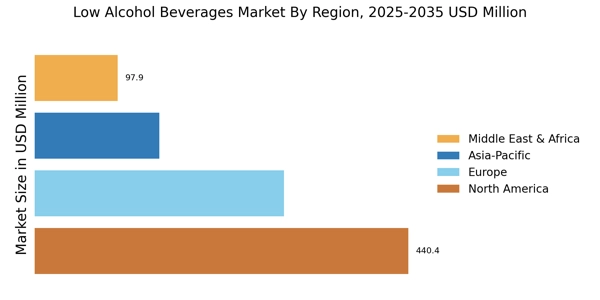
North America : Market Leader in Low Alcohol

North America is the largest market for low alcohol beverages, holding approximately 45% of the global market share. The growth is driven by increasing health consciousness among consumers, leading to a rising demand for low-alcohol options. Regulatory support, such as relaxed alcohol laws in several states, has further catalyzed market expansion. The trend towards moderation is also supported by a growing number of craft breweries and innovative product offerings. The United States is the leading country in this region, with significant contributions from Canada. Major players like Anheuser-Busch InBev and Molson Coors Beverage Company are at the forefront, continuously innovating to meet consumer preferences. The competitive landscape is characterized by a mix of established brands and emerging craft producers, all vying for market share in this evolving sector.

Europe : Emerging Trends in Beverage Choices

Europe is witnessing a significant shift towards low alcohol beverages, capturing around 30% of the global market share. This growth is fueled by changing consumer preferences, particularly among millennials who prioritize health and wellness. Regulatory frameworks in countries like the UK and Germany are becoming more supportive, promoting lower alcohol content in beverages. The European market is also benefiting from increased product availability and innovative marketing strategies. Leading countries in this region include the UK, Germany, and France, where major players like Heineken N.V. and Diageo plc are actively expanding their low alcohol portfolios. The competitive landscape is vibrant, with both multinational corporations and local craft producers contributing to a diverse market. The presence of established brands alongside innovative newcomers is driving further growth in this sector.

Asia-Pacific : Rapid Growth in Beverage Innovation

The Asia-Pacific region is emerging as a significant player in the low alcohol beverages market, holding approximately 15% of the global market share. The growth is driven by increasing urbanization, changing lifestyles, and a growing middle class that is more health-conscious. Countries like Japan and Australia are leading this trend, supported by favorable regulations that encourage the production of low-alcohol options. The market is also witnessing a rise in innovative products tailored to local tastes. Japan stands out as a key market, with Asahi Group Holdings and other local brands leading the charge. The competitive landscape is characterized by a mix of international and domestic players, all striving to capture the attention of health-conscious consumers. The region's unique cultural preferences are influencing product development, making it a dynamic market for low alcohol beverages.

Middle East and Africa : Emerging Market with Unique Challenges

The Middle East and Africa region is gradually exploring the low alcohol beverages market, currently holding about 10% of the global market share. The growth is primarily driven by changing social norms and increasing demand for healthier lifestyle choices. However, regulatory challenges in certain countries can hinder market expansion. Countries like South Africa are leading the way, with a growing acceptance of low alcohol options among consumers, supported by local regulations that allow for such products. South Africa is the most prominent market in this region, with local brands and international players like Campari Group making inroads. The competitive landscape is still developing, with a mix of established brands and new entrants. The region's unique cultural and regulatory environment presents both challenges and opportunities for growth in the low alcohol sector.

Low Alcohol Beverages Market Regional Image

Key Players and Competitive Insights

The Low Alcohol Beverages Market is currently characterized by a dynamic competitive landscape, driven by evolving consumer preferences towards healthier lifestyle choices and moderation in alcohol consumption. Major players such as Anheuser-Busch InBev (Belgium), Heineken N.V. (Netherlands), and Diageo plc (United Kingdom) are strategically positioning themselves through innovation and regional expansion. Anheuser-Busch InBev (Belgium) has been focusing on diversifying its product portfolio to include a wider range of low-alcohol options, thereby appealing to a broader demographic. Heineken N.V. (Netherlands) has been actively pursuing partnerships with local craft breweries to enhance its market presence and tap into niche segments. Diageo plc (United Kingdom) is leveraging digital transformation to enhance consumer engagement and streamline its distribution channels, which collectively shapes a competitive environment that is increasingly focused on consumer-centric strategies.

Key business tactics within the Low Alcohol Beverages Market include localizing manufacturing and optimizing supply chains to meet regional demands effectively. The market structure appears moderately fragmented, with several key players exerting influence over their respective segments. This fragmentation allows for a variety of product offerings, catering to diverse consumer preferences while fostering healthy competition among established brands and emerging players.

In August 2025, Heineken N.V. (Netherlands) announced the launch of a new line of low-alcohol craft beers, aimed at capturing the growing segment of health-conscious consumers. This strategic move not only enhances Heineken's product portfolio but also positions the company to compete more effectively against local craft breweries, which have gained popularity among younger demographics. The introduction of these products reflects a broader trend towards innovation in flavor profiles and brewing techniques, which is likely to resonate well with consumers seeking quality over quantity.

In September 2025, Diageo plc (United Kingdom) unveiled a new digital marketing campaign focused on its low-alcohol spirits, utilizing augmented reality to engage consumers in a unique way. This initiative underscores Diageo's commitment to digital transformation and consumer engagement, potentially setting a new standard for how brands interact with their audience. By integrating technology into its marketing strategy, Diageo may enhance brand loyalty and drive sales in a competitive market.

In July 2025, Anheuser-Busch InBev (Belgium) entered into a strategic partnership with a leading health and wellness app to promote its low-alcohol beverage range. This collaboration aims to reach health-conscious consumers directly, leveraging the app's user base to drive awareness and sales. Such partnerships indicate a shift towards more integrated marketing strategies that align with consumer lifestyles, potentially enhancing brand visibility and market penetration.

As of October 2025, current competitive trends in the Low Alcohol Beverages Market are increasingly defined by digitalization, sustainability, and the integration of artificial intelligence in production and marketing processes. Strategic alliances are becoming more prevalent, allowing companies to pool resources and expertise to innovate more effectively. Looking ahead, competitive differentiation is likely to evolve from traditional price-based competition to a focus on innovation, technology, and supply chain reliability, as companies strive to meet the demands of a more discerning consumer base.

Key Companies in the Low Alcohol Beverages Market market include

Industry Developments

January 2022: In a joint announcement with her business partner Morgan McLachlan, Katy Perry debuted her new beverage line, De Soi. The three flavors of the new beverage product line are golden hour, purple lune, and champignon dreams. Online shoppers can already acquire 750ml bottles of De Soi.

February 2021: Big Drop introduced Chicago-Brew Non-Alcoholic Beers to the American market. Online sales of new NA beers are now available nationwide and in Illinois, Michigan, and Minnesota. All Big Drop beers are naturally non-alcoholic and have less than 0.5 percent alcohol by volume, thanks to an innovative brewing process that uses specialized yeast and temperature management.

Future Outlook

Low Alcohol Beverages Market Future Outlook

The Low Alcohol Beverages Market is projected to grow at a 4.72% CAGR from 2024 to 2035, driven by health trends, innovative product offerings, and changing consumer preferences.

New opportunities lie in:

  • Expansion of low-alcohol craft beer lines in urban markets.
  • Development of premium non-alcoholic spirits for upscale venues.
  • Partnerships with health-focused retailers for exclusive product launches.

By 2035, the market is expected to solidify its position as a key segment in the beverage industry.

Market Segmentation

Low Alcohol Beverages Market Type Outlook

  • Wine
  • Beer
  • Spirits

Low Alcohol Beverages Market Distribution Channel Outlook

  • Store-based
  • Non-store based

Report Scope

MARKET SIZE 2024978.75(USD Million)
MARKET SIZE 20251024.97(USD Million)
MARKET SIZE 20351625.89(USD Million)
COMPOUND ANNUAL GROWTH RATE (CAGR)4.72% (2024 - 2035)
REPORT COVERAGERevenue Forecast, Competitive Landscape, Growth Factors, and Trends
BASE YEAR2024
Market Forecast Period2025 - 2035
Historical Data2019 - 2024
Market Forecast UnitsUSD Million
Key Companies ProfiledMarket analysis in progress
Segments CoveredMarket segmentation analysis in progress
Key Market OpportunitiesGrowing consumer preference for healthier lifestyles drives innovation in the Low Alcohol Beverages Market.
Key Market DynamicsRising consumer preference for healthier lifestyles drives innovation and competition in the low alcohol beverages market.
Countries CoveredNorth America, Europe, APAC, South America, MEA

Market Highlights

Author
Snehal Singh
Assistant Manager - Research

High acumen in analyzing complex macro & micro markets with more than 6 years of work experience in the field of market research. By implementing her analytical skills in forecasting and estimation into market research reports, she has expertise in Packaging, Construction, and Equipment domains. She handles a team size of 20-25 resources and ensures smooth running of the projects, associated marketing activities, and client servicing.

Leave a Comment

FAQs

What is the current market valuation of the Low Alcohol Beverages Market?

The market valuation of the Low Alcohol Beverages Market was 978.75 USD Million in 2024.

What is the projected market size for the Low Alcohol Beverages Market by 2035?

The projected market size for the Low Alcohol Beverages Market is 1625.89 USD Million by 2035.

What is the expected CAGR for the Low Alcohol Beverages Market during the forecast period?

The expected CAGR for the Low Alcohol Beverages Market from 2025 to 2035 is 4.72%.

Which segments are included in the Low Alcohol Beverages Market?

The segments in the Low Alcohol Beverages Market include Wine, Beer, and Spirits.

What were the revenue figures for the Beer segment in 2024?

The revenue for the Beer segment was between 500.0 and 800.0 USD Million in 2024.

How does the revenue of the Wine segment compare to that of the Spirits segment?

The Wine segment generated between 200.0 and 350.0 USD Million, while the Spirits segment generated between 278.75 and 475.89 USD Million in 2024.

Download Free Sample

Kindly complete the form below to receive a free sample of this Report

Compare Licence

×
Features License Type
Single User Multiuser License Enterprise User
Price $4,950 $5,950 $7,250
Maximum User Access Limit 1 User Upto 10 Users Unrestricted Access Throughout the Organization
Free Customization
Direct Access to Analyst
Deliverable Format
Platform Access
Discount on Next Purchase 10% 15% 15%
Printable Versions