×
Hero Background
English
Chinese
French
Japanese
Korean
German
Spanish

Freeze of Gait Market Analysis

ID: MRFR/HC/10578-HCR
87 Pages
Kinjoll Dey
October 2025

Freeze of Gait Market Research Report Information By Type (Oral Dopaminergic Medication, Wearable and Walking Aid Devices, Deep Brain Stimulation, Others), End User (Hospitals, Clinics, Others) and Region (North America, Europe, Asia-Pacific, and Rest of the World)—Forecast till 2035

Share:
Download PDF ×

We do not share your information with anyone. However, we may send you emails based on your report interest from time to time. You may contact us at any time to opt-out.

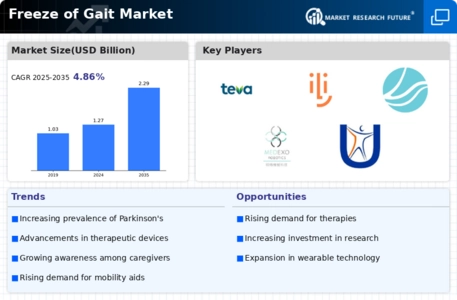
Freeze of Gait Market Infographic
Purchase Options

Market Analysis

In-depth Analysis of Freeze of Gait Market Industry Landscape

Freeze of gait (FOG) is a neurological phenomenon often associated with Parkinson's disease, characterized by a sudden and temporary inability to initiate or continue walking. Analyzing the market dynamics of freeze of gait involves exploring factors such as prevalence, diagnostic technologies, treatment options, and the impact of advancements in neurology. The trends start with a consideration of the Freezing of gait that is frequently a characteristic of the unusual neurological cases such as Parkinson’s Disease. Growing numbers of patients affected by Parkinson's disease on the planet add to the role of "FOG" in terms of its understanding and alienation worldwide. This is elongated by the unique developments in the diagnostic technologies that are used to identify and assess the severity of freeze of gait. The choice of neuroimaging methods, wearable devices and motion-sensing technologies to measure FOG regarding the correct diagnosis and its advancement will be the role regardless of the alternative. The dynamic of neuro-research sheds light on the deeper involved mechanisms and causes of Foster of gait. The interaction between the market dynamics and the underlying mechanism of FOG is sparked by the insights into the issues related to neurological pathways and brain functions. This results in a comprehensive understanding and ultimately in targeted medication and intervention. The marketplace for dopa deficiency fluctuates as a result of the pharmaceutical interventions that are designed to control the symptoms related to neurological disorders. Disorders related to motor control, balance and gait defects are mostly treated by medications. Such medications are one of the key components of the treatment strategies. Scientific discoveries and developments are mainly based on developing the medications that can calm or even decrease the scale of freeze of gait. Rehabilitation and the exercise therapy system also hold a part in the administration of a freezing of gait. The market forces for this product are governed by the demand for efficacious therapeutic interventions as a potential option to overcome movement difficulties and the adverse impact of FOG on normal living. Rehabilitation approaches which are cutting edge and the application of these technologies results in better outcomes in the patients. The devices and specific technologies worn on the body and utilized as assistive technologies locate Freezing of gait in the center of their work. Devices such as smart shoes, sensors, forward-mobile aids, are applied in order to facilitate immediate monitoring and intervention. The market answers to technology usage being integrated which is now being taken seriously by individuals who experience FOG. The market is driven by patient-centered techniques, where the real-life stories and expectations of the freeze of gait sufferers are taken into consideration by being the directions of the treatment strategies. Delivery of healthcare solutions which are based on patients’ individual requirements boost compliance with healthcare applications and maximize the patients’ level of satisfaction. An interdisciplinary group of experts, including neurologists, physiotherapists, and rehabilitation professionals, influences behavioral responses faced by the neuroscience market. Coordinated care approaches administer numerous kinds of interventions, ranging from the neuroglycolysis of gait to the improvement of quality of life. The environmental conditions that are regulated when it comes to neuroscience therapies and devices are a critical facet that affects business. The standards, approvals and healthcare regulations compatible with regulations and government support for new techniques, devices or medicines are the key to availability and implementation of innovations for freezing gait.

Market dynamics are influenced by healthcare accessibility and global trends in neurology care. Disparities in access to specialized care and the adoption of emerging trends, such as telemedicine and remote monitoring, can affect the delivery of interventions for freeze of gait. Patient advocacy groups and awareness campaigns contribute to market dynamics by educating both healthcare professionals and the public about freeze of gait. Increased awareness fosters early diagnosis, timely interventions, and a supportive community for individuals affected by FOG.


Author
Kinjoll Dey
Research Analyst Level I

He is an extremely curious individual currently working in Healthcare and Medical Devices Domain. Kinjoll is comfortably versed in data centric research backed by healthcare educational background. He leverages extensive data mining and analytics tools such as Primary and Secondary Research, Statistical Analysis, Machine Learning, Data Modelling. His key role also involves Technical Sales Support, Client Interaction and Project management within the Healthcare team. Lastly, he showcases extensive affinity towards learning new skills and remain fascinated in implementing them.

Leave a Comment

FAQs

What is the current valuation of the Freeze of Gait Market?

As of 2024, the Freeze of Gait Market was valued at 1.279 USD Billion.

What is the projected market valuation for the Freeze of Gait Market in 2035?

The Freeze of Gait Market is projected to reach 2.156 USD Billion by 2035.

What is the expected CAGR for the Freeze of Gait Market during the forecast period 2025 - 2035?

The expected CAGR for the Freeze of Gait Market from 2025 to 2035 is 4.86%.

Which companies are the key players in the Freeze of Gait Market?

Key players in the Freeze of Gait Market include Medtronic, Boston Scientific, Abbott Laboratories, and others.

What are the main segments of the Freeze of Gait Market?

The main segments of the Freeze of Gait Market include Oral Dopaminergic Medication, Wearable and Walking Aid Devices, and Deep Brain Stimulation.

How did the Oral Dopaminergic Medication segment perform in 2024?

In 2024, the Oral Dopaminergic Medication segment was valued at 0.4 USD Billion and is expected to grow to 0.65 USD Billion.

What is the valuation of the Wearable and Walking Aid Devices segment?

The Wearable and Walking Aid Devices segment was valued at 0.35 USD Billion in 2024 and is projected to reach 0.6 USD Billion.

Market Summary

As per MRFR analysis, the Freeze of Gait Market Size was estimated at 1.279 USD Billion in 2024. The Freeze of Gait industry is projected to grow from 1.341 in 2025 to 2.156 by 2035, exhibiting a compound annual growth rate (CAGR) of 4.86 during the forecast period 2025 - 2035.

Key Market Trends & Highlights

The Freeze of Gait Market is experiencing a dynamic shift driven by technological advancements and increasing awareness of movement disorders.

  • North America remains the largest market for Freeze of Gait Market solutions, driven by a robust healthcare infrastructure.
  • The Asia-Pacific region is emerging as the fastest-growing market, fueled by rising healthcare investments and awareness.
  • Oral dopaminergic medication continues to dominate the market, while wearable and walking aid devices are witnessing rapid growth.
  • Key market drivers include the increasing prevalence of Parkinson's disease and the growing demand for rehabilitation services.

Market Size & Forecast

2024 Market Size 1.279 (USD Billion)
2035 Market Size 2.156 (USD Billion)
CAGR (2025 - 2035) 4.86%
Largest Regional Market Share in 2024 North America

Major Players

<p>Medtronic (US), Boston Scientific (US), Abbott Laboratories (US), NeuroPace (US), St. Jude Medical (US), Stryker Corporation (US), Bioness (US), Horizon Therapeutics (IE)</p>

Market Trends

The Freeze of Gait Market is currently experiencing notable developments, driven by an increasing awareness of movement disorders and their impact on quality of life. This market encompasses various therapeutic interventions, including pharmacological treatments, physical therapy, and assistive devices aimed at alleviating symptoms associated with gait freezing. As healthcare systems evolve, there is a growing emphasis on personalized treatment approaches, which may enhance patient outcomes and satisfaction. Furthermore, advancements in technology, such as wearable devices and mobile applications, are likely to play a pivotal role in monitoring and managing gait-related issues, thereby fostering a more proactive approach to care. In addition, the demographic shift towards an aging population appears to be influencing the Freeze of Gait Market significantly. Older adults are more susceptible to movement disorders, which may lead to an increased demand for effective solutions. This trend suggests that stakeholders, including healthcare providers and manufacturers, must adapt their strategies to cater to the unique needs of this demographic. Overall, the Freeze of Gait Market seems poised for growth, with innovations and a focus on patient-centered care likely to shape its future trajectory.

Technological Advancements in Treatment

The integration of technology into treatment modalities is becoming increasingly prevalent in the Freeze of Gait Market. Innovations such as wearable devices and mobile health applications are being developed to assist patients in managing their symptoms more effectively. These tools may provide real-time feedback and personalized recommendations, potentially enhancing adherence to treatment plans.

Focus on Personalized Care

There is a discernible shift towards personalized care strategies within the Freeze of Gait Market. Healthcare providers are increasingly recognizing the importance of tailoring interventions to meet individual patient needs. This approach may lead to improved outcomes and greater patient satisfaction, as treatments are designed to address specific symptoms and preferences.

Rising Awareness of Movement Disorders

The growing awareness surrounding movement disorders is likely to drive demand within the Freeze of Gait Market. Educational initiatives and advocacy efforts are helping to inform both patients and healthcare professionals about the complexities of gait freezing. This heightened awareness may result in earlier diagnosis and intervention, ultimately improving the quality of life for affected individuals.

Freeze of Gait Market Market Drivers

Growing Demand for Rehabilitation Services

The demand for rehabilitation services tailored to individuals with movement disorders is on the rise, serving as a crucial driver for the Freeze of Gait Market. As awareness of the importance of rehabilitation in managing gait freezing increases, more patients are seeking specialized care. Rehabilitation programs that incorporate physical therapy, occupational therapy, and gait training are becoming essential components of treatment plans. Recent data indicates that rehabilitation services for movement disorders are expected to expand at a rate of approximately 10% annually. This growth is fueled by the recognition that comprehensive rehabilitation can significantly enhance mobility and quality of life for affected individuals. Consequently, healthcare providers are investing in developing specialized rehabilitation programs, thereby contributing to the overall growth of the Freeze of Gait Market. The emphasis on holistic care approaches is likely to further drive this trend.

Rising Awareness and Education Initiatives

Rising awareness and education initiatives regarding movement disorders are playing a pivotal role in shaping the Freeze of Gait Market. Increased efforts by healthcare organizations and advocacy groups to educate patients, families, and healthcare professionals about gait freezing are fostering a more informed public. These initiatives aim to highlight the challenges faced by individuals with movement disorders and the importance of early intervention. As awareness grows, so does the demand for effective treatment options and support services. Recent surveys indicate that nearly 70% of caregivers report a lack of knowledge about managing gait freezing, underscoring the need for targeted educational programs. This growing awareness is likely to drive the demand for specialized therapies and assistive devices, thereby propelling the Freeze of Gait Market forward. Enhanced education efforts may also lead to improved patient outcomes and satisfaction.

Increasing Prevalence of Parkinsons Disease

The rising incidence of Parkinson's disease is a primary driver for the Freeze of Gait Market. As this neurodegenerative disorder affects millions worldwide, the demand for effective treatment options is escalating. According to recent estimates, approximately 10 million individuals are living with Parkinsons disease, with a significant portion experiencing gait freezing episodes. This condition not only impacts mobility but also increases the risk of falls, leading to severe complications. Consequently, healthcare providers are focusing on developing innovative therapies and assistive devices tailored to manage these symptoms. The growing patient population necessitates a robust market response, thereby propelling advancements in the Freeze of Gait Market. Furthermore, the increasing awareness among caregivers and healthcare professionals about the implications of gait freezing is likely to enhance the demand for specialized interventions.

Technological Innovations in Therapeutic Devices

Technological advancements in therapeutic devices are significantly influencing the Freeze of Gait Market. Innovations such as wearable sensors, smart walking aids, and neurostimulation devices are being developed to assist individuals experiencing gait freezing. These devices not only provide real-time feedback but also enhance mobility and safety for patients. For instance, the integration of artificial intelligence in gait analysis is enabling more personalized treatment approaches. The market for these devices is projected to grow substantially, with estimates suggesting a compound annual growth rate of over 15% in the coming years. This surge is attributed to the increasing investment in research and development aimed at creating more effective solutions for gait-related issues. As technology continues to evolve, the Freeze of Gait Market is likely to witness a transformation in how these conditions are managed, ultimately improving patient outcomes.

Aging Population and Associated Health Challenges

The aging population is a significant driver of the Freeze of Gait Market, as older adults are more susceptible to movement disorders, including gait freezing. As life expectancy increases, the number of elderly individuals experiencing mobility issues is also rising. It is estimated that by 2030, the global population aged 65 and older will reach approximately 1.5 billion, with a substantial proportion likely to face challenges related to gait. This demographic shift necessitates the development of targeted interventions and support systems to address the unique needs of older adults. Healthcare systems are increasingly recognizing the importance of addressing gait-related issues in this population, leading to a surge in research and development efforts. Consequently, the Freeze of Gait Market is expected to expand as healthcare providers seek to implement effective solutions for managing gait freezing in the aging population.

Market Segment Insights

By Type: Oral Dopaminergic Medication (Largest) vs. Wearable and Walking Aid Devices (Fastest-Growing)

<p>In the Freeze of Gait Market, the distribution of share among segment values is notably diverse. Oral dopaminergic medication remains the largest segment, capturing the attention of both healthcare providers and patients due to its established efficacy in managing movement disorders. On the other hand, wearable and walking aid devices are rapidly gaining ground, as advancements in technology enhance their functionality and comfort for users. These segments are complemented by deep brain stimulation and other innovative treatments, each contributing significantly to the overall market dynamics. Growth trends within this segment reveal a robust increase in the adoption of wearable devices, driven by the aging population and increasing prevalence of gait-related disorders. As patients seek non-invasive options, wearable technologies are becoming vital for improving mobility and independence in daily activities. Simultaneously, the demand for oral dopaminergic medications continues to thrive, primarily fueled by growing awareness and accessibility. These trends indicate a market poised for substantial evolution in the coming years.</p>

<p>Oral Dopaminergic Medication (Dominant) vs. Wearable and Walking Aid Devices (Emerging)</p>

<p>The dominant segment, oral dopaminergic medication, has long been the cornerstone of treatment for individuals experiencing freeze of gait episodes. Its effectiveness stems from its ability to enhance dopaminergic activity in the brain, leading to improved mobility and reduced incidences of freezing. However, a notable emerging segment is wearable and walking aid devices, which offer innovative solutions to enhance patient mobility. These devices are now equipped with smart sensors, real-time data analytics, and personalized adjustments, making them increasingly valuable for those needing assistance. As both segments evolve, the demand for integrated treatment approaches that combine pharmacological and mechanical aids will likely pave the way for holistic management strategies within the Freeze of Gait Market.</p>

By End User: Hospitals (Largest) vs. Clinics (Fastest-Growing)

<p>In the Freeze of Gait Market, hospitals account for the largest share among end users, reflecting their substantial role in the diagnosis and management of gait disorders. They are equipped with advanced technology and skilled professionals, making them a primary destination for patients seeking effective treatment. Clinics, while smaller in market share, represent the fastest-growing segment as they cater to a growing demand for outpatient services and offer specialized care for gait-related issues.</p>

<p>Hospitals (Dominant) vs. Clinics (Emerging)</p>

<p>Hospitals are the dominant end user in the Freeze of Gait Market due to their comprehensive facilities and resources. They provide a wide range of treatments and diagnostic tools, which are essential for managing complex gait disorders. In contrast, clinics represent an emerging segment, driven by increasing patient awareness and preference for convenient, localized care. Clinics often emphasize personalized treatment plans and accessibility, attracting patients looking for specialized care without the need for hospital admission. This dynamic highlights the shifting landscape of gait disorder management, where both hospitals and clinics play vital roles.</p>

Get more detailed insights about Freeze of Gait Market Research Report—Global Forecast till 2035

Regional Insights

North America : Leading Innovation and Research

North America is the largest market for Freeze of Gait Market solutions, accounting for approximately 45% of the global market share. The region's growth is driven by advanced healthcare infrastructure, increasing prevalence of Parkinson's disease, and significant investments in neurological research. Regulatory support from agencies like the FDA further catalyzes innovation and product approvals, enhancing market dynamics. The United States stands as the leading country, hosting major players such as Medtronic, Boston Scientific, and Abbott Laboratories. The competitive landscape is characterized by continuous technological advancements and strategic partnerships among key players. The presence of robust healthcare systems and a growing elderly population further fuels demand for effective treatment options in this sector.

Europe : Emerging Regulatory Frameworks

Europe is the second-largest market for Freeze of Gait Market solutions, holding around 30% of the global market share. The region's growth is propelled by an aging population, increasing awareness of neurological disorders, and supportive healthcare policies. Countries like Germany and France are leading the charge, with regulatory frameworks that encourage innovation and accessibility to advanced treatment options for patients suffering from gait disorders. Germany and France are at the forefront, with a strong presence of key players such as Horizon Therapeutics and other local manufacturers. The competitive landscape is marked by collaborations between healthcare providers and technology firms, aiming to enhance treatment efficacy. The European Medicines Agency plays a crucial role in ensuring that new therapies meet safety and efficacy standards, thereby fostering market growth.

Asia-Pacific : Rapidly Growing Market Potential

Asia-Pacific is witnessing rapid growth in the Freeze of Gait Market, contributing approximately 15% to the global market share. The region's expansion is driven by increasing healthcare expenditure, rising awareness of neurological disorders, and a growing elderly population. Countries like Japan and China are leading this growth, supported by government initiatives aimed at improving healthcare access and quality. Japan and China are the primary markets, with a mix of local and international players entering the landscape. The competitive environment is evolving, with companies focusing on innovative solutions tailored to regional needs. Collaborations between healthcare institutions and technology firms are becoming more common, enhancing the availability of effective treatments for gait disorders, thus driving market growth.

Middle East and Africa : Untapped Market Opportunities

The Middle East and Africa region represents a nascent market for Freeze of Gait Market solutions, holding about 10% of the global market share. The growth potential is significant, driven by increasing healthcare investments, rising awareness of neurological conditions, and a growing focus on improving healthcare infrastructure. Countries like South Africa and the UAE are beginning to recognize the importance of addressing gait disorders, leading to gradual market development. South Africa and the UAE are emerging as key players in this market, with local healthcare providers starting to collaborate with international firms. The competitive landscape is still developing, but there is a growing interest from The Freeze of Gait Market. As healthcare systems improve and awareness increases, the demand for effective treatments for gait disorders is expected to rise significantly.

Key Players and Competitive Insights

The freeze of gait market is distinguished by the presence of numerous global, regional, and local players catering to the increasing research funding and collaborations, and growing Parkinson’s diseases. Because of increased adoption of advanced medical technologies and continuous development by companies, the freeze of gait market is becoming more profitable.

Several factors are driving market growth, including increasing prevalence of Parkinson’s disease and other related diseases, the growing geriatric population, and increasing investment in R&D. Furthermore, the freeze of gait market is highly competitive, with players competing, collaborating, and investing heavily in research and development to gain a significant market share. The market is expanding with rising investment by key players. The growth of key market players is dependent on market conditions, government support, and industry development. 

Key players in the Freeze of Gait Market focus on expanding regionally and improving their product quality and delivery. Although international players dominate the market, regional players with small market shares also have a considerable presence. The international players may strengthen their presence through acquisitions and collaborative agreements during the forecast period. It has also been forecasted that improvement of the global economic scenario combined with efforts to enhance product delivery globally is fueling the market growth, thereby making it an ideal time for new players with innovative products to enter the market and increase the market share.

The market is moderately fragmented due to rising competition, product launches, increased collaborative partnerships, and other strategic decisions to achieve operational efficiency.

Key Companies in the Freeze of Gait Market market include

Industry Developments

October 2021: Teva collaborated with MODAG for licensing and development of neurodegenerative disease drug candidate. This collaboration enhances the company’s product portfolio and business in the market.

September 2021: Gondola Medical Technologies collaborated with Mount Sinai Health System (US) to enhance the scientific understanding of Automated Peripheral Mechanical Stimulation (AMPS) therapy.

Future Outlook

Freeze of Gait Market Future Outlook

<p>The Freeze of Gait Market is projected to grow at a 4.86% CAGR from 2024 to 2035, driven by technological advancements, increasing awareness, and rising geriatric populations.</p>

New opportunities lie in:

  • <p>Development of wearable gait monitoring devices for real-time feedback.</p>
  • <p>Expansion of telehealth services for remote gait assessment.</p>
  • <p>Partnerships with rehabilitation centers for integrated gait therapy solutions.</p>

<p>By 2035, the Freeze of Gait Market is expected to achieve substantial growth and innovation.</p>

Market Segmentation

Freeze of Gait Market Type Outlook

  • Oral Dopaminergic Medication
  • Wearable and Walking Aid Devices
  • Deep Brain Stimulation
  • Others

Freeze of Gait Market End User Outlook

  • Hospitals
  • Clinics
  • Others

Report Scope

MARKET SIZE 20241.279(USD Billion)
MARKET SIZE 20251.341(USD Billion)
MARKET SIZE 20352.156(USD Billion)
COMPOUND ANNUAL GROWTH RATE (CAGR)4.86% (2024 - 2035)
REPORT COVERAGERevenue Forecast, Competitive Landscape, Growth Factors, and Trends
BASE YEAR2024
Market Forecast Period2025 - 2035
Historical Data2019 - 2024
Market Forecast UnitsUSD Billion
Key Companies ProfiledMarket analysis in progress
Segments CoveredMarket segmentation analysis in progress
Key Market OpportunitiesAdvancements in wearable technology enhance management solutions in the Freeze of Gait Market.
Key Market DynamicsRising demand for innovative therapies drives competition and technological advancements in the Freeze of Gait Market.
Countries CoveredNorth America, Europe, APAC, South America, MEA

FAQs

What is the current valuation of the Freeze of Gait Market?

As of 2024, the Freeze of Gait Market was valued at 1.279 USD Billion.

What is the projected market valuation for the Freeze of Gait Market in 2035?

The Freeze of Gait Market is projected to reach 2.156 USD Billion by 2035.

What is the expected CAGR for the Freeze of Gait Market during the forecast period 2025 - 2035?

The expected CAGR for the Freeze of Gait Market from 2025 to 2035 is 4.86%.

Which companies are the key players in the Freeze of Gait Market?

Key players in the Freeze of Gait Market include Medtronic, Boston Scientific, Abbott Laboratories, and others.

What are the main segments of the Freeze of Gait Market?

The main segments of the Freeze of Gait Market include Oral Dopaminergic Medication, Wearable and Walking Aid Devices, and Deep Brain Stimulation.

How did the Oral Dopaminergic Medication segment perform in 2024?

In 2024, the Oral Dopaminergic Medication segment was valued at 0.4 USD Billion and is expected to grow to 0.65 USD Billion.

What is the valuation of the Wearable and Walking Aid Devices segment?

The Wearable and Walking Aid Devices segment was valued at 0.35 USD Billion in 2024 and is projected to reach 0.6 USD Billion.

  1. SECTION I: EXECUTIVE SUMMARY AND KEY HIGHLIGHTS
    1. EXECUTIVE SUMMARY
      1. Market Overview
      2. Key Findings
      3. Market Segmentation
      4. Competitive Landscape
      5. Challenges and Opportunities
      6. Future Outlook
  2. SECTION II: SCOPING, METHODOLOGY AND MARKET STRUCTURE
    1. MARKET INTRODUCTION
      1. Definition
      2. Scope of the study
    2. RESEARCH METHODOLOGY
      1. Overview
      2. Data Mining
      3. Secondary Research
      4. Primary Research
      5. Forecasting Model
      6. Market Size Estimation
      7. Data Triangulation
      8. Validation
  3. SECTION III: QUALITATIVE ANALYSIS
    1. MARKET DYNAMICS
      1. Overview
      2. Drivers
      3. Restraints
      4. Opportunities
    2. MARKET FACTOR ANALYSIS
      1. Value chain Analysis
      2. Porter's Five Forces Analysis
      3. COVID-19 Impact Analysis
  4. SECTION IV: QUANTITATIVE ANALYSIS
    1. Healthcare, BY Type (USD Billion)
      1. Oral Dopaminergic Medication
      2. Wearable and Walking Aid Devices
      3. Deep Brain Stimulation
      4. Others
    2. Healthcare, BY End User (USD Billion)
      1. Hospitals
      2. Clinics
      3. Others
    3. Healthcare, BY Region (USD Billion)
      1. North America
      2. Europe
      3. APAC
      4. South America
      5. MEA
  5. SECTION V: COMPETITIVE ANALYSIS
    1. Competitive Landscape
      1. Overview
      2. Competitive Analysis
      3. Market share Analysis
      4. Major Growth Strategy in the Healthcare
      5. Competitive Benchmarking
      6. Leading Players in Terms of Number of Developments in the Healthcare
      7. Key developments and growth strategies
      8. Major Players Financial Matrix
    2. Company Profiles
      1. Medtronic (US)
      2. Boston Scientific (US)
      3. Abbott Laboratories (US)
      4. NeuroPace (US)
      5. St. Jude Medical (US)
      6. Stryker Corporation (US)
      7. Bioness (US)
      8. Horizon Therapeutics (IE)
    3. Appendix
      1. References
      2. Related Reports
  6. LIST OF FIGURES
    1. MARKET SYNOPSIS
    2. NORTH AMERICA MARKET ANALYSIS
    3. US MARKET ANALYSIS BY TYPE
    4. US MARKET ANALYSIS BY END USER
    5. CANADA MARKET ANALYSIS BY TYPE
    6. CANADA MARKET ANALYSIS BY END USER
    7. EUROPE MARKET ANALYSIS
    8. GERMANY MARKET ANALYSIS BY TYPE
    9. GERMANY MARKET ANALYSIS BY END USER
    10. UK MARKET ANALYSIS BY TYPE
    11. UK MARKET ANALYSIS BY END USER
    12. FRANCE MARKET ANALYSIS BY TYPE
    13. FRANCE MARKET ANALYSIS BY END USER
    14. RUSSIA MARKET ANALYSIS BY TYPE
    15. RUSSIA MARKET ANALYSIS BY END USER
    16. ITALY MARKET ANALYSIS BY TYPE
    17. ITALY MARKET ANALYSIS BY END USER
    18. SPAIN MARKET ANALYSIS BY TYPE
    19. SPAIN MARKET ANALYSIS BY END USER
    20. REST OF EUROPE MARKET ANALYSIS BY TYPE
    21. REST OF EUROPE MARKET ANALYSIS BY END USER
    22. APAC MARKET ANALYSIS
    23. CHINA MARKET ANALYSIS BY TYPE
    24. CHINA MARKET ANALYSIS BY END USER
    25. INDIA MARKET ANALYSIS BY TYPE
    26. INDIA MARKET ANALYSIS BY END USER
    27. JAPAN MARKET ANALYSIS BY TYPE
    28. JAPAN MARKET ANALYSIS BY END USER
    29. SOUTH KOREA MARKET ANALYSIS BY TYPE
    30. SOUTH KOREA MARKET ANALYSIS BY END USER
    31. MALAYSIA MARKET ANALYSIS BY TYPE
    32. MALAYSIA MARKET ANALYSIS BY END USER
    33. THAILAND MARKET ANALYSIS BY TYPE
    34. THAILAND MARKET ANALYSIS BY END USER
    35. INDONESIA MARKET ANALYSIS BY TYPE
    36. INDONESIA MARKET ANALYSIS BY END USER
    37. REST OF APAC MARKET ANALYSIS BY TYPE
    38. REST OF APAC MARKET ANALYSIS BY END USER
    39. SOUTH AMERICA MARKET ANALYSIS
    40. BRAZIL MARKET ANALYSIS BY TYPE
    41. BRAZIL MARKET ANALYSIS BY END USER
    42. MEXICO MARKET ANALYSIS BY TYPE
    43. MEXICO MARKET ANALYSIS BY END USER
    44. ARGENTINA MARKET ANALYSIS BY TYPE
    45. ARGENTINA MARKET ANALYSIS BY END USER
    46. REST OF SOUTH AMERICA MARKET ANALYSIS BY TYPE
    47. REST OF SOUTH AMERICA MARKET ANALYSIS BY END USER
    48. MEA MARKET ANALYSIS
    49. GCC COUNTRIES MARKET ANALYSIS BY TYPE
    50. GCC COUNTRIES MARKET ANALYSIS BY END USER
    51. SOUTH AFRICA MARKET ANALYSIS BY TYPE
    52. SOUTH AFRICA MARKET ANALYSIS BY END USER
    53. REST OF MEA MARKET ANALYSIS BY TYPE
    54. REST OF MEA MARKET ANALYSIS BY END USER
    55. KEY BUYING CRITERIA OF HEALTHCARE
    56. RESEARCH PROCESS OF MRFR
    57. DRO ANALYSIS OF HEALTHCARE
    58. DRIVERS IMPACT ANALYSIS: HEALTHCARE
    59. RESTRAINTS IMPACT ANALYSIS: HEALTHCARE
    60. SUPPLY / VALUE CHAIN: HEALTHCARE
    61. HEALTHCARE, BY TYPE, 2024 (% SHARE)
    62. HEALTHCARE, BY TYPE, 2024 TO 2035 (USD Billion)
    63. HEALTHCARE, BY END USER, 2024 (% SHARE)
    64. HEALTHCARE, BY END USER, 2024 TO 2035 (USD Billion)
    65. BENCHMARKING OF MAJOR COMPETITORS
  7. LIST OF TABLES
    1. LIST OF ASSUMPTIONS
    2. North America MARKET SIZE ESTIMATES; FORECAST
      1. BY TYPE, 2025-2035 (USD Billion)
      2. BY END USER, 2025-2035 (USD Billion)
    3. US MARKET SIZE ESTIMATES; FORECAST
      1. BY TYPE, 2025-2035 (USD Billion)
      2. BY END USER, 2025-2035 (USD Billion)
    4. Canada MARKET SIZE ESTIMATES; FORECAST
      1. BY TYPE, 2025-2035 (USD Billion)
      2. BY END USER, 2025-2035 (USD Billion)
    5. Europe MARKET SIZE ESTIMATES; FORECAST
      1. BY TYPE, 2025-2035 (USD Billion)
      2. BY END USER, 2025-2035 (USD Billion)
    6. Germany MARKET SIZE ESTIMATES; FORECAST
      1. BY TYPE, 2025-2035 (USD Billion)
      2. BY END USER, 2025-2035 (USD Billion)
    7. UK MARKET SIZE ESTIMATES; FORECAST
      1. BY TYPE, 2025-2035 (USD Billion)
      2. BY END USER, 2025-2035 (USD Billion)
    8. France MARKET SIZE ESTIMATES; FORECAST
      1. BY TYPE, 2025-2035 (USD Billion)
      2. BY END USER, 2025-2035 (USD Billion)
    9. Russia MARKET SIZE ESTIMATES; FORECAST
      1. BY TYPE, 2025-2035 (USD Billion)
      2. BY END USER, 2025-2035 (USD Billion)
    10. Italy MARKET SIZE ESTIMATES; FORECAST
      1. BY TYPE, 2025-2035 (USD Billion)
      2. BY END USER, 2025-2035 (USD Billion)
    11. Spain MARKET SIZE ESTIMATES; FORECAST
      1. BY TYPE, 2025-2035 (USD Billion)
      2. BY END USER, 2025-2035 (USD Billion)
    12. Rest of Europe MARKET SIZE ESTIMATES; FORECAST
      1. BY TYPE, 2025-2035 (USD Billion)
      2. BY END USER, 2025-2035 (USD Billion)
    13. APAC MARKET SIZE ESTIMATES; FORECAST
      1. BY TYPE, 2025-2035 (USD Billion)
      2. BY END USER, 2025-2035 (USD Billion)
    14. China MARKET SIZE ESTIMATES; FORECAST
      1. BY TYPE, 2025-2035 (USD Billion)
      2. BY END USER, 2025-2035 (USD Billion)
    15. India MARKET SIZE ESTIMATES; FORECAST
      1. BY TYPE, 2025-2035 (USD Billion)
      2. BY END USER, 2025-2035 (USD Billion)
    16. Japan MARKET SIZE ESTIMATES; FORECAST
      1. BY TYPE, 2025-2035 (USD Billion)
      2. BY END USER, 2025-2035 (USD Billion)
    17. South Korea MARKET SIZE ESTIMATES; FORECAST
      1. BY TYPE, 2025-2035 (USD Billion)
      2. BY END USER, 2025-2035 (USD Billion)
    18. Malaysia MARKET SIZE ESTIMATES; FORECAST
      1. BY TYPE, 2025-2035 (USD Billion)
      2. BY END USER, 2025-2035 (USD Billion)
    19. Thailand MARKET SIZE ESTIMATES; FORECAST
      1. BY TYPE, 2025-2035 (USD Billion)
      2. BY END USER, 2025-2035 (USD Billion)
    20. Indonesia MARKET SIZE ESTIMATES; FORECAST
      1. BY TYPE, 2025-2035 (USD Billion)
      2. BY END USER, 2025-2035 (USD Billion)
    21. Rest of APAC MARKET SIZE ESTIMATES; FORECAST
      1. BY TYPE, 2025-2035 (USD Billion)
      2. BY END USER, 2025-2035 (USD Billion)
    22. South America MARKET SIZE ESTIMATES; FORECAST
      1. BY TYPE, 2025-2035 (USD Billion)
      2. BY END USER, 2025-2035 (USD Billion)
    23. Brazil MARKET SIZE ESTIMATES; FORECAST
      1. BY TYPE, 2025-2035 (USD Billion)
      2. BY END USER, 2025-2035 (USD Billion)
    24. Mexico MARKET SIZE ESTIMATES; FORECAST
      1. BY TYPE, 2025-2035 (USD Billion)
      2. BY END USER, 2025-2035 (USD Billion)
    25. Argentina MARKET SIZE ESTIMATES; FORECAST
      1. BY TYPE, 2025-2035 (USD Billion)
      2. BY END USER, 2025-2035 (USD Billion)
    26. Rest of South America MARKET SIZE ESTIMATES; FORECAST
      1. BY TYPE, 2025-2035 (USD Billion)
      2. BY END USER, 2025-2035 (USD Billion)
    27. MEA MARKET SIZE ESTIMATES; FORECAST
      1. BY TYPE, 2025-2035 (USD Billion)
      2. BY END USER, 2025-2035 (USD Billion)
    28. GCC Countries MARKET SIZE ESTIMATES; FORECAST
      1. BY TYPE, 2025-2035 (USD Billion)
      2. BY END USER, 2025-2035 (USD Billion)
    29. South Africa MARKET SIZE ESTIMATES; FORECAST
      1. BY TYPE, 2025-2035 (USD Billion)
      2. BY END USER, 2025-2035 (USD Billion)
    30. Rest of MEA MARKET SIZE ESTIMATES; FORECAST
      1. BY TYPE, 2025-2035 (USD Billion)
      2. BY END USER, 2025-2035 (USD Billion)
    31. PRODUCT LAUNCH/PRODUCT DEVELOPMENT/APPROVAL
    32. ACQUISITION/PARTNERSHIP

Freeze of Gait Market Segmentation

Freeze of Gait Type Outlook

  • Oral Dopaminergic Medication
  • Wearable and Walking Aid Devices
  • Deep Brain Stimulation
  • Others

Freeze of Gait End User Outlook

  • Hospitals
  • Clinics
  • Others


Freeze of Gait Regional Outlook (USD Billion, 2019-2032)

  • North America Outlook (USD Billion, 2019-2032)
    • North America Freeze of Gait by Type
      • Oral Dopaminergic Medication
      • Wearable and Walking Aid Devices
      • Deep Brain Stimulation
      • Others


  • North America Freeze of Gait by End User
    • Hospitals
    • Clinics
    • Others


  • US Outlook (USD Billion, 2019-2032)
  • US Freeze of Gait by Type
    • Oral Dopaminergic Medication
    • Wearable and Walking Aid Devices
    • Deep Brain Stimulation
    • Others


  • US Freeze of Gait by End User
    • Hospitals
    • Clinics
    • Others


  • Canada Outlook (USD Billion, 2019-2032)
  • Canada Freeze of Gait by Type
    • Oral Dopaminergic Medication
    • Wearable and Walking Aid Devices
    • Deep Brain Stimulation
    • Others


  • Canada Freeze of Gait by End User
    • Hospitals
    • Clinics
    • Others


  • Europe Outlook (USD Billion, 2019-2032)


  • Europe Freeze of Gait by Type
    • Oral Dopaminergic Medication
    • Wearable and Walking Aid Devices
    • Deep Brain Stimulation
    • Others


  • Europe Freeze of Gait by End User
    • Hospitals
    • Clinics
    • Others


  • Germany Outlook (USD Billion, 2019-2032)
  • Germany Freeze of Gait by Type
    • Oral Dopaminergic Medication
    • Wearable and Walking Aid Devices
    • Deep Brain Stimulation
    • Others


  • Germany Freeze of Gait by End User
    • Hospitals
    • Clinics
    • Others


  • France Outlook (USD Billion, 2019-2032)
  • France Freeze of Gait by Type
    • Oral Dopaminergic Medication
    • Wearable and Walking Aid Devices
    • Deep Brain Stimulation
    • Others


  • France Freeze of Gait by End User
    • Hospitals
    • Clinics
    • Others


  • UK Outlook (USD Billion, 2019-2032)
  • UK Freeze of Gait by Type
    • Oral Dopaminergic Medication
    • Wearable and Walking Aid Devices
    • Deep Brain Stimulation
    • Others


  • UK Freeze of Gait by End User
    • Hospitals
    • Clinics
    • Others


  • Italy Outlook (USD Billion, 2019-2032)
  • Italy Freeze of Gait by Type
    • Oral Dopaminergic Medication
    • Wearable and Walking Aid Devices
    • Deep Brain Stimulation
    • Others


  • Italy Freeze of Gait by End User
    • Hospitals
    • Clinics
    • Others


  • Spain Outlook (USD Billion, 2019-2032)
  • Spain Freeze of Gait by Type
    • Oral Dopaminergic Medication
    • Wearable and Walking Aid Devices
    • Deep Brain Stimulation
    • Others


  • Spain Freeze of Gait by End User
    • Hospitals
    • Clinics
    • Others


  • Rest of Europe Outlook (USD Billion, 2019-2032)
  • Rest of Europe Freeze of Gait by Type
    • Oral Dopaminergic Medication
    • Wearable and Walking Aid Devices
    • Deep Brain Stimulation
    • Others


  • Rest of Europe Freeze of Gait by End User
    • Hospitals
    • Clinics
    • Others
  • Asia-Pacific Outlook (USD Billion, 2019-2032)


  • Asia-Pacific Outlook (USD Billion, 2019-2032)


  • Asia-Pacific Freeze of Gait by Type
    • Oral Dopaminergic Medication
    • Wearable and Walking Aid Devices
    • Deep Brain Stimulation
    • Others


  • Asia-Pacific Freeze of Gait by End User
    • Hospitals
    • Clinics
    • Others


  • China Outlook (USD Billion, 2019-2032)
  • China Freeze of Gait by Type
    • Oral Dopaminergic Medication
    • Wearable and Walking Aid Devices
    • Deep Brain Stimulation
    • Others


  • China Freeze of Gait by End User
    • Hospitals
    • Clinics
    • Others


  • India Outlook (USD Billion, 2019-2032)
  • India Freeze of Gait by Type
    • Oral Dopaminergic Medication
    • Wearable and Walking Aid Devices
    • Deep Brain Stimulation
    • Others


  • India Freeze of Gait by End User
    • Hospitals
    • Clinics
    • Others


  • Japan Outlook (USD Billion, 2019-2032)
  • Japan Freeze of Gait by Type
    • Oral Dopaminergic Medication
    • Wearable and Walking Aid Devices
    • Deep Brain Stimulation
    • Others


  • Japan Freeze of Gait by End User
    • Hospitals
    • Clinics
    • Others


  • Australia Outlook (USD Billion, 2019-2032)
  • Australia Freeze of Gait by Type
    • Oral Dopaminergic Medication
    • Wearable and Walking Aid Devices
    • Deep Brain Stimulation
    • Others


  • Australia Freeze of Gait by End User
    • Hospitals
    • Clinics
    • Others


  • South Korea Outlook (USD Billion, 2019-2032)
  • South Korea Freeze of Gait by Type
    • Oral Dopaminergic Medication
    • Wearable and Walking Aid Devices
    • Deep Brain Stimulation
    • Others


  • South Korea Freeze of Gait by End User
    • Hospitals
    • Clinics
    • Others


  • Rest of Asia-Pacific Outlook (USD Billion, 2019-2032)
  • Rest of Asia-Pacific Freeze of Gait by Type
    • Oral Dopaminergic Medication
    • Wearable and Walking Aid Devices
    • Deep Brain Stimulation
    • Others


  • Rest of Asia-Pacific Freeze of Gait by End User
    • Hospitals
    • Clinics
    • Others


  • Rest of the World Outlook (USD Billion, 2019-2032)
  • Rest of the World Outlook (USD Billion, 2019-2032)


  • Rest of the World Freeze of Gait by Type
    • Oral Dopaminergic Medication
    • Wearable and Walking Aid Devices
    • Deep Brain Stimulation
    • Others


  • Rest of the World Freeze of Gait by End User
    • Hospitals
    • Clinics
    • Others
  • Middle East Outlook (USD Billion, 2019-2032)
  • Middle East Freeze of Gait by Type
    • Oral Dopaminergic Medication
    • Wearable and Walking Aid Devices
    • Deep Brain Stimulation
    • Others


  • Middle East Freeze of Gait by End User
    • Hospitals
    • Clinics
    • Others


  • Africa Outlook (USD Billion, 2019-2032)
  • Africa Freeze of Gait by Type
    • Oral Dopaminergic Medication
    • Wearable and Walking Aid Devices
    • Deep Brain Stimulation
    • Others


  • Africa Freeze of Gait by End User
    • Hospitals
    • Clinics
    • Others


  • Latin America Outlook (USD Billion, 2019-2032)
  • Latin America Freeze of Gait by Type
    • Oral Dopaminergic Medication
    • Wearable and Walking Aid Devices
    • Deep Brain Stimulation
    • Others


  • Latin America Freeze of Gait by End User
    • Hospitals
    • Clinics
    • Others
Infographic

Free Sample Request

Kindly complete the form below to receive a free sample of this Report

Get Free Sample

Customer Strories

Compare Licence

×
Features License Type
Single User Multiuser License Enterprise User
Price $4,950 $5,950 $7,250
Maximum User Access Limit 1 User Upto 10 Users Unrestricted Access Throughout the Organization
Free Customization
Direct Access to Analyst
Deliverable Format
Platform Access
Discount on Next Purchase 10% 15% 15%
Printable Versions