Cloud Based Workload Scheduling Software Market (2026 – 2035)

Marktgröße, Marktanteil und Forschungsbericht für cloudbasierte Arbeitslastplanungssoftware: Nach Bereitstellungsmodell (Öffentliche Cloud, Private Cloud, Hybride Cloud), Nach Anwendungsbereich (Rechenzentrumsmanagement, DevOps, IT-Betriebsmanagement, Ressourcenoptimierung), Nach Branchenvertikal (IT & Telekommunikation, Gesundheitswesen, Finanzdienstleistungen, Einzelhandel, Fertigung), Nach Planungstyp (Batch-Planung, Echtzeit-Planung, Ereignisgesteuerte Planung), Nach Region (Nordamerika, Europa, Südamerika, Asien-Pazifik, Naher Osten und Afrika) - Branchenprognose bis 2035.
ID: MRFR/ICT/30102-HCR 100 Pages Nirmit Biswas, Aarti Dhapte Last Updated: September 25, 2026
Cloud Based Workload Scheduling Software Market
Market Size
Forecast Period2026-2035
CAGR (2026-2035)10.2%
2025 Market SizeUSD 1.96 Billion
2035 Market SizeUSD 5.15 Billion
Key Players
BMC Software
Broadcom
IBM
Redwood Software
Stonebranch
Microsoft
Opportunities
  • Agentic AI and Event-Driven Orchestration
  • Emerging Markets in India, ASEAN, and the Gulf
  • Consumption Pricing and Operational Data Monetization

Cloud Based Workload Scheduling Software Market Zusammenfassung

Laut der Analyse von Market Research Future wurde der Markt für cloudbasierte Arbeitslastplanung 2024 auf 3,002 Milliarden USD geschätzt. Die Branche für cloudbasierte Arbeitslastplanung wird voraussichtlich von 3,299 Milliarden USD im Jahr 2025 auf 8,496 Milliarden USD bis 2035 wachsen, was einer jährlichen Wachstumsrate (CAGR) von 9,92 % während des Prognosezeitraums 2025 - 2035 entspricht.

Wichtige Markttrends & Highlights

Der Markt für cloudbasierte Arbeitslastplanungssoftware verzeichnet ein robustes Wachstum, das durch Automatisierung und fortschrittliche Technologien vorangetrieben wird.

  • Der Markt erlebt eine zunehmende Automatisierung in den Planungsprozessen, die die Betriebseffizienz verbessert.
  • Die Integration von KI- und maschinellen Lerntechnologien wird zunehmend verbreitet und ermöglicht intelligentere Planungslösungen.
  • Nordamerika bleibt der größte Markt, während Asien-Pazifik als die am schnellsten wachsende Region in diesem Sektor hervorgeht.
  • Die steigende Nachfrage nach Effizienz in den Abläufen und die Einführung hybrider Arbeitsmodelle sind wichtige Treiber, die die Marktentwicklung vorantreiben.

Marktgröße & Prognose

2024 Marktgröße 3.002 (USD Milliarden)
2035 Marktgröße 8.496 (USD Milliarden)
CAGR (2025 - 2035) 9,92%

Hauptakteure

IBM (USA), Microsoft (USA), Oracle (USA), Amazon (USA), Google (USA), VMware (USA), Red Hat (USA), Cisco (USA), BMC Software (USA)

Cloud Based Workload Scheduling Software Market Treiber

Adoption of Hybrid Work Models

Integration of Advanced Analytics

The Cloud Based Workload Scheduling Software Market is witnessing a transformative shift with the integration of advanced analytics. Organizations are leveraging data-driven insights to enhance their scheduling processes, allowing for more informed decision-making. By utilizing predictive analytics, businesses can anticipate workload fluctuations and allocate resources accordingly. This capability is particularly valuable in industries such as manufacturing and logistics, where operational efficiency is crucial. Reports suggest that companies employing analytics-driven scheduling solutions can achieve up to a 25% reduction in operational costs. As the demand for data-centric solutions continues to rise, the market for cloud-based scheduling software is poised for substantial growth.

Increased Focus on Compliance and Security

Rising Demand for Efficiency in Operations

Growing Need for Scalability and Flexibility

Einblicke in Marktsegmente

The Cloud Based Workload Scheduling Software Market is predominantly dominated by Public Cloud deployments, which offer a scalable and cost-effective solution for businesses seeking flexibility and efficiency. Public Cloud solutions make up a significant portion of the market share, primarily due to their widespread adoption across various industries. Organizations benefit from lower infrastructure costs and the ability to rapidly scale operations without the complexities of managing hardware in-house. In contrast, the Private Cloud segment is emerging as the fastest-growing deployment model, driven by the increasing demand for security and privacy among enterprises. Organizations are recognizing the need for tailored solutions that provide greater control over data and compliance with regulatory requirements. This trend is further fueled by the digital transformation initiatives that many businesses are undertaking, making Private Cloud an appealing option for workload scheduling.

The IT Telecommunication sector holds a dominant position in the Cloud Based Workload Scheduling Software Market, characterized by its rapid adaptation to technological advancements and increasing complexity of operations. Telecom companies leverage cloud solutions for improved coordination, resource allocation, and responsiveness to market changes. On the other hand, the Healthcare industry is positioned as an emerging player fueled by its growing need for reliable scheduling solutions amidst evolving patient care demands and regulatory requirements. Telemedicine and patient management systems increasingly rely on effective workload scheduling, signaling significant growth potential. Both sectors are vital in driving innovations and optimizing workflows, with IT Telecommunication leading in market share and Healthcare rapidly gaining ground.

Erhalten Sie detailliertere Einblicke zu Cloud Based Workload Scheduling Software Market

Regionale Einblicke

Nordamerika: Innovations- und Führungszentrum

Nordamerika führt den Markt für cloudbasierte Arbeitslastplanung an und hält etwa 45 % des globalen Anteils, angetrieben von rasanten technologischen Fortschritten und einer starken Nachfrage nach Automatisierung. Die Region profitiert von einem robusten regulatorischen Rahmen, der Innovation und Investitionen in Cloud-Technologien fördert. Die zunehmende Akzeptanz von Cloud-Lösungen in verschiedenen Sektoren, einschließlich Finanzen und Gesundheitswesen, treibt das Marktwachstum weiter voran. Die Vereinigten Staaten sind der größte Markt, mit erheblichen Beiträgen von Schlüsselakteuren wie IBM, Microsoft und Amazon. Kanada folgt als zweitgrößter Markt und konzentriert sich auf die Verbesserung der Cloud-Infrastruktur und -Dienste. Die Wettbewerbslandschaft ist durch eine Mischung aus etablierten Unternehmen und aufstrebenden Startups gekennzeichnet, die alle um Marktanteile in diesem dynamischen Umfeld konkurrieren.

Europa: Aufstrebende Cloud-Adoptionsregion

Europa verzeichnet einen Anstieg im Markt für cloudbasierte Arbeitslastplanung und hält etwa 30 % des globalen Anteils. Das Wachstum der Region wird durch zunehmende digitale Transformationsinitiativen und unterstützende Vorschriften gefördert, die darauf abzielen, die Datensicherheit und den Datenschutz zu verbessern. Die Datenschutz-Grundverordnung (DSGVO) hat die Nachfrage nach konformen Cloud-Lösungen katalysiert und Unternehmen dazu veranlasst, fortschrittliche Planungssoftware zu übernehmen, um Arbeitslasten effizient zu verwalten. Führende Länder sind Deutschland, das Vereinigte Königreich und Frankreich, die an der Spitze der Cloud-Akzeptanz stehen. Die Wettbewerbslandschaft umfasst sowohl globale Riesen als auch lokale Akteure, wobei Unternehmen wie Oracle und VMware bedeutende Fortschritte machen. Die Präsenz einer qualifizierten Arbeitskräfte und ein starker Fokus auf Innovation stärken das Marktpotenzial der Region weiter.

Asien-Pazifik: Schnelles Wachstum und Expansion

Asien-Pazifik entwickelt sich schnell zu einem bedeutenden Akteur im Markt für cloudbasierte Arbeitslastplanung und macht etwa 20 % des globalen Anteils aus. Das Wachstum der Region wird durch die zunehmende Internetdurchdringung, ein aufstrebendes Startup-Ökosystem und steigende Investitionen in Cloud-Infrastruktur vorangetrieben. Regierungen fördern ebenfalls digitale Initiativen, die voraussichtlich die Marktnachfrage nach Cloud-Lösungen in verschiedenen Sektoren, einschließlich Fertigung und Einzelhandel, weiter beschleunigen werden. Länder wie China, Indien und Japan führen den Vorstoß an, wobei eine wachsende Anzahl lokaler und internationaler Akteure in den Markt eintritt. Die Wettbewerbslandschaft ist lebhaft, wobei Unternehmen wie Google und Cisco ihre Angebote erweitern. Die unterschiedlichen Marktbedürfnisse und variierenden regulatorischen Umgebungen der Region stellen sowohl Herausforderungen als auch Chancen für Cloud-Dienstleister dar.

Naher Osten und Afrika: Aufstrebendes Zentrum der digitalen Transformation

Die Region Naher Osten und Afrika nimmt allmählich den Markt für cloudbasierte Arbeitslastplanung an und hält etwa 5 % des globalen Anteils. Das Wachstum wird hauptsächlich durch zunehmende digitale Transformationsbemühungen und Regierungsinitiativen vorangetrieben, die darauf abzielen, die technologische Infrastruktur zu verbessern. Länder in dieser Region investieren stark in Cloud-Technologien, um die betriebliche Effizienz und die Servicebereitstellung in verschiedenen Sektoren, einschließlich Gesundheitswesen und Finanzen, zu verbessern. Führende Länder wie die VAE und Südafrika stehen an der Spitze dieser Transformation, wobei eine wachsende Anzahl lokaler und internationaler Akteure in den Markt eintritt. Die Wettbewerbslandschaft entwickelt sich weiter, wobei Unternehmen wie BMC Software und Red Hat eine Präsenz aufbauen. Die einzigartigen Herausforderungen der Region, einschließlich regulatorischer Hürden, werden durch gemeinsame Anstrengungen zwischen Regierungen und Privatsektor angegangen.
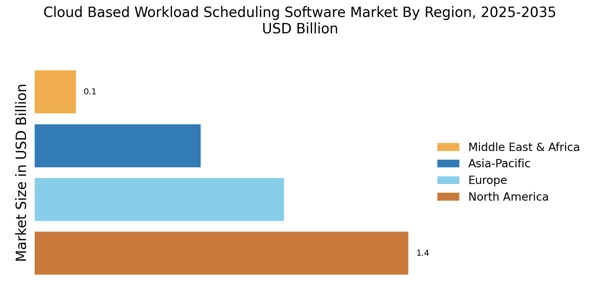

Cloud Based Workload Scheduling Software Market Regional Image

Hauptakteure und Wettbewerbseinblicke

The competitive landscape of the Cloud Based Workload Scheduling Software Market is characterized by a dynamic interplay of technology advancements, market demands and evolving customer needs. As companies increasingly adopt cloud solutions, the necessity for efficient workload scheduling has grown, leading to a surge in innovative software offerings.  The market is populated by several players, each striving to provide organizations with robust solutions designed to optimize resource utilization, improve operational efficiency, and ensure seamless management of workloads across diverse environments. The organizations within this market are leveraging cloud computing's scalability and flexibility to enhance their service offerings and create competitive advantages. Moreover, factors such as integration capabilities and user-friendly interfaces significantly influence market positioning, driving enterprises to partner or invest in advanced cloud-based scheduling solutions. Microsoft stands out in the Cloud Based Workload Scheduling Software Market due to its vast ecosystem and strong presence in enterprise cloud solutions. The company’s Azure platform offers comprehensive workload scheduling capabilities, seamlessly integrating with existing tools and applications to provide a robust environment for managing complex workloads.  Microsoft's focus on security, compliance and scalability positions it favorably against its competitors, as enterprises prioritize these elements in their cloud strategies. With its rich set of features, including automation, dynamic scaling and a centralized management interface, Microsoft empowers organizations to streamline their operations while maintaining high performance. The company’s commitment to innovation and continuous enhancement of its offerings ensures that it remains at the forefront of the market, enabling customers to adapt to changing business demands effectively. Red Hat also plays a significant role in the Cloud Based Workload Scheduling Software Market, emphasizing open-source solutions that promote flexibility and community-driven development. The company's OpenShift platform serves as a strong foundation for workload management, allowing organizations to deploy, manage, and scale applications effortlessly.  Red Hat’s solutions are recognized for their interoperability and ability to integrate seamlessly into existing IT environments, fostering a high level of customization. Its strong support for DevOps practices facilitates collaboration across development and operations teams, ensuring faster deployments and more efficient use of resources. Red Hat's commitment to providing transparent pricing and robust user support enhances its appeal, allowing businesses to adopt cloud workloads without the fear of vendor lock-in. This makes Red Hat a compelling choice for organizations looking to harness the benefits of cloud-based scheduling while ensuring adaptability and cost-effectiveness in their operations.

Zu den wichtigsten Unternehmen im Cloud Based Workload Scheduling Software Market-Markt gehören

Recent Industry Developments

Recent developments in the Cloud Based Workload Scheduling Software Market highlight its rapid evolution amid increasing demand for efficient resource allocation and automation in various sectors. Many organizations are embracing cloud-based solutions to enhance productivity and scalability, driven by the surge in remote work and digital transformation initiatives. Key players are focusing on innovative features, such as artificial intelligence and machine learning integration, to optimize scheduling tasks and improve service delivery. Partnerships and acquisitions are becoming commonplace as companies seek to bolster their offerings and expand their market reach.

Moreover, there is a noticeable trend toward providing customizable solutions that cater to specific industry requirements, ensuring that businesses can effectively manage workloads amidst growing complexity. As organizations increasingly recognize the importance of agility and flexibility, investments in cloud-based scheduling tools are expected to accelerate further, reflecting strong market potential in the coming years. The ongoing shift towards hybrid cloud environments is also influencing market dynamics, with emerging technologies playing a critical role in shaping future strategies and operational frameworks.

Zukunftsaussichten

Cloud Based Workload Scheduling Software Market Zukunftsaussichten

Der Markt für cloudbasierte Arbeitslastplanungssoftware wird voraussichtlich von 2025 bis 2035 mit einer CAGR von 9,92% wachsen, angetrieben durch zunehmende Automatisierung, Cloud-Adoption und Nachfrage nach Betriebseffizienz.

Bis 2035 wird erwartet, dass der Markt robust ist und erhebliches Wachstum und Innovation widerspiegelt.

Marktsegmentierung

Markt für cloudbasierte Arbeitslastplanungssoftware - Ausblick nach Endbenutzertyp

  • Kleine und mittlere Unternehmen (KMU)
  • Große Unternehmen

Markt für cloudbasierte Arbeitslastplanungssoftware - Ausblick nach Planungsart

  • Batch-Planung
  • Echtzeit-Planung
  • Ereignisgesteuerte Planung

Markt für cloudbasierte Arbeitslastplanungssoftware - Ausblick nach Anwendungsbereich

  • Rechenzentrumsmanagement
  • DevOps
  • IT-Betriebsmanagement
  • Ressourcenoptimierung

Markt für cloudbasierte Arbeitslastplanungssoftware - Ausblick nach Bereitstellungsmodell

  • Öffentliche Cloud
  • Private Cloud
  • Hybride Cloud

Markt für cloudbasierte Arbeitslastplanungssoftware - Ausblick nach Branchenvertikale

  • IT-Telekommunikation
  • Gesundheitswesen
  • Finanzdienstleistungen
  • Einzelhandel
  • Fertigung

Berichtsumfang

Parameter Details
Market Scope Global Cloud-Based Workload Scheduling Software Market, covering public, private, and hybrid deployments for corporate, government, and other end users
Study Period 2021–2035 (Historical: 2021–2024; Base Year: 2025; Forecast: 2026–2035)
CAGR 10.2% (2026–2035)
Market Size checkpoints 2025: USD 1.96 Billion; 2026: USD 2.15 Billion; 2030: USD 3.17 Billion; 2035: USD 5.15 Billion
Fastest Growing Segments Hybrid (12.9% CAGR); Government (11.6% CAGR); Asia Pacific (12.4% CAGR)
Companies Profiled BMC Software, Broadcom, IBM, Redwood Software, Stonebranch, Microsoft, Amazon Web Services, Google Cloud, Astronomer, Fortra, SMA Technologies, Beta Systems
Valuation Currency USD Billion
CAGR Driver Disclaimer Driver and restraint impact percentages are directional and not additive to the headline CAGR.

Frequently Asked Questions

Was ist die prognostizierte Marktbewertung des Marktes für cloudbasierte Arbeitslastplanung bis 2035?

Die prognostizierte Marktbewertung wird voraussichtlich 8,496 Milliarden USD bis 2035 erreichen.

Wie hoch war die Marktbewertung des Marktes für cloudbasierte Arbeitslastplanung im Jahr 2024?

Die Gesamtmarktbewertung betrug 3,002 Milliarden USD im Jahr 2024.

Wie hoch ist die erwartete CAGR für den Markt für cloudbasierte Arbeitslastplanung im Prognosezeitraum 2025 - 2035?

Die erwartete CAGR in diesem Zeitraum beträgt 9,92%.

Welches Segment des Bereitstellungsmodells zeigt das höchste Wachstumspotenzial im Markt?

Das Segment Public Cloud wird voraussichtlich von 1,201 Milliarden USD auf 3,296 Milliarden USD wachsen.

Wie unterscheidet sich der Markt für cloudbasierte Arbeitslastplanung zwischen KMUs und großen Unternehmen?

Der Markt für KMUs wird voraussichtlich von 1,201 Milliarden USD auf 3,392 Milliarden USD wachsen, während große Unternehmen voraussichtlich von 1,801 Milliarden USD auf 5,104 Milliarden USD wachsen werden.

Was sind die wichtigsten Anwendungsbereiche, die den Markt für cloudbasierte Arbeitslastplanung antreiben?

Wichtige Anwendungsbereiche sind das Datenzentrum-Management, DevOps, IT-Betriebsmanagement und Ressourcenoptimierung.

Welche Branchenvertikalen werden voraussichtlich erheblich zum Marktwachstum beitragen?

Die Sektoren IT-Telekommunikation, Gesundheitswesen, Finanzdienstleistungen, Einzelhandel und Fertigung werden voraussichtlich das Wachstum antreiben.

Welche Planungsarten gewinnen im Markt für cloudbasierte Arbeitslastplanung an Bedeutung?

Batch-Planung, Echtzeit-Planung und ereignisgesteuerte Planung sind die Haupttypen, die an Bedeutung gewinnen.

Wer sind die wichtigsten Akteure im Markt für cloudbasierte Arbeitslastplanung?

Wichtige Akteure sind IBM, Microsoft, Oracle, Amazon, Google, VMware, Red Hat, Cisco und BMC Software.

Wie groß war der Markt für IT-Betriebsmanagement im Jahr 2024 und wie groß wird er voraussichtlich bis 2035 sein?

Die Marktgröße für IT-Betriebsmanagement betrug 0,7 Milliarden USD im Jahr 2024 und wird voraussichtlich bis 2035 2,0 Milliarden USD erreichen.

Autor
Author Author Profile Nirmit Biswas LinkedIn Senior Research Analyst
With 5+ years of expertise in Market Intelligence and Strategic Research, Nirmit Biswas specializes in ICT, Semiconductors, and BFSI. Backed by an MBA in Financial Services and a Computer Science foundation, Nirmit blends technical depth with business acumen. He has successfully led 100+ projects for global enterprises and startups, including Amazon, Cisco, L&T and Huawei, delivering market estimations, competitive benchmarking, and GTM strategies. His focus lies in transforming complex data into clear, actionable insights that drive growth, innovation, and investment decisions. Recognized for bridging engineering innovation with executive strategy, Nirmit helps businesses navigate dynamic markets with confidence.
Co-Author Co-Author Profile Aarti Dhapte LinkedIn AVP - Research
A consulting professional focused on helping businesses navigate complex markets through structured research and strategic insights. I partner with clients to solve high-impact business problems across market entry strategy, competitive intelligence, and opportunity assessment. Over the course of my experience, I have led and contributed to 100+ market research and consulting engagements, delivering insights across multiple industries and geographies, and supporting strategic decisions linked to $500M+ market opportunities. My core expertise lies in building robust market sizing, forecasting, and commercial models (top-down and bottom-up), alongside deep-dive competitive and industry analysis. I have played a key role in shaping go-to-market strategies, investment cases, and growth roadmaps, enabling clients to make confident, data-backed decisions in dynamic markets.
Kostenloses Muster herunterladen

Bitte füllen Sie das folgende Formular aus, um ein kostenloses Muster dieses Berichts zu erhalten

Global Diameter Signaling Market
Fallstudie
Information and Communications Technology
Download PDF ×

We do not share your information with anyone. However, we may send you emails based on your report interest from time to time. You may contact us at any time to opt-out.