
Request Free Sample ×

Kindly complete the form below to receive a free sample of this Report

* Please use a valid business email

Leading companies partner with us for data-driven Insights

clients tt-cursor
Hero Background

Bio-Based Succinic Acid Market

ID: MRFR/CnM/6309-HCR
111 Pages
Chitranshi Jaiswal
Last Updated: May 15, 2026

生物基琥珀酸市场研究报告信息,按加工类型(硫酸铵工艺、直接结晶工艺)、应用(1,4 丁二醇、聚丁二酸丁二醇酯、增塑剂)、最终用途行业(化工、食品)和地区预测至 2030 年

分享
Download PDF ×

We do not share your information with anyone. However, we may send you emails based on your report interest from time to time. You may contact us at any time to opt-out.

Bio-Based Succinic Acid Market Infographic
Purchase Options

生物基琥珀酸市场概览

p根据 MRFR 的研究报告,全球生物基琥珀酸市场预计将在审查期间以 19.6% 的健康复合年增长率蓬勃发展。该报告进一步预测,到预测期末,市场规模将达到 9 亿美元。一般来说,琥珀酸主要使用石脑油的 C4 馏分和四碳烃通过马来酸酐生产。琥珀酸是通过水合氢化然后与马来酸酐获得的。环保型琥珀酸广泛用于制造涂料、树脂和油墨。

预计全球污染加剧和碳足迹增加将推动生物基琥珀酸市场的增长。许多地理位置都是这个全球市场的一部分,包括北美、中东、非洲、欧洲、亚太地区等。其中,北美区域市场预计将在预测期内占据最大的市场份额。

全球生物基琥珀酸市场已根据应用、最终用途行业和加工类型进行细分。此外,最终用途行业已细分为食品饮料、个人护理、制药、农业和化学品。加工类型细分市场分为不同的部分,例如直接结晶工艺、电渗析工艺和硫酸铵工艺。应用细分市场分为不同的部分,例如1,4丁二醇、溶剂和涂料、增塑剂、聚合物和……酯、聚丁二酸丁二醇酯等。

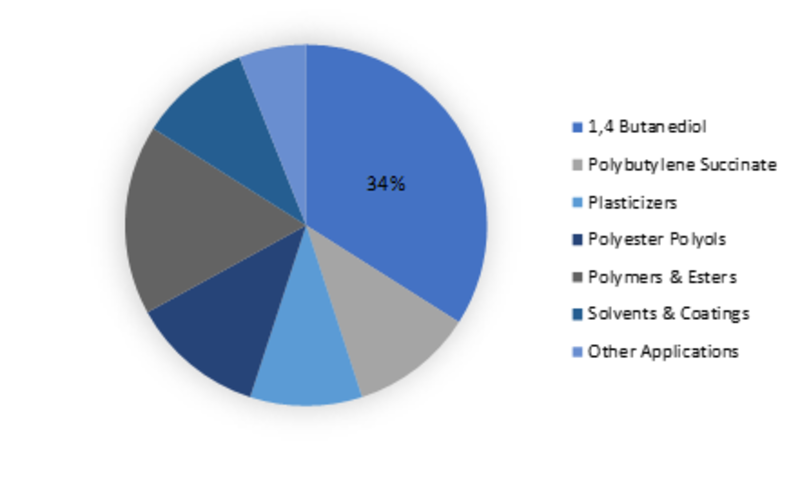
全球生物基琥珀酸市场,按应用2017 年 (%)

全球生物基琥珀酸市场,按应用,2017 年 (%)

来源:MRFR 分析

分段分析

p全球生物基琥珀酸市场已根据加工类型、应用、最终用途行业和地区进行细分。

基于加工类型,全球生物基琥珀酸市场分为硫酸铵法、直接结晶法和电渗析法。

按应用,全球生物基琥珀酸分为1,4丁二醇、聚丁二酸丁二醇酯、增塑剂、聚酯多元醇、聚合物和酯、溶剂和涂料以及其他应用。

按最终用途行业,全球生物基琥珀酸分为化学、食品和饮料、制药、个人护理和农业。

区域分析

p全球生物基琥珀酸市场横跨五个地区,即亚太地区、北美、欧洲、拉丁美洲和中东及非洲。非洲。

2018 年,北美市场占据全球生物基琥珀酸市场的最大份额。生物基琥珀酸在化学和制药行业的日益增长的使用推动了该地区生物基琥珀酸市场的增长。预计该地区市场将在预测期内继续占据主导地位。

2018 年,亚太地区的生物基琥珀酸市场增长最快,占有第二大份额。印度、中国、泰国和韩国的制药、汽车和农业行业需求不断增长,预计将推动该地区生物基琥珀酸市场的增长。预计到预测期结束时,亚太地区将成为主导的区域市场。

2018 年,欧洲市场的市场份额紧随亚太地区之后。生物基琥珀酸在食品和预计饮料和个人护理行业将成为该地区生物基琥珀酸市场增长的主要因素。预计欧洲市场在预测期内将出现可观的增长。

预计拉丁美洲市场在预测期内将录得温和增长。增长归因于日益增长的环境问题以及该地区化学工业转向使用生物基琥珀酸。

预计中东和非洲生物基琥珀酸市场在预测期内将出现缓慢增长,原因是石油工业的大量存在以及制造商在生产琥珀酸方面对石油的高度依赖。

生物基琥珀酸市场参与者

pBioAmber Inc(美国)、DSM(荷兰)、三井物产株式会社(日本)、三菱化学株式会社(日本)、巴斯夫 SE(德国)、Roquette Frères(法国)、Corbion(荷兰)和 Reverdia(荷兰)是全球生物基琥珀酸市场的一些主要参与者。最新发展

2022 年 2 月

Bio MADE,即生物工业制造和设计生态系统,目前正在向 16 个创新项目提供 580 万美元的联邦资金,旨在增强美国的生物工业制造能力、知识和劳动力。此外,这些项目还利用额外的630万美元非联邦成本分摊来促进生态系统的发展。

目标受众:

    • 生物基琥珀酸制造商和生产商
    • 生物基琥珀酸贸易商和分销商
    • 原材料供应商
    • 国有实验室
    • 研发机构

FAQs

What is the projected market valuation for the Bio-Based Succinic Acid Market in 2035?

The projected market valuation for the Bio-Based Succinic Acid Market in 2035 is 75.2 USD Million.

What was the market valuation for Bio-Based Succinic Acid in 2024?

The overall market valuation for Bio-Based Succinic Acid was 17.45 USD Million in 2024.

What is the expected CAGR for the Bio-Based Succinic Acid Market from 2025 to 2035?

The expected CAGR for the Bio-Based Succinic Acid Market during the forecast period 2025 - 2035 is 14.2%.

Which companies are considered key players in the Bio-Based Succinic Acid Market?

Key players in the Bio-Based Succinic Acid Market include BioAmber, Myriant, Reverdia, Succinity, Green Biologics, Genomatica, Cargill, and BASF.

What are the main applications of Bio-Based Succinic Acid and their market values?

Main applications include Food and Beverage (15.0 USD Million), Pharmaceuticals (18.0 USD Million), and Bioplastics (20.0 USD Million) among others.

How does the market for Bio-Based Succinic Acid compare across different production methods?

Production methods include Fermentation (32.5 USD Million), Chemical Synthesis (20.0 USD Million), and Enzymatic Process (15.0 USD Million), indicating diverse approaches.

What are the projected market values for Bio-Based Succinic Acid by source in 2035?

Projected market values by source include Corn (22.0 USD Million), Sugarcane (18.0 USD Million), and Cellulosic Biomass (13.2 USD Million) in 2035.

What purity levels are available in the Bio-Based Succinic Acid Market?

Purity levels include Low Purity (15.0 USD Million), Medium Purity (30.0 USD Million), and High Purity (30.2 USD Million), reflecting varying quality standards.

What end-use segments are driving the Bio-Based Succinic Acid Market?

End-use segments include Industrial Chemicals (15.5 USD Million), Solvents (18.0 USD Million), and Coatings (15.7 USD Million), showcasing broad applicability.

How does the Bio-Based Succinic Acid Market's growth potential appear in the context of sustainability?

The growth potential of the Bio-Based Succinic Acid Market appears robust, driven by increasing demand for sustainable alternatives in various industries.
作者
Author
Author Profile
Chitranshi Jaiswal LinkedIn
Team Lead - Research
Chitranshi is a Team Leader in the Chemicals & Materials (CnM) and Energy & Power (EnP) domains, with 6+ years of experience in market research. She leads and mentors teams to deliver cross-domain projects that equip clients with actionable insights and growth strategies. She is skilled in market estimation, forecasting, competitive benchmarking, and both primary & secondary research, enabling her to turn complex data into decision-ready insights. An engineer and MBA professional, she combines technical expertise with strategic acumen to solve dynamic market challenges. Chitranshi has successfully managed projects that support market entry, investment planning, and competitive positioning, while building strong client relationships. Certified in Advanced Excel & Power BI she leverages data-driven approaches to ensure accuracy, clarity, and impactful outcomes.
发表评论

Research Approach

Secondary Research

The secondary research process involved comprehensive analysis of regulatory databases, peer-reviewed scientific journals, chemical industry publications, and authoritative environmental and industrial organizations. Key sources included the US Environmental Protection Agency (EPA), US Department of Energy (DOE) / National Renewable Energy Laboratory (NREL), European Chemicals Agency (ECHA), European Commission Joint Research Centre (JRC), International Energy Agency (IEA), Organisation for Economic Co-operation and Development (OECD), Food and Drug Administration (FDA) for food-grade chemical approvals, US Department of Agriculture (USDA) BioPreferred Program, European Committee for Standardization (CEN), International Organization for Standardization (ISO) for bio-based product standards, National Center for Biotechnology Information (NCBI/PubMed) for fermentation and enzymatic process studies, ScienceDirect / Elsevier, Wiley Online Library, American Chemical Society (ACS) Publications, Chemical & Engineering News, ICIS Chemical Business, S&P Global Commodity Insights, Grand View Research, Verified Market Research, and national statistical databases from key markets including Eurostat, US Census Bureau, China National Bureau of Statistics, and India Ministry of Chemicals and Fertilizers. These sources were used to collect production capacity data, regulatory approval statuses for bio-based chemical pathways, fermentation technology advancements, feedstock availability studies, sustainability lifecycle assessments (LCA), and market landscape analysis for bio-based succinic acid across fermentation-derived, enzymatic, and emerging bioreactor technology platforms.

Primary Research

In order to gather both qualitative and quantitative insights, supply-side and demand-side stakeholders were interviewed during the primary research process. CEOs, vice presidents of technology and process development, heads of regulatory affairs, sustainability officers, and commercial directors from producers of bio-based succinic acid, industrial biotechnology companies, suppliers of fermentation technology, and suppliers of agricultural feedstock were examples of supply-side sources. Procurement heads and R&D directors from specialty chemical companies, manufacturers of bioplastics (polybutylene succinate, or PBS), food and beverage formulators, buyers of pharmaceutical excipients, developers of cosmetics and personal care products, and producers of industrial coatings and adhesives were examples of demand-side sources. Primary research verified product pipeline timelines for commercial-scale fermentation facilities, obtained information on feedstock pricing volatility, offtake agreement structures, and sustainability certification dynamics, and validated market segmentation across process type (ammonium sulphate process, direct crystallization process), application (1,4-butanediol, polybutylene succinate, plasticizers), and end-use industry (chemical, food).

Primary Respondent Breakdown:

By Designation: C-level Primaries (32%), Director Level (30%), Others (38%)

By Region: North America (32%), Europe (30%), Asia-Pacific (28%), Rest of World (10%)

Market Size Estimation

Global market valuation was derived through revenue mapping and production capacity analysis. The methodology included:

Identification of 35+ key manufacturers and technology developers across North America, Europe, Asia-Pacific, and Latin America

Product mapping across fermentation-based, chemical synthesis, enzymatic process, and bioreactor technology platforms

Analysis of reported and modeled annual revenues specific to bio-based succinic acid portfolios

Coverage of manufacturers and technology licensors representing 65–70% of global market share in 2024

Extrapolation using bottom-up (production volume × average selling price by region, adjusted for purity grade: low, medium, high, ultra-high) and top-down (manufacturer revenue validation and capacity utilization rates) approaches to derive segment-specific valuations for application segments including 1,4-butanediol, polybutylene succinate, plasticizers, solvents, adhesives, and coatings.

下载免费样本

请填写以下表格以获取本报告的免费样本

Compare Licence

×
Features License Type
Single User Multiuser License Enterprise User
Price $4,950 $5,950 $7,250
Maximum User Access Limit 1 User Upto 10 Users Unrestricted Access Throughout the Organization
Free Customization
Direct Access to Analyst
Deliverable Format
Platform Access
Discount on Next Purchase 10% 15% 15%
Printable Versions














