×
Request Free Sample ×

Kindly complete the form below to receive a free sample of this Report

* Please use a valid business email

Leading companies partner with us for data-driven Insights

clients tt-cursor
Hero Background

Wood Preservation Chemical Market

ID: MRFR/CnM/24836-HCR
111 Pages
Chitranshi Jaiswal
October 2025

Wood Preservation Chemical Market Research Report: By Wood Type (Softwood, Hardwood, Bamboo, Other Wood Types), By Chemical Type (Creosote, Pentachlorophenol, Copper Azole, Inorganic Arsenicals, Alkyl Ammonium Compounds, Other Chemical Types), By Application Method (Pressure Treatment, Dipping, Brushing, Spraying, Other Application Methods), By End Use Industry (Construction, Marine, Agriculture, Utilities, Other End Use Industries), By Treatment Class (Use Class 1, Use Class 2, Use Class 3, Use Class 4, Other Treatment Classes) and By Regio... read more

Share:
Download PDF ×

We do not share your information with anyone. However, we may send you emails based on your report interest from time to time. You may contact us at any time to opt-out.

Wood Preservation Chemical Market Infographic
Purchase Options

Wood Preservation Chemical Market Summary

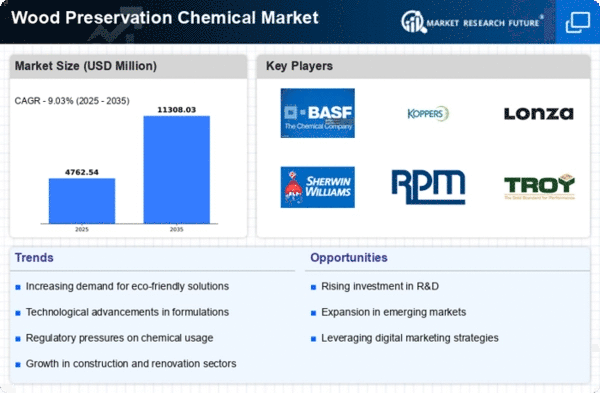
As per MRFR analysis, the Wood Preservation Chemical Market Size was estimated at 4368.1 USD Million in 2024. The Wood Preservation Chemical industry is projected to grow from 4762.62 in 2025 to 11308.03 by 2035, exhibiting a compound annual growth rate (CAGR) of 9.03 during the forecast period 2025 - 2035.

Key Market Trends & Highlights

The Wood Preservation Chemical Market is experiencing a shift towards sustainable practices and innovative solutions.

  • The market is witnessing a rise in eco-friendly solutions as consumers increasingly prioritize sustainability.
  • Technological advancements in preservation methods are enhancing the effectiveness and longevity of wood treatments.
  • North America remains the largest market, while the Asia-Pacific region is recognized as the fastest-growing area for wood preservation chemicals.
  • The increasing demand for durable wood products and regulatory support for sustainable practices are driving growth in the construction and furniture segments.

Market Size & Forecast

2024 Market Size 4368.1 (USD Million)
2035 Market Size 11308.03 (USD Million)
CAGR (2025 - 2035) 9.03%

Major Players

BASF SE (DE), Koppers Inc. (US), Lonza Group AG (CH), Sherwin-Williams Company (US), RPM International Inc. (US), Troy Corporation (US), Bayer AG (DE), Nufarm Limited (AU), Viance LLC (US)

Wood Preservation Chemical Market Trends

The Wood Preservation Chemical Market is currently experiencing a dynamic evolution, driven by increasing awareness regarding the longevity and sustainability of wooden structures. As consumers and industries alike prioritize eco-friendly solutions, the demand for non-toxic and biodegradable wood preservatives appears to be on the rise. This shift is likely influenced by stringent regulations aimed at reducing harmful chemicals in construction materials, which may compel manufacturers to innovate and adapt their product offerings. Furthermore, the growing trend of urbanization and infrastructure development is expected to bolster the market, as more wooden products are utilized in residential and commercial projects. In addition, advancements in technology are facilitating the development of more effective wood preservation methods. Innovations in chemical formulations and application techniques could enhance the performance of these products, thereby appealing to a broader range of consumers. The Wood Preservation Chemical Market seems poised for growth, as stakeholders increasingly recognize the importance of protecting wood from decay, insects, and environmental factors. As the market continues to evolve, it may witness a convergence of traditional practices with modern solutions, ultimately leading to a more sustainable approach to wood preservation.

Rise of Eco-Friendly Solutions

There is a noticeable shift towards environmentally friendly wood preservation chemicals. Consumers are increasingly seeking non-toxic and biodegradable options, which aligns with global sustainability goals. This trend suggests a growing preference for products that minimize environmental impact while ensuring the durability of wooden structures.

Technological Advancements in Preservation Methods

Innovations in chemical formulations and application techniques are transforming the Wood Preservation Chemical Market. Enhanced performance characteristics of new products may attract a wider consumer base, as these advancements promise improved protection against decay and pests.

Urbanization and Infrastructure Development

The ongoing trend of urbanization is likely to drive demand for wood preservation chemicals. As more wooden materials are utilized in construction, the need for effective preservation solutions becomes increasingly critical, suggesting a robust market outlook.

Wood Preservation Chemical Market Drivers

Regulatory Compliance and Standards

The Wood Preservation Chemical Market is significantly shaped by the evolving regulatory landscape surrounding chemical usage in wood treatment. Governments and environmental agencies are increasingly implementing stringent regulations to ensure the safety and sustainability of wood preservation chemicals. Compliance with these regulations is essential for manufacturers, as non-compliance can lead to severe penalties and market access issues. The market is adapting to these changes by developing eco-friendly and compliant products that meet regulatory standards. This shift not only enhances the credibility of the Wood Preservation Chemical Market but also aligns with the growing consumer demand for safer and more sustainable products. As regulations continue to evolve, companies that proactively adapt to these changes are likely to gain a competitive edge.

Increasing Demand for Sustainable Construction

The Wood Preservation Chemical Market is experiencing a notable surge in demand driven by the increasing emphasis on sustainable construction practices. As consumers and builders alike prioritize environmentally friendly materials, the need for effective wood preservation solutions has intensified. This trend is reflected in the rising adoption of treated wood in residential and commercial projects, with the market for treated wood projected to reach approximately USD 10 billion by 2026. The Wood Preservation Chemical Market plays a crucial role in ensuring that wood products maintain their integrity and longevity, thereby supporting sustainable building initiatives. Furthermore, the growing awareness of the environmental impact of untreated wood has led to a shift towards using chemicals that are less harmful to ecosystems, further propelling market growth.

Rising Awareness of Wood Preservation Benefits

The Wood Preservation Chemical Market is significantly influenced by the rising awareness among consumers and industries regarding the benefits of wood preservation. As wood is a natural resource, its longevity and durability are paramount for various applications, including construction, furniture, and flooring. The market is projected to grow at a compound annual growth rate of 5.2% through 2027, indicating a robust interest in preservation chemicals that enhance wood's resistance to pests, moisture, and decay. This awareness is not only limited to consumers but extends to manufacturers who are increasingly investing in high-quality preservation solutions to meet market demands. The emphasis on maintaining the aesthetic and functional qualities of wood products is likely to drive further innovation within the Wood Preservation Chemical Market.

Growth in the Furniture and Construction Sectors

The Wood Preservation Chemical Market is poised for growth, largely driven by the expansion of the furniture and construction sectors. As urbanization accelerates and disposable incomes rise, the demand for wooden furniture and construction materials is increasing. The construction industry alone is expected to grow at a rate of 4% annually, leading to a higher requirement for treated wood products. This trend is further supported by the increasing preference for wooden structures due to their aesthetic appeal and sustainability. Consequently, the Wood Preservation Chemical Market is likely to benefit from this growth, as manufacturers seek to provide effective preservation solutions that meet the needs of these expanding sectors. The interplay between construction growth and wood preservation is expected to create a robust market environment.

Technological Innovations in Preservation Techniques

Technological advancements are reshaping the Wood Preservation Chemical Market, introducing innovative preservation techniques that enhance the efficacy and safety of wood treatment processes. Recent developments include the use of nanotechnology and bio-based preservatives, which offer improved performance while minimizing environmental impact. The market is witnessing a shift towards these advanced solutions, as they provide longer-lasting protection against biological threats. For instance, the introduction of water-based preservatives has gained traction, as they are less toxic and more user-friendly. This trend is expected to contribute to a projected market growth of 4.5% annually over the next five years. As manufacturers continue to invest in research and development, the Wood Preservation Chemical Market is likely to see a proliferation of new products that cater to evolving consumer preferences.


Market Segment Insights

By Application: Wood Preservation (Largest) vs. Wood Stains (Fastest-Growing)

Within the Wood Preservation Chemical Market, the application segment showcases diverse uses primarily categorized into wood preservation, wood coatings, wood treatment, and wood stains. Wood preservation holds the largest market share as it is essential for enhancing the longevity of wooden structures and products. In comparison, wood stains, known for their aesthetic applications and functional benefits, are emerging rapidly with a growing consumer preference for decorative wood treatments. Growth trends in this segment indicate a rising awareness of sustainable building practices and the increasing durability requirements of wooden products. Wood preservation continues to benefit from regulations emphasizing treatment to protect against pests and decay, whereas wood stains are experiencing heightened demand from residential and commercial sectors seeking aesthetic enhancements along with protection. This dual trend is positioning these applications strongly within the evolving market landscape.

Wood Preservation (Dominant) vs. Wood Coatings (Emerging)

Wood Preservation is recognized as the dominant application in the Wood Preservation Chemical Market, focusing on protecting wood against various deteriorative elements. These chemicals serve as critical agents in ensuring the structural and aesthetic integrity of wood over time. In contrast, wood coatings are emerging as a significant player in the market, offering a blend of protection and aesthetic appeal. This application is gaining traction as manufacturers and consumers pursue products that not only safeguard wood but also enhance its visual appeal. The differentiation in functionality—where wood preservation aims solely at longevity and protection, while wood coatings provide both aesthetic enhancement and protection—positions them uniquely within the market, catering to diverse consumer needs.

By End Use: Construction (Largest) vs. Furniture (Fastest-Growing)

The Wood Preservation Chemical Market is primarily segmented by end uses, with the Construction sector dominating the market share. This sector encompasses a wide array of applications, such as structural timber and flooring, making it a vital consumer of wood preservation solutions. On the other hand, the Furniture sector is witnessing significant growth due to increasing consumer demand for sustainable and long-lasting furniture, leading to higher investments in wood protection chemicals.

Construction (Dominant) vs. Furniture (Emerging)

The Construction end use is characterized by its extensive use of wood in building materials and infrastructure projects, leading to high consumption of wood preservation chemicals. These chemicals protect against pests, decay, and moisture, ensuring the longevity and durability of structures. In contrast, the Furniture segment, although smaller in market share, is rapidly emerging as a significant growth driver in the wood preservation space. Growing awareness of sustainable designs and the shift towards eco-friendly materials are propelling this sector forward, prompting manufacturers to innovate and develop specialized preservation solutions that meet consumer preferences.

By Chemical Type: Copper-Based Compounds (Largest) vs. Boric Acid (Fastest-Growing)

In the Wood Preservation Chemical Market, the share distribution among various chemical types reflects significant segmentation. Copper-Based Compounds currently dominate the market due to their effectiveness and long-standing use in wood preservation applications. On the other hand, Boric Acid has emerged as a vital segment, capturing the attention of manufacturers and consumers alike due to its eco-friendly properties and rising demand for sustainable practices in construction and maintenance.

Copper-Based Compounds (Dominant) vs. Boric Acid (Emerging)

Copper-Based Compounds are recognized for their long-term efficacy in protecting wood against decay and insect damage, which has made them the dominant choice among wood treatment providers. These compounds offer robustness and have established a reliable reputation in the industry. Conversely, Boric Acid is gaining traction as an emerging alternative thanks to its lower toxicity and environmental benefits. As regulations are tightened around chemical use, Boric Acid is seen as a favorable option for companies committed to sustainable practices, ensuring its position in the market is strengthening rapidly.

By Formulation Type: Water-Based (Largest) vs. Oil-Based (Fastest-Growing)

The Wood Preservation Chemical Market is primarily segmented into three formulation types: Water-Based, Solvent-Based, and Oil-Based. Among these, Water-Based formulations dominate the market due to their eco-friendliness and reduced volatile organic compound (VOC) emissions, appealing to environmentally conscious consumers. Solvent-Based formulations, while traditional, are losing market share as regulations tighten concerning VOC emissions. Oil-Based formulations hold a smaller share but are witnessing heightened interest due to their superior protection and longevity against wood degradation.

Water-Based (Dominant) vs. Oil-Based (Emerging)

Water-Based wood preservation chemicals stand out as the dominant player in the market, characterized by their low toxicity and environmental compliance. They are preferred for interior applications and residential use due to their safe handling properties and ease of cleanup. In contrast, Oil-Based preservatives, while emerging and less favored in urban settings, offer robust protection against insects and fungi, making them ideal for outdoor applications. Their growing popularity can be attributed to increasing demand for high-performance solutions that assure long-term wood durability, particularly in harsh environmental conditions.

By Distribution Channel: Direct Sales (Largest) vs. Distributors (Fastest-Growing)

In the Wood Preservation Chemical Market, the distribution has been primarily dominated by Direct Sales, which serves as the largest channel owing to its direct engagement with manufacturers and end-users. This channel simplifies the sales process and enhances customer relationships, providing a significant edge over its counterparts. Distributors, while currently a smaller share of the market, are emerging as critical players, facilitating access to a broader customer base and distribution networks, ultimately increasing their market share.

Distribution Channel: Direct Sales (Dominant) vs. Distributors (Emerging)

Direct Sales stands out as a dominant distribution channel in the Wood Preservation Chemical Market due to its efficiency in connecting suppliers directly with consumers. This model allows companies to establish strong relationships with their clients, leading to increased customer loyalty and faster response times to market demands. Conversely, Distributors represent an emerging segment, capitalizing on their established networks to reach a wider range of customers, including small-scale users. They offer logistical advantages and localized support, facilitating growth in the market. As industry needs evolve, both channels present unique strengths; with Direct Sales leading in volume and Distributors growing rapidly to meet expanding demand.

Get more detailed insights about Wood Preservation Chemical Market

Regional Insights

North America : Market Leader in Wood Chemicals

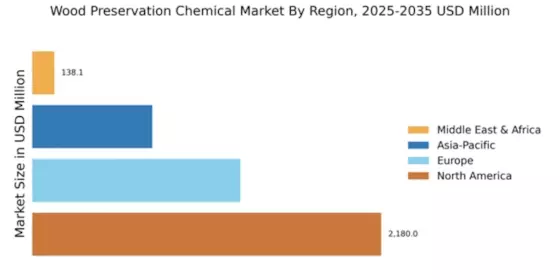
North America is poised to maintain its leadership in the wood preservation chemical market, holding a significant share of 2180.0 million in 2024. The region's growth is driven by increasing construction activities, stringent regulations on wood treatment, and a rising demand for sustainable building materials. The focus on eco-friendly solutions is further catalyzing market expansion, as consumers and businesses alike prioritize environmentally responsible products. The United States and Canada are the primary contributors to this market, with key players like BASF SE, Koppers Inc., and Sherwin-Williams Company leading the charge. The competitive landscape is characterized by innovation and strategic partnerships, as companies invest in R&D to develop advanced wood preservation technologies. This dynamic environment positions North America as a hub for cutting-edge solutions in the wood preservation sector.

Europe : Sustainable Practices Drive Growth

Europe's wood preservation chemical market is projected to reach 1300.0 million by 2025, driven by a strong emphasis on sustainability and environmental regulations. The European Union's stringent guidelines on chemical usage in wood treatment are fostering innovation and encouraging the adoption of eco-friendly alternatives. This regulatory landscape is a key catalyst for market growth, as companies adapt to meet these evolving standards. Leading countries such as Germany, France, and the UK are at the forefront of this market, with major players like Lonza Group AG and Bayer AG actively participating. The competitive environment is marked by a focus on research and development, as firms strive to create more effective and sustainable wood preservation solutions. The commitment to sustainability is reshaping the market, making Europe a leader in environmentally responsible practices.

Asia-Pacific : Rapid Growth in Emerging Markets

The Asia-Pacific wood preservation chemical market is expected to grow significantly, reaching 750.0 million by 2025. This growth is fueled by rapid urbanization, increasing construction activities, and a rising awareness of the importance of wood preservation. Countries like China and India are witnessing a surge in demand for treated wood products, driven by their booming construction sectors and a growing middle class seeking quality housing solutions. China stands out as a key player in this region, with numerous local and international companies vying for market share. The competitive landscape includes firms like Nufarm Limited and Viance LLC, which are focusing on innovative products to meet the diverse needs of consumers. As the market evolves, the emphasis on quality and sustainability will shape the future of wood preservation in Asia-Pacific, making it a vibrant and competitive arena.

Middle East and Africa : Emerging Market with Potential

The Middle East and Africa (MEA) wood preservation chemical market is projected to reach 138.1 million by 2025, driven by increasing construction activities and a growing awareness of wood preservation benefits. The region's expanding infrastructure projects and urban development initiatives are key growth drivers, as stakeholders recognize the importance of protecting wood products from decay and pests. Regulatory frameworks are gradually evolving to support sustainable practices in wood treatment, further enhancing market prospects. Countries like South Africa and the UAE are leading the charge in this market, with local and international players exploring opportunities for growth. The competitive landscape is characterized by a mix of established companies and emerging players, all striving to capture market share. As the region continues to develop, the demand for effective wood preservation solutions is expected to rise, presenting significant opportunities for growth.

Key Players and Competitive Insights

The Wood Preservation Chemical Market is characterized by a dynamic competitive landscape, driven by increasing demand for sustainable building materials and stringent regulations regarding wood treatment. Key players such as BASF SE (DE), Koppers Inc. (US), and Lonza Group AG (CH) are strategically positioned to leverage innovation and sustainability in their operations. These companies are focusing on developing eco-friendly preservatives and enhancing their product portfolios to meet evolving consumer preferences. Their collective strategies not only foster competitive differentiation but also contribute to shaping market trends towards greener solutions.
In terms of business tactics, companies are increasingly localizing manufacturing to reduce logistics costs and enhance supply chain efficiency. The market appears moderately fragmented, with several players vying for market share. However, the influence of major companies like Sherwin-Williams Company (US) and RPM International Inc. (US) is notable, as they implement aggressive marketing strategies and expand their distribution networks, thereby solidifying their positions in the market.

In November 2025, Koppers Inc. (US) announced the launch of a new line of bio-based wood preservatives aimed at reducing environmental impact. This strategic move is significant as it aligns with the growing consumer demand for sustainable products and positions Koppers as a leader in eco-friendly solutions. The introduction of these products could potentially enhance their market share and appeal to environmentally conscious consumers.

In October 2025, BASF SE (DE) expanded its production capacity for wood preservation chemicals in North America. This expansion is crucial as it not only meets the rising demand in the region but also strengthens BASF's competitive edge by ensuring a reliable supply of innovative products. The increased capacity may allow BASF to respond more swiftly to market fluctuations and customer needs, thereby enhancing its operational efficiency.

In September 2025, Lonza Group AG (CH) entered into a strategic partnership with a leading technology firm to integrate AI into its wood preservation processes. This collaboration is indicative of a broader trend towards digital transformation within the industry. By leveraging AI, Lonza aims to optimize its production processes and improve product performance, which could lead to enhanced customer satisfaction and loyalty.

As of December 2025, the competitive trends in the Wood Preservation Chemical Market are increasingly defined by digitalization, sustainability, and technological integration. Strategic alliances are becoming more prevalent, allowing companies to pool resources and expertise to innovate more effectively. The shift from price-based competition to a focus on innovation and supply chain reliability is evident, suggesting that future competitive differentiation will hinge on the ability to deliver high-quality, sustainable products that meet the demands of a more environmentally conscious market.

Key Companies in the Wood Preservation Chemical Market market include

Industry Developments

The increasing demand for treated wood in construction, coupled with growing concerns regarding the environmental impact of untreated wood, is driving market growth. Furthermore, the rising awareness of wood preservation chemicals' role in extending the lifespan of wood products is expected to contribute to market expansion. Key industry participants are focusing on developing innovative and eco-friendly wood preservation technologies to meet the evolving needs of the construction industry.

Future Outlook

Wood Preservation Chemical Market Future Outlook

The Wood Preservation Chemical Market is projected to grow at a 9.03% CAGR from 2024 to 2035, driven by increasing demand for sustainable building materials and stringent regulations.

New opportunities lie in:

  • Development of eco-friendly wood preservatives for compliance with environmental regulations.
  • Expansion into emerging markets with tailored product offerings for local wood species.
  • Investment in advanced application technologies to enhance efficiency and reduce waste.

By 2035, the market is expected to achieve robust growth, positioning itself as a leader in sustainable wood preservation solutions.

Market Segmentation

Wood Preservation Chemical Market End Use Outlook

  • Construction
  • Furniture
  • Packaging
  • Transportation

Wood Preservation Chemical Market Application Outlook

  • Wood Preservation
  • Wood Coatings
  • Wood Treatment
  • Wood Stains

Wood Preservation Chemical Market Chemical Type Outlook

  • Copper-Based Compounds
  • Boric Acid
  • Chromated Copper Arsenate
  • Organic Biocides

Wood Preservation Chemical Market Formulation Type Outlook

  • Water-Based
  • Solvent-Based
  • Oil-Based

Wood Preservation Chemical Market Distribution Channel Outlook

  • Direct Sales
  • Distributors
  • Online Sales

Report Scope

MARKET SIZE 20244368.1(USD Million)
MARKET SIZE 20254762.62(USD Million)
MARKET SIZE 203511308.03(USD Million)
COMPOUND ANNUAL GROWTH RATE (CAGR)9.03% (2024 - 2035)
REPORT COVERAGERevenue Forecast, Competitive Landscape, Growth Factors, and Trends
BASE YEAR2024
Market Forecast Period2025 - 2035
Historical Data2019 - 2024
Market Forecast UnitsUSD Million
Key Companies ProfiledBASF SE (DE), Koppers Inc. (US), Lonza Group AG (CH), Sherwin-Williams Company (US), RPM International Inc. (US), Troy Corporation (US), Bayer AG (DE), Nufarm Limited (AU), Viance LLC (US)
Segments CoveredApplication, End Use, Chemical Type, Formulation Type, Distribution Channel
Key Market OpportunitiesGrowing demand for eco-friendly wood preservation solutions drives innovation in the Wood Preservation Chemical Market.
Key Market DynamicsRising environmental regulations drive innovation in sustainable wood preservation chemicals and alter competitive dynamics.
Countries CoveredNorth America, Europe, APAC, South America, MEA

Leave a Comment

FAQs

What is the projected market valuation of the Wood Preservation Chemical Market by 2035?

The projected market valuation for the Wood Preservation Chemical Market is expected to reach 11.31 USD Billion by 2035.

What was the market valuation of the Wood Preservation Chemical Market in 2024?

The overall market valuation of the Wood Preservation Chemical Market was 4.368 USD Billion in 2024.

What is the expected CAGR for the Wood Preservation Chemical Market during the forecast period 2025 - 2035?

The expected CAGR for the Wood Preservation Chemical Market during the forecast period 2025 - 2035 is 9.03%.

Which companies are considered key players in the Wood Preservation Chemical Market?

Key players in the Wood Preservation Chemical Market include BASF SE, Koppers Inc., Lonza Group AG, and Arch Wood Protection Inc.

What are the main segments of the Wood Preservation Chemical Market based on wood type?

The main segments based on wood type include Softwood, Hardwood, Bamboo, and Other Wood Types, with valuations ranging from 1.5 to 3.9 USD Billion for Softwood.

How does the market perform in terms of chemical types used for wood preservation?

The market performance for chemical types includes Creosote, Pentachlorophenol, and Copper Azole, with Pentachlorophenol valued at 1.2 USD Billion in 2024.

What application methods are utilized in the Wood Preservation Chemical Market?

Application methods in the market include Pressure Treatment, Dipping, and Brushing, with Pressure Treatment valued at 1.5 USD Billion in 2024.

What end-use industries are driving demand for wood preservation chemicals?

End-use industries driving demand include Construction, Marine, and Agriculture, with Construction valued at 1.5 USD Billion in 2024.

What treatment classes are available in the Wood Preservation Chemical Market?

Treatment classes available include Use Class 1, Use Class 2, and Use Class 3, with Use Class 3 valued at 1.312 USD Billion in 2024.

How does the market for bamboo wood preservation chemicals compare to other wood types?

The bamboo wood preservation segment is valued at 0.5 USD Billion in 2024, which is lower compared to Softwood and Hardwood segments.

Download Free Sample

Kindly complete the form below to receive a free sample of this Report

Compare Licence

×
Features License Type
Single User Multiuser License Enterprise User
Price $4,950 $ $7,250
Maximum User Access Limit 1 User Upto 10 Users Unrestricted Access Throughout the Organization
Free Customization
Direct Access to Analyst
Deliverable Format
Platform Access
Discount on Next Purchase 10% 15% 15%
Printable Versions