×
Hero Background
English
Chinese
French
Japanese
Korean
German
Spanish

Ulnar Nerve Treatment Market Trends

ID: MRFR/Pharma/1323-HCR
85 Pages
Kinjoll Dey
October 2025

Ulnar Nerve Treatment Market Research Report Information, by Types of treatments (OTC pain relievers, nerve spasm drugs, physical therapy, surgery) by end users (Hospitals and Clinics, Research Centers, laboratories) - Forecast to 2035

Share:
Download PDF ×

We do not share your information with anyone. However, we may send you emails based on your report interest from time to time. You may contact us at any time to opt-out.

Ulnar Nerve Treatment Market Infographic
Purchase Options

Market Trends

Key Emerging Trends in the Ulnar Nerve Treatment Market

A noticeable pattern in the ulnar nerve treatment market is the increasing reception of minimally invasive surgical techniques. Endoscopic and arthroscopic procedures for ulnar nerve decompression expect to lessen surgical trauma, limit scarring, and facilitate recuperation. This pattern reflects a shift towards surgical interventions that focus on persistent solace and faster recovery. The market is encountering a surge in the use of cutting-edge imaging technologies for precise diagnosis of ulnar nerve conditions. Magnetic Resonance Imaging (MRI) and High-Resolution Ultrasound give definite views of the ulnar nerve life constructions, helping with precise confinement of compression or entanglement sites. This pattern contributes to more designated and compelling treatment positioning. There is a developing emphasis on restoration and physical therapy as indispensable components of ulnar nerve treatment. Designated exercises, nerve moving techniques, and remedial modalities expect to further develop muscle strength, adaptability, and generally nerve capability. This pattern reflects a holistic way to deal with overseeing ulnar nerve disorders and forestalling repeat. Electrodiagnostic observing, including electromyography (EMG) and nerve conduction studies, is assuming a significant part in assessing treatment outcomes for ulnar nerve conditions. Ordinary observing helps track nerve recuperation, muscle action, and practical improvement, directing adjustments to the treatment plan. This pattern supports proof based decision-production in quiet consideration. The fuse of 3D printing innovation is arising as a pattern in ulnar nerve treatment, especially for customized orthoses. Patient-specific splints and orthotic devices can be precisely fabricated to offer ideal help and assurance during the mending process. This development ensures a custom-made fit and better understanding consistence. Advances in pharmacological interventions for torment management in ulnar nerve disorders are acquiring consideration. Designated medications, including neuropathic pain agents and mitigating drugs, are investigated to ease symptoms and work on understanding comfort. This pattern aligns with the requirement for comprehensive torment control strategies. Regenerative medication approaches, such as platelet-rich plasma (PRP) therapy and stem cell treatments, are being investigated for their true capacity in advancing tissue recuperating and nerve recovery in ulnar nerve disorders. This forward-looking pattern explores elective and regenerative options for patients seeking non-surgical interventions.

Author
Kinjoll Dey
Research Analyst Level I

He is an extremely curious individual currently working in Healthcare and Medical Devices Domain. Kinjoll is comfortably versed in data centric research backed by healthcare educational background. He leverages extensive data mining and analytics tools such as Primary and Secondary Research, Statistical Analysis, Machine Learning, Data Modelling. His key role also involves Technical Sales Support, Client Interaction and Project management within the Healthcare team. Lastly, he showcases extensive affinity towards learning new skills and remain fascinated in implementing them.

Leave a Comment

Market Summary

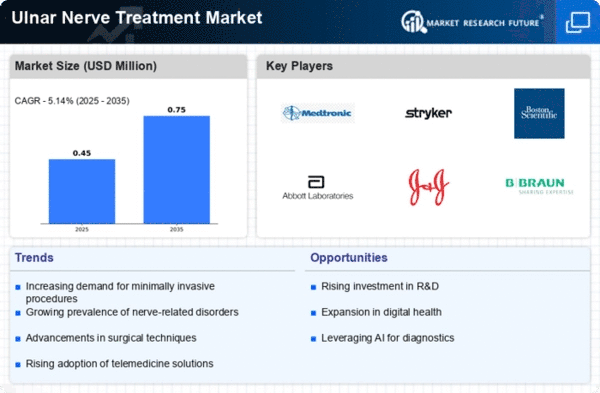
As per MRFR analysis, the Ulnar Nerve Treatment Market Size was estimated at 432 USD Million in 2024. The Ulnar Nerve Treatment industry is projected to grow from 459 USD Million in 2025 to 752 USD Million by 2035, exhibiting a compound annual growth rate (CAGR) of 5.14 during the forecast period 2025 - 2035.

Key Market Trends & Highlights

The Ulnar Nerve Treatment Market is experiencing a dynamic shift towards innovative and patient-centric approaches.

  • Minimally invasive techniques are gaining traction, enhancing patient recovery and satisfaction.
  • Telemedicine integration is becoming increasingly prevalent, facilitating remote consultations and follow-ups.
  • The focus on regenerative medicine is expanding, with new therapies emerging to promote nerve healing.
  • Rising incidence of ulnar nerve disorders and advancements in surgical techniques are driving market growth, particularly in North America and the surgery segment.

Market Size & Forecast

2024 Market Size 0.432 (USD Million)
2035 Market Size 0.752 (USD Million)
CAGR (2025 - 2035) 5.14%
Largest Regional Market Share in 2024 North America

Major Players

<p>Medtronic (US), Stryker (US), Boston Scientific (US), Abbott Laboratories (US), Johnson & Johnson (US), B. Braun Melsungen AG (DE), Zimmer Biomet (US), NuVasive (US), Integra LifeSciences (US)</p>

Market Trends

The Ulnar Nerve Treatment Market is currently experiencing a notable evolution, driven by advancements in medical technology and an increasing awareness of nerve-related disorders. As healthcare providers continue to enhance their diagnostic and therapeutic capabilities, patients are benefiting from more effective treatment options. This market appears to be characterized by a growing demand for minimally invasive procedures, which are often associated with reduced recovery times and improved patient outcomes. Furthermore, the integration of telemedicine into treatment protocols seems to be reshaping how care is delivered, allowing for greater accessibility and convenience for patients seeking ulnar nerve treatment. In addition to technological advancements, the Ulnar Nerve Treatment Market is influenced by a rising prevalence of conditions such as cubital tunnel syndrome and ulnar neuropathy. This trend suggests that healthcare systems are increasingly prioritizing the management of these disorders, leading to a broader range of treatment modalities being offered. Moreover, ongoing research into novel therapeutic approaches, including regenerative medicine and nerve repair techniques, indicates a potential shift towards more personalized treatment plans. Overall, the Ulnar Nerve Treatment Market appears poised for continued growth as it adapts to the evolving needs of patients and healthcare providers alike.

Minimally Invasive Techniques

The Ulnar Nerve Treatment Market is witnessing a shift towards minimally invasive surgical techniques. These approaches are favored for their ability to reduce patient recovery time and minimize complications. As surgeons adopt these methods, patient satisfaction is likely to increase, further driving demand for such treatments.

Telemedicine Integration

The integration of telemedicine into the Ulnar Nerve Treatment Market is becoming increasingly prevalent. This trend allows patients to receive consultations and follow-up care remotely, enhancing accessibility. As healthcare providers embrace digital solutions, the market may see a transformation in how care is delivered.

Focus on Regenerative Medicine

There is a growing emphasis on regenerative medicine within the Ulnar Nerve Treatment Market. Research into innovative therapies, such as nerve grafting and stem cell applications, suggests a potential for improved outcomes. This focus on advanced treatment options may redefine standard care practices in the near future.

Ulnar Nerve Treatment Market Market Drivers

Market Growth Projections

The Global Ulnar Nerve Treatment Market Industry is projected to experience substantial growth over the coming years. With a market value of 339.1 USD Million in 2024, it is anticipated to reach 624.4 USD Million by 2035, indicating a robust expansion trajectory. The compound annual growth rate (CAGR) of 5.71% from 2025 to 2035 reflects the increasing demand for effective treatment options and the ongoing advancements in medical technology. This growth is driven by various factors, including the rising prevalence of ulnar nerve disorders, advancements in surgical techniques, and the aging population, all contributing to a dynamic market landscape.

Rising Geriatric Population

The aging population is a critical driver of the Global Ulnar Nerve Treatment Market Industry. Older adults are more susceptible to ulnar nerve disorders due to age-related changes in nerve function and increased prevalence of comorbidities. As the global population ages, the demand for effective treatment options is likely to rise. This demographic shift is expected to contribute to a compound annual growth rate (CAGR) of 5.71% from 2025 to 2035. Healthcare systems are increasingly focusing on addressing the needs of older patients, which may lead to enhanced treatment protocols and increased market opportunities.

Growing Awareness and Education

There is a notable increase in awareness and education regarding ulnar nerve disorders, which is positively impacting the Global Ulnar Nerve Treatment Market Industry. Healthcare professionals and patients are becoming more informed about the symptoms and treatment options available. Campaigns aimed at educating the public about the importance of early diagnosis and intervention are gaining momentum. This heightened awareness is likely to lead to earlier treatment seeking behaviors, thereby increasing market demand. As more individuals recognize the signs of ulnar nerve disorders, the market is poised for growth, reflecting a shift towards proactive healthcare.

Advancements in Surgical Techniques

Innovations in surgical techniques are significantly influencing the Global Ulnar Nerve Treatment Market Industry. Minimally invasive procedures, such as endoscopic ulnar nerve decompression, are gaining traction due to their reduced recovery times and lower complication rates. These advancements not only enhance patient outcomes but also encourage more healthcare providers to adopt these techniques. As a result, the market is expected to grow, with a projected value of 624.4 USD Million by 2035. The shift towards less invasive options aligns with patient preferences for quicker recovery and less postoperative discomfort, thereby driving market demand.

Increasing Prevalence of Ulnar Nerve Disorders

The Global Ulnar Nerve Treatment Market Industry is experiencing growth due to the rising incidence of ulnar nerve disorders, such as cubital tunnel syndrome and ulnar neuropathy. These conditions are becoming more prevalent, particularly among individuals engaged in repetitive activities or those with underlying health issues. As awareness of these disorders increases, more patients seek treatment options, contributing to market expansion. In 2024, the market is projected to reach 339.1 USD Million, reflecting a growing demand for effective treatment solutions. This trend is likely to continue as the population ages and the workforce becomes more aware of ergonomic health.

Technological Innovations in Treatment Devices

Technological advancements in treatment devices are shaping the Global Ulnar Nerve Treatment Market Industry. The introduction of new diagnostic tools and therapeutic devices, such as nerve stimulators and advanced imaging techniques, is enhancing the ability to diagnose and treat ulnar nerve conditions effectively. These innovations improve patient outcomes and streamline treatment processes, making them more efficient. As the market evolves, the integration of technology into treatment protocols is expected to drive growth, with an anticipated market value of 624.4 USD Million by 2035. This trend indicates a shift towards more precise and personalized treatment approaches.

Market Segment Insights

By Application: Surgery (Largest) vs. Electrotherapy (Fastest-Growing)

<p>In the Ulnar Nerve Treatment Market, the application segment reveals a distinct distribution of market share. Surgery remains the largest segment due to its effectiveness in addressing severe ulnar nerve compression and related disorders. Physical therapy and medication also contribute significantly but tend to cater to less severe cases or postoperative recovery. Electrotherapy, on the other hand, has been gaining traction as a non-invasive method preferred by patients seeking alternative treatments.</p>

<p>Surgery (Dominant) vs. Electrotherapy (Emerging)</p>

<p>Surgery has established itself as the dominant mode of ulnar nerve treatment, providing lasting solutions for patients suffering from severe conditions. It encompasses a variety of surgical procedures, including decompression and transposition techniques that ensure optimal recovery. Conversely, electrotherapy is emerging as a viable alternative, resonating with patients who favor non-invasive options. This modality employs electrical stimulation to alleviate pain and promote nerve function recovery. As awareness of electrotherapy's benefits increases, it is expected to attract a growing segment of the market, especially among those hesitant to pursue surgical interventions.</p>

By End Use: Hospitals (Largest) vs. Clinics (Fastest-Growing)

<p>The Ulnar Nerve Treatment Market demonstrates a diverse distribution of end-use segments, with hospitals accounting for the largest share. This dominance is attributed to their advanced technological resources, skilled healthcare professionals, and comprehensive treatment capabilities. Clinics serve as a significant segment but trail behind hospitals in terms of market presence, primarily focused on outpatient treatments and less complex procedures. In contrast, the clinics segment is witnessing rapid growth. This surge can be linked to an increased number of patients seeking outpatient care for ulnar nerve conditions, supported by trends towards minimally invasive treatments. Additionally, rehabilitation centers and home care options are gaining traction, responding to patient preferences for personalized and accessible treatment at home, paving the way for a more balanced market distribution in the future.</p>

<p>Hospitals (Dominant) vs. Clinics (Emerging)</p>

<p>Hospitals play a dominant role in the Ulnar Nerve Treatment Market due to their ability to offer a comprehensive range of advanced treatment options, such as surgical interventions and rehabilitation services under one roof. They are equipped with state-of-the-art facilities and skilled personnel, ensuring high-quality patient care. Conversely, clinics are emerging as a pivotal segment, addressing the urgent need for outpatient services that are often preferred for their convenience, affordability, and efficiency. With a focus on personalized care and shorter wait times, clinics are becoming increasingly attractive to patients. The rise in patient awareness and the shift towards proactive health management are further propelling the growth of clinics in this sector.</p>

By Type of Treatment: Surgical Treatment (Largest) vs. Non-Surgical Treatment (Fastest-Growing)

<p>In the Ulnar Nerve Treatment Market, the distribution of treatment types showcases surgical treatment as the largest segment. This dominance stems from an increase in surgical interventions for chronic cases, where invasive options provide definitive solutions. Conversely, non-surgical treatments are rapidly gaining traction, driven by a preference for minimally invasive options among patients, and their evolving efficacy in symptom relief. Alternative therapies also contribute to the market but remain a niche segment compared to the surgical and non-surgical approaches. The growth trends within this market indicate a shift towards more personalized treatment plans. Patients are increasingly opting for non-surgical treatments that can offer satisfactory results with fewer complications. Additionally, advances in technology and increased awareness of ulnar nerve conditions are bolstering the demand for these alternatives. As healthcare institutions adapt to patient preferences, non-surgical options are expected to see the highest growth rates in the forecast period as more patients seek these flexible treatment avenues.</p>

<p>Surgical Treatment: Dominant vs. Alternative Therapies: Emerging</p>

<p>Surgical treatment remains the dominant force in the Ulnar Nerve Treatment Market due to its ability to provide long-term relief for patients suffering from severe ulnar nerve compression. Techniques such as ulnar nerve transpositions have become standard, enhancing patient outcomes. In contrast, alternative therapies, while emerging, cater to a specific demographic looking for holistic or non-invasive methods. These therapies include acupuncture and physiotherapy and are characterized by lower risk profiles and varying degrees of effectiveness. The differing approaches illustrate the market's broad spectrum, where surgical options target severe cases, while alternative therapies appeal to patients seeking conservative management of their symptoms.</p>

By Patient Demographics: Age Group (Largest) vs. Gender (Fastest-Growing)

<p>In the Ulnar Nerve Treatment Market, the patient demographics reveal that the age group segment holds the largest share, particularly among older adults who experience a higher incidence of ulnar nerve disorders. This age group is accompanied by significant treatment needs, accounting for a substantial portion of the patient population seeking intervention. On the other hand, the gender segment, while historically showing a balanced male-to-female ratio, is witnessing rapid growth in treatment-seeking females, indicating demographic shifts in lifestyle and awareness concerning ulnar nerve treatments.</p>

<p>Age Group: 50+ (Dominant) vs. Gender: Female (Emerging)</p>

<p>The dominant age group in the Ulnar Nerve Treatment Market is individuals aged 50 and above, who are more susceptible to conditions like cubital tunnel syndrome, leading to increased demand for treatments. This demographic often has a higher prevalence of chronic health issues and lifestyle factors contributing to nerve damage. In contrast, the emerging female demographic is becoming more prominent in the treatment landscape, as awareness and advocacy for women's health issues increase. This shift is fueling a growing demand for customized treatment solutions that address specific conditions affecting women, thereby redefining market strategies and outreach.</p>

By Severity of Condition: Moderate (Largest) vs. Severe (Fastest-Growing)

<p>In the Ulnar Nerve Treatment Market, the distribution of market share among severity conditions shows that the 'Moderate' segment holds the largest share, reflecting the considerable number of patients who experience moderate symptoms and seek treatment. Meanwhile, the 'Severe' segment is emerging rapidly, capturing attention due to the rising incidence of severe ulnar nerve conditions that necessitate more intensive treatment approaches. As awareness of these conditions increases, so does the demand for effective intervention strategies among those experiencing severe symptoms. Growth trends indicate that advancements in treatment options and increasing awareness among healthcare providers are key drivers for this segment. As more patients are diagnosed with severe conditions, there is a surge in the demand for novel therapies and surgical options. The growing focus on personalized medicine and tailored treatment plans further bolsters the market for severe conditions, making it an area of significant potential for growth in the upcoming years.</p>

<p>Moderate (Dominant) vs. Severe (Emerging)</p>

<p>The 'Moderate' severity segment in the Ulnar Nerve Treatment Market is currently the dominant force due to its significant patient base and diverse treatment options available, including non-surgical interventions like physical therapy and corticosteroid injections. Patients in this group often respond well to conservative management strategies, leading to favorable outcomes without the need for invasive procedures. In contrast, the 'Severe' segment is emerging with increasing prominence, characterized by a more urgent need for surgical intervention and advanced therapies. This segment attracts attention from both healthcare providers and researchers as it encompasses patients with progressive ulnar nerve compression, warranting innovative treatments. The challenges inherent in managing severe cases drive the need for research and development of new therapeutic solutions, making this segment a focal point for future advancements in ulnar nerve treatment.</p>

Get more detailed insights about Ulnar Nerve Treatment Market Research Report- Global Forecast To 2035

Regional Insights

North America : Market Leader in Ulnar Nerve Treatment

North America is poised to maintain its leadership in the Ulnar Nerve Treatment Market, holding a significant market share of 21.6% in 2024. The region's growth is driven by increasing incidences of ulnar nerve injuries, advancements in surgical techniques, and a robust healthcare infrastructure. Regulatory support and favorable reimbursement policies further catalyze market expansion, making it a prime area for investment and innovation. The United States stands as the largest contributor, with key players like Medtronic, Stryker, and Boston Scientific leading the charge. The competitive landscape is characterized by continuous innovation and strategic partnerships among these companies. The presence of advanced medical facilities and a high demand for effective treatment options solidify North America's position as a hub for ulnar nerve treatment advancements.

Europe : Emerging Market with Growth Potential

Europe is witnessing a growing interest in ulnar nerve treatments, with a market share of 10.8% in 2024. Factors such as an aging population, rising awareness of nerve-related disorders, and advancements in minimally invasive surgical techniques are driving demand. Regulatory frameworks are becoming increasingly supportive, facilitating faster approvals for innovative treatments and devices, which is crucial for market growth. Leading countries like Germany, France, and the UK are at the forefront of this market, with significant contributions from companies such as B. Braun Melsungen AG and Zimmer Biomet. The competitive landscape is marked by a mix of established players and emerging startups, all vying to capture market share through innovative solutions and strategic collaborations. The European market is set for substantial growth as healthcare systems adapt to meet rising patient needs.

Asia-Pacific : Rapidly Growing Healthcare Sector

The Asia-Pacific region is emerging as a significant player in the Ulnar Nerve Treatment Market, holding a market share of 7.2% in 2024. The growth is fueled by increasing healthcare expenditure, a rising prevalence of nerve injuries, and a growing awareness of treatment options. Governments are investing in healthcare infrastructure, which is expected to enhance access to advanced medical treatments and technologies. Countries like Japan, China, and India are leading the charge, with a mix of local and international players such as NuVasive and Integra LifeSciences making their mark. The competitive landscape is evolving, with companies focusing on innovation and affordability to cater to diverse patient needs. As the region continues to develop, the demand for effective ulnar nerve treatments is anticipated to rise significantly, presenting lucrative opportunities for market players.

Middle East and Africa : Untapped Market with Potential

The Middle East and Africa region is currently the smallest market for ulnar nerve treatments, with a market share of 3.6% in 2024. However, the region presents significant growth potential due to increasing healthcare investments and a rising prevalence of nerve-related disorders. Governments are focusing on improving healthcare access and quality, which is expected to drive demand for advanced treatment options in the coming years. Countries like South Africa and the UAE are leading the market, with a growing presence of international players looking to establish a foothold. The competitive landscape is characterized by a mix of local and global companies, all aiming to address the unmet medical needs in the region. As healthcare systems evolve, the demand for ulnar nerve treatments is expected to grow, making this an attractive market for investment.

Key Players and Competitive Insights

The Ulnar Nerve Treatment Market is characterized by a competitive landscape that is increasingly shaped by innovation, strategic partnerships, and a focus on patient-centric solutions. Key players such as Medtronic (US), Stryker (US), and Boston Scientific (US) are at the forefront, leveraging their extensive research and development capabilities to enhance treatment options. Medtronic (US) has positioned itself as a leader in neuromodulation technologies, while Stryker (US) emphasizes its commitment to surgical innovations. Boston Scientific (US) appears to be focusing on expanding its portfolio through acquisitions and collaborations, thereby enhancing its market presence. Collectively, these strategies contribute to a dynamic environment where companies are not only competing on product efficacy but also on the ability to deliver comprehensive care solutions.

In terms of business tactics, companies are increasingly localizing manufacturing to reduce costs and improve supply chain efficiency. This approach is particularly relevant in the context of the Ulnar Nerve Treatment Market, which is moderately fragmented, with several players vying for market share. The collective influence of these key players is significant, as they drive advancements in technology and treatment methodologies, thereby shaping the overall market structure.

In November 2025, Medtronic (US) announced the launch of a new line of minimally invasive surgical tools designed specifically for ulnar nerve decompression procedures. This strategic move is likely to enhance Medtronic's competitive edge by addressing the growing demand for less invasive treatment options, which are preferred by both patients and healthcare providers. The introduction of these tools may also facilitate quicker recovery times, thereby improving patient outcomes and satisfaction.

In October 2025, Stryker (US) expanded its partnership with a leading telehealth provider to integrate remote monitoring capabilities into its ulnar nerve treatment solutions. This initiative reflects a broader trend towards digital health integration, allowing for enhanced patient engagement and real-time data collection. By leveraging telehealth, Stryker (US) is likely to improve treatment adherence and outcomes, positioning itself as a forward-thinking player in the market.

In September 2025, Boston Scientific (US) completed the acquisition of a startup specializing in AI-driven diagnostic tools for nerve-related conditions. This acquisition is indicative of the company's strategy to incorporate advanced technologies into its treatment offerings. By integrating AI capabilities, Boston Scientific (US) may enhance its diagnostic accuracy and treatment personalization, thereby setting a new standard in the Ulnar Nerve Treatment Market.

As of December 2025, the competitive trends in the Ulnar Nerve Treatment Market are increasingly defined by digitalization, sustainability, and the integration of AI technologies. Strategic alliances are becoming more prevalent, as companies recognize the value of collaboration in driving innovation. The competitive differentiation is likely to evolve from traditional price-based competition towards a focus on technological advancements, patient-centric solutions, and supply chain reliability. This shift suggests that companies that prioritize innovation and adaptability will be better positioned to thrive in the evolving landscape.

Key Companies in the Ulnar Nerve Treatment Market market include

Industry Developments

The ulnar nerve treatment market involves the prominent functions of the key players operating in this market like Pfizer, Inc., Alkem Laboratories, Teva Pharmaceutical Industries Ltd., followed by others like Apotex, Inc., Amneal Pharmaceuticals LLC, Aurobindo Pharma, and Mylan N.V. To gain high market share in the global market industry, the key market players are actively involved in adding innovation for variation in products, services, and others like the periodic new product launches. Collaborations, partnerships, are market agreements are some of the important strategies followed by the market players.

OTC pain relievers, as a part of the market sub-segment, have been divided into acetaminophen and nonsteroidal anti-inflammatory drugs (NSAIDs), including ibuprofen (Motrin, Advil), and others like naproxen (Aleve, Naprosyn) or diclofinac gel. Nerve spams drugs, as a prominent inclusion are further sub-segmented into Baclofen (Lioresal), Cyclobenzaprine (Amrix), Metaxalone (Skelaxin), and others like Methocarbamol (Robaxin). The surgery segment has also been further sub-segmented into simple decompression (endoscopic), medial epicondylectomy, transpositions, amongst others to meet the rising needs of the global target audience.

The North American market dominates the market as the U.S. region is emerging as the major contributor in this region due to the invention of advanced technology, research, and developmental activities in this area. The market is facing other factors like the rising prevalence of disorders, and other chronic diseases. The Asian Pacific region is also a fast-growing market due to the growing health care expanse and an expansive patient base.


Future Outlook

Ulnar Nerve Treatment Market Future Outlook

<p>The Ulnar Nerve Treatment Market is projected to grow at a 5.14% CAGR from 2024 to 2035, driven by technological advancements, increasing awareness, and rising prevalence of nerve disorders.</p>

New opportunities lie in:

  • <p>Development of minimally invasive surgical techniques for ulnar nerve release.</p>
  • <p>Expansion of telehealth services for remote patient monitoring and consultations.</p>
  • <p>Investment in AI-driven diagnostic tools for early detection of ulnar nerve issues.</p>

<p>By 2035, the Ulnar Nerve Treatment Market is expected to be robust, reflecting significant advancements and growth.</p>

Market Segmentation

Ulnar Nerve Treatment Market End Use Outlook

  • Hospitals
  • Clinics
  • Rehabilitation Centers
  • Home Care

Ulnar Nerve Treatment Market Application Outlook

  • Surgery
  • Physical Therapy
  • Medication
  • Electrotherapy

Ulnar Nerve Treatment Market Type of Treatment Outlook

  • Surgical Treatment
  • Non-Surgical Treatment
  • Alternative Therapies

Ulnar Nerve Treatment Market Patient Demographics Outlook

  • Age Group
  • Gender
  • Occupation

Ulnar Nerve Treatment Market Severity of Condition Outlook

  • Mild
  • Moderate
  • Severe

Report Scope

MARKET SIZE 20240.432(USD Million)
MARKET SIZE 20250.459(USD Million)
MARKET SIZE 20350.752(USD Million)
COMPOUND ANNUAL GROWTH RATE (CAGR)5.14% (2024 - 2035)
REPORT COVERAGERevenue Forecast, Competitive Landscape, Growth Factors, and Trends
BASE YEAR2024
Market Forecast Period2025 - 2035
Historical Data2019 - 2024
Market Forecast UnitsUSD Million
Key Companies ProfiledMedtronic (US), Stryker (US), Boston Scientific (US), Abbott Laboratories (US), Johnson & Johnson (US), B. Braun Melsungen AG (DE), Zimmer Biomet (US), NuVasive (US), Integra LifeSciences (US)
Segments CoveredApplication, End Use, Type of Treatment, Patient Demographics, Severity of Condition
Key Market OpportunitiesAdvancements in minimally invasive surgical techniques enhance patient outcomes in the Ulnar Nerve Treatment Market.
Key Market DynamicsRising demand for minimally invasive procedures drives innovation in ulnar nerve treatment technologies and techniques.
Countries CoveredNorth America, Europe, APAC, South America, MEA

FAQs

  1. Report Prologue
  2. Market Introduction
    1. Introduction
    2. Scope of Study
    3. Research Objective
    4. Assumptions & Limitations
      1. Assumptions
      2. Limitations
  3. Research Methodology
    1. Research Process
    2. Primary Research
    3. Secondary Research
  4. Market Dynamics
    1. Drivers
      1. Demand of OTC drugs
    2. Restraints
      1. Lack of awareness about ulnar nerve treatment measures
  5. Market Factor Analysis
    1. Porter’s Five Forces Model
      1. Bargaining power of suppliers
      2. Bargaining Power of Buyers
      3. Threat of New Entrants
      4. Threat of Substitutes
      5. Intensity of Rivalry
    2. Supply Chain Analysis
  6. Global Keratoacanthoma market, by treatment
    1. OTC pain relievers
    2. Nerve spasm drugs
    3. Physical therapy
    4. Surgery
  7. Global Keratoacanthoma market by end user
    1. Hospitals and Clinics
    2. Research Centers
    3. Laboratories
  8. Global Keratoacanthoma market by region
    1. Introduction
    2. North America
      1. US
      2. Canada
      3. Mexico
    3. Europe
      1. France
      2. Italy
      3. Spain
      4. UK
      5. Rest of Europe
    4. 8.3.1Germany
    5. Asia Pacific
      1. China
      2. India
      3. Japan
      4. Republic of Korea
      5. Australia
      6. Rest of Asia
    6. Middle East and Africa
      1. United Arab Emirates
      2. Saudi Arabia
      3. Turkey
      4. Rest of Middle East and Africa
  9. Competitive Landscape
    1. Cost of treatment
    2. Production Capacity of Major Players
  10. Company Profile
    1. Pfizer Inc.
      1. Overview
      2. Product/Business Segment Overview
      3. Financial Updates
      4. Key Developments
    2. Teva Pharmaceutical Industries Ltd.
      1. Overview
      2. Product/Business Segment Overview
      3. Financial Updates
      4. Key Developments
    3. Alkem Labs
      1. Overview
      2. Product/Business Segment Overview
      3. Financial Updates
    4. Amneal Pharmaceuticals LLC.
      1. Overview
      2. Product/Business Segment Overview
      3. Financial Updates
      4. Key Development
    5. Apotex Inc
      1. Overview
      2. Product/Business Segment Overview
      3. Financial Updates
      4. Key Developments
    6. Aurobindo Pharma
      1. Overview
      2. Product/Business Segment Overview
      3. Financial Updates
      4. Key Developments
    7. Mylan N.V.
      1. Overview
      2. Product/Business Segment Overview
      3. Financial Updates
      4. Key Developments
    8. Others

Ulnar Nerve Treatment Market Segmentation

Market Segmentation Overview

  • Detailed segmentation data will be available in the full report
  • Comprehensive analysis by multiple parameters
  • Regional and country-level breakdowns
  • Market size forecasts by segment
Infographic

Free Sample Request

Kindly complete the form below to receive a free sample of this Report

Get Free Sample

Customer Strories

Compare Licence

×
Features License Type
Single User Multiuser License Enterprise User
Price $4,950 $5,950 $7,250
Maximum User Access Limit 1 User Upto 10 Users Unrestricted Access Throughout the Organization
Free Customization
Direct Access to Analyst
Deliverable Format
Platform Access
Discount on Next Purchase 10% 15% 15%
Printable Versions