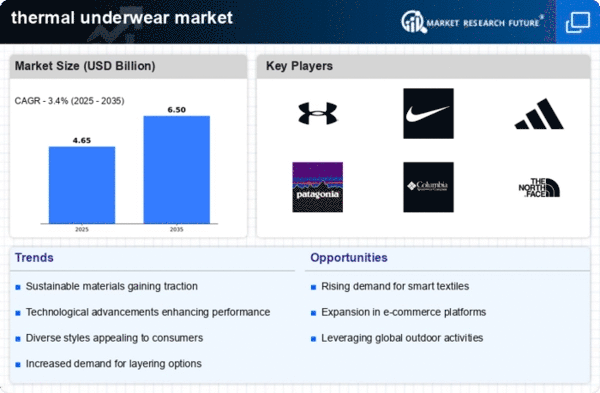
The thermal underwear market is currently characterized by a dynamic competitive landscape, driven by factors such as increasing consumer awareness regarding performance apparel, a growing emphasis on sustainability, and advancements in fabric technology. Key players like Under Armour (US), Nike (US), and Patagonia (US) are strategically positioned to leverage these trends. Under Armour (US) focuses on innovation, particularly in moisture-wicking and temperature-regulating technologies, which enhances their appeal among athletes and outdoor enthusiasts. Nike (US), on the other hand, emphasizes digital transformation, integrating e-commerce platforms with personalized shopping experiences, thereby enhancing customer engagement. Patagonia (US) is committed to sustainability, utilizing recycled materials in their products, which resonates with environmentally conscious consumers. Collectively, these strategies contribute to a competitive environment that prioritizes innovation and sustainability.
In terms of business tactics, companies are increasingly localizing manufacturing to reduce lead times and enhance supply chain efficiency. This approach is particularly relevant in a moderately fragmented market where agility can provide a competitive edge. The collective influence of key players is significant, as they not only set industry standards but also drive consumer expectations regarding quality and performance.
In November 2025, Under Armour (US) announced a partnership with a leading textile manufacturer to develop a new line of thermal underwear that incorporates smart fabric technology. This strategic move is likely to position Under Armour at the forefront of innovation, appealing to tech-savvy consumers who seek enhanced performance features in their apparel. The integration of smart technology could redefine user experience, potentially increasing brand loyalty and market share.
In October 2025, Nike (US) launched a new campaign focused on their thermal underwear line, highlighting the use of sustainable materials and ethical manufacturing practices. This initiative not only aligns with current consumer preferences for eco-friendly products but also reinforces Nike's brand image as a leader in corporate responsibility. The campaign is expected to resonate well with younger demographics, who are increasingly prioritizing sustainability in their purchasing decisions.
In September 2025, Patagonia (US) expanded its thermal underwear offerings by introducing a new collection made entirely from recycled materials. This move underscores Patagonia's commitment to environmental stewardship and positions the brand as a pioneer in sustainable fashion. By appealing to eco-conscious consumers, Patagonia is likely to strengthen its market position and attract a loyal customer base that values sustainability.
As of December 2025, the thermal underwear market is witnessing trends such as digitalization, sustainability, and the integration of AI in product development. Strategic alliances among companies are shaping the competitive landscape, fostering innovation and enhancing supply chain reliability. The shift from price-based competition to a focus on technological advancement and sustainable practices is evident. Moving forward, competitive differentiation will likely hinge on the ability to innovate and adapt to changing consumer preferences, with a strong emphasis on quality and sustainability.




















Leave a Comment