Request Free Sample ×

Kindly complete the form below to receive a free sample of this Report

* Please use a valid business email

Leading companies partner with us for data-driven Insights

clients tt-cursor
Hero Background
English
Chinese
French
Japanese
Korean
German
Spanish

Tendinitis Treatment Industry Trends

ID: MRFR/Pharma/3789-CR
128 Pages
Vikita Thakur
Last Updated: April 15, 2026

Tendinitis Treatment Market Research Report Information: By Type (Achilles Tendinitis, Supraspinatus Tendinitis, Tennis or Golfer's Elbow, De Quervain's Tenosynovitis), By Treatment (Diagnosis, Therapy, Shock Wave Therapy or Surgery, Medical Devices, Devices), By End User (Hospitals & Clinics, Medical Research Centers, Academic Institutes) - Americas & Europe Forecast till 2035

Share:
Download PDF ×

We do not share your information with anyone. However, we may send you emails based on your report interest from time to time. You may contact us at any time to opt-out.

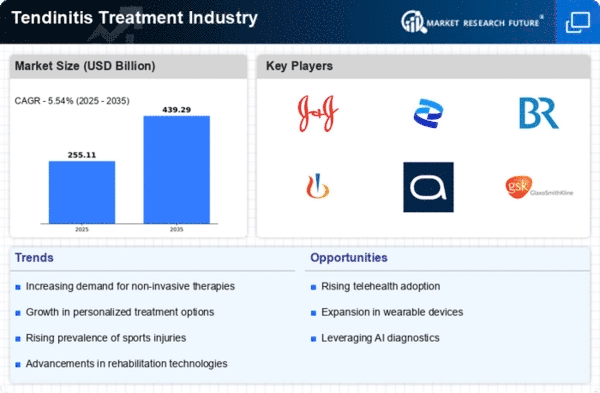
Tendinitis Treatment Industry Infographic
Purchase Options

Market Trends

Key Emerging Trends in the Tendinitis Treatment Industry

The Tendinitis Treatment market within the Americas and Europe is undergoing dynamic changes encouraged by factors including an aging population, extended sports activities-related accidents, and advancements in clinical treatment options. This market encompasses numerous tendencies aimed at imparting effective and centered answers for individuals coping with tendinitis. The market trends are driven by a growing occurrence of tendinitis, specifically among most of the aging population and people engaged in sports. Sports-associated accidents, such as overuse of tendons, contribute substantially to the superiority of tendinitis in both the Americas and Europe. A first-rate trend is the focal point of regenerative remedy for Tendinitis Treatment. Stem mobile therapies, platelet-rich plasma (PRP) injections, and different regenerative approaches are gaining traction as they intend to promote tissue restoration and regeneration, supplying capability and long-term benefits for tendinitis patients. The pharmaceutical sector is witnessing innovations in medications, in particular, those designed for Tendinitis Treatment. Anti-inflammatory capsules, pain relievers, and topical treatments are being developed to address the signs of tendinitis, presenting sufferers with centered relief. The market traits are leaning in the direction of precision remedy for tendinitis, thinking about individual variations in response to treatment. Tailoring interventions based on affected persons' unique factors, which include genetics and way of life, is becoming a key consideration for optimizing treatment results. Wearable generation plays a function in tendinitis control, especially in the tracking of bodily pastimes and biomechanics. These technologies offer real-time information, allowing healthcare carriers to customize treatment plans and music-affected person development more correctly. The adoption of telehealth services is growing, supplying patients within the Americas and Europe with the right of entry to faraway consultations with healthcare specialists. This trend complements the accessibility of Tendinitis Treatment, taking into consideration well-timed steering and follow-up appointments without the need for in-person visits. The regulatory landscape is evolving, impacting the Tendinitis Treatment market. Stricter policies and compliance necessities ensure the protection and efficacy of treatments, fostering an extra transparent and responsible market for tendinitis treatments. While improvements are going on, challenges related to the value of Tendinitis Treatments persist. Market traits are step by step addressing those demanding situations, focusing on improving healthcare accessibility and affordability to reach a broader patient populace. Collaborative research efforts and ongoing medical trials are using innovation in Tendinitis Treatment. Partnerships among pharmaceutical businesses, studies establishments, and healthcare vendors boost the development of novel cures and make contributions to the growth of remedy alternatives. The market for tendinitis treatment within the Americas and Europe is poised for a continued boom, driven by an aggregate of improvements in regenerative medication and pharmaceutical improvements and a focal point on personalized care.


Author
Author Profile
Vikita Thakur
Senior Research Analyst

She holds an experience of about 5+ years in market research and business consulting projects for sectors such as life sciences, medical devices, and healthcare IT. She possesses a robust background in data analysis, market estimation, competitive intelligence, pipeline analysis market trend identification, and consumer behavior insights. Her expertise lies in technical Sales support, client interaction and project management, designing and implementing market research studies, conducting competitive analysis, and synthesizing complex data into actionable recommendations that drive business growth.

Leave a Comment

FAQs

What is the current market valuation of the Tendinitis Treatment Industry?

<p>The market valuation of the Tendinitis Treatment Industry was 241.72 USD Billion in 2024.</p>

What is the projected market size for the Tendinitis Treatment Industry by 2035?

<p>The projected market size for the Tendinitis Treatment Industry is 439.29 USD Billion by 2035.</p>

What is the expected CAGR for the Tendinitis Treatment Industry from 2025 to 2035?

<p>The expected CAGR for the Tendinitis Treatment Industry during the forecast period 2025 - 2035 is 5.54%.</p>

Which treatment type generated the highest revenue in the Tendinitis Treatment Industry?

<p>Medication generated the highest revenue, with a valuation of 72.26 USD Billion in 2024.</p>

How does the revenue from physical therapy compare to injection therapy in 2024?

<p>In 2024, physical therapy and injection therapy both generated revenues of 48.34 USD Billion.</p>

What segment of the Tendinitis Treatment Industry is expected to grow the most by 2035?

The segment for severe tendinitis, valued at 72.51 USD Billion in 2024, is likely to experience substantial growth by 2035.

What demographic factors influence the Tendinitis Treatment Industry?

Key demographic factors include age, gender, activity level, occupation, and health status, with valuations ranging from 30.0 to 90.0 USD Billion in 2024.

Which companies are considered key players in the Tendinitis Treatment Industry?

Key players in the Tendinitis Treatment Industry include Johnson &amp; Johnson, Pfizer Inc., and Bayer AG, among others.

What is the revenue range for chronic tendinitis treatment in 2024?

The revenue for chronic tendinitis treatment was between 60.0 and 108.0 USD Billion in 2024.

What types of treatment duration are analyzed in the Tendinitis Treatment Industry?

The industry analyzes treatment durations including short-term, medium-term, long-term, preventive, and post-operative treatments, with revenues ranging from 40.09 to 110.0 USD Billion in 2024.

Market Summary

As per MRFR analysis, the Tendinitis Treatment market size was estimated at 241.72 USD Billion in 2024. The Tendinitis Treatment is projected to grow from 257.88 USD Billion in 2025 to 439.29 USD Billion by 2035, exhibiting a compound annual growth rate (CAGR) of 5.54% during the forecast period 2025 - 2035.

Key Market Trends & Highlights

The Tendinitis Treatment Industry is experiencing a shift towards personalized and non-invasive treatment options, driven by technological advancements and rising awareness.

  • Personalized treatment approaches are gaining traction, enhancing patient outcomes in the Tendinitis Treatment Industry. Telehealth integration is becoming increasingly prevalent, facilitating remote consultations and follow-ups for patients. The focus on non-invasive therapies is reshaping treatment paradigms, particularly in the North American market. Rising prevalence of tendinitis and increased awareness are major drivers propelling growth in the physical therapy segment, while the surgical segment is rapidly expanding.

Market Size & Forecast

2024 Market Size 241.72 (USD Billion)
2035 Market Size 439.29 (USD Billion)
CAGR (2025 - 2035) 5.54%
Largest Regional Market Share in 2024 North America

Major Players

Johnson &amp; Johnson (US), Pfizer (US), Bayer (DE), Novartis (CH), AbbVie (US), GlaxoSmithKline (GB), Sanofi (FR), Merck &amp; Co. (US), Amgen (US)

Market Trends

The Tendinitis Treatment Industry is currently experiencing a notable evolution, driven by advancements in medical technology and a growing awareness of musculoskeletal disorders. As healthcare providers increasingly recognize the impact of tendinitis on patients' quality of life, there is a concerted effort to develop more effective treatment modalities. This includes a shift towards personalized medicine, where therapies are tailored to individual patient needs, potentially enhancing recovery outcomes. Furthermore, the integration of telehealth services is becoming more prevalent, allowing patients to access specialized care remotely, which may improve adherence to treatment protocols and facilitate ongoing monitoring of progress. In addition to technological advancements, the Tendinitis Treatment Industry is witnessing a rise in the utilization of non-invasive treatment options. Patients are increasingly seeking alternatives to traditional surgical interventions, leading to a greater emphasis on physical therapy, regenerative medicine, and pharmacological innovations. This trend suggests a broader movement towards holistic approaches that prioritize patient comfort and long-term health. As the industry continues to adapt to these changes, stakeholders must remain vigilant in understanding patient preferences and emerging treatment options to stay competitive in this dynamic landscape.

Personalized Treatment Approaches

The industry is moving towards personalized treatment strategies that cater to individual patient profiles. This trend emphasizes the importance of tailoring therapies based on specific needs, which may enhance recovery rates and patient satisfaction.

Telehealth Integration

The incorporation of telehealth services is becoming increasingly common, allowing patients to receive care remotely. This trend not only improves access to specialists but also supports ongoing management of tendinitis, potentially leading to better adherence to treatment plans.

Focus on Non-Invasive Therapies

There is a growing preference for non-invasive treatment options among patients. This shift is driving the development of alternatives to surgery, such as physical therapy and regenerative medicine, which prioritize patient comfort and long-term health outcomes.

Tendinitis Treatment Industry Market Drivers

Rising Prevalence of Tendinitis

The increasing incidence of tendinitis across the Global Americas and Europe Tendinitis Treatment Market Industry is a notable driver. Factors such as aging populations, sedentary lifestyles, and increased participation in sports contribute to this trend. For instance, the prevalence of tendinitis is expected to rise significantly, leading to a projected market value of 6.47 USD Billion in 2024. This growing patient population necessitates effective treatment options, thereby driving demand for various therapeutic modalities, including physical therapy and pharmacological interventions.

Increased Awareness and Education

Heightened awareness regarding tendinitis and its treatment options is driving growth in the Global Americas and Europe Tendinitis Treatment Market Industry. Educational campaigns by healthcare organizations and sports associations aim to inform the public about prevention and management strategies. This increased awareness is likely to lead to earlier diagnosis and treatment, which can improve patient outcomes. As a result, the market may experience a steady growth trajectory, with a projected CAGR of 1.67% from 2025 to 2035, reflecting the positive impact of education on treatment uptake.

Government Initiatives and Funding

Government initiatives aimed at improving healthcare access and funding for musculoskeletal disorders are influencing the Global Americas and Europe Tendinitis Treatment Market Industry. Various health departments are allocating resources to enhance treatment facilities and promote research into effective therapies. Such initiatives may lead to improved patient access to care and innovative treatment options. Consequently, this support is likely to bolster market growth, as increased funding can facilitate advancements in treatment technologies and enhance overall patient care.

Advancements in Treatment Modalities

Innovations in treatment modalities are transforming the Global Americas and Europe Tendinitis Treatment Market Industry. The introduction of minimally invasive procedures, regenerative medicine, and advanced physiotherapy techniques enhances patient outcomes. For example, platelet-rich plasma therapy has gained traction as a promising treatment option, potentially reducing recovery times. As these advanced treatments become more widely adopted, they are likely to contribute to the market's growth, with projections indicating a market value of 7.76 USD Billion by 2035.

Growing Demand for Non-Surgical Treatments

The shift towards non-surgical treatment options is a significant driver in the Global Americas and Europe Tendinitis Treatment Market Industry. Patients increasingly prefer conservative management strategies, such as physical therapy, corticosteroid injections, and over-the-counter medications, to avoid the risks associated with surgery. This trend is particularly evident among younger populations who are more health-conscious. As a result, the market is expected to expand, with a notable increase in the adoption of these non-invasive therapies, further contributing to the overall market growth.

Market Segment Insights

By Treatment Type: Physical Therapy (Largest) vs. Injection Therapy (Fastest-Growing)

In the Tendinitis Treatment Industry, the segment distribution reveals that Physical Therapy holds the largest market share due to its established effectiveness in rehabilitating tendinitis patients through tailored exercise regimens and expert guidance. On the other hand, Injection Therapy is emerging as a dynamic player, capitalizing on the growing demand for minimally invasive procedures that alleviate pain quickly. This shift represents a changing landscape where patients increasingly opt for less traditional methods when addressing their conditions.

Physical Therapy (Dominant) vs. Injection Therapy (Emerging)

Physical Therapy stands out as the dominant approach in the Tendinitis Treatment Industry, renowned for its comprehensive rehab protocols that include stretching, strengthening, and physiotherapy techniques designed to restore function and mobility. It is widely accepted as an essential first-line treatment, leveraging manual therapy and patient education. Conversely, Injection Therapy has emerged as a fast-growing alternative, appealing particularly to patients seeking rapid relief. This method includes corticosteroids, PRP (platelet-rich plasma), and various biological agents that target inflammation at its source, making it especially attractive for its efficacy in acute pain management and quicker recovery times.

By Patient Demographics: Age Group (Largest) vs. Gender (Fastest-Growing)

In the Tendinitis Treatment Industry, the distribution of patients by age group reveals that older adults, particularly those aged 50 and above, represent the largest demographic segment. This group is predominantly affected by tendinitis due to age-related factors such as joint degeneration and reduced flexibility. Conversely, the gender demographic is witnessing rapid growth, with an increasing number of women being diagnosed and treated, particularly in active lifestyles.

Age Group: 50+ (Dominant) vs. Gender: Female (Emerging)

In the Tendinitis Treatment Industry, patients aged 50 and above are dominant due to their higher susceptibility to musculoskeletal disorders. This age group commonly experiences chronic conditions like tendinitis, driving the demand for effective treatments. Meanwhile, the female demographic is emerging as a significant segment, attributed to increased awareness and participation in fitness activities. Women are seeking help for tendinitis more than ever, partly due to lifestyle changes and higher engagement in sports and fitness, positioning them as a fast-growing market force in treatment options.

By Severity of Condition: Moderate Tendinitis (Largest) vs. Chronic Tendinitis (Fastest-Growing)

The Tendinitis Treatment Industry exhibits a diverse market share distribution among severity categories, notably with Moderate Tendinitis holding the largest share. Mild Tendinitis follows closely behind, while Severe Tendinitis shows a significant yet smaller market presence. In contrast, Chronic Tendinitis is emerging as a notable segment, indicating a shift in patient needs and treatment approaches. Acute Tendinitis also plays a role, albeit with a more transient market influence compared to its chronic counterpart. The growth trends within the severity segments reveal increasing awareness and diagnosis of Tendinitis, particularly in Chronic Tendinitis. This segment is driven by a rising incidence of long-term tendonitis cases related to lifestyle and occupational hazards. Moreover, treatment advancements specific to Chronic and Moderate Tendinitis are enhancing recovery rates, thereby propelling their market dynamics. Increased patient education and innovative therapies further contribute to this growth trajectory.

Moderate Tendinitis: Dominant vs. Chronic Tendinitis: Emerging

Moderate Tendinitis is characterized by persistent pain and inflammation, primarily affecting active individuals and athletes. It represents the dominant force in the market due to its higher prevalence and a wider array of treatment options available, including physical therapy and anti-inflammatory medications. On the other hand, Chronic Tendinitis stands out as an emerging segment, focusing on long-term cases that typically require more specialized management. This includes regenerative therapies and advanced rehabilitation techniques aimed at managing chronic pain and restoring function. The distinct characteristics of these segments highlight the ongoing evolution within the Tendinitis Treatment Industry, where Moderate Tendinitis serves as a foundation while Chronic Tendinitis captures the attention of medical research and innovation.

By Duration of Treatment: Medium-term Treatment (Largest) vs. Short-term Treatment (Fastest-Growing)

In the Tendinitis Treatment Industry, Medium-term Treatment holds the largest market share due to its balanced approach, effectively managing pain and facilitating recovery over an extended period. It typically includes a combination of therapies such as physical therapy, medication, and rehabilitation practices that align well with patient needs. In contrast, Short-term Treatment is gaining traction rapidly and is recognized for its quick relief of acute symptoms, appealing particularly to those with sudden injury onset. This segment caters to patients seeking immediate intervention and quick recovery strategies, establishing a strong market presence. Growth trends indicate a shift toward more personalized treatment regimens, with increasing emphasis on preventive strategies and patient-centric care. The rising awareness of tendinitis and its associated risks, alongside technological advancements in treatment modalities, fuels the growth of both Medium-term and Short-term Treatment segments. Additionally, demographic factors such as an aging population and increasing participation in sports further contribute to the demand for diverse treatment options, highlighting an expanding market for tailored approaches to tendinitis management.

Medium-term Treatment (Dominant) vs. Short-term Treatment (Emerging)

Medium-term Treatment is characterized by a comprehensive strategy aimed at not only relieving symptoms but also addressing underlying causes of tendinitis. This approach often involves a mix of physical therapy, longer-duration medications, and lifestyle modifications, making it a favorite among practitioners. Its dominance is attributed to its proven efficacy and ability to offer sustained relief, which resonates with patients requiring ongoing management. On the other hand, Short-term Treatment is emerging as a preferred option for patients seeking immediate pain relief and expedited recovery, especially in acute cases. This segment has gained popularity due to its effectiveness in quickly addressing symptoms, appealing to a demographic that prioritizes rapid intervention. The evolving preferences in treatment approaches reflect a dynamic shift in patient needs and the healthcare landscape.

By Anatomical Location: Shoulder (Largest) vs. Achilles (Fastest-Growing)

In the Tendinitis Treatment Industry, the market is primarily dominated by the shoulder segment, which holds the largest share due to its high prevalence of rotator cuff injuries among athletes and the aging population. The elbow, wrist, knee, and Achilles segments also contribute significantly to market dynamics, with elbow and wrist tendinitis being common among individuals engaged in repetitive overhead activities, and knee tendinitis prevalent in both young athletes and older adults. The growth trends in this industry are driven by increasing awareness regarding tendinitis treatment options and technological advancements in therapy methods. The Achilles segment is gaining traction, emerging as the fastest-growing area due to rising participation in sports and fitness activities leading to a higher incidence of Achilles tendon injuries. The overall segment is expected to benefit from an aging demographic and a growing emphasis on preventive healthcare.

Shoulder (Dominant) vs. Achilles (Emerging)

The shoulder segment, being the dominant player in the Tendinitis Treatment Industry, caters to an extensive patient demographic suffering from various conditions such as rotator cuff tendinitis and impingement syndrome. This segment is characterized by a well-established treatment framework, including physical therapy and corticosteroid injections. In contrast, the Achilles segment is deemed emerging, spurred by a notable increase in sports-related injuries and a marked focus on rehabilitation therapies. As more athletes and recreational participants seek effective treatment, the Achilles segment is benefitting from innovations like regenerative medicine and minimally invasive surgical options. Both segments exhibit unique characteristics, with the shoulder sustaining its stronghold while the Achilles rapidly evolves to address growing treatment demands.

Get more detailed insights about Americas & Europe Tendinitis Treatment Market - Forecast till 2035

Regional Insights

North America : Market Leader in Tendinitis Treatment

North America is poised to maintain its leadership in the Tendinitis Treatment Industry, holding a market size of $120.86M in 2025. Key growth drivers include an aging population, increased sports participation, and advancements in treatment technologies. Regulatory support from agencies like the FDA further enhances market dynamics, ensuring the availability of innovative therapies. The region's robust healthcare infrastructure and high healthcare expenditure also contribute to the growing demand for effective tendinitis treatments. The competitive landscape in North America is characterized by the presence of major players such as Johnson & Johnson, Pfizer, and AbbVie. These companies are actively engaged in research and development to introduce novel therapies and improve existing treatment options. The U.S. market, in particular, is a focal point for innovation, with significant investments directed towards clinical trials and product launches. This competitive environment fosters a continuous evolution of treatment modalities, ensuring that patients have access to the latest advancements in care.

Europe : Emerging Market with Growth Potential

Europe's Tendinitis Treatment Industry is on an upward trajectory, with a market size of €70.52M projected for 2025. The region benefits from a growing awareness of musculoskeletal disorders and an increasing emphasis on preventive healthcare. Regulatory frameworks, such as the European Medicines Agency's guidelines, facilitate the introduction of innovative treatments, driving market growth. Additionally, the rise in sports-related injuries among the youth population is contributing to the demand for effective tendinitis therapies. Leading countries in Europe include Germany, France, and the UK, where healthcare systems are increasingly prioritizing musculoskeletal health. The competitive landscape features key players like Bayer and Novartis, who are investing in research to develop advanced treatment options. Collaborative efforts between public health organizations and private sectors are also enhancing the availability of tendinitis treatments, ensuring that patients receive timely and effective care. The market is expected to continue evolving, driven by both innovation and regulatory support.

Asia-Pacific : Rapidly Growing Treatment Sector

The Asia-Pacific region is emerging as a significant player in the Tendinitis Treatment Industry, with a market size of $40.0M anticipated by 2025. Factors driving this growth include increasing urbanization, rising disposable incomes, and a growing awareness of health and wellness. Additionally, the prevalence of sports injuries and lifestyle-related conditions is propelling demand for effective treatment options. Regulatory bodies in countries like Australia and Japan are also enhancing the market environment by streamlining approval processes for new therapies. Countries such as China, Japan, and India are at the forefront of this growth, with expanding healthcare infrastructures and increasing investments in medical research. The competitive landscape is marked by both local and international players, including companies like Amgen and GlaxoSmithKline. These organizations are focusing on developing tailored treatment solutions to meet the diverse needs of the population, ensuring that advancements in tendinitis care are accessible across the region.

Middle East and Africa : Emerging Market with Untapped Potential

The Middle East and Africa (MEA) region is gradually emerging in the Tendinitis Treatment Industry, with a market size of $10.34M projected for 2025. The growth is driven by increasing healthcare investments, rising awareness of musculoskeletal disorders, and a growing population engaged in sports and physical activities. Regulatory initiatives aimed at improving healthcare access are also contributing to market expansion, as governments prioritize health infrastructure development. Leading countries in the MEA region include South Africa and the UAE, where healthcare systems are evolving to meet the rising demand for effective treatments. The competitive landscape is characterized by a mix of local and international players, with companies exploring partnerships to enhance their market presence. As the region continues to develop, there are significant opportunities for growth in tendinitis treatment, particularly in urban areas where healthcare access is improving.

Key Players and Competitive Insights

The Tendinitis Treatment Industry is currently characterized by a competitive landscape that is both dynamic and multifaceted. Key growth drivers include an increasing prevalence of musculoskeletal disorders, heightened awareness of treatment options, and advancements in therapeutic technologies. Major players such as Johnson & Johnson (US), Pfizer (US), and AbbVie (US) are strategically positioned to leverage their extensive research and development capabilities, focusing on innovative treatment modalities and expanding their product portfolios. These companies are actively engaging in partnerships and collaborations to enhance their market presence, thereby shaping a competitive environment that emphasizes innovation and patient-centric solutions.In terms of business tactics, companies are increasingly localizing manufacturing to reduce costs and improve supply chain efficiency. The market structure appears moderately fragmented, with a mix of large multinational corporations and smaller specialized firms. This fragmentation allows for diverse treatment options, yet the collective influence of key players like Bayer (DE) and Novartis (CH) is significant, as they drive trends in product development and market access strategies.
In November Johnson & Johnson (US) announced a strategic partnership with a leading telehealth provider to enhance patient access to tendinitis treatments through digital platforms. This move is likely to expand their reach and improve patient engagement, reflecting a broader trend towards digital health solutions in the industry. By integrating telehealth services, Johnson & Johnson aims to streamline treatment pathways and provide more personalized care, which could set a new standard in patient management for tendinitis.
In October Pfizer (US) launched a new biologic therapy specifically targeting chronic tendinitis, which has shown promising results in clinical trials. This introduction not only diversifies Pfizer's product offerings but also positions the company as a leader in innovative treatment options. The strategic importance of this launch lies in its potential to capture a significant market share, particularly among patients seeking advanced therapies that address the underlying causes of tendinitis rather than merely alleviating symptoms.
In September AbbVie (US) expanded its global footprint by acquiring a smaller biotech firm specializing in regenerative medicine for musculoskeletal disorders. This acquisition is indicative of AbbVie's commitment to enhancing its research capabilities and diversifying its treatment modalities. The strategic importance of this move lies in the potential to integrate cutting-edge regenerative therapies into their existing portfolio, thereby addressing a growing demand for holistic treatment approaches in the tendinitis space.
As of December current competitive trends in the Tendinitis Treatment Industry are increasingly defined by digitalization, sustainability, and the integration of artificial intelligence (AI) in treatment protocols. Strategic alliances are becoming more prevalent, as companies recognize the value of collaborative innovation in addressing complex healthcare challenges. Looking ahead, competitive differentiation is likely to evolve from traditional price-based competition towards a focus on innovation, technological advancements, and supply chain reliability. This shift underscores the importance of developing robust, patient-centered solutions that not only meet clinical needs but also enhance overall treatment experiences.

Key Companies in the Tendinitis Treatment Industry include

Industry Developments

November 2023 

Camber Pharmaceuticals expands its product portfolio with the inclusion of Naproxen Oral Suspension, which is indicated for treating the signs and symptoms of tendinitis. Naproxen is a nonsteroidal anti-inflammatory drug (NSAID) that works by reducing inflammation and pain.Hyloris Pharmaceuticals announces that it has received FDA approval for its new drug, HY01, for the treatment of chronic tendinitis. HY01 is a hyaluronic acid (HA) injection that works by lubricating and cushioning the tendons.Ortho Clinical Diagnostics announces that it has launched a new test, the Ortho Clinical Diagnostics Tendinitis Panel, which can be used to diagnose and monitor tendinitis.

The test measures the levels of three proteins that are involved in the development of tendinitis.

October 2023 

A new study published in the journal Orthopaedics & Sports Physical Therapy finds that a combination of physical therapy and platelet-rich plasma (PRP) injections is effective in reducing pain and improving function in patients with tendinitis. PRP is a blood product that contains high concentrations of platelets, which are cells that play a role in healing.Another study published in the journal Pain Physician finds that a new type of corticosteroid injection, called triamcinolone acetonide microparticles (TA microparticles), is effective in reducing pain and improving function in patients with chronic tendinitis.

TA microparticles are a long-acting form of corticosteroid that is released slowly over time.

September 2023 

The American Academy of Orthopaedic Surgeons (AAOS) releases a new clinical practice guideline for the management of tendinitis. The guideline recommends a combination of physical therapy, NSAIDs, and other treatments, such as corticosteroid injections or PRP injections, depending on the severity of the condition.The National Institute of Arthritis and Musculoskeletal and Skin Diseases (NIAMS) awards a grant to a team of researchers at the University of California, San Francisco to develop a new type of stem cell therapy for tendinitis. The therapy involves injecting stem cells into the affected tendon to promote healing.

Key Findings:

  • By type, Achilles tendinitis acquired the largest market share in 2016.
  • By treatment, diagnosis accounted for the largest market share in 2016 and is valued at USD 1200 million.
  • By end user, hospitals & clinics accounted for the largest market share of 41.8% in the Americas & Europe tendinitis market, in 2016.

Key Players in the Americas & Europe Tendinitis Treatment Market

Some of the key players in this market are: 

  • Abbott (U.S.)
  • Pfizer (U.S.)
  • AstraZeneca (U.K)
  • Bayer (Germany)
  • Merck & Co. Inc. (Germany)
  • GlaxoSmithKline plc (U.S.)
  • Teva Pharmaceutical Industries (Israel)
  • Boehringer Ingelheim Pharmaceuticals, Inc. (Germany)

Future Outlook

Tendinitis Treatment Industry Future Outlook

The Tendinitis Treatment Industry is projected to grow at a 5.54% CAGR from 2025 to 2035, driven by increasing prevalence of musculoskeletal disorders and advancements in treatment technologies.

New opportunities lie in:

  • <p>Development of personalized treatment plans using AI analytics. Expansion of telehealth services for remote patient monitoring. Investment in regenerative medicine techniques for <a href="https://www.marketresearchfuture.com/reports/tendon-repair-market-68020">tendon repair</a>.</p>

By 2035, the Tendinitis Treatment Industry is expected to achieve substantial growth and innovation.

Market Segmentation

Tendinitis Treatment Industry Severity Level Outlook

  • Mild
  • Moderate
  • Severe

Tendinitis Treatment Industry Treatment Type Outlook

  • Physical Therapy
  • Medication
  • Surgery
  • Alternative Therapies

Tendinitis Treatment Industry Anatomical Location Outlook

  • Shoulder
  • Elbow
  • Wrist
  • Knee
  • Achilles

Tendinitis Treatment Industry Patient Demographics Outlook

  • Age Group
  • Gender
  • Activity Level
  • Occupation

Tendinitis Treatment Industry Duration of Condition Outlook

  • Acute
  • Subacute
  • Chronic

Report Scope

MARKET SIZE 2024 241.72(USD Billion)
MARKET SIZE 2025 257.88(USD Billion)
MARKET SIZE 2035 439.29(USD Billion)
COMPOUND ANNUAL GROWTH RATE (CAGR) 5.54% (2025 - 2035)
REPORT COVERAGE Revenue Forecast, Competitive Landscape, Growth Factors, and Trends
BASE YEAR 2024
Market Forecast Period 2025 - 2035
Historical Data 2019 - 2024
Market Forecast Units USD Billion
Key Companies Profiled Johnson & Johnson (US), Pfizer (US), Bayer (DE), Novartis (CH), AbbVie (US), GlaxoSmithKline (GB), Sanofi (FR), Merck & Co. (US), Amgen (US)
Segments Covered Treatment Type, Severity Level, Patient Demographics, Duration of Condition, Anatomical Location
Key Market Opportunities Integration of telehealth services for personalized Tendinitis Treatment management and patient engagement.
Key Market Dynamics Rising demand for non-invasive treatments drives innovation and competition in the Tendinitis Treatment Industry.
Countries Covered North America, Europe, APAC, South America, MEA

FAQs

What is the current market valuation of the Tendinitis Treatment Industry?

<p>The market valuation of the Tendinitis Treatment Industry was 241.72 USD Billion in 2024.</p>

What is the projected market size for the Tendinitis Treatment Industry by 2035?

<p>The projected market size for the Tendinitis Treatment Industry is 439.29 USD Billion by 2035.</p>

What is the expected CAGR for the Tendinitis Treatment Industry from 2025 to 2035?

<p>The expected CAGR for the Tendinitis Treatment Industry during the forecast period 2025 - 2035 is 5.54%.</p>

Which treatment type generated the highest revenue in the Tendinitis Treatment Industry?

<p>Medication generated the highest revenue, with a valuation of 72.26 USD Billion in 2024.</p>

How does the revenue from physical therapy compare to injection therapy in 2024?

<p>In 2024, physical therapy and injection therapy both generated revenues of 48.34 USD Billion.</p>

What segment of the Tendinitis Treatment Industry is expected to grow the most by 2035?

The segment for severe tendinitis, valued at 72.51 USD Billion in 2024, is likely to experience substantial growth by 2035.

What demographic factors influence the Tendinitis Treatment Industry?

Key demographic factors include age, gender, activity level, occupation, and health status, with valuations ranging from 30.0 to 90.0 USD Billion in 2024.

Which companies are considered key players in the Tendinitis Treatment Industry?

Key players in the Tendinitis Treatment Industry include Johnson &amp; Johnson, Pfizer Inc., and Bayer AG, among others.

What is the revenue range for chronic tendinitis treatment in 2024?

The revenue for chronic tendinitis treatment was between 60.0 and 108.0 USD Billion in 2024.

What types of treatment duration are analyzed in the Tendinitis Treatment Industry?

The industry analyzes treatment durations including short-term, medium-term, long-term, preventive, and post-operative treatments, with revenues ranging from 40.09 to 110.0 USD Billion in 2024.

  1. SECTION I: EXECUTIVE SUMMARY AND KEY HIGHLIGHTS |
    1. EXECUTIVE SUMMARY | |
      1. Market Overview | |
      2. Key Findings | |
      3. Market Segmentation | |
      4. Competitive Landscape | |
      5. Challenges and Opportunities | |
      6. Future Outlook 2
  2. SECTION II: SCOPING, METHODOLOGY AND MARKET STRUCTURE |
    1. MARKET INTRODUCTION | |
      1. Definition | |
      2. Scope of the study | | |
    2. RESEARCH METHODOLOGY | |
      1. Overview | |
      2. Data Mining | |
      3. Secondary Research | |
      4. Primary Research | | |
      5. Forecasting Model | |
      6. Market Size Estimation | | |
      7. Data Triangulation | |
      8. Validation 3
  3. SECTION III: QUALITATIVE ANALYSIS |
    1. MARKET DYNAMICS | |
      1. Overview | |
      2. Drivers | |
      3. Restraints | |
      4. Opportunities |
    2. MARKET FACTOR ANALYSIS | |
      1. Value chain Analysis | |
      2. Porter's Five Forces Analysis | | |
      3. COVID-19 Impact Analysis | | |
  4. SECTION IV: QUANTITATIVE ANALYSIS |
    1. Healthcare, BY Treatment Type (USD Billion) | |
      1. Physical Therapy | |
      2. Medication | |
      3. Surgery | |
      4. Injection Therapy | |
      5. Alternative Therapies |
    2. Healthcare, BY Patient Demographics (USD Billion) | |
      1. Age Group | |
      2. Gender | |
      3. Activity Level | |
      4. Occupation | |
      5. Health Status |
    3. Healthcare, BY Severity of Condition (USD Billion) | |
      1. Mild Tendinitis | |
      2. Moderate Tendinitis | |
      3. Severe Tendinitis | |
      4. Chronic Tendinitis | |
      5. Acute Tendinitis |
    4. Healthcare, BY Duration of Treatment (USD Billion) | |
      1. Short-term Treatment | |
      2. Medium-term Treatment | |
      3. Long-term Treatment | |
      4. Preventive Treatment | |
      5. Post-operative Treatment |
    5. Healthcare, BY Region (USD Billion) | |
      1. North America | | |
      2. Europe | | |
      3. APAC | | |
      4. South America | | |
      5. MEA | | |
  5. SECTION V: COMPETITIVE ANALYSIS |
    1. Competitive Landscape | |
      1. Overview | |
      2. Competitive Analysis | |
      3. Market share Analysis | |
      4. Major Growth Strategy in the Healthcare | |
      5. Competitive Benchmarking | |
      6. Leading Players in Terms of Number of Developments in the Healthcare | |
      7. Key developments and growth strategies | | |
      8. Major Players Financial Matrix | | |
    2. Company Profiles | |
      1. Johnson & Johnson (US) | | |
      2. Pfizer Inc. (US) | | |
      3. Bayer AG (DE) | | |
      4. GlaxoSmithKline plc (GB) | | |
      5. Novartis AG (CH) | | |
      6. AbbVie Inc. (US) | | |
      7. Merck & Co., Inc. (US) | | |
      8. Amgen Inc. (US) | | |
      9. Sanofi S.A. (FR) | | |
    3. Appendix | |
      1. References | |
      2. Related Reports 6 LIST OF FIGURES |
    4. MARKET SYNOPSIS |
    5. NORTH AMERICA MARKET ANALYSIS |
    6. US MARKET ANALYSIS BY TREATMENT TYPE |
    7. US MARKET ANALYSIS BY PATIENT DEMOGRAPHICS |
    8. US MARKET ANALYSIS BY SEVERITY OF CONDITION |
    9. US MARKET ANALYSIS BY DURATION OF TREATMENT |
    10. CANADA MARKET ANALYSIS BY TREATMENT TYPE |
    11. CANADA MARKET ANALYSIS BY PATIENT DEMOGRAPHICS |
    12. CANADA MARKET ANALYSIS BY SEVERITY OF CONDITION |
    13. CANADA MARKET ANALYSIS BY DURATION OF TREATMENT |
    14. EUROPE MARKET ANALYSIS |
    15. GERMANY MARKET ANALYSIS BY TREATMENT TYPE |
    16. GERMANY MARKET ANALYSIS BY PATIENT DEMOGRAPHICS |
    17. GERMANY MARKET ANALYSIS BY SEVERITY OF CONDITION |
    18. GERMANY MARKET ANALYSIS BY DURATION OF TREATMENT |
    19. UK MARKET ANALYSIS BY TREATMENT TYPE |
    20. UK MARKET ANALYSIS BY PATIENT DEMOGRAPHICS |
    21. UK MARKET ANALYSIS BY SEVERITY OF CONDITION |
    22. UK MARKET ANALYSIS BY DURATION OF TREATMENT |
    23. FRANCE MARKET ANALYSIS BY TREATMENT TYPE |
    24. FRANCE MARKET ANALYSIS BY PATIENT DEMOGRAPHICS |
    25. FRANCE MARKET ANALYSIS BY SEVERITY OF CONDITION |
    26. FRANCE MARKET ANALYSIS BY DURATION OF TREATMENT |
    27. RUSSIA MARKET ANALYSIS BY TREATMENT TYPE |
    28. RUSSIA MARKET ANALYSIS BY PATIENT DEMOGRAPHICS |
    29. RUSSIA MARKET ANALYSIS BY SEVERITY OF CONDITION |
    30. RUSSIA MARKET ANALYSIS BY DURATION OF TREATMENT |
    31. ITALY MARKET ANALYSIS BY TREATMENT TYPE |
    32. ITALY MARKET ANALYSIS BY PATIENT DEMOGRAPHICS |
    33. ITALY MARKET ANALYSIS BY SEVERITY OF CONDITION |
    34. ITALY MARKET ANALYSIS BY DURATION OF TREATMENT |
    35. SPAIN MARKET ANALYSIS BY TREATMENT TYPE |
    36. SPAIN MARKET ANALYSIS BY PATIENT DEMOGRAPHICS |
    37. SPAIN MARKET ANALYSIS BY SEVERITY OF CONDITION |
    38. SPAIN MARKET ANALYSIS BY DURATION OF TREATMENT |
    39. REST OF EUROPE MARKET ANALYSIS BY TREATMENT TYPE |
    40. REST OF EUROPE MARKET ANALYSIS BY PATIENT DEMOGRAPHICS |
    41. REST OF EUROPE MARKET ANALYSIS BY SEVERITY OF CONDITION |
    42. REST OF EUROPE MARKET ANALYSIS BY DURATION OF TREATMENT |
    43. APAC MARKET ANALYSIS |
    44. CHINA MARKET ANALYSIS BY TREATMENT TYPE |
    45. CHINA MARKET ANALYSIS BY PATIENT DEMOGRAPHICS |
    46. CHINA MARKET ANALYSIS BY SEVERITY OF CONDITION |
    47. CHINA MARKET ANALYSIS BY DURATION OF TREATMENT |
    48. INDIA MARKET ANALYSIS BY TREATMENT TYPE |
    49. INDIA MARKET ANALYSIS BY PATIENT DEMOGRAPHICS |
    50. INDIA MARKET ANALYSIS BY SEVERITY OF CONDITION |
    51. INDIA MARKET ANALYSIS BY DURATION OF TREATMENT |
    52. JAPAN MARKET ANALYSIS BY TREATMENT TYPE |
    53. JAPAN MARKET ANALYSIS BY PATIENT DEMOGRAPHICS |
    54. JAPAN MARKET ANALYSIS BY SEVERITY OF CONDITION |
    55. JAPAN MARKET ANALYSIS BY DURATION OF TREATMENT |
    56. SOUTH KOREA MARKET ANALYSIS BY TREATMENT TYPE |
    57. SOUTH KOREA MARKET ANALYSIS BY PATIENT DEMOGRAPHICS |
    58. SOUTH KOREA MARKET ANALYSIS BY SEVERITY OF CONDITION |
    59. SOUTH KOREA MARKET ANALYSIS BY DURATION OF TREATMENT |
    60. MALAYSIA MARKET ANALYSIS BY TREATMENT TYPE |
    61. MALAYSIA MARKET ANALYSIS BY PATIENT DEMOGRAPHICS |
    62. MALAYSIA MARKET ANALYSIS BY SEVERITY OF CONDITION |
    63. MALAYSIA MARKET ANALYSIS BY DURATION OF TREATMENT |
    64. THAILAND MARKET ANALYSIS BY TREATMENT TYPE |
    65. THAILAND MARKET ANALYSIS BY PATIENT DEMOGRAPHICS |
    66. THAILAND MARKET ANALYSIS BY SEVERITY OF CONDITION |
    67. THAILAND MARKET ANALYSIS BY DURATION OF TREATMENT |
    68. INDONESIA MARKET ANALYSIS BY TREATMENT TYPE |
    69. INDONESIA MARKET ANALYSIS BY PATIENT DEMOGRAPHICS |
    70. INDONESIA MARKET ANALYSIS BY SEVERITY OF CONDITION |
    71. INDONESIA MARKET ANALYSIS BY DURATION OF TREATMENT |
    72. REST OF APAC MARKET ANALYSIS BY TREATMENT TYPE |
    73. REST OF APAC MARKET ANALYSIS BY PATIENT DEMOGRAPHICS |
    74. REST OF APAC MARKET ANALYSIS BY SEVERITY OF CONDITION |
    75. REST OF APAC MARKET ANALYSIS BY DURATION OF TREATMENT |
    76. SOUTH AMERICA MARKET ANALYSIS |
    77. BRAZIL MARKET ANALYSIS BY TREATMENT TYPE |
    78. BRAZIL MARKET ANALYSIS BY PATIENT DEMOGRAPHICS |
    79. BRAZIL MARKET ANALYSIS BY SEVERITY OF CONDITION |
    80. BRAZIL MARKET ANALYSIS BY DURATION OF TREATMENT |
    81. MEXICO MARKET ANALYSIS BY TREATMENT TYPE |
    82. MEXICO MARKET ANALYSIS BY PATIENT DEMOGRAPHICS |
    83. MEXICO MARKET ANALYSIS BY SEVERITY OF CONDITION |
    84. MEXICO MARKET ANALYSIS BY DURATION OF TREATMENT |
    85. ARGENTINA MARKET ANALYSIS BY TREATMENT TYPE |
    86. ARGENTINA MARKET ANALYSIS BY PATIENT DEMOGRAPHICS |
    87. ARGENTINA MARKET ANALYSIS BY SEVERITY OF CONDITION |
    88. ARGENTINA MARKET ANALYSIS BY DURATION OF TREATMENT |
    89. REST OF SOUTH AMERICA MARKET ANALYSIS BY TREATMENT TYPE |
    90. REST OF SOUTH AMERICA MARKET ANALYSIS BY PATIENT DEMOGRAPHICS |
    91. REST OF SOUTH AMERICA MARKET ANALYSIS BY SEVERITY OF CONDITION |
    92. REST OF SOUTH AMERICA MARKET ANALYSIS BY DURATION OF TREATMENT |
    93. MEA MARKET ANALYSIS |
    94. GCC COUNTRIES MARKET ANALYSIS BY TREATMENT TYPE |
    95. GCC COUNTRIES MARKET ANALYSIS BY PATIENT DEMOGRAPHICS |
    96. GCC COUNTRIES MARKET ANALYSIS BY SEVERITY OF CONDITION |
    97. GCC COUNTRIES MARKET ANALYSIS BY DURATION OF TREATMENT |
    98. SOUTH AFRICA MARKET ANALYSIS BY TREATMENT TYPE |
    99. SOUTH AFRICA MARKET ANALYSIS BY PATIENT DEMOGRAPHICS |
    100. SOUTH AFRICA MARKET ANALYSIS BY SEVERITY OF CONDITION |
    101. SOUTH AFRICA MARKET ANALYSIS BY DURATION OF TREATMENT |
    102. REST OF MEA MARKET ANALYSIS BY TREATMENT TYPE |
    103. REST OF MEA MARKET ANALYSIS BY PATIENT DEMOGRAPHICS |
    104. REST OF MEA MARKET ANALYSIS BY SEVERITY OF CONDITION |
    105. REST OF MEA MARKET ANALYSIS BY DURATION OF TREATMENT |
    106. KEY BUYING CRITERIA OF HEALTHCARE |
    107. RESEARCH PROCESS OF MRFR |
    108. DRO ANALYSIS OF HEALTHCARE |
    109. DRIVERS IMPACT ANALYSIS: HEALTHCARE |
    110. RESTRAINTS IMPACT ANALYSIS: HEALTHCARE |
    111. SUPPLY / VALUE CHAIN: HEALTHCARE |
    112. HEALTHCARE, BY TREATMENT TYPE, 2024 (% SHARE) |
    113. HEALTHCARE, BY TREATMENT TYPE, 2024 TO 2035 (USD Billion) |
    114. HEALTHCARE, BY PATIENT DEMOGRAPHICS, 2024 (% SHARE) |
    115. HEALTHCARE, BY PATIENT DEMOGRAPHICS, 2024 TO 2035 (USD Billion) |
    116. HEALTHCARE, BY SEVERITY OF CONDITION, 2024 (% SHARE) |
    117. HEALTHCARE, BY SEVERITY OF CONDITION, 2024 TO 2035 (USD Billion) |
    118. HEALTHCARE, BY DURATION OF TREATMENT, 2024 (% SHARE) |
    119. HEALTHCARE, BY DURATION OF TREATMENT, 2024 TO 2035 (USD Billion) |
    120. BENCHMARKING OF MAJOR COMPETITORS 7 LIST OF TABLES |
    121. LIST OF ASSUMPTIONS | |
      1. |
    122. North America MARKET SIZE ESTIMATES; FORECAST | |
      1. BY TREATMENT TYPE, 2025-2035 (USD Billion) | |
      2. BY PATIENT DEMOGRAPHICS, 2025-2035 (USD Billion) | |
      3. BY SEVERITY OF CONDITION, 2025-2035 (USD Billion) | |
      4. BY DURATION OF TREATMENT, 2025-2035 (USD Billion) |
    123. US MARKET SIZE ESTIMATES; FORECAST | |
      1. BY TREATMENT TYPE, 2025-2035 (USD Billion) | |
      2. BY PATIENT DEMOGRAPHICS, 2025-2035 (USD Billion) | |
      3. BY SEVERITY OF CONDITION, 2025-2035 (USD Billion) | |
      4. BY DURATION OF TREATMENT, 2025-2035 (USD Billion) |
    124. Canada MARKET SIZE ESTIMATES; FORECAST | |
      1. BY TREATMENT TYPE, 2025-2035 (USD Billion) | |
      2. BY PATIENT DEMOGRAPHICS, 2025-2035 (USD Billion) | |
      3. BY SEVERITY OF CONDITION, 2025-2035 (USD Billion) | |
      4. BY DURATION OF TREATMENT, 2025-2035 (USD Billion) |
    125. Europe MARKET SIZE ESTIMATES; FORECAST | |
      1. BY TREATMENT TYPE, 2025-2035 (USD Billion) | |
      2. BY PATIENT DEMOGRAPHICS, 2025-2035 (USD Billion) | |
      3. BY SEVERITY OF CONDITION, 2025-2035 (USD Billion) | |
      4. BY DURATION OF TREATMENT, 2025-2035 (USD Billion) |
    126. Germany MARKET SIZE ESTIMATES; FORECAST | |
      1. BY TREATMENT TYPE, 2025-2035 (USD Billion) | |
      2. BY PATIENT DEMOGRAPHICS, 2025-2035 (USD Billion) | |
      3. BY SEVERITY OF CONDITION, 2025-2035 (USD Billion) | |
      4. BY DURATION OF TREATMENT, 2025-2035 (USD Billion) |
    127. UK MARKET SIZE ESTIMATES; FORECAST | |
      1. BY TREATMENT TYPE, 2025-2035 (USD Billion) | |
      2. BY PATIENT DEMOGRAPHICS, 2025-2035 (USD Billion) | |
      3. BY SEVERITY OF CONDITION, 2025-2035 (USD Billion) | |
      4. BY DURATION OF TREATMENT, 2025-2035 (USD Billion) |
    128. France MARKET SIZE ESTIMATES; FORECAST | |
      1. BY TREATMENT TYPE, 2025-2035 (USD Billion) | |
      2. BY PATIENT DEMOGRAPHICS, 2025-2035 (USD Billion) | |
      3. BY SEVERITY OF CONDITION, 2025-2035 (USD Billion) | |
      4. BY DURATION OF TREATMENT, 2025-2035 (USD Billion) |
    129. Russia MARKET SIZE ESTIMATES; FORECAST | |
      1. BY TREATMENT TYPE, 2025-2035 (USD Billion) | |
      2. BY PATIENT DEMOGRAPHICS, 2025-2035 (USD Billion) | |
      3. BY SEVERITY OF CONDITION, 2025-2035 (USD Billion) | |
      4. BY DURATION OF TREATMENT, 2025-2035 (USD Billion) |
    130. Italy MARKET SIZE ESTIMATES; FORECAST | |
      1. BY TREATMENT TYPE, 2025-2035 (USD Billion) | |
      2. BY PATIENT DEMOGRAPHICS, 2025-2035 (USD Billion) | |
      3. BY SEVERITY OF CONDITION, 2025-2035 (USD Billion) | |
      4. BY DURATION OF TREATMENT, 2025-2035 (USD Billion) |
    131. Spain MARKET SIZE ESTIMATES; FORECAST | |
      1. BY TREATMENT TYPE, 2025-2035 (USD Billion) | |
      2. BY PATIENT DEMOGRAPHICS, 2025-2035 (USD Billion) | |
      3. BY SEVERITY OF CONDITION, 2025-2035 (USD Billion) | |
      4. BY DURATION OF TREATMENT, 2025-2035 (USD Billion) |
    132. Rest of Europe MARKET SIZE ESTIMATES; FORECAST | |
      1. BY TREATMENT TYPE, 2025-2035 (USD Billion) | |
      2. BY PATIENT DEMOGRAPHICS, 2025-2035 (USD Billion) | |
      3. BY SEVERITY OF CONDITION, 2025-2035 (USD Billion) | |
      4. BY DURATION OF TREATMENT, 2025-2035 (USD Billion) |
    133. APAC MARKET SIZE ESTIMATES; FORECAST | |
      1. BY TREATMENT TYPE, 2025-2035 (USD Billion) | |
      2. BY PATIENT DEMOGRAPHICS, 2025-2035 (USD Billion) | |
      3. BY SEVERITY OF CONDITION, 2025-2035 (USD Billion) | |
      4. BY DURATION OF TREATMENT, 2025-2035 (USD Billion) |
    134. China MARKET SIZE ESTIMATES; FORECAST | |
      1. BY TREATMENT TYPE, 2025-2035 (USD Billion) | |
      2. BY PATIENT DEMOGRAPHICS, 2025-2035 (USD Billion) | |
      3. BY SEVERITY OF CONDITION, 2025-2035 (USD Billion) | |
      4. BY DURATION OF TREATMENT, 2025-2035 (USD Billion) |
    135. India MARKET SIZE ESTIMATES; FORECAST | |
      1. BY TREATMENT TYPE, 2025-2035 (USD Billion) | |
      2. BY PATIENT DEMOGRAPHICS, 2025-2035 (USD Billion) | |
      3. BY SEVERITY OF CONDITION, 2025-2035 (USD Billion) | |
      4. BY DURATION OF TREATMENT, 2025-2035 (USD Billion) |
    136. Japan MARKET SIZE ESTIMATES; FORECAST | |
      1. BY TREATMENT TYPE, 2025-2035 (USD Billion) | |
      2. BY PATIENT DEMOGRAPHICS, 2025-2035 (USD Billion) | |
      3. BY SEVERITY OF CONDITION, 2025-2035 (USD Billion) | |
      4. BY DURATION OF TREATMENT, 2025-2035 (USD Billion) |
    137. South Korea MARKET SIZE ESTIMATES; FORECAST | |
      1. BY TREATMENT TYPE, 2025-2035 (USD Billion) | |
      2. BY PATIENT DEMOGRAPHICS, 2025-2035 (USD Billion) | |
      3. BY SEVERITY OF CONDITION, 2025-2035 (USD Billion) | |
      4. BY DURATION OF TREATMENT, 2025-2035 (USD Billion) |
    138. Malaysia MARKET SIZE ESTIMATES; FORECAST | |
      1. BY TREATMENT TYPE, 2025-2035 (USD Billion) | |
      2. BY PATIENT DEMOGRAPHICS, 2025-2035 (USD Billion) | |
      3. BY SEVERITY OF CONDITION, 2025-2035 (USD Billion) | |
      4. BY DURATION OF TREATMENT, 2025-2035 (USD Billion) |
    139. Thailand MARKET SIZE ESTIMATES; FORECAST | |
      1. BY TREATMENT TYPE, 2025-2035 (USD Billion) | |
      2. BY PATIENT DEMOGRAPHICS, 2025-2035 (USD Billion) | |
      3. BY SEVERITY OF CONDITION, 2025-2035 (USD Billion) | |
      4. BY DURATION OF TREATMENT, 2025-2035 (USD Billion) |
    140. Indonesia MARKET SIZE ESTIMATES; FORECAST | |
      1. BY TREATMENT TYPE, 2025-2035 (USD Billion) | |
      2. BY PATIENT DEMOGRAPHICS, 2025-2035 (USD Billion) | |
      3. BY SEVERITY OF CONDITION, 2025-2035 (USD Billion) | |
      4. BY DURATION OF TREATMENT, 2025-2035 (USD Billion) |
    141. Rest of APAC MARKET SIZE ESTIMATES; FORECAST | |
      1. BY TREATMENT TYPE, 2025-2035 (USD Billion) | |
      2. BY PATIENT DEMOGRAPHICS, 2025-2035 (USD Billion) | |
      3. BY SEVERITY OF CONDITION, 2025-2035 (USD Billion) | |
      4. BY DURATION OF TREATMENT, 2025-2035 (USD Billion) |
    142. South America MARKET SIZE ESTIMATES; FORECAST | |
      1. BY TREATMENT TYPE, 2025-2035 (USD Billion) | |
      2. BY PATIENT DEMOGRAPHICS, 2025-2035 (USD Billion) | |
      3. BY SEVERITY OF CONDITION, 2025-2035 (USD Billion) | |
      4. BY DURATION OF TREATMENT, 2025-2035 (USD Billion) |
    143. Brazil MARKET SIZE ESTIMATES; FORECAST | |
      1. BY TREATMENT TYPE, 2025-2035 (USD Billion) | |
      2. BY PATIENT DEMOGRAPHICS, 2025-2035 (USD Billion) | |
      3. BY SEVERITY OF CONDITION, 2025-2035 (USD Billion) | |
      4. BY DURATION OF TREATMENT, 2025-2035 (USD Billion) |
    144. Mexico MARKET SIZE ESTIMATES; FORECAST | |
      1. BY TREATMENT TYPE, 2025-2035 (USD Billion) | |
      2. BY PATIENT DEMOGRAPHICS, 2025-2035 (USD Billion) | |
      3. BY SEVERITY OF CONDITION, 2025-2035 (USD Billion) | |
      4. BY DURATION OF TREATMENT, 2025-2035 (USD Billion) |
    145. Argentina MARKET SIZE ESTIMATES; FORECAST | |
      1. BY TREATMENT TYPE, 2025-2035 (USD Billion) | |
      2. BY PATIENT DEMOGRAPHICS, 2025-2035 (USD Billion) | |
      3. BY SEVERITY OF CONDITION, 2025-2035 (USD Billion) | |
      4. BY DURATION OF TREATMENT, 2025-2035 (USD Billion) |
    146. Rest of South America MARKET SIZE ESTIMATES; FORECAST | |
      1. BY TREATMENT TYPE, 2025-2035 (USD Billion) | |
      2. BY PATIENT DEMOGRAPHICS, 2025-2035 (USD Billion) | |
      3. BY SEVERITY OF CONDITION, 2025-2035 (USD Billion) | |
      4. BY DURATION OF TREATMENT, 2025-2035 (USD Billion) |
    147. MEA MARKET SIZE ESTIMATES; FORECAST | |
      1. BY TREATMENT TYPE, 2025-2035 (USD Billion) | |
      2. BY PATIENT DEMOGRAPHICS, 2025-2035 (USD Billion) | |
      3. BY SEVERITY OF CONDITION, 2025-2035 (USD Billion) | |
      4. BY DURATION OF TREATMENT, 2025-2035 (USD Billion) |
    148. GCC Countries MARKET SIZE ESTIMATES; FORECAST | |
      1. BY TREATMENT TYPE, 2025-2035 (USD Billion) | |
      2. BY PATIENT DEMOGRAPHICS, 2025-2035 (USD Billion) | |
      3. BY SEVERITY OF CONDITION, 2025-2035 (USD Billion) | |
      4. BY DURATION OF TREATMENT, 2025-2035 (USD Billion) |
    149. South Africa MARKET SIZE ESTIMATES; FORECAST | |
      1. BY TREATMENT TYPE, 2025-2035 (USD Billion) | |
      2. BY PATIENT DEMOGRAPHICS, 2025-2035 (USD Billion) | |
      3. BY SEVERITY OF CONDITION, 2025-2035 (USD Billion) | |
      4. BY DURATION OF TREATMENT, 2025-2035 (USD Billion) |
    150. Rest of MEA MARKET SIZE ESTIMATES; FORECAST | |
      1. BY TREATMENT TYPE, 2025-2035 (USD Billion) | |
      2. BY PATIENT DEMOGRAPHICS, 2025-2035 (USD Billion) | |
      3. BY SEVERITY OF CONDITION, 2025-2035 (USD Billion) | |
      4. BY DURATION OF TREATMENT, 2025-2035 (USD Billion) |
    151. PRODUCT LAUNCH/PRODUCT DEVELOPMENT/APPROVAL | |
      1. |
    152. ACQUISITION/PARTNERSHIP | |

Healthcare Market Segmentation

Healthcare By Treatment Type (USD Billion, 2025-2035)

  • Physical Therapy
  • Medication
  • Surgery
  • Injection Therapy
  • Alternative Therapies

Healthcare By Patient Demographics (USD Billion, 2025-2035)

  • Age Group
  • Gender
  • Activity Level
  • Occupation
  • Health Status

Healthcare By Severity of Condition (USD Billion, 2025-2035)

  • Mild Tendinitis
  • Moderate Tendinitis
  • Severe Tendinitis
  • Chronic Tendinitis
  • Acute Tendinitis

Healthcare By Duration of Treatment (USD Billion, 2025-2035)

  • Short-term Treatment
  • Medium-term Treatment
  • Long-term Treatment
  • Preventive Treatment
  • Post-operative Treatment
Infographic

Free Sample Request

Kindly complete the form below to receive a free sample of this Report

Get Free Sample

Customer Strories

Compare Licence

×
Features License Type
Single User Multiuser License Enterprise User
Price $4,950 $5,950 $7,250
Maximum User Access Limit 1 User Upto 10 Users Unrestricted Access Throughout the Organization
Free Customization
Direct Access to Analyst
Deliverable Format
Platform Access
Discount on Next Purchase 10% 15% 15%
Printable Versions