×
Request Free Sample ×

Kindly complete the form below to receive a free sample of this Report

* Please use a valid business email

Leading companies partner with us for data-driven Insights

clients tt-cursor
Hero Background
English
Chinese
French
Japanese
Korean
German
Spanish

Sustainable Aviation Fuel Market Size

ID: MRFR/EnP/10444-HCR
200 Pages
Chitranshi Jaiswal
February 2026

Sustainable Aviation Fuel Market Size, Share & Growth Analysis Report By Fuel Type (Biofuels, Synthetic Fuels, Hydrogen Based Fuels, Alcohols, Esters), By Application (Commercial Aviation, Military Aviation, Cargo Airlines, Business Aviation), By Production Method (Fischer-Tropsch Synthesis, Hydroprocessed Esters and Fatty Acids, Alcohol-to-Jet, Power-to-Liquid), By End Use (Passenger Flights, Freight Transport, Charter Services) and By Regional (North America, Europe, South America, Asia Pacific, Middle East and Africa) - Trends & Industry Forecast to 2035

Share:
Download PDF ×

We do not share your information with anyone. However, we may send you emails based on your report interest from time to time. You may contact us at any time to opt-out.

Sustainable Aviation Fuel Market Infographic
Purchase Options

Sustainable Aviation Fuel Size

Sustainable Aviation Fuel Market Growth Projections and Opportunities

The sustainable aviation fuel (SAF) marketplace is heavily motivated by numerous vital factors that motivate its development, adoption, and traits. Environmental concerns and regulatory pressures stand as the number one catalysts in shaping this market. With increased awareness of climate trade and the aviation enterprise's large carbon footprint, there's an escalating demand for sustainable alternatives to traditional jet fuels. Regulations mandating discounts on greenhouse fuel emissions push airlines and aviation governments to seek and undertake SAF to minimize their environmental effect. Economic elements substantially have an impact on the SAF market dynamics. The production of sustainable aviation fuel regularly requires large funding for research, infrastructure, and manufacturing facilities. Economic incentives, government subsidies, and tax credits aimed toward promoting renewable electricity assets can reason investment in SAF manufacturing and make it more economically feasible for aviation stakeholders. Government rules and policies play a crucial element in the development of the SAF marketplace. The aviation industry's commitment to sustainability and company social duty influences the adoption of SAF. Airlines and aviation corporations, with the aid of their environmental commitments and the desire to fulfill sustainability objectives, progressively opt for SAF as a part of their efforts to reduce their carbon footprint. This dedication creates a pull for SAF adoption inside the aviation quarter. Market opposition and enterprise collaborations additionally form the SAF marketplace. Collaboration among airways, fuel manufacturers, and era developers fosters innovation, causes down manufacturing expenses, and hastens the commercialization of sustainable aviation fuels. Additionally, opposition amongst SAF manufacturers incentivizes improvements in production performance and distribution, benefitting the marketplace. Global trends and international agreements have an impact on the SAF market's development trajectory. Agreements and commitments by governments and global companies to lessen carbon emissions inside the aviation zone create a good environment for the adoption of sustainable aviation fuels on a global scale. In the quit, the sustainable aviation fuel market is motivated by way of a confluence of factors, which include environmental worries, technological improvements, economic incentives, government guidelines, industry commitments to sustainability, deliver chain dynamics, market opposition, international traits, purchaser possibilities, and worldwide agreements. Understanding and addressing those market elements are pivotal for stakeholders inside the aviation and strength sectors to propose the ongoing development and adoption of sustainable aviation fuels, contributing to a more environmentally friendly aviation industry.
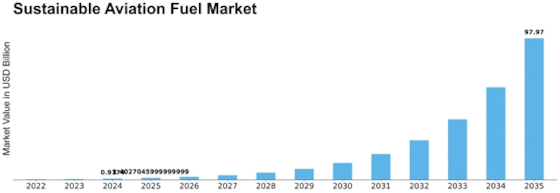
Sustainable Aviation Fuel Market Size Graph
Author
Chitranshi Jaiswal
Team Lead - Research

Chitranshi is a Team Leader in the Chemicals & Materials (CnM) and Energy & Power (EnP) domains, with 6+ years of experience in market research. She leads and mentors teams to deliver cross-domain projects that equip clients with actionable insights and growth strategies. She is skilled in market estimation, forecasting, competitive benchmarking, and both primary & secondary research, enabling her to turn complex data into decision-ready insights. An engineer and MBA professional, she combines technical expertise with strategic acumen to solve dynamic market challenges. Chitranshi has successfully managed projects that support market entry, investment planning, and competitive positioning, while building strong client relationships. Certified in Advanced Excel & Power BI she leverages data-driven approaches to ensure accuracy, clarity, and impactful outcomes.

Leave a Comment

FAQs

What is the projected market valuation of the Sustainable Aviation Fuel Market by 2035?

<p>The Sustainable Aviation Fuel Market is projected to reach a valuation of 97.97 USD Billion by 2035.</p>

What was the market valuation of the Sustainable Aviation Fuel Market in 2024?

<p>In 2024, the market valuation of the Sustainable Aviation Fuel Market was 0.9174 USD Billion.</p>

What is the expected CAGR for the Sustainable Aviation Fuel Market during the forecast period 2025 - 2035?

<p>The expected CAGR for the Sustainable Aviation Fuel Market during the forecast period 2025 - 2035 is 52.9%.</p>

Which fuel type segment is projected to have the highest valuation by 2035?

<p>The Biofuels segment is projected to reach a valuation of 30.0 USD Billion by 2035, making it the highest among fuel types.</p>

What are the key applications driving the Sustainable Aviation Fuel Market?

<p>Key applications include Commercial Aviation, projected to reach 50.0 USD Billion, and Military Aviation, expected to reach 20.0 USD Billion by 2035.</p>

Which production method is anticipated to dominate the market by 2035?

<p>The Hydroprocessed Esters and Fatty Acids production method is anticipated to dominate, with a projected valuation of 35.0 USD Billion by 2035.</p>

Who are the leading companies in the Sustainable Aviation Fuel Market?

<p>Leading companies include Neste, Gevo, LanzaTech, and World Energy, among others.</p>

What is the projected valuation for the Cargo Airlines application by 2035?

<p>The Cargo Airlines application is projected to reach a valuation of 15.0 USD Billion by 2035.</p>

How does the valuation of the Sustainable Aviation Fuel Market in 2024 compare to its projected valuation in 2035?

<p>The market valuation increased from 0.9174 USD Billion in 2024 to a projected 97.97 USD Billion in 2035.</p>

What is the expected valuation for the Passenger Flights end use segment by 2035?

<p>The Passenger Flights end use segment is expected to reach a valuation of 50.0 USD Billion by 2035.</p>

Market Summary

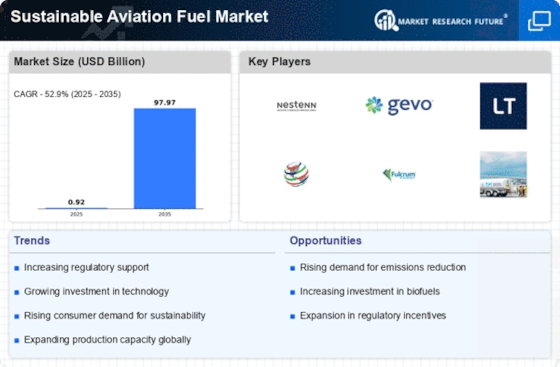
As per Market Research Future analysis, the Sustainable Aviation Fuel Market Size was estimated at 0.9174 USD Billion in 2024. The Sustainable Aviation Fuel industry is projected to grow from 1.403 USD Billion in 2025 to 97.97 USD Billion by 2035, exhibiting a compound annual growth rate (CAGR) of 52% during the forecast period 2025 - 2035

Key Market Trends & Highlights

The Sustainable Aviation Fuel Market is poised for substantial growth driven by regulatory support and technological advancements.

  • North America remains the largest market for sustainable aviation fuel, driven by stringent environmental regulations. The Asia-Pacific region is emerging as the fastest-growing market, fueled by increasing demand for sustainable travel options. Biofuels dominate the market as the largest segment, while hydrogen-based fuels are rapidly gaining traction as the fastest-growing segment. Rising environmental concerns and government incentives are key drivers propelling the adoption of sustainable aviation fuels.

Market Size & Forecast

2024 Market Size 0.9174 (USD Billion)
2035 Market Size 97.97 (USD Billion)
CAGR (2025 - 2035) 52.9%
Largest Regional Market Share in 2024 Europe

Major Players

<a href="https://www.neste.com/products-and-innovation/sustainable-aviation/sustainable-aviation-fuel">Neste</a> (FI), Gevo (US), LanzaTech (US), World Energy (US), Fulcrum BioEnergy (US), Sustainable Aviation Fuel (SAF) (US), Air BP (GB), Shell (GB), <a href="https://aviation.totalenergies.com/en/fuels-and-services-aviation/sustainable-aviation-fuel">TotalEnergies</a> (FR)

Market Trends

The Sustainable Aviation Fuel Market is currently experiencing a transformative phase, driven by increasing environmental awareness and regulatory pressures shaping the broader aviation fuel market.. Airlines and manufacturers are actively seeking alternatives to conventional jet fuels, which are often criticized for their carbon emissions. This shift is not merely a trend but appears to be a fundamental change in how the aviation industry approaches fuel sourcing. The development of sustainable aviation fuels a key segment of the renewable aviation fuel market,, derived from renewable resources, suggests a potential pathway to significantly reduce the carbon footprint of air travel. As stakeholders including sustainable aviation fuel companies and sustainable aviation fuel producers,across the industry collaborate, the market is likely to witness innovations that enhance fuel efficiency and sustainability. Moreover, the Sustainable Aviation Fuel Market is characterized by a growing investment landscape. Governments and private entities are increasingly funding research and development initiatives aimed at improving the production processes of sustainable fuels. This financial backing may lead to advancements in technology that could lower production costs and improve the scalability of sustainable aviation fuels. Additionally, partnerships between airlines and aviation fuel companies producers are becoming more common, indicating a collective effort to integrate sustainable practices into the aviation sector. As the market evolves, it is essential to monitor these developments closely, as they may shape the future of air travel and its environmental impact.

Increased Regulatory Support

The Sustainable Aviation Fuel Market is witnessing heightened regulatory support from governments worldwide. Policies aimed at reducing greenhouse gas emissions are encouraging airlines to adopt sustainable fuels. This regulatory framework not only incentivizes the production of sustainable aviation fuels but also establishes a clear pathway for compliance, fostering a more sustainable aviation ecosystem.

Technological Advancements

Technological innovations are playing a crucial role in the Sustainable Aviation Fuel Market. Research into new production methods and feedstock options is ongoing, potentially leading to more efficient and cost-effective fuel solutions for sustainable aviation fuel producers. These advancements may enhance the viability of sustainable aviation fuels, making them more attractive to airlines and stakeholders.

Collaborative Industry Efforts

Collaboration among various stakeholders is becoming increasingly prevalent in the Sustainable Aviation Fuel Market. Airlines, fuel producers, and research institutions are forming partnerships to accelerate the development and adoption of sustainable fuels. This collective approach may facilitate knowledge sharing and resource pooling, ultimately driving the market forward.

Sustainable Aviation Fuel Market Market Drivers

Rising Environmental Concerns

The Sustainable Aviation Fuel Market is experiencing a surge in demand driven by heightened environmental awareness among consumers and stakeholders. As climate change becomes an increasingly pressing issue, airlines and manufacturers are under pressure to reduce their carbon footprints. This has led to a growing interest in sustainable aviation fuels, which can significantly lower greenhouse gas emissions compared to traditional jet fuels. According to recent estimates, sustainable aviation fuels can reduce lifecycle emissions by up to 80%. This shift towards greener alternatives is not merely a trend but appears to be a fundamental change in how the aviation sector operates, indicating a long-term commitment to sustainability.

Corporate Sustainability Goals

The Sustainable Aviation Fuel Market is increasingly influenced by corporate sustainability goals set by major airlines and aviation stakeholders. Many companies are committing to ambitious targets for reducing their carbon emissions, with some aiming for net-zero emissions by 2050. This commitment drives investment in sustainable aviation fuels as a key strategy to meet these goals. Airlines are actively seeking partnerships with fuel producers to secure a reliable supply of sustainable fuels, which is essential for achieving their sustainability targets. This trend indicates a shift in corporate responsibility, where businesses are not only focusing on profitability but also on their environmental impact, thereby fostering a more sustainable aviation ecosystem.

Government Incentives and Policies

The Sustainable Aviation Fuel Market is bolstered by various government incentives and policies aimed at promoting cleaner fuels. Many countries have implemented tax credits, grants, and subsidies to encourage the production and use of sustainable aviation fuels. For instance, the implementation of the Renewable Fuel Standard in certain regions mandates a specific volume of renewable fuels, including sustainable aviation fuels, to be blended into the fuel supply. This regulatory framework not only stimulates investment in sustainable fuel technologies but also creates a more favorable market environment for producers. As a result, the industry is likely to see increased production capacity and innovation in sustainable fuel technologies.

Technological Innovations in Fuel Production

The Sustainable Aviation Fuel Market is witnessing rapid advancements in technology that enhance the production processes of sustainable fuels. Innovations such as improved feedstock conversion methods and the development of new catalytic processes are making it more feasible to produce sustainable aviation fuels at scale. For example, recent breakthroughs in synthetic biology and waste-to-fuel technologies have the potential to lower production costs and increase yield. These technological advancements are crucial as they not only improve the economic viability of sustainable aviation fuels but also expand the range of feedstocks that can be utilized, thereby diversifying the supply chain and reducing dependency on traditional fossil fuels.

Consumer Demand for Sustainable Travel Options

The Sustainable Aviation Fuel Market is responding to a growing consumer demand for sustainable travel options. As travelers become more environmentally conscious, they are increasingly seeking airlines that prioritize sustainability in their operations. This shift in consumer behavior is prompting airlines to invest in sustainable aviation fuels as a means to attract eco-conscious customers. Market Research Future indicates that a significant percentage of travelers are willing to pay a premium for flights that utilize sustainable fuels. This trend suggests that airlines that adopt sustainable practices may gain a competitive advantage, thereby driving further investment and innovation in the sustainable aviation fuel sector.

Market Segment Insights

By Fuel Type: Biofuels (Largest) vs. Hydrogen-Based Fuels (Fastest-Growing)

<p>The Sustainable Aviation Fuel Market is characterized by diverse fuel types, with biofuels currently holding the largest market share. Their prevalence can be attributed to established production pathways and a growing acceptance among airlines seeking to reduce carbon emissions. Following biofuels, synthetic fuels and alcohols represent significant portions of the market, but hydrogen-based fuels are gaining traction as innovations in technology and infrastructure development catalyze their adoption. In recent years, hydrogen-based fuels have emerged as the fastest-growing segment within the market due to their potential for zero-emission flight. The push for sustainability, coupled with technological advancements and government support, is driving investment in hydrogen fuel solutions. Meanwhile, biofuels continue to benefit from existing supply chains and regulatory incentives that favor their use over conventional fossil fuels.</p>

<p>Biofuels (Dominant) vs. Hydrogen-Based Fuels (Emerging)</p>

<p>Biofuels are considered the dominant fuel type in the Sustainable Aviation Fuel Market, primarily due to their compatibility with existing aircraft and fuel infrastructure. Derived from renewable resources, biofuels are touted for their ability to significantly reduce lifecycle greenhouse gas emissions. In contrast, hydrogen-based fuels represent an emerging segment, attracting attention for their potential to deliver completely carbon-neutral solutions for air travel. While biofuels have a well-established production framework and are already being adopted by major airlines, hydrogen fuels require further advancements in technology and infrastructure to become mainstream. However, investments are rapidly flowing into hydrogen technology, driven by ambitious emission targets set by the aviation industry, indicating a potential paradigm shift in fuel preferences in the future.</p>

By Application: Commercial Aviation (Largest) vs. Cargo Airlines (Fastest-Growing)

<p>In the Sustainable Aviation Fuel Market, the application segment is primarily dominated by Commercial Aviation, which holds the largest market share. This sector accounts for a significant proportion of total aviation fuel consumption, driven by a burgeoning passenger travel demand and an increasing focus on environmental sustainability. Conversely, the Cargo Airlines segment, while smaller in comparison, is rapidly gaining traction as e-commerce growth fuels demand for air cargo services, positioning it as the fastest-growing segment in the market.</p>

<p>Commercial Aviation (Dominant) vs. Cargo Airlines (Emerging)</p>

<p>Commercial Aviation remains the cornerstone of the sustainable aviation fuel market, capitalizing on its established infrastructure and commitment to decarbonization efforts. Airlines are adopting sustainable alternatives to traditional fossil fuels, attracting environmentally conscious travelers and complying with stricter emission regulations. In contrast, Cargo Airlines represent an emerging frontier, leveraging increased logistics demands fueled by online shopping trends. This segment is experiencing a swift shift towards adopting sustainable aviation fuels to enhance their sustainability profile and meet corporate responsibility goals, thereby positioning themselves as pivotal players in reducing aviation's carbon footprint.</p>

By Production Method: Fischer-Tropsch Synthesis (Largest) vs. Hydroprocessed Esters and Fatty Acids (Fastest-Growing)

<p>In the Sustainable Aviation Fuel Market, Fischer-Tropsch Synthesis is currently the largest production method, commanding a significant share of the overall market. This method, known for its efficiency and ability to convert a variety of feedstocks into high-quality fuel, is well-established and widely adopted in the industry. In contrast, Hydroprocessed Esters and Fatty Acids, while smaller in market share, are rapidly gaining traction due to their sustainability and compatibility with existing jet fuel infrastructure. These dynamics reflect the growing interest in eco-friendly aviation solutions. On the growth front, Hydroprocessed Esters and Fatty Acids are emerging as the fastest-growing sector within the Sustainable Aviation Fuel Market, driven by increasing regulatory support and the demand for greener fuels. Innovations in technology and processing capabilities are enhancing efficiency, making this method increasingly viable for large-scale production. Meanwhile, Fischer-Tropsch Synthesis remains robust, supported by established technological frameworks and a strong foundation of operational knowledge, suggesting a balanced yet competitive landscape in production methodologies for sustainable aviation fuels.</p>

<p>Fischer-Tropsch Synthesis (Dominant) vs. Alcohol-to-Jet (Emerging)</p>

<p>Fischer-Tropsch Synthesis is the dominant production method in the Sustainable Aviation Fuel Market, renowned for its ability to convert a wide range of hydrocarbon feedstocks into high-quality synthetic fuels. Its proven efficiency and scalability have made it a preferred choice among major aviation fuel producers. On the other end, Alcohol-to-Jet is emerging as a notable player, leveraging advancements in fermentation and conversion technologies. This method's ability to utilize bio-derived alcohols positions it favorably in the context of increasing focus on circular economy principles. As sustainability becomes more important, both methods exemplify the ongoing transition within the aviation sector, although Fischer-Tropsch's established status currently secures its leading position.</p>

By End Use: Passenger Flights (Largest) vs. Freight Transport (Fastest-Growing)

<p>In the Sustainable Aviation Fuel Market, the distribution among end-use segments illustrates a predominance of passenger flights, which command the largest share due to the ongoing demand for sustainable travel. Freight transport, while smaller in comparison, is capturing attention as the fastest-growing segment, driven by an increase in e-commerce and logistics requiring greener technologies. Charter services modestly contribute, yet play a vital role in niche markets. As airlines strive to meet carbon reduction targets, passenger flights lead the way in adopting sustainable aviation fuels. The growth of freight transport is fueled by regulatory pressures and corporate sustainability commitments, pushing carriers to explore alternatives. Charter services are expected to grow steadily, leveraging the increasing preference for personalized travel experiences and short-notice requests for sustainability-focused options.</p>

<p>Passenger Flights (Dominant) vs. Freight Transport (Emerging)</p>

<p>Passenger flights represent the dominant force in the Sustainable Aviation Fuel Market, characterized by high operational demand and substantial investments in green technologies from airlines. This segment prioritizes reducing carbon emissions, responding to escalating passenger expectations for greener travel options. Conversely, freight transport is an emerging segment characterized by adaptability and innovation in logistics operations. The burgeoning e-commerce sector drives its growth, as freight carriers seek sustainability solutions to enhance their competitive edge. The increasing collaboration between freight companies and fuel providers further underlines the commitment to sustainable practices, marking a shift in traditional freight transportation methods.</p>

Get more detailed insights about Sustainable Aviation Fuel Market Research Report—Global Forecast till 2035

Regional Insights

North America : Leading Innovation and Adoption

North America is the largest market for Sustainable Aviation Fuel Market (SAF), holding approximately 45% of the global market share. The region's growth is driven by stringent regulatory frameworks, increasing demand for sustainable practices, and significant investments in SAF technology. The U.S. government has implemented various incentives to promote SAF production, including tax credits and grants, which further catalyze market expansion. The United States is the leading country in this sector, with key players such as Gevo, LanzaTech, and World Energy spearheading innovation. The competitive landscape is characterized by collaborations between private companies and government entities to enhance SAF production capabilities. Canada is also emerging as a significant player, focusing on sustainable aviation initiatives and partnerships with major airlines to increase SAF usage.

Europe : Regulatory Leadership and Innovation

Europe is the second-largest market for Sustainable Aviation Fuel Market, accounting for approximately 30% of the global market share. The region's growth is propelled by ambitious climate targets set by the European Union, which aims to reduce greenhouse gas emissions from aviation by 55% by 2030. Regulatory frameworks, such as the EU's ReFuelEU Aviation initiative, are pivotal in driving demand for SAF and ensuring compliance with sustainability goals. Leading countries in Europe include Germany, France, and the United Kingdom, where major players like TotalEnergies and Air BP are actively investing in SAF production. The competitive landscape is marked by a strong emphasis on research and development, with numerous partnerships between governments and private sectors to enhance SAF technologies. The region's commitment to sustainability is evident in its strategic investments and collaborative efforts to scale up SAF production.

Asia-Pacific : Emerging Market with Growth Potential

Asia-Pacific is rapidly emerging as a significant market for Sustainable Aviation Fuel Market, holding approximately 15% of the global market share. The region's growth is driven by increasing air travel demand, government initiatives promoting sustainable aviation, and investments in SAF technology. Countries like Japan and Australia are implementing policies to support SAF production, aiming to reduce carbon emissions in the aviation sector. Japan is at the forefront of SAF development in Asia-Pacific, with companies like LanzaTech and Fulcrum BioEnergy leading the charge. The competitive landscape is evolving, with collaborations between airlines and fuel producers to enhance SAF availability. Additionally, regional governments are focusing on creating a conducive environment for SAF investments, which is expected to further boost market growth in the coming years.

Middle East and Africa : Resource-Rich with Emerging Initiatives

The Middle East and Africa region is in the nascent stages of developing a Sustainable Aviation Fuel Market, currently holding about 10% of the global market share. The growth is driven by the region's vast natural resources and increasing awareness of sustainability in aviation. Countries like the UAE and South Africa are beginning to explore SAF production, supported by government initiatives aimed at reducing carbon footprints in aviation. The competitive landscape is characterized by a few key players, including local oil companies and international firms looking to invest in SAF technology. The region's strategic location as a global aviation hub presents unique opportunities for SAF development, with potential partnerships between governments and private sectors to enhance production capabilities and market penetration.

Key Players and Competitive Insights

The SAF Market is rapidly expanding due to the increasing emphasis on reducing carbon emissions and enhancing environmental sustainability within the aviation industry. Many stakeholders, including airlines, manufacturers, and fuel producers, are now focusing on the development and adoption of sustainable aviation fuels to comply with global regulations and consumer demands for greener alternatives. This market is characterized by a mix of established companies and innovative start-ups that are competing to establish themselves in a sector that is increasingly viewed as crucial for the future of aviation. The competition is driven by technological advancements, strategic partnerships, and an ongoing commitment to sustainability which fuels research and development initiatives aimed at improving production efficiencies and reducing costs. Market players are continuously seeking opportunities to leverage new technologies and processes to deliver sustainable fuel solutions that could meet stringent market requirements. Viridis Energy has strategically positioned itself as a significant player in the Sustainable Aviation Fuel Market by focusing on innovative approaches to renewable energy solutions. The company has emphasized the importance of sustainability and maintaining a reduced environmental footprint in their operations, which resonates well with the growing demand for eco-friendly aviation fuels. Viridis Energy’s strengths lie in its dedicated research and development activities, enabling the company to create high-quality sustainable aviation fuel products that meet stringent regulatory standards. This commitment not only enhances their market presence but also unveils partnerships with key stakeholders in the aviation industry, further strengthening their position in a competitive landscape. With a robust approach towards sustainability and pioneering developments, Viridis Energy continues to contribute to the transformation of the aviation fuel market on a global scale. SkyNRG stands out in the SAF Market by providing a comprehensive suite of sustainable fuel solutions for the aviation sector. The company is known for its collaborative initiatives with various airlines and industry stakeholders to promote the use of sustainable aviation fuel. SkyNRG's key products and services focus on creating and supplying sustainable aviation fuel that significantly lowers lifecycle emissions compared to traditional fossil fuels. Their strong market presence and commitment to sustainability are augmented by strategic mergers and acquisitions that enable them to expand their capabilities and innovate within the space. Moreover, SkyNRG actively engages in partnerships to support the utilization and sourcing of sustainably produced aviation fuel, reinforcing their strengths in logistics and supply chain management. This not only enhances their competitiveness in the global arena but also positions them favorably as a leader in advancing sustainability within the aviation sector.

Key Companies in the Sustainable Aviation Fuel Market include

Industry Developments

  • Q2 2025: Disappointingly Slow Growth in SAF Production IATA announced that key SAF production facilities in the US have delayed their production ramp-up to the first half of 2025, impacting global supply forecasts for sustainable aviation fuel.
  • Q2 2025: Doubling SAF Production by 2025: IATA's Push for Greener Skies IATA set a major target to double global sustainable aviation fuel production to 2 million tonnes (2.5 billion liters) by 2025, aiming to accelerate decarbonization in the aviation sector.
  • Q1 2025: SkyNRG & ICF release Sustainable Aviation Fuel Market Outlook 2025 SkyNRG and ICF announced the release of their 2025 Sustainable Aviation Fuel Market Outlook, highlighting that EU and UK SAF mandates started in January 2025, marking a critical regulatory milestone for the sector.

Future Outlook

Sustainable Aviation Fuel Market Future Outlook

The Sustainable Aviation Fuel Market is projected to grow at a 52.9% CAGR from 2025 to 2035, driven by regulatory support, technological advancements, and increasing environmental concerns.

New opportunities lie in:

  • <p>Investment in advanced biofuel production facilities Partnerships with airlines for sustainable fuel sourcing Development of carbon offset programs for aviation emissions</p>

By 2035, the market is expected to be a cornerstone of the aviation industry's sustainability efforts.

Market Segmentation

Sustainable Aviation Fuel Market End Use Outlook

  • Passenger Flights
  • Freight Transport
  • Charter Services

Sustainable Aviation Fuel Market Fuel Type Outlook

  • Biofuels
  • Synthetic Fuels
  • Hydrogen-Based Fuels
  • Alcohols
  • Esters

Sustainable Aviation Fuel Market Application Outlook

  • Commercial Aviation
  • Military Aviation
  • Cargo Airlines
  • Business Aviation

Sustainable Aviation Fuel Market Production Method Outlook

  • Fischer-Tropsch Synthesis
  • Hydroprocessed Esters and Fatty Acids
  • Alcohol-to-Jet
  • Power-to-Liquid

Report Scope

MARKET SIZE 2024 0.9174(USD Billion)
MARKET SIZE 2025 1.403(USD Billion)
MARKET SIZE 2035 97.97(USD Billion)
COMPOUND ANNUAL GROWTH RATE (CAGR) 52.9% (2025 - 2035)
REPORT COVERAGE Revenue Forecast, Competitive Landscape, Growth Factors, and Trends
BASE YEAR 2024
Market Forecast Period 2025 - 2035
Historical Data 2019 - 2024
Market Forecast Units USD Billion
Key Companies Profiled Neste (FI), Gevo (US), LanzaTech (US), World Energy (US), Fulcrum BioEnergy (US), Sustainable Aviation Fuel (SAF) (US), Air BP (GB), Shell (GB), TotalEnergies (FR)
Segments Covered Fuel Type, Application, Production Method, End Use, Regional
Key Market Opportunities Emerging technologies in feedstock conversion enhance production efficiency in the Sustainable Aviation Fuel Market.
Key Market Dynamics Rising regulatory support and technological advancements drive the adoption of Sustainable Aviation Fuel across the aviation sector.
Countries Covered North America, Europe, APAC, South America, MEA

FAQs

What is the projected market valuation of the Sustainable Aviation Fuel Market by 2035?

<p>The Sustainable Aviation Fuel Market is projected to reach a valuation of 97.97 USD Billion by 2035.</p>

What was the market valuation of the Sustainable Aviation Fuel Market in 2024?

<p>In 2024, the market valuation of the Sustainable Aviation Fuel Market was 0.9174 USD Billion.</p>

What is the expected CAGR for the Sustainable Aviation Fuel Market during the forecast period 2025 - 2035?

<p>The expected CAGR for the Sustainable Aviation Fuel Market during the forecast period 2025 - 2035 is 52.9%.</p>

Which fuel type segment is projected to have the highest valuation by 2035?

<p>The Biofuels segment is projected to reach a valuation of 30.0 USD Billion by 2035, making it the highest among fuel types.</p>

What are the key applications driving the Sustainable Aviation Fuel Market?

<p>Key applications include Commercial Aviation, projected to reach 50.0 USD Billion, and Military Aviation, expected to reach 20.0 USD Billion by 2035.</p>

Which production method is anticipated to dominate the market by 2035?

<p>The Hydroprocessed Esters and Fatty Acids production method is anticipated to dominate, with a projected valuation of 35.0 USD Billion by 2035.</p>

Who are the leading companies in the Sustainable Aviation Fuel Market?

<p>Leading companies include Neste, Gevo, LanzaTech, and World Energy, among others.</p>

What is the projected valuation for the Cargo Airlines application by 2035?

<p>The Cargo Airlines application is projected to reach a valuation of 15.0 USD Billion by 2035.</p>

How does the valuation of the Sustainable Aviation Fuel Market in 2024 compare to its projected valuation in 2035?

<p>The market valuation increased from 0.9174 USD Billion in 2024 to a projected 97.97 USD Billion in 2035.</p>

What is the expected valuation for the Passenger Flights end use segment by 2035?

<p>The Passenger Flights end use segment is expected to reach a valuation of 50.0 USD Billion by 2035.</p>

  1. SECTION I: EXECUTIVE SUMMARY AND KEY HIGHLIGHTS
    1. EXECUTIVE SUMMARY
      1. Market Overview
      2. Key Findings
      3. Market Segmentation
      4. Competitive Landscape
      5. Challenges and Opportunities
      6. Future Outlook 2
  2. SECTION II: SCOPING, METHODOLOGY AND MARKET STRUCTURE
    1. MARKET INTRODUCTION
      1. Definition
      2. Scope of the study
    2. RESEARCH METHODOLOGY
      1. Overview
      2. Data Mining
      3. Secondary Research
      4. Primary Research
      5. Forecasting Model
      6. Market Size Estimation
      7. Data Triangulation
      8. Validation 3
  3. SECTION III: QUALITATIVE ANALYSIS
    1. MARKET DYNAMICS
      1. Overview
      2. Drivers
      3. Restraints
      4. Opportunities
    2. MARKET FACTOR ANALYSIS
      1. Value chain Analysis
      2. Porter's Five Forces Analysis
      3. COVID-19 Impact Analysis
  4. SECTION IV: QUANTITATIVE ANALYSIS
    1. Energy & Sustainable Aviation Fuel Market, BY Fuel Type (USD Billion)
      1. Biofuels
      2. Synthetic Fuels
      3. Hydrogen-Based Fuels
      4. Alcohols
      5. Esters
    2. Energy & Sustainable Aviation Fuel Market, BY Application (USD Billion)
      1. Commercial Aviation
      2. Military Aviation
      3. Cargo Airlines
      4. Business Aviation
    3. Energy & Sustainable Aviation Fuel Market, BY Production Method (USD Billion)
      1. Fischer-Tropsch Synthesis
      2. Hydroprocessed Esters and Fatty Acids
      3. Alcohol-to-Jet
      4. Power-to-Liquid
    4. Energy & Sustainable Aviation Fuel Market, BY End Use (USD Billion)
      1. Passenger Flights
      2. Freight Transport
      3. Charter Services
    5. Energy & Sustainable Aviation Fuel Market, BY Region (USD Billion)
      1. North America
      2. Europe
      3. APAC
      4. South America
      5. MEA
  5. SECTION V: COMPETITIVE ANALYSIS
    1. Competitive Landscape
      1. Overview
      2. Competitive Analysis
      3. Market share Analysis
      4. Major Growth Strategy in the Energy & Power
      5. Competitive Benchmarking
      6. Leading Players in Terms of Number of Developments in the Energy & Power
      7. Key developments and growth strategies
      8. Major Players Financial Matrix
    2. Company Profiles
      1. Neste (FI)
      2. Gevo (US)
      3. LanzaTech (US)
      4. World Energy (US)
      5. Fulcrum BioEnergy (US)
      6. Sustainable Aviation Fuel (SAF) (US)
      7. Air BP (GB)
      8. Shell (GB)
      9. TotalEnergies (FR)
    3. Appendix
      1. References
      2. Related Reports 6 LIST OF FIGURES
    4. MARKET SYNOPSIS
    5. NORTH AMERICA MARKET ANALYSIS
    6. US MARKET ANALYSIS BY FUEL TYPE
    7. US MARKET ANALYSIS BY APPLICATION
    8. US MARKET ANALYSIS BY PRODUCTION METHOD
    9. US MARKET ANALYSIS BY END USE
    10. CANADA MARKET ANALYSIS BY FUEL TYPE
    11. CANADA MARKET ANALYSIS BY APPLICATION
    12. CANADA MARKET ANALYSIS BY PRODUCTION METHOD
    13. CANADA MARKET ANALYSIS BY END USE
    14. EUROPE MARKET ANALYSIS
    15. GERMANY MARKET ANALYSIS BY FUEL TYPE
    16. GERMANY MARKET ANALYSIS BY APPLICATION
    17. GERMANY MARKET ANALYSIS BY PRODUCTION METHOD
    18. GERMANY MARKET ANALYSIS BY END USE
    19. UK MARKET ANALYSIS BY FUEL TYPE
    20. UK MARKET ANALYSIS BY APPLICATION
    21. UK MARKET ANALYSIS BY PRODUCTION METHOD
    22. UK MARKET ANALYSIS BY END USE
    23. FRANCE MARKET ANALYSIS BY FUEL TYPE
    24. FRANCE MARKET ANALYSIS BY APPLICATION
    25. FRANCE MARKET ANALYSIS BY PRODUCTION METHOD
    26. FRANCE MARKET ANALYSIS BY END USE
    27. RUSSIA MARKET ANALYSIS BY FUEL TYPE
    28. RUSSIA MARKET ANALYSIS BY APPLICATION
    29. RUSSIA MARKET ANALYSIS BY PRODUCTION METHOD
    30. RUSSIA MARKET ANALYSIS BY END USE
    31. ITALY MARKET ANALYSIS BY FUEL TYPE
    32. ITALY MARKET ANALYSIS BY APPLICATION
    33. ITALY MARKET ANALYSIS BY PRODUCTION METHOD
    34. ITALY MARKET ANALYSIS BY END USE
    35. SPAIN MARKET ANALYSIS BY FUEL TYPE
    36. SPAIN MARKET ANALYSIS BY APPLICATION
    37. SPAIN MARKET ANALYSIS BY PRODUCTION METHOD
    38. SPAIN MARKET ANALYSIS BY END USE
    39. REST OF EUROPE MARKET ANALYSIS BY FUEL TYPE
    40. REST OF EUROPE MARKET ANALYSIS BY APPLICATION
    41. REST OF EUROPE MARKET ANALYSIS BY PRODUCTION METHOD
    42. REST OF EUROPE MARKET ANALYSIS BY END USE
    43. APAC MARKET ANALYSIS
    44. CHINA MARKET ANALYSIS BY FUEL TYPE
    45. CHINA MARKET ANALYSIS BY APPLICATION
    46. CHINA MARKET ANALYSIS BY PRODUCTION METHOD
    47. CHINA MARKET ANALYSIS BY END USE
    48. INDIA MARKET ANALYSIS BY FUEL TYPE
    49. INDIA MARKET ANALYSIS BY APPLICATION
    50. INDIA MARKET ANALYSIS BY PRODUCTION METHOD
    51. INDIA MARKET ANALYSIS BY END USE
    52. JAPAN MARKET ANALYSIS BY FUEL TYPE
    53. JAPAN MARKET ANALYSIS BY APPLICATION
    54. JAPAN MARKET ANALYSIS BY PRODUCTION METHOD
    55. JAPAN MARKET ANALYSIS BY END USE
    56. SOUTH KOREA MARKET ANALYSIS BY FUEL TYPE
    57. SOUTH KOREA MARKET ANALYSIS BY APPLICATION
    58. SOUTH KOREA MARKET ANALYSIS BY PRODUCTION METHOD
    59. SOUTH KOREA MARKET ANALYSIS BY END USE
    60. MALAYSIA MARKET ANALYSIS BY FUEL TYPE
    61. MALAYSIA MARKET ANALYSIS BY APPLICATION
    62. MALAYSIA MARKET ANALYSIS BY PRODUCTION METHOD
    63. MALAYSIA MARKET ANALYSIS BY END USE
    64. THAILAND MARKET ANALYSIS BY FUEL TYPE
    65. THAILAND MARKET ANALYSIS BY APPLICATION
    66. THAILAND MARKET ANALYSIS BY PRODUCTION METHOD
    67. THAILAND MARKET ANALYSIS BY END USE
    68. INDONESIA MARKET ANALYSIS BY FUEL TYPE
    69. INDONESIA MARKET ANALYSIS BY APPLICATION
    70. INDONESIA MARKET ANALYSIS BY PRODUCTION METHOD
    71. INDONESIA MARKET ANALYSIS BY END USE
    72. REST OF APAC MARKET ANALYSIS BY FUEL TYPE
    73. REST OF APAC MARKET ANALYSIS BY APPLICATION
    74. REST OF APAC MARKET ANALYSIS BY PRODUCTION METHOD
    75. REST OF APAC MARKET ANALYSIS BY END USE
    76. SOUTH AMERICA MARKET ANALYSIS
    77. BRAZIL MARKET ANALYSIS BY FUEL TYPE
    78. BRAZIL MARKET ANALYSIS BY APPLICATION
    79. BRAZIL MARKET ANALYSIS BY PRODUCTION METHOD
    80. BRAZIL MARKET ANALYSIS BY END USE
    81. MEXICO MARKET ANALYSIS BY FUEL TYPE
    82. MEXICO MARKET ANALYSIS BY APPLICATION
    83. MEXICO MARKET ANALYSIS BY PRODUCTION METHOD
    84. MEXICO MARKET ANALYSIS BY END USE
    85. ARGENTINA MARKET ANALYSIS BY FUEL TYPE
    86. ARGENTINA MARKET ANALYSIS BY APPLICATION
    87. ARGENTINA MARKET ANALYSIS BY PRODUCTION METHOD
    88. ARGENTINA MARKET ANALYSIS BY END USE
    89. REST OF SOUTH AMERICA MARKET ANALYSIS BY FUEL TYPE
    90. REST OF SOUTH AMERICA MARKET ANALYSIS BY APPLICATION
    91. REST OF SOUTH AMERICA MARKET ANALYSIS BY PRODUCTION METHOD
    92. REST OF SOUTH AMERICA MARKET ANALYSIS BY END USE
    93. MEA MARKET ANALYSIS
    94. GCC COUNTRIES MARKET ANALYSIS BY FUEL TYPE
    95. GCC COUNTRIES MARKET ANALYSIS BY APPLICATION
    96. GCC COUNTRIES MARKET ANALYSIS BY PRODUCTION METHOD
    97. GCC COUNTRIES MARKET ANALYSIS BY END USE
    98. SOUTH AFRICA MARKET ANALYSIS BY FUEL TYPE
    99. SOUTH AFRICA MARKET ANALYSIS BY APPLICATION
    100. SOUTH AFRICA MARKET ANALYSIS BY PRODUCTION METHOD
    101. SOUTH AFRICA MARKET ANALYSIS BY END USE
    102. REST OF MEA MARKET ANALYSIS BY FUEL TYPE
    103. REST OF MEA MARKET ANALYSIS BY APPLICATION
    104. REST OF MEA MARKET ANALYSIS BY PRODUCTION METHOD
    105. REST OF MEA MARKET ANALYSIS BY END USE
    106. KEY BUYING CRITERIA OF ENERGY & POWER
    107. RESEARCH PROCESS OF MRFR
    108. DRO ANALYSIS OF ENERGY & POWER
    109. DRIVERS IMPACT ANALYSIS: ENERGY & POWER
    110. RESTRAINTS IMPACT ANALYSIS: ENERGY & POWER
    111. SUPPLY / VALUE CHAIN: ENERGY & POWER
    112. ENERGY & Sustainable Aviation Fuel Market, BY FUEL TYPE, 2024 (% SHARE)
    113. ENERGY & Sustainable Aviation Fuel Market, BY FUEL TYPE, 2024 TO 2035 (USD Billion)
    114. ENERGY & Sustainable Aviation Fuel Market, BY APPLICATION, 2024 (% SHARE)
    115. ENERGY & Sustainable Aviation Fuel Market, BY APPLICATION, 2024 TO 2035 (USD Billion)
    116. ENERGY & Sustainable Aviation Fuel Market, BY PRODUCTION METHOD, 2024 (% SHARE)
    117. ENERGY & Sustainable Aviation Fuel Market, BY PRODUCTION METHOD, 2024 TO 2035 (USD Billion)
    118. ENERGY & Sustainable Aviation Fuel Market, BY END USE, 2024 (% SHARE)
    119. ENERGY & Sustainable Aviation Fuel Market, BY END USE, 2024 TO 2035 (USD Billion)
    120. BENCHMARKING OF MAJOR COMPETITORS 7 LIST OF TABLES
    121. LIST OF ASSUMPTIONS
    122. North America MARKET SIZE ESTIMATES; FORECAST
      1. BY FUEL TYPE, 2025-2035 (USD Billion)
      2. BY APPLICATION, 2025-2035 (USD Billion)
      3. BY PRODUCTION METHOD, 2025-2035 (USD Billion)
      4. BY END USE, 2025-2035 (USD Billion)
    123. US MARKET SIZE ESTIMATES; FORECAST
      1. BY FUEL TYPE, 2025-2035 (USD Billion)
      2. BY APPLICATION, 2025-2035 (USD Billion)
      3. BY PRODUCTION METHOD, 2025-2035 (USD Billion)
      4. BY END USE, 2025-2035 (USD Billion)
    124. Canada MARKET SIZE ESTIMATES; FORECAST
      1. BY FUEL TYPE, 2025-2035 (USD Billion)
      2. BY APPLICATION, 2025-2035 (USD Billion)
      3. BY PRODUCTION METHOD, 2025-2035 (USD Billion)
      4. BY END USE, 2025-2035 (USD Billion)
    125. Europe MARKET SIZE ESTIMATES; FORECAST
      1. BY FUEL TYPE, 2025-2035 (USD Billion)
      2. BY APPLICATION, 2025-2035 (USD Billion)
      3. BY PRODUCTION METHOD, 2025-2035 (USD Billion)
      4. BY END USE, 2025-2035 (USD Billion)
    126. Germany MARKET SIZE ESTIMATES; FORECAST
      1. BY FUEL TYPE, 2025-2035 (USD Billion)
      2. BY APPLICATION, 2025-2035 (USD Billion)
      3. BY PRODUCTION METHOD, 2025-2035 (USD Billion)
      4. BY END USE, 2025-2035 (USD Billion)
    127. UK MARKET SIZE ESTIMATES; FORECAST
      1. BY FUEL TYPE, 2025-2035 (USD Billion)
      2. BY APPLICATION, 2025-2035 (USD Billion)
      3. BY PRODUCTION METHOD, 2025-2035 (USD Billion)
      4. BY END USE, 2025-2035 (USD Billion)
    128. France MARKET SIZE ESTIMATES; FORECAST
      1. BY FUEL TYPE, 2025-2035 (USD Billion)
      2. BY APPLICATION, 2025-2035 (USD Billion)
      3. BY PRODUCTION METHOD, 2025-2035 (USD Billion)
      4. BY END USE, 2025-2035 (USD Billion)
    129. Russia MARKET SIZE ESTIMATES; FORECAST
      1. BY FUEL TYPE, 2025-2035 (USD Billion)
      2. BY APPLICATION, 2025-2035 (USD Billion)
      3. BY PRODUCTION METHOD, 2025-2035 (USD Billion)
      4. BY END USE, 2025-2035 (USD Billion)
    130. Italy MARKET SIZE ESTIMATES; FORECAST
      1. BY FUEL TYPE, 2025-2035 (USD Billion)
      2. BY APPLICATION, 2025-2035 (USD Billion)
      3. BY PRODUCTION METHOD, 2025-2035 (USD Billion)
      4. BY END USE, 2025-2035 (USD Billion)
    131. Spain MARKET SIZE ESTIMATES; FORECAST
      1. BY FUEL TYPE, 2025-2035 (USD Billion)
      2. BY APPLICATION, 2025-2035 (USD Billion)
      3. BY PRODUCTION METHOD, 2025-2035 (USD Billion)
      4. BY END USE, 2025-2035 (USD Billion)
    132. Rest of Europe MARKET SIZE ESTIMATES; FORECAST
      1. BY FUEL TYPE, 2025-2035 (USD Billion)
      2. BY APPLICATION, 2025-2035 (USD Billion)
      3. BY PRODUCTION METHOD, 2025-2035 (USD Billion)
      4. BY END USE, 2025-2035 (USD Billion)
    133. APAC MARKET SIZE ESTIMATES; FORECAST
      1. BY FUEL TYPE, 2025-2035 (USD Billion)
      2. BY APPLICATION, 2025-2035 (USD Billion)
      3. BY PRODUCTION METHOD, 2025-2035 (USD Billion)
      4. BY END USE, 2025-2035 (USD Billion)
    134. China MARKET SIZE ESTIMATES; FORECAST
      1. BY FUEL TYPE, 2025-2035 (USD Billion)
      2. BY APPLICATION, 2025-2035 (USD Billion)
      3. BY PRODUCTION METHOD, 2025-2035 (USD Billion)
      4. BY END USE, 2025-2035 (USD Billion)
    135. India MARKET SIZE ESTIMATES; FORECAST
      1. BY FUEL TYPE, 2025-2035 (USD Billion)
      2. BY APPLICATION, 2025-2035 (USD Billion)
      3. BY PRODUCTION METHOD, 2025-2035 (USD Billion)
      4. BY END USE, 2025-2035 (USD Billion)
    136. Japan MARKET SIZE ESTIMATES; FORECAST
      1. BY FUEL TYPE, 2025-2035 (USD Billion)
      2. BY APPLICATION, 2025-2035 (USD Billion)
      3. BY PRODUCTION METHOD, 2025-2035 (USD Billion)
      4. BY END USE, 2025-2035 (USD Billion)
    137. South Korea MARKET SIZE ESTIMATES; FORECAST
      1. BY FUEL TYPE, 2025-2035 (USD Billion)
      2. BY APPLICATION, 2025-2035 (USD Billion)
      3. BY PRODUCTION METHOD, 2025-2035 (USD Billion)
      4. BY END USE, 2025-2035 (USD Billion)
    138. Malaysia MARKET SIZE ESTIMATES; FORECAST
      1. BY FUEL TYPE, 2025-2035 (USD Billion)
      2. BY APPLICATION, 2025-2035 (USD Billion)
      3. BY PRODUCTION METHOD, 2025-2035 (USD Billion)
      4. BY END USE, 2025-2035 (USD Billion)
    139. Thailand MARKET SIZE ESTIMATES; FORECAST
      1. BY FUEL TYPE, 2025-2035 (USD Billion)
      2. BY APPLICATION, 2025-2035 (USD Billion)
      3. BY PRODUCTION METHOD, 2025-2035 (USD Billion)
      4. BY END USE, 2025-2035 (USD Billion)
    140. Indonesia MARKET SIZE ESTIMATES; FORECAST
      1. BY FUEL TYPE, 2025-2035 (USD Billion)
      2. BY APPLICATION, 2025-2035 (USD Billion)
      3. BY PRODUCTION METHOD, 2025-2035 (USD Billion)
      4. BY END USE, 2025-2035 (USD Billion)
    141. Rest of APAC MARKET SIZE ESTIMATES; FORECAST
      1. BY FUEL TYPE, 2025-2035 (USD Billion)
      2. BY APPLICATION, 2025-2035 (USD Billion)
      3. BY PRODUCTION METHOD, 2025-2035 (USD Billion)
      4. BY END USE, 2025-2035 (USD Billion)
    142. South America MARKET SIZE ESTIMATES; FORECAST
      1. BY FUEL TYPE, 2025-2035 (USD Billion)
      2. BY APPLICATION, 2025-2035 (USD Billion)
      3. BY PRODUCTION METHOD, 2025-2035 (USD Billion)
      4. BY END USE, 2025-2035 (USD Billion)
    143. Brazil MARKET SIZE ESTIMATES; FORECAST
      1. BY FUEL TYPE, 2025-2035 (USD Billion)
      2. BY APPLICATION, 2025-2035 (USD Billion)
      3. BY PRODUCTION METHOD, 2025-2035 (USD Billion)
      4. BY END USE, 2025-2035 (USD Billion)
    144. Mexico MARKET SIZE ESTIMATES; FORECAST
      1. BY FUEL TYPE, 2025-2035 (USD Billion)
      2. BY APPLICATION, 2025-2035 (USD Billion)
      3. BY PRODUCTION METHOD, 2025-2035 (USD Billion)
      4. BY END USE, 2025-2035 (USD Billion)
    145. Argentina MARKET SIZE ESTIMATES; FORECAST
      1. BY FUEL TYPE, 2025-2035 (USD Billion)
      2. BY APPLICATION, 2025-2035 (USD Billion)
      3. BY PRODUCTION METHOD, 2025-2035 (USD Billion)
      4. BY END USE, 2025-2035 (USD Billion)
    146. Rest of South America MARKET SIZE ESTIMATES; FORECAST
      1. BY FUEL TYPE, 2025-2035 (USD Billion)
      2. BY APPLICATION, 2025-2035 (USD Billion)
      3. BY PRODUCTION METHOD, 2025-2035 (USD Billion)
      4. BY END USE, 2025-2035 (USD Billion)
    147. MEA MARKET SIZE ESTIMATES; FORECAST
      1. BY FUEL TYPE, 2025-2035 (USD Billion)
      2. BY APPLICATION, 2025-2035 (USD Billion)
      3. BY PRODUCTION METHOD, 2025-2035 (USD Billion)
      4. BY END USE, 2025-2035 (USD Billion)
    148. GCC Countries MARKET SIZE ESTIMATES; FORECAST
      1. BY FUEL TYPE, 2025-2035 (USD Billion)
      2. BY APPLICATION, 2025-2035 (USD Billion)
      3. BY PRODUCTION METHOD, 2025-2035 (USD Billion)
      4. BY END USE, 2025-2035 (USD Billion)
    149. South Africa MARKET SIZE ESTIMATES; FORECAST
      1. BY FUEL TYPE, 2025-2035 (USD Billion)
      2. BY APPLICATION, 2025-2035 (USD Billion)
      3. BY PRODUCTION METHOD, 2025-2035 (USD Billion)
      4. BY END USE, 2025-2035 (USD Billion)
    150. Rest of MEA MARKET SIZE ESTIMATES; FORECAST
      1. BY FUEL TYPE, 2025-2035 (USD Billion)
      2. BY APPLICATION, 2025-2035 (USD Billion)
      3. BY PRODUCTION METHOD, 2025-2035 (USD Billion)
      4. BY END USE, 2025-2035 (USD Billion)
    151. PRODUCT LAUNCH/PRODUCT DEVELOPMENT/APPROVAL
    152. ACQUISITION/PARTNERSHIP

Sustainable Aviation Fuel Market Segmentation

  • Sustainable Aviation Fuel Market By Fuel Type (USD Billion, 2019-2035)

    • Biofuels
    • Synthetic Fuels
    • Hydrogen Based Fuels
    • Alcohols
    • Esters
  • Sustainable Aviation Fuel Market By Application (USD Billion, 2019-2035)

    • Commercial Aviation
    • Military Aviation
    • Cargo Airlines
    • Business Aviation
  • Sustainable Aviation Fuel Market By Production Method (USD Billion, 2019-2035)

    • Fischer-Tropsch Synthesis
    • Hydroprocessed Esters and Fatty Acids
    • Alcohol-to-Jet
    • Power-to-Liquid
  • Sustainable Aviation Fuel Market By End Use (USD Billion, 2019-2035)

    • Passenger Flights
    • Freight Transport
    • Charter Services
  • Sustainable Aviation Fuel Market By Regional (USD Billion, 2019-2035)

    • North America
    • Europe
    • South America
    • Asia Pacific
    • Middle East and Africa

Sustainable Aviation Fuel Market Regional Outlook (USD Billion, 2019-2035)

  • North America Outlook (USD Billion, 2019-2035)

    • Sustainable Aviation Fuel Market by Fuel Type

      • Biofuels
      • Synthetic Fuels
      • Hydrogen Based Fuels
      • Alcohols
      • Esters
    • Sustainable Aviation Fuel Market by Application Type

      • Commercial Aviation
      • Military Aviation
      • Cargo Airlines
      • Business Aviation
    • Sustainable Aviation Fuel Market by Production Method Type

      • Fischer-Tropsch Synthesis
      • Hydroprocessed Esters and Fatty Acids
      • Alcohol-to-Jet
      • Power-to-Liquid
    • Sustainable Aviation Fuel Market by End Use Type

      • Passenger Flights
      • Freight Transport
      • Charter Services
    • Sustainable Aviation Fuel Market by Regional Type

      • US
      • Canada
    • US Outlook (USD Billion, 2019-2035)
    • Sustainable Aviation Fuel Market by Fuel Type

      • Biofuels
      • Synthetic Fuels
      • Hydrogen Based Fuels
      • Alcohols
      • Esters
    • Sustainable Aviation Fuel Market by Application Type

      • Commercial Aviation
      • Military Aviation
      • Cargo Airlines
      • Business Aviation
    • Sustainable Aviation Fuel Market by Production Method Type

      • Fischer-Tropsch Synthesis
      • Hydroprocessed Esters and Fatty Acids
      • Alcohol-to-Jet
      • Power-to-Liquid
    • Sustainable Aviation Fuel Market by End Use Type

      • Passenger Flights
      • Freight Transport
      • Charter Services
    • CANADA Outlook (USD Billion, 2019-2035)
    • Sustainable Aviation Fuel Market by Fuel Type

      • Biofuels
      • Synthetic Fuels
      • Hydrogen Based Fuels
      • Alcohols
      • Esters
    • Sustainable Aviation Fuel Market by Application Type

      • Commercial Aviation
      • Military Aviation
      • Cargo Airlines
      • Business Aviation
    • Sustainable Aviation Fuel Market by Production Method Type

      • Fischer-Tropsch Synthesis
      • Hydroprocessed Esters and Fatty Acids
      • Alcohol-to-Jet
      • Power-to-Liquid
    • Sustainable Aviation Fuel Market by End Use Type

      • Passenger Flights
      • Freight Transport
      • Charter Services
  • Europe Outlook (USD Billion, 2019-2035)

    • Sustainable Aviation Fuel Market by Fuel Type

      • Biofuels
      • Synthetic Fuels
      • Hydrogen Based Fuels
      • Alcohols
      • Esters
    • Sustainable Aviation Fuel Market by Application Type

      • Commercial Aviation
      • Military Aviation
      • Cargo Airlines
      • Business Aviation
    • Sustainable Aviation Fuel Market by Production Method Type

      • Fischer-Tropsch Synthesis
      • Hydroprocessed Esters and Fatty Acids
      • Alcohol-to-Jet
      • Power-to-Liquid
    • Sustainable Aviation Fuel Market by End Use Type

      • Passenger Flights
      • Freight Transport
      • Charter Services
    • Sustainable Aviation Fuel Market by Regional Type

      • Germany
      • UK
      • France
      • Russia
      • Italy
      • Spain
      • Rest of Europe
    • GERMANY Outlook (USD Billion, 2019-2035)
    • Sustainable Aviation Fuel Market by Fuel Type

      • Biofuels
      • Synthetic Fuels
      • Hydrogen Based Fuels
      • Alcohols
      • Esters
    • Sustainable Aviation Fuel Market by Application Type

      • Commercial Aviation
      • Military Aviation
      • Cargo Airlines
      • Business Aviation
    • Sustainable Aviation Fuel Market by Production Method Type

      • Fischer-Tropsch Synthesis
      • Hydroprocessed Esters and Fatty Acids
      • Alcohol-to-Jet
      • Power-to-Liquid
    • Sustainable Aviation Fuel Market by End Use Type

      • Passenger Flights
      • Freight Transport
      • Charter Services
    • UK Outlook (USD Billion, 2019-2035)
    • Sustainable Aviation Fuel Market by Fuel Type

      • Biofuels
      • Synthetic Fuels
      • Hydrogen Based Fuels
      • Alcohols
      • Esters
    • Sustainable Aviation Fuel Market by Application Type

      • Commercial Aviation
      • Military Aviation
      • Cargo Airlines
      • Business Aviation
    • Sustainable Aviation Fuel Market by Production Method Type

      • Fischer-Tropsch Synthesis
      • Hydroprocessed Esters and Fatty Acids
      • Alcohol-to-Jet
      • Power-to-Liquid
    • Sustainable Aviation Fuel Market by End Use Type

      • Passenger Flights
      • Freight Transport
      • Charter Services
    • FRANCE Outlook (USD Billion, 2019-2035)
    • Sustainable Aviation Fuel Market by Fuel Type

      • Biofuels
      • Synthetic Fuels
      • Hydrogen Based Fuels
      • Alcohols
      • Esters
    • Sustainable Aviation Fuel Market by Application Type

      • Commercial Aviation
      • Military Aviation
      • Cargo Airlines
      • Business Aviation
    • Sustainable Aviation Fuel Market by Production Method Type

      • Fischer-Tropsch Synthesis
      • Hydroprocessed Esters and Fatty Acids
      • Alcohol-to-Jet
      • Power-to-Liquid
    • Sustainable Aviation Fuel Market by End Use Type

      • Passenger Flights
      • Freight Transport
      • Charter Services
    • RUSSIA Outlook (USD Billion, 2019-2035)
    • Sustainable Aviation Fuel Market by Fuel Type

      • Biofuels
      • Synthetic Fuels
      • Hydrogen Based Fuels
      • Alcohols
      • Esters
    • Sustainable Aviation Fuel Market by Application Type

      • Commercial Aviation
      • Military Aviation
      • Cargo Airlines
      • Business Aviation
    • Sustainable Aviation Fuel Market by Production Method Type

      • Fischer-Tropsch Synthesis
      • Hydroprocessed Esters and Fatty Acids
      • Alcohol-to-Jet
      • Power-to-Liquid
    • Sustainable Aviation Fuel Market by End Use Type

      • Passenger Flights
      • Freight Transport
      • Charter Services
    • ITALY Outlook (USD Billion, 2019-2035)
    • Sustainable Aviation Fuel Market by Fuel Type

      • Biofuels
      • Synthetic Fuels
      • Hydrogen Based Fuels
      • Alcohols
      • Esters
    • Sustainable Aviation Fuel Market by Application Type

      • Commercial Aviation
      • Military Aviation
      • Cargo Airlines
      • Business Aviation
    • Sustainable Aviation Fuel Market by Production Method Type

      • Fischer-Tropsch Synthesis
      • Hydroprocessed Esters and Fatty Acids
      • Alcohol-to-Jet
      • Power-to-Liquid
    • Sustainable Aviation Fuel Market by End Use Type

      • Passenger Flights
      • Freight Transport
      • Charter Services
    • SPAIN Outlook (USD Billion, 2019-2035)
    • Sustainable Aviation Fuel Market by Fuel Type

      • Biofuels
      • Synthetic Fuels
      • Hydrogen Based Fuels
      • Alcohols
      • Esters
    • Sustainable Aviation Fuel Market by Application Type

      • Commercial Aviation
      • Military Aviation
      • Cargo Airlines
      • Business Aviation
    • Sustainable Aviation Fuel Market by Production Method Type

      • Fischer-Tropsch Synthesis
      • Hydroprocessed Esters and Fatty Acids
      • Alcohol-to-Jet
      • Power-to-Liquid
    • Sustainable Aviation Fuel Market by End Use Type

      • Passenger Flights
      • Freight Transport
      • Charter Services
    • REST OF EUROPE Outlook (USD Billion, 2019-2035)
    • Sustainable Aviation Fuel Market by Fuel Type

      • Biofuels
      • Synthetic Fuels
      • Hydrogen Based Fuels
      • Alcohols
      • Esters
    • Sustainable Aviation Fuel Market by Application Type

      • Commercial Aviation
      • Military Aviation
      • Cargo Airlines
      • Business Aviation
    • Sustainable Aviation Fuel Market by Production Method Type

      • Fischer-Tropsch Synthesis
      • Hydroprocessed Esters and Fatty Acids
      • Alcohol-to-Jet
      • Power-to-Liquid
    • Sustainable Aviation Fuel Market by End Use Type

      • Passenger Flights
      • Freight Transport
      • Charter Services

APAC Outlook (USD Billion, 2019-2035)

    • Sustainable Aviation Fuel Market by Fuel Type

      • Biofuels
      • Synthetic Fuels
      • Hydrogen Based Fuels
      • Alcohols
      • Esters
    • Sustainable Aviation Fuel Market by Application Type

      • Commercial Aviation
      • Military Aviation
      • Cargo Airlines
      • Business Aviation
    • Sustainable Aviation Fuel Market by Production Method Type

      • Fischer-Tropsch Synthesis
      • Hydroprocessed Esters and Fatty Acids
      • Alcohol-to-Jet
      • Power-to-Liquid
    • Sustainable Aviation Fuel Market by End Use Type

      • Passenger Flights
      • Freight Transport
      • Charter Services
    • Sustainable Aviation Fuel Market by Regional Type

      • China
      • India
      • Japan
      • South Korea
      • Malaysia
      • Thailand
      • Indonesia
      • Rest of APAC
    • CHINA Outlook (USD Billion, 2019-2035)
    • Sustainable Aviation Fuel Market by Fuel Type

      • Biofuels
      • Synthetic Fuels
      • Hydrogen Based Fuels
      • Alcohols
      • Esters
    • Sustainable Aviation Fuel Market by Application Type

      • Commercial Aviation
      • Military Aviation
      • Cargo Airlines
      • Business Aviation
    • Sustainable Aviation Fuel Market by Production Method Type

      • Fischer-Tropsch Synthesis
      • Hydroprocessed Esters and Fatty Acids
      • Alcohol-to-Jet
      • Power-to-Liquid
    • Sustainable Aviation Fuel Market by End Use Type

      • Passenger Flights
      • Freight Transport
      • Charter Services
    • INDIA Outlook (USD Billion, 2019-2035)
    • Sustainable Aviation Fuel Market by Fuel Type

      • Biofuels
      • Synthetic Fuels
      • Hydrogen Based Fuels
      • Alcohols
      • Esters
    • Sustainable Aviation Fuel Market by Application Type

      • Commercial Aviation
      • Military Aviation
      • Cargo Airlines
      • Business Aviation
    • Sustainable Aviation Fuel Market by Production Method Type

      • Fischer-Tropsch Synthesis
      • Hydroprocessed Esters and Fatty Acids
      • Alcohol-to-Jet
      • Power-to-Liquid
    • Sustainable Aviation Fuel Market by End Use Type

      • Passenger Flights
      • Freight Transport
      • Charter Services
    • JAPAN Outlook (USD Billion, 2019-2035)
    • Sustainable Aviation Fuel Market by Fuel Type

      • Biofuels
      • Synthetic Fuels
      • Hydrogen Based Fuels
      • Alcohols
      • Esters
    • Sustainable Aviation Fuel Market by Application Type

      • Commercial Aviation
      • Military Aviation
      • Cargo Airlines
      • Business Aviation
    • Sustainable Aviation Fuel Market by Production Method Type

      • Fischer-Tropsch Synthesis
      • Hydroprocessed Esters and Fatty Acids
      • Alcohol-to-Jet
      • Power-to-Liquid
    • Sustainable Aviation Fuel Market by End Use Type

      • Passenger Flights
      • Freight Transport
      • Charter Services
    • SOUTH KOREA Outlook (USD Billion, 2019-2035)
    • Sustainable Aviation Fuel Market by Fuel Type

      • Biofuels
      • Synthetic Fuels
      • Hydrogen Based Fuels
      • Alcohols
      • Esters
    • Sustainable Aviation Fuel Market by Application Type

      • Commercial Aviation
      • Military Aviation
      • Cargo Airlines
      • Business Aviation
    • Sustainable Aviation Fuel Market by Production Method Type

      • Fischer-Tropsch Synthesis
      • Hydroprocessed Esters and Fatty Acids
      • Alcohol-to-Jet
      • Power-to-Liquid
    • Sustainable Aviation Fuel Market by End Use Type

      • Passenger Flights
      • Freight Transport
      • Charter Services
    • MALAYSIA Outlook (USD Billion, 2019-2035)
    • Sustainable Aviation Fuel Market by Fuel Type

      • Biofuels
      • Synthetic Fuels
      • Hydrogen Based Fuels
      • Alcohols
      • Esters
    • Sustainable Aviation Fuel Market by Application Type

      • Commercial Aviation
      • Military Aviation
      • Cargo Airlines
      • Business Aviation
    • Sustainable Aviation Fuel Market by Production Method Type

      • Fischer-Tropsch Synthesis
      • Hydroprocessed Esters and Fatty Acids
      • Alcohol-to-Jet
      • Power-to-Liquid
    • Sustainable Aviation Fuel Market by End Use Type

      • Passenger Flights
      • Freight Transport
      • Charter Services
    • THAILAND Outlook (USD Billion, 2019-2035)
    • Sustainable Aviation Fuel Market by Fuel Type

      • Biofuels
      • Synthetic Fuels
      • Hydrogen Based Fuels
      • Alcohols
      • Esters
    • Sustainable Aviation Fuel Market by Application Type

      • Commercial Aviation
      • Military Aviation
      • Cargo Airlines
      • Business Aviation
    • Sustainable Aviation Fuel Market by Production Method Type

      • Fischer-Tropsch Synthesis
      • Hydroprocessed Esters and Fatty Acids
      • Alcohol-to-Jet
      • Power-to-Liquid
    • Sustainable Aviation Fuel Market by End Use Type

      • Passenger Flights
      • Freight Transport
      • Charter Services
    • INDONESIA Outlook (USD Billion, 2019-2035)
    • Sustainable Aviation Fuel Market by Fuel Type

      • Biofuels
      • Synthetic Fuels
      • Hydrogen Based Fuels
      • Alcohols
      • Esters
    • Sustainable Aviation Fuel Market by Application Type

      • Commercial Aviation
      • Military Aviation
      • Cargo Airlines
      • Business Aviation
    • Sustainable Aviation Fuel Market by Production Method Type

      • Fischer-Tropsch Synthesis
      • Hydroprocessed Esters and Fatty Acids
      • Alcohol-to-Jet
      • Power-to-Liquid
    • Sustainable Aviation Fuel Market by End Use Type

      • Passenger Flights
      • Freight Transport
      • Charter Services
    • REST OF APAC Outlook (USD Billion, 2019-2035)
    • Sustainable Aviation Fuel Market by Fuel Type

      • Biofuels
      • Synthetic Fuels
      • Hydrogen Based Fuels
      • Alcohols
      • Esters
    • Sustainable Aviation Fuel Market by Application Type

      • Commercial Aviation
      • Military Aviation
      • Cargo Airlines
      • Business Aviation
    • Sustainable Aviation Fuel Market by Production Method Type

      • Fischer-Tropsch Synthesis
      • Hydroprocessed Esters and Fatty Acids
      • Alcohol-to-Jet
      • Power-to-Liquid
    • Sustainable Aviation Fuel Market by End Use Type

      • Passenger Flights
      • Freight Transport
      • Charter Services
  • South America Outlook (USD Billion, 2019-2035)

    • Sustainable Aviation Fuel Market by Fuel Type

      • Biofuels
      • Synthetic Fuels
      • Hydrogen Based Fuels
      • Alcohols
      • Esters
    • Sustainable Aviation Fuel Market by Application Type

      • Commercial Aviation
      • Military Aviation
      • Cargo Airlines
      • Business Aviation
    • Sustainable Aviation Fuel Market by Production Method Type

      • Fischer-Tropsch Synthesis
      • Hydroprocessed Esters and Fatty Acids
      • Alcohol-to-Jet
      • Power-to-Liquid
    • Sustainable Aviation Fuel Market by End Use Type

      • Passenger Flights
      • Freight Transport
      • Charter Services
    • Sustainable Aviation Fuel Market by Regional Type

      • Brazil
      • Mexico
      • Argentina
      • Rest of South America
    • BRAZIL Outlook (USD Billion, 2019-2035)
    • Sustainable Aviation Fuel Market by Fuel Type

      • Biofuels
      • Synthetic Fuels
      • Hydrogen Based Fuels
      • Alcohols
      • Esters
    • Sustainable Aviation Fuel Market by Application Type

      • Commercial Aviation
      • Military Aviation
      • Cargo Airlines
      • Business Aviation
    • Sustainable Aviation Fuel Market by Production Method Type

      • Fischer-Tropsch Synthesis
      • Hydroprocessed Esters and Fatty Acids
      • Alcohol-to-Jet
      • Power-to-Liquid
    • Sustainable Aviation Fuel Market by End Use Type

      • Passenger Flights
      • Freight Transport
      • Charter Services
    • MEXICO Outlook (USD Billion, 2019-2035)
    • Sustainable Aviation Fuel Market by Fuel Type

      • Biofuels
      • Synthetic Fuels
      • Hydrogen Based Fuels
      • Alcohols
      • Esters
    • Sustainable Aviation Fuel Market by Application Type

      • Commercial Aviation
      • Military Aviation
      • Cargo Airlines
      • Business Aviation
    • Sustainable Aviation Fuel Market by Production Method Type

      • Fischer-Tropsch Synthesis
      • Hydroprocessed Esters and Fatty Acids
      • Alcohol-to-Jet
      • Power-to-Liquid
    • Sustainable Aviation Fuel Market by End Use Type

      • Passenger Flights
      • Freight Transport
      • Charter Services
    • ARGENTINA Outlook (USD Billion, 2019-2035)
    • Sustainable Aviation Fuel Market by Fuel Type

      • Biofuels
      • Synthetic Fuels
      • Hydrogen Based Fuels
      • Alcohols
      • Esters
    • Sustainable Aviation Fuel Market by Application Type

      • Commercial Aviation
      • Military Aviation
      • Cargo Airlines
      • Business Aviation
    • Sustainable Aviation Fuel Market by Production Method Type

      • Fischer-Tropsch Synthesis
      • Hydroprocessed Esters and Fatty Acids
      • Alcohol-to-Jet
      • Power-to-Liquid
    • Sustainable Aviation Fuel Market by End Use Type

      • Passenger Flights
      • Freight Transport
      • Charter Services
    • REST OF SOUTH AMERICA Outlook (USD Billion, 2019-2035)
    • Sustainable Aviation Fuel Market by Fuel Type

      • Biofuels
      • Synthetic Fuels
      • Hydrogen Based Fuels
      • Alcohols
      • Esters
    • Sustainable Aviation Fuel Market by Application Type

      • Commercial Aviation
      • Military Aviation
      • Cargo Airlines
      • Business Aviation
    • Sustainable Aviation Fuel Market by Production Method Type

      • Fischer-Tropsch Synthesis
      • Hydroprocessed Esters and Fatty Acids
      • Alcohol-to-Jet
      • Power-to-Liquid
    • Sustainable Aviation Fuel Market by End Use Type

      • Passenger Flights
      • Freight Transport
      • Charter Services
  • MEA Outlook (USD Billion, 2019-2035)

    • Sustainable Aviation Fuel Market by Fuel Type

      • Biofuels
      • Synthetic Fuels
      • Hydrogen Based Fuels
      • Alcohols
      • Esters
    • Sustainable Aviation Fuel Market by Application Type

      • Commercial Aviation
      • Military Aviation
      • Cargo Airlines
      • Business Aviation
    • Sustainable Aviation Fuel Market by Production Method Type

      • Fischer-Tropsch Synthesis
      • Hydroprocessed Esters and Fatty Acids
      • Alcohol-to-Jet
      • Power-to-Liquid
    • Sustainable Aviation Fuel Market by End Use Type

      • Passenger Flights
      • Freight Transport
      • Charter Services
    • Sustainable Aviation Fuel Market by Regional Type

      • GCC Countries
      • South Africa
      • Rest of MEA
    • GCC COUNTRIES Outlook (USD Billion, 2019-2035)
    • Sustainable Aviation Fuel Market by Fuel Type

      • Biofuels
      • Synthetic Fuels
      • Hydrogen Based Fuels
      • Alcohols
      • Esters
    • Sustainable Aviation Fuel Market by Application Type

      • Commercial Aviation
      • Military Aviation
      • Cargo Airlines
      • Business Aviation
    • Sustainable Aviation Fuel Market by Production Method Type

      • Fischer-Tropsch Synthesis
      • Hydroprocessed Esters and Fatty Acids
      • Alcohol-to-Jet
      • Power-to-Liquid
    • Sustainable Aviation Fuel Market by End Use Type

      • Passenger Flights
      • Freight Transport
      • Charter Services
    • SOUTH AFRICA Outlook (USD Billion, 2019-2035)
    • Sustainable Aviation Fuel Market by Fuel Type

      • Biofuels
      • Synthetic Fuels
      • Hydrogen Based Fuels
      • Alcohols
      • Esters
    • Sustainable Aviation Fuel Market by Application Type

      • Commercial Aviation
      • Military Aviation
      • Cargo Airlines
      • Business Aviation
    • Sustainable Aviation Fuel Market by Production Method Type

      • Fischer-Tropsch Synthesis
      • Hydroprocessed Esters and Fatty Acids
      • Alcohol-to-Jet
      • Power-to-Liquid
    • Sustainable Aviation Fuel Market by End Use Type

      • Passenger Flights
      • Freight Transport
      • Charter Services
    • REST OF MEA Outlook (USD Billion, 2019-2035)
    • Sustainable Aviation Fuel Market by Fuel Type

      • Biofuels
      • Synthetic Fuels
      • Hydrogen Based Fuels
      • Alcohols
      • Esters
    • Sustainable Aviation Fuel Market by Application Type

      • Commercial Aviation
      • Military Aviation
      • Cargo Airlines
      • Business Aviation
    • Sustainable Aviation Fuel Market by Production Method Type

      • Fischer-Tropsch Synthesis
      • Hydroprocessed Esters and Fatty Acids
      • Alcohol-to-Jet
      • Power-to-Liquid
    • Sustainable Aviation Fuel Market by End Use Type

      • Passenger Flights
      • Freight Transport
      • Charter Services
Infographic

Free Sample Request

Kindly complete the form below to receive a free sample of this Report

Get Free Sample

Customer Strories

Compare Licence

×
Features License Type
Single User Multiuser License Enterprise User
Price $4,950 $5,950 $7,250
Maximum User Access Limit 1 User Upto 10 Users Unrestricted Access Throughout the Organization
Free Customization
Direct Access to Analyst
Deliverable Format
Platform Access
Discount on Next Purchase 10% 15% 15%
Printable Versions