


Market Analysis
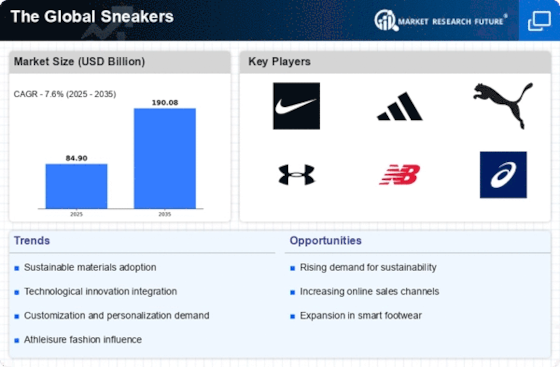
Sneakers Market (Global, 2024)
Introduction
The shoe market has become a dynamic and complex sector, governed by the confluence of fashion, technical innovation and changing tastes. A new trend is that sports shoes have come to play a major role in everyday fashion, and have become a staple of everyday style, a favourite of a wide audience that is both performance- and style-conscious. The rise of athleisure, combined with the growing influence of social media and celebrity endorsements, has further boosted the popularity of sports shoes, making them a cultural phenomenon. As a result, sustainability has become a major factor, and brands are increasingly focusing on eco-friendly materials and ethical production to meet the growing demand for responsible consumerism. This report explores the complex and intricate world of sports shoes, looking at the key trends, competitive landscape and the changing consumer behaviour that are defining the market.
PESTLE Analysis
- Political
- The market for shoes in 2024 will be influenced by many political factors, including trade policies and tariffs. The U.S. government has imposed a 25 percent tariff on some Chinese shoe imports, which has caused the price of a pair of shoes to go up by about $10. In addition, the ongoing trade negotiations between the U.S. and the European Union may lead to a reduction in tariffs on imported shoes, which could affect the strategies of companies operating in both markets. Moreover, the stability of the governments of countries that manufacture shoes, such as Vietnam and Indonesia, is of critical importance, as these countries account for about 30 percent of the world’s sneaker production.
- Economic
- The world economic situation in 2024 is a mixed one. In the United States, the rate of inflation is about 3.5 per cent, which affects the buying power of the people. However, unemployment is expected to remain low, at 4.1 per cent, which will help to support the growth of discretionary spending on shoes. The average disposable income in the United States is estimated to be around £40,000, a strong base for shoe purchases. However, the price of raw materials, especially rubber and synthetics, has risen sharply in the past year, resulting in a 15 per cent rise in production costs. This may lead to a rise in the retail price of shoes.
- Social
- In 2024, the social trends are in favour of sustainable and ethical consumption. A study shows that up to twenty per cent more is paid for eco-friendly products by 70 per cent of buyers of sneakers. The trend has been reflected in the fact that half of the major sneaker brands have committed themselves to using recycled materials in at least thirty per cent of their products by the end of the year. Also, the trend towards sportswear is continuing. Sixty per cent of consumers now use sneakers as an everyday item, which reflects the broader trend towards more comfortable and casual wear.
- Technological
- In 2024, the shoe industry is undergoing a profound change, especially in the manufacture and sale of shoes. In particular, the use of 3D printing has spread, and it is estimated that twenty-five percent of shoe manufacturers use it to reduce waste and increase the possibilities of personalization. Moreover, the integration of augmented reality in the online shopping experience has increased, and forty percent of brands offer the possibility of trying on sneakers virtually before buying. This technological evolution will increase customer engagement and satisfaction.
- Legal
- The shoe market in 2024 will be affected by legal factors such as the imposition of stricter regulations on labor conditions and on the environment. The Fair Labor Association has announced that 80% of shoe manufacturers are now obliged to conform to new regulations that aim to improve the working conditions in factories. Furthermore, the European Union has established that all shoes sold within its borders must conform to certain specified criteria in respect of the environment. This affects about 60% of the imported sneakers. If the brands do not comply, they will be fined up to five hundred thousand dollars.
- Environmental
- In 2024, the market for sneakers is increasingly influenced by the environment, with the aim of reducing the carbon footprint and waste. Brands are now using more sustainable materials and manufacturing methods. By 2030, thirty per cent of the largest sneaker companies have already pledged to become carbon neutral. In addition, the trend towards reusing and recycl-ing is gaining ground, with over ten million pairs of sneakers being recycled every year, thus reducing waste to land fill and promoting the circular economy.
Porter's Five Forces
- Threat of New Entrants
- “The threat of new entrants to the market for athletic shoes in 2024 is moderate.” The market is growing and lucrative, but the established brands have strong brand loyalty and economies of scale that make it difficult for new entrants to overcome these obstacles. The need for large initial investments in marketing and distribution also discourages new entrants.
- Bargaining Power of Suppliers
- The suppliers in the sneaker market generally have little bargaining power. There are a large number of suppliers providing raw materials, which weakens their influence. But the big brands have more than one source of supply, which gives them a better chance of negotiating favorable terms and reducing production costs.
- Bargaining Power of Buyers
- High-grade sneakers have a great deal of bargaining power in the market. A wide range of styles and brands is available to the consumer, which means that he can easily switch to other choices, and this leads to fierce competition between brands. The rise of e-commerce has given consumers the ability to compare prices and find the best price. This has increased the bargaining power of consumers.
- Threat of Substitutes
- The threat of substitutes in the market for shoes is moderate. There are several shoe types such as sandals, boots and casual shoes, but sneakers have a great advantage in comfort and versatility. However, changing fashion trends and consumer preferences can lead to an increase in competition from other shoe types.
- Competitive Rivalry
- Competition is intense in the market for athletic shoes, with numerous established brands vying for market share. The market is dominated by Nike, Adidas, and Puma, which are characterized by aggressive marketing and continuous innovation. In addition, there are numerous small and specialized brands, which also intensify competition. To compete successfully, companies need to stand out from the crowd.
SWOT Analysis
Strengths
- Strong brand loyalty among consumers for established sneaker brands.
- Diverse product offerings catering to various demographics and preferences.
- Growing trend of athleisure fashion boosting sneaker sales.
Weaknesses
- High competition leading to price wars and reduced profit margins.
- Dependence on seasonal trends which can affect sales consistency.
- Challenges in supply chain management and inventory control.
Opportunities
- Expansion into emerging markets with increasing disposable income.
- Integration of sustainable materials and practices appealing to eco-conscious consumers.
- Technological advancements in sneaker design and customization options.
Threats
- Economic downturns affecting consumer spending on non-essential items.
- Counterfeit products undermining brand integrity and consumer trust.
- Rapid changes in consumer preferences requiring constant innovation.
Summary
The shoe market of 2024 is characterized by strong brand loyalty and a diverse product line, which are considerable advantages. Competition is also high, as are seasonal trends. The risks are economic fluctuations and counterfeit products. The opportunities are the introduction of new materials and the use of new methods. To maintain a competitive advantage, companies must use their strengths and opportunities and minimize their weaknesses and threats.























Leave a Comment