


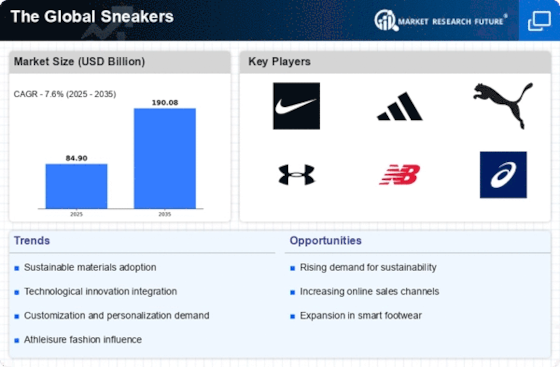
Sneakers Size
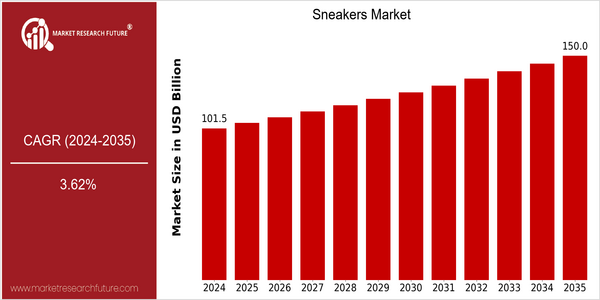
Market Size Snapshot
| Year | Value |
|---|---|
| 2024 | USD 101.49 Billion |
| 2035 | USD 150.0 Billion |
| CAGR (2025-2035) | 3.62 % |
Note – Market size depicts the revenue generated over the financial year
The sneaker market is estimated to reach a value of $ 101.49 billion by 2024 and $ 150 billion by 2035. The CAGR for the period 2025–2035 is 3.62%. The growth of the market is attributed to a number of factors, including the rising popularity of athleisure, the growing importance of health and fitness, and the emergence of e-commerce platforms that make it easy for consumers to access a wide variety of sneaker choices. Also, the latest developments in materials and manufacturing processes allow brands to keep up with evolving consumer preferences for comfort, sustainability, and performance. Brands such as Nike, Puma, and Adidas are also investing in product development and strategic collaborations to strengthen their market positions. For instance, Nike’s focus on sustainable materials and Adidas’s collaborations with high-profile fashion designers are two examples of how innovation and strategic initiatives are driving the sneaker market.
Regional Market Size
Regional Deep Dive
- The global market for sneakers is experiencing dynamic growth, driven by the changing preferences of consumers, technological advancements and a growing focus on sustainability. North America is characterized by a strong presence of leading brands and a culture that values athletic and casual shoes. Europe is characterized by a combination of fashion and functionality, with a growing focus on the use of eco-friendly materials. Asia-Pacific is experiencing rapid urbanization and a growing middle class, which is characterized by a greater demand for a variety of sneaker styles. Middle East and Africa are experiencing a rise in brand awareness and the expansion of retail networks, while Latin America is gradually embracing the sneaker culture, influenced by the latest global trends.
Europe
- The European sneaker market is increasingly influenced by fashion collaborations, with brands like Balenciaga and Gucci partnering with sportswear companies to create high-end sneaker lines that appeal to luxury consumers.
- Regulatory changes in the EU regarding sustainable product design are pushing brands to innovate, leading to the development of biodegradable and recyclable sneaker materials, which are expected to reshape consumer choices.
Asia Pacific
- The Asia-Pacific region is witnessing a surge in sneaker customization, with brands like Nike and Puma offering personalized designs through online platforms, catering to the unique tastes of local consumers.
- The growing popularity of athleisure wear is driving sneaker sales, particularly in urban areas, as consumers increasingly seek versatile footwear that can transition from gym to casual settings.
Latin America
- The sneaker market in Latin America is being shaped by the influence of streetwear culture, with brands like Vans and Converse gaining popularity among younger consumers seeking trendy and affordable options.
- Economic factors, such as currency fluctuations and inflation, are impacting consumer purchasing power, leading brands to adapt their pricing strategies to maintain competitiveness in the market.
North America
- The rise of direct-to-consumer (DTC) sales models has transformed the sneaker market, with brands like Nike and Adidas investing heavily in their online platforms to enhance customer engagement and streamline distribution.
- Sustainability initiatives are gaining traction, with companies such as Allbirds and Veja leading the charge in producing eco-friendly sneakers, reflecting a growing consumer demand for environmentally responsible products.
Middle East And Africa
- The sneaker market in the Middle East is being bolstered by major sporting events, such as the FIFA World Cup 2022 in Qatar, which has heightened interest in athletic footwear among consumers.
- Local retailers are expanding their offerings to include international sneaker brands, enhancing accessibility and brand visibility in the region, which is expected to drive market growth.
Did You Know?
“In 2022, the global sneaker market was estimated to have produced over 23 billion pairs of shoes, highlighting the immense scale and popularity of this footwear category.” — example.com
Segmental Market Size
The shoe market is currently experiencing robust growth, driven by the rising demand for athletic and leisure shoes. The trend towards healthier lifestyles is one of the main factors driving the growth of this market, as well as the growing influence of social media and celebrity endorsements on fashion trends. Brands are also responding to consumers’ growing concerns about the environment by developing more sustainable products, which is a further driver of the market. The market is currently at a mature stage of development, with the likes of Nike and Adidas setting the standards in terms of sustainable production and integration of technology. The most recent examples of this are Nike’s Move to Zero campaign, which aims to reduce the company’s waste and carbon footprint. The sneaker’s main applications are in the sports, leisure and fashion sectors, with brand collaborations with designers further enhancing their appeal. The global COVID19 epidemic has accelerated the shift to e-commerce, while the growing focus on sustainable production will continue to drive innovation in materials and production methods, shaping the future of the sneaker market.
Future Outlook
From 2024 to 2035, the sneakers market will continue to grow steadily, from 102,490,000,000 to 15,000,000,000,000, with an annual growth rate of 3.62%. This growth is mainly due to the growing demand for athletic shoes and leisure shoes in the world, which is mainly due to the popularity of sports and leisure shoes. The number of consumers who wear sneakers every day is also expected to increase significantly, and the number of consumers who wear sneakers every day is expected to increase significantly, and the proportion of people who wear sneakers every day is expected to reach 62%, compared with the current 45. The percentage is also expected to increase significantly. In addition, the integration of smart elements into the shoes and the implementation of sustainable production will also have a major impact on the market. The development of materials such as eco-friendly materials and enhanced cushioning technology will also be in line with the needs of consumers. Moreover, the popularity of social media and the influence of celebrities has continued to be a major trend for consumers. The companies that can adapt to these changes and invest in digital transformation will be able to seize the market and meet the needs of consumers.

























Leave a Comment